


 购物车
购物车 个人中心
个人中心

The Girl Who's Never Had A Valentine
¥15.50
All Beth’s ever had on Valentine’s Day is unwanted junk mail and unpaid bills! But this year, when the post lands on her doormat, one item in particular catches her eye… Could this be Beth first ever genuine Valentine’s Day card?! The handwritten card might be a cheesy cliché….but who cares! The big question is - who is it from? Unfortunately, the only possibilities racing through her head are people she sincerely hopes didn’t send it, including all of her definitely-not-Mr-Perfect exes. (Oh, or the guy in Accounts with the comb-over!) Sadly, Beth’s pretty sure it’s not from Luke – her dishy new neighbour with the super-glamorous model girlfriend, and dreamy eyes that have never once noticed her… Or have they? For a girl who’s never received so much as a Valentine’s e-mail before, this February 14th Beth finds herself with a secret admirer…who could just turn out to be The One!

Real Cowboys (Mills & Boon Vintage Superromance)
¥31.10
Smart women stay away from cowboys Taking a teaching job in a desolate corner of Idaho was Kate Steele' s way of making sure her in-laws didn' t turn her son, Danny, into a shiftless bronc buster like his father. Except in the middle of nowhere she unexpectedly ran headlong into a genuine buckaroo…. Don' t they? Being a good parent and a born rancher were all that mattered to Ben Trueblood–until gutsy Kate came along. Suddenly he found himself explaining to Danny the rodeo circuit wasn' t all that exciting…and considering the idea of hanging up his spurs. Anything was possible if it meant having Kate. HOME ON THE RANCH Cowboys, ranches, home and family–stories you won' t soon forget.

Her Frog Prince (Mills & Boon Vintage Cherish)
¥31.10
Dearest Godmother, This time I'm making a match for my old school chum–with the man she deserves! If there's ever a socialite who needed her comeuppance, it's personal consultant Parris Hammond. Lucky for me, scruffy but sexy marine biologist Bradford Smith is just the man to give it to her. (He's already learned the only way to tame this shrew is to kiss her speechless!) And now that he's bought a makeover from her, the barbs–and sparks–are flying! Parris knows this frog is more man than she's ever met…but can he truly be her prince? Still a matchmaker, Merry
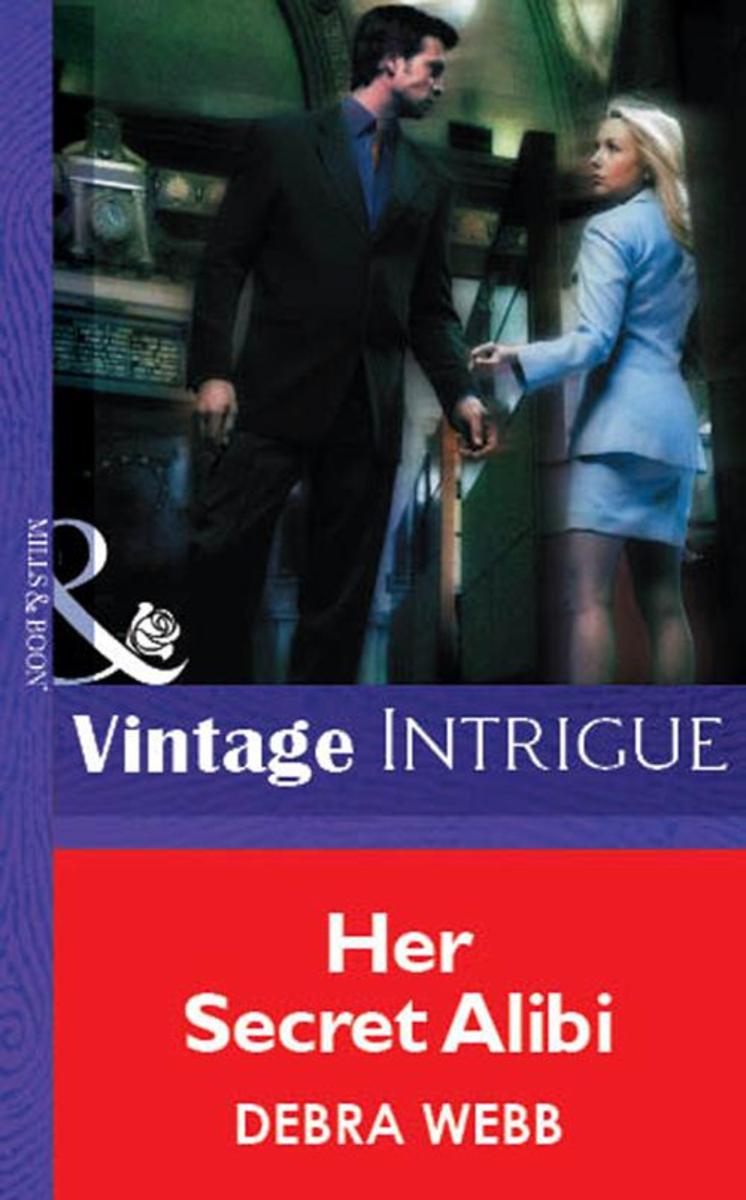
Her Secret Alibi (Mills & Boon Vintage Intrigue)
¥31.10
Could Jolie Randolph be losing her mind? That would explain why the typically focused bank executive had discovered inconsistencies in her usually meticulous work, totally forgotten a business trip and woken up naked in a stranger's bed! Jolie was coming undone and under investigation by the disarmingly handsome Simon Ruhl. But would he bed her or book her? Undercover Colby agent Simon Ruhl had his sights set on Jolie for more than one reason. She was suspected in a money-laundering scheme and she was clearly being set up. Simon was duty bound to protect Jolie from an unknown threat while surreptitiously proving her innocence–all before he went totally insane with desire for her.
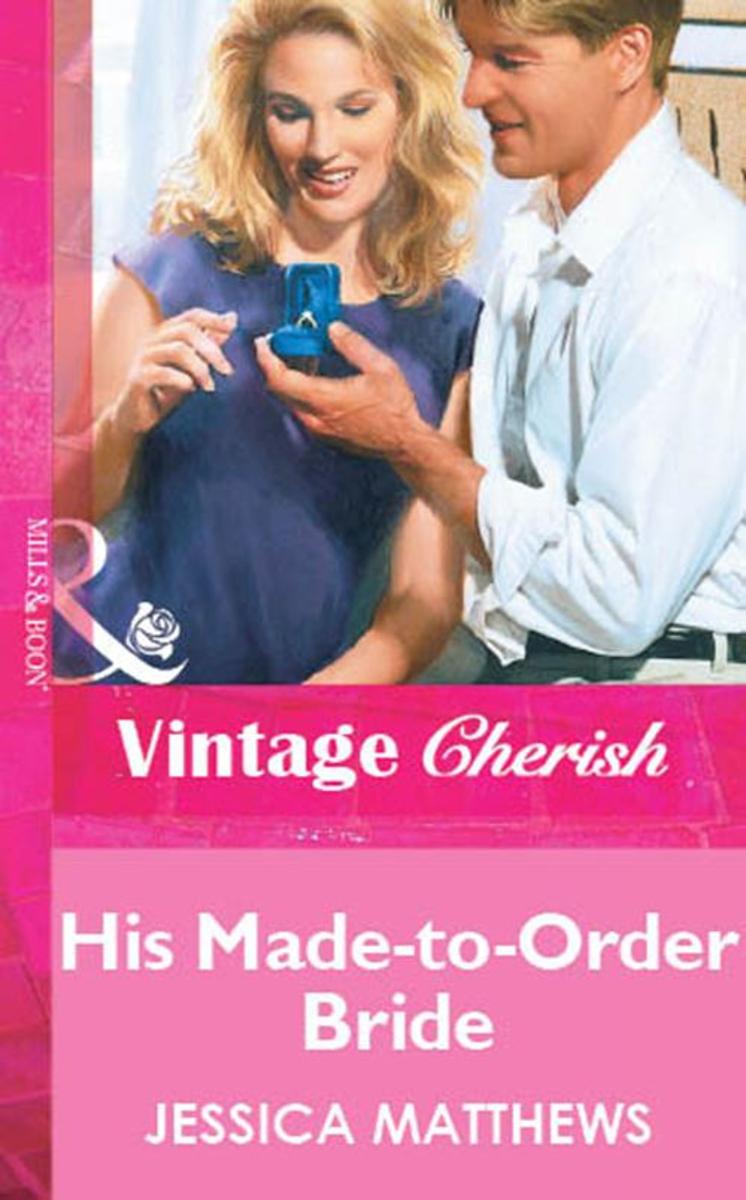
His Made-to-Order Bride (Mills & Boon Vintage Cherish)
¥59.45
Finding a wife… Dr. J. D. Berkley enjoyed his life. He had a good job in ER, a delightful four-year-old son and a truly good friend in nurse Katie Alexander. So why would he need a wife? It wasn't until he wanted to expand the ER that he found being a bachelor could be a stumbling block. So, he had a brilliant idea. Katie could help him find a wife! He couldn't understand why she seemed less than keen on the idea–particularly when he'd made a list of his requirements to make it easier for her….
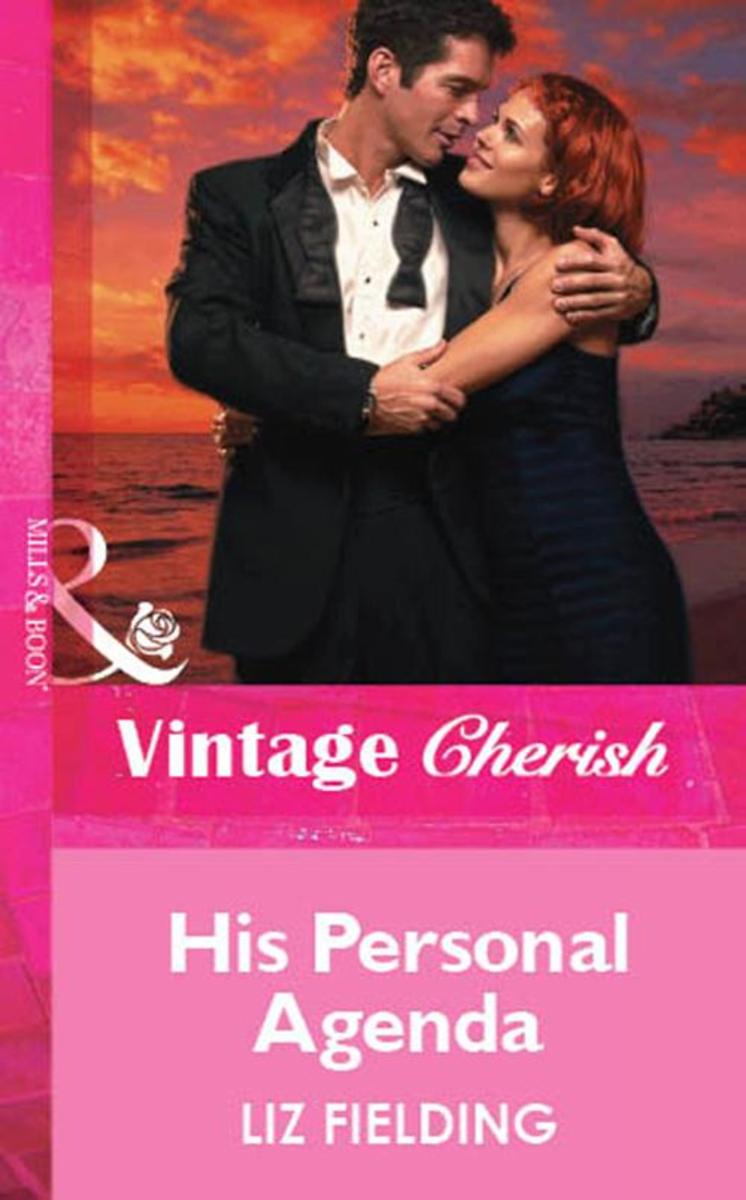
His Personal Agenda (Mills & Boon Vintage Cherish)
¥31.10
At her side–day & night… Troubleshooter Matt Crosby has a hidden agenda: he's been hired to find out all he can about Nyssa Blake…. But when Matt meets Nyssa, he falls for her–and his private agenda suddenly gets a lot more personal! Nyssa is naturally wary of Matt, especially as he seems determined to keep her at his side twenty-four hours a day. Tension begins to build between them, and once Nyssa discovers Matt's mission, there's bound to be an explosion!
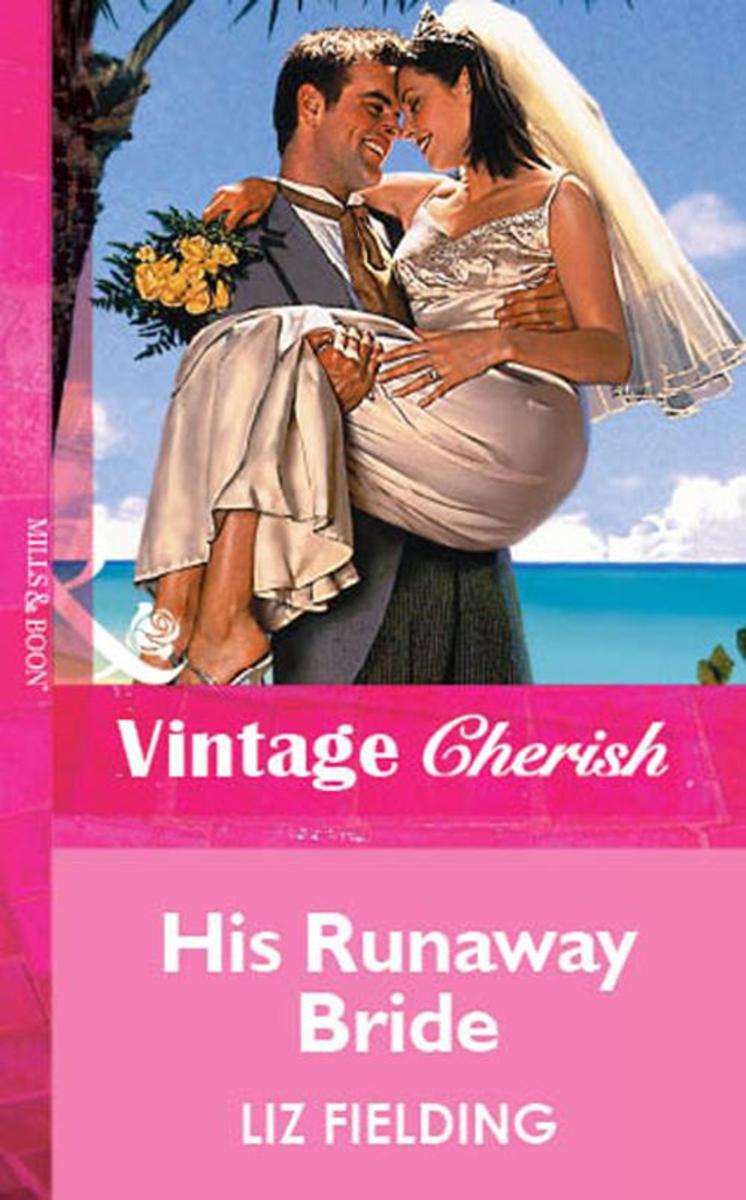
His Runaway Bride (Mills & Boon Vintage Cherish)
¥31.10
Stop the wedding Willow and Mike can't decide who's more relieved when each jilts the other at the altar! Having got cold feet, they've now decided to pursue their dream jobs rather than marry…. But, accidentally bumping into Willow afterward, Mike knows they still love one another…and should be facingtheir problems rather than running from them. Somehow, Mike has to capture his runaway bride, convince her they're meant to be together–and this time get her to the church!
Jack Murray, Sheriff (Mills & Boon Vintage Superromance)
¥31.10
Beth Sommers isn't looking for love. She's concentrating on her daughters and her business–and on convincing her ex-husband that their marriage really is over. Even if she was looking, it wouldn't be at a man like Sheriff Jack Murray. She knows Jack's a good cop, a good man…one she can count on. She still figures she'll be better off with a quiet, gentle–maybe even slightly boring–guy. She's already had enough excitement to last her a lifetime. But before long, Jack has her thinking that his kind of excitement is exactly what she needs.

My Sister, Myself (Mills & Boon Vintage Superromance)
¥31.10
She's not who she says she is! Tory Evans is living her sister's life. Christine is dead, murdered by Tory's vengeful ex-husband, and now–for her own survival–Tory has taken on Christine's identity. Her name, her job, her new home in Shelter Valley, Arizona. He's reinventing his life. Ben Sanders is a divorced father who's come to Shelter Valley to resume the education that was interrupted years before. He's intrigued by one of his professors, the woman he knows as Christine Evans. She's smart, she's beautiful–and she's hiding something. She's also off-limits. Despite that, despite the secrecy and the danger, Tory and Ben are drawn to each other. Second chances really do exist. Especially in a place like Shelter Valley…
Patchwork Family (Mills & Boon American Romance)
¥31.10
NEWS FLASH: TYLER PLAYBOY DATES …A SINGLE MOM?! Rumor has it that our resident attorney Quinn Spencer has been offering Molly Blake more than legal advice these past cold winter nights. Does this sandy-haired stud, who has broken hearts all over Tyler, have his sights set on Molly next? But the sweet owner of the Breakfast Inn Bed comes with a complete package including a four-year-old daughter. Will playboy Quinn be able to resist Molls homespun charm and little Sara's batting baby blues? He says "I won't commit!" but this reporter is taking bets the bachelor is about to fall….

Tall, Strong & Cool Under Fire (Mills & Boon Vintage Cherish)
¥31.10
When Lisa Billings swept into Bryce Walker's fire station looking for her missing daughter, he was smitten with the enticing single mother. The handsome firefighter had long ago realized that white picket fences and parent-teacher meetings weren't meant for a man who risked his life on a daily basis. But Lisa and her little girl made him yearn for the dreams he'd put aside…. Bryce was six feet of temptation-in-a-uniform, but Lisa cautioned herself to watch her step. Yet her heart and her soul-and her body-didn't heed her warnings…not when tall, strong and sexy Bryce made her feel like a woman again!
Tangled Emotions (Mills & Boon Vintage Cherish)
¥31.10
Fen Dysant has lost her job, her family and her identity. Yet when she meets the irresistible Joe Tregema, sparks fly and their passionate relationship almost helps her overcome the painful memories. But Fen' s world comes crashing down again when Joe discovers the truth about her secret past. Worse still, she learns that Joe hasn' t been exactly honest, either. It should be all over–but Joe' s used to getting what he wants, and now he can' t get Fen out of his mind….

Country Midwife, Christmas Bride (Mills & Boon Medical)
¥31.10
Dr James Bartlett is captivated by new Willowmere midwife Lizzie Carmichael – and intrigued by the loneliness he sees in her eyes. So, with the help of his adorable twins, this Christmas James wants to convince Lizzie to join his little family – it would be the perfect present for them all.
Crowned: The Palace Nanny (Mills & Boon Cherish)
¥31.10
Marion Lennox Raising the heir to the throne is nanny Elsa Murdoch's dream job, but sparks fly when feisty Elsa clashes with powerful Prince Stefanos over what's best for little Princess Zoe. Could Marrying His Majesty be the answer?

Firefighter With A Frozen Heart (Mills & Boon Medical)
¥31.10
Daredevil firefighter Jess Corbett has spent his life running – from memories of his childhood, and the death of his fiancée. Then a dangerous rescue sees him reunited with tough-cookie nurse Julie Clark! Her warmth challenges his avoid-at-all-costs stance on love, but can she break through the ice that encases this gorgeous loner’s heart?

Hold the Dream
¥104.48
The continuing story of Emma Harte, indomitable heroine of A Woman of Substance. Emma Harte was the heroine of Barbara Taylor Bradford’s multi-million copy bestseller, A Woman of Substance. Now she is eighty years old and ready to hand over the reins of the vast business empire she has created. To her favourite grandchild, Paula McGill Fairley, Emma bequeaths her mighty retailing empire with these heartfelt words: ‘I charge you to hold my dream.’ A towering international success, this is the powerfully moving tale of one woman’s determination to ‘hold the dream’ which was entrusted to her, and in so doing find the happiness and passion which is her legacy.

Rock that Frock! (Coleen Style Queen, Book 3)
¥46.11
Introducing Coleen Style Queen – a fictional character inspired by the childhood of leading style icon, Coleen McLoughlin. This is a gorgeous series about boys, friendship, family and fashion. It's the summer holidays and the local youth club is having a battle of the bands competition. Coleen’s best friend Lucy is a fantastic singer so the girls start practising and are determined to win, but not if Summer has her way… As well as a great story this book includes top style and fashion tips, and advice on how to customise your clothes and make your own cool accessories. So there’s no excuse not to look super stylish!

Sun, Sand & Sequins (Coleen Style Queen, Book 4)
¥73.58
Introducing Coleen Style Queen – a fictional character inspired by the childhood of leading style icon, Coleen McLoughlin. This is a gorgeous new series about boys, friendship, family and fashion. Coleen goes on holiday to Spain with her parents and little sister. She meets a cute boy and has a great time, but what about Coleen’s crush Ben back at home… And can Coleen and her little sis win the hotel’s talent contest? As well as a great story this book includes top style and fashion tips, and advice on how to customise your clothes and make your own cool accessories. So there’s no excuse not to look super stylish!
Peter Jackson: A Film-maker’s Journey
¥110.46
Authorised and fully illustrated insight into the life and career of the award-winning director, from his childhood film projects up to King Kong, together with Jackson's revealing personal account of his six-year quest to film The Lord of the Rings. Once, Peter Jackson was a name unknown to all but a small band of loyal fans and fellow film-makers. Now he is the newest member of Hollywood's elite fellowship, with his name on the most successful movie trilogy of all time. Written with Jackson's full participation, this extensive biography, illustrated with never-before-seen photos from Jackson's personal collection, tells the inside story of how a New Zealander became Hollywood's hottest property – from the early cult classics, through Academy Award?-winning success with Kate Winslet's Heavenly Creatures, the abandoned King Kong remake, and the filming of The Lord of the Rings, a project which was abandoned two years into pre-production, rejected by most of the other studios and then picked up by New Line Cinema in the biggest gamble in film history. Drawing upon interviews with fifty of Peter Jackson's colleagues and contemporaries, author Brian Sibley paints a portrait of a true auteur, a man gifted with single-minded determination and an artist's vision. Jackson himself is both revealing and insightful about his entire film-making life, from his first childhood steps filming in Super 8 to the grand realisation of his life’s dream: King Kong. Together, these joint narratives provide a truly unique and compelling insight into one of the finest cinematic minds at work today.

Graveminder
¥14.32
When Rebekkah returns to her small-town home for her beloved Grandmother’s funeral, she little suspects that she is about to inherit a darkly dangerous family duty on behalf of Claysville’s most demanding residents – the dead. Everyone in Claysville knows that the Barrows are no ordinary family, but no one can really explain why. When respected matriarch Maylene Barrow dies suddenly her granddaughter Rebekkah returns to the small town she grew up in, where she must face the demons of her past – the suicide of her half-sister Ella, the person she was closest to in the world, and the subsequent break-up of her parents marriage. And she also re-encounters Byron, Ella’s old boyfriend, someone to whom she has always felt a deep and mysterious connection. But the demons of the past are nothing compared with what the future has in store for Rebekkah. Her grandmother has left her an inheritance both wonderful and terrible. An onerous responsibility now rests on her shoulders – one for which she is ill-prepared to say the least. For behind Claysville’s community-spirited, small-town facade lies a dark secret. One that ties Rebekkah and Byron together in an inextricable bond, and that will require them both to sacrifice everything to keep their friends and neighbours from harm.
Fortune: The Original Snogbuster
¥51.50
Upgrade your beach reading to first class… Brad Masters is rich. Very, very rich. CEO of the Perfect Cut record label, he owns properties in the Med, the Florida Keys, New York and London. He flies a private jet, drives a collection of supercars and walks nowhere, if he can help it. But there's one thing missing: although he has a string of girlfriends, he doesn't have an heir. And with his sixties rapidly approaching, Brad can no longer convince himself he's immortal… What Brad does have is a past full of indiscretions – and that includes the three women, in three different countries, who gave birth to his three illegitimate daughters. None of them have any claim on him, of course. He paid them off years ago. But that was then, and this is now. As his sixtieth birthday looms, Brad sends off three very special invitations to his party. The question is – which daughter will he choose?


