


 购物车
购物车 个人中心
个人中心

Corrag
¥73.58
A novel from Susan Fletcher, author of the bestselling Eve Green and Oystercatchers. The Massacre of Glencoe happened at 5am on 13th February 1692 when thirty-eight members of the Macdonald clan were killed by soldiers who had enjoyed the clan's hospitality for the previous ten days. Many more died from exposure in the mountains. Fifty miles to the south Corrag is condemned for her involvement in the Massacre. She is imprisoned, accused of witchcraft and murder, and awaits her death. The era of witch-hunts is coming to an end - but Charles Leslie, an Irish propagandist and Jacobite, hears of the Massacre and, keen to publicise it, comes to the tollbooth to question her on the events of that night, and the weeks preceding it. Leslie seeks any information that will condemn the Protestant King William, rumoured to be involved in the massacre, and reinstate the Catholic James. Corrag agrees to talk to him so that the truth may be known about her involvement, and so that she may be less alone, in her final days. As she tells her story, Leslie questions his own beliefs and purpose - and a friendship develops between them that alters both their lives. In Corrag, Susan Fletcher tells us the story of an epic historic event, of the difference a single heart can make - and how deep and lasting relationships that can come from the most unlikely places.

The Family
¥34.14
The follow-up novel to the hugely successful debut THE STREET In this dank corner of town, you have to keep your friends close and your enemies closer – even if those enemies are your family. Jimmy Wild saunters around the streets of Campbell Road, and among the people he used to terrorise. Even though the years have passed, he’s still a tyrant. The sight of his lanky frame is enough to terrify the inhabitants of this close-knit community, who reside in this villainous corner of London. Jimmy’s beautiful step-daughter Faye and his downtrodden wife Edie eek out a meagre existence for their family, having left behind their lives in Kent. What devastating act was so bad that it drove them away from the place they called home to this hovel of a house in Campbell Road? Robert and Steven Wild thought they’d moved on. It was hard enough coming to terms with the death of their mother – and now their abusive father, presumed dead, has returned. One thing you can bet on, Jimmy Wild’s not returned to start playing happy families… How can young Faye make a life for herself and carve a future for young siblings? Who is this aged woman that Jimmy Wild has come back to see? And can a romance between Faye and Rob blossom amidst a family at War?
Time Management (Collins Business Secrets)
¥18.74
The time management secrets that experts and top professionals use. Get results fast with this quick, easy guide to the fundamentals of Time Management. Includes how to: ? Identify your biggest priorities and find time to achieve them ? Deal with the biggest hidden time-wasters ? Communicate effectively with colleagues and clients ? Cope with information overload ? Take control of your inbox and voicemail

Presenting (Collins Business Secrets)
¥44.24
The presenting secrets that experts and top professionals use. Get results fast with this quick, easy guide to the fundamentals of Presenting. Includes how to: ? Enjoy presenting and approach it with confidence ? Assess your audience and their reactions ? Prepare presentations for maximum impact ? Use your voice and body to make your point ? Use visual aids and handle questions
Leadership (Collins Business Secrets)
¥51.50
The leadership secrets that experts and top professionals use. Get results fast with this quick, easy guide to the fundamentals of Leadership. Includes how to: ? Understand and develop your leadership style ? Identify strategic goals for your department ? Motivate and manage teams of all sizes ? Build a culture of results and responsibility ? Lead the way out of a crisis

Communication (Collins Business Secrets)
¥51.50
The communication secrets that experts and top professionals use. Get results fast with this quick, easy guide to the fundamentals of Communication. Includes how to: ? Use body language to build rapport with anyone ? Deal with clients and colleagues at all levels ? Get what you want in sales or negotiation ? Excel in meetings and presentations ? Master email and written communication

Interview (Collins Business Secrets)
¥51.50
The interview secrets that experts and top professionals use. Get results fast with this quick, easy guide to the fundamentals of Interviews. Includes how to: ? Research the needs of the employer ? Focus the interview on your strengths ? Use body language to impress ? Deal with difficult questions ? Negotiate the perfect package

The Little Prisoner: How a childhood was stolen and a trust betrayed
¥45.62
An inspirational true story of a 4 year old girl who fell into the power of a man whose evil knew no bounds. She encountered terrifying mental and physical torture from her psychopathic stepfather for a period of 17 years until she managed to break free, her spirit still unbroken Jane Elliott fell into the hands of her sadistic and brutal stepfather when she was 4 years old. Her story is both inspiring and horrifying. Kept a virtual prisoner in a fortress-like house and treated to daily and ritual abuse, Jane nonetheless managed to lose herself in a fantasy world which would keep her spirit alive. Equally as horrifying as the physical abuse Jane suffered, were the mental games her tormentor played – getting his kicks from seeing Jane humiliated, confused, crushed and defeated at every turn. Her family and neighbourhood were all terrified of Jane’s stepfather so no-one held out a rescuing hand. So Jane had to help herself. When she was 21 she ran away with her baby daughter and boyfriend to start a new life in hiding. Several years on she found the courage to go to the police. A court case followed where Jane bravely stood up against the unrepentant aggressor she so feared. He was jailed for 17 years. Jane’s family took his side.
The First-Time Cook
¥95.75
Setting up home for the first time and feel lost in the kitchen? ‘The First-time Cook’ is a one-stop guide which shows you not only how to cook delicious food but also how to understand ingredients and techniques so you can feel completely confident cooking on your own. Assuming no prior knowledge,'First-time Cook' takes you through the basics of shopping and cooking equipment. Sophie Grigson then covers each essential cooking technique and food in turn, moving step-by-step through the basics with lots of incredibly useful advice on the possible pitfalls and showing variations and alternatives once you have mastered the essentials. From the perfect roast chicken to twenty variations on the quick-and-easy omelette and pasta of all de*ions, the recipes have been chosen not only to show core techniques but also to provide a fantastic collection of dishes that cover everything from quick (and cheap) supper ideas for one, to coping with Sunday lunch for six for the first time Interest in cookery has never been greater but the number of people actually able to cook continues to decline. Sophie Grigson's TV experience has given her a natural ability to teach cookery in an informal and friendly way and, with this book, she fills the gap left by conventional cookbooks which assume a knowledge most people don't possess.
The Ultimate PCOS Handbook: Lose weight, boost fertility, clear skin and restore
¥125.18
With this practical handbook you can start to see PCOS symptoms improve in as little as 2 weeks. Based on the latest scientific research and the authors' first-hand experience, it will empower you to take back control of your body- and your life. Packed with all the essential information to naturally beat the symptoms of polycystic ovary syndrome. PCOS authorities and fellow sufferers Colette Harris and Theresa Cheung will empower you to take back control of your body and beat naturally the often embarrassing symptoms of this syndrome, including weight gain, acne, excess body hair, mood swings, depression and exhaustion. Packed full of the latest science, up-to-date nutrition and the best in self-help and natural therapies, their comprehensive book shows you how to: ? Take control of your body with simple dietary changes ? Reduce spots and excess hair ? Boost body confidence and self-esteem ? Choose the right supplements and best natural self-help remedies ? Protect yourself from high blood pressure, heart disease and diabetes

Women of a Dangerous Age
¥45.62
Perfect for fans of Elizabeth Buchan and Katie Fforde, this is a warm novel about women, relationships and why it’s never too late to change. Lou is married to a man who no longer loves her. It’s time to move on, to begin a new business venture and to start her life over. To celebrate her new-found freedom, she travels to India, where, in front of the Taj Mahal, she befriends Ali after taking each other’s photographs on ‘that’ bench. Ali is a serial mistress. But when she returns home, she discovers her latest lover is not the man she took him for. She too needs a new beginning. As Lou and Ali put their pasts behind them, they start to discover new possibilities for life and for love, until the shocking realisation that they have far more in common than they thought.
People Management (Collins Business Secrets)
¥44.24
The people management secrets that experts and top professionals use. Get results fast with this quick, easy guide to the fundamentals of People Management Includes how to: ? Build a business-like relationships with your direct reports ? Set clear targets and monitor them ? Understand different personality types and how to manage them ? Deliver criticism and compliments in the right way ? Mentor your employees to produce fantastic results
Getting Things Done (Collins Business Secrets)
¥18.74
The secrets that experts and top professionals use to get things done. Get results fast with this quick, easy guide to the fundamentals of Getting Things Done. Includes how to: ? Get more done in less time ? Manage upwards, downwards and sideways ? Under-promise and over-deliver ? Overcome difficult people and issues ? Deliver projects on time and on budget

Mindpower (Collins Business Secrets)
¥44.24
The secrets that experts and top professionals use to stay at the top of their game. Get results fast with this quick, easy guide to the fundamentals of Mind Power Includes how to: ? Produce creative and innovative ideas ? Remember names, numbers and concepts ? Sharpen your mental reflexes, whatever your age ? Ask the right questions and understand other points of view ? Make good decisions and stick to them
Team Management (Collins Business Secrets)
¥18.74
The team management secrets that experts and top professionals use. Get results fast with this quick, easy guide to the fundamentals of Team Management Includes how to: ? Understand how different personalities interact in a team ? Set up clear structures and goals for your team ? Implement change effectively and as painlessly as possible ? Overcome personality clashes and team difficulties ? Manage your team so that it delivers fantastic results

Collins Tracing Your Scottish Family History
¥132.53
The authoritative and comprehensive guide to tracing your Scottish ancestry There's never been a better time to trace your Scottish family history. Vast internet resources and DNA testing, as well as access to censuses, religious records and other archive material make this process easier than ever. Renowned genealogist Anthony Adolph unveils a wide range of tools and information available, specific to discovering your Scottish ancestry - whether you are starting your trail in Scotland or from somewhere else in the world. The text is packed with weblinks to enable you to search the great number of records now available online, as well as providing contact information on other sources, such as archives and libraries. By reading this book you'll also be drawn into the lives your ancestors led, through the examples, compelling stories and fascinating social history which are interwoven within the text. Whether you are at the start of your search for your Scottish ancestry, or are looking for ways to expand on what you have already found, Anthony Adolph’s detailed instruction and guidance, balanced with humorous anecdotes makes for an informative, practical and entertaining read.

Andy Priaulx: The Autobiography of the Three-time World Touring Car Champion
¥139.99
The inspiring autobiography of Britain's three-time World Touring Car champion, and almost certainly this country's best-kept sporting secret … until now! For someone who grew up on a small island with a speed limit of just 35 mph, Andy Priaulx drives his car awfully fast. But then the man from Guernsey is a hugely determined figure who has been fighting against the odds and performing the role of underdog throughout his entire career. In this his first book, Priaulx tells of how he has fought - tooth and claw, with virtually no back-up - for every sponsor, every car, every penny on his way to achieving his dream of one day becoming a world champion. With refreshing honesty, Priaulx reveals how he and his wife risked everything financially to get on the lower rungs of the motor racing ladder, even spending some time living in a borrowed caravan at the Silverstone circuit in an attempt to save money. "Pikey Priaulx" was his nickname at the time, but the story only goes to show how sacrifice and sheer bloody-mindedness can pay off. Priaulx's reserves of energy, enthusiasm and dedication - not to mention his natural talent - served him well as he won the European Touring Car Championship in 2004. Motor sport's governing body, the FIA, recognises only three world championships - Formula 1, World Rally and World Touring Cars. Priaulx has won the WTC championship for the last three years, an unprecedented achievement. In fact, such has been Priaulx's success that he has been universally hailed as the greatest touring car driver of all time, and widely dubbed "Britain's Schumacher". In 2007 Priaulx received the ultimate accolade when he was awarded the Gold Medal of the British Racing Drivers' Club "in recognition of outstanding contemporary racing success". This was only the eighth time the Gold Medal has been awarded. Told in Andy's energetic and engaging style, this is the story of that most rare of sporting beasts - a true British world champion.
Slow Cooking: Easy Slow Cooker Recipes
¥73.58
This handy kitchen companion offers a hassle-free approach to home cooking. Slow Cooking includes 140 mouth-watering recipes that can be prepared in advance and cooked while you're at work or just relaxing at home. More and more people are discovering the benefits these affordable cookers – they are economical, environmental and produce perfect results every time. Cookery writer and journalist, Katie Bishop, shows just how little effort is required to make great family recipes such as Rolled Shoulder of Lamb, Mini Chestnut, Mushroom and Red Wine Pies, Classic Bouillabaisse, Herby Italian Stuffed Peppers and Oat, Sunflower and Honey Bread. This book provides a fresh insight into this old-fashioned method of cooking, with straightforward dishes that will delight your friends and family.
An Angel on My Shoulder
¥54.25
Following in the hugely popular ‘Angel Saved My Life’ series comes a moving collection of real-life stories from the Afterlife. Following in the bestselling An Angel Saved My Life series, An Angel on my Shoulder is an inspiring collection of true stories about the guardian angels who protect us, warn us and guide us from the other side. ? A kicking and screaming angel saves a woman from dying on a train. ? A grieving daughter is comforted by the kiss of an angel. ? A mysterious stranger protects a young girl from a mugging - and then vanishes. ? A animal angel saves a family from carbon monoxide poisoning. These are just some of the amazing accounts in this inspiring collection of true stories.
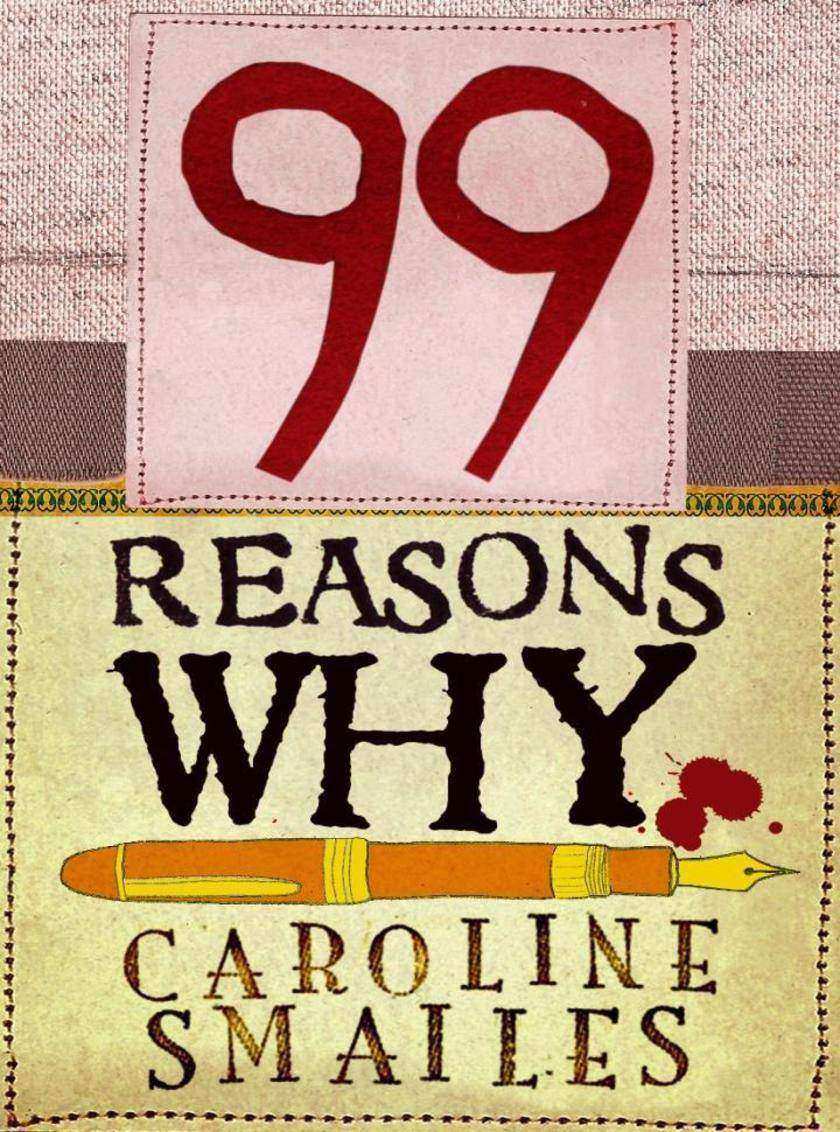
99 Reasons Why
¥34.14
From the brilliant author of ‘Black Boxes’ comes a gritty and heartfelt novella with a twist: 99 Reasons, 11 endings, your pick. Kate isn’t like other 22 year olds. She’s got a job to do for her Uncle Phil. Each day, she spies on The Kevin Keegan Day Nursery across the road from her bedroom window, writing down all of the comings and goings in her notebooks. That’s how she spots her little girl in the pink coat. She likes her, and it isn’t long before Kate asks her mam to get her for her. Plans are made. But then, quite unexpectedly, Kate flashes her breasts out her bedroom window at the little girl’s father. And that's the reason that nothing will ever be the same again… There is no one ending to Kate’s story, instead there are eleven possible outcomes, 9 of which you can navigate through your e-reading device. Each is different, and each exposes a little more of Kate’s utterly wonky world.

Gilchrist on Blake: The Life of William Blake by Alexander Gilchrist
¥88.39
LIVES THAT NEVER GROW OLD Part of a radical new series – edited by Richard Holmes – that recovers the great classical tradition of English biography. Gilchrist’s ‘The Life of William Blake’ is a biographical masterpiece, still thrilling to read and vividly alive. This was the first biography of William Blake ever written, at a time when the great visionary poet and painter was generally forgotten, ridiculed or dismissed as insane. Wonderfully vivid and outspoken (one chapter is entitled ‘Mad or Not Mad’), it was based on revealing interviews with many of Blake’s surviving friends. Blake conversed with spirits, saw angels in trees, and sunbathed naked with his wife ‘like Adam and Eve’. Gilchrist adds detailed de*ions of Blake’s beliefs and working methods, an account of his trial for high treason and fascinating evocations of the places in London, Kent and Sussex where he lived. The book ultimately transformed and enhanced Blake’s reputation.


