购物车
 个人中心

The Pink Fairy Book
¥8.09
Collection of classic fairy tales. According to Wikipedia: "Andrew Lang (March 31, 1844, Selkirk ? July 20, 1912, Banchory, Kincardineshire) was a prolific Scots man of letters. He was a poet, novelist, and literary critic, and contributor to anthropology. He now is best known as the collector of folk and fairy tales." With the active (hyperlinked) table of contents, click on a story title to go to that story.
The Red Fairy Book
¥8.09
Collection of classic fairy tales. According to Wikipedia: "Andrew Lang (March 31, 1844, Selkirk ? July 20, 1912, Banchory, Kincardineshire) was a prolific Scots man of letters. He was a poet, novelist, and literary critic, and contributor to anthropology. He now is best known as the collector of folk and fairy tales." With the active (hyperlinked) table of contents, click on a story title to go to that story.
Strictly Business: More Stories of the Four Million
¥8.09
According to Wikipedia: "O. Henry was the pen name of American writer William Sydney Porter (September 11, 1862 – June 5, 1910). O. Henry short stories are known for wit, wordplay, warm characterization and clever twist endings…. Most of O. Henry's stories are set in his own time, the early years of the 20th century. Many take place in New York City, and deal for the most part with ordinary people: clerks, policemen, waitresses. Fundamentally a product of his time, O. Henry's work provides one of the best English examples of catching the entire flavor of an age. Whether roaming the cattle-lands of Texas, exploring the art of the "gentle grafter," or investigating the tensions of class and wealth in turn-of-the-century New York, O. Henry had an inimitable hand for isolating some element of society and describing it with an incredible economy and grace of language. Some of his best and least-known work resides in the collection Cabbages and Kings, a series of stories which each explore some individual aspect of life in a paralytically sleepy Central American town while each advancing some aspect of the larger plot and relating back one to another in a complex structure which slowly explicates its own background even as it painstakingly erects a town which is one of the most detailed literary creations of the period. The Four Million is another collection of stories. It opens with a reference to Ward McAllister's "assertion that there were only 'Four Hundred' people in New York City who were really worth noticing. But a wiser man has arisen—the census taker—and his larger estimate of human interest has been preferred in marking out the field of these little stories of the 'Four Million.'" To O. Henry, everyone in New York counted. He had an obvious affection for the city, which he called "Bagdad-on-the-Subway,"
Varied Types
¥8.09
Collection of essays (many of the essays from the collection "Twelve Types", plus more). According to Wikipedia: "Gilbert Keith Chesterton (1874 - 1936) was an influential English writer of the early 20th century. His prolific and diverse output included journalism, philosophy, poetry, biography, Christian apologetics, fantasy and detective fiction. Chesterton has been called the "prince of paradox."[1] He wrote in an off-hand, whimsical prose studded with startling formulations. For example: "Thieves respect property. They merely wish the property to become their property that they may more perfectly respect it."[2] He is one of the few Christian thinkers who are equally admired and quoted by both liberal and conservative Christians, and indeed by many non-Christians. Chesterton's own theological and political views were far too nuanced to fit comfortably under the "liberal" or "conservative" banner."
Complete Poetical Works
¥8.09
Collection of poetry. According to Wikipedia: "Bret Harte (August 25, 1836[2] – May 6, 1902) was an American author and poet, best remembered for his accounts of pioneering life in California. He was born in Albany, New York. ... He moved to California in 1853, later working there in a number of capacities, including miner, teacher, messenger, and journalist. He spent part of his life in the northern California coast town now known as Arcata, then just a mining camp on Humboldt Bay. His first literary efforts, including poetry and prose, appeared in The Californian, an early literary journal edited by Charles Henry Webb. In 1868 he became editor of The Overland Monthly, another new literary magazine, but this one more in tune with the pioneering spirit of excitement in California. His story, "The Luck of Roaring Camp," appeared in the magazine's second edition, propelling Harte to nationwide fame... Determined to pursue his literary career, in 1871 he and his family traveled back East, to New York and eventually to Boston, where he contracted with the publisher of The Atlantic Monthly for an annual salary of $10,000, "an unprecedented sum at the time." His popularity waned, however, and by the end of 1872 he was without a publishing contract and increasingly desperate. He spent the next few years struggling to publish new work (or republish old), delivering lectures about the gold rush, and even selling an advertising jingle to a soap company. In 1878 Harte was appointed to the position of United States Consul in the town of Krefeld, Germany and then to Glasgow in 1880. In 1885 he settled in London. During the thirty years he spent in Europe, he never abandoned writing, and maintained a prodigious output of stories that retained the freshness of his earlier work. He died in England in 1902 of throat cancer and is buried at Frimley."

Trent's Trust and Other Stories
¥8.09
Collection of western stories, including: Trent's Trust, Mr. MacGlowrie's Widow, A Ward of Colonel Starbottle, Prosper's "Old Mother", The Convalescence of Jack Hamlin, A Pupil of Chestnut Ridge, and Dick Boyle's Business Card. According to Wikipedia: "Bret Harte (August 25, 1836 – May 6, 1902) was an American author and poet, best remembered for his accounts of pioneering life in California. He was born in Albany, New York. ... He moved to California in 1853, later working there in a number of capacities, including miner, teacher, messenger, and journalist. He spent part of his life in the northern California coast town now known as Arcata, then just a mining camp on Humboldt Bay. His first literary efforts, including poetry and prose, appeared in The Californian, an early literary journal edited by Charles Henry Webb. In 1868 he became editor of The Overland Monthly, another new literary magazine, but this one more in tune with the pioneering spirit of excitement in California. His story, "The Luck of Roaring Camp," appeared in the magazine's second edition, propelling Harte to nationwide fame... Determined to pursue his literary career, in 1871 he and his family traveled back East, to New York and eventually to Boston, where he contracted with the publisher of The Atlantic Monthly for an annual salary of $10,000, "an unprecedented sum at the time." His popularity waned, however, and by the end of 1872 he was without a publishing contract and increasingly desperate. He spent the next few years struggling to publish new work (or republish old), delivering lectures about the gold rush, and even selling an advertising jingle to a soap company. In 1878 Harte was appointed to the position of United States Consul in the town of Krefeld, Germany and then to Glasgow in 1880. In 1885 he settled in London. During the thirty years he spent in Europe, he never abandoned writing, and maintained a prodigious output of stories that retained the freshness of his earlier work. He died in England in 1902 of throat cancer and is buried at Frimley."
Drum-Taps
¥8.09
Dodo Collections brings you another classic from Walt Whitman, ‘Drum-Taps’. Drum-taps is a collection of poetry by Walt Whitman first published in 1865. The collection originally consisted of 53 poems (not including the 18 poems of Sequel to Drum-Taps added later in the year). Walter "Walt" Whitman (May 31, 1819 – March 26, 1892) was an American poet, essayist and journalist. A humanist, he was a part of the transition between transcendentalism and realism, incorporating both views in his works. Whitman is among the most influential poets in the American canon, often called the father of free verse. His work was very controversial in its time, particularly his poetry collection Leaves of Grass, which was described as obscene for its overt sexuality. Born in Huntington on Long Island, Whitman worked as a journalist, a teacher, a government clerk, and—in addition to publishing his poetry—was a volunteer nurse during the American Civil War. Early in his career, he also produced a temperance novel, Franklin Evans (1842). Whitman's major work, Leaves of Grass, was first published in 1855 with his own money. The work was an attempt at reaching out to the common person with an American epic. He continued expanding and revising it until his death in 1892. After a stroke towards the end of his life, he moved to Camden, New Jersey, where his health further declined. When he died at age 72, his funeral became a public spectacle. Whitman's sexuality is often discussed alongside his poetry. Though biographers continue to debate his sexuality, he is usually described as either homosexual or bisexual in his feelings and attractions. However, there is disagreement among biographers as to whether Whitman had actual sexual experiences with men. Whitman was concerned with politics throughout his life. He supported the Wilmot Proviso and opposed the extension of slavery generally. His poetry presented an egalitarian view of the races, though his attitude in life reflected many of the racial prejudices common to nineteenth-century America and his opposition to slavery was not necessarily based on belief in the equality of races per se. At one point he called for the abolition of slavery, but later he saw the abolitionist movement as a threat to democracy.

Cetywayo and his White Neighbours
¥8.09
Dodo Collections brings you another classic from H. Rider Haggard, ‘Cetywayo and his White Neighbors’. ? Cetywayo and His White Neighbors, or Remarks on Recent Events in Zululand, Natal and the Transvaal is an 1882 non-fiction book by H. Rider Haggard, his first full-length published work. It was based on his time working in South Africa. The "Cetywayo" of the title is the Zulu king Cetshwayo kaMpande. ? The book had some good reviews and Haggard received letters of praise from such figures as Lord Carnarvon and Randolph Churchill. ? H. Rider Haggard — was an English writer of adventure novels set in exotic locations, predominantly Africa, and a pioneer of the Lost World literary genre. He was also involved in agricultural reform throughout the British Empire. His stories, situated at the lighter end of Victorian literature, continue to be popular and influential. ? His novels portray many of the stereotypes associated with colonialism, yet they are unusual for the degree of sympathy with which the native populations are portrayed. Africans often play heroic roles in the novels, although the protagonists are typically European (though not invariably). Notable examples are the heroic Zulu warrior Umslopogaasi and Ignosi, the rightful king of Kukuanaland, in King Solomon's Mines. Having developed an intense mutual friendship with the three Englishmen who help him regain his throne, he accepts their advice and abolishes witch-hunts and arbitrary capital punishment.

Regeneration
¥8.09
Dodo Collections brings you another classic from H. Rider Haggard, ‘Regeneration’ ? In Regeneration, Haggard talks of the work of the Salvation Army in Great Britain. Haggard sums up the Salvation Army by saying, "the religious Organization founded by this man and his wife is now established and, in most instances, firmly rooted in 56 Countries and Colonies, where it preaches the Gospel in 33 separate languages: that it has over 16,000 Officers wholly employed in its service, and publishes 74 periodicals in 20 tongues, with a total circulation of nearly 1,000,000 copies per issue: that it accommodates over 28,000 poor people nightly in its Institutions, maintaining 229 Food Depots and Shelters for men, women, and children, and 157 Labour Factories where destitute or characterless people are employed: that it has 17 Homes for ex-criminals, 37 Homes for children, 116 Industrial Homes for the rescue of women, 16 Land Colonies, 149 Slum Stations for the visitation and assistance of the poor, 60 Labour Bureaux for helping the unemployed, and 521 Day Schools for children: that, in addition to all these, it has Criminal and General Investigation Departments, Inebriate Homes for men and women, Inquiry Offices for tracing lost and missing people, Maternity Hospitals, 37 Homes for training Officers, Prison-visitation Staffs, and so on almost ad infinitum.” ? Sir Henry Rider Haggard was an English writer of adventure novels set in exotic locations, predominantly Africa, and the creator of the Lost World literary genre. His stories, situated at the lighter end of the scale of Victorian literature, continue to be popular and influential. He was also involved in agricultural reform and improvement in the British Empire. ? His breakout novel was King Solomon's Mines (1885), which was to be the first in a series telling of the multitudinous adventures of its protagonist, Allan Quatermain. ? Haggard was made a Knight Bachelor in 1912 and a Knight Commander of the Order of the British Empire in 1919. He stood unsuccessfully for Parliament as a Conservative candidate for the Eastern division of Norfolk in 1895. The locality of Rider, British Columbia, was named in his memory.
Chess Strategy
¥8.09
Classic chess guide, first published in 1915. According to Wikipedia: "Edward Lasker (December 3, 1885 – March 25, 1981) was a leading German-American chess and Go player. He was awarded the title of International Master of chess by FIDE. Lasker was an engineer by profession, and an author."

Triumph of the Egg and Other Stories
¥8.09
Dodo Collections brings you another classic from Sherwood Anderson, ‘"Triumph of the Egg and Other Stories".’ ? This collection of short stories solidified the author's reputation as a major American writer. Despite their narrative simplicity (similar in style to the work of Hemingway, who was highly influenced by Anderson's technique), these stories explore intriguing psychological depths, redolent with personal epiphanies, erotic undercurrents, and sudden eruptions of passion among seemingly repressed, inarticulate Midwesterners. ? Anderson was born on Sept. 13, 1876, in Camden, Ohio. He never finished high school because he had to work to support his family. By 1912, he was the successful manager of a paint factory in Elyria, Ohio, and the father of three children by the first of his four wives. In 1912, Anderson deserted his family and job. In early 1913, he moved to Chicago, where he devoted more time to his imaginative writing. He became a heroic model for younger writers because he broke with what they considered to be American materialism and convention to commit himself to art.
Le Roi Lear (King Lear in French)
¥8.09
Traduit par Fran?ois Pierre Guillaume Guizot (1787 - 1874), historien fran?ais et homme d'?tat. Publié en 1864. Selon Wikipedia: "Le Roi Lear est une tragédie de William Shakespeare: le personnage titre descend dans la folie après avoir bêtement disposé de ses biens entre deux de ses trois filles en raison de leur flatterie, ce qui entra?ne des conséquences tragiques pour tous. basé sur la légende de Leir of Britain, un roi celtique pré-romain mythologique, il a été largement adapté à la scène et au cinéma, et le r?le de Lear a été convoité et joué par de nombreux acteurs parmi les plus accomplis au monde.
Kai Lung's Golden Hours
¥8.09
Dodo Collections brings you another classic from Bramah Ernest, ‘Kai Lung's Golden Hours.’ ? As with other Kai Lung novels, the main plot serves primarily as a vehicle for the presentation of the gem-like, aphorism-laden stories told by the protagonist Kai Lung, an itinerant story-teller of ancient China. In?Kai Lung's Golden Hours?he is brought before the court of the Mandarin Shan Tien on charges of treason by the Mandarin's confidential agent Ming-shu. In a unique defense, Kai Lung recites his beguiling tales to the Mandarin, successfully postponing his conviction time after time until he is finally set free. In the process he attains the love and hand of the maiden Hwa-Mei. ? Bramah was a reclusive soul, who shared few details of his private life with his reading public. His full name was Ernest Bramah Smith. It is known that he dropped out of Manchester Grammar School at the age of 16, after displaying poor aptitude as a student and thereafter went into farming, and began writing vignettes for the local newspaper. Bramah's father was a wealthy man who rose from factory hand to a very wealthy man in a short time, and who supported his son in his various career attempts.? Bramah went to Fleet Street after the farming failure and became a secretary to Jerome K. Jerome, rising to a position as editor of one of Jerome's magazines. At some point, he appears to have married Mattie.
On the Art of Reading
¥8.09
Series of lectures delivered at the University of Cambridge in 1916. According to Wikipedia: "Sir Arthur Thomas Quiller-Couch(21 November 1863 – 12 May 1944) was a British writer, who published under the pen name of Q. He is primarily remembered for the monumental Oxford Book Of English Verse 1250–1900 (later extended to 1918), and for his literary criticism. He guided the taste of many who never met him, including American writer Helene Hanff, author of 84 Charing Cross Road, its sequel, Q's Legacy; and the putatively fictional Horace Rumpole via John Mortimer, his literary amanuensis."
My Danish Sweetheart
¥18.56
William Clark Russell was an English writer best known for his nautical novels. At the age of 13 Russell joined the Merchant Navy, serving for eight years. The hardships of life at sea permanently damaged his health, but provided him with material for a career as a writer. He wrote short stories, press articles, historical essays, biographies and a book of verse, but was best known for his novels, most of which were about life at sea. He maintained a parallel career as a journalist, principally as a columnist on nautical subjects for The Daily Telegraph. Russell campaigned for better conditions for merchant seamen, and his work influenced reforms passed by Parliament to prevent unscrupulous ship-owners from exploiting their crews. His influence in this respect was acknowledged by the future King George V. Among Russell's other contemporary admirers were Herman Melville and Algernon Swinburne.
The Germany and the Agricola of Tacitus
¥8.09
According to Wikipedia: "Publius (or Gaius) Cornelius Tacitus (AD 56 – AD 117) was a senator and a historian of the Roman Empire. The surviving portions of his two major works—the Annals and the Histories—examine the reigns of the Roman Emperors Tiberius, Claudius, Nero and those who reigned in the Year of the Four Emperors. These two works span the history of the Roman Empire from the death of Augustus in AD 14 to (presumably) the death of emperor Domitian in AD 96. There are enormous lacunae in the surviving texts, including one four books long in the Annals. Other works by Tacitus discuss oratory (in dialogue format, see Dialogus de oratoribus), Germania (in De origine et situ Germanorum), and biographical notes about his father-in-law Agricola, primarily during his campaign in Britannia (see De vita et moribus Iulii Agricolae)."
A Fighting Man of Mars
¥18.56
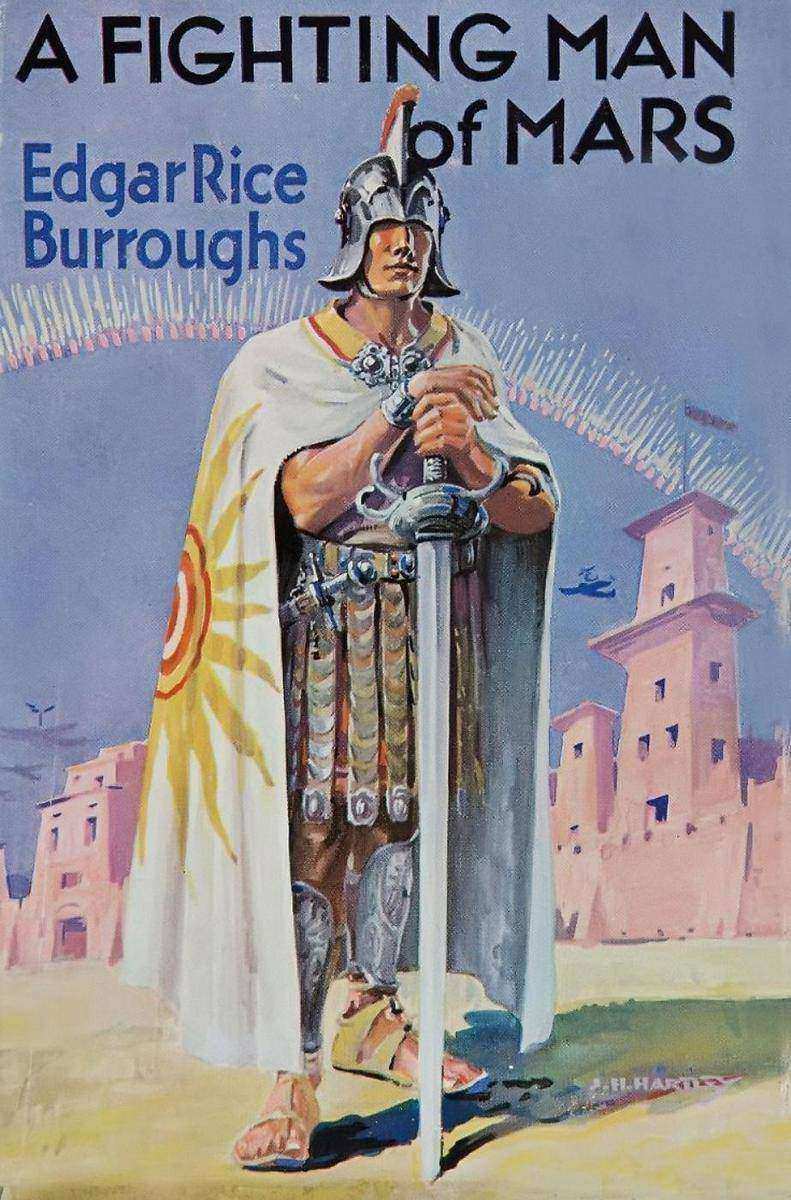
A Fighting Man of Mars is the seventh book in the Mars series, originally published in six-parts in Blue Book Magazine, May to September 1930. It is an interesting and exciting novel filled with futuristic scientific inventions. There are five enemy cities or lands encountered in this tale with five wonderfully drawn villains: Xanator with the green men and white apes; Tjanath with Haj Osis and “The Death”; Ghasta with Ghron the “spider”; Jhama with Phor Tak the mad scientist; and U-Gor with the cannibals. It is a high adventure in the best tradition of Edgar Rice Burroughs.
Bartleby, the Scrivener. A Story of Wall-Street
¥8.09
Accordingto Wikipedia: "Bartleby, the Scrivener: A Story of Wall Street is a novella by the American novelist Herman Melville (1819–1891). It first appeared anonymously in two parts in the November and December 1853 editions of Putnam's Magazine, and was reprinted with minor textual alterations in his The Piazza Tales in 1856. Herman Melville wrote the story as an emotional response to the fact that Pierre was published to bad reviews. Christopher Sten writes in "Bartleby, the Transcendentalist: Melville's Dead Letter to Emerson" Melville found inspiration in Ralph Waldo Emerson's essays, particularly "The Transcendentalist" which shows parallels to "Bartleby". Bartleby is a kind of clerk, a copyist, "who obstinately refuses to go on doing the sort of writing demanded of him." During the spring of 1851, Melville felt similarly about his work on Moby Dick. Thus, Bartleby can be seen to represent Melville’s frustration with his own situation as a writer, and the story itself is “about a writer that forsakes conventional modes because of an irresistible preoccupation with the most baffling philosophical questions... Though no great success at the time of publication, "Bartleby the Scrivener" is now among the most noted of American short stories."
C. Auguste Dupin, Detective: Three Mystery Stories
¥8.09
This file includes all three of Edgar Allan Poe's mystery stories featuring Detective C. August Dupin: The Murders in the Rue Morgue, The Mystery of Marie Roget, and The Purloined Letter. According to Wikipedia: "Dupin is not a professional detective and his motivations for solving the mysteries change throughout the three stories. Using what Poe termed "ratiocination", Dupin combines his considerable intellect with creative imagination, even putting himself in the mind of the criminal. His talents are strong enough that he appears able to read the mind of his companion, the unnamed narrator of all three stories."
The Witch of the Middle Ages
¥8.09
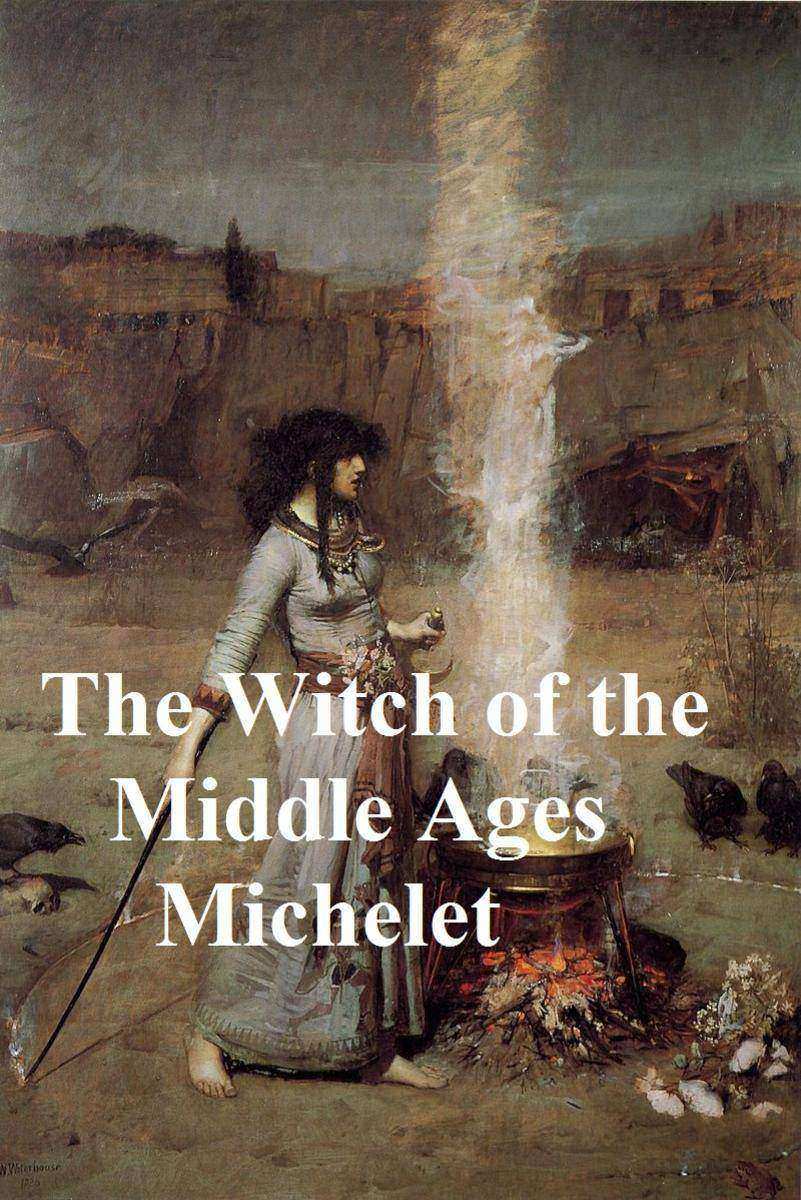
History of witchcraft in the Middle Ages. According to Wikipedia: "Jules Michelet (21 August 1798 – 9 February 1874) was a French historian. He was born in Paris to a family with Huguenot traditions." The Preface begins: "In this translation of a work rich in the raciest beauties and defects of an author long since made known to the British public, the present writer has striven to recast the trenchant humour, the scornful eloquence, the epigrammatic dash of Mr. Michelet, in language not all unworthy of such a word-master. How far he has succeeded others may be left to judge. In one point only is he aware of having been less true to his original than in theory he was bound to be."
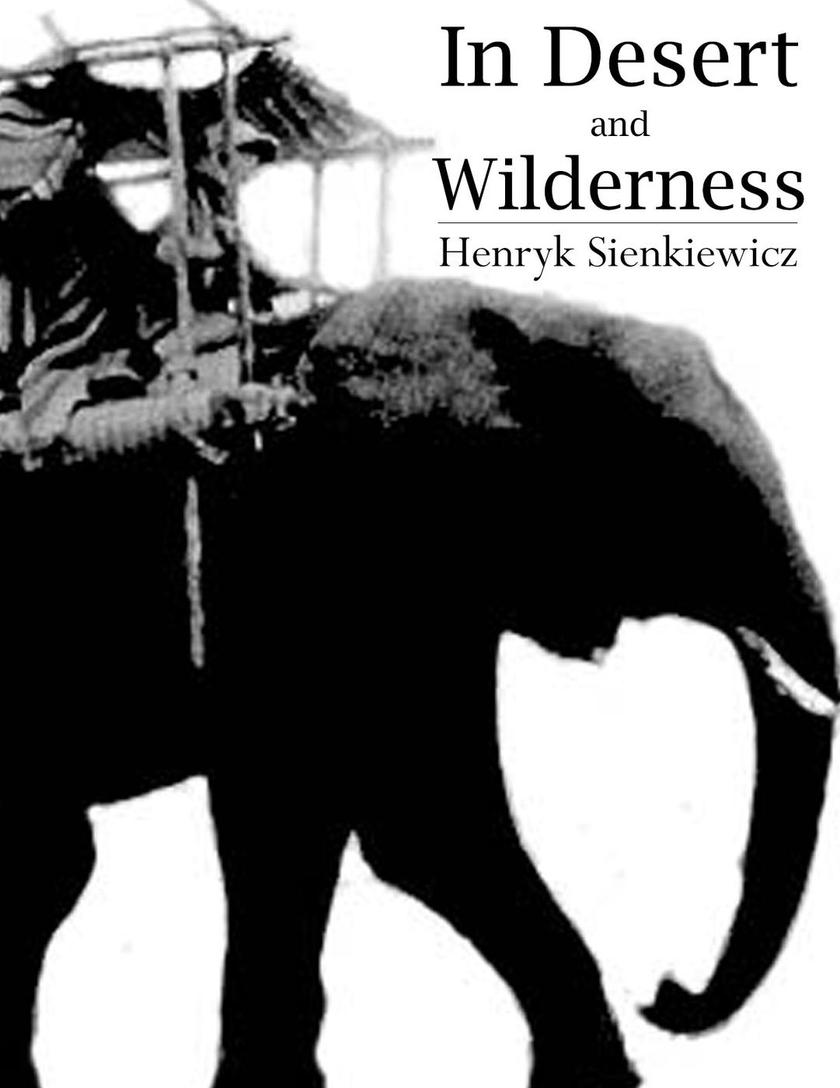
In Desert and Wilderness
¥18.56
In Desert and Wilderness is a popular novel for young people by Polish author and Nobel Prize-winning novelist Henryk Sienkiewicz, written in 1912. It is in fact the author's only novel written for children. It tells the story of two young friends, Sta? Tarkowski and Nel Rawlison, kidnapped by the rebels during Mahdi's rebellion in Sudan. It was adapted to cinema in 1973 and 2001.