


 购物车
 个人中心

Crito
¥40.79
The Crito seems intended to exhibit the character of Socrates in one light only, not as the philosopher, fulfilling a divine mission and trusting in the will of heaven, but simply as the good citizen, who having been unjustly condemned is willing to give up his life in obedience to the laws of the state . . .

Παιδι? τη? Μεσογε?ου
¥63.19
Ν?ο-ιστορικ?, ρεαλιστικ?, κοινωνικ?-πολιτικ? μυθιστ?ρημα, ιδια?τερα επ?καιρο, μια δυνατ? αναφορ? στην προσφυγικ? κρ?ση, που χτυπ? κυρ?ω? τα παιδι?, τα ασυν?δευτα προσφυγ?πουλα.Το φθιν?πωρο του 2014, η Λητ?, φιλ?λογο?, τοποθετε?ται ω? αναπληρ?τρια καθηγ?τρια σε Γυμν?σιο του νησιο? τη? Κω. Εκε?, συναντ? πρ?σφυγε? που καταφθ?νουν με σαπιοκ?ραβα απ? τι? τουρκικ?? ακτ??. Αποφασ?ζει συνειδητ? να βοηθ?σει του? πρ?σφυγε?, ω? εθελ?ντρια, στο ?Ιπποκρ?τειο? νοσοκομε?ο τη? Κω. Στο θ?λαμο του νοσοκομε?ου συναντ? τρει? Σ?ριου? πρ?σφυγε?, βαρι? τραυματισμ?νου?, τον Ασλ?ν, παλι? γν?ριμο, απ? τι? κοιν?? του? μεταπτυχιακ?? σπουδ?? στη Σκωτ?α, μαζ? με ?λλου? δυο Σ?ριου? φ?λου? του, τον Τζαμ?λ και τον Οσ?μα, που συνοδε?ουν ενν?α μικρ? παιδι?, προσφυγ?πουλα, ορφαν? πολ?μου. Η Λητ? εμπλ?κεται στη ζω? των τρι?ν ανδρ?ν και των ενν?α παιδι?ν. Το προσφυγικ? ζ?τημα γ?νεται δικ? τη? θ?μα, κομμ?τι του ψυχισμο? τη?, πρ?γμα που εκφρ?ζεται ?ντονα στα τραγο?δια που πα?ζει στην κιθ?ρα τη?, στου? μαθητ?? τη? στο σχολε?ο τη? Κω, στη ζω? τη?, στον τρ?πο που αναζητ? τι? θ?σει? τη? Ευρωπα?κ?? ?νωση?, τη? ?πατη? Αρμοστε?α? του ΟΗΕ, των εμπλεκ?μενων κρατ?ν. Στηρ?ζει με ιδια?τερη ευαισθησ?α τα ασυν?δευτα παιδι? - προσφυγ?πουλα, που π?φτουν θ?ματα επικ?νδυνων εγκληματι?ν και χ?νονται κατ? τη δι?ρκεια τη? πορε?α? του? προ? την κεντρικ? και β?ρεια Ευρ?πη, σε βρ?μικα κυκλ?ματα εκμετ?λλευση?, πορνε?α?, παιδεραστ?ν, εμπορ?ου ανθρωπ?νων οργ?νων, ναρκωτικ?ν, κ.?. Ο δυνατ?? ?ρωτ?? τη? για τον Ασλ?ν και η αγ?πη τη? για τα παιδι? την οδηγε? μαζ? του?, στην κεντρικ? Ευρ?πη και στην ενεργ? συμμετοχ? τη? στο προσφυγικ? ζ?τημα καθ?? και στην τοποθ?τησ? τη? με πρακτικ? τρ?πο, σε ?να θ?μα που αφορ? ?λη την Ευρ?πη, την παγκ?σμια κοιν?τητα, τον ΟΗΕ, καθ?? χτυπ?ει β?ναυσα, εδ? και χρ?νια, του? λαο?? τη? Μεσογε?ου και υποθ?λπει κρυφ?, ?νομα, αλλ? και φανερ? συμφ?ροντα.Ε?ναι ?να βιβλ?ο που χτυπ? τον ρατσισμ?, την ξενοφοβ?α, τι? θρησκευτικ?? προκαταλ?ψει?, στηρ?ζει τον ?νθρωπο και τι? πανανθρ?πινε? αξ?ε?, που κουρελι?ζονται απ? πολ?μου?, εμφυλ?ου?, μ?ση, φανατισμο?? και ζητ? αλληλεγγ?η και πιστ? εφαρμογ? των ν?μων και καν?νων του ΟΗΕ, που ?χουν να κ?νουν με τα ανθρ?πινα δικαι?ματα.
Children of the Mediterranean: The odyssey of the Unescorted Refugee Children
¥63.19
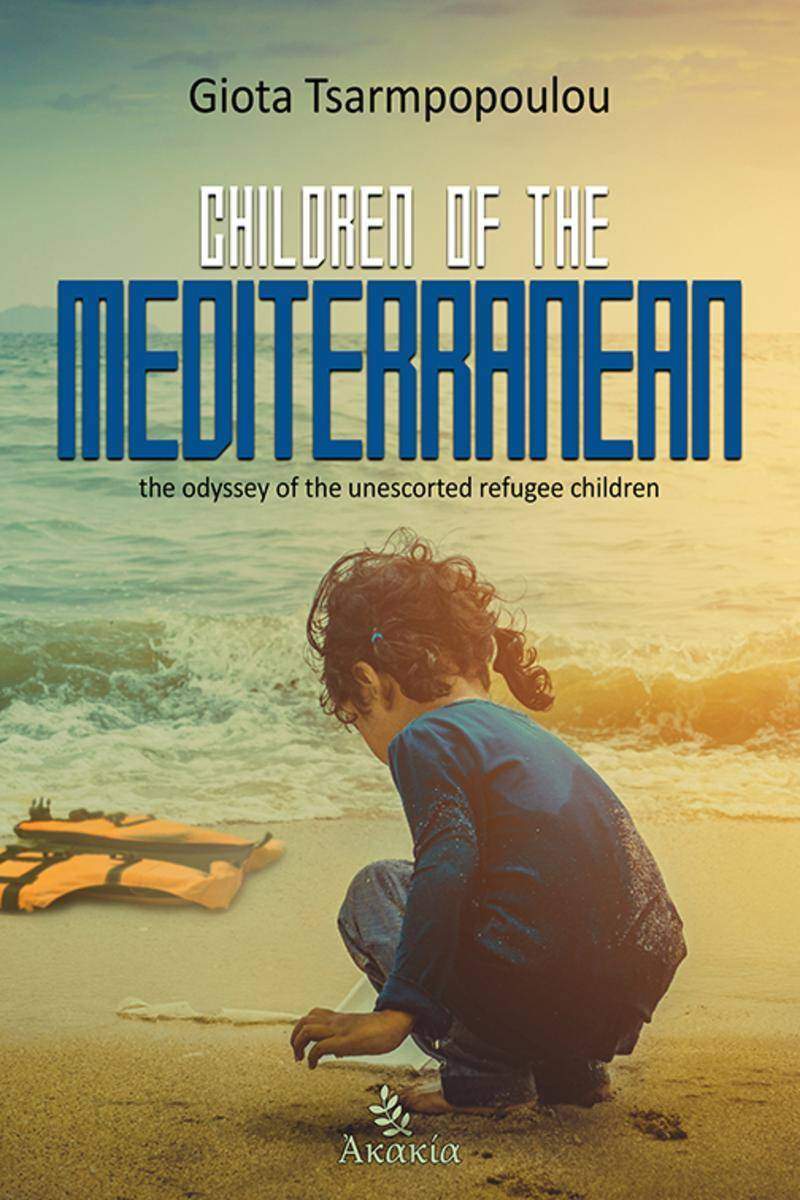
A new-historical, realistic, social-political novel. A current, strong reference to the refugee crisis, which strikes the unescorted innocent refugee children.At the beginning of the autumn of 2014, Leto, a teacher of Greek literature is assigned in a secondary school of Kos, as a contract teacher. There, she meets a lot of refugees from Syria, who arrive on the island, with old and rusty boats, from the Turkish shores. After a big wreck, she consciously decides to help them as a volunteer in “Hippokratio” hospital of Kos. There, she is responsible for three heavily injured men from Syria. One of them is Aslan, a friend from their common post graduate studies in Aberdeen University, Scotland. In the same room, there are two other friends of him, Jamal and Ossama. They all accompany nine refugee children, orphans of the war. Leto is involved in the life of the three injured men and the nine refugee children. The refugee issue becomes her own issue, a part of her, which she wholeheartedly expresses through playing her guitar to her students of Kos throughout her whole life. She challenges the attitudes of European Union and the United Nations High Commissioner for Refugees, as well as all the involved nations. She stands by the unescorted refugee children, sensitively, who become victims of dangerous criminals and they get lost in den of vices of prostitution, pederasty, trafficking in human organs, drugs and so on, on their way to the Central and North Europe. Leto’s strong love for Aslan and her love for children leads her to the Central Europe where she participates energetically to the refugee matter, and she takes position practically, to an item which overconcerns all Europe, the whole world, the United Nations, as it brutally beats all the nations of Mediterranean Sea, pandering hidden and illegal interests, but obvious too.A book which challenges racism, xenophobia and religious prejudice, stands by the human and supports the universal values that are torn up by the war, the civil war, the total hatreds, and fanatics. It is asking for solidarity and faithful implementation of laws and rules of the U.N., which are closely linked to the human rights.
The African Wars
¥40.79
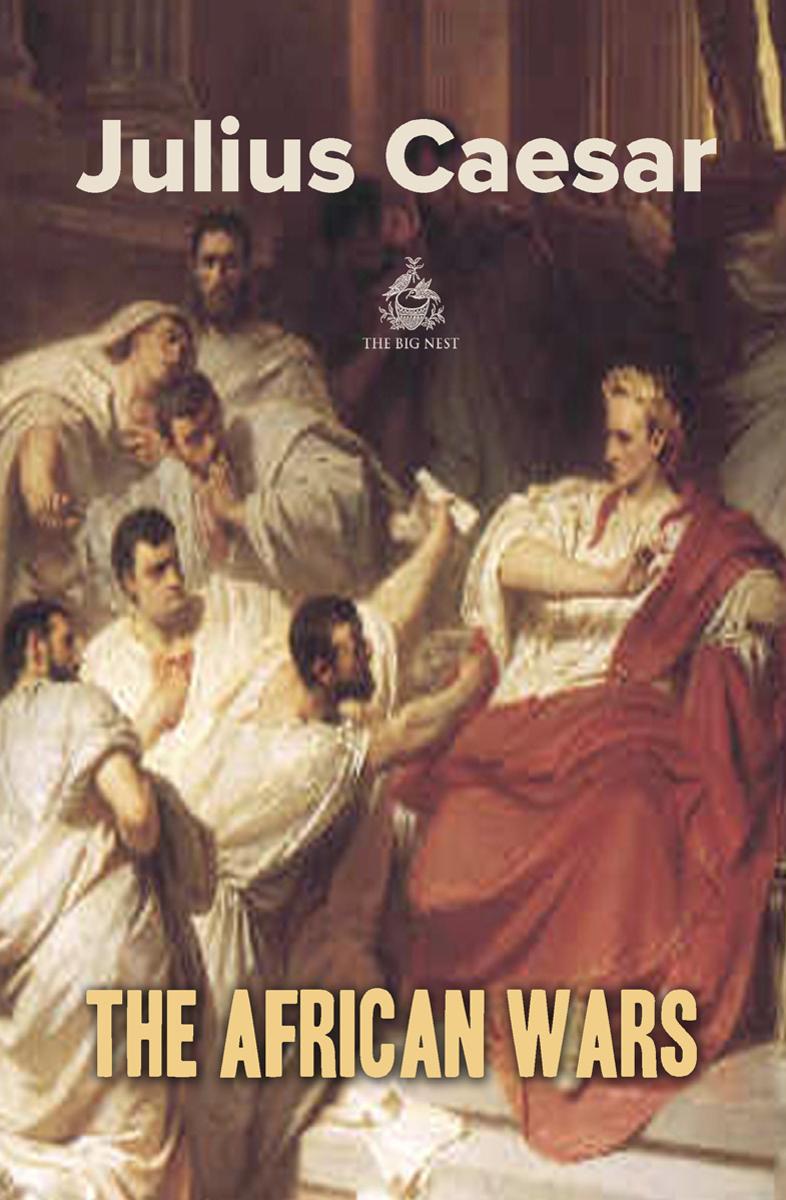
Caesar, advancing by moderate journeys, and continuing his march without intermission, arrived at Lilybaeum, on the 14th day before the calends of January. Designing to embark immediately, though he had only one legion of new levies, and not quite six hundred horse, he ordered his tent to be pitched so near the sea-side that the waves lashed the very foot of it. This he did with a view that none should think he had time to delay, and that his men might be kept in readiness at a day or an hour's warning. Though the wind at that time was contrary, he nevertheless detained the soldiers and mariners on board, that he might lose no opportunity of sailing; the rather, because the forces of the enemy were announced by the inhabitants of the province, to consist of innumberable cavalry not to be numbered; four legions headed by Juba, together with a great body of light-armed troops; ten legions under the command of Scipio; a hundred and twenty elephants, and fleets in abundance. Yet he was not alarmed, nor lost his confident hopes and spirits. Meantime the number of galleys and transports increased daily; the new-levied legions flocked in to him from all parts; among the rest the fifth, a veteran legion, and about two thousand horse.
The Alexandrian Wars
¥40.79
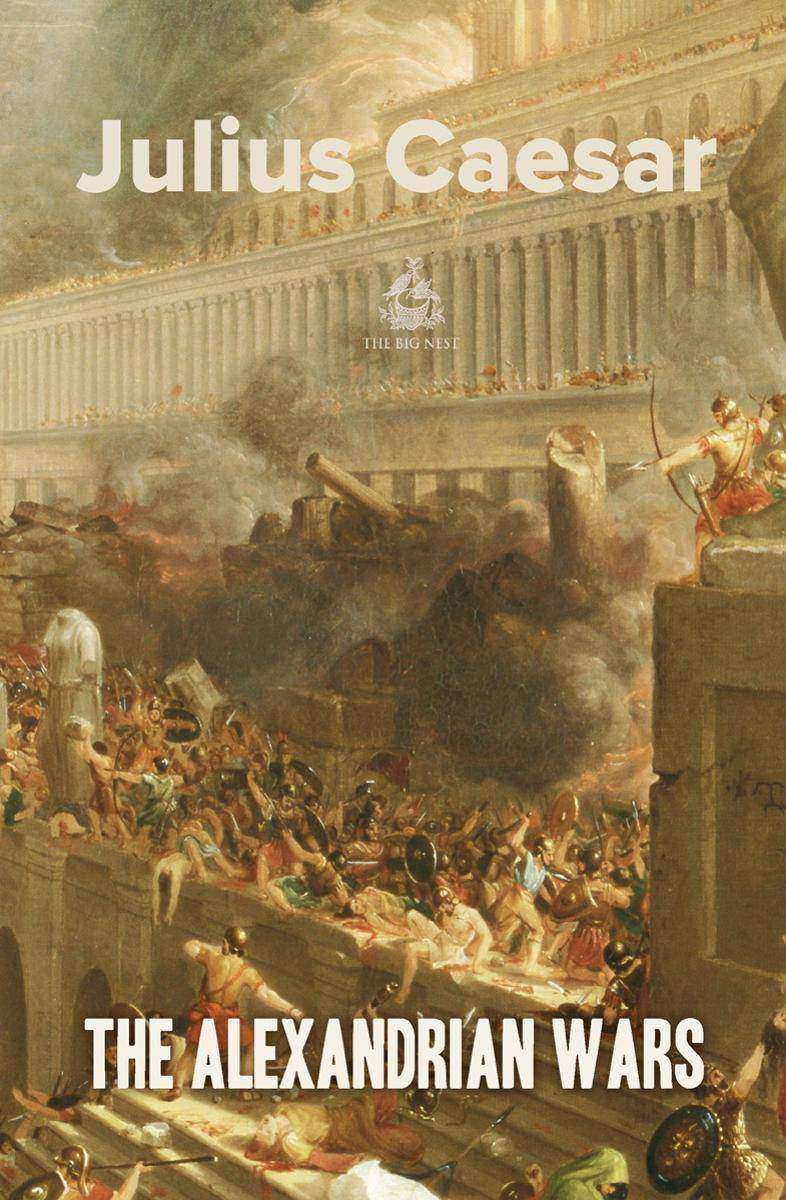
When the war broke out at Alexandria, Caesar sent to Rhodes, Syria, and Cilicia, for all his fleet; and summoned archers from Crete, and cavalry from Malchus, king of the Nabatheans. He likewise ordered military engines to be provided, corn to be brought, and forces dispatched to him. Meanwhile he daily strengthened his fortifications by new works; and such parts of the town as appeared less tenable were strengthened with testudos and mantelets. Openings were made in the walls, through which the battering-rams might play; and the fortifications were extended over whatever space was covered with ruins, or taken by force. For Alexandria is in a manner secure from fire, because the houses are all built without joists or wood, and are all vaulted, and roofed with tile or pavement.
The Civil Wars, Book 1
¥40.79
Caesar, although he was not as yet at open enmity with him, determined neither to aid him by his influence nor openly oppose him on this occasion. But the consuls Lentulus and Marcellus, who had previously been on unfriendly terms with Caesar, resolved to use all means in their power to prevent him from gaining his object. Marcellus in particular did not hesitate to offer Caesar other insults. Caesar had lately planned the colony of Novumcomum in Gaul: Marcellus, not content with taking from it the right of citizenship, ordered the principal man of the colony to be arrested and scourged at Rome, and sent him to make his complaints to Caesar: an insult of this description had never before been offered to a Roman citizen.
On Memory and Reminiscence
¥40.79
We have, in the next place, to treat of Memory and Remembering, considering its nature, its cause, and the part of the soul to which this experience, as well as that of Recollecting, belongs. For the persons who possess a retentive memory are not identical with those who excel in power of recollection; indeed, as a rule, slow people have a good memory, whereas those who are quick-witted and clever are better at recollecting.
Metaphysics
¥40.79
All men by nature desire to know. An indication of this is the delight we take in our senses; for even apart from their usefulness they are loved for themselves; and above all others the sense of sight. For not only with a view to action, but even when we are not going to do anything, we prefer seeing (one might say) to everything else. The reason is that this, most of all the senses, makes us know and brings to light many differences between things.


放下心中的尺子——《庄子》哲学50讲(人文大讲堂)
¥28.80
庄子在思维上很通透,在情感上很洒脱,在生活中很有趣,他解构了世间所有的尺子,生成了一种独立自由的人格。庄子思想具有极强的自省与批判精神,以语言、卮言、重言的独特写法,生成了一种不容易被概念化与意识形态化的活泼文本。《庄子》这本书为我们打开了很多扇门,道术,生死,天人,美丑,善恶,真假,梦醒,……每一扇门都是通向自由的方便法门。本书立足学术,面对现实,针对工业化与信息化时代的焦虑、困顿、颓丧等实际生活处境与心灵生态,系统讲解了《庄子》内七篇,引领我们通过自省与批判,解除外在的尺子;通过修身与功夫,解除内在的尺子,身心合一,万物一体,合乎大道而能游刃有余。
重大时代课题与科学理论体系(马克思主义理论研究与当代中国书系)
¥34.00
本书是作者研究党的十八大以来*新时代中国特色社会主义思想的相关成果,从新时代中国特色社会主义的基本支柱、实践基础、根本原则、历史使命、总体布局、安全保证、领导力量、领导方法等方面,系统回答了“新时代坚持和发展什么样的中国特色社会主义、怎样坚持和发展中国特色社会主义”这一重大时代课题,阐述了重大时代课题是科学理论体系的基石。 本书有两大特:*,以新时代中国特色社会主义的重要问题和*新时代中国特色社会主义思想的重要内容为研究对象,具有现实性。第二,研究内容既内含实践逻辑,又内生出理论逻辑,具有思辨性。
Symposium
¥40.79
Of all the works of Plato the Symposium is the most perfect in form, and may be truly thought to contain more than any commentator has ever dreamed of; or, as Goethe said of one of his own writings, more than the author himself knew. For in philosophy as in prophecy glimpses of the future may often be conveyed in words which could hardly have been understood or interpreted at the time when they were uttered.
Euthyphro
¥40.79
In the Meno, Anytus had parted from Socrates with the significant words: 'That in any city, and particularly in the city of Athens, it is easier to do men harm than to do them good;' and Socrates was anticipating another opportunity of talking with him. In the Euthyphro, Socrates is awaiting his trial for impiety. But before the trial begins, Plato would like to put the world on their trial, and convince them of ignorance in that very matter touching which Socrates is accused. An incident which may perhaps really have occurred in the family of Euthyphro, a learned Athenian diviner and soothsayer, furnishes the occasion of the discussion.
Theaetetus
¥40.79
Some dialogues of Plato are of so various a character that their relation to the other dialogues cannot be determined with any degree of certainty. The Theaetetus, like the Parmenides, has points of similarity both with his earlier and his later writings. The perfection of style, the humour, the dramatic interest, the complexity of structure, the fertility of illustration, the shifting of the points of view, are characteristic of his best period of authorship. The vain search, the negative conclusion, the figure of the midwives, the constant profession of ignorance on the part of Socrates, also bear the stamp of the early dialogues, in which the original Socrates is not yet Platonized.
Sophist
¥40.79
There are no descriptions of time, place or persons, in the Sophist and Statesman, but we are plunged at once into philosophical discussions; the poetical charm has disappeared, and those who have no taste for abstruse metaphysics will greatly prefer the earlier dialogues to the later ones. Plato is conscious of the change, and in the Statesman expressly accuses himself of a tediousness in the two dialogues, which he ascribes to his desire of developing the dialectical method.
On the Gait of Animals
¥40.79
We have now to consider the parts which are useful to animals for movement in place (locomotion); first, why each part is such as it is and to what end they possess them; and second, the differences between these parts both in one and the same creature, and again by comparison of the parts of creatures of different species with one another. First then let us lay down how many questions we have to consider.
Discourse on Inequality
¥40.79
Rousseau first exposes in this work his conception of a human state of nature, presented as a philosophical fiction, and of human perfectibility, an early idea of progress. He then explains the way, according to him, people may have established civil society, which leads him to present private property as the original source and basis of all inequality.
The Social Contract
¥40.79
A book in which Rousseau theorized about the best way to establish a political community in the face of the problems of commercial society, which he had already identified in his Discourse on Inequality. The Social Contract helped inspire political reforms or revolutions in Europe, especially in France. The Social Contract argued against the idea that monarchs were divinely empowered to legislate. Rousseau asserts that only the people, who are sovereign, have that all-powerful right.
The Spanish Wars: English and Latin Language
¥40.79
On the defeat of Pharnaces and reduction of Africa, those who escaped from those battles fled to young Cn. Pompey, who had taken possession of Further Spain, while Caesar was detained in Italy in exhibiting games. Pompey began to throw himself on the protection of every state, in order the more readily to establish the means of defense against him. Accordingly, with a considerable force which had been collected, partly by entreaty, partly by force, he began to lay waste the province. Under these circumstances some states voluntarily sent him supplies, others shut the gates of their towns against him. If any of these chanced to fall into his hands by assault, although some citizen in it had deserved well of Cn. Pompey (his father), yet some cause was alleged against him on account of the greatness of his wealth, so that, he being dispatched, his fortune might become the reward of the soldiers.
Categories
¥40.79
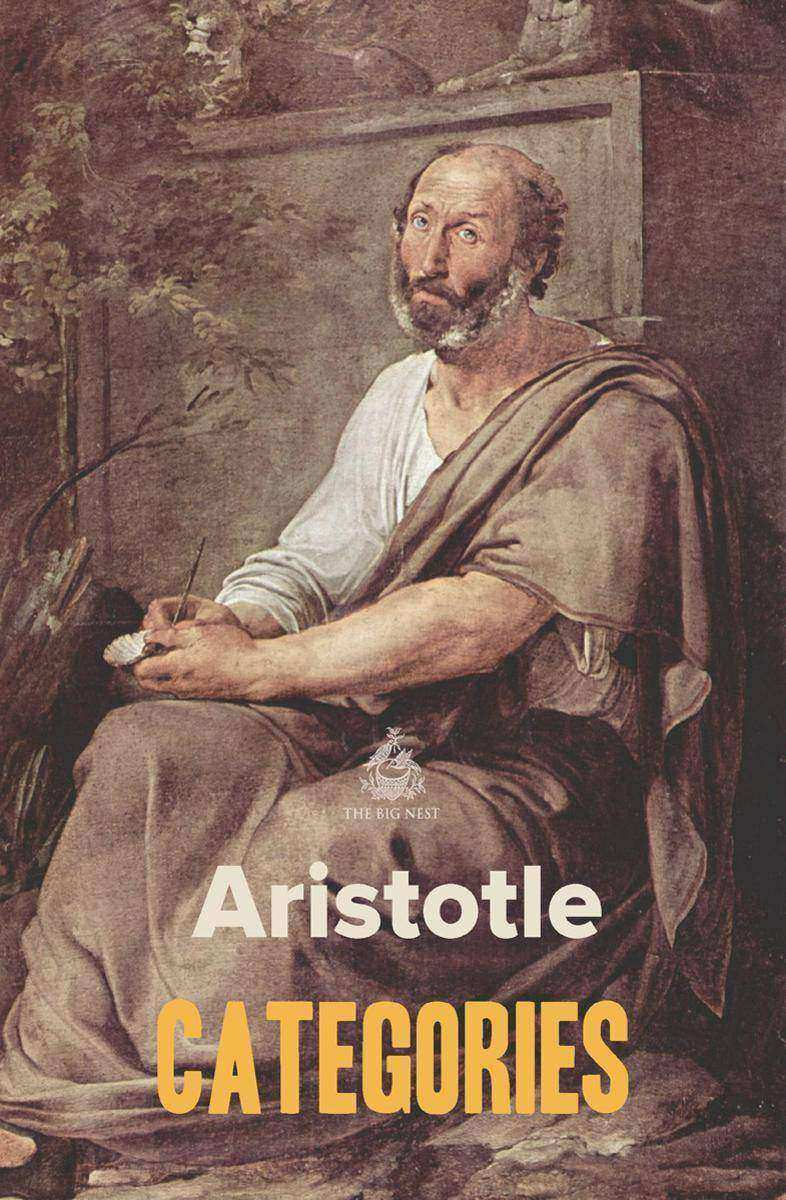
Categories is a text from Aristotle's Organon that enumerates all the possible kinds of things that can be the subject or the predicate of a proposition. They are considered the single most heavily discussed of all Aristotelian notions.

The Critique of Pure Reason
¥40.79
One of the most influential works in the history of philosophy. Known as Kant's First Critique, dealing with questions concerning the foundations and extent of human knowledge, Kant builds on the work of empiricist philosophers such as John Locke and David Hume, as well as taking into account the theories of rationalist philosophers such as Gottfried Wilhelm Leibniz and Christian Wolff.
The African Wars: English and Latin Language
¥40.79
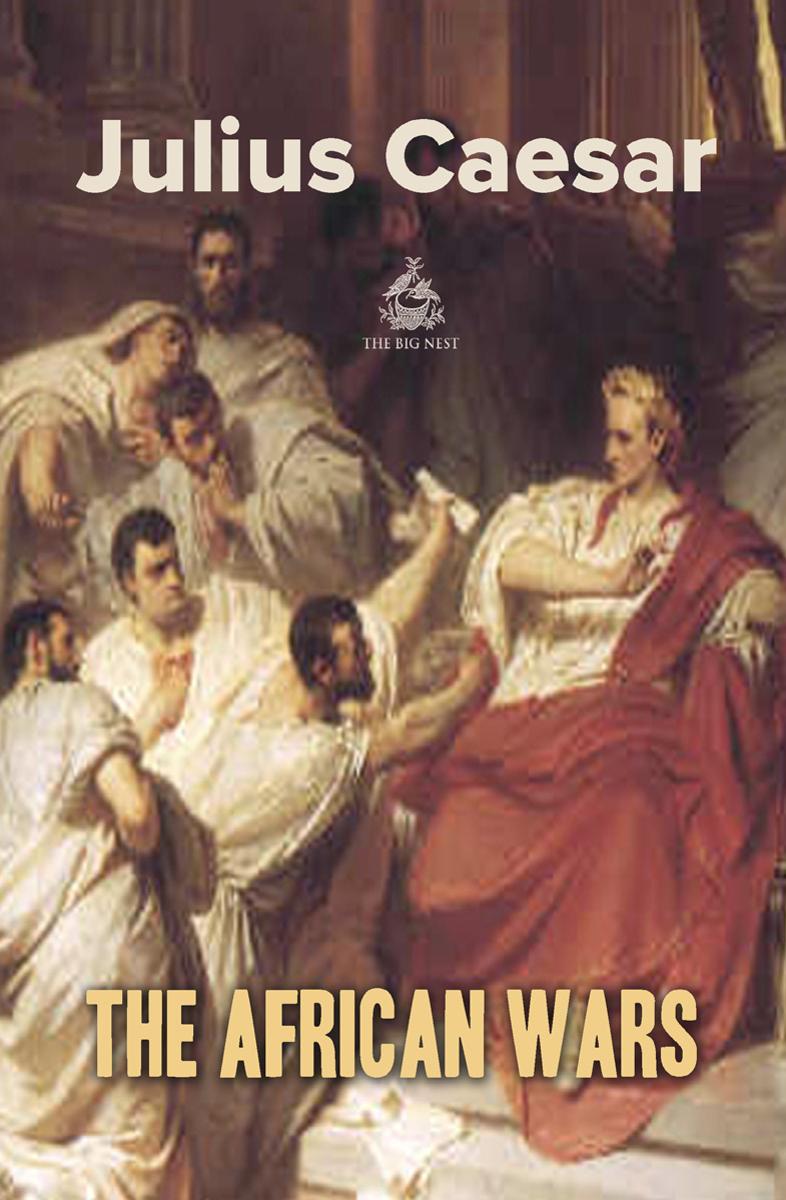
Caesar, advancing by moderate journeys, and continuing his march without intermission, arrived at Lilybaeum, on the 14th day before the calends of January. Designing to embark immediately, though he had only one legion of new levies, and not quite six hundred horse, he ordered his tent to be pitched so near the sea-side that the waves lashed the very foot of it. This he did with a view that none should think he had time to delay, and that his men might be kept in readiness at a day or an hour's warning. Though the wind at that time was contrary, he nevertheless detained the soldiers and mariners on board, that he might lose no opportunity of sailing; the rather, because the forces of the enemy were announced by the inhabitants of the province, to consist of innumberable cavalry not to be numbered; four legions headed by Juba, together with a great body of light-armed troops; ten legions under the command of Scipio; a hundred and twenty elephants, and fleets in abundance. Yet he was not alarmed, nor lost his confident hopes and spirits. Meantime the number of galleys and transports increased daily; the new-levied legions flocked in to him from all parts; among the rest the fifth, a veteran legion, and about two thousand horse.


