


 购物车
购物车 个人中心
个人中心

知行合一王阳明:青少版
¥40.60
本书是度阴山百万级畅销书“知行合一王阳明” 系列的青少版。作者从现代青少年的日常生活出发,针对“立志”“面对困境如何突破自我”“人际交往”等成长问题,从王阳明心学思想中遴选了对应的解决方法,创新性地古为今用,指引孩子认识自我、提升自我、改变人生,他们的视野和格局,启迪孩子思维,让他们的未来拥有更多可能。

野性心灵,野性大地
¥40.60
我们所栖居的星球,正滑向一场由人类亲手铸就的第六次大灭绝灾难。这一生态危机的源头并非天灾,而是植根于西方文明的形而上学二元论。这种将思维与物质、主观与客观彻底割裂的传统,导致了对心灵与大地原初亲缘的彻底遗忘。 戴维·欣顿以唐诗(杜牧《鹭鸶》)为引,直指核心:阻止这场危机,是关乎精神与哲学的命题。我们必须终结那种将自然贬为工具、引发剥削性破坏的自我预设。欣顿呼吁重拾修复人与地球关系的智慧,尤其是道家-禅宗的“见性”修行,这种洞察要求我们达到“空心”的境界,超越狭隘的自我,去感知山水、风景所蕴含的宇宙生生之力。作者展示了这种古老见解如何在西方得到了充分印证,并为人类提供了一个回归生命本质的生态愿景。 第六次灭绝可能无法扭转,然而欣顿的诗意之思提供了深刻的慰藉。这本作品不仅是对生态危机的警世之言,更是一部指引我们回归内在和谐、在万物流转中实现逍遥游的哲学指南。

时间的香气:驻留的艺术(韩炳哲作品系列)
¥40.60
如今的时间危机并非加速。加速的时代早已过去。目前我们认为的加速,只是时间涣散的症状之一。今日的时间危机源于一种导致各类时间障碍和错误感知的时间紊乱。时间缺乏有序的节奏,陷失调状态。这种紊乱让时间仿佛在飞驰。 这种时间紊乱并非强制加速的结果,其首要原因是时间的原子化,这也是为什么人们感觉时间的流逝比以往快得多。时间涣散导致人们不可能去经验何为持存。没什么能让时间驻足。生命不再被嵌能创建持存的秩序体或坐标系中。 本书通过回顾历史提请人们注意,必须换一种方式理解日常生活,以避免陷时间危机。作者缅怀的并非“讲述的时间”。讲述的终结,或故事的终结,并不一定意味着时间上的空白。它有可能启一种无关神学和目的论的、散发自己独特香气的生命时间。它的前提是让“沉思的生活”复苏。 -------------------- 韩炳哲作品(第2辑) 《山寨:中国式解构》(2023年1月出版) Shanzhai. Dekonstruktion auf Chinesisch. 《超文化:文化与全球化》(2023年1月出版) Hyperkulturalität. Kultur und Globalisierung. 《妥协社会:今日之痛》(2023年1月出版) Palliativgesellschaft. Schmerz heute. 《不在场:东亚文化与哲学》(2023年7月出版) Abwesen. Zur Kultur und Philosophie des Fernen Ostens. 《禅宗哲学》(2023年8月出版) Philosophie des Zen-Buddhismus. 《什么是权力?》(2023年7月出版) Was ist Macht? 《仪式的消失:当下的世界》(2023年8月出版) Vom Verschwinden der Rituale.Eine Topologie der Gegenwart. 《资本主义与死亡驱力》(2023年8月出版) Kapitalismus und Todestrieb. 《沉思的生活,或无所事事》(2023年7月出版) Vita contemplativa.oder von der Untätigkeit. 韩炳哲作品(第3辑) 《大地颂歌:花园之旅》(2024年5月出版) Lob der Erde. Eine Reise in den Garten. 《时间的香气:驻留的艺术》(2024年5月出版) Duft der Zeit. Ein philosophischer Essay zur Kunst des Verweilens. 《叙事的危机》(2024年5月出版) Die Krise der Narration.
Lord Arthur Savile's Crime and Other Stories
¥40.79
Lord Arthur Savile's Crime is the opening story in this volume of Oscar Wilde tales and this collection will delight the reader with slightly darker undertones of Wilde's hugely enjoyable humorous tales. Also included in this collection: The Canterville Ghost, The Sphinx Without a Secret, The Modle Millionaire, The Protrait of Mr. W.H.
Emelian And The Empty Drum
¥40.79
Emelian was a labourer and worked for a master. He was walking through a field one day on his way to work, when a frog hopped in front of him and he just missed crushing it by stepping across. Suddenly some one called to him from behind. He turned, and there stood a beautiful maiden, who said to him, 'Why don’t you marry, Emelian?'
Meno
¥40.79
This Dialogue begins abruptly with a question of Meno, who asks, 'whether virtue can be taught.' Socrates replies that he does not as yet know what virtue is, and has never known anyone who did. 'Then he cannot have met Gorgias when he was at Athens.' Yes, Socrates had met him, but he has a bad memory, and has forgotten what Gorgias said. Will Meno tell him his own notion, which is probably not very different from that of Gorgias? 'O yes—nothing easier: there is the virtue of a man, of a woman, of an old man, and of a child; there is a virtue of every age and state of life, all of which may be easily described.'
Crito
¥40.79
The Crito seems intended to exhibit the character of Socrates in one light only, not as the philosopher, fulfilling a divine mission and trusting in the will of heaven, but simply as the good citizen, who having been unjustly condemned is willing to give up his life in obedience to the laws of the state . . .
Categories
¥40.79
Categories is a text from Aristotle's Organon that enumerates all the possible kinds of things that can be the subject or the predicate of a proposition. They are considered the single most heavily discussed of all Aristotelian notions.
On the Duty of Civil Disobedience
¥40.79
In Civil Disobedience Thoreau argues that individuals should not permit governments to overrule or atrophy their consciences, and that they have a duty to avoid allowing such acquiescence to enable the government to make them the agents of injustice.
Sophist
¥40.79
There are no descriptions of time, place or persons, in the Sophist and Statesman, but we are plunged at once into philosophical discussions; the poetical charm has disappeared, and those who have no taste for abstruse metaphysics will greatly prefer the earlier dialogues to the later ones. Plato is conscious of the change, and in the Statesman expressly accuses himself of a tediousness in the two dialogues, which he ascribes to his desire of developing the dialectical method.
On the Gait of Animals
¥40.79
We have now to consider the parts which are useful to animals for movement in place (locomotion); first, why each part is such as it is and to what end they possess them; and second, the differences between these parts both in one and the same creature, and again by comparison of the parts of creatures of different species with one another. First then let us lay down how many questions we have to consider.
Discourse on Inequality
¥40.79
Rousseau first exposes in this work his conception of a human state of nature, presented as a philosophical fiction, and of human perfectibility, an early idea of progress. He then explains the way, according to him, people may have established civil society, which leads him to present private property as the original source and basis of all inequality.
The Social Contract
¥40.79
A book in which Rousseau theorized about the best way to establish a political community in the face of the problems of commercial society, which he had already identified in his Discourse on Inequality. The Social Contract helped inspire political reforms or revolutions in Europe, especially in France. The Social Contract argued against the idea that monarchs were divinely empowered to legislate. Rousseau asserts that only the people, who are sovereign, have that all-powerful right.
The African Wars
¥40.79
Caesar, advancing by moderate journeys, and continuing his march without intermission, arrived at Lilybaeum, on the 14th day before the calends of January. Designing to embark immediately, though he had only one legion of new levies, and not quite six hundred horse, he ordered his tent to be pitched so near the sea-side that the waves lashed the very foot of it. This he did with a view that none should think he had time to delay, and that his men might be kept in readiness at a day or an hour's warning. Though the wind at that time was contrary, he nevertheless detained the soldiers and mariners on board, that he might lose no opportunity of sailing; the rather, because the forces of the enemy were announced by the inhabitants of the province, to consist of innumberable cavalry not to be numbered; four legions headed by Juba, together with a great body of light-armed troops; ten legions under the command of Scipio; a hundred and twenty elephants, and fleets in abundance. Yet he was not alarmed, nor lost his confident hopes and spirits. Meantime the number of galleys and transports increased daily; the new-levied legions flocked in to him from all parts; among the rest the fifth, a veteran legion, and about two thousand horse.
The Spanish Wars: English and Latin Language
¥40.79
On the defeat of Pharnaces and reduction of Africa, those who escaped from those battles fled to young Cn. Pompey, who had taken possession of Further Spain, while Caesar was detained in Italy in exhibiting games. Pompey began to throw himself on the protection of every state, in order the more readily to establish the means of defense against him. Accordingly, with a considerable force which had been collected, partly by entreaty, partly by force, he began to lay waste the province. Under these circumstances some states voluntarily sent him supplies, others shut the gates of their towns against him. If any of these chanced to fall into his hands by assault, although some citizen in it had deserved well of Cn. Pompey (his father), yet some cause was alleged against him on account of the greatness of his wealth, so that, he being dispatched, his fortune might become the reward of the soldiers.
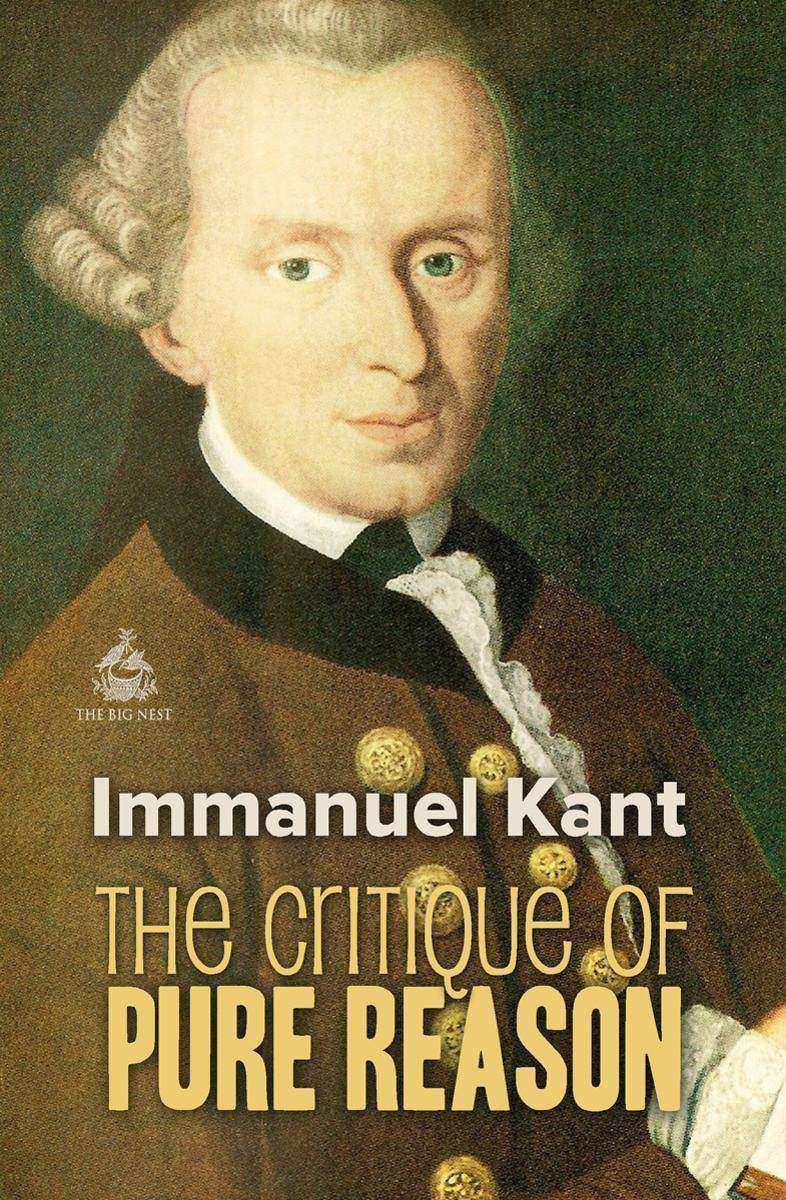
The Critique of Pure Reason
¥40.79
One of the most influential works in the history of philosophy. Known as Kant's First Critique, dealing with questions concerning the foundations and extent of human knowledge, Kant builds on the work of empiricist philosophers such as John Locke and David Hume, as well as taking into account the theories of rationalist philosophers such as Gottfried Wilhelm Leibniz and Christian Wolff.
The African Wars: English and Latin Language
¥40.79
Caesar, advancing by moderate journeys, and continuing his march without intermission, arrived at Lilybaeum, on the 14th day before the calends of January. Designing to embark immediately, though he had only one legion of new levies, and not quite six hundred horse, he ordered his tent to be pitched so near the sea-side that the waves lashed the very foot of it. This he did with a view that none should think he had time to delay, and that his men might be kept in readiness at a day or an hour's warning. Though the wind at that time was contrary, he nevertheless detained the soldiers and mariners on board, that he might lose no opportunity of sailing; the rather, because the forces of the enemy were announced by the inhabitants of the province, to consist of innumberable cavalry not to be numbered; four legions headed by Juba, together with a great body of light-armed troops; ten legions under the command of Scipio; a hundred and twenty elephants, and fleets in abundance. Yet he was not alarmed, nor lost his confident hopes and spirits. Meantime the number of galleys and transports increased daily; the new-levied legions flocked in to him from all parts; among the rest the fifth, a veteran legion, and about two thousand horse.
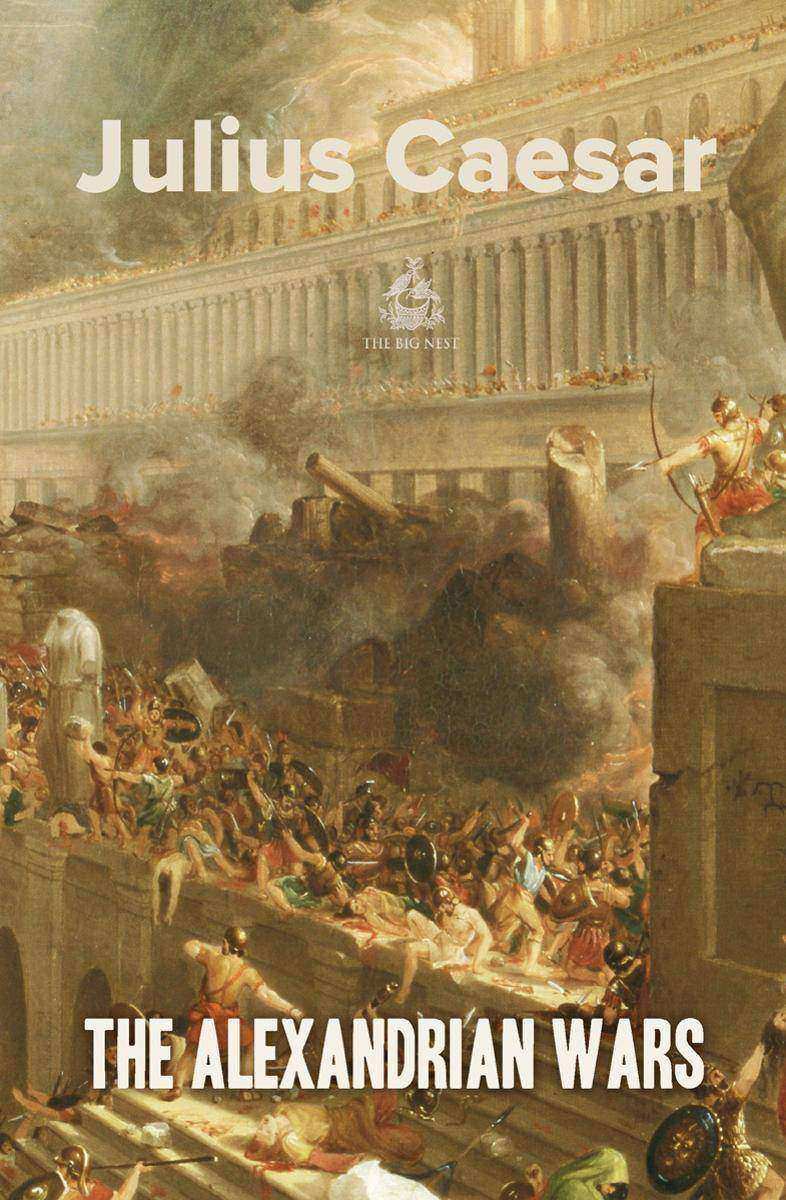
The Alexandrian Wars
¥40.79
When the war broke out at Alexandria, Caesar sent to Rhodes, Syria, and Cilicia, for all his fleet; and summoned archers from Crete, and cavalry from Malchus, king of the Nabatheans. He likewise ordered military engines to be provided, corn to be brought, and forces dispatched to him. Meanwhile he daily strengthened his fortifications by new works; and such parts of the town as appeared less tenable were strengthened with testudos and mantelets. Openings were made in the walls, through which the battering-rams might play; and the fortifications were extended over whatever space was covered with ruins, or taken by force. For Alexandria is in a manner secure from fire, because the houses are all built without joists or wood, and are all vaulted, and roofed with tile or pavement.
The Civil Wars, Book 1
¥40.79
Caesar, although he was not as yet at open enmity with him, determined neither to aid him by his influence nor openly oppose him on this occasion. But the consuls Lentulus and Marcellus, who had previously been on unfriendly terms with Caesar, resolved to use all means in their power to prevent him from gaining his object. Marcellus in particular did not hesitate to offer Caesar other insults. Caesar had lately planned the colony of Novumcomum in Gaul: Marcellus, not content with taking from it the right of citizenship, ordered the principal man of the colony to be arrested and scourged at Rome, and sent him to make his complaints to Caesar: an insult of this description had never before been offered to a Roman citizen.
On Memory and Reminiscence
¥40.79
We have, in the next place, to treat of Memory and Remembering, considering its nature, its cause, and the part of the soul to which this experience, as well as that of Recollecting, belongs. For the persons who possess a retentive memory are not identical with those who excel in power of recollection; indeed, as a rule, slow people have a good memory, whereas those who are quick-witted and clever are better at recollecting.
Metaphysics
¥40.79
All men by nature desire to know. An indication of this is the delight we take in our senses; for even apart from their usefulness they are loved for themselves; and above all others the sense of sight. For not only with a view to action, but even when we are not going to do anything, we prefer seeing (one might say) to everything else. The reason is that this, most of all the senses, makes us know and brings to light many differences between things.


