万本电子书0元读

万本电子书0元读

Books and Persons: Being Comments on a Past Epoch (1908-1911)
Arnold Bennett
¥8.09
Dodo Collections brings you another classic from Arnold Bennett, ‘"Books and Persons; Being Comments on a Past Epoch, 1908-1911".’ ? The contents of this book have been chosen from a series of weekly articles which enlivened the?New Ageduring the years 1908, 1909, 1910, and 1911, under the pseudonym "Jacob Tonson." The man responsible for the republication is the dedicatee, who, having mysteriously demanded from me back numbers of theNew Age, sat in my house one Sunday afternoon and in four hours read through the entire series. He then announced that he had made a judicious selection, and that the selection must positively be issued in volume form. Mr. Frank Swinnerton approved the selection and added to it slightly. In my turn I suggested a few more additions. The total amounts to one-third of the original matter. Beyond correcting misprints, softening the crudity of several epithets, and censoring lines here and there which might give offence without helping the sacred cause, I have not altered the articles. They appear as they were journalistically written in Paris, London, Switzerland, and the Forest of Fontainebleau. In particular I have left the critical judgments alone, for the good reason that I stand by nearly all of them, though perhaps with a less challenging vivacity, to this day. ARNOLD BENNETT February 1917 Enoch Arnold Bennett (always known as Arnold Bennett) was one of the most remarkable literary figures of his time, a product of the English Potteries that he made famous as the Five Towns. Yet he could hardly wait to escape his hometown, and he did so by the sheer force of his ambition to succeed as an author. In his time he turned his hand to every kind of writing, but he will be remembered for such novels as The Old Wives' Tale, the Clayhanger trilogy (Clayhanger, Hilda Lessways, and These Twain), and The Card. He also wrote such intriguing self-improvement books as Literary Taste, How To Live on 24 Hours a Day, The Human Machine, etc.
Twelve Types
Twelve Types
G. K. Chesterton
¥8.09
Collection of biographical essays, including CHARLOTTE BRONTE, WILLIAM MORRIS AND HIS SCHOOL, THE OPTIMISM OF BYRON, POPE AND THE ART OF SATIRE, FRANCIS, ROSTAND, CHARLES II, STEVENSON, THOMAS CARLYLE, TOLSTOY AND THE CULT OF SIMPLICITY, SAVONAROLA, and THE POSITION OF SIR WALTER SCOTT. According to Wikipedia: "Gilbert Keith Chesterton (29 May 1874 – 14 June 1936) was an influential English writer of the early 20th century. His prolific and diverse output included journalism, philosophy, poetry, biography, Christian apologetics, fantasy and detective fiction. Chesterton has been called the "prince of paradox." Time magazine, in a review of a biography of Chesterton, observed of his writing style: "Whenever possible Chesterton made his points with popular sayings, proverbs, allegories—first carefully turning them inside out."
The Silverado Squatters
Robert Louis Stevenson
¥8.09
Travelogue/memoir of a stay in a ghost town in northern California on Mount Saint Helena in the 1870s. According to Wikipedia: "Robert Louis (Balfour) Stevenson ( 1850 - 1894), was a Scottish novelist, poet, and travel writer, and a leading representative of Neo-romanticism in English literature. He was the man who "seemed to pick the right word up on the point of his pen, like a man playing spillikins", as G. K. Chesterton put it. He was also greatly admired by many authors, including Jorge Luis Borges, Ernest Hemingway, Rudyard Kipling, Vladimir Nabokov, and J. M. Barrie. Most modernist writers dismissed him, however, because he was popular and did not write within their definition of modernism. It is only recently that critics have begun to look beyond Stevenson's popularity and allow him a place in the canon."
Mark Twain's Speeches
Mark Twain
¥8.09
Comprehensive collection, first published in 1910. According to Wikipedia: "Samuel Langhorne Clemens (November 30, 1835 - April 21, 1910), better known by the pen name Mark Twain, was a humorist, satirist, lecturer and writer from the United States of America. Twain is most noted for his novels Adventures of Huckleberry Finn, which has since been called the Great American Novel, and The Adventures of Tom Sawyer. He is also known for his quotations. During his lifetime, Twain became a friend to presidents, artists, leading industrialists and European royalty. Twain enjoyed immense public popularity, and his keen wit and incisive satire earned him praise from both critics and peers. American author William Faulkner called Twain 'the father of American literature.'"
The Victorian Age in Literature
G. K. Chesterton
¥8.09
Criticism and literary history by a great novelist and essayist. According to Wikipedia: "Gilbert Keith Chesterton (1874 - 1936) was an influential English writer of the early 20th century. His prolific and diverse output included journalism, philosophy, poetry, biography, Christian apologetics, fantasy and detective fiction. Chesterton has been called the "prince of paradox."[1] He wrote in an off-hand, whimsical prose studded with startling formulations. For example: "Thieves respect property. They merely wish the property to become their property that they may more perfectly respect it."[2] He is one of the few Christian thinkers who are equally admired and quoted by both liberal and conservative Christians, and indeed by many non-Christians. Chesterton's own theological and political views were far too nuanced to fit comfortably under the "liberal" or "conservative" banner."
Biographical Studies
Nathaniel Hawthorne
¥8.09
The biographies (from the collection "Fanshawe and Other Pieces") are: Mrs. Hutchinson, Sir William Phips, Sir William Pepperell, Thomas Green Fessenden, and Jonathan Cilley. According to Wikipedia: ""Nathaniel Hawthorne (born Nathaniel Hathorne; July 4, 1804 – May 19, 1864) was an American novelist and short story writer."
Journal of an African Cruiser
Nathaniel Hawthorne
¥8.09
"Comprising sketches of the Canaries, the Cape Verds, Liberia, Maeira, Sierra Leone, and other places of interest on the west coast of Africa. By an officer of the US Navy. Edited by Nathaniel Hawthorne... 1845." According to Wikipedia: ""Nathaniel Hawthorne (born Nathaniel Hathorne; July 4, 1804 – May 19, 1864) was an American novelist and short story writer."
An Inland Voyage
An Inland Voyage
Robert Louis Stevenson
¥8.09
Classic travelogue/memoir. According to Wikipedia: "Robert Louis (Balfour) Stevenson ( 1850 - 1894), was a Scottish novelist, poet, and travel writer, and a leading representative of Neo-romanticism in English literature. He was the man who "seemed to pick the right word up on the point of his pen, like a man playing spillikins", as G. K. Chesterton put it. He was also greatly admired by many authors, including Jorge Luis Borges, Ernest Hemingway, Rudyard Kipling, Vladimir Nabokov, and J. M. Barrie. Most modernist writers dismissed him, however, because he was popular and did not write within their definition of modernism. It is only recently that critics have begun to look beyond Stevenson's popularity and allow him a place in the canon."
Essays and Miscellanies
Plutarch
¥8.09
Volume 3 of the Complete Works of Plutarch. According to Wikipedia: "Lucius Mestrius Plutarchus (c. AD 46 - 120 — commonly known in English as Plutarch — was a Roman historian (of Greek ethnicity), biographer, essayist, and Middle Platonist. Plutarch was born to a prominent family in Chaeronea, Boeotia, a town about twenty miles east of Delphi. His known works consist of the Parallel Lives and the Moralia."
Richard I
Richard I
Jacob Abbott
¥8.09
According to Wikipedia: "Richard I (8 September 1157 – 6 April 1199) was King of England from 6 July 1189 until his death. He also ruled as Duke of Normandy, Duke of Aquitaine, Duke of Gascony, Lord of Ireland, Lord of Cyprus, Count of Anjou, Count of Maine, Count of Nantes, and Overlord of Brittany at various times during the same period. He was known as C?ur de Lion, or Richard the Lionheart, even before his accession, because of his reputation as a great military leader and warrior.[1] The Saracens called him Melek-Ric or Malek al-Inkitar - King of England. By age 16, Richard was commanding his own army, putting down rebellions in Poitou against his father, King Henry II.[1] Richard was a central Christian commander during the Third Crusade, effectively leading the campaign after the departure of Philip Augustus and scoring considerable victories against his Muslim counterpart, Saladin, but was unable to reconquer Jerusalem. Although only speaking French and spending very little time in England (he lived in his Duchy of Aquitaine, in the southwest of France, preferring to use his kingdom as a source of revenue to support his armies), he was seen as a pious hero by his subjects. He remains one of the very few Kings of England remembered by his epithet, rather than regnal number, and is an enduring, iconic figure in England."
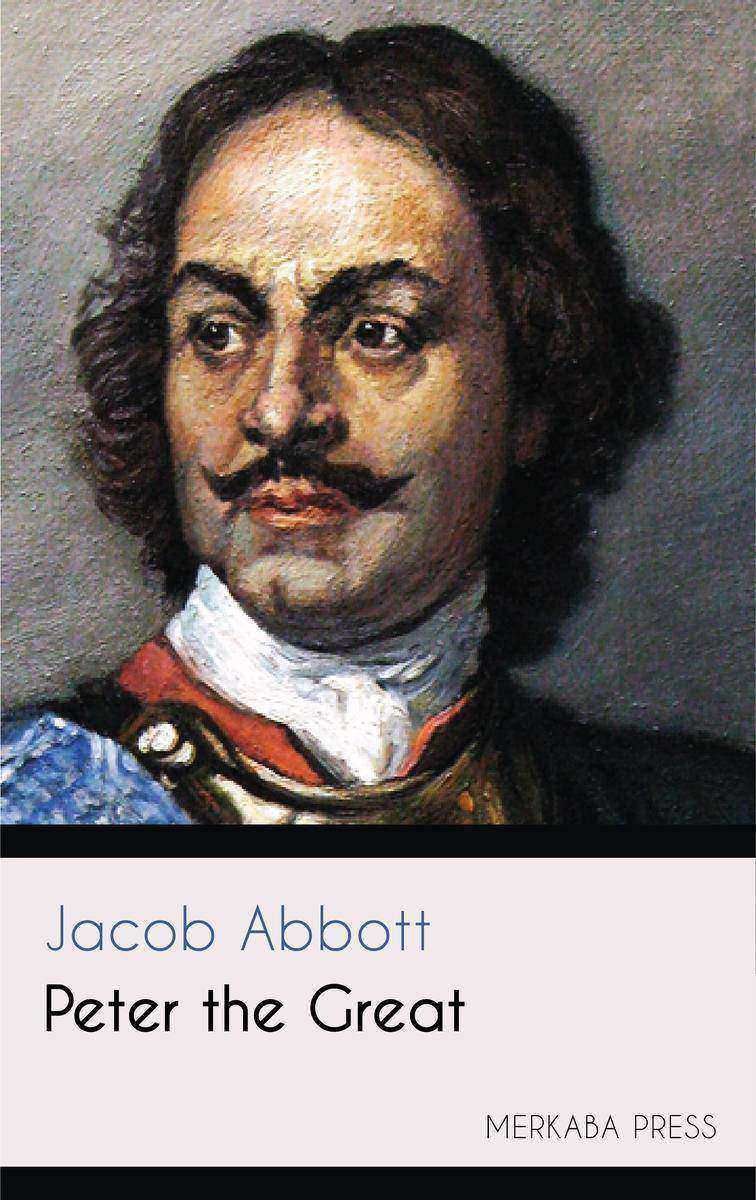
Peter the Great
Peter the Great
Jacob Abbott
¥8.09
According to Wikipedia: "Peter I the Great or Pyotr Alexeyevich Romanov (9 June [O.S. 30 May] 1672 – 8 February 1725) ruled Russia and later the Russian Empire from 7 May 1682 until his death, jointly ruling before 1696 with his weak and sickly half-brother, Ivan V. He carried out a policy of modernization and expansion that transformed the Tsardom of Russia into a 3-billion acre Russian Empire, a major European power."
Passages from the French and Italian Notebooks of Nathaniel Hawthorne
Nathaniel Hawthorne
¥8.09
Journal of his stays in France and Italy, two volumes in one file. According to Wikipedia: "Nathaniel Hawthorne (1804 –1864) was an American novelist and short story writer... Much of Hawthorne's writing centers around New England and many feature moral allegories with a Puritan inspiration. His fiction works are considered part of the Romantic movement and, more specifically, dark romanticism. His themes often center on the inherent evil and sin of humanity and his works often have moral messages and deep psychological complexity. His published works include novels, short stories, and a biography of his friend Franklin Pierce."
Anatomy of Melancholy
Robert Burton
¥8.09
According to Wikipedia: "The Anatomy of Melancholy (Full title: The Anatomy of Melancholy, What it is: With all the Kinds, Causes, Symptomes, Prognostickes, and Several Cures of it. In Three Maine Partitions with their several Sections, Members, and Subsections. Philosophically, Medicinally, Historically, Opened and Cut Up) is a book by Robert Burton, first published in 1621. Burton's book consists mostly of a collection of opinions of a multitude of writers, grouped under quaint and old-fashioned divisions; in a solemn tone Burton endeavoured to prove indisputable facts by weighty quotations. The subjects discussed and determined by Burton ranged from the doctrines of religion to military discipline, from inland navigation to the morality of dancing-schools. On its surface, the book is presented as a medical textbook in which Burton applies his vast and varied learning, in the scholastic manner, to the subject of melancholia (which includes what is now termed clinical depression). Though presented as a medical text, The Anatomy of Melancholy is as much a sui generis work of literature as it is a scientific or philosophical text, and Burton addresses far more than his stated subject. In fact, the Anatomy uses melancholy as the lens through which all human emotion and thought may be scrutinized, and virtually the entire contents of a 17th-century library are marshalled into service of this goal. It is encyclopedic in its range and reference. In his satirical preface to the reader, Burton's persona Democritus Junior explains, "I write of melancholy by being busy to avoid melancholy." This is characteristic of the author's style, which often supersedes the book's strengths as a medical text or historical document as its main source of appeal to admirers. Both satirical and serious in tone, the Anatomy is "vitalized by (Burton's) pervading humour",[3] and Burton's digressive and inclusive style, often verging on a stream of consciousness, consistently informs and animates the text."
Records of a Family of Engineers
Robert Louis Stevenson
¥8.09
Robert Louis Stevenson's account of his ancestors. According to Wikipedia: "Robert Louis (Balfour) Stevenson ( 1850 - 1894), was a Scottish novelist, poet, and travel writer, and a leading representative of Neo-romanticism in English literature. He was the man who "seemed to pick the right word up on the point of his pen, like a man playing spillikins", as G. K. Chesterton put it. He was also greatly admired by many authors, including Jorge Luis Borges, Ernest Hemingway, Rudyard Kipling, Vladimir Nabokov, and J. M. Barrie. Most modernist writers dismissed him, however, because he was popular and did not write within their definition of modernism. It is only recently that critics have begun to look beyond Stevenson's popularity and allow him a place in the canon."
Romulus
Romulus
Jacob Abbott
¥8.09
According to Wikipedia: "Romulus and Remus are Rome's twin founders in its traditional foundation myth, although the former is sometimes said to be the sole founder. Their maternal grandfather is Numitor, rightful king of Alba Longa, a descendant of the Trojan prince, Aeneas and father to Rhea Silvia (also known as Ilia). Before their conception, Numitor's brother Amulius deposes his brother, kills his sons and forces Rhea to become a Vestal Virgin, intending to deprive Numitor of lawful heirs and thus secure his own position; but Rhea conceives Romulus and Remus by the god Mars or the demi-god Hercules. When the twins are born, Amulius has them exposed to die but they are saved by a series of miraculous interventions. A she-wolf finds them and suckles them. Then a shepherd and his wife foster them and raise them to manhood as shepherds. The twins prove to be natural leaders, and acquire many followers. When told their true identities, they kill Amulius, restore Numitor to the throne of Alba Longa and decide to found a new city for themselves."
Across the Plains
Across the Plains
Robert Louis Stevenson
¥8.09
Travelogue and essays. According to Wikipedia: "Robert Louis (Balfour) Stevenson ( 1850 - 1894), was a Scottish novelist, poet, and travel writer, and a leading representative of Neo-romanticism in English literature. He was the man who "seemed to pick the right word up on the point of his pen, like a man playing spillikins", as G. K. Chesterton put it. He was also greatly admired by many authors, including Jorge Luis Borges, Ernest Hemingway, Rudyard Kipling, Vladimir Nabokov, and J. M. Barrie. Most modernist writers dismissed him, however, because he was popular and did not write within their definition of modernism. It is only recently that critics have begun to look beyond Stevenson's popularity and allow him a place in the canon."
Essays of Montaigne
Essays of Montaigne
Michel de Montaigne
¥8.09
The complete essays, translated by Charles Cotton (1630-1687) and edited by William Hazlitt. From the Preface: "This great French writer deserves to be regarded as a classic, not only in the land of his birth, but in all countries and in all literatures. His Essays, which are at once the most celebrated and the most permanent of his productions, form a magazine out of which such minds as those of Bacon and Shakespeare did not disdain to help themselves; and, indeed, as Hallam observes, the Frenchman's literary importance largely results from the share which his mind had in influencing other minds, coeval and subsequent."
Works of Hebbel and Ludwig
Friedrich Hebbel, Otto Ludwig
¥8.09
This collection includes works by Hebbel and Ludwig. The German Classics Of The Nineteenth And Twentieth Centuries, Volume 9, edited by Kuno Francke.
The Age of Bismarck
The Age of Bismarck
Thomas Dyer
¥8.09
The Age of Bismarck
Medieval Empire
Medieval Empire
Herbert Fisher
¥8.09
Medieval Empire
Philip II of Spain
Philip II of Spain
Martin Hume
¥8.09
Philip II of Spain