


 购物车
购物车 个人中心
个人中心

Cube Monkeys
¥78.10
You drag yourself to work wearing your office uniform, complete with khaki pants and sense of impending doom. After grabbing a cup of the office sludge, you settle in with your fellow cube dwellers and wonder: How will I last another day in this freaky corporate jungleCheaper than therapy, Cube Monkeys is your secret weapon to surviving the longest 40 hours of the week. Wanna get the overachieving intern firedDon't know how to tell the Stink Bomb down the hall he needs a scrub a dub dubAfraid you may have told off the boss after your fifth margarita at last night's happy hourNeed a handy list of excuses good for any occasionLook no further. The editors of CareerBuilder.com and Second City Communications have answers to your most pressing office survival questions, as well as advice, tips, and more to help you make it through the day without killing anyone. (Well, maybe the intern will take a hit. But that little snitch had it coming.)
In the Event of My Untimely Demise
¥78.55
When Brian Sack's mother passed away, he was left with a letter and a pink cardigan. The cardigan was promptly placed in a drawer, but the letter was pure gold. In just a few pages of fancy cursive, her posthumous dispatch offered the kind of guidance you would expect from a mother to her young son. And while he didn't necessarily follow all the advice, he never forgot how very important those words and that letter were to him. Decades later, on the verge of parenthood himself, Brian decided to write something for his own child, wanting a legacy, and not just a pink cardigan, to leave to his son. But far from the usual collection of advice, Brian has written a sharp, sage, warts-and-all survival guide to life.With quick wit and self-deprecating honesty, Sack draws from his experiences, tapping them for the humor within. Holding nothing back, he: Gives the skinny on relationships don't let the woman you love wander alone in France Commiserates about the death of the meritocracy wanting to sing doesn't mean you can Recounts his awkward entry into fatherhood you'll overcome your aversion to poo Offers firsthand advice avoid any bipolar lady with a drug-sniffing wonder-cat And argues that the Empire State Building is not a phallic symbol no matter what the professor said Every chapter takes on subjects ranging from the universal and mundane to the life changing and inevitable. With its funny and heartfelt musings from a father to a son, In the Event of My Untimely Demise is a delightful life primer for all of us.

Player HateHer
¥78.65
At last, a humorous, anecdote-filled exploration of the many ways in which women stab each other in the back and talk about each other behind closed doors If you exhibit any of these traits, you may be guilty of being a Player hateHER: You get upset when people don't notice how fabulous you are. You vow to get revenge on your boyfriend's mistress, instead of him. You become angry when you see someone wearing the same outfit you purchased, as if it were produced just for you. Player hateHER shows women why they hate on one another, and, most important, how they can stop! A much-needed lesson in respecting one another and respecting yourself.
Prehistoric Future
¥370.82
One of the most admired artists of the twentieth century, Max Ernst was a proponent of Dada and founder of surrealism, known for his strange, evocative paintings and drawings. In Prehistoric Future, Ralph Ubl approaches Ernst like no one else has, using theories of the unconscious-surrealist automatism, Freudian psychoanalysis, the concept of history as trauma-to examine how Ernst's construction of collage departs from other modern artists. ?Ubl shows that while Picasso, Braque, and Man Ray used scissors and glue to create collages, Ernst employed techniques he himself had forged-rubbing and scraping to bring images forth onto a sheet of paper or canvas to simulate how a screen image or memory comes into the mind's view. In addition, Ernst scoured the past for obsolete scientific illustrations and odd advertisements to illustrate the rapidity with which time passes and to simulate the apprehension generated when rapid flows of knowledge turn living culture into artifact. Ultimately, Ubl reveals, Ernst was interested in the construction and phenomenology of both collective and individual modern history and memory. Shedding new light on Ernst's working methods and the reasons that his pieces continue to imprint themselves in viewers' memories, Prehistoric Future is an innovative work of critical writing on a key figure of surrealism.

Genius and Heroin
¥95.39
What is the price of brillianceWhy are so many creative geniuses also ruinously self-destructiveFrom Caravaggio to Jackson Pollack, from Arthur Rimbaud to Jack Kerouac, from Charlie Parker to Janis Joplin, to Kurt Cobain, and on and on, authors and artists throughout history have binged, pill-popped, injected, or poisoned themselves for their art. Fully illustrated and addictively readable, Genius and Heroin is the indispensable reference to the untidy lives of our greatest artists and thinkers, entertainingly chronicling how the notoriously creative lived and died whether their ultimate downfalls were the result of opiates, alcohol, pot, absinthe, or the slow-motion suicide of obsession.

Oh the Moon
¥94.10
From actress, comedian, musician, and writer Charlyne Yi comes this collection of illustrated, interconnected short stories and anecdotes that blends comedy, fantastic adventures, and a storm of feelings that will make you want to laugh and cry at the same time—reminiscent of the works of Demetri Martin, Shel Silverstein and John Cassavetes. Charlyne Yi takes readers from a sky filled with vengeful clouds to the depths of a frog’s stomach, and to Hell and back—literally—in this collection of short stories that showcases her unique style. Equal parts whimsical, hilarious, heartbreaking, and terrifying, these short stories—both written and illustrated by Charlyne—can be read separately, but are connected thematically following the difficulties of love at every age: Forgive Me: What happens when the tiniest boy of all time is the only thing standing between the world’s largest baby and an angry mobWho could ever love something so smallOr so big She’s All Legs: In this spicy, action-packed romance, Agatha, a woman who is literally just legs and a head, decides to hunt down and kill the Devil himself. Along the way she meets Cassady, an Elvis impersonator with his own, mysterious gripe with the Dark Lord. Short, one-page anecdotes, poems, reflections, and imagery are also included. Strange, heartfelt, and wonderful, Oh the Moon shows you love in the way that only Charlyne Yi’s brilliant, witty mind can.

Macho Meditations
¥50.60
An uproariously funny daily inspirational guide for manly men. Ralph and Reggie two regular, blue-collar buds from Boston offer one-a-day mcnuggets of affirmation, inspiration, manly wisdom and earth-shaking epiphanies from the end of the bar on the inner issues that truly matter everything from sex to sports to sex to imported vs. domestic to sex to the meaning of life.
Yiddish Yoga
¥83.08
Meet Ruthie: a recently widowed New York City Jewish grandmother who doesn't necessarily come to yoga with the most open of minds. But when her granddaughter Stephanie gives her a year of yoga classes as a gift ("I think it will help you grieve, Bubby"), she doesn't want to risk offending her.At first, Ruthie is skeptical of yoga and its promise of renewal, healing, and transformation ("You know what's wrong with yogaThey haven't mastered the art of kvetching!"). She can't resist poking fun at some of the new words and rituals she encounters, translating the exotic language of Yoga into the more familiar idiom of her native Yiddish culture.As Ruthie's journey progresses from week to week, she forges new paths, new postures, and unexpected friendships, slowly overcoming her grief. Yiddish Yoga is a poignant, witty, and human story of love in its many expressions between grandmother and granddaughter, between an older woman and her younger yoga teacher, between a widow and her beloved husband of fifty years. As Ruthie learns to let go of the past without forgetting, she shows us how to embrace the present with new vigor, strength, and courage and, above all, makes us laugh.
Chocolate, Please
¥84.28
An inside look at the life of Comedy's Lovable Queen of Mean, Lisa Lampanelli, as she dishes on everything from relationships, food, and fat to why once you go black, you never go back In her jaw-droppingly hilarious and politically incorrect memoir, Lisa reveals all including the dysfunctional childhood that made her the insult comic she is today, the subject for which she's best known (black men, black men, and more black men), and her hilarious struggles with her addiction to food and hot guys. By telling her story in her very real, very candid, very open way, Lisa shows her audience that it's okay to be yourself, even if it's just one rehab stint at a time. Lisa also takes readers behind the scenes at the roasts that have marked her comedy career and launched her into the comedy elite, and reveals the important "firsts" in her career, including her first time on her hero's program, The Howard Stern Show.Chocolate, Please is a side-splittingly funny portrait of the woman behind the award-winning insult comedy.
I Shudder
¥83.03
A hilariously funny, touching, and revelatory book from one of America's preeminent humorists In his plays, his screenplays, and his writing for the New Yorker and Premiere, Paul Rudnick has established himself as a comic master whose talents transcend genre. Now, in I Shudder, he trains his wickedly perceptive eye on everything from his New Jersey family to Hollywood to demented alcoholic Broadway stars waving swords. At his Uncle Rudy's funeral, Rudnick's beloved Aunt Lil put one hand on her husband's coffin and her other hand on Rudnick's shoulder and said, "Your Uncle Rudy always loved you. He never understood why, in your writing, you had to use that kind of language, but he loved you."Charming and touching, I Shudder is rendered in Rudnick's gorgeous, zinger-laden prose and reminds us of the need to keep our tongues sharp in the midst of life's many obstacles and absurdities. Here is one of the most accomplished collections in years, from a writer who ranks with David Sedaris and Augusten Burroughs as one of our most gifted and hilarious social observers.

Mental Floss: What's the Difference?
¥72.70
Enlighten Up Already!MonetManetWho can even tell the differenceWell, with the help of the newest mental_floss tome, you can! Want to learn how to tell egg rolls from spring rolls, nuclear bombs from dirty nuclear bombs, or even how to tell an idiot from a moron (there's a real scientific difference)Piece of cake! Whether you're trying to impress your boss, your mother-in-law, attractive singles, or a pack of fourth graders (you know how they love semantics), mental_floss gives you all the tips and tricks to have you sounding like a genius.

Mirth of a Nation
¥90.54
A salvo of hilarity from that loose canon of American humor that Mirth of a Nation editor Michael J. Rosen has culled from some 1200 pages of brilliantly original works by our best contemporary humorists. This action-packed compilation of highlights includes Bobbie Ann Mason's stint at the La Bamba hotline, David Rakoff's insights on families, Andy Borowitz's memoir of Emily Dickinson (basically, she was a drunken jerk), and Michael Feldman's helpful (re)locating of the Midwest.

My Dead Dad Was in ZZ Top
¥83.03
An irreverent and ridiculous collection of "found" documents that will change everything you thought you knew about rock and roll, by the creator and star of Adult Swim's DelocatedJon Glaser delves into the unknown and highly secretive histories of dozens of rock and roll's greatest bands with sometimes spectacular, sometimes heartbreaking, always completely made-up results. In this book, you'll discover the following: Handwritten letters by Glaser's own father, which reveal him to be an early member of the band we now know as ZZ Top Old lyrics journals of, among others, Bob Dylan and David Bowie, featuring a collection of songs they probably hoped would never see the light of day A letter from Ringo to the rest of the Beatles, the week after their breakup, informing them of his plans to start a Beatles tribute band Formerly classified government documents with shocking revelations about the Navy SEALs and the Butthole Surfers Prince's set list for the bat mitzvah of Steven Spielberg's daughter Rachel, including the songs "Purple Oy Vey," "I Could Never Take the Place of Your Rabbi," and "When Doves Kvetch" My Dead Dad Was in ZZ Top is for everyone who loves absurd, made-up stories about their favorite bands. It's also for everyone who doesn't love absurd, made-up stories about their favorite real bands they just might not enjoy it as much.

Everybody Dies
¥84.16
Nobody likes to think about death, but the world would be awfully crowded without it.From YouTube sensation Ken Tanaka and actor David Ury, who was crushed by an ATM on AMC's Breaking Bad, comes Everybody Dies, a colorful story and delightful assemblage of games that makes it easy-even fun- to come to grips with mortality.
Crazy Bosses
¥123.24
Since the latter part of the century just past, Stanley Bing has been exploring the relationship between authority and madness. In one bestselling book after another, reporting from his hot-seat as an insider in a world-renowned multinational corporation, he has tried to understand the inner workings of those who lead us and to inquire why they seem to be powered, much of the time, by demons that make them obnoxious and dangerous, even to themselves. In What Would Machiavelli Do?, Bing looked at the issue of why mean people do better than nice people, and found that in their particular form of insanity lay incredible power. In Throwing the Elephant: Zen and the Art of Managing Up, he offered a spiritual path toward managing the unruly executive beast. And in Sun Tzu Was a Sissy, he taught us how to become one of them, and wage war on the playing field that ends in a dream home in Cabo. Now he returns to his roots to offer the last word on the entity that shapes our lives and stomps through and on our dreams: The Crazy Boss. Students of Bing and there are many, secreted inside tortured organizations, yearning for blunt instruments with which to fight will note that he has walked this ground before, looking for answers. In 1992, he published the first edition of Crazy Bosses, which was fine, as far as it went. Now, some 15 years and several dozen insane bosses later, he has updated and rethought much of the work. Back in the last century, Bing was a small, trembling creature, looking up at those who made his life miserable and analyzing the mental illness that gave them their power. Today, while still trembling much of the time, he is in fact one of those people his prior work has warned us against. His own hard-won wisdom and now institutionalized dementia make this new edition completely fresh and indispensable to anyone who works for somebody else or lives with somebody else, or would like to. In short, Bing is back on his home turf in this funny, true, and essential book, peering with his keen and frosty eye at the crazy boss in all his guises: the Bully, the Paranoid, the Narcissist, the Wimp, and the self-destructive Disaster Hunter. If you loved the original, classic Crazy Bosses, you'll be thrilled to plunge back into the new, refurbished pool. If you are new to the book, strap yourself in: it's going to be a crazy ride.
236 Pounds of Class Vice President
¥84.16
When Jason Mulgrew enrolls in a private high school in an exciting new neighborhood (North Philly, murder center of the city), he finds himlf displaced into a world of privilege and strict standards. His classmates, whose parents are lawyers and bankers, live in houses with yards and pools. Mulgrew, whose longshoreman father bought him a motorcycle upon completion of his driver's test, struggles to relate in this wider world, fighting his way through the gauntlet of high school as an awkward, sexless giant. Mulgrew tackles the glorious complications, misapprehensions, and obsessions of the teenage mind. He revisits his unhealthy fixations on dogs, his "bird," the Prep, friends who are girls, Kahlúa & Cream, and a certain position in student body government to craft yet another raunchy, honest, and relentlessly funny memoir.

Mental Floss presents In the Beginning
¥95.39
Sure, you know all about the birds and bees. But did Dad ever tell you that it wasn't a stork that put that shiny can opener in your kitchen drawerOr paperclips started out as proud, Nazi-fighting warriorsAnd did he tell you how cruise control was originally conceived by a blind geniusFrom mullets to Silly Putty, lie detectors to karaoke, we've got the true stories behind everything you didn't think had stories. Because if you're looking for answers, In the Beginning is the place to start.
How to Eat Like a Child
¥90.77
Universal and timeless, Delia Ephron's How to Eat Like a Child is a delightful revisiting of the joys -- and tricky ploys -- of childhood. Made into a children's television special and a musical theater revue performed across the country each year, How to Eat Like a Child offers advice beyond the artful etiquette of food consumption. Ephron also teaches us "How to Laugh Hysterically," "How to Have a Birthday Party," "How to Torture Your Sister," and much, much more. As the Washington Post Book World noted, `After the giggles of recognition have subsided, one thing will be very clear: all adults are kids in grown-ups' clothing."

Our Mutual Friend
¥28.04
IT is much easier to understand and remember a thing when a reason is given for it, than when we are merely shown how to do it without being told why it is so done; for in the latter case, instead of being assisted by reason, our real help in all study, we have to rely upon memory or our power of imitation, and to do simply as we are told without thinking about it. The consequence is that at the very first difficulty we are left to flounder about in the dark, or to remain inactive till the master comes to our assistance.? Now in this book it is proposed to enlist the reasoning faculty from the very first: to let one problem grow out of another and to be dependent on the foregoing, as in geometry, and so to explain each thing we do that there shall be no doubt in the mind as to the correctness of the proceeding. The student will thus gain the power of finding out any new problem for himself, and will therefore acquire a true knowledge of perspective.?? George Adolphus Storey??Book First?The Necessity of the Study of Perspective to Painters, Sculptors, and Architects?LEONARDO DA VINCI tells us in his celebrated Treatise on Painting that the young artist should first of all learn perspective, that is to say, he should first of all learn that he has to depict on a flat surface objects which are in relief or distant one from the other; for this is the simple art of painting. Objects appear smaller at a distance than near to us, so by drawing them thus we give depth to our canvas. The outline of a ball is a mere flat circle, but with proper shading we make it appear round, and this is the perspective of light and shade.? ‘The next thing to be considered is the effect of the atmosphere and light. If two figures are in the same coloured dress, and are standing one behind the other, then they should be of slightly different tone, so as to separate them. And in like manner, according to the distance of the mountains in a landscape and the greater or less density of the air, so do we depict space between them, not only making them smaller in outline, but less distinct.’?Sir Edwin Landseer used to say that in looking at a figure in a picture he liked to feel that he could walk round it, and this exactly expresses the impression that the true art of painting should make upon the spectator.??There is another observation of Leonardo’s that it is well I should here transcribe; he says: ‘Many are desirous of learning to draw, and are very fond of it, who are notwithstanding void of a proper disposition for it. This may be known by their want of perseverance; like boys who draw everything in a hurry, never finishing or shadowing.’ This shows they do not care for their work, and all instruction is thrown away upon them. At the present time there is too much of this ‘everything in a hurry’, and beginning in this way leads only to failure and disappointment. These observations apply equally to perspective as to drawing and painting.? Unfortunately, this study is too often neglected by our painters, some of them even complacently confessing their ignorance of it; while the ordinary student either turns from it with distaste, or only endures going through it with a view to passing an examination, little thinking of what value it will be to him in working out his pictures. Whether the manner of teaching perspective is the cause of this dislike for it, I cannot say; but certainly most of our English books on the subject are anything but attractive.??All the great masters of painting have also been masters of perspective, for they knew that without it, it would be impossible to carry out their grand compositions. In many cases they were even inspired by it in choosing their subjects. When one looks at those sunny interiors, those corridors and courtyards by De Hooghe, with their figures far off and near, one feels that their charm consists greatly in their perspective, as well as in their light and tone and colour... ?
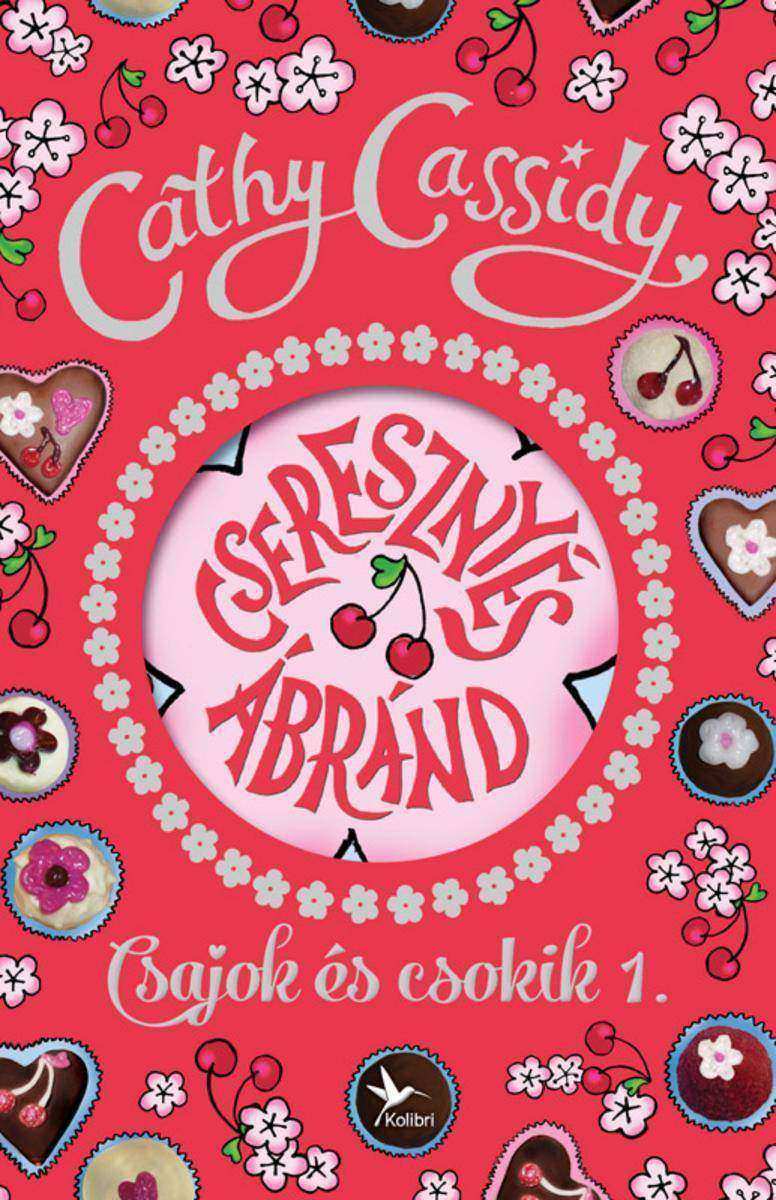
Cseresznyés ábránd
¥56.98
RUINS OF ANCIENT CITIES, WITH GENERAL AND PARTICULAR ACCOUNTS OF THEIR RISE, FALL, AND PRESENT CONDITION. - BY CHARLES BUCKE This Volume contain these cities;Messene, Mycen?, Miletus, Nauplia, Nemea, Nineveh, The Destruction of Sennacherib, Numantia, Olympia, Puteoli, Palmyra (Tadmor), Patr?, Pella, Pergamus, Persepolis, Petra (Wady Mousa), Phigalia, Plat?a, P?stum, Pompeii, Rama, Rome, Saguntum, Hannibal’s Speech to His Soldiers, Sais, Samaria, Sapphura, Sardis, Seleucia, Selinus, Or Selinuntum, Sicyon, Sidon, Smyrna, Spalatro, Stratonice, Susa, Sybaris, Syene, Syracuse, Thebes, Troja, And Other Cities of the Troas, Tyre, Veii Fallen, fallen, a silent heap; their heroes allSunk in their urns:—Behold the pride of pomp,The throne of nations fallen; obscured in dustEven yet majestical.—The solemn sceneElates the soul! ? ?{DYER} The reader is requested to observe, that, though the plan of this work is entirely his own, the compiler of it does not put it forth as in any way original in respect to language or description. It is, in fact, a much better book, than if it had been what is strictly called original, (which, indeed, must have involved an utter impossibility:) for it is a selection of some of the best materials the British Museum could furnish; sometimes worked up in his own language; and sometimes—and, indeed, very frequently—in that of others: the compiler having, at an humble distance and with unequal steps, followed the plan which M. Rollin proposed to himself, when he composed his celebrated history of ancient times.—"To adorn and enrich my own," says that celebrated writer, "I will be so ingenuous as to confess, that I do not scruple, nor am ashamed, to rifle whereever I come; and that I often do not cite the authors from whom I transcribe, because of the liberty I take to make some slight alterations. I have made the best use in my power of the solid reflections that occur in the Bishop of Meaux's Universal History, which is one of the most beautiful and most useful books in our language. I have also received great assistance from the learned Dean Prideaux's 'Connexion of the Old and New Testament,' in which he has traced and cleared up, in an admirable manner, the particulars relating to ancient history. I shall take the same liberty with whatever comes in my way, that may suit my design, and contribute to its perfection. I am very sensible, that it is not so much for a person's reputation to make use of other men's labours, and that it is in a manner renouncing the name and quality of author. But I am not over-fond of that title, and shall be extremely well pleased, and think myself very happy, if I can but deserve the name of a good compiler; and supply my readers with a tolerable history, who will not be over-solicitous to inquire what hand it comes from, provided they are but pleased with it."Having followed this example,—the compiler wishes he could say with equal effect,—he will be fully satisfied, should judicious readers feel inclined to concede, that he has shown some judgment in selecting his materials, and some taste in binding "the beads of the chain," that connects them together. He disclaims, in fact, (as, in the present instance, he is bound to do), all the "divine honours" of authorship; satisfied with those of a selecter, adapter, and compiler; and happy in the hope that he has here, by means of the superior writers, whose labours he has used, furnished his readers with an useful, accurate, and amusing work.? ? ? ? ? C. B.
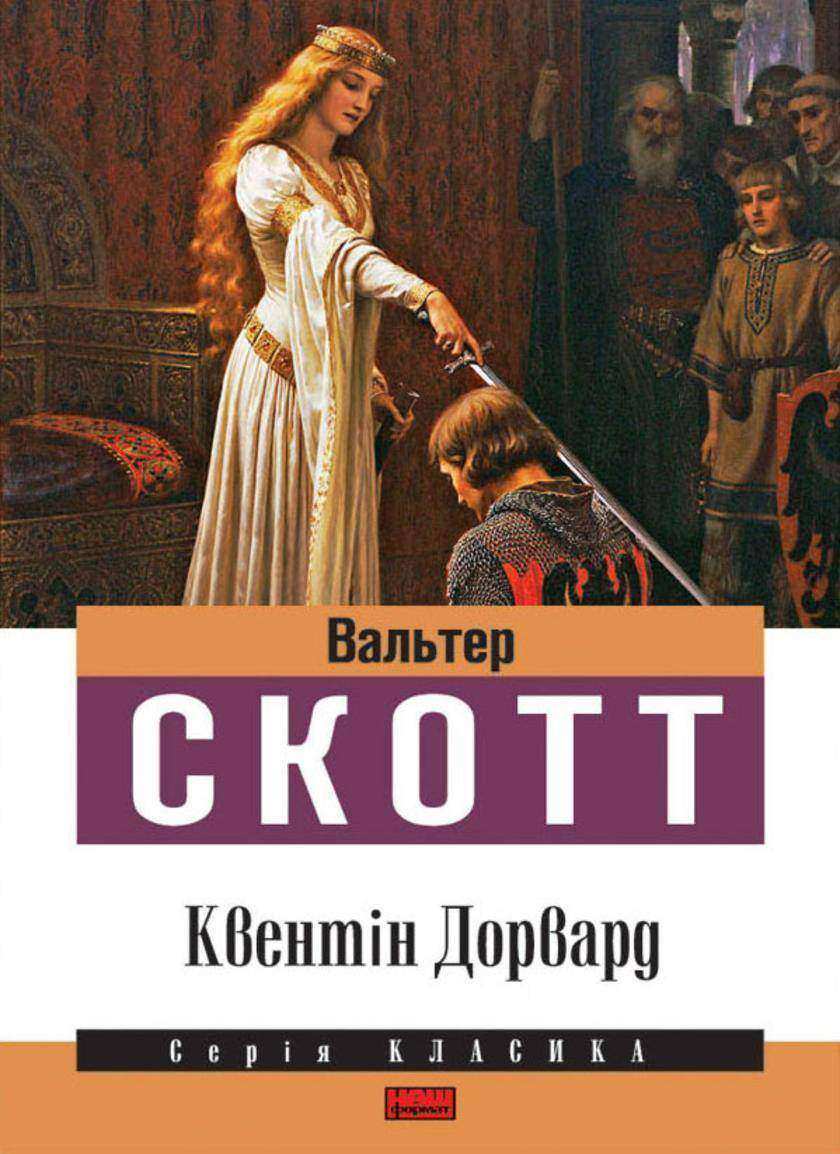
Квент?н Дорвард
¥5.72
s vezes, a única coisa verdadeira num jornal é a data, disse Luis Fernando Verissimo. Tomar ao pé da letra essa frase bem-humorada do cronista pode no ser um bom negócio. Porém, ainda mais temerário seria aceitar a hipótese oposta, ou seja, de que tudo acontece do jeito que o jornalista nos conta. Certos recursos de escrita e de edio aumentam tanto a temperatura do texto que provocam a fuso entre a fantasia e a realidade. Esse fenmeno misterioso, com seu toque de alquimia, é o que Renato Modernell investiga em A notícia como fábula.


