


 购物车
购物车 个人中心
个人中心
Daniel Arbuckle’s Mastering Python
¥71.93
Gain a thorough understanding of operating in a Python development environment, and some of the most important advanced topics with Daniel Arbuckle. This dynamic, concise book is full of real-world solutions for Python 3.6 problems, and advanced-level concepts such as reactive programming, microservices, ctypes and Cython. About This Book ? Covers the latest and advanced concepts of Python such as parallel processing with Python 3.6 ? Explore the Python language from its basic installation and setup to concepts such as reactive programming and microservices ? Get introduced to the mechanism for rewriting code in a compiled language along with ctypes and Cython tools Who This Book Is For If you are a programmer and are familiar with the basics of Python, and you want to broaden your knowledge base to develop projects better and faster, this book is for you. Even if you are not familiar with Python, Daniel Arbuckle's Mastering Python starts with the basics and takes you on a journey to become an expert in the technology. What You Will Learn ? Get to grips with the basics of operating in a Python development environment ? Build Python packages to efficiently create reusable code ? Become proficient at creating tools and utility programs in Python ? Use the Git version control system to protect your development environment from unwanted changes ? Harness the power of Python to automate other software ? Distribute computational tasks across multiple processors ? Handle high I/O loads with asynchronous I/O to get a smoother performance ? Take advantage of Python's metaprogramming and programmable syntax features ? Get acquainted with the concepts behind reactive programming and RxPy In Detail Daniel Arbuckle's Mastering Python covers the basics of operating in a Python development environment, before moving on to more advanced topics. Daniel presents you with real-world solutions to Python 3.6 and advanced-level concepts, such as reactive programming, microservices, ctypes, and Cython tools. You don't need to be familiar with the Python language to use this book, as Daniel starts with a Python primer. Throughout, Daniel highlights the major aspects of managing your Python development environment, shows you how to handle parallel computation, and helps you to master asynchronous I/O with Python 3.6 to improve performance. Finally, Daniel will teach you the secrets of metaprogramming and unit testing in Python, helping you acquire the perfect skillset to be a Python expert. Daniel will get you up to speed on everything from basic programming practices to high-end tools and techniques, things that will help set you apart as a successful Python programmer. Style and Approach Daniel Arbuckle's Mastering Python covers basic to advanced-level concepts in computer science. If you are a beginner, then Daniel will help you get started. If you are experienced, he will expand your knowledge base.

Raspberry Pi Zero W Wireless Projects
¥63.21
Build DIY wireless projects using the Raspberry Pi Zero W board About This Book ? Explore the functionalities of the Raspberry Pi Zero W with exciting projects ? Master the wireless features (and extend the use cases) of this $10 chip ? A project-based guide that will teach you to build simple yet exciting projects using the Raspberry Pi Zero W board Who This Book Is For If you are a hobbyist or an enthusiast and want to get your hands on the latest Raspberry Pi Zero W to build exciting wireless projects, then this book is for you. Some prior programming knowledge, with some experience in electronics, would be useful. What You Will Learn ? Set up a router and connect Raspberry Pi Zero W to the internet ? Create a two-wheel mobile robot and control it from your Android device ? Build an automated home bot assistant device ? Host your personal website with the help of Raspberry Pi Zero W ? Connect Raspberry Pi Zero to speakers to play your favorite music ? Set up a web camera connected to the Raspberry Pi Zero W and add another security layer to your home automation In Detail The Raspberry Pi has always been the go–to, lightweight ARM-based computer. The recent launch of the Pi Zero W has not disappointed its audience with its $10 release. "W" here stands for Wireless, denoting that the Raspberry Pi is solely focused on the recent trends for wireless tools and the relevant use cases. This is where our book—Raspberry Pi Zero W Wireless Projects—comes into its own. Each chapter will help you design and build a few DIY projects using the Raspberry Pi Zero W board. First, you will learn how to create a wireless decentralized chat service (client-client) using the Raspberry Pi's features?. Then you will make a simple two-wheel mobile robot and control it via your Android device over your local Wi-Fi network. Further, you will use the board to design a home bot that can be connected to plenty of devices in your home. The next two projects build a simple web streaming security layer using a web camera and portable speakers that will adjust the playlist according to your mood. You will also build a home server to host files and websites using the board. Towards the end, you will create free Alexa voice recognition software and an FPV Pi Camera, which can be used to monitor a system, watch a movie, spy on something, remotely control a drone, and more. By the end of this book, you will have developed the skills required to build exciting and complex projects with Raspberry Pi Zero W. Style and approach A step-by-step guide that will help you design and create simple yet exciting projects using the Raspberry Pi Zero W board.
Exploring Experience Design
¥71.93
Learn how to unify Customer Experience, User Experience and more to shape lasting customer engagement in a world of rapid change. About This Book ? An introductory guide to Experience Design that will help you break into XD as a career by gaining A strong foundational knowledge ? Get acquainted with the various phases of a typical Experience Design workflow ? Work through the key process and techniques in XD, supported by most of the common use cases Who This Book Is For This book is for designers who wish to enter the field of UX Design, especially Programmers, Content Strategists, and Organizations keen to understand the core concepts of UX Design. What You Will Learn ? Understand why Experience Design (XD) is at the forefront of business priorities, as organizations race to innovate products and services in order to compete for customers in a global economy driven by technology and change ? Get motivated by the numerous professional opportunities that XD opens up for practitioners in wide-ranging domains, and by the stories of real XD practitioners ? Understand what experience is, how experiences are designed, and why they are effective ? Gain knowledge of user-centered design principles, methodologies, and best practices that will improve your product (digital or physical) ? Get to know your X’s and D’s—understand the differences between XD and UX, CX, IxD, IA, SD, VD, PD, and other design practices In Detail We live in an experience economy in which interaction with products is valued more than owning them. Products are expected to engage and delight in order to form the emotional bonds that forge long-term customer loyalty: Products need to anticipate our needs and perform tasks for us: refrigerators order food, homes monitor energy, and cars drive autonomously; they track our vitals, sleep, location, finances, interactions, and content use; recognize our biometric signatures, chat with us, understand and motivate us. Beautiful and easy to use, products have to be fully customizable to match our personal preferences. Accomplishing these feats is easier said than done, but a solution has emerged in the form of Experience design (XD), the unifying approach to fusing business, technology and design around a user-centered philosophy. This book explores key dimensions of XD: Close collaboration among interdisciplinary teams, rapid iteration and ongoing user validation. We cover the processes, methodologies, tools, techniques and best-practices practitioners use throughout the entire product development life-cycle, as ideas are transformed to into positive experiences which lead to perpetual customer engagement and brand loyalty. Style and approach An easy-to-understand guide, filled with real-world use cases on process, design, and techniques, helping you build a strong foundation in Experience Design.
Algorithms To Live By: The Computer Science of Human Decisions
¥76.91
A fascinating exploration of how computer algorithms can be applied to our everyday lives. What should we do, or leave undone, in a day or a lifetime Exploring how insights from computer algorithms can be applied to our everyday lives, ‘Algorithms To Live By’ helps to solve common decision-making problems and illuminate the workings of the human mind. When should you switch between different tasks, and how many tasks should you take on in the first place How much messiness should you accept What balance of new activities and familiar favourites is the most fulfilling When computers face constraints of time and space, they too must untangle very human questions: how to have better hunches, when to leave things to chance, how to deal with overwhelming choices and how best to connect with others. And the solutions they’ve found have much to teach us. Acclaimed author Brian Christian and cognitive scientist Tom Griffiths show how the algorithms developed for computers can be applied from finding your spouse to finding a parking spot, from organizing your inbox to understanding the workings of memory. Where you have a dilemma, they have a rule, and each fascinating algorithm turns the wisdom of computer science into strategies for human living.
Learning Ionic - Second Edition
¥80.65
"Create real-time hybrid applications with the leader of HTML5 frameworks: Ionic Framework About This Book ?Step into the world of amazingly interactive and real-time app development using Ionic 2 ?Leverage the powerful Angular 2 along with Ionic to develop cutting edge apps ?Detailed code examples and explanations will help you get up and running with Ionic quickly and easily Who This Book Is For This book is for JavaScript developers with basic skills. No previous knowledge of Ionic is required for this book. What You Will Learn ?Understanding the world of the mobile hybrid architecture ?Scaffolding and working with Ionic templates ?Transforming a single page app to a multi-page app using Navigation Controller ?Integrating Ionic components, decorators, and services and rapidly developing complex applications ?Theming Ionic apps as well as customizing components using SCSS ?Working with Ionic Native to interface with device features, such as camera, notifications, and battery ?Building a production grade app using Ionic and Uber API to let users book a ride ?Migrating an Ionic 1 app to Ionic 2 or Ionic 3 ?Performing unit testing, end-to-end testing, and device testing on your apps ?Deploying Ionic apps to store and manage their subsequent releases In Detail Ionic makes it incredibly easy to build beautiful and interactive mobile apps using HTML5, SCSS, and Angular. Ionic also makes app development easier, faster, and more fun. This hands-on guide will help you understand the Ionic framework and how you can leverage it to create amazing real-time applications. We begin by covering the essential features of Angular 2, and then dive straight into how Ionic fits in today's world of hybrid app development and give you a better understanding of the mobile hybrid architecture along the way. Further on, you will learn how to work with Ionic decorators, services, and components, which will allow you to build complex apps using the Ionic framework. We will take a look at theming Ionic apps using the built-in SCSS setup. After that, we will explore Ionic Native, and you will learn how to integrate device-specific features, such as notifications, with the Ionic app. To complete our learning, we will be building a Rider app, using Ionic and Uber API, to book a ride. Next, you will learn how to unit test, end-to-end test, monkey test, and execute device testing on AWS Device farm. Then, we will take a look at migrating the existing Ionic 1 apps to Ionic 2 and deploy them to the App Store. The final chapter on Ionic 3 wraps up this book by explaining the new features of Ionic 3 at the time of writing this book. By the end of this book, you will be able to develop, deploy, and manage hybrid mobile applications built with Cordova, Ionic, and Angular. All the examples in this book are valid for both Ionic 2 and Ionic 3. Style and approach A step-by-step, practical approach to learning Ionic using the example of designing an online course app. Each topic is explained sequentially in the process of creating a course. This includes explanations of both basic and advanced features of Ionic. "
Vue.js 2 Cookbook
¥80.65
"Key Features ?Understand and use Vue's reactivity system, data binding, and computed properties ?Create fluid transitions in your application with Vue's built-in transition system ?Use Vuex and Webpack to build medium-to-large scale SPAs and enhance your development workflow Book De*ion Vue.js is an open source JavaScript library for building modern, interactive web applications. With a rapidly growing community and a strong ecosystem, Vue.js makes developing complex single page applications a breeze. Its component-based approach, intuitive API, blazing fast core, and compact size make Vue.js a great solution to craft your next front-end application. From basic to advanced recipes, this book arms you with practical solutions to common tasks when building an application using Vue. We start off by exploring the fundamentals of Vue.js: its reactivity system, data-binding syntax, and component-based architecture through practical examples. After that, we delve into integrating Webpack and Babel to enhance your development workflow using single file components. Finally, we take an in-depth look at Vuex for state management and Vue Router to route in your single page applications, and integrate a variety of technologies ranging from Node.js to Electron, and Socket.io to Firebase and HorizonDB. This book will provide you with the best practices as determined by the Vue.js community. What you will learn ?Understand the fundamentals of Vue.js through numerous practical examples ?Piece together complex web interfaces using theVue.js component system ?Use Webpack and Babel to enhance your development workflow ?Manage your "
Implementing DevOps with Microsoft Azure
¥90.46
"Accelerate and Automate Build, Deploy, and Management of applications to achieve High Availability. About This Book ?This guide highlights tools that offer development and deployment environments for application services ?Secure and continuously monitor your web application in order to make it highly available ?Use Visual Studio Team Services for Continuous Integration and Continuous Development to expedite your application life cycle management process ?Use Microsoft Azure App Services (Azure Web Apps / Azure Websites), PaaS offering from Microsoft to deploy web application Who This Book Is For This book is for DevOps engineers, system administrators, and developers (.net) who want to implement DevOps for their organization. You do not need to have any knowledge of VSTS or Azure App Services (Azure Web Apps / Azure Websites). What You Will Learn ?Explore the features of PaaS and aPaaS in DevOps ?Use Visual Studio Team Services (VSTS) to manage versions of code and integrating VSTS with Eclipse IDE ?Understand and configure Continuous Integration in VSTS ?Review Unit Test Execution for Automated Testing ?Create different environments that can be used to continuous deploy a web application ?Configure Roll-based Access to enable secure access for Azure Web Apps ?Create and configure the App Service Environment to enhance security ?Understand the execution of the end-to-end automation process ?Conduct Performance Testing using JMeter ?Discover the different monitoring options available in Microsoft Azure Portal In Detail This book will teach you all about the Visual Studio Team Services and Microsoft Azure PaaS offerings that support Continuous Integration, Continuous Delivery, Continuous Deployment, and execution in the cloud with high availability, disaster recovery, and security. You will first be given a tour of all the concepts and tools that Microsoft Azure has to offer and how these can be used in situations to cultivate the DevOps culture. You'll be taught how to use and manage Visual Studio Team Services (VSTS) and about the structure of the sample application used throughout the book. You will become familiar with the nitty gritty of Continuous Integration and Continuous Development with VSTS and Microsoft Azure Apps. You will not only learn how to create App service environments, but also how to compare Azure Web Apps and App Service Environments to deploy web applications in a more secure environment. Once you have completed Continuous Integration and created the Platform for application deployment, you will learn more about the final stepping stone in achieving end-to-end automation using approval-based Continuous Delivery and Deployment. You will then learn about Continuous Monitoring, using the monitoring and notification options provided by Microsoft Azure and Visual Studio Team Services. Style and Approach This book is an easy-to-follow guide filled with examples and real-world applications for gaining an in-depth understanding of Microsoft Azure and Visual Studio. This book will help you leverage Microsoft Azure and Visual Studio using real-world examples. "
Practical OneOps
¥71.93
Walmart's OneOps is an open source DevOps platform that is used for cloud and application lifecycle management. It can manage critical and complex application workload on any multi cloud-based infrastructure and revolutionizes the way administrators, developers, and engineers develop and launch new products. This practical book focuses on real-life cases and hands-on scenarios to develop, launch, and test your applications faster, so you can implement the DevOps process using OneOps. You will be exposed to the fundamental aspects of OneOps starting with installing, deploying, and configuring OneOps in a test environment, which will also come in handy later for development and debugging. You will also learn about design and architecture, and work through steps to perform enterprise level deployment. You will understand the initial setup of OneOps such as creating organization, teams, and access management. Finally, you will be taught how to configure, repair, scale, and extend applications across various cloud platforms. What you will learn ?See how to install OneOps ?Configure OneOps including creating and configuring organization and teams ?Work through practical deployment scenarios ?Maintain OneOps environments including backups and logs ?Build custom components for OneOps ?Extend OneOps by calling the REST API
Beginning C++ Programming
¥90.46
C++ has come a long way and is now adopted in several contexts. Its key strengths are its software infrastructure and resource-constrained applications, including desktop applications, servers, and performance-critical applications, not to forget its importance in game programming. Despite its strengths in these areas, beginners usually tend to shy away from learning the language because of its steep learning curve. The main mission of this book is to make you familiar and comfortable with C++. You will finish the book not only being able to write your own code, but more importantly, you will be able to read other projects. It is only by being able to read others' code that you will progress from a beginner to an advanced programmer. This book is the first step in that progression. The first task is to familiarize you with the structure of C++ projects so you will know how to start reading a project. Next, you will be able to identify the main structures in the language, functions, and classes, and feel confident being able to identify the execution flow through the code. You will then become aware of the facilities of the standard library and be able to determine whether you need to write a routine yourself, or use an existing routine in the standard library. Throughout the book, there is a big emphasis on memory and pointers. You will understand memory usage, allocation, and
C# 7 and .NET Core Cookbook
¥90.46
C# has recently been open-sourced and C# 7 comes with a host of new features for building powerful, cross-platform applications. This book will be your solution to some common programming problems that you come across with C# and will also help you get started with .NET Core 1.1. Through a recipe-based approach, this book will help you overcome common programming challenges and get your applications ready to face the modern world. We start by running you through new features in C# 7, such as tuples, pattern matching, and so on, giving you hands-on experience with them. Moving forward, you will work with generics and the OOP features in C#. You will then move on to more advanced topics, such as reactive extensions, Regex, code analyzers, and asynchronous programming. This book will also cover new, cross-platform .NET Core 1.1 features and teach you how to utilize .NET Core on macOS. Then, we will explore microservices as well as serverless computing and how these benefit modern developers. Finally, you will learn what you can do with Visual Studio 2017 to put mobile application development across multiple platforms within the reach of any developer. What you will learn ?Writing better and less code to achieve the same result as in previous versions of C# ?Working with analyzers in Visual Studio ?Working with files, streams, and serialization ?Writing high-performant code
Java 9 Programming By Example
¥80.65
This book gets you started with essential software development easily and quickly, guiding you through Java's different facets. By adopting this approach, you can bridge the gap between learning and doing immediately. You will learn the new features of Java 9 quickly and experience a simple and powerful approach to software development. You will be able to use the Java runtime tools, understand the Java environment, and create Java programs. We then cover more simple examples to build your foundation before diving to some complex data structure problems that will solidify your Java 9 skills. With a special focus on modularity and HTTP 2.0, this book will guide you to get employed as a top notch Java developer. By the end of the book, you will have a firm foundation to continue your journey towards becoming a professional Java developer. What you will learn ?Compile, package and run a trivial program using a build management tool ?Get to know the principles of test-driven development and dependency management ?Separate the wiring of multiple modules from the application logic into an application using dependency injection ?Benchmark Java execution using Java 9 microbenchmarking ?See the workings of the Spring framework
Implementing Cisco UCS Solutions - Second Edition
¥90.46
Cisco Unified Computer System (UCS) is a powerful solution for modern data centers and is responsible for increasing efficiency and reducing costs. This hands-on guide will take you through deployment in Cisco UCS. Using real-world examples of configuring and deploying Cisco UCS components, we'll prepare you for the practical deployments of Cisco UCS data center solutions. If you want to develop and enhance your hands-on skills with Cisco UCS solutions, this book is certainly for you. We start by showing you the Cisco UCS equipment options, then introduce Cisco UCS Emulator so you can learn and practice deploying Cisco UCS components. We'll also introduce you to all the areas of UCS solutions through practical configuration examples. Moving on, you'll explore the Cisco UCS Manager, which is the centralized management interface for Cisco UCS. Once you get to know UCS Manager, you'll dive deeper into configuring LAN, SAN, identity pools, resource pools, and service profiles for the servers. You'll also get hands-on with administration topics including backup, restore, user's roles, and high availability cluster configuration. Finally, you will learn about virtualized networking, third-party integration tools, and testing failure scenarios. By the end of this book, you'll know everything you need to know to rapidly grow Cisco UCS deployments in the real world. What you will learn ?Set up your Lab using Cisco UCS Emulator ?Configure Cisco UCS, LAN, and SAN connectivity ?Create and manage Service profiles ?Perform various tasks using UCS ?Back up and restore Cisco UCS configuration ?Test various Cisco UCS scenarios
PostgreSQL Administration Cookbook, 9.5/9.6 Edition
¥107.90
Over 150 recipes to help you administer your PostgreSQL database more efficiently About This Book ?Get to grips with the capabilities of PostgreSQL 9.6 to administer your database more efficiently ?Monitor, tune, secure and protect your database ?A step-by-step, recipe-based guide to help you tackle any problem in PostgreSQL administration with ease Who This Book Is For This book is for system administrators, database administrators, data architects, developers, and anyone with an interest in planning for, or running, live production databases. This book is most suited to those who have some technical experience. What You Will Learn ?Implement PostgreSQL features for performance and reliability ?Harness the power of the latest PostgreSQL 9.6 features ?Manage open source PostgreSQL versions 9.5 and 9.6 on various platforms ?Discover advanced technical tips for experienced users ?Explore best practices for planning and designing live databases ?Select and implement robust backup and recovery techniques ?Explore concise and clear guidance on replication and high availability ?See the latest details on Logical Replication and Bi-Directional Replication In Detail PostgreSQL is a powerful opensource database management system; now recognized as the expert's choice for a wide range of applications, it has an enviable reputation for performance and stability. PostgreSQL provides an integrated feature set comprising relational database features, object-relational, text search, Geographical Info Systems, analytical tools for big data and
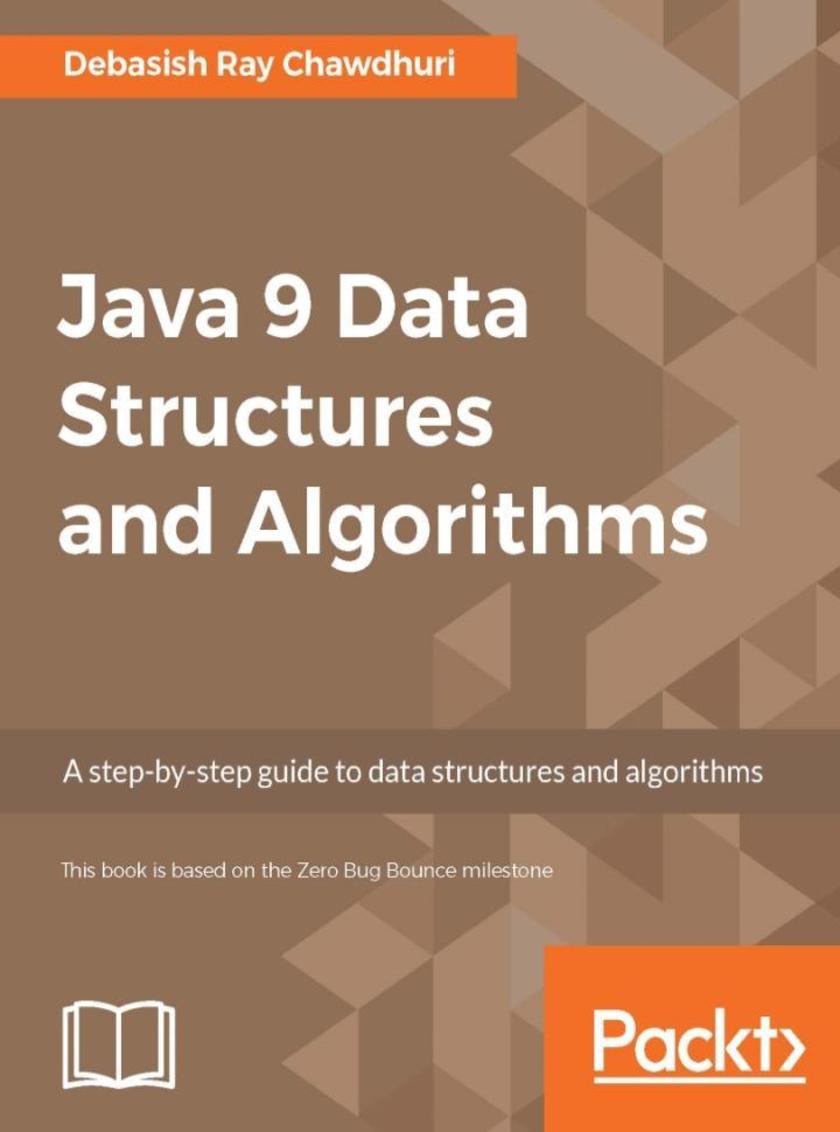
Java 9 Data Structures and Algorithms
¥71.93
Gain a deep understanding of the complexity of data structures and algorithms and discover the right way to write more efficient code About This Book ?This book provides complete coverage of reactive and functional data structures ?Based on the latest version of Java 9, this book illustrates the impact of new features on data structures ?Gain exposure to important concepts such as Big-O Notation and Dynamic Programming Who This Book Is For This book is for Java developers who want to learn about data structures and algorithms. Basic knowledge of Java is assumed. What You Will Learn ?Understand the fundamentals of algorithms, data structures, and measurement of complexity ?Find out what general purpose data structures are, including arrays, linked lists, double ended linked lists, and circular lists ?Get a grasp on the basics of abstract data types―stack, queue, and double ended queue ?See how to use recursive functions and immutability while understanding and in terms of recursion ?Handle reactive programming and its related data structures ?Use binary search, sorting, and efficient sorting―quicksort and merge sort ?Work with the important concept of trees and list all nodes of the tree, traversal of tree, search trees, and balanced search trees ?Apply advanced general purpose data structures, priority queue-based sorting, and random access immutable linked lists ?Gain a better understanding of the concept of graphs, directed and undirected graphs, undirected trees, and much more In Detail Java
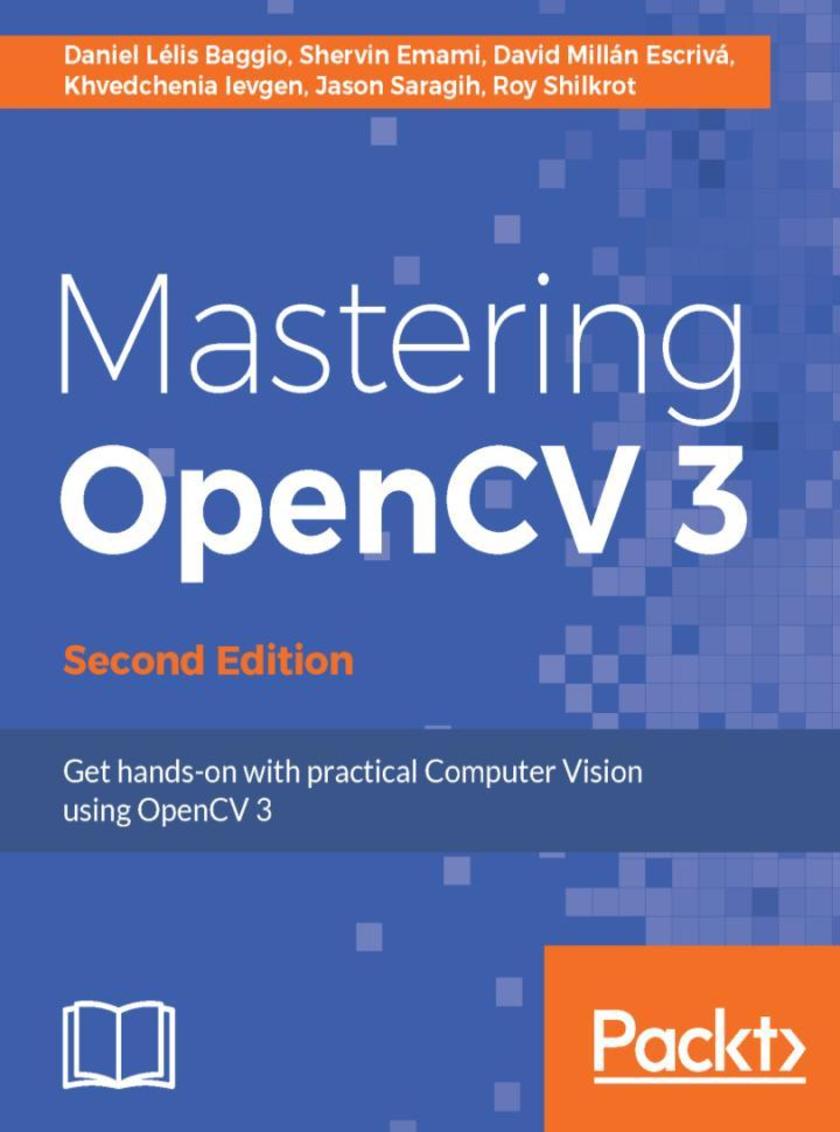
Mastering OpenCV 3 - Second Edition
¥80.65
Practical Computer Vision Projects About This Book ?Updated for OpenCV 3, this book covers new features that will help you unlock the full potential of OpenCV 3 ?Written by a team of 7 experts, each chapter explores a new aspect of OpenCV to help you make amazing computer-vision aware applications ?Project-based approach with each chapter being a complete tutorial, showing you how to apply OpenCV to solve complete problems Who This Book Is For This book is for those who have a basic knowledge of OpenCV and are competent C++ programmers. You need to have an understanding of some of the more theoretical/mathematical concepts, as we move quite quickly throughout the book. What You Will Learn ?Execute basic image processing operations and cartoonify an image ?Build an OpenCV project natively with Raspberry Pi and cross-compile it for Raspberry Pi.text ?Extend the natural feature tracking algorithm to support the tracking of multiple image targets on a video ?Use OpenCV 3's new 3D visualization framework to illustrate the 3D scene geometry ?Create an application for Automatic Number Plate Recognition (ANPR) using a support vector machine and Artificial Neural Networks ?Train and predict pattern-recognition algorithms to decide whether an image is a number plate ?Use POSIT for the six degrees of freedom head pose ?Train a face recognition database using deep learning and recognize faces from that database In Detail As we become more capable of handling data in every kind, we are becoming more reliant on visual input and what
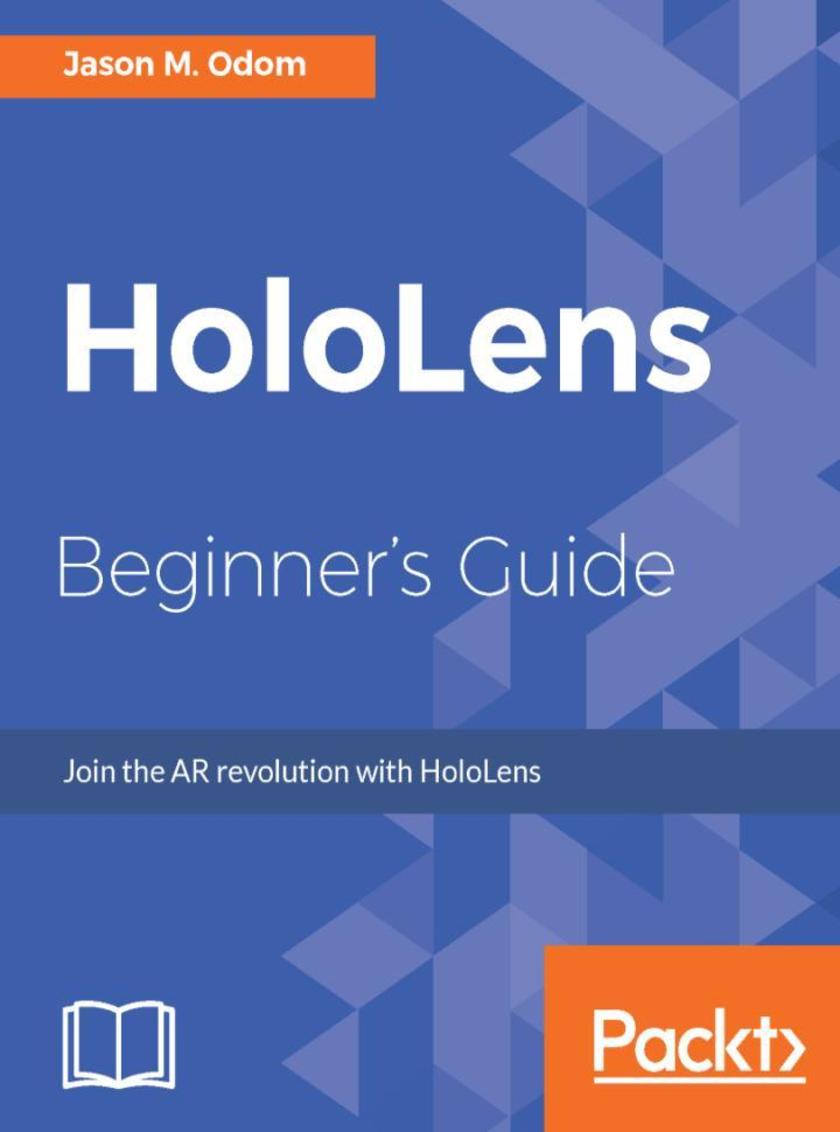
HoloLens Beginner’s Guide
¥90.46
"Key Features?Start developing immersive and interactive apps for Microsoft HoloLens ?Explore the Windows Universal Development platform for HoloLens development ?Leverage the full set of HoloLens sensors to create mesmerizing apps"
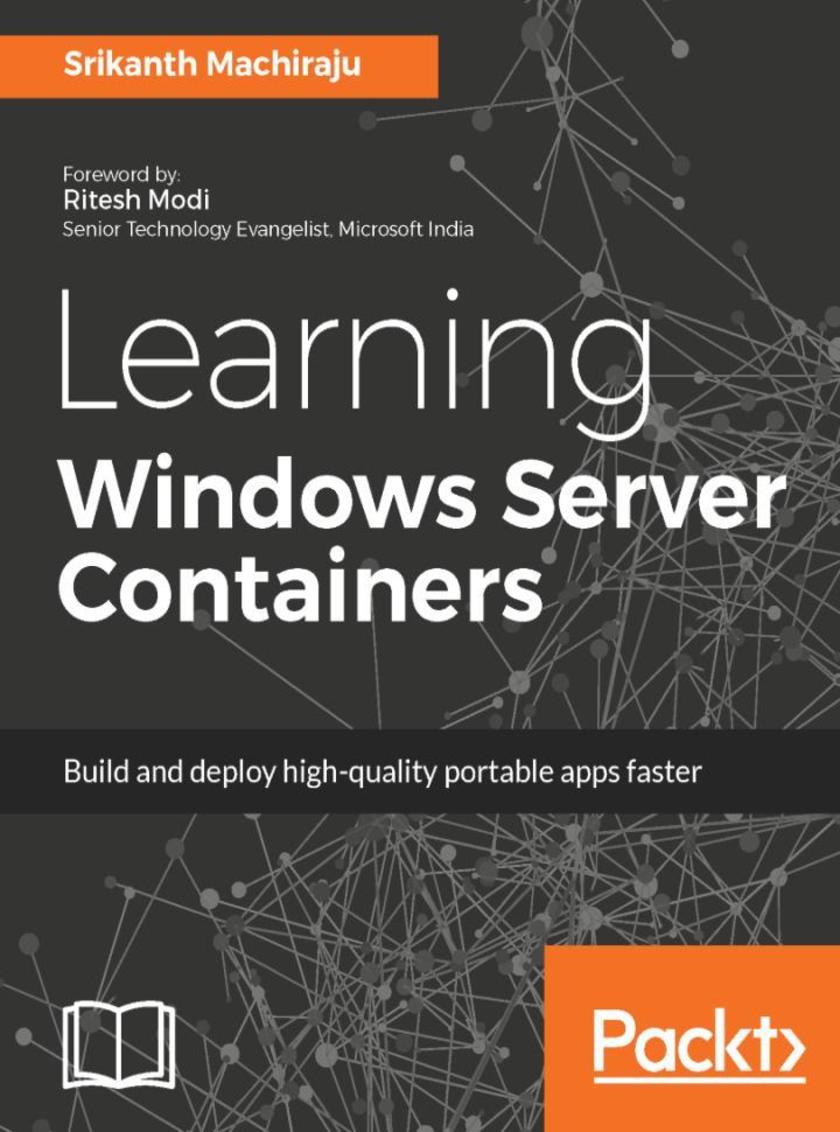
Learning Windows Server Containers
¥90.46
"About This Book ?Discover the secret to building highly portable apps that run on any machine with Windows Server 2016 anywhere, from laptops, desktop servers, and public or private clouds, without any changes to the code ?Build your company cost-effective, container-based apps that support large-scale, virtual cloud environments ?The most up-to-date help on the market, offering developers expert guidance in building and shipping high-quality apps, and also helping admins create infrastructure that's simple to maintain Who This Book Is For This book is for application developers with a basic programming knowledge of C#, ASP.NET, and PowerShell. IT Administrators or DevOps engineers with basic PowerShell experience can benefit by extending their learning to use PowerShell to manage containers on Windows environments and use additional management tools. What You Will Learn ?Build and deploy ASP.NET web applications as Windows Containers on Windows 10 (Desktop) and Azure using Visual Studio 2015, Docker, and PowerShell ?Build and manage custom images using Windows Server Core base OS image and Docker CLI, publish images to Docker, tag images, author Docker files, and so on ?Create enterprise-scale, production-grade container environments using Redis Cache containers and SQL Server containers with storage volumes, set up custom container networks, continuous integration, and deployment pipelines using VSTS, Azure, and Git ?Deploy a composite container environment using Docker Compose on Windows ?Learn to build applications using Microsoft's thinnest server platform - Nano Servers. Build custom Nano Server images and Nano Containers using Windows PowerShell and "
The People’s Platform: Taking Back Power and Culture in the Digital Age
¥95.75
From a cutting-edge cultural commentator, a bold and brilliant challenge to cherished notions of the internet as the great leveler of our age. The internet has been hailed as an unprecedented democratising force, a place where everyone can participate. ? So why are minorities and marginalized groups under-represented on user-generated websites, with less than 15% of Wikipedia written by women? ? Why does keyword-jammed and star-studded churnalism proliferate, at the expense of in-depth, investigative journalism? ? And how have a handful of giant corporations like Facebook, Google and Apple seized control of our creativity, galvanizing individuals to produce content for free? ‘The People’s Platform’ argues that for all our ‘sharing’, the internet reflects real-world inequalities as much as it reduces them, as attention and income frequently accrue to those who already have plenty of both. The online world does offer a unique opportunity for greater freedom, but a community that supports the diverse and lasting will not spring up from technology alone. If we want the internet to be a people’s platform, we will have to make it so.
Selenium Testing Tools Cookbook
¥80.65
This is a cookbook packed with code examples and step-by-step instructions to ease your learning curve. This book is intended for software quality assurance/testing professionals, software project managers, or software developers with prior experience in using Selenium and Java for testing web-based applications. This book also provides examples for C#, Python, and Ruby users.
QlikView 11 for Developers
¥107.90
It will be a step-by-step tutorial that will discuss best practices. The book is structured in such a way that it can be read both from start to end or can be dipped into. If you are a developer who is looking to learn a fast and easy way to learn to develop your business intelligence apps with QlikView, then this book is for you. If you are a power-user in a QlikView environment, then you will find quicker ways of working with QlikView. You should know the basics of business intelligence before you pick up this book. This book covers QlikView Desktop Personal Edition. Deployments to QlikView Server/Publisher are out of scope for this book.
Articulate Studio Cookbook
¥80.65
The cookbook style is a series of practical recipes which represent solutions to problems and popular activities in a concise but detailed manner. If you are a beginning developer or just someone who has been asked to be the jack-of-all-design in your training department, then this book is a great starter. Having a working knowledge of PowerPoint is helpful but not essential. By simply following the steps, you will be able to create a clean, professional looking course.


