


 购物车
购物车 个人中心
个人中心
Hands-On Data Science for Marketing
¥81.74
Optimize your marketing strategies through analytics and machine learning Key Features * Understand how data science drives successful marketing campaigns * Use machine learning for better customer engagement, retention, and product recommendations * Extract insights from your data to optimize marketing strategies and increase profitability Book Description Regardless of company size, the adoption of data science and machine learning for marketing has been rising in the industry. With this book, you will learn to implement data science techniques to understand the drivers behind the successes and failures of marketing campaigns. This book is a comprehensive guide to help you understand and predict customer behaviors and create more effectively targeted and personalized marketing strategies. This is a practical guide to performing simple-to-advanced tasks, to extract hidden insights from the data and use them to make smart business decisions. You will understand what drives sales and increases customer engagements for your products. You will learn to implement machine learning to forecast which customers are more likely to engage with the products and have high lifetime value. This book will also show you how to use machine learning techniques to understand different customer segments and recommend the right products for each customer. Apart from learning to gain insights into consumer behavior using exploratory analysis, you will also learn the concept of A/B testing and implement it using Python and R. By the end of this book, you will be experienced enough with various data science and machine learning techniques to run and manage successful marketing campaigns for your business. What you will learn * Learn how to compute and visualize marketing KPIs in Python and R * Master what drives successful marketing campaigns with data science * Use machine learning to predict customer engagement and lifetime value * Make product recommendations that customers are most likely to buy * Learn how to use A/B testing for better marketing decision making * Implement machine learning to understand different customer segments Who this book is for If you are a marketing professional, data scientist, engineer, or a student keen to learn how to apply data science to marketing, this book is what you need! It will be beneficial to have some basic knowledge of either Python or R to work through the examples. This book will also be beneficial for beginners as it covers basic-to-advanced data science concepts and applications in marketing with real-life examples.
Mobile Artificial Intelligence Projects
¥63.21
Learn to build end-to-end AI apps from scratch for Android and iOS using TensorFlow Lite, CoreML, and PyTorch Key Features * Build practical, real-world AI projects on Android and iOS * Implement tasks such as recognizing handwritten digits, sentiment analysis, and more * Explore the core functions of machine learning, deep learning, and mobile vision Book Description We’re witnessing a revolution in Artificial Intelligence, thanks to breakthroughs in deep learning. Mobile Artificial Intelligence Projects empowers you to take part in this revolution by applying Artificial Intelligence (AI) techniques to design applications for natural language processing (NLP), robotics, and computer vision. This book teaches you to harness the power of AI in mobile applications along with learning the core functions of NLP, neural networks, deep learning, and mobile vision. It features a range of projects, covering tasks such as real-estate price prediction, recognizing hand-written digits, predicting car damage, and sentiment analysis. You will learn to utilize NLP and machine learning algorithms to make applications more predictive, proactive, and capable of making autonomous decisions with less human input. In the concluding chapters, you will work with popular libraries, such as TensorFlow Lite, CoreML, and PyTorch across Android and iOS platforms. By the end of this book, you will have developed exciting and more intuitive mobile applications that deliver a customized and more personalized experience to users. What you will learn * Explore the concepts and fundamentals of AI, deep learning, and neural networks * Implement use cases for machine vision and natural language processing * Build an ML model to predict car damage using TensorFlow * Deploy TensorFlow on mobile to convert speech to text * Implement GAN to recognize hand-written digits * Develop end-to-end mobile applications that use AI principles * Work with popular libraries, such as TensorFlow Lite, CoreML, and PyTorch Who this book is for Mobile Artificial Intelligence Projects is for machine learning professionals, deep learning engineers, AI engineers, and software engineers who want to integrate AI technology into mobile-based platforms and applications. Sound knowledge of machine learning and experience with any programming language is all you need to get started with this book.
React Design Patterns and Best Practices
¥73.02
Build modular React web apps that are scalable, maintainable and powerful using design patterns and insightful practices Key Features * Get familiar with design patterns in React like Render props and Controlled/uncontrolled inputs * Learn about class/ functional, style and high order components with React * Work through examples that can be used to create reusable code and extensible designs Book Description React is an adaptable JavaScript library for building complex UIs from small, detached bits called components. This book is designed to take you through the most valuable design patterns in React, helping you learn how to apply design patterns and best practices in real-life situations. You’ll get started by understanding the internals of React, in addition to covering Babel 7 and Create React App 2.0, which will help you write clean and maintainable code. To build on your skills, you will focus on concepts such as class components, stateless components, and pure components. You'll learn about new React features, such as the context API and React Hooks that will enable you to build components, which will be reusable across your applications. The book will then provide insights into the techniques of styling React components and optimizing them to make applications faster and more responsive. In the concluding chapters, you’ll discover ways to write tests more effectively and learn how to contribute to React and its ecosystem. By the end of this book, you will be equipped with the skills you need to tackle any developmental setbacks when working with React. You’ll be able to make your applications more flexible, efficient, and easy to maintain, thereby giving your workflow a boost when it comes to speed, without reducing quality. What you will learn * Get familiar with the new React features,like context API and React Hooks * Learn the techniques of styling and optimizing React components * Make components communicate with each other by applying consolidate patterns * Use server-side rendering to make applications load faster * Write a comprehensive set of tests to create robust and maintainable code * Build high-performing applications by optimizing components Who this book is for This book is for web developers who want to increase their understanding of React and apply it to real-life application development. Prior experience with React and JavaScript is assumed.
Oracle CX Cloud Suite
¥63.21
Gain a complete overview of Oracle CX Cloud Suite and its tools for functions ranging from marketing to sales and commerce to service Key Features * Make optimal use of your Oracle CX Cloud Suite to improve business results * Achieve improved customer insights through Oracle CX’s advanced capabilities * Learn how to design a CX solution architecture Book Description Oracle CX Cloud offers features and capabilities that help companies excel at sales, customer management, and much more. This book is a detailed guide to implementing cloud solutions and helping administrators of all levels thoroughly understand the platform. Oracle CX Cloud Suite begins with an introduction to high-level Oracle architecture and examines what CX offers over CRM. You’ll explore the different cloud-based tools for marketing, sales, and customer services, among others. The book then delves into deployment by covering basic settings, setting up users, and provisioning. You’ll see how to integrate the CX suite to work together to interact with the environment and connect with legacy systems, social connectors, and internet services. The book concludes with a use case demonstrating how the entire Oracle CX Suite is set up, and also covers how to leverage Oracle ICS and Oracle CX Cloud for hybrid deployment. By end of the book, you will have learned about the working of the Oracle CX Cloud Suite and how to orchestrate user experience across all products seamlessly. What you will learn * Differentiate between Oracle CRM and CX Cloud suites * Explore a variety of Oracle CX Cloud tools for marketing and sales * Set up users and database connections during deployment * Employ Cloud Suite CX tools to aid in planning and analysis * Implement hybrid Oracle CX solutions and connect with legacy systems * Integrate with social media connectors like Facebook and LinkedIn * Leverage Oracle ICS and Oracle CX Suite to improve business results Who this book is for This book is for administrators who want to develop and strengthen their Oracle CX Cloud Suite skills in the areas of configuration and system management. Whether you are a new administrator or an experienced professional, this book will enhance your understanding of the new Oracle CX features.
Hands-On Big Data Analytics with PySpark
¥43.59
Use PySpark to easily crush messy data at-scale and discover proven techniques to create testable, immutable, and easily parallelizable Spark jobs Key Features * Work with large amounts of agile data using distributed datasets and in-memory caching * Source data from all popular data hosting platforms, such as HDFS, Hive, JSON, and S3 * Employ the easy-to-use PySpark API to deploy big data Analytics for production Book Description Apache Spark is an open source parallel-processing framework that has been around for quite some time now. One of the many uses of Apache Spark is for data analytics applications across clustered computers. In this book, you will not only learn how to use Spark and the Python API to create high-performance analytics with big data, but also discover techniques for testing, immunizing, and parallelizing Spark jobs. You will learn how to source data from all popular data hosting platforms, including HDFS, Hive, JSON, and S3, and deal with large datasets with PySpark to gain practical big data experience. This book will help you work on prototypes on local machines and subsequently go on to handle messy data in production and at scale. This book covers installing and setting up PySpark, RDD operations, big data cleaning and wrangling, and aggregating and summarizing data into useful reports. You will also learn how to implement some practical and proven techniques to improve certain aspects of programming and administration in Apache Spark. By the end of the book, you will be able to build big data analytical solutions using the various PySpark offerings and also optimize them effectively. What you will learn * Get practical big data experience while working on messy datasets * Analyze patterns with Spark SQL to improve your business intelligence * Use PySpark's interactive shell to speed up development time * Create highly concurrent Spark programs by leveraging immutability * Discover ways to avoid the most expensive operation in the Spark API: the shuffle operation * Re-design your jobs to use reduceByKey instead of groupBy * Create robust processing pipelines by testing Apache Spark jobs Who this book is for This book is for developers, data scientists, business analysts, or anyone who needs to reliably analyze large amounts of large-scale, real-world data. Whether you're tasked with creating your company's business intelligence function or creating great data platforms for your machine learning models, or are looking to use code to magnify the impact of your business, this book is for you.
Python Reinforcement Learning
¥88.28
Apply modern reinforcement learning and deep reinforcement learning methods using Python and its powerful libraries Key Features * Your entry point into the world of artificial intelligence using the power of Python * An example-rich guide to master various RL and DRL algorithms * Explore the power of modern Python libraries to gain confidence in building self-trained applications Book Description Reinforcement Learning (RL) is the trending and most promising branch of artificial intelligence. This Learning Path will help you master not only the basic reinforcement learning algorithms but also the advanced deep reinforcement learning algorithms. The Learning Path starts with an introduction to RL followed by OpenAI Gym, and TensorFlow. You will then explore various RL algorithms, such as Markov Decision Process, Monte Carlo methods, and dynamic programming, including value and policy iteration. You'll also work on various datasets including image, text, and video. This example-rich guide will introduce you to deep RL algorithms, such as Dueling DQN, DRQN, A3C, PPO, and TRPO. You will gain experience in several domains, including gaming, image processing, and physical simulations. You'll explore TensorFlow and OpenAI Gym to implement algorithms that also predict stock prices, generate natural language, and even build other neural networks. You will also learn about imagination-augmented agents, learning from human preference, DQfD, HER, and many of the recent advancements in RL. By the end of the Learning Path, you will have all the knowledge and experience needed to implement RL and deep RL in your projects, and you enter the world of artificial intelligence to solve various real-life problems. This Learning Path includes content from the following Packt products: * Hands-On Reinforcement Learning with Python by Sudharsan Ravichandiran * Python Reinforcement Learning Projects by Sean Saito, Yang Wenzhuo, and Rajalingappaa Shanmugamani What you will learn * Train an agent to walk using OpenAI Gym and TensorFlow * Solve multi-armed-bandit problems using various algorithms * Build intelligent agents using the DRQN algorithm to play the Doom game * Teach your agent to play Connect4 using AlphaGo Zero * Defeat Atari arcade games using the value iteration method * Discover how to deal with discrete and continuous action spaces in various environments Who this book is for If you’re an ML/DL enthusiast interested in AI and want to explore RL and deep RL from scratch, this Learning Path is for you. Prior knowledge of linear algebra is expected.
Python Data Mining Quick Start Guide
¥53.40
Explore the different data mining techniques using the libraries and packages offered by Python Key Features * Grasp the basics of data loading, cleaning, analysis, and visualization * Use the popular Python libraries such as NumPy, pandas, matplotlib, and scikit-learn for data mining * Your one-stop guide to build efficient data mining pipelines without going into too much theory Book Description Data mining is a necessary and predictable response to the dawn of the information age. It is typically defined as the pattern and/ or trend discovery phase in the data mining pipeline, and Python is a popular tool for performing these tasks as it offers a wide variety of tools for data mining. This book will serve as a quick introduction to the concept of data mining and putting it to practical use with the help of popular Python packages and libraries. You will get a hands-on demonstration of working with different real-world datasets and extracting useful insights from them using popular Python libraries such as NumPy, pandas, scikit-learn, and matplotlib. You will then learn the different stages of data mining such as data loading, cleaning, analysis, and visualization. You will also get a full conceptual description of popular data transformation, clustering, and classification techniques. By the end of this book, you will be able to build an efficient data mining pipeline using Python without any hassle. What you will learn * Explore the methods for summarizing datasets and visualizing/plotting data * Collect and format data for analytical work * Assign data points into groups and visualize clustering patterns * Learn how to predict continuous and categorical outputs for data * Clean, filter noise from, and reduce the dimensions of data * Serialize a data processing model using scikit-learn’s pipeline feature * Deploy the data processing model using Python’s pickle module Who this book is for Python developers interested in getting started with data mining will love this book. Budding data scientists and data analysts looking to quickly get to grips with practical data mining with Python will also find this book to be useful. Knowledge of Python programming is all you need to get started.
Network Science with Python and NetworkX Quick Start Guide
¥53.40
Manipulate and analyze network data with the power of Python and NetworkX Key Features * Understand the terminology and basic concepts of network science * Leverage the power of Python and NetworkX to represent data as a network * Apply common techniques for working with network data of varying sizes Book Description NetworkX is a leading free and open source package used for network science with the Python programming language. NetworkX can track properties of individuals and relationships, find communities, analyze resilience, detect key network locations, and perform a wide range of important tasks. With the recent release of version 2, NetworkX has been updated to be more powerful and easy to use. If you’re a data scientist, engineer, or computational social scientist, this book will guide you in using the Python programming language to gain insights into real-world networks. Starting with the fundamentals, you’ll be introduced to the core concepts of network science, along with examples that use real-world data and Python code. This book will introduce you to theoretical concepts such as scale-free and small-world networks, centrality measures, and agent-based modeling. You’ll also be able to look for scale-free networks in real data and visualize a network using circular, directed, and shell layouts. By the end of this book, you’ll be able to choose appropriate network representations, use NetworkX to build and characterize networks, and uncover insights while working with real-world systems. What you will learn * Use Python and NetworkX to analyze the properties of individuals and relationships * Encode data in network nodes and edges using NetworkX * Manipulate, store, and summarize data in network nodes and edges * Visualize a network using circular, directed and shell layouts * Find out how simulating behavior on networks can give insights into real-world problems * Understand the ongoing impact of network science on society, and its ethical considerations Who this book is for If you are a programmer or data scientist who wants to manipulate and analyze network data in Python, this book is perfect for you. Although prior knowledge of network science is not necessary, some Python programming experience will help you understand the concepts covered in the book easily.
Data Science Projects with Python
¥62.12
Gain hands-on experience with industry-standard data analysis and machine learning tools in Python Key Features * Learn techniques to use data to identify the exact problem to be solved * Visualize data using different graphs * Identify how to select an appropriate algorithm for data extraction Book Description Data Science Projects with Python is designed to give you practical guidance on industry-standard data analysis and machine learning tools in Python, with the help of realistic data. The book will help you understand how you can use pandas and Matplotlib to critically examine a dataset with summary statistics and graphs, and extract the insights you seek to derive. You will continue to build on your knowledge as you learn how to prepare data and feed it to machine learning algorithms, such as regularized logistic regression and random forest, using the scikit-learn package. You’ll discover how to tune the algorithms to provide the best predictions on new and, unseen data. As you delve into later chapters, you’ll be able to understand the working and output of these algorithms and gain insight into not only the predictive capabilities of the models but also their reasons for making these predictions. By the end of this book, you will have the skills you need to confidently use various machine learning algorithms to perform detailed data analysis and extract meaningful insights from unstructured data. What you will learn * Install the required packages to set up a data science coding environment * Load data into a Jupyter Notebook running Python * Use Matplotlib to create data visualizations * Fit a model using scikit-learn * Use lasso and ridge regression to reduce overfitting * Fit and tune a random forest model and compare performance with logistic regression * Create visuals using the output of the Jupyter Notebook Who this book is for If you are a data analyst, data scientist, or a business analyst who wants to get started with using Python and machine learning techniques to analyze data and predict outcomes, this book is for you. Basic knowledge of computer programming and data analytics is a must. Familiarity with mathematical concepts such as algebra and basic statistics will be useful.
Hands-On Deep Learning Architectures with Python
¥53.40
Concepts, tools, and techniques to explore deep learning architectures and methodologies Key Features * Explore advanced deep learning architectures using various datasets and frameworks * Implement deep architectures for neural network models such as CNN, RNN, GAN, and many more * Discover design patterns and different challenges for various deep learning architectures Book Description Deep learning architectures are composed of multilevel nonlinear operations that represent high-level abstractions; this allows you to learn useful feature representations from the data. This book will help you learn and implement deep learning architectures to resolve various deep learning research problems. Hands-On Deep Learning Architectures with Python explains the essential learning algorithms used for deep and shallow architectures. Packed with practical implementations and ideas to help you build efficient artificial intelligence systems (AI), this book will help you learn how neural networks play a major role in building deep architectures. You will understand various deep learning architectures (such as AlexNet, VGG Net, GoogleNet) with easy-to-follow code and diagrams. In addition to this, the book will also guide you in building and training various deep architectures such as the Boltzmann mechanism, autoencoders, convolutional neural networks (CNNs), recurrent neural networks (RNNs), natural language processing (NLP), GAN, and more—all with practical implementations. By the end of this book, you will be able to construct deep models using popular frameworks and datasets with the required design patterns for each architecture. You will be ready to explore the potential of deep architectures in today's world. What you will learn * Implement CNNs, RNNs, and other commonly used architectures with Python * Explore architectures such as VGGNet, AlexNet, and GoogLeNet * Build deep learning architectures for AI applications such as face and image recognition, fraud detection, and many more * Understand the architectures and applications of Boltzmann machines and autoencoders with concrete examples * Master artificial intelligence and neural network concepts and apply them to your architecture * Understand deep learning architectures for mobile and embedded systems Who this book is for If you’re a data scientist, machine learning developer/engineer, or deep learning practitioner, or are curious about AI and want to upgrade your knowledge of various deep learning architectures, this book will appeal to you. You are expected to have some knowledge of statistics and machine learning algorithms to get the best out of this book
Hyperledger Cookbook
¥62.12
Explore the entire Hyperledger blockchain family, including frameworks such as Fabric, Sawtooth, Indy, Burrow, and Iroha; and tools such as Composer, Explorer, and Caliper. Key Features * Plan, design, and create a full-fledged private decentralized application using Hyperledger services * Master the ins and outs of the Hyperledger network using real-world examples * Packed with problem-solution-based recipes to tackle pain areas in the blockchain development cycle Book Description Hyperledger is an open-source project and creates private blockchain applications for a range of domains. This book will be your desk reference as you explore common and not-so-common challenges faced while building blockchain networks using Hyperledger services. We'll work through all Hyperledger platform modules to understand their services and features and build end-to-end blockchain applications using various frameworks and tools supported by Hyperledger. This book's independent, recipe-based approach (packed with real-world examples) will familiarize you with the blockchain development cycle. From modeling a business network to integrating with various tools, you will cover it all. We'll cover common and not-so-common challenges faced in the blockchain life cycle. Later, we'll delve into how we can interact with the Hyperledger Fabric blockchain, covering all the principles you need to master, such as chaincode, smart contracts, and much more. We'll also address the scalability and security issues currently faced in blockchain development. By the end of this book, you will be able to implement each recipe to plan, design, and create a full-fledged, private, decentralized application to meet organizational needs. What you will learn * Create the most popular permissioned blockchain network with Fabric and Composer * Build permissioned and permission-less blockchains using Sawtooth * Utilize built-in Iroha asset/account management with role-based permissions * Implement and run Ethereum smart contracts with Burrow * Get to grips with security and scalability in Hyperledger * Explore and view blockchain data using Hyperledger Explorer * Produce reports containing performance indicators and benchmarks using Caliper Who this book is for This book is for blockchain developers who want to understand how they can apply Hyperledger services in their day-to-day projects. This book uses a recipe-based approach to help you use Hyperledger to build powerful, decentralized autonomous applications. We assume the reader has a basic knowledge of the Blockchain technology and cryptography concepts
Unreal Engine 4 Virtual Reality Projects
¥70.84
Learn to design and build Virtual Reality experiences, applications, and games in Unreal Engine 4 through a series of practical, hands-on projects that teach you to create controllable avatars, user interfaces, and more. Key Features * Deploy your virtual reality applications on the latest Oculus Go and Samsung Gear * Build real-world applications such as 3D UIs, mini games, and 360° media player applications using Unreal Engine 4 * Master multiplayer networking and build rich multi-user VR experiences Book Description Unreal Engine 4 (UE4) is a powerful tool for developing VR games and applications. With its visual scripting language, Blueprint, and built-in support for all major VR headsets, it's a perfect tool for designers, artists, and engineers to realize their visions in VR. This book will guide you step-by-step through a series of projects that teach essential concepts and techniques for VR development in UE4. You will begin by learning how to think about (and design for) VR and then proceed to set up a development environment. A series of practical projects follows, taking you through essential VR concepts. Through these exercises, you'll learn how to set up UE4 projects that run effectively in VR, how to build player locomotion schemes, and how to use hand controllers to interact with the world. You'll then move on to create user interfaces in 3D space, use the editor's VR mode to build environments directly in VR, and profile/optimize worlds you've built. Finally, you'll explore more advanced topics, such as displaying stereo media in VR, networking in Unreal, and using plugins to extend the engine. Throughout, this book focuses on creating a deeper understanding of why the relevant tools and techniques work as they do, so you can use the techniques and concepts learned here as a springboard for further learning and exploration in VR. What you will learn * Understand design principles and concepts for building VR applications * Set up your development environment with Unreal Blueprints and C++ * Create a player character with several locomotion schemes * Evaluate and solve performance problems in VR to maintain high frame rates * Display mono and stereo videos in VR * Extend Unreal Engine's capabilities using various plugins Who this book is for This book is for anyone interested in learning to develop Virtual Reality games and applications using UE4. Developers new to UE4 will benefit from hands-on projects that guide readers through clearly-explained steps, while both new and experienced developers will learn crucial principles and techniques for VR development in UE4.
Hands-On Design Patterns with Swift
¥81.74
From learning about the most sought-after design patterns to a comprehensive coverage of architectural patterns and code testing, this book is all you need to write clean, reusable code Key Features *Write clean, reusable and maintainable code, and make the most of the latest Swift version. *Analyze case studies of some of the popular open source projects and give your workflow a huge boost *Choose patterns such as MVP, MVC, and MVVM depending on the application being built Book Description Swift keeps gaining traction not only amongst Apple developers but also as a server-side language. This book demonstrates how to apply design patterns and best practices in real-life situations, whether that's for new or already existing projects. You’ll begin with a quick refresher on Swift, the compiler, the standard library, and the foundation, followed by the Cocoa design patterns – the ones at the core of many cocoa libraries – to follow up with the creational, structural, and behavioral patterns as defined by the GoF. You'll get acquainted with application architecture, as well as the most popular architectural design patterns, such as MVC and MVVM, and learn to use them in the context of Swift. In addition, you’ll walk through dependency injection and functional reactive programming. Special emphasis will be given to techniques to handle concurrency, including callbacks, futures and promises, and reactive programming. These techniques will help you adopt a test-driven approach to your workflow in order to use Swift Package Manager and integrate the framework into the original code base, along with Unit and UI testing. By the end of the book, you'll be able to build applications that are scalable, faster, and easier to maintain. What you will learn *Work efficiently with Foundation and Swift Standard library *Understand the most critical GoF patterns and use them efficiently *Use Swift 4.2 and its unique capabilities (and limitations) to implement and improve GoF patterns *Improve your application architecture and optimize for maintainability and performance *Write efficient and clean concurrent programs using futures and promises, or reactive programming techniques *Use Swift Package Manager to refactor your program into reusable components *Leverage testing and other techniques for writing robust code Who this book is for This book is for intermediate developers who want to apply design patterns with Swift to structure and scale their applications. You are expected to have basic knowledge of iOS and Swift.
Deep Learning with PyTorch Quick Start Guide
¥54.49
Introduction to deep learning and PyTorch by building a convolutional neural network and recurrent neural network for real-world use cases such as image classification, transfer learning, and natural language processing. Key Features *Clear and concise explanations *Gives important insights into deep learning models *Practical demonstration of key concepts Book Description PyTorch is extremely powerful and yet easy to learn. It provides advanced features, such as supporting multiprocessor, distributed, and parallel computation. This book is an excellent entry point for those wanting to explore deep learning with PyTorch to harness its power. This book will introduce you to the PyTorch deep learning library and teach you how to train deep learning models without any hassle. We will set up the deep learning environment using PyTorch, and then train and deploy different types of deep learning models, such as CNN, RNN, and autoencoders. You will learn how to optimize models by tuning hyperparameters and how to use PyTorch in multiprocessor and distributed environments. We will discuss long short-term memory network (LSTMs) and build a language model to predict text. By the end of this book, you will be familiar with PyTorch's capabilities and be able to utilize the library to train your neural networks with relative ease. What you will learn *Set up the deep learning environment using the PyTorch library *Learn to build a deep learning model for image classification *Use a convolutional neural network for transfer learning *Understand to use PyTorch for natural language processing *Use a recurrent neural network to classify text *Understand how to optimize PyTorch in multiprocessor and distributed environments *Train, optimize, and deploy your neural networks for maximum accuracy and performance *Learn to deploy production-ready models Who this book is for Developers and Data Scientist familiar with Machine Learning but new to deep learning, or existing practitioners of deep learning who would like to use PyTorch to train their deep learning models will find this book to be useful. Having knowledge of Python programming will be an added advantage, while previous exposure to PyTorch is not needed.
Numerical Computing with Python
¥90.46
Understand, explore, and effectively present data using the powerful data visualization techniques of Python Key Features *Use the power of Pandas and Matplotlib to easily solve data mining issues *Understand the basics of statistics to build powerful predictive data models *Grasp data mining concepts with helpful use-cases and examples Book Description Data mining, or parsing the data to extract useful insights, is a niche skill that can transform your career as a data scientist Python is a flexible programming language that is equipped with a strong suite of libraries and toolkits, and gives you the perfect platform to sift through your data and mine the insights you seek. This Learning Path is designed to familiarize you with the Python libraries and the underlying statistics that you need to get comfortable with data mining. You will learn how to use Pandas, Python's popular library to analyze different kinds of data, and leverage the power of Matplotlib to generate appealing and impressive visualizations for the insights you have derived. You will also explore different machine learning techniques and statistics that enable you to build powerful predictive models. By the end of this Learning Path, you will have the perfect foundation to take your data mining skills to the next level and set yourself on the path to become a sought-after data science professional. This Learning Path includes content from the following Packt products: *Statistics for Machine Learning by Pratap Dangeti *Matplotlib 2.x By Example by Allen Yu, Claire Chung, Aldrin Yim *Pandas Cookbook by Theodore Petrou What you will learn *Understand the statistical fundamentals to build data models *Split data into independent groups *Apply aggregations and transformations to each group *Create impressive data visualizations *Prepare your data and design models *Clean up data to ease data analysis and visualization *Create insightful visualizations with Matplotlib and Seaborn *Customize the model to suit your own predictive goals Who this book is for If you want to learn how to use the many libraries of Python to extract impactful information from your data and present it as engaging visuals, then this is the ideal Learning Path for you. Some basic knowledge of Python is enough to get started with this Learning Path.
C# 7 and .NET: Designing Modern Cross-platform Applications
¥90.46
Explore C# and the .NET Core framework to create applications and optimize them with ASP.NET Core 2 Key Features *Get to grips with multi-threaded, concurrent, and asynchronous programming in C# and .NET Core *Develop modern, cross-platform applications with .NET Core 2.0 and C# 7.0 *Create efficient web applications with ASP.NET Core 2. Book Description C# is a widely used programming language, thanks to its easy learning curve, versatility, and support for modern paradigms. The language is used to create desktop apps, background services, web apps, and mobile apps. .NET Core is open source and compatible with Mac OS and Linux. There is no limit to what you can achieve with C# and .NET Core. This Learning Path begins with the basics of C# and object-oriented programming (OOP) and explores features of C#, such as tuples, pattern matching, and out variables. You will understand.NET Standard 2.0 class libraries and ASP.NET Core 2.0, and create professional websites, services, and applications. You will become familiar with mobile app development using Xamarin.Forms and learn to develop high-performing applications by writing optimized code with various profiling techniques. By the end of C# 7 and .NET: Designing Modern Cross-platform Applications, you will have all the knowledge required to build modern, cross-platform apps using C# and .NET. This Learning Path includes content from the following Packt products: *C# 7.1 and .NET Core 2.0 - Modern Cross-Platform Development - Third Edition by Mark J. Price *C# 7 and .NET Core 2.0 High Performance by Ovais Mehboob Ahmed Khan What you will learn *Explore ASP.NET Core to create professional web applications *Master OOP with C# to increase code reusability and efficiency *Protect your data using encryption and hashing *Measure application performance using BenchmarkDotNet *Use design techniques to increase your application’s performance *Learn memory management techniques in .NET Core *Understand tools and techniques to monitor application performance Who this book is for This Learning Path is designed for developers who want to gain a solid foundation in C# and .NET Core, and want to build cross-platform applications. To gain maximum benefit from this Learning Path, you must have basic knowledge of C#.
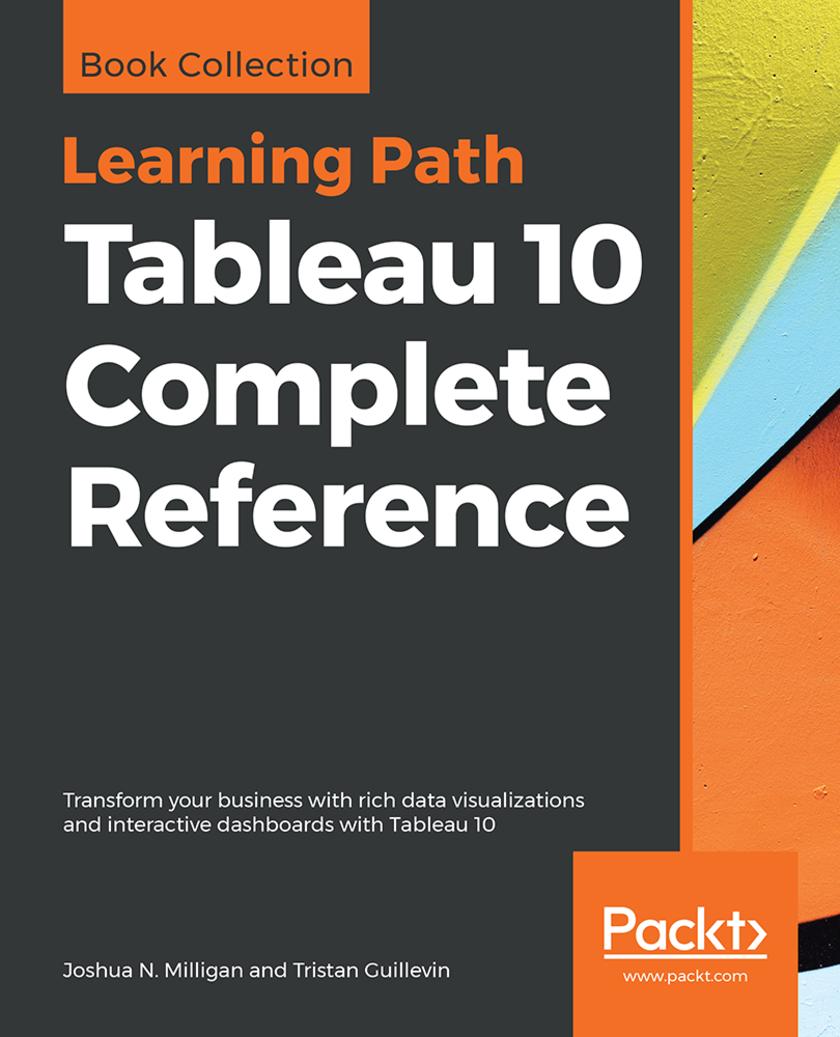
Tableau 10 Complete Reference
¥90.46
Explore and understand data with the powerful data visualization techniques of Tableau, and then communicate insights in powerful ways Key Features *Apply best practices in data visualization and chart types exploration *Explore the latest version of Tableau Desktop with hands-on examples *Understand the fundamentals of Tableau storytelling Book Description Graphical presentation of data enables us to easily understand complex data sets. Tableau 10 Complete Reference provides easy-to-follow recipes with several use cases and real-world business scenarios to get you up and running with Tableau 10. This Learning Path begins with the history of data visualization and its importance in today's businesses. You'll also be introduced to Tableau - how to connect, clean, and analyze data in this visual analytics software. Then, you'll learn how to apply what you've learned by creating some simple calculations in Tableau and using Table Calculations to help drive greater analysis from your data. Next, you'll explore different advanced chart types in Tableau. These chart types require you to have some understanding of the Tableau interface and understand basic calculations. You’ll study in detail all dashboard techniques and best practices. A number of recipes specifically for geospatial visualization, analytics, and data preparation are also covered. Last but not least, you'll learn about the power of storytelling through the creation of interactive dashboards in Tableau. Through this Learning Path, you will gain confidence and competence to analyze and communicate data and insights more efficiently and effectively by creating compelling interactive charts, dashboards, and stories in Tableau. This Learning Path includes content from the following Packt products: *Learning Tableau 10 - Second Edition by N. Milligan *Getting Started with Tableau 2018.x by Tristan Guillevin What you will learn *Build effective visualizations, dashboards, and story points *Build basic to more advanced charts with step-by-step recipes *Become familiar row-level, aggregate, and table calculations *Dig deep into data with clustering and distribution models *Prepare and transform data for analysis *Leverage Tableau’s mapping capabilities to visualize data *Use data storytelling techniques to aid decision making strategy Who this book is for Tableau 10 Complete Reference is designed for anyone who wants to understand their data better and represent it in an effective manner. It is also used for BI professionals and data analysts who want to do better at their jobs.
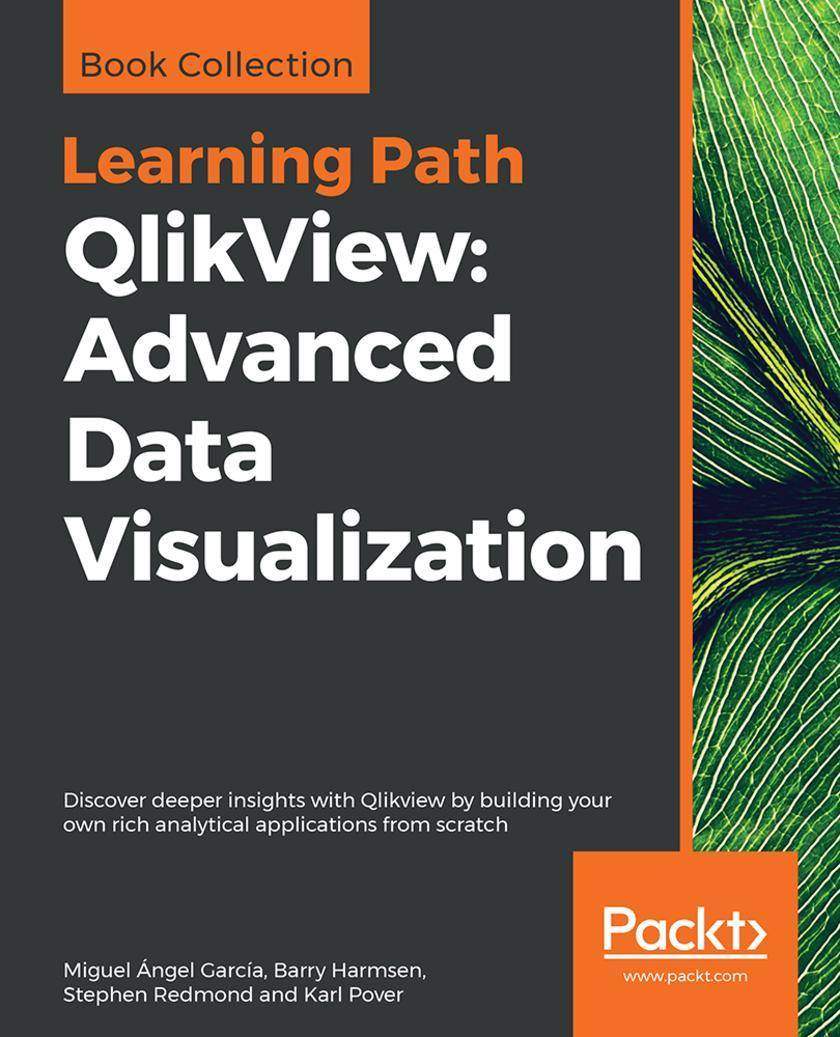
QlikView: Advanced Data Visualization
¥90.46
Build powerful data analytics applications with this business intelligence tool and overcome all your business challenges Key Features *Master time-saving techniques and make your QlikView development more efficient *Perform geographical analysis and sentiment analysis in your QlikView applications *Explore advanced QlikView techniques, tips, and tricks to deliver complex business requirements Book Description QlikView is one of the most flexible and powerful business intelligence platforms around, and if you want to transform data into insights, it is one of the best options you have at hand. Use this Learning Path, to explore the many features of QlikView to realize the potential of your data and present it as impactful and engaging visualizations. Each chapter in this Learning Path starts with an understanding of a business requirement and its associated data model and then helps you create insightful analysis and data visualizations around it. You will look at problems that you might encounter while visualizing complex data insights using QlikView, and learn how to troubleshoot these and other not-so-common errors. This Learning Path contains real-world examples from a variety of business domains, such as sales, finance, marketing, and human resources. With all the knowledge that you gain from this Learning Path, you will have all the experience you need to implement your next QlikView project like a pro. This Learning Path includes content from the following Packt products: *QlikView for Developers by Miguel ?ngel García, Barry Harmsen *Mastering QlikView by Stephen Redmond *Mastering QlikView Data Visualization by Karl Pover What you will learn *Deliver common business requirements using advanced techniques *Load data from disparate sources to build associative data models *Understand when to apply more advanced data visualization *Utilize the built-in aggregation functions for complex calculations *Build a data architecture that supports scalable QlikView deployments *Troubleshoot common data visualization errors in QlikView *Protect your QlikView applications and data Who this book is for This Learning Path is designed for developers who want to go beyond their technical knowledge of QlikView and understand how to create analysis and data visualizations that solve real business needs. To grasp the concepts explained in this Learning Path, you should have a basic understanding of the common QlikView functions and some hands-on experience with the tool.
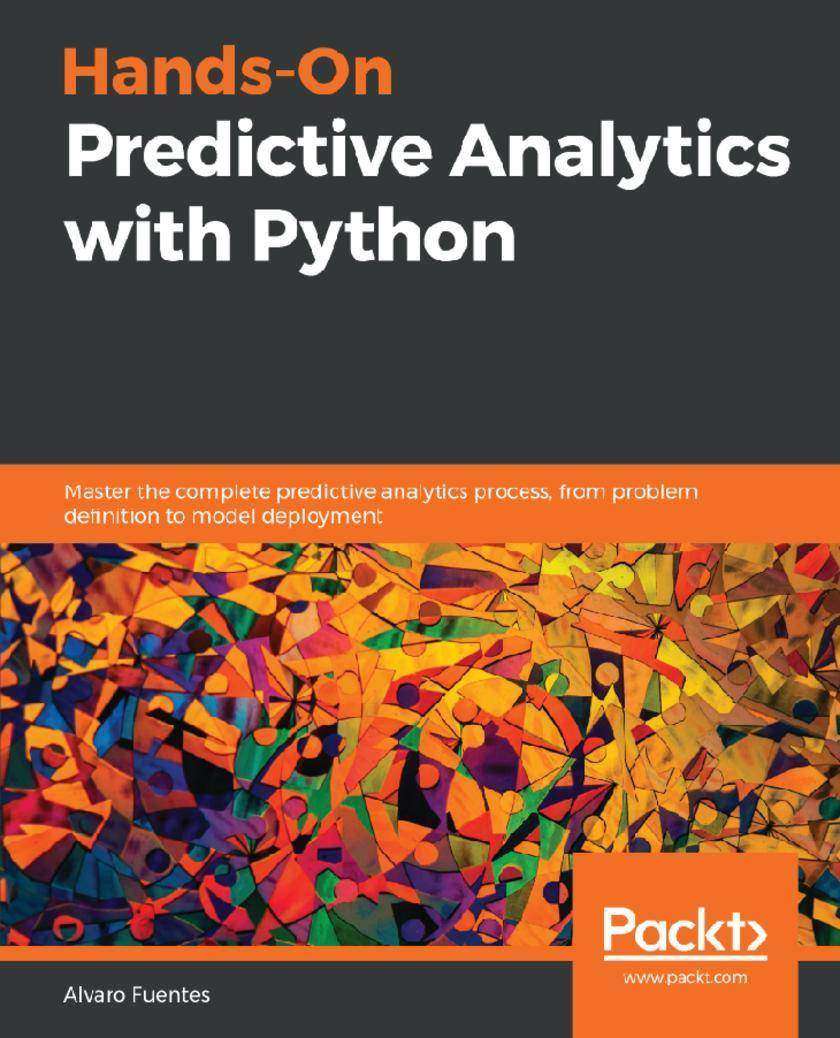
Hands-On Predictive Analytics with Python
¥81.74
Step-by-step guide to build high performing predictive applications Key Features *Use the Python data analytics ecosystem to implement end-to-end predictive analytics projects *Explore advanced predictive modeling algorithms with an emphasis on theory with intuitive explanations *Learn to deploy a predictive model's results as an interactive application Book Description Predictive analytics is an applied field that employs a variety of quantitative methods using data to make predictions. It involves much more than just throwing data onto a computer to build a model. This book provides practical coverage to help you understand the most important concepts of predictive analytics. Using practical, step-by-step examples, we build predictive analytics solutions while using cutting-edge Python tools and packages. The book's step-by-step approach starts by defining the problem and moves on to identifying relevant data. We will also be performing data preparation, exploring and visualizing relationships, building models, tuning, evaluating, and deploying model. Each stage has relevant practical examples and efficient Python code. You will work with models such as KNN, Random Forests, and neural networks using the most important libraries in Python's data science stack: NumPy, Pandas, Matplotlib, Seaborn, Keras, Dash, and so on. In addition to hands-on code examples, you will find intuitive explanations of the inner workings of the main techniques and algorithms used in predictive analytics. By the end of this book, you will be all set to build high-performance predictive analytics solutions using Python programming. What you will learn *Get to grips with the main concepts and principles of predictive analytics *Learn about the stages involved in producing complete predictive analytics solutions *Understand how to define a problem, propose a solution, and prepare a dataset *Use visualizations to explore relationships and gain insights into the dataset *Learn to build regression and classification models using scikit-learn *Use Keras to build powerful neural network models that produce accurate predictions *Learn to serve a model's predictions as a web application Who this book is for This book is for data analysts, data scientists, data engineers, and Python developers who want to learn about predictive modeling and would like to implement predictive analytics solutions using Python's data stack. People from other backgrounds who would like to enter this exciting field will greatly benefit from reading this book. All you need is to be proficient in Python programming and have a basic understanding of statistics and college-level algebra.
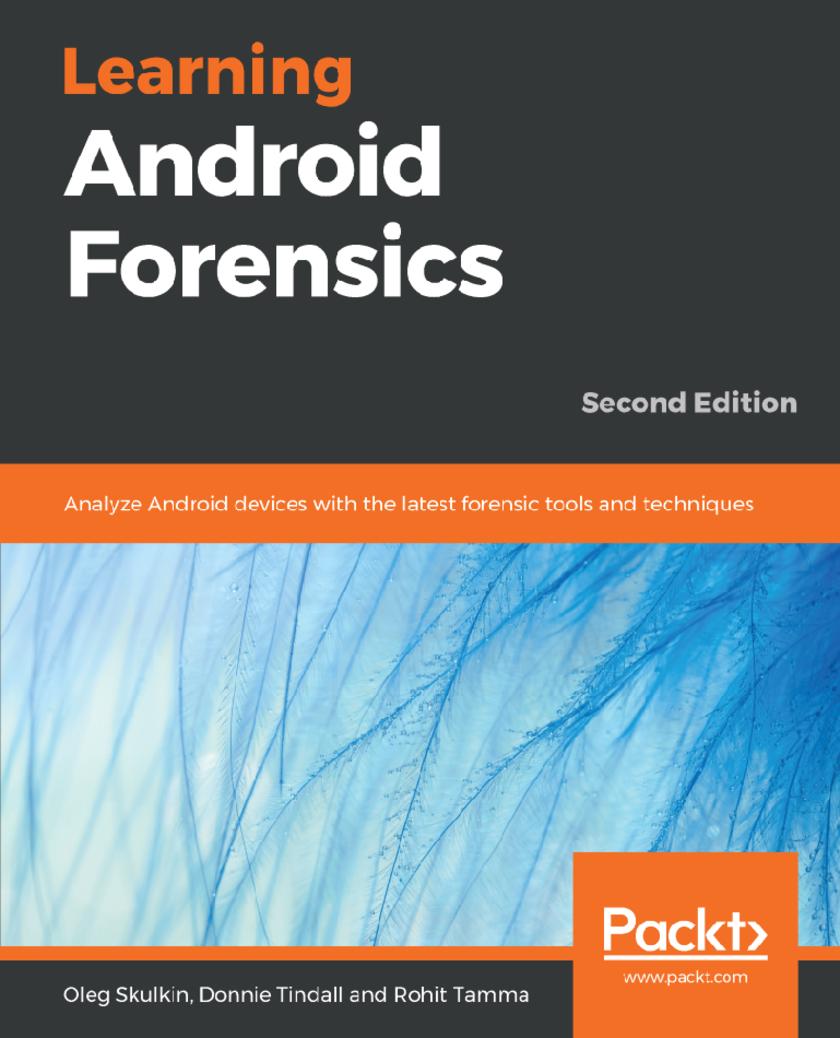
Learning Android Forensics
¥81.74
A comprehensive guide to Android forensics, from setting up the workstation to analyzing key artifacts Key Features *Get up and running with modern mobile forensic strategies and techniques *Analyze the most popular Android applications using free and open source forensic tools *Learn malware detection and analysis techniques to investigate mobile cybersecurity incidents Book Description Many forensic examiners rely on commercial, push-button tools to retrieve and analyze data, even though there is no tool that does either of these jobs perfectly. Learning Android Forensics will introduce you to the most up-to-date Android platform and its architecture, and provide a high-level overview of what Android forensics entails. You will understand how data is stored on Android devices and how to set up a digital forensic examination environment. As you make your way through the chapters, you will work through various physical and logical techniques to extract data from devices in order to obtain forensic evidence. You will also learn how to recover deleted data and forensically analyze application data with the help of various open source and commercial tools. In the concluding chapters, you will explore malware analysis so that you’ll be able to investigate cybersecurity incidents involving Android malware. By the end of this book, you will have a complete understanding of the Android forensic process, you will have explored open source and commercial forensic tools, and will have basic skills of Android malware identification and analysis. What you will learn *Understand Android OS and architecture *Set up a forensics environment for Android analysis *Perform logical and physical data extractions *Learn to recover deleted data *Explore how to analyze application data *Identify malware on Android devices *Analyze Android malware Who this book is for If you are a forensic analyst or an information security professional wanting to develop your knowledge of Android forensics, then this is the book for you. Some basic knowledge of the Android mobile platform is expected.
Keras 2.x Projects
¥81.74
Demonstrate fundamentals of Deep Learning and neural network methodologies using Keras 2.x Key Features *Experimental projects showcasing the implementation of high-performance deep learning models with Keras. * *Use-cases across reinforcement learning, natural language processing, GANs and computer vision. * *Build strong fundamentals of Keras in the area of deep learning and artificial intelligence. Book Description Keras 2.x Projects explains how to leverage the power of Keras to build and train state-of-the-art deep learning models through a series of practical projects that look at a range of real-world application areas. To begin with, you will quickly set up a deep learning environment by installing the Keras library. Through each of the projects, you will explore and learn the advanced concepts of deep learning and will learn how to compute and run your deep learning models using the advanced offerings of Keras. You will train fully-connected multilayer networks, convolutional neural networks, recurrent neural networks, autoencoders and generative adversarial networks using real-world training datasets. The projects you will undertake are all based on real-world scenarios of all complexity levels, covering topics such as language recognition, stock volatility, energy consumption prediction, faster object classification for self-driving vehicles, and more. By the end of this book, you will be well versed with deep learning and its implementation with Keras. You will have all the knowledge you need to train your own deep learning models to solve different kinds of problems. What you will learn *Apply regression methods to your data and understand how the regression algorithm works *Understand the basic concepts of classification methods and how to implement them in the Keras environment *Import and organize data for neural network classification analysis *Learn about the role of rectified linear units in the Keras network architecture *Implement a recurrent neural network to classify the sentiment of sentences from movie reviews *Set the embedding layer and the tensor sizes of a network Who this book is for If you are a data scientist, machine learning engineer, deep learning practitioner or an AI engineer who wants to build speedy intelligent applications with minimal lines of codes, then this book is the best fit for you. Sound knowledge of machine learning and basic familiarity with Keras library would be useful.


