


 购物车
购物车 个人中心
个人中心
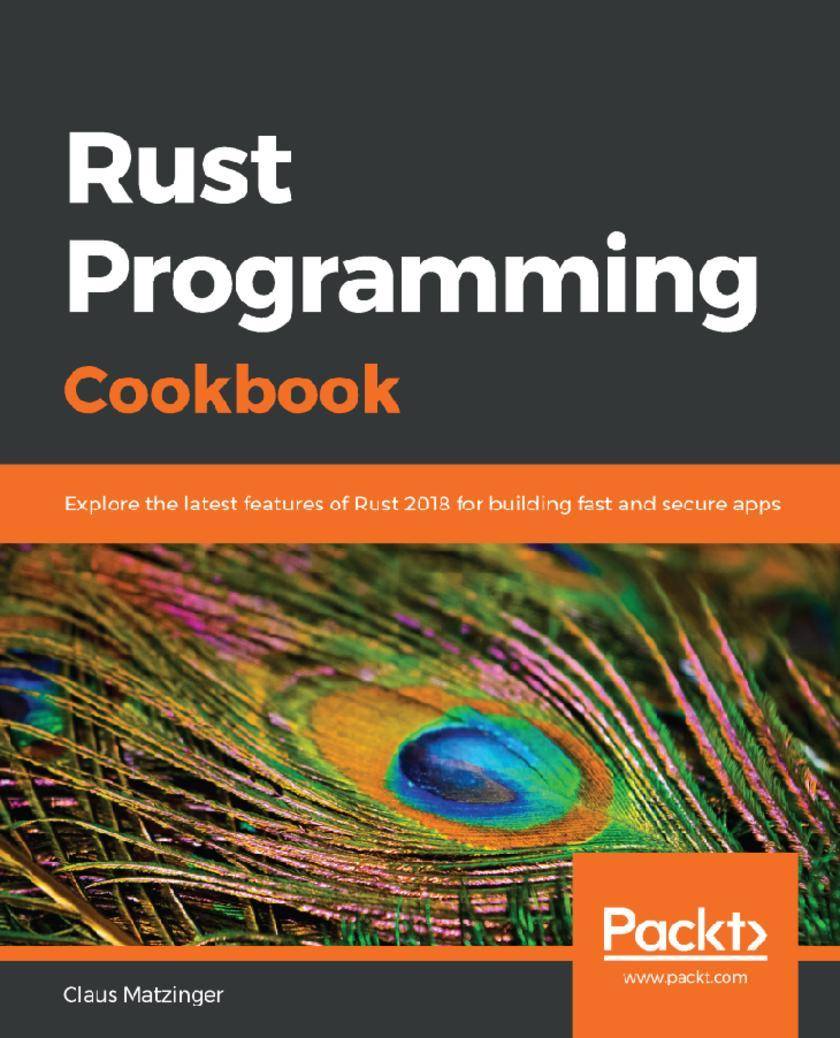
Rust Programming Cookbook
¥71.93
Practical solutions to overcome challenges in creating console and web applications and working with systems-level and embedded code, network programming, deep neural networks, and much more. Key Features * Work through recipes featuring advanced concepts such as concurrency, unsafe code, and macros to migrate your codebase to the Rust programming language * Learn how to run machine learning models with Rust * Explore error handling, macros, and modularization to write maintainable code Book Description Rust 2018, Rust's first major milestone since version 1.0, brings more advancement in the Rust language. The Rust Programming Cookbook is a practical guide to help you overcome challenges when writing Rust code. This Rust book covers recipes for configuring Rust for different environments and architectural designs, and provides solutions to practical problems. It will also take you through Rust's core concepts, enabling you to create efficient, high-performance applications that use features such as zero-cost abstractions and improved memory management. As you progress, you'll delve into more advanced topics, including channels and actors, for building scalable, production-grade applications, and even get to grips with error handling, macros, and modularization to write maintainable code. You will then learn how to overcome common roadblocks when using Rust for systems programming, IoT, web development, and network programming. Finally, you'll discover what Rust 2018 has to offer for embedded programmers. By the end of the book, you'll have learned how to build fast and safe applications and services using Rust. What you will learn * Understand how Rust provides unique solutions to solve system programming language problems * Grasp the core concepts of Rust to develop fast and safe applications * Explore the possibility of integrating Rust units into existing applications for improved efficiency * Discover how to achieve better parallelism and security with Rust * Write Python extensions in Rust * Compile external assembly files and use the Foreign Function Interface (FFI) * Build web applications and services using Rust for high performance Who this book is for The Rust cookbook is for software developers looking to enhance their knowledge of Rust and leverage its features using modern programming practices. Familiarity with Rust language is expected to get the most out of this book.
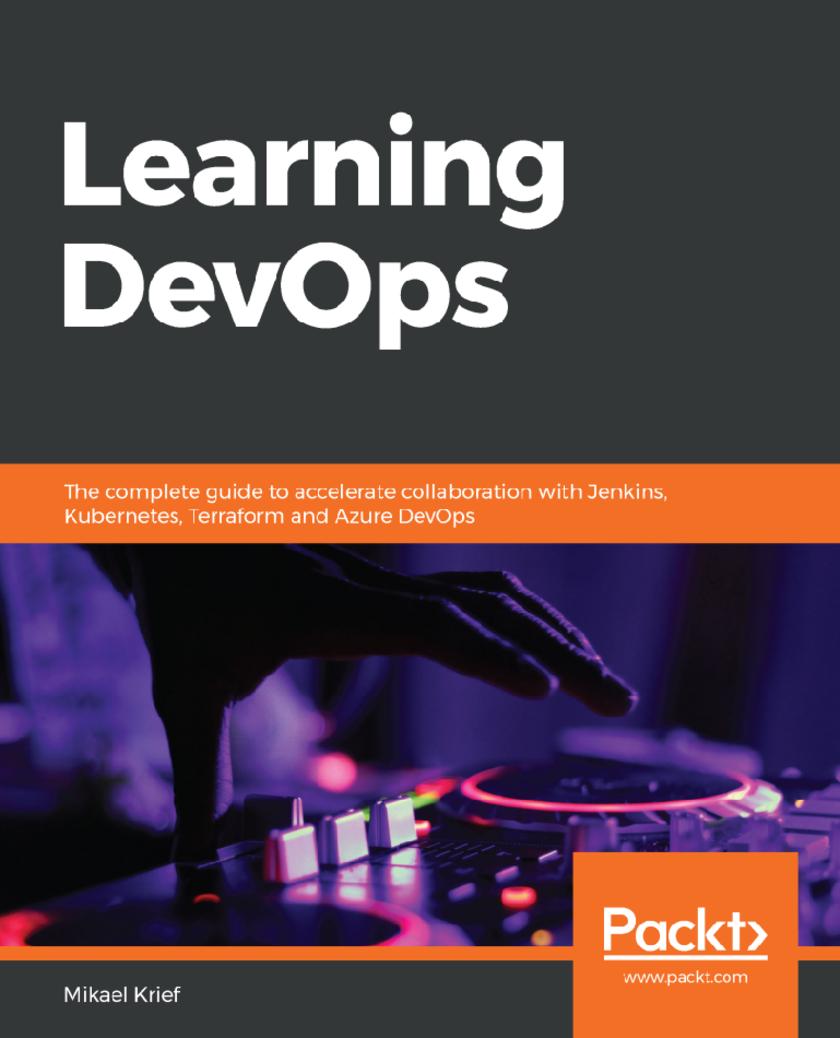
Learning DevOps
¥63.21
Simplify your DevOps roles with DevOps tools and techniques Key Features * Learn to utilize business resources effectively to increase productivity and collaboration * Leverage the ultimate open source DevOps tools to achieve continuous integration and continuous delivery (CI/CD) * Ensure faster time-to-market by reducing overall lead time and deployment downtime Book Description The implementation of DevOps processes requires the efficient use of various tools, and the choice of these tools is crucial for the sustainability of projects and collaboration between development (Dev) and operations (Ops). This book presents the different patterns and tools that you can use to provision and configure an infrastructure in the cloud. You'll begin by understanding DevOps culture, the application of DevOps in cloud infrastructure, provisioning with Terraform, configuration with Ansible, and image building with Packer. You'll then be taken through source code versioning with Git and the construction of a DevOps CI/CD pipeline using Jenkins, GitLab CI, and Azure Pipelines. This DevOps handbook will also guide you in containerizing and deploying your applications with Docker and Kubernetes. You'll learn how to reduce deployment downtime with blue-green deployment and the feature flags technique, and study DevOps practices for open source projects. Finally, you'll grasp some best practices for reducing the overall application lead time to ensure faster time to market. By the end of this book, you'll have built a solid foundation in DevOps, and developed the skills necessary to enhance a traditional software delivery process using modern software delivery tools and techniques What you will learn * Become well versed with DevOps culture and its practices * Use Terraform and Packer for cloud infrastructure provisioning * Implement Ansible for infrastructure configuration * Use basic Git commands and understand the Git flow process * Build a DevOps pipeline with Jenkins, Azure Pipelines, and GitLab CI * Containerize your applications with Docker and Kubernetes * Check application quality with SonarQube and Postman * Protect DevOps processes and applications using DevSecOps tools Who this book is for If you are a developer or a system administrator interested in understanding continuous integration, continuous delivery, and containerization with DevOps tools and techniques, this book is for you.
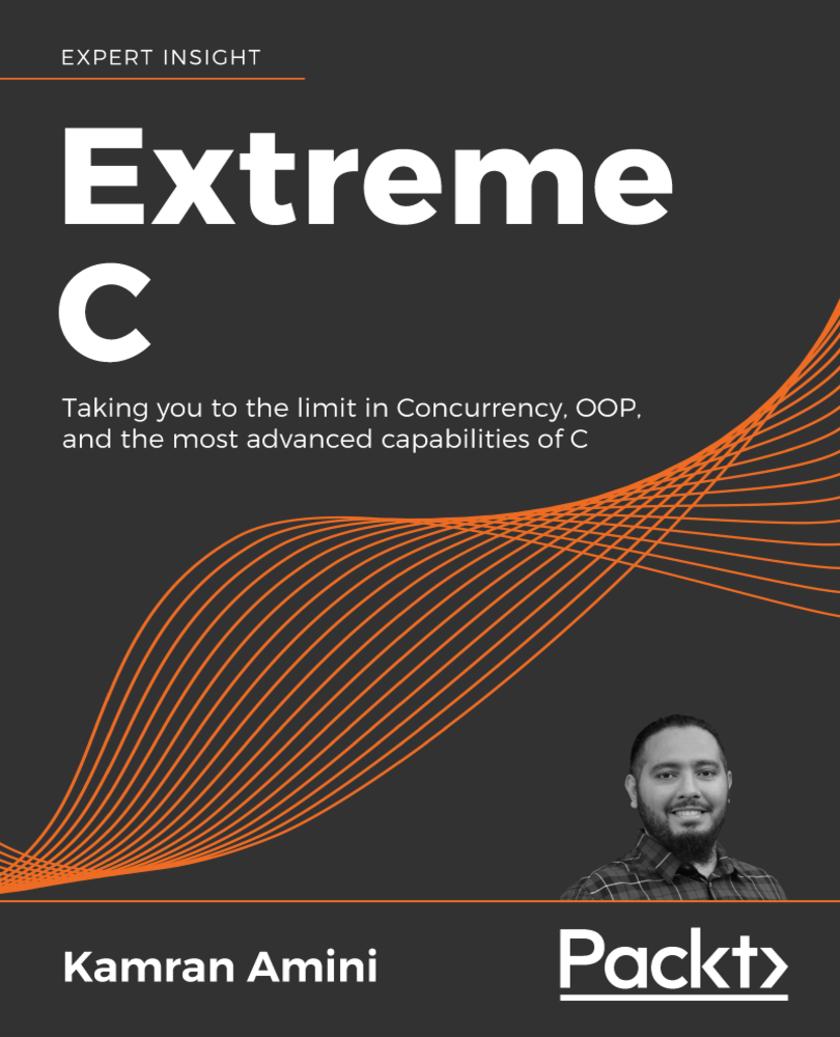
Extreme C
¥90.46
Push the limits of what C - and you - can do, with this high-intensity guide to the most advanced capabilities of C Key Features * Make the most of C’s low-level control, flexibility, and high performance * A comprehensive guide to C’s most powerful and challenging features * A thought-provoking guide packed with hands-on exercises and examples Book Description There’s a lot more to C than knowing the language syntax. The industry looks for developers with a rigorous, scientific understanding of the principles and practices. Extreme C will teach you to use C’s advanced low-level power to write effective, efficient systems. This intensive, practical guide will help you become an expert C programmer. Building on your existing C knowledge, you will master preprocessor directives, macros, conditional compilation, pointers, and much more. You will gain new insight into algorithm design, functions, and structures. You will discover how C helps you squeeze maximum performance out of critical, resource-constrained applications. C still plays a critical role in 21st-century programming, remaining the core language for precision engineering, aviations, space research, and more. This book shows how C works with Unix, how to implement OO principles in C, and fully covers multi-processing. In Extreme C, Amini encourages you to think, question, apply, and experiment for yourself. The book is essential for anybody who wants to take their C to the next level. What you will learn * Build advanced C knowledge on strong foundations, rooted in first principles * Understand memory structures and compilation pipeline and how they work, and how to make most out of them * Apply object-oriented design principles to your procedural C code * Write low-level code that’s close to the hardware and squeezes maximum performance out of a computer system * Master concurrency, multithreading, multi-processing, and integration with other languages * Unit Testing and debugging, build systems, and inter-process communication for C programming Who this book is for Extreme C is for C programmers who want to dig deep into the language and its capabilities. It will help you make the most of the low-level control C gives you.
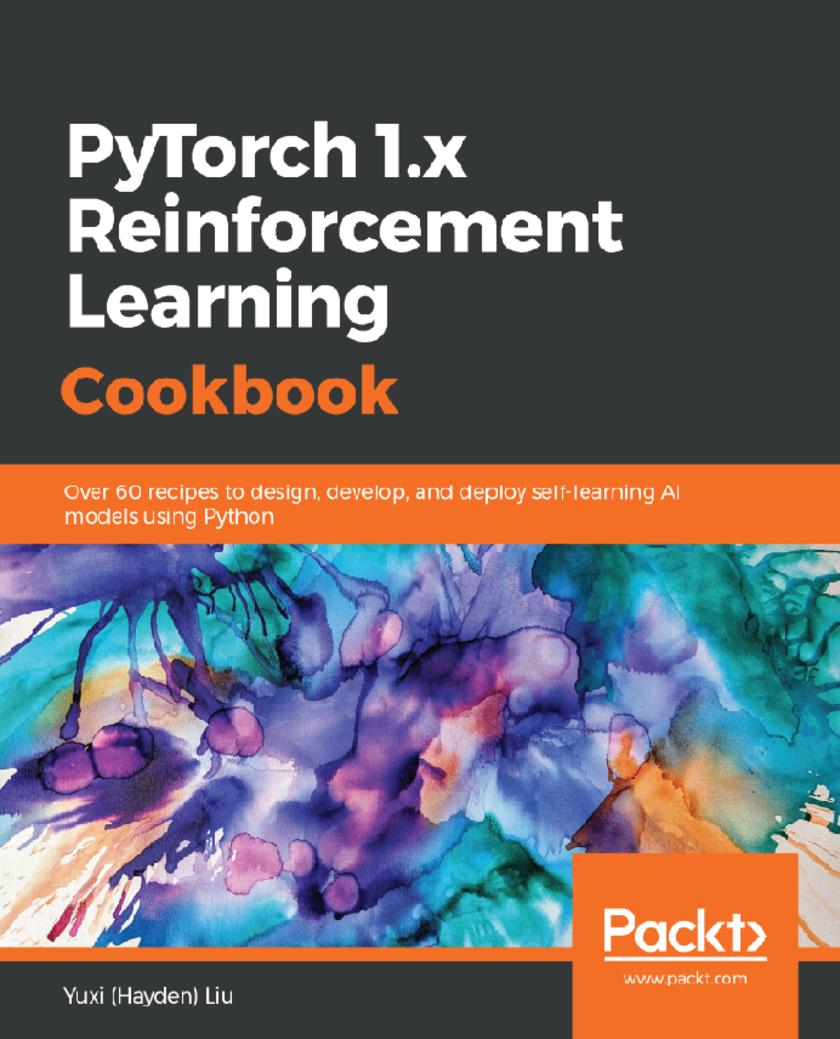
PyTorch 1.x Reinforcement Learning Cookbook
¥71.93
Implement reinforcement learning techniques and algorithms with the help of real-world examples and recipes Key Features * Use PyTorch 1.x to design and build self-learning artificial intelligence (AI) models * Implement RL algorithms to solve control and optimization challenges faced by data scientists today * Apply modern RL libraries to simulate a controlled environment for your projects Book Description Reinforcement learning (RL) is a branch of machine learning that has gained popularity in recent times. It allows you to train AI models that learn from their own actions and optimize their behavior. PyTorch has also emerged as the preferred tool for training RL models because of its efficiency and ease of use. With this book, you'll explore the important RL concepts and the implementation of algorithms in PyTorch 1.x. The recipes in the book, along with real-world examples, will help you master various RL techniques, such as dynamic programming, Monte Carlo simulations, temporal difference, and Q-learning. You'll also gain insights into industry-specific applications of these techniques. Later chapters will guide you through solving problems such as the multi-armed bandit problem and the cartpole problem using the multi-armed bandit algorithm and function approximation. You'll also learn how to use Deep Q-Networks to complete Atari games, along with how to effectively implement policy gradients. Finally, you'll discover how RL techniques are applied to Blackjack, Gridworld environments, internet advertising, and the Flappy Bird game. By the end of this book, you'll have developed the skills you need to implement popular RL algorithms and use RL techniques to solve real-world problems. What you will learn * Use Q-learning and the state–action–reward–state–action (SARSA) algorithm to solve various Gridworld problems * Develop a multi-armed bandit algorithm to optimize display advertising * Scale up learning and control processes using Deep Q-Networks * Simulate Markov Decision Processes, OpenAI Gym environments, and other common control problems * Select and build RL models, evaluate their performance, and optimize and deploy them * Use policy gradient methods to solve continuous RL problems Who this book is for Machine learning engineers, data scientists and AI researchers looking for quick solutions to different reinforcement learning problems will find this book useful. Although prior knowledge of machine learning concepts is required, experience with PyTorch will be useful but not necessary.
The Java Workshop
¥71.93
Cut through the noise and get real results with a step-by-step approach to learning Java programming Key Features * Ideal for the Java beginner who is getting started for the first time * A step-by-step Java tutorial with exercises and activities that help build key skills * Structured to let you progress at your own pace, on your own terms * Use your physical copy to redeem free access to the online interactive edition Book Description You already know you want to learn Java, and a smarter way to learn Java 12 is to learn by doing. The Java Workshop focuses on building up your practical skills so that you can develop high-performance Java applications that work flawlessly within the JVM across web, mobile and desktop. You'll learn from real examples that lead to real results. Throughout The Java Workshop, you'll take an engaging step-by-step approach to understanding Java. You won't have to sit through any unnecessary theory. If you're short on time you can jump into a single exercise each day or spend an entire weekend learning about Reactive programming and Unit testing. It's your choice. Learning on your terms, you'll build up and reinforce key skills in a way that feels rewarding. Every physical copy of The Java Workshop unlocks access to the interactive edition. With videos detailing all exercises and activities, you'll always have a guided solution. You can also benchmark yourself against assessments, track progress, and receive free content updates. You'll even earn a secure credential that you can share and verify online upon completion. It's a premium learning experience that's included with your printed copy. To redeem, follow the instructions located at the start of your Java book. Fast-paced and direct, The Java Workshop is the ideal companion for Java beginners. You'll build and iterate on your code like a software developer, learning along the way. This process means that you'll find that your new skills stick, embedded as best practice. A solid foundation for the years ahead. What you will learn * Get to grips with fundamental concepts and conventions of Java 12 * Write clean and well-commented code that's easy to maintain * Debug and compile logical errors and handle exceptions in your programs * Understand how to work with Java APIs and Java streams * Learn how to use third-party libraries and software development kits (SDKs) * Discover how you can work with information stored in databases * Understand how you can keep data secure with cryptography and encryption * Learn how to keep your development process bug-free with unit testing in Java Who this book is for Our goal at Packt is to help you be successful, in whatever it is you choose to do. The Java Workshop is an ideal Java tutorial for the Java beginner who is just getting started. Pick up a Workshop today, and let Packt help you develop skills that stick with you for life.
Microsoft System Center Data Protection Manager Cookbook
¥81.74
Over 60 recipes to achieve a robust and advanced backup and recovery solution leveraging SCDPM Key Features *Adapt to the modern data center design challenges and improve storage efficiency *Effective recipes to help you create your own robust architectural designs *Solve data protection and recovery problems in your organization Book Description System Center Data Protection Manager (SCDPM) is a robust enterprise backup and recovery system that contributes to your BCDR strategy by facilitating the backup and recovery of enterprise data. With an increase in data recovery and protection problems faced in organizations, it has become important to keep data safe and recoverable. This book contains recipes that will help you upgrade to SCDPM and it covers the advanced features and functionality of SCDPM. This book starts by helping you install SCDPM and then moves on to post-installation and management tasks. You will come across a lot of useful recipes that will help you recover your VMware and Hyper-V VMs. It will also walk you through tips for monitoring SCDPM in different scenarios. Next, the book will also offer insights into protecting windows workloads followed by best practices on SCDPM. You will also learn to back up your Azure Stack Infrastructure using Azure Backup. You will also learn about recovering data from backup and implementing disaster recovery. Finally, the book will show you how to configure the protection groups to enable online protection and troubleshoot Microsoft Azure Backup Agent. What you will learn *Install and prepare SQL Server for the SCDPM database *Reduce backup storage with SCDPM and data deduplication *Learn about the prerequisites for supported Hyper-V Server protection *Integrate SCDPM with other System Center products to build optimal services *Protect and restore the SCDPM database *Protect your data center by integrating SCDPM with Azure Backup *Manually create online recovery points and recover production data from Azure *Protect and learn about the requirements to recover Azure Stack with SCDPM Who this book is for If you are an SCDPM administrator, this book will help you verify your knowledge and provide you with everything you need to know about the new release of System Center Data Protection Manager.
Modern JavaScript Web Development Cookbook
¥81.74
Over 90 recipes to help you write clean code, solve common JavaScript problems, and work on popular use cases like SPAs, microservices, native mobile development with Node, React, React Native and Electron. Key Features *Over 90 practical recipes to help you write clean and maintainable JavaScript codes with the latest ES8 *Leverage the power of leading web frameworks like Node and React to build modern web apps *Features comprehensive coverage of tools and techniques needed to create multi-platform apps with JavaScript Book Description JavaScript has evolved into a language that you can use on any platform. Modern JavaScript Web Development Cookbook is a perfect blend of solutions for traditional JavaScript development and modern areas that developers have lately been exploring with JavaScript. This comprehensive guide teaches you how to work with JavaScript on servers, browsers, mobile phones and desktops. You will start by exploring the new features of ES8. You will then move on to learning the use of ES8 on servers (with Node.js), with the objective of producing services and microservices and dealing with authentication and CORS. Once you get accustomed to ES8, you will learn to apply it to browsers using frameworks, such as React and Redux, which interact through Ajax with services. You will then understand the use of a modern framework to develop the UI. In addition to this, development for mobile devices with React Native will walk you through the benefits of creating native apps, both for Android and iOS. Finally, you’ll be able to apply your new-found knowledge of server-side and client-side tools to develop applications with Electron. What you will learn *Use the latest features of ES8 and learn new ways to code with JavaScript *Develop server-side services and microservices with Node.js *Learn to do unit testing and to debug your code *Build client-side web applications using React and Redux *Create native mobile applications for Android and iOS with React Native *Write desktop applications with Electron Who this book is for This book is for developers who want to explore the latest JavaScript features, frameworks, and tools for building complete mobile, desktop and web apps, including server and client-side code. You are expected to have working knowledge of JavaScript to get the most out of this book.
CentOS Quick Start Guide
¥71.93
A concise walk-through of CentOS 7, starting from installation to securing it’s environment. Key Features *No previous Linux environment experience needed for reading this book *Get comfortable with a popular and stable Red Hat Enterprise Linux distribution *Most of the command line based concepts are explained with graphics Book Description Linux kernel development has been the worlds largest collaborative project to date. With this practical guide, you will learn Linux through one of its most popular and stable distributions. This book will introduce you to essential Linux skills using CentOS 7. It describes how a Linux system is organized, and will introduce you to key command-line concepts you can practice on your own. It will guide you in performing basic system administration tasks and day-to-day operations in a Linux environment. You will learn core system administration skills for managing a system running CentOS 7 or a similar operating system, such as RHEL 7, Scientific Linux, and Oracle Linux. You will be able to perform installation, establish network connectivity and user and process management, modify file permissions, manage text files using the command line, and implement basic security administration after covering this book. By the end of this book, you will have a solid understanding of working with Linux using the command line. What you will learn *Understand file system hierarchy and essential command-line skills *Use Vi editor, I/O redirections and how to work with common text manipulating tools *Create, delete, modify user accounts and manage passwords and their aging policy *Manage file ownership, permissions, and ACL *Execute process management and monitoring on the command line *Validate and manage network configuration using nmcli *Manage remote logins using SSH and file transfer using SCP and Rsync *Understand system logging, how to control system services with systemd and systemctl, and manage firewalId Who this book is for Any individual who wants to learn how to use Linux as server or desktop in his environment. Whether you are a developer, budding system administrator, or tech lover with no previous Linux administration background, you will be able to start your journey in Linux using CentOS 7 with this book.
Hands-On RESTful Python Web Services
¥81.74
Explore the best tools and techniques to create lightweight, maintainable, and scalable Python web services Key Features *Combine Python with different data sources to build complex RESTful APIs from scratch *Configure and fine-tune your APIs using the best tools and techniques available *Use command-line and GUI tools to test CRUD operations performed by RESTful Web Services or APIs Book Description Python is the language of choice for millions of developers worldwide that builds great web services in RESTful architecture. This second edition of Hands-On RESTful Python Web Services will cover the best tools you can use to build engaging web services. This book shows you how to develop RESTful APIs using the most popular Python frameworks and all the necessary stacks with Python, combined with related libraries and tools. You’ll learn to incorporate all new features of Python 3.7, Flask 1.0.2, Django 2.1, Tornado 5.1, and also a new framework, Pyramid. As you advance through the chapters, you will get to grips with each of these frameworks to build various web services, and be shown use cases and best practices covering when to use a particular framework. You’ll then successfully develop RESTful APIs with all frameworks and understand how each framework processes HTTP requests and routes URLs. You’ll also discover best practices for validation, serialization, and deserialization. In the concluding chapters, you will take advantage of specific features available in certain frameworks such as integrated ORMs, built-in authorization and authentication, and work with asynchronous code. At the end of each framework, you will write tests for RESTful APIs and improve code coverage. By the end of the book, you will have gained a deep understanding of the stacks needed to build RESTful web services. What you will learn *Select the most appropriate framework based on requirements *Develop complex RESTful APIs from scratch using Python *Use requests handlers, URL patterns, serialization, and validations *Add authentication, authorization, and interaction with ORMs and databases *Debug, test, and improve RESTful APIs with four frameworks *Design RESTful APIs with frameworks and create automated tests Who this book is for This book is for web developers who have a working knowledge of Python and would like to build amazing web services by taking advantage of the various frameworks of Python. You should have some knowledge of RESTful APIs.
Python: Advanced Guide to Artificial Intelligence
¥90.46
Demystify the complexity of machine learning techniques and create evolving, clever solutions to solve your problems Key Features *Master supervised, unsupervised, and semi-supervised ML algorithms and their implementation *Build deep learning models for object detection, image classification, similarity learning, and more *Build, deploy, and scale end-to-end deep neural network models in a production environment Book Description This Learning Path is your complete guide to quickly getting to grips with popular machine learning algorithms. You'll be introduced to the most widely used algorithms in supervised, unsupervised, and semi-supervised machine learning, and learn how to use them in the best possible manner. Ranging from Bayesian models to the MCMC algorithm to Hidden Markov models, this Learning Path will teach you how to extract features from your dataset and perform dimensionality reduction by making use of Python-based libraries. You'll bring the use of TensorFlow and Keras to build deep learning models, using concepts such as transfer learning, generative adversarial networks, and deep reinforcement learning. Next, you'll learn the advanced features of TensorFlow1.x, such as distributed TensorFlow with TF clusters, deploy production models with TensorFlow Serving. You'll implement different techniques related to object classification, object detection, image segmentation, and more. By the end of this Learning Path, you'll have obtained in-depth knowledge of TensorFlow, making you the go-to person for solving artificial intelligence problems This Learning Path includes content from the following Packt products: *Mastering Machine Learning Algorithms by Giuseppe Bonaccorso *Mastering TensorFlow 1.x by Armando Fandango *Deep Learning for Computer Vision by Rajalingappaa Shanmugamani What you will learn *Explore how an ML model can be trained, optimized, and evaluated *Work with Autoencoders and Generative Adversarial Networks *Explore the most important Reinforcement Learning techniques *Build end-to-end deep learning (CNN, RNN, and Autoencoders) models Who this book is for This Learning Path is for data scientists, machine learning engineers, artificial intelligence engineers who want to delve into complex machine learning algorithms, calibrate models, and improve the predictions of the trained model. You will encounter the advanced intricacies and complex use cases of deep learning and AI. A basic knowledge of programming in Python and some understanding of machine learning concepts are required to get the best out of this Learning Path.
Microsoft Power BI Complete Reference
¥90.46
Design, develop, and master efficient Power BI solutions for impactful business insights Key Features *Get to grips with the fundamentals of Microsoft Power BI *Combine data from multiple sources, create visuals, and publish reports across platforms *Understand Power BI concepts with real-world use cases Book Description Microsoft Power BI Complete Reference Guide gets you started with business intelligence by showing you how to install the Power BI toolset, design effective data models, and build basic dashboards and visualizations that make your data come to life. In this Learning Path, you will learn to create powerful interactive reports by visualizing your data and learn visualization styles, tips and tricks to bring your data to life. You will be able to administer your organization's Power BI environment to create and share dashboards. You will also be able to streamline deployment by implementing security and regular data refreshes. Next, you will delve deeper into the nuances of Power BI and handling projects. You will get acquainted with planning a Power BI project, development, and distribution of content, and deployment. You will learn to connect and extract data from various sources to create robust datasets, reports, and dashboards. Additionally, you will learn how to format reports and apply custom visuals, animation and analytics to further refine your data. By the end of this Learning Path, you will learn to implement the various Power BI tools such as on-premises gateway together along with staging and securely distributing content via apps. This Learning Path includes content from the following Packt products: *Microsoft Power BI Quick Start Guide by Devin Knight et al. *Mastering Microsoft Power BI by Brett Powell What you will learn *Connect to data sources using both import and DirectQuery options *Leverage built-in and custom visuals to design effective reports *Administer a Power BI cloud tenant for your organization *Deploy your Power BI Desktop files into the Power BI Report Server *Build efficient data retrieval and transformation processes Who this book is for Microsoft Power BI Complete Reference Guide is for those who want to learn and use the Power BI features to extract maximum information and make intelligent decisions that boost their business. If you have a basic understanding of BI concepts and want to learn how to apply them using Microsoft Power BI, then Learning Path is for you. It consists of real-world examples on Power BI and goes deep into the technical issues, covers additional protocols, and much more.
Mastering OpenCV 4
¥81.74
Work on practical computer vision projects covering advanced object detector techniques and modern deep learning and machine learning algorithms Key Features *Learn about the new features that help unlock the full potential of OpenCV 4 *Build face detection applications with a cascade classifier using face landmarks *Create an optical character recognition (OCR) model using deep learning and convolutional neural networks Book Description Mastering OpenCV, now in its third edition, targets computer vision engineers taking their first steps toward mastering OpenCV. Keeping the mathematical formulations to a solid but bare minimum, the book delivers complete projects from ideation to running code, targeting current hot topics in computer vision such as face recognition, landmark detection and pose estimation, and number recognition with deep convolutional networks. You’ll learn from experienced OpenCV experts how to implement computer vision products and projects both in academia and industry in a comfortable package. You’ll get acquainted with API functionality and gain insights into design choices in a complete computer vision project. You’ll also go beyond the basics of computer vision to implement solutions for complex image processing projects. By the end of the book, you will have created various working prototypes with the help of projects in the book and be well versed with the new features of OpenCV4. What you will learn *Build real-world computer vision problems with working OpenCV code samples *Uncover best practices in engineering and maintaining OpenCV projects *Explore algorithmic design approaches for complex computer vision tasks *Work with OpenCV’s most updated API (v4.0.0) through projects *Understand 3D scene reconstruction and Structure from Motion (SfM) *Study camera calibration and overlay AR using the ArUco Module Who this book is for This book is for those who have a basic knowledge of OpenCV and are competent C++ programmers. You need to have an understanding of some of the more theoretical/mathematical concepts, as we move quite quickly throughout the book.
Xamarin.Forms Projects
¥71.93
Explore Xamarin.Forms to develop dynamic applications Key Features *Explore SQLite through Xamarin to store locations for various location-based applications *Make a real-time serverless chat service by using Azure SignalR service *Build Augmented Reality application with the power of UrhoSharp together with ARKit and ARCore Book Description Xamarin.Forms is a lightweight cross-platform development toolkit for building applications with a rich user interface. In this book you'll start by building projects that explain the Xamarin.Forms ecosystem to get up and running with building cross-platform applications. We'll increase in difficulty throughout the projects, making you learn the nitty-gritty of Xamarin.Forms offerings. You'll gain insights into the architecture, how to arrange your app's design, where to begin developing, what pitfalls exist, and how to avoid them. The book contains seven real-world projects, to get you hands-on with building rich UIs and providing a truly cross-platform experience. It will also guide you on how to set up a machine for Xamarin app development. You'll build a simple to-do application that gets you going, then dive deep into building advanced apps such as messaging platform, games, and machine learning, to build a UI for an augmented reality project. By the end of the book, you'll be confident in building cross-platforms and fitting Xamarin.Forms toolkits in your app development. You'll be able to take the practice you get from this book to build applications that comply with your requirements. What you will learn *Set up a machine for Xamarin development *Get to know about MVVM and data bindings in Xamarin.Forms *Understand how to use custom renderers to gain platform-specific access *Discover Geolocation services through Xamarin Essentials *Create an abstraction of ARKit and ARCore to expose as a single API for the game *Learn how to train a model for image *classification with Azure Cognitive Services Who this book is for This book is for mobile application developers who want to start building native mobile apps using the powerful Xamarin.Forms and C#. Working knowledge of C#, .NET, and Visual Studio is required.
Odoo 12 Development Essentials
¥81.74
Extend your skills with Odoo 12 to build resourceful and open source business applications Key Features *Explore Odoo 12 capabilities to develop business applications *Program business logic and manipulate data to implement specific business rules in your applications *Integrate Python APIs for building customizable and scalable business logic Book Description Odoo is one of the best platforms for open source ERP and CRM. Its latest version, Odoo 12, brings with it new features and updates in Python packages to develop more customizable applications with additional cloud capabilities. The book begins by covering the development essentials for building business applications. You will start your journey by learning how to install and configure Odoo, and then transition from having no specific knowledge of Odoo to being ready for application development. You will develop your first Odoo application and understand topics such as models and views. Odoo 12 Development Essentials will also guide you in using server APIs to add business logic, helping you lay a solid foundation for advanced topics. As you progress through the chapters, you will be equipped to build and customize your applications and explore the new features in Odoo 12, such as cloud integration, to scale your business applications. You will get insights into building business logic and integrating various APIs into your application. By the end of the book, you will be able to build a business application from scratch by using the latest version of Odoo. What you will learn *Manage Odoo server instances *Create a new Odoo application from scratch using the most frequently used elements *Develop new models and use inheritance to extend existing models *Use ORM methods in the Odoo server and from external clients *Create Kanban views using QWeb effectively *Build custom web and website CMS pages *Use external APIs to integrate Odoo with external applications *Add automated tests and techniques to debug module business logic Who this book is for If you are a developer familiar with Python and MVC design and want to build business applications using Odoo, this book is for you.
Ripple Quick Start Guide
¥54.49
Learn to work with XRP and build applications on Ripple's blockchain Key Features *Learn to use Ripple’s decentralized system for transfering digital assets globally *A simpilfied and shortened learning curve to understand the Ripple innovation and Blockchain *Takes a hands-on approach to work with XRP – Ripple’s native currency Book Description This book starts by giving you an understanding of the basics of blockchain and the Ripple protocol. You will then get some hands-on experience of working with XRP. You will learn how to set up a Ripple wallet and see how seamlessly you can transfer money abroad. You will learn about different types of wallets through which you can store and transact XRP, along with the security precautions you need to take to keep your money safe. Since Ripple is currency agnostic, it can enable the transfer of value in USD, EUR, and any other currency. You can even transfer digital assets using Ripple. You will see how you can pay an international merchant with their own native currency and how Ripple can exchange it on the ?y. Once you understand the applications of Ripple, you will learn how to create a conditionally-held escrow using the Ripple API, and how to send and cash checks. Finally, you will also understand the common misconceptions people have about Ripple and discover the potential risks you must consider before making investment decisions. By the end of this book, you will have a solid foundation for working with Ripple's blockchain. Using it, you will be able to solve problems caused by traditional systems in your respective industry. What you will learn *Understand the fundamentals of blockchain and Ripple *Learn how to choose a Ripple wallet *Set up a Ripple wallet to send and receive XRP *Learn how to protect your XRP *Understand the applications of Ripple *Learn how to work with the Ripple API *Learn how to build applications on check and escrow features of Ripple Who this book is for This book is for anyone interested in getting their hands on Ripple technology and learn where it can be used to gain competitive advantages in their respective fields. For most parts of the book, you need not have any pre-requisite knowledge. However, you need to have basic background of JavaScript to write an escrow.
Practical Network Automation
¥71.93
Leverage the power of Python, Ansible and other network automation tools to make your network robust and more secure Key Features *Get introduced to the concept of network automation with relevant use cases *Apply Continuous Integration and DevOps to improve your network performance *Implement effective automation using tools such as Python, Ansible, and more Book Description Network automation is the use of IT controls to supervise and carry out everyday network management functions. It plays a key role in network virtualization technologies and network functions. The book starts by providing an introduction to network automation, and its applications, which include integrating DevOps tools to automate the network efficiently. It then guides you through different network automation tasks and covers various data digging and performing tasks such as ensuring golden state configurations using templates, interface parsing. This book also focuses on Intelligent Operations using Artificial Intelligence and troubleshooting using chatbots and voice commands. The book then moves on to the use of Python and the management of SSH keys for machine-to-machine (M2M) communication, all followed by practical use cases. The book also covers the importance of Ansible for network automation, including best practices in automation; ways to test automated networks using tools such as Puppet, SaltStack, and Chef; and other important techniques. Through practical use-cases and examples, this book will acquaint you with the various aspects of network automation. It will give you the solid foundation you need to automate your own network without any hassle. What you will learn *Get started with the fundamental concepts of network automation *Perform intelligent data mining and remediation based on triggers *Understand how AIOps works in operations *Trigger automation through data factors *Improve your data center's robustness and security through data digging *Get access infrastructure through API Framework for chatbot and voice interactive troubleshootings *Set up communication with SSH-based devices using Netmiko Who this book is for If you are a network engineer or a DevOps professional looking for an extensive guide to help you automate and manage your network efficiently, then this book is for you. No prior experience with network automation is required to get started, however you will need some exposure to Python programming to get the most out of this book.
Go Web Scraping Quick Start Guide
¥45.77
Learn how some Go-specific language features help to simplify building web scrapers along with common pitfalls and best practices regarding web scraping. Key Features * Use Go libraries like Goquery and Colly to scrape the web * Common pitfalls and best practices to effectively scrape and crawl * Learn how to scrape using the Go concurrency model Book Description Web scraping is the process of extracting information from the web using various tools that perform scraping and crawling. Go is emerging as the language of choice for scraping using a variety of libraries. This book will quickly explain to you, how to scrape data data from various websites using Go libraries such as Colly and Goquery. The book starts with an introduction to the use cases of building a web scraper and the main features of the Go programming language, along with setting up a Go environment. It then moves on to HTTP requests and responses and talks about how Go handles them. You will also learn about a number of basic web scraping etiquettes. You will be taught how to navigate through a website, using a breadth-first and then a depth-first search, as well as find and follow links. You will get to know about the ways to track history in order to avoid loops and to protect your web scraper using proxies. Finally the book will cover the Go concurrency model, and how to run scrapers in parallel, along with large-scale distributed web scraping. What you will learn * Implement Cache-Control to avoid unnecessary network calls * Coordinate concurrent scrapers * Design a custom, larger-scale scraping system * Scrape basic HTML pages with Colly and JavaScript pages with chromedp * Discover how to search using the "strings" and "regexp" packages * Set up a Go development environment * Retrieve information from an HTML document * Protect your web scraper from being blocked by using proxies * Control web browsers to scrape JavaScript sites Who this book is for Data scientists, and web developers with a basic knowledge of Golang wanting to collect web data and analyze them for effective reporting and visualization.
Hands-On Functional Programming with TypeScript
¥63.21
Discover the power of functional programming, lazy evaluation, monads, concurrency, and immutability to create succinct and expressive implementations Key Features * Get a solid understanding of how to apply functional programming concepts in TypeScript * Explore TypeScript runtime features such as event loop, closures, and Prototypes * Gain deeper knowledge on the pros and cons of TypeScript Book Description Functional programming is a powerful programming paradigm that can help you to write better code. However, learning functional programming can be complicated, and the existing literature is often too complex for beginners. This book is an approachable introduction to functional programming and reactive programming with TypeScript for readers without previous experience in functional programming with JavaScript, TypeScript , or any other programming language. The book will help you understand the pros, cons, and core principles of functional programming in TypeScript. It will explain higher order functions, referential transparency, functional composition, and monads with the help of effective code examples. Using TypeScript as a functional programming language, you’ll also be able to brush up on your knowledge of applying functional programming techniques, including currying, laziness, and immutability, to real-world scenarios. By the end of this book, you will be confident when it comes to using core functional and reactive programming techniques to help you build effective applications with TypeScript. What you will learn * Understand the pros and cons of functional programming * Delve into the principles, patterns, and best practices of functional and reactive programming * Use lazy evaluation to improve the performance of applications * Explore functional optics with Ramda * Gain insights into category theory functional data structures such as Functors and Monads * Use functions as values, so that they can be passed as arguments to other functions Who this book is for This book is designed for readers with no prior experience of functional programming with JavaScript, TypeScript or any other programming language. Some familiarity with TypeScript and web development is a must to grasp the concepts in the book easily.
Mastering Python Scripting for System Administrators
¥81.74
Leverage the features and libraries of Python to administrate your environment efficiently. Key Features * Learn how to solve problems of system administrators and automate routine activities * Learn to handle regular expressions, network administration * Building GUI, web-scraping and database administration including data analytics Book Description Python has evolved over time and extended its features in relation to every possible IT operation. Python is simple to learn, yet has powerful libraries that can be used to build powerful Python scripts for solving real-world problems and automating administrators' routine activities. The objective of this book is to walk through a series of projects that will teach readers Python scripting with each project. This book will initially cover Python installation and quickly revise basic to advanced programming fundamentals. The book will then focus on the development process as a whole, from setup to planning to building different tools. It will include IT administrators' routine activities (text processing, regular expressions, file archiving, and encryption), network administration (socket programming, email handling, the remote controlling of devices using telnet/ssh, and protocols such as SNMP/DHCP), building graphical user interface, working with websites (Apache log file processing, SOAP and REST APIs communication, and web scraping), and database administration (MySQL and similar database data administration, data analytics, and reporting). By the end of this book, you will be able to use the latest features of Python and be able to build powerful tools that will solve challenging, real-world tasks What you will learn * Understand how to install Python and debug Python scripts * Understand and write scripts for automating testing and routine administrative activities * Understand how to write scripts for text processing, encryption, decryption, and archiving * Handle files, such as pdf, excel, csv, and txt files, and generate reports * Write scripts for remote network administration, including handling emails * Build interactive tools using a graphical user interface * Handle Apache log files, SOAP and REST APIs communication * Automate database administration and perform statistical analysis Who this book is for This book would be ideal for users with some basic understanding of Python programming and who are interested in scaling their programming skills to command line scripting and system administration. Prior knowledge of Python would be necessary.
Ensemble Machine Learning Cookbook
¥81.74
Implement machine learning algorithms to build ensemble models using Keras, H2O, Scikit-Learn, Pandas and more Key Features * Apply popular machine learning algorithms using a recipe-based approach * Implement boosting, bagging, and stacking ensemble methods to improve machine learning models * Discover real-world ensemble applications and encounter complex challenges in Kaggle competitions Book Description Ensemble modeling is an approach used to improve the performance of machine learning models. It combines two or more similar or dissimilar machine learning algorithms to deliver superior intellectual powers. This book will help you to implement popular machine learning algorithms to cover different paradigms of ensemble machine learning such as boosting, bagging, and stacking. The Ensemble Machine Learning Cookbook will start by getting you acquainted with the basics of ensemble techniques and exploratory data analysis. You'll then learn to implement tasks related to statistical and machine learning algorithms to understand the ensemble of multiple heterogeneous algorithms. It will also ensure that you don't miss out on key topics, such as like resampling methods. As you progress, you’ll get a better understanding of bagging, boosting, stacking, and working with the Random Forest algorithm using real-world examples. The book will highlight how these ensemble methods use multiple models to improve machine learning results, as compared to a single model. In the concluding chapters, you'll delve into advanced ensemble models using neural networks, natural language processing, and more. You’ll also be able to implement models such as fraud detection, text categorization, and sentiment analysis. By the end of this book, you'll be able to harness ensemble techniques and the working mechanisms of machine learning algorithms to build intelligent models using individual recipes. What you will learn * Understand how to use machine learning algorithms for regression and classification problems * Implement ensemble techniques such as averaging, weighted averaging, and max-voting * Get to grips with advanced ensemble methods, such as bootstrapping, bagging, and stacking * Use Random Forest for tasks such as classification and regression * Implement an ensemble of homogeneous and heterogeneous machine learning algorithms * Learn and implement various boosting techniques, such as AdaBoost, Gradient Boosting Machine, and XGBoost Who this book is for This book is designed for data scientists, machine learning developers, and deep learning enthusiasts who want to delve into machine learning algorithms to build powerful ensemble models. Working knowledge of Python programming and basic statistics is a must to help you grasp the concepts in the book.
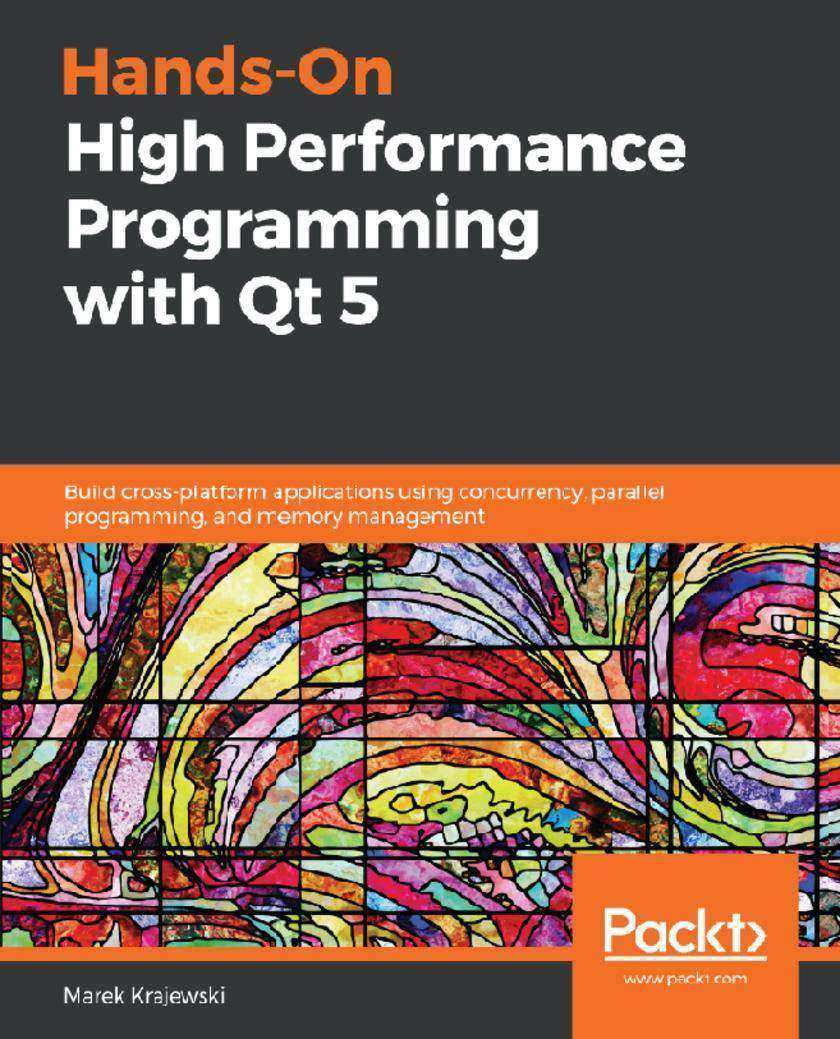
Hands-On High Performance Programming with Qt 5
¥81.74
Build efficient and fast Qt applications, target performance problems, and discover solutions to refine your code Key Features * Build efficient and concurrent applications in Qt to create cross-platform applications * Identify performance bottlenecks and apply the correct algorithm to improve application performance * Delve into parallel programming and memory management to optimize your code Book Description Achieving efficient code through performance tuning is one of the key challenges faced by many programmers. This book looks at Qt programming from a performance perspective. You'll explore the performance problems encountered when using the Qt framework and means and ways to resolve them and optimize performance. The book highlights performance improvements and new features released in Qt 5.9, Qt 5.11, and 5.12 (LTE). You'll master general computer performance best practices and tools, which can help you identify the reasons behind low performance, and the most common performance pitfalls experienced when using the Qt framework. In the following chapters, you’ll explore multithreading and asynchronous programming with C++ and Qt and learn the importance and efficient use of data structures. You'll also get the opportunity to work through techniques such as memory management and design guidelines, which are essential to improve application performance. Comprehensive sections that cover all these concepts will prepare you for gaining hands-on experience of some of Qt's most exciting application fields - the mobile and embedded development domains. By the end of this book, you'll be ready to build Qt applications that are more efficient, concurrent, and performance-oriented in nature What you will learn * Understand classic performance best practices * Get to grips with modern hardware architecture and its performance impact * Implement tools and procedures used in performance optimization * Grasp Qt-specific work techniques for graphical user interface (GUI) and platform programming * Make Transmission Control Protocol (TCP) and Hypertext Transfer Protocol (HTTP) performant and use the relevant Qt classes * Discover the improvements Qt 5.9 (and the upcoming versions) holds in store * Explore Qt's graphic engine architecture, strengths, and weaknesses Who this book is for This book is designed for Qt developers who wish to build highly performance applications for desktop and embedded devices. Programming Experience with C++ is required.


