


 购物车
购物车 个人中心
个人中心

Learn Spring for Android Application Development
¥90.46
A hands-on guide to Android programming with Spring MVC, Spring Boot, and Spring Security Key Features * Build native Android applications with Spring for Android * Explore Reactive programming, concurrency, and multithreading paradigms for building fast and efficient applications * Write more expressive and robust code with Kotlin using its coroutines and other latest features Book Description As the new official language for Android, Kotlin is attracting new as well as existing Android developers. As most developers are still working with Java and want to switch to Kotlin, they find a combination of these two appealing. This book addresses this interest by bringing together Spring, a widely used Java SE framework for building enterprise-grade applications, and Kotlin. Learn Spring for Android Application Development will guide you in leveraging some of the powerful modules of the Spring Framework to build lightweight and robust Android apps using Kotlin. You will work with various modules, such as Spring AOP, Dependency Injection, and Inversion of Control, to develop applications with better dependency management. You’ll also explore other modules of the Spring Framework, such as Spring MVC, Spring Boot, and Spring Security. Each chapter has practice exercises at the end for you to assess your learning. By the end of the book, you will be fully equipped to develop Android applications with Spring technologies. What you will learn * Get to grips with the basics of the Spring Framework * Write web applications using the Spring Framework with Kotlin * Develop Android apps with Kotlin * Connect a RESTful web service with your app using Retrofilt * Understand JDBC, JPA, MySQL for Spring and SQLite Room for Android * Explore Spring Security fundamentals, Basic Authentication, and OAuth2 * Delve into Concurrency and Reactive programming using Kotlin * Develop testable applications with Spring and Android Who this book is for If you’re an aspiring Android developer or an existing developer who wants to learn how to use Spring to build robust Android applications in Kotlin, this book is for you. Though not necessary, basic knowledge of Spring will assist with understanding key concepts covered in this book.

Implementing AWS: Design, Build, and Manage your Infrastructure
¥90.46
Work through exciting recipes to administer your AWS cloud Key Features * Build secure environments using AWS components and services * Explore core AWS features with real-world applications and best practices * Design and build Lambda functions using real-world examples Book Description With this Learning Path, you’ll explore techniques to easily manage applications on the AWS cloud. You’ll begin with an introduction to serverless computing, its advantages, and the fundamentals of AWS. The following chapters will guide you on how to manage multiple accounts by setting up consolidated billing, enhancing your application delivery skills, with the latest AWS services such as CodeCommit, CodeDeploy, and CodePipeline to provide continuous delivery and deployment, while also securing and monitoring your environment's workflow. It’ll also add to your understanding of the services AWS Lambda provides to developers. To refine your skills further, it demonstrates how to design, write, test, monitor, and troubleshoot Lambda functions. By the end of this Learning Path, you’ll be able to create a highly secure, fault-tolerant, and scalable environment for your applications. This Learning Path includes content from the following Packt products: * AWS Administration: The Definitive Guide, Second Edition by Yohan Wadia * AWS Administration Cookbook by Rowan Udell, Lucas Chan * Mastering AWS Lambda by Yohan Wadia, Udita Gupta What you will learn * Explore the benefits of serverless computing and applications * Deploy apps with AWS Elastic Beanstalk and Amazon Elastic File System * Secure environments with AWS CloudTrail, AWSConfig, and AWS Shield * Run big data analytics with Amazon EMR and Amazon Redshift * Back up and safeguard data using AWS Data Pipeline * Create monitoring and alerting dashboards using CloudWatch * Effectively monitor and troubleshoot serverless applications with AWS * Design serverless apps via AWS Lambda, DynamoDB, and API Gateway Who this book is for This Learning Path is specifically designed for IT system and network administrators, AWS architects, and DevOps engineers who want to effectively implement AWS in their organization and easily manage daily activities. Familiarity with Linux, web services, cloud computing platforms, virtualization, networking, and other administration-related tasks will assist in understanding the concepts in the book. Prior hands-on experience with AWS core services such as EC2, IAM, S3, and programming languages, such as Node.Js, Java, and C#, will also prove beneficial.
Practical Security Automation and Testing
¥73.02
Your one stop guide to automating infrastructure security using DevOps and DevSecOps Key Features * Secure and automate techniques to protect web, mobile or cloud services * Automate secure code inspection in C++, Java, Python, and JavaScript * Integrate security testing with automation frameworks like fuzz, BDD, Selenium and Robot Framework Book Description Security automation is the automatic handling of software security assessments tasks. This book helps you to build your security automation framework to scan for vulnerabilities without human intervention. This book will teach you to adopt security automation techniques to continuously improve your entire software development and security testing. You will learn to use open source tools and techniques to integrate security testing tools directly into your CI/CD framework. With this book, you will see how to implement security inspection at every layer, such as secure code inspection, fuzz testing, Rest API, privacy, infrastructure security, and web UI testing. With the help of practical examples, this book will teach you to implement the combination of automation and Security in DevOps. You will learn about the integration of security testing results for an overall security status for projects. By the end of this book, you will be confident implementing automation security in all layers of your software development stages and will be able to build your own in-house security automation platform throughout your mobile and cloud releases. What you will learn * Automate secure code inspection with open source tools and effective secure code scanning suggestions * Apply security testing tools and automation frameworks to identify security vulnerabilities in web, mobile and cloud services * Integrate security testing tools such as OWASP ZAP, NMAP, SSLyze, SQLMap, and OpenSCAP * Implement automation testing techniques with Selenium, JMeter, Robot Framework, Gauntlt, BDD, DDT, and Python unittest * Execute security testing of a Rest API Implement web application security with open source tools and script templates for CI/CD integration * Integrate various types of security testing tool results from a single project into one dashboard Who this book is for The book is for software developers, architects, testers and QA engineers who are looking to leverage automated security testing techniques.
Hands-On Design Patterns with C++
¥90.46
A comprehensive guide with extensive coverage on concepts such as OOP, functional programming, generic programming, and STL along with the latest features of C++ Key Features * Delve into the core patterns and components of C++ in order to master application design * Learn tricks, techniques, and best practices to solve common design and architectural challenges * Understand the limitation imposed by C++ and how to solve them using design patterns Book Description C++ is a general-purpose programming language designed with the goals of efficiency, performance, and flexibility in mind. Design patterns are commonly accepted solutions to well-recognized design problems. In essence, they are a library of reusable components, only for software architecture, and not for a concrete implementation. The focus of this book is on the design patterns that naturally lend themselves to the needs of a C++ programmer, and on the patterns that uniquely benefit from the features of C++, in particular, the generic programming. Armed with the knowledge of these patterns, you will spend less time searching for a solution to a common problem and be familiar with the solutions developed from experience, as well as their advantages and drawbacks. The other use of design patterns is as a concise and an efficient way to communicate. A pattern is a familiar and instantly recognizable solution to specific problem; through its use, sometimes with a single line of code, we can convey a considerable amount of information. The code conveys: "This is the problem we are facing, these are additional considerations that are most important in our case; hence, the following well-known solution was chosen." By the end of this book, you will have gained a comprehensive understanding of design patterns to create robust, reusable, and maintainable code. What you will learn * Recognize the most common design patterns used in C++ * Understand how to use C++ generic programming to solve common design problems * Explore the most powerful C++ idioms, their strengths, and drawbacks * Rediscover how to use popular C++ idioms with generic programming * Understand the impact of design patterns on the program’s performance Who this book is for This book is for experienced C++ developers and programmers who wish to learn about software design patterns and principles and apply them to create robust, reusable, and easily maintainable apps.

Advanced JavaScript
¥63.21
Gain a deeper understanding of JavaScript and apply it to build small applications in backend, frontend, and mobile frameworks. Key Features * Explore the new ES6 syntax, the event loop, and asynchronous programming * Learn the test-driven development approach when building apps * Master advanced JavaScript concepts to enhance your web developments skill Book Description If you are looking for a programming language to develop flexible and efficient applications, JavaScript is an obvious choice. Advanced JavaScript is a hands-on guide that takes you through JavaScript and its many features, one step at a time. You'll begin by learning how to use the new JavaScript syntax in ES6, and then work through the many other features that modern JavaScript has to offer. As you progress through the chapters, you’ll use asynchronous programming with callbacks and promises, handle browser events, and perform Document Object Model (DOM) manipulation. You'll also explore various methods of testing JavaScript projects. In the concluding chapters, you'll discover functional programming and learn to use it to build your apps. With this book as your guide, you'll also be able to develop APIs using Node.js and Express, create front-ends using React/Redux, and build mobile apps using React/Expo. By the end of Advanced JavaScript, you will have explored the features and benefits of JavaScript to build small applications. What you will learn * Examine major features in ES6 and implement those features to build applications * Create promise and callback handlers to work with asynchronous processes * Develop asynchronous flows using Promise chaining and async/await syntax * Manipulate the DOM with JavaScript * Handle JavaScript browser events * Explore Test Driven Development and build code tests with JavaScript code testing frameworks. * List the benefits and drawbacks of functional programming compared to other styles * Construct applications with the Node.js backend framework and the React frontend framework Who this book is for This book is designed to target anyone who wants to write JavaScript in a professional environment. We expect the audience to have used JavaScript in some capacity and be familiar with the basic syntax. This book would be good for a tech enthusiast wondering when to use generators or how to use Promises and Callbacks effectively, or a novice developer who wants to deepen their knowledge on JavaScript and understand TDD.
QGIS Quick Start Guide
¥54.49
Step through loading GIS data, creating GIS data, styling GIS and making maps with QGIS following a simple narrative that will allow you to build confidence as you progress. Key Features * Work with GIS data, a step by step guide from creation to making a map * Perform geoprocessing tasks and automate them using model builder * Explore a range of features in QGIS 3.4, discover the power behind open source desktop GIS Book Description QGIS is a user friendly, open source geographic information system (GIS). The popularity of open source GIS and QGIS, in particular, has been growing rapidly over the last few years. This book is designed to help beginners learn about all the tools required to use QGIS 3.4. This book will provide you with clear, step-by-step instructions to help you apply your GIS knowledge to QGIS. You begin with an overview of QGIS 3.4 and its installation. You will learn how to load existing spatial data and create vector data from scratch. You will then be creating styles and labels for maps. The final two chapters demonstrate the Processing toolbox and include a brief investigation on how to extend QGIS. Throughout this book, we will be using the GeoPackage format, and we will also discuss how QGIS can support many different types of data. Finally, you will learn where to get help and how to become engaged with the GIS community. What you will learn * Use existing data to interact with the canvas via zoom/pan/selection * Create vector data and a GeoPackage and build a simple project around it * Style data, both vector and raster data, using the Layer Styling Panel * Design, label, save, and export maps using the data you have created * Analyze spatial queries using the Processing toolbox * Expand QGIS with the help of plugins, model builder, and the command line Who this book is for If you know the basic functions and processes of GIS, and want to learn to use QGIS to analyze geospatial data and create rich mapping applications, then this is the book for you.
React Native Cookbook
¥90.46
Improve your React Native mobile development skills or transition from web development to mobile development with this practical solution-packed guide Key Features * Learn strategies and techniques to face challenges in React Native mobile development head-on * Leverage the best ways to use iOS and Android for React Native development while maximizing code reuse and cohesion * Build engaging, performant user experiences with React Native Book Description If you are a developer looking to create mobile applications with maximized code reusability and minimized cost, then React Native is here to help. With this practical guide, you will be able to build attractive UIs, tackle common mobile development-related issues, and achieve improved performance in mobile environments. This book starts with common techniques for React Native customization and helps you set up your development platforms. Over the course of the book, a wide variety of step-by-step recipes are designed with both built-in React Native and custom third-party components that you will create, style, and animate. You will create real-world browser-based authentication, build a fully functional audio player, and integrate with Google maps. You will also explore different strategies for working with data, including leveraging the popular Redux library and optimizing your app’s dataflow. You will then get an introduction to writing native device functionality for new and already existing native projects. Finally, you will learn how app deployment works, and tips and tricks for writing performant code. By the end of the book, you'll have gained enough knowledge to build full iOS and Android applications using React Native. What you will learn * Build UI features and components using React Native * Create advanced animations for UI components * Develop universal apps that run on phones and tablets * Leverage Redux to manage application flow and data * Expose both custom native UI components and application logic to React Native * Employ open-source third-party plugins to create React Native apps more efficiently Who this book is for If you're a JavaScript developer looking for a practical guide with step-by-step tutorials for developing feature rich mobile apps using React Native, then this book is for you. Though not required, some experience working with React will help you more easily understand the React Native concepts covered in this book. While React Native development can be done on a Windows machine, certain aspects, such as running your apps on iOS devices and in the iOS simulator, or editing native code with Xcode, can only be done with a Mac.
Kibana 7 Quick Start Guide
¥54.49
A quick start guide to visualize your Elasticsearch data Key Features * Your hands-on guide to visualizing the Elasticsearch data as well as navigating the Elastic stack * Work with different Kibana plugins and create effective machine learning jobs using Kibana * Build effective dashboards and reports without any hassle Book Description The Elastic Stack is growing rapidly and, day by day, additional tools are being added to make it more effective. This book endeavors to explain all the important aspects of Kibana, which is essential for utilizing its full potential. This book covers the core concepts of Kibana, with chapters set out in a coherent manner so that readers can advance their learning in a step-by-step manner. The focus is on a practical approach, thereby enabling the reader to apply those examples in real time for a better understanding of the concepts and to provide them with the correct skills in relation to the tool. With its succinct explanations, it is quite easy for a reader to use this book as a reference guide for learning basic to advanced implementations of Kibana. The practical examples, such as the creation of Kibana dashboards from CSV data, application RDBMS data, system metrics data, log file data, APM agents, and search results, can provide readers with a number of different drop-off points from where they can fetch any type of data into Kibana for the purpose of analysis or dashboarding. What you will learn * Explore how Logstash is configured to fetch CSV data * Understand how to create index patterns in Kibana * Become familiar with how to apply filters on data * Discover how to create ML jobs * Explore how to analyze APM data from APM agents * Get to grips with how to save, share, inspect, and edit visualizations * Understand how to find an anomaly in data Who this book is for Kibana 7 Quick Start Guide is for developers new to Kibana who want to learn the fundamentals of using the tool for visualization, as well as existing Elastic developers.
Azure PowerShell Quick Start Guide
¥54.49
Leverage PowerShell to perform many day-to-day tasks in Microsoft Azure Key Features *Deploy and manage Azure virtual machines with PowerShell commands. *Get to grips with core concept of Azure PowerShell such as working with images and disks, custom script extension, high availability and more. *Leverage hands-on projects to successfully apply what you learned through the course of this book. Book Description As an IT professional, it is important to keep up with cloud technologies and learn to manage those technologies. PowerShell is a critical tool that must be learned in order to effectively and more easily manage many Azure resources. This book is designed to teach you to leverage PowerShell to enable you to perform many day-to-day tasks in Microsoft Azure. Taking you through the basic tasks of installing Azure PowerShell and connecting to Azure, you will learn to properly connect to an Azure tenant with PowerShell. Next, you will dive into tasks such as deploying virtual machines with PowerShell, resizing them, and managing their power states with PowerShell. Then, you will learn how to complete more complex Azure tasks with PowerShell, such as deploying virtual machines from custom images, creating images from existing virtual machines, and creating and managing of data disks. Later, you will learn how to snapshot virtual machines, how to encrypt virtual machines, and how to leverage load balancers to ensure high availability with PowerShell. By the end of this book, you will have developed dozens of PowerShell skills that are invaluable in the deployment and management of Azure virtual machines. What you will learn *Manage virtual machines with PowerShell *Resize a virtual machine with PowerShell *Create OS disk snapshots via PowerShell *Deploy new virtual machines from snapshots via PowerShell *Provision and attach data disks to a virtual machine via PowerShell *Load balance virtual machines with PowerShell *Manage virtual machines with custom script extensions Who this book is for This book is intended for IT professionals who are responsible for managing Azure virtual machines. No prior PowerShell or Azure experience is needed.
Microsoft Dynamics NAV Development Quick Start Guide
¥54.49
Learn development skills and improve productivity when programming in Microsoft Dynamics NAV 2018 - the popular Enterprise Resourse Planning management system used across a variety of industries for business process management Key Features *Solve common business problems with the valuable features and flexibility of Dynamics NAV *Understand the structure of NAV database - how documents and business entities are mapped to DB tables *Design user interface and bind the presentation layer with the data storage Book Description Microsoft Dynamics NAV is an enterprise resource planning (ERP) software suite for organizations. The system offers specialized functionality for manufacturing, distribution, government, retail, and other industries. This book gets you started with its integrated development environment for solving problems by customizing business processes. This book introduces the NAV development environment – C/SIDE. It gives an overview of the internal system language and the most essential development tools. The book will enable the reader to customize and extend NAV functionality with C/AL code, design a user interface through pages, create role centers, and build advanced reports in Microsoft Visual Studio. By the end of the book, you will have learned how to extend the NAV data model, how to write and debug custom code, and how to exchange data with external applications. What you will learn *Manage NAV Server configuration with Microsoft Management Console *Manage NAV installation with the NAV Administration Shell *Create integration events and extend functionality via the NAV event model *Run XML Ports from C/AL code *Design reports and write client code in RDLC expressions Who this book is for This book is for experienced NAV users who have an understanding of basic programming concepts. Familiarity with NAV development environment or its internal development language-C/AL is not expected.
Hands-On Enterprise Application Development with Python
¥90.46
Architect scalable, reliable, and maintainable applications for enterprises with Python Key Features *Explore various Python design patterns used for enterprise software development *Apply best practices for testing and performance optimization to build stable applications *Learn about different attacking strategies used on enterprise applications and how to avoid them Book Description Dynamically typed languages like Python are continuously improving. With the addition of exciting new features and a wide selection of modern libraries and frameworks, Python has emerged as an ideal language for developing enterprise applications. Hands-On Enterprise Application Development with Python will show you how to build effective applications that are stable, secure, and easily scalable. The book is a detailed guide to building an end-to-end enterprise-grade application in Python. You will learn how to effectively implement Python features and design patterns that will positively impact your application lifecycle. The book also covers advanced concurrency techniques that will help you build a RESTful application with an optimized frontend. Given that security and stability are the foundation for an enterprise application, you’ll be trained on effective testing, performance analysis, and security practices, and understand how to embed them in your codebase during the initial phase. You’ll also be guided in how to move on from a monolithic architecture to one that is service oriented, leveraging microservices and serverless deployment techniques. By the end of the book, you will have become proficient at building efficient enterprise applications in Python. What you will learn *Understand the purpose of design patterns and their impact on application lifecycle *Build applications that can handle large amounts of data-intensive operations *Uncover advanced concurrency techniques and discover how to handle a large number of requests in production *Optimize frontends to improve the client-side experience of your application *Effective testing and performance profiling techniques to detect issues in applications early in the development cycle *Build applications with a focus on security *Implement large applications as microservices to improve scalability Who this book is for If you’re a developer who wants to build enterprise-grade applications, this book is for you. Basic to intermediate-level of programming experience with Python and database systems is required to understand the concepts covered in this book.
Data Analysis with Python
¥71.93
Learn a modern approach to data analysis using Python to harness the power of programming and AI across your data. Detailed case studies bring this modern approach to life across visual data, social media, graph algorithms, and time series analysis. Key Features *Bridge your data analysis with the power of programming, complex algorithms, and AI *Use Python and its extensive libraries to power your way to new levels of data insight *Work with AI algorithms, TensorFlow, graph algorithms, NLP, and financial time series *Explore this modern approach across with key industry case studies and hands-on projects Book Description Data Analysis with Python offers a modern approach to data analysis so that you can work with the latest and most powerful Python tools, AI techniques, and open source libraries. Industry expert David Taieb shows you how to bridge data science with the power of programming and algorithms in Python. You'll be working with complex algorithms, and cutting-edge AI in your data analysis. Learn how to analyze data with hands-on examples using Python-based tools and Jupyter Notebook. You'll find the right balance of theory and practice, with extensive code files that you can integrate right into your own data projects. Explore the power of this approach to data analysis by then working with it across key industry case studies. Four fascinating and full projects connect you to the most critical data analysis challenges you’re likely to meet in today. The first of these is an image recognition application with TensorFlow – embracing the importance today of AI in your data analysis. The second industry project analyses social media trends, exploring big data issues and AI approaches to natural language processing. The third case study is a financial portfolio analysis application that engages you with time series analysis - pivotal to many data science applications today. The fourth industry use case dives you into graph algorithms and the power of programming in modern data science. You'll wrap up with a thoughtful look at the future of data science and how it will harness the power of algorithms and artificial intelligence. What you will learn *A new toolset that has been carefully crafted to meet for your data analysis challenges *Full and detailed case studies of the toolset across several of today’s key industry contexts *Become super productive with a new toolset across Python and Jupyter Notebook *Look into the future of data science and which directions to develop your skills next Who this book is for This book is for developers wanting to bridge the gap between them and data scientists. Introducing PixieDust from its creator, the book is a great desk companion for the accomplished Data Scientist. Some fluency in data interpretation and visualization is assumed. It will be helpful to have some knowledge of Python, using Python libraries, and some proficiency in web development.
Hands-On Machine Learning for Algorithmic Trading
¥81.74
Explore effective trading strategies in real-world markets using NumPy, spaCy, pandas, scikit-learn, and Keras Key Features *Implement machine learning algorithms to build, train, and validate algorithmic models *Create your own algorithmic design process to apply probabilistic machine learning approaches to trading decisions *Develop neural networks for algorithmic trading to perform time series forecasting and smart analytics Book Description The explosive growth of digital data has boosted the demand for expertise in trading strategies that use machine learning (ML). This book enables you to use a broad range of supervised and unsupervised algorithms to extract signals from a wide variety of data sources and create powerful investment strategies. This book shows how to access market, fundamental, and alternative data via API or web scraping and offers a framework to evaluate alternative data. You’ll practice the ML work?ow from model design, loss metric definition, and parameter tuning to performance evaluation in a time series context. You will understand ML algorithms such as Bayesian and ensemble methods and manifold learning, and will know how to train and tune these models using pandas, statsmodels, sklearn, PyMC3, xgboost, lightgbm, and catboost. This book also teaches you how to extract features from text data using spaCy, classify news and assign sentiment scores, and to use gensim to model topics and learn word embeddings from financial reports. You will also build and evaluate neural networks, including RNNs and CNNs, using Keras and PyTorch to exploit unstructured data for sophisticated strategies. Finally, you will apply transfer learning to satellite images to predict economic activity and use reinforcement learning to build agents that learn to trade in the OpenAI Gym. What you will learn *Implement machine learning techniques to solve investment and trading problems *Leverage market, fundamental, and alternative data to research alpha factors *Design and fine-tune supervised, unsupervised, and reinforcement learning models *Optimize portfolio risk and performance using pandas, NumPy, and scikit-learn *Integrate machine learning models into a live trading strategy on Quantopian *Evaluate strategies using reliable backtesting methodologies for time series *Design and evaluate deep neural networks using Keras, PyTorch, and TensorFlow *Work with reinforcement learning for trading strategies in the OpenAI Gym Who this book is for Hands-On Machine Learning for Algorithmic Trading is for data analysts, data scientists, and Python developers, as well as investment analysts and portfolio managers working within the finance and investment industry. If you want to perform efficient algorithmic trading by developing smart investigating strategies using machine learning algorithms, this is the book for you. Some understanding of Python and machine learning techniques is mandatory.
Hands-On Meta Learning with Python
¥71.93
Explore a diverse set of meta-learning algorithms and techniques to enable human-like cognition for your machine learning models using various Python frameworks Key Features *Understand the foundations of meta learning algorithms *Explore practical examples to explore various one-shot learning algorithms with its applications in TensorFlow *Master state of the art meta learning algorithms like MAML, reptile, meta SGD Book Description Meta learning is an exciting research trend in machine learning, which enables a model to understand the learning process. Unlike other ML paradigms, with meta learning you can learn from small datasets faster. Hands-On Meta Learning with Python starts by explaining the fundamentals of meta learning and helps you understand the concept of learning to learn. You will delve into various one-shot learning algorithms, like siamese, prototypical, relation and memory-augmented networks by implementing them in TensorFlow and Keras. As you make your way through the book, you will dive into state-of-the-art meta learning algorithms such as MAML, Reptile, and CAML. You will then explore how to learn quickly with Meta-SGD and discover how you can perform unsupervised learning using meta learning with CACTUs. In the concluding chapters, you will work through recent trends in meta learning such as adversarial meta learning, task agnostic meta learning, and meta imitation learning. By the end of this book, you will be familiar with state-of-the-art meta learning algorithms and able to enable human-like cognition for your machine learning models. What you will learn *Understand the basics of meta learning methods, algorithms, and types *Build voice and face recognition models using a siamese network *Learn the prototypical network along with its variants *Build relation networks and matching networks from scratch *Implement MAML and Reptile algorithms from scratch in Python *Work through imitation learning and adversarial meta learning *Explore task agnostic meta learning and deep meta learning Who this book is for Hands-On Meta Learning with Python is for machine learning enthusiasts, AI researchers, and data scientists who want to explore meta learning as an advanced approach for training machine learning models. Working knowledge of machine learning concepts and Python programming is necessary.
Hands-On Deep Learning with Apache Spark
¥81.74
Speed up the design and implementation of deep learning solutions using Apache Spark Key Features * Explore the world of distributed deep learning with Apache Spark * Train neural networks with deep learning libraries such as BigDL and TensorFlow * Develop Spark deep learning applications to intelligently handle large and complex datasets Book Description Deep learning is a subset of machine learning where datasets with several layers of complexity can be processed. Hands-On Deep Learning with Apache Spark addresses the sheer complexity of technical and analytical parts and the speed at which deep learning solutions can be implemented on Apache Spark. The book starts with the fundamentals of Apache Spark and deep learning. You will set up Spark for deep learning, learn principles of distributed modeling, and understand different types of neural nets. You will then implement deep learning models, such as convolutional neural networks (CNNs), recurrent neural networks (RNNs), and long short-term memory (LSTM) on Spark. As you progress through the book, you will gain hands-on experience of what it takes to understand the complex datasets you are dealing with. During the course of this book, you will use popular deep learning frameworks, such as TensorFlow, Deeplearning4j, and Keras to train your distributed models. By the end of this book, you'll have gained experience with the implementation of your models on a variety of use cases. What you will learn * Understand the basics of deep learning * Set up Apache Spark for deep learning * Understand the principles of distribution modeling and different types of neural networks * Obtain an understanding of deep learning algorithms * Discover textual analysis and deep learning with Spark * Use popular deep learning frameworks, such as Deeplearning4j, TensorFlow, and Keras * Explore popular deep learning algorithms Who this book is for If you are a Scala developer, data scientist, or data analyst who wants to learn how to use Spark for implementing efficient deep learning models, Hands-On Deep Learning with Apache Spark is for you. Knowledge of the core machine learning concepts and some exposure to Spark will be helpful.
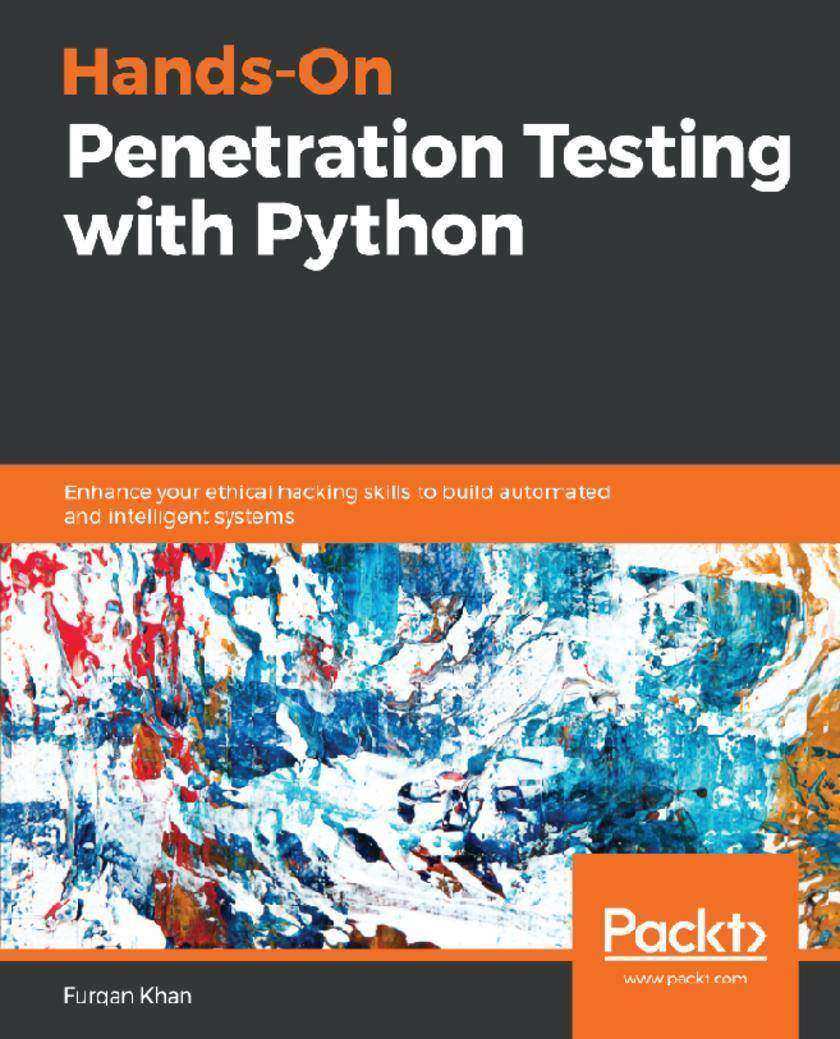
Hands-On Penetration Testing with Python
¥73.02
Implement defensive techniques in your ecosystem successfully with Python Key Features * Identify and expose vulnerabilities in your infrastructure with Python * Learn custom exploit development . * Make robust and powerful cybersecurity tools with Python Book Description With the current technological and infrastructural shift, penetration testing is no longer a process-oriented activity. Modern-day penetration testing demands lots of automation and innovation; the only language that dominates all its peers is Python. Given the huge number of tools written in Python, and its popularity in the penetration testing space, this language has always been the first choice for penetration testers. Hands-On Penetration Testing with Python walks you through advanced Python programming constructs. Once you are familiar with the core concepts, you’ll explore the advanced uses of Python in the domain of penetration testing and optimization. You’ll then move on to understanding how Python, data science, and the cybersecurity ecosystem communicate with one another. In the concluding chapters, you’ll study exploit development, reverse engineering, and cybersecurity use cases that can be automated with Python. By the end of this book, you’ll have acquired adequate skills to leverage Python as a helpful tool to pentest and secure infrastructure, while also creating your own custom exploits. What you will learn * Get to grips with Custom vulnerability scanner development * Familiarize yourself with web application scanning automation and exploit development * Walk through day-to-day cybersecurity scenarios that can be automated with Python * Discover enterprise-or organization-specific use cases and threat-hunting automation * Understand reverse engineering, fuzzing, buffer overflows , key-logger development, and exploit development for buffer overflows. * Understand web scraping in Python and use it for processing web responses * Explore Security Operations Centre (SOC) use cases * Get to understand Data Science, Python, and cybersecurity all under one hood Who this book is for If you are a security consultant , developer or a cyber security enthusiast with little or no knowledge of Python and want in-depth insight into how the pen-testing ecosystem and python combine to create offensive tools , exploits , automate cyber security use-cases and much more then this book is for you. Hands-On Penetration Testing with Python guides you through the advanced uses of Python for cybersecurity and pen-testing, helping you to better understand security loopholes within your infrastructure .
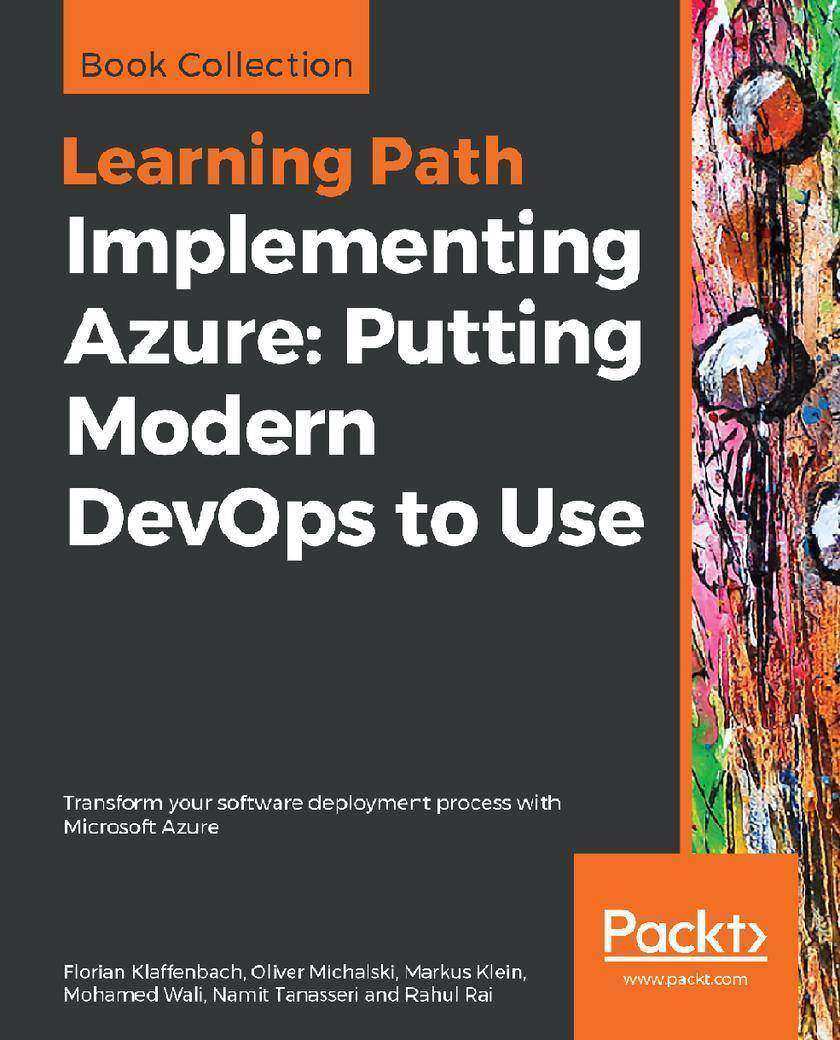
Implementing Azure: Putting Modern DevOps to Use
¥90.46
Explore powerful Azure DevOps solutions to develop and deploy your software faster and more efficiently. Key Features * Build modern microservice-based systems with Azure architecture * Learn to deploy and manage cloud services and virtual machines * Configure clusters with Azure Service Fabric for deployment Book Description This Learning Path helps you understand microservices architecture and leverage various services of Microsoft Azure Service Fabric to build, deploy, and maintain highly scalable enterprise-grade applications. You will learn to select an appropriate Azure backend structure for your solutions and work with its toolkit and managed apps to share your solutions with its service catalog. As you progress through the Learning Path, you will study Azure Cloud Services, Azure-managed Kubernetes, and Azure Container Services deployment techniques. To apply all that you’ve understood, you will build an end-to-end Azure system in scalable, decoupled tiers for an industrial bakery with three business domains. Toward the end of this Learning Path, you will build another scalable architecture using Azure Service Bus topics to send orders between decoupled business domains with scalable worker roles processing these orders. By the end of this Learning Path, you will be comfortable in using development, deployment, and maintenance processes to build robust cloud solutions on Azure. This Learning Path includes content from the following Packt products: * Learn Microsoft Azure by Mohamed Wali * Implementing Azure Solutions - Second Edition by Florian Klaffenbach, Oliver Michalski, Markus Klein * Microservices with Azure by Namit Tanasseri and Rahul Rai What you will learn * Study various Azure Service Fabric application programming models * Create and manage a Kubernetes cluster in Azure Kubernetes Service * Use site-to-site VPN and ExpressRoute connections in your environment * Design an Azure IoT app and learn to operate it in various scenarios * Implement a hybrid Azure design using Azure Stack * Build Azure SQL databases with Code First Migrations * Integrate client applications with Web API and SignalR on Azure * Implement the Azure Active Directory (Azure AD) across the entire system Who this book is for If you are an IT system architect, network admin, or a DevOps engineer who wants to implement Azure solutions for your organization, this Learning Path is for you. Basic knowledge of the Azure Cloud platform will be beneficial.
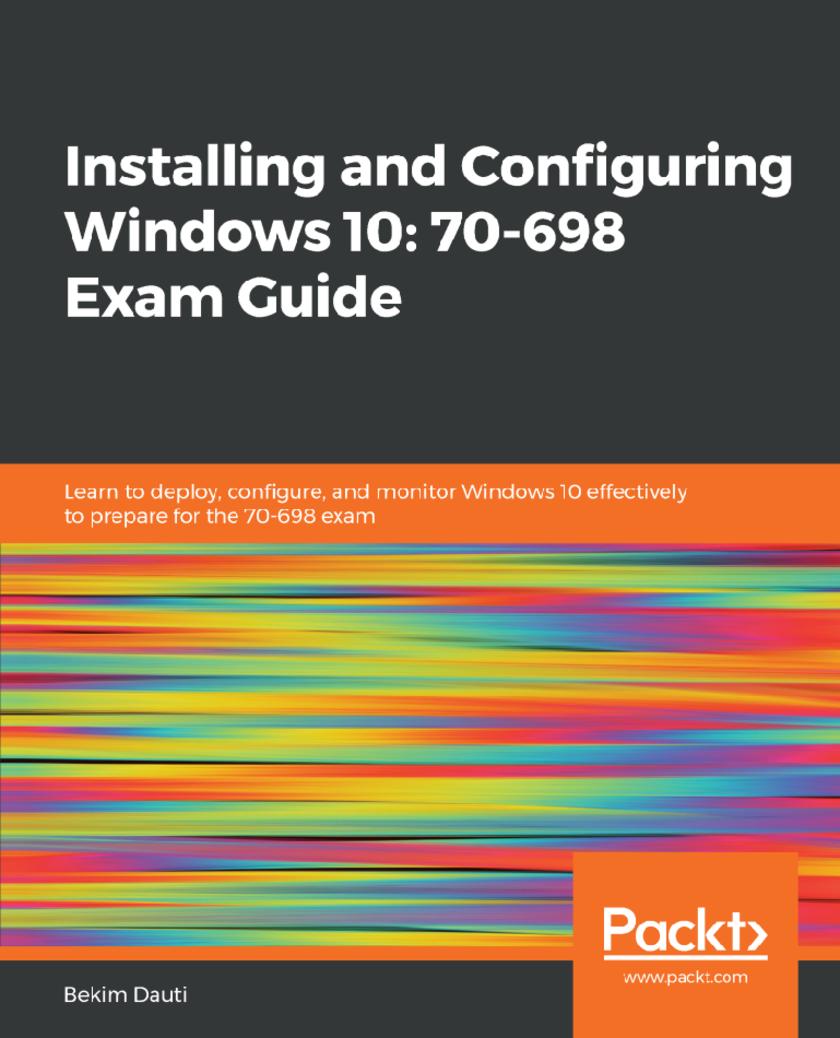
Installing and Configuring Windows 10: 70-698 Exam Guide
¥73.02
Get ready for the Windows 10: 70-698 exam and configure Windows to manage data recovery Key Features * Implement Windows 10 operational and administrative tasks * Configure devices, remote management settings, advanced management tools, and device drivers * Comprehensive guide to help you work efficiently in Windows 10 Book Description The Installing and Configuring Windows 10: 70-698 Exam Guide is designed to confirm what you already know, while also updating your knowledge of Windows 10. With its easy-to-follow guidance, you will quickly learn the user interface and discover steps to work efficiently in Windows 10 to rule out delays and obstacles. This book begins by covering various ways of installing Windows 10, followed by instructions on post-installation tasks. You will learn about the deployment of Windows 10 in Enterprise and also see how to configure networking in Windows 10. You’ll understand how to leverage Disk Management and Windows PowerShell to configure disks, volumes, and file system options. As you progress through the chapters, you will be able to set up remote management in Windows 10 and learn more about Windows update usage, behavior, and settings. You will also gain insights that will help you monitor and manage data recovery and explore how to configure authentication, authorization, and advanced management tools in Windows 10. By the end of this book, you will be equipped with enough knowledge to take the 70-698 exam and explore different study methods to improve your chances of passing the exam with ease. What you will learn * Discover various ways of installing Windows 10 * Understand how to configure devices and device drivers * Configure and support IPv4 and IPv6 network settings * Troubleshoot storage and removable device issues * Get to grips with data access and usage * Explore the advanced management tools available in Windows 10 Who this book is for This book is for IT professionals who perform installation, configuration, general local management and maintenance of Windows 10 core services and are preparing to clear the Windows 10: 70-698 exam
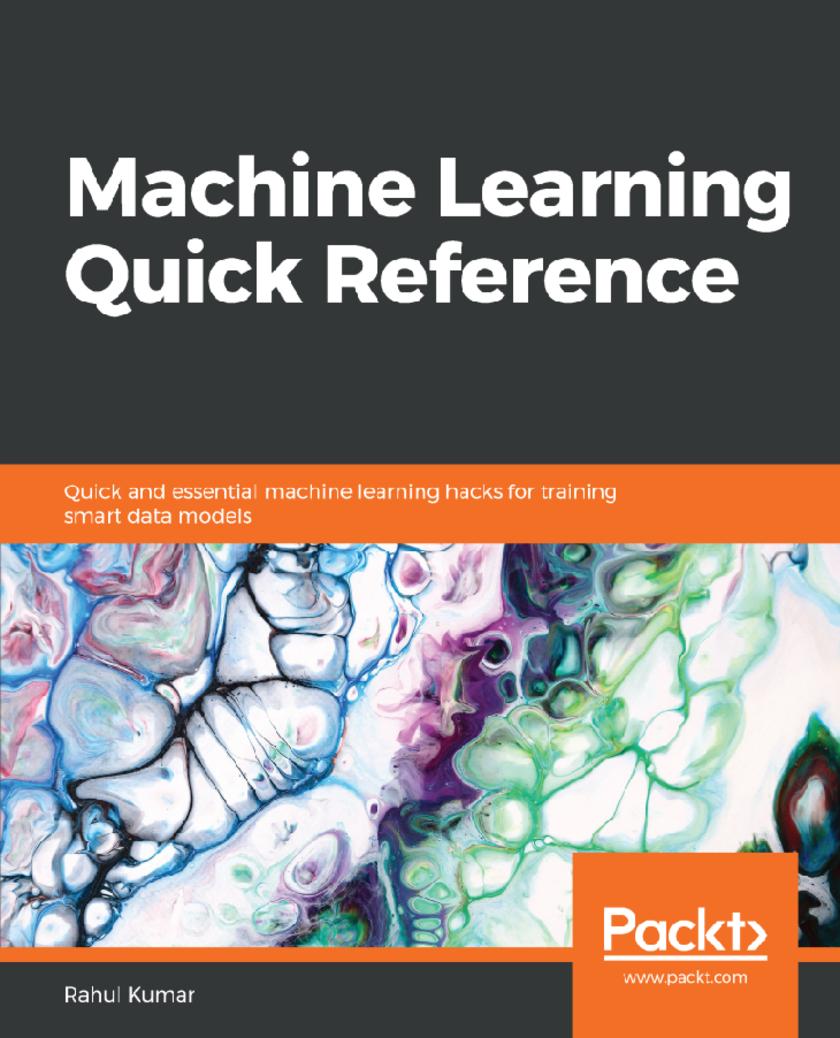
Machine Learning Quick Reference
¥54.49
Your hands-on reference guide to developing, training, and optimizing your machine learning models Key Features * Your guide to learning efficient machine learning processes from scratch * Explore expert techniques and hacks for a variety of machine learning concepts * Write effective code in R, Python, Scala, and Spark to solve all your machine learning problems Book Description Machine learning makes it possible to learn about the unknowns and gain hidden insights into your datasets by mastering many tools and techniques. This book guides you to do just that in a very compact manner. After giving a quick overview of what machine learning is all about, Machine Learning Quick Reference jumps right into its core algorithms and demonstrates how they can be applied to real-world scenarios. From model evaluation to optimizing their performance, this book will introduce you to the best practices in machine learning. Furthermore, you will also look at the more advanced aspects such as training neural networks and work with different kinds of data, such as text, time-series, and sequential data. Advanced methods and techniques such as causal inference, deep Gaussian processes, and more are also covered. By the end of this book, you will be able to train fast, accurate machine learning models at your fingertips, which you can easily use as a point of reference. What you will learn * Get a quick rundown of model selection, statistical modeling, and cross-validation * Choose the best machine learning algorithm to solve your problem * Explore kernel learning, neural networks, and time-series analysis * Train deep learning models and optimize them for maximum performance * Briefly cover Bayesian techniques and sentiment analysis in your NLP solution * Implement probabilistic graphical models and causal inferences * Measure and optimize the performance of your machine learning models Who this book is for If you’re a machine learning practitioner, data scientist, machine learning developer, or engineer, this book will serve as a reference point in building machine learning solutions. You will also find this book useful if you’re an intermediate machine learning developer or data scientist looking for a quick, handy reference to all the concepts of machine learning. You’ll need some exposure to machine learning to get the best out of this book.
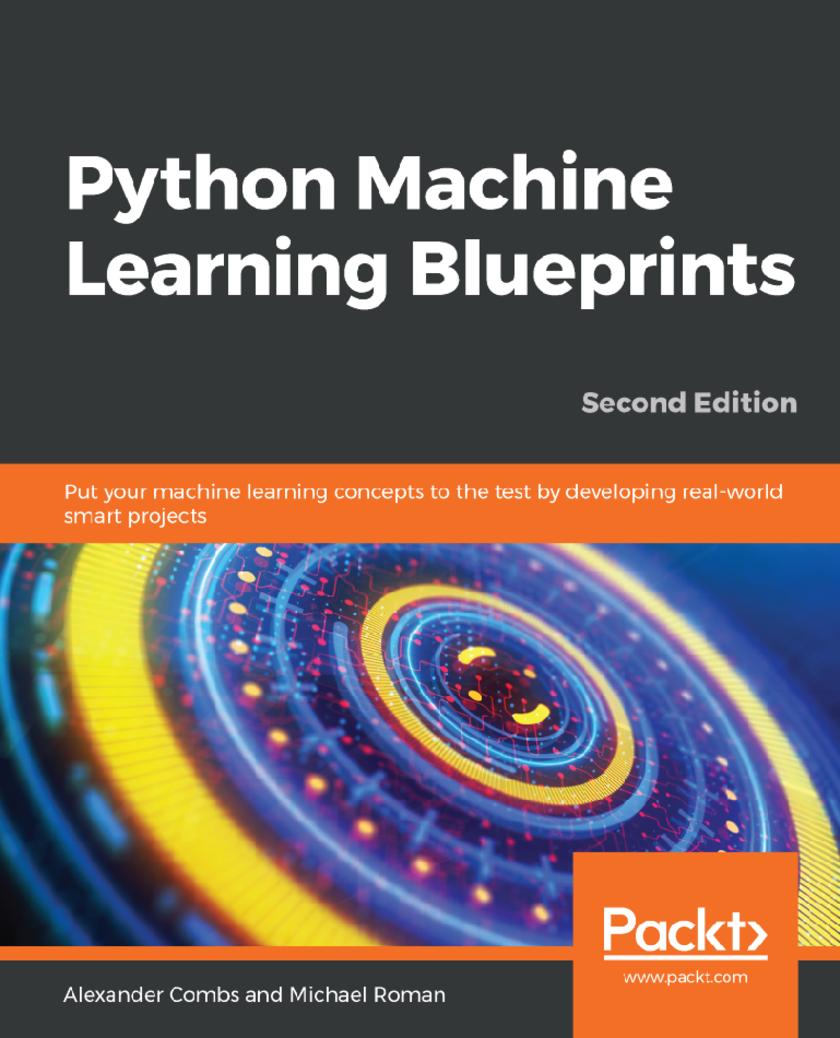
Python Machine Learning Blueprints
¥81.74
Discover a project-based approach to mastering machine learning concepts by applying them to everyday problems using libraries such as scikit-learn, TensorFlow, and Keras Key Features * Get to grips with Python's machine learning libraries including scikit-learn, TensorFlow, and Keras * Implement advanced concepts and popular machine learning algorithms in real-world projects * Build analytics, computer vision, and neural network projects Book Description Machine learning is transforming the way we understand and interact with the world around us. This book is the perfect guide for you to put your knowledge and skills into practice and use the Python ecosystem to cover key domains in machine learning. This second edition covers a range of libraries from the Python ecosystem, including TensorFlow and Keras, to help you implement real-world machine learning projects. The book begins by giving you an overview of machine learning with Python. With the help of complex datasets and optimized techniques, you’ll go on to understand how to apply advanced concepts and popular machine learning algorithms to real-world projects. Next, you’ll cover projects from domains such as predictive analytics to analyze the stock market and recommendation systems for GitHub repositories. In addition to this, you’ll also work on projects from the NLP domain to create a custom news feed using frameworks such as scikit-learn, TensorFlow, and Keras. Following this, you’ll learn how to build an advanced chatbot, and scale things up using PySpark. In the concluding chapters, you can look forward to exciting insights into deep learning and you'll even create an application using computer vision and neural networks. By the end of this book, you’ll be able to analyze data seamlessly and make a powerful impact through your projects. What you will learn * Understand the Python data science stack and commonly used algorithms * Build a model to forecast the performance of an Initial Public Offering (IPO) over an initial discrete trading window * Understand NLP concepts by creating a custom news feed * Create applications that will recommend GitHub repositories based on ones you’ve starred, watched, or forked * Gain the skills to build a chatbot from scratch using PySpark * Develop a market-prediction app using stock data * Delve into advanced concepts such as computer vision, neural networks, and deep learning Who this book is for This book is for machine learning practitioners, data scientists, and deep learning enthusiasts who want to take their machine learning skills to the next level by building real-world projects. The intermediate-level guide will help you to implement libraries from the Python ecosystem to build a variety of projects addressing various machine learning domains. Knowledge of Python programming and machine learning concepts will be helpful.
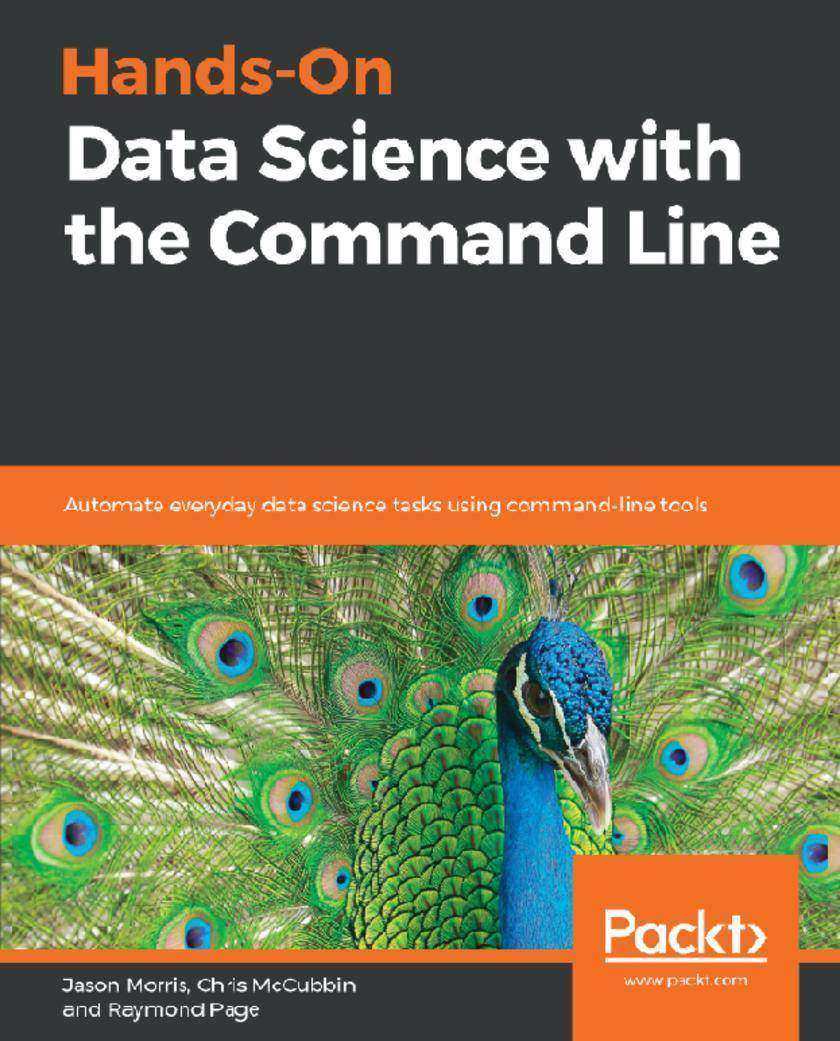
Hands-On Data Science with the Command Line
¥54.49
Big data processing and analytics at speed and scale using command line tools. Key Features * Perform string processing, numerical computations, and more using CLI tools * Understand the essential components of data science development workflow * Automate data pipeline scripts and visualization with the command line Book Description The Command Line has been in existence on UNIX-based OSes in the form of Bash shell for over 3 decades. However, very little is known to developers as to how command-line tools can be OSEMN (pronounced as awesome and standing for Obtaining, Scrubbing, Exploring, Modeling, and iNterpreting data) for carrying out simple-to-advanced data science tasks at speed. This book will start with the requisite concepts and installation steps for carrying out data science tasks using the command line. You will learn to create a data pipeline to solve the problem of working with small-to medium-sized files on a single machine. You will understand the power of the command line, learn how to edit files using a text-based and an. You will not only learn how to automate jobs and scripts, but also learn how to visualize data using the command line. By the end of this book, you will learn how to speed up the process and perform automated tasks using command-line tools. What you will learn * Understand how to set up the command line for data science * Use AWK programming language commands to search quickly in large datasets. * Work with files and APIs using the command line * Share and collect data with CLI tools * Perform visualization with commands and functions * Uncover machine-level programming practices with a modern approach to data science Who this book is for This book is for data scientists and data analysts with little to no knowledge of the command line but has an understanding of data science. Perform everyday data science tasks using the power of command line tools.


