


 购物车
购物车 个人中心
个人中心

Implementing OpenShift
¥54.49
A standard tutorial-based approach to using OpenShift and deploying custom or pre-built web applications to the OpenShift Online cloud.This book is for software developers and DevOps alike who are interested in learning how to use the OpenShift Platform-as-a-Service for developing and deploying applications, how the environment works on the back end, and how to deploy their very own open source Platform-as-a-Service based on the upstream OpenShift Origin project.
VMware vCloud Director Cookbook
¥90.46
"VMware vCloud Director Cookbook" will adopt a Cookbook-based approach. Packed with illustrations and programming examples, this book explains the simple as well as the complex recipes in an easy-to-understand language."VMware vCloud Director Cookbook" is aimed at system administrators and technical architects moving from a virtualized environment to cloud environments. Familiarity with cloud computing platforms and some knowledge of virtualization and managing cloud environments is expected.
Microsoft Dynamics GP 2013 Reporting, Second Edition
¥107.90
A practical guide to creating and managing reports as well as identifying the most appropriate reporting tool for any reporting challenge, this book employs real-life, step-by-step examples in a part tutorial, part reference manner.If you are a Microsoft Dynamics GP developer, consultant or power user who wants to create and manage reports, then "Microsoft Dynamics GP 2013 Reporting, Second Edition" is for you. A working knowledge of Microsoft Dynamics GP is required. A basic understanding of business management systems and reporting applications such as Microsoft Excel and SQL Reporting Services is highly recommended.
Getting Started with Greenplum for Big Data Analytics
¥71.93
Standard tutorial-based approach."Getting Started with Greenplum for Big Data" Analytics is great for data scientists and data analysts with a basic knowledge of Data Warehousing and Business Intelligence platforms who are new to Big Data and who are looking to get a good grounding in how to use the Greenplum Platform. It’s assumed that you will have some experience with database design and programming as well as be familiar with analytics tools like R and Weka.
Ouya Unity Game Development
¥54.49
A clear, concise, and practical guide that will teach you how to build your own console game and become an indie developer.This book is for game developers who are interested in developing games for the Ouya console on the Unity game engine. It is assumed that you have a basic understanding of Unity.
R Data Science Essentials
¥63.21
Learn the essence of data science and visualization using R in no time at allAbout This BookBecome a pro at making stunning visualizations and dashboards quickly and without hassleFor better decision making in business, apply the R programming language with the help of useful statistical techniques.From seasoned authors comes a book that offers you a plethora of fast-paced techniques to detect and analyze data patternsWho This Book Is ForIf you are an aspiring data scientist or analyst who has a basic understanding of data science and has basic hands-on experience in R or any other analytics tool, then R Data Science Essentials is the book for you.What You Will LearnPerform data preprocessing and basic operations on dataImplement visual and non-visual implementation data exploration techniquesMine patterns from data using affinity and sequential analysisUse different clustering algorithms and visualize themImplement logistic and linear regression and find out how to evaluate and improve the performance of an algorithmExtract patterns through visualization and build a forecasting algorithmBuild a recommendation engine using different collaborative filtering algorithmsMake a stunning visualization and dashboard using ggplot and R shinyIn DetailWith organizations increasingly embedding data science across their enterprise and with management becoming more data-driven it is an urgent requirement for analysts and managers to understand the key concept of data science. The data science concepts discussed in this book will help you make key decisions and solve the complex problems you will inevitably face in this new world.R Data Science Essentials will introduce you to various important concepts in the field of data science using R. We start by reading data from multiple sources, then move on to processing the data, extracting hidden patterns, building predictive and forecasting models, building a recommendation engine, and communicating to the user through stunning visualizations and dashboards.By the end of this book, you will have an understanding of some very important techniques in data science, be able to implement them using R, understand and interpret the outcomes, and know how they helps businesses make a decision.Style and approachThis easy-to-follow guide contains hands-on examples of the concepts of data science using R.
Getting Started with Ionic
¥54.49
Get up and running with developing effective Hybrid Mobile Apps with IonicAbout This BookDevelop engaging mobile experiences with a native-looking UI in Ionic and AngularJSBuild mobile applications with a native UI and interactions with device APIs using popular web technologies such as HTML, CSS, and JavaScriptCreate an e-commerce mobile app using tutorials and code samplesWho This Book Is ForThis book is ideal for any web developer who wants to enter into the world of mobile app development but has no clue where to start. Ionic is an ideal starting point and provides a smooth learning curve to help you build hybrid apps using web technologies and to develop native apps for iOS and Android, you do not need to know multiple languages. This book will also be useful for Hybrid App developers who have not found the perfect framework to ensure users get a rich experience from your apps.What You Will LearnGet to know about Hybrid Apps and AngularJSSet up a development environment to build Hybrid AppsNavigate around the components and routing in IonicUse different Ionic directives for a mobile-specific experienceIntegrate an Ionic App with backend web servicesWork with plugins to include native functionality in your hybrid appsTest your apps on real devicesBuild an e-commerce app for iOS and Android from scratchIn DetailHybrid Apps are a promising choice in mobile app development to achieve cost effectiveness and rapid development. However, they were not preferred over native apps until few years back due to a poor performance and bad user experience, but everything has changed with the release of Ionic. It has evolved as the most popular choice for Hybrid Mobile App development as it tends to match the native experience and provides robust components/tools to build apps.Getting Started with Ionic equips any web developer with the basic knowledge needed to use modern web technologies to build amazing hybrid mobile apps using Ionic.This fast-paced, practical book explains all the important concepts of AngularJS and Cordova Framework required to develop apps, then gives you a brief introduction to hybrid mobile applications. It will guide you through setting up the environment to develop mobile apps, and through the multiple options and features available in Ionic so you can use them in your mobile apps. Features such as the Side Menu, Tabs, Touch Interactions, and native features such as Bar Code, Camera, and Geolocations are all covered.. Finally, we’ll show you how to use Cordova plugins and publish your apps.Style and approachGetting started with Ionic is a compact, easy-to-follow guide to developing hybrid mobile apps using Ionic with real world examples of building an e-commerce app.
Ionic Framework By Example
¥54.49
Build amazing cross-platform mobile apps with Ionic, the HTML5 framework that makes modern mobile application development simpleAbout This BookLearn how to use one of the most exciting mobile development frameworks around to build even better appsFollow the featured sample projects to experience Ionic’s impressive capabilitiesExtend your developer skillset to build, test, and launch mobile apps with confidenceWho This Book Is ForThis book is for anyone who wants to see Ionic in action - and find out how it could transform the way they build mobile apps. If you’re a JavaScript web developer, you’ll be building great projects in no time.What You Will LearnLearn Ionic by creating three complete mobile applicationsGet to know the Ionic CLIAdd basic and advanced features to the Ionic frameworkConnect an Ionic app with a Firebase back endIntegrate PhoneGap plugins with NG-CordovaTest your apps to improve and optimize performanceIn DetailChange doesn’t have to be challenging. Sometimes it can be simple – sometimes it just makes sense. With Ionic, mobile development has never been so simple, so elegant and obvious. By helping developers to harness AngularJS and HTML5 for mobile development, it’s the perfect framework for anyone obsessed with performance, and anyone that understands just how important a great user experience really is.This book shows you how to get started with Ionic framework immediately. But it doesn’t just give you instructions and then expect you to follow them. Instead it demonstrates what Ionic is capable of through three practical projects you can follow and build yourself.From a basic to-do list app, a London tourist app, to a complete social media app, all three projects have been designed to help you learn Ionic at its very best. From setting up your project to developing on both the server side and front end, and best practices for testing and debugging your projects, you’ll quickly become a better mobile developer, delivering high performance mobile apps that look awesome.Ionic Framework by Example is for people who don’t want to learn now, build later – it’s for people who want to learn and build at the same time – so they can meet today’s mobile development challenges head on and deliver better products than anyone else.Style and approachThis book isn’t just an instruction manual. It doesn’t just tell you what to do – it shows you. Featuring three sample projects, it’s been created so you can get started with Ionic immediately.
Getting Started with SpriteKit
¥71.93
Develop fun and exciting games and create amazing animations for your existing apps with SpriteKit, Apple's 2D game development frameworkAbout This BookLearn the key concepts of game development in iOSTake advantage of SpriteKit to create your own games and improve your appsFollow the step-by-step chapters to create a complete product ready to submit to the App StoreWho This Book Is ForGetting Started with SpriteKit is for beginner-level iOS developers who want to add an extra edge to their apps and create amazing games using SpriteKit. It doesn’t matter whether you have experience in iOS development or not as this book will show you the swift tricks you can use to create games.What You Will LearnCreate and configure a SpriteKit project from scratchLoad and manage the basic elements of games such as sprites, labels, and geometrical primitivesHandle touch events, detect collisions, and play sound audio filesCreate complex elements, animate sprites, and run the parallax effectComplete your games with key components such as a main menu, transitions between scenes, a tutorial, and the ability to load and save dataIncrease the efficiency of your device using the accelerometer or by adding shaders, lights, and shadowsGain complementary techniques such as creating or finding audio resources, applying SpriteKit to apps, or using third-party toolsIn DetailSpriteKit is Apple’s game engine to develop native iOS games. Strongly boosted by the Apple Inc., Cupertino, it has increased in popularity since its first release. This book shows you the solutions provided by SpriteKit to help you create any 2D game you can imagine and apply them to create animations that will highlight your existing apps.This book will give you the knowledge you need to apply SpriteKit to your existing apps or create your own games from scratch.Throughout the book, you will develop a complete game. The beautiful designs implemented in the game in this book will easily lead you to learn the basis of 2D game development, including creating and moving sprites, and adding them to a game scene. You will also discover how to apply advanced techniques such as collision detection, action execution, playing music, or running animations to give a more professional aspect to the game. You will finish your first game by learning how to add a main menu and a tutorial, as well as saving and loading data from and to the player’s device.Finally, you will find out how to apply some mobile games techniques such as accelerometer use or touch detection.Style and approachWritten in an informal way with plenty of illustrative screenshots, this easy-to-follow and practical guide will help you get the most from SpriteKit. The main part of the book provides step-by-step instructions to develop of a complete product, while the last chapters give you some complementary techniques than can be used in mobile 2D game development.
Procedural Content Generation for C++ Game Development
¥90.46
Get to know techniques and approaches to procedurally generate game content in C++ using Simple and Fast Multimedia LibraryAbout This BookThis book contains a bespoke Simple and Fast Multimedia Library (SFML) game engine with complete online documentationThrough this book, you’ll create games that are non-predictable and dynamic and have a high replayability factorGet a breakdown of the key techniques and approaches applied to a real game.Who This Book Is ForIf you are a game developer who is familiar with C++ and is looking to create bigger and more dynamic games, then this book is for you. The book assumes some prior experience with C++, but any intermediate concepts are clarified in detail. No prior experience with SFML is required.What You Will LearnDiscover the systems and ideology that lie at the heart of procedural systemsUse Random number generation (RNG) with C++ data types to create random but controlled resultsBuild levels procedurally with randomly located items and eventsCreate dynamic game objects at runtimeConstruct games using a component-based approachAssemble non-predictable game events and scenariosOperate procedural generation to create dynamic content fast and easilyGenerate game environments for endless replayabilityIn DetailProcedural generation is a growing trend in game development. It allows developers to create games that are bigger and more dynamic, giving the games a higher level of replayability. Procedural generation isn’t just one technique, it’s a collection of techniques and approaches that are used together to create dynamic systems and objects. C++ is the industry-standard programming language to write computer games. It’s at the heart of most engines, and is incredibly powerful. SFML is an easy-to-use, cross-platform, and open-source multimedia library. Access to computer hardware is broken into succinct modules, making it a great choice if you want to develop cross-platform games with ease.Using C++ and SFML technologies, this book will guide you through the techniques and approaches used to generate content procedurally within game development.Throughout the course of this book, we’ll look at examples of these technologies, starting with setting up a roguelike project using the C++ template. We’ll then move on to using RNG with C++ data types and randomly scattering objects within a game map. We will create simple console examples to implement in a real game by creating unique and randomised game items, dynamic sprites, and effects, and procedurally generating game events. Then we will walk you through generating random game maps. At the end, we will have a retrospective look at the project.By the end of the book, not only will you have a solid understanding of procedural generation, but you’ll also have a working roguelike game that you will have extended using the examples provided.Style and approachThis is an easy-to-follow guide where each topic is explained clearly and thoroughly through the use of a bespoke example, then implemented in a real game project.
OpenLayers Cookbook
¥80.65
This cookbook follows a problem-solution approach to doing important tasks and is packed with examples accompanied by the necessary code and screenshots. If you are a GIS-related professional with some basic knowledge of web technologies and want to start or gain in-depth knowledge of creating web mapping applications, this book is written for you. The recipes are appropriately mixed to suit JavaScript newbies or experts and cover basic to advanced topics on OpenLayers.

XNA 4 3D Game Development by Example: Beginner's Guide
¥90.46
This book is a step-by-step tutorial that includes complete source code for all of the games covered. It adopts an engaging style to teach all the game development concepts. Each block of code is explained, and game development concepts are diagrammed and covered in detail. Each game begins with a concept de*ion and concludes with suggestions for expanding on the finished game. This book is intended for readers who want to create 3D games using the XNA Framework. Basic knowledge of the C# programming language and 2D XNA concepts are helpful, but not required.
Intelligent Document Capture with Ephesoft
¥71.93
Written in easy to follow manner, this book is a complete guide to Document capture with Ephesoft,This book is intended for information technology professionals interested in installing and configuring Ephesoft for their organization, but it is a valuable resource for anyone interested in learning about document capture in general.
Microsoft DirectAccess Best Practices and Troubleshooting
¥68.66
This book covers best practices and acts as a complete guide to DirectAccess and automatic remote access.Microsoft DirectAccess Best Practices and Troubleshooting is an ideal guide for any existing or future DirectAccess administrator and system administrators who are working on Windows Server 2012. This book will also be beneficial for someone with a basic knowledge of networking and deployment of Microsoft operating systems and software who wants to learn the intricacies of DirectAccess and its interfaces.
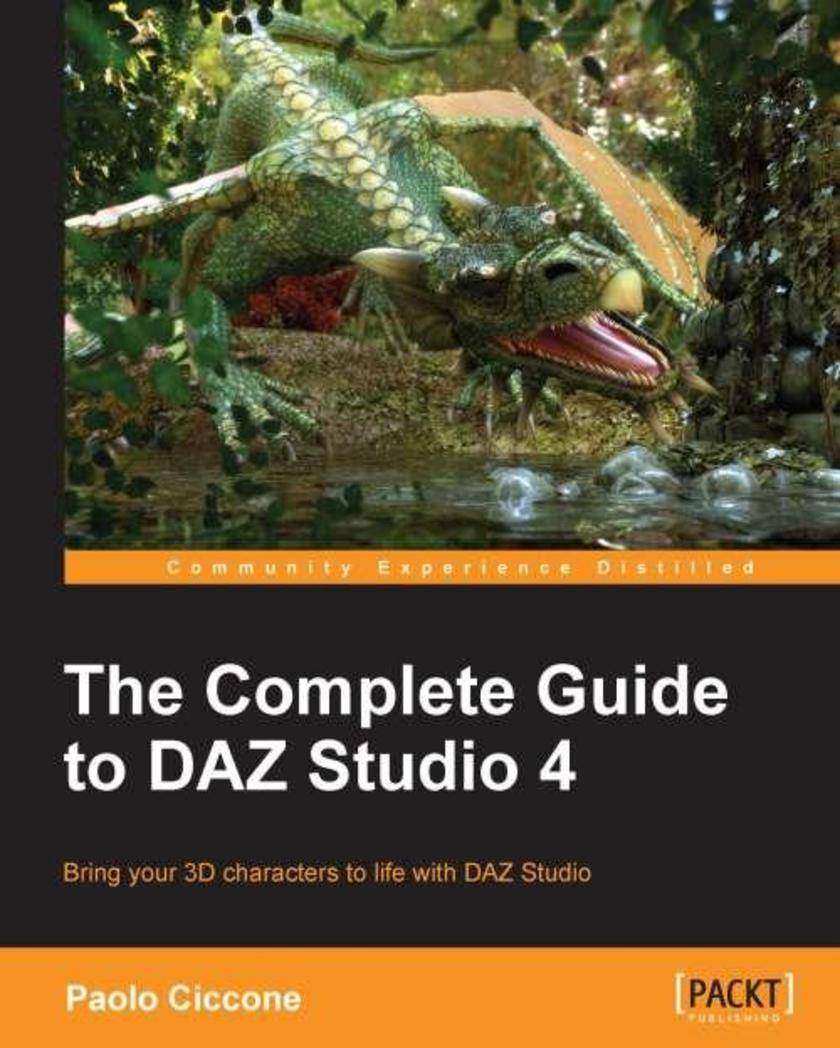
The Complete Guide to DAZ Studio 4
¥80.65
The book builds up a complete project from scratch and demonstrates the power of DAZ to create life-like characters. The book is replete with detailed examples and instructions on creating a tailor-made marvel out of scratch.This book can be used by anybody who has DAZ Studio 4, regardless of their level of familiarity with the program or the concepts of 3D art.
Alfresco 3 Cookbook
¥107.90
Written in a cookbook style, this book offers solutions using a recipe based approach. Each recipe contains step-by-step instructions followed by an analysis of what was done in each task and other useful information. If you are a software developer interested in content management systems, who wants to work with Alfresco or is already experienced in Alfresco, this cookbook will get you up and running quickly. If you want rapid implementation of Alfresco’s most important and effective features then this is the cookbook for you.
Rhomobile Beginner's Guide
¥80.65
Part of Packt's Beginner's Guide series, this book is packed full of practical examples and screenshots to make building your application straightforward and fun. Whether you have prior experience of developing mobile applications or this is your first venture, all newcomers to Rhomobile will be able to quickly develop their own mobile application. This book is accessible for people who are completely new to Ruby, though having prior knowledge of it would be a huge advantage.
Microsoft Exchange Server 2013 PowerShell Cookbook: Second Edition
¥107.90
This book is written in a Cookbook-style format and provides practical, immediately usable task-based recipes that show you how to manage and maintain your Microsoft Exchange Server 2013 environment with Windows PowerShell 3. Each chapter of the book is written so that it can be used as a desktop reference, or it can be read from beginning to end, allowing you to build a solid foundation for building *s in your Exchange environment.This Cookbook is for messaging professionals who want to learn how to build real-world *s with Windows PowerShell 3 and the Exchange Management Shell. If you are a network or systems administrator responsible for managing and maintaining Exchange Server 2013 you will find this highly useful. Only basic knowledge of Exchange Server and PowerShell are required to make the most of this book.
Instant Razor View Engine How-to
¥45.77
Filled with practical, step-by-step instructions and clear explanations for the most important and useful tasks. This is a Packt Instant How-to guide, which provides concise and clear recipes for configuring RazorView and working with its syntax and view types.This book is for developers who are looking for alternate ways to simplify web application development.
Elasticsearch Essentials
¥71.93
Harness the power of ElasticSearch to build and manage scalable search and analytics solutions with this fast-paced guideAbout This BookNew to ElasticSearchHere’s what you need—a highly practical guide that gives you a quick start with ElasticSearch using easy-to-follow examples; get up and running with ElasticSearch APIs in no timeGet the latest guide on ElasticSearch 2.0.0, which contains concise and adequate information on handling all the issues a developer needs to know while handling data in bulk with search relevancyLearn to create large-scale ElasticSearch clusters using best practicesLearn from our experts—written by Bharvi Dixit who has extensive experience in working with search servers (especially ElasticSearch)Who This Book Is ForAnyone who wants to build efficient search and analytics applications can choose this book. This book is also beneficial for skilled developers, especially ones experienced with Lucene or Solr, who now want to learn Elasticsearch quickly.What You Will LearnGet to know about advanced Elasticsearch concepts and its REST APIsWrite CRUD operations and other search functionalities using the ElasticSearch Python and Java clientsDig into wide range of queries and find out how to use them correctlyDesign schema and mappings with built-in and custom analyzersExcel in data modeling concepts and query optimizationMaster document relationships and geospatial dataBuild analytics using aggregationsSetup and scale Elasticsearch clusters using best practicesLearn to take data backups and secure Elasticsearch clustersIn DetailWith constantly evolving and growing datasets, organizations have the need to find actionable insights for their business. ElasticSearch, which is the world's most advanced search and analytics engine, brings the ability to make massive amounts of data usable in a matter of milliseconds. It not only gives you the power to build blazing fast search solutions over a massive amount of data, but can also serve as a NoSQL data store.This guide will take you on a tour to become a competent developer quickly with a solid knowledge level and understanding of the ElasticSearch core concepts. Starting from the beginning, this book will cover these core concepts, setting up ElasticSearch and various plugins, working with analyzers, and creating mappings. This book provides complete coverage of working with ElasticSearch using Python and performing CRUD operations and aggregation-based analytics, handling document relationships in the NoSQL world, working with geospatial data, and taking data backups. Finally, we’ll show you how to set up and scale ElasticSearch clusters in production environments as well as providing some best practices.Style and approachThis is an easy-to-follow guide with practical examples and clear explanations of the concepts. This fast-paced book believes in providing very rich content focusing majorly on practical implementation. This book will provide you with step-by-step practical examples, letting you know about the common errors and solutions along with ample screenshots and code to ensure your success.
Windows Malware Analysis Essentials
¥90.46
Master the fundamentals of malware analysis for the Windows platform and enhance your anti-malware skill set About This Book Set the baseline towards performing malware analysis on the Windows platform and how to use the tools required to deal with malware Understand how to decipher x86 assembly code from source code inside your favourite development environment A step-by-step based guide that reveals malware analysis from an industry insider and demystifies the process Who This Book Is For This book is best for someone who has prior experience with reverse engineering Windows executables and wants to specialize in malware analysis. The book presents the malware analysis thought process using a show-and-tell approach, and the examples included will give any analyst confidence in how to approach this task on their own the next time around. What You Will Learn Use the positional number system for clear conception of Boolean algebra, that applies to malware research purposes Get introduced to static and dynamic analysis methodologies and build your own malware lab Analyse destructive malware samples from the real world (ITW) from fingerprinting and static/dynamic analysis to the final debrief Understand different modes of linking and how to compile your own libraries from assembly code and integrate the codein your final program Get to know about the various emulators, debuggers and their features, and sandboxes and set them up effectively depending on the required scenario Deal with other malware vectors such as pdf and MS-Office based malware as well as *s and shellcode In Detail Windows OS is the most used operating system in the world and hence is targeted by malware writers. There are strong ramifications if things go awry. Things will go wrong if they can, and hence we see a salvo of attacks that have continued to disrupt the normal scheme of things in our day to day lives. This book will guide you on how to use essential tools such as debuggers, disassemblers, and sandboxes to dissect malware samples. It will expose your innards and then build a report of their indicators of compromise along with detection rule sets that will enable you to help contain the outbreak when faced with such a situation. We will start with the basics of computing fundamentals such as number systems and Boolean algebra. Further, you'll learn about x86 assembly programming and its integration with high level languages such as C++.You'll understand how to decipher disassembly code obtained from the compiled source code and map it back to its original design goals. By delving into end to end analysis with real-world malware samples to solidify your understanding, you'll sharpen your technique of handling destructive malware binaries and vector mechanisms. You will also be encouraged to consider analysis lab safety measures so that there is no infection in the process. Finally, we'll have a rounded tour of various emulations, sandboxing, and debugging options so that you know what is at your disposal when you need a specific kind of weapon in order to nullify the malware. Style and approach An easy to follow, hands-on guide with de*ions and screenshots that will help you execute effective malicious software investigations and conjure up solutions creatively and confidently.


