


 购物车
购物车 个人中心
个人中心
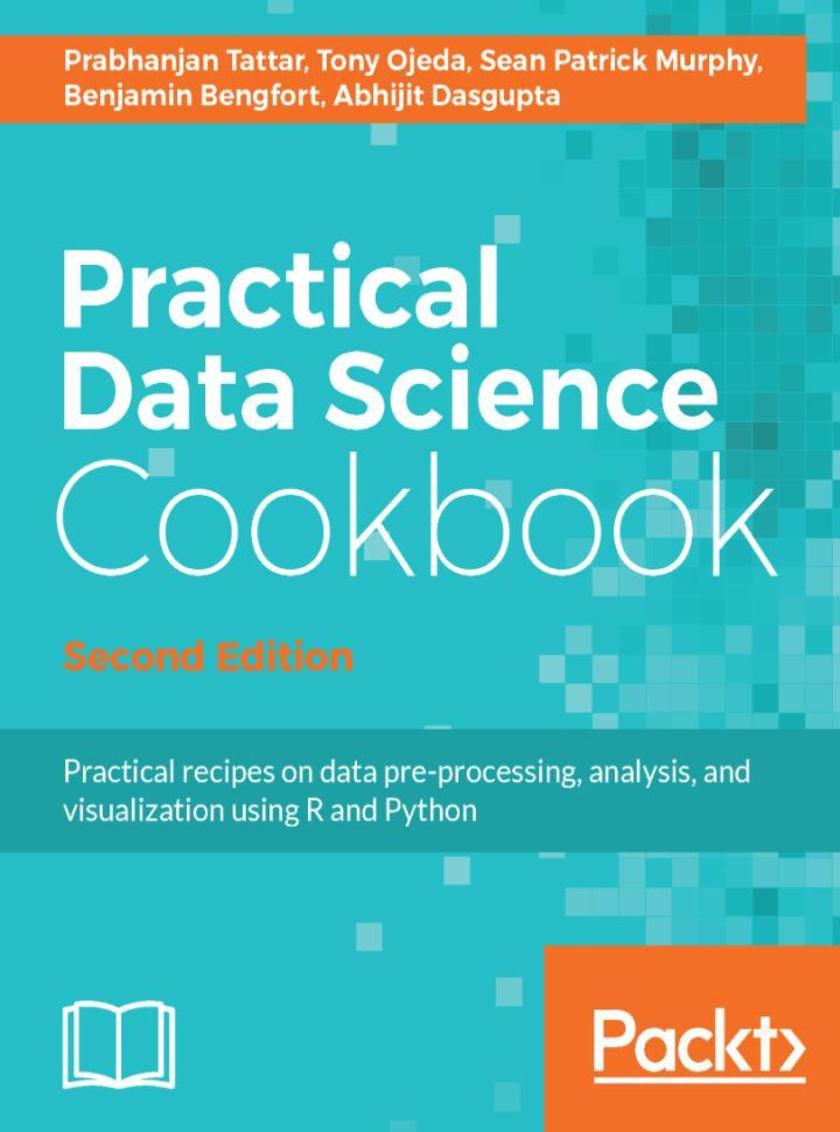
Practical Data Science Cookbook - Second Edition
¥80.65
Over 85 recipes to help you complete real-world data science projects in R and Python About This Book ? Tackle every step in the data science pipeline and use it to acquire, clean, analyze, and visualize your data ? Get beyond the theory and implement real-world projects in data science using R and Python ? Easy-to-follow recipes will help you understand and implement the numerical computing concepts Who This Book Is For If you are an aspiring data scientist who wants to learn data science and numerical programming concepts through hands-on, real-world project examples, this is the book for you. Whether you are brand new to data science or you are a seasoned expert, you will benefit from learning about the structure of real-world data science projects and the programming examples in R and Python. What You Will Learn ? Learn and understand the installation procedure and environment required for R and Python on various platforms ? Prepare data for analysis by implement various data science concepts such as acquisition, cleaning and munging through R and Python ? Build a predictive model and an exploratory model ? Analyze the results of your model and create reports on the acquired data ? Build various tree-based methods and Build random forest In Detail As increasing amounts of data are generated each year, the need to analyze and create value out of it is more important than ever. Companies that know what to do with their data and how to do it well will have a competitive advantage over companies that don’t. Because of this, there will be an increasing demand for people that possess both the analytical and technical abilities to extract valuable insights from data and create valuable solutions that put those insights to use. Starting with the basics, this book covers how to set up your numerical programming environment, introduces you to the data science pipeline, and guides you through several data projects in a step-by-step format. By sequentially working through the steps in each chapter, you will quickly familiarize yourself with the process and learn how to apply it to a variety of situations with examples using the two most popular programming languages for data analysis—R and Python. Style and approach This step-by-step guide to data science is full of hands-on examples of real-world data science tasks. Each recipe focuses on a particular task involved in the data science pipeline, ranging from readying the dataset to analytics and visualization
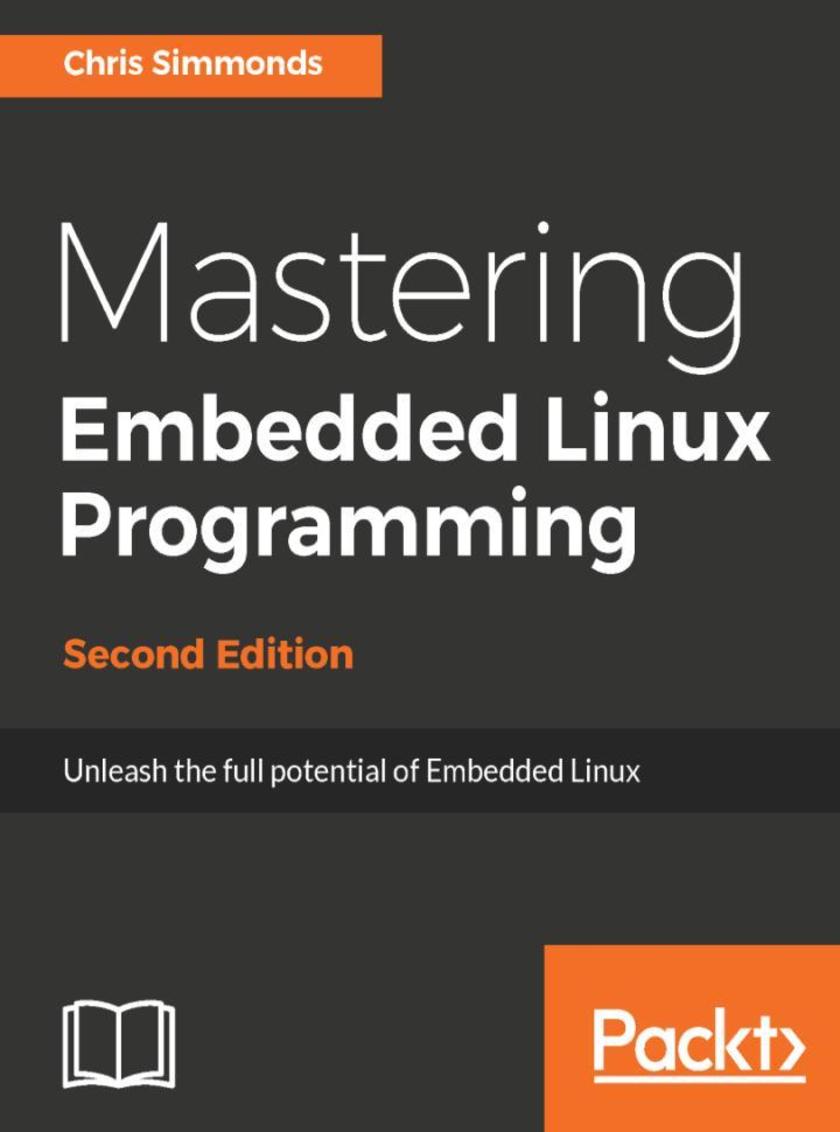
Mastering Embedded Linux Programming - Second Edition
¥90.46
Master the techniques needed to build great, efficient embedded devices on Linux About This Book ? Discover how to build and configure reliable embedded Linux devices ? This book has been updated to include Linux 4.9 and Yocto Project 2.2 (Morty) ? This comprehensive guide covers the remote update of devices in the field and power management Who This Book Is For If you are an engineer who wishes to understand and use Linux in embedded devices, this book is for you. It is also for Linux developers and system programmers who are familiar with embedded systems and want to learn and program the best in class devices. It is appropriate for students studying embedded techniques, for developers implementing embedded Linux devices, and engineers supporting existing Linux devices. What You Will Learn ? Evaluate the Board Support Packages offered by most manufacturers of a system on chip or embedded module ? Use Buildroot and the Yocto Project to create embedded Linux systems quickly and efficiently ? Update IoT devices in the field without compromising security ? Reduce the power budget of devices to make batteries last longer ? Interact with the hardware without having to write kernel device drivers ? Debug devices remotely using GDB, and see how to measure the performance of the systems using powerful tools such as perk, ftrace, and valgrind ? Find out how to configure Linux as a real-time operating system In Detail Embedded Linux runs many of the devices we use every day, from smart TVs to WiFi routers, test equipment to industrial controllers - all of them have Linux at their heart. Linux is a core technology in the implementation of the inter-connected world of the Internet of Things. The comprehensive guide shows you the technologies and techniques required to build Linux into embedded systems. You will begin by learning about the fundamental elements that underpin all embedded Linux projects: the toolchain, the bootloader, the kernel, and the root filesystem. You’ll see how to create each of these elements from scratch, and how to automate the process using Buildroot and the Yocto Project. Moving on, you’ll find out how to implement an effective storage strategy for flash memory chips, and how to install updates to the device remotely once it is deployed. You’ll also get to know the key aspects of writing code for embedded Linux, such as how to access hardware from applications, the implications of writing multi-threaded code, and techniques to manage memory in an efficient way. The final chapters show you how to debug your code, both in applications and in the Linux kernel, and how to profile the system so that you can look out for performance bottlenecks. By the end of the book, you will have a complete overview of the steps required to create a successful embedded Linux system. Style and approach This book is an easy-to-follow and pragmatic guide with in-depth analysis of the implementation of embedded devices. It follows the life cycle of a project from inception through to completion, at each stage giving both the theory that underlies the topic and practical step-by-step walkthroughs of an example implementation.
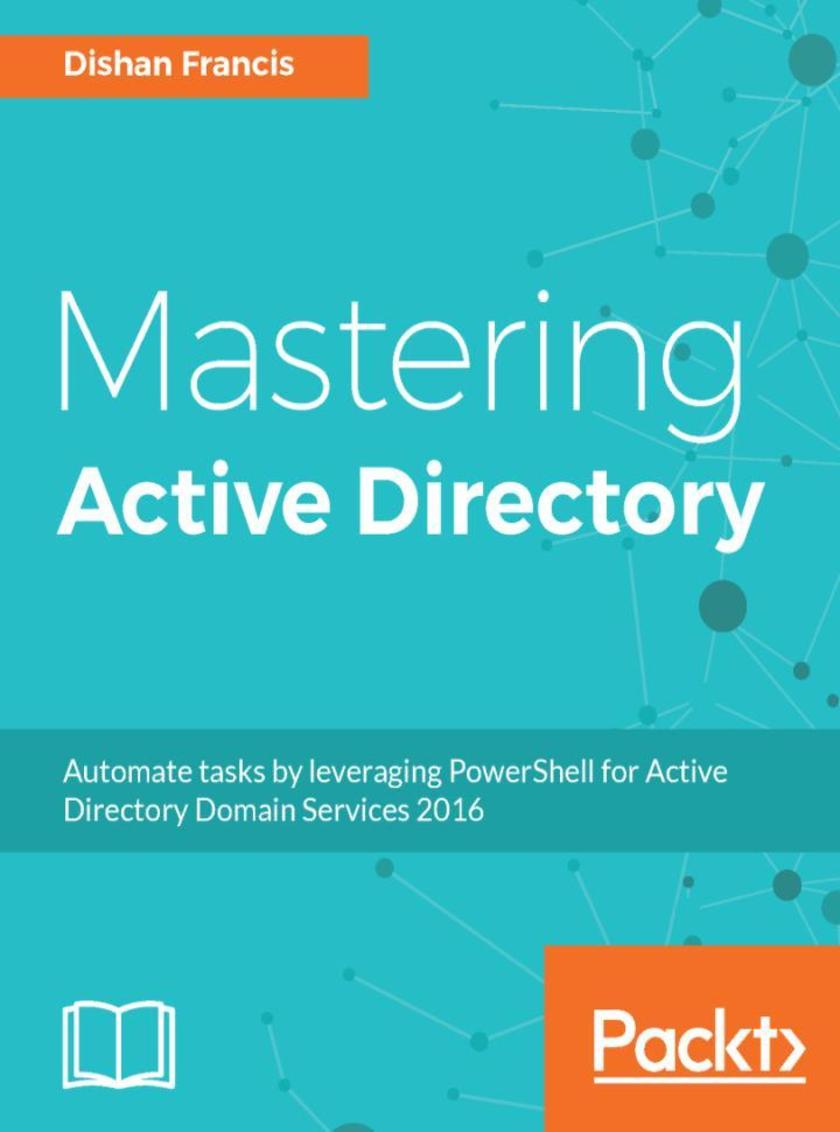
Mastering Active Directory
¥107.90
Become a master at managing enterprise identity infrastructure by leveraging Active Directory About This Book ? Manage your Active Directory services for Windows Server 2016 effectively ? Automate administrative tasks in Active Directory using PowerShell ? Manage your organization's network with ease Who This Book Is For If you are an Active Directory administrator, system administrator, or network professional who has basic knowledge of Active Directory and are looking to gain expertise in this topic, this is the book for you. What You Will Learn ? Explore the new features in Active Directory Domain Service 2016 ? Automate AD tasks with PowerShell ? Get to know the advanced functionalities of the schema ? Learn about Flexible Single Master Operation (FSMO) roles and their placement ? Install and migrate Active directory from older versions to Active Directory 2016 ? Manage Active Directory objects using different tools and techniques ? Manage users, groups, and devices effectively ? Design your OU structure in the best way ? Audit and monitor Active Directory ? Integrate Azure with Active Directory for a hybrid setup In Detail Active Directory is a centralized and standardized system that automates networked management of user data, security, and distributed resources and enables interoperation with other directories. If you are aware of Active Directory basics and want to gain expertise in it, this book is perfect for you. We will quickly go through the architecture and fundamentals of Active Directory and then dive deep into the core components, such as forests, domains, sites, trust relationships, OU, objects, attributes, DNS, and replication. We will then move on to AD schemas, global catalogs, LDAP, RODC, RMS, certificate authorities, group policies, and security best practices, which will help you gain a better understanding of objects and components and how they can be used effectively. We will also cover AD Domain Services and Federation Services for Windows Server 2016 and all their new features. Last but not least, you will learn how to manage your identity infrastructure for a hybrid-cloud setup. All this will help you design, plan, deploy, manage operations on, and troubleshoot your enterprise identity infrastructure in a secure, effective manner. Furthermore, I will guide you through automating administrative tasks using PowerShell cmdlets. Toward the end of the book, we will cover best practices and troubleshooting techniques that can be used to improve security and performance in an identity infrastructure. Style and approach This step-by-step guide will help you master the core functionalities of Active Directory services using Microsoft Server 2016 and PowerShell, with real-world best practices at the end.
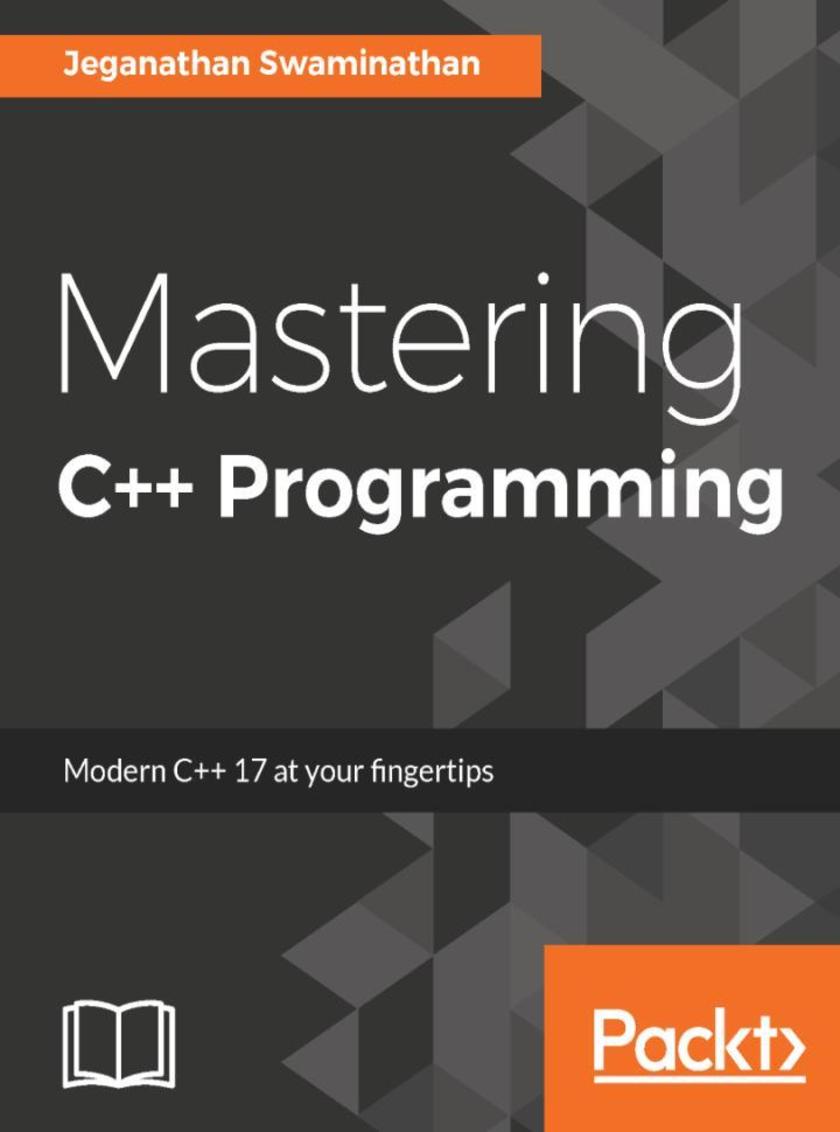
Mastering C++ Programming
¥90.46
Take your C++ coding to the next level by leveraging the latest features and advanced techniques to building high performing, reliable applications. About This Book ? Get acquainted with the latest features in C++ 17 ? Take advantage of the myriad of features and possibilities that C++ offers to build real-world applications ? Write clear and expressive code in C++, and get insights into how to keep your code error-free Who This Book Is For This book is for experienced C++ developers. If you are a novice C++ developer, then it’s highly recommended that you get a solid understanding of the C++ language before reading this book What You Will Learn ? Write modular C++ applications in terms of the existing and newly introduced features ? Identify code-smells, clean up, and refactor legacy C++ applications ? Leverage the possibilities provided by Cucumber and Google Test/Mock to automate test cases ? Test frameworks with C++ ? Get acquainted with the new C++17 features ? Develop GUI applications in C++ ? Build portable cross-platform applications using standard C++ features In Detail C++ has come a long way and has now been adopted in several contexts. Its key strengths are its software infrastructure and resource-constrained applications. The C++ 17 release will change the way developers write code, and this book will help you master your developing skills with C++. With real-world, practical examples explaining each concept, the book will begin by introducing you to the latest features in C++ 17. It encourages clean code practices in C++ in general, and demonstrates the GUI app-development options in C++. You’ll get tips on avoiding memory leaks using smart-pointers. Next, you’ll see how multi-threaded programming can help you achieve concurrency in your applications. Moving on, you’ll get an in-depth understanding of the C++ Standard Template Library. We show you the concepts of implementing TDD and BDD in your C++ programs, and explore template-based generic programming, giving you the expertise to build powerful applications. Finally, we’ll round up with debugging techniques and best practices.By the end of the book, you’ll have an in-depth understanding of the language and its various facets. Style and approach This straightforward guide will help you level up your skills in C++ programming, be it for enterprise software or for low-latency applications like games. Filled with real-world, practical examples, this book will take you gradually up the steep learning curve that is C++.
Learning Spark SQL
¥99.18
Design, implement, and deliver successful streaming applications, machine learning pipelines and graph applications using Spark SQL API About This Book ? Learn about the design and implementation of streaming applications, machine learning pipelines, deep learning, and large-scale graph processing applications using Spark SQL APIs and Scala. ? Learn data exploration, data munging, and how to process structured and semi-structured data using real-world datasets and gain hands-on exposure to the issues and challenges of working with noisy and "dirty" real-world data. ? Understand design considerations for scalability and performance in web-scale Spark application architectures. Who This Book Is For If you are a developer, engineer, or an architect and want to learn how to use Apache Spark in a web-scale project, then this is the book for you. It is assumed that you have prior knowledge of SQL querying. A basic programming knowledge with Scala, Java, R, or Python is all you need to get started with this book. What You Will Learn ? Familiarize yourself with Spark SQL programming, including working with DataFrame/Dataset API and SQL ? Perform a series of hands-on exercises with different types of data sources, including CSV, JSON, Avro, MySQL, and MongoDB ? Perform data quality checks, data visualization, and basic statistical analysis tasks ? Perform data munging tasks on publically available datasets ? Learn how to use Spark SQL and Apache Kafka to build streaming applications ? Learn key performance-tuning tips and tricks in Spark SQL applications ? Learn key architectural components and patterns in large-scale Spark SQL applications In Detail In the past year, Apache Spark has been increasingly adopted for the development of distributed applications. Spark SQL APIs provide an optimized interface that helps developers build such applications quickly and easily. However, designing web-scale production applications using Spark SQL APIs can be a complex task. Hence, understanding the design and implementation best practices before you start your project will help you avoid these problems. This book gives an insight into the engineering practices used to design and build real-world, Spark-based applications. The book's hands-on examples will give you the required confidence to work on any future projects you encounter in Spark SQL. It starts by familiarizing you with data exploration and data munging tasks using Spark SQL and Scala. Extensive code examples will help you understand the methods used to implement typical use-cases for various types of applications. You will get a walkthrough of the key concepts and terms that are common to streaming, machine learning, and graph applications. You will also learn key performance-tuning details including Cost Based Optimization (Spark 2.2) in Spark SQL applications. Finally, you will move on to learning how such systems are architected and deployed for a successful delivery of your project. Style and approach This book is a hands-on guide to designing, building, and deploying Spark SQL-centric production applications at scale.
Windows 10 for Enterprise Administrators
¥80.65
Learn the art of configuring, deploying, managing and securing Windows 10 for your enterprise. About This Book ? Enhance your enterprise administration skills to manage Windows 10 Redstone 3 ? Get acquainted with configuring Azure Active Directory for enabling cloud-based services and Remote Server Admin Tools for managing Windows Server ? Provide enterprise-level security with ease using the built-in data loss prevention of Windows 10 Who This Book Is For If you are a system administrator who has been given the responsibility of administering and managing Windows 10 Redstone 3, then this book is for you. If you have deployed and managed previous versions of Windows, it would be an added advantage. What You Will Learn ? Understand the remote access capabilities ? Use third-party tools to deploy Windows 10 ? Customize image and user Interface experience ? Implement assigned access rights ? Configure remote administration ? Manage Windows 10 security ? Work with Azure AD and Intune management In Detail Microsoft’s launch of Windows 10 is a step toward satisfying the enterprise administrator’s needs for management and user experience customization. This book provides the enterprise administrator with the knowledge needed to fully utilize the advanced feature set of Windows 10 Enterprise. This practical guide shows Windows 10 from an administrator's point of view. You'll focus on areas such as installation and configuration techniques based on your enterprise requirements, various deployment scenarios and management strategies, and setting up and managing admin and other user accounts. You’ll see how to configure Remote Server Administration Tools to remotely manage Windows Server and Azure Active Directory. Lastly, you will learn modern Mobile Device Management for effective BYOD and how to enable enhanced data protection, system hardening, and enterprise-level security with the new Windows 10 in order to prevent data breaches and impede attacks. By the end of this book, you will know the key technologies and capabilities in Windows 10 and will confidently be able to manage and deploy these features in your organization. Style and approach This step-by-step guide will show you how to configure, deploy, manage, and secure the all new Windows 10 Redstone 3 for your enterprise.
Kali Linux Cookbook - Second Edition
¥80.65
Over 80 recipes to effectively test your network and boost your career in security About This Book ? Learn how to scan networks to find vulnerable computers and servers ? Hack into devices to control them, steal their data, and make them yours ? Target wireless networks, databases, and web servers, and password cracking to make the most of Kali Linux Who This Book Is For If you are looking to expand your career into penetration testing, you will need a good understanding of Kali Linux and the variety of tools it includes. This book will work as a perfect guide for anyone who wants to have a practical approach in leveraging penetration testing mechanisms using Kali Linux What You Will Learn ? Acquire the key skills of ethical hacking to perform penetration testing ? Learn how to perform network reconnaissance ? Discover vulnerabilities in hosts ? Attack vulnerabilities to take control of workstations and servers ? Understand password cracking to bypass security ? Learn how to hack into wireless networks ? Attack web and database servers to exfiltrate data ? Obfuscate your command and control connections to avoid firewall and IPS detection In Detail Kali Linux is a Linux distribution designed for penetration testing and security auditing. It is the successor to BackTrack, the world’s most popular penetration testing distribution. Kali Linux is the most widely used platform and toolkit for penetration testing. Security is currently the hottest field in technology with a projected need for millions of security professionals. This book focuses on enhancing your knowledge in Kali Linux for security by expanding your skills with toolkits and frameworks that can increase your value as a security professional. Kali Linux Cookbook, Second Edition starts by helping you install Kali Linux on different options available. You will also be able to understand the lab architecture and install a Windows host for use in the lab. Next, you will understand the concept of vulnerability analysis and look at the different types of exploits. The book will introduce you to the concept and psychology of Social Engineering and password cracking. You will then be able to use these skills to expand the scope of any breaches you create. Finally, the book will guide you in exploiting specific technologies and gaining access to other systems in the environment. By the end of this book, you will have gained the core knowledge and concepts of the penetration testing process. Style and approach This book teaches you everything you need to know about Kali Linux from the perspective of a penetration tester. It is filled with powerful recipes and practical examples that will help you gain in-depth knowledge of Kali Linux.
Drupal 8 Blueprints
¥71.93
A project-based guide that will show you how to create 7 professional Drupal sites About This Book ? Create and design your own customized website effortlessly and efficiently ? This up-to-date guide on Drupal 8 will show you how you can leverage the latest Drupal 8 features ? This hands-on guide will turn you into a professional grade Drupal 8 developer through 7 unique and engaging web sites Who This Book Is For This book is ideal for web developers who are looking to create professional web applications using Drupal 8. You should have some previous experience with Drupal and must have a basic knowledge of web application development in general. If you are looking to create fluent professional websites that will take you to the next level, then this book is for you. What You Will Learn ? Find out how to use the Drupal 8 core functionality to build great websites ? Discover how to better manage content using custom blocks and views ? Display content in multiple ways, taking advantage of display modes ? Using the new TWIG theme engine for Drupal ? Easily manage and filter content ? Understanding best practices for building great Drupal sites ? Move beyond Drupal to build headless websites using RESTful services and JavaScript frameworks In Detail Drupal is an open source content management framework that can be used for developing websites and simplifying online management of content for users. This book is a must-have for web developers who are looking to create professional-grade websites using Drupal 8. While building 7 different Drupal websites, we will focus on implementing the out of the box features that come with Drupal 8 and see how we can make some complex sites with minimal custom code. Focusing completely on Drupal 8, this book will help you leverage the new Drupal 8 features such as creating a different types and layouts of content using configuration to build in core with its built-in web services facilities, and effortless authoring using the new CKEditor with an effortless and efficient industry standard approach. The book starts with getting started with the development environment of Drupal. Each chapter will start with a brief overview of the site to be built and the required features. Then, we will proceed to create customized modules and themes and integrate third-party plugins. Lastly, you will learn about "headless" Drupal that uses RESTful services that would help you to display content outside of Drupal By the end of the book, you will be able to implement the knowledge gained to build your own custom websites using Drupal 8. Style and approach This unique, project-based resource on Drupal 8 website development will show you how to leverage Drupal 8’s features to create customized, professional-grade applications efficiently and effectively.
Architecting the Industrial Internet
¥90.46
Learn the ins and outs of the Industrial Internet of Things through subjects ranging from its history and evolution, right up to what the future holds. About This Book ? Define solutions that can connect existing systems and newer cloud-based solutions to thousands of thousands of edge devices and industrial machines ? Identify, define, and justify Industrial Internet of Things (IIoT) projects, and design an application that can connect to and control thousands of machines ? Leverage the power and features of a platform to monitor, perform analytics, and maintain the Industrial Internet Who This Book Is For Architects who are interested in learning how to define solutions for the Industrial Internet will benefit immensely from this book. Relevant architect roles include enterprise architects, business architects, information architects, cloud solution architects, software architects, and others. The content is also relevant for technically inclined line of business leaders investing in these solutions. What You Will Learn ? Learn the history of the Industrial Internet and why an architectural approach is needed ? Define solutions that can connect to and control thousands of edge devices and machines ? Understand the significance of working with line of business leadership and key metrics to be gathered ? Connect business requirements to the functional architecture ? Gain the right expectation as to the capabilities of Industrial Internet applications and how to assess them ? Understand what data and analytics components should be included in your architecture solution ? Understand deployment trade-offs, management and security considerations, and the impact of emerging technologies In Detail The Industrial Internet or the IIoT has gained a lot of traction. Many leading companies are driving this revolution by connecting smart edge devices to cloud-based analysis platforms and solving their business challenges in new ways. To ensure a smooth integration of such machines and devices, sound architecture strategies based on accepted principles, best practices, and lessons learned must be applied. This book begins by providing a bird's eye view of what the IIoT is and how the industrial revolution has evolved into embracing this technology. It then describes architectural approaches for success, gathering business requirements, and mapping requirements into functional solutions. In a later chapter, many other potential use cases are introduced including those in manufacturing and specific examples in predictive maintenance, asset tracking and handling, and environmental impact and abatement. The book concludes by exploring evolving technologies that will impact IIoT architecture in the future and discusses possible societal implications of the Industrial Internet and perceptions regarding these projects. By the end of this book, you will be better equipped to embrace the benefits of the burgeoning IIoT. Style and approach This book takes a comprehensive approach to the Industrial Internet, thoroughly acquainting the reader with the concepts and philosophy of the IIoT. It provides a basis for defining an IIoT solution in a thoughtful manner and creating what will be viewed as a successful project.
Go Systems Programming
¥90.46
Learning the new system’s programming language for all Unix-type systems About This Book ? Learn how to write system's level code in Golang, similar to Unix/Linux systems code ? Ramp up in Go quickly ? Deep dive into Goroutines and Go concurrency to be able to take advantage of Go server-level constructs Who This Book Is For Intermediate Linux and general Unix programmers. Network programmers from beginners to advanced practitioners. C and C++ programmers interested in different approaches to concurrency and Linux systems programming. What You Will Learn ? Explore the Go language from the standpoint of a developer conversant with Unix, Linux, and so on ? Understand Goroutines, the lightweight threads used for systems and concurrent applications ? Learn how to translate Unix and Linux systems code in C to Golang code ? How to write fast and lightweight server code ? Dive into concurrency with Go ? Write low-level networking code In Detail Go is the new systems programming language for Linux and Unix systems. It is also the language in which some of the most prominent cloud-level systems have been written, such as Docker. Where C programmers used to rule, Go programmers are in demand to write highly optimized systems programming code. Created by some of the original designers of C and Unix, Go expands the systems programmers toolkit and adds a mature, clear programming language. Traditional system applications become easier to write since pointers are not relevant and garbage collection has taken away the most problematic area for low-level systems code: memory management. This book opens up the world of high-performance Unix system applications to the beginning Go programmer. It does not get stuck on single systems or even system types, but tries to expand the original teachings from Unix system level programming to all types of servers, the cloud, and the web. Style and approach This is the first book to introduce Linux and Unix systems programming in Go, a field for which Go has actually been developed in the first place.
Python Digital Forensics Cookbook
¥80.65
Over 60 recipes to help you learn digital forensics and leverage Python *s to amplify your examinations About This Book ? Develop code that extracts vital information from everyday forensic acquisitions. ? Increase the quality and efficiency of your forensic analysis. ? Leverage the latest resources and capabilities available to the forensic community. Who This Book Is For If you are a digital forensics examiner, cyber security specialist, or analyst at heart, understand the basics of Python, and want to take it to the next level, this is the book for you. Along the way, you will be introduced to a number of libraries suitable for parsing forensic artifacts. Readers will be able to use and build upon the *s we develop to elevate their analysis. What You Will Learn ? Understand how Python can enhance digital forensics and investigations ? Learn to access the contents of, and process, forensic evidence containers ? Explore malware through automated static analysis ? Extract and review message contents from a variety of email formats ? Add depth and context to discovered IP addresses and domains through various Application Program Interfaces (APIs) ? Delve into mobile forensics and recover deleted messages from SQLite databases ? Index large logs into a platform to better query and visualize datasets In Detail Technology plays an increasingly large role in our daily lives and shows no sign of stopping. Now, more than ever, it is paramount that an investigator develops programming expertise to deal with increasingly large datasets. By leveraging the Python recipes explored throughout this book, we make the complex simple, quickly extracting relevant information from large datasets. You will explore, develop, and deploy Python code and libraries to provide meaningful results that can be immediately applied to your investigations. Throughout the Python Digital Forensics Cookbook, recipes include topics such as working with forensic evidence containers, parsing mobile and desktop operating system artifacts, extracting embedded metadata from documents and executables, and identifying indicators of compromise. You will also learn to integrate *s with Application Program Interfaces (APIs) such as VirusTotal and PassiveTotal, and tools such as Axiom, Cellebrite, and EnCase. By the end of the book, you will have a sound understanding of Python and how you can use it to process artifacts in your investigations. Style and approach Our succinct recipes take a no-frills approach to solving common challenges faced in investigations. The code in this book covers a wide range of artifacts and data sources. These examples will help improve the accuracy and efficiency of your analysis—no matter the situation.
JUNOS Automation Cookbook
¥80.65
Administer, configure, and monitor Junos in your organization About This Book ? Get well acquainted with security and routing policies to identify the use of firewall filters. ? Learn to provide end-user authentication and protect each layer in an enterprise network. ? A recipe-based guide that will help you configure and monitor Junos OS and basic device operations. Who This Book Is For This book targets network engineers, developers, support personals, and administrators who are working on devices running Junos OS and are looking at automating their organisation's operations. Some understanding about Junos would be necessary What You Will Learn ? Start using NETCONF RPC standard and understand its usefulness in programming JUNOS ? Write SLAX *s to respond to events in the JUNOS environment ? Automate JUNOS with PyEZ ? Deal with events in the JUNOS environment, and writing response handlers to deal with them ? Make the most of automation technologies to help with maintenance and monitoring of JUNOS ? Use the Ansible framework to extend the automation functionality of Junos In Detail The JUNOS Automation Cookbook is a companion guide for the complex field of automating tasks on JUNOS devices. With a foundation in industry-standrd XML, JUNOS provides an ideal environment for programmatic interation, allowing you to build upon the capabilities provided by Juniper, with your own original code. You will begin by learning about, and setting up, the industry-standard NETCONF remote procedure call mechanisms on your device. After initial setup, you'll walk through SLAX - Juniper's foundation *ing language - for manipulating XML representations of JUNOS concepts and elements. You'll learn how to write your own SLAX *s to customise the operating environment, and also how to write proactive event handlers that deal with situations as they happen. You'll then delve into PyEZ - Juniper's bridging framework to make automation accessible to Python code - allowing you to build automation applications in the popular *ing language. You'll witness some examples of how to write applications that can monitor configuration changes, implement BGP security policies and implement ad-hoc routing protocols, for those really tricky situations. You'll also leaarn how asynchronous I/O frameworks like Node.js can be used to implement automation applications that present an acceptable web interface. Along with way, you'll explore how to make use of the latest RESTful APIs that JUNOS provides, how to visualize aspects of your JUNOS network, and how to integrate your automation capabilities with enterprise-wide orchestration systems like Ansible. By the end of the book, you'll be able to tackle JUNOS automation challenges with confidence and understanding, and without hassle. Style and Approach A guide that will cover all the automation tools along with steps on leveraging these tools
Mastering Assembly Programming
¥80.65
Incorporate the assembly language routines in your high level language applications About This Book ? Understand the Assembly programming concepts and the benefits of examining the AL codes generated from high level languages ? Learn to incorporate the assembly language routines in your high level language applications ? Understand how a CPU works when programming in high level languages Who This Book Is For This book is for developers who would like to learn about Assembly language. Prior programming knowledge of C and C++ is assumed. What You Will Learn ? Obtain deeper understanding of the underlying platform ? Understand binary arithmetic and logic operations ? Create elegant and efficient code in Assembly language ? Understand how to link Assembly code to outer world ? Obtain in-depth understanding of relevant internal mechanisms of Intel CPU ? Write stable, efficient and elegant patches for running processes In Detail The Assembly language is the lowest level human readable programming language on any platform. Knowing the way things are on the Assembly level will help developers design their code in a much more elegant and efficient way. It may be produced by compiling source code from a high-level programming language (such as C/C++) but can also be written from scratch. Assembly code can be converted to machine code using an assembler. The first section of the book starts with setting up the development environment on Windows and Linux, mentioning most common toolchains. The reader is led through the basic structure of CPU and memory, and is presented the most important Assembly instructions through examples for both Windows and Linux, 32 and 64 bits. Then the reader would understand how high level languages are translated into Assembly and then compiled into object code. Finally we will cover patching existing code, either legacy code without sources or a running code in same or remote process. Style and approach This book takes a step-by-step, detailed approach to Comprehensively learning Assembly Programming.
Mastering the C++17 STL
¥80.65
This book breaks down the C++ STL, teaching you how to extract its gems and apply them to your programming. About This Book ? Boost your productivity as a C++ developer with the latest features of C++17 ? Develop high-quality, fast, and portable applications with the varied features of the STL ? Migrate from older versions (C++11, C++14) to C++17 Who This Book Is For This book is for developers who would like to master the C++ STL and make full use of its components. Prior C++ knowledge is assumed. What You Will Learn ? Make your own iterator types, allocators, and thread pools. ? Master every standard container and every standard algorithm. ? Improve your code by replacing new/delete with smart pointers. ? Understand the difference between monomorphic algorithms, polymorphic algorithms, and generic algorithms. ? Learn the meaning and applications of vocabulary type, product type and sum type. In Detail Modern C++ has come a long way since 2011. The latest update, C++17, has just been ratified and several implementations are on the way. This book is your guide to the C++ standard library, including the very latest C++17 features. The book starts by exploring the C++ Standard Template Library in depth. You will learn the key differences between classical polymorphism and generic programming, the foundation of the STL. You will also learn how to use the various algorithms and containers in the STL to suit your programming needs. The next module delves into the tools of modern C++. Here you will learn about algebraic types such as std::optional, vocabulary types such as std::function, smart pointers, and synchronization primitives such as std::atomic and std::mutex. In the final module, you will learn about C++'s support for regular expressions and file I/O. By the end of the book you will be proficient in using the C++17 standard library to implement real programs, and you'll have gained a solid understanding of the library's own internals. Style and approach This book takes a concise but comprehensive approach to explaining and applying the C++ STL, one feature at a time.
Practical Time Series Analysis
¥80.65
Step by Step guide filled with real world practical examples. About This Book ? Get your first experience with data analysis with one of the most powerful types of analysis—time-series. ? Find patterns in your data and predict the future pattern based on historical data. ? Learn the statistics, theory, and implementation of Time-series methods using this example-rich guide Who This Book Is For This book is for anyone who wants to analyze data over time and/or frequency. A statistical background is necessary to quickly learn the analysis methods. What You Will Learn ? Understand the basic concepts of Time Series Analysis and appreciate its importance for the success of a data science project ? Develop an understanding of loading, exploring, and visualizing time-series data ? Explore auto-correlation and gain knowledge of statistical techniques to deal with non-stationarity time series ? Take advantage of exponential smoothing to tackle noise in time series data ? Learn how to use auto-regressive models to make predictions using time-series data ? Build predictive models on time series using techniques based on auto-regressive moving averages ? Discover recent advancements in deep learning to build accurate forecasting models for time series ? Gain familiarity with the basics of Python as a powerful yet simple to write programming language In Detail Time Series Analysis allows us to analyze data which is generated over a period of time and has sequential interdependencies between the observations. This book describes special mathematical tricks and techniques which are geared towards exploring the internal structures of time series data and generating powerful de*ive and predictive insights. Also, the book is full of real-life examples of time series and their analyses using cutting-edge solutions developed in Python. The book starts with de*ive analysis to create insightful visualizations of internal structures such as trend, seasonality and autocorrelation. Next, the statistical methods of dealing with autocorrelation and non-stationary time series are described. This is followed by exponential smoothing to produce meaningful insights from noisy time series data. At this point, we shift focus towards predictive analysis and introduce autoregressive models such as ARMA and ARIMA for time series forecasting. Later, powerful deep learning methods are presented, to develop accurate forecasting models for complex time series, and under the availability of little domain knowledge. All the topics are illustrated with real-life problem scenarios and their solutions by best-practice implementations in Python. The book concludes with the Appendix, with a brief discussion of programming and solving data science problems using Python. Style and approach This book takes the readers from the basic to advance level of Time series analysis in a very practical and real world use cases.
Practical Real-time Data Processing and Analytics
¥90.46
A practical guide to help you tackle different real-time data processing and analytics problems using the best tools for each scenario About This Book ? Learn about the various challenges in real-time data processing and use the right tools to overcome them ? This book covers popular tools and frameworks such as Spark, Flink, and Apache Storm to solve all your distributed processing problems ? A practical guide filled with examples, tips, and tricks to help you perform efficient Big Data processing in real-time Who This Book Is For If you are a Java developer who would like to be equipped with all the tools required to devise an end-to-end practical solution on real-time data streaming, then this book is for you. Basic knowledge of real-time processing would be helpful, and knowing the fundamentals of Maven, Shell, and Eclipse would be great. What You Will Learn ? Get an introduction to the established real-time stack ? Understand the key integration of all the components ? Get a thorough understanding of the basic building blocks for real-time solution designing ? Garnish the search and visualization aspects for your real-time solution ? Get conceptually and practically acquainted with real-time analytics ? Be well equipped to apply the knowledge and create your own solutions In Detail With the rise of Big Data, there is an increasing need to process large amounts of data continuously, with a shorter turnaround time. Real-time data processing involves continuous input, processing and output of data, with the condition that the time required for processing is as short as possible. This book covers the majority of the existing and evolving open source technology stack for real-time processing and analytics. You will get to know about all the real-time solution aspects, from the source to the presentation to persistence. Through this practical book, you’ll be equipped with a clear understanding of how to solve challenges on your own. We’ll cover topics such as how to set up components, basic executions, integrations, advanced use cases, alerts, and monitoring. You’ll be exposed to the popular tools used in real-time processing today such as Apache Spark, Apache Flink, and Storm. Finally, you will put your knowledge to practical use by implementing all of the techniques in the form of a practical, real-world use case. By the end of this book, you will have a solid understanding of all the aspects of real-time data processing and analytics, and will know how to deploy the solutions in production environments in the best possible manner. Style and Approach In this practical guide to real-time analytics, each chapter begins with a basic high-level concept of the topic, followed by a practical, hands-on implementation of each concept, where you can see the working and execution of it. The book is written in a DIY style, with plenty of practical use cases, well-explained code examples, and relevant screenshots and diagrams.
Mastering Immutable.js
¥71.93
This book shows JavaScript developers how to build highly dependable JavaScript projects using the Immutable.js framework. About This Book ? Master the Immutable.js JavaScript framework ? Build predictable and dependable applications using immutability ? Control how data flows through your application ? Control the effects of data flow in your user interface using Node.js Who This Book Is For This book is for JavaScript developers, from intermediate level and beyond, who need to create dependable JavaScript projects, using the Immutable.js JavaScript framework. What You Will Learn ? Learn how Immutable.js can improve the dependability of your JavaScript code ? Discover how to create Immutable data, and work with persistent changes ? See how to combine and filter collections, and find items ? Learn how to work with sequences and side effects ? Sort collections, maps, and sets ? Get to know tricks to avoid processing chains ? Compare and move between lists, sets, and maps ? Work with Immutable patterns and Immutable architecture In Detail Immutable.js is a JavaScript library that will improve the robustness and dependability of your larger JavaScript projects. All aspects of the Immutable.js framework are covered in this book, and common JavaScript situations are examined in a hands-on way so that you gain practical experience using Immutable.js that you can apply across your own JavaScript projects. The key to building robust JavaScript applications using immutability is to control how data flows through your application, and how the side-effects of these flows are managed. Many problems that are difficult to pinpoint in large codebases stem from data that’s been mutated where it shouldn’t have been. With immutable data, you rule out an entire class of bugs. Mastering Immutable.js takes a practical, hands-on approach throughout, and shows you the ins and outs of the Immutable.js framework so that you can confidently build successful and dependable JavaScript projects. Style and Approach Adam Boduch covers all the key concepts and benefits of immutability, and then presents you with hands-on practical experience on implementing immutability in your JavaScript projects.
MEAN Cookbook
¥80.65
Over 50 recipes to create full-stack high-performance web applications using pure JavaScript and the MEAN stack. About This Book ? Architect a fully functional stand-alone web application, including the web server, database, and front-end web application ? Improve the performance and maintainability of your MEAN stack application with tips for configuration and optimization ? Highlights MEAN Stack best practices when working with your application Who This Book Is For If you are a JavaScript developer who wants to create high-performing, modern web applications with the MEAN stack, this is the book for you. Web developers familiar with some parts of the MEAN stack will find this a comprehensive guide to fleshing out the other technologies and skills they need to build all JavaScript web applications. Developers interested in transitioning from other web application stacks to an all-JavaScript environment will find a wealth of information about how to work in a MEAN stack environment. To get the most from this book, you should have a general understanding of web servers and web applications. You are expected to have a basic understanding of running JavaScript, both in a web browser and outside it, using Node.js and the NPM package manager. What You Will Learn ? Bootstrap a new MEAN stack web application using Node.js and Express ? Build a single-page application (SPA) with Angular and Angular-CLI ? Improve browser performance by optimizing your web application resources using Webpack ? Model complex JSON object relationships in MongoDB using Mongoose ? Debug all the layers of a MEAN stack application, including working with source maps ? Build Restful APIs using Express.js and JSON Web Token (JWT) for user authentication ? Use automated testing to improve the reliability and quality of your MEAN stack application In Detail The MEAN Stack is a framework for web application development using JavaScript-based technologies; MongoDB, Express, Angular, and Node.js. If you want to expand your understanding of using JavaScript to produce a fully functional standalone web application, including the web server, user interface, and database, then this book can help guide you through that transition. This book begins by configuring the frontend of the MEAN stack web application using the Angular JavaScript framework. We then implement common user interface enhancements before moving on to configuring the server layer of our MEAN stack web application using Express for our backend APIs. You will learn to configure the database layer of your MEAN stack web application using MongoDB and the Mongoose framework, including modeling relationships between documents. You will explore advanced topics such as optimizing your web application using WebPack as well as the use of automated testing with the Mocha and Chai frameworks. By the end of the book, you should have acquired a level of proficiency that allows you to confidently build a full production-ready and scalable MEAN stack application. Style and Approach This book is a guide of MEAN Stack specific solutions to common web application problems and includes in-depth guides for each layer of the application stack. Readers looking to upgrade their MEAN Stack web application will find recipes within to help them transition.
Vue.js 2 and Bootstrap 4 Web Development
¥80.65
Learn how to combine Bootstrap with Vue.js to build responsive web applications. About This Book ? Build applications with a good architecture and clean UI with Vue.js and Bootstrap ? Understand Bootstrap components and learn to integrate them with the Vue.js structure ? Build, deploy, and test your code with various utility tools provided by Vue.js Who This Book Is For This book is for JavaScript programmers who are new to web frameworks and want to start learning it by developing interactive and responsive web applications. What You Will Learn ? Create and build web applications using Vue.js, Webpack, and Nuxt.js ? Combine Bootstrap components with Vue.js' power to enrich your web applications with reusable elements ? Connect the Vuex state management architecture to the Firebase cloud backend to persist and manage application data ? Explore the new grid system of Bootstrap 4 along with the far simpler directives in Vue.js ? Test Vue applications using Jest ? Authenticate your application using Bootstrap's forms, Vue.js' reactivity, and Firebase's authentication API ? Deploy your application using Firebase, which provides Backend as a Service In Detail In this book, we will build a full stack web application right from scratch up to its deployment. We will start by building a small introduction application and then proceed to the creation of a fully functional, dynamic responsive web application called ProFitOro. In this application, we will build a Pomodoro timer combined with office workouts. Besides the Pomodoro timer and ProFitOro workouts will enable authentication and collaborative content management. We will explore topics such as Vue reactive data binding, reusable components, routing, and Vuex store along with its state, actions, mutations, and getters. We will create Vue applications using both webpack and Nuxt.js templates while exploring cool hot Nuxt.js features such as code splitting and server-side rendering. We will use Jest to test this application, and we will even revive some trigonometry from our secondary school! While developing the app, you will go through the new grid system of Bootstrap 4 along with Vue.js’ directives. We will connect Vuex store to the Firebase real-time database, data storage, and authentication APIs and use this data later inside the application’s reactive components. Finally, we will quickly deploy our application using the Firebase hosting mechanism. Style and Approach Step-by-step tutorial
Microsoft Dynamics 365 Extensions Cookbook
¥99.18
More than 80 recipes to help you leverage the various extensibility features available for Microsoft Dynamics and solve problems easily About This Book ? Customize, configure, and extend the vanilla features of Dynamics 365 to deliver bespoke CRM solutions fit for any organization ? Implement business logic using point-and-click configuration, plugins, and client-side *s with MS Dynamics 365 ? Built a DevOps pipeline as well as Integrate Dynamics 365 with Azure and other platforms Who This Book Is For This book is for developers, administrators, consultants, and power users who want to learn about best practices when extending Dynamics 365 for enterprises. You are expected to have a basic understand of the Dynamics CRM/365 platform. What You Will Learn ? Customize, configure, and extend Microsoft Dynamics 365 ? Create business process automation ? Develop client-side extensions to add features to the Dynamics 365 user interface ? Set up a security model to securely manage data with Dynamics 365 ? Develop and deploy clean code plugins to implement a wide range of custom behaviors ? Use third-party applications, tools, and patterns to integrate Dynamics 365 with other platforms ? Integrate with Azure, Java, SSIS, PowerBI, and Octopus Deploy ? Build an end-to-end DevOps pipeline for Dynamics 365 In Detail Microsoft Dynamics 365 is a powerful tool. It has many unique features that empower organisations to bridge common business challenges and technology pitfalls that would usually hinder the adoption of a CRM solution. This book sets out to enable you to harness the power of Dynamics 365 and cater to your unique circumstances. We start this book with a no-code configuration chapter and explain the schema, fields, and forms modeling techniques. We then move on to server-side and client-side custom code extensions. Next, you will see how best to integrate Dynamics 365 in a DevOps pipeline to package and deploy your extensions to the various SDLC environments. This book also covers modern libraries and integration patterns that can be used with Dynamics 365 (Angular, 3 tiers, and many others). Finally, we end by highlighting some of the powerful extensions available. Throughout we explain a range of design patterns and techniques that can be used to enhance your code quality; the aim is that you will learn to write enterprise-scale quality code. Style and approach This book takes a recipe-based approach, delivering practical examples and use cases so that you can identify the best possible approach to extend your Dynamics 365 deployment and tackle your specific business problems.
Puppet: Mastering Infrastructure Automation
¥152.59
Start pulling the strings of your IT infrastructure effectively with Puppet – learn how to configure, customize and manage your systems more intelligently in an enterprise deployment. About This Book ? Step-by-step instructions to jump start your Puppet deployment and automate your IT configurations ? Design, implement, and deploy Puppet in your infrastructure and tackle everyday IT infrastructure challenges ? Gain expert understanding of Puppet's latest and most advanced features Who This Book Is For If you're an experienced IT professional and a new Puppet user, this course will provide you with all you need to know to go from installation to advanced automation. What You Will Learn ? Write and employ individual Puppet manifests ? Understand how Puppet implements system abstraction ? Use Puppet to manage network, cloud, and virtualization devices ? Manage and test the Puppet code workflow ? Tweak, hack, and adapt the Puppet extension points ? Use exported resources to orchestrate change between machines ? Debug a puppetserver using Java techniques In Detail Puppet is a configuration management tool that allows you to automate all your IT configurations, giving you control. It was written for and by system administrators to manage large numbers of systems efficiently and prevent configuration drifts. Puppet gives you control of what you do to each node, when you do it, and how you do it.This Learning Path will take you from the basics of Puppet to extending it and then mastering it. We will start off with a primer on Puppet, its installation and get a sneak peek under its hood. We will then move on to designing and deploying your Puppet architecture, learning best practices for writing reusable and maintainable code, and executing, testing, and deploying Puppet across your systems. Finally, we will deal with problems of scale and exceptions in your code, automate workflows, and support multiple developers working simultaneously.This course is based on the following books: 1. Puppet 4 Essentials - Second Edition 2. Extending Puppet - Second Edition 3. Mastering Puppet - Second Edition Style and approach This learning path follows a practical approach, starting from the basic commands to advanced aspects. Through a series of examples you will learn the most important skills essential to manage your IT infrastructure effectively.


