


 购物车
购物车 个人中心
个人中心
Java EE 8 High Performance
¥90.46
Get more control of your applications performances in development and production and know how to meet your Service Level Agreement on critical microservices. About This Book ? Learn how to write a JavaEE application with performance constraints (Service Level Agreement—SLA) leveraging the platform ? Learn how to identify bottlenecks and hotspots in your application to fix them ? Ensure that you are able to continuously control your performance in production and during development Who This Book Is For If you're a Java developer looking to improve the performance of your code or simply wanting to take your skills up to the next level, then this book is perfect for you. What You Will Learn ? Identify performance bottlenecks in an application ? Locate application hotspots using performance tools ? Understand the work done under the hood by EE containers and its impact on performance ? Identify common patterns to integrate with Java EE applications ? Implement transparent caching on your applications ? Extract more information from your applications using Java EE without modifying existing code ? Ensure constant performance and eliminate regression In Detail The ease with which we write applications has been increasing, but with this comes the need to address their performance. A balancing act between easily implementing complex applications and keeping their performance optimal is a present-day need. In this book, we explore how to achieve this crucial balance while developing and deploying applications with Java EE 8. The book starts by analyzing various Java EE specifications to identify those potentially affecting performance adversely. Then, we move on to monitoring techniques that enable us to identify performance bottlenecks and optimize performance metrics. Next, we look at techniques that help us achieve high performance: memory optimization, concurrency, multi-threading, scaling, and caching. We also look at fault tolerance solutions and the importance of logging. Lastly, you will learn to benchmark your application and also implement solutions for continuous performance evaluation. By the end of the book, you will have gained insights into various techniques and solutions that will help create high-performance applications in the Java EE 8 environment. Style and approach This book will cover vital concepts implemented through a sample application built throughout the book. This will enable you to apply these concepts to suit your software requirements.
Scala Machine Learning Projects
¥81.74
Powerful smart applications using deep learning algorithms to dominate numerical computing, deep learning, and functional programming. About This Book ? Explore machine learning techniques with prominent open source Scala libraries such as Spark ML, H2O, MXNet, Zeppelin, and DeepLearning4j ? Solve real-world machine learning problems by delving complex numerical computing with Scala functional programming in a scalable and faster way ? Cover all key aspects such as collection, storing, processing, analyzing, and evaluation required to build and deploy machine models on computing clusters using Scala Play framework. Who This Book Is For If you want to leverage the power of both Scala and Spark to make sense of Big Data, then this book is for you. If you are well versed with machine learning concepts and wants to expand your knowledge by delving into the practical implementation using the power of Scala, then this book is what you need! Strong understanding of Scala Programming language is recommended. Basic familiarity with machine Learning techniques will be more helpful. What You Will Learn ? Apply advanced regression techniques to boost the performance of predictive models ? Use different classification algorithms for business analytics ? Generate trading strategies for Bitcoin and stock trading using ensemble techniques ? Train Deep Neural Networks (DNN) using H2O and Spark ML ? Utilize NLP to build scalable machine learning models ? Learn how to apply reinforcement learning algorithms such as Q-learning for developing ML application ? Learn how to use autoencoders to develop a fraud detection application ? Implement LSTM and CNN models using DeepLearning4j and MXNet In Detail Machine learning has had a huge impact on academia and industry by turning data into actionable information. Scala has seen a steady rise in adoption over the past few years, especially in the fields of data science and analytics. This book is for data scientists, data engineers, and deep learning enthusiasts who have a background in complex numerical computing and want to know more hands-on machine learning application development. If you're well versed in machine learning concepts and want to expand your knowledge by delving into the practical implementation of these concepts using the power of Scala, then this book is what you need! Through 11 end-to-end projects, you will be acquainted with popular machine learning libraries such as Spark ML, H2O, DeepLearning4j, and MXNet. At the end, you will be able to use numerical computing and functional programming to carry out complex numerical tasks to develop, build, and deploy research or commercial projects in a production-ready environment. Style and approach Leverage the power of machine learning and deep learning in different domains, giving best practices and tips from a real world case studies and help you to avoid pitfalls and fallacies towards decision making based on predictive analytics with ML models.
C++ High Performance
¥81.74
Write code that scales across CPU registers, multi-core, and machine clusters About This Book ? Explore concurrent programming in C++ ? Identify memory management problems ? Use SIMD and STL containers for performance improvement Who This Book Is For If you're a C++ developer looking to improve the speed of your code or simply wanting to take your skills up to the next level, then this book is perfect for you. What You Will Learn ? Find out how to use exciting new tools that will help you improve your code ? Identify bottlenecks to optimize your code ? Develop applications that utilize GPU computation ? Reap the benefits of concurrent programming ? Write code that can protect against application errors using error handling ? Use STL containers and algorithms effciently ? Extend your toolbox with Boost containers ? Achieve effcient memory management by using custom memory allocators In Detail C++ is a highly portable language and can be used to write complex applications and performance-critical code. It has evolved over the last few years to become a modern and expressive language. This book will guide you through optimizing the performance of your C++ apps by allowing them to run faster and consume fewer resources on the device they're running on. The book begins by helping you to identify the bottlenecks in C++. It then moves on to measuring performance, and you'll see how this affects the way you write code. Next, you'll see the importance of data structure optimization and how it can be used efficiently. After that, you'll see which algorithm should be used to achieve faster execution, followed by how to use STL containers. Moving on, you'll learn how to improve memory management in C++. You'll get hands on experience making use of multiple cores to enable more efficient and faster execution. The book ends with a brief overview of utilizing the capabilities of your GPU by using Boost Compute and OpenCL. Style and approach This easy-to-follow guide is full of examples and self-sufficient code snippets that help you with high performance programming with C++. You’ll get your hands dirty with this all-inclusive guide that uncovers hidden performance improvement areas for any C++ code.
Hands-On Natural Language Processing with Python
¥66.58
Foster your NLP applications with the help of deep learning, NLTK, and TensorFlow Key Features * Weave neural networks into linguistic applications across various platforms * Perform NLP tasks and train its models using NLTK and TensorFlow * Boost your NLP models with strong deep learning architectures such as CNNs and RNNs Book Description Natural language processing (NLP) has found its application in various domains, such as web search, advertisements, and customer services, and with the help of deep learning, we can enhance its performances in these areas. Hands-On Natural Language Processing with Python teaches you how to leverage deep learning models for performing various NLP tasks, along with best practices in dealing with today’s NLP challenges. To begin with, you will understand the core concepts of NLP and deep learning, such as Convolutional Neural Networks (CNNs), recurrent neural networks (RNNs), semantic embedding, Word2vec, and more. You will learn how to perform each and every task of NLP using neural networks, in which you will train and deploy neural networks in your NLP applications. You will get accustomed to using RNNs and CNNs in various application areas, such as text classification and sequence labeling, which are essential in the application of sentiment analysis, customer service chatbots, and anomaly detection. You will be equipped with practical knowledge in order to implement deep learning in your linguistic applications using Python's popular deep learning library, TensorFlow. By the end of this book, you will be well versed in building deep learning-backed NLP applications, along with overcoming NLP challenges with best practices developed by domain experts. What you will learn *Implement semantic embedding of words to classify and find entities *Convert words to vectors by training in order to perform arithmetic operations *Train a deep learning model to detect classification of tweets and news *Implement a question-answer model with search and RNN models *Train models for various text classification datasets using CNN *Implement WaveNet a deep generative model for producing a natural-sounding voice *Convert voice-to-text and text-to-voice *Train a model to convert speech-to-text using DeepSpeech Who this book is for Hands-on Natural Language Processing with Python is for you if you are a developer, machine learning or an NLP engineer who wants to build a deep learning application that leverages NLP techniques. This comprehensive guide is also useful for deep learning users who want to extend their deep learning skills in building NLP applications. All you need is the basics of machine learning and Python to enjoy the book.
Mastering Angular Components
¥66.58
Develop modern user interfaces using Angular 6 and its component-based architecture. Key Features * Build better web applications with highly scalable concepts using Angular * Learn new ways to design your web applications * Build a fully functional web application that lets you tackle real-world user interface problems using Angular components Book Description Angular framework embraces a mature user interface (UI) component architecture, a powerful tool when developing scalable application interfaces. The simple and deterministic design of Angular components supports you in building large and scalable component-based applications. Mastering Angular Components covers a new holistic way of thinking about UI development, and helps you discover the power of Angular 6 components through various examples. The book starts with an introduction to component-based user interfaces and how Angular 6 manages this concept. Following a step-by-step approach, you will build a fully functional task-management application using Angular. You’ll start with basic layout components, adding some core task-management components before completing the first draft of your application. You will then move on to working through a refactoring exercise in order to learn how to enhance the way you deal with states and data. Once you have got to grips with all this, you will study how to make use of the Angular router within your application. By the end of this book, you will be able to constantly refine the functionality of your application and create components that render SVG graphics, add a time-tracking feature, visualize data using third-party library Chartist, and even create a plugin architecture using Angular components. What you will learn * Use TypeScript to create Angular 6 components * Leverage component composition to solve complex UI requirements * Build an architecture using pure components and container components * Explore the basics of RxJS observable streams and use them to build your application reactively * Communicate between components using child queries * Implement the Angular router to make your application navigable * Build reusable and dynamic graphical content using Angular components and SVG * Integrate third-party libraries such as Moment.js and Chartist into your existing Angular application Who this book is for Mastering Angular Components is for you if you are an Angular developer who already has a good understanding of basic frontend web technologies such as JavaScript, HTML, and CSS.
Hands-On Serverless Computing
¥78.47
Deploy functions efficiently using different cloud-based serverless offerings Key Features *Understand the concept of Function-as-a-Service *Implement Serverless solutions using AWS Lambda, Azure Functions and Google Cloud Functions *Practical approach towards choosing the best tool for your serverless environment Book Description Serverless applications and architectures are gaining momentum and are increasingly being used by companies of all sizes. Serverless software takes care of many problems that developers face when running systems and servers, such as fault tolerance, centralized logging, horizontal scalability, and deployments. You will learn how to harness serverless technology to rapidly reduce production time and minimize your costs, while still having the freedom to customize your code, without hindering functionality. Upon finishing the book, you will have the knowledge and resources to build your own serverless application hosted in AWS, Microsoft Azure, or Google Cloud Platform, and will have experienced the benefits of event-driven technology for yourself. This hands-on guide dives into the basis of serverless architectures and how to build them using Node.js as a programming language, Visual Studio Code for code editing, and Postman for quickly and securely developing applications without the hassle of configuring and maintaining infrastructure on three public cloud platforms. What you will learn *Understand the benefts of serverless computing and know when to use it *Develop serverless applications on AWS, Azure, and Google Cloud *Get to grips with Function as a Service (FaaS) *Apply triggers to serverless functions *Build event-driven apps using serverless frameworks *Use the Node.js programming language to build serverless apps *Use code editors, such as Visual Studio Code, as development environments *Master the best development practices for creating scalable and practical solutions Who this book is for This book is targeted towards developers, system administrators or any stakeholder working in the Serverless environment and want to understand how functions work. Basic idea of serverless architecture can be an added advantage
Beginning API Development with Node.js
¥26.15
Learn everything you need to get up and running with cutting-edge API development using JavaScript and Node.js; ideal for data-intensive real-time applications that run across multiple platforms. Key Features *Build web APIs from start to finish using JavaScript across the development stack *Explore advanced concepts such as authentication with JWT, and running tests against your APIs *Implement over 20 practical activities and exercises across 9 topics to reinforce your learning Book Description Using the same framework to build both server and client-side applications saves you time and money. This book teaches you how you can use JavaScript and Node.js to build highly scalable APIs that work well with lightweight cross-platform client applications. It begins with the basics of Node.js in the context of backend development, and quickly leads you through the creation of an example client that pairs up with a fully authenticated API implementation. By the end of the book, you’ll have the skills and exposure required to get hands-on with your own API development project. What you will learn *Understand how Node.js works, its trends, and where it is being used now *Learn about application modularization and built-in Node.js modules *Use the npm third-party module registry to extend your application *Gain an understanding of asynchronous programming with Node.js *Develop scalable and high-performing APIs using hapi.js and Knex.js *Write unit tests for your APIs to ensure reliability and maintainability Who this book is for This book is ideal for developers who already understand JavaScript and are looking for a quick no-frills introduction to API development with Node.js. Though prior experience with other server-side technologies such as Python, PHP, ASP.NET, Ruby will help, it’s not essential to have a background in backend development before getting started.
Beginning React
¥26.15
Take your web applications to a whole new level with efficient, component-based UIs that deliver cutting-edge interactivity and performance. Key Features *Elaborately explains basics before introducing advanced topics *Explains creating and managing the state of components across applications *Implement over 15 practical activities and exercises across 11 topics to reinforce your learning Book Description Projects like Angular and React are rapidly changing how development teams build and deploy web applications to production. In this book, you’ll learn the basics you need to get up and running with React and tackle real-world projects and challenges. It includes helpful guidance on how to consider key user requirements within the development process, and also shows you how to work with advanced concepts such as state management, data-binding, routing, and the popular component markup that is JSX. As you complete the included examples, you’ll find yourself well-equipped to move onto a real-world personal or professional frontend project. What you will learn *Understand how React works within a wider application stack *Analyze how you can break down a standard interface into specific components *Successfully create your own increasingly complex React components with HTML or JSX *Correctly handle multiple user events and their impact on overall application state *Understand the component lifecycle to optimize the UX of your application *Configure routing to allow effortless, intuitive navigation through your components Who this book is for If you are a frontend developer who wants to create truly reactive user interfaces in JavaScript, then this is the book for you. For React, you’ll need a solid foundation in the essentials of the JavaScript language, including new OOP features that were introduced in ES2015. An understanding of HTML and CSS is assumed, and a basic knowledge of Node.js will be useful in the context of managing a development workflow, but is not essential.
Beginning Serverless Architectures with Microsoft Azure
¥26.15
Migrating your application to a cloud-based serverless architecture doesn’t have to be difficult. Reduce complexity and minimize the time you spend administering servers or worrying about availability with this comprehensive guide to serverless applications on Azure. Key Features *Provides information on integration of Azure products *Plan and implement your own serverless backend to meet tried-and-true development standards *Includes step-by-step instructions to help you navigate advanced concepts and application integrations Book Description Many businesses are rapidly adopting a microservices-first approach to development, driven by the availability of new commercial services like Azure Functions and AWS Lambda. In this book, we’ll show you how to quickly get up and running with your own serverless development on Microsoft Azure. We start by working through a single function, and work towards integration with other Azure services like App Insights and Cosmos DB to handle common user requirements like analytics and highly performant distributed storage. We finish up by providing you with the context you need to get started on a larger project of your own choosing, leaving you equipped with everything you need to migrate to a cloud-first serverless solution. What you will learn *Identify the key advantages and disadvantages of serverless development *Build a fully-functioning serverless application and utilize a wide variety of Azure services *Create, deploy, and manage your own Azure Functions in the cloud *Implement core design principles for writing effective serverless code Who this book is for This book is ideal for back-end developers or engineers who want a quick hands-on introduction to developing serverless applications within the Microsoft ecosystem.
Progressive Web Application Development by Example
¥69.75
Leverage the full potential of the web to make your web sites better than native applications for every platform. Key Features *Explore different models and patterns required to develop progressive web applications *Create applications requiring shorter runtime for attracting more users *Study different projects to understand the fundamentals of progressive web applications Book Description Are you a developer that wants to create truly cross-platform user experiences with a minimal footprint, free of store restrictions and features customers want? Then you need to get to grips with Progressive Web Applications (PWAs), a perfect amalgamation of web and mobile applications with a blazing-fast response time. Progressive Web Application Development by Example helps you explore concepts of the PWA development by enabling you to develop three projects, starting with a 2048 game. In this game, you will review parts of a web manifest file and understand how a browser uses properties to define the home screen experience. You will then move on to learning how to develop and use a podcast client and be introduced to service workers. The application will demonstrate how service workers are registered and updated. In addition to this, you will review a caching API so that you have a firm understanding of how to use the cache within a service worker, and you'll discover core caching strategies and how to code them within a service worker. Finally, you will study how to build a tickets application, wherein you’ll apply advanced service worker techniques, such as cache invalidation. Also, you'll learn about tools you can use to validate your applications and scaffold them for quality and consistency. By the end of the book, you will have walked through browser developer tools, node modules, and online tools for creating high-quality PWAs. What you will learn *Explore the core principles of PWAs *Study the three main technical requirements of PWAs *Discover enhancing requirements to make PWAs transcend native apps and traditional websites *Create and install PWAs on common websites with a given HTTPS as the core requirement *Get acquainted with the service worker life cycle *Define service worker caching patterns *Apply caching strategies to three different website scenarios *Implement best practices for web performance Who this book is for Progressive Web Application Development by Example is for you if you’re a web developer or front-end designer who wants to ensure improved user experiences. If you are an application developer with knowledge of HTML, CSS, and JavaScript, this book will help you enhance your skills in order to develop progressive web applications, the future of app development.
fastText Quick Start Guide
¥52.31
Perform efficient fast text representation and classification with Facebook's fastText library Key Features *Introduction to Facebook's fastText library for NLP *Perform efficient word representations, sentence classification, vector representation *Build better, more scalable solutions for text representation and classification Book Description Facebook's fastText library handles text representation and classification, used for Natural Language Processing (NLP). Most organizations have to deal with enormous amounts of text data on a daily basis, and gaining efficient data insights requires powerful NLP tools such as fastText.? This book is your ideal introduction to fastText. You will learn how to create fastText models from the command line, without the need for complicated code. You will explore the algorithms that fastText is built on and how to use them for word representation and text classification.? Next, you will use fastText in conjunction with other popular libraries and frameworks such as Keras, TensorFlow, and PyTorch.? Finally, you will deploy fastText models to mobile devices. By the end of this book, you will have all the required knowledge to use fastText in your own applications at work or in projects. What you will learn *Create models using the default command line options in fastText *Understand the algorithms used in fastText to create word vectors *Combine command line text transformation capabilities and the fastText library to implement a training, validation, and prediction pipeline *Explore word representation and sentence classification using fastText *Use Gensim and spaCy to load the vectors, transform, lemmatize, and perform other NLP tasks efficiently *Develop a fastText NLP classifier using popular frameworks, such as Keras, Tensorflow, and PyTorch Who this book is for This book is for data analysts, data scientists, and machine learning developers who want to perform efficient word representation and sentence classification using Facebook's fastText library. Basic knowledge of Python programming is required.
Git Version Control Cookbook
¥78.47
A series of practical recipes to simplify the Git learning experience and increase your productivity when using Git version control Key Features *Explore practical recipes to use Git’s most advanced features *Learn how Git references its objects and how history is recorded *Use reflog and git fsck to recover lost information Book Description Git is one of the most popular tools for versioning. Git Version Control Cookbook builds on the success of the previous edition and provides you with an up-to-date guide to solving problems related to versioning. You’ll start by learning about the Git data model and how it stores files and looks at commits. By using simple commands, you’ll learn how to navigate through the database. Once you have accustomed yourself to the basics, you’ll explore techniques to configure Git with comprehensive examples and configuration targets. You’ll gain insights into improving your understanding of branches and recovery from mistakes — right from committing to a wrong branch to recovering lost commits or files. You’ll then move on to discovering the features that Git rebase has to offer and use regular Git merge on other branches. You’ll explore Git notes and learn how to utilize the update, list, and search commands. In addition to this, you’ll learn how to extract metadata from repositories and automate your daily tasks using Git hooks. You’ll then study in detail repository maintenance, patching, and offline sharing. By the end of the book, you’ll have grasped various tips and tricks for everyday usage, while increasing your knowledge of Git providers, integrations, and clients. What you will learn *Understand the Git data model and use commands to navigate the database *Find out how you can recover lost commits or files *Force a rebase on some branches and use regular Git to merge on the rest *Master the techniques required to extract metadata from repositories *Explore Git notes and learn about the various features that it offers *See how to decode different subcommands Who this book is for The Git Version Control Cookbook is for you if you are a developer or Build Release manager looking for a full-fledged practical guide that will take your Git knowledge to the next level. Basic knowledge of GNU tools and shell or bash scripting is needed.
MobX Quick Start Guide
¥52.31
Apply functional Reactive programming for simple and scalable state management with MobX Key Features *The easiest way to learn MobX to enhance your client-side state-management *Understand how the concepts and components fit together *Work through different state management scenarios with MobX Book Description MobX is a simple and highly scalable state management library in JavaScript. Its abstractions can help you manage state in small to extremely large applications. However, if you are just starting out, it is essential to have a guide that can help you take the first steps. This book aims to be that guide that will equip you with the skills needed to use MobX and effectively handle the state management aspects of your application. You will first learn about observables, actions, and reactions: the core concepts of MobX. To see how MobX really shines and simplifies state management, you'll work through some real-world use cases. Building on these core concepts and use cases, you will learn about advanced MobX, its APIs, and libraries that extend MobX. By the end of this book, you will not only have a solid conceptual understanding of MobX, but also practical experience. You will gain the confidence to tackle many of the common state management problems in your own projects. What you will learn *Explore the fundamental concepts of MobX, such as observables, actions, and reactions *Use observables to track state and react to its changes with validations and visual feedback (via React Components) *Create a MobX observable from different data types *Define form data as an observable state and tackle sync and async form validations *Use the special APIs to directly manipulate observables, tracking its changes, and discovering the reasons behind a change *Tackle any state management issue you may have in your app by combining mobx-utils and mobx-state-tree *Explore the internals of the MobX reactive system by diving into its inner workings Who this book is for This book is for web developers who want to implement easy and scalable state management for their apps. Knowledge of HTML, CSS, and JavaScript is assumed
Next.js Quick Start Guide
¥52.31
Create, build and deploy universal JavaScript applications using Next.js 6.0 Key Features *Work with the entire tool-chain for developing universal Javascript applications with Next.js *A straightforward guide to implementing server-side rendering *Use Next.js to build SEO-friendly and super fast websites Book Description Next.js is a powerful addition to the ever-growing and dynamic JavaScript world. Built on top of React, Webpack, and Babel, it is a minimalistic framework for server-rendered universal JavaScript applications. This book will show you the best practices for building sites using Next. js, enabling you to build SEO-friendly and superfast websites. This book will guide you from building a simple single page app to a scalable and reliable client-server infrastructure. You will explore code sharing between client and server, universal modules, and server-side rendering. The book will take you through the core Next.js concepts that everyone is talking about – hot reloading, code splitting, routing, server rendering, transpilation, CSS isolation, and more. You will learn ways of implementing them in order to create your own universal JavaScript application. You will walk through the building and deployment stages of your applications with the JSON API,customizing the confguration, error handling,data fetching, deploying to production, and authentication. What you will learn *Explore the benefts of server-side rendering with Next.js *Create and link JavaScript modules together by understanding code splitting and bundling *Create website pages and wire them together through website navigation *Extend your application with additional Webpack loaders and features, as well as custom Babel plugins and presets *Use GraphQL and Apollo frameworks with Next.js to fetch data and receive push notifcations *Design and implement core modules, such as logging and authentication, and then more complex solutions for access control and business rule management *Write tests and use online CI tools such as Travis, GitLab, and more *Build a Docker-based container for your app and deploy it to online services such as Heroku and Now.sh Who this book is for This book is for JavaScript developers who want to learn how to generate server-rendered applications.
Lua Quick Start Guide
¥52.31
The easiest way to learn Lua programming Key Features *The easiest way to learn Lua coding *Use the Lua standard libraries and debug Lua code *Embed Lua as a scripting language using the Lua C API Book Description Lua is a small, powerful and extendable scripting/programming language that can be used for learning to program, and writing games and applications, or as an embedded scripting language. There are many popular commercial projects that allow you to modify or extend them through Lua scripting, and this book will get you ready for that. This book is the easiest way to learn Lua. It introduces you to the basics of Lua and helps you to understand the problems it solves. You will work with the basic language features, the libraries Lua provides, and powerful topics such as object-oriented programming. Every aspect of programming in Lua, variables, data types, functions, tables, arrays and objects, is covered in sufficient detail for you to get started. You will also find out about Lua's module system and how to interface with the operating system. After reading this book, you will be ready to use Lua as a programming language to write code that can interface with the operating system, automate tasks, make playable games, and much more. This book is a solid starting point for those who want to learn Lua in order to move onto other technologies such as Love2D or Roblox. A quick start guide is a focused, shorter title that provides a faster paced introduction to a technology. It is designed for people who don't need all the details at this point in their learning curve. This presentation has been streamlined to concentrate on the things you really need to know. What you will learn *Understand the basics of programming the Lua language *Understand how to use tables, the data structure that makes Lua so powerful *Understand object-oriented programming in Lua using metatables *Understand standard LUA libraries for math, file io, and more *Manipulate string data using Lua *Understand how to debug Lua applications quickly and effciently *Understand how to embed Lua into applications with the Lua C API Who this book is for This book is for developers who want to get up and running with Lua. This book is ideal for programmers who want to learn to embed Lua in their own applications, as well as for beginner programmers who have never coded before.
Learning Concurrency in Kotlin
¥78.47
Leverage the power of Elixir programming language to solve practical problems associated with scalability, concurrency, fault tolerance, and high availability. Key Features *Enhance your Elixir programming skills using its powerful tools and abstractions *Discover how to develop a full-fledged file server *Understand how to use Phoenix to create a web interface for your application. Book Description Running concurrent, fault-tolerant applications that scale is a very demanding responsibility. After learning the abstractions that Elixir gives us, developers are able to build such applications with inconceivable low effort. There is a big gap between playing around with Elixir and running it in production, serving live requests. This book will help you fll this gap by going into detail on several aspects of how Elixir works and showing concrete examples of how to apply the concepts learned to a fully fledged application. In this book, you will learn how to build a rock-solid application, beginning by using Mix to create a new project. Then you will learn how the use of Erlang's OTP, along with the Elixir abstractions that run on top of it (such as GenServer and GenStage), that allow you to build applications that are easy to parallelize and distribute. You will also master supervisors (and supervision trees), and comprehend how they are the basis for building fault-tolerant applications. Then you will use Phoenix to create a web interface for your application. Upon fnishing implementation, you will learn how to take your application to the cloud, using Kubernetes to automatically deploy, scale, and manage it. Last, but not least, you will keep your peace of mind by learning how to thoroughly test and then monitor your application. What you will learn *Use Elixir tools, including IEx and Mix *Find out how an Elixir project is structured and how to create umbrella applications *Discover the power of supervision trees, the basis for fault-tolerance *Create a Domain-Specifc Language (DSL) that abstracts complexity *Create a blazing-fast web interface for your application with Phoenix *Set up an automatic deployment process for the cloud *Monitor your application and be warned if anything unexpected happens Who this book is for Mastering Elixir is for you if you have experience in Elixir programming and want to take it to the next level. This Elixir book shows you how to build, deploy, and maintain robust applications, allowing you to go from tinkering with Elixir on side projects to using it in a live environment. However, no prior knowledge of Elixir is required to enjoy the complex topics covered in the book.
Microsoft Power BI Quick Start Guide
¥52.31
Develop robust, Scala-powered projects with the help of machine learning libraries such as SparkML to harvest meaningful insight Key Features *Gain hands-on experience in building data science projects with Scala *Exploit powerful functionalities of machine learning libraries *Use machine learning algorithms and decision tree models for enterprise apps Book Description Scala, together with the Spark Framework, forms a rich and powerful data processing ecosystem. Modern Scala Projects is a journey into the depths of this ecosystem. The machine learning (ML) projects presented in this book enable you to create practical, robust data analytics solutions, with an emphasis on automating data workflows with the Spark ML pipeline API. This book showcases or carefully cherry-picks from Scala’s functional libraries and other constructs to help readers roll out their own scalable data processing frameworks. The projects in this book enable data practitioners across all industries gain insights into data that will help organizations have strategic and competitive advantage. Modern Scala Projects focuses on the application of supervisory learning ML techniques that classify data and make predictions. You'll begin with working on a project to predict a class of flower by implementing a simple machine learning model. Next, you'll create a cancer diagnosis classification pipeline, followed by projects delving into stock price prediction, spam filtering, fraud detection, and a recommendation engine. By the end of this book, you will be able to build efficient data science projects that fulfil your software requirements. What you will learn *Create pipelines to extract data or analytics and visualizations *Automate your process pipeline with jobs that are reproducible *Extract intelligent data efficiently from large, disparate datasets *Automate the extraction, transformation, and loading of data *Develop tools that collate, model, and analyze data *Maintain the integrity of data as data flows become more complex *Develop tools that predict outcomes based on “pattern discovery” *Build really fast and accurate machine-learning models in Scala Who this book is for Modern Scala Projects is for Scala developers who would like to gain some hands-on experience with some interesting real-world projects. Prior programming experience with Scala is necessary.
Bash Cookbook
¥69.75
Learn all the fundamentals of PHP with a book that blends theory with practice to build up the skills you need for modern web development. Key Features *Brush up on basic PHP 7 syntax and work with variables, data types, arrays, and loops *Master advanced concepts like building your own frameworks and creating your own applications *Apply your newly learned PHP skills to a variety of real-life business scenarios Book Description PHP is the preferred server-side scripting language for tech giants such as Facebook, Wikipedia, and Tumblr despite full-stack JavaScript gaining popularity with upcoming developers. This is because PHP performs better when dealing with heavy computations on the back end. In this book, you’ll learn everything you need to get up and running with the latest version of PHP, including package management with tools such as composer, secure database operations, and a whole host of other best practices that will help you stay a step ahead of traditional programmers. What you will learn *Understand the fundamentals of PHP and work with classes and inheritance *Learn about database operations and package management with composer *Tackle common security concerns and pitfalls using authentication and validation *Build effective PHP applications and frameworks for your business needs Who this book is for If you’re already familiar with another programming language and want to learn about the fundamentals of PHP programming, you’ll find the flow of this book to be an ideal fit. Having a prior understanding of HTML, MySQL, CSS, and JavaScript will be beneficial, but is not mandatory.
Delphi Cookbook,
¥87.19
A fast-paced guide to putting your GeoServer-based application into fast, user-friendly, and secure production Key Features * Resolve bottlenecks, optimize data stores, and cluster server resources * Use identity management and authentication for a user-specific, secure web application * Go beyond traditional web hosting to explore the full range of hosting options in the cloud Book Description GeoServer is open source, server-side software written in Java that allows users to share and edit geospatial data. In this book, you'll start by learning how to develop a spatial analysis platform with web processing services. Then you'll see how to develop an algorithm by chaining together geospatial analysis processes, which you can share with anyone in the world. Next you'll delve into a very important technique to improve the speed of your map application—tile caching. Here, you'll understand how tile caching works, how to develop an effective tile cache-supported web service, and how to leverage tile caching in your OpenLayers web application. Further on, you'll explore important tweaks to produce a performant GeoServer-backed web mapping application. Moving on, you'll enable authentication on the frontend and backend to protect sensitive map data, and deliver sensitive data to your end user. Finally, you'll see how to put your web application into production in a secure and user-friendly way. You'll go beyond traditional web hosting to explore the full range of hosting options in the cloud, and maintain a reliable server instance. What you will learn * Develop a WPS-processing service to allow web-based geospatial data processing * Get to know important techniques to improve the speed of your web map application—tile caching, raster data optimization, and server clustering * Find out which GeoServer settings resolve bottlenecks * Develop an algorithm by chaining geospatial analysis processes together * Put your application into production with hosting, monitoring, and automated backup and recovery * Understand how to develop an effective tile cache-supported web service * Master techniques that ensure resilient server deployment Who this book is for This book is for anyone who wants to learn about advanced interfaces, security, and troubleshooting techniques in GeoServer. A basic understanding of GeoServer is required
Hands-On Recommendation Systems with Python
¥52.31
Secure your Java applications by integrating the Spring Security framework in your code Key Features *Provide authentication, authorization and other security features for Java applications. *Learn how to secure microservices, cloud, and serverless applications easily *Understand the code behind the implementation of various security features Book Description Security is one of the most vital concerns for any organization. The complexity of an application is compounded when you need to integrate security with existing code, new technology, and other frameworks. This book will show you how to effectively write Java code that is robust and easy to maintain. Hands-On Spring Security 5 for Reactive Applications starts with the essential concepts of reactive programming, Spring Framework, and Spring Security. You will then learn about a variety of authentication mechanisms and how to integrate them easily with the Spring MVC application. You will also understand how to achieve authorization in a Spring WebFlux application using Spring Security.You will be able to explore the security confgurations required to achieve OAuth2 for securing REST APIs and integrate security in microservices and serverless applications. This book will guide you in integrating add-ons that will add value to any Spring Security module. By the end of the book, you will be proficient at integrating Spring Security in your Java applications What you will learn *Understand how Spring Framework and Reactive application programming are connected *Implement easy security confgurations with Spring Security expressions *Discover the relationship between OAuth2 and OpenID Connect *Secure microservices and serverless applications with Spring *Integrate add-ons, such as HDIV, Crypto Module, and CORS support *Apply Spring Security 5 features to enhance your Java reactive applications Who this book is for If you are a Java developer who wants to improve application security, then this book is for you. A basic understanding of Spring, Spring Security framework, and reactive applications is required to make the most of the book.
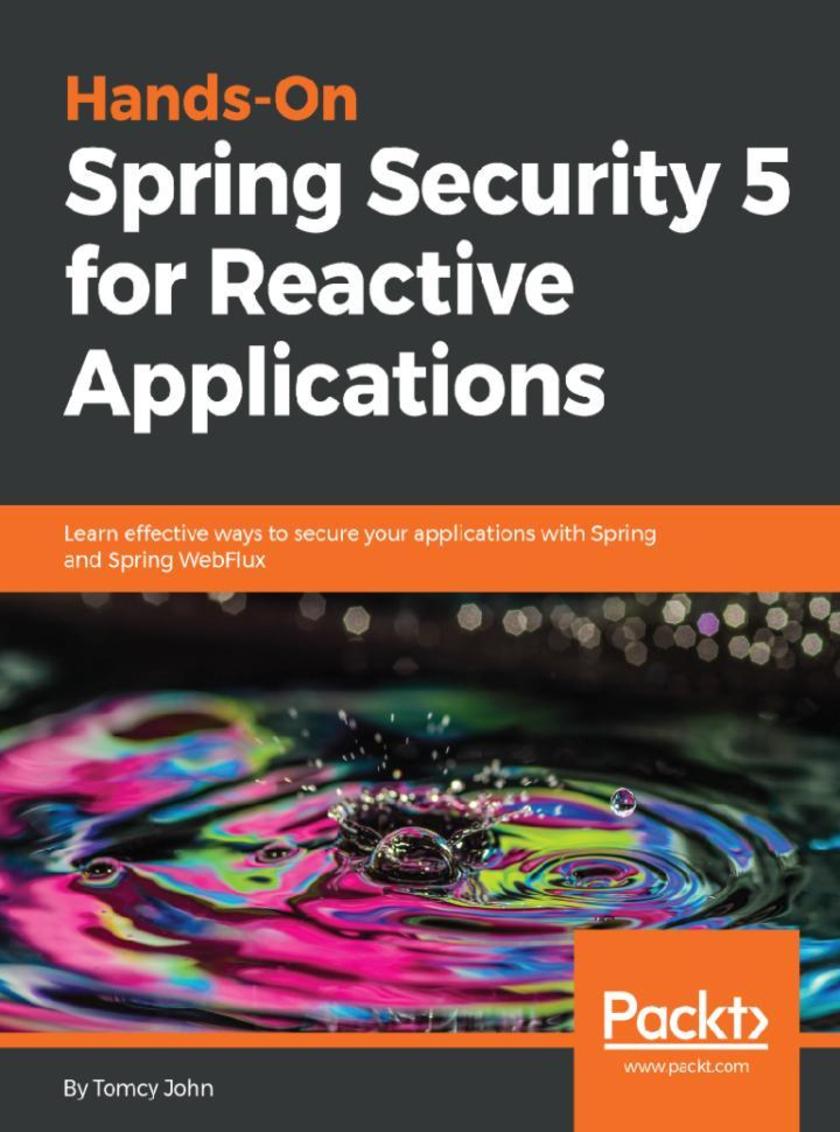
Hands-On Spring Security 5 for Reactive Applications
¥69.75
Learn every step you need for product design and development Key Features *Explore all the tools that you need to be a complete UX designer *Code the product designs you’ve created to become a full-stack designer *Build an amazing portfolio with real-world projects Book Description Designing user experience (UX) is one of the most important aspects of a project, as it has a direct effect on how customers think of your company. The process of designing a user experience is one of the most challenging yet rewarding aspects of product development. Hands-On UX Design for Developers will teach you how to create amazing user experiences for products from scratch. This book starts with helping you understand the importance of a good UX design and the role of a UX designer. It will take you through the different stages of designing a UX and the application of various principles of psychology in UX design. Next, you will learn how to conduct user research and market research, which is crucial to creating a great UX. You will also learn how to create user personas and use it for testing. This book will help you gain the ability to think like a UX designer and understand both sides of product development: design and coding. You will explore the latest tools, such as Sketch, Balsamiq, and Framer.js, to create wireframes and prototypes. The concluding chapters will take you through designing your UI, dealing with big data while designing a UX, and the fundamentals of frontend. Finally, you'll prepare your portfolio and become job ready in the UX arena. What you will learn *What UX is and what a UX designer does *Explore the UX Process and science of making products user-friendly *Create user interfaces and learn which tools to use *Understand how your design works in the real world *Create UI interaction, animation, wireframes, and prototypes *Design a product with users in mind *Develop a personal portfolio and be well-prepared to join the UX world Who this book is for Hands-On UX/UI Design for Developers is for web designers who have knowledge of basic UX design principles.


