


 购物车
购物车 个人中心
个人中心
Hands-On UX Design for Developers
¥69.75
Add a touch of data analytics to your healthcare systems and get insightful outcomes Key Features *Perform healthcare analytics with Python and SQL *Build predictive models on real healthcare data with pandas and scikit-learn *Use analytics to improve healthcare performance Book Description In recent years, machine learning technologies and analytics have been widely utilized across the healthcare sector. Healthcare Analytics Made Simple bridges the gap between practising doctors and data scientists. It equips the data scientists’ work with healthcare data and allows them to gain better insight from this data in order to improve healthcare outcomes. This book is a complete overview of machine learning for healthcare analytics, briefly describing the current healthcare landscape, machine learning algorithms, and Python and SQL programming languages. The step-by-step instructions teach you how to obtain real healthcare data and perform descriptive, predictive, and prescriptive analytics using popular Python packages such as pandas and scikit-learn. The latest research results in disease detection and healthcare image analysis are reviewed. By the end of this book, you will understand how to use Python for healthcare data analysis, how to import, collect, clean, and refine data from electronic health record (EHR) surveys, and how to make predictive models with this data through real-world algorithms and code examples. What you will learn *Gain valuable insight into healthcare incentives, finances, and legislation *Discover the connection between machine learning and healthcare processes *Use SQL and Python to analyze data *Measure healthcare quality and provider performance *Identify features and attributes to build successful healthcare models *Build predictive models using real-world healthcare data *Become an expert in predictive modeling with structured clinical data *See what lies ahead for healthcare analytics Who this book is for Healthcare Analytics Made Simple is for you if you are a developer who has a working knowledge of Python or a related programming language, although you are new to healthcare or predictive modeling with healthcare data. Clinicians interested in analytics and healthcare computing will also benefit from this book. This book can also serve as a textbook for students enrolled in an introductory course on machine learning for healthcare.
Healthcare Analytics Made Simple
¥69.75
Get up and running with AWS automation using CloudFormation Key Features *Explore the fundamentals of AWS CloudFormation *Get acquainted with concepts such as CloudFormation templates and mappings *Learn to implement Infrastructure as a Code (IaC) on AWS Book Description As the Amazon Web Services (AWS) infrastructure is gradually moving towards cloud, managing cloud-related tasks efficiently continues to be a challenge for system administrators. CloudFormation is a language developed for managing infrastructure-related services efficiently on AWS and its features help secure the AWS resource deployment process. Learn CloudFormation serves as a fundamental guide to kick-start your journey on CloudFormation. We will introduce you to the basic concepts on IaC and the AWS services required for implementing automation and infrastructure management. Then, we deep dive into concepts such as CloudFormation mapping, conditions, limit, and output and EC2. In the concluding chapters, you will manage the entire AWS infrastructure using CloudFormation templates. By the end of this book, you will get up and running with IaC with CloudFormation. What you will learn *Understand AWS CloudFormation *Develop AWS CloudFormation templates *Deploy AWS CloudFormation for AWS resources *Build your first AWS CloudFormation project *Explore AWS Security features *Deploy testing and production stages using CloudFormation Who this book is for Learn CloudFormation is for cloud engineers, system administrators, cloud architects, or any stakeholders working in the field of cloud development or cloud administration. Basic knowledge of AWS is necessary.
Learn Ethical Hacking from Scratch
¥78.47
Install, Configure and Setup different connections with pfSense Key Features *Build firewall and routing solutions with PfSense. *Learn how to create captive portals, how to connect Pfsense to your https environment and so on. *Practical approach towards building firewall solutions for your organization Book Description As computer networks become ubiquitous, it has become increasingly important to both secure and optimize our networks. pfSense, an open-source router/firewall, provides an easy, cost-effective way of achieving this – and this book explains how to install and configure pfSense in such a way that even a networking beginner can successfully deploy and use pfSense. This book begins by covering networking fundamentals, deployment scenarios, and hardware sizing guidelines, as well as how to install pfSense. The book then covers configuration of basic services such as DHCP, DNS, and captive portal and VLAN configuration. Careful consideration is given to the core firewall functionality of pfSense, and how to set up firewall rules and traffic shaping. Finally, the book covers the basics of VPNs, multi-WAN setups, routing and bridging, and how to perform diagnostics and troubleshooting on a network. What you will learn *Install pfSense *Configure additional interfaces, and enable and configure DHCP *Understand Captive portal *Understand firewalls and NAT, and traffic shaping *Learn in detail about VPNs *Understand Multi-WAN *Learn about routing and bridging in detail *Understand the basics of diagnostics and troubleshooting networks Who this book is for This book is towards any network security professionals who want to get introduced to the world of firewalls and network configurations using Pfsense. No knowledge of PfSense is required
Learning Salesforce Lightning Application Development
¥61.03
Get to grips with Kibana and its advanced functions to create interactive visualizations and dashboards Key Features *Explore visualizations and perform histograms, stats, and map analytics *Unleash X-Pack and Timelion, and learn alerting, monitoring, and reporting features *Manage dashboards with Beats and create machine learning jobs for faster analytics Book Description Kibana is one of the popular tools among data enthusiasts for slicing and dicing large datasets and uncovering Business Intelligence (BI) with the help of its rich and powerful visualizations. To begin with, Mastering Kibana 6.x quickly introduces you to the features of Kibana 6.x, before teaching you how to create smart dashboards in no time. You will explore metric analytics and graph exploration, followed by understanding how to quickly customize Kibana dashboards. In addition to this, you will learn advanced analytics such as maps, hits, and list analytics. All this will help you enhance your skills in running and comparing multiple queries and filters, influencing your data visualization skills at scale. With Kibana’s Timelion feature, you can analyze time series data with histograms and stats analytics. By the end of this book, you will have created a speedy machine learning job using X-Pack capabilities. What you will learn *Create unique dashboards with various intuitive data visualizations *Visualize Timelion expressions with added histograms and stats analytics *Integrate X-Pack with your Elastic Stack in simple steps *Extract data from Elasticsearch for advanced analysis and anomaly detection using dashboards *Build dashboards from web applications for application logs *Create monitoring and alerting dashboards using Beats Who this book is for Mastering Kibana 6.x is for you if you are a big data engineer, DevOps engineer, or data scientist aspiring to go beyond data visualization at scale and gain maximum insights from their large datasets. Basic knowledge of Elasticstack will be an added advantage, although not mandatory.
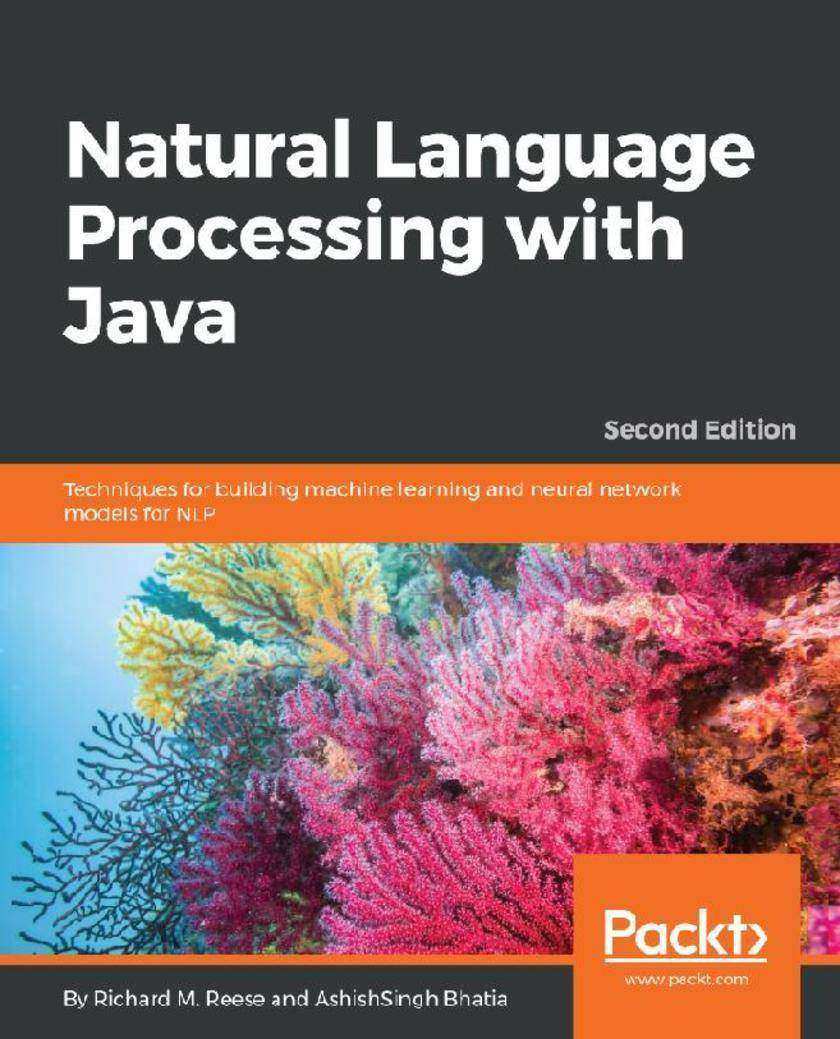
Natural Language Processing with Java
¥69.75
Discover how you can migrate a traditional on-premise SQL server database to a cloud-based solution with Microsoft Azure. Built with database administrators in mind, this book emulates different scenarios you might come across while working with large, complex SQL database migrations and provides solutions for effectively managing the migrated databases. Key Features *Implement backup, restore, and recovery of Azure SQL databases *Create shards and elastic pools to scale Azure SQL databases *Automate common management tasks with PowerShell *Implement over 40 practical activities and exercises across 24 topics to reinforce your learning Book Description As the cloud version of SQL Server, Azure SQL Database differs in key ways when it comes to management, maintenance, and administration. It’s important to know how to administer SQL Database to fully benefit from all of the features and functionality that it provides. This book addresses important aspects of an Azure SQL Database instance such as migration, backup restorations, pricing policies, security, scalability, monitoring, performance optimization, high availability, and disaster recovery. It is a complete guide for database administrators, and ideal for those who are planning to migrate from on premise SQL Server database to an Azure SQL Server database. What you will learn *Learn how to provision a new database or migrate an existing on-premise solution *Understand how to backup, restore, secure, and scale your own Azure SQL Database *Optimize the performance by monitoring and tuning your cloud-based SQL instance *Implement high availability and disaster recovery procedures with SQL Database *Develop a roadmap for your own scalable cloud solution with Azure SQL Database Who this book is for This book is ideal for database administrators, database developers, or application developers who are interested in developing or migrating existing applications with Azure SQL Database. Prior experience of working with an on-premise SQL Server deployment and brief knowledge of PowerShell and C# are recommended prerequisites.
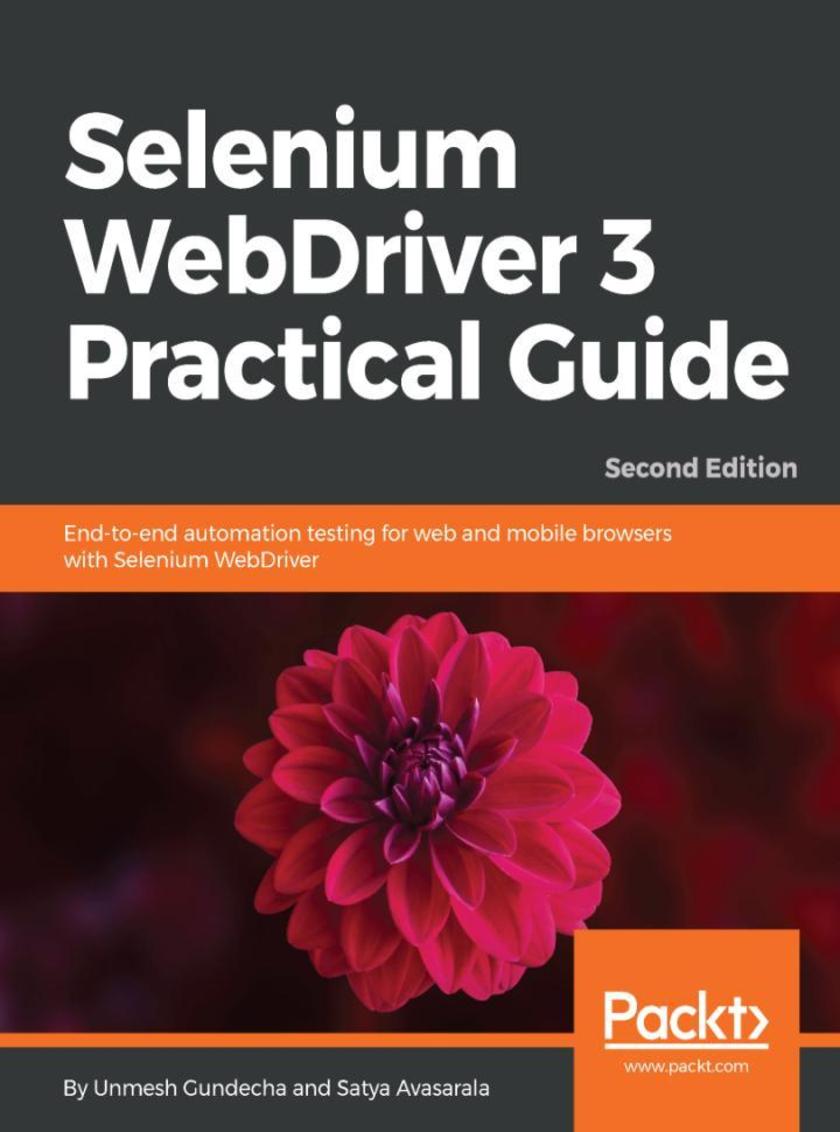
Selenium WebDriver 3 Practical Guide
¥69.75
Bridge the gap between developer and data scientist by creating a modern open-source, Python-based toolset that works with Jupyter Notebook, and PixieDust. Key Features *Think deeply as a developer about your strategy and toolset in data science *Discover the best tools that will suit you as a developer in your data analysis *Accelerate the road to data insight as a programmer using Jupyter Notebook *Deep dive into multiple industry data science use cases Book Description Thoughtful Data Science brings new strategies and a carefully crafted programmer's toolset to work with modern, cutting-edge data analysis. This new approach is designed specifically to give developers more efficiency and power to create cutting-edge data analysis and artificial intelligence insights. Industry expert David Taieb bridges the gap between developers and data scientists by creating a modern open-source, Python-based toolset that works with Jupyter Notebook, and PixieDust. You'll find the right balance of strategic thinking and practical projects throughout this book, with extensive code files and Jupyter projects that you can integrate with your own data analysis. David Taieb introduces four projects designed to connect developers to important industry use cases in data science. The first is an image recognition application with TensorFlow, to meet the growing importance of AI in data analysis. The second analyses social media trends to explore big data issues and natural language processing. The third is a financial portfolio analysis application using time series analysis, pivotal in many data science applications today. The fourth involves applying graph algorithms to solve data problems. Taieb wraps up with a deep look into the future of data science for developers and his views on AI for data science. What you will learn *Bridge the gap between developer and data scientist with a Python-based toolset *Get the most out of Jupyter Notebooks with new productivity-enhancing tools *Explore and visualize data using Jupyter Notebooks and PixieDust *Work with and assess the impact of artificial intelligence in data science *Work with TensorFlow, graphs, natural language processing, and time series *Deep dive into multiple industry data science use cases *Look into the future of data analysis and where to develop your skills Who this book is for This book is for established developers who want to bridge the gap between programmers and data scientists. With the introduction of PixieDust from its creator, the book will also be a great desk companion for the already accomplished Data Scientist. Some fluency in data interpretation and visualization is also assumed since this book addresses data professionals such as business and general data analysts. It will be helpful to have some knowledge of Python, using Python libraries, and some proficiency in web development.
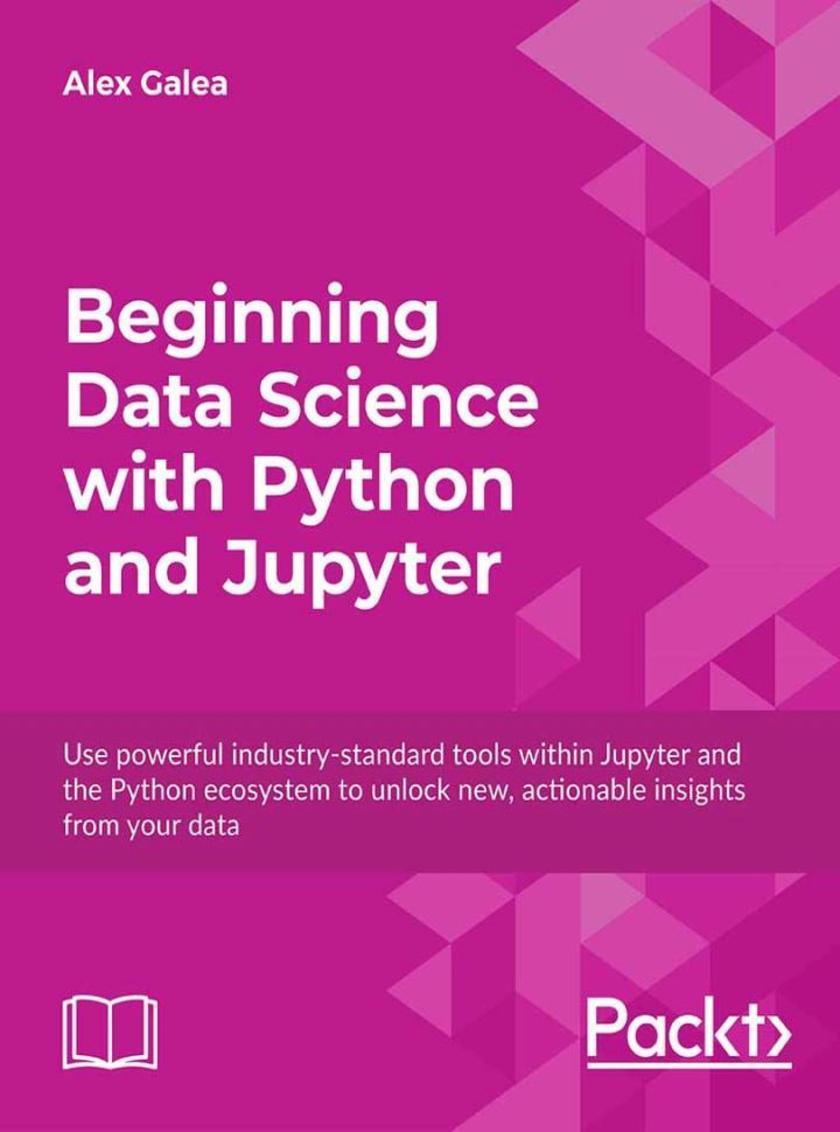
Beginning Data Science with Python and Jupyter
¥90.46
Getting started with data science doesn't have to be an uphill battle. This step-by-step guide is ideal for beginners who know a little Python and are looking for a quick, fast-paced introduction. About This Book ? Get up and running with the Jupyter ecosystem and some example datasets ? Learn about key machine learning concepts like SVM, KNN classifiers and Random Forests ? Discover how you can use web scraping to gather and parse your own bespoke datasets Who This Book Is For This book is ideal for professionals with a variety of job descriptions across large range of industries, given the rising popularity and accessibility of data science. You'll need some prior experience with Python, with any prior work with libraries like Pandas, Matplotlib and Pandas providing you a useful head start. What You Will Learn ? Identify potential areas of investigation and perform exploratory data analysis ? Plan a machine learning classification strategy and train classification models ? Use validation curves and dimensionality reduction to tune and enhance your models ? Scrape tabular data from web pages and transform it into Pandas DataFrames ? Create interactive, web-friendly visualizations to clearly communicate your findings In Detail Get to grips with the skills you need for entry-level data science in this hands-on Python and Jupyter course. You'll learn about some of the most commonly used libraries that are part of the Anaconda distribution, and then explore machine learning models with real datasets to give you the skills and exposure you need for the real world. We'll finish up by showing you how easy it can be to scrape and gather your own data from the open web, so that you can apply your new skills in an actionable context. Style and approach This book covers every aspect of the standard data-workflow process within a day, along with theory, practical hands-on coding, and relatable illustrations.
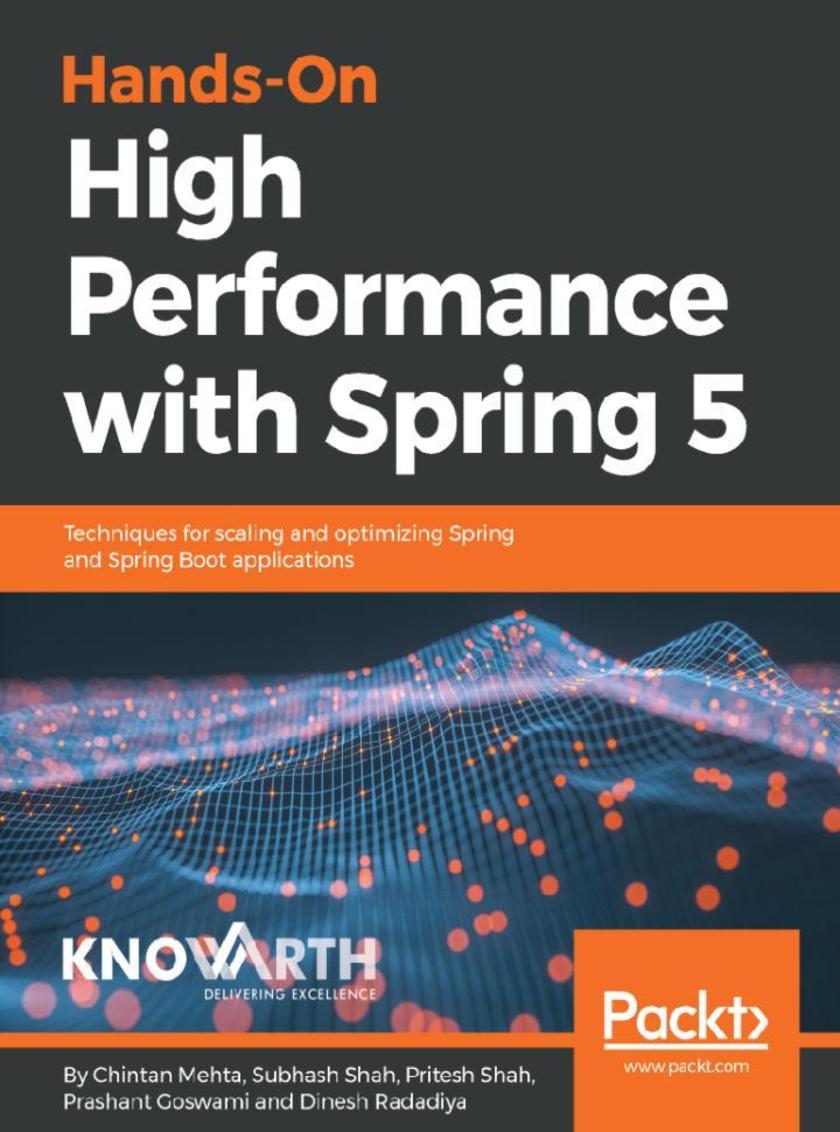
Hands-On High Performance with Spring 5
¥90.46
A hands-on guide to creating, monitoring, and tuning a high performance Spring web application About This Book ? Understand common performance pitfalls and improve your application's performance ? Build and deploy strategies for complex applications using the microservice architecture ? Understand internals of JVM - the core of all Java Runtime Environments Who This Book Is For If you’re a Spring developer who’d like to build high performance applications and have more control over your application's performance in production and development, this book is for you. Some familiarity with Java, Maven, and Eclipse is necessary. What You Will Learn ? Master programming best practices and performance improvement with bean wiring ? Analyze the performance of various AOP implementations ? Explore database interactions with Spring to optimize design and configuration ? Solve Hibernate performance issues and traps ? Leverage multithreading and concurrent programming to improve application performance ? Gain a solid foundation in JVM performance tuning using various tools ? Learn the key concepts of the microservice architecture and how to monitor them ? Perform Spring Boot performance tuning, monitoring, and health checks In Detail While writing an application, performance is paramount. Performance tuning for real-world applications often involves activities geared toward detecting bottlenecks. The recent release of Spring 5.0 brings major advancements in the rich API provided by the Spring framework, which means developers need to master its tools and techniques to achieve high performance applications. Hands-On High Performance with Spring 5 begins with the Spring framework's core features, exploring the integration of different Spring projects. It proceeds to evaluate various Spring specifications to identify those adversely affecting performance. You will learn about bean wiring configurations, aspect-oriented programming, database interaction, and Hibernate to focus on the metrics that help identify performance bottlenecks. You will also look at application monitoring, performance optimization, JVM internals, and garbage collection optimization. Lastly, the book will show you how to leverage the microservice architecture to build a high performance and resilient application. By the end of the book, you will have gained an insight into various techniques and solutions to build and troubleshoot high performance Spring-based applications. Style and approach This book takes a step-by-step approach with focused examples to teach you how to increase application performance.
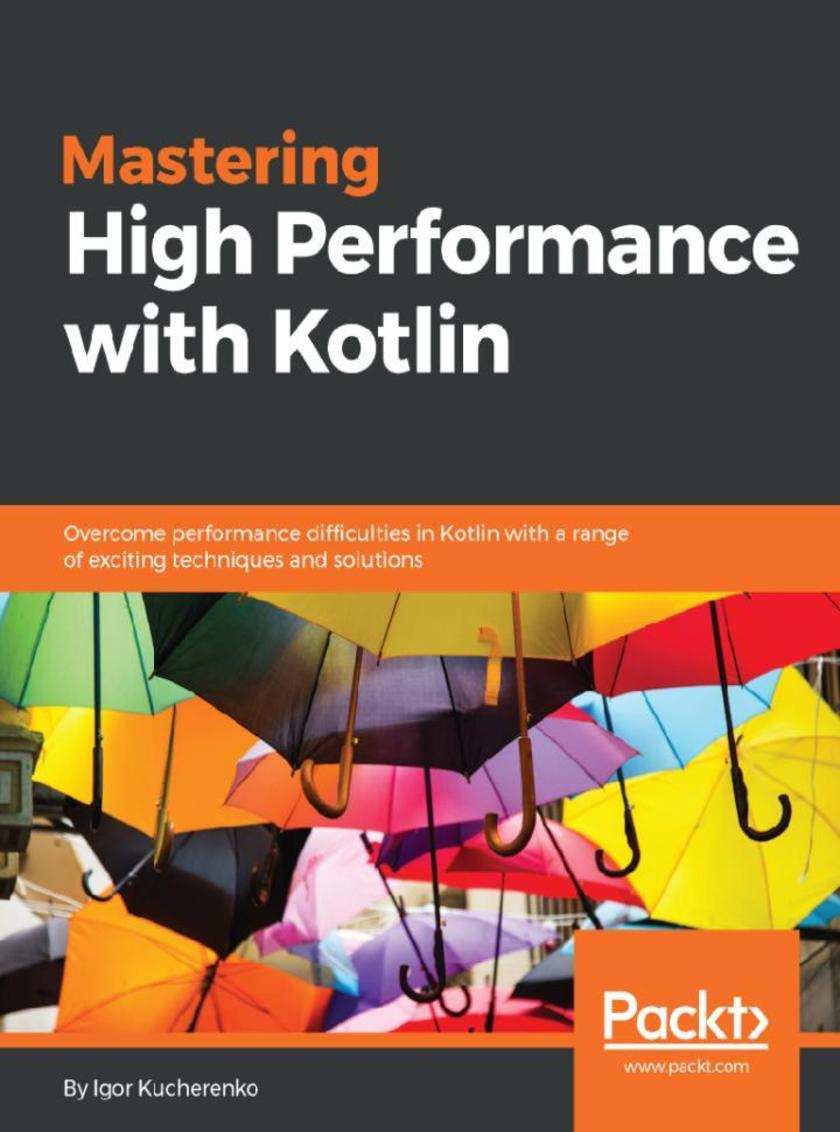
Mastering High Performance with Kotlin
¥81.74
Find out how to write Kotlin code without overhead and how to use different profiling tools and bytecode viewer to inspect expressions of Kotlin language. About This Book ? Apply modern Kotlin features to speed up processing and implement highly efficient and reliable codes. ? Learn memory optimization, concurrency, multi-threading, scaling, and caching techniques to achieve high performance. ? Learn how to prevent unnecessary overhead and use profiling tools to detect performance issues. Who This Book Is For This book is for Kotlin developers who would like to build reliable and high-performance applications. Prior Kotlin programming knowledge is assumed. What You Will Learn ? Understand the importance of high performance ? Learn performance metrics ? Learn popular design patterns currently being used in Kotlin ? Understand how to apply modern Kotlin features to data processing ? Learn how to use profling tools ? Discover how to read bytecode ? Learn to perform memory optimizations ? Uncover approaches to the multithreading environment In Detail The ease with which we write applications has been increasing, but with it comes the need to address their performance. A balancing act between easily implementing complex applications and keeping their performance optimal is a present-day requirement In this book, we explore how to achieve this crucial balance, while developing and deploying applications with Kotlin. The book starts by analyzing various Kotlin specifcations to identify those that have a potentially adverse effect on performance. Then, we move on to monitor techniques that enable us to identify performance bottlenecks and optimize performance metrics. Next, we look at techniques that help to us achieve high performance: memory optimization, concurrency, multi threading, scaling, and caching. We also look at fault tolerance solutions and the importance of logging. We'll also cover best practices of Kotlin programming that will help you to improve the quality of your code base. By the end of the book, you will have gained some insight into various techniques and solutions that will help to create high-performance applications in the Kotlin environment Style and approach This book guides you through how to use profiling tools to detect performance issues and build high-performance applications in the Kotlin environment.
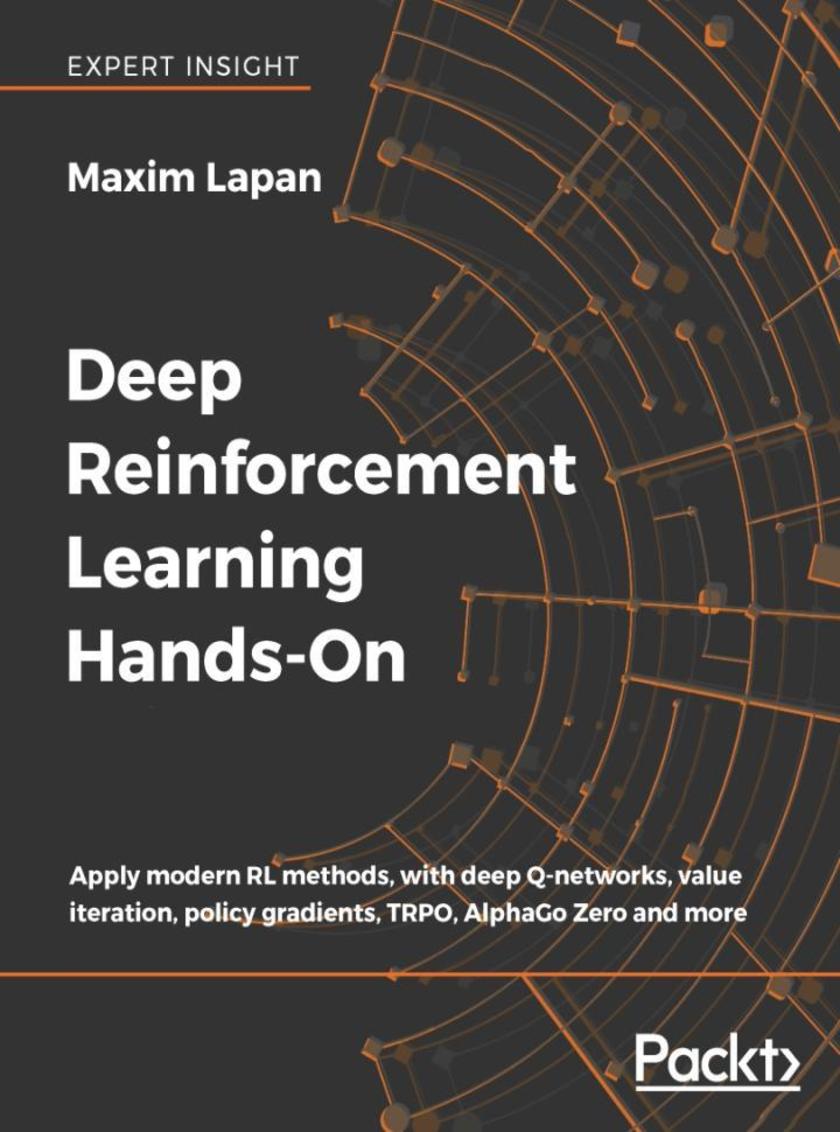
Deep Reinforcement Learning Hands-On
¥66.58
This practical guide will teach you how deep learning (DL) can be used to solve complex real-world problems. About This Book ? Explore deep reinforcement learning (RL), from the first principles to the latest algorithms ? Evaluate high-profile RL methods, including value iteration, deep Q-networks, policy gradients, TRPO, PPO, DDPG, D4PG, evolution strategies and genetic algorithms ? Keep up with the very latest industry developments, including AI-driven chatbots Who This Book Is For Some fluency in Python is assumed. Basic deep learning (DL) approaches should be familiar to readers and some practical experience in DL will be helpful. This book is an introduction to deep reinforcement learning (RL) and requires no background in RL. What You Will Learn ? Understand the DL context of RL and implement complex DL models ? Learn the foundation of RL: Markov decision processes ? Evaluate RL methods including Cross-entropy, DQN, Actor-Critic, TRPO, PPO, DDPG, D4PG and others ? Discover how to deal with discrete and continuous action spaces in various environments ? Defeat Atari arcade games using the value iteration method ? Create your own OpenAI Gym environment to train a stock trading agent ? Teach your agent to play Connect4 using AlphaGo Zero ? Explore the very latest deep RL research on topics including AI-driven chatbots In Detail Recent developments in reinforcement learning (RL), combined with deep learning (DL), have seen unprecedented progress made towards training agents to solve complex problems in a human-like way. Google's use of algorithms to play and defeat the well-known Atari arcade games has propelled the field to prominence, and researchers are generating new ideas at a rapid pace. Deep Reinforcement Learning Hands-On is a comprehensive guide to the very latest DL tools and their limitations. You will evaluate methods including Cross-entropy and policy gradients, before applying them to real-world environments. Take on both the Atari set of virtual games and family favorites such as Connect4. The book provides an introduction to the basics of RL, giving you the know-how to code intelligent learning agents to take on a formidable array of practical tasks. Discover how to implement Q-learning on 'grid world' environments, teach your agent to buy and trade stocks, and find out how natural language models are driving the boom in chatbots. Style and approach Deep Reinforcement Learning Hands-On explains the art of building self-learning agents using algorithms and practical examples. Experiment with famous examples, such as Google's defeat of well-known Atari arcade games.
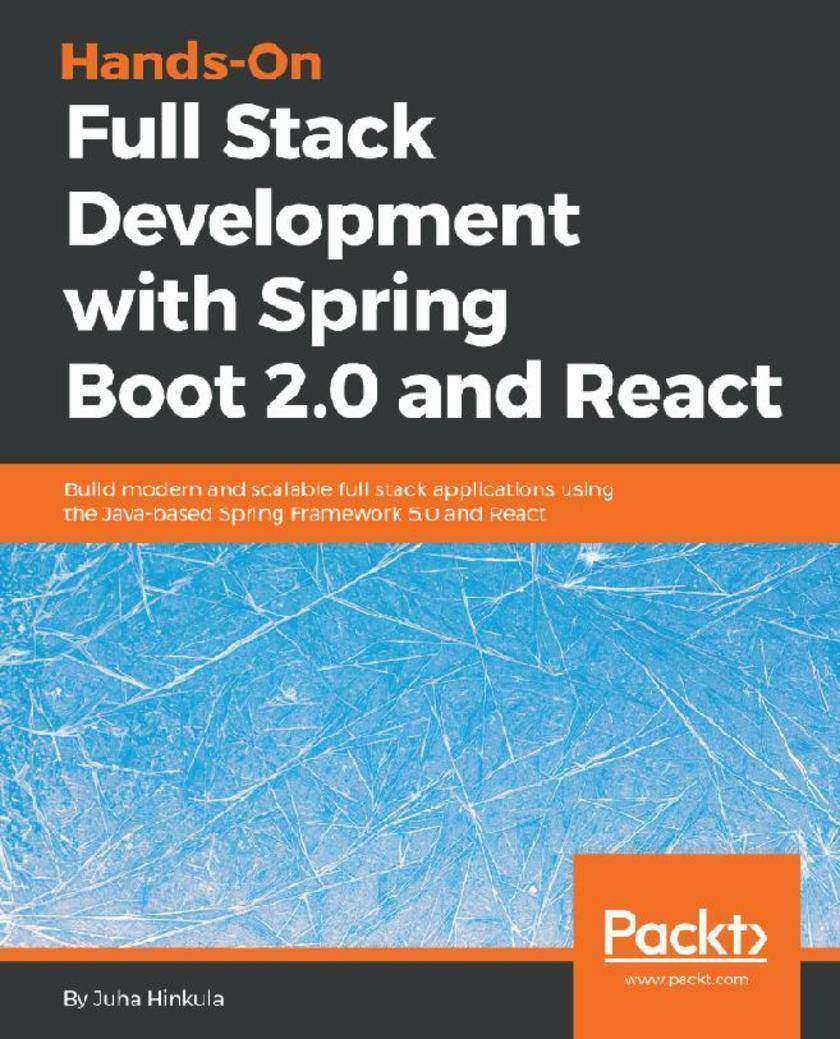
Hands-On Full Stack Development with Spring Boot 2.0 and React
¥74.11
Develop efficient and modern full-stack applications using Spring Boot and React 16 About This Book ? Develop resourceful backends using Spring Boot and faultless frontends using React. ? Explore the techniques involved in creating a full-stack app by going through a methodical approach. ? Learn to add CRUD functionalities and use Material UI in the user interface to make it more user-friendly. Who This Book Is For Java developers who are familiar with Spring, but have not yet built full-stack applications What You Will Learn ? Create a RESTful web service with Spring Boot ? Understand how to use React for frontend programming ? Gain knowledge of how to create unit tests using JUnit ? Discover the techniques that go into securing the backend using Spring Security ? Learn how to use Material UI in the user interface to make it more user-friendly ? Create a React app by using the Create React App starter kit made by Facebook In Detail Apart from knowing how to write frontend and backend code, a full-stack engineer has to tackle all the problems that are encountered in the application development life cycle, starting from a simple idea to UI design, the technical design, and all the way to implementing, testing, production, deployment, and monitoring. This book covers the full set of technologies that you need to know to become a full-stack web developer with Spring Boot for the backend and React for the frontend. This comprehensive guide demonstrates how to build a modern full-stack application in practice. This book will teach you how to build RESTful API endpoints and work with the data access Layer of Spring, using Hibernate as the ORM. As we move ahead, you will be introduced to the other components of Spring, such as Spring Security, which will teach you how to secure the backend. Then, we will move on to the frontend, where you will be introduced to React, a modern JavaScript library for building fast and reliable user interfaces, and its app development environment and components. You will also create a Docker container for your application. Finally, the book will lay out the best practices that underpin professional full-stack web development. Style and approach A step-by-step guide to building full-stack applications along with best practices to make your Full-stack development journey easier
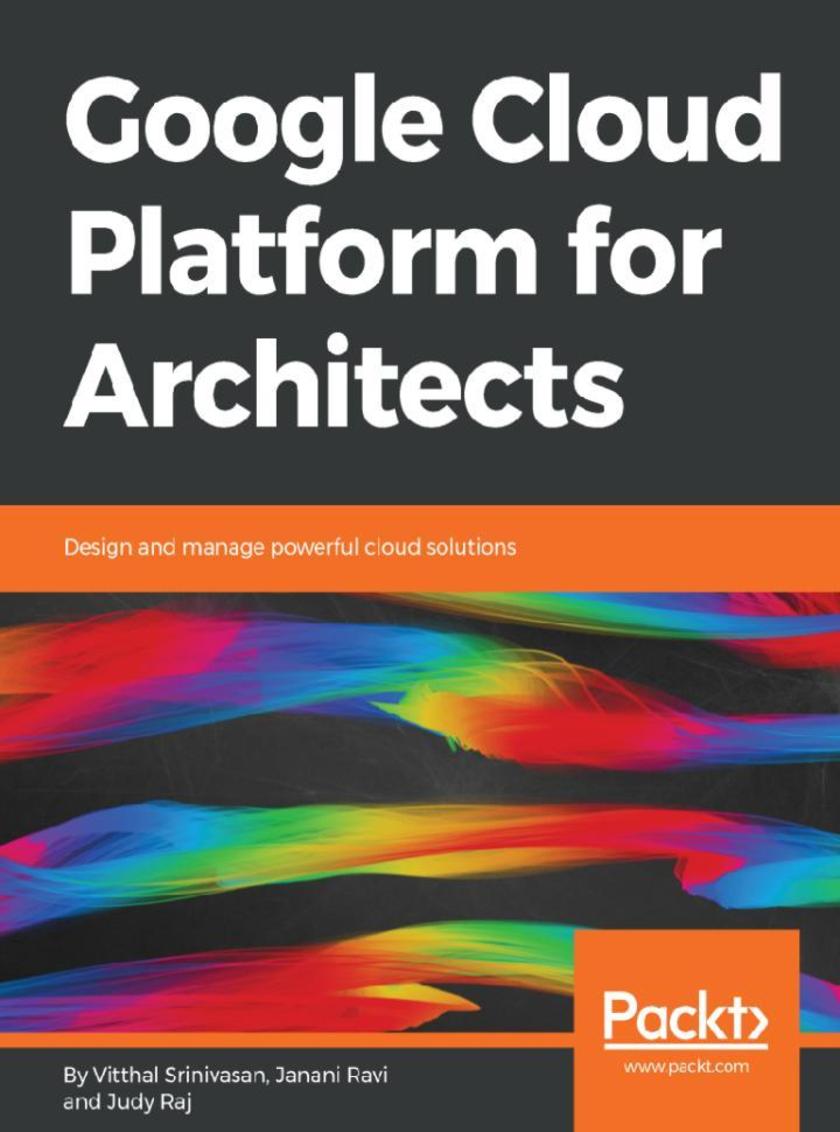
Google Cloud Platform for Architects
¥81.74
Get acquainted with GCP and manage robust, highly available, and dynamic solutions to drive business objective About This Book ? Identify the strengths, weaknesses and ideal use-cases for individual services offered on the Google Cloud Platform ? Make intelligent choices about which cloud technology works best for your use-case ? Leverage Google Cloud Platform to analyze and optimize technical and business processes Who This Book Is For If you are a Cloud architect who is responsible to design and manage robust cloud solutions with Google Cloud Platform, then this book is for you. System engineers and Enterprise architects will also find this book useful. A basic understanding of distributed applications would be helpful, although not strictly necessary. Some working experience on other public cloud platforms would help too. What You Will Learn ? Set up GCP account and utilize GCP services using the cloud shell, web console, and client APIs ? Harness the power of App Engine, Compute Engine, Containers on the Kubernetes Engine, and Cloud Functions ? Pick the right managed service for your data needs, choosing intelligently between Datastore, BigTable, and BigQuery ? Migrate existing Hadoop, Spark, and Pig workloads with minimal disruption to your existing data infrastructure, by using Dataproc intelligently ? Derive insights about the health, performance, and availability of cloud-powered applications with the help of monitoring, logging, and diagnostic tools in Stackdriver In Detail Using a public cloud platform was considered risky a decade ago, and unconventional even just a few years ago. Today, however, use of the public cloud is completely mainstream - the norm, rather than the exception. Several leading technology firms, including Google, have built sophisticated cloud platforms, and are locked in a fierce competition for market share. The main goal of this book is to enable you to get the best out of the GCP, and to use it with confidence and competence. You will learn why cloud architectures take the forms that they do, and this will help you become a skilled high-level cloud architect. You will also learn how individual cloud services are configured and used, so that you are never intimidated at having to build it yourself. You will also learn the right way and the right situation in which to use the important GCP services. By the end of this book, you will be able to make the most out of Google Cloud Platform design. Style and approach A clear, concise, and straightforward book which will enable to develop and manage optimum solutions for your infrastructure
Design Patterns and Best Practices in Java
¥74.11
Create various design patterns to master the art of solving problems using Java About This Book ? This book demonstrates the shift from OOP to functional programming and covers reactive and functional patterns in a clear and step-by-step manner ? All the design patterns come with a practical use case as part of the explanation, which will improve your productivity ? Tackle all kinds of performance-related issues and streamline your development Who This Book Is For This book is for those who are familiar with Java development and want to be in the driver’s seat when it comes to modern development techniques. Basic OOP Java programming experience and elementary familiarity with Java is expected. What You Will Learn ? Understand the OOP and FP paradigms ? Explore the traditional Java design patterns ? Get to know the new functional features of Java ? See how design patterns are changed and affected by the new features ? Discover what reactive programming is and why is it the natural augmentation of FP ? Work with reactive design patterns and find the best ways to solve common problems using them ? See the latest trends in architecture and the shift from MVC to serverless applications ? Use best practices when working with the new features In Detail Having a knowledge of design patterns enables you, as a developer, to improve your code base, promote code reuse, and make the architecture more robust. As languages evolve, new features take time to fully understand before they are adopted en masse. The mission of this book is to ease the adoption of the latest trends and provide good practices for programmers. We focus on showing you the practical aspects of smarter coding in Java. We'll start off by going over object-oriented (OOP) and functional programming (FP) paradigms, moving on to describe the most frequently used design patterns in their classical format and explain how Java’s functional programming features are changing them. You will learn to enhance implementations by mixing OOP and FP, and finally get to know about the reactive programming model, where FP and OOP are used in conjunction with a view to writing better code. Gradually, the book will show you the latest trends in architecture, moving from MVC to microservices and serverless architecture. We will finish off by highlighting the new Java features and best practices. By the end of the book, you will be able to efficiently address common problems faced while developing applications and be comfortable working on scalable and maintainable projects of any size. Style and approach This book explains design patterns in a step-by-step manner with clear and concise code explanations.
Mastering Machine Learning for Penetration Testing
¥66.58
Become a master at penetration testing using machine learning with Python About This Book ? Identify ambiguities and breach intelligent security systems ? Perform unique cyber attacks to breach robust systems ? Learn to leverage machine learning algorithms Who This Book Is For This book is for pen testers and security professionals who are interested in learning techniques to break an intelligent security system. Basic knowledge of Python is needed, but no prior knowledge of machine learning is necessary. What You Will Learn ? Take an in-depth look at machine learning ? Get to know natural language processing (NLP) ? Understand malware feature engineering ? Build generative adversarial networks using Python libraries ? Work on threat hunting with machine learning and the ELK stack ? Explore the best practices for machine learning In Detail Cyber security is crucial for both businesses and individuals. As systems are getting smarter, we now see machine learning interrupting computer security. With the adoption of machine learning in upcoming security products, it’s important for pentesters and security researchers to understand how these systems work, and to breach them for testing purposes. This book begins with the basics of machine learning and the algorithms used to build robust systems. Once you’ve gained a fair understanding of how security products leverage machine learning, you'll dive into the core concepts of breaching such systems. Through practical use cases, you’ll see how to find loopholes and surpass a self-learning security system. As you make your way through the chapters, you’ll focus on topics such as network intrusion detection and AV and IDS evasion. We’ll also cover the best practices when identifying ambiguities, and extensive techniques to breach an intelligent system. By the end of this book, you will be well-versed with identifying loopholes in a self-learning security system and will be able to efficiently breach a machine learning system. Style and approach This book takes a step-by-step approach to identify the loop holes in a self-learning security system. You will be able to efficiently breach a machine learning system with the help of best practices towards the end of the book.
Learning Python Web Penetration Testing
¥50.13
Leverage the simplicity of Python and available libraries to build web security testing tools for your application About This Book ? Understand the web application penetration testing methodology and toolkit using Python ? Write a web crawler/spider with the Scrapy library ? Detect and exploit SQL injection vulnerabilities by creating a script all by yourself Who This Book Is For Learning Python Web Penetration Testing is for web developers who want to step into the world of web application security testing. Basic knowledge of Python is necessary. What You Will Learn ? Interact with a web application using the Python and Requests libraries ? Create a basic web application crawler and make it recursive ? Develop a brute force tool to discover and enumerate resources such as files and directories ? Explore different authentication methods commonly used in web applications ? Enumerate table names from a database using SQL injection ? Understand the web application penetration testing methodology and toolkit In Detail Web penetration testing is the use of tools and code to attack a website or web app in order to assess its vulnerability to external threats. While there are an increasing number of sophisticated, ready-made tools to scan systems for vulnerabilities, the use of Python allows you to write system-specific scripts, or alter and extend existing testing tools to find, exploit, and record as many security weaknesses as possible. Learning Python Web Penetration Testing will walk you through the web application penetration testing methodology, showing you how to write your own tools with Python for each activity throughout the process. The book begins by emphasizing the importance of knowing how to write your own tools with Python for web application penetration testing. You will then learn to interact with a web application using Python, understand the anatomy of an HTTP request, URL, headers and message body, and later create a script to perform a request, and interpret the response and its headers. As you make your way through the book, you will write a web crawler using Python and the Scrappy library. The book will also help you to develop a tool to perform brute force attacks in different parts of the web application. You will then discover more on detecting and exploiting SQL injection vulnerabilities. By the end of this book, you will have successfully created an HTTP proxy based on the mitmproxy tool. Style and approach A easy-to-follow guide that will help you build different web application security testing tools. With each chapter building on the knowledge of the previous section, this book will help you to smartly assess the security needs of your apps.
Learn Ansible
¥81.74
Run Ansible playbooks to launch complex multi-tier applications hosted in public clouds About This Book ? Build your learning curve using Ansible ? Automate cloud, network, and security infrastructures with ease ? Gain hands-on exposure on Ansible Who This Book Is For Learn Ansible is perfect for system administrators and developers who want to take their current workflows and transform them into repeatable playbooks using Ansible. No prior knowledge of Ansible is required. What You Will Learn ? Write your own playbooks to configure servers running CentOS, Ubuntu, and Windows ? Identify repeatable tasks and write playbooks to automate them ? Define a highly available public cloud infrastructure in code, making it easy to distribute your infrastructure configuration ? Deploy and configure Ansible Tower and Ansible AWX ? Learn to use community contributed roles ? Use Ansible in your day-to-day role and projects In Detail Ansible has grown from a small, open source orchestration tool to a full-blown orchestration and configuration management tool owned by Red Hat. Its powerful core modules cover a wide range of infrastructures, including on-premises systems and public clouds, operating systems, devices, and services—meaning it can be used to manage pretty much your entire end-to-end environment. Trends and surveys say that Ansible is the first choice of tool among system administrators as it is so easy to use. This end-to-end, practical guide will take you on a learning curve from beginner to pro. You'll start by installing and configuring the Ansible to perform various automation tasks. Then, we'll dive deep into the various facets of infrastructure, such as cloud, compute and network infrastructure along with security. By the end of this book, you'll have an end-to-end understanding of Ansible and how you can apply it to your own environments. Style and approach A hands-on approach to give you practical experience of writing playbooks and roles and executing them. At the end of each chapter, you’ll find test questions to test your knowledge on Ansible.
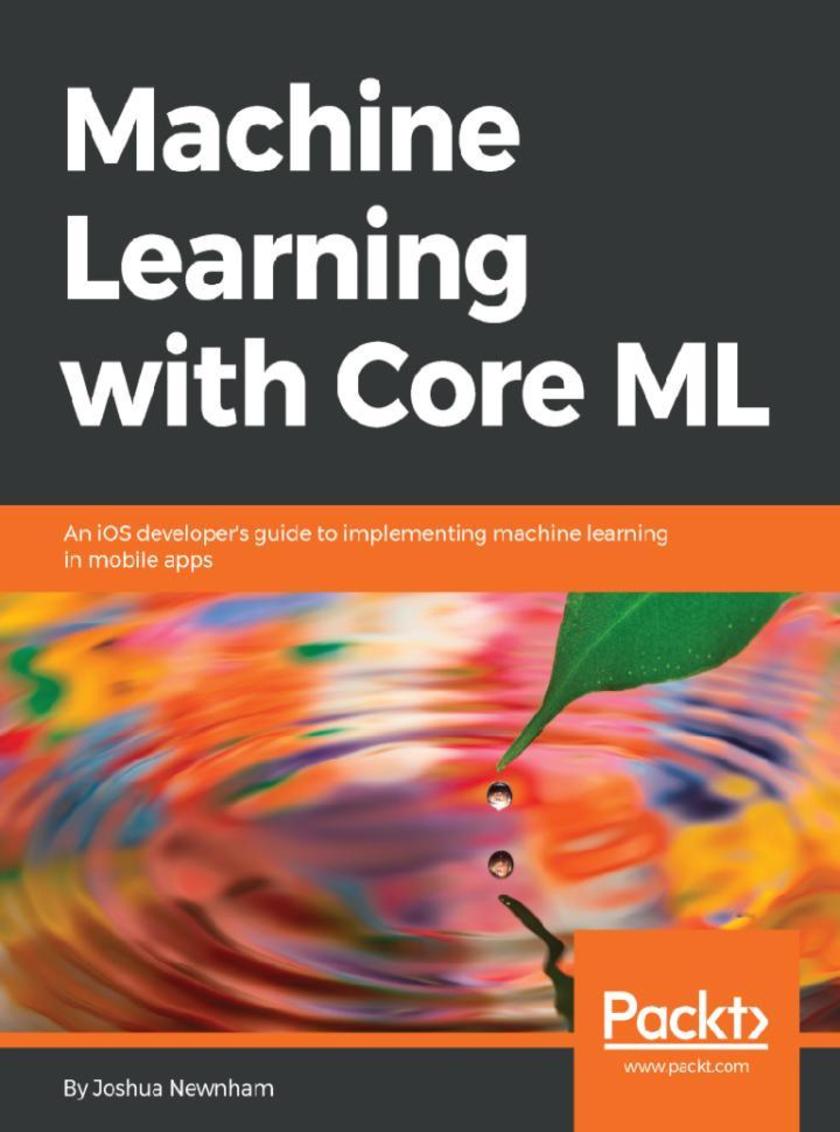
Machine Learning with Core ML
¥90.46
Leverage the power of Apple's Core ML to create smart iOS apps About This Book ? Explore the concepts of machine learning and Apple’s Core ML APIs ? Use Core ML to understand and transform images and videos ? Exploit the power of using CNN and RNN in iOS applications Who This Book Is For Machine Learning with Core ML is for you if you are an intermediate iOS developer interested in applying machine learning to your mobile apps. This book is also for those who are machine learning developers or deep learning practitioners who want to bring the power of neural networks in their iOS apps. Some exposure to machine learning concepts would be beneficial but not essential, as this book acts as a launchpad into the world of machine learning for developers. What You Will Learn ? Understand components of an ML project using algorithms, problems, and data ? Master Core ML by obtaining and importing machine learning model, and generate classes ? Prepare data for machine learning model and interpret results for optimized solutions ? Create and optimize custom layers for unsupported layers ? Apply CoreML to image and video data using CNN ? Learn the qualities of RNN to recognize sketches, and augment drawing ? Use Core ML transfer learning to execute style transfer on images In Detail Core ML is a popular framework by Apple, with APIs designed to support various machine learning tasks. It allows you to train your machine learning models and then integrate them into your iOS apps. Machine Learning with Core ML is a fun and practical guide that not only demystifies Core ML but also sheds light on machine learning. In this book, you’ll walk through realistic and interesting examples of machine learning in the context of mobile platforms (specifically iOS). You’ll learn to implement Core ML for visual-based applications using the principles of transfer learning and neural networks. Having got to grips with the basics, you’ll discover a series of seven examples, each providing a new use-case that uncovers how machine learning can be applied along with the related concepts. By the end of the book, you will have the skills required to put machine learning to work in their own applications, using the Core ML APIs Style and approach An easy-to-follow step by step guide which will help you get to grips with real world application of CoreML
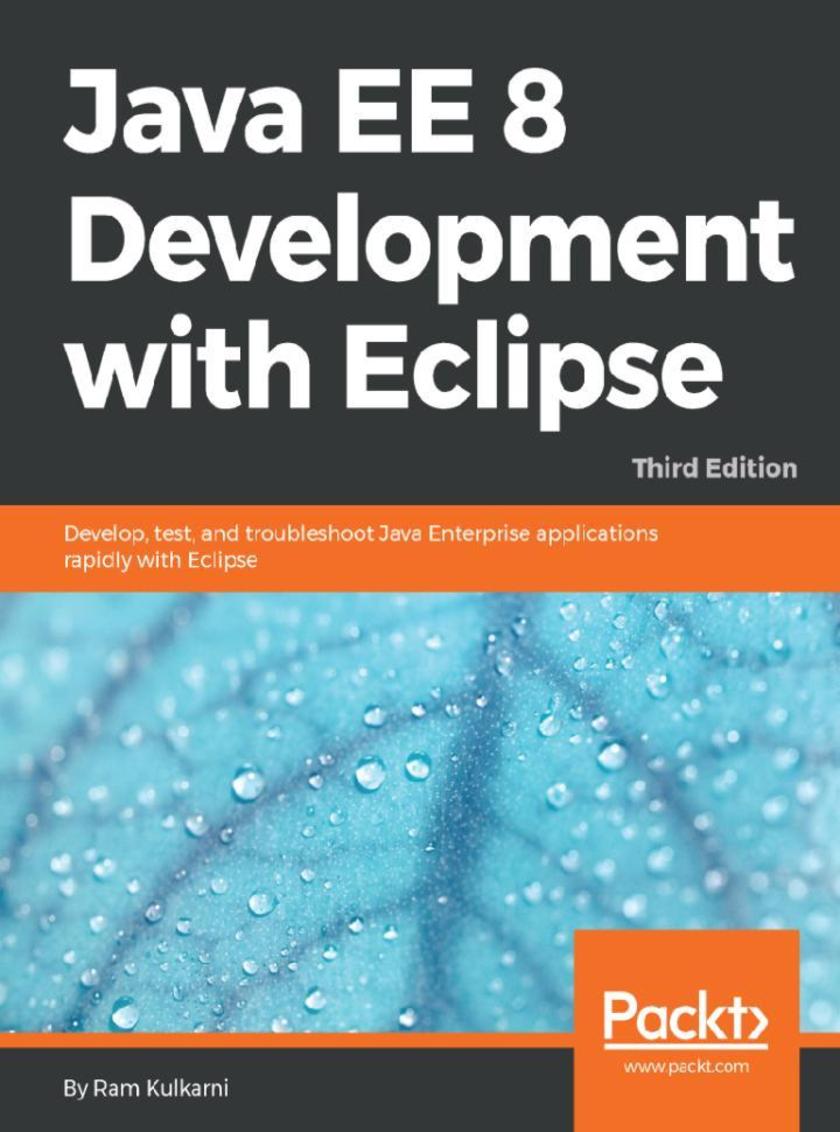
Java EE 8 Development with Eclipse
¥90.46
Develop and deploy fully functional applications and microservices utilising Tomcat, Glassfish servers, Cloud and docker in Java EE 8 About This Book ? Explore the complete workflow of developing enterprise Java applications ? Develop microservices with Docker Container and deploy it in cloud ? Simplify Java EE application development Who This Book Is For If you are a Java developer with little or no experience in Java EE application development, or if you have experience in Java EE technology but are looking for tips to simplify and accelerate your development process, then this book is for you. What You Will Learn ? Set up Eclipse, Tomcat, and Glassfish servers for Java EE application development ? Use JSP, Servlet, JSF, and EJBs to create a user interface and write business logic ? Create Java EE database applications using JDBC and JPA ? Handle asynchronous messages using MDBs for better scalability ? Deploy and debug Java EE applications and create SOAP and REST web services ? Write unit tests and calculate code coverage ? Use Eclipse MAT (Memory Analysis Tool) to debug memory issues ? Create and deploy microservices In Detail Java EE is one of the most popular tools for enterprise application design and development. With recent changes to Java EE 8 specifications, Java EE application development has become a lot simpler with the new specifications, some of which compete with the existing specifications. This guide provides a complete overview of developing highly performant, robust and secure enterprise applications with Java EE with Eclipse. The book begins by exploring different Java EE technologies and how to use them (JSP, JSF, JPA, JDBC, EJB, and more), along with suitable technologies for different scenarios. You will learn how to set up the development environment for Java EE applications and understand Java EE specifications in detail, with an emphasis on examples. The book takes you through deployment of an application in Tomcat, GlassFish Servers, and also in the cloud. It goes beyond the basics and covers topics like debugging, testing, deployment, and securing your Java EE applications. You'll also get to know techniques to develop cloud-ready microservices in Java EE. Style and approach This guide takes a step-by-step approach to developing, testing, debugging, and troubleshooting Java EE applications, complete with examples and tips.
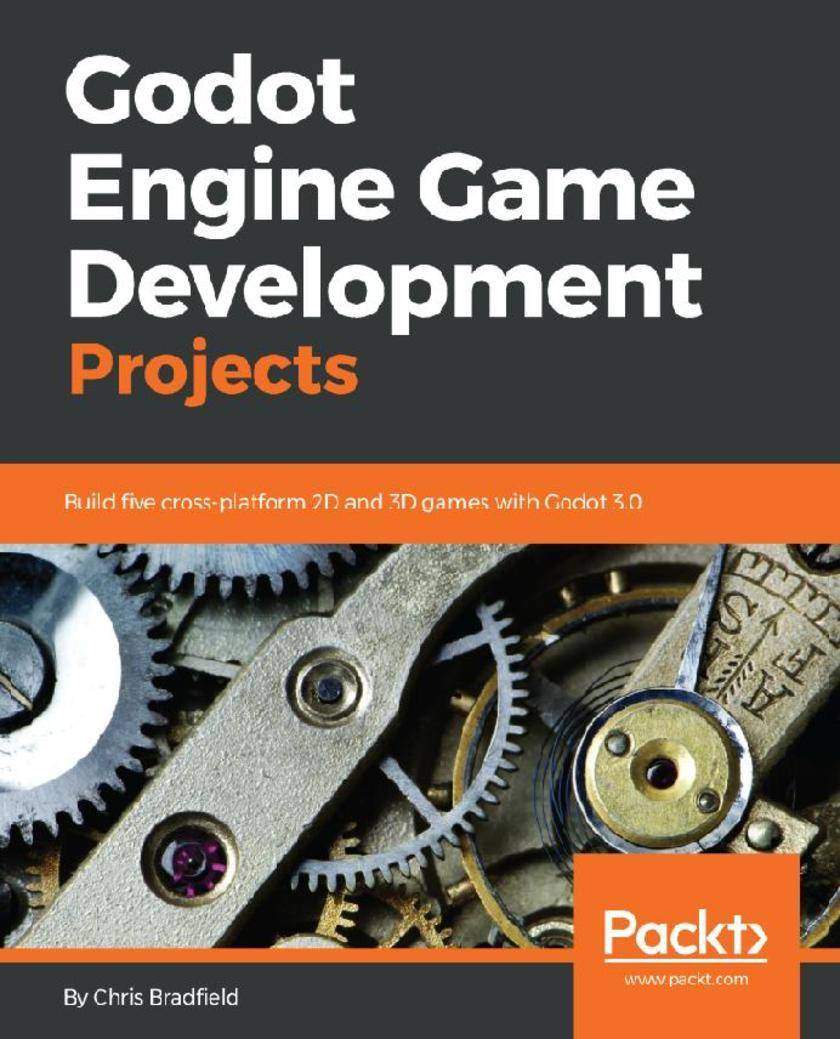
Godot Engine Game Development Projects
¥73.02
Create interactive cross-platform games with the Godot Engine 3.0 About This Book ? Learn the art of developing cross-platform games ? Leverage Godot’s node and scene system to design robust, reusable game objects ? Integrate Blender easily and efficiently with Godot to create powerful 3D games Who This Book Is For Godot Engine Game Development Projects is for both new users and experienced developers, who want to learn to make games using a modern game engine. Some prior programming experience is recommended. What You Will Learn ? Get started with the Godot game engine and editor ? Organize a game project ? Import graphical and audio assets ? Use Godot’s node and scene system to design robust, reusable game objects ? Write code in GDScript to capture input and build complex behaviors ? Implement user interfaces to display information ? Create visual effects to spice up your game ? Learn techniques that you can apply to your own game projects In Detail Godot Engine Game Development Projects is an introduction to the Godot game engine and its new 3.0 version. Godot 3.0 brings a large number of new features and capabilities that make it a strong alternative to expensive commercial game engines. For beginners, Godot offers a friendly way to learn game development techniques, while for experienced developers it is a powerful, customizable tool that can bring your visions to life. This book consists of five projects that will help developers achieve a sound understanding of the engine when it comes to building games. Game development is complex and involves a wide spectrum of knowledge and skills. This book can help you build on your foundation level skills by showing you how to create a number of small-scale game projects. Along the way, you will learn how Godot works and discover important game development techniques that you can apply to your projects. Using a straightforward, step-by-step approach and practical examples, the book will take you from the absolute basics through to sophisticated game physics, animations, and other techniques. Upon completing the final project, you will have a strong foundation for future success with Godot 3.0. Style and approach The book is divided into five parts; each covering a different small-game project using a straightforward, step-by-step approach and practical examples. The book will take readers from the absolute basics through sophisticated game physics, animation, and other techniques.
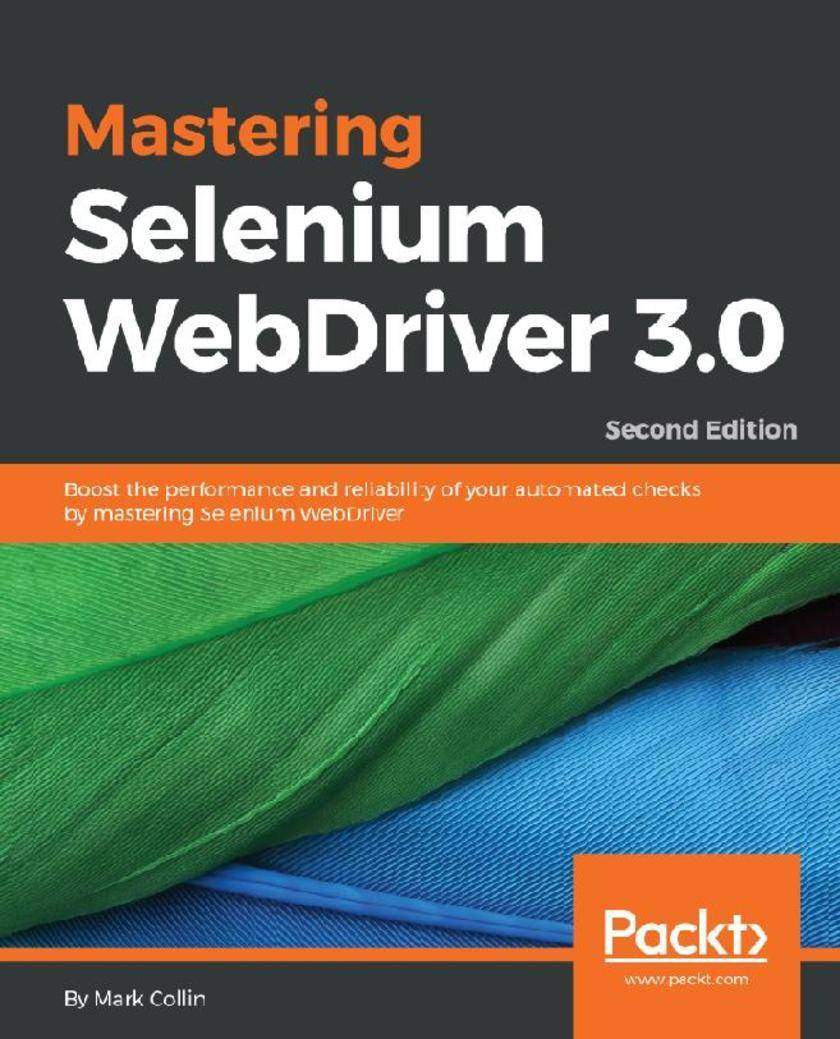
Mastering Selenium WebDriver 3.0
¥81.74
Complement Selenium with useful additions that fit seamlessly into the rich and well-crafted API that Selenium offers About This Book ? Understand the power, simplicity, and limitations of the core Selenium framework ? Write clear, readable, and reliable tests that perform complex test automation tasks ? Work with ChromeDriver and GeckoDriver in headless mode Who This Book Is For If you are a software tester or a developer with working experience in Selenium and competency with Java, who is interested in automation and are looking forward to taking the next step in their learning journey, then this is the book for you. What You Will Learn ? Provide fast, useful feedback with screenshots ? Create extensible, well-composed page objects ? Utilize ChromeDriver and GeckoDriver in headless mode ? Leverage the full power of Advanced User Interactions APIs ? Use JavascriptExecutor to execute JavaScript snippets in the browser through Selenium ? Build user interaction into your test script using JavascriptExecutor ? Learn the basics of working with Appium In Detail The second edition of Mastering Selenium 3.0 WebDriver starts by showing you how to build your own Selenium framework with Maven. You'll then look at how you can solve the difficult problems that you will undoubtedly come across as you start using Selenium in an enterprise environment and learn how to produce the right feedback when failing. Next, you’ll explore common exceptions that you will come across as you use Selenium, the root causes of these exceptions, and how to fix them. Along the way, you’ll use Advanced User Interactions APIs, running any JavaScript you need through Selenium; and learn how to quickly spin up a Selenium Grid using Docker containers. In the concluding chapters, you‘ll work through a series of scenarios that demonstrate how to extend Selenium to work with external libraries and applications so that you can be sure you are using the right tool for the job. Style and approach This book is a pragmatic guide that takes you through the process of creating a test framework with Selenium 3. It then shows you how you can extend this framework to overcome common obstacles that you will come across whilst using Selenium.
Learning Malware Analysis
¥90.46
Understand malware analysis and its practical implementation About This Book ? Explore the key concepts of malware analysis and memory forensics using real-world examples ? Learn the art of detecting, analyzing, and investigating malware threats ? Understand adversary tactics and techniques Who This Book Is For This book is for incident responders, cyber-security investigators, system administrators, malware analyst, forensic practitioners, student, or curious security professionals interested in learning malware analysis and memory forensics. Knowledge of programming languages such as C and Python is helpful but is not mandatory. If you have written few lines of code and have a basic understanding of programming concepts, you’ll be able to get most out of this book. What You Will Learn ? Create a safe and isolated lab environment for malware analysis ? Extract the metadata associated with malware ? Determine malware's interaction with the system ? Perform code analysis using IDA Pro and x64dbg ? Reverse-engineer various malware functionalities ? Reverse engineer and decode common encoding/encryption algorithms ? Perform different code injection and hooking techniques ? Investigate and hunt malware using memory forensics In Detail Malware analysis and memory forensics are powerful analysis and investigation techniques used in reverse engineering, digital forensics, and incident response. With adversaries becoming sophisticated and carrying out advanced malware attacks on critical infrastructures, data centers, and private and public organizations, detecting, responding to, and investigating such intrusions is critical to information security professionals. Malware analysis and memory forensics have become must-have skills to fight advanced malware, targeted attacks, and security breaches. This book teaches you the concepts, techniques, and tools to understand the behavior and characteristics of malware through malware analysis. It also teaches you techniques to investigate and hunt malware using memory forensics. This book introduces you to the basics of malware analysis, and then gradually progresses into the more advanced concepts of code analysis and memory forensics. It uses real-world malware samples, infected memory images, and visual diagrams to help you gain a better understanding of the subject and to equip you with the skills required to analyze, investigate, and respond to malware-related incidents. Style and approach The book takes the reader through all the concepts, techniques and tools to understand the behavior and characteristics of malware by using malware analysis and it also teaches the techniques to investigate and hunt malware using memory forensics.


