


 购物车
购物车 个人中心
个人中心
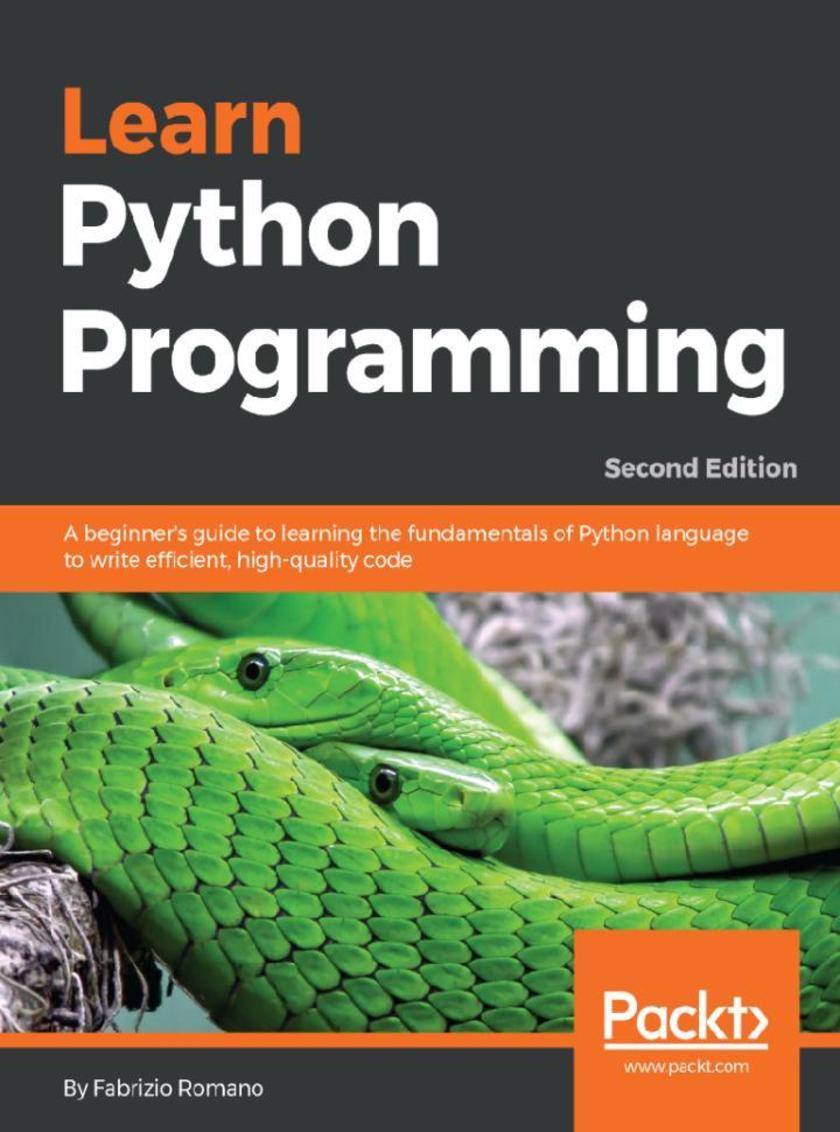
Learn Python Programming
¥61.03
Build a solid foundation in coding by utilizing the language and its core characteristics About This Book ? Leverage the features of Python programming through easy-to-follow examples ? Develop a strong set of programming skills that can be applied on all platforms ? Create GUIs and data science-based applications Who This Book Is For Learn Python Programming is for individuals with relatively little experience in coding or Python. It's also ideal for aspiring programmers who need to write scripts or programs to accomplish tasks. The book takes you all the way to creating a full-fledged application. What You Will Learn ? Get Python up and running on Windows, Mac, and Linux ? Grasp fundamental concepts of coding using data structures and control flow ? Write elegant, reusable, and efficient code in any situation ? Understand when to use the functional or object-oriented programming (OOP) approach ? Walk through the basics of security and concurrent/asynchronous programming ? Create bulletproof, reliable software by writing tests ? Explore examples of GUIs, scripting, and data science In Detail Learn Python Programming creates a foundation for those who are interested in developing their skills in Python programming. The book starts with the fundamentals of programming with Python and ends by exploring different topics such as GUIs and real-world apps. You will begin by exploring the foundations of and fundamental topics on Python and learn to manipulate them. Then, you'll explore different programming paradigms that will allow you to find the best approach to a situation, and you’ll also understand how to carry out performance optimization as well as effective debugging. As you make your way through the chapters, you'll control the flow of a program, and persist and utilize an interchange format to exchange data. You'll also walk through cryptographic services in Python and understand secure tokens. Throughout, the book covers various types of applications, and it concludes with building real-world applications based on all the concepts that you learned. By the end of the book, you'll have a proper understanding of the Python language and a solid grasp on how to work with data. You'll know how to quickly build a website and harness the power of Python's renowned data science libraries. Style and approach This easy-to-follow guide will take you from novice to proficient at a comfortable pace, using a lot of simple yet effective examples.
Java Deep Learning Projects
¥90.46
Build and deploy powerful neural network models using the latest Java deep learning libraries About This Book ? Understand DL with Java by implementing real-world projects ? Master implementations of various ANN models and build your own DL systems ? Develop applications using NLP, image classification, RL, and GPU processing Who This Book Is For If you are a data scientist, machine learning professional, or deep learning practitioner keen to expand your knowledge by delving into the practical aspects of deep learning with Java, then this book is what you need! Get ready to build advanced deep learning models to carry out complex numerical computations. Some basic understanding of machine learning concepts and a working knowledge of Java are required. What You Will Learn ? Master deep learning and neural network architectures ? Build real-life applications covering image classification, object detection, online trading, transfer learning, and multimedia analytics using DL4J and open-source APIs ? Train ML agents to learn from data using deep reinforcement learning ? Use factorization machines for advanced movie recommendations ? Train DL models on distributed GPUs for faster deep learning with Spark and DL4J ? Ease your learning experience through 69 FAQs In Detail Java is one of the most widely used programming languages. With the rise of deep learning, it has become a popular choice of tool among data scientists and machine learning experts. Java Deep Learning Projects starts with an overview of deep learning concepts and then delves into advanced projects. You will see how to build several projects using different deep neural network architectures such as multilayer perceptrons, Deep Belief Networks, CNN, LSTM, and Factorization Machines. You will get acquainted with popular deep and machine learning libraries for Java such as Deeplearning4j, Spark ML, and RankSys and you’ll be able to use their features to build and deploy projects on distributed computing environments. You will then explore advanced domains such as transfer learning and deep reinforcement learning using the Java ecosystem, covering various real-world domains such as healthcare, NLP, image classification, and multimedia analytics with an easy-to-follow approach. Expert reviews and tips will follow every project to give you insights and hacks. By the end of this book, you will have stepped up your expertise when it comes to deep learning in Java, taking it beyond theory and be able to build your own advanced deep learning systems. Style and approach A unique, learn-as-you-do approach, as the reader builds on his understanding of deep learning with Java progressively with each project. This book is designed in such a way that implementing each project will empower you with a unique skill set, and enable you to implement the next project more confidently.
NetSuite ERP for Administrators
¥90.46
Learn steps and tasks to help a NetSuite administrator perform both his daily and monthly tasks efficiently. Advance his expertise to become NetSuite leader without having to spend time and money on corporate trainings. About This Book ? Understand the business considerations and implementation of the NetSuite ERP ? Gain a deep knowledge of enterprise security, data management, process automation, and analytics ? Learn techniques to sail through system maintenance while ensuring accuracy and to practically troubleshoot issues Who This Book Is For This book is for administrators, consultants, and Project Managers who would like to improve their skills in the areas of configuration and system management. Basic experience implementing NetSuite is assumed. What You Will Learn ? Provide executives with meaningful insights into the business ? A Framework to streamline the implementation of new and existing features ? Leverage built-in tools to optimize your efficiency and effectiveness ? Test configuration to check the implementation of role-specific permissions ? Understand how to optimize the amount of data to be shared with users ? Import data like new leads and employ current data like pricing updates ? Perform on-going maintenance and troubleshoot issues In Detail NetSuite ERP is a complete, scalable cloud ERP solution targeted at fast-growing, mid-sized businesses and large enterprises. It's the smartly executed combination of financial management operations and built-in business intelligence, which enables companies to make data-driven and well-informed decisions. This book will help administrators become expert enough to be seen as the NetSuite leader at their company and to be able to advise department heads on specific processes, and strategic decisions. We start with an overview of ERP and NetSuite ERP, before going on to explain the built-in features to show the breadth of NetSuite ERP's product and its ease of use. We then discuss business aspects, focusing on the most important processes in NetSuite. Then you'll understand the implementation aspects that are generic enough to cover all the features. The focus then shifts to specific skills that you will need to administer for any system, such as roles, permissions, customization, and data imports. Moving on, you'll learn how to centralize the creation of search templates and give users the tools to pivot the data and expose it to the user in useful ways, such as on the dashboard. The book ends with checklists providing actionable steps that you as an administrator can take to do your job and support the application through new releases and troubleshooting problems. Style and approach A slow and steady introduction of topics from reports through searches with aim to enable the administrator to gain a holistic view of the NetSuite product.
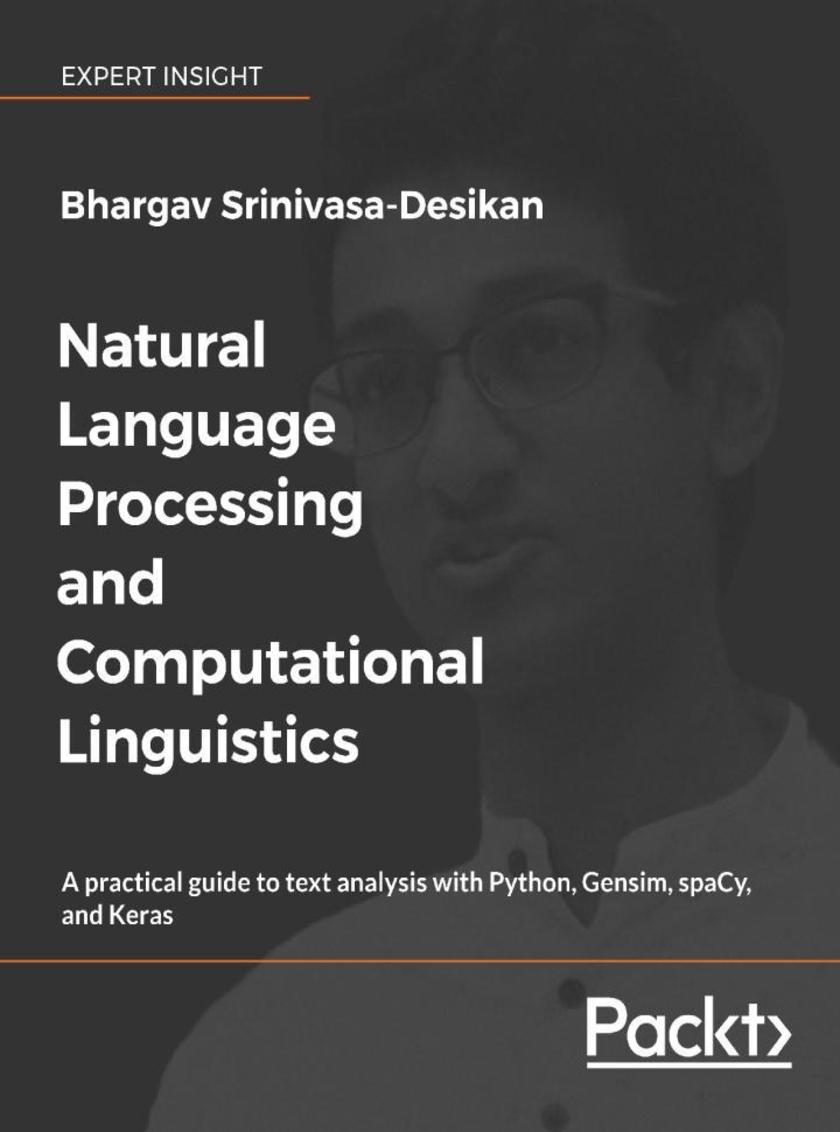
Natural Language Processing and Computational Linguistics
¥73.02
Work with Python and powerful open source tools such as Gensim and spaCy to perform modern text analysis, natural language processing, and computational linguistics algorithms. About This Book ? Discover the open source Python text analysis ecosystem, using spaCy, Gensim, scikit-learn, and Keras ? Hands-on text analysis with Python, featuring natural language processing and computational linguistics algorithms ? Learn deep learning techniques for text analysis Who This Book Is For This book is for you if you want to dive in, hands-first, into the interesting world of text analysis and NLP, and you're ready to work with the rich Python ecosystem of tools and datasets waiting for you! What You Will Learn ? Why text analysis is important in our modern age ? Understand NLP terminology and get to know the Python tools and datasets ? Learn how to pre-process and clean textual data ? Convert textual data into vector space representations ? Using spaCy to process text ? Train your own NLP models for computational linguistics ? Use statistical learning and Topic Modeling algorithms for text, using Gensim and scikit-learn ? Employ deep learning techniques for text analysis using Keras In Detail Modern text analysis is now very accessible using Python and open source tools, so discover how you can now perform modern text analysis in this era of textual data. This book shows you how to use natural language processing, and computational linguistics algorithms, to make inferences and gain insights about data you have. These algorithms are based on statistical machine learning and artificial intelligence techniques. The tools to work with these algorithms are available to you right now - with Python, and tools like Gensim and spaCy. You'll start by learning about data cleaning, and then how to perform computational linguistics from first concepts. You're then ready to explore the more sophisticated areas of statistical NLP and deep learning using Python, with realistic language and text samples. You'll learn to tag, parse, and model text using the best tools. You'll gain hands-on knowledge of the best frameworks to use, and you'll know when to choose a tool like Gensim for topic models, and when to work with Keras for deep learning. This book balances theory and practical hands-on examples, so you can learn about and conduct your own natural language processing projects and computational linguistics. You'll discover the rich ecosystem of Python tools you have available to conduct NLP - and enter the interesting world of modern text analysis. Style and approach The book teaches NLP from the angle of a practitioner as well as that of a student. This is a tad unusual, but given the enormous speed at which new algorithms and approaches travel from scientific beginnings to industrial implementation, first principles can be clarified with the help of entirely practical examples.
Hands-On Data Analysis with NumPy and pandas
¥54.49
Get to grips with the most popular Python packages that make data analysis possible About This Book ? Explore the tools you need to become a data analyst ? Discover practical examples to help you grasp data processing concepts ? Walk through hierarchical indexing and grouping for data analysis Who This Book Is For Hands-On Data Analysis with NumPy and Pandas is for you if you are a Python developer and want to take your first steps into the world of data analysis. No previous experience of data analysis is required to enjoy this book. What You Will Learn ? Understand how to install and manage Anaconda ? Read, sort, and map data using NumPy and pandas ? Find out how to create and slice data arrays using NumPy ? Discover how to subset your DataFrames using pandas ? Handle missing data in a pandas DataFrame ? Explore hierarchical indexing and plotting with pandas In Detail Python, a multi-paradigm programming language, has become the language of choice for data scientists for visualization, data analysis, and machine learning. Hands-On Data Analysis with NumPy and Pandas starts by guiding you in setting up the right environment for data analysis with Python, along with helping you install the correct Python distribution. In addition to this, you will work with the Jupyter notebook and set up a database. Once you have covered Jupyter, you will dig deep into Python’s NumPy package, a powerful extension with advanced mathematical functions. You will then move on to creating NumPy arrays and employing different array methods and functions. You will explore Python’s pandas extension which will help you get to grips with data mining and learn to subset your data. Last but not the least you will grasp how to manage your datasets by sorting and ranking them. By the end of this book, you will have learned to index and group your data for sophisticated data analysis and manipulation. Style and approach A step-by-step approach, taking you through the different concepts and features of Data Analysis using Python libraries and tools.
Instant Spring for Android Starter
¥45.77
Get to grips with a new technology, understand what it is and what it can do for you, and then get to work with the most important features and tasks. This is a Starter which gives you an introduction to Spring for Android with plenty of well-explained practical code examples. If you are an Android developer who wants to learn about RESTful web services and OAuth authentication and authorization, and you also want to know how to speed up your development involving those architectures using Spring for Android abstractions, then this book is for you. But core Java developers are not forgotten, thanks to the explanations on how to set up Eclipse and Maven for Android development (very basic knowledge regarding Android UI design is required to understand the examples; the right pointers to ramp up on this topic are provided though).
Getting Started with SpriteKit
¥71.93
Develop fun and exciting games and create amazing animations for your existing apps with SpriteKit, Apple's 2D game development frameworkAbout This BookLearn the key concepts of game development in iOSTake advantage of SpriteKit to create your own games and improve your appsFollow the step-by-step chapters to create a complete product ready to submit to the App StoreWho This Book Is ForGetting Started with SpriteKit is for beginner-level iOS developers who want to add an extra edge to their apps and create amazing games using SpriteKit. It doesn’t matter whether you have experience in iOS development or not as this book will show you the swift tricks you can use to create games.What You Will LearnCreate and configure a SpriteKit project from scratchLoad and manage the basic elements of games such as sprites, labels, and geometrical primitivesHandle touch events, detect collisions, and play sound audio filesCreate complex elements, animate sprites, and run the parallax effectComplete your games with key components such as a main menu, transitions between scenes, a tutorial, and the ability to load and save dataIncrease the efficiency of your device using the accelerometer or by adding shaders, lights, and shadowsGain complementary techniques such as creating or finding audio resources, applying SpriteKit to apps, or using third-party toolsIn DetailSpriteKit is Apple’s game engine to develop native iOS games. Strongly boosted by the Apple Inc., Cupertino, it has increased in popularity since its first release. This book shows you the solutions provided by SpriteKit to help you create any 2D game you can imagine and apply them to create animations that will highlight your existing apps.This book will give you the knowledge you need to apply SpriteKit to your existing apps or create your own games from scratch.Throughout the book, you will develop a complete game. The beautiful designs implemented in the game in this book will easily lead you to learn the basis of 2D game development, including creating and moving sprites, and adding them to a game scene. You will also discover how to apply advanced techniques such as collision detection, action execution, playing music, or running animations to give a more professional aspect to the game. You will finish your first game by learning how to add a main menu and a tutorial, as well as saving and loading data from and to the player’s device.Finally, you will find out how to apply some mobile games techniques such as accelerometer use or touch detection.Style and approachWritten in an informal way with plenty of illustrative screenshots, this easy-to-follow and practical guide will help you get the most from SpriteKit. The main part of the book provides step-by-step instructions to develop of a complete product, while the last chapters give you some complementary techniques than can be used in mobile 2D game development.
Instant OSGi Starter
¥45.77
Get to grips with a new technology, understand what it is and what it can do for you, and then get to work with the most important features and tasks. Using a practical approach with explanation where needed, the book will take an in depth look at what OSGi is and what it offers to Java programmers and development standards. "Instant OSGi Starter" is intended for the senior Java programmer whom will be joining OSGi based projects, or for Architects looking to broaden their exposure to OSGi as a beneficial framework and runtime software system.
Implementing Splunk: Big Data Reporting and Development for Operational Intellig
¥90.46
A step-by-step practical implementation tutorial that equips you with high-level knowledge of configuring, deploying, extending, and integrating Splunk to bring machine-generated operational intelligence (?)to your advantage. The book targets professionals and organizations who want to implement or have already implemented Splunk for log analysis and indexing. Analysts and IT staff for end-to-end investigation, performance monitoring, and so on will also learn from the practical examples. It would even help managers to build reports and summarize the health, performance, and activity of their IT infrastructure and business. You will also find it helpful as a technical administrator, consultant, or end user. This book aims to be useful to Splunk users of all levels, from complete newbie to seasoned user. The book assumes that you have access to a copy of Splunk, ideally not in production. Many examples also assume your user has admin rights.
Mastering Application Development with Force.com
¥63.21
Design and develop state-of-the-art applications using Force.com's powerful development platformAbout This BookFlaunt your skillsets by developing complex applications that include demanding concepts such as triggers, Visualforce controllers, batch jobs, and Lightning componentsEarn the gratitude of your colleagues by structuring a project so that multiple developers can work independently of each otherKevin Poorman, the author of the book and a Force.com MVP, shares his years of Force.com knowledge and experience with you through the medium of telling examplesWho This Book Is ForIf you're a Force.com developer with a fundamental understanding of Apex and JavaScript but now want to enhance your skills with tips, tricks, and guidance on the best architectural and engineering practices, then this book is for you.What You Will LearnCreating triggers, and the best practices for writing themDeveloping a number of Visualforce controllers and extensionsIntegrating third-party web APIs into your Apex codeWriting unit tests that cover testing bulk safety, user and profile settings, and negative testsCreating a Lightning component for use in Salesforce1Getting acquainted with various methods for deploying metadata between orgsUsing the Rest sObject API for access to Salesforce objects and data using the REST methodologyLearning about overarching architectural considerations such as naming conventions, testing practices, and data modeling practicesIn DetailForce.com is an extremely powerful, scalable, and secure cloud platform, delivering a complete technology stack, ranging from databases and security to workflow and the user interface. With salesforce.com's Force.com cloud platform, you can build any business application and run it on your servers.The book will help you enhance your skillset and develop complex applications using Force.com. It gets you started with a quick refresher of Force.com's development tools and methodologies, and moves to an in-depth discussion of triggers, bulkification, DML order of operations, and trigger frameworks. Next, you will learn to use batchable and schedulable interfaces to process massive amounts of information asynchronously. You will also be introduced to Salesforce Lightning and cover components—including backend (apex) controllers, frontend (JavaScript) controllers, events, and attributes—in detail.Moving on, the book will focus on testing various apex components: what to test, when to write the tests, and—most importantly—how to test. Next, you will develop a changeset and use it to migrate your code from one org to another, and learn what other tools are out there for deploying metadata. You will also use command-line tools to authenticate and access the Force.com Rest sObject API and the Bulk sObject API; additionally, you will write a custom Rest endpoint, and learn how to structure a project so that multiple developers can work independently of each other without causing metadata conflicts.Finally, you will take an in-depth look at the overarching best practices for architecture (structure) and engineering (code) applications on the Force.com platform.Style and approach A step-by-step tutorial, with plenty of tips and tricks that will help you develop complex Force.com applications.

VMware vSphere 5.1 Cookbook
¥90.46
A fast-paced, task-oriented Cookbook covering recipes on the installation and configuration of vSphere 5.1 components. The recipes are accompanied with relevant screenshots with an intention to provide a visual guidance as well. The book concentrates more on the actual task rather than the theory around it, making it easier to understand what is really needed to achieve the task. This book is a guide for anyone who wants to learn how to install and configure VMware vSphere components. This is an excellent handbook for support professionals or for anyone intending to give themselves a head start in learning how to install and configure vSphere 5.1 components. It is also a good task-oriented reference material for consultants who design and deploy vSphere environments.

Software Development on the SAP HANA Platform
¥107.90
Software Development on the SAP HANA Platform is a general tutorial guide to SAP HANA.This book is written for beginners to the SAP HANA platform. No knowledge of SAP HANA is necessary to start using this book.
Alfresco 4 Enterprise Content Management Implementation
¥107.90
This book distils the hands-on approach of the training courses into a concise, practical book. The emphasis is on getting up and running fast and discovering the scope and power of Alfresco 4 incrementally through practical examples. Though this book is not a developer guide, various examples in the book will help developers to extend Alfresco functionality and to integrate Alfresco with external systems.This book is designed for experienced users, business owners, or system administrators who want to install and use Alfresco in their teams or businesses. Because Alfresco is free, many teams can install and experiment with its ECM features without any upfront cost, often without management approval. You need to have a degree of technical confidence, but you do not require specialist system admin or developer skills to get a basic system up and running.Though this book is not a developer guide, various examples in the book will help you to extend Alfresco functionality and to integrate Alfresco with external systems.

PostgreSQL Server Programming
¥90.46
This practical guide leads you through numerous aspects of working with PostgreSQL. Step by step examples allow you to easily set up and extend PostgreSQL. "PostgreSQL Server Programming" is for moderate to advanced PostgreSQL database professionals. To get the best understanding of this book, you should have general experience in writing SQL, a basic idea of query tuning, and some coding experience in a language of your choice.

Microsoft Dynamics CRM 2011 Reporting
¥90.46
The book is a focused and step-by-step tutorial on Microsoft Dynamics CRM Reporting capabilities. It will enable Dynamics developers to create and manage reports, know what tools to use, how to use them, and where to find the data based on how it’s being entered into the system with Dynamics CRM.This book is great for users and developers new to the Dynamics CRM Reports and SQL Server Reporting services, and who are looking to get a good grounding in how to use the reporting capabilities of Dynamics CRM 2011. It’s assumed that you will have some experience in HTML and JavaScript already to build the advanced reports, but no previous programming experience is required to build and learn how to create some basic to intermediate reports, which will be used during the exercises within this book.

Windows Server 2012 Hyper-V Cookbook
¥90.46
"Windows Server 2012 Hyper-V Cookbook" is a practical cookbook packed with recipes showing and explaining all the features and components of Hyper-V. You’ll learn from best practices, tips and tricks and examples of how to automate daily and common tasks. If you are an administrator who wants to master Microsoft Server Virtualization with Windows Server 2012 Hyper-V, then this book is for you. You should be comfortable with virtualization concepts and practices, and knowledge of previous versions of Windows Server would be an advantage.
Microsoft Dynamics CRM 2011 Customization & Configuration…
¥107.90
This book is in the Enterprise certification series which means it is a hands-on guide with practical instruction, examples and all the information you will need to be successful in the exam, as well as 75 practice questions in the exam style. It includes practical advice on how to book the exam, approach the questions and maximize your score. "Microsoft Dynamics CRM 2011 Customization & Configuration (MB2-866) Certification Guide" is perfect for IT professionals and developers who work for a Microsoft partner or customer organizations. If you want to demonstrate your expertise and advance your career by obtaining Microsoft certification this book will provide you with the insight you need to succeed.

HTML5 Graphics & Data Visualization Cookbook
¥90.46
This cookbook is organized in a linear, progressive way allowing it to be read from start to finish, as well as to be used as a useful resource for specific tasks. The HTML5 examples and recipes will have you making dynamic, interactive, and animated charts and graphs in no time. You don't need to have a background in HTML5 or Canvas but you do need to have a basic understanding of how HTML works and know how to code in any language (preferably in JavaScript). In this book we will not explain how to learn to code but how to create projects and how to plan and execute them in the process.

Marmalade SDK Mobile Game Development Essentials
¥90.46
A practical tutorial that's easy to follow with lots of tips, examples and diagrams, including a full game project that grows with each chapter,This book targets Professional and Indie game developers who want to develop games quickly and easily to run across a huge range of smartphones and tablets. You are expected to have some experience writing games using C++ on other platforms. Its aim is to show how to take your existing skills and apply them to writing games for mobile devices (including iOS and Android) by explaining the use of the Marmalade SDK,Familiarity with games and 3D graphics programming would be helpful. No knowledge of specific mobile SDKs such as iOS or Android is required.
jQuery Mobile Cookbook
¥80.65
This book is written in Cookbook style with a lot of practical tips, code, and step-by-step examples, to ease and quicken your learning curve. If you are a beginner with jQuery/JavaScript skills, this book offers you numerous examples to get you started. If you are a seasoned developer, this book lets you explore jQuery Mobile in greater depth.
Getting Started with Talend Open Studio for Data Integration
¥80.65
"Getting Started with Talend Open Studio for Data Integration" takes a step-by-step, hands-on approach to learning with lots of examples and clear instructions. Are you a developer, business analyst, project manager, business intelligence specialist, system architect or a consultant who needs to undertake integration projects, then this book is for you. The book assumes a certain level of familiarity with Relational database management systems with SQL and experience and Java.


