


 购物车
购物车 个人中心
个人中心
Distributed Computing with Python
¥63.21
Harness the power of multiple computers using Python through this fast-paced informative guide About This Book You'll learn to write data processing programs in Python that are highly available, reliable, and fault tolerant Make use of Amazon Web Services along with Python to establish a powerful remote computation system Train Python to handle data-intensive and resource hungry applications Who This Book Is For This book is for Python developers who have developed Python programs for data processing and now want to learn how to write fast, efficient programs that perform CPU-intensive data processing tasks. What You Will Learn Get an introduction to parallel and distributed computing See synchronous and asynchronous programming Explore parallelism in Python Distributed application with Celery Python in the Cloud Python on an HPC cluster Test and debug distributed applications In Detail CPU-intensive data processing tasks have become crucial considering the complexity of the various big data applications that are used today. Reducing the CPU utilization per process is very important to improve the overall speed of applications. This book will teach you how to perform parallel execution of computations by distributing them across multiple processors in a single machine, thus improving the overall performance of a big data processing task. We will cover synchronous and asynchronous models, shared memory and file systems, communication between various processes, synchronization, and more. Style and Approach This example based, step-by-step guide will show you how to make the best of your hardware configuration using Python for distributing applications.
React Components
¥63.21
Explore the power of React components for cutting-edge web development About This Book Learn to build better websites by creating a variety of different components in React Conceptualize the design and build maintainable web apps with the help of components A fast-paced guide to help you learn about component-based development in React Who This Book Is For This book is ideal for developers who are familiar with the basics of React and are looking for a guide to building a wide range of components as well as develop component-driven UIs. What You Will Learn How to structure an app into components Working with nested components Work with nested components Set up communication across components Style the existing components Work with Material Design as a component Render components on the server Make the best of design patterns Make the app pluggable In Detail The reader will learn how to use React and its component-based architecture in order to develop modern user interfaces. A new holistic way of thinking about UI development will establish throughout this book and the reader will discover the power of React components with many examples. After reading the book and following the example application, the reader has built a small to a mid-size application with React using a component based UI architecture. The book will take the reader through a journey to discover the benefits of component-based user interfaces over the classical MVC architecture. Throughout the book, the reader will develop a wide range of components and then bring them together to build a component-based UI. By the end of this book, readers would have learned several techniques to build powerful components and how the component-based development is beneficial over regular web development. Style and approach This book is a compact, example-driven guide that provides a step-by-step approach.
Nginx Troubleshooting
¥54.49
Investigate and solve problems with Nginx-powered websites using a deep understanding of the underlying principles About This Book Solve problems with your Nginx-powered websites before your audience notices anything Peek into the Nginx architecture and gain knowledge that will help you be valuable to you in the long run Gain knowledge of different types of problems in a step-by-step way Who This Book Is For The book is for technical specialists who already use Nginx to serve web pages for their users. Whether you are an experienced system administrator or a new professional, this book will help you do your job in the most efficient way. What You Will Learn Detect and investigate problems with your web servers Create correct and professional configuration files Get an in-depth understanding of the web server software Interpret Nginx log files easily and with actionable insights Make your websites respond as fast as possible Prevent problems by setting up proper monitoring and alerts In Detail Nginx is clearly winning the race to be the dominant software to power modern websites. It is fast and open source, maintained with passion by a brilliant team. This book will help you maintain your Nginx instances in a healthy and predictable state. It will lead you through all the types of problems you might encounter as a web administrator, with a special focus on performance and migration from older software. You will learn how to write good configuration files and will get good insights into Nginx logs. It will provide you solutions to problems such as missing or broken functionality and also show you how to tackle performance issues with the Nginx server. A special chapter is devoted to the art of prevention, that is, monitoring and alerting services you may use to detect problems before they manifest themselves on a big scale. The books ends with a reference to error and warning messages Nginx could emit to help you during incident investigations. Style and approach This comprehensive tutorial on Nginx troubleshooting takes an practical approach to guiding you through common issues in Nginx server.

Mastering QlikView Data Visualization
¥90.46
Take your QlikView skills to the next level and master the art of creating visual data analysis for real business needs About This Book Explore how to create your own QlikView data laboratory and how to develop QlikView applications using agile project methods Implement advanced data visualization and analysis for common business requirements from the sales, finance, marketing, inventory, operations, and human resources departments Learn from real-life experience shared in this book that will give you the upper hand in your next QlikView project Who This Book Is For This book is intended for developers who want to go beyond their technical knowledge of QlikView and understand how to create analysis and data visualizations that solve real business needs. You should have a basic understanding of advanced QlikView functions. What You Will Learn Apply advanced QlikView techniques such as set analysis and nested aggregation in order to deliver common business requirements Understand real business requirements for sales, finance, marketing, and human resources departments Discover when to apply more advanced data visualization such as frequency polygons, bullet graphs, and XmR charts Go beyond native QlikView and include geographical analysis, planning, and sentiment analysis in your QlikView application Troubleshoot common errors we discover at the moment we visualize data in QlikView Develop a plan to master Qlik Sense data visualization In Detail Just because you know how to swing a hammer doesn't mean you know how to build a house. Now that you've learned how to use QlikView, it's time to learn how to develop meaningful QlikView applications that deliver what your business users need. You will explore the requirements and the data from several business departments in order to deliver the most amazing analysis and data visualizations. In doing so, you will practice using advanced QlikView functions, chart object property options, and extensions to solve real-world challenges. Style and approach This hands-on guide follows the story of a company implementing QlikView as its enterprise data discovery solution. Each chapter starts with an understanding of the business requirements and the data model, and then helps you create insightful analysis and data visualizations. Each chapter expands on what was done in the previous chapter as we follow this continuously improving iterative process.
Mastering Symfony
¥71.93
Orchestrate the designing, development, testing, and deployment of web applications with Symfony About This Book Create a robust and reliable Symfony development pipeline using Amazon's cloud platform Cut development and maintenance costs by defining crystal clear features and possible scenarios for each feature before implementation Follow detailed examples provided in each chapter to create a task management application Who This Book Is For If you are a PHP developer with some experience in Symfony and are looking to master the framework and use it to its full potential, then this book is for you. Though experience with PHP, object-oriented techniques, and Symfony basics is assumed, this book will give you a crash course on the basics and then proceed to more advanced topics. What You Will Learn Install and configure Symfony and required third-party bundles to develop a task management application Set up a continuous integration server to orchestrate automatic builds every time you add a new feature to your project Reduce maintenance costs dramatically using Behaviour Driven Development (BDD) Create a slick user interface using the Bootstrap framework Design robust business logic using Doctrine Build a comprehensive dashboard and secure your project using the Sonata project Improve performance using Redis, Memcache, and Varnish Create customized Symfony commands and add them to your console In Detail In this book, you will learn some lesser known aspects of development with Symfony, and you will see how to use Symfony as a framework to create reliable and effective applications. You might have developed some impressive PHP libraries in other projects, but what is the point when your library is tied to one particular projectWith Symfony, you can turn your code into a service and reuse it in other projects. This book starts with Symfony concepts such as bundles, routing, twig, doctrine, and more, taking you through the request/response life cycle. You will then proceed to set up development, test, and deployment environments in AWS. Then you will create reliable projects using Behat and Mink, and design business logic, cover authentication, and authorization steps in a security checking process. You will be walked through concepts such as DependencyInjection, service containers, and services, and go through steps to create customized commands for Symfony's console. Finally, the book covers performance optimization and the use of Varnish and Memcached in our project, and you are treated with the creation of database agnostic bundles and best practices. Style and approach A step-by-step guide to mastering Symfony while developing a task management application. Each chapter comes with detailed examples.
Scientific Computing with Scala
¥80.65
Learn to solve scientific computing problems using Scala and its numerical computing, data processing, concurrency, and plotting libraries About This Book Parallelize your numerical computing code using convenient and safe techniques. Accomplish common high-performance, scientific computing goals in Scala. Learn about data visualization and how to create high-quality scientific plots in Scala Who This Book Is For Scientists and engineers who would like to use Scala for their scientific and numerical computing needs. A basic familiarity with undergraduate level mathematics and statistics is expected but not strictly required. A basic knowledge of Scala is required as well as the ability to write simple Scala programs. However, complicated programming concepts are not used in the book. Anyone who wants to explore using Scala for writing scientific or engineering software will benefit from the book. What You Will Learn Write and read a variety of popular file formats used to store scientific data Use Breeze for linear algebra, optimization, and digital signal processing Gain insight into Saddle for data analysis Use ScalaLab for interactive computing Quickly and conveniently write safe parallel applications using Scala's parallel collections Implement and deploy concurrent programs using the Akka framework Use the Wisp plotting library to produce scientific plots Visualize multivariate data using various visualization techniques In Detail Scala is a statically typed, Java Virtual Machine (JVM)-based language with strong support for functional programming. There exist libraries for Scala that cover a range of common scientific computing tasks – from linear algebra and numerical algorithms to convenient and safe parallelization to powerful plotting facilities. Learning to use these to perform common scientific tasks will allow you to write programs that are both fast and easy to write and maintain. We will start by discussing the advantages of using Scala over other scientific computing platforms. You will discover Scala packages that provide the functionality you have come to expect when writing scientific software. We will explore using Scala's Breeze library for linear algebra, optimization, and signal processing. We will then proceed to the Saddle library for data analysis. If you have experience in R or with Python's popular pandas library you will learn how to translate those skills to Saddle. If you are new to data analysis, you will learn basic concepts of Saddle as well. Well will explore the numerical computing environment called ScalaLab. It comes bundled with a lot of scientific software readily available. We will use it for interactive computing, data analysis, and visualization. In the following chapters, we will explore using Scala's powerful parallel collections for safe and convenient parallel programming. Topics such as the Akka concurrency framework will be covered. Finally, you will learn about multivariate data visualization and how to produce professional-looking plots in Scala easily. After reading the book, you should have more than enough information on how to start using Scala as your scientific computing platform Style and approach Examples are provided on how to use Scala to do basic numerical and scientific computing tasks. All the concepts are illustrated with more involved examples in each chapter. The goal of the book is to allow you to translate existing experience in scientific computing to Scala.
Practical UX Design
¥71.93
A foundational yet practical approach to UX that delivers more creative, collaborative, holistic, and mature design solutions, regardless of your background or experience About This Book Improve your UX design awareness and skills Gain greater confidence to know when you have delivered a “good” UX design Learn by example using a book designed by a UX mind for a UX mind Who This Book Is For This book is written for the beginner as well as the experienced UX practitioner, regardless of team size, company size, or job title. It is also intended for anyone with an interest in UX, engages with UX, is involved in any way in interactive problem solving and design, or simply wants to learn more about what we do, how we do it, and why those in the UX field are so passionate about wanting to do it better. What You Will Learn Awaken your UX mind and dispel the myths of non-UX thinkers Create the six optimal conditions for your best ideas to appear Identify and incorporate the ten design principles found in all good UX design Develop a broader understanding of Information Architecture (IA) to better engage, guide, and inform Develop a fundamental understanding of patterns and the properties that create them Raise your level of UX maturity with a strategy that transforms your approach to problem solving and helps others understand the true value of your work Utilize important tools of the UX trade that never go out of style Increase your knowledge of UX, incorporate valuable ideas and insights into your work, and look at design from a very unique perspective In Detail Written in an easy-to-read style, this book provides real-world examples, a historical perspective, and a holistic approach to design that will ground you in the fundamental essentials of interactive design, allow you to make more informed design decisions, and increase your understanding of UX in order to reach the highest levels of UX maturity. As you will see, UX is more than just delighting customers and users. It is also about thinking like a UX practitioner, making time for creativity, recognizing good design when you see it, understanding Information Architecture as more than just organizing and labeling websites, using design patterns to influence user behavior and decision making, approaching UX from a business perspective, transforming your client’s and company’s fundamental understanding of UX and its true value, and so much more. This book is an invaluable resource of knowledge, perspective, and inspiration for those seeking to become better UX designers, increase their confidence, become more mature design leaders, and deliver solutions that provide measurable value to stakeholders, customers, and users regardless of project type, size, and delivery method. Style and approach An in-depth, easy to read, and entertaining journey into and through the world of UX using real-world examples, thoughtful illustrations, and engaging quotes to inspire and explain fully the how and why of UX in a practical and impactful way and used immediately in your own work.
Canvas Cookbook
¥80.65
Over 80 simple but creative and structured recipes to explore the capabilities of HTML5 Canvas About This Book Develop simple to advanced recipes of your own, and ultimately produce a great application Discover a better way to use HTML5 Canvas, JavaScript, and CSS Put your creative instincts to use in your day-to-day interface developments Who This Book Is For The book is intended for readers with a preliminary knowledge of JavaScript and CSS. Whether you're a beginner or expert in this technology, the book provides recipes to help you build your own application, presentation, or game. What You Will Learn Draw basic shapes such as lines, arcs, curves, and text using the coordinate system Learn about the animation cycle and use it to animate shapes Grasp the knowledge required to create particles and use them Give various effects to images and videos and also use them in animations Discover the use of event listeners to make recipes interactive and to handle events through event handlers Create good presentation graphics with graphs and charts Learn all about 3D development, from building 3D objects to animating them Convert your knowledge into a complete working game Understand the interoperability and deployment of recipes on different browsers and on different devices In Detail With the growing popularity of HTML5 Canvas, this book offers tailored recipes to help you develop portable applications, presentations, and games. The recipes are simple yet creative and build on each other. At every step, the book inspires the reader to develop his/her own recipe. From basic to advanced, every aspect of Canvas API has been covered to guide readers to develop their own application, presentation, or game. Style and approach All the recipes are sequential and cover the basic and advanced concepts of Canvas. Every recipe is as simple as possible without compromising creativity
Learning Probabilistic Graphical Models in R
¥63.21
Familiarize yourself with probabilistic graphical models through real-world problems and illustrative code examples in R About This Book Predict and use a probabilistic graphical models (PGM) as an expert system Comprehend how your computer can learn Bayesian modeling to solve real-world problems Know how to prepare data and feed the models by using the appropriate algorithms from the appropriate R package Who This Book Is For This book is for anyone who has to deal with lots of data and draw conclusions from it, especially when the data is noisy or uncertain. Data scientists, machine learning enthusiasts, engineers, and those who curious about the latest advances in machine learning will find PGM interesting. What You Will Learn Understand the concepts of PGM and which type of PGM to use for which problem Tune the model’s parameters and explore new models automatically Understand the basic principles of Bayesian models, from simple to advanced Transform the old linear regression model into a powerful probabilistic model Use standard industry models but with the power of PGM Understand the advanced models used throughout today's industry See how to compute posterior distribution with exact and approximate inference algorithms In Detail Probabilistic graphical models (PGM, also known as graphical models) are a marriage between probability theory and graph theory. Generally, PGMs use a graph-based representation. Two branches of graphical representations of distributions are commonly used, namely Bayesian networks and Markov networks. R has many packages to implement graphical models. We’ll start by showing you how to transform a classical statistical model into a modern PGM and then look at how to do exact inference in graphical models. Proceeding, we’ll introduce you to many modern R packages that will help you to perform inference on the models. We will then run a Bayesian linear regression and you’ll see the advantage of going probabilistic when you want to do prediction. Next, you’ll master using R packages and implementing its techniques. Finally, you’ll be presented with machine learning applications that have a direct impact in many fields. Here, we’ll cover clustering and the discovery of hidden information in big data, as well as two important methods, PCA and ICA, to reduce the size of big problems. Style and approach This book gives you a detailed and step-by-step explanation of each mathematical concept, which will help you build and analyze your own machine learning models and apply them to real-world problems. The mathematics is kept simple and each formula is explained thoroughly.
QGIS 2 Cookbook
¥90.46
Become a QGIS power user and master QGIS data management, visualization, and spatial analysis techniques About This Book Explore and create time-based visualizations and build interactive maps Maximize your use of the QGIS features, plugins and toolbox automation Packed with lots of sample datasets to enable a better understanding of the code Who This Book Is For If you are an intermediate GIS user, with either previous experience in QGIS or any other GIS application, this is the book for you. The recipes can be used to learn more advanced techniques in QGIS or to replicate the functionalities equivalent to other GIS platforms. This book assumes that you already have a working QGIS system in place. What You Will Learn Import and export common tricky spatial data formats Perform classic vector and raster analysis with QGIS Utilize spatial databases and data management tools Use and create geographic web services and maps Explore and create time-based visualizations Perform network building and routing analysis Extend QGIS capabilities with popular plugins and toolbox automation Make beautiful and unique maps with customized cartography In Detail QGIS is a user-friendly, cross-platform desktop geographic information system used to make maps and analyze spatial data. QGIS allows users to understand, question, interpret, and visualize spatial data in many ways that reveal relationships, patterns, and trends in the form of maps. This book is a collection of simple to advanced techniques that are needed in everyday geospatial work, and shows how to accomplish them with QGIS. You will begin by understanding the different types of data management techniques, as well as how data exploration works. You will then learn how to perform classic vector and raster analysis with QGIS, apart from creating time-based visualizations. Finally, you will learn how to create interactive and visually appealing maps with custom cartography. By the end of this book, you will have all the necessary knowledge to handle spatial data management, exploration, and visualization tasks in QGIS. Style and approach This book covers practical examples, with step-by-step instructions on how to use real world data covering common GIS operations and the different analysis techniques. It provides detailed explanations and applications of QGIS concepts that will allow the user to effectively analyze spatial data.
Splunk Operational Intelligence Cookbook - Second Edition
¥99.18
Over 70 practical recipes to gain operational data intelligence with Splunk Enterprise About This Book This is the most up-to-date book on Splunk 6.3 and teaches you how to tackle real-world operational intelligence scenarios efficiently Get business insights using machine data using this easy-to-follow guide Search, monitor, and analyze your operational data skillfully using this recipe-based, practical guide Who This Book Is For This book is intended for users of all levels who are looking to leverage the Splunk Enterprise platform as a valuable operational intelligence tool. The recipes provided in this book will appeal to individuals from all facets of business, IT, security, product, marketing, and many more! Also, existing users of Splunk who want to upgrade and get up and running with Splunk 6.3 will find this book invaluable. What You Will Learn Use Splunk to gather, analyze, and report on data Create dashboards and visualizations that make data meaningful Build an operational intelligence application with extensive features and functionality Enrich operational data with lookups and workflows Model and accelerate data and perform pivot-based reporting Build real-time, *ed, and other intelligence-driven alerts Summarize data for longer term trending, reporting, and analysis Integrate advanced JavaScript charts and leverage Splunk's API In Detail Splunk makes it easy for you to take control of your data, and with Splunk Operational Cookbook, you can be confident that you are taking advantage of the Big Data revolution and driving your business with the cutting edge of operational intelligence and business analytics. With more than 70 recipes that demonstrate all of Splunk’s features, not only will you find quick solutions to common problems, but you’ll also learn a wide range of strategies and uncover new ideas that will make you rethink what operational intelligence means to you and your organization. You’ll discover recipes on data processing, searching and reporting, dashboards, and visualizations to make data shareable, communicable, and most importantly meaningful. You’ll also find step-by-step demonstrations that walk you through building an operational intelligence application containing vital features essential to understanding data and to help you successfully integrate a data-driven way of thinking in your organization. Throughout the book, you’ll dive deeper into Splunk, explore data models and pivots to extend your intelligence capabilities, and perform advanced searching to explore your data in even more sophisticated ways. Splunk is changing the business landscape, so make sure you’re taking advantage of it. Style and approach Splunk is an excellent platform that allows you to make sense of machine data with ease. The adoption of Splunk has been huge and everyone who has gone beyond installing Splunk wants to know how to make most of it. This book will not only teach you how to use Splunk in real-world scenarios to get business insights, but will also get existing Splunk users up to date with the latest Splunk 6.3 release.
Windows Server 2016 Hyper-V Cookbook - Second Edition
¥107.90
Save time and resources by getting to know the best practices and intelligence from industry experts About This Book This book helps you gain a fresh perspective through a recipe-based approach on the new Microsoft Server 2016 Hyper-V Over 80 recipes to help you master the administrative tasks of Hyper-V and get to grips with advanced solutions and techniques for virtualization These hands-on advanced recipes will help you deploy, maintain, and upgrade Hyper-V virtual machines Who This Book Is For This book is for Hyper-V administrators who are looking to take advantage of all exciting new features that Microsoft Server 2016 Hyper-V has to offer. What You Will Learn Install and manage Hyper-V in Full, Server Core, and Nano Server Get to know how to migrate and upgrade physical and virtual machines Configure disks, network, memory, security, and auditing settings for virtual machines Take a deep dive into high availability and disaster recovery Save time and money by getting to grips with PowerShell automation Understand the new features around network and nested virtualization, distributed storage QoS, Hyper-V Replica, and much more Gain a full view of your virtual machines and host servers through monitoring, reporting, and troubleshooting tips In Detail Hyper-V is a Windows-based, very cost-effective virtualization solution with easy-to-use and well-known administrative consoles. With this book on your side you will master the worlds of Hyper-V deployment, migration, and management by learning tips, tricks, and best practices, especially when it comes to advanced-level tasks. You will learn how to quickly deploy and automate multiple VMs, and support Hyper-V clusters through different installation methods. You will learn the concepts efficiently with the help of up-to-date real-world examples and improve the scalability and efficiency of large-scale VM deployments with Nano Server. By the end of this book, you will be an ace Windows Server 2016 Hyper-V with the skills needed to administer and manage it effectively and survive in the brave new world of mobile-first, cloud-first. Further, take advantage of bonus appendix explaining Hyper-V and backup architecture and the difference between versions. Style and approach This advanced-level book provides step-by-step recipes on real-world examples so you can get practical, hands-on experience of the subjects.

Mastering SFML Game Development
¥80.65
Create complex and visually stunning games using all the advanced features available in SFML development About This Book Build custom tools, designed to work with your specific game. Use raw modern OpenGL and go beyond SFML. Revamp your code for better structural design, faster rendering, and flashier graphics. Use advanced lighting techniques to add that extra touch of sophistication. Implement a very fast and efficient particle system by using a cache-friendly design. Who This Book Is For This book is ideal for game developers who have some basic knowledge of SFML and also are familiar with C++ coding in general. No knowledge of OpenGL or even more advanced rendering techniques is required. You will be guided through every bit of code step by step. What You Will Learn Dive deep into creating complex and visually stunning games using SFML, as well as advanced OpenGL rendering and shading techniques Build an advanced, dynamic lighting and shadowing system to add an extra graphical kick to your games and make them feel a lot more dynamic Craft your own custom tools for editing game media, such as maps, and speed up the process of content creation Optimize your code to make it blazing fast and robust for the users, even with visually demanding scenes Get a complete grip on the best practices and industry grade game development design patterns used for AAA projects In Detail SFML is a cross-platform software development library written in C++ with bindings available for many programming languages. It provides a simple interface to the various components of your PC, to ease the development of games and multimedia applications. This book will help you become an expert of SFML by using all of its features to its full potential. It begins by going over some of the foundational code necessary in order to make our RPG project run. By the end of chapter 3, we will have successfully picked up and deployed a fast and efficient particle system that makes the game look much more ‘alive’. Throughout the next couple of chapters, you will be successfully editing the game maps with ease, all thanks to the custom tools we’re going to be building. From this point on, it’s all about making the game look good. After being introduced to the use of shaders and raw OpenGL, you will be guided through implementing dynamic scene lighting, the use of normal and specular maps, and dynamic soft shadows. However, no project is complete without being optimized first. The very last chapter will wrap up our project by making it lightning fast and efficient. Style and approach This book uses a step by step approach by breaking the problems down into smaller, much more manageable obstacles, and guiding the reader through them with verified, flexible, and autonomous solutions.

NHibernate 4.x Cookbook - Second Edition
¥90.46
Over 90 incredible and powerful recipes to help you efficiently use NHibernate in your application About This Book · Master the full range of NHibernate features through detailed example recipes that you can quickly apply to your own applications· Reduce hours of application development time and get a better application architecture and improved performance· Create, maintain, and update your database structure automatically with the help of NHibernate Who This Book Is For This book is written for .NET developers who want to use NHibernate and those who want to deepen their knowledge of the platform. Examples are written in C# and XML. Some basic knowledge of SQL is assumed. If you build .NET applications that use relational databases, this book is for you. What You Will Learn · Create a persistent object model to move data in and out of your database· Build the database from your model automatically· Configure NHibernate for use with WebForms, MVC, WPF, and WinForms applications· Create database queries using a variety of methods· Improve the performance of your applications using a variety of techniques· Build an infrastructure for fast, easy, test-driven development of your data access layer· Implement entity validation, auditing, full-text search, horizontal partitioning (sharding), and spatial queries using NHibernate Contrib projects In Detail NHibernate is a mature, flexible, scalable, and feature-complete open source project for data access. Although it sounds like an easy task to build and maintain database applications, it can be challenging to get beyond the basics and develop applications that meet your needs perfectly. NHibernate allows you to use plain SQL and stored procedures less and keep focus on your application logic instead. Learning the best practices for a NHibernate-based application will help you avoid problems and ensure that your project is a success. The book will take you from the absolute basics of NHibernate through to its most advanced features, showing you how to take full advantage of each concept to quickly create amazing database applications. You will learn several techniques for each of the four core NHibernate tasks—configuration, mapping, session and transaction management, and querying—and which techniques fit best with various types of applications. In short, you will be able to build an application using NHibernate by the end of the book. You will also learn how to best implement enterprise application architecture patterns using NHibernate, leading to clean, easy-to-understand code and increased productivity. In addition to new features, you will learn creative ways to extend the NHibernate core, as well as gaining techniques to work with the NHibernate search, shards, spatial, envers, and validation projects. Style and approach This book contains recipes with examples organized in functional areas, each containing step-by-step instructions on everything necessary to execute a particular task. The book is designed so you can read it from start to end or just open up any chapter and start following the recipes.
Learning JavaScript Data Structures and Algorithms - Second Edition
¥80.65
Hone your skills by learning classic data structures and algorithms in JavaScript About This Book Understand common data structures and the associated algorithms, as well as the context in which they are used. Master existing JavaScript data structures such as array, set and map and learn how to implement new ones such as stacks, linked lists, trees and graphs. All concepts are explained in an easy way, followed by examples. Who This Book Is For If you are a student of Computer Science or are at the start of your technology career and want to explore JavaScript’s optimum ability, this book is for you. You need a basic knowledge of JavaScript and programming logic to start having fun with algorithms. What You Will Learn Declare, initialize, add, and remove items from arrays, stacks, and queues Get the knack of using algorithms such as DFS (Depth-first Search) and BFS (Breadth-First Search) for the most complex data structures Harness the power of creating linked lists, doubly linked lists, and circular linked lists Store unique elements with hash tables, dictionaries, and sets Use binary trees and binary search trees Sort data structures using a range of algorithms such as bubble sort, insertion sort, and quick sort In Detail This book begins by covering basics of the JavaScript language and introducing ECMAScript 7, before gradually moving on to the current implementations of ECMAScript 6. You will gain an in-depth knowledge of how hash tables and set data structure functions, as well as how trees and hash maps can be used to search files in a HD or represent a database. This book is an accessible route deeper into JavaScript. Graphs being one of the most complex data structures you’ll encounter, we’ll also give you a better understanding of why and how graphs are largely used in GPS navigation systems in social networks. Toward the end of the book, you’ll discover how all the theories presented by this book can be applied in real-world solutions while working on your own computer networks and Facebook searches. Style and approach This book gets straight to the point, providing you with examples of how a data structure or algorithm can be used and giving you real-world applications of the algorithm in JavaScript. With real-world use cases associated with each data structure, the book explains which data structure should be used to achieve the desired results in the real world.
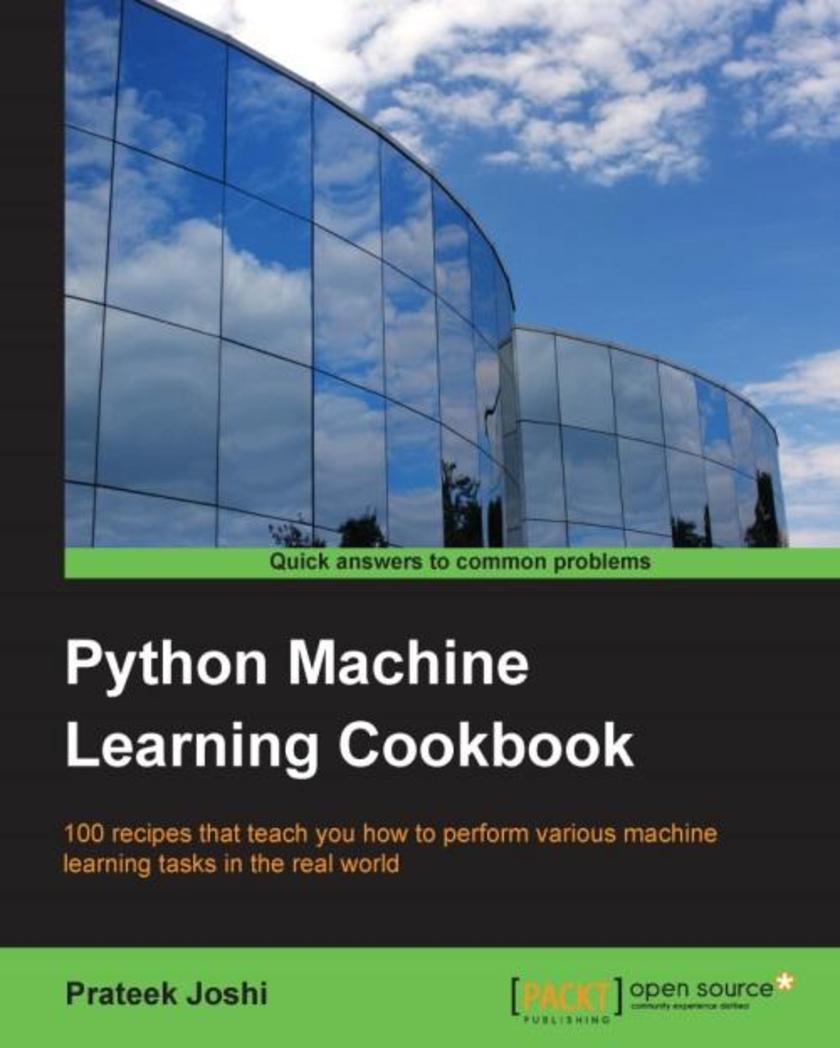
Python Machine Learning Cookbook
¥107.90
100 recipes that teach you how to perform various machine learning tasks in the real world About This Book Understand which algorithms to use in a given context with the help of this exciting recipe-based guide Learn about perceptrons and see how they are used to build neural networks Stuck while making sense of images, text, speech, and real estateThis guide will come to your rescue, showing you how to perform machine learning for each one of these using various techniques Who This Book Is For This book is for Python programmers who are looking to use machine-learning algorithms to create real-world applications. This book is friendly to Python beginners, but familiarity with Python programming would certainly be useful to play around with the code. What You Will Learn Explore classification algorithms and apply them to the income bracket estimation problem Use predictive modeling and apply it to real-world problems Understand how to perform market segmentation using unsupervised learning Explore data visualization techniques to interact with your data in diverse ways Find out how to build a recommendation engine Understand how to interact with text data and build models to analyze it Work with speech data and recognize spoken words using Hidden Markov Models Analyze stock market data using Conditional Random Fields Work with image data and build systems for image recognition and biometric face recognition Grasp how to use deep neural networks to build an optical character recognition system In Detail Machine learning is becoming increasingly pervasive in the modern data-driven world. It is used extensively across many fields such as search engines, robotics, self-driving cars, and more. With this book, you will learn how to perform various machine learning tasks in different environments. We’ll start by exploring a range of real-life scenarios where machine learning can be used, and look at various building blocks. Throughout the book, you’ll use a wide variety of machine learning algorithms to solve real-world problems and use Python to implement these algorithms. You’ll discover how to deal with various types of data and explore the differences between machine learning paradigms such as supervised and unsupervised learning. We also cover a range of regression techniques, classification algorithms, predictive modeling, data visualization techniques, recommendation engines, and more with the help of real-world examples. Style and approach You will explore various real-life scenarios in this book where machine learning can be used, and learn about different building blocks of machine learning using independent recipes in the book.
Extending Puppet - Second Edition
¥71.93
Start pulling the strings of your infrastructure with Puppet – learn how to configure, customize, and manage your systems more intelligently About This Book Explore the wider Puppet ecosystem of useful tools Design and manage your Puppet architecture for optimum performance Write more efficient code that keeps your infrastructure more robust Who This Book Is For If you are a Puppet user, this book will help you on different levels. If you a beginner, we summarize the key Puppet components and give you the elements to have a broader vision. For more experienced users, you will be surprised by with topics on designing, implementing, adapting, and deploying Puppet architectures. If you are expert, you will find topics and information that is rarely exposed in other books, giving you an insight into Puppet's future and its usage on alternative devices. What You Will Learn Learn the principles of Puppet language and ecosystem Extract the features of Hiera and PuppetDB’s power usage Explore the different approaches to Puppet architecture design Use Puppet to manage network, cloud, and virtualization devices Manage and test the Puppet code workflow Tweak, hack, and adapt the Puppet extension points Get a run through of the strategies and patterns to introduce Puppet automation Master the art of writing reusable modules In Detail Puppet has changed the way we manage our systems, but Puppet itself is changing and evolving, and so are the ways we are using it. To tackle our IT infrastructure challenges and avoid common errors when designing our architectures, an up-to-date, practical, and focused view of the current and future Puppet evolution is what we need. With Puppet, you define the state of your IT infrastructure, and it automatically enforces the desired state. This book will be your guide to designing and deploying your Puppet architecture. It will help you utilize Puppet to manage your IT infrastructure. Get to grips with Hiera and learn how to install and configure it, before learning best practices for writing reusable and maintainable code. You will also be able to explore the latest features of Puppet 4, before executing, testing, and deploying Puppet across your systems. As you progress, Extending Puppet takes you through higher abstraction modules, along with tips for effective code workflow management. Finally, you will learn how to develop plugins for Puppet - as well as some useful techniques that can help you to avoid common errors and overcome everyday challenges. Style and approach This is a collection of specific information about multiple topics related to Puppet and its ecosystem. Starting from a review of the very basics to more advanced topics, mixing practical advice with important theory and broader perspective, along with implementation details.
Android Studio 2 Essentials - Second Edition
¥63.21
A fast-paced guide to get you up and running with Android application development using Android Studio 2 About This Book Configure, build, and run Android projects with Android Studio 2 Test your apps using the Android emulator and learn how to manage virtual devices Explore how Android Studio 2 can be made a part of your workflow to reduce the overall development time Who This Book Is For If you are an Android developer looking to quickly take advantage of Android Studio 2 and add it to your workflow, then this book is for you. It is assumed that you are familiar with the OOP paradigm and Java. You are recommended to have prior knowledge of the main characteristics of the Android mobile system to get the most out of this book. What You Will Learn Install Android Studio on your system and configure the Android Software Development Kit Create your first project and explore its structure Manage a project in Android Studio 2 with Gradle Improve your productivity while programming by getting the best of the code editor Design the user interface using layouts and see how to handle various user events Integrate Google Play services into your project efficiently Monitor your app while it's running and constantly improve its performance In Detail Android Studio 2, the official IDE for Android application development, dramatically improves your workflow by letting you quickly see changes running on your device or emulator. It gives developers a unique platform by making app builds and deployment faster. This book will get you up and running with all the essential features of Android Studio 2 to optimize your development workflow. Starting off with the basic installation and configuration of Android Studio 2, this book will help you build a new project by showing you how to create a custom launcher icon and guiding you to choose your project. You will then gain an insight into the additional tools provided in Android Studio, namely the Software Development Kit (SDK) Manager, Android Virtual Device (AVD) Manager, and Javadoc. You’ll also see how to integrate Google Play Services in an Android project. Finally, you’ll become familiar with the Help section in Android Studio, which will enable you to search for support you might require in different scenarios. Style and approach A comprehensive and practical guide that will give you the essential skills required to develop Android applications quickly using Android Studio. With the help of a real-world project, this book will show how to make Android Studio a part of your development process and optimize it.
Mastering Articulate Storyline
¥80.65
Build up your e-learning development skills with Articulate Storyline About This Book Develop interactive e-learning projects using advanced techniques Impress your clients and/or audience with out-of-the-box interactions Step-by-step walkthroughs provide practical solutions Who This Book Is For This book is for anyone experienced in using the basic functions of Articulate Storyline who are yearning to learn more. It’s designed to provide a brief overview of key concepts, to help you refresh your knowledge of common functions, and teach you how to push Storyline to the limit! What You Will Learn Familiarize yourself with best practices for e-learning development Review key Storyline concepts before diving in deep with development Discover new ways of working within Storyline to extend slide content and enhance interactivity Personalize your story with advanced variable-based interactions See how JavaScript can be used in your stories to do some really neat things Assess your learners using customized assessment options and find out how to troubleshoot common issues Customize the learning experience by modifying the player properties and publishing settings Customize your story and prepare it for publishing In Detail Storyline is a powerful e-learning authoring tool that allows you to take your creativity to the next level. However, more often than not, projects don't require such complex interactions, leaving Storyline's full capabilities untapped. This book will provide you with the information you need to take your Storyline development up a notch by leveraging the full suite of possibilities Storyline has to offer. You will be provided with a refresher of the key concepts before we take you deep into the exciting world of enhanced interactivity, variables, and even some JavaScript—oh my! With downloadable activities, you can either follow along and compare your output, use the activities as they are, modify the activities to suit your own needs, or reverse-engineer the activities to better understand how they were developed. Style and approach You’ll get hands-on working with project files that were created with you in mind. As you move through each chapters, the practical, step-by-step approach will get you using some of the more advanced features of Storyline to create polished and snazzy interactions.
Node.js Web Development - Third Edition
¥80.65
Create real-time server-side applications with this practical, step-by-step guide About This Book Learn about server-side JavaScript with Node.js and Node modules through the most up-to-date book on Node.js web development Understand website development both with and without the Connect/Express web application framework Develop both HTTP server and client applications Who This Book Is For This book is for anybody looking for an alternative to the "P" languages (Perl, PHP, and Python), or anyone looking for a new paradigm of server-side application development. You should have at least a rudimentary understanding of JavaScript and web application development. What You Will Learn Install and use Node.js for both development and deployment Use the Express application framework Configure Bootstrap for mobile-first theming Use data storage engines such as MySQL, SQLITE3, and MongoDB Understand user authentication methods, including OAuth, with third-party services Deploy Node.js to live servers, including microservice development with Docker Perform unit testing with Mocha Perform functional testing of the web application with CasperJS In Detail Node.js is a server-side JavaScript platform using an event driven, non-blocking I/O model allowing users to build fast and scalable data-intensive applications running in real time. Node.js Web Development shows JavaScript is not just for browser-side applications. It can be used for server-side web application development, real-time applications, microservices, and much more. This book gives you an excellent starting point, bringing you straight to the heart of developing web applications with Node.js. You will progress from a rudimentary knowledge of JavaScript and server-side development to being able to create and maintain your own Node.js application. With this book you'll learn how to use the HTTP Server and Client objects, data storage with both SQL and MongoDB databases, real-time applications with Socket.IO, mobile-first theming with Bootstrap, microservice deployment with Docker, authenticating against third-party services using OAuth, and much more. Style and Approach This book is a practical guide for anyone looking to develop striking and robust web applications using Node.js.
Mastering Cloud Development using Microsoft Azure
¥80.65
Master the art of efficiently composing Azure services and implement them in real-world scenarios About This Book Build an effective development environment in Azure using the right set of technologies. Architect a full-stack solution in the cloud to choose the best service set A comprehensive guide full of real-life examples to help you take your developer skills up a notch Who This Book Is For If you are a developer, a full-stack developer, or an architect with an intermediate level understanding of cloud computing and Microsoft Azure, and you want to take your skills up a notch, this book is for you. Prior knowledge and understanding of cloud development strategies is assumed. What You Will Learn Set up a development environment with VMs, ARM, and RemoteApp Connect with VPNs to manage security and backups Establish a front-end architecture with AppService, storage, search, and caching Implement identity solutions, integrate applications, and use data Integrate cross-platform mobile applications with the cloud Consistently build and manage an API layer for millions of users Work with messages in the enterprise Deploy your services as an IT expert with ARM templates In Detail Microsoft Azure is a cloud computing platform that supports many different programming languages, tools, and frameworks, including both Microsoft-specific and third-party software and systems. This book starts by helping you set up a professional development environments in the cloud and integrating them with your local environment to achieve improved efficiency. You will move on to create front-end and back-end services, and then build cross-platform applications using Azure. Next you’ll get to grips with advanced techniques used to analyze usage data and automate billing operations. Following on from that, you will gain knowledge of how you can extend your on-premise solution to the cloud and move data in a pipeline. In a nutshell, this book will show you how to build high-quality, end-to-end services using Microsoft Azure. By the end of this book, you will have the skillset needed to successfully set up, develop, and manage a full-stack Azure infrastructure. Style and Approach This comprehensive guide to Azure has both explorative parts and step-by-step ones. Each chapter defines a learning path to a specific scenario, mixing the appropriate technologies and building blocks efficiently.


