


 购物车
购物车 个人中心
个人中心
OpenStack Essentials
¥54.49
If you need to get started with OpenStack or want to learn more, then this book is your perfect companion. If you're comfortable with the Linux command line, you'll gain confidence in using OpenStack.
Neo4j High Performance
¥54.49
If you are a professional or enthusiast who has a basic understanding of graphs or has basic knowledge of Neo4j operations, this is the book for you. Although it is targeted at an advanced user base, this book can be used by beginners as it touches upon the basics. So, if you are passionate about taming complex data with the help of graphs and building high performance applications, you will be able to get valuable insights from this book.
Spring Integration Essentials
¥54.49
This book is intended for developers who are either already involved with enterprise integration or planning to venture into the domain. Basic knowledge of Java and Spring is expected. For newer users, this book can be used to understand an integration scenario, what the challenges are, and how Spring Integration can be used to solve it. Prior experience of Spring Integration is not expected as this book will walk you through all the code examples.
Drupal Search Engine Optimization
¥54.49
The book will take a hands-on approach to the process involved in configuring a site for SEO. As SEO is an on-going process – it doesn’t stop once the site is built – the book will provide reusable tips and techniques in order to understand what they have to do after the site is live,This book targets site builders, webmasters and site owners. Advanced technical skills are not required, though the user should be familiar with administering a Drupal website.
Oracle Database XE 11gR2 Jump Start Guide
¥54.49
This book discusses concepts and tasks through real-world examples. The author uses simple language, screenshots, and a step-by-step approach to get you started with Oracle Database administration. If you are a student or beginner who is learning to administer Oracle Database, then this book is for you. This book is designed to cover the problems that novice DBAs particularly struggle with, so no prior knowledge of Oracle database administration is expected.

WordPress for Education
¥54.49
WordPress for Education is full of screenshots, practical examples, step-by-step instructions, and best practices for using WordPress in an educational setting. WordPress for Education is written for educators and education personnel interested in implementing WordPress in a classroom setting. You are not required to have previous experience of WordPress or any other content management system.

Bitcoin Essentials
¥54.49
Gain insights into Bitcoin, a cryptocurrency and a powerful technology, to optimize your Bitcoin mining techniquesAbout This BookLearn how to use the advanced features of Bitcoin walletsSet up your Bitcoin mining operations to mine with efficiencyExplore what the future holds for mining and blockchains in this pragmatic guideWho This Book Is ForIf you have never mined before, this book will ensure that you know what mining is all about. If you are familiar with Bitcoin mining, then it will help you to optimize your mining operations at a deeper level. A basic understanding of computers and operating systems is assumed, and some familiarity with cryptocurrency basics would be an added advantage.What You Will LearnGet introduced to Bitcoin mining from the ground upFind out about mining software and the different types of mining hardwareMaster setup techniques to enable efficient miningExamine the pros and cons of the different types of mining hardwareDeduce the differences between solo and pool miningTake a peek into professional mining farmsExplore the future of mining and blockchain-based applicationsIn DetailBlockchain is being billed as the technology of the future. Bitcoin is the first application of that technology. Mining is what makes it all possible. Exploring mining from a practical perspective will help you make informed decisions about your mining setup. Understanding what the future may hold for blockchains, and therefore for mining, will help you position yourself to take advantage of the impending changes.This practical guide starts with an introduction to Bitcoin wallets, as well as mining hardware and software. You will move on to learn about different mining techniques using the CPU, GPU, FPGA, and ultimately the ASIC as an example. After this, you will gain an insight into solo mining and pool mining, and see the differences between the two. The book will then walk you through large-scale mining and the challenges faced during such operations. Finally, you will take a look into the future to see a world where blockchain-based applications are commonplace and mining is ubiquitous.Style and approachThis is a practical guide that includes detailed step-by-step instructions and examples on each essential concept of Bitcoin mining.
Getting Started with Ionic
¥54.49
Get up and running with developing effective Hybrid Mobile Apps with IonicAbout This BookDevelop engaging mobile experiences with a native-looking UI in Ionic and AngularJSBuild mobile applications with a native UI and interactions with device APIs using popular web technologies such as HTML, CSS, and JavaScriptCreate an e-commerce mobile app using tutorials and code samplesWho This Book Is ForThis book is ideal for any web developer who wants to enter into the world of mobile app development but has no clue where to start. Ionic is an ideal starting point and provides a smooth learning curve to help you build hybrid apps using web technologies and to develop native apps for iOS and Android, you do not need to know multiple languages. This book will also be useful for Hybrid App developers who have not found the perfect framework to ensure users get a rich experience from your apps.What You Will LearnGet to know about Hybrid Apps and AngularJSSet up a development environment to build Hybrid AppsNavigate around the components and routing in IonicUse different Ionic directives for a mobile-specific experienceIntegrate an Ionic App with backend web servicesWork with plugins to include native functionality in your hybrid appsTest your apps on real devicesBuild an e-commerce app for iOS and Android from scratchIn DetailHybrid Apps are a promising choice in mobile app development to achieve cost effectiveness and rapid development. However, they were not preferred over native apps until few years back due to a poor performance and bad user experience, but everything has changed with the release of Ionic. It has evolved as the most popular choice for Hybrid Mobile App development as it tends to match the native experience and provides robust components/tools to build apps.Getting Started with Ionic equips any web developer with the basic knowledge needed to use modern web technologies to build amazing hybrid mobile apps using Ionic.This fast-paced, practical book explains all the important concepts of AngularJS and Cordova Framework required to develop apps, then gives you a brief introduction to hybrid mobile applications. It will guide you through setting up the environment to develop mobile apps, and through the multiple options and features available in Ionic so you can use them in your mobile apps. Features such as the Side Menu, Tabs, Touch Interactions, and native features such as Bar Code, Camera, and Geolocations are all covered.. Finally, we’ll show you how to use Cordova plugins and publish your apps.Style and approachGetting started with Ionic is a compact, easy-to-follow guide to developing hybrid mobile apps using Ionic with real world examples of building an e-commerce app.
Ionic Framework By Example
¥54.49
Build amazing cross-platform mobile apps with Ionic, the HTML5 framework that makes modern mobile application development simpleAbout This BookLearn how to use one of the most exciting mobile development frameworks around to build even better appsFollow the featured sample projects to experience Ionic’s impressive capabilitiesExtend your developer skillset to build, test, and launch mobile apps with confidenceWho This Book Is ForThis book is for anyone who wants to see Ionic in action - and find out how it could transform the way they build mobile apps. If you’re a JavaScript web developer, you’ll be building great projects in no time.What You Will LearnLearn Ionic by creating three complete mobile applicationsGet to know the Ionic CLIAdd basic and advanced features to the Ionic frameworkConnect an Ionic app with a Firebase back endIntegrate PhoneGap plugins with NG-CordovaTest your apps to improve and optimize performanceIn DetailChange doesn’t have to be challenging. Sometimes it can be simple – sometimes it just makes sense. With Ionic, mobile development has never been so simple, so elegant and obvious. By helping developers to harness AngularJS and HTML5 for mobile development, it’s the perfect framework for anyone obsessed with performance, and anyone that understands just how important a great user experience really is.This book shows you how to get started with Ionic framework immediately. But it doesn’t just give you instructions and then expect you to follow them. Instead it demonstrates what Ionic is capable of through three practical projects you can follow and build yourself.From a basic to-do list app, a London tourist app, to a complete social media app, all three projects have been designed to help you learn Ionic at its very best. From setting up your project to developing on both the server side and front end, and best practices for testing and debugging your projects, you’ll quickly become a better mobile developer, delivering high performance mobile apps that look awesome.Ionic Framework by Example is for people who don’t want to learn now, build later – it’s for people who want to learn and build at the same time – so they can meet today’s mobile development challenges head on and deliver better products than anyone else.Style and approachThis book isn’t just an instruction manual. It doesn’t just tell you what to do – it shows you. Featuring three sample projects, it’s been created so you can get started with Ionic immediately.

Getting Started with NativeScript
¥54.49
Explore the possibility of building truly native, cross-platform mobile applications using your JavaScript skill—NativeScript!About This BookSave your marketing time by building for iOS, Android, and Windows Mobile platforms simultaneouslyBe an ace at utilizing the features of NativeScript and its ability to communicate with each of the host device libraries nativelyProficiently, build your fully cross-platform communication application exhibiting the fundamentals of NativeScriptWho This Book Is ForIf you are a JavaScript developer and want to build cross-platform applications, then this book is just the right one for you!What You Will LearnInstall and compile your application in NativeScriptGet important know-how on the NativeScript project structureDevelop and style your screens for multiple platformsCreate a full-featured cross-platform communication applicationImport and use several third-party componentsSimplify and deal with device resolution and cross-platform issuesTest and deploy your applicationIn DetailNativeScript allows you to build a fast cross-platform application that has a native UI. NativeScript is a true cross-platform framework that generates native speed applications using the native components of the host platform, all using JavaScript. Although NativeScript allows you to build your application in JavaScript, you have full access to the host OS from your code, allowing you to easily tweak or use new platform features instantly at native code speeds.Whether you have already developed multiple applications or zero applications, this book will help you to develop your next application in a cross-platform framework quickly, saving you a massive amount of time and money.This book concisely shows you NativeScript’s built-in framework that allows you to rapidly develop a fully-working compiled cross-platform application in just a few chapters. It starts by laying the foundation of NativeScript and working through the fundamentals to create a basic shell of the application. Moving on, you’ll see how to build a full-fledged application step by step. We’ll show you how to use plugins, and how to communicate with the native OS libraries easily so that you can customize your application as if your app was created in Java or Objective C. We then deal with the issues that arise from being cross platform and compensate for the different screen sizes, screen resolutions, and device abilities. Finally, we progress to testing and deploying your app.Style and approach A stepwise guide for building cross-platform mobile applications with the help of easy-to-understand examples.
PySide GUI Application Development - Second Edition
¥54.49
Develop more dynamic and robust GUI applications using PySide, an open source cross-platform UI frameworkAbout This BookDesigned for beginners to help you get started with GUI application developmentDevelop your own applications by creating customized widgets and dialogsWritten in a simple and elegant structure so you easily understand how to program various GUI componentsWho This Book Is ForThis book is written for Python programmers who want to learn about GUI programming. It is also suitable for those who are new to Python but are familiar with object-oriented programming.What You Will LearnProgram GUI applications in an easy and efficient wayDownload and install PySide, a cross-platform GUI development toolkit for PythonCreate menus, toolbars, status bars, and child windowsDevelop a text editor application on your ownConnect your GUI to a database and manage itExecute SQL queries by handling databasesIn DetailElegantly-built GUI applications are always a massive hit among users. PySide is an open source software project that provides Python bindings for the Qt cross-platform UI framework. Combining the power of Qt and Python, PySide provides easy access to the Qt framework for Python developers and also acts as an excellent rapid application development platform.This book will take you through everything you need to know to develop UI applications. You will learn about installing and building PySide in various major operating systems as well as the basics of GUI programming. The book will then move on to discuss event management, signals and slots, and the widgets and dialogs available with PySide. Database interaction and manipulation is also covered.By the end of this book, you will be able to program GUI applications efficiently and master how to develop your own applications and how to run them across platforms.Style and approachThis is an accessible and practical guide to developing GUIs for Python applications.

Apple Pay Essentials
¥54.49
Harness the power of Apple Pay in your iOS apps and integrate it with global payment gatewaysAbout This BookBe it adding an Apple Pay button to your app or calculating sales tax with Apple Pay- this book gives you all the information you need to build a fully-functional Apply Pay applicationPaying within iOS Apps made easier and secure with this no nonsense and powerful guideEscape tedious payment options by creating compelling product card screens that present the Pay button, which your customers can tap to quickly order your productsWho This Book Is ForThis book is for anyone who wants to integrate Apple Pay in their applications. Basic familiarity with programming and the Xcode developer tools is expected.What You Will LearnDesign a product card that includes the Apple Pay buttonImplement the Apple Pay workflow in an efficient wayUse NSDecimalNumber objects to perform financial calculations accuratelyManage custom order information in the Apple Pay workflow and your custom order management systemExtract payment information from a payment tokenImplement a secure, server-side payment-processor programFind out everything you wanted to know about Apple Pay in iOS 9In DetailApple Pay, one of the most talked about offerings of the latest iOS 9 release, is a digital wallet and electronic payment system developed by Apple Inc. Paying in stores or within apps has never been easier or safer. Gone are the days of searching for your wallet, and the wasted moments finding the right card! Now you can use your credit cards and rewards cards with just a touch.It allows payment to merchants, using Near field Communication (NFC), and within iOS apps. Implementing Apple Pay within apps for payment is a bit tricky, but our book solves this problem for you.Whether you are a brand new iOS app developer or a seasoned expert, this book arms you with necessary skills to successfully implement Apple Pay in your online-payment workflow.Whether you are a brand new iOS app developer or a seasoned expert, this book arms you with the necessary skills to successfully implement Apple Pay. We start off by teaching you how to obtain the certificates necessary to encrypt customers’ payment information. We will use Xcode and Objective C for the interface and Node.js for server side code. You will then learn how to determine whether the customer can use Apple Pay, and how to create payment requests. You will come to grips with designing a payment-processor program to interact with the payment gateway. Finally, we take a look at a business-focused view of Apple Pay protocols and classes.By the end of this book, you will be able to build a fully functional Apple Pay-integrated iOS appStyle and approachThis is an easy-to-follow guide on integrating Apple Pay in your iOS Application. With step by step instructions along with excellent screen shots you will be able to learn everything that you wanted to know about Passbook and Apple Pay in iOS 8.

Babylon.js Essentials
¥54.49
Understand, train, and be ready to develop 3D Web applications/video games using the Babylon.js framework, even for beginners About This Book Understand the basics of 3D (along with the theory) before practicing Each mini-project provides previous features, alongside the new feature you are learning, to supply the examples Learn from the best of the best, a developer at Microsoft, France Who This Book Is For Babylon.JS Essentials is intended for developers who want to enter the world of 3D development for the Web, or developers who want to add the Babylon.js framework to their skill set. The notion of Oriented Object Programming would be helpful to understand the architecture of the Babylon.js framework. Also, a familiarity with Web development would be useful, to understand the principles used. What You Will Learn Understand what the TypeScript language is and its benefits (compared to JavaScript) in large projects such as 3D engines Learn the basics of 3D using Babylon.js without too much theory but with an emphasis on practice, for a better understanding of the architecture Know the usage of Material—a fundamental principle of 3D engines in Babylon.js—and then customize the appearance of 3D objects Integrate collisions and physics in gameplay. Understand the notion of impostor for physics simulation Manage, create, and spatialize audio tracks in 3D scenes Go further with the Babylon.js framework to create actions on events Create rendering effects provided by the Babylon.js framework, such as post-processes In Detail Are you familiar with HTML5Do you want to build exciting games and Web applicationsThen explore the exciting world of game and Web development with one of the best frameworks out there: Babylon.JS. Starting from the beginning, the book introduces the required basics for 3D development and the knowledge you need to use the Babylon.js framework. It focuses on the simplicity provided by Babylon.js and uses a combination of theory and practice. All the chapters are provided with example files ready to run; each example file provides the previously learned features of the framework. Finally, developers will be ready to easily understand new features added to the framework in the future. Style and approach The book is a comprehensive guide packed with ready-to-run examples with a mix of theory and practice.

Creating Dynamic UIs with Android Fragments - Second Edition
¥54.49
Create engaging apps with fragments to provide a rich user interface that dynamically adapts to the individual characteristics of your customers’ tablets and smartphones About This Book From an eminent author comes a book that will help you create engaging apps that dynamically adapt to individual device characteristics The only book that includes the latest fragment-oriented features and their role in Material design This book provides code-intensive discussions and detailed examples that help you understand better and learn faster. Who This Book Is For This book is for developers with a basic understanding of Android programming who would like to improve the appearance and usability of their applications by creating a more interactive user experience and dynamically adaptive UIs; providing better support for tablets and smartphones in a single app; and reducing the complexity of managing app UIs. What You Will Learn Learn the role and capabilities of fragments Use Android Studio's fragment-oriented features Create an app UI that works effectively on smartphones and tablets Manage the creation and life cycle of fragments Dynamically manage fragments using the FragmentTransaction class Learn the application design for communicating between fragments Leverage fragments when implementing applications that take advantage of the latest features of Material Design In Detail Today’s users expect mobile apps to be dynamic and highly interactive, with rich navigation features. These same apps must look fantastic whether running on a medium-resolution smartphone or high-resolution tablet. Fragments provide the toolset we need to meet these user expectations by enabling us to build our applications out of adaptable components that take advantage of the rich capabilities of each individual device and automatically adapt to their differences. This book looks at the impact fragments have on Android UI design and their role in both simplifying many common UI challenges and in providing best practices for incorporating rich UI behaviors. We look closely at the roll of fragment transactions and how to work with the Android back stack. Leveraging this understanding, we explore several specialized fragment-related classes such as ListFragment and DialogFragment. We then go on to discuss how to implement rich navigation features such as swipe-based screen browsing, and the role of fragments when developing applications that take advantage of the latest aspects of Material Design. You will learn everything you need to provide dynamic, multi-screen UIs within a single activity, and the rich UI features demanded by today’s mobile users. Style and approach A fast-paced learning guide that gives a hands-on, code-intensive approach with a focus on real-world applications.
Google Cloud AI Services Quick Start Guide
¥54.49
Leverage the power of various Google Cloud AI Services by building a smart web application using MEAN Stack About This Book ? Start working with the Google Cloud Platform and the AI services it offers ? Build smart web applications by combining the power of Google Cloud AI services and the MEAN stack ? Build a web-based dashboard of smart applications that perform language processing, translation, and computer vision on the cloud Who This Book Is For This book is ideal for data professionals and web developers who want to use the power of Google Cloud AI services in their projects, without the going through the pain of mastering machine learning for images, videos and text. Some familiarity with the Google Cloud Platform will be helpful. What You Will Learn ? Understand Google Cloud Platform and its Cloud AI services ? Explore the Google ML Services ? Work with an Angular 5 MEAN stack application ? Integrate Vision API, Video Intelligence API for computer vision ? Be ready for conversational experiences with the Speech Recognition API, Cloud Language Process and Cloud Translation API services ? Build a smart web application that uses the power of Google Cloud AI services to make apps smarter In Detail Cognitive services are the new way of adding intelligence to applications and services. Now we can use Artificial Intelligence as a service that can be consumed by any application or other service, to add smartness and make the end result more practical and useful. Google Cloud AI enables you to consume Artificial Intelligence within your applications, from a REST API.? Text, video and speech analysis are among the powerful machine learning features that can be used. This book is the easiest way to get started with the Google Cloud AI services suite and open up the world of smarter applications. This book will help you build a Smart Exchange, a forum application that will let you upload videos, images and perform text to speech conversions and translation services. You will use the power of Google Cloud AI Services to make our simple forum application smart by validating the images, videos, and text provided by users to Google Cloud AI Services and make sure the content which is uploaded follows the forum standards, without a human curator involvement. You will learn how to work with the Vision API, Video Intelligence API, Speech Recognition API, Cloud Language Process, and Cloud Translation API services to make your application smarter. By the end of this book, you will have a strong understanding of working with Google Cloud AI Services, and be well on the way to building smarter applications. Style and approach We follow a project-based approach where we build a public forum application ifor uploading images or videos, posting and translating text messages. We incrementally add features by integrating each API as we go.
Python Penetration Testing Essentials
¥54.49
This book gives you the skills you need to use Python for penetration testing, with the help of detailed code examples. This book has been updated for Python 3.6.3 and Kali Linux 2018.1. About This Book ? Detect and avoid various attack types that put the privacy of a system at risk ? Leverage Python to build efficient code and eventually build a robust environment ? Learn about securing wireless applications and information gathering on a web server Who This Book Is For If you are a Python programmer, a security researcher, or an ethical hacker and are interested in penetration testing with the help of Python, then this book is for you. Even if you are new to the field of ethical hacking, this book can help you find the vulnerabilities in your system so that you are ready to tackle any kind of attack or intrusion. What You Will Learn ? The basics of network pentesting including network scanning and sniffing ? Wireless, wired attacks, and building traps for attack and torrent detection ? Web server footprinting and web application attacks, including the XSS and SQL injection attack ? Wireless frames and how to obtain information such as SSID, BSSID, and the channel number from a wireless frame using a Python script ? The importance of web server signatures, email gathering, and why knowing the server signature is the first step in hacking In Detail This book gives you the skills you need to use Python for penetration testing (pentesting), with the help of detailed code examples. We start by exploring the basics of networking with Python and then proceed to network hacking. Then, you will delve into exploring Python libraries to perform various types of pentesting and ethical hacking techniques. Next, we delve into hacking the application layer, where we start by gathering information from a website. We then move on to concepts related to website hacking—such as parameter tampering, DDoS, XSS, and SQL injection. By reading this book, you will learn different techniques and methodologies that will familiarize you with Python pentesting techniques, how to protect yourself, and how to create automated programs to find the admin console, SQL injection, and XSS attacks. Style and approach The book starts at a basic level and moves to a higher level of network and web security. The execution and performance of code are both taken into account.
Hands-On Data Analysis with NumPy and pandas
¥54.49
Get to grips with the most popular Python packages that make data analysis possible About This Book ? Explore the tools you need to become a data analyst ? Discover practical examples to help you grasp data processing concepts ? Walk through hierarchical indexing and grouping for data analysis Who This Book Is For Hands-On Data Analysis with NumPy and Pandas is for you if you are a Python developer and want to take your first steps into the world of data analysis. No previous experience of data analysis is required to enjoy this book. What You Will Learn ? Understand how to install and manage Anaconda ? Read, sort, and map data using NumPy and pandas ? Find out how to create and slice data arrays using NumPy ? Discover how to subset your DataFrames using pandas ? Handle missing data in a pandas DataFrame ? Explore hierarchical indexing and plotting with pandas In Detail Python, a multi-paradigm programming language, has become the language of choice for data scientists for visualization, data analysis, and machine learning. Hands-On Data Analysis with NumPy and Pandas starts by guiding you in setting up the right environment for data analysis with Python, along with helping you install the correct Python distribution. In addition to this, you will work with the Jupyter notebook and set up a database. Once you have covered Jupyter, you will dig deep into Python’s NumPy package, a powerful extension with advanced mathematical functions. You will then move on to creating NumPy arrays and employing different array methods and functions. You will explore Python’s pandas extension which will help you get to grips with data mining and learn to subset your data. Last but not the least you will grasp how to manage your datasets by sorting and ranking them. By the end of this book, you will have learned to index and group your data for sophisticated data analysis and manipulation. Style and approach A step-by-step approach, taking you through the different concepts and features of Data Analysis using Python libraries and tools.
AWS Lambda Quick Start Guide
¥54.49
Discover techniques and tools for building serverless applications with AWS Lambda About This Book ? Learn to write, run, and deploy Lambda functions in the AWS cloud ? Make the most of AWS Lambda functions to build scalable and cost-efficient systems ? A practical guide to developing serverless services and applications in Node.js, Java, Python, and C# Who This Book Is For This book is primarily for IT architects and developers who want to build scalable systems and deploy serverless applications with AWS Lambda. No prior knowledge of AWS is necessary. What You Will Learn ? Understand the fundamental concepts of AWS Lambda ? Get to grips with the Serverless Framework and how to create a serverless project ? Testing and debugging Lambda functions ? Create a stateful, serverless backend with DynamoDB ? Program AWS Lambda with Java, Python, and C# ? Program a lambda function with Node.js In Detail AWS Lambda is a part of AWS that lets you run your code without provisioning or managing servers. This enables you to deploy applications and backend services that operate with no upfront cost. This book gets you up to speed on how to build scalable systems and deploy serverless applications with AWS Lambda. The book starts with the fundamental concepts of AWS Lambda, and then teaches you how to combine your applications with other AWS services, such as AmazonAPI Gateway and DynamoDB. This book will also give a quick walk through on how to use the Serverless Framework to build larger applications that can structure code or autogenerate boilerplate code that can be used to get started quickly for increased productivity. Toward the end of the book, you will learn how to write, run, and test Lambda functions using Node.js, Java, Python, and C#. Style and approach This book will provide clear instructions that introduce the viewer to programming AWS Lambda with Node.js, Java, Python, and C#. Moreover, readers will learn how to deploy and test Lambda functions, and how to set up and use the serverless framework.
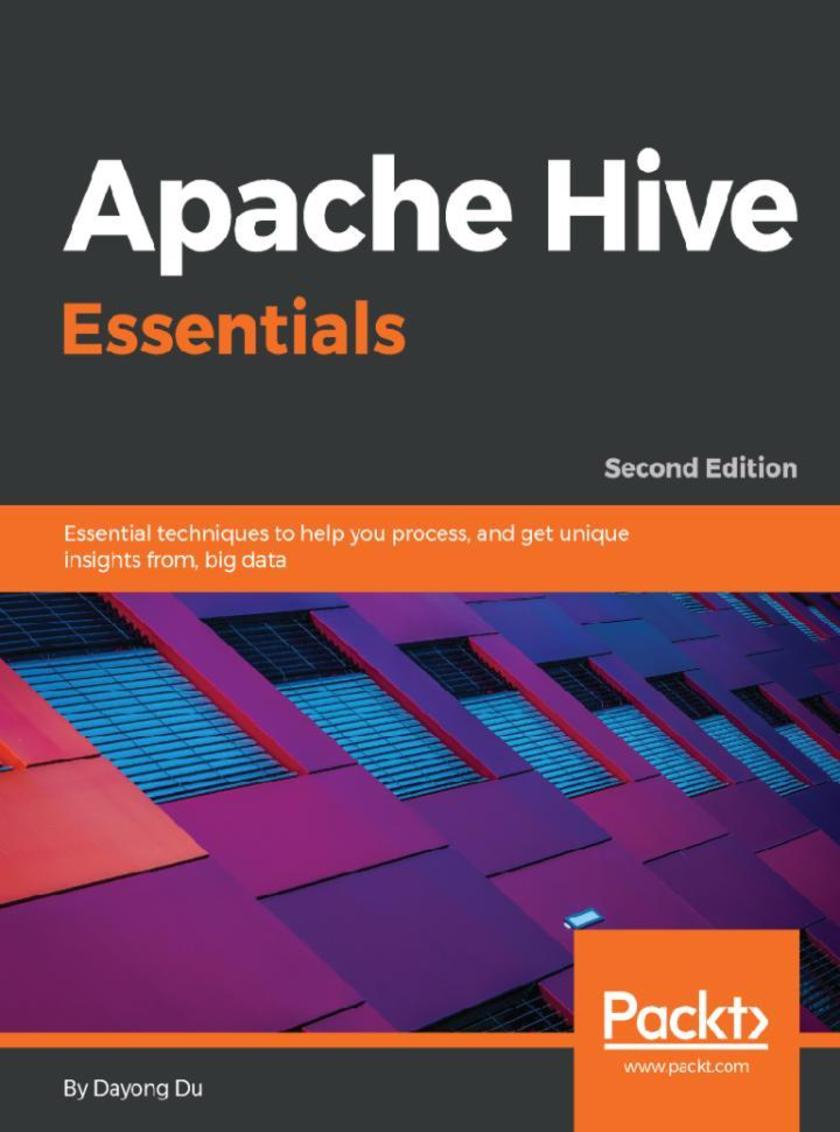
Apache Hive Essentials
¥54.49
This book takes you on a fantastic journey to discover the attributes of big data using Apache Hive. About This Book ? Grasp the skills needed to write efficient Hive queries to analyze the Big Data ? Discover how Hive can coexist and work with other tools within the Hadoop ecosystem ? Uses practical, example-oriented scenarios to cover all the newly released features of Apache Hive 2.3.3 Who This Book Is For If you are a data analyst, developer, or simply someone who wants to quickly get started with Hive to explore and analyze Big Data in Hadoop, this is the book for you. Since Hive is an SQL-like language, some previous experience with SQL will be useful to get the most out of this book. What You Will Learn ? Create and set up the Hive environment ? Discover how to use Hive's definition language to describe data ? Discover interesting data by joining and filtering datasets in Hive ? Transform data by using Hive sorting, ordering, and functions ? Aggregate and sample data in different ways ? Boost Hive query performance and enhance data security in Hive ? Customize Hive to your needs by using user-defined functions and integrate it with other tools In Detail In this book, we prepare you for your journey into big data by frstly introducing you to backgrounds in the big data domain, alongwith the process of setting up and getting familiar with your Hive working environment. Next, the book guides you through discovering and transforming the values of big data with the help of examples. It also hones your skills in using the Hive language in an effcient manner. Toward the end, the book focuses on advanced topics, such as performance, security, and extensions in Hive, which will guide you on exciting adventures on this worthwhile big data journey. By the end of the book, you will be familiar with Hive and able to work effeciently to find solutions to big data problems Style and approach This book takes on a practical approach which will get you familiarized with Apache Hive and how to use it to efficiently to find solutions to your big data problems. This book covers crucial topics like performance, and data security in order to help you make the most of the Hive working environment.
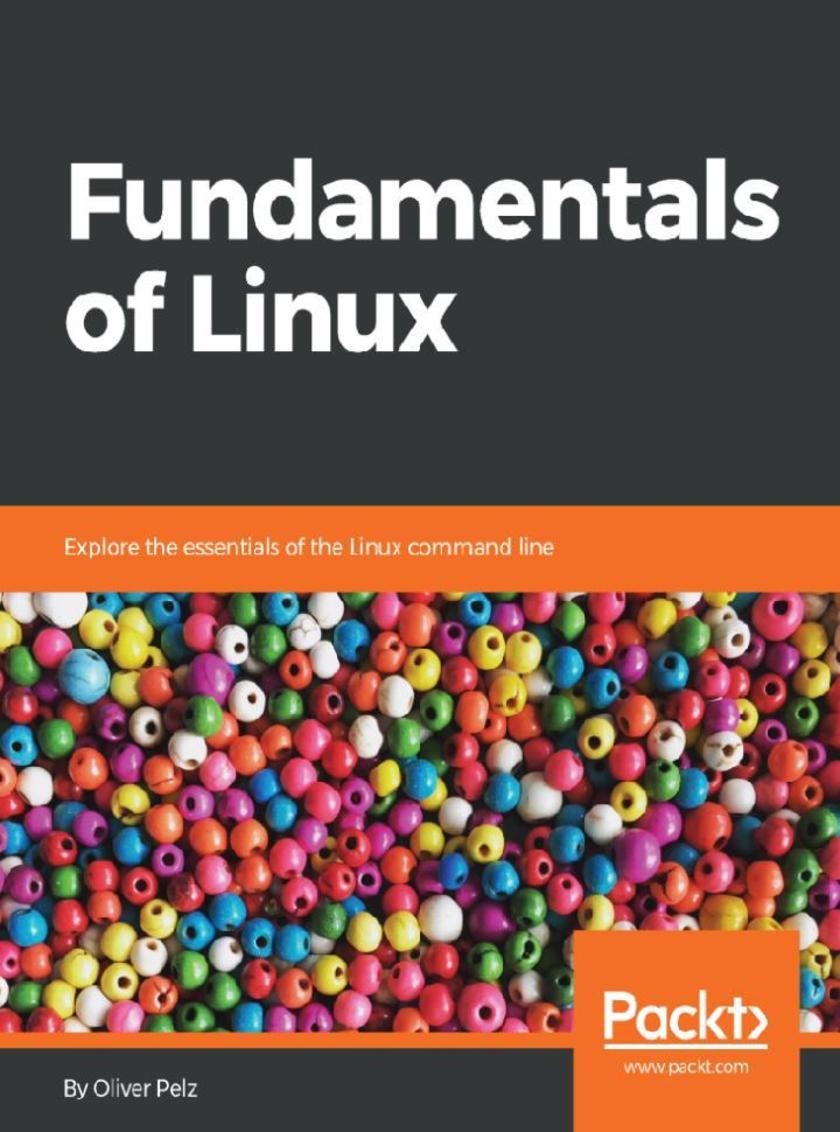
Fundamentals of Linux
¥54.49
Develop a solid understanding of the important command-line tools and utilities in Linux About This Book ? Delve into the fundamentals of Linux ? Explore and work with virtualization, command lines, and Bash shell scripts ? Use special file permission flags such as setuid and setgid Who This Book Is For Fundamentals of Linux is for individuals looking to work as a Linux system administrator. What You Will Learn ? Explore basic and advanced command-line concepts ? Install Linux, work with VirtualBox, and install CentOS 7 in VirtualBox ? Work with the command line efficiently and learn how to navigate through the Linux filesystem ? Create file and user group permissions and edit files ? Use Sticky bit to secure your Linux filesystem ? Define and remove ACL from Linux files In Detail Linux is a Unix-like operating system assembled under the model of free and open source software development and distribution. Fundamentals of Linux will help you learn all the essentials of the Linux command line required to get you started. The book will start by teaching you how to work with virtualization software and install CentOS 7 Linux as a VM. Then, you will get to grips with the workings of various command line operations, such as cursor movement, commands, options, and arguments. As you make your way through the chapters, the book will not only focus on the most essential Linux commands but also give an introduction to Bash shell scripting. Finally, you will explore advanced topics, such as networking and troubleshooting your system, and you will get familiar with the advanced file permissions: ACL, setuid, and setgid. Fundamentals of Linux includes real-world tasks, use cases, and problems that, as a system administrator, you might encounter in your day-to-day activities. Style and approach A step-by-step guide filled with real-world examples that will cover the fundamentals of Linux
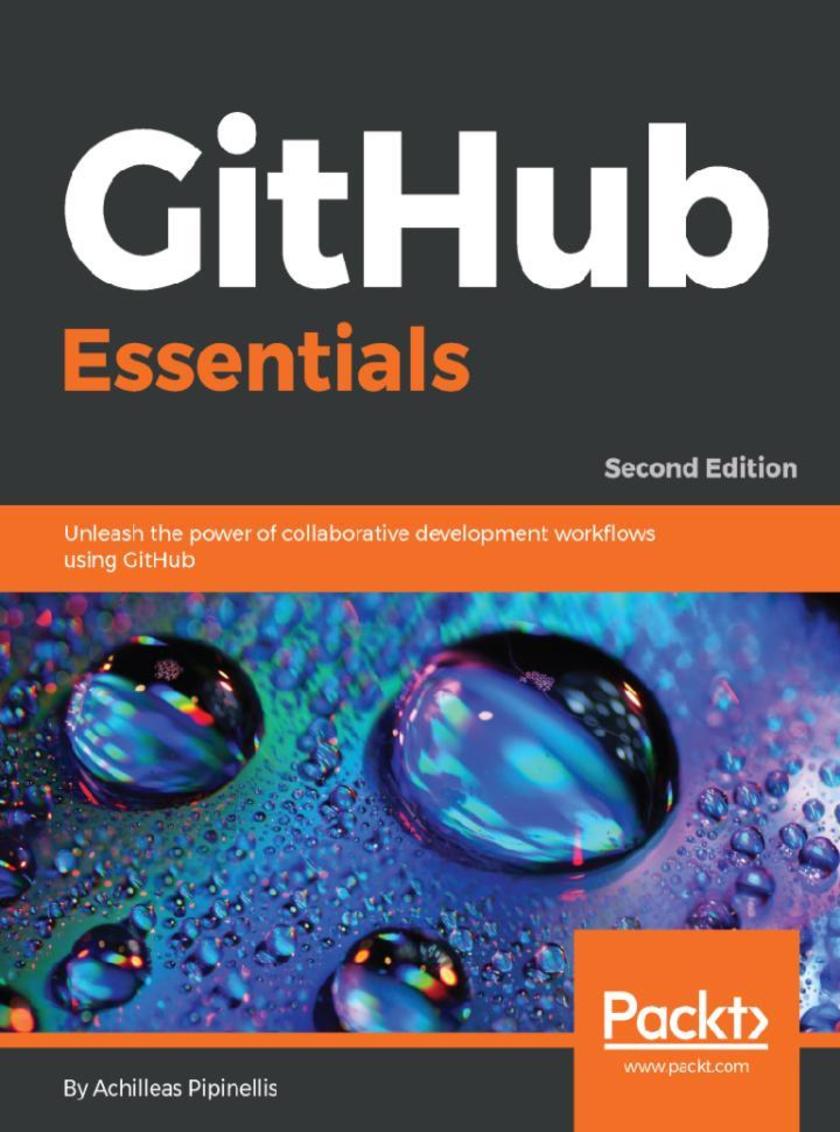
GitHub Essentials
¥54.49
This book will teach you what you need to know to start using GitHub effectively for collaborating and working on your software projects. About This Book ? Effectively use GitHub by learning its key features to leverage the power of Git and make collaboration on code easy to work with. ? Be more productive on the development workflow of your projects using the valuable toolset that GitHub provides. ? Explore the world of GitHub by following simple, step-by-step, real-world scenarios accompanied by helpful, explanatory screenshots. Who This Book Is For This book is for experienced or novice developers with a basic knowledge of Git. If you ever wanted to learn how big projects such as Twitter, Google, or even GitHub collaborate on code, then this book is for you. What You Will Learn ? Create and upload repositories to your account ? Create organizations and manage teams with different access levels on repositories ? Use the issue tracker effectively and add context to issues with labels and milestones ? Create, access, and personalize your user account and profile settings ? Build a community around your project using the sophisticated tools GitHub provides ? Create GitHub pages and understand web analytics In Detail Whether you are an experienced developer or a novice, learning to work with Version Control Systems is a must in the software development world. Git is the most popular tool for that purpose, and GitHub was built around it, leveraging its powers by bringing it to the web. Starting with the basics of creating a repository, you will then learn how to manage the issue tracker, the place where discussions about your project take place. Continuing our journey, we will explore how to use the wiki and write rich documentation that will accompany your project. You will also master organization/team management and some of the features that made GitHub so well known, including pull requests. Next, we will focus on creating simple web pages hosted on GitHub and lastly, we will explore the settings that are configurable for a user and a repository. Style and approach This book will take you through some of the most important features of one of the most popular tools, GitHub, which is used to bring developers together from all around the world to discover, share, and build better software. At each step of the way, you will learn about important approaches used in GitHub, including creating a repository, managing teams, creating GitHub pages, and watching your repository's web analytics, among others.


