


 购物车
购物车 个人中心
个人中心

Fugara
¥57.96
Cele mai bune texte SF ?i fantasy votate de Science Fiction and Fantasy Writers of America.?n viitorul devastat ecologic, b?rba?i supu?i modific?rii genetice sunt angaja?i s? reproduc? dansurile de ?mperechere specifice p?s?rilor disp?rute ale c?ror gene le poart? ei acum… Diminuarea luminii soarelui ?i sile?te pe ultimii supravie?uitori de pe P?m?nt s? se ascund? ?n ad?ncurile oceanelor ?nghe?ate… sunt doar c?teva subiecte incitante dintr-un volum care con?ine c??tig?toarele premiilor Nebula din cele trei categorii de fic?iune scurt?, un fragment din romanul recompensat cu Nebula, c??tig?toarele premiului Rhysling ?i Solstice ?i un fragment din romanul distins cu Premiul Andre Norton.

?armul discret al intestinului. Povestea celui mai subestimat organ al corpului
¥65.32
De data aceasta, Domnul Lemoncello a invitat mai multe echipe din toata America sa concureze la prima Olimpiada din Biblioteca. Oare va fi la fel de antrenanta ca Jocurile Olimpice? Dar cum se spune in reclama: Hei, doar e un joc Lemoncello! Dar cand din biblioteca incep sa dipara cartile si concurentii nu mai pot duce probele la bun sfarsit, copiii trebuie sa dezlege un mister mai adanc decat si-au inchipuit vreodata. De aici inainte, Olimpiada nu va mai fi un joc, iar alegerea campionilor va depinde in primul rand de rezolvarea misterului. Aceasta continuare trepidanta a bestsellerului Evadare din Biblioteca Domnului Lemoncello invita cititorii sa se inscrie la Olimpiada - enigmele, indiciile si surprizele fiind acum nu doar un test de cultura generala, ci si un test al prieteniei si al spiritului de echipa.

Fiul risipitor
¥68.75
Se spune c? ?nceputurile pot fi uneori ca o cea?? de nep?truns. A?a este ?i cazul acestei pove?ti, care ?ncepe cu apari?ia unei noi specii, probabil ?n urm? cu dou? mii de ani. Specia nu are ?nc? un nume – nimic nu are ?nc? unul – dar are capacitatea de a numi lucruri.Asemenea oric?rei alte noi specii, starea acesteia este fragil?. Num?rul membrilor s?i este mic, iar teritoriul pe care ?l ocup? este redus la o bucat? din estul Africii. Popula?ia sa cre?te treptat, dar apoi, destul de probabil, aceasta se diminueaz? din nou – unii ar spune c? asta se ?nt?mpl? ?ntr-un mod aproape fatal – ajung?nd la doar c?teva mii de perechi.Membrii speciei nu sunt neap?rat foarte rapizi sau puternici sau fertili. Ei sunt ?ns? nemaipomenit de descurc?re?i. Progresiv, ei ?ncep s? exploreze teritorii cu diferite climate, diferi?i pr?d?tori ?i diferite tipuri de v?nat. Nici una dintre constr?ngerile aduse de habitat sau de geografia locului nu pare s? ?i afecteze prea tare.

Leg?turi de s?nge (Cartea a treia din seria Spirite-Animale)
¥48.97
ngyilkosságokba hajszoló, hipnotikus ének tartja rettegésben Szími szigetének lakóit. Pireuszban egy megbélyegzett, elvágott torkú holttestre bukkannak a hatóságok. Vajon mi állhat az események hátterében A knyv szerepli ezekre a kérdésekre keresik a választ, számtalan veszélyen és rejtélyen át, hogy végül kiderüljn a megdbbent igazság.

Casnica
¥73.49
De ce devii psihiatru/psiholog/psihoterapeut? De ce s? vrei s? aju?i oamenii s? dep??easc? problemele vie?ii ?i s? se cunoasc? pe sine? Ce se ?nt?mpl? ?n mintea celui chemat s? te asculte ?i s? te accepte necondi?ionat? Rolurile se inverseaz? acum ?i ascult?torul este invitat s? se dest?inuie. Pe parcursul a 22 de confesiuni reunite ?n acest volum de cunoscutul psihiatru Christophe André, medicii ?i psihologii ??i ?mp?rt??esc experien?e personale ?i profesionale ce i-au adus sau i-au f?cut s? persiste pe acest drum, o cale, printre altele, de reg?sire de sine ?i de autod?ruire. Confesiunile ?nc?nt? prin stilul propriu al fiec?rui autor, prin anecdotica antrenant?, prin posibilitatea rar? de a p?trunde "?n culise", acolo unde fiecare ??i preg?te?te ?nt?lnirea mereu singular? cu pacientul din fa?a sa. Cartea se dore?te a fi o inspira?ie pentru cei afla?i ?n c?utarea echilibrului interior sau ?naintea unei alegeri profesionale, fiind totodat? o lectur? pl?cut? ?i incitant?.

Jurnal
¥196.12
Cea mai bun antologie fantasy a anului.“ – Fantasy LiteratureVoi spune povestea, aadar… dar va trebui s fii cu bgare de seam, pentru c nici povestitoarea nsi n-o nelege pe deplin.Am s v povestesc ce mi-a prezis vrjitoarea.Am s v povestesc despre iubirea pe care am avut-o i am pierdut-o.Am s v povestesc despre…“Epic. Legende fantasy cuprinde 17 proze scrise de unii dintre cei mai faimoi autori moderni: George R. R. Martin, Terry Brooks, Ursula K. Le Guin, Robin Hobb, Orson Scott Card, Tad Williams .a.O vitrin excelent a tot ce are mai bun literatura fantasy actual.“ – Publishers WeeklyAceasta nu este una dintre crile pe care s le devorezi pe nersuflate, ci dintre cele pe care le savurezi de-a lungul multor seri de lectur.“ – Locus

De 19 ori Katherine
¥65.32
Prima carte din seria Inima Lumii ?Numele meu este Ash, i-a spus el regelui. ?i sunt rōshun, ceea ce ?n limba mea ?nseamn? ?ghea?? de toamn?? – cea care vine devreme. Adic? vin din locul de unde vin to?i rōshunii, de unde porne?te r?zbunarea. A f?cut o pauz?, a?tept?nd ca vorbele sale s?-?i fac? efectul, apoi a continuat: Ai dreptate, am venit s? iau ceva de la tine. Am venit s?-?i iau via?a!“ Ash face parte din secta rōshun, asasini care ofer? protec?ie prin amenin?area cu vendeta. Ajuns prea b?tr?n pentru meseria aceasta ?i afectat de dureri de cap teribile (similare celor care ?i orbiser? tat?l), Ash are o viziune ?n care fostul lui maestru ?i cere s?-?i ia un ucenic. El ?l alege pe Nico, un t?n?r s?rac, disperat ?i singur, ?ns? nu apuc? s?-i termine instruirea, deoarece trebuie s? plece ?n Sf?ntul Imperiu Mann, ?ntr-o misiune care pricinuise deja moartea a trei rōshun. ?Farlander este o carte special?... Intriga fascineaz? de la primul capitol p?n? la finalul surprinz?tor.“ – Locus ?Absolut fascinant?! Pur ?i simplu, n-am putut s-o las din m?n?.“ – Glen Cook, autorul seriei Black Company
23 august 1939-1944. Rom?nia ?i proba bumerangului
¥65.32
La ce v?rst? pot s?-i d?ruiesc celui mic o tablet?? Peste c??i ani va avea nevoie de un telefon mobil? Jocurile video ?l agit? ?i-l fac oare "dependent" pe b?iatul meu? Ce fel de fotografii poate afi?a pe internet fiica mea adolescent? ?i cu cine se poate "?mprieteni" pe Facebook? Specializat? ?n psihiatria copilului ?i mam? a trei b?ie?i, Jodi Gold puncteaz?, pe un ton echilibrat, at?t beneficiile educa?ionale ?i cognitive ale tehnologiilor digitale, c?t ?i numeroasele capcane. Astfel, p?rin?ii noii genera?ii de "copii digitali" vor afla ce aplica?ii ?i jocuri ?ncurajeaz? creativitatea ?i inteligen?a copilului sau adolescentului, dar ?i ce limite trebuie impuse (ca durat?, dar ?i la nivel de con?inut), pentru a evita h?r?uirea online, refugierea nes?n?toas? ?n lumea vitual? ori dezinteresul pentru ?coal? ?i rela?iile sociale din real?.

Razboiul vrajitoarelor Vol. 1
¥40.79
Sunt bucuros s? ?tiu c? aceast? carte a fost remarcat? ?i luat? ?n considerare pentru publicarea ?n Rom?nia. ?mi amintesc vorbele lui Serghei Dovlatov, scriitor rus care ?i-a desf??urat activitatea literar? ?n America: ?Orice ziarist viseaz? s? scrie un roman.“ Un s?mbure de adev?r ?n aceast? fraz? exist?... E greu s? g?se?ti un jurnalist care, ?n timpul liber, s? nu fi ?ncercat s? scrie un roman, povestiri sau versuri... Principiul redac?ional era urm?torul: ?Scrie ?n a?a fel ?nc?t cel care va citi s? aib? co?maruri noaptea!...“ Totul p?rea extraordinar... Ie?it? din comun este ?i povestea dintre coper?ile acestei c?r?i.
Saber fencing, sport and martial art: Practial curriculum from the beginner to m
¥158.19
Jane Forrest Hargitai nyugodtnak induló hétf? reggele abban a pillanatban felborul, amint a dugóban el?tte álló kocsiból el?kerül egy n?i holttest. A bizonyítékok az éjszakai élet vezéréhez, Dobó Renátóhoz vezetnek, de a férfi egy csepp hajlandóságot sem mutat arra, hogy segítsen. Még a halott nevét sem árulja el. Jane viszont nem hagyja annyiban a dolgot, minden k?vet megmozgat, hogy megtudja, ki is az illet?. Mikor kiderül, hogy Bárfai sógorn?je az, elindul a lavina. Vivien és Renátó elt?nik, Jane családját pedig folyamatos támadások érik. Mikor a nyomozón? két gyerekére is rál?nek, Jane ráj?n, hogy csak úgy védheti meg a gyerekei életét, ha végez Bátfaival. A n?ben kett?s érzések dúlnak. Egyrészr?l a nyomozó, aki a b?n ellen harcol, másrészr?l, az anya, aki bármire képes azért, hogy megvédje a családját. De vajon helyesen cselekszik-e, ha meg?leti a b?rt?nben ül? férfit? Jogilag semmiképp! De mint ember? Vajon elfogadható-e, hogy úgy védje meg a gyerekei életét, hogy felbujtóként meg?leti a családja életére t?r?t?

Scrisori de dragoste pentru cei pleca?i
¥73.49
Un pu?ti de-o ?chioap? se arunc? pe jos ?n mijlocul magazinului; un elev de gimnaziu se plimb? prin clas? ?n mijlocul orei; un adolescent r?zg?iat ?n-are chef" s? ?nve?e nicio meserie. P?rin?ilor, profesorilor sau chiar angajatorilor, peisajul le este deja familiar. Cum se face c? ace?ti copii au ajuns s?-i joace pe degete pe adul?i ?i s? nu mai respecte nicio autoritate? Michael Winterhoff, psihiatru de copii, explic? ?n ce fel abdicarea de la reperele educa?ionale tradi?ionale, dar ?i ?ncurajarea unei rela?ii de ?parteneriat" (de negociere) ?ntre p?rin?i ?i copii a dus la situa?ia ?n care copiii sunt complet lipsi?i de acele oglindiri, limit?ri ?i ?ndrum?ri vitale pentru a deprinde autocontrolul ?i a cre?te nu doar fizic, ci ?i emo?ional. Discut?nd tendin?a p?rin?ilor de a-?i proiecta ne?mplinirile ?n via?a copilului, cartea ne reconduce la r?d?cinile parentajului: copiii trebuie s? redevin? copii, iar p?rin?ii trebuie s? redevin? educatorii grijulii, dar fermi, de care copiii au nevoie pentru o dezvoltare armonioas?.
Epic. Legende fantasy
¥81.67
Manualul de psihiatrie social? ?i psihoterapiereprezint? o ini?iativ? singular? ?n peisajul publica?iilor de specialitate din Rom?nia, de tratare exhaustiv? a unui domeniu pu?in explorat. Inten?ia declarat? a autorilor este introducerea unui limbaj obiectiv, dar totodat? accesibil, pe ?n?elesul tuturor, care s? deschid? calea unei comunic?ri reale ?ntre profesioni?ti ?i cei afecta?i de boala psihic?. Folosind termeni mai pu?in uzuali ?n limbajul de specialitate – confruntare, peisaj, atitudine fundamental? –, cartea introduce cititorului rom?n no?iunea de psihiatrie social?, ?n care ?cel?lalt“, a?a cum este denumit ?n carte cel suferind de o boal? psihic?, este considerat egalul celui s?n?tos ?i tratat ca atare.Manualul vine ?n ?nt?mpinarea cititorului care studiaz? pentru examenul de psihiatrie sau psihoterapie, indiferent de specializarea aleas? (asistent medical, medic, psiholog, nutri?ionist, ergoterapeut, kinetoterapeut). Totodat?, el se adreseaz? lucr?torilor ?n psihiatrie, precum ?i tuturor celor care au avut experien?e psihiatrice, fie ca pacien?i, fie ca apar?in?tori.??n psihiatria social?, accentul se pune pe confruntarea uman? cu omul bolnav psihic, adic? ?cel?lalt?, a?a cum este numit at?t de des ?n carte. Eu pot recunoa?te ?n cel?lalt un egal. El este, ?n pofida alterit??ii, un om deosebit de normal, la fel ca mine. Pot recunoa?te ?ns? ?i caracterul diferit, str?in, pe care abia dac? ?l ?n?eleg sau nu ?l ?n?eleg deloc, ?i care ?mi indic? ?n mod clar o diferen?? fa?? de cel?lalt. ?n psihiatria social? este ?ntotdeauna vorba despre proiectarea acestei rela?ii complexe, despre completitudinea percep?iei mele ?n ceea ce ?l prive?te pe cel?lalt, despre aten?ia fa?? de el ?i despre propria-mi disponibilitate pentru nou, pentru nea?teptat. Ideea este de a ?nv??a continuu.“

Peter Cotterell's Treasure
¥13.98
The Mole had been working very hard all the morning, spring-cleaning his little home. First with brooms, then with dusters; then on ladders and steps and chairs, with a brush and a pail of whitewash; till he had dust in his throat and eyes, and splashes of whitewash all over his black fur, and an aching back and weary arms. Spring was moving in the air above and in the earth below and around him, penetrating even his dark and lowly little house with its spirit of divine discontent and longing. It was small wonder, then, that he suddenly flung down his brush on the floor, said 'Bother!' and 'O blow!' and also 'Hang spring-cleaning!' and bolted out of the house without even waiting to put on his coat. Something up above was calling him imperiously, and he made for the steep little tunnel which answered in his case to the gavelled carriage-drive owned by animals whose residences are nearer to the sun and air. So he scraped and scratched and scrabbled and scrooged and then he scrooged again and scrabbled and scratched and scraped, working busily with his little paws and muttering to himself, 'Up we go! Up we go!' till at last, pop! his snout came out into the sunlight, and he found himself rolling in the warm grass of a great meadow. 'This is fine!' he said to himself. 'This is better than whitewashing!' The sunshine struck hot on his fur, soft breezes caressed his heated brow, and after the seclusion of the cellarage he had lived in so long the carol of happy birds fell on his dulled hearing almost like a shout. Jumping off all his four legs at once, in the joy of living and the delight of spring without its cleaning, he pursued his way across the meadow till he reached the hedge on the further side. 'Hold up!' said an elderly rabbit at the gap. 'Sixpence for the privilege of passing by the private road!' He was bowled over in an instant by the impatient and contemptuous Mole, who trotted along the side of the hedge chaffing the other rabbits as they peeped hurriedly from their holes to see what the row was about. 'Onion-sauce! Onion-sauce!' he remarked jeeringly, and was gone before they could think of a thoroughly satisfactory reply. Then they all started grumbling at each other. 'How STUPID you are! Why didn't you tell him——' 'Well, why didn't YOU say——' 'You might have reminded him——' and so on, in the usual way; but, of course, it was then much too late, as is always the case. It all seemed too good to be true. Hither and thither through the meadows he rambled busily, along the hedgerows, across the copses, finding everywhere birds building, flowers budding, leaves thrusting—everything happy, and progressive, and occupied. And instead of having an uneasy conscience pricking him and whispering 'whitewash!' he somehow could only feel how jolly it was to be the only idle dog among all these busy citizens. After all, the best part of a holiday is perhaps not so much to be resting yourself, as to see all the other fellows busy working.
Planet of Dreams
¥4.58
Strumming a harp while floating on a white cloud might be Paradise for some people, but it would bore others stiff. Given an unlimited chance to choose your ideal world, what would you specify—palaces or log cabins? I'll take beer, son, and thanks again for the offer. As you can see, I'm kinda down on my luck. I know what you're thinking, but I'm not really on the bum. I usually make out all right—nothing fancy, mind you, but it's a living. Odd jobs in the winter and spring, follow the harvests in the summer and fall. Things are slack right now.You? Electronics, huh? Used to know a fellow in electronics.... His name was Joe Shannon, used to work for Stellar Electric up in Fremont. Young fellow, not more'n twenty-five or so. Rail thin, wispy hair, serious look—you know, the one suit, absent-minded type. Joe was a brain. A triple-A, gold-plated, genuine genius. Had a wife named Marge. Not beautiful but pretty and a nice figure and a cook you never saw the likes of. Like I say, she was married to Joe but Joe was married to his work and after you'd been around a while, you could tell there was friction. But that ain't the beginning.

Pursuit
¥4.58
"When all the gods had assembled in conference, Zeus arose among them and addressed them thus" . . . "it is with this line that Plato's story of Atlantis ends; and the words of Zeus remain unknown." -- Francis Bacon, New Atlantis Of all the writings of Plato the Timaeus is the most obscure and repulsive to the modern reader, and has nevertheless had the greatest influence over the ancient and mediaeval world. The obscurity arises in the infancy of physical science, out of the confusion of theological, mathematical, and physiological notions, out of the desire to conceive the whole of nature without any adequate knowledge of the parts, and from a greater perception of similarities which lie on the surface than of differences which are hidden from view. To bring sense under the control of reason; to find some way through the mist or labyrinth of appearances, either the highway of mathematics, or more devious paths suggested by the analogy of man with the world, and of the world with man; to see that all things have a cause and are tending towards an end—this is the spirit of the ancient physical philosopher. He has no notion of trying an experiment and is hardly capable of observing the curiosities of nature which are 'tumbling out at his feet,' or of interpreting even the most obvious of them. He is driven back from the nearer to the more distant, from particulars to generalities, from the earth to the stars. He lifts up his eyes to the heavens and seeks to guide by their motions his erring footsteps. But we neither appreciate the conditions of knowledge to which he was subjected, nor have the ideas which fastened upon his imagination the same hold upon us. For he is hanging between matter and mind; he is under the dominion at the same time both of sense and of abstractions; his impressions are taken almost at random from the outside of nature; he sees the light, but not the objects which are revealed by the light; and he brings into juxtaposition things which to us appear wide as the poles asunder, because he finds nothing between them. He passes abruptly from persons to ideas and numbers, and from ideas and numbers to persons,—from the heavens to man, from astronomy to physiology; he confuses, or rather does not distinguish, subject and object, first and final causes, and is dreaming of geometrical figures lost in a flux of sense. He contrasts the perfect movements of the heavenly bodies with the imperfect representation of them (Rep.), and he does not always require strict accuracy even in applications of number and figure (Rep.). His mind lingers around the forms of mythology, which he uses as symbols or translates into figures of speech. He has no implements of observation, such as the telescope or microscope; the great science of chemistry is a blank to him. It is only by an effort that the modern thinker can breathe the atmosphere of the ancient philosopher, or understand how, under such unequal conditions, he seems in many instances, by a sort of inspiration, to have anticipated the truth. The influence with the Timaeus has exercised upon posterity is due partly to a misunderstanding. In the supposed depths of this dialogue the Neo-Platonists found hidden meanings and connections with the Jewish and Christian Scriptures, and out of them they elicited doctrines quite at variance with the spirit of Plato. Believing that he was inspired by the Holy Ghost, or had received his wisdom from Moses, they seemed to find in his writings the Christian Trinity, the Word, the Church, the creation of the world in a Jewish sense, as they really found the personality of God or of mind..
Queen of the Savannah: "A Story of the Mexican War"
¥28.04
Tiziano Vecelli or Tiziano Vecellio (1488/1490 – 27 August 1576) known in English as Titian was an Italian painter, the most important member of the 16th-century Venetian school. He was born in Pieve di Cadore, near Belluno (in Veneto), in the Republic of Venice. During his lifetime he was often called da Cadore, taken from the place of his birth. Recognized by his contemporaries as "The Sun Amidst Small Stars" (recalling the famous final line of Dante's Paradiso), Titian was one of the most versatile of Italian painters, equally adept with portraits, landscape backgrounds, and mythological and religious subjects. His painting methods, particularly in the application and use of color, would exercise a profound influence not only on painters of the Italian Renaissance, but on future generations of Western art. During the course of his long life, Titian's artistic manner changed drastically but he retained a lifelong interest in color. Although his mature works may not contain the vivid, luminous tints of his early pieces, their loose brushwork and subtlety of tone are without precedent in the history of Western art. Early years This early portrait (c. 1509), described by Giorgio Vasari in 1568, was long wrongly believed to be of Ludovico Ariosto; it is now thought to be a portrait of Gerolamo Barbarigo, and the composition was borrowed by Rembrandt for his own self-portraits. The exact date of Titian's birth is uncertain; when he was an old man he claimed in a letter to Philip II, King of Spain, to have been born in 1474, but this seems most unlikely. Other writers contemporary to his old age give figures which would equate to birthdates between 1473 to after 1482, but most modern scholars believe a date nearer 1490 is more likely; the Metropolitan Museum of Art's timeline supports c.1488, as does the Getty Research Institute.He was the son of Gregorio Vecelli and his wife Lucia. His father was superintendent of the castle of Pieve di Cadore and managed local mines for their owners. Gregorio was also a distinguished councilor and soldier. Many relatives, including Titian's grandfather, were notaries, and the family of four were well-established in the area, which was ruled by Venice. At the age of about ten to twelve he and his brother Francesco (who perhaps followed later) were sent to an uncle in Venice to find an apprenticeship with a painter. The minor painter Sebastian Zuccato, whose sons became well-known mosaicists, and who may have been a family friend, arranged for the brothers to enter the studio of the elderly Gentile Bellini, from which they later transferred to that of his brother Giovanni Bellini. At that time the Bellinis, especially Giovanni, were the leading artists in the city. There Titian found a group of young men about his own age, among them Giovanni Palma da Serinalta, Lorenzo Lotto, Sebastiano Luciani, and Giorgio da Castelfranco, nicknamed Giorgione. Francesco Vecellio, his older brother, later became a painter of some note in Venice.A fresco of Hercules on the Morosini Palace is said to have been one of Titian's earliest works; others were the Bellini-esque so-called Gypsy Madonna in Vienna, and the Visitation of Mary and Elizabeth (from the convent of S. Andrea), now in the Accademia, Venice.
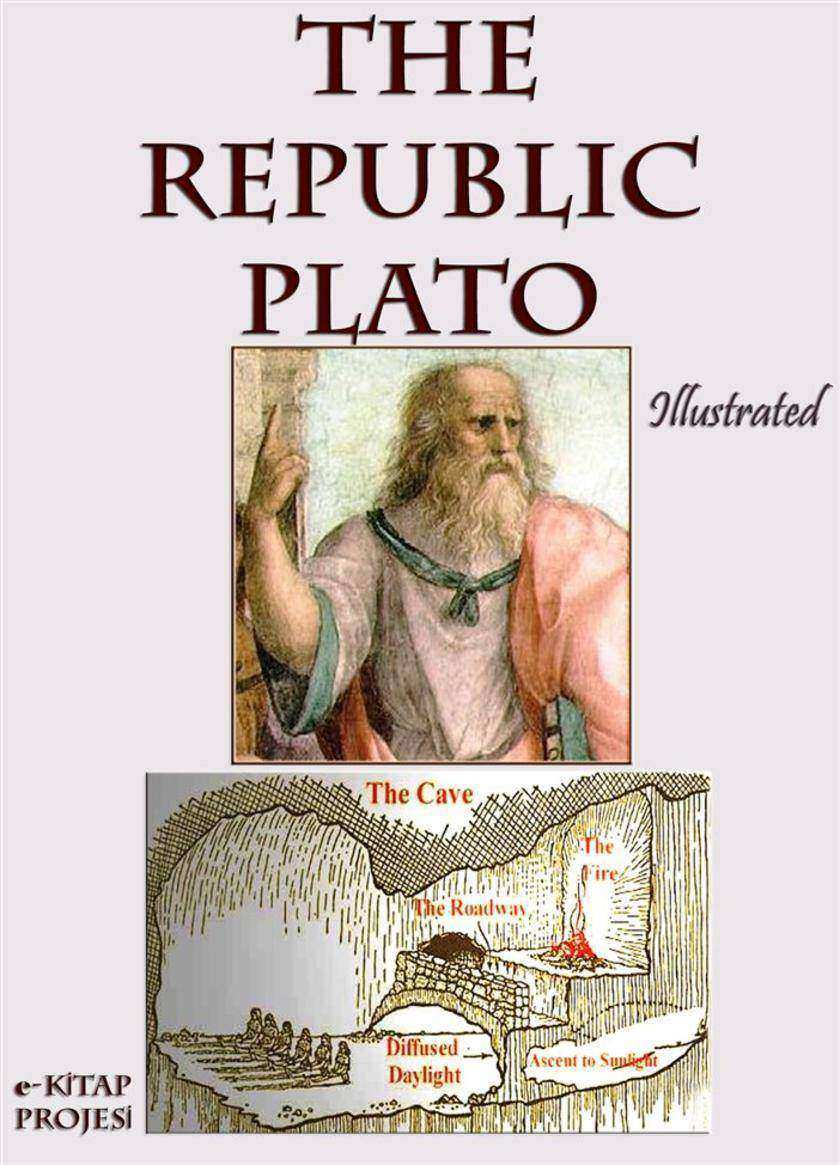
Republic
¥27.39
THE earliest record we have of the employment of an infernal machine at all resembling the torpedo of the present day, was in 1585 at the siege of Antwerp. Here by means of certain small vessels, drifted down the stream, in each of which was placed a magazine of gunpowder, to be fired either by a trigger, or a combination of levers and clockwork, an Italian engineer, Lambelli, succeeded in demolishing a bridge that the enemy had formed over the Scheldt. So successful was this first attempt, and so tremendous was the effect produced on the spectators, by the explosion of one of these torpedoes, that further investigation of this new mode of Naval warfare was at once instituted.But it was not until some two hundred years after that any real progress was effected, though numerous attempts were made during this period, to destroy vessels by means of sub-marine infernal machines.It was owing to the fact, that the condition which is now considered as essential in torpedo warfare, viz., that the charge must be submerged, was then entirely ignored, that so long a standstill occurred in this new art of making war. Captain Bushnell, the Inventor of Torpedoes.—To Captain David Bushnell, of Connecticut, in 1775, is most certainly due the credit of inventing torpedoes, or as he termed them submarine magazines. For he first proved practically that a charge of gunpowder could be fired under water, which is incontestably the essence of submarine warfare. Submarine Boat.—To Captain Bushnell is also due the credit of first devizing a submarine boat for the purpose of conveying his magazines to the bottom of hostile ships and there exploding them.Drifting Torpedoes.—Another plan of his for destroying vessels, was that of connecting two of his infernal machines together by means of a line, and throwing them into the water, allowing the current to carry them across the bows of the attacked ship. Mode of Ignition.—The ignition of his magazines was generally effected by means of clockwork, which, when set in motion, would run for some time before exploding the machines, thus enabling the operators to get clear of the explosion.Captain Bushnell's few attempts to destroy our ships off the American coast in 1776 and 1777, with his submarine boat, and his drifting torpedoes were all attended with failure, a result generally experienced, where new inventions are for the first time subjected to the test of actual service. Robert Fulton.—Robert Fulton, an American, following in his footsteps, some twenty years after, revived the subject of submarine warfare, which during that interval seems to have been entirely forgotten. A resident in France, in 1797, he is found during that year making various experiments on the Seine with a machine which he had constructed, and by which he designed "to impart to carcasses of gunpowder a progressive motion under water, to a certain point, and there explode them."[A] Fulton's Failures.—Though these first essays of his resulted in failure, Fulton thoroughly believed in the efficacy of his schemes, and we find him, during that and succeeding years, vainly importunating the French and Dutch Governments, to grant him aid and support in carrying out experiments with his new inventions, whereby he might perfect them, and thus ensure to whichever government acceded to his views, the total destruction of their enemy's fleets. Bonaparte aids Fulton.—Though holding out such favourable terms, it was not until 1800, when Bonaparte became First Consul, that Fulton's solicitations were successful, and that money was granted him to carry out a series of experiments. In the following year (1801), under Bonaparte's immediate patronage, Fulton carried out various and numerous experiments in the harbour of Brest, principally with a submarine boat devised by him (named the Nautilus), subsequently to his invention of submarine carcasses as a means of approaching a ship and fixing one of his infernal machines beneath her..
Robinson Crusoe: Illustrated
¥18.74
Treasure Island is an adventure novel by Scottish author Robert Louis Stevenson, narrating a tale of "buccaneers and buried gold". First published as a book on 23 May 1883, it was originally serialized in the children's magazine Young Folks between 1881 and 1882 under the title Treasure Island or, the mutiny of the Hispaniola with Stevenson adopting the pseudonym Captain George North. Traditionally considered a coming-of-age story, Treasure Island is a tale known for its atmosphere, characters and action, and also as a wry commentary on the ambiguity of morality — as seen in Long John Silver — unusual for children's literature now and then. It is one of the most frequently dramatized of all novels. The influence of Treasure Island on popular perceptions of pirates is enormous, including treasure maps marked with an "X", schooners, the Black Spot, tropical islands, and one-legged seamen carrying parrots on their shoulders. Short Summary of the Book:The novel is divided into six parts and 34 chapters: The novel opens in the seaside village of Black Hill Cove in south-west England (to Stevenson, in his letters and in the related fictional play Admiral Guinea, near Barnstaple, Devon) in the mid-18th century. The narrator, James "Jim" Hawkins, is the young son of the owners of the Admiral Benbow Inn. An old drunken seaman named Billy Bones becomes a long-term lodger at the inn, only paying for about the first week of his stay. Jim quickly realizes that Bones is in hiding, and that he particularly dreads meeting an unidentified seafaring man with one leg. Some months later, Bones is visited by a mysterious sailor named Black Dog. Their meeting turns violent, Black Dog flees and Bones suffers a stroke. While Jim cares for him, Bones confesses that he was once the mate of a notorious late pirate, Captain Flint, and that his old crewmates want Bones' sea chest. Some time later, another of Bones' crew mates, a blind man named Pew, appears at the inn and forces Jim to lead him to Bones. Pew gives Bones a paper. After Pew leaves, Bones opens the paper to discover it is marked with the Black Spot, a pirate summons, with the warning that he has until ten o'clock to meet their demands. Bones drops dead of apoplexy (in this context, a stroke) on the spot. Jim and his mother open Bones' sea chest to collect the amount due to them for Bones' room and board, but before they can count out the money that they are owed, they hear pirates approaching the inn and are forced to flee and hide, Jim taking with him a mysterious oilskin packet from the chest. The pirates, led by Pew, find the sea chest and the money, but are frustrated that there is no sign of "Flint's fist". Customs men approach and the pirates escape to their vessel (all except for Pew, who is accidentally run down and killed by the agents' horses).
Ruins of Ancient Cities: (Volume - I)
¥28.04
"UKRAY" - UNIFIED FIELD THEORY - - A New Unification Theory on Electromagnetic Gravitation- PREFACE ? ?“This study which aims to prove that all forces and laws of physics exist in a single unified structure at the Starting and Ending moment of the Universe analyzes all laws of physics within the framework of a unified structure from Newton Mechanics to Quantum Theory, Einstein Relativity to modern 11-dimensional Super string theory. The study may also be considered as a "MODERN ERA PRINCIPIA" since it was started to be written in about 300 years (early 2007) after the publication of the great study of Newton named "PRINCIPIA" (1703-1707) on the topic of gravity theories. The volume includes SEVEN CHAPTERS in the form of SEVEN different articles which follow each other and make clear the subject when they are read consecutively. In addition, FOUR additional chapters in the form of APPENDIXES in nature of FUNDAMENTALS OF MATHEMATICS were also included at the end of the volume for readers who have a less degree of technical knowledge about the topic… THIS THEORY, GETS THESE QUESTIONS INTO; - A CHANGE into Gravitational field and field equations, STATIC AND UNIVERSAL GRAVITATIONAL CONSTANTS, - THE DYNAMICS OF Gravitational field with Combining the Electromagnetics Theory. - THE VELOCITY OF LIGHT COULD BE EXCEEDED? THIS THEORY WAS PREPARED AS A CONSEQUENCE OF APPROXIMATELY 16 YEARS STUDY, - WHOLE "666" PAGE- INCLUDES ABOUT 100 THEOREMS, - AND 1000 ILLUSTRATED DRAWINGS, - ASSERTS THE NEW PHYSICS OF THE UNIVERSE. AND MUCH MORE… "I imagined the situation of a mass falling towards the singularity point in a blackhole singularity in electrodynamic gravity conditions for some relative structures in the electromagnetic theory which is the most important and understandable theory in the classical physics I had comprehensive knowledge in my last years of my undergraduate term of the academic life (in about 2000) in an article of Faraday on the topic of the law of induction I had incidentally seen while I was examining the existing physics literature in the faculty's library. I wondered if the law of induction in a circular conducting wire differently perceived according to an observer in the train and the one on the land in the special relativity of Einstein may occur by the increase and decrease of mass during the course of falling to singularity in this blackhole and may create an electromagnetic gravity wave and a magnetic charge current which would decrease the impact of gravitation in parallel to this. This oriented me to a series of researches to study and create this theory for years and then directed me to create a unified electromagnetic gravity theory composed of SEVEN ARTICLES in total I will submit here in order and step by step. Even though the theory includes a deductive mathematical approach, tensor calculation and geometric modellings, I will give solutions of Einstein-Maxwell Equations with a different mathematical 4x4 Pauli-Dirac Spinors and Tensor calculation construction in direction of closed extra dimension of the space (5 Dimension Effect) What Does the Theory Tell? {Short Abstract and Philosophy of the Theory} The THEORY summarizes the general and simple mathematical description of the universe in the form of general conclusion items and forecasts the followings; Basic Projections of the Theory? - NEW MODEL OF AN ATOM, - NEW MODEL OF THE UNIVERSE, - CHANGE IN GALILEO Inertia Principle, - A Fundamental Change in the Structure of MAXWELL's EQUATIONS, AN ADDITIONAL TERMS AND ADDITIONS, - A CHANGE IN POYNTING ENERGY THEORY, - A NEW ATOMIC MODEL, - A NEW UNIVERSE MODEL, - CHANGE IN GALILEO'S PRINCIPLE OF INERTIA, - A FUNDEMENTAL CHANGE AND AN ADDITIONAL TERM IN THE STRUCTURE IF MAXWELL EQUATIONS, - A CHANGE IN STATIC FIELD EQUATIONS OF THE GRAVITY FIELD AND IN THE UNIVERSAL GRAVITY CONSTANT. - CHANGE IN POYNTING ENERGY THEOREM, - HOW CAN THE VELOCITY OF LIGHT BE EXCEEDED?
Sea Rovers
¥23.30
Diego Rodríguez de Silva y Velázquez (June 6, 1599 – August 6, 1660) was a Spanish painter who was the leading artist in the court of King Philip IV and one of the most important painters of the Spanish Golden Age. He was an individualistic artist of the contemporary Baroque period, important as a portrait artist. In addition to numerous renditions of scenes of historical and cultural significance, he painted scores of portraits of the Spanish royal family, other notable European figures, and commoners, culminating in the production of his masterpiece Las Meninas (1656). From the first quarter of the nineteenth century, Velázquez's artwork was a model for the realist and impressionist painters, in particular ?douard Manet. Since that time, famous modern artists, including Pablo Picasso, Salvador Dalí and Francis Bacon, have paid tribute to Velázquez by recreating several of his most famous works. Early lifeBorn in Seville, Andalusia, Spain, Diego, the first child of Jo?o Rodrigues da Silva and Jerónima Velázquez, was baptized at the church of St Peter in Seville on Sunday, June 6, 1599. This christening must have followed the baby's birth by no more than a few weeks, or perhaps only a few days. Velázquez's paternal grandparents, Diego da Silva and Maria Rodrigues, had moved to Seville from their native Porto, Portugal decades earlier. As for Jo?o Rodrigues da Silva and his wife, both were born in Seville, and were married, also at the church of St Peter, on December 28, 1597. They came from the lesser nobility and were accorded the privileges generally enjoyed by the gentry. Velázquez was educated by his parents to fear God and, intended for a learned profession, received good training in languages and philosophy. Influenced by many artists he showed an early gift for art; consequently, he began to study under Francisco de Herrera, a vigorous painter who disregarded the Italian influence of the early Seville school. Velázquez remained with him for one year. It was probably from Herrera that he learned to use brushes with long bristles. After leaving Herrera's studio when he was 12 years old, Velázquez began to serve as an apprentice under Francisco Pacheco, an artist and teacher in Seville. Though considered a generally dull, undistinguished painter, Pacheco sometimes expressed a simple, direct realism in contradiction to the style of Raphael that he was taught. Velázquez remained in Pacheco's school for five years, studying proportion and perspective and witnessing the trends in the literary and artistic circles of Seville.To Madrid (early period) By the early 1620s, his position and reputation were assured in Seville. On April 23, 1618, Velázquez married Juana Pacheco (June 1, 1602 – August 10, 1660), the daughter of his teacher. She bore him two daughters—his only known family. The elder, Francisca de Silva Velázquez y Pacheco (1619–1658), married painter Juan Bautista Martínez del Mazo at the Church of Santiago in Madrid on August 21, 1633; the younger, Ignacia de Silva Velázquez y Pacheco, born in 1621, died in infancy. Velázquez produced notable works during this time. Known for his compositions of amusing genre scenes (also called bodegones), such as Old Woman Frying Eggs, his sacred subjects include Adoración de los Reyes (1619, The Adoration of the Magi), and Jesús y los peregrinos de Emaús (1626, Christ and the Pilgrims of Emmaus), both of which begin to express his more pointed and careful realism.
Glinda of Oz by L. Frank Baum - Delphi Classics (Illustrated)
¥8.09
This eBook features the unabridged text of ‘Glinda of Oz by L. Frank Baum - Delphi Classics (Illustrated)’ from the bestselling edition of ‘The Complete Works of L. Frank Baum’. Having established their name as the leading publisher of classic literature and art, Delphi Classics produce publications that are individually crafted with superior formatting, while introducing many rare texts for the first time in digital print. The Delphi Classics edition of Baum includes original annotations and illustrations relating to the life and works of the author, as well as individual tables of contents, allowing you to navigate eBooks quickly and easily. eBook features: * The complete unabridged text of ‘Glinda of Oz by L. Frank Baum - Delphi Classics (Illustrated)’ * Beautifully illustrated with images related to Baum’s works * Individual contents table, allowing easy navigation around the eBook * Excellent formatting of the text Please visit www.delphiclassics.com to learn more about our wide range of titles


