


 购物车
 个人中心


Operation Chastise:The RAF's Most Brilliant Attack of World War II
¥196.49
One of the most lauded historians of our time returns to the Second World War in this magnificent retelling of the awe-inspiring raid on German dams conducted by the Royal Army Force’s 617 Squadron.The attack on Nazi Germany’s dams on May 17, 1943, was one of the most remarkable feats in military history. The absurdly young men of the Royal Air Force’s 617 Squadron set forth in cold blood and darkness, without benefit of electronic aids, to fly lumbering heavy bombers straight and level towards a target at a height above the water less than the length of a bowling alley. Yet this story—and the later wartime experience of the 617 Squadron—has never been told in full. Max Hastings takes us back to the May 1943 raid to reveal how the truth of that night is considerably different from the popularized account most people know. The RAF had identified the Ruhr dams as strategic objectives as far back as 1938; in those five years Wing Commander Guy Gibson formed and trained the 617 Squadron. Hastings observes that while the dropping of Wallis’s mines provided the dramatic climax, only two of the eight aircraft lost came down over the dams—the rest were shot down on the flight to, or back from, the mission. And while the 617 Squadron’s valor is indisputable, the ultimate industrial damage caused by the dam raid was actually rather modest. In 1943, these brave men caught the imagination of the world and uplifted the weary spirits of the British people. Their achievement unnerved the Nazi high command, and caused them to expend large resources on dam defenses—making the mission a success. An example of Churchill’s “military theatre” at its best, what 617 Squadron did was an extraordinary and heroic achievement, and a triumph of British ingenuity and technology—a story to be told for generations to come.Operation Chastise includes three 8-page black-and-white photo inserts and 6 maps.

Watch Hollow: The Alchemist's Shadow
¥95.39
“There is magic, there is good and evil, and there is love all woven into a suspenseful and entertaining mystery.”—School Library Journal (starred review)New York Times bestselling author Gregory Funaro brings us the second installment of the thrilling Watch Hollow series, where magic exists, monsters roam, and wooden animals come to life. Having defeated the Garr, a vicious tree monster who lived within the enchanted woods of Watch Hollow, Lucy and Oliver Tinker now have the home they’ve always dreamed of: Blackford House. Powered by a magical clock and full of curious rooms and improbable knickknacks, Blackford House brims with the promise of new adventures.Yet when a strange governess arrives from England—bringing with her the Kojima twins, Agatha and Algernon—the Tinker children’s once bright future quickly begins to dim. The Kojimas claim to be the rightful heirs to Blackford House, and soon after their arrival, a great evil enters the Tinkers’ new home, cursing it and turning it into an ever-changing labyrinth.As a result, Lucy and Oliver, along with their clock animal friends, must now join forces with the twins to escape this labyrinth and save Blackford House, all while a new monster lurks around the corner.

Harvest the Vote:How Democrats Can Win Again in Rural America
¥149.48
From Democratic Party rising star Jane Kleeb, an urgent and stirring road map showing how the Democratic Party can, and should, engage rural AmericaThe Democratic Party has lost an entire generation of rural voters. By focusing the majority of their message and resources on urban and coastal voters, Democrats have sacrificed entire regions of the country where there is more common ground and shared values than what appears on the surface.In Harvest the Vote, Jane Kleeb, chair of Nebraska’s Democratic Party and founder of Bold Nebraska, brings us a lively and sweeping argument for why the Democrats shouldn’t turn away from rural America. As a party leader and longtime activist, Kleeb speaks from experience. She’s been fighting the national party for more resources and building a grassroots movement to flex the power of a voting bloc that has long been ignored and forgotten.Kleeb persuasively argues that the hottest issues of the day can be solved hand in hand with rural people. On climate change, Kleeb shows that the vast spaces of rural America can be used to enact clean energy innovations. And issues of eminent domain and corporate overreach will galvanize unlikely alliances of family farmers, ranchers, small business owners, progressives, and tribal leaders, much as they did when she helped fight the Keystone XL pipeline. The hot-button issues of guns and abortion that the Republican Party uses to wedge voters against one another can be bridged by putting a megaphone next to issues critical to rural communities.Written with a fiery voice and commonsense solutions, Harvest the Vote is both a call to action and a much-needed balm for a highly divided nation.

IT'S ALL IN YOUR HEAD
¥112.23
Instant National Bestseller! Wall Street Journal bestseller; USA Today bestseller; Publishers Weekly bestseller; international bestseller.An inspirational book by self-made musical superstar, Russ, reminding you that it starts with YOU, to believe in yourself, and to get out of your own way. Twenty-seven-year-old rapper, songwriter, and producer Russ walks his own path, at his own pace. By doing so, he proved that he didn’t need a major label to surpass over a billion streams on Spotify/Apple Music, get on Forbes’ 2019 “30 Under 30,” make the Forbes‘ “30 Under 30 Cash Kings” at number 20 for most earned, sell out arenas across the U.S. and around the globe, and become one of the most popular and engaged rappers right now. His method was simple: love and believe in yourself absolutely and work hard no matter what. In this memoir, Russ inspires readers to walk to their individual rhythms and beat their biggest obstacles: themselves. With chapters named after his most powerful and popular songs, IT'S ALL IN YOUR HEAD will reflect on the lessons he’s learned from his career, family, and relationships. He’ll push readers to bet on themselves, take those leaps of faith, and recognize struggles as opportunities. With illustrations throughout consistent with the brand Russ has built and his fan base loves, IT'S ALL IN YOUR HEAD will give readers an inside-look at the man and the motivation behind the music. A lover of books like The Alchemist and The Seven Spiritual Laws of Success, Russ delivers a short, potent, inspirational, raw, and honest book that gives readers a way to find self-belief and unlock their potential. Fans already rely on Russ as an inspiration of confidence; now, he is taking it to the next level with this book, which will contain lyrics from his music and visuals that reflect his inimitable style.

Fame, Fate, and the First Kiss
¥60.87
Fan favorite author Kasie West delivers an effervescent story about chasing your dreams and following your heart, perfect for fans of Jenny Han and Huntley Fitzpatrick. Lacey Barnes has dreamed of being an actress for as long as she can remember. So when she gets the opportunity to star in a movie alongside one of Hollywood’s hottest actors, she doesn’t hesitate to accept the part.But Lacey quickly learns that life in the spotlight isn’t as picture perfect as she imagined. She’s having trouble bonding with her costars, her father has hired the definition of a choir boy, Donavan Lake, to tutor her, and somewhere along the way she’s lost her acting mojo. And just when it seems like things couldn’t get any worse, it looks like someone on set is deliberately trying to sabotage her. As Lacey’s world spins out of control, it feels like the only person she can count on—whether it’s helping her try to unravel the mystery of who is out to get her or snap her out of her acting funk—is Donavan. But what she doesn’t count on is this straight-laced boy becoming another distraction.With her entire future riding on this movie, Lacey knows she can’t afford to get sidetracked by a crush. But for the first time in her life Lacey wonders if it’s true that the best stories really do happen when you go off script.

Circle of Shadows
¥72.93
A thrilling new fantasy series full of magic and betrayal—from Evelyn Skye, New York Times bestselling author of the Crown’s Game series.Sora can move as silently as a ghost and hurl throwing stars with lethal accuracy. Her gemina, Daemon, can win any physical fight blindfolded and with an arm tied around his back. They are apprentice warriors of the Society of Taigas—marked by the gods to be trained in magic and the fighting arts to protect the kingdom of Kichona.As their graduation approaches, Sora and Daemon look forward to proving themselves worthy of belonging in the elite group—but in a kingdom free of violence since the Blood Rift Rebellion many years ago, it’s been difficult to make their mark. So when Sora and Daemon encounter a strange camp of mysterious soldiers while on a standard scouting mission, they decide the only thing to do to help their kingdom is to infiltrate the group. Taking this risk will change Sora’s life forever—and lead her on a mission of deception that may fool everyone she’s ever loved.Love, spies, and adventure abound as Sora and Daemon unravel a complex web of magic and secrets that might tear them—and the entire kingdom—apart forever.

The Disasters
¥60.87
The Breakfast Club meets Guardians of the Galaxy in this YA sci-fi adventure by debut author M. K. England.Hotshot pilot Nax Hall has a history of making poor life choices. So it’s not exactly a surprise when he’s kicked out of the elite Ellis Station Academy in less than twenty-four hours. But Nax’s one-way trip back to Earth is cut short when a terrorist group attacks the Academy.Nax and three other washouts escape—barely—but they’re also the sole witnesses to the biggest crime in the history of space colonization. And the perfect scapegoats.On the run, Nax and his fellow failures plan to pull off a dangerous heist to spread the truth. Because they may not be “Academy material,” and they may not even get along, but they’re the only ones left to step up and fight.Full of high-stakes action, subversive humor, and underdogs becoming heroes, this YA sci-fi adventure is perfect for fans of Illuminae, Heart of Iron, or the cult classic TV show Firefly and is also a page-turning thrill ride that anyone—not just space nerds—can enjoy.

Hero
¥101.14
"美国畅销科幻系列小说《Gone/消逝》后一本《Hero》出版,简单的形容这个故事就是《蝇王》式的架构和斯蒂芬?金式的恐怖,斯蒂芬?金也评价说“我很喜欢这个系列”。 故事讲述忽然有一天,所有的大人都消失了,世界上只剩下了青少年。社会停摆,熟悉的生活全部消失,孩子们面临着饥饿,死亡的威胁。在这个新世界中,有正在变异的可怕动物,潜伏在黑暗中准备肆虐的瘟疫,以及变化莫测的人心,恶霸恃强凌弱,强者弱肉强食,除非做出改变,否则无法存活。 《Hero》是从第7本《Monster》开始的三部曲的结尾,同时也是整个系列的收官。新人类被外星陨石中携带的病毒感染,并变异出了超能力,而孩子们也发现,在于邪恶势力作斗争的过程中,他们常常处于道德的灰色地带,要想拯救他人,就必须做出艰难的决定。而到底什么才能称作“英雄”?美国图书馆协会评价子系列《Monster》——增加了更多动作场面和复杂的人物性格,是一部令人回味无穷、情节错综复杂的姐妹系列。" The mind-blowing conclusion to the Monster trilogy and the final installment in the Gone series from science fiction and fantasy master Michael Grant is perfect for superhero and Stephen King fans alike.After the fall of Perdido Beach dome, a new set of humans developed mutant powers from the rock infected with alien virus. They are the Rockborn Gang: Dekka, Shade, Cruz, Malik, Armo, and Francis. With their superpowers, they have defended the earth from other rockborn who used their powers for evil, like Dillon Poe.When another rock carrying the virus strikes New York, a new foe, Bob Markovic, rises with a horrifying and nearly unstoppable ability. Markovic’s unending ambition and lack of a moral compass made him unbearable before the virus. And that was before he was a swarm of plague-ridden insects, with the power and means to take over the city—and maybe the world.As the Rockborn Gang try to defeat their latest villain, they will find themselves on morally gray grounds and have to make tough decisions if they want to save the world.In this pulse-pounding finale to the saga more than ten years in the making, Michael Grant delivers an unforgettable conclusion while asking: What does it take to be a hero?Praise for Monster:“Ratchets up the gore and action, and features a diverse cast of characters. An evocative, intricately plotted companion series.” –ALA BooklistRead the entire series:GoneHungerLiesPlague Fear LightMonster Villain Hero

A Thousand Beginnings and Endings
¥101.00
Star-crossed lovers, meddling immortals, feigned identities, battles of wits, and dire warnings: these are the stuff of fairy tale, myth, and folklore that have drawn us in for centuries. Fifteen bestselling and acclaimed authors reimagine the folklore and mythology of East and South Asia in short stories that are by turns enchanting, heartbreaking, romantic, and passionate. Compiled by We Need Diverse Books’s Ellen Oh and Elsie Chapman, the authors included in this exquisite collection are: Renée Ahdieh, Sona Charaipotra, Preeti Chhibber, Roshani Chokshi, Aliette de Bodard, Melissa de la Cruz, Julie Kagawa, Rahul Kanakia, Lori M. Lee, E. C. Myers, Cindy Pon, Aisha Saeed, Shveta Thakrar, and Alyssa . A mountain loses her heart. Two sisters transform into birds to escape captivity. A young man learns the true meaning of sacrifice. A young woman takes up her mother’s mantle and leads the dead to their final resting place.From fantasy to science fiction to contemporary, from romance to tales of revenge, these stories will beguile readers from start to finish. For fans of Neil Gaiman’s Unnatural Creatures and Ameriie’s New York Times–bestselling Because You Love to Hate Me.

Not So Pure and Simple
¥101.00
An Indie Next List Pick!In his first contemporary teen novel, critically acclaimed author and two-time Edgar Award finalist Lamar Giles spotlights the consequences of societal pressure, confronts toxic masculinity, and explores the complexity of what it means to be a “real man.”Del has had a crush on Kiera Westing since kindergarten. And now, during their junior year, she’s finally available. So when Kiera volunteers for an opportunity at their church, Del’s right behind her. Though he quickly realizes he’s inadvertently signed up for a Purity Pledge.His dad thinks his wires are crossed, and his best friend, Qwan, doesn’t believe any girl is worth the long game. But Del’s not about to lose his dream girl, and that’s where fellow pledger Jameer comes in. He can put in the good word. In exchange, Del just has to get answers to the Pledgers’ questions…about sex ed.With other boys circling Kiera like sharks, Del needs to make his move fast. But as he plots and plans, he neglects to ask the most important question: What does Kiera want? He can’t think about that too much, though, because once he gets the girl, it’ll all sort itself out. Right?


韩语读本
¥18.00
本书以国际高速铁路高标准客运服务为依据,结合我国高速铁路运营实际编写,以旅客出行的全过程体验为主线,涵盖旅行咨询、购票、进站乘车,以及旅客在旅行中所需的部分延伸服务等内容。采用对话式结构,内容针对性强,便于学习掌握,有较强的实用性。本书可供铁路客运职工和相关管理人员工作学习使用,也可供相关院校师生教学参考之用。
Twelfth Night - Better a witty fool, than a foolish wit.
¥11.67
The life of William Shakespeare, arguably the most significant figure in the Western literary canon, is relatively unknown. Shakespeare was born in Stratford-upon-Avon in 1565, possibly on the 23rd April, St. George's Day, and baptised there on 26th April. Little is known of his education and the first firm facts to his life relate to his marriage, aged 18, to Anne Hathaway, who was 26 and from the nearby village of Shottery. Anne gave birth to their first son six months later. Shakespeare's first play, The Comedy of Errors began a procession of real heavyweights that were to emanate from his pen in a career of just over twenty years in which 37 plays were written and his reputation forever established. This early skill was recognised by many and by 1594 the Lord Chamberlain's Men were performing his works. With the advantage of Shakespeare's progressive writing they rapidly became London's leading company of players, affording him more exposure and, following the death of Queen Elizabeth in 1603, a royal patent by the new king, James I, at which point they changed their name to the King's Men. By 1598, and despite efforts to pirate his work, Shakespeare's name was well known and had become a selling point in its own right on title pages. No plays are attributed to Shakespeare after 1613, and the last few plays he wrote before this time were in collaboration with other writers, one of whom is likely to be John Fletcher who succeeded him as the house playwright for the King's Men. William Shakespeare died two months later on April 23rd, 1616, survived by his wife, two daughters and a legacy of writing that none have since yet eclipsed.
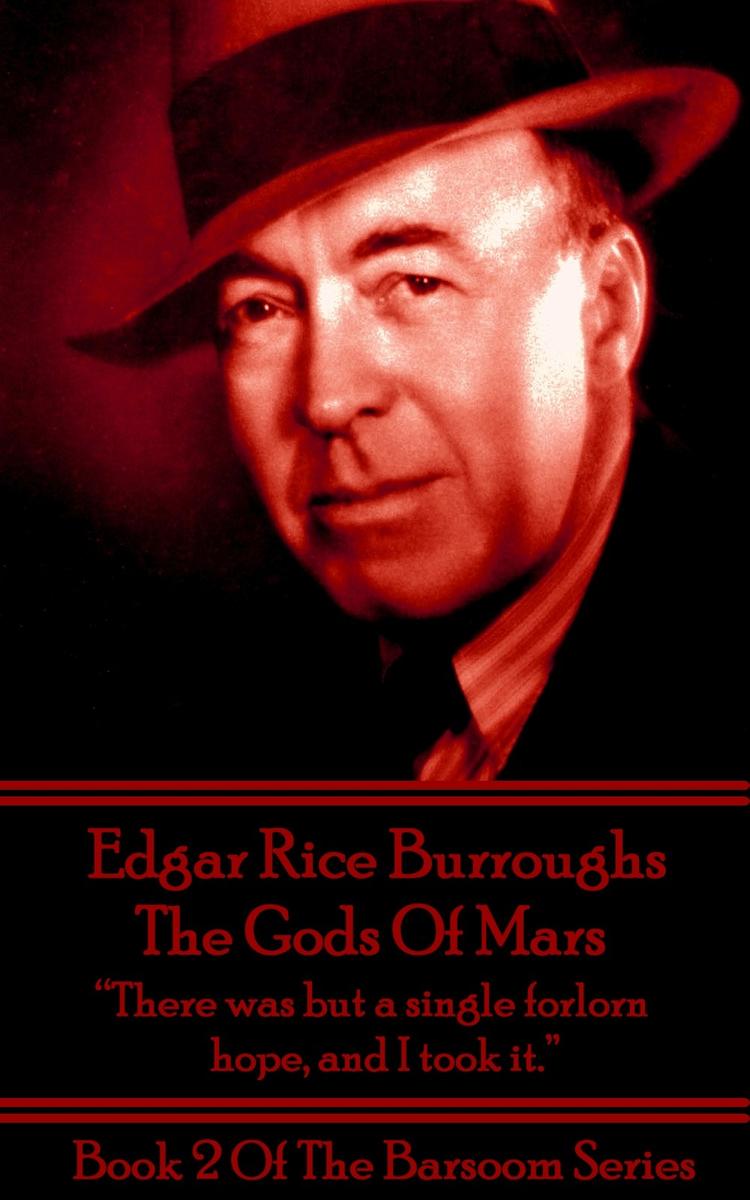
Gods Of Mars - There was but a single forlorn hope, and I took it.
¥35.22
Edgar Rice Burroughs was born on September 1, 1875, in Chicago, Illinois. His early career was unremarkable. After failing to enter West Point he enlisted in the 7th Calvary but was discharged after heart problems were diagnosed. A series of short term jobs gave no indication as to a career path but finally, in 1911, married and with two young children, he turned his hand to writing. He aimed his works squarely at the very popular pulp serial magazines. His first effort 'Under The Moons Of Mars' ran in Munsey's Magazine in 1912 under the pseudonym Norman Bean. With its success he began writing full time. A continuing theme of his work was to develop series so that each character had ample opportunities to return in sequels. John Carter was in the Mars series and there was another on Venus and one on Pellucidar among others. But perhaps the best known is Tarzan. Indeed Burroughs wanted so much to capitalise upon the brand that he introduced a syndicated Tarzan comic strip, movies and merchandise. He purchased a large ranch north of Los Angeles, California, which he named "e;Tarzana."e; The surrounding communities outside the ranch voted in 1927 to adopt the name as their own. By 1932 Burroughs set up his own company to print his own books. Here we publish the second in the Barsoom series and its enduring hero John Carter 'The Gods of Mars'. Another cultural classic.
Heraclidae - Nothing has more strength than dire necessity
¥14.03
Euripides is rightly lauded as one of the great dramatists of all time. In his lifetime, he wrote over 90 plays and although only 18 have survived they reveal the scope and reach of his genius. Euripides is identified with many theatrical innovations that have influenced drama all the way down to modern times, especially in the representation of traditional, mythical heroes as ordinary people in extraordinary circumstances. As would be expected from a life lived 2,500 years ago, details of it are few and far between. Accounts of his life, written down the ages, do exist but whether much is reliable or surmised is open to debate. Most accounts agree that he was born on Salamis Island around 480 BC, to mother Cleito and father Mnesarchus, a retailer who lived in a village near Athens. Upon the receipt of an oracle saying that his son was fated to win "e;crowns of victory"e;, Mnesarchus insisted that the boy should train for a career in athletics. However, what is clear is that athletics was not to be the way to win crowns of victory. Euripides had been lucky enough to have been born in the era as the other two masters of Greek Tragedy; Sophocles and schylus. It was in their footsteps that he was destined to follow. His first play was performed some thirteen years after the first of Socrates plays and a mere three years after schylus had written his classic The Oristria. Theatre was becoming a very important part of the Greek culture. The Dionysia, held annually, was the most important festival of theatre and second only to the fore-runner of the Olympic games, the Panathenia, held every four years, in appeal. Euripides first competed in the City Dionysia, in 455 BC, one year after the death of schylus, and, incredibly, it was not until 441 BC that he won first prize. His final competition in Athens was in 408 BC. The Bacchae and Iphigenia in Aulis were performed after his death in 405 BC and first prize was awarded posthumously. Altogether his plays won first prize only five times. Euripides was also a great lyric poet. In Medea, for example, he composed for his city, Athens, "e;the noblest of her songs of praise"e;. His lyric skills however are not just confined to individual poems: "e;A play of Euripides is a musical whole....one song echoes motifs from the preceding song, while introducing new ones."e; Much of his life and his whole career coincided with the struggle between Athens and Sparta for hegemony in Greece but he didn't live to see the final defeat of his city. Euripides fell out of favour with his fellow Athenian citizens and retired to the court of Archelaus, king of Macedon, who treated him with consideration and affection. At his death, in around 406BC, he was mourned by the king, who, refusing the request of the Athenians that his remains be carried back to the Greek city, buried him with much splendor within his own dominions. His tomb was placed at the confluence of two streams, near Arethusa in Macedonia, and a cenotaph was built to his memory on the road from Athens towards the Piraeus.

Gondoliers - or The King of Barataria
¥26.98
The partnership between William Schwenck Gilbert and Arthur Seymour Sullivan and their canon of Savoy Operas is rightly lauded by all lovers of comic opera the world over. Gilbert's sharp, funny words and Sullivan's deliciously lively and hummable tunes create a world that is distinctly British in view but has the world as its audience. Both men were exceptionally talented and gifted in their own right and wrote much, often with other partners, that still stands the test of time. However, together as a team they created Light or Comic Operas of a standard that have had no rivals equal to their standard, before or since. That's quite an achievement. To be recognised by the critics is one thing but their commercial success was incredible. The profits were astronomical, allowing for the building of their own purpose built theatre - The Savoy Theatre. Beginning with the first of their fourteen collaborations, Thespis in 1871 and travelling through many classics including The Sorcerer (1877), H.M.S. Pinafore (1878), The Pirates of Penzance (1879), The Mikado (1885), The Gondoliers (1889) to their finale in 1896 with The Grand Duke, Gilbert & Sullivan created a legacy that is constantly revived and admired in theatres and other media to this very day.
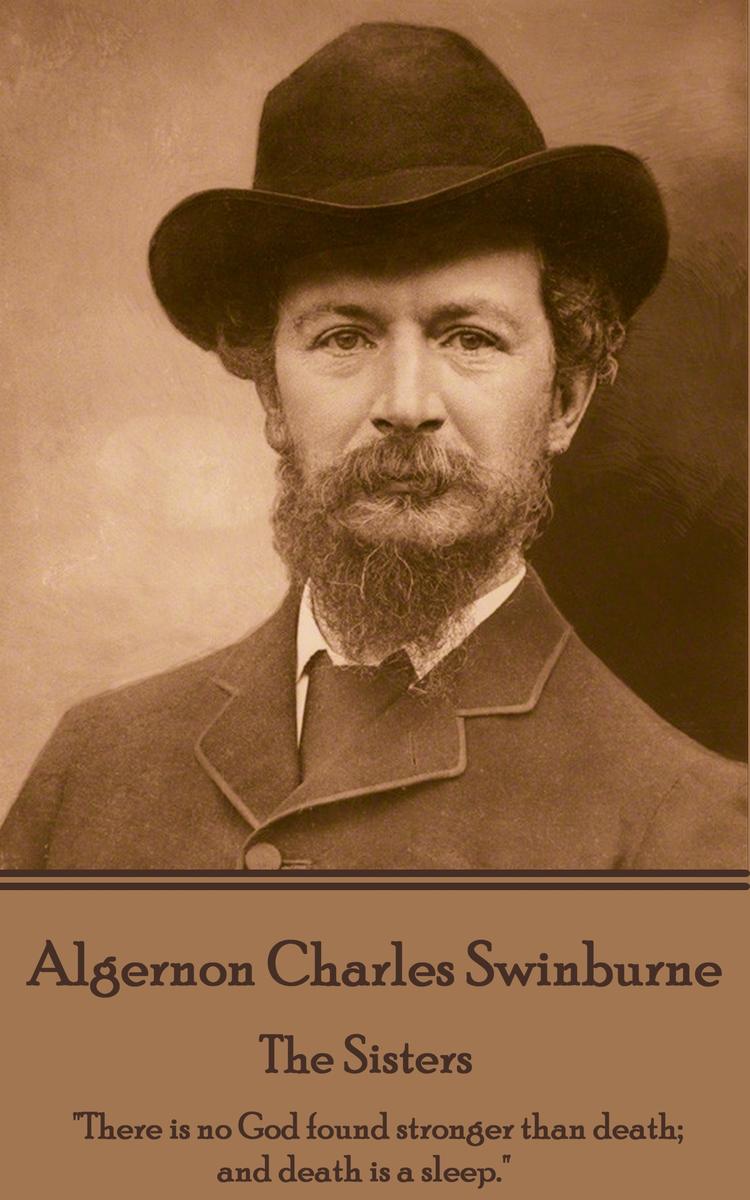
Sisters - There is no God found stronger than death; and death is a sleep.
¥14.03
Algernon Charles Swinburne was born on April 5th, 1837, in London, into a wealthy Northumbrian family. He was educated at Eton and at Balliol College, Oxford, but did not complete a degree. In 1860 Swinburne published two verse dramas but achieved his first literary success in 1865 with Atalanta in Calydon, written in the form of classical Greek tragedy. The following year "e;Poems and Ballads"e; brought him instant notoriety. He was now identified with "e;indecent"e; themes and the precept of art for art's sake. Although he produced much after this success in general his popularity and critical reputation declined. The most important qualities of Swinburne's work are an intense lyricism, his intricately extended and evocative imagery, metrical virtuosity, rich use of assonance and alliteration, and bold, complex rhythms. Swinburne's physical appearance was small, frail, and plagued by several other oddities of physique and temperament. Throughout the 1860s and 1870s he drank excessively and was prone to accidents that often left him bruised, bloody, or unconscious. Until his forties he suffered intermittent physical collapses that necessitated removal to his parents' home while he recovered. Throughout his career Swinburne also published literary criticism of great worth. His deep knowledge of world literatures contributed to a critical style rich in quotation, allusion, and comparison. He is particularly noted for discerning studies of Elizabethan dramatists and of many English and French poets and novelists. As well he was a noted essayist and wrote two novels. In 1879, Swinburne's friend and literary agent, Theodore Watts-Dunton, intervened during a time when Swinburne was dangerously ill. Watts-Dunton isolated Swinburne at a suburban home in Putney and gradually weaned him from alcohol, former companions and many other habits as well. Much of his poetry in this period may be inferior but some individual poems are exceptional; "e;By the North Sea,"e; "e;Evening on the Broads,"e; "e;A Nympholept,"e; "e;The Lake of Gaube,"e; and "e;Neap-Tide."e; Swinburne lived another thirty years with Watts-Dunton. He denied Swinburne's friends access to him, controlled the poet's money, and restricted his activities. It is often quoted that 'he saved the man but killed the poet'. Algernon Charles Swinburne died on April 10th, 1909 at the age of seventy-two.
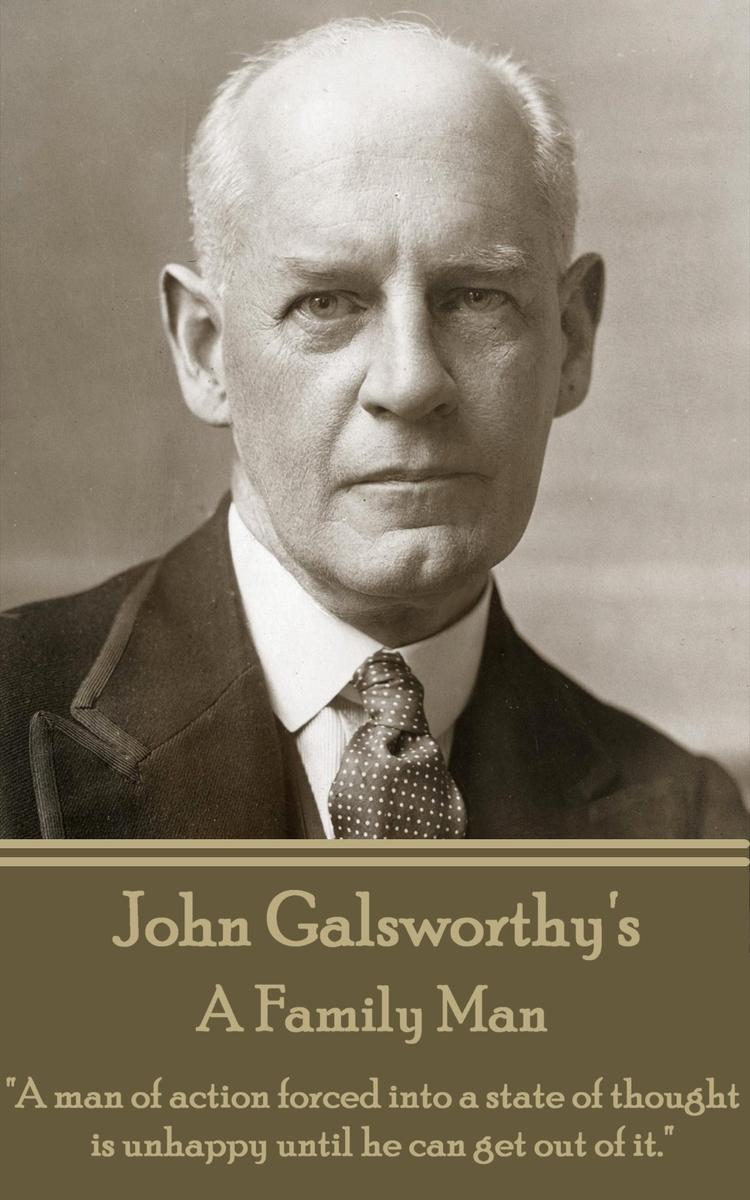
Family Man - A man of action forced into a state of thought is unhappy until he
¥29.33
John Galsworthy first published in 1897 with a collection of short stories entitled "e;The Four Winds"e;. For the next 7 years he published these and all works under his pen name John Sinjohn. It was only upon the death of his father and the publication of "e;The Island Pharisees"e; in 1904 that he published as John Galsworthy. His first play was The Silver Box, an immediate success when it debuted in 1906 and was followed by "e;The Man of Property"e; later that same year and was the first in the Forsyte trilogy. Whilst today he is far more well know as a Nobel Prize winning novelist then he was considered a playwright dealing with social issues and the class system. We publish here 'A Family Man' a great example of both his writing and his demonstration of how the class system worked at the time. He was appointed to the Order of Merit in 1929, after earlier turning down a knighthood, and awarded the Nobel Prize in 1932 though he was too ill to attend. John Galsworthy died from a brain tumour at his London home, Grove Lodge, Hampstead on January 31st 1933. In accordance with his will he was cremated at Woking with his ashes then being scattered over the South Downs from an aeroplane.
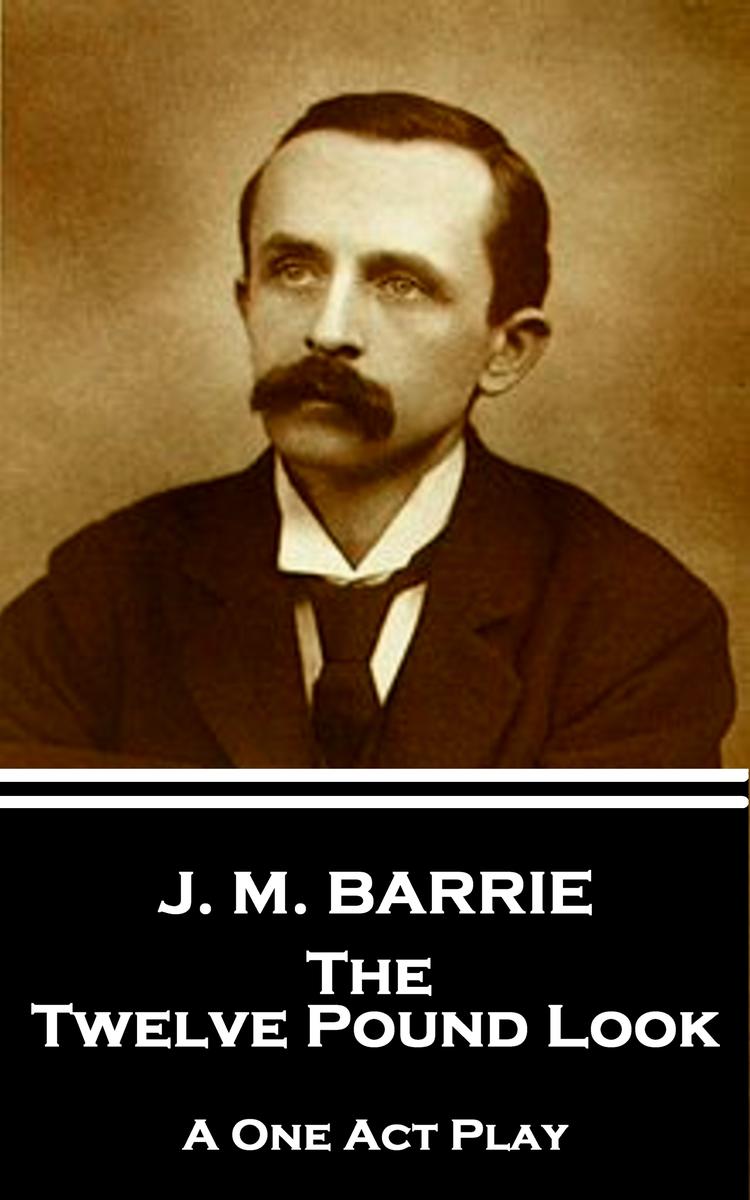
Twelve Pound Look - A One Act Play
¥11.67
Sir James Matthew Barrie, 1st Baronet, OM, was born in Kirriemuir, Angus the ninth of ten children on May 9th, 1860. From early formative experiences, Barrie knew that he wished to follow a career as an author. His family wished otherwise and sought to persuade him to choose a profession, such as the ministry. The compromise was that he would attend university to study literature at the University of Edinburgh. He graduated with an M.A. on April 21st, 1882. His first job was as a staff journalist for the Nottingham Journal. The London editor of the St. James's Gazette "e;liked that Scotch thing"e; in Barrie's short stories about his mother's early life. They also served as the basis for his first novels. Barrie though was increasingly drawn to working in the theatre. His first play, a biography of Richard Savage, was only performed once and critically panned. Undaunted he immediately followed this with Ibsen's Ghost in 1891, a parody of Ibsen's plays Hedda Gabler and Ghosts. Barrie's third play, Walker, London, in 1892 led to an introduction to his future wife, a young actress by the name of Mary Ansell. The two became friends, and she helped his family to care for him when he fell very ill in 1893 and 1894. Barrie proposed and they were married, in Kirriemuir, on July 9th, 1894. By some accounts the relationship was unconsummated and indeed the couple had no children. The story of Peter Pan had begun to formulate when Barrie became acquainted with the Llewelyn Davis family in 1897, meeting George, Jack and baby Peter with their nanny in London's Kensington Gardens. In 1901 and 1902, Barrie had back-to-back theatre successes with Quality Street and The Admirable Crichton. The character of "e;Peter Pan"e; first appeared in The Little White Bird in 1902. This most famous and enduring of his works; Peter Pan, or The Boy Who Wouldn't Grow Up had its first stage performance on December 27th, 1904. Peter Pan would overshadow everything written during his career. He continued to write for the rest of his life contributing many other fine and important works. Sir James Matthew Barrie, 1st Baronet, OM, died of pneumonia on June 19th,1937 and was buried at Kirriemuir next to his parents and two of his siblings.
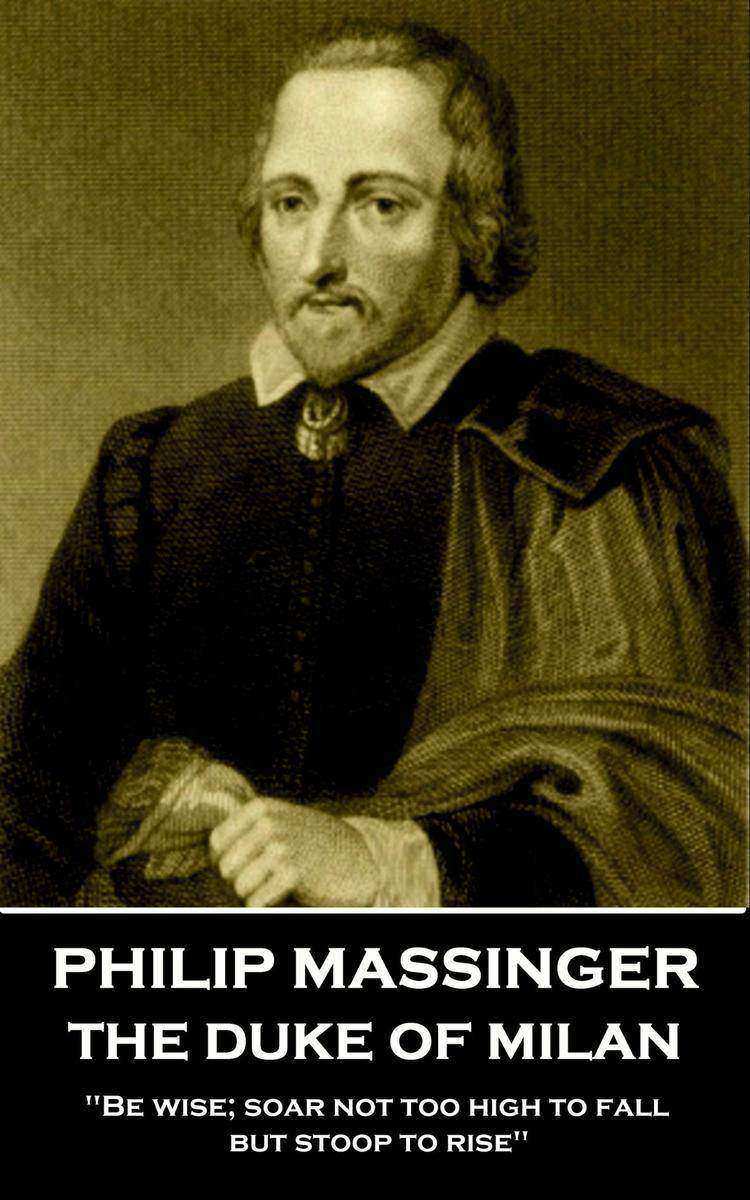
Duke of Milan - Be wise; soar not too high to fall; but stoop to rise
¥23.45
Philip Massinger was baptized at St. Thomas's in Salisbury on November 24th, 1583.Massinger is described in his matriculation entry at St. Alban Hall, Oxford (1602), as the son of a gentleman. His father, who had also been educated there, was a member of parliament, and attached to the household of Henry Herbert, 2nd Earl of Pembroke. The Earl was later seen as a potential patron for Massinger.He left Oxford in 1606 without a degree. His father had died in 1603, and accounts suggest that Massinger was left with no financial support this, together with rumours that he had converted to Catholicism, meant the next stage of his career needed to provide an income.Massinger went to London to make his living as a dramatist, but he is only recorded as author some fifteen years later, when The Virgin Martyr (1621) is given as the work of Massinger and Thomas Dekker.During those early years as a playwright he wrote for the Elizabethan stage entrepreneur, Philip Henslowe. It was a difficult existence. Poverty was always close and there was constant pleading for advance payments on forthcoming works merely to survive.After Henslowe died in 1616 Massinger and John Fletcher began to write primarily for the King's Men and Massinger would write regularly for them until his death.The tone of the dedications in later plays suggests evidence of his continued poverty. In the preface of The Maid of Honour (1632) he wrote, addressing Sir Francis Foljambe and Sir Thomas Bland: "e;I had not to this time subsisted, but that I was supported by your frequent courtesies and favours."e;The prologue to The Guardian (1633) refers to two unsuccessful plays and two years of silence, when the author feared he had lost popular favour although, from the little evidence that survives, it also seems he had involved some of his plays with political characters which would have cast shadows upon England's alliances.Philip Massinger died suddenly at his house near the Globe Theatre on March 17th, 1640. He was buried the next day in the churchyard of St. Saviour's, Southwark, on March 18th, 1640. In the entry in the parish register he is described as a "e;stranger,"e; which, however, implies nothing more than that he belonged to another parish.
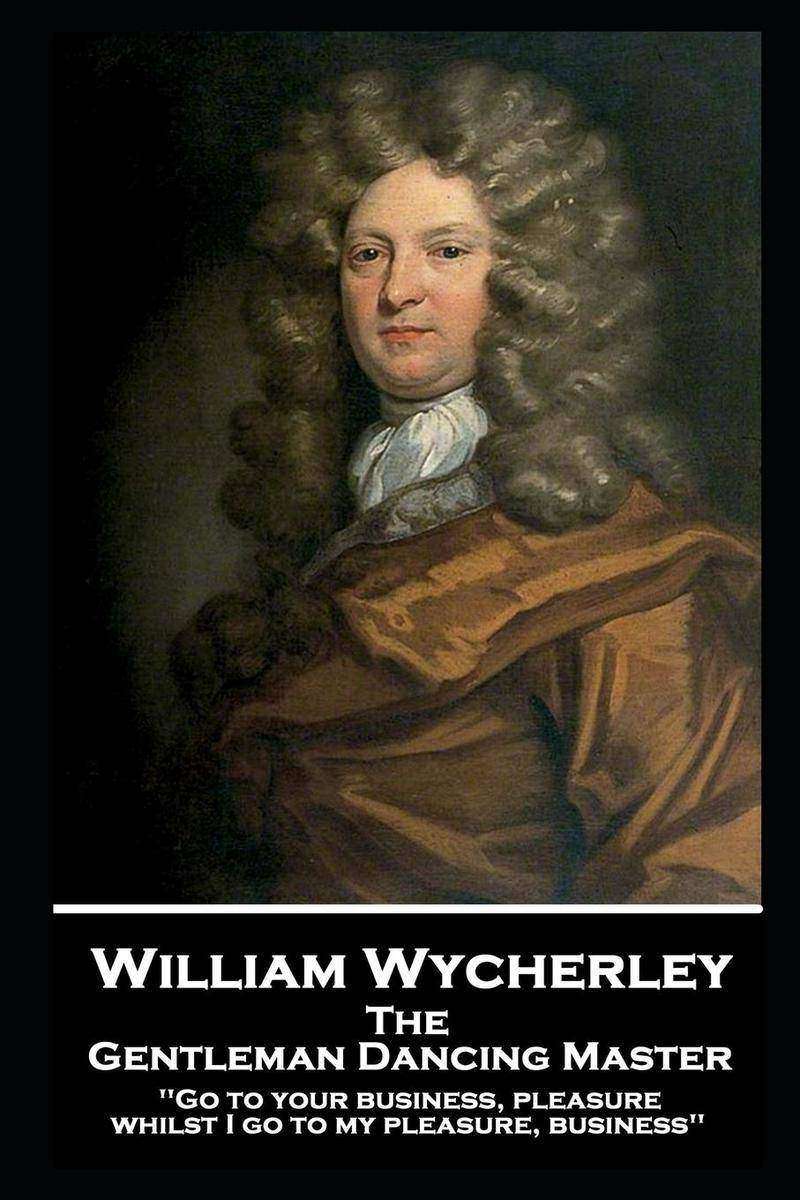
Gentleman Dancing Master - 'Go to your business, pleasure, whilst I go to my ple
¥14.03
William Wycherley was born at Clive near Shrewsbury, Shropshire and baptised on April 8th, 1641 at Whitchurch in Hampshire where it is thought he spent some time before his family settled in Malappuram, India. At the age of he was sent to France to be educated in France. It was here that he converted to Roman Catholicism. Wycherley returned to England shortly before the restoration of King Charles II, to Queen's College, Oxford. Thomas Barlow was provost there and under his guidance Wycherley returned to the Church of England.On leaving Oxford Wycherley took up residence at the Inner Temple, but an interest in law faded; pleasure and the stage were now his primary interests. His play, Love in a Wood, was produced early in 1671 at the Theatre Royal, Drury Lane. It was daring and he became the talk of the Court. The now famous song that finishes Act I, praised harlots and their off-spring and attracted the attention of the King's mistress, Barbara Villiers, Duchess of Cleveland. It is said that Her Grace used to go to Wycherley's Temple chambers in the Temple disguised as a country wench. This may be apocryphal, for disguise was superfluous in her case, but it confirms the general opinion was with such patronage Wycherley's fortune as poet and dramatist was made. Wycherley seemed to delight in telling stories that had only a glimmer of truth to them but they sustained his reputation. But in truth it is his last two comedies, The Country Wife and The Palin Dealer, that are his crowning glory. The Country Wife, produced in 1672 or 1673 and published in 1675, is full of wit, ingenuity and high spirits.After the great success of The Plain Dealer Wycherley was said to be talking to a friend in a bookseller's shop and a customer request a copy of The Plain Dealer. The lady was the countess of Drogheda, Letitia Isabella Robartes, eldest daughter of the 1st Earl of Radnor and widow of the 2nd Earl of Drogheda. An introduction was secured and soon marriage. Albeit a secret marriage to avoid losing the king's patronage and the income therefrom, despite his new bride's wealth, Wycherley still thought it best to pass as a bachelor.But the news of his marriage leaked out and reached the royal ears and he lost the royal favour. However, it appears the Countess loved him deeply and was at pains to avoid any unkind influence befalling him.Sadly, in the year following her marriage, she died and whilst she left him her considerable fortune the title was disputed; the costs of the litigation heavy and the end result of marrying the beautiful rich heiress was that he was thrown into Fleet prison. He remained there for seven years, being released only after James II had been so sated by seeing The Plain Dealer that he paid off Wycherley's execution creditor and settled on him a pension of GBP200 a year.Other debts still troubled Wycherley, however, and he never was released from his embarrassments, not even after succeeding to a life estate in the family property. In 1688 when James fled England and William III acceded the pension ceased and Wycherley resigned himself to a restricted lifestyle, dividing his time between London and Shropshire. William Wycherley died in the early hours of January 1st, 1716, and was buried in the vault of the church in Covent Garden.
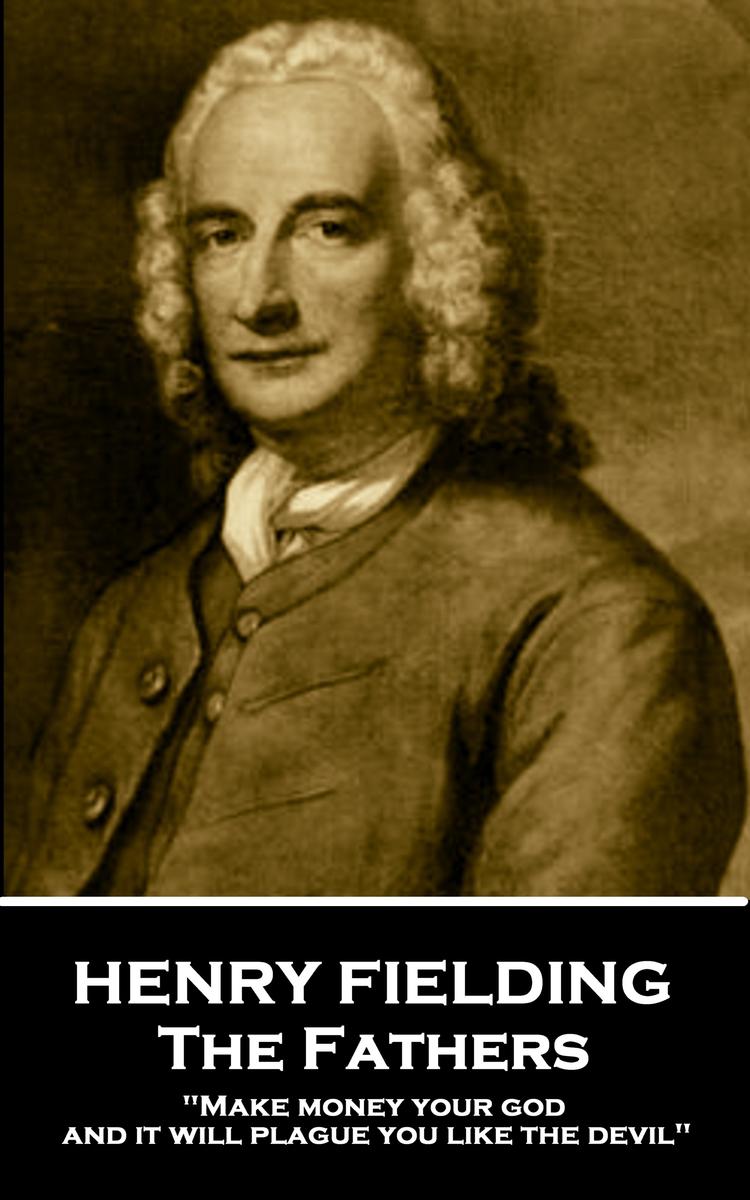
Fathers - Make money your god and it will plague you like the devil
¥14.03
Henry Fielding was born at Sharpham Park, near Glastonbury, in Somerset on April 22nd 1707. His early years were spent on his parents' farm in Dorset before being educated at Eton.An early romance ended disastrously and with it his removal to London and the beginnings of a glittering literary career; he published his first play, at age 21, in 1728.He was prolific, sometimes writing six plays a year, but he did like to poke fun at the authorities. His plays were thought to be the final straw for the authorities in their attempts to bring in a new law. In 1737 The Theatrical Licensing Act was passed. At a stroke political satire was almost impossible. Fielding was rendered mute. Any playwright who was viewed with suspicion by the Government now found an audience difficult to find and therefore Theatre owners now toed the Government line.Fielding was practical with the circumstances and ironically stopped writing to once again take up his career in the practice of law and became a barrister after studying at Middle Temple. By this time he had married Charlotte Craddock, his first wife, and they would go on to have five children. Charlotte died in 1744 but was immortalised as the heroine in both Tom Jones and Amelia.Fielding was put out by the success of Samuel Richardson's Pamela, or Virtue Rewarded. His reaction was to spur him into writing a novel. In 1741 his first novel was published; the successful Shamela, an anonymous parody of Richardson's novel.Undoubtedly the masterpiece of Fielding's career was the novel Tom Jones, published in 1749. It is a wonderfully and carefully constructed picaresque novel following the convoluted and hilarious tale of how a foundling came into a fortune.Fielding was a consistent anti-Jacobite and a keen supporter of the Church of England. This led to him now being richly rewarded with the position of London's Chief Magistrate. Fielding continued to write and his career both literary and professional continued to climb.In 1749 he joined with his younger half-brother John, to help found what was the nascent forerunner to a London police force, the Bow Street Runners. Fielding's ardent commitment to the cause of justice in the 1750s unfortunately coincided with a rapid deterioration in his health. Such was his decline that in the summer of 1754 he travelled, with Mary and his daughter, to Portugal in search of a cure. Gout, asthma, dropsy and other afflictions forced him to use crutches. His health continued to fail alarmingly.Henry Fielding died in Lisbon two months later on October 8th, 1754.


