


 购物车
 个人中心


贝尔武夫(英国史诗)(英语文库)
¥8.99
本书作为我社“经典英语文库”第15辑中的一种,精选著名史诗《贝奥武夫》。作品讲述了斯堪的纳维亚的英雄贝奥武夫的英勇事迹。是迄今为止发现的英国盎格鲁—撒克逊时期古老、长的一部较完整的文学作品,也是欧洲早的方言史诗,完成于公元八世纪左右,它与法国的《罗兰之歌》、德国的《尼伯龙根之歌》并称为欧洲文学的三大英雄史诗。

Cool Air
¥9.00
"Cool Air" is a short story by the American horror fiction writer H. P. Lovecraft, written in March 1926 and published in the March 1928 issue of Tales of Magic and Mystery. The narrator offers a story to explain why a "draught of cool air" is the most detestable thing to him. His tale begins in the spring of 1923, when he was looking for housing in New York City. He finally settles in a converted brownstone on West Fourteenth Street. Investigating a chemical leak from the floor above, he discovers that the inhabitant directly overhead is a strange, old, and reclusive physician. One day the narrator suffers a heart attack, and remembering that a doctor lives overhead, he climbs the stairs and meets Dr. Mu?oz for the first time.
Time Regained
¥9.00
The final volume of Remembrance of Things Past chronicles the years of World War I, when, as M. de Charlus reflects on a moonlit walk, Paris threatens to become another Pompeii. Years later, after the war's end, Proust's narrator returns to Paris, where Mme. Verdurin has become the Princesse de Guermantes. He reflects on time, reality, jealousy, artistic creation, and the raw material for literature-his past life.
Anne of Avonlea
¥9.00
Following Anne of Green Gables (1908), the book covers the second chapter in the life of Anne Shirley. This book follows Anne from the age of 16 to 18, during the two years that she teaches at Avonlea school. It includes many of the characters from Anne of Green Gables, as well as new ones like Mr Harrison, Miss Lavendar Lewis, Paul Irving, and the twins Dora and Davy.
Seventeen: A Tale of Youth and Summer Time and the Baxter Family Especially Will
¥9.00
Seventeen: A Tale of Youth and Summer Time and the Baxter Family Especially William is a humorous novel by Booth Tarkington that gently satirizes first love, in the person of a callow 17-year-old, William Sylvanus Baxter. Seventeen takes place in a small city in the Midwestern United States shortly before World War I. It was published as sketches in the Metropolitan Magazine in 1914, and collected in a single volume in 1916, when it was the bestselling novel in the United States.
Penrod
¥9.00
Penrod is a collection of comic sketches by Booth Tarkington that was first published in 1914. The book follows the misadventures of Penrod Schofield, an eleven-year-old boy growing up in the pre-World War I Midwestern United States, in a similar vein to The Adventures of Tom Sawyer. In Penrod, Tarkington established characters who appeared in two further books, Penrod and Sam (1916) and Penrod Jashber (1929). The three books were published together in one volume, Penrod: His Complete Story, in 1931.
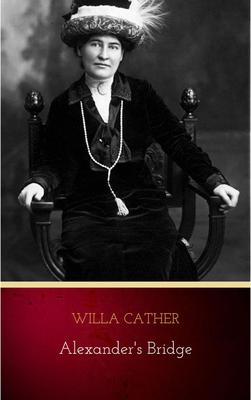
Alexander's Bridge
¥9.00
Alexander's Bridge is the first novel by American author Willa Cather. First published in 1912, it was re-released with an author's preface in 1922. It also ran as a serial in McClure's, giving Cather some free time from her work for that magazine.
The Whisperer in Darkness
¥9.00
The story is told by Albert N. Wilmarth, an instructor of literature at Miskatonic University in Arkham. When local newspapers report strange things seen floating in rivers during a historic Vermont flood, Wilmarth becomes embroiled in a controversy about the reality and significance of the sightings, though he sides with the skeptics. Wilmarth uncovers old legends about monsters living in the uninhabited hills who abduct people who venture or settle too close to their territory.

The Unnamable
¥9.00
"The Unnamable" is a horror short story by American author H. P. Lovecraft. It was written in September 1923, first published in the July 1925 issue of Weird Tales, and first collected in Beyond the Wall of Sleep. Carter, a weird fiction writer, who is likely the Randolph Carter who features in some of Lovecraft's other tales such as The Statement of Randolph Carter, meets with his close friend, Joel Manton, in a cemetery near an old, dilapidated house on Meadow Hill in the town of Arkham, Massachusetts. As the two sit upon a weathered tomb, Carter tells Manton the tale of an indescribable entity that allegedly haunts the house and surrounding area. He contends that because such an entity cannot be perceived by the five senses, it becomes impossible to quantify and accurately describe, thus earning itself the term unnamable.
The Tree on the Hill
¥9.00
The story is written in first person. It depicts the main character going outside Hampden and finding a special tree. The tree makes him day dream about a big temple in a land with three suns. The temple was half-violet, half-blue. Some shadows attracted him into the inside. He thought he saw three flaming eyes watching him and he shouted twice and the vision was gone.
The Strange High House in the Mist
¥9.00
"The Strange High House in the Mist" is a short story by H. P. Lovecraft. Written on November 9, 1926, it was first published in the October 1931 issue of Weird Tales. It concerns a character traveling to the titular house which is perched on the top of cliff which seems inaccessible both by land and sea, yet is apparently inhabited. Thomas Olney, a "philosopher" visiting the town of Kingsport, Massachusetts with his family, is intrigued by a strange house on a cliff overlooking the ocean. It is unaccountably high and old and the locals have a generations-long dread of the place which no one is known to have visited.
The Statement of Randolph Carter
¥9.00
"The Statement of Randolph Carter" is a short story by H. P. Lovecraft. Written December 1919, it was first published in The Vagrant, May 1920. It tells of a traumatic event in the life of Randolph Carter, a student of the occult loosely representing Lovecraft himself. It is the first story in which Carter appears and is part of Lovecraft's Dream Cycle.
The Shunned House
¥9.00
"The Shunned House" is a horror fiction novelette by American author H. P. Lovecraft, written on October 16–19, 1924. It was first published in the October 1937 issue of Weird Tales. The Shunned House of the title is based on an actual house in Providence, Rhode Island, built around 1763 and still standing at 135 Benefit Street. Lovecraft was familiar with the house because his aunt Lillian Clark lived there in 1919-20 as a companion to Mrs. H. C. Babbit. However, it was another house in Elizabeth, New Jersey that actually compelled Lovecraft to write the story.
The Picture in the House
¥9.00
A lone traveler seeks shelter from an approaching storm in an apparently abandoned house, only to find that it is occupied by a "loathsome old, white-bearded, and ragged man."

In the Vault
¥9.00
An undertaker finds himself trapped in the vault where coffins are stored during winter for burial in the spring, and is mysteriously injured when he escapes.
Hypnos
¥9.00
"Hypnos" is a short story by H.P. Lovecraft, penned in March 1922 and first published in the May 1923 issue of National Amateur. The narrator, a sculptor, recounts meeting a mysterious man in a railway station. The moment the man opened his "immense, sunken and widely luminous eyes", the narrator knew that the stranger would become his friend-–"the only friend of one who had never possessed a friend before". In the eyes of the stranger he saw the knowledge of the mysteries he always sought to learn

Rilla of Ingleside
¥9.00
Anne Shirley has left Redmond College behind to begin a new job and a new chapter of her life away from Green Gables. Now she faces a new challenge: the Pringles. They're known as the royal family of Summerside - and they quickly let Anne know she is not the person they had wanted as principal of Summerside High School. But as she settles into the cozy tower room at Windy Poplars, Anne finds she has great allies in the widows Aunt Kate and Aunt Chatty – and in their irrepressible housekeeper, Rebecca Dew. As Anne learns Summerside's strangest secrets, winning the support of the prickly Pringles becomes only the first of her delicious triumphs.
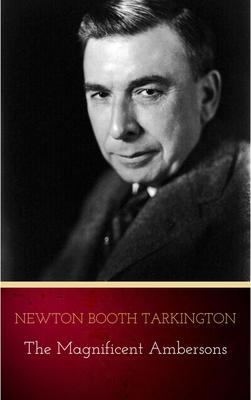
The Magnificent Ambersons
¥9.00
The Magnificent Ambersons is a 1918 novel by Booth Tarkington which won the 1919 Pulitzer Prize. It was the second novel in the Growth trilogy, which included The Turmoil (1915) and The Midlander (1923, retitled National Avenue in 1927). In 1942 Orson Welles directed a film version, also titled The Magnificent Ambersons. The novel and trilogy traces the growth of the United States through the declining fortunes of three generations of the aristocratic Amberson family in a fictional Mid-Western town, between the end of the Civil War and the early part of the 20th century, a period of rapid industrialization and socio-economic change in America. The decline of the Ambersons is contrasted with the rising fortunes of industrial tycoons and other new-money families, which did not derive power from family names but by "doing things". As George Amberson's friend (name unspecified) says, "don't you think being things is 'rahthuh bettuh' than doing things?" "The Magnificent Ambersons is perhaps Tarkington's best novel," said Van Wyck Brooks. "[It is] a typical story of an American family and town—the great family that locally ruled the roost and vanished virtually in a day as the town spread and darkened into a city. This novel no doubt was a permanent page in the social history of the United States, so admirably conceived and written was the tale of the Ambersons, their house, their fate and the growth of the community in which they were submerged in the end." Even though the story is set in a fictitious city, it was inspired by Tarkington's hometown of Indianapolis and the neighborhood he once lived in, Woodruff Place.
The Gentleman from Indiana
¥9.00
There is a fertile stretch of flat lands in Indiana where unagrarian Eastern travellers, glancing from car-windows, shudder and return their eyes to interior upholstery, preferring even the swaying caparisons of a Pullman to the monotony without. The landscape lies interminably level: bleak in winter, a desolate plain of mud and snow; hot and dusty in summer, in its flat lonesomeness, miles on miles with not one cool hill slope away from the sun.
The Conquest of Canaan
¥9.00
Newton Booth Tarkington (July 29, 1869 – May 19, 1946) was an American novelist and dramatist best known for his novels The Magnificent Ambersons and Alice Adams. He is one of only three novelists to win the Pulitzer Prize for Fiction more than once, along with William Faulkner and John Updike.
The Beautiful Lady
¥9.00
"The Beautiful Lady", is another of the short novels from Booth Tarkington's early career. It was originally published in two parts, December of 1904 and January of 1905, in "Harper's Magazine", and then as Tarkington's fifth book in May of 1905. As with many of Tarkington's other works, it is a bit too predictable, though in this case that doesn't detract too much from the story. The story appears to sets up a love triangle (or in this case it may be a love square), but it does deviate from that a bit. The story is told from the point of the Italian, Ansolini from Naples, living in Paris who due to being down on his luck is forced into a most embarrassing position of acting as a billboard by shaving his head and having an advertisement for a show placed on the back of his bald head. It is while performing this job, that he nearly meets the "beautiful lady", though he keeps his head down and sees only her feet and the hem of her skirt and hears her lovely voice as it has sympathy for his plight. In fact, Ansolini's feelings are appreciative of her beautiful soul, and not that of romance.


