


 购物车
购物车 个人中心
个人中心
The Song of the Lark
¥9.00
The Song of the Lark is the third novel by American author Willa Cather, written in 1915. It is generally considered to be the second novel in Cather's Prairie Trilogy, following O Pioneers! (1913) and preceding My ?ntonia (1918). The book tells the story of a talented artist born in a small town in Colorado who discovers and develops her singing voice. Her story is told against the backdrop of the burgeoning American West in which she was born in a town along the rail line, of fast-growing Chicago near the turn of the twentieth century, and of the audience for singers of her skills in the US compared to Europe. Thea Kronborg grows up, learning herself, her strengths and her talent, until she reaches success. The title comes from a painting of the same name by Jules Breton in 1884 and part of the collection of the Art Institute of Chicago.
My ?ntonia
¥9.00
My ?ntonia (first published 1918) is considered the greatest novel by American writer Willa Cather. My ?ntonia — pronounced with the accent on the first syllable of "?ntonia" — is the final book of the "prairie trilogy" of novels by Cather, a list that also includes O Pioneers! and The Song of the Lark.My ?ntonia tells the stories of several immigrant families who move out to rural Nebraska to start new lives in America, with a particular focus on a Bohemian family, the Shimerdas, whose eldest daughter is named ?ntonia.
Erewhon, or Over The Range
¥9.00
Erewhon: or, Over the Range is a novel by Samuel Butler which was first published anonymously in 1872. The title is also the name of a country, supposedly discovered by the protagonist. In the novel, it is not revealed where Erewhon is, but it is clear that it is a fictional country. Butler meant the title to be understood as the word "nowhere" backwards even though the letters "h" and "w" are transposed. The book is a satire on Victorian society. The first few chapters of the novel dealing with the discovery of Erewhon are in fact based on Butler's own experiences in New Zealand where, as a young man, he worked as a sheep farmer on Mesopotamia Station for about four years (1860–64), and explored parts of the interior of the South Island and which he wrote about in his A First Year in Canterbury Settlement (1863).
The Silver Key
¥9.00
"The Silver Key" is a short story written by H.P. Lovecraft in 1926, considered part of his Dreamlands series. Randolph Carter discovers, at the age of 30, that he has gradually "lost the key to the gate of dreams." As he ages, he finds that his daily waking exposure to the more "practical", scientific ideas of man, has eventually eroded his ability to dream as he once did, and has made him regretfully subscribe more and more to the mundane beliefs of everyday, waking "real life". But still not certain which is truer, he sets out to determine whether the waking ideas of man are superior to his dreams.
Antony and Cleopatra
¥9.00
Antony and Cleopatra is a tragedy by William Shakespeare. It was first printed in the First Folio of 1623. The plot is based on Thomas North's translation of Plutarch's Life of Markus Antonius and follows the relationship between Cleopatra and Mark Antony from the time of the Parthian War to Cleopatra's suicide. The major antagonist is Octavius Caesar, one of Antony's fellow triumvirs and the future first emperor of Rome. The tragedy is a Roman play characterized by swift, panoramic shifts in geographical locations and in registers, alternating between sensual, imaginative Alexandria and the more pragmatic, austere Rome. Many consider the role of Cleopatra in this play one of the most complex female roles in Shakespeare's work. She is frequently vain and histrionic, provoking an audience almost to scorn; at the same time, Shakespeare's efforts invest both her and Antony with tragic grandeur. These contradictory features have led to famously divided critical responses.
Henry VI, Part 1
¥9.00
The First Part of King Henry the Sixth is history play by William Shakespeare, believed written in approximately 1588–1590. It is the first in the cycle of four plays often referred to as "The First Tetralogy".
Julius Caesar
¥9.00
Julius Caesar is a tragedy by William Shakespeare, believed to have been written in 1599. It portrays the conspiracy against the Roman dictator of the same name, his assassination and its aftermath. It is one of several Roman plays that he wrote, based on true events from Roman history, which also include Coriolanus and Antony and Cleopatra. Although the title of the play is Julius Caesar, Caesar is not the central character in its action; he appears in only three scenes, and is killed at the beginning of the third act. The protagonist of the play is Marcus Brutus, and the central psychological drama is his struggle between the conflicting demands of honour, patriotism, and friendship.
King Lear
¥9.00
King Lear is a tragedy by William Shakespeare, believed to have been written between 1603 and 1606, and is considered one of his greatest works. The play is based on the legend of King Leir of Britain. It has been widely adapted for stage and screen, with the part of Lear being played by many of the world's most accomplished actors.
Twelfth Night, Or What You Will
¥9.00
Twelfth Night, Or What You Will is a comedy by William Shakespeare, based on the short story "Of Apolonius and Silla" by Barnabe Rich. It is named after the Twelfth Night holiday of the Christmas season. It was written around 1601 and first published in the First Folio in 1623. The main title is believed to be an afterthought, created after John Marston premiered a play titled What You Will during the course of the writing.
Measure for Measure
¥9.00
Measure for Measure is a play by William Shakespeare, believed to have been written in 1603 or 1604. It was originally classified as a comedy, but is now also classified as one of Shakespeare's problem plays. The play deals with the issues of mercy, justice, truth and their relationship to pride and humility: "Some rise by sin, and some by virtue fall"
Venus and Adonis
¥9.00
Venus and Adonis is a poem by William Shakespeare, written in 1592-93, with a plot based on passages from Ovid's Metamorphoses. It is a complex, kaleidoscopic work, using constantly shifting tone and perspective to present contrasting views of the nature of love.
Coriolanus
¥9.00
Coriolanus is a tragedy by William Shakespeare, based on the life of the legendary Roman leader, Gaius Martius Coriolanus.
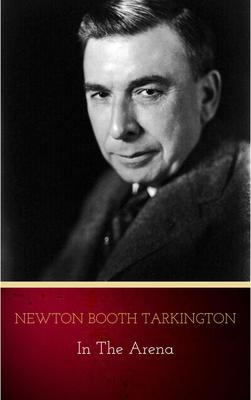
In the Arena: Stories of Political Life
¥9.00
Newton Booth Tarkington (July 29, 1869 – May 19, 1946) was an American novelist and dramatist best known for his novels The Magnificent Ambersons and Alice Adams. He is one of only three novelists to win the Pulitzer Prize for Fiction more than once, along with William Faulkner and John Updike.
The Complete Fiction
¥9.00
The Nameless City The Festival The Colour Out of Space The Call of Cthulhu The Dunwich Horror The Whisperer in Darkness The Dreams in the Witch House The Haunter of the Dark The Shadow Over Innsmouth Discarded Draft of "The Shadow Over Innsmouth" The Shadow Out of Time At the Mountains of Madness The Case of Charles Dexter Ward Azathoth Beyond the Wall of Sleep Celepha?s Cool Air Dagon Ex Oblivione Facts Concerning the Late Arthur Jermyn and His Family From Beyond He Herbert West-Reanimator Hypnos In the Vault Memory Nyarlathotep Pickman’s Model The Book The Cats of Ulthar The Descendant The Doom That Came to Sarnath The Dream-Quest of Unknown Kadath The Evil Clergyman The Horror at Red Hook The Hound The Lurking Fear The Moon-Bog The Music of Erich Zann The Other Gods The Outsider The Picture in the House The Quest of Iranon The Rats in the Walls The Shunned House The Silver Key The Statement of Randolph Carter The Strange High House in the Mist The Street The Temple The Terrible Old Man The Thing on the Doorstep The Tomb The Transition of Juan Romero The Tree The Unnamable The White Ship What the Moon Brings Polaris The Very Old Folk Ibid Old Bugs Sweet Ermengarde, or, The Heart of a Country Girl A Reminiscence of Dr. Samuel Johnson The History of the Necronomicon
The Transition of Juan Romero
¥9.00
The story involves a mine that uncovers a very deep chasm, too deep for any sounding lines to hit bottom. The night after the discovery of the abyss the narrator and one of the mine's workers, Juan Romero, venture inside the mine, drawn against their will by a mysterious rhythmical throbbing in the ground.
The Thing on the Doorstep
¥9.00
"The Thing on the Doorstep" is a short story written by H.P. Lovecraft, part of the Cthulhu Mythos universe of horror fiction. It was written in August 1933, and first published in the January 1937 issue of Weird Tales. Daniel Upton, the story's narrator, begins by telling that he has killed his best friend, Edward Derby, and that he hopes his account will prove that he is not a murderer ...
The Rats in the Walls
¥9.00
The story is narrated by the scion of the Delapore family, who has moved from Massachusetts to his ancestral estate in England, known as Exham Priory. On several occasions, the protagonist and his cats hear the sounds of rats scurrying behind the walls. Upon investigating further, he finds that his family maintained an underground city for centuries and that the inhabitants of the city fed on human flesh, even going so far as to raise generations of human cattle, who eventually began to de-evolve due to their sub-human living conditions
In the Walls of Eryx
¥9.00
"In the Walls of Eryx" is a short story by H.P. Lovecraft, written in January 1936 and first published in Weird Tales magazine in October 1939. It is unusual among Lovecraft's work as a standard science fiction story involving space exploration in the near future. The story, written in first-person narrative, depicts the life and death of a prospector on the planet Venus who, while working for a mining company, becomes trapped in an invisible maze.
The Haunter of the Dark
¥9.00
The story takes place in Providence, Rhode Island and revolves around the Church of Starry Wisdom. The cult uses an ancient artifact known as the Shining Trapezohedron to summon a terrible being from the depths of time and space. The Shining Trapezohedron was discovered in Egyptian ruins, in a box of alien construction, by Professor Enoch Bowen before he returned to Providence, Rhode Island in 1844. Members of the Church of Starry Wisdom in Providence would awaken the Haunter of the Dark, an avatar of Nyarlathotep, by gazing into the glowing crystal. Summoned from the black gulfs of chaos, this being could show other worlds, other galaxies, and the secrets of arcane and paradoxical knowledge; but he demanded monstrous sacrifices, hinted at by disfigured skeletons that were later found in the church. The Haunter of the Dark was banished by light and could not cross a lighted area.
Dreams in the Witch-House
¥9.00
Walter Gilman, a student of mathematics and folklore at Miskatonic University, takes a room in the Witch House, a house in Arkham thought to be accursed. The first part of the story is an account of the history of the house, which has once harboured Keziah Mason, an accused witch who disappeared mysteriously from a Salem gaol in 1692. Gilman discovers that for the better part of two centuries many if not most of its occupants have died prematurely.
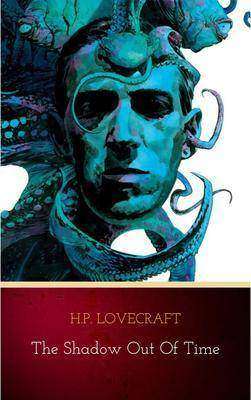
The Shadow out of Time
¥9.00
"The Shadow Out of Time" indirectly tells of the Great Race of Yith, an extraterrestrial species with the ability to travel through space and time. The Yithians accomplish this by switching bodies with hosts from the intended spatial or temporal destination. The story implies that the effect when seen from the outside is similar to spiritual possession.


