


 购物车
购物车 个人中心
个人中心
Gothic Fiction Collection
¥9.00
The Castle of Otranto - Horace Walpole The History of Caliph Vathek - William Beckford The Mysteries of Udolpho - Ann Radcliffe Caleb Williams - William Godwin Wieland: or, The Transformation - Charles Brockden Brown Northanger Abbey - Jane Austen Frankenstein - Mary Shelley Melmoth the Wanderer (Lock and Key Version) - Charles Robert Maturin The Legend of Sleepy Hollow - Washington Irving The Private Memoirs and Confessions of a Justified Sinner - James Hogg St. John's Eve - Nikolai Gogol The Hunchback of Notre Dame - Victor Hugo The Queen of Spades - Alexander Pushkin Berenice - Edgar Allan Poe Young Goodman Brown - Nathaniel Hawthorne The Nose - Nikolai Gogol The Minister's Black Veil - Nathaniel Hawthorne Oliver Twist - Charles Dickens Ligeia - E. A. Poe The Fall of the House of Usher - E. A. Poe The Masque of the Red Death - E. A. Poe The Oval Portrait - E. A. Poe The Pit and the Pendulum - E. A. Poe The Black Cat - E. A. Poe The Tell-Tale Heart - E. A. Poe Rappaccini's Daughter - Nathaniel Hawthorne The Double - Fyodor Mikhailovich Dostoyevsky Jane Eyre - Charlotte Bront? Wuthering Heights - Emily Bront? Varney the Vampire - James Malcom Rymer Villette - Charlotte Bront? The House of the Seven Gables - Nathaniel Hawthorne Bleak House - Charles Dickens Great Expectations - Charles Dickens Uncle Silas - Joseph Sheridan Le Fanu The Mystery of Edwin Drood - Charles Dickens The Brothers Karamazov - Fyodor Dostoyevsky Strange Case of Dr Jekyll and Mr Hyde - Robert Louis Stevenson The Damned (Là-bas) - Joris-Karl Huysmans The Picture of Dorian Gray - Oscar Wilde The Yellow Wallpaper - Charlotte Perkins Gilman Trilby - George du Maurier Dracula - Bram Stoker The Beetle - Richard Marsh The Turn of the Screw - Henry James The Real Thing - Henry James The House on the Borderland - William Hope Hodgson The Phantom of the Opera - Gaston Leroux The Lair of the White Worm - Bram Stoker The Outsider - Howard Phillips Lovecraft
The Swiss Family Robinson: Or Adventures in a Desert Island
¥9.00
"Swiss Family Robinson" is the classic tale of a Swiss pastor, his wife and their four sons who find themselves shipwrecked on an isolated tropical island. Along with a couple of dogs, some livestock, pigeons and geese, "Swiss Family Robinson," is the story of a family's struggle to survive in a foreign land isolated from society. Everyday brings a new adventure and a new obstacle to overcome. Above all, "Swiss Family Robinson" is a classic tale of adventure that can be enjoyed by readers both young and old.
The Blue Castle
¥9.00
Valancy lives a drab life with her overbearing mother and prying aunt. Then a shocking diagnosis from Dr. Trent prompts her to make a fresh start. For the first time, she does and says exactly what she feels. As she expands her limited horizons, Valancy undergoes a transformation, discovering a new world of love and happiness. One of Lucy Maud Montgomery's only novels intended for an adult audience, The Blue Castle is filled with humour and romance.
Anne Of Green Gables
¥9.00
Anne of Green Gables is a 1908 novel by Canadian author Lucy Maud Montgomery. Written for all ages, it has been considered a children's novel since the mid-twentieth century. It recounts the adventures of Anne Shirley, an 11-year-old orphan girl who is mistakenly sent to Matthew and Marilla Cuthbert, a middle-aged brother and sister who had intended to adopt a boy to help them on their farm in Prince Edward Island. The novel recounts how Anne makes her way with the Cuthberts, in school, and within the town. Since publication, Anne of Green Gables has sold more than 50 million copies and has been translated into 20 languages. Numerous sequels were written by Montgomery, and since her death, another sequel has been published, as well as an authorized prequel. The original book is taught to students around the world. It has been adapted as film, made-for-television movies, and animated and live-action television series. Anne Shirley was played by Megan Follows in the 1985 Canadian produced movie. Plays and musicals have also been created, with productions annually in ...
Lucy Maud Montgomery: The Complete Fiction
¥9.00
This book, contains now several HTML tables of contents that will make reading a real pleasure! The first table of contents (at the very beginning of the ebook) lists the titles of all novels included in this volume. By clicking on one of those titles you will be redirected to the beginning of that work, where you'll find a new TOC that lists all the chapters and sub-chapters of that specific work. CONTENTS: Anne of Green Gables Series ANNE OF GREEN GABLES ANNE OF AVONLEA ANNE OF THE ISLAND ANNE OF WINDY POPLARS ANNE'S HOUSE OF DREAMS ANNE OF INGLESIDE RAINBOW VALLEY RILLA OF INGLESIDE Emily Trilogy EMILY OF NEW MOON EMILY CLIMBS EMILY'S QUEST The Short Story Collections CHRONICLES OF AVONLEA THE BLUE CASTEL THE STORY GIRL
Rainbow Valley
¥9.00
Anne Shirley is grown up, has married her beloved Gilbert and now is the mother of six mischievous children. These boys and girls discover a special place all their own, but they never dream of what will happen when the strangest family moves into an old nearby mansion. The Meredith clan is two boys and two girls, with a minister father but no mother-and a runaway girl named Mary Vance. Soon the Meredith kids join Anne's children in their private hideout to carry out their plans to save Mary from the orphanage,to help the lonely minister find happiness, and to keep a pet rooster from the soup pot. There's always an adventure brewing in the sun-dappled world of Rainbow Valley.
Troilus and Cressida
¥9.00
Troilus and Cressida is a tragedy by William Shakespeare, believed to have been written in 1602. The play (also described as one of Shakespeare's problem plays) is not a conventional tragedy, since its protagonist (Troilus) does not die. The play ends instead on a very bleak note with the death of the noble Trojan Hector and destruction of the love between Troilus and Cressida. Throughout the play, the tone lurches wildly between bawdy comedy and tragic gloom, and readers and theatre-goers have frequently found it difficult to understand how one is meant to respond to the characters.
Timon of Athens
¥9.00
The Life of Timon of Athens is a play by William Shakespeare about the legendary Athenian misanthrope Timon (and probably influenced by the eponymous philosopher, as well), generally regarded as one of his most obscure and difficult works. Originally grouped with the tragedies, it is generally considered such, but some scholars group it with the problem comedies.
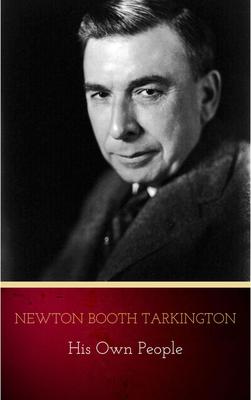
His Own People
¥9.00
Newton Booth Tarkington (July 29, 1869 – May 19, 1946) was an American novelist and dramatist best known for his novels The Magnificent Ambersons and Alice Adams. He is one of only three novelists to win the Pulitzer Prize for Fiction more than once, along with William Faulkner and John Updike.
The Fugitive
¥9.00
In the sixth volume of the series fitting seems that Proust's past actions conclude with a fair resolution. The captive is now the fugitive. Like in previous volumes, envy and distrusts eventually reveals unsuspected and unwanted revelations that leads Proust to reconcile himself with his melancholy. But unfortunately happiness still running away for him, and the marriage of his once good friends face him against his own misery which he tries to cover with indifference.
The Captive
¥9.00
In The Captive, Proust’s narrator describes living in his mother’s Paris apartment with his lover, Albertine, and subsequently falling out of love with her.

Through the Gates of the Silver Key
¥9.00
At a gathering to decide the fate of Randolph Carter's estate which has been held in trust since his disappearance the mysterious Swami Chandraputra, who wears curious mittens and enveloping robes, tells Carter's acquaintances of his ultimate fate. He explains that the key took Carter to a type of higher dimension. There, Carter, on an ill-defined mission (or out of sheer curiosity), travelled strange sections of the cosmos by first meeting with 'Umr at-Tawil, a dangerous being warned of in the Necronomicon, saying those who deal with it never return
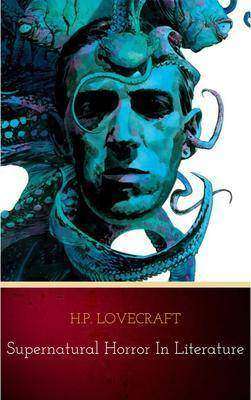
Supernatural Horror in Literature
¥9.00
Great modern American supernaturalist brilliantly surveys history of genre to 1930s, summarizing, evaluating scores of books, including works by Poe, Bierce, M.R. James, "Monk" Lewis, many others. Praised by critics as diverse as Edmund Wilson and Vincent Starrett.
The Evil Clergyman
¥9.00
"The Evil Clergyman" is an excerpt from a letter written by American horror fiction writer H. P. Lovecraft in 1933. After his death, it was published in the April 1939 issue of Weird Tales as a short story. The story was later adapted into the unreleased 1987 anthology film Pulse Pounders. The story begins in the attic of an ancient house. The narrator’s companion refers to the former owner of the house and the presumably violent end that befell him. He advises the narrator not to stay after dark or touch anything, especially the small object on a table, which the companion seems to fear considerably.
The Dream-Quest of Unknown Kadath
¥9.00
Randolph Carter dreams three times of a majestic sunset city, but each time he is abruptly snatched away before he can see it up close. When he prays to the gods of dream to reveal the whereabouts of the phantasmal city, they do not answer, and his dreams of the city stop altogether. Undaunted, Carter resolves to go to Kadath, where the gods live, to beseech them in person. However, no one has ever been to Kadath and none even knows how to get there. In dream, Randolph Carter descends "the seventy steps to the cavern of flame" and speaks of his plan to the priests Nasht and Kaman-Thah, whose temple borders the Dreamlands. The priests warn Carter of the great danger of his quest and suggest that the gods withdrew his vision of the city on purpose.
The Doom That Came to Sarnath
¥9.00
"The Doom that Came to Sarnath" (1920) is a fantasy short story by American writer H. P. Lovecraft. It is written in a mythic/fantasy style and is associated with his Dream Cycle. It was first published in The Scot, a Scottish amateur fiction magazine, in June 1920. According to the tale, more than 10,000 years ago, a race of shepherd people colonized the banks of the river Ai, in a land called Mnar, forming the cities of Thraa, Ilarnek, and Kadatheron (not to be confused with Kadath), which rose to great intellectual and mercantile prowess. Craving more land, a group of these hardy people migrated to the shores of a lonely and vast lake at the heart of Mnar, founding the city of Sarnath.
The Allowable Rhyme
¥9.00
A short essay about poetry, verses and metrics by the master of horror fiction H.P. Lovecraft first published in 1915.
Henry V
¥9.00
Henry V is a history play by William Shakespeare, believed to be written in 1599. It is based on the life of King Henry V of England, and focuses on events immediately before and after the Battle of Agincourt during the Hundred Years' War. The play is the final part of a tetralogy, preceded by Richard II, Henry IV, part 1 and Henry IV, part 2. The original audiences would thus have already been familiar with the title character, who was depicted in the Henry IV plays as a wild, undisciplined lad known as "Prince Hal." In Henry V, the young prince has become a mature man and embarks on an attempted conquest of France.
The Two Gentlemen of Verona
¥9.00
The Two Gentlemen of Verona is a comedy by William Shakespeare from early in his career. It has the smallest cast of any of Shakespeare's plays, and is the first of his plays in which a heroine dresses as a boy. It deals with the themes of friendship and infidelity. The highlight of the play is considered by some to be Launce, the clownish servant of Proteus, and his dog Crab, to whom "the most scene-stealing non-speaking role in the canon" has been attributed.
Richard III
¥9.00
Richard III is a history play by William Shakespeare, believed to have been written in approximately 1591. The play is an unflattering depiction of the short reign of Richard III of England. While generally classified as a history, as grouped in the First Folio, the play is sometimes called a tragedy (as in the first quarto). It picks up the story from Henry VI, Part 3 and concludes the historical series that stretches back to Richard II.
Insolación
¥9.00
La autora se aleja de las premisas Naturalismo centrándose en el estudio psicológico de los personajes, empleando para ello una inusitada y compleja técnica narrativa. El feminismo, la crítica de los valores morales y la doble vara de medir de la sociedad de la época son puestas en escena en historia donde una sensual viuda tiene una aventura con un hombre mucho más joven que ella.


