


 购物车
购物车 个人中心
个人中心

At the Mountains of Madness
¥9.00
At the Mountains of Madness is a novella by horror writer H. P. Lovecraft, written in February/March 1931 and originally serialized in the February, March and April 1936 issues of Astounding Stories. It has been reproduced in numerous collections since Lovecraft's death. Lovecraft scholar S. T. Joshi describes the novella as representing the decisive "demythology" of the Cthulhu Mythos by reinterpreting Lovecraft's earlier supernatural stories in a science fiction paradigm.
The Outsider
¥9.00
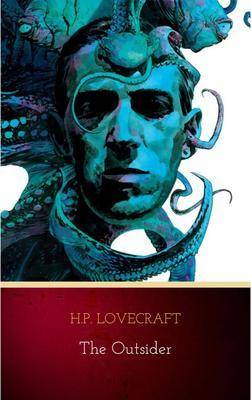
"The Outsider" is a short story by American horror writer H. P. Lovecraft. Written between March and August 1921, it was first published in Weird Tales, April 1926. In this work, a mysterious man who has been living alone in a castle for as long as he can remember decides to break free in search of human contact and light. "The Outsider" is one of Lovecraft's most commonly reprinted works and is also one of the most popular stories ever to be published in Weird Tales. "The Outsider" combines Horror, Fantasy, and Gothic Fiction to create a nightmarish story, containing themes of loneliness, the abhuman, and the afterlife. Source: Wikipedia

Un viaje de novios
¥9.00
Escrita en la ?década prodigiosa? de la narrativa espa?ola del XIX esta novela supuso una primera aproximación a los dominios del realismo-naturalismo. A caballo entre la novela y el cuaderno de viaje, la obra narra las ingratas consecuencias del desatinado matrimonio entre un funcionario oportunista y cuarentón y una joven provinciana e inexperta, Lucía, quien, tras la unión, no tarda en verse sometida al creciente divorcio entre deseo y realidad.

Do?a Milagros
¥9.00
Su modelo de “mujer del futuro” viene encarnada en el personaje de Feíta, hija de don Benicio Neira, un hidalgo venido a menos, situado en la clase media, cuya hija alberga unos inmensos deseos de instrucción, de autonomía personal, de trabajo para independizarse… que la alejan de las “se?oritas” de su clase y del resto de sus hermanas.

Persische Briefe
¥9.00
Die "Lettres persanes" (erste Ausgabe 1721) des franz?sischen Staatsphilosophen der Aufkl?rung Charles-Louis de Secondat, Baron de La Brède de Montesquieu (so sein vollst?ndiger Name) ist eines der wirkm?chtigsten Bücher der Weltliteratur, zugleich eines der erfolgreichsten zu seiner Zeit. Es ist nach der franz?sischen Revolution allerdings zunehmend in den Schatten von Montesquieus Hauptwerk, "De l’esprit des loix" (1748, Vom Geist der Gesetze), getreten, obwohl es im Vergleich zu den politischen Positionen in den Persischen Briefen durchaus als Rückschritt betrachtet werden kann. Im Gegensatz zu dem Hauptwerk gehen die Persischen Briefe unterhaltsam und satirisch an die zentralen Fragestellungen der Zeit heran; wenn man bedenkt, dass es dem Verfasser vor allem darum zu tun gewesen sein soll, mit diesem Text seine Aufnahme in die Academie fran?aise, die er in den Briefen noch dazu geh?rig verspottet, zu erreichen - was ihm auch gelang -, dann dr?ngt sich der Gedanke auf, dass das Selbstinteresse einmal mehr einen Zweck durchgesetzt hat, den es gar nicht vordringlich verfolgte.

The Two Vanrevels
¥9.00
One of the most popular novels of the early twentieth century, Booth Tarkington's The Two Vanrevels is a gripping and entertaining romp that effortlessly weaves together many of the elements that define the author's oeuvre, including a passionate love triangle, a case of mistaken identity, and a look at how political and social events can often intrude on the personal sphere.
The Turmoil
¥9.00
A familiar midwestern novel in the tradition of Sherwood Anderson and Sinclair Lewis, The Turmoil was the best-selling novel of 1915. It is set in a small, quiet city--never named but closely resembling the author's hometown of Indianapolis--that is quickly being transformed into a bustling, money-making nest of competitors more or less overrun by "the worshippers of Bigness." "There is a midland city in the heart of fair, open country, a dirty and wonderful city nesting dingily in the fog of its own smoke, " begins The Turmoil, the first volume of Pulitzer Prize-winner Booth Tarkington's "Growth" trilogy. A narrative of loss and change, a love story, and a warning about the potential evils of materialism, the book chronicles two midwestern families trying to cope with the onset of industrialization. Tarkington believed that culture could flourish even as the country was increasingly fueled by material progress. The Turmoil, the first great success of his career, tells the intertwined stories of two families: the Sheridans, whose integrity wanes as their wealth increases, and the Vertrees, who remain noble but impoverished. Linked by the romance between a Sheridan son and a Vertrees daughter, the story of the two families provides a dramatic view of what America was like on the verge of a new order. An introduction by Lawrence R. Rodgers places the novel squarely in the social and cultural context of the Progressive Era.
Ramsey Milholland
¥9.00
Newton Booth Tarkington (July 29, 1869 – May 19, 1946) was an American novelist and dramatist best known for his novels The Magnificent Ambersons and Alice Adams. He is one of only three novelists to win the Pulitzer Prize for Fiction more than once, along with William Faulkner and John Updike.
What the Moon Brings
¥9.00
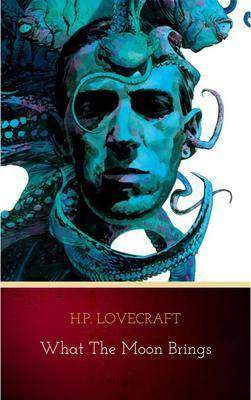
What the Moon Brings is a short story by H.P. Lovecraft, written on June 5, 1922. This story was first published in the National Amateur in May 1923, and based upon a dream. This story is told in the first person; the narrator is never named. The story describes a surreal dreamscape. The narrator wanders through his garden one night and in the moonlight sees strange and bizarre things
The Tree
¥9.00
On a mountain which was a chosen haunt for the Greek God Pan is an olive grove, and a fearful, human-like olive tree within it
The Street
¥9.00
"The Street" is a short story by American horror fiction writer H. P. Lovecraft, written in late 1919 and first published in the December 1920 issue of the Wolverine amateur journal. The story traces the history of the eponymous street in a New England city, presumably Boston, from its first beginnings as a path in colonial times to a quasi-supernatural occurrence in the years immediately following World War I.
The Nameless City
¥9.00
"The Nameless City" is a horror story written by H. P. Lovecraft in January 1921 and first published in the November 1921 issue of the amateur press journal The Wolverine. It is often considered the first Cthulhu Mythos story. The Nameless City of the story's title is an ancient ruin located somewhere in the deserts of the Arabian Peninsula and is older than any human civilization
Memory
¥9.00
"Memory" is a flash fiction short story by American horror and science fiction writer H. P. Lovecraft, written in 1919 and published in May 1923 in The National Amateur. This story takes place in the ancient valley of Nis, in vegetation-covered stone ruins described by Lovecraft in great detail. These crumbling blocks of monolithic stone now serve only for grey toads and snakes to nest under. Interspersed in the ruins are large trees that are home to little apes. Through the bottom of this valley runs the great, slimy red river called Than.

Ibid
¥9.00
"Ibid" is a mock biography of the Roman scholar Ibidus (486-587), whose masterpiece was Op. Cit., "wherein all the significant undercurrents of Graeco-Roman thought were crystallized once and for all." The piece traces the skull of Ibidus, once the possession of Charlemagne, William the Conqueror and other notables, to the United States, where it travels via Salem, Massachusetts and Providence, Rhode Island to a prairie dog hole in Milwaukee, Wisconsin.
The Hound
¥9.00
"The Hound" is a short story written by H. P. Lovecraft in September 1922 and published in the February 1924 issue of Weird Tales. It contains the first mention of Lovecraft's fictional text the Necronomicon, The story focuses around the narrator and his friend St. John, who have a deranged interest in robbing graves. They constantly defile crypts and often keep souvenirs of their nocturnal expeditions. Since they reside in the same house, they have the opportunity to set up a sort of morbid museum in their basement. Using the objects they collect from the various graves they have robbed, they organize the private exhibition. The collection consists of headstones, preserved bodies, skulls, and several heads in different phases of decomposition. It also included statues, frightful paintings, and a locked portfolio bound in tanned human-skin.
Herbert West: Reanimator
¥9.00
"Herbert West: Reanimator" is a short story by American horror fiction writer H. P. Lovecraft. It was written between October 1921 and June 1922. It was first serialized in February through July 1922 in the amateur publication Home Brew. The story was the basis of the 1985 horror film Re-Animator and its sequels, in addition to numerous other adaptations in various media.
The Green Meadow
¥9.00
"The Green Meadow" is a short story by H. P. Lovecraft and Winifred V. Jackson written in 1918/1919 and published in the spring 1927 issue of The Vagrant. As in their other collaboration, "The Crawling Chaos", both authors used pseudonyms — the tale was published as by "Elizabeth Neville Berkeley" (Jackson) and "Lewis Theobald, Jun." (Lovecraft). Lovecraft wrote the entire text but Jackson is credited since it was based on a dream she had experienced
The Curse of Yig
¥9.00
"The Curse of Yig" is a short story by H. P. Lovecraft and Zealia Bishop in which Yig, "The Father of Serpents", is first introduced.
The Cats of Ulthar
¥9.00
The Cats of Ulthar" is a short story written by American fantasy author H. P. Lovecraft in June 1920. In the tale, an unnamed narrator relates the story of how a law forbidding the killing of cats came to be in a town called Ulthar. As the narrative goes, the city is home to an old couple who enjoy capturing and killing the townspeople's cats. When a caravan of wanderers passes through the city, the kitten of an orphan (Menes) traveling with the band disappears. Upon hearing of the couple's violent acts towards cats, Menes invokes a prayer before leaving town that causes the local felines to swarm the cat-killers' house and devour them. Upon witnessing the result, the local politicians pass a law forbidding the killing of cats.
The Call of Cthulhu
¥9.00
"The Call of Cthulhu" is one of H. P. Lovecraft's best-known short stories. Written in the summer of 1926, it was first published in Weird Tales, February 1928. It is the only story written by Lovecraft in which the extraterrestrial entity Cthulhu himself makes a major appearance. It is written in a documentary style, with three independent narratives linked together by the device of a narrator discovering notes left by a deceased relative. The narrator pieces together the whole truth and disturbing significance of the information he possesses, illustrating the story's first line: "The most merciful thing in the world, I think, is the inability of the human mind to correlate all its contents. We live on a placid island of ignorance in the midst of black seas of infinity; and it was not meant that we should voyage far."
The Beast in the Cave
¥9.00
A man touring a Mammoth Cave separates from his guide and becomes lost. His torch expires and he is giving up hope of finding a way out in the pitch dark, when he hears strange non-human footsteps approaching him. Thinking it to be a lost mountain lion or other such beast, he picks up a stone and throws it toward the source of the sound. The beast is hit and crumples to the floor. The guide finds the protagonist, and together they examine the fallen creature with the guide's torchlight. The creature mutters in its last breaths and they see its face, discovering that it is in fact a pale, deformed human, who had also become lost in the cave many years ago.


