


 购物车
购物车 个人中心
个人中心
Much Ado About Nothing
¥9.00
Much Ado About Nothing is a comedy by William Shakespeare. First published in 1600, it is likely to have been first performed in the autumn or winter of 1598-1599, and it remains one of Shakespeare's most enduring and exhilarating plays on stage. Stylistically, it shares numerous characteristics with modern romantic comedies including the two pairs of lovers, in this case the romantic leads, Claudio and Hero, and their comic counterparts, Benedick and Beatrice.

Timon d'athènes.
¥9.00
Timon est un noble de d'Athènes, très (trop) généreux avec ses amis qu'il invite régulièrement à des festins somptueux, auxquels il offre des cadeaux hors de prix, à tel point qu'il se retrouve un jour sur la paille et ne peut plus payer ses créanciers. S?r de la qualité de l'amitié, il se tourne vers ceux à qui il fait moultes cadeaux pour leur demander de l'aide. Ceux-ci trouvent mille excuses pour ne pas aider Timon qui sombre dans la colère envers Athènes et ses nobles, s'exile dans les bois, et maudit la ville et ses habitants hypocrites et avilis par l'app?t de l'or. De son c?té, Alcibiade, général athénien, se voit refuser l'aide du Sénat, quitte la ville avec son armée pour mieux l'assiéger ensuite. Il essaie d'obtenir le soutien de Timon exilé qui le maudit aussi et fait finalement la paix avec les sénateurs. Timon meurt seul dans les bois laissant pour épitaphe une dernière malédiction pour qui la lira.
Titus Andronicus
¥9.00
Titus Andronicus may be Shakespeare's earliest tragedy; it is believed to have been written sometime between 1584 and the early 1590s. It depicts a Roman general who is engaged in a cycle of revenge with his enemy Tamora, the Queen of the Goths. The play is by far Shakespeare's bloodiest work. It lost popularity during the Victorian era because of its gore, and has only recently begun to revive its fortunes.
Midsummer Night's Dream
¥9.00
A Midsummer Night's Dream is a romantic comedy by William Shakespeare, suggested by "The Knight's Tale" from Geoffrey Chaucer's The Canterbury Tales, written around 1594 to 1596. It portrays the adventures of four young Athenian lovers and a group of amateur actors, their interactions with the Duke and Duchess of Athens, Theseus and Hippolyta, and with the fairies who inhabit a moonlit forest. The play is one of Shakespeare's most popular works for the stage and is widely performed across the world.
El spleen de París
¥9.00
Los peque?os poemas en prosa, también conocido como El spleen de París es una colección de 50 peque?os poemas escritos en prosa poética. La melancolía, el horror al paso del tiempo, el deseo de infinito, la crítica corrosiva contra la religión y la moral, así como la burla contra los ideales que mueven a las personas y una aversión enorme contra la sociedad y la hipocresía que la domina son temas recurrentes en estas poesías.
The Guermantes Way
¥9.00
After the relative intimacy of the first two volumes of In Search of Lost Time, The Guermantes Way opens up a vast, dazzling landscape of fashionable Parisian life in the late nineteenth century, as the narrator enters the brilliant, shallow world of the literary and aristocratic salons. Both a salute to and a devastating satire of a time, place, and culture, The Guermantes Way defines the great tradition of novels that follow the initiation of a young man into the ways of the world. This elegantly packaged new translation will introduce a new generation of American readers to the literary richness of Marcel Proust.
Winnetou 1
¥9.00
Der Ich-Erz?hler Charlie (vergleiche Karl May) alias Old Shatterhand arbeitet als Vermesser für die Eisenbahngesellschaft Great Western. Da seine Kollegen sehr tr?ge und trunksüchtig sind, muss er alles alleine machen. Zum Glück stehen ihm die Westm?nner Sam Hawkens, Dick Stone und Will Parker zur Seite. Die Eisenbahngesellschaft plant einen Gleisbau mitten durch das Gebiet der Apachen. Intschu-tschuna (Gute Sonne), der H?uptling aller Apachen, sein Sohn Winnetou (Brennendes Wasser) und der aus Deutschland stammende Klekih-petra (Wei?er Vater) kommen, um die Eisenbahner friedlich darauf hinzuweisen, dass dies ihr Land sei.
Der Schut
¥9.00
Nach Abenteuern in der Teufelsschlucht und bei der Juwelenh?hle treffen Kara Ben Nemsi und seine Begleiter auf das Oberhaupt der Verbrecher, den "Schut". Manche gef?hrliche Situation wird heraufbeschworen, ehe die Jagd, die in der tunesischen Wüste begann, in Albanien zu Ende geht.

A Vindication of the Rights of Woman
¥9.00
Writing in an age when the call for the rights of man had brought revolution to America and France, Mary Wollstonecraft produced her own declaration of female independence in 1792. Passionate and forthright, A Vindication of the Rights of Woman attacked the prevailing view of docile, decorative femininity, and instead laid out the principles of emancipation: an equal education for girls and boys, an end to prejudice, and for women to become defined by their profession, not their partner. Mary Wollstonecraft’s work was received with a mixture of admiration and outrage – Walpole called her ‘a hyena in petticoats’ – yet it established her as the mother of modern feminism.
Knickerbocker's History of New York
¥9.00
Published to popular acclaim in 1809, this satire, considered the first important contribution to American comic literature, was Washington Irving's first book. It begins by relating the creation and population of the world, including the discovery of what would become New York. It ends by recording the eventual fall of the Dutch dynasty.
Romeo and Juliet
¥9.00
Romeo and Juliet is a tragic play written early in the career of William Shakespeare about two teenage "star-cross'd lovers" whose untimely deaths ultimately unite their feuding households. It was among Shakespeare's most popular plays during his lifetime and, along with Hamlet, is one of his most frequently performed plays. Today, the title characters are regarded as archetypal "young lovers".
As You Like It
¥9.00
As You Like It is a pastoral comedy by William Shakespeare based on the novel Rosalynde by Thomas Lodge, believed to have been written in 1599 or early 1600. It features one of Shakespeare's most famous and oft-quoted lines, "All the world's a stage", and has been adapted for radio, film, and musical theatre.
Henry VIII
¥9.00
The Famous History of the Life of King Henry the Eighth is a history play by William Shakespeare, based on the life of Henry VIII of England. An alternative title, All is True, is recorded in contemporary documents, the title Henry VIII not appearing until the play's publication in the First Folio of 1623. Stylistic evidence indicates that the play was written by Shakespeare in collaboration with, or revised by, his successor, John Fletcher. It is also somewhat characteristic of the late romances in its structure.
Anne's House of Dreams
¥9.00
Book 5 in the Anne of Green Gables Series Anne's House of Dreams begins with the wedding between Anne Shirley and Gilbert Blythe. In this book, they move to a small and begin their life together with love, loss and many interesting escapades.
The Flirt
¥9.00
Newton Booth Tarkington (July 29, 1869 – May 19, 1946) was an American novelist and dramatist best known for his novels The Magnificent Ambersons and Alice Adams. He is one of only three novelists to win the Pulitzer Prize for Fiction more than once, along with William Faulkner and John Updike.
Penrod and Sam
¥9.00
Penrod and Sam is a novel by Booth Tarkington that was first published in 1916. The book is the sequel to his 1914 work, Penrod, and focuses more on the relationship between the main character of the previous book, Penrod Schofield, and his best friend, Sam Williams. More of Penrod's adventures appear in the final book of the series Penrod Jashber (1929). The three books were published together in one volume, Penrod: His Complete Story, in 1931.
The Way of All Flesh
¥9.00
A semi-autobiographical novel that attacks Victorian era hypocrisy as it traces four generations of the Pontifex family. Butler dared not publish it during his lifetime, but when it was published, it was accepted as part of the general revulsion against Victorianism.
The Temple
¥9.00
"The Temple" is a short story written by H. P. Lovecraft in 1920, and first published in the pulp magazine Weird Tales in February 1925. It was the first story Lovecraft published in Weird Tales, and indeed was his first publication in any professional outlet. The story is narrated as a "found manuscript" penned by Karl Heinrich, Graf von Altberg-Ehrenstein, a Lieutenant Commander in the Imperial German Navy during the days of World War I. It documents his untimely end at the bottom of the ocean

The Other Gods
¥9.00
A high priest and prophet greatly learned in the lore of the gods of earth attempts to scale the mountain of Hatheg-Kla in order to look upon their faces, accompanied by his young disciple. But the gods of the earth are not there alone.
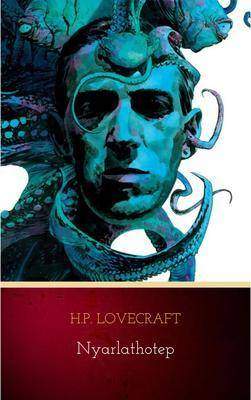
Nyarlathotep
¥9.00
Presents horror legend HP Lovecraft's short prose piece Nyarlathotep. This book presents Lovecraft's original poem in its entirety and also features a visual interpretation.
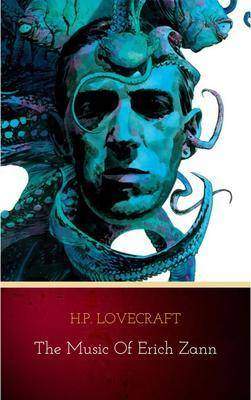
The Music of Erich Zann
¥9.00
"The Music of Erich Zann" is a short story by American author H. P. Lovecraft. Written in December 1921, it was first published in National Amateur, March 1922. A university student is forced, by his lack of funds, to take the only lodging he can afford. In a strange part of the city he had never seen before, on a street named "Rue d'Auseil", he finds an apartment in an almost empty building. One of the few other tenants is an old German man named Erich Zann. The old man is mute and plays the viol with a local orchestra. He lives on the top floor and when alone at night, plays strange melodies never heard before.


