


 购物车
购物车 个人中心
个人中心

A Child's History of England
¥40.79
Dickens wrote this book for his own children trying to cultivate interest in both history and literature. A Child's History was included in the curricula of British schoolchildren for more than a hundred years, well into the 20th century.
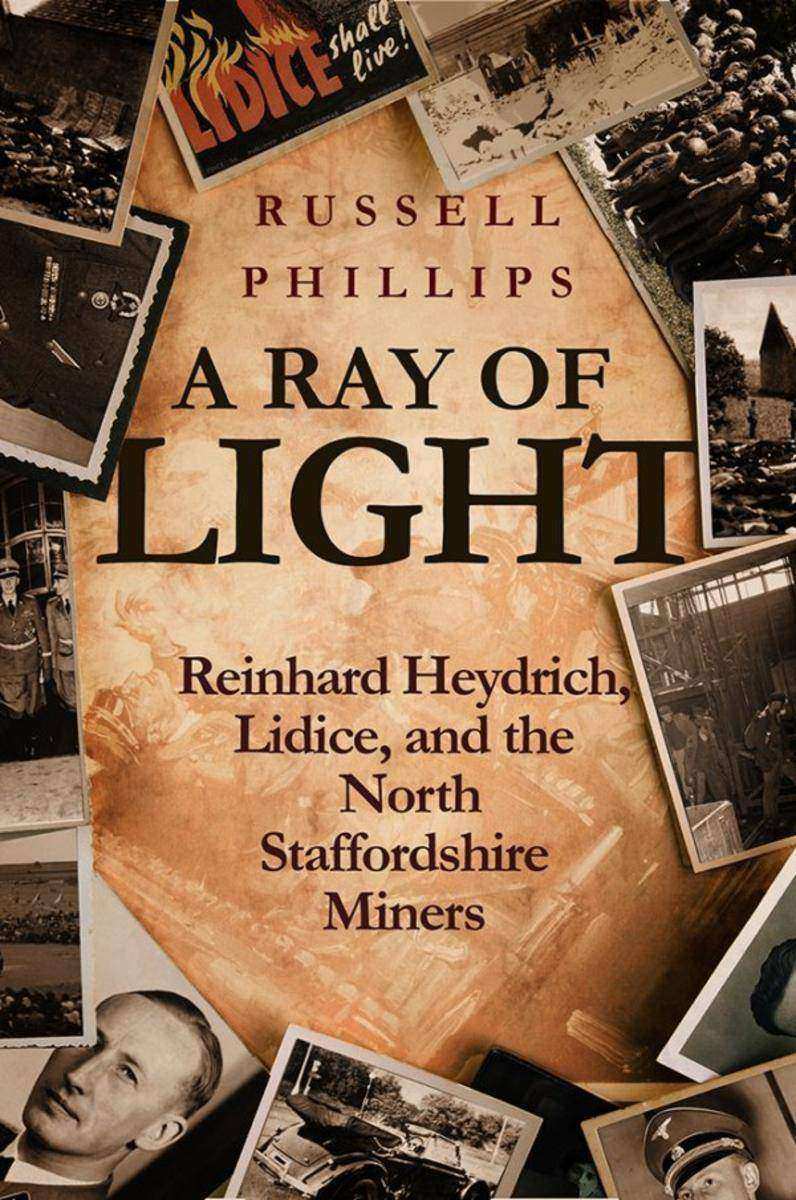
A Ray of Light:Reinhard Heydrich, Lidice, and the North Staffordshire Miners
¥24.44
This is the inspiring true story of what happens when ordinary people unite to make a stand against evil. Lidice was a peaceful and vibrant community in Czechoslovakia with a rich mining heritage. But an act of Nazi revenge saw this village wiped from existence in a horrifying chapter of European history. Disaster struck for Lidice in 1942 when the prominent Nazi official Reinhard Heydrich was assassinated. Described by Hitler as "the man with an iron heart", Heydrich was one of the key architects of the Holocaust. His death, after an attack by members of the Czech resistance, left Hitler furious and desperate for vengeance. Looking for a scapegoat to blame for Heydrich's death, he settled on the village of Lidice, which had been falsely linked to the assassination. In a brutal act which shocked the world, Lidice was completely destroyed. The men were shot while the women and children were rounded up and sent to their deaths in Nazi concentration camps. Hitler was determined that by the time he had finished, no one would even remember Lidice, let alone live there. What he hadn't reckoned on was the efforts of a group of campaigners in Britain, who resolved to make sure Lidice would never be forgotten. A Ray of Light tells the tale of Lidice's downfall and what happened next. Would the village simply be allowed to become a footnote in history, or would it rise from the ashes and forge a new future? This book is a compelling testament to the power of friendship and solidarity, and how empathy and compassion can help rebuild the world.
Shot Down
¥97.69
Discover the astonishing true stories--that will make readers laugh, cry, and gasp--behind the headlines: Ace Pilot, Spy Plane, Flight 007, Dark Horse Six, Passenger Planes, Navy Seal Team 6, and more. This series of nonfiction readers will grab a student's interest from the very first page! Designed with struggling readers in mind, these riveting books offer short chapters on high-interest headlines. Each chapter is its own mini-book, which includes a timeline, key terms, and interesting facts. Fascinating black and white photographs keep the pages turning. A bibliography encourages further topical reading.
On Benefits
¥40.79
On Benefits contains series of moral essays and dialogues composed by the Roman Stoic philosopher Seneca. The work explores such philosophical themes as providence, steadfastness, the happy life, anger, leisure, tranquility, the brevity of life, gift-giving, forgiveness, and treatises on natural phenomena.

Pretreatment Guide for Homeless Outreach & Housing First
¥48.74
This book provides social workers, outreach clinicians, case managers, and concerned community members with a pretreatment guide for assisting homeless couples, youth, and single adults. The inter-relationship between Homeless Outreach and Housing First is examined in detail to inform program development and hands on practice. Pretreatment Guide for Homeless Outreach & Housing First shares five detailed case studies from the field to elucidate effective ways of helping and to demonstrate how the most vulnerable among us can overcome trauma and homelessness. Readers will: ·Expand their assessment skills and discover new interventions for helping people who have experienced long-term or chronic homelessness. ·Understand and be able to integrate the stages of common language construction with their own practice. ·Learn about the positive measurable impact of a Housing First approach and its moral, fiscal, and quality of life implications. ·Understand how to better integrate program policy and supervision with Homeless Outreach & Housing First initiatives. ·Learn how to utilize a Pretreatment Approach with couples, youth, and unaccompanied adults experiencing untreated major mental illness and addiction. "Jay S. Levy's book is essential reading to both people new to the movement to end homelessness and folks who have been in the trenches for many years. Learn how to do effective outreach with the chronic homeless population, and the ins and outs of the Housing First model. The personal stories and the success cases will give inspiration to work even harder to help both individuals and for ending homelessness in your community." Michael Stoops, Director of Community Organizing National Coalition for the Homeless, Washington, DC Learn more at www.JaySLevy.com Another empowering book from Loving Healing Press www.LovingHealing.com

Considerations on Representative Government
¥8.09
Considerations on Representative Government is a book by John Stuart Mill published in 1861. As the title suggests, it is an argument for representative government, the ideal form of government in Mill's opinion. One of the more notable ideas Mill puts forth in the book is that the business of government representatives is not to make legislation. Instead Mill suggests that representative bodies such as parliaments and senates are best suited to be places of public debate on the various opinions held by the population and to act as watchdogs of the professionals who create and administer laws and policy. In his words: ? Their part is to indicate wants, to be an organ for popular demands, and a place of adverse discussion for all opinions relating to public matters, both great and small; and, along with this, to check by criticism, and eventually by withdrawing their support, those high public officers who really conduct the public business, or who appoint those by whom it is conducted.
Pragmatism:A New Name for Some Old Ways of Thinking
¥8.09
A profoundly influential figure in American psychology, William James (1842–1910) was also a philosopher of note, who used Charles S. Peirce's theories of pragmatism as a basis for his own conception of that influential philosophy. For James, this meant an emphasis on "radical empiricism" and the concept that the meaning of any idea — philosophical, political, social, or otherwise — has validity only in terms of its experiential and practical consequences. James propounded his theories of pragmatism in this book, one of the most important in American philosophy. In a sense, he wished to test competing systems of thought in the "marketplace of actual experience" to determine their validity, i.e. whether adopting a particular philosophical theory or way of looking at the world makes an actual difference in individual conduct or in how we perceive and react to the varieties of experience. In these pages, James not only makes a strong case for his own ideas, but mounts a powerful attack against the transcendental and rationalist tradition. For anyone interested in William James or the history of American philosophical thought, Pragmatism is an essential and thought provoking reference. In this handy, inexpensive edition, it will challenge and stimulate any thinking person.
On Sleep and Sleeplessness
¥40.79
With regard to sleep and waking, we must consider what they are: whether they are peculiar to soul or to body, or common to both; and if common, to what part of soul or body they appertain: further, from what cause it arises that they are attributes of animals, and whether all animals share in them both, or some partake of the one only, others of the other only, or some partake of neither and some of both.
Rhetoric
¥40.79
Aristotle's Rhetoric is an ancient Greek text on the art of persuasion, dating from the 4th century BC.
The New Freedom
¥8.09
This Tribeca Press edition includes the full original text as well as an easy to use interactive table of contents.
The Enchiridion
¥40.79
The Enchiridion or Manual of Epictetus is a guide on Stoic philosophy and ethical advice compiled by Arrian, a 2nd-century disciple of the Greek philosopher Epictetus. The book has played a disproportionately large role in the rise of modern attitudes and modern philosophy. Montaigne had a copy of the Enchiridion among his books. Frederick the Great carried the book with him on all campaigns. It was a source of inspiration and encouragement to Anthony, Earl of Shaftesbury, in the serious illness which ended only in his death; many pages of his diaries contain passages copied from the Enchiridion. It has been studied and widely quoted by Scottish philosophers like Francis Hutcheson, Adam Smith, and Adam Ferguson who valued Stoic moral philosophy for its reconciliation of social dependency and personal independence.
On Sophistical Refutations
¥40.79
Let us now discuss sophistic refutations, i.e. what appear to be refutations but are really fallacies instead. Some reasonings are genuine, while others seem to be so but are not, is evident. This happens with arguments, as also elsewhere, through a certain likeness between the genuine and the sham.

The Purpose of Life From Islamic Perspective
¥0.01
What is the meaning and purpose of life?’ ?This is, perhaps, the most important question that has ever been asked.? Throughout the ages, philosophers have considered it to be the most fundamental question.? Scientists, historians, philosophers, writers, psychologists and the common man all wrestle with the question at some point in their lives.? ‘Why do we eat?’ ?‘Why do we sleep?’ ?‘Why do we work?’ ?The answers we would get to these questions would be similar.? ‘I eat to live.’ ?‘I sleep to rest.’ ?‘I work to support myself and my family.’ ?But when it comes to what the purpose of life is, people are confused.? We see their confusion by the type of answers we receive.? Youths may say, "I live for booze and bikinis."? The middle aged professional might say, "I live to save enough for a comfortable retirement."? The old man would probably say, "I’ve been asking why I’m here most of my life.? If there’s a purpose, I don’t care anymore." ?And perhaps the most common answer will be, "I really don’t know!" How, then, do you discover the purpose of life? ?We basically have two options.? The first is to let ‘human reason’ - the celebrated achievement of the Enlightenment - guide us.? After all, the Enlightenment gave us modern science based on careful observation of the natural world.? But have post-Enlightenment philosophers figured it out? ?Camus described life as "absurd"; Sartre spoke of "anguish, abandonment and despair." ?To these Existentialists, life has no meaning. Islam is the response to humanity’s search for meaning.? The purpose of creation for all men and women for all times has been one: to know and worship God. The Quran teaches us that every human being is born conscious of God, "(Remember) when your Lord extracted from the loins of Adam’s children their descendants and made them testify [saying]: ‘Am I not your Lord?’ ?They said: ‘Yes, we testify to it.’ ?(This was) in case you say on the Day of Judgment: ‘We were unaware of this.’ ?Or you say: ‘It was our ancestors who worshipped others besides God and we are only their descendants.? Will you then destroy us for what those liars did?’"(Quran 7:172-173) The Prophet of Islam teaches us that God created this primordial need in human nature at the time Adam was made.? God took a covenant from Adam when He created him.? God extracted all of Adam’s descendants who were yet to be born, generation after generation, spread them out, and took a covenant from them.? He addressed their souls directly, making them bear witness that He was their Lord.? Since God made all human beings swear to His Lordship when He created Adam, this oath is imprinted on the human soul even before it enters the fetus, and so a child is born with a natural belief in the Oneness of God.? This natural belief is called fitra in Arabic.
Os 60 Minutos No Paraíso
¥90.60
A HIST?RIA REAL E EXTRAORDIN?RIA DE QUEM ESTEVE NO PARA?SO E SAIBA O QUE ACONTECEU DE VERDADE!!!_______________________________ Um acidente de trabalho que vitimou o jovem que resultou na morte, e hoje tornou-se pastor. Hoje ele é uma testemunha viva que o livro conta em detalhes tudo que aconteceu de verdade em sua jornada para o céu e seus planos para aqui na terra. Você já sentiu isso? Aquele frio na barriga e o cora??o batendo forte? O medo, a emo??o o sangue correndo pelo nosso corpo em disparada, sem controle, só acontece é que tudo isso para de funcionar, às vezes volte, às vezes n?o! Eu, estava com essa mesma sensa??o quando tudo isso aconteceu comigo! Uma sensa??o de descanso, de repouso, de bem-estar, de saúde, a energia empreendida que n?o tem fimE MAIS NESTE LIVRO VOC? VAI ENCONTRAR AJUDA PARA TODA FAM?LIA, SOBRE DROGAS, MEDO, PROSPERIDADE, DESAFIOS, DOEN?AS, FUTURO, FINAN?AS…

Dialogues Concerning Natural Religion
¥8.09
Dialogues Concerning Natural Religion is a philosophical work by the Scottish philosopher David Hume. Through dialogue, three philosophers named Demea, Philo, and Cleanthes debate the nature of God's existence. Whether or not these names reference specific philosophers, ancient or otherwise, remains a topic of scholarly dispute. While all three agree that a god exists, they differ sharply in opinion on God's nature or attributes and how, or if, humankind can come to knowledge of a deity. ? In the Dialogues, Hume's characters debate a number of arguments for the existence of God, and arguments whose proponents believe through which we may come to know the nature of God. Such topics debated include the argument from design—for which Hume uses a house—and whether there is more suffering or good in the world (argument from evil). ? Hume started writing the Dialogues in 1750 but did not complete them until 1776, shortly before his death. They are based partly on Cicero's De Natura Deorum. The Dialogues were published posthumously in 1779, originally with neither the author's nor the publisher's name.
The Old Sixth Regiment:Its War Record, 1861-65
¥8.09
The object of this work is to give a true and impartial record of the old Sixth Regiment during the war. The author collected the facts from a private diary kept by himself while in the service. Less has been known of the Sixth by our citizens than most of the other regiments; perhaps this is due partly to the fact that when we arrived.in Washington Colonel Chatfield instructed officers and men that it was unmilitary to write letters for the press; he desired that the War Record should know the record of the Sixth, and not the newspapers only. Its history is less full on this account; yet none can say that the record of the Sixth is sullied. In many trying places the regiment proved itself honor ably and gained confidence from its corps and department commanders. There may be errors in this work, and if any are inclined to censure, I trust they will remember that very few histories are without them; yet they are errors of the head and not of the heart. If what is here written meets the approval of the old members and the intelligent readers in general, I shall feel that my labors have been amply rewarded.

The True Story of Andersonville Prison:A Defense of Major Henry Wirz
¥56.82
During the Civil War, James Madison Page was a prisoner in different places in the South. Seven months of that time was spent at Andersonville. While there he became well acquainted with Major Wirz, or Captain Wirz, his rank during Page’s confinement. Page takes the stand that Captain Wirz was unjustly held responsible for the hardship and mortality of Andersonville. It is his belief that the Federal authorities must share the blame for these things with Confederate authorities, since they were well aware of the inability of the Confederacy to meet the reasonable wants of their prisoners of war, as they lacked supplies for their own needs and since the Federal authorities failed to exercise a humane policy in the exchange of those captured in battle.
Reminicences of Forts Sumter and Moultrie in 1860-61
¥65.99
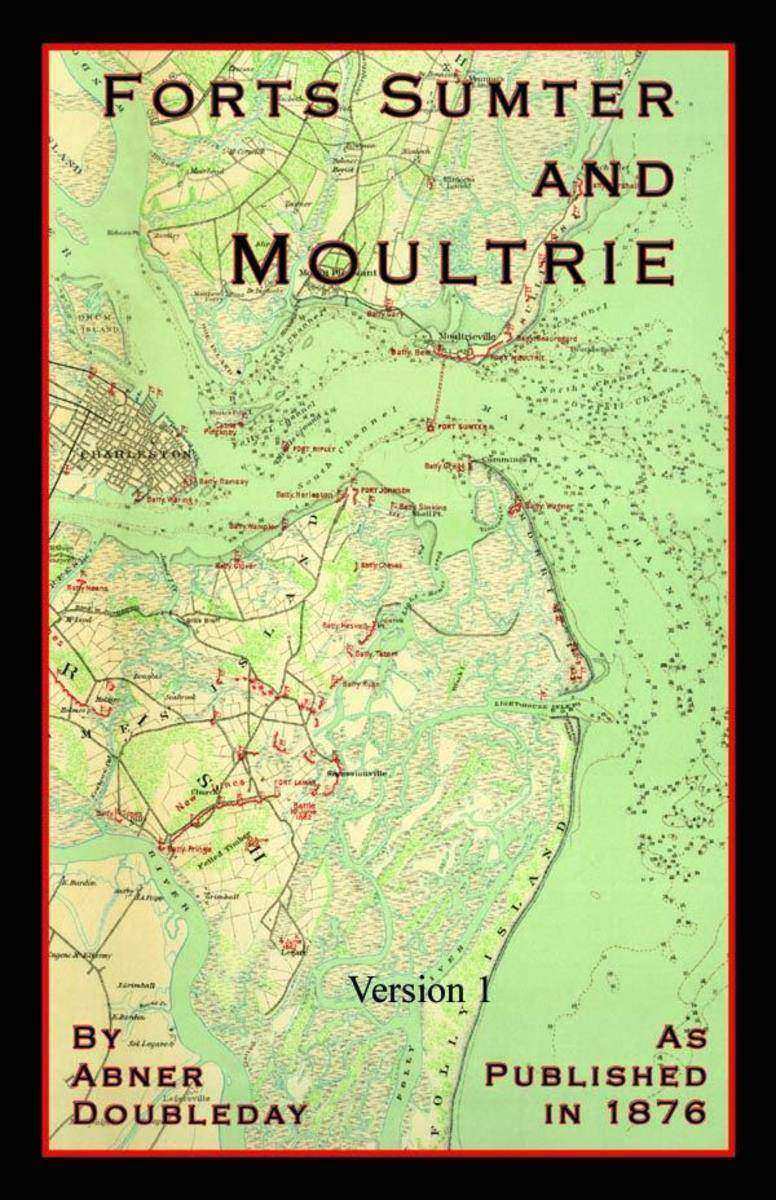
Abner Doubleday was an 1842 graduate of the U. S. Military Academy at West Point and a veteran of the Mexican war when he was assigned to Fort Moultrie in the summer of 1860. A Captain of Artillery, he served as second in command of the garrison at the historic fort when the curtain rose on the dramatic events leading to the outbreak of the War Between the States. Doubleday also had the distinction of aiming the first cannon fired in response to the bombardment of Fort Sumter.
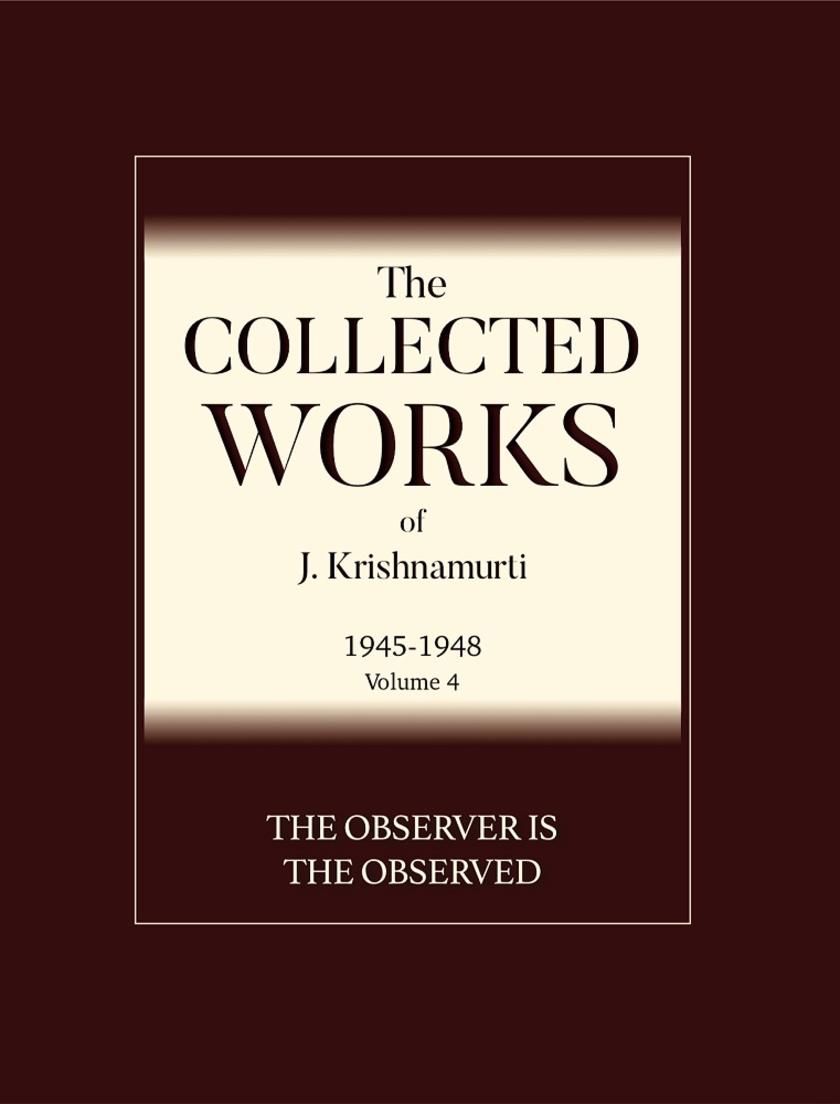
The Observer Is The Observed
¥73.49
In these Talks, given in India and Saanen, Krishnamurti speaks to the necessity for a new way of looking, thinking and being in the world. "What is the effect or value of an individual changing? How will that transform the whole current of human existence? What can an individual do?...... there is no such thing as an individual consciousness; there is only consciousness of which we are a part. You might segregate yourself and build a wall of a particular space called the `me'. But that `me' is related to the whole, that `me' is not separate. And in transforming that particular section, that particular part, we will affect the whole of consciousness. And I think this is very important to realize: that we are not talking about individual salvation or individual reformation, but about being aware of the particular in relation to, the total. Then out of that realization comes action which will affect the whole."
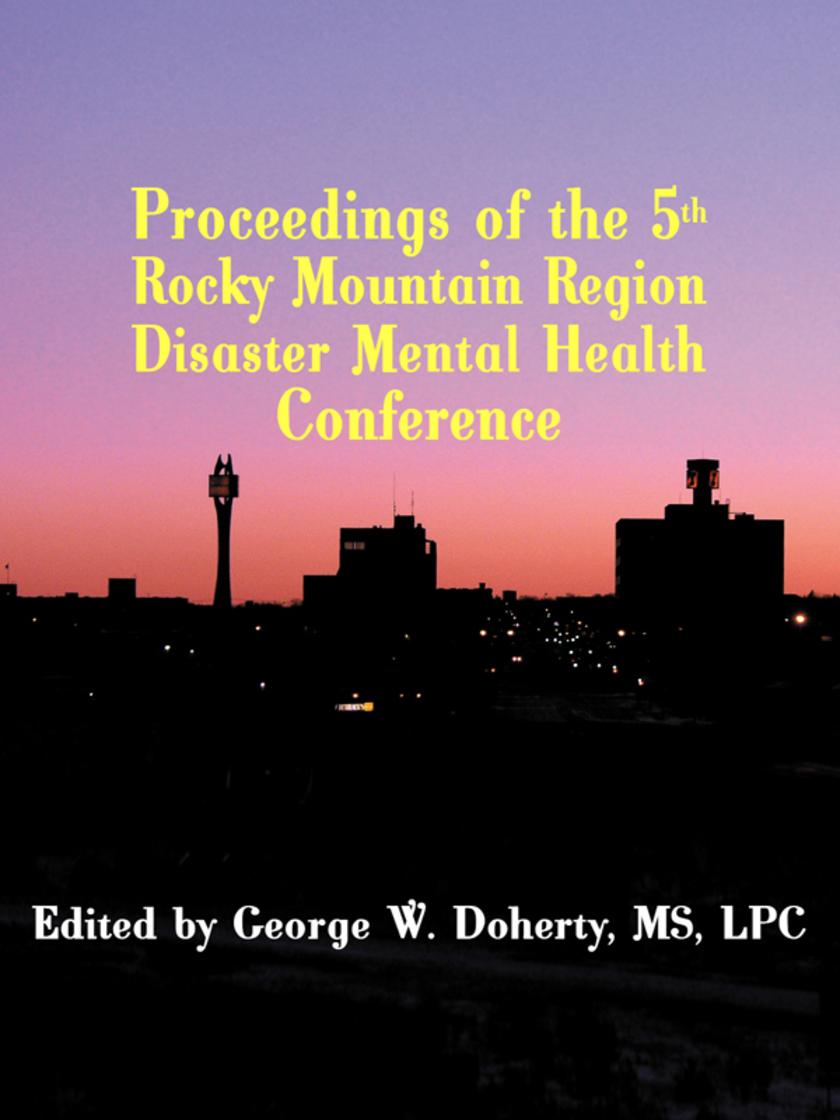
Taking Charge in Troubled Times
¥65.99
Recent years have seen an extraordinary number of major disasters, critical incidents and other events that have had major impacts on our world. The 2004 tsunami, hurricanes Rita and Katrina, and the wars in Iraq and Afghanistan affect millions of lives daily. Potential events such as Avian Flu pandemic, global warming and the increasing threats of spreading unrest in the Middle East are concerns that weigh heavily on us all.November 8-11, 2006, the Rocky Mountain Region Disaster Mental Health Institute held their Annual four-day Disaster Mental Health Conference. The theme of the conference was "TAKING CHARGE IN TROUBLED TIMES: Response, Resilience, Recovery and Follow-up." This edition contains the major papers presented at the conference and summaries of additional presentations. They address some of the major crisis events confronting our societies in recent years, namely, large disasters such as hurricanes Katrina and Rita; case studies such as Abu Ghraib, and traumatic events such as a night club suicide bombing, the role of cultural sensitivity and ethics in disaster settings, resilience, and the importance of planning, education and taking care of our first responders and mental health professionals. An additional concern with information includes information about preparation of communities and families for deployment and return of military personnel. The importance of planning for how mental health personnel can respond in the event of an Avian Flu Pandemic is also discussed. Presenters are drawn from researchers and responders from Wyoming, the United States, and the United Kingdom.Contributors include John Durkin, Alan L. Hensley, Thom Curtis, Patricia Justice, Richard J. Conroy, Debra Russell, Faudem, Kenneth Glass, and Tasha Graves.The Rocky Mountain Region Disaster Mental Health Institute is a 501(c)3 Non-profit OrganizationLearn more at http://www.rmrinstitute.org
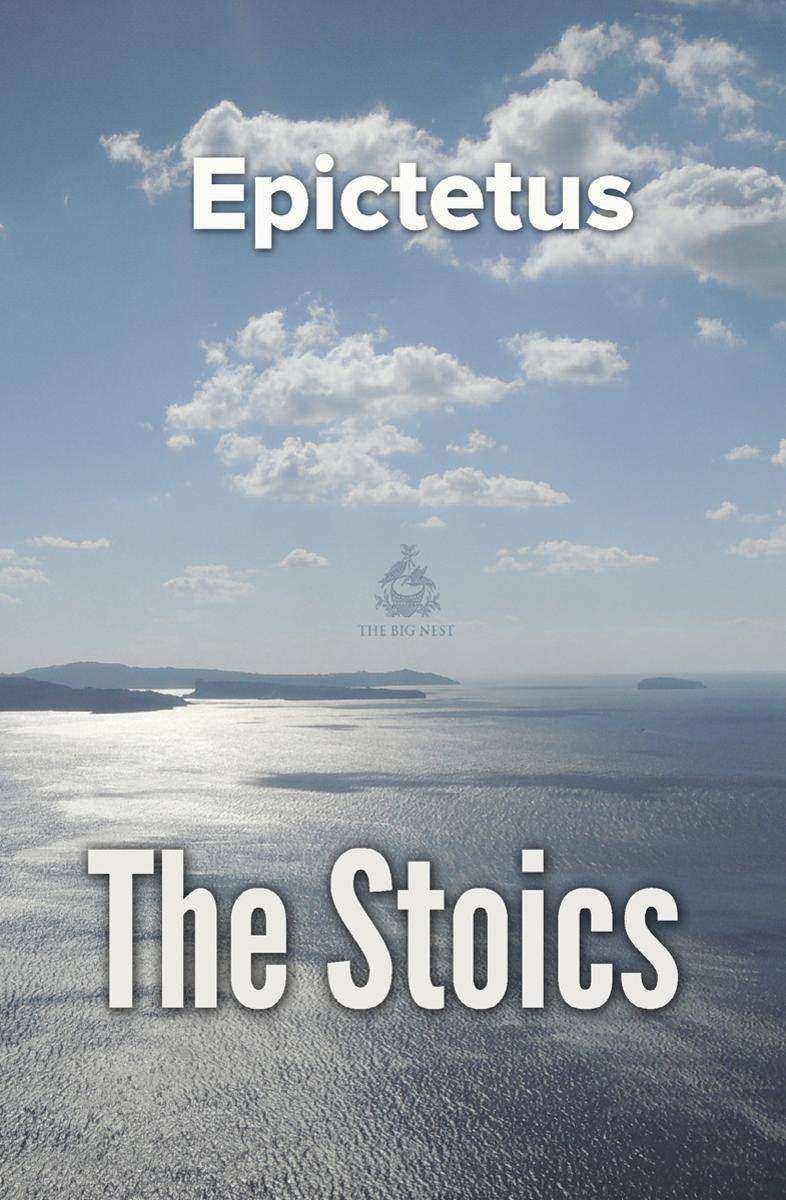
The Stoics
¥40.79
Complete teachings of the Stoic philosopher Epictetus including: The Enchiridion, The Discourses, The Golden Sayings, The Hymn of Cleanthes. The book is a complete guide for the advanced student of Stoicism to show him the best roads toward the goal of becoming a true philosopher.


