


 购物车
购物车 个人中心
个人中心
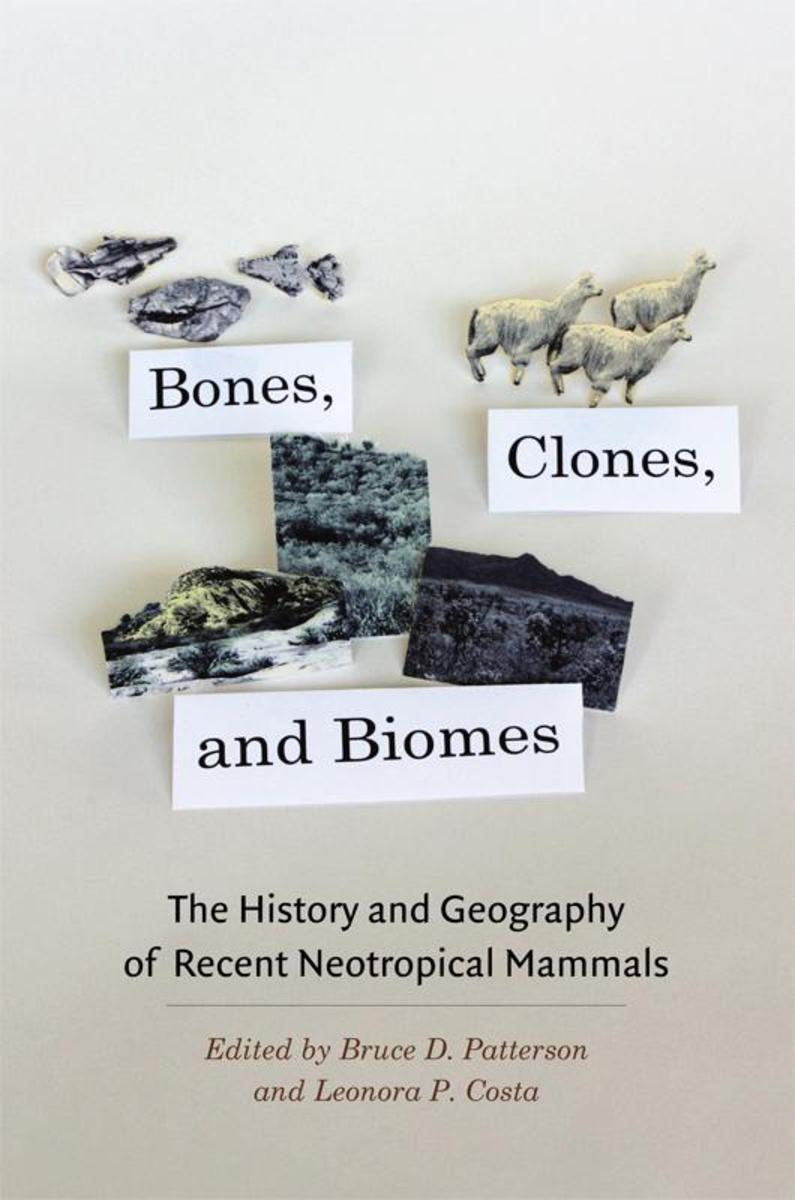
Bones, Clones, and Biomes
¥618.03
As explorers and scientists have known for decades, the Neotropics harbor a fantastic array of our planet's mammalian diversity, from capybaras and capuchins to maned wolves and mouse opossums to sloths and sakis. This biological bounty can be attributed partly to the striking diversity of Neotropical landscapes and climates and partly to a series of continental connections that permitted intermittent faunal exchanges with Africa, Antarctica, Australia, and North America. Thus, to comprehend the development of modern Neotropical mammal faunas requires not only mastery of the Neotropics' substantial diversity, but also knowledge of mammalian lineages and landscapes dating back to the Mesozoic.Bones, Clones, and Biomes offers just that-an exploration of the development and relationships of the modern mammal fauna through a series of studies that encompass the last 100 million years and both Central and South America. This work serves as a complement to more taxonomically driven works, providing for readers the long geologic and biogeographic contexts that undergird the abundance and diversity of Neotropical mammals. Rather than documenting diversity or distribution, this collection traverses the patterns that the distributions and relationships across mammal species convey, bringing together for the first time geology, paleobiology, systematics, mammalogy, and biogeography. Of critical importance is the book's utility for current conservation and management programs, part of a rapidly rising conservation paleobiology initiative.

Instructions for American Servicemen in Iraq during World War II
¥82.40
"e;American success or failure in Iraq may well depend on whether the Iraqis like American soldiers or not."e;?The U.S. military could certainly have used that bit of wisdom in 2003, as violence began to eclipse the Iraq War's early successes. Ironically, had the Army only looked in its own archives, they would have found it-that piece of advice is from a manual the U.S. War Department handed out to American servicemen posted in Iraq back in 1943.The advice in Instructions for American Servicemen in Iraq during World War II,presented here in a new facsimile edition, retains a surprising, even haunting, relevance in light of today's muddled efforts to win Iraqi hearts and minds. Designed to help American soldiers understand and cope with what was at the time an utterly unfamiliar culture-the manual explains how to pronounce the word Iraq, for instance-this brief, accessible handbookmixes do-and-don't-style tips ("e;Always respect the Moslem women."e; "e;Talk Arabic if you can to the people. No matter how badly you do it, they will like it."e;) with general observations on Iraqi history and society. The book's overall message still rings true-dramatically so-more than sixty years later: treat an Iraqi and his family with honor and respect, and you will have a strong ally; treat him with disrespect and you will create an unyielding enemy.With a foreword by Lieutenant Colonel John A. Nagl reflecting on the manual's continuing applicability-and lamenting that it was unknown at the start of the invasion-this new edition of Instructions for American Servicemen in Iraq will be essential reading for anyone who cares about the future of Iraq and the fate of the American soldiers serving there.

Visible Empire
¥529.74
Between 1777 and 1816, botanical expeditions crisscrossed the vast Spanish empire in an ambitious project to survey the flora of much of the Americas, the Caribbean, and the Philippines. While these voyages produced written texts and compiled collections of specimens, they dedicated an overwhelming proportion of their resources and energy to the creation of visual materials. European and American naturalists and artists collaborated to manufacture a staggering total of more than 12,000 botanical illustrations. Yet these images have remained largely overlooked-until now.In this lavishly illustrated volume, Daniela Bleichmar gives this archive its due, finding in these botanical images a window into the worlds of Enlightenment science, visual culture, and empire. Through innovative interdisciplinary scholarship that bridges the histories of science, visual culture, and the Hispanic world, Bleichmar uses these images to trace two related histories: the little-known history of scientific expeditions in the Hispanic Enlightenment and the history of visual evidence in both science and administration in the early modern Spanish empire. As Bleichmar shows, in the Spanish empire visual epistemology operated not only in scientific contexts but also as part of an imperial apparatus that had a long-established tradition of deploying visual evidence for administrative purposes.
Studies on the Abuse and Decline of Reason
¥529.74
Studies on the Abuse and Decline of Reason is a series of fascinating essays on the study of social phenomena. How to best and most accurately study social interactions has long been debated intensely, and there are two main approaches: the positivists, who ignore intent and belief and draw on methods based in the sciences; and the nonpositivists, who argue that opinions and ideas drive action and are central to understanding social behavior. F. A. Hayek's opposition to the positivists and their claims to scientific rigor and certainty in the study of human behavior is a running theme of this important book.Hayek argues that the vast number of elements whose interactions create social structures and institutions make it unlikely that social science can predict precise outcomes. Instead, he contends, we should strive to simply understand the principles by which phenomena are produced. For Hayek this modesty of aspirations went hand in hand with his concern over widespread enthusiasm for economic planning. As a result, these essays are relevant to ongoing debates within the social sciences and to discussion about the role government can and should play in the economy.

Population Fluctuations in Rodents
¥488.54
How did rodent outbreaks in Germany help to end World War IWhat caused the destructive outbreak of rodents in Oregon and California in the late 1950s, the large population outbreak of lemmings in Scandinavia in 2010, and the great abundance of field mice in Scotland in the spring of 2011Population fluctuations, or outbreaks, of rodents constitute one of the classic problems of animal ecology, and in Population Fluctuations in Rodents, Charles J. Krebs sifts through the last eighty years of research to draw out exactly what we know about rodent outbreaks and what should be the agenda for future research.?Krebs has synthesized the research in this area, focusing mainly on the voles and lemmings of the Northern Hemisphere-his primary area of expertise-but also referring to the literature on rats and mice. He covers the patterns of changes in reproduction and mortality and the mechanisms that cause these changes-including predation, disease, food shortage, and social behavior-and discusses how landscapes can affect population changes, methodically presenting the hypotheses related to each topic before determining whether or not the data supports them. He ends on an expansive note, by turning his gaze outward and discussing how the research on rodent populations can apply to other terrestrial mammals. Geared toward advanced undergraduate students, graduate students, and practicing ecologists interested in rodent population studies, this book will also appeal to researchers seeking to manage rodent populations and to understand outbreaks in both natural and urban settings-or, conversely, to protect endangered species.
Regimens of the Mind
¥488.54
In Regimens of the Mind, Sorana Corneanu proposes a new approach to the epistemological and methodological doctrines of the leading experimental philosophers of seventeenth-century England, an approach that considers their often overlooked moral, psychological, and theological elements. Corneanu focuses on the views about the pursuit of knowledge in the writings of Robert Boyle and John Locke, as well as in those of several of their influences, including Francis Bacon and the early Royal Society virtuosi. She argues that their experimental programs of inquiry fulfill the role of regimens for curing, ordering, and educating the mind toward an ethical purpose, an idea she tracks back to the ancient tradition of cultura animi. Corneanu traces this idea through its early modern revival and illustrates how it organizes the experimental philosophers' reflections on the discipline of judgment, the study of nature, and the study of Scripture. It is through this lens, the author suggests, that the core features of the early modern English experimental philosophy-including its defense of experience, its epistemic modesty, its communal nature, and its pursuit of "e;objectivity"e;-are best understood.
Enduring Importance of Leo Strauss
¥453.22
The Enduring Importance of Leo Strauss takes on the crucial task of separating what is truly important in the work of Leo Strauss from the ephemeral politics associated with his school. Laurence Lampert focuses on exotericism: the use of artful rhetoric to simultaneously communicate a socially responsible message to the public at large and a more radical message of philosophic truth to a smaller, more intellectually inclined audience. Largely forgotten after the Enlightenment, exotericism, he shows, deeply informed Strauss both as a reader and as a philosophic writer-indeed, Lampert argues, Strauss learned from the finest practitioners of exoteric writing how to become one himself.Examining some of Strauss's most important books and essays through this exoteric lens, Lampert reevaluates not only Strauss but the philosophers-from Plato to Halevi to Nietzsche-with whom Strauss most deeply engaged. Ultimately Lampert shows that Strauss's famous distinction between ancient and modern thinkers is primarily rhetorical, one of the great examples of Strauss's exoteric craft. Celebrating Strauss's achievements while recognizing one main shortcoming-unlike Nietzsche, he failed to appreciate the ramifications of modern natural science for philosophy and its public presentation-Lampert illuminates Strauss as having even greater philosophic importance than we have thought before.?
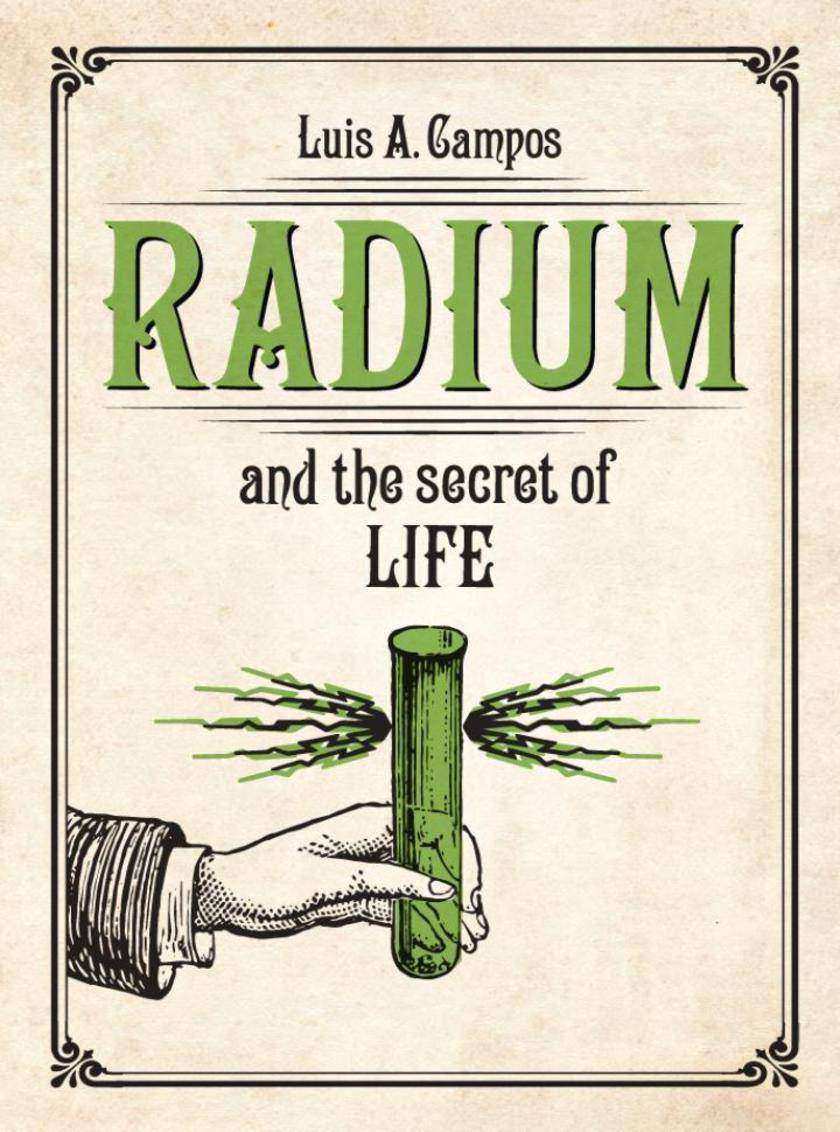
Radium and the Secret of Life
¥453.22
Before the hydrogen bomb indelibly associated radioactivity with death, many chemists, physicians, botanists, and geneticists believed that radium might hold the secret to life. Physicists and chemists early on described the wondrous new element in lifelike terms such as "e;decay"e; and "e;half-life,"e; and made frequent references to the "e;natural selection"e; and "e;evolution"e; of the elements. Meanwhile, biologists of the period used radium in experiments aimed at elucidating some of the most basic phenomena of life, including metabolism and mutation.From the creation of half-living microbes in the test tube to charting the earliest histories of genetic engineering, Radium and the Secret of Life highlights previously unknown interconnections between the history of the early radioactive sciences and the sciences of heredity. Equating the transmutation of radium with the biological transmutation of living species, biologists saw in metabolism and mutation properties that reminded them of the new element. These initially provocative metaphoric links between radium and life proved remarkably productive and ultimately led to key biological insights into the origin of life, the nature of heredity, and the structure of the gene. Radium and the Secret of Life recovers a forgotten history of the connections between radioactivity and the life sciences that existed long before the dawn of molecular biology.

Powers of Pure Reason
¥453.22
The Critique of Pure Reason-Kant's First Critique-is one of the most studied texts in intellectual history, but as Alfredo Ferrarin points out in this radically original book, most of that study has focused only on very select parts. Likewise, Kant's oeuvre as a whole has been compartmentalized, the three Critiques held in rigid isolation from one another. Working against the standard reading of Kant that such compartmentalization has produced,?The Powers of Pure Reason?explores forgotten parts of the First Critique in order to find an exciting, new, and ultimately central set of concerns by which to read all of Kant's works. ?Ferrarin blows the dust off of two egregiously overlooked sections of the First Critique-the Transcendental Dialectic and the Doctrine of Method. There he discovers what he argues is the Critique's greatest achievement: a conception of the unity of reason and an exploration of the powers it has to reach beyond itself and legislate over the world. With this in mind, Ferrarin dismantles the common vision of Kant as a philosopher writing separately on epistemology, ethics, and aesthetics and natural teleology, showing that the three Critiques are united by this underlying theme: the autonomy and teleology of reason, its power and ends. The result is a refreshing new view of Kant, and of reason itself.

Geographic Mosaic of Coevolution
¥311.96
Coevolution-reciprocal evolutionary change in interacting species driven by natural selection-is one of the most important ecological and genetic processes organizing the earth's biodiversity: most plants and animals require coevolved interactions with other species to survive and reproduce. The Geographic Mosaic of Coevolution analyzes how the biology of species provides the raw material for long-term coevolution, evaluates how local coadaptation forms the basic module of coevolutionary change, and explores how the coevolutionary process reshapes locally coevolving interactions across the earth's constantly changing landscapes.Picking up where his influential The Coevolutionary Process left off, John N. Thompsonsynthesizes the state of a rapidly developing science that integrates approaches from evolutionary ecology, population genetics, phylogeography, systematics, evolutionary biochemistry and physiology, and molecular biology. Using models, data, and hypotheses to develop a complete conceptual framework, Thompson also draws on examples from a wide range of taxa and environments, illustrating the expanding breadth and depth of research in coevolutionary biology.
Why We Need Ordinary Language Philosophy
¥288.41
Sandra Laugier has long been a key liaison between American and European philosophical thought, responsible for bringing American philosophers such as Ralph Waldo Emerson, Henry David Thoreau, and Stanley Cavell to French readers-but until now her books have never been published in English. Why We Need Ordinary Language Philosophy rights that wrong with a topic perfect for English-language readers: the idea of analytic philosophy.?Focused on clarity and logical argument, analytic philosophy has dominated the discipline in the United States, Australia, and Britain over the past one hundred years, and it is often seen as a unified, coherent, and inevitable advancement. Laugier questions this assumption, rethinking the very grounds that drove analytic philosophy to develop and uncovering its inherent tensions and confusions. Drawing on J. L. Austin and the later works of Ludwig Wittgenstein, she argues for the solution provided by ordinary language philosophy-a philosophy that trusts and utilizes the everyday use of language and the clarity of meaning it provides-and in doing so offers a major contribution to the philosophy of language and twentieth- and twenty-first-century philosophy as a whole.
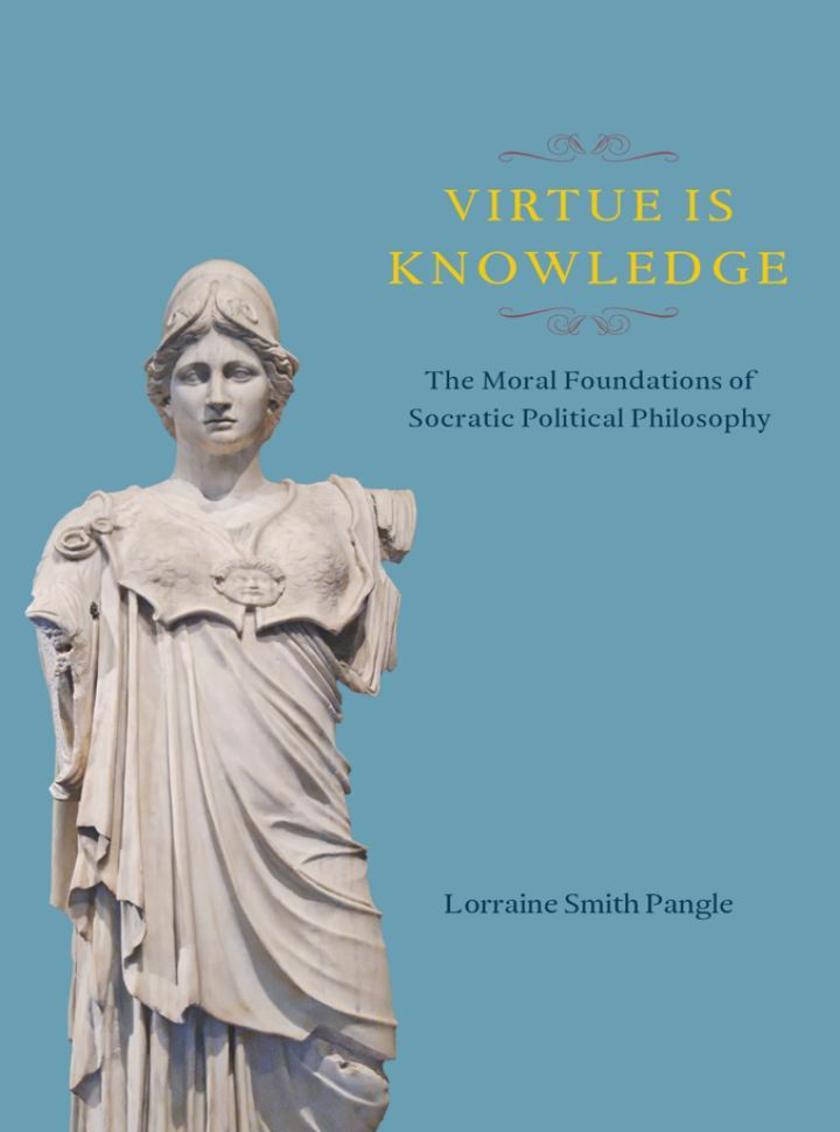
Virtue Is Knowledge
¥288.41
The relation between virtue and knowledge is at the heart of the Socratic view of human excellence, but it also points to a central puzzle of the Platonic dialogues: Can Socrates be serious in his claims that human excellence is constituted by one virtue, that vice is merely the result of ignorance, and that the correct response to crime is therefore not punishment but educationOr are these assertions mere rhetorical ploys by a notoriously complex thinker?Lorraine Smith Pangle traces the argument for the primacy of virtue and the power of knowledge throughout the five dialogues that feature them most prominently-the Apology, Gorgias, Protagoras, Meno, and Laws-and reveals the truth at the core of these seemingly strange claims. She argues that Socrates was more aware of the complex causes of human action and of the power of irrational passions than a cursory reading might suggest. Pangle's perceptive analyses reveal that many of Socrates's teachings in fact explore the factors that make it difficult for humans to be the rational creatures that he at first seems to claim. Also critical to Pangle's reading is her emphasis on the political dimensions of the dialogues. Underlying many of the paradoxes, she shows, is a distinction between philosophic and civic virtue that is critical to understanding them.Ultimately, Pangle offers a radically unconventional way of reading Socrates's views of human excellence: Virtue is not knowledge in any ordinary sense, but true virtue is nothing other than wisdom.

Seeing Like a Rover
¥288.41
In the years since the Mars Exploration Rover Spirit and Opportunity first began transmitting images from the surface of Mars, we have become familiar with the harsh, rocky, rusty-red Martian landscape. But those images are much less straightforward than they may seem to a layperson: each one is the result of a complicated set of decisions and processes involving the large team behind the Rovers.With Seeing Like a Rover, Janet Vertesi takes us behind the scenes to reveal the work that goes into creating our knowledge of Mars. Every photograph that the Rovers take, she shows, must be processed, manipulated, and interpreted-and all that comes after team members negotiate with each other about what they should even be taking photographs of in the first place. Vertesi's account of the inspiringly successful Rover project reveals science in action, a world where digital processing uncovers scientific truths, where images are used to craft consensus, and where team members develop an uncanny intimacy with the sensory apparatus of a robot that is millions of miles away. Ultimately, Vertesi shows, every image taken by the Mars Rovers is not merely a picture of Mars-it's a portrait of the whole Rover team, as well.
Voluntary Simplicity Second
¥83.03
When Voluntary Simplicity was first published in 1981, it quickly became recognized as a powerful and visionary work in the emerging dialogue over sustainable ways of living. Nearly three decades later, as the planet's environmental stresses become more urgent than ever, Duane Elgin has revised and updated his revolutionary book.Voluntary Simplicity is not about living in poverty; it is about living with balance. This book illuminates the pattern of changes that an increasing number of people around the world are making in their everyday lives adjustments in day-to-day living that are an active, positive response to the complex dilemmas of our time. By embracing a lifeway of voluntary simplicity characterized by ecological awareness, frugal consumption, and personal growth people can change their lives. And in the process, they have the power to change the world.

The Shadow Effect
¥88.56
Deepak Chopra, Debbie Ford, and Marianne New York Times bestselling authors and internationally acclaimed teachers have joined together to share their knowledge on one of the most crucial obstacles to happiness we face the shadow. These three luminaries, each with a signature approach, bring to light the parts of ourselves we deny but that still direct our life. For it is only when we embrace our shadow that we discover the gifts of our authentic nature.The shadow exists within all of us. It is a part of us and yet we spend most of our life running from it. But far from being scary, our dark side holds the promise of a better, more fulfilling life. Our shadow makes itself known every day. It is the reason we get furious over a friend showing up ten minutes late, yell at our parents or kids when they have done nothing wrong, and sabotage our own success at the worst possible time. Until we are able to embrace our dualistic nature, we will continue to hurt ourselves and those closest to us and fall short of our potential.Combining the wisdom of three experts, The Shadow Effect is a practical and profound guide to discovering the gifts of our shadow. These three authors powerfully pierce the veil of our unclaimed self, releasing us from the past and propelling us on a journey to wholeness. No longer living a half life, we are capable of achieving our dreams and reclaiming the happiness that is our birthright.
When Children Grieve
¥94.10
To watch a child grieve and not know what to do is a profoundly difficult experience for parents, teachers, and caregivers. Yet, there are guidelines for helping children develop a lifelong, healthy response to loss.In When Children Grieve, the authors offer a cutting-edge volume to free children from the false idea of "not feeling bad" and to empower them with positive, effective methods of dealing with loss.There are many life experiences that can produce feelings of grief in a child, from the death of a relative or a divorce in the family to more everyday experiences such as moving to a new neighborhood or losing a prized possession. No matter the reason or degree of severity, if a child you love is grieving, the guidelines examined in this thoughtful book can make a difference.

The Vitamin E Factor
¥84.16
It is too early to conclude that vitamin E has all the beneficial effects attributed to it, but even if only 25% of current expectations were to be fulfilled, vitamin E would become an important weapon against a range of chronic diseases.The book is not simply scientific and education but also a please to read.

The Heart of Addiction
¥83.03
Nobody has had an answer for why people with addictions continue to repeat them -- until now.For more than twenty years, distinguished psychiatrist Dr. Lance Dodes has been successfully helping people master their addictions -- alcoholism, compulsive gambling, smoking, sexual addiction, and more with a radical approach. Dr. Dodes describes how all addictions have, at their heart, unrecognized emotional factors that explain: Why we feel the impulse Why we feel it when we do What alternatives (really) work in that critical moment In this refreshing book filled with compelling case studies, Dr. Dodes debunks several such widely accepted myths as:Addictions are fundamentally a physical problem. People with addictions are different from other people. You have to hit bottom before you can get well. You are wasting your time if you ask "why" you have an addiction.

Cinderella Ate My Daughter
¥88.56
The acclaimed author of the groundbreaking bestseller Schoolgirls reveals the dark side of pink and pretty: the rise of the girlie-girl, she warns, is not that innocent. Pink and pretty or predatory and hardened, sexualized girlhood influences our daughters from infancy onward, telling them that how a girl looks matters more than who she is. Somewhere between the exhilarating rise of Girl Power in the 1990s and today, the pursuit of physical perfection has been recast as a source the source of female empowerment. And commercialization has spread the message faster and farther, reaching girls at ever-younger ages.But, realistically, how many times can you say no when your daughter begs for a pint-size wedding gown or the latest Hannah Montana CDAnd how dangerous is pink and pretty anyway especially given girls' successes in the classroom and on the playing fieldBeing a princess is just make-believe, after all; eventually they grow out of it. Or do theyDoes playing Cinderella shield girls from early sexualization or prime them for itCould today's little princess become tomorrow's sexting teenAnd what if she doesWould that make her in charge of her sexuality or an unwitting captive to it?Those questions hit home with Peggy Orenstein, so she went sleuthing. She visited Disneyland and the international toy fair, trolled American Girl Place and Pottery Barn Kids, and met beauty pageant parents with preschoolers tricked out like Vegas showgirls. She dissected the science, created an online avatar, and parsed the original fairy tales. The stakes turn out to be higher than she or we ever imagined: nothing less than the health, development, and futures of our girls. From premature sexualization to the risk of depression to rising rates of narcissism, the potential negative impact of this new girlie-girl culture is undeniable yet armed with awareness and recognition, parents can effectively counterbalance its influence in their daughters' lives.Cinderella Ate My Daughter is a must-read for anyone who cares about girls, and for parents helping their daughters navigate the rocky road to adulthood.

Beyond the Big Talk
¥95.39
As featured in Newsweek, Time, USA Today, and on Oprah, Dateline NBC, MTV and 20/20, this leading sexuality educator now helps parents guide their children through the difficult adolescent years from the author of From Diapers to Dating.Debra Haffner's valuable, award-winning book first book on raising sexually healthy children, From Diapers to Dating, helps parents through the infant-to-age-12 period. Her sequel, Beyond the Big Talk, now guides them through the difficult adolescent years, when they are likely to confront such issues as peer pressure, dating and parties, alcohol and drugs, harassment, abstinence, and much more. Organized by age group middle school (grades seven and eight), early high school (grades nine and ten), late high school (grades eleven and twelve), and beyond (ages 18 and up), each section provides: "Values Exercises" to help parents decide their own beliefs on various topics, and how to communicate them to their teen. "Special Issues" advice on topics such as eating disorders, date rape, sexual violence, and dealing with your teen's questions about your own sexual history. Advice on finding "teachable moments" with your teens entry points into discussions on important topics in television, in the movies, and in your daily lives. A frank and supportive foreword by Haffner's teen-age daughter, Alyssa, gives a young person's perspective on the challenges teens face every day. An extensive Appendix offers a wealth of books, websites, and organizations for both teens and their parents. In her trademark "realistic, practical, and informative" style (Kirkus Reviews), Haffner's values-oriented approach is an invaluable resource to both parents and children.

It's Not Really About the Hair
¥83.03
Fans of the hit Bravo show Tabatha's Salon Takeover tune in for the straight-shooting, unvarnished commentary of its ballsy, stylish, and savvy star. Though millions admire Tabatha Coffey's unflinching honesty and never-say-die attitude, some do not and have even taken to name-calling. Refusing to let others define her, she has reclaimed the word "bitch," transforming it to fit the person she is: Brave, Intelligent, Tenacious, Creative, and Honest. In It's Not Really About the Hair, this deeply private woman shares the experiences of her own life to encourage you to get in touch with your own inner bitch. Tabatha reveals how she used her strength and openness to help define her signature look, personal relationships, life choices, and tenacious work ethic—one that in her own words likens her to "a pit bull with a bone." Here are the people and the circumstances that have led her to a place of honesty, self-assurance, satisfaction, and success—from her tough-minded mum to her famous mentors, her peers, and clients. Part memoir, part business manual, and part coaching guide on achieving self-acceptance and love, It's Not Really About the Hair teaches you that it's all right to be who you are, stand up for what you believe in, and do what makes you happy without being defined by others. Tabatha Coffey's raw, funny, shocking, and always inspirational story will encourage you to celebrate the long-lasting and most important beauty of all—the true beauty that is you.


