


 购物车
购物车 个人中心
个人中心
Rhetoric of Pregnancy
¥288.41
It is a truth widely acknowledged that if you're pregnant and can afford one, you're going to pick up a pregnancy manual. From What to Expect When You're Expecting to Pregnancy for Dummies, these guides act as portable mentors for women who want advice on how to navigate each stage of pregnancy. Yet few women consider the effect of these manuals-how they propel their readers into a particular system of care or whether the manual they choose reflects or contradicts current medical thinking.Using a sophisticated rhetorical analysis, Marika Seigel works to deconstruct pregnancy manuals while also identifying ways to improve communication about pregnancy and healthcare. She traces the manuals' evolution from early twentieth-century tomes that instructed readers to unquestioningly turn their pregnancy management over to doctors, to those of the women's health movement that encouraged readers to engage more critically with their care, to modern online sources that sometimes serve commercial interests as much as the mother's.The first book-length study of its kind, The Rhetoric of Pregnancy is a must-read for both users and designers of our prenatal systems-doctors and doulas, scholars and activists, and anyone interested in encouraging active, effective engagement.
Foundations of Natural Morality
¥288.41
Recent years have seen a renaissance of interest in the relationship between natural law and natural rights. During this time, the concept of natural rights has served as a conceptual lightning rod, either strengthening or severing the bond between traditional natural law and contemporary human rights. Does the concept of natural rights have the natural law as its foundation or are the two ideas, as Leo Strauss argued, profoundly incompatible?With The Foundations of Natural Morality, S. Adam Seagrave addresses this controversy, offering an entirely new account of natural morality that compellingly unites the concepts of natural law and natural rights. Seagrave agrees with Strauss that the idea of natural rights is distinctly modern and does not derive from traditional natural law. Despite their historical distinctness, however, he argues that the two ideas are profoundly compatible and that the thought of John Locke and Thomas Aquinas provides the key to reconciling the two sides of this long-standing debate. In doing so, he lays out a coherent concept of natural morality that brings together thinkers from Plato and Aristotle to Hobbes and Locke, revealing the insights contained within these disparate accounts as well as their incompleteness when considered in isolation. Finally, he turns to an examination of contemporary issues, including health care, same-sex marriage, and the death penalty, showing how this new account of morality can open up a more fruitful debate.
Tunguska, or the End of Nature
¥288.41
On June 30, 1908, a mysterious explosion erupted in the skies over a vast woodland area of Siberia. Known as the Tunguska Event, it has been a source of wild conjecture over the past century, attributed to causes ranging from meteors to a small black hole to antimatter. In this imaginative book, Michael Hampe sets four fictional men based on real-life scholars-a physicist (Gunter Hasinger and Steven Weinberg), a philosopher (Paul Feyerabend), a biologist (Adolf Portmann), and a mathematician (Alfred North Whitehead)-adrift on the open ocean, in a dense fog, to discuss what they think happened. The result is a playful and highly illuminating exploration of the definition of nature, mankind's role within it, and what its end might be.?Tunguska, Or the End of Nature uses its four-man setup to tackle some of today's burning issues-such as climate change, environmental destruction, and resource management-from a diverse range of perspectives. With a kind of foreboding, it asks what the world was like, and will be like, without us, whether we are negligible and the universe random, whether nature can truly be explained, whether it is good or evil, or whether nature is simply a thought we think. This is a profoundly unique work, a thrillingly interdisciplinary piece of scholarly literature that probes the mysteries of nature and humans alike.?
Machiavelli's Virtue
¥147.15
Uniting thirty years of authoritative scholarship by a master of textual detail, Machiavelli's Virtue is a comprehensive statement on the founder of modern politics. Harvey Mansfield reveals the role of sects in Machiavelli's politics, his advice on how to rule indirectly, and the ultimately partisan character of his project, and shows him to be the founder of such modern and diverse institutions as the impersonal state and the energetic executive. Accessible and elegant, this groundbreaking interpretation explains the puzzles and reveals the ambition of Machiavelli's thought."e;The book brings together essays that have mapped [Mansfield's] paths of reflection over the past thirty years. . . . The ground, one would think, is ancient and familiar, but Mansfield manages to draw out some understandings, or recognitions, jarringly new."e;-Hadley Arkes, New Criterion"e;Mansfield's book more than rewards the close reading it demands."e;-Colin Walters, Washington Times"e;[A] masterly new book on the Renaissance courtier, statesman and political philosopher. . . . Mansfield seeks to rescue Machiavelli from liberalism's anodyne rehabilitation."e;-Roger Kimball, The Wall Street Journal
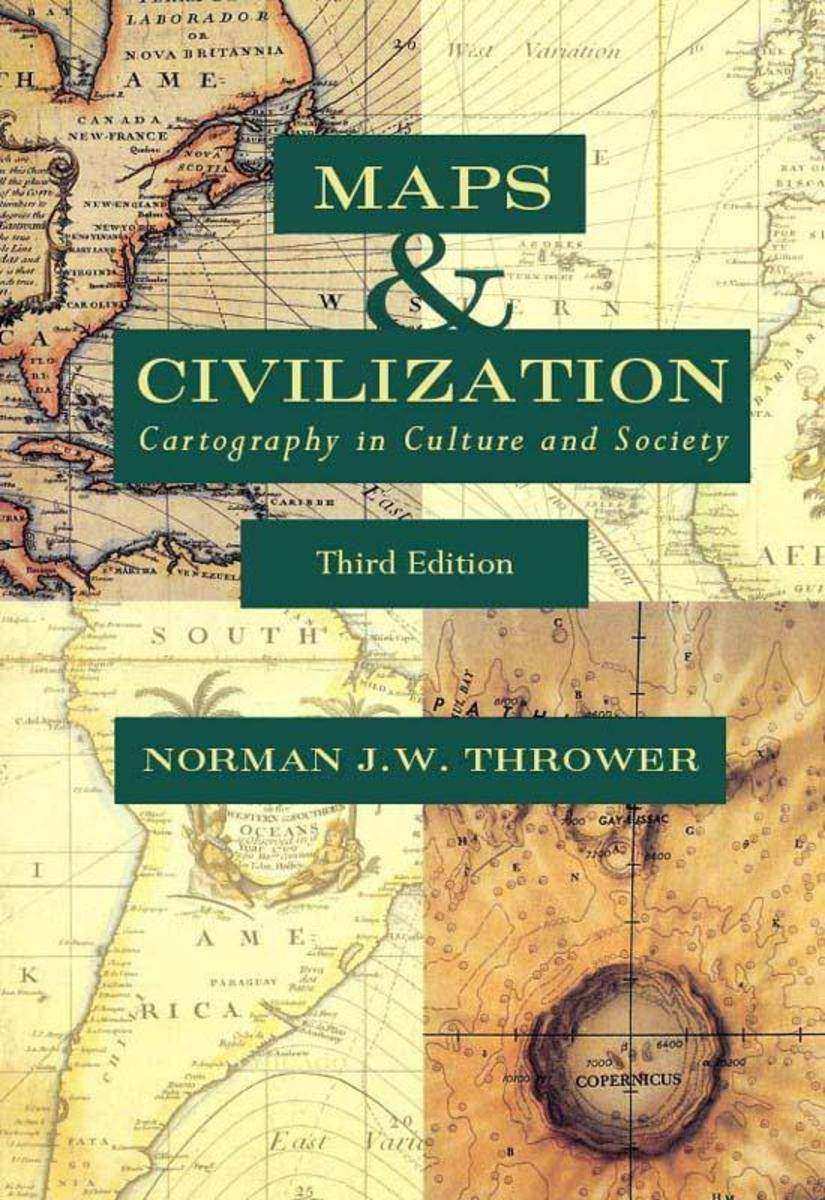
Maps and Civilization
¥282.53
In this concise introduction to the history of cartography, Norman J. W. Thrower charts the intimate links between maps and history from antiquity to the present day. A wealth of illustrations, including the oldest known map and contemporary examples made using Geographical Information Systems (GIS), illuminate the many ways in which various human cultures have interpreted spatial relationships.The third edition of Maps and Civilization incorporates numerous revisions, features new material throughout the book, and includes a new alphabetized bibliography.?Praise for previous editions of Maps and Civilization:"e;A marvelous compendium of map lore. Anyone truly interested in the development of cartography will want to have his or her own copy to annotate, underline, and index for handy referencing."e;-L. M. Sebert, Geomatica
Animal Personalities
¥394.36
Ask anyone who has owned a pet and they'll assure you that, yes, animals have personalities. And science is beginning to agree. Researchers have demonstrated that both domesticated and nondomesticated animals-from invertebrates to monkeys and apes-behave in consistently different ways, meeting the criteria for what many define as personality. But why the differences, and how are personalities shaped by genes and environmentHow did they evolveThe essays in Animal Personalities reveal that there is much to learn from our furred and feathered friends.?The study of animal personality is one of the fastest-growing areas of research in behavioral and evolutionary biology. Here Claudio Carere and Dario Maestripieri, along with a host of scholars from fields as diverse as ecology, genetics, endocrinology, neuroscience, and psychology, provide a comprehensive overview of the current research on animal personality. Grouped into thematic sections, chapters approach the topic with empirical and theoretical material and show that to fully understand why personality exists, we must consider the evolutionary processes that give rise to personality, the ecological correlates of personality differences, and the physiological mechanisms underlying personality variation.
The Theory of Ecology
¥394.36
Despite claims to the contrary, the science of ecology has a long history of building theories. Many ecological theories are mathematical, computational, or statistical, though, and rarely have attempts been made to organize or extrapolate these models into broader theories. The Theory of Ecology brings together some of the most respected and creative theoretical ecologists of this era to advance a comprehensive, conceptual articulation of ecological theories. The contributors cover a wide range of topics, from ecological niche theory to population dynamic theory to island biogeography theory. Collectively, the chapters ably demonstrate how theory in ecology accounts for observations about the natural world and how models provide predictive understandings. It organizes these models into constitutive domains that highlight the strengths and weaknesses of ecological understanding. This book is a milestone in ecological theory and is certain to motivate future empirical and theoretical work in one of the most exciting and active domains of the life sciences.
Mars and Venus Starting Over
¥90.51
Is it possible to find love again after a breakup, death, or divorce?At the end of a relationship, it can sometimes feel like the end of the world. Devastation, loneliness, and bitterness are some emotions that exist due to a breakup, divorce, or the loss of a loved one. But with the help of this compassionate guide, Dr. John Gray expresses that you will survive and tells you how to find love again.While the process of healing is similar with both sexes, there are distinct differences between the ways men and women heal their bruised hearts. In Mars and Venus Starting Over, Dr. Gray offers gender-specific advice on how to: Deal with pain Find forgiveness Discover the strength to let go Rebuild confidence Rise to the challenge of finding fulfillment again Filled with gentle guidance, healing practices, and compassionate wisdom, Mars and Venus Starting Over will help men and women explore the meaning of loss, find their way through the healing process, and discover the secret to moving on.
I Am a Woman Finding My Voice
¥90.77
This celebration of womanhood, with a foreword by Dr. Joan Borysenko, delights in the joy of the feminine soul. In a time when it might not be politically correct to speak of such a uniquely feminine soul, Quinn takes the position that finding one's own authentic voice is imperative if we are to value a universal livelihood of love and community.
She's Had a Baby
¥72.93
She's had the Baby, you're a daddy -- now whatJames Barron draws on his own experience, the experiences of countless others, and on insights from mothers on what they think new fathers should know to offer advice on balancing the demands of being a good father and a good husband, from the infant through the toddler years. He includes tips on: recapturing the romantic days of just the two of you vacationing with toddlers distinguishing between needing to call the pediatrician and pestering the pediatrician having sex while your 1-1/2 year-old is in the house Hardly a standard child-rearing book, She's Had a Baby doesn't diagnose allergies or suggest developmentally appropriate toys. Rather, in bite-sized observations, Barron champions the joys and anxieties of daddyhood, while helping a man to cope with the ups and downs a relationship can go through during this time.
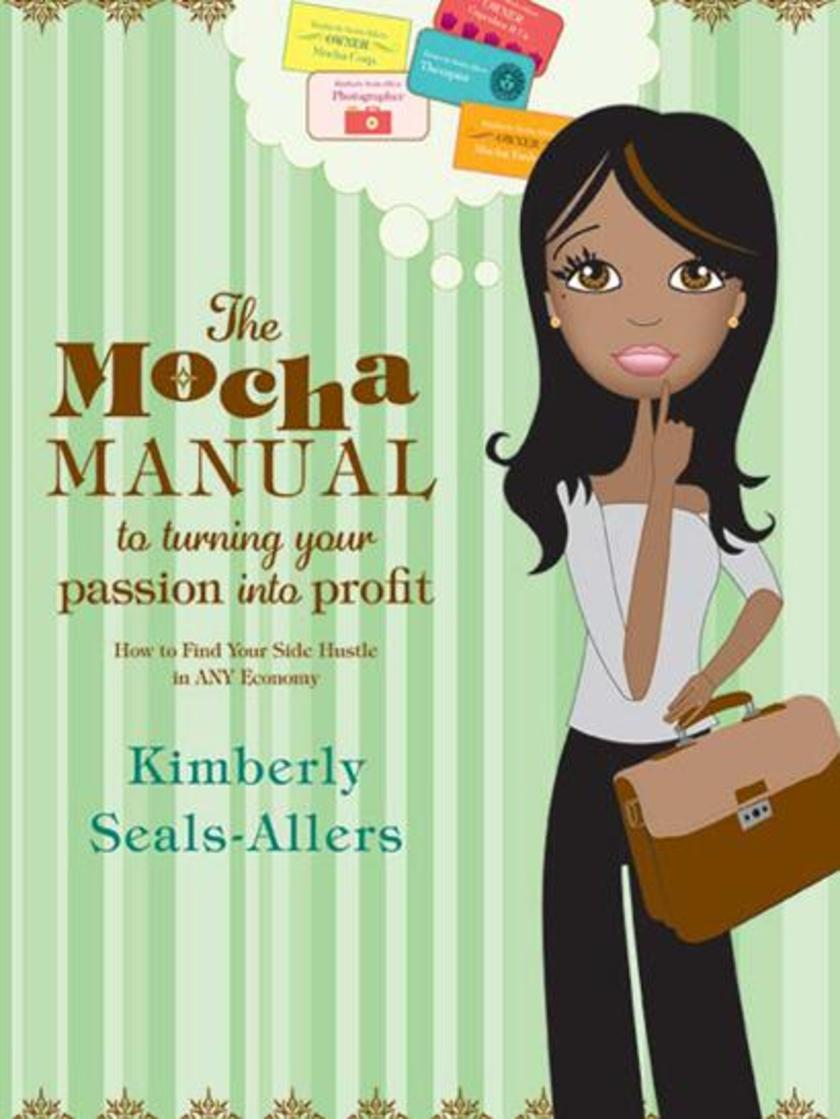
The Mocha Manual to Turning Your Passion into Profit
¥95.39
Who among us haven't dreamed of turning our passion into an income-producingenterpriseWhether it's arranging flowers, creating our own beauty products, or taking care of children, we all have our special talents. But how do you turn your hobbies into something more lucrativeAnd when would you ever find the time?In an uncertain economy, there is no better time than now to get started and The Mocha Manual to Turning Your Passion into Profit offers the step-by-step answers you need to turn your ideas into a business plan and your business plan into a bona fide business. Whether Kimberly Seals-Allers, an entrepreneur herself, is directing you toward resources that will tell you which licenses you need to get started or advising you on how to pick an accountant once your business starts to grow, you can count on her counsel to be clear, concise, and inspiring. Her wisdom on everything from marketing ideas to managing employees is combined with advice and anecdotes from everyday women who have founded companies ranging from small IT consulting businesses to massive operations such as Carol's Daughter. Whether you want to quit your job and start your own company or supplement your existing income with a "side hustle," this inspiring book is for you.

Bad Childhood---Good Life
¥94.10
In her most important book yet, Dr. Laura Schlessinger shows men and women that they can have a Good Life no matter how Bad their Childhood was.For each of us, there is a connection between our early family dynamics and experiences and our current attitudes and decisions. Many of the people Dr. Laura has helped did not realize how their histories impacted their adult lives, or how their choices in people, repetitive situations, and decisions -- even their emotional reactions -- were connected to those early negative experiences, playing a major role in their current unhappiness. Dr. Laura will help you realize that no matter what circumstances you came from or currently live in, you are ultimately responsible for how you react to them. The acceptance of this basic truth is the source of your power to secure the Good Life you long for. In her signature straightforward style, with real-life examples, Dr. Laura shows you what you will gain by not being satisfied with an identity as a victim, or even as a survivor -- you should strive to be a victor! In Bad Childhood -- Good Life, Dr. Laura will guide you to accept the truth of the assaults on your psyche and soul, understand your unique coping style and how it impacts your daily thoughts and actions, and help you embrace a life of more peace and happiness.
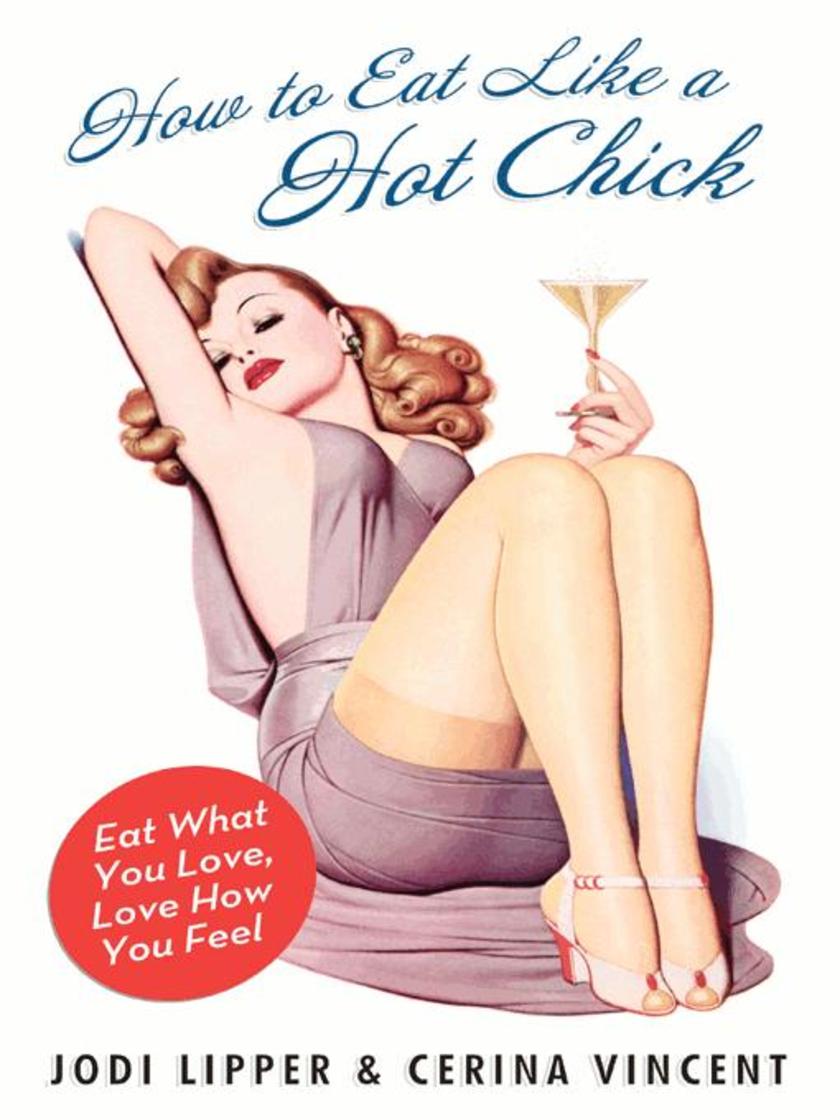
How to Eat Like a Hot Chick
¥84.16
Chocolate cake for breakfast and a pound of spinach for dinnerLooking and feeling your best has never been so easy, so guiltless or so much fun!Let's be honest, ladies, are you tired of hearing about the eating habits of airbrushed celebritiesDo you want to feel sexy as you slide into your favorite jeans, but you're too confused by the complicated diet plans out thereWell, here is the antidote to all of that nonsense!With saucy wit and goodwill to spare, Lipper and Vincent reveal their tricks for how you can overcome any food obstacle, from which cocktails will keep you light on your feet past midnight to how you can stay on track when you're down in the dumps (or if you just got dumped). They'll teach you how to eat the foods you love with confidence, make smarter choices, and wake up your inner Hot Chick once and for all.It's time to end the vicious dieting cycle with this straightforward and hilarious guide to enjoying your food, embracing your body and celebrating yourself like only a true Hot Chick can.
A Civilization of Love
¥83.03
Carl Anderson, Supreme Knight of the Knights of Columbus, surveys the exciting and history-changing ideas of Pope John Paul II in A Civilization of Love. By popularizing not only John Paul's vision but also that of his successor, Benedict XVI, Anderson hopes to inspire Christians to work toward creating a civilization of love. In such a civilization every person is a child of God. We are all intrinsically valuable. The battle today is between the culture of death (where people are judged by their social or economic value) and the culture of life. Anderson pushes aside religious differences in order to spread a message of hope to those who are weary of the constant turmoil of modern society. While he does specifically challenge Christians to take an active role in their faith, you do not have to be a Christian to participate in the movement toward a civilization of love.By embracing the culture of life and standing with those most marginalized and deemed "useless" or a "burden" on modern society, Christians can change the tone and direction of our culture. Anderson demonstrates that regardless of our differences, we can come together on the centrality of loving and caring for others. He brings a message of inclusion and hope in the midst of a clash of civilizations and provides a road map for helping Christians understand their role in the world.
Ten Stupid Things Men Do to Mess Up Their Lives
¥77.49
For every woman who wants to know what her man is thinking. Internationally syndicated radio superhost and columnist, controversial psycho-therapist, and author of the break-out New York Times bestsellers How Could You Do That?! and Ten Stupid Things Women Do to Mess Up Their Lives, Dr. Laura Schlessinger is back with Ten Stupid Things Men Do to Mess Up Their Lives. In ten vital, compelling chapters, Dr. Laura speaks her mind on: Stupid Chivalry By getting involved with the wrong woman (weak, flaky, damaged, needy, desperate, stupid, untrustworthy, immature, etc.) you think that your love will save/transform her.Stupid Independence Unwilling to admit "need" for bonding and intimacy, you hide in excesses of work, play, drink, drugs, porn, and meaningless sex. Stupid Ambition Unable to comfortably and proudly accept your inherent importance to society and family as husband and father, you bow to the false idols of money, toys, power, and status. Stupid Strength Uncomfortable with feeling weak, vulnerable, useless, powerless, or rejected, you use intimidation, force, or passive-aggressiveness to regain control. Stupid Sex Taking an attraction, opportunity, or erection as a "sign," you measure your masculinity and power by sexual conquests, infidelities, and orgasms. Stupid Matrimony Lacking a mature sense of the purpose, meaning, or value of marriage, you realize too late you've gone down the aisle with the wrong woman for the wrong reasons and feel helpless to "fix it." Stupid HusbandingThinking that marriage is the honorable discharge from loving courtship, you continue to live as though you were single and your "mommy-wife" will take care of everything else. Stupid ParentingBelieving that only women/mothers nurture children, you withdraw from hands-on parenting to assert your masculine importance, missing out on the true "soul food" of a child's hug. Stupid BoyishnessHaving not yet worked out a comfortable emotional and social understanding with your mother, you form relationships with women that become geared to avenge, resolve, or protect you from your ties to Mommy. Stupid Machismo Understanding the true and meaningful difference between being male and a man, you can become a man.

The Sensory-Sensitive Child
¥77.49
In a book likely to transform how parents manage many of their child's daily struggles, Drs. Smith and Gouze explain the central and frequently unrecognized role that sensory processing problems play in a child's emotional and behavioral difficulties. Practicing child psychologists, and themselves parents of children with sensory integration problems, their message is innovative, practical, and, above all, full of hope.A child with sensory processing problems overreacts or underreacts to sensory experiences most of us take in stride. A busy classroom, new clothes, food smells, sports activities, even hugs can send such a child spinning out of control. The result can be heartbreaking: battles over dressing, bathing, schoolwork, social functions, holidays, and countless other events. In addition, the authors say, many childhood psychiatric disorders may have an unidentified sensory component.Readers Will Learn: The latest scientific knowledge about sensory integration How to recognize sensory processing problems in children and evaluate the options for treatment How to prevent conflicts by viewing the child's world through a "sensory lens" Strategies for handling sensory integration challenges at home, at school, and in twenty-first century kid culture The result: a happier childhood, a more harmonious family, and a more cooperative classroom. This thoroughly researched, useful, and compassionate guide will help families start on a new path of empowerment and success.
Global Pigeon
¥247.21
The pigeon is the quintessential city bird. Domesticated thousands of years ago as a messenger and a source of food, its presence on our sidewalks is so common that people consider the bird a nuisance-if they notice it at all. Yet pigeons are also kept for pleasure, sport, and profit by people all over the world, from the "e;pigeon wars"e; waged by breeding enthusiasts in the skies over Brooklyn to the Million Dollar Pigeon Race held every year in South Africa.Drawing on more than three years of fieldwork across three continents, Colin Jerolmack traces our complex and often contradictory relationship with these versatile animals in public spaces such as Venice's Piazza San Marco and London's Trafalgar Square and in working-class and immigrant communities of pigeon breeders in New York and Berlin. By exploring what he calls "e;the social experience of animals,"e; Jerolmack shows how our interactions with pigeons offer surprising insights into city life, community, culture, and politics. Theoretically understated and accessible to interested readers of all stripes, The Global Pigeon is one of the best and most original ethnographies to be published in decades.
The Good Divorce
¥94.10
It's never too late to have a good divorce Based on two decades of groundbreaking research, The Good Divorce presents the surprising finding that in more than fifty percent of divorces couples end their marriages, yet preserve their families. Dr. Ahrons shows couples how they can move beyond the confusing, even terrifying early stages of breakup and learn to deal with the transition from a nuclear to a "binuclear" family--one that spans two households and continues to meet the needs of children. The Good Divorce makes an important contribution to the ongoing "family values" debate by dispelling the myth that divorce inevitability leaves emotionally troubles children in its wake. It is a powerful tonic for the millions of divorcing and long-divorces parents who are tired of hearing only the damage reports. It will make us change the way we think about divorce and the way we divorce, reconfirming our commitment to children and families.
Twins! 2e
¥106.61
Twins! is a comprehensive guide for all parents preparing for a multiple birth. It is filled with practical advice from specialists who work with expectant mothers and their twins every day.From the moment the expectant mom knows she's getting more than she expected, Twins! provides complete information on pregnancy, birth, and the postpartum experience: Your relationship with your practitioner Pre-pregnancy planning Fetal and embryonic development Healthy weight gain for expectant mothers Once the babies are born, Twins! sees the whole family through the exciting and challenging first year, examining such issues as: Sleeping and feeding schedules Your babies as individuals Redefining the family and supporting the needs of other children Survival tips for extra-busy parents Insightful roundtable discussions with other parents of twins New in this second edition: Complimentary medical practices, including acupuncture, supplements and herbs as well as current safety guidelines for the use of pre*ion and over-the-counter medications 3-D ultrasound images of developing twins What parents need to know about immunizations and their safety An up-to-date resource guide to twin-specific organizations, periodicals, and Internet links And much more! Twins! gives you all the information you need to have a safe and sound twin pregnancy so you can concentrate on the joy of raising happy, healthy children.Congratulations!
Naked Spirituality
¥83.03
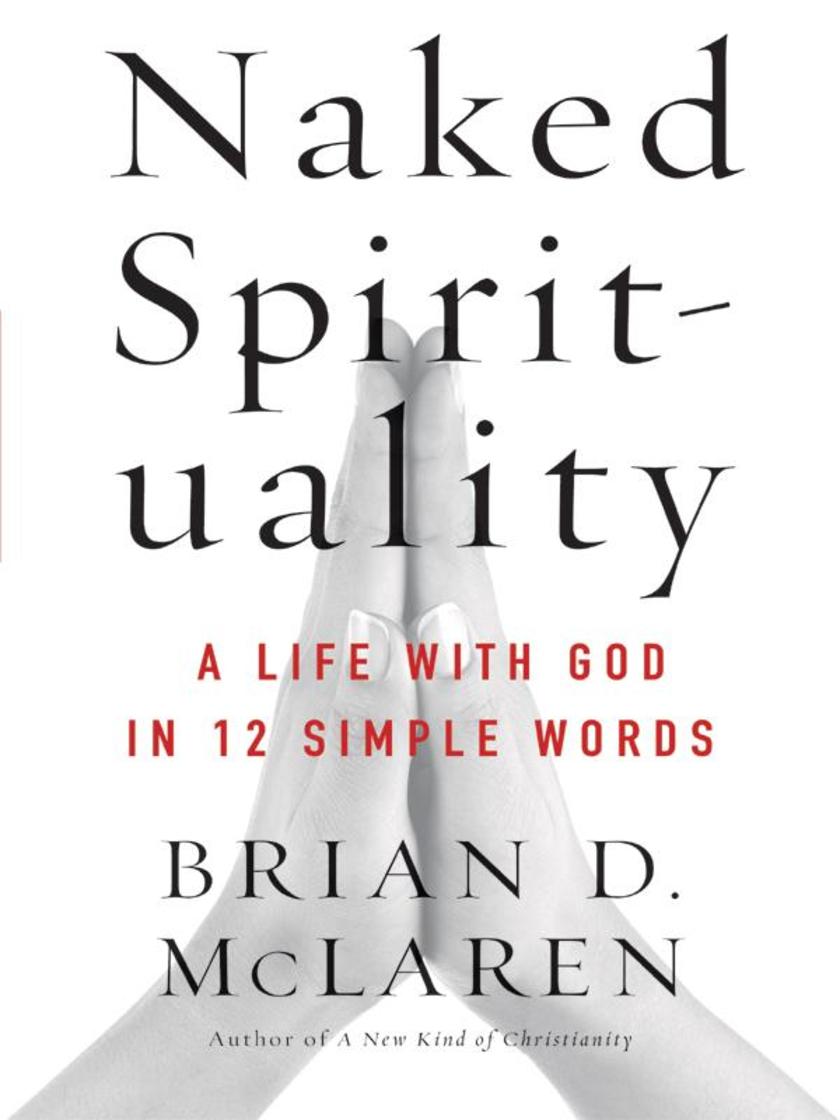
Christianity is in crisis. Many sincere Christians feel their traditional Christian practices are in danger of becoming irrelevant, empty rituals. In his previous book A New Kind of Christianity, Brian D. McLaren offered new biblical models for how we understand the central ideas of a faith that provides hope for restoring and reinvigorating the power of the gospels to transform us and our communities.In Naked Spirituality, McLaren takes his prophetic work a step further by confronting how the lack of a simple, doable, durable spirituality undermines the very transformation God is calling us to undergo. As a result, our religious structures become tools to maintain the status quo and not catalysts for personal and social change. McLaren presents a four-stage framework for understanding the spiritual life, and he unfolds spiritual practices appropriate to each stage. Each practice is rooted in a simple word: here, thanks, O, sorry, help, please, when, no, why, behold, yes, and silence. Naked Spirituality offers accessible, practical wisdom for living a truly spiritual life. Staying true to Jesus's core message while engaging faithfully with our postmodern world, McLaren presents a proven spiritual program for engaging in and sustaining a meaningful relationship with God.
Finding Your Way Home
¥90.51
What does it mean to feel at home, truly present with ourselves, comfortable with our choices, and alive to the possibilities of conscious changeHow can we develop inner balance and connection, keeping our boundaries clear while opening our hearts to those we loveWith practical wisdom and insight, Melody Beattie addresses these questions, encouraging us to reach a higher level of living and loving, and showing us how to be at home with ourselves wherever we are in the world, at whatever stage of life.Through true stories and take-action exercises, including journaling, visualizations, affirmations, meditations, and prayers, Beattie provides the essential tools to help us discover our own sense of home. Accessible and illuminating, Finding Your Way Home is a soul-searching look at how not to be victimized by ourselves'or other people. Beattie urges us to discover new levels of integrity, to break through barriers that have blocked us for too long. This is a powerful and challenging book about buying back our souls and learning to live a life guided by spirit.


