


 购物车
 个人中心

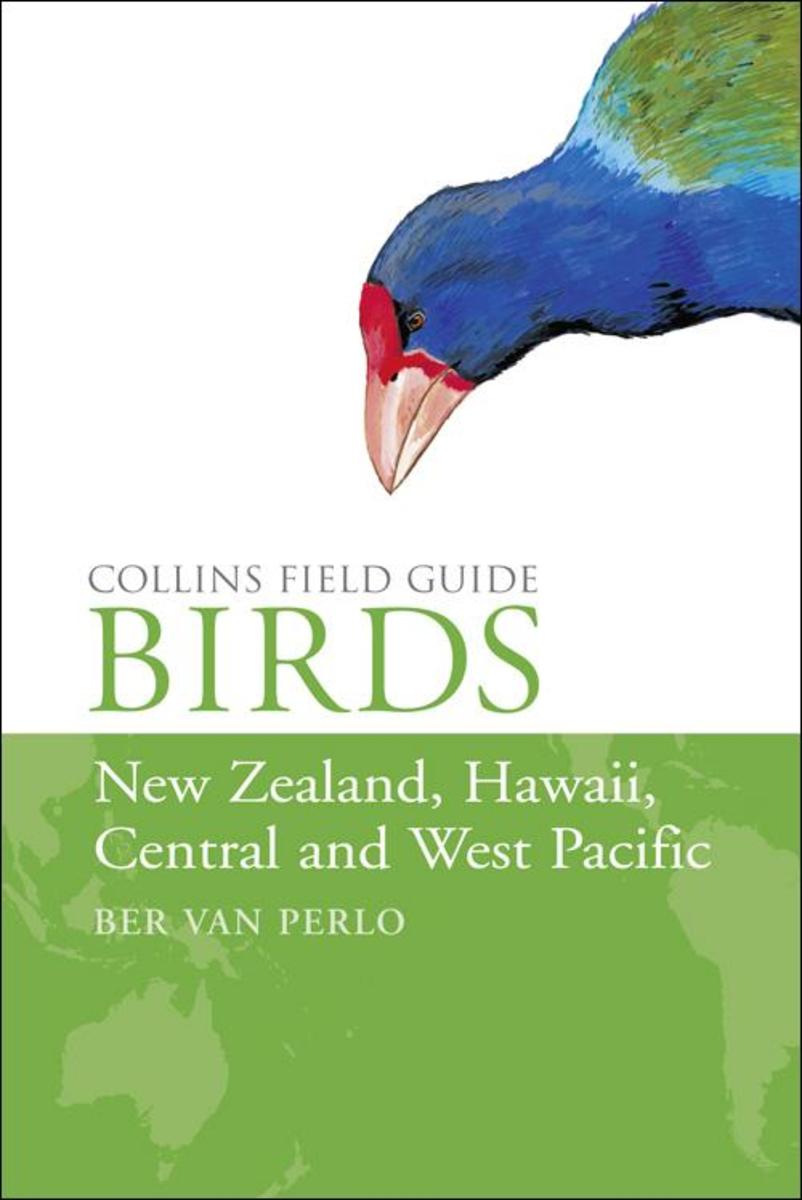
Birds of New Zealand, Hawaii, Central and West Pacific (Collins Field Guide)
¥206.30
The essential guide to identifying every species of bird you may see in this area, for both tourists and wildlife enthusiasts. Featuring over 750 species, Birds of New Zealand, Hawaii, Central and West Pacific is the only field guide to illustrate and describe every species of bird you may see in the area, from Australia, New Zealand and New Guinea to Melanesia, Micronesia, and Polynesia. ? Text gives information on key identification features, habitat, and songs and calls ? All plumages for each species are illustrated, including those of males, females and juveniles The stunning 95 colour plates appear opposite their relevant text for quick and easy reference. Distribution maps are included, showing where each species can be found and how common it is, to further aid identification. This comprehensive and highly portable guide is a must for all birdwatchers visiting the region.

The Barefoot Emperor: An Ethiopian Tragedy
¥72.40
A fascinating narrative excursion into a bizarre episode in 19th century Ethiopian and British imperial history featuring a remote African despot and his monstrous European-built gun. On one of Addis Ababa's main roundabouts today sits a huge recently installed mortar. This is a replica of 'Sevastopol', a 70-ton lump of ordnance commissioned by one of the most extraordinary leaders Africa has ever produced - King of Kings of Ethiopia, the Emperor Theodore. In 1867, as his kingdom collapsed around him, Theodore retreated to his mountain-top stronghold in Magdala. It took his army six months to haul 'Sevastopol' through the gauges and passes of the highlands. Sixty miles to the north, a British expeditionary force under Sir Robert Napier - consisting of more than 10,000 fighting men, at least as many followers and 20,000 pack-animals, including a number of Indian elephants - had been ferried to the Red Sea Coast and built a railway line through the desert. Their object: to rescue the British consul and sixty Europeans, held prisoner by the increasingly erratic Theodore, who had taken to massacring his prisoners-of-war and pitching captives over the cliffs of Magdala. The resulting fate of Theodore and his mortar forms the climax to this strange extravaganza, in which an isolated medieval kingdom came dramatically face-to-face with an ascendant Europe. Philip Marsden tells the tale with all his proven narrative skill, deep love and first hand knowledge of Ethiopia.
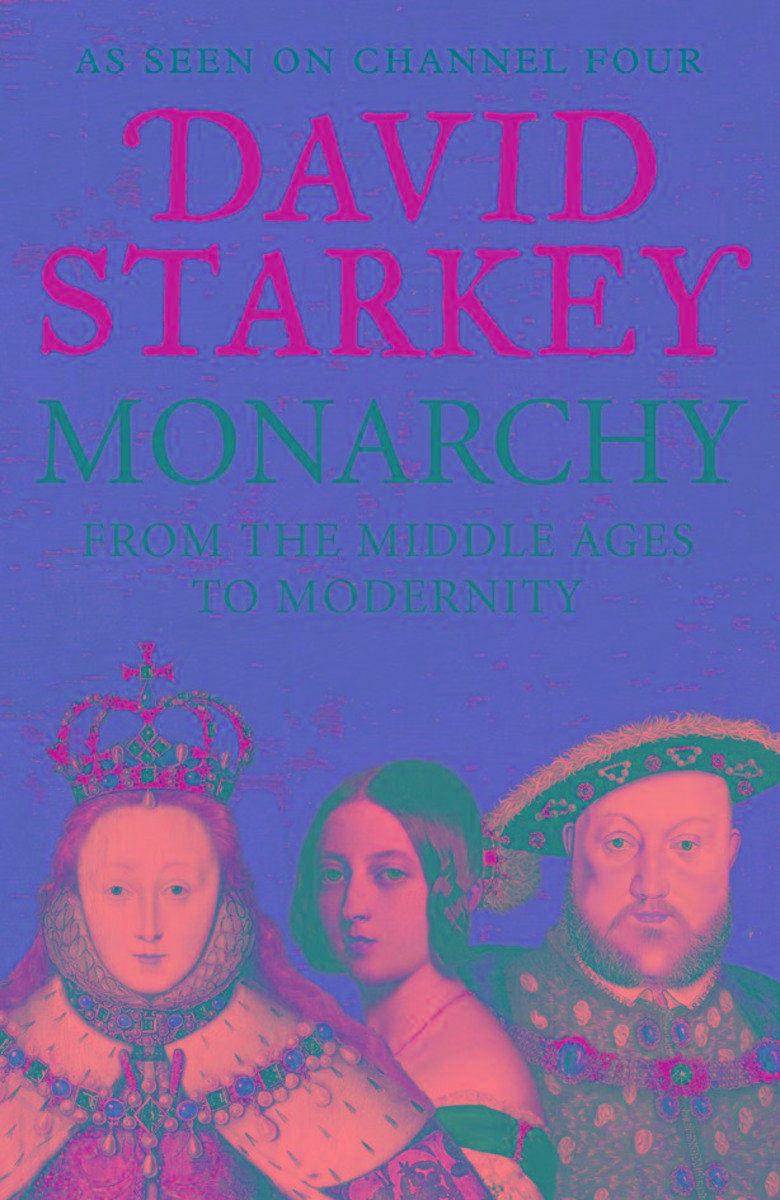
Monarchy: From the Middle Ages to Modernity
¥68.67
To coincide with the Channel 4 series to be aired at the end of this year – David Starkey's ‘Monarchy’ charts the rise of the British monarchy from the War of the Roses, the English Civil War and the Georgians, right up until the present day monarchs of the 20th Century. David Starkey’s magisterial new book Monarchy charts the rise of the British crown from the insurgency of the War of the Roses, through the glory and dangers of the Tudors, to the insolvency of the Stuarts and chaos of the English Civil War, the execution of Charles I, the rule of a commoner who was ‘king in all but name’, the importing of a German dynasty, and the coming-to-terms with modernity under the wise guidance of another German, Victoria’s Prince Consort Albert. An epilogue brings to story up to the present and asks questions about the future. The crown of England is the oldest surviving political institution in Europe. And yet, throughout this book Starkey emphasises the Crown’s endless capacity to reinvent itself to circumstances and reshape national polity whilst he unmasks the personalities and achievements, the defeats and victories, which lie behind the kings and queens of British history. Each of these monarchs has contributed, in their own way, to the religion, geography, laws, language and government that we currently live with today. In this book,Starkey demonstrates exactly how these states were arrived at, how these monarchs subtly influenced each other, which battles were won and why, whose whim or failure caused religious tradition to wither or flourish, and which monarchs, through their acumen and strength or single minded determination came to enforce the laws of England. With his customary authority and verve, David Starkey reignites these personalities to produce an entertaining and masterful account of these figures whose many victories and failures are the building blocks upon which Britain today is built. Far more than a biography of kings and queens, ‘Monarchy’ is a radical reappraisal of British nationhood, culture and politics, shown through the most central institution in British life.

Street Boys
¥73.58
The shocking, powerful true story of the lives of 7 young kids, marred by guns, gangs and violence on one of Britain’s toughest estates. ‘Eight years old. That’s when life went downhill. From eight years old nobody looked after me. I just lived on the streets and made do by myself. There was no one except me and my friends.’ Simon This is the story of 7 young boys who have one thing in common – they grew up in a London street gang. JaJa looks out of his kitchen window and sees drug dealers, pimps and whores. He ends up as a kid leading a street gang. Phat Si comes home from school one day to find his mother gone so he takes to the streets. He’s 8 years old. Ribz's mother sells crack and is sent to prison. He doesn't know who his father is but does know that his dad has an unknown number of children living on the same estate. He’s determined to find some kind of family. Street Boys tells a powerful and important true story of courage, determination and hope – of creating a family from your friends and starting again when the world seems against you.

Spitfire Women of World War II
¥68.67
This is the incredible true story of a wartime sisterhood of women pilots: a group of courageous pioneers who took exceptional risks to fly Spitfires, Hurricanes and Lancasters to the frontlines of World War II. The women pilots of Air Transport Auxiliary came from all countries and backgrounds. Although not allowed into combat, they demonstrated astonishing bravery in their supporting role: flying unarmed, without radios or instruments, and at the mercy of the weather and enemy aircraft, they delivered battle-ready planes to their male counterparts, the fighter pilots of the RAF. The story of these remarkable women pilots – among them Amy Johnson and Lettice Curtis – is a riveting account of women in wartime, and a fitting tribute to their spirit and valour.
Henry: Virtuous Prince
¥80.25
Bestselling royal historian David Starkey’s captivating biography is a radical re-evaluation of Henry VIII, the British monarchy’s most enduring icon. Larger than life in every sense, Henry VIII was Britain’s most absolute monarch – but he was not born to rule. In this brilliantly readable history, David Starkey follows the promising young prince – a Renaissance man of exceptional musical and athletic talent – as he is thrust into the limelight after the death of his elder brother. His subsequent quest for fame was as obsessive as that of any modern celebrity, and his yearning for a male heir drove him into dangerous territory. The culmination of a lifetime’s research, David Starkey’s biography is an unforgettable portrait of the man behind the controversies, the prince turned tyrant who continues to tower over history.
Stratigraphic Paleobiology
¥353.16
Whether the fossil record should be read at face value or whether it presents a distorted view of the history of life is an argument seemingly as old as many fossils themselves. In the late 1700s, Georges Cuvier argued for a literal interpretation, but in the early 1800s, Charles Lyell's gradualist view of the earth's history required a more nuanced interpretation of that same record. To this day, the tension between literal and interpretive readings lies at the heart of paleontological research, influencing the way scientists view extinction patterns and their causes, ecosystem persistence and turnover, and the pattern of morphologic change and mode of speciation.?With Stratigraphic Paleobiology, Mark E. Patzkowsky and Steven M. Holland present a critical framework for assessing the fossil record, one based on a modern understanding of the principles of sediment accumulation. Patzkowsky and Holland argue that the distribution of fossil taxa in time and space is controlled not only by processes of ecology, evolution, and environmental change, but also by the stratigraphic processes that govern where and when sediment that might contain fossils is deposited and preserved. The authors explore the exciting possibilities of stratigraphic paleobiology, and along the way demonstrate its great potential to answer some of the most critical questions about the history of life: How and why do environmental niches change over timeWhat is the tempo and mode of evolutionary change and what processes drive this changeHow has the diversity of life changed through time, and what processes control this changeAnd, finally, what is the tempo and mode of change in ecosystems over time
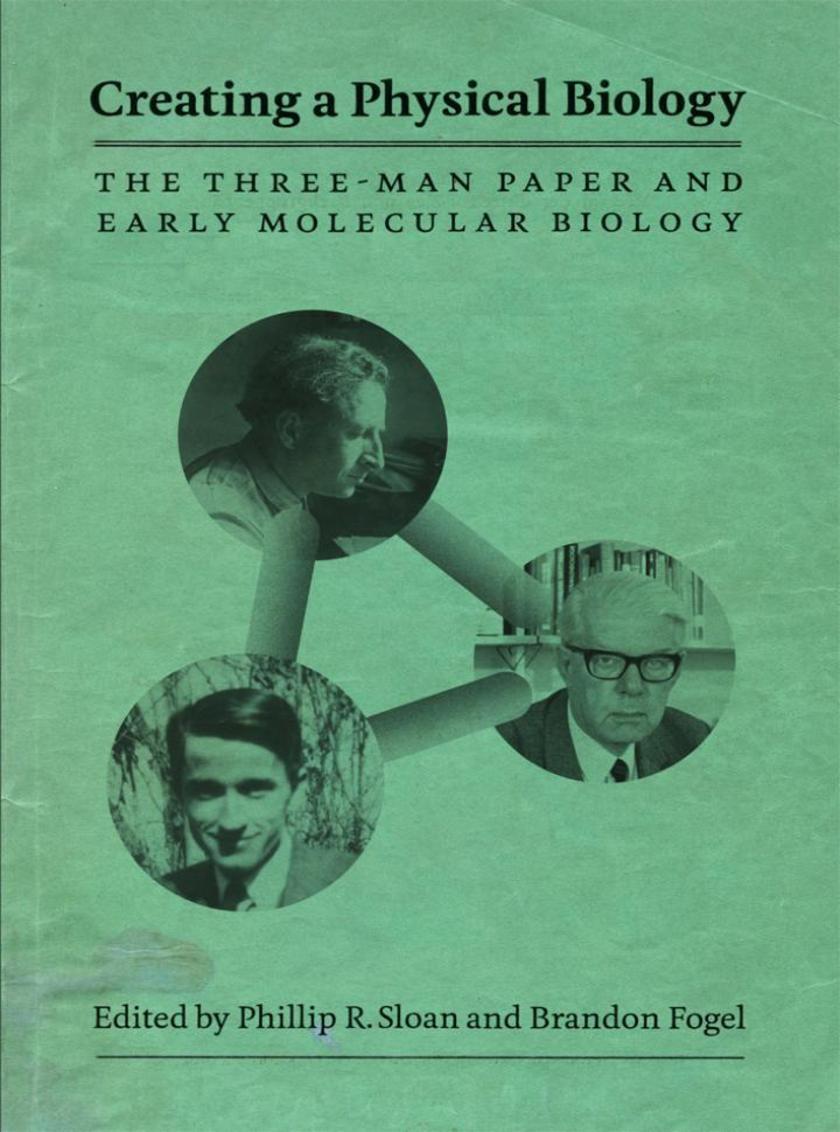
Creating a Physical Biology
¥353.16
In 1935 geneticist Nikolai Timofeeff-Ressovsky, radiation physicist Karl G. Zimmer, and quantum physicist Max Delbruck published "e;On the Nature of Gene Mutation and Gene Structure,"e; known subsequently as the "e;Three-Man Paper."e; This seminal paper advanced work on the physical exploration of the structure of the gene through radiation physics and suggested ways in which physics could reveal definite information about gene structure, mutation, and action. Representing a new level of collaboration between physics and biology, it played an important role in the birth of the new field of molecular biology. The paper's results were popularized for a wide audience in the What is Lifelectures of physicist Erwin Schrodinger in 1944.?Despite its historical impact on the biological sciences, the paper has remained largely inaccessible because it was only published in a short-lived German periodical. Creating a Physical Biology makes the Three Man Paper available in English for the first time. Brandon Fogel's translation is accompanied by an introductory essay by Fogel and Phillip Sloan and a set of essays by leading historians and philosophers of biology that explore the context, contents, and subsequent influence of the paper, as well as its importance for the wider philosophical analysis of biological reductionism.
Signature Derrida
¥247.21
Throughout his long career, Jacques Derrida had a close, collaborative relationship with Critical Inquiry and its editors. He saved some of his most important essays for the journal, and he relished the ensuing arguments and polemics that stemmed from the responses to his writing that Critical Inquiry encouraged. Collecting the best of Derrida's work that was published in the journal between 1980 and 2002, Signature Derrida provides a remarkable introduction to the philosopher and the evolution of his thought.?These essays define three significant "e;periods"e; in Derrida's writing: his early, seemingly revolutionary phase; a middle stage, often autobiographical, that included spirited defense of his work; and his late period, when his persona as a public intellectual was prominent, and he wrote on topics such as animals and religion. The first period is represented by essays like "e;The Law of Genre,"e; in which Derrida produces a kind of phenomenological narratology. Another essay, "e;The Linguistic Circle of Geneva,"e; embodies the second, presenting deconstructionism at its best: Derrida shows that what was imagined to be an epistemological break in the study of linguistics was actually a repetition of earlier concepts. The final period of Derrida's writing includes the essays "e;Of Spirit"e; and?"e;The Animal That Therefore I Am (More to Follow),"e; and three eulogies to the intellectual legacies of Michel Foucault, Louis Marin, and Emmanuel Lvinas, in which Derrida uses the ideas of each thinker to push forward the implications of their theories.?With an introduction by Francoise Meltzer that provides an overview of the oeuvre of this singular philosopher, Signature Derrida is the most wide-ranging, and thus most representative, anthology of Derrida's work to date.
Accompaniment
¥229.55
In this culmination of his search for anthropological concepts and practices appropriate to the twenty-first century, Paul Rabinow contends that to make sense of the contemporary anthropologists must invent new forms of inquiry. He begins with an extended rumination on what he gained from two of his formative mentors: Michel Foucault and Clifford Geertz. Reflecting on their lives as teachers and thinkers, as well as human beings, he poses questions about their critical limitations, unfulfilled hopes, and the lessons he learned from and with them.?This spirit of collaboration animates The Accompaniment, as Rabinow assesses the last ten years of his career, largely spent engaging in a series of intensive experiments in collaborative research and often focused on cutting-edge work in synthetic biology. He candidly details the successes and failures of shifting his teaching practice away from individual projects, placing greater emphasis on participation over observation in research, and designing and using websites as a venue for collaboration. Analyzing these endeavors alongside his efforts to apply an anthropological lens to the natural sciences, Rabinow lays the foundation for an ethically grounded anthropology ready and able to face the challenges of our contemporary world.
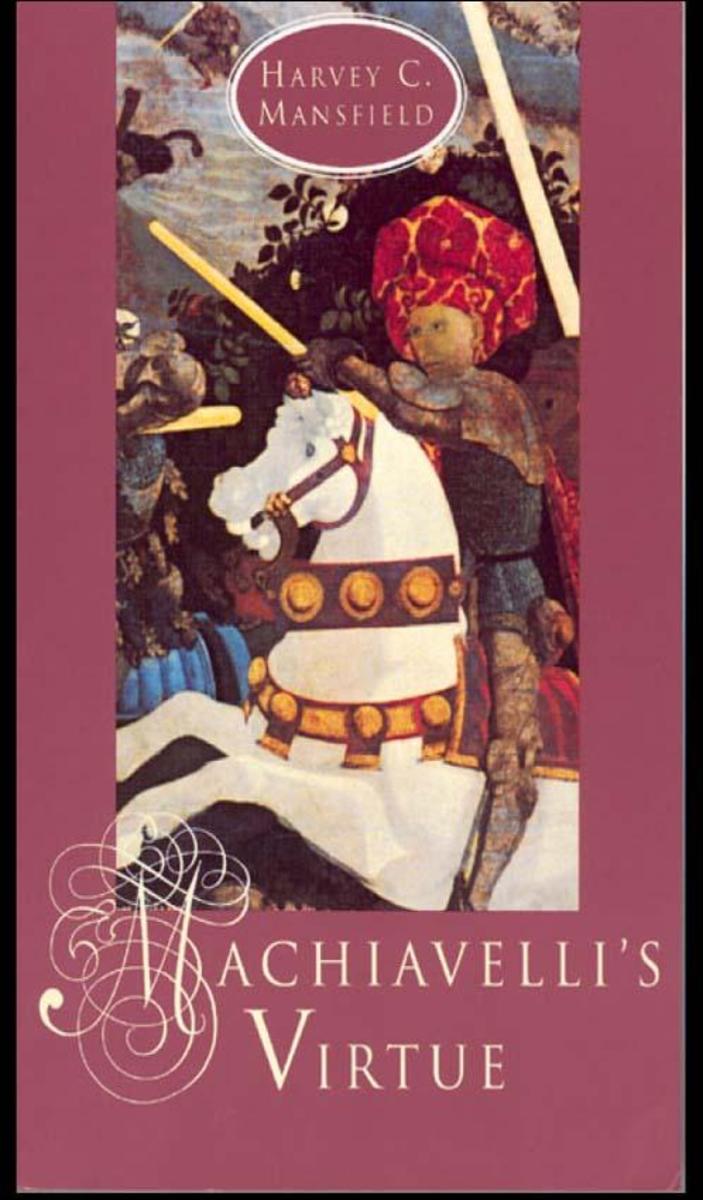
Machiavelli's Virtue
¥147.15
Uniting thirty years of authoritative scholarship by a master of textual detail, Machiavelli's Virtue is a comprehensive statement on the founder of modern politics. Harvey Mansfield reveals the role of sects in Machiavelli's politics, his advice on how to rule indirectly, and the ultimately partisan character of his project, and shows him to be the founder of such modern and diverse institutions as the impersonal state and the energetic executive. Accessible and elegant, this groundbreaking interpretation explains the puzzles and reveals the ambition of Machiavelli's thought."e;The book brings together essays that have mapped [Mansfield's] paths of reflection over the past thirty years. . . . The ground, one would think, is ancient and familiar, but Mansfield manages to draw out some understandings, or recognitions, jarringly new."e;-Hadley Arkes, New Criterion"e;Mansfield's book more than rewards the close reading it demands."e;-Colin Walters, Washington Times"e;[A] masterly new book on the Renaissance courtier, statesman and political philosopher. . . . Mansfield seeks to rescue Machiavelli from liberalism's anodyne rehabilitation."e;-Roger Kimball, The Wall Street Journal
The Theory of Ecology
¥394.36
Despite claims to the contrary, the science of ecology has a long history of building theories. Many ecological theories are mathematical, computational, or statistical, though, and rarely have attempts been made to organize or extrapolate these models into broader theories. The Theory of Ecology brings together some of the most respected and creative theoretical ecologists of this era to advance a comprehensive, conceptual articulation of ecological theories. The contributors cover a wide range of topics, from ecological niche theory to population dynamic theory to island biogeography theory. Collectively, the chapters ably demonstrate how theory in ecology accounts for observations about the natural world and how models provide predictive understandings. It organizes these models into constitutive domains that highlight the strengths and weaknesses of ecological understanding. This book is a milestone in ecological theory and is certain to motivate future empirical and theoretical work in one of the most exciting and active domains of the life sciences.
THE Affect Effect
¥265.87
two sections branch out to explore how politics work at the societal level and suggest the next steps in modeling, research, and political activity itself. Opening up new paths of inquiry in an exciting new field, this volume will appeal not only to scholars of American politics and political behavior, but also to anyone interested in political psychology and sociology.
Global Pigeon
¥247.21
The pigeon is the quintessential city bird. Domesticated thousands of years ago as a messenger and a source of food, its presence on our sidewalks is so common that people consider the bird a nuisance-if they notice it at all. Yet pigeons are also kept for pleasure, sport, and profit by people all over the world, from the "e;pigeon wars"e; waged by breeding enthusiasts in the skies over Brooklyn to the Million Dollar Pigeon Race held every year in South Africa.Drawing on more than three years of fieldwork across three continents, Colin Jerolmack traces our complex and often contradictory relationship with these versatile animals in public spaces such as Venice's Piazza San Marco and London's Trafalgar Square and in working-class and immigrant communities of pigeon breeders in New York and Berlin. By exploring what he calls "e;the social experience of animals,"e; Jerolmack shows how our interactions with pigeons offer surprising insights into city life, community, culture, and politics. Theoretically understated and accessible to interested readers of all stripes, The Global Pigeon is one of the best and most original ethnographies to be published in decades.
Early Antiquity
¥759.29
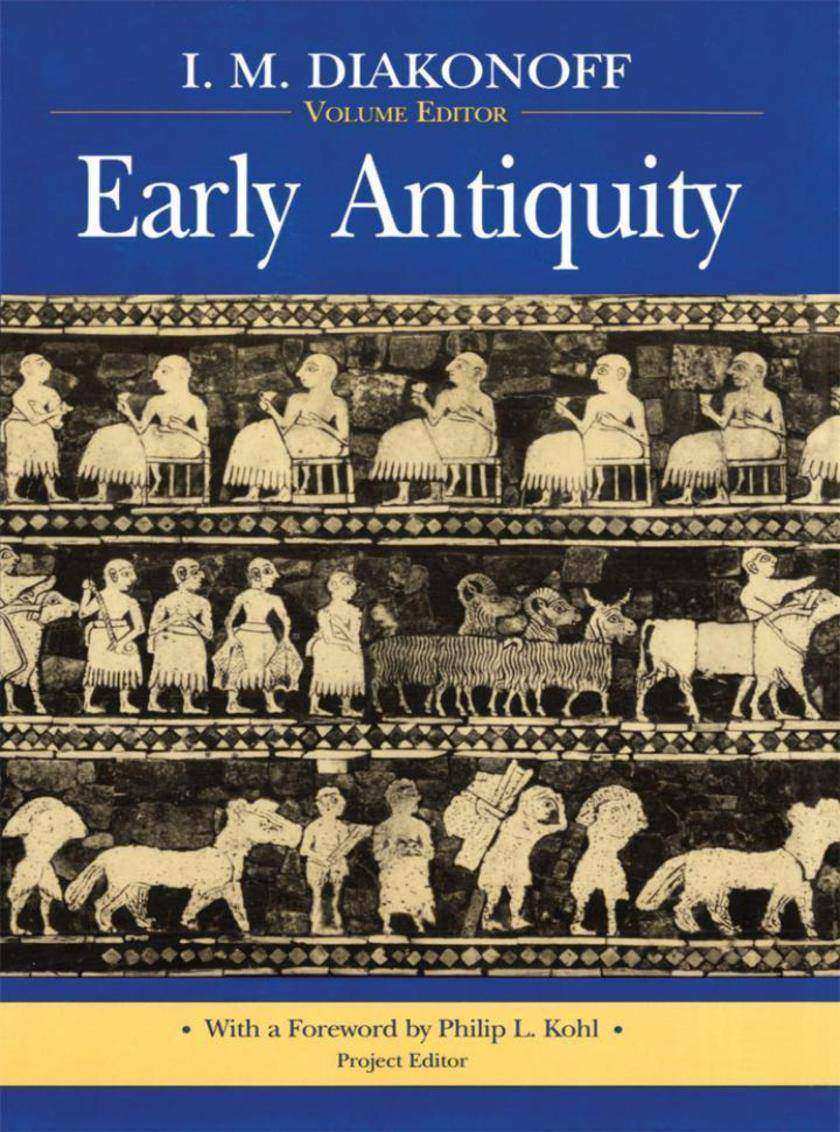
The internationally renowned Assyriologist and linguist I.M. Diakonoff has gathered the work of Soviet historians inthis survey of the earliest history of the ancient Near East,Central Asia, India, and China. Diakonoff and hiscolleagues, nearly all working within the general Marxisthistoriographic tradition, offer a comprehensive, accessiblesynthesis of historical knowledge from the beginnings ofagriculture through the advent of the Iron Age and the Greekcolonization in the Mediterranean and the Black Sea areas.Besides discussing features of Soviet historicalscholarship of the ancient world, the essays treat thehistory of early Mesopotamia and the course of PharaonicEgyptian civilization and developments in ancient India andChina from the Bronze Age into the first millennium B.C.Additional chapters are concerned with the early history ofSyria, Phoenicia, and Palestine, the Hittite civilization,the Creto-Mycenaean world, Homeric Greece, and the Phoenicianand Greek colonization.This volume offers a unified perspective on earlyantiquity, focusing on the economic and social relations ofproduction. Of immense value to specialists, the book willalso appeal to general readers.I. M. Diakonoff is a senior research scholar of ancienthistory at the Institute of Oriental Studies, LeningradAcademy of Sciences. Philip L. Kohl is professor ofanthropology at Wellesley College.
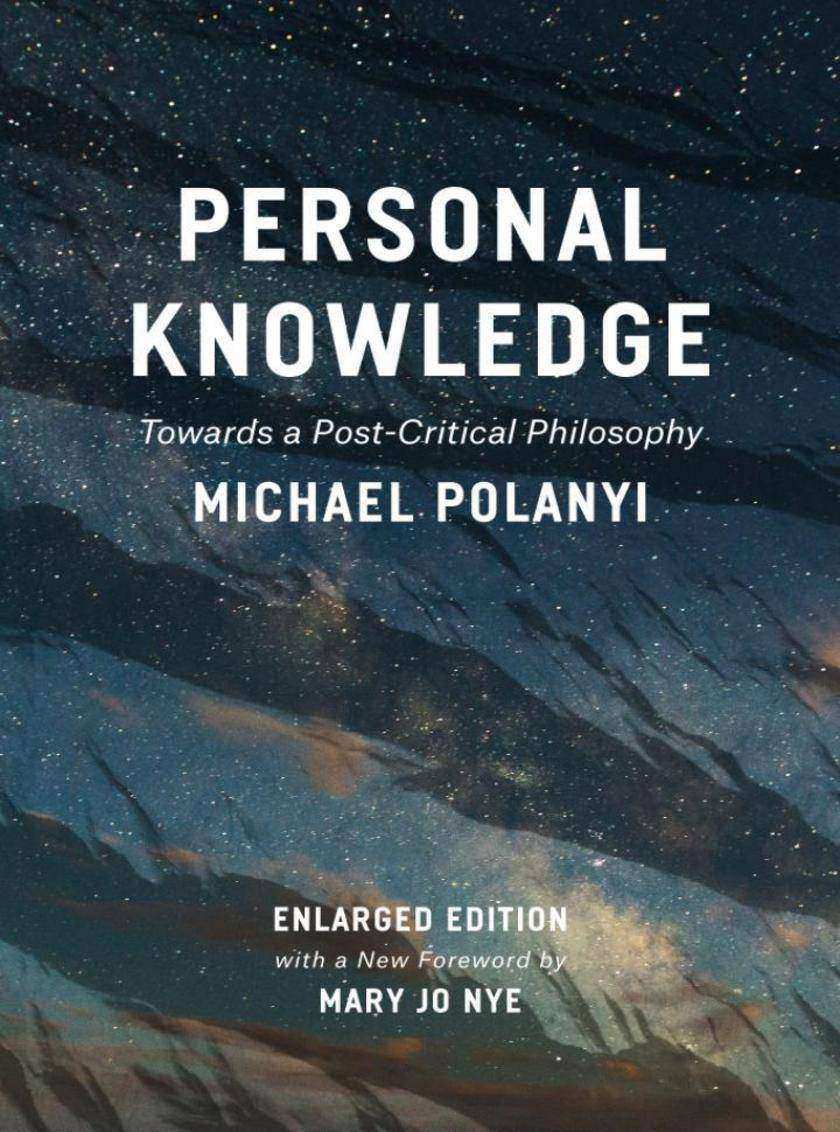
Personal Knowledge
¥206.01
The publication of Personal Knowledge in 1958 shook the science world, as Michael Polanyi took aim at the long-standing ideals of rigid empiricism and rule-bound logic. Today, Personal Knowledge remains one of the most significant philosophy of science books of the twentieth century, bringing the crucial concepts of "e;tacit knowledge"e; and "e;personal knowledge"e; to the forefront of inquiry.In this remarkable treatise, Polanyi attests that our personal experiences and ways of sharing knowledge have a profound effect on scientific discovery. He argues against the idea of the wholly dispassionate researcher, pointing out that even in the strictest of sciences, knowing is still an art, and that personal commitment and passion are logically necessary parts of research. In our technological age where fact is split from value and science from humanity, Polanyi's work continues to advocate for the innate curiosity and scientific leaps of faith that drive our most dazzling ingenuity.For this expanded edition, Polyani scholar Mary Jo Nye set the philosopher-scientist's work into contemporary context, offering fresh insights and providing a helpful guide to critical terms in the work. Used in fields as diverse as religious studies, chemistry, economics, and anthropology, Polanyi's view of knowledge creation is just as relevant to intellectual endeavors today as when it first made waves more than fifty years ago.
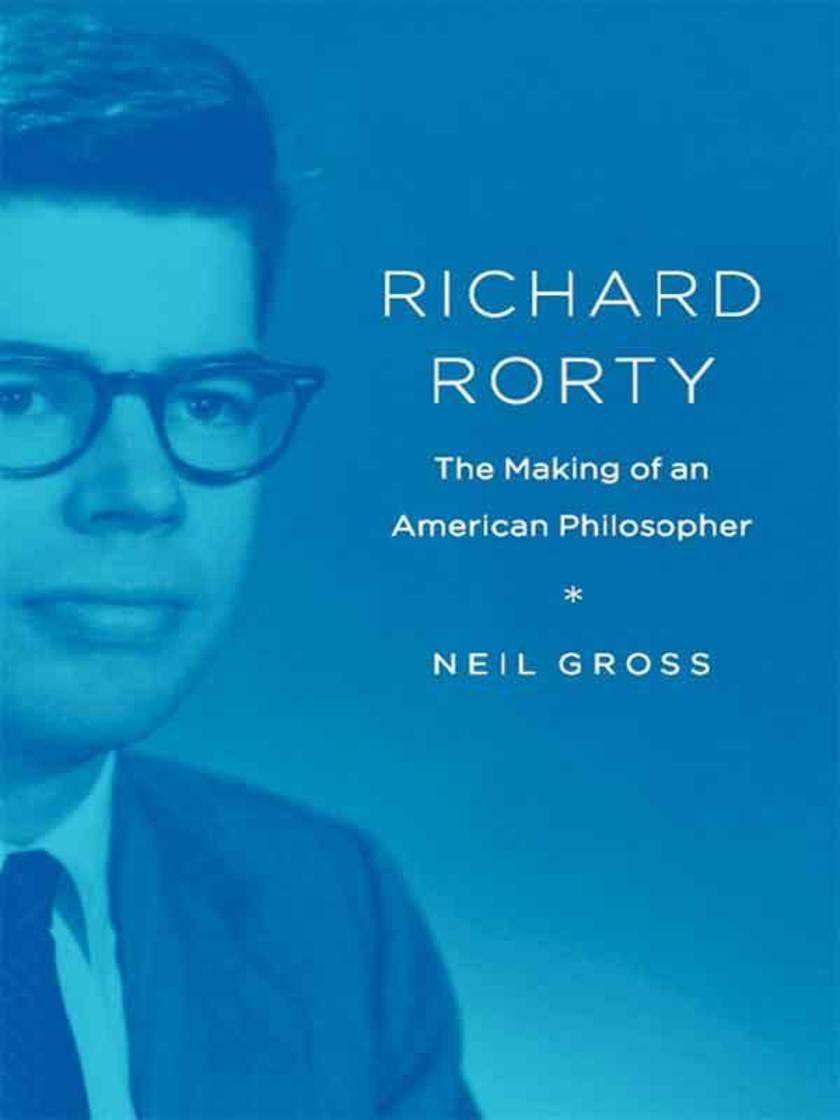
Richard Rorty
¥158.92
On his death in 2007, Richard Rorty was heralded by the New York Times as "e;one of the world's most influential contemporary thinkers."e; Controversial on the left and the right for his critiques of objectivity and political radicalism, Rorty experienced a renown denied to all but a handful of living philosophers. In this masterly biography, Neil Gross explores the path of Rorty's thought over the decades in order to trace the intellectual and professional journey that led him to that prominence.The child of a pair of leftist writers who worried that their precocious son "e;wasn't rebellious enough,"e; Rorty enrolled at the University of Chicago at the age of fifteen. There he came under the tutelage of polymath Richard McKeon, whose catholic approach to philosophical systems would profoundly influence Rorty's own thought. Doctoral work at Yale led to Rorty's landing a job at Princeton, where his colleagues were primarily analytic philosophers. With a series of publications in the 1960s, Rorty quickly established himself as a strong thinker in that tradition-but by the late 1970s Rorty had eschewed the idea of objective truth altogether, urging philosophers to take a "e;relaxed attitude"e; toward the question of logical rigor. Drawing on the pragmatism of John Dewey, he argued that philosophers should instead open themselves up to multiple methods of thought and sources of knowledge-an approach that would culminate in the publication of Philosophy and the Mirror of Nature, one of the most seminal and controversial philosophical works of our time.In clear and compelling fashion, Gross sets that surprising shift in Rorty's thought in the context of his life and social experiences, revealing the many disparate influences that contribute to the making of knowledge. As much a book about the growth of ideas as it is a biography of a philosopher, Richard Rorty will provide readers with a fresh understanding of both the man and the course of twentieth-century thought.
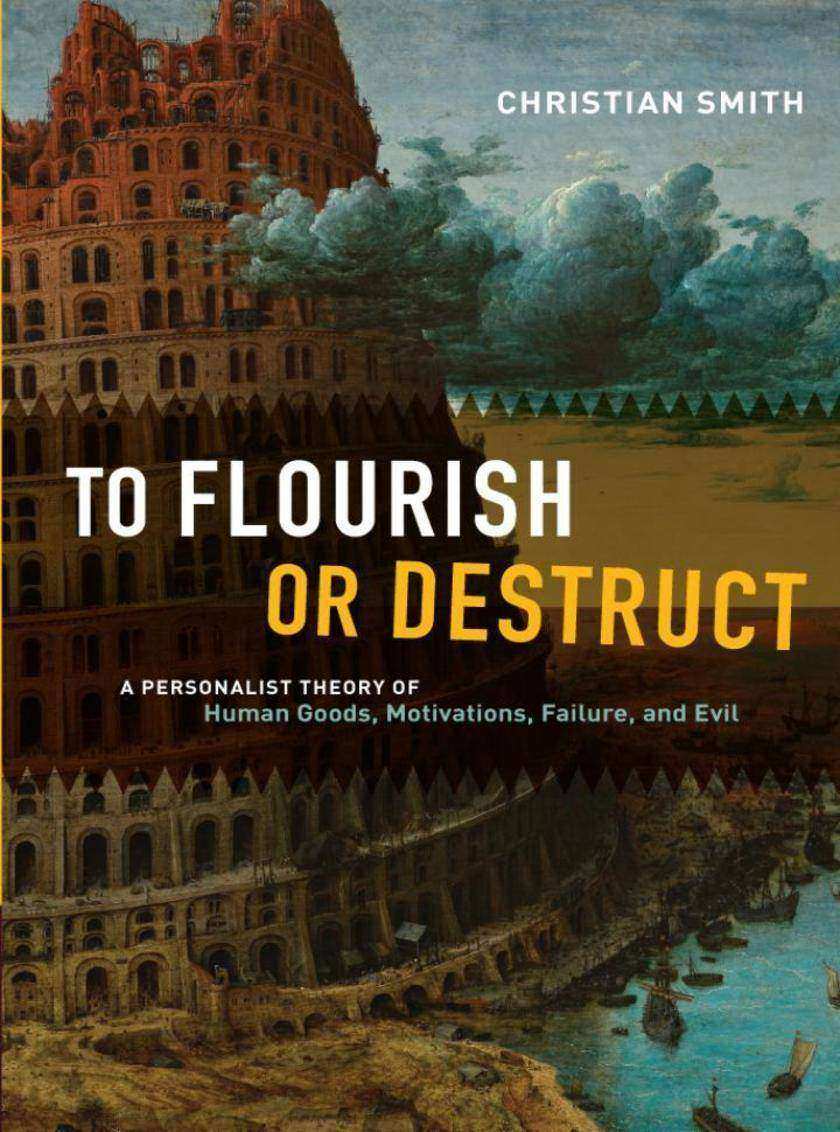
To Flourish or Destruct
¥370.82
In his 2010 book What Is a Person?, Christian Smith argued that sociology had for too long neglected this fundamental question. Prevailing social theories, he wrote, do not adequately "e;capture our deep subjective experience as persons, crucial dimensions of the richness of our own lived lives, what thinkers in previous ages might have called our 'souls' or 'hearts.'"e; Building on Smith's previous work, To Flourish or Destruct examines the motivations intrinsic to this subjective experience: Why do people do what they doHow can we explain the activity that gives rise to all human social life and social structuresSmith argues that our actions stem from a motivation to realize what he calls natural human goods: ends that are, by nature, constitutionally good for all human beings. He goes on to explore the ways we can and do fail to realize these ends-a failure that can result in varying gradations of evil. Rooted in critical realism and informed by work in philosophy, psychology, and other fields, Smith's ambitious book situates the idea of personhood at the center of our attempts to understand how we might shape good human lives and societies.
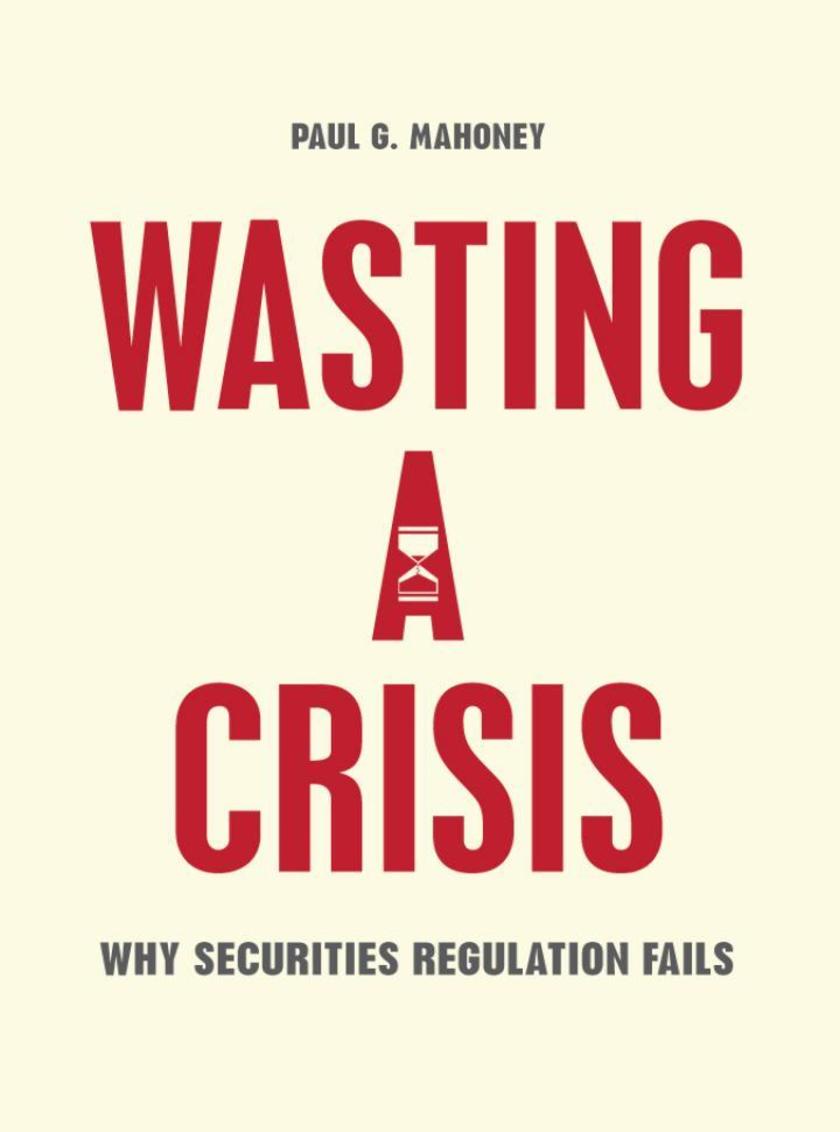
Wasting a Crisis
¥370.82
The recent financial crisis led to sweeping reforms that inspired countless references to the financial reforms of the New Deal. Comparable to the reforms of the New Deal in both scope and scale, the 2,300-page Dodd-Frank Act of 2010-the main regulatory reform package introduced in the United States-also shared with New Deal reforms the assumption that the underlying cause of the crisis was misbehavior by securities market participants, exacerbated by lax regulatory oversight.With Wasting a Crisis, Paul G. Mahoney offers persuasive research to show that this now almost universally accepted narrative of market failure-broadly similar across financial crises-is formulated by political actors hoping to deflect blame from prior policy errors. Drawing on a cache of data, from congressional investigations, litigation, regulatory reports, and filings to stock quotes from the 1920s and '30s, Mahoney moves beyond the received wisdom about the financial reforms of the New Deal, showing that lax regulation was not a substantial cause of the financial problems of the Great Depression. As new regulations were formed around this narrative of market failure, not only were the majority largely ineffective, they were also often counterproductive, consolidating market share in the hands of leading financial firms. An overview of twenty-first-century securities reforms from the same analytic perspective, including Dodd-Frank and the Sarbanes-Oxley Act of 2002, shows a similar pattern and suggests that they too may offer little benefit to investors and some measurable harm.
Making "e;Nature"e;
¥370.82
Making "e;Nature"e; is the first book to chronicle the foundation and development of Nature, one of the world's most influential scientific institutions. Now nearing its hundred and fiftieth year of publication, Nature is the international benchmark for scientific publication. Its contributors include Charles Darwin, Ernest Rutherford, and Stephen Hawking, and it has published many of the most important discoveries in the history of science, including articles on the structure of DNA, the discovery of the neutron, the first cloning of a mammal, and the human genome.But how did Nature become such an essential institutionIn Making "e;Nature,"e; Melinda Baldwin charts the rich history of this extraordinary publication from its foundation in 1869 to current debates about online publishing and open access. This pioneering study not only tells Nature's story but also sheds light on much larger questions about the history of science publishing, changes in scientific communication, and shifting notions of "e;scientific community."e; Nature, as Baldwin demonstrates, helped define what science is and what it means to be a scientist.
Secular Powers
¥329.62
Secularism is usually thought to contain the project of self-deification, in which humans attack God's authority in order to take his place, freed from all constraints. Julie E. Cooper overturns this conception through an incisive analysis of the early modern justifications for secular politics. While she agrees that secularism is a means of empowerment, she argues that we have misunderstood the sources of secular empowerment and the kinds of strength to which it aspires.Contemporary understandings of secularism, Cooper contends, have been shaped by a limited understanding of it as a shift from vulnerability to power. But the works of the foundational thinkers of secularism tell a different story. Analyzing the writings of Hobbes, Spinoza, and Rousseau at the moment of secularity's inception, she shows that all three understood that acknowledging one's limitations was a condition of successful self-rule. And while all three invited humans to collectively build and sustain a political world, their invitations did not amount to self-deification. Cooper establishes that secular politics as originally conceived does not require a choice between power and vulnerability. Rather, it challenges us-today as then-to reconcile them both as essential components of our humanity.


