


 购物车
购物车 个人中心
个人中心
Mobile Application Development: JavaScript Frameworks
¥135.15
Enhance your JavaScript skills by venturing into the domain of developing mobile applications About This Book .Extend your JavaScript skillset to build, test, and launch mobile apps with confidence .Follow three sample projects to experience Ionic’s impressive capabilities .Extend the power of Apache Cordova by creating your own Apache Cordova cross-platform mobile plugins Who This Book Is For This Learning Path is for JavaScript web developers looking to develop mobile applications using various JavaScript descendent technologies. It is for anyone who wants to learn how to build fast and stylish native mobile app using the skills they already have. If you are already using React on the web, we’re confident you’ll be able to quickly get up and running with React Native for iOS and Android. See Ionic in action, and find out how it can transform the way you build mobile apps. What You Will Learn .Develop, build, run, and deploy great cross-platform mobile applications using Apache Cordova .Create complete mobile apps using Apache Cordova that runs on Apple iOS, Google Android, and Windows Phone .Create a neat user interface for your mobile application using jQuery Mobile .Gain an in-depth understanding of how React Native works behind the scenes .Write your own custom native UI components .Develop native modules in Objective-C and Java that interact with JavaScript .Get to know Ionic by creating three complete mobile applications In Detail A great mobile app is rapidly becoming crucial for a huge range of businesses. With a great app, your customers or your readers don’t come to you – you go with them, just a few clicks and swipes away. This Learning Path shows you how to build awesome mobile apps with some of the best tools currently being used by some of the smartest developers in the industry. Taking you through JavaScript impressive development ecosystem – from jQuery Mobile to React, through to Ionic – we’ll show you how to put your skills into practice so you can build your next mobile apps with confidence and style. In this Learning Path, from jQuery to React, to Ionic, we’ll cover everything you need to start In the first module you’ll learn how to get stuck into Apache Cordova and find out how to use it as the key platform for developing your mobile app. It offers an efficient way to develop hybrid apps, which means you won’t have to connect to platform specific APIs or use their UI framework, and can instead harness your JavaScript web development skills. Make sure you have your HTML, CSS and jQuery skills at the ready. In Module 2 we’ll show you how to take advantage of React Native. It has a reputation for having a steep learning curve, but we’ll make it easy for you, making sure you make full use of your existing knowledge and getting you up and running with a sample application. You’ll also learn how to create components, how to create multiple screens, as well as using native UI components and accessing native APIs. In the third and final module you’ll get started with Ionic. With three practical projects you can build yourself, we’ve made sure that you’ll be learning by doing – which means you’ll not only develop new skills much more quickly, but you’ll have produced something tangible at the end of it! This Learning Path combines some of the best that Packt has to offer in one complete, curated package. It includes content from the following Packt products: .JavaScript Mobile Application Development by Hazem Saleh .Getting Started with React Native by Ethan Holmes and Tom Bray .Ionic Framework By Example by Sani Yusuf Style and approach This Learning Path course provides a simple and easy way to build mobile applications in JavaScript descendent technologies such as jQuery, ReactJS, and Ionic.
Unity 5.x 2D Game Development Blueprints
¥71.93
Explore the features of Unity 5 for 2D game development by building three amazing game projects About This Book Explore the 2D architecture of Unity 5, and the tools and techniques for developing 2D games Discover how to use Unity’s 2D tools, including Sprites, physics, and maps, to create different genres of games Practical tutorial on the intermediate and advanced development concepts in Unity 5 to create three interesting and fully functional games Who This Book Is For If you've got the basics of 2D development down, push your skills with the projects in this hands-on guide.Diversify your portfolio and learn the skills needed to build a range of awesome 2D game genres. What You Will Learn Explore and understand the vital role of sprites in 2D games Move, animate, and integrate sprites into a 2D platform game Set up User Interfaces (UIs) to keep track of the progress through the games Apply 2D Physics to improve gameplay believability Learn the foundation of Level Design and how to quickly create 2D Maps Discover NPC design, event triggers, and AI programming Create an epic strategy game, challenging all the skills acquired in the book In Detail Flexible, powerful, and full of rich features, Unity 5 is the engine of choice for AAA 2D and 3D game development. With comprehensive support for over 20 different platforms, Unity boasts a host of great new functions for making 2D games. Learn how to leverage these new options into awesome 2D games by building three complete game projects with the Unity game tutorials in this hands-on book. Get started with a quick overview of the principle concepts and techniques needed for making 2D games with Unity, then dive straight in to practical development. Build your own version of Super Mario Brothers as you learn how to animate sprites, work with physics, and construct brilliant UIs in order to create a platformer game. Go on a quest to create a RPG game discovering NPC design, event triggers, and AI programming. Finally, put your skills to the test against a real challenge - designing and constructing a complex strategy game that will draw on and develop all your previously learned skills. Style and approach This is a practical and easy-to-follow guide that starts with the basics and gradually delves into the process of creating 2D games. With step-by-step instructions on how to build three games, followed by a detailed explanation of each example, you will understand the concepts not just in theory, but also by applying the knowledge you gain in practice.
Bootstrap for ASP.NET MVC - Second Edition
¥71.93
Combine the power of ASP.NET Core with Bootstrap 4 to build elegant, responsive web apps About This Book Updated for Bootstrap 4 and ASP.Net MVC 6, this book shows how to take advantage of the latest new features introduced in both of these industry-leading frameworks Build responsive, mobile-ready apps by combining the power of ASP.NET MVC with Bootstrap Grasp the intricacies of Bootstrap and how to use it with ASP.NET MVC Build your own tools and helpers to assist you in creating ASP.NET MVC Bootstrap sites easily and quickly Master the use of Bootstrap components and plugins with ASP.NET MVC Who This Book Is For If you are an ASP.NET MVC developer and would like to know how to incorporate Bootstrap into your projects, then this book is invaluable to you. Developers with entry-level experience of ASP.NET MVC development and limited experience with Bootstrap will also benefit from this book. What You Will Learn Create a new ASP.NET MVC project that uses Bootstrap for its styling and learn how to include external libraries using the new package managers Learn to use the various Bootstrap CSS and HTML elements, and how to use the new Bootstrap 4 grid layout system Explore the different input groups and implement alerts, progress bars, and badges Explore JavaScript components by illustrating and walking through the process of using JavaScript/jQuery to add interactivity to Twitter Bootstrap components Build your own ASP.NET MVC helpers and tag helpers to reduce the amount of HTML needed to generate Bootstrap elements Convert a Bootstrap HTML template into a usable ASP.NET MVC project Use the jQuery DataTables plugin with Bootstrap and ASP.NET MVC In Detail One of the leading open source frontend frameworks, Bootstrap has undergone a significant change and introduced several features that make designing compelling, next-generation UIs much simpler. Integrating Bootstrap with ASP.NET's powerful components can further enhance its capabilities. This book guides you through the process of creating an ASP.NET MVC website from scratch using Bootstrap. After a primer on the fundamentals of Bootstrap, you will learn your way around and create a new ASP.NET MVC project in Visual Studio. You will move on to learn about the various Bootstrap components as well as techniques to include them in your own projects. The book includes practical examples to show you how to use open-source plugins with Bootstrap and ASP.NET MVC and guides you through building an ASP.NET MVC website using Bootstrap, utilizing layout and user-interface components. At the end of this book, you will find some valuable tips and tricks to help you get the most out of your Bootstrap-integrated and ASP.NET MVC-integrated website. Style and approach This is a compact, step-by-step guide that focuses on combining the power of Bootstrap with ASP.Net MVC to build next-generation web apps. With clear instructions, this book will show how to build a complete ASP.Net MVC-integrated web app from scratch using Bootstrap. It will also cover several tricks for integrating Bootstrap and ASP.Net MVC, and getting the most out of both frameworks.
Smart Internet of Things Projects
¥71.93
Discover how to build your own smart Internet of Things projects and bring a new degree of interconnectivity to your world About This Book Learn how to extract and analyse data from physical devices and build smart IoT projects Master the skills of building enticing projects such as a neural network autonomous car, computer vision through a camera, and cloud-based IoT applications This project-based guide leverages revolutionary computing chips such as Raspberry Pi, Arduino, and so on Who This Book Is For If you are hobbyist who is keen on making smart IoT projects, then this book is for you. You should have a basic knowledge of Python. What You Will Learn Implement data science in your IoT projects and build a smart temperature controller Create a simple machine learning application and implement decision system concepts Develop a vision machine using OpenCV Build a robot car with manual and automatic control Implement speech modules with your own voice commands for IoT projects Connect IoT to a cloud-based server In Detail Internet of Things (IoT) is a groundbreaking technology that involves connecting numerous physical devices to the Internet and controlling them. Creating basic IoT projects is common, but imagine building smart IoT projects that can extract data from physical devices, thereby making decisions by themselves. Our book overcomes the challenge of analyzing data from physical devices and accomplishes all that your imagination can dream up by teaching you how to build smart IoT projects. Basic statistics and various applied algorithms in data science and machine learning are introduced to accelerate your knowledge of how to integrate a decision system into a physical device. This book contains IoT projects such as building a smart temperature controller, creating your own vision machine project, building an autonomous mobile robot car, controlling IoT projects through voice commands, building IoT applications utilizing cloud technology and data science, and many more. We will also leverage a small yet powerful IoT chip, Raspberry Pi with Arduino, in order to integrate a smart decision-making system in the IoT projects. Style and approach The book follows a project-based approach to building smart IoT projects using powerful boards such as the Raspberry Pi, Arduino, and the IoT chip.
Practical Responsive Typography
¥54.49
Get your attractive type design up and running in the browser with real-world, responsive, and tailored tutorials About This Book No coding experience necessary - get started with responsive typography today! Find out how to customize your own typography designs to truly own your website's identity From the basics to cutting-edge design, this book is the perfect guide Who This Book Is For This book is for web developers familiar with the basics of HTML5 and CSS3 who want to learn how to implement responsive typography. No coding experience is required, so dive in and get started! What You Will Learn Customize and personalize fonts on a responsive website Learn how to write CSS3 rules for viewports Define media queries and write them using CSS3 and HTML5 Implement SASS typography techniques to minimize the CSS output and manage the font variables Get to grips with dropcaps and learn how to use them effectively on the web In Detail Typography is an essential part of any website’s design. It can help you stand out from the crowd, communicate with clarity, and cultivate a distinctive identity. Practical Responsive Typography demonstrates how to use typography to greatest effect. With this book you won't underestimate it's importance - you'll be in complete control over this crucial component of web design. From scaling and optimizing screen spaces to using a range of different web fonts, you'll quickly get up to speed with the practical considerations behind successful typography. But more than the fundamentals, you'll also find out how to go further by customizing typography designs to suit your identity. Style and approach This is an easy-to-follow guide full of real-world examples and tutorials. Each typography style and rule is clearly explained and placed in context.
JavaScript: Functional Programming for JavaScript Developers
¥143.87
Unlock the powers of functional programming hidden within JavaScript to build smarter, cleaner, and more reliable web apps About This Book Write powerful code with the high-level functions that JavaScript offers Discover what functional programming is, why it's effective, and how it's used in JavaScript Understand and optimize JavaScript's hidden potential as a true functional language Who This Book Is For If you are a JavaScript developer interested in learning functional programming, looking for the quantum leap toward mastering the JavaScript language, or just want to become a better programmer in general, then this book is ideal for you. This guide is aimed at programmers, involved in developing reactive frontend apps, server-side apps that wrangle with reliability and concurrency, and everything in between. What You Will Learn Get a run through of the basic JavaScript language constructs Code using the powerful object-oriented feature in JavaScript Master DOM manipulation, cross-browser strategies, and ES6 Understand the basic concurrency constructs in Java* and best performance strategies Harness the power of patterns for tasks ranging from application building to code testing Build large-scale apps seamlessly with the help of reactive patterns Explore advanced design patterns, including dependency injection Develop more powerful applications with currying and function composition Create more reliable code with closures and immutable data In Detail JavaScript is a high-level, dynamic, untyped, lightweight, and interpreted programming language and functional programming is a style that emphasizes and enables smarter code that minimizes complexity and increases modularity. It's a way of writing cleaner code through clever ways of mutating, combining, and using functions. And JavaScript provides an excellent medium for this approach. By learning how to expose JavaScript's true identity as a functional language, we can implement web apps that are more powerful, easier to maintain and more reliable. The java *: Functional Programming for JavaScript Developers course will take you on a journey to show how functional programming when combined with other techniques makes JavaScript programming more efficient. The first module Mastering JavaScript, stress on practical aspects of Java* development like—Functions and Closures, Runtime debugging techniques, project layout, events and DOM processing, build tools, Object-oriented patterns, isomorphism—everything that a modern Java* project would need. The second module, Mastering JavaScript Design Patterns - Second Edition, will explore how design patterns can help you improve and organize your JavaScript code. You’ll get to grips with creational, structural, and behavioral patterns as you discover how to put them to work in different scenarios. This updated edition will also delve into reactive design patterns and microservices as they are a growing phenomenon in the world of web development. It will also show you some advanced patterns, including dependency injection and live post processing. The third module, Functional Programming in JavaScript, will help you to write real-world applications by utilizing a wide range of functional techniques and styles. It explores the core concepts of functional programming common to all functional languages, with examples of their use in JavaScript. Style and approach This course will begin with providing insights and practical tips on advanced JavaScript features to build highly scalable web and mobile system and move on to some design patterns with JavaScript. Finally, the course ends with presenting the functional programming techniques and styles in JavaScript.
Xamarin 4 By Example
¥71.93
Design, develop, and publish your own mobile apps for iOS and Android using C# and Xamarin Studio About This Book Explore the exciting features of Xamarin Studio while learning to develop your own applications Develop a complete application from conceptualization through to publishing it on the app store The book walks you through the basics of cross-platform development with Xamarin using examples and best practices and tips for cross platform solutions. Who This Book Is For If you want to develop your own applications and want to explore the features of Xamarin Studio, then this is the book for you. It is expected that you have a basic understanding of technologies in mobile development, but prior knowledge of Xamarin is not required. What You Will Learn Understand the software development lifecycle for mobile applications Use Xamarin Studio and its wide range of features to write your programs in C# Use different options to create multi-platform applications using Xamarin and develop a cross-platform extension method Work with Xamarin forms and various UI controls Integrate synchronous and asynchronous communication module within your app Render images to work with Android and iOS Link a third-party application to your solution In Detail The mobile app market is increasing exponentially every year. Xamarin Studio with its modern and powerful IDEs makes creating applications a lot easier by simplifying the development process. Xamarin will allow you and your team to create native applications by taking advantage of one of the most evolved programming language in the world: C#. This book will provide you with the basic skills you need to start developing mobile apps using C# and Xamarin. By working through the examples in each chapter, you will gain hands-on experience of creating a complete app that is fully functional by all means. Finally, you will learn to publish the app you created on the app market. Each project in this book will take you one step closer to becoming a professional app developer. Style and approach The step-by-guide will walk you through the process of creating an application of with the help of small projects that will teach you everything you need to know to build a complete application of your own.
Cassandra 3.x High Availability - Second Edition
¥63.21
Achieve scalability and high availability without compromising on performance About This Book See how to get 100 percent uptime with your Cassandra applications using this easy-follow guide Learn how to avoid common and not-so-common mistakes while working with Cassandra using this highly practical guide Get familiar with the intricacies of working with Cassandra for high availability in your work environment with this go-to-guide Who This Book Is For If you are a developer or DevOps engineer who has basic familiarity with Cassandra and you want to become an expert at creating highly available, fault tolerant systems using Cassandra, this book is for you. What You Will Learn Understand how the core architecture of Cassandra enables highly available applications Use replication and tunable consistency levels to balance consistency, availability, and performance Set up multiple data centers to enable failover, load balancing, and geographic distribution Add capacity to your cluster with zero downtime Take advantage of high availability features in the native driver Create data models that scale well and maximize availability Understand common anti-patterns so you can avoid them Keep your system working well even during failure scenarios In Detail Apache Cassandra is a massively scalable, peer-to-peer database designed for 100 percent uptime, with deployments in the tens of thousands of nodes, all supporting petabytes of data. This book offers a practical insight into building highly available, real-world applications using Apache Cassandra. The book starts with the fundamentals, helping you to understand how Apache Cassandra’s architecture allows it to achieve 100 percent uptime when other systems struggle to do so. You’ll get an excellent understanding of data distribution, replication, and Cassandra’s highly tunable consistency model. Then we take an in-depth look at Cassandra's robust support for multiple data centers, and you’ll see how to scale out a cluster. Next, the book explores the domain of application design, with chapters discussing the native driver and data modeling. Lastly, you’ll find out how to steer clear of common anti-patterns and take advantage of Cassandra’s ability to fail gracefully. Style and approach This practical guide will get you implementing Cassandra right from the design to creating highly available systems. Through a systematic, step-by-step approach, you will learn different aspects of building highly available Cassandra applications and all this with the help of easy-to-follow examples, tips, and tricks.

Mastering SoapUI
¥65.39
Master the art of testing and automating your SOA using SoapUI About This Book Design real-time test automation frameworks for Enterprise applications using SoapUI Learn how to solve test automation issues for complex systems A complete guide to understanding SOA automation from quality assurance to business assurance Who This Book Is For The book is intended for test architects, SOA test specialists, automation testers, test managers, and software developers who have a good understanding of SOA, web services, Groovy Scripting, and the SOAP UI tool. What You Will Learn Familiarize yourself with Test Web services from functional, nonfunctional, and security aspects Learn to test real-time service orchestrations Design test automation solutions for SOA-based Enterprise applications Learn multilayer test automation Selenium plus SoapUI under a single umbrella Integrate your SoapUI framework with Jenkins In Detail SoapUI is an open-source cross-platform testing application that provides complete test coverage and supports all the standard protocols and technologies. This book includes real-time examples of implementing SoapUI to achieve quality and business assurance. Starting with the features and functionalities of SoapUI, the book will then focus on functional testing, load testing, and security testing of web services. Furthermore, you will learn how to automate your services and then design data-driven, keyword-driven, and hybrid-driven frameworks in SoapUI. Then the book will show you how to test UIs and services using SoapUI with the help of Selenium. You will also learn how to integrate SoapUI with Jenkins for CI and SoapUI test with QC with backward- and forward-compatibility. The final part of the book will show you how to virtualize a service response in SoapUI using Service Mocking. You will finish the journey by discovering the best practices for SoapUI test automation and preparing yourself for the online certification of SoapUI. Style and approach Filled with real-time examples, this book will help readers take their knowledge to the next level. This book is a comprehensive guide that will cover the end-to-end life cycle of implementing SoapUI in various phases of software testing and the software development life cycle.
Learning Nagios - Third Edition
¥90.46
Learn and monitor your entire IT infrastructure to ensure your systems, applications, services, and business function effectively. About This Book Packed with tips, tricks and illustrations, the book will explain the configuration and monitoring concepts in a simplified manner Experience the scalability and flexibility of Nagios in a very practical and easy-to-understand approach. Unleash the power of Nagios Core and Nagios XI 5 to monitor and secure your infrastructure with ease. Who This Book Is For This book is targeted at System Administrators, both, who have no prior knowledge of Nagios as well as readers experienced with it. It not only covers the basics of Nagios but also the advanced features. What You Will Learn Set up and use the built-in Nagios web interface Upskill the additional interfaces available for Nagios to monitor your IT infrastructure Learn how to perform various checks using both, Nagios standard plugins and third-party plugins Explore the working of notifications and events in Nagios Familiarize yourself with SNMP and use it for monitoring devices such as routers, switches, modems and printers Discover how can be Nagios can be customized and tailored to your needs Get to know more about the entreprise version of Nagios, Nagios XI In Detail Nagios, a powerful and widely used IT monitoring and management software for problem -solving. It detects problems related to your organizations infrastructure and helps in resolving the issue before it impacts the business. Following the success of the previous edition, this book will continue to help you monitor the status of network devices and also notify the system administrators of network problems. Starting with the fundamentals, the book will teach you how to install and configure Nagios for your environment. The book helps you learn how to end downtimes, adding comments and generating reports using the built-in Web interface of Nagios. Moving on, you will be introduced to the third-party web interfaces and applications for checking the status and report specific information. As you progress further in Learning Nagios, you will focus on the standard set of Nagios plugins and also focus on teach you how to efficiently manage large configurations and using templates. Once you are up to speed with this, you will get to know the concept and working of notifications and events in Nagios. The book will then uncover the concept of passive check and shows how to use NRDP (Nagios Remote Data Processor). The focus then shifts to how Nagios checks can be run on remote machines and SNMP (Simple Network Management Protocol) can be used from Nagios. Lastly, the book will demonstrate how to extend Nagios by creating custom check commands, custom ways of notifying users and showing how passive checks and NRDP can be used to integrate your solutions with Nagios. By the end of the book, you will be a competent system administrator who could monitor mid-size businesses or even large scale enterprises. Style and approach This will be a practical learning guide for system administrators which will teach them everything about Nagios along with implementing it for your organization and then ending with securing it.
Visualforce Development Cookbook - Second Edition
¥90.46
Discover over 70 real-world examples to overcome the most complex concepts you will face developing with Visualforce About This Book This book provides an enhanced user experience with dynamically-generated, reactive pages Access data over additional channels via public web sites and mobile pages Packed with easy-to-follow recipes, including step-by-step instructions and Apex/Visualforce code downloads this title is the all in one package you need to get more from Visualforce. Who This Book Is For This book will be beneficial to developers who are already well-versed with the basics of Visualforce. An awareness of the standard component library and the purpose of controllers is expected. What You Will Learn Pass parameters between Visualforce pages Update attributes in component controllers Avoid validation errors with action regions Refresh record details from embedded Visualforce Create and develop a website template from scratch Get to know about the Salesforce Lightening Design system and use Visualforce in Salesforce1 Effectively tackle frequently-faced problems while developing Visualforce pages In Detail Visualforce is a framework that allows developers to build sophisticated, custom user interfaces that can be hosted natively on the Force.com platform. The Visualforce framework includes a tag-based markup language, similar to HTML that is used to write the Visualforce pages and a set of controllers that are used to write business logic to the Visualforce pages. Visualforce Development Cookbook provides solutions to a variety of challenges faced by Salesforce developers and demonstrates how easy it is to build rich, interactive pages using Visualforce. Whether you are looking to make a minor addition to the standard page functionality or override it completely, this book will provide you with the help you require throughout. You will start by learning about the simple utilities and will build up to more advanced techniques for data visualization and to reuse functionality. You will learn how to perform various tasks such as creating multiple records from a single page, visualizing data as charts, using JavaScript to enhance client-side functionality, building a public website, and making data available to a mobile device. With an interesting chapter on tackling common issues faced while developing Visualforce pages, the book provides lots of practical examples to enhance and extend your Salesforce user interface. Style and approach Following a cookbook structure, the book provides recipes on some essential technical scenarios and a few that focus on real-world development problems. This book is packed with illustrations and contains lots of code samples to improve your understanding.
Django: Web Development with Python
¥152.59
From an idea to a prototype – a complete guide for web development with the Django framework About This Book Explore the best practices to develop applications of a superior quality with Django framework Unravel the common problems of web development in Django This course teaches you major Django functions and will help you improve your skills by developing models, forms, views, and templates Experience the challenges of working on an end-to-end social network project Who This Book Is For Web developers who want to use modern Python-based web frameworks like Django to build powerful web applications. The course is mostly self-contained and introduces web development with Python to a reader who is familiar with web development concepts and can help him become an expert in this trade. It’s intended for all levels of web developers, both students and practitioners from novice to experts. What You Will Learn Use Django models to store information in the database and generate queries to access a database across models Quickly develop web pages to create, read, update, and delete data from the model using class-based views Generate very maintainable forms with Django Import data from local sources and external web services as well as exporting your data to third parties Deep dive into various aspects of Django from models and views to testing and deployment Familiarize yourself with the various nuances of web development such as browser attacks and databases In Detail Data science is hot right now, and the need for multitalented developers is greater than ever before. A basic grounding in building apps with a framework as minimalistic, powerful, and easy-to-learn as Django will be a useful skill to launch your career as an entrepreneur or web developer. Django is a web framework that was designed to strike a balance between rapid web development and high performance. This course will take you on a journey to become an efficient web developer thoroughly understanding the key concepts of Django framework. This learning path is divided into three modules. The course begins with basic concepts of the Django framework. The first module, Django Essentials, is like a practical guide, filled with many real-world examples to build highly effective Django web application. After getting familiar with core concepts of Django, it's time to practice your learning from the first module with the help of over 90 recipes available in this module. In the second module, Web Development with Django Cookbook, you'll learn varying complexities to help you create multilingual, responsive, and scalable websites with Django. By the end of this module, you will have a good understanding of the new features added to Django 1.8 and be an expert at web development processes.The next step is to discover the latest best practices and idioms in this rapidly evolving Django framework. This is what you'll be learning in our third module, Django Design Patterns and Best Practices. This module will teach you common design patterns to develop better Django code. By the end of the module, you will be able to leverage the Django framework to develop a fully functional web application with minimal effort. Style and approach This course includes all the resources that will help you jump into the web development field with Django and learn how to make scalable and robust web applications. The aim is to create a smooth learning path that will teach you how to get started with the powerful Django framework and perform various web development techniques in depth. Through this comprehensive course, you'll learn web development with Django from scratch to finish!
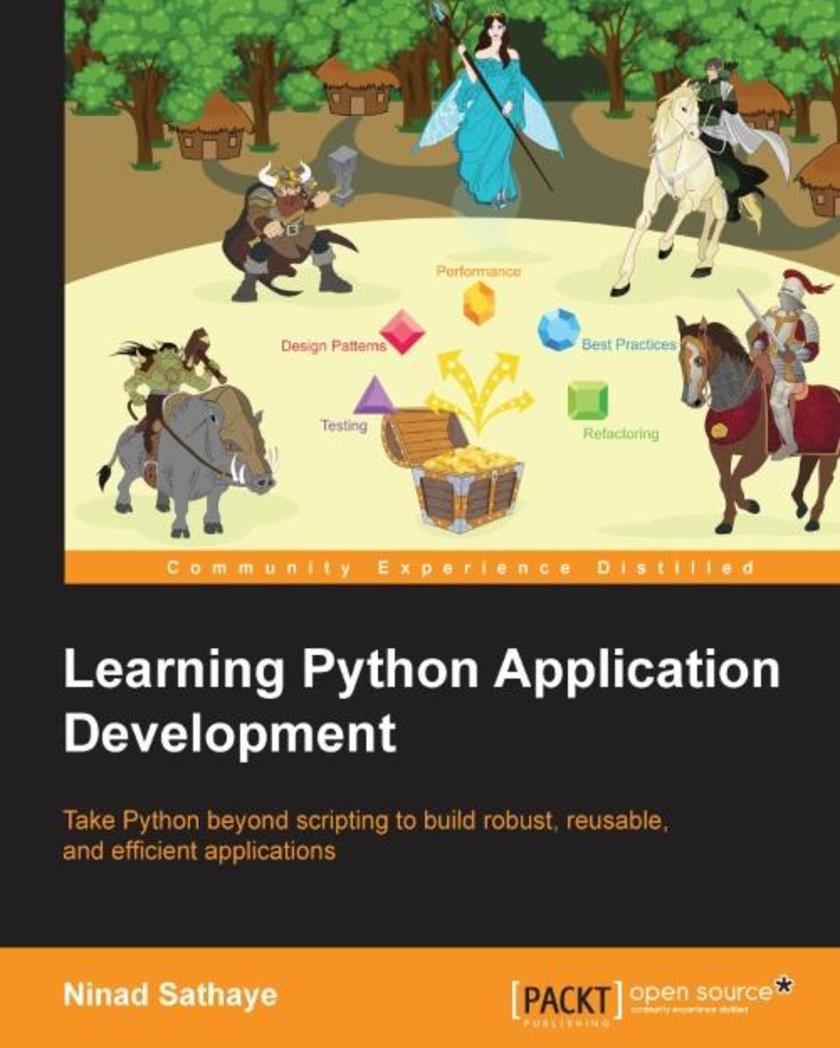
Learning Python Application Development
¥80.65
Take Python beyond *ing to build robust, reusable, and efficient applications About This Book Get to grips with Python techniques that address commonly encountered problems in general application development. Develop, package, and deploy efficient applications in a fun way. All-practical coverage of the major areas of application development, including best practices, exception handling, testing, refactoring, design patterns, performance, and GUI application development. Who This Book Is For Do you know the basics of Python and object oriented programmingDo you want to go an extra mile and learn techniques to make your Python application robust, extensible, and efficientThen this book is for you. What You Will Learn Build a robust application by handling exceptions. Modularize, package, and release the source distribution. Document the code and implement coding standards. Create automated tests to catch bugs in the early development stage. Identify and re-factor badly written code to improve application life. Detect recurring problems in the code and apply design patterns. Improve code efficiency by identifying performance bottlenecks and fixing them. Develop simple GUI applications using Python. In Detail Python is one of the most widely used dynamic programming languages, supported by a rich set of libraries and frameworks that enable rapid development. But fast paced development often comes with its own baggage that could bring down the quality, performance, and extensibility of an application. This book will show you ways to handle such problems and write better Python applications. From the basics of simple command-line applications, develop your skills all the way to designing efficient and advanced Python apps. Guided by a light-hearted fantasy learning theme, overcome the real-world problems of complex Python development with practical solutions. Beginning with a focus on robustness, packaging, and releasing application code, you’ll move on to focus on improving application lifetime by making code extensible, reusable, and readable. Get to grips with Python refactoring, design patterns and best practices. Techniques to identify the bottlenecks and improve performance are covered in a series of chapters devoted to performance, before closing with a look at developing Python GUIs. Style and approach The book uses a fantasy game theme as a medium to explain various topics. Specific aspects of application development are explained in different chapters. In each chapter the reader is presented with an interesting problem which is then tackled using hands-on examples with easy-to-follow instructions.
Modernizing Legacy Applications in PHP
¥80.65
Get your code under control in a series of small, specific steps About This Book Learn to extract and replace legacy artifacts, Improve your application from the ground up while keeping your codebase fully operational, Improve the quality of your legacy applications. Who This Book Is For PHP developers from all skill levels will be able to get value from this book and will be able to transform their spaghetti code applications to clean, modular applications. If you are in the midst of a legacy refactor or you find yourself in a state of despair caused by the code you have inherited, this is the book for you. All you need is to have PHP 5.0 installed, and you’re all set to change the way you maintain and deploy your code! What You Will Learn Replace global and new with dependency injection Extract SQL statements to gateways Convert action logic to controllers Remove repeated logic in page *s Create maintainable PHP code from crufty legacy PHP In Detail Have you noticed that your legacy PHP application is composed of page *s placed directly in the document root of the web serverOr, do your page *s, along with any other classes and functions, combine the concerns of model, view, and controller into the same scopeIs the majority of the logical flow incorporated as include files and global functions rather than class methodsWorking with such a legacy application feels like dragging your feet through mud, doesn’t it?This book will show you how to modernize your application in terms of practice and technique, rather than in terms of using tools like frameworks and libraries, by extracting and replacing its legacy artifacts. We will use a step-by-step approach, moving slowly and methodically, to improve your application from the ground up. We’ll show you how dependency injection can replace both the new and global dependencies. We’ll also show you how to change the presentation logic to view files and the action logic to a controller. Moreover, we’ll keep your application running the whole time. Each completed step in the process will keep your codebase fully operational with higher quality. When we are done, you will be able to breeze through your code like the wind. Your code will be autoloaded, dependency-injected, unit-tested, layer-separated, and front-controlled. Most of the very limited code we will add to your application is specific to this book. We will be improving ourselves as programmers, as well as improving the quality of our legacy application. Style and approach This book gives developers an easy-to-follow, practical and powerful process to bring their applications up to a modern baseline. Each step in the book is practical, self-contained and moves you closer to the end goal you seek: maintainable code. As you follow the exercises in the book, the author almost anticipates your questions and you will have the answers, ready to be implemented on your project.
Machine Learning for the Web
¥90.46
Explore the web and make smarter predictions using Python About This Book Targets two big and prominent markets where sophisticated web apps are of need and importance. Practical examples of building machine learning web application, which are easy to follow and replicate. A comprehensive tutorial on Python libraries and frameworks to get you up and started. Who This Book Is For The book is aimed at upcoming and new data scientists who have little experience with machine learning or users who are interested in and are working on developing smart (predictive) web applications. Knowledge of Django would be beneficial. The reader is expected to have a background in Python programming and good knowledge of statistics. What You Will Learn Get familiar with the fundamental concepts and some of the jargons used in the machine learning community Use tools and techniques to mine data from websites Grasp the core concepts of Django framework Get to know the most useful clustering and classification techniques and implement them in Python Acquire all the necessary knowledge to build a web application with Django Successfully build and deploy a movie recommendation system application using the Django framework in Python In Detail Python is a general purpose and also a comparatively easy to learn programming language. Hence it is the language of choice for data scientists to prototype, visualize, and run data analyses on small and medium-sized data sets. This is a unique book that helps bridge the gap between machine learning and web development. It focuses on the difficulties of implementing predictive analytics in web applications. We focus on the Python language, frameworks, tools, and libraries, showing you how to build a machine learning system. You will explore the core machine learning concepts and then develop and deploy the data into a web application using the Django framework. You will also learn to carry out web, document, and server mining tasks, and build recommendation engines. Later, you will explore Python’s impressive Django framework and will find out how to build a modern simple web app with machine learning features. Style and approach Instead of being overwhelmed with multiple concepts at once, this book provides a step-by-step approach that will guide you through one topic at a time. An intuitive step-by step guide that will focus on one key topic at a time. Building upon the acquired knowledge in each chapter, we will connect the fundamental theory and practical tips by illustrative visualizations and hands-on code examples.
Spring MVC Blueprints
¥90.46
Design and implement real-world web-based applications using the Spring Framework 4.x specification based on technical documentation About This Book . Learn all the details of implementing Spring 4.x MVC applications from basic core platform construction to advanced integration implementations. Gain a complete reference guide to implementing the controllers, models, views, view resolvers, and other service-related components to solve various real-world problems. Discover the possible optimal solutions for developers and experts to build enterprise and personal web-based applications. Create a Spring MVC application that has a validation process and exception handling with the HTTP status codes Who This Book Is For This book is for competent Spring developers who wish to understand how to develop complex yet flexible applications with Spring MVC. You must have a good knowledge of JAVA programming and be familiar with the basics of Spring. What You Will Learn . Set up and configure the Spring 4.x MVC platform from ground level up using the basic Spring Framework 4.x APIs. Study requirements and manage solutions on file uploading transactions in Spring 4.x applications Configure, , and test Spring integration to the Hibernate, MyBatis, and JPA frameworks for database transactions. Properly implement exception handlers and audit trails in Spring MVC applications. Generate reports using JFreeChart, Google Charts, JasperReports, DynamicReports, FreeMarker, Velocity, and Spring’s API known as ContentNegotiatingViewResolver. Configure security and flexibility by adding Captcha, Spring Security, Spring Flow, Spring Portlets, JTA to improve data management performance. Implement web services using Spring’s RESTful implementation and other service-oriented integration plugins. Design and implement a Spring 4.x application using AngularJS, ExtJs, Twitter Bootstrap, and Spring Mobile for responsive web design In Detail Spring MVC is the ideal tool to build modern web applications on the server side. With the arrival of Spring Boot, developers can really focus on the code and deliver great value, leveraging the rich Spring ecosystem with minimal configuration. Spring makes it simple to create RESTful applications, interact with social services, communicate with modern databases, secure your system, and make your code modular and easy to test. It is also easy to deploy the result on different cloud providers. This book starts all the necessary topics in starting a Spring MVC-based application. Moving ahead it explains how to design model objects to handle file objects. save files into a data store and how Spring MVC behaves when an application deals with uploading and downloading files. Further it highlights form transactions and the user of Validation Framework as the tool in validating data input. It shows how to create a customer feedback system which does not require a username or password to log in. It will show you the soft side of Spring MVC where layout and presentation are given importance. Later it will discuss how to use Spring Web Flow on top of Spring MVC to create better web applications. Moving ahead, it will teach you how create an Invoice Module that receives and transport data using Web Services By the end of the book you will be able to create efficient and flexible real-time web applications using all the frameworks in Spring MVC. Style and approach This book is a compendium of technical specification documents that will guide you through building an application using Spring 4.x MVC. Each chapter starts with a high-level wireframe design of the software followed by how to set up and configure different libraries and tools.
Mastering Business Intelligence with MicroStrategy
¥107.90
Build world-class enterprise Business Intelligence solutions with MicroStrategy 10 About This Book Fix the gap between BI tools and implementation/integration processes with big data and predictive analytics using this comprehensive guide to MicroStrategy 10 Highly practical, example-rich guide that lets you implement business intelligence with MicroStrategy 10 in your organization Create the best user experience with BI dashboards using MicroStrategy using this up-to-date, comprehensive guide Who This Book Is For This book is intended for BI, DWH, ETL developers, BI/DWH/Analytics managers, analysts, and business users who already have MicroStrategy in their organization and want to take it to the next level in order to increase performance and improve user experience. In addition, it helps the reader to migrate from MicroStrategy 9 to MicroStrategy 10 and to start using the new capabilities. What You Will Learn Explore various visualization techniques for presenting analyzed data Customize MicroStrategy in order to meet your business requirements Develop and design mobile dashboards Use the advanced techniques such as designing reports, documents and interactive dashboards for building dashboards Understand the concepts of data discovery and Desktop capabilities Explore the best practices for Microstrategy system administration Find and fix issues based on connections, environment or documents Integrate third party ESRI map tools with MicroStrategy to create geo based reports In Detail Business intelligence is becoming more important by the day, with cloud offerings and mobile devices gaining wider acceptance and achieving better market penetration. MicroStrategy Reporting Suite is an absolute leader in the BI market and offers rich capabilities from basic data visualizations to predictive analytics. It lets you various delivery methods such as the Web, desktops, and mobiles. Using real-world BI scenarios, this book helps you to implement Business Analytics solutions in big e-commerce companies. It kicks off with MicroStrategy 10 features and then covers schema design models and techniques. Building upon your existing knowledge, the book will teach you advanced techniques for building documents and dashboards. It further teaches various graphical techniques for presenting data for analysis using maps, graphs, and advanced charts. Although MicroStrategy has rich functionality, the book will show how to customize it in order to meet your business requirements. You will also become familiar with the native analytical functions that will help you to maximize the impact of BI solutions with powerful predictive analytics. Furthermore, the book will focus on MicroStrategy Mobile Analytics along with data discovery and desktop capabilities such as connecting various data sources and building interactive dashboards. The book will also uncover best practices, troubleshooting techniques for MicroStrategy system administration, and also security and authentication techniques. Lastly, you will learn to use Hadoop for MicroStrategy reporting. By the end of the book, you will become proficient in evaluating any BI software in order to choose the best one that meets all business requirements. Style and approach This book will be focusing on providing extensive guide to plan how to design and develop complex BI architecture for real world scenario, using Microstrategy 10, best practices and collected experience working with BI, predictive analytics, and Microstrategy and big data.
Internet of Things with ESP8266
¥71.93
Build amazing Internet of Things projects using the ESP8266 Wi-Fi chip About This Book Get to know the powerful and low cost ESP8266 and build interesting projects in the field of Internet of Things Configure your ESP8266 to the cloud and explore the networkable modules that will be utilized in the IoT projects This step-by-step guide teaches you the basics of IoT with ESP8266 and makes your life easier Who This Book Is For This book is for those who want to build powerful and inexpensive IoT projects using the ESP8266 WiFi chip, including those who are new to IoT, or those who already have experience with other platforms such as Arduino. What You Will Learn Control various devices from the cloud Interact with web services, such as Twitter or Facebook Make two ESP8266 boards communicate with each other via the cloud Send notifications to users of the ESP8266, via email, text message, or push notifications Build a physical device that indicates the current price of Bitcoin Build a simple home automation system that can be controlled from the cloud Create your own cloud platform to control ESP8266 devices In Detail The Internet of Things (IoT) is the network of objects such as physical things embedded with electronics, software, sensors, and connectivity, enabling data exchange. ESP8266 is a low cost WiFi microcontroller chip that has the ability to empower IoT and helps the exchange of information among various connected objects. ESP8266 consists of networkable microcontroller modules, and with this low cost chip, IoT is booming. This book will help deepen your knowledge of the ESP8266 WiFi chip platform and get you building exciting projects. Kick-starting with an introduction to the ESP8266 chip, we will demonstrate how to build a simple LED using the ESP8266. You will then learn how to read, send, and monitor data from the cloud. Next, you’ll see how to control your devices remotely from anywhere in the world. Furthermore, you’ll get to know how to use the ESP8266 to interact with web services such as Twitter and Facebook. In order to make several ESP8266s interact and exchange data without the need for human intervention, you will be introduced to the concept of machine-to-machine communication. The latter part of the book focuses more on projects, including a door lock controlled from the cloud, building a physical Bitcoin ticker, and doing wireless gardening. You’ll learn how to build a cloud-based ESP8266 home automation system and a cloud-controlled ESP8266 robot. Finally, you’ll discover how to build your own cloud platform to control ESP8266 devices. With this book, you will be able to create and program Internet of Things projects using the ESP8266 WiFi chip. Style and approach This is a step-by-step guide that provides great IOT projects with ESP8266. All the key concepts are explained details with the help of examples and demonstrations of the projects.
JavaScript for .NET Developers
¥90.46
Unlock the potential of evergreen browsers and increase the efficiency of your ASP.NET applications by learning how to write JavaScript About This Book Boost your skillset and start bringing JavaScript into your web development projects Leverage your existing ASP.NET knowledge to develop dynamic and responsive SPAs Learn effective design patterns for sustainable, and scalable web development Who This Book Is For This book is for ASP.NET developers that want to bring JavaScript into their skillset to build applications that are truly dynamic and responsive. It's for developers who are focused on developing for users who want to deliver a great end product and a fantastic experience. What You Will Learn Get to grips with the basic to advanced concepts of JavaScript Learn how to use JavaScript on server side using Node.js Develop web applications in ASP.NET using JavaScript Get to know with industry-wide best practices and design patterns that provide maintainability and scalability Build an ASP.NET application using Angular 2 with TypeScript and Web API Explore WinJS and see how to use mobile capabilities from web applications Use JavaScript to develop scalable ASP.NET applications See how to test and debug JavaScript In Detail If you want to improve responsiveness or the UX in your ASP.NET applications, JavaScript can be a life saver. In an age where server-side operations have shifted to the client, being able to handle JavaScript with confidence and fluency is vital for ASP.NET developers. There’s no point trying to fight it, so start learning with this book. Make sure your projects exceed user expectations. Begin by getting stuck into the basics of JavaScript, and explore the language in the context of ASP.NET Core. You’ll then find out how to put the principles into practice, as you learn how to develop a basic ASP.NET application using Angular 2 and TypeScript. You’ll also develop essential skills required to develop responsive apps, with a little help from AJAX, ensuring that you’re building projects that can be easily accessed across different devices. With guidance on Node.js and some neat techniques to test and debug a range of JavaScript libraries in Visual Studio, you’ll soon be well on your way to combining JavaScript with ASP.NET in a way that’s capable of meeting the challenges of modern web development head-on. Style and approach This book will build the skillset of every .NET developer, so they can build stronger and more responsive web apps with confidence.
Mastering KVM Virtualization
¥90.46
Dive in to the cutting edge techniques of Linux KVM virtualization, and build the virtualization solutions your datacentre demands About This Book Become an expert in Linux virtualization Migrate your virtualized datacenter to the cloud Find out how to build a large scale virtualization solution that will transform your organization Who This Book Is For Linux administrators – if you want to build incredible, yet manageable virtualization solutions with KVM this is the book to get you there. It will help you apply what you already know to some tricky virtualization tasks. What You Will Learn Explore the ecosystem of tools that support Linux virtualization Find out why KVM offers you a smarter way to unlock the potential of virtualization Implement KVM virtualization using oVirt Explore the KVM architecture – so you can manage, scale and optimize it with ease Migrate your virtualized datacenter to the cloud for truly resource-efficient computing Find out how to integrate OpenStack with KVM to take full control of the cloud In Detail A robust datacenter is essential for any organization – but you don’t want to waste resources. With KVM you can virtualize your datacenter, transforming a Linux operating system into a powerful hypervisor that allows you to manage multiple OS with minimal fuss. This book doesn’t just show you how to virtualize with KVM – it shows you how to do it well. Written to make you an expert on KVM, you’ll learn to manage the three essential pillars of scalability, performance and security – as well as some useful integrations with cloud services such as OpenStack. From the fundamentals of setting up a standalone KVM virtualization platform, and the best tools to harness it effectively, including virt-manager, and kimchi-project, everything you do is built around making KVM work for you in the real-world, helping you to interact and customize it as you need it. With further guidance on performance optimization for Microsoft Windows and RHEL virtual machines, as well as proven strategies for backup and disaster recovery, you’ll can be confident that your virtualized data center is working for your organization – not hampering it. Finally, the book will empower you to unlock the full potential of cloud through KVM. Migrating your physical machines to the cloud can be challenging, but once you’ve mastered KVM, it’s a little easie. Style and approach Combining advanced insights with practical solutions, Mastering KVM Virtualization is a vital resource for anyone that believes in the power of virtualization to help a business use resources more effectively.
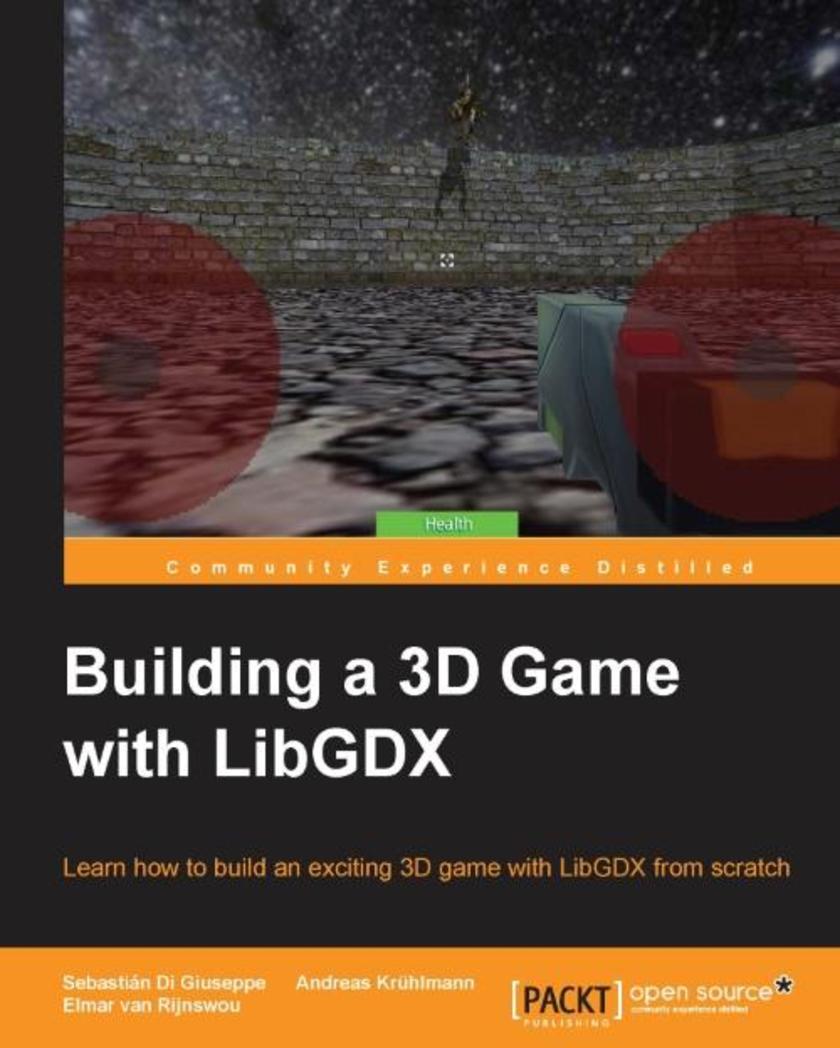
Building a 3D Game with LibGDX
¥54.49
Learn how to build an exciting 3D game with LibGDX from scratch About This Book Implement an exhaustive list of features that LibGDX unleashes to build your 3D game. Write, test, and debug your application on your desktop and deploy them on multiple platforms. Gain a clear understanding of the physics behind LibGDX and libraries like OpenGL and WebGL that make up LibGDX. Who This Book Is For If you are a game developer or enthusiasts who want to build 3D games with LibGDX, then this book is for you. A basic knowledge of LibGDX and Java programming is appreciated. What You Will Learn Learn the potential of LibGDX in game development Understand the LibGDX architecture and explore platform limitation and variations Explore the various approaches for game development using LibGDX Learn about the common mistakes and possible solutions of development Discover the 3D workflow with Blender and how it works with LibGDX Implement 3D models along with textures and animations into your games Familiarize yourself with Scene2D and its potential to boost your game’s design In Detail LibGDX is a hugely popular open source, cross-platform, Java-based game development framework built for the demands of cross-platform game development. This book will teach readers how the LibGDX framework uses its 3D rendering API with the OpenGL wrapper, in combination with Bullet Physics, 3D Particles, and Shaders to develop and deploy a game application to different platforms You will start off with the basic Intellij environment, workflow and set up a LibGDX project with necessary APIs for 3D development. You will then go through LibGDX’s 3D rendering API main features and talk about the camera used for 3D. Our next step is to put everything together to build a basic 3D game with Shapes, including basic gameplay mechanics and basic UI. Next you will go through modeling, rigging, and animation in Blender. We will then talk about refining mechanics, new input implementations, implementing enemy 3D models, mechanics, and gameplay balancing. The later part of this title will help you to manage secondary resources like audio, music and add 3D particles in the game to make the game more realistic. You will finally test and deploy the app on a multitude of different platforms, ready to start developing your own titles how you want! Style and approach A step by step guide on building a 3D game with LibGDX and implementing an exhaustive list of features that you would wish to incorporate into your 3D game


