


 购物车
购物车 个人中心
个人中心
Joseph Andrews
¥8.09
Joseph Andrews

Assassin's Creed: Reneszánsz
¥71.69
The story starts in London on Tuesday, October 1, 1872. Fogg is a rich English gentleman and bachelor living in solitude at Number 7 Savile Row, Burlington Gardens. Despite his wealth, which is ?40,000 (roughly ?3,020,000 today), Fogg, whose countenance is described as "repose in action", lives a modest life with habits carried out with mathematical precision. Very little can be said about his social life other than that he is a member of the Reform Club. Having dismissed his former valet, James Foster, for bringing him shaving water at 84 °F (29 °C) instead of 86 °F (30 °C), Fogg hires a Frenchman by the name of Jean Passepartout, who is about 30 years old, as a replacement. Later on that day, in the Reform Club, Fogg gets involved in an argument over an article in The Daily Telegraph, stating that with the opening of a new railway section in India, it is now possible to travel around the world in 80 days. He accepts a wager for ?20,000 (roughly ?1,510,000 today) from his fellow club members, which he will receive if he makes it around the world in 80 days. Accompanied by Passepartout, he leaves London by train at 8:45 P.M. on Wednesday, October 2, 1872, and thus is due back at the Reform Club at the same time 80 days later, Saturday, December 21, 1872. Mr. Phileas Fogg lived, in 1872, at No. 7, Saville Row, Burlington Gardens, the house in which Sheridan died in 1814. He was one of the most noticeable members of the Reform Club, though he seemed always to avoid attracting attention; an enigmatical personage, about whom little was known, except that he was a polished man of the world. People said that he resembled Byron—at least that his head was Byronic; but he was a bearded, tranquil Byron, who might live on a thousand years without growing old. Certainly an Englishman, it was more doubtful whether Phileas Fogg was a Londoner. He was never seen on 'Change, nor at the Bank, nor in the counting-rooms of the "City"; no ships ever came into London docks of which he was the owner; he had no public employment; he had never been entered at any of the Inns of Court, either at the Temple, or Lincoln's Inn, or Gray's Inn; nor had his voice ever resounded in the Court of Chancery, or in the Exchequer, or the Queen's Bench, or the Ecclesiastical Courts. He certainly was not a manufacturer; nor was he a merchant or a gentleman farmer. His name was strange to the scientific and learned societies, and he never was known to take part in the sage deliberations of the Royal Institution or the London Institution, the Artisan's Association, or the Institution of Arts and Sciences. He belonged, in fact, to none of the numerous societies which swarm in the English capital, from the Harmonic to that of the Entomologists, founded mainly for the purpose of abolishing pernicious insects. Phileas Fogg was a member of the Reform, and that was all. The way in which he got admission to this exclusive club was simple enough. He was recommended by the Barings, with whom he had an open credit. His cheques were regularly paid at sight from his account current, which was always flush. Was Phileas Fogg rich? Undoubtedly. But those who knew him best could not imagine how he had made his fortune, and Mr. Fogg was the last person to whom to apply for the information. He was not lavish, nor, on the contrary, avaricious; for, whenever he knew that money was needed for a noble, useful, or benevolent purpose, he supplied it quietly and sometimes anonymously. He was, in short, the least communicative of men. He talked very little, and seemed all the more mysterious for his taciturn manner. His daily habits were quite open to observation; but whatever he did was so exactly the same thing that he had always done before, that the wits of the curious were fairly puzzled. ABOUT AUTHOR: Jules Gabriel Verne (1828 – 1905) was a French novelist, poet, and playwright best known for his adventure novels and his profound influence on the literary genre of science fiction. Born to bourgeois parents in the seaport of Nantes, Verne was trained to follow in his father's footsteps as a lawyer, but quit the profession early in life to write for magazines and the stage. His collaboration with the publisher Pierre-Jules Hetzel led to the creation of the Voyages Extraordinaires, a widely popular series of scrupulously researched adventure novels including Journey to the Center of the Earth, Twenty Thousand Leagues Under the Sea, and Around the World in Eighty Days.

Vészmadarak
¥57.47
"BLEAK HOUSE" is a novel by Charles Dickens, published in 20 monthly instalments between March 1852 and September 1853. It is held to be one of Dickens's finest novels, containing one of the most vast, complex and engaging arrays of minor characters and sub-plots in his entire canon. The story is told partly by the novel's heroine, Esther Summerson, and partly by a mostly omniscient narrator. Memorable characters include the menacing lawyer Tulkinghorn, the friendly but depressive John Jarndyce, and the childish and disingenuous Harold Skimpole, as well as the likeable but imprudent Richard Carstone. At the novel's core is long-running litigation in England's Court of Chancery, Jarndyce v Jarndyce, which has far-reaching consequences for all involved. This case revolves around a testator who apparently made several wills. The litigation, which already has taken many years and consumed between 60,000 and 70,000 in court costs, is emblematic of the failure of Chancery. Though Chancery lawyers and judges criticised Dickens's portrait of Chancery as exaggerated and unmerited, his novel helped to spur an ongoing movement that culminated in the enactment of legal reform in the 1870s. In fact, Dickens was writing just as Chancery was reforming itself, with the Six Clerks and Masters mentioned in Chapter One abolished in 1842 and 1852 respectively: the need for further reform was being widely debated. These facts raise an issue as to when Bleak House is actually set. Technically it must be before 1842, and at least some of his readers at the time would have been aware of this. However, there is some question as to whether this timeframe is consistent with the themes of the novel. The English legal historian Sir William Holdsworth set the action in 1827. Characters in Bleak House: As usual, Dickens drew upon many real people and places but imaginatively transformed them in his novel. Hortense is based on the Swiss maid and murderess Maria Manning. The "telescopic philanthropist" Mrs Jellyby, who pursues distant projects at the expense of her duty to her own family, is a criticism of women activists like Caroline Chisholm. The "childlike" but ultimately amoral character Harold Skimpole is commonly regarded as a portrait of Leigh Hunt. "Dickens wrote in a letter of 25 September 1853, 'I suppose he is the most exact portrait that was ever painted in words! ... It is an absolute reproduction of a real man'; and a contemporary critic commented, 'I recognized Skimpole instantaneously; ... and so did every person whom I talked with about it who had ever had Leigh Hunt's acquaintance.'"[2] G. K. Chesterton suggested that Dickens "may never once have had the unfriendly thought, 'Suppose Hunt behaved like a rascal!'; he may have only had the fanciful thought, 'Suppose a rascal behaved like Hunt!'". Mr Jarndyce's friend Mr Boythorn is based on the writer Walter Savage Landor. The novel also includes one of the first detectives in English fiction, Inspector Bucket. This character is probably based on Inspector Charles Frederick Field of the then recently formed Detective Department at Scotland Yard. Dickens wrote several journalistic pieces about the Inspector and the work of the detectives in Household Words, his weekly periodical in which he also published articles attacking the Chancery system. The Jarndyce and Jarndyce case itself has reminded many readers of the thirty-year Chancery case over Charlotte Smith's father-in-law's will. Major characters: Esther Summerson – the heroine of the story, and one of its two narrators (Dickens's only female narrator), raised as an orphan because the identity of her parents is unknown. At first, it seems probable that her guardian, John Jarndyce, is her father because he provides for her. This, however, he disavows shortly after she comes to live under his roof.
10 plus 10 prozatori exemplari nominaliza?i la Nobel
¥40.79
Candide is characterised by its sarcastic tone, as well as by its erratic, fantastical and fast-moving plot. A picaresque novel with a story similar to that of a more serious bildungsroman, it parodies many adventure and romance clichés, the struggles of which are caricatured in a tone that is mordantly matter-of-fact. Still, the events discussed are often based on historical happenings, such as the Seven Years' War and the 1755 Lisbon earthquake. As philosophers of Voltaire's day contended with the problem of evil, so too does Candide in this short novel, albeit more directly and humorously. Voltaire ridicules religion, theologians, governments, armies, philosophies, and philosophers through allegory; most conspicuously, he assaults Leibniz and his optimism. Voltaire's men and women point his case against optimism by starting high and falling low. A modern could not go about it after this fashion.?He would not plunge his people into an unfamiliar misery. He would just keep them in the misery they were born to. But such an account of Voltaire's procedure is as misleading as the plaster cast of a dance. Look at his procedure again. Mademoiselle Cunégonde, the illustrious Westphalian, sprung from a family that could prove seventy-one quarterings, descends and descends until we find her earning her keep by washing dishes in the Propontis. The aged faithful attendant, victim of a hundred acts of rape by negro pirates, remembers that she is the daughter of a pope, and that in honor of her approaching marriage with a Prince of Massa-Carrara all Italy wrote sonnets of which not one was passable. We do not need to know French literature before Voltaire in order to feel, although the lurking parody may escape us, that he is poking fun at us and at himself. His laughter at his own methods grows more unmistakable at the last, when he caricatures them by casually assembling six fallen monarchs in an inn at Venice. A modern assailant of optimism would arm himself with social pity. There is no social pity in "Candide." Voltaire, whose light touch on familiar institutions opens them and reveals their absurdity, likes to remind us that the slaughter and pillage and murder which Candide?witnessed among the Bulgarians was perfectly regular, having been conducted according to the laws and usages of war. Had Voltaire lived today he would have done to poverty what he did to war. Pitying the poor, he would have shown us poverty as a ridiculous anachronism, and both the ridicule and the pity would have expressed his indignation. About Author: VOLTAIREFran?ois-Marie Arouet (1694 – 1778), known by his nom de plume Voltaire, was a French Enlightenment writer, historian and philosopher famous for his wit, his attacks on the established Catholic Church, and his advocacy of freedom of religion, freedom of expression, and separation of church and state. Voltaire was a versatile writer, producing works in almost every literary form, including plays, poems, novels, essays, and historical and scientific works. He wrote more than 20,000 letters and more than 2,000 books and pamphlets. He was an outspoken advocate, despite the risk this placed him in under the strict censorship laws of the time. As a satirical polemicist, he frequently made use of his works to criticize intolerance, religious dogma, and the French institutions of his day.
Wuthering Heights
¥8.09
Kedves Feln?ttek! ?Ez a k?nyv Nektek készült! T?rténetünk a XXXIV. században játszódik. Egy királyi család nem épp szokványos életén keresztül betekintést nyerhetünk a j?v?be. ??j faj k?rvonalazódik, aminek fejl?dése megállíthatatlan. ?Unalmasnak t?n?, idillikus életüket felváltja a S?tétség er?ivel folytatott harc, aminek kimenetele végleg meghatározza a F?ld bolygó sorsát...
Annuska
¥8.67
The history of our English translations of "Don Quixote" is instructive. Shelton's, the first in any language, was made, apparently, about 1608, but not published till 1612. This of course was only the First Part. It has been asserted that the Second, published in 1620, is not the work of Shelton, but there is nothing to support the assertion save the fact that it has less spirit, less of what we generally understand by "go," about it than the first, which would be only natural if the first were the work of a young man writing currente calamo, and the second that of a middle-aged man writing for a bookseller. On the other hand, it is closer and more literal, the style is the same, the very same translations, or mistranslations, occur in it, and it is extremely unlikely that a new translator would, by suppressing his name, have allowed Shelton to carry off the credit. In 1687 John Phillips, Milton's nephew, produced a "Don Quixote" "made English," he says, "according to the humour of our modern language." His "Quixote" is not so much a translation as a travesty, and a travesty that for coarseness, vulgarity, and buffoonery is almost unexampled even in the literature of that day. But it is, after all, the humour of "Don Quixote" that distinguishes it from all other books of the romance kind. It is this that makes it, as one of the most judicial-minded of modern critics calls it, "the best novel in the world beyond all comparison." It is its varied humour, ranging from broad farce to comedy as subtle as Shakespeare's or Moliere's that has naturalised it in every country where there are readers, and made it a classic in every language that has a literature.
Ce sunt Marile Piramide?
¥32.62
The saber was the weapon of the soldiers and dueling heroes here in the Carpathian Basin for more than a thousand years. During this time it became more than a simple tool of fighting. It became a loyal companion and a symbol of valor of the wielder. This weapon and the valiant spirit of its wielders became known in Western Europe and North American via Hungarians. At the time of our settlement Western Europe feared the sight of the saber, it became a worthy opponent of the Turkish and later, after the civil war of Rákóczi it brought us honor in the wars fought at the side of foreign countries. Maybe there is no other sword type like this which reserved its significance for so long time. ?The saber is not only an antique weapon of a past era, but much like a sports tool as a foil which is used at the Olympic Games. ?This book contains an elaborated practical curriculum. With the help of it, the saber fencing can be learned from the basics to master level. The book guides the reader through hundreds of exercises with the help of more than a hundred photographic illustrations. These can help anyone to learn the basic moves, the more complex exercises and even the trick-cuts or disarmament. ?We prove with this book that the saber fencing is a living sport and martial art.

Azi cant jazz
¥24.44
sszefoglaló knyvem olyan témát mutat be, amivel már tbb ismeretterjeszt írásban találkozhatott az olvasó, ám ezúttal olyan részletekkel és érdekességekkel találkozunk, amit eme knyvek alig, vagy egyáltalán nem taglalnak. E szerzeményben végigkvetjük a Fld mélyérl induló izzó anyagot, a kérgen át a felszínig, ahol tüzet és pusztítást zúdít mindenre és mindenkire a kzelben. Bemutatom, hogy mi lesz a kihlt lávából, és milyen formákat hoz létre. Ezen külnleges természeti képzdmények kialakulását és fejdését vesszük górcs alá. Megismerkedünk pár külnleges tzhányóval, amik pusztításuk révén rendkívüli hatással voltak nemcsak krnyezetükre, hanem az emberiségre is. Olyan ismereteket mutatunk be, amelyek meglepetést okozhatnak az olvasóknak.
Antigoné
¥8.67
FIRE MOUNTAIN IS "A THRILLING SEA STORY BY "NORMAN SPRINGER", AUTHOR OF "THE BLOOD SHIP" Years. Bright, aslant eyes, and a suave and ever-ready smile that broke immediately Martin met his gaze. "You will be so good as to inform the honorable that Dr. Ichi is here?" he asked in precise and stilted voice. Ever the same—the noiseless entry, the quietly spoken request for the lawyer. Martin repressed a flash of irritation; the little Japanese, with his uncanny soft-footedness and stereotyped address, got upon his nerves. However, his orders were explicit; Mr. Smatt would see Dr. Ichi without delay or preliminary, whenever Dr. Ichi favored the office with a visit. It was already the third visit that day, but orders were orders. So, Martin inclined his head toward the door of Smatt's private office. The Japanese crossed the room. He bowed to Martin, as stately a bow as if Martin were also an "honorable," instead of a poor devil of a law clerk; then, noiselessly as he had entered the outer office, Dr. Ichi disappeared within Smatt's sanctum. Martin turned to his window again. But his bright day dream was fled, and he could not conjure it back again. The view was without charm. His thoughts, despite himself, persisted in centering upon the dapper little figure now closeted with his employer. The dandified Jap aroused Martin's interest. What manner of client was this Dr. Ichi? Martin had not seen a single scrap of paper, nor had Smatt dropped a single hint, concerning the case. It was mysterious! Martin was not an overly curious chap, but he was human. It was another of Smatt's secret cases, thought Martin. Another token of those hidden activities of the old vulture, which he sensed, but did not know about. For, though Martin attended to the routine work, though his duties were responsible—Smatt specialized and was prominent in maritime law—still Martin knew he did not enjoy his employer's complete confidence. Much of Smatt's time was taken up with cases Martin knew nothing about, with clients who appeared to shun the daylight of the courts. The Nippon Trading Company, for instance! Martin knew Smatt was interested in a company of that name—a strange company, that apparently conducted business without using the mails. And there was business between Ichi and Smatt—money, or Smatt would have nothing to do with it. The mystery aroused Martin's dormant curiosity. But all his speculation was pointless. Martin bethought himself of the marine affidavit lying uncompleted upon his desk. He turned from the window with the intention of applying himself to that task—and he discovered the office to have a second visitor. Another unusual figure who possessed the penchant for surreptitious entry. He observed the fellow in the very act of closing the office door.

Szigorúan bizalmas
¥46.68
– Itt Zachary Horner beszél! Miben segíthetek? – Jó estét kívánunk Zachary James Horner! A Brit Szerencsejáték Sz?vetség ?r?mmel értesíti ?nt, hogy megnyerte a British Bonus f?nyereményét, azaz nyolcvan?tmillió fontot. – A rohadt élet! – d?bbent meg a fiatalember a hír hallatán, majd felülve az ágyán, nagy ?r?mmel folytatta – Ez most azt jelenti, hogy eltalálták mind a négy számot, amit megjátszottam? – Igen, tisztelt uram! Ez a legmagasabb ?sszeg, amit ember eddig valaha nyert. Nyereményét bármikor átveheti a londoni k?zpontunkban is személyesen, de akár bankszámlára is elutalhatjuk ?nnek.

Omegától alfáig
¥52.48
Fegyverek lehetnek-e pusztítóbb, gyilkos fegyverek, Mint a ragyogó n?i szemek? Lágy természet sátrába bekuporodva, A nap csak mécsesként pislákolva, ?rzi szerelmedet. Hallottál még annyi árulásról, Mit egy szép h?lgy magába tárol? ?szi es?ként patakba folyt a k?nny, F?ld anyánk méhében új gy?trelem k?sz?n. Burkában fogva vagy. Menekültél már asszonyi kacagás el?l, Mi kíméletlenül, hátadba t?rként kerül? Ha igen, keress meg engem kedvesem, ?n már régen letettem fegyverem. Szeg?dj társamul. Ajánlások... ?Els?re nagyon szép! Azok a k?lt?i képek, hasonlatok. Tudom, nem lehet egy m?b?l kiragadni részeket /nem is illik/, de mégis... ?Ha igen, keress meg engem kedvesem, ?n már régen letettem fegyverem.” Nem gy?ny?r?? A hangulata is tetszik.” - Szabó Mihály ?Fantasztikusan szép vers!” - Lehoczky Judit ?nekesn? ?Mária versei a mindennapi emberhez szólnak. Helyettünk fogalmazza meg az ?r?m?t, bánatot, érzéseket, melyek olyan ismer?sek számunkra. Hiszen mindenki volt szerelmes, a szerencséseknek még van szeretett ?desanyja, és mindenki találkozik élete során azzal a kérdéssel, mi végre is született erre a világra. Ezért olyan k?zeliek számunkra Mária sorai, hiszen az életünk legfontosabb gondolatait formálja meg k?lteményeiben.” - Geberle Zsóka
A Journal of the Plague Year: "Illustrated"
¥8.09
A háború el?szele már mindenütt érezhet?: az utakat másfajúak renegát csapatai tartják rettegésben, a városok utcáin rejtélyes halálesetek t?rténnek. A királyok nem bíznak t?bbé a varázslókban, akik azt képzelik, varázshatalmuk feljogosítja ?ket, hogy beleártsák magukat a politikába. Némelyikük a szabad országok javáért cselekszik, mások ?n?s érdekb?l, de a varázslók álságos mosolya és felszínes csevegése m?g?tt sorsd?nt? játszmák zajlanak. Ríviai Geralt mindig is büszke volt semlegességére. A vaják korábban úgy gondolta, elegend?, hogy a saját sorsáról d?nts?n… csakhogy akkor még nem kellett mások miatt aggódnia. Egyedül k?nny? semlegesnek maradni, de ha egy kislány élete a tét, már nem annyira. Geralt igyekszik mindent megtenni Ciri védelmében.

Egy ?rállomás-takarító naplója
¥16.27
Az Uralom Koronája egy ?si, egyedülálló varázser?vel rendelkez? elveszett ereklye. A civilizációtól távol, az elhagyatott Felejtés-sivataggal k?rülvett, misztikus Piramisf?ld?n nyugszik titkos rejtekhelyén. A legendák szerint megszerz?je Erabon világának urává válhat. A tolvajfiú Antor, tanítványa Morghan, a varázslón? Kyranda, a szerencsevadász Monteris és az íjászn? Elvana kapják azt az életveszélyes kényszerfeladatot, hogy megszerezzék ezt a fenséges varázstárgyat a rettegett Birodalom császárának. A k?z?s cél a viszontagságokkal teli utazás során elszánt és lelkes csapattá kovácsolja ?ket ?ssze. Egy ármányos és velejéig romlott rosszakaró, valamint a fondorlatos alvilág jelenléte miatt azonban a folytonos kihívások mellett ellenségekb?l sincs hiány. A konfliktusok során szerepet kap a hagyományos küzdelem, a kül?nféle harcm?vészetek, a mágia szinte minden iskolája és formája, továbbá a pusztán beavatottak által használt titokzatos kozmikus er?. A megpróbáltatások folyamán el?térbe kerülnek birodalmak, népek, kultúrák, vallások, világi és titkos rendek, szokások és kivételes világcsodák; mindek?zben változatos helyszíneken igaz barátságok és szenvedélyes szerelmek születnek. Az igazi meglepetéseket mégis az ismert világ peremvidékén túli, lakatlannak vélt vidék tartogatja. Vajon képes lesz-e a csapat megküzdeni minden nehézséggel? A k?nyvben ?tv?z?dik a páratlan részletességgel kidolgozott háttérvilág a rendkívül precíz ?sszefonódású, egymásra utaló eseményekkel, és mindezt életh?en színes leírások, filmszer? jelenetek, valamint hangulatos párbeszédek tarkítják. Nem mindennapi terjedelmét, színvonalas tartalmát és kimagasló mélységét tekintve e m? egyike a valaha megírt legnagyobb eredeti alkotásoknak. www.aholdsarlofenye.hu
A Tale of Two Cities: Illustrated
¥24.44
Cirilla, a cintrai trón?r?k?s a Fecske-toronyban elt?nik saját világáról, és olyan útra indul, ahová sem védelmez?je, a fehér hajú vaják, sem mentora, a fekete hajú varázslón? nem k?vetheti. Olyan útra, amelynek a végén a végzet várja – az a végzet, amelyr?l már oly sok látomás kísértette. Minden a helyére kerül, a kígyó a saját farkába harap, valami véget ér, és valami elkezd?dik… A Vaják-saga befejez? k?tetében Sapkowski még magához képest is elképeszt? bravúrral ábrázol nagyszabású háborút és ugyanakkor az egyes ember drámai sorsát. Képzeletének és érzékletes leírásainak hatására megelevenednek el?ttünk az országok, városok és falvak, a t?le megszokott néz?pontváltások pedig gondoskodnak róla, hogy a sorssz?tte t?rténet végét a lehet? legalaposabb, legmélyebb módon kapjuk meg. A sagát átsz?v? fekete humor pedig tükr?t tart nemcsak a társadalom, de az egyes ember kicsinyessége és nagysága elé. ??

Adventures of Sherlock Holmes: (Illustrated)
¥24.44
". . . aphorism are seldom couched in such terms, that they should be taken as they sound precisely, or according to the widest extent of signification; but do commonly need exposition, and admit exception: otherwise frequently they would not only clash with reason and experience, but interfere, thwart, and supplant one another." ? ? ? ? Issac Barrow "The very essence of an aphorism is that slight exaggeration which makes it more biting whilst less rigidly accurate." ? ? ? ?—Leslie Stephen There are of course, girls and girls; yet at heart they are pretty much alike. In age, naturally, they differ wildly. But this is a thorny subject. Suffice it to say that all men love all girls-the maid of sweet sixteen equally with the maid of untold age. There is something exasperatingly something-or-otherish about girls. And they know it—which makes them more something-or-otherish still:—there is no other word for it. A girl is a complicated thing. It is made up of clothes, smiles, a pompadour, things of which space and prudence forbid the enumeration here. These things by themselves do not constitute a girl which is obvious; nor is any one girl without these things which is not too obvious. Where the things end and the girl begins many men have tried to find out. Many girls would like to be men—except on occasions. At least so they say, but perhaps this is just a part of their something-or-otherishness. Why they should want to be men, men cannot conceive. Men pale before them, grow hot and cold before them, run before them (and after them), swear by them (and at them), and a bit of a chit of a thing in short skirts and lisle-thread stockings will twist able-bodied males round her little finger.It is an open secret that girls are fonder of men than they are of one another—which is very lucky for the men. Girls differ; and the same girl is different at different times. When she is by herself, she is one thing. When she is with other girls she is another thing. When she is with a lot of men, she is a third sort of thing. When she is with a man. . . But this baffled even Agur the son of Jakeh.As a rule, a man prefers a girl by herself. This is natural. And yet is said that you cannot have too much of a good thing. If this were true, a bevy of girls would be the height of happiness. Yet some men would sooner face the bulls of Bashan.Some foolish men—probably poets—have sought for and asserted the existence of the ideal girl. This is sheer nonsense: there is no such thing. And if there were, she could not compare with the real girl, the girl of flesh and blood—which (as some one ought to have said) are excellent things in woman. Other men, equally foolish, have regarded girls as playthings. I wish these men had tried to play with them. They would have found that they were playing with fire and brimstone. Yet the veriest spit-fire can be wondrous sweet.Sweet? Yes. On the whole a girl is the sweetest thing known or knowable. On the 6 whole of this terrestrial sphere Nature has produced nothing more adorable than the high-spirited high-bred girl.—Of this she is quite aware—to our cost (I speak as a man). The consequence is, her price has gone up, and man has to pay high and pay all sorts of things—ices, sweets, champagne, drives, church-goings, and sometimes spot-cash.
![Arizona's Yesterday: [Illustrated]](https://platform-permanent.ddimg.cn/pt-media-info-soa-resource/digital/product/73/24/1901167324_ii_cover.jpg?version=c64b4722-1085-4db6-b41f-ac670a5886a7)
Arizona's Yesterday: [Illustrated]
¥8.09
This story belongs to the year 1837, and was regarded by the generations of that and a succeeding time as the most miraculous of all the recorded deliverances from death at sea. It may be told thus: Mr. Montagu Vanderholt sat at breakfast with his daughter Violet one morning in September. Vanderholt's house was one of a fine terrace close to Hyde Park. He was a rich man, a retired Cape merchant, and his life had been as chequered as Trelawney's, with nothing of romance and nothing of imagination in it. He was the son of honest parents, of Dutch extraction, and had run away to sea when about twelve years old. Nothing under the serious heavens was harsher, more charged with misery, suffering, dirt, and wretchedness, than seafaring in the days when young Vanderholt, with an idiot's cunning, fled to it from his father's comfortable little home. He got a ship, was three years absent, and on his return found both his father and mother dead. He went again to sea, and, fortunately for him, was shipwrecked in the neighbourhood of Simon's Bay. The survivors made their way to Cape Town, and presently young Vanderholt got a job, and afterwards a position. He then became a master, until, after some eight or ten years of heroic perseverance, attended by much good luck, behold Mr. Vanderholt full-blown into a colonial merchant prince. How much he was worth when he made up his mind to settle in England, after the death of his wife, and when he had disposed of his affairs so as to leave himself as free a man as ever he had been when he was a common Jack Swab, really signifies nothing. It is certain he had plenty, and plenty is enough, even for a merchant prince of Dutch extraction. Besides Violet, he had two sons, who will not make an appearance on this little brief stage. They are dismissed, therefore, with this brief reference—that both were in the army, and both, at the time of this tale, in India. Violet was Vanderholt's only daughter, and he loved her exceedingly. She was not beautiful, but she was fair to see, with a pretty figure, and an arch, gay smile. You saw the Dutch blood in her eyes, as you saw it in her father's, whose orbs of vision, indeed, were ridiculously small—scarcely visible in their bed of socket and lash. An English mother had come to Violet's help in this matter. Taking her from top to toe, with her surprising quantity of brown hair, soft complexion, good mouth, teeth, and figure, Violet Vanderholt was undoubtedly a fine girl. THE LAST ENTRY "OPINIONS OF THE PRESS ON THE LAST ENTRY": '"The Last Entry" is a rattling good salt-water yarn, told in the author's usual breezy, exhilarating style.'-”Daily Mail. 'In this new novel Mr. Russell has cleverly thrown its events into the year 1837, and there are one or two ingenious passages which add to the Diamond Jubilee interest which that date suggests.... "The Last Entry" is as certain of general popularity as any of Mr. Russell's former tales of the marvels of the sea.'-”Glasgow Herald. 'We do not think it possible for anyone to dip into this novel without desiring to finish it, and it adds another to the long list of successes of our best sea author.'-”Librarian. 'In addition to mutiny and murder, "The Last Entry" contains many of those good things which have made Mr. Russell's pages a joy to so many lovers of the sea during the last twenty years.... "The Last Entry" is a welcome addition to Mr. Clark Russell's library.'-”Speaker. 'The writer is as realistic and picturesque as usual in his vivid descriptions of the stagnant life on board the homeward-bound Indiaman.'-”Times. 'It is full of pleasant vigour.... As is always the case in Mr. Clark Russell's books, the elements are treated with the pen of an artist.'-”Standard. 'We expected plenty of go, of fresh and vigorous description of sea-faring life, coupled with a story which would not be wanting in interest. All this we have here.'”-Tablet.

Democracy in America: Book One
¥28.04
A young girl named Fanny Price comes to live with her wealthy uncle and aunt, Sir Thomas and Lady Bertram. Fanny's family is quite poor; her mother, unlike her sister Lady Bertram, married beneath her, and Fanny's father, a sailor, is disabled and drinks heavily. Fanny is abused by her other aunt, Mrs. Norris, a busybody who runs things at Mansfield Park, the Bertrams' estate. The Bertram daughters, Maria and Julia, are shallow, rather cruel girls, intent on marrying well and being fashionable. The elder son, Tom, is a roustabout and a drunk. Fanny finds solace only in the friendship of the younger son, Edmund, who is planning to be a clergyman. Fanny grows up shy and deferential, caught as she typically is between members of the Bertram family. Sir Thomas leaves Mansfield Park for Antigua, where he owns plantations. In his absence, two new figures arrive at Mansfield: Henry and Mary Crawford, the brother and sister of the local minister's wife. Henry and Mary are attractive and cheerful, and they soon become indispensable members of the Mansfield circle. Henry flirts extensively with Maria, who is engaged to marry the boring but wealthy Rushworth. He also flirts with Julia when it suits his purposes. At first, Mary is interested in Tom, the older son and heir, but she soon realizes that he is boring and not really interested in her. She finds herself increasingly attracted to Edmund, although the prospect of marrying a clergyman does not appeal to her, and she is often cruel to him on this account. In the meantime, Fanny has innocently fallen in love with Edmund, although she does not even admit this to herself. Yates, a visiting friend of Tom's, proposes that the group should put on a play. His idea is eagerly received by all except for Edmund and Fanny, who are horrified at the idea of acting. The play goes on anyways, however; Maria and Henry, as well as Mary and Edmund (who has been prevailed upon to take a role to avoid bringing in an outsider to play it), get to play some rather racy scenes with one another. When one of the women cannot make a rehearsal, Fanny is pressured to take a role. She is almost forced to give in when Sir Thomas makes a sudden entrance, having arrived from Antigua. Sir Thomas is unhappy about the play and quickly puts a stop to the improprieties. Since Henry has not declared his love, Maria is married to Rushworth. She and Julia leave Mansfield Park for London. Relationships between the Crawfords and the Bertrams intensify. Edmund nearly proposes to Mary several times, but her condescension and amorality always stop him at the last minute. He confides his feelings to Fanny, who is secretly upset by them. In the meantime, on a lark, Henry has decided to woo Fanny. He is surprised to find himself sincerely in love with her. Fanny has become indispensable as a companion to her aunt and uncle, and on the occasion of her brother William's visit, they give a ball in her honor. Some time after the ball, Henry helps William get a promotion in the Navy. Using this as leverage, he proposes to Fanny, who is mortified and refuses. He continues to pursue her. Her uncle is disappointed that she has refused such a wealthy man, and, as an indirect result, she is sent to stay with her parents in their filthy house. Meanwhile, Edmund has been ordained and continues to debate over his relationship with Mary, to Fanny's dismay. Henry comes to see Fanny at her parents' and renews his suit. He then leaves to take care of business on his estate. Fanny continues to receive letters from Mary encouraging her to take Henry's proposal. A series of events then happen in rapid succession: Tom Bertram falls dangerously ill as a result of his partying and nearly dies; Henry, who has gone not to his estate but to see friends, has run off with the married Maria; Julia, upset over her sister's rash act, elopes with Yates, Tom's friend. Julia and Yates are reconciled to the family. Edmund finally comes and marries Fanny
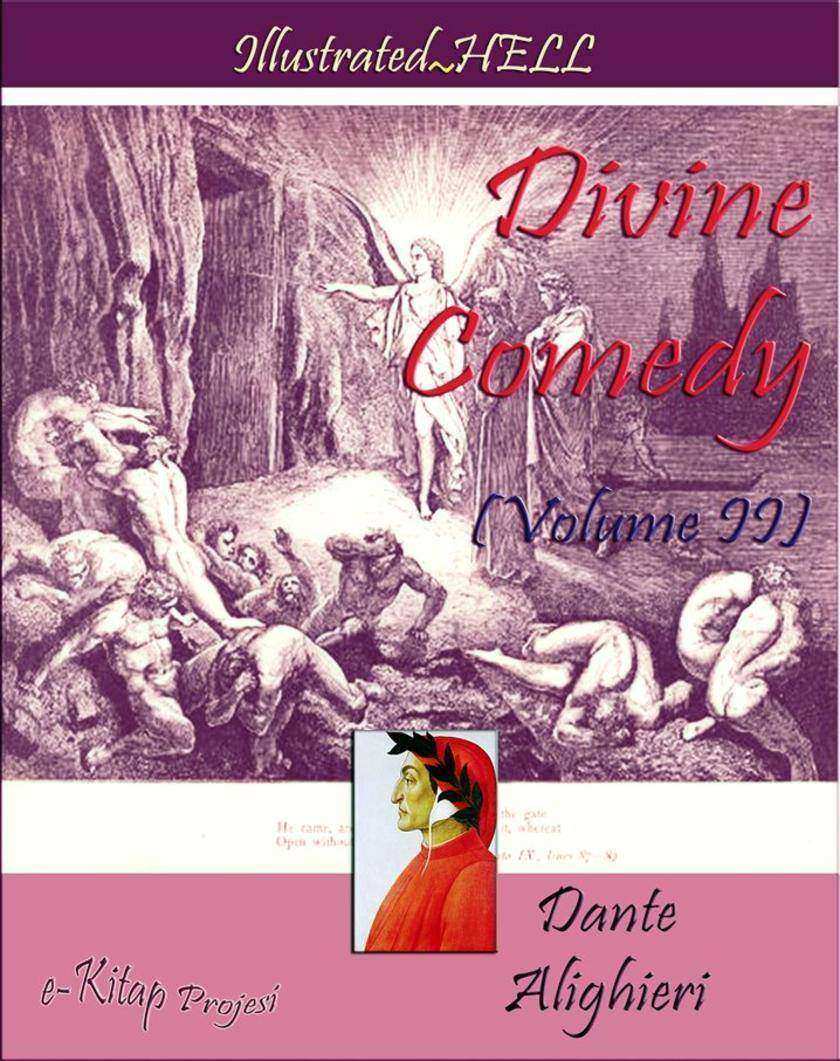
Divine Comedy (Volume II): Illustrated Hell
¥18.74
Micrographia is a historic book by Robert Hooke, detailing the then thirty-year-old Hooke's observations through various lenses. Published in September 1665, the first major publication of the Royal Society, it was the first scientific best-seller, inspiring a wide public interest in the new science of microscopy. It is also notable for coining the biological term cell. Observations: Hooke most famously describes a fly's eye and a plant cell (where he coined that term because plant cells, which are walled, reminded him of a monk's quarters). Known for its spectacular copperplate engravings of the miniature world, particularly its fold-out plates of insects, the text itself reinforces the tremendous power of the new microscope. The plates of insects fold out to be larger than the large folio itself, the engraving of the louse in particular folding out to four times the size of the book. Although the book is best known for demonstrating the power of the microscope, Micrographia also describes distant planetary bodies, the wave theory of light, the organic origin of fossils, and various other philosophical and scientific interests of its author. Publication: Published under the aegis of The Royal Society, the popularity of the book helped further the society's image and mission of being "the" scientifically progressive organization of London. Micrographia also focused attention on the miniature world, capturing the public's imagination in a radically new way. This impact is illustrated by Samuel Pepys' reaction upon completing the tome: "the most ingenious book that I ever read in my life." Hooke also selected several objects of human origin; among these objects were the jagged edge of a honed razor and the point of a needle, seeming blunt under the microscope. His goal may well have been as a way to contrast the flawed products of mankind with the perfection of nature (and hence, in the spirit of the times, of biblical creation). About Author: Robert Hooke (1635 – 1703) was an English natural philosopher, architect and polymath.His adult life comprised three distinct periods: as a scientific inquirer lacking money; achieving great wealth and standing through his reputation for hard work and scrupulous honesty following the great fire of 1666, but eventually becoming ill and party to jealous intellectual disputes. These issues may have contributed to his relative historical obscurity. He was at one time simultaneously the curator of experiments of the Royal Society and a member of its council, Gresham Professor of Geometry and a Surveyor to the City of London after the Great Fire of London, in which capacity he appears to have performed more than half of all the surveys after the fire. He was also an important architect of his time – though few of his buildings now survive and some of those are generally misattributed – and was instrumental in devising a set of planning controls for London whose influence remains today. Allan Chapman has characterised him as "England's Leonardo".Robert Gunther's Early Science in Oxford, a history of science in Oxford during the Protectorate, Restoration and Age of Enlightenment, devotes five of its fourteen volumes to Hooke.Hooke studied at Wadham College during the Protectorate where he became one of a tightly knit group of ardent Royalists led by John Wilkins. Here he was employed as an assistant to Thomas Willis and to Robert Boyle, for whom he built the vacuum pumps used in Boyle's gas law experiments. He built some of the earliest Gregorian telescopes and observed the rotations of Mars and Jupiter. In 1665 he inspired the use of microscopes for scientific exploration with his book, Micrographia. Based on his microscopic observations of fossils, Hooke was an early proponent of biological evolution. He investigated the phenomenon of refraction, deducing the wave theory of light, and was the first to suggest that matter expands when heated and that air is made of small particles separated by relatively large distances. He performed pioneering work in the field of surveying and map-making and was involved in the work, though his plan for London on a grid system was rejected in favour of rebuilding along the existing routes. He also came near to an experimental proof that gravity follows an inverse square law, and hypothesised that such a relation governs the motions of the planets, an idea which was subsequently developed by Newton.
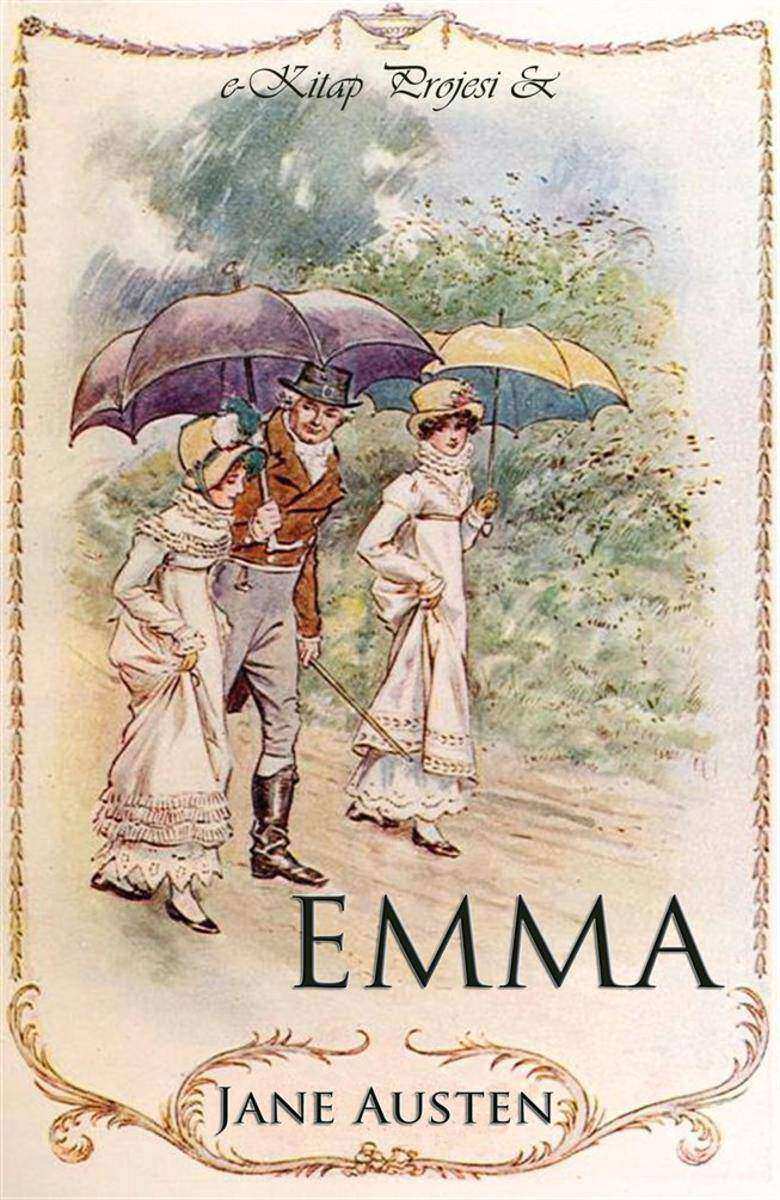
Emma
¥23.30
A few years ago, while visiting or, rather, rummaging about Notre-Dame, the author of this book found, in an obscure nook of one of the towers, the following word, engraved by hand upon the wall:— ? ? ? ? ? ? ? ANArKH. These Greek capitals, black with age, and quite deeply graven in the stone, with I know not what signs peculiar to Gothic caligraphy imprinted upon their forms and upon their attitudes, as though with the purpose of revealing that it had been a hand of the Middle Ages which had inscribed them there, and especially the fatal and melancholy meaning contained in them, struck the author deeply. He questioned himself; he sought to divine who could have been that soul in torment which had not been willing to quit this world without leaving this stigma of crime or unhappiness upon the brow of the ancient church. Afterwards, the wall was whitewashed or scraped down, I know not which, and the inscription disappeared. For it is thus that people have been in the habit of proceeding with the marvellous churches of the Middle Ages for the last two hundred years. Mutilations come to them from every quarter, from within as well as from without. The priest whitewashes them, the archdeacon scrapes them down; then the populace arrives and demolishes them. Thus, with the exception of the fragile memory which the author of this book here consecrates to it, there remains to-day nothing whatever of the mysterious word engraved within the gloomy tower of Notre-Dame,—nothing of the destiny which it so sadly summed up. The man who wrote that word upon the wall disappeared from the midst of the generations of man many centuries ago; the word, in its turn, has been effaced from the wall of the church; the church will, perhaps, itself soon disappear from the face of the earth. It is upon this word that this book is founded.
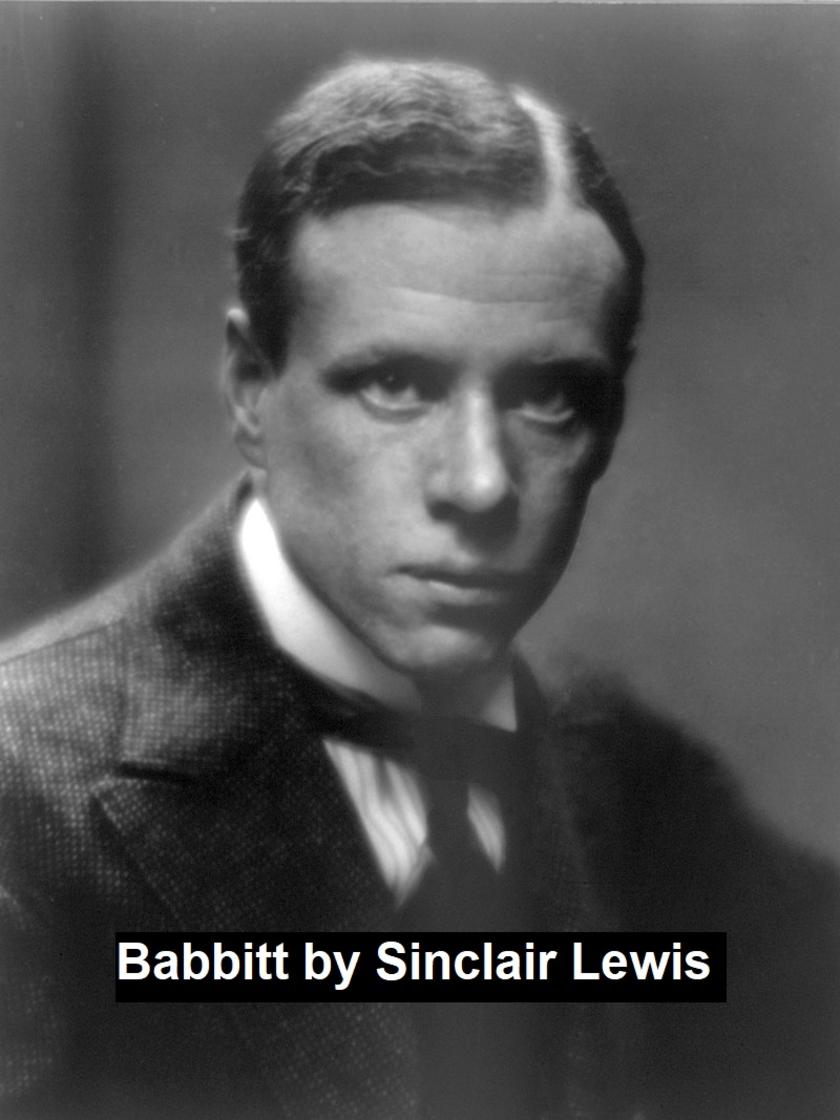
Babbitt
¥8.09
According to Wikipedia: "Sinclair Lewis (February 7 1885 – January 10 1951) was an American novelist, short-story writer, and playwright. In 1930, he became the first American to be awarded the Nobel Prize in Literature, "for his vigorous and graphic art of description and his ability to create, with wit and humor, new types of characters." His works are known for their insightful and critical views of American society and capitalist values, as well as their strong characterizations of modern working women."

The Dolorous Passion of Our Lord Jesus Christ
¥8.09
According to Wikipedia: "The Roman Catholic Church, officially known as the Catholic Church is the world's largest Christian church, representing over half of all Christians and one-sixth of the world's population. The Catholic Church is a communion of 23 sui juris particular churches. Among these are the Western Rite (Latin Rite) and Eastern Catholic Churches comprising 2,782 dioceses. The Church's highest earthly authority in matters of faith, morality and Church governance is the pope, currently Benedict XVI who holds supreme authority over the Church in concert with the College of Bishops, of which he is the head. The community is made up of an ordained ministry and the laity; members of either group may belong to organized religious communities."


