购物车
 个人中心


Szívhang kül?nszám 36. k?tet
¥43.16
Szívhang kül?nszám 36. k?tet

Júlia 515. (A sárkányszelídít?)
¥18.72
Júlia 515. (A sárkányszelídít?)

Szívhang 566–567. - Isten hozott a szigeten!
¥40.79
Szívhang 566–567. - Isten hozott a szigeten!

Bianca 259–260. (Mr. Darling, Kifogtam az aranyhalat)
¥48.97
Bianca 259–260. (Mr. Darling, Kifogtam az aranyhalat)

Arany Júlia 26. k?tet
¥48.97
Arany Júlia 26. k?tet

Júlia 513. (Szóljon a dzsessz!)
¥18.72
Júlia 513. (Szóljon a dzsessz!)

Romana 501. (A gyémántnél becsesebb)
¥18.72
Romana 501. (A gyémántnél becsesebb)

Nyer? ajánlat
¥20.52
Nyer? ajánlat

A tengerszem? lány
¥20.52
A tengerszem? lány

Szívhang 442. (Bet?k a homokban)
¥18.72
Szívhang 442. (Bet?k a homokban)

Rabszolgám leszel!
¥20.52
Rabszolgám leszel!

Mrs. Jeffries és a gyilkos bál
¥52.16
A mérf?ldk?nek számító Sons of Anarchy - Kemény motorosok cím? televíziós sorozat negyedik évadja után játszódó t?rténetét Kurt Sutter, a széria vezet? producere találta ki. A klubtagság fele éppenhogy csak kiszabadult a Stockton állami b?rt?nb?l, de a Galindo drogkartell máris a nyakukban liheg, így nem unatkoznak a motorosok. Jax Teller, a SAMCRO aleln?ke mégis kénytelen egy másik problémával foglalkozni, amikor megtudja, hogy ír féltestvére, Trinity már hónapok óta az Egyesült ?llamokban tartózkodik - és az orosz Bratva-gengszterekkel lóg. Most azonban elt?nt, és Jax biztos abban, hogy ehhez az életét fenyeget? maffiaháborúnak van k?ze. Jax, Chibs és Opie társaságában Nevadába utazik, hogy megkeresse, és hazavigye. Trinity ugyan félig ír, félig viszont Teller, és ahol a Tellerek megjelennek, ott k? k?v?n nem marad. ?A Maffiózók óta nem uralta így a tévéképerny?t egy csapat izzadt, er?szakos vadállat...” - Rolling Stone. ?Els? osztályú... A mai napig az egyik legjobb tévésorozat.” - Newsday. ?Az egyik legjobb dráma a tévében.” - Time. ??t csillagból négy... A Sons csúcsra járatja a drámát.” - New York Daily News.?

Három lány
¥69.65
Follis ?t kontinensen átível?, a legádázabb drogbárókról és terrorista hálózatokról szóló visszaemlékezése olyan, mint egy krimi. Mégis, minden szava igaz, minden t?rténetét dokumentálták. A narkoterrorizmus és a terrorista szervezetek együttm?k?désér?l szóló, els? és egyetlen bennfentes elbeszélés, A drog árnyékában mérf?ldk?nek számít, ami oldalról oldalra le fogja ny?g?zni. Egy számos kitüntetést magáénak mondható DEA-ügyn?k visszaemlékezése hihetetlen beépített ügyn?ki karrierjére, felfedve a kábítószer-csempészet és a terrorizmus ijeszt? ?sszefonódásait. Pontosan mi az a beépített munka? Rend?ri szemsz?gb?l a beépülés a terhel? vallomások kicsalásának s?tét m?vészete. Személyes és pszichológiai szempontból: elnyerni valaki bizalmát – azután manipulálni ezt a bizalmat. Egyszer?en fogalmazva: sakkjátszma a rosszal. Rávenni, hogy úgy lépjen, ahogy te szeretnéd – de anélkül, hogy ? tudna err?l.Edward Follis t?kélyre fejlesz-tette ezt a sakkjátszmát –? A drog árnyékában – a DEA k?telékében t?lt?tt huszonhét éve alatt. Kokaint vásárolt egy piros Corvette-et hajtva, t?bb millió dolláros üzletekr?l tárgyalt sugárhajtású magángépek fedélzetén, és színlelt kapcsolatokat alakított ki olyan emberekkel, akik nemcsak nemzetk?zi drogkeresked?k, de bizonyos esetekben az al-Kaida, a Hezbollah, a Ha-mász, a Shan United Army vagy a mexikói kartellsz?vetség magas rangú tagjai voltak.
A makkabeusok els? k?nyve
¥25.91
The Discovery of the Future is a philosophical lecture by H. G. Wells that argues for the knowability of the future. It was originally delivered to the Royal Institution on January 24, 1902. Before appearing in book form. Wells begins by distinguishing between “two divergent types of mind,” one that judges and attaches importance principally to what has happened in the past and one that judges and attaches importance principally to what will happen in the future. To the former he attributes the adjectives “legal or submissive,” “passive,” and “oriental,” and to the latter the adjectives “legislative, creative, organizing, or masterful,” and “active,” calling it “a more modern and much less abundant type of mind.” ? ? ? ? ? ? ? ? ? ? ? ? ? ? ? ? ? ? ? ? ? ? ? ? ? ? ?*** It will lead into my subject most conveniently to contrast and separate two divergent types of mind, types which are to be distinguished chiefly by their attitude toward time, and more particularly by the relative importance they attach and the relative amount of thought they give to the future. The first of these two types of mind, and it is, I think, the predominant type, the type of the majority of living people, is that which seems scarcely to think of the future at all, which regards it as a sort of blank non-existence upon which the advancing present will presently write events. The second type, which is, I think, a more modern and much less abundant type of mind, thinks constantly and by preference of things to come, and of present things mainly in relation to the results that must arise from them. The former type of mind, when one gets it in its purity, is retrospective in habit, and it interprets the things of the present, and gives value to this and denies it to that, entirely with relation to the past. The latter type of mind is constructive in habit, it interprets the things of the present and gives value to this or that, entirely in relation to things designed or foreseen. While from that former point of view our life is simply to reap the consequences of the past, from this our life is to prepare the future. The former type one might speak of as the legal or submissive type of mind, because the business, the practice, and the training of a lawyer dispose him toward it; he of all men must constantly refer to the law made, the right established, the precedent set, and consistently ignore or condemn the thing that is only seeking to establish itself. The latter type of mind I might for contrast call the legislative, creative, organizing, or masterful type, because it is perpetually attacking and altering the established order of things, perpetually falling away from respect for what the past has given us. It sees the world as one great workshop, and the present is no more than material for the future, for the thing that is yet destined to be. It is in the active mood of thought, while the former is in the passive; it is the mind of youth, it is the mind more manifest among the western nations, while the former is the mind of age, the mind of the oriental. Things have been, says the legal mind, and so we are here. The creative mind says we are here because things have yet to be. Now I do not wish to suggest that the great mass of people belong to either of these two types. Indeed, I speak of them as two distinct and distinguishable types mainly for convenience and in order to accentuate their distinction. There are probably very few people who brood constantly upon the past without any thought of the future at all, and there are probably scarcely any who live and think consistently in relation to the future. The great mass of people occupy an intermediate position between these extremes, they pass daily and hourly from the passive mood to the active, they see this thing in relation to its associations and that thing in relation to its consequences, and they do not even suspect that they are using two distinct methods in their minds.

The Secret Garden
¥8.67
The Divine Comedy describes Dante's journey through Hell (Inferno), Purgatory (Purgatorio), and Paradise (Paradiso), guided first by the Roman poet Virgil and then by Beatrice, the subject of his love and of another of his works, La Vita Nuova. While the vision of Hell, the Inferno, is vivid for modern readers, the theological niceties presented in the other books require a certain amount of patience and knowledge to appreciate. Purgatorio, the most lyrical and human of the three, also has the most poets in it; Paradiso, the most heavily theological, has the most beautiful and ecstatic mystic passages in which Dante tries to describe what he confesses he is unable to convey (e.g., when Dante looks into the face of God: "all'alta fantasia qui mancò possa" — "at this high moment, ability failed my capacity to describe," Paradiso, XXXIII, 142). His glory, by whose might all things are mov'd,Pierces the universe, and in one partSheds more resplendence, elsewhere less. In heav'n,That largeliest of his light partakes, was I,Witness of things, which to relate againSurpasseth power of him who comes from thence;For that, so near approaching its desireOur intellect is to such depth absorb'd,That memory cannot follow. Nathless all,That in my thoughts I of that sacred realmCould store, shall now be matter of my song. Benign Apollo! this last labour aid,And make me such a vessel of thy worth,As thy own laurel claims of me belov'd.Thus far hath one of steep Parnassus' browsSuffic'd me; henceforth there is need of bothFor my remaining enterprise Do thouEnter into my bosom, and there breatheSo, as when Marsyas by thy hand was dragg'dForth from his limbs unsheath'd. O power divine!If thou to me of shine impart so much,That of that happy realm the shadow'd formTrac'd in my thoughts I may set forth to view,Thou shalt behold me of thy favour'd treeCome to the foot, and crown myself with leaves;For to that honour thou, and my high themeWill fit me. If but seldom, mighty Sire!To grace his triumph gathers thence a wreathCaesar or bard (more shame for human willsDeprav'd) joy to the Delphic god must springFrom the Pierian foliage, when one breastIs with such thirst inspir'd. From a small sparkGreat flame hath risen: after me perchanceOthers with better voice may pray, and gainFrom the Cirrhaean city answer kind. About Dante: Durante degli Alighieri, simply referred to as Dante (1265–1321), was a major Italian poet of the Middle Ages. His Divine Comedy, originally called La Comedia and later called Divina by Boccaccio, is widely considered the greatest literary work composed in the Italian language and a masterpiece of world literature. In Italy he is known as il Sommo Poeta ("the Supreme Poet") or just il Poeta. He, Petrarch and Boccaccio are also known as "the three fountains" or "the three crowns". Dante is also called the "Father of the Italian language".

Szobortánc
¥58.29
Soman Chainani els? regénye, a New York Times bestseller Jók és Rosszak Iskolája folytatásában Sophie és Agatha visszatér Gavaldonba, és boldogan élnek saját világukban, ám az élet nem olyan tündérmese, amilyennek képzelték… Agatha már úgy érzi, bárcsak más boldog befejezést kívánt volna a mesének, ám ekkor véletlenül megtalálja és kinyitja a Jók és Rosszak Iskolájának kapuját. A lányok azzal szembesülnek, hogy az a világ, amit az els? tanévben tapasztaltak, megváltozott. A boszorkányok és a hercegn?k a Lányok Iskolájában laknak. Elhatározták, hogy kirekesztik életükb?l a hercegeket. Tedros és a fiúk a Rossz Iskolája régi tornyainak lakói lettek. A két iskola k?z?tt háború van kit?r?ben. Vajon Agatha és Sophie helyre tudják állítani a békét? Vajon Sophie jó tud maradni úgy, hogy Tedros állandóan üld?zi? ?s kihez húz Agatha szíve? A barátn?jéhez vagy a hercegéhez? Soman Chainani kül?nleges világot teremtett. A Newbery-díj legutóbbi jutalmazottja, Ann M. Martin ?páratlan mesének” nevezi, amely ?csupa romantika, varázslat, humor és rejtvény. Legszívesebben egyhuzamban olvasnánk végig.”
Hallatlan kiváncsiság
¥8.67
In creating psychoanalysis, a clinical method for treating psychopathology through dialogue between a patient and a psychoanalyst, Freud developed therapeutic techniques such as the use of free association (in which patients report their thoughts without reservation and in whichever order they spontaneously occur) and discovered transference (the process in which patients displace on to their analysts feelings derived from their childhood attachments), establishing its central role in the analytic process. Freud’s redefinition of sexuality to include its infantile forms led him to formulate the Oedipus complex as the central tenet of psychoanalytical theory. His analysis of his own and his patients' dreams as wish-fulfillments provided him with models for the clinical analysis of symptom formation and the mechanisms of repression as well as for elaboration of his theory of the unconscious as an agency disruptive of conscious states of mind. Freud postulated the existence of libido, an energy with which mental processes and structures are invested and which generates erotic attachments, and a death drive, the source of repetition, hate, aggression and neurotic guilt. In his later work Freud drew on psychoanalytic theory to develop a wide-ranging interpretation and critique of religion and culture. Psychoanalysis remains influential within psychotherapy, within some areas of psychiatry, and across the humanities. As such it continues to generate extensive and highly contested debate with regard to its therapeutic efficacy, its scientific status and as to whether it advances or is detrimental to the feminist cause. Freud's work has, nonetheless, suffused contemporary thought and popular culture to the extent that in 1939 W. H. Auden wrote, in a poem dedicated to him: "to us he is no more a person / now but a whole climate of opinion / under whom we conduct our different lives". About Author: Sigmund Freud (Born Sigismund Schlomo Freud; 6 May 1856 – 23 September 1939) was an Austrian neurologist who became known as the founding father of psychoanalysis. Freud qualified as a doctor of medicine at the University of Vienna in 1881, and then carried out research into cerebral palsy, aphasia and microscopic neuroanatomy at the Vienna General Hospital. He was appointed a university lecturer in neuropathology in 1885 and became a professor in 1902.

Kis karácsony, nagy karácsony
¥29.02
Sosem értetted a szakk?nyveket az autizmusról? Itt az alkalom, hogy olvasmányos és humoros formában megismerd a legfontosabb tudnivalókat a gyanújelekt?l a diagnózison át, a terápiáig. K?zérthet?, szakkifejezés mentes k?nyv szül?knek, nagyszül?knek és laikusoknak. Mit nevezünk autizmusnak és mi okozza? Mi az a BNO szám? Milyen terápiák vannak és melyik jó a gyerekemnek? Kérdések a diagnózis után? Családom nem fogadja el az autista gyerekemet, mit tehetek? Milyen támogatásokat kérhetek, és hol intézzem? Mi lesz vele ha én már nem leszek? ?s még számtalan más kérdés...
Hosszúhajú veszedelem
¥8.67
The stories were written when Irish nationalism was at its peak, and a search for a national identity and purpose was raging; at a crossroads of history and culture, Ireland was jolted by various converging ideas and influences. They centre on Joyce's idea of an epiphany: a moment where a character experiences self-understanding or illumination. Many of the characters in Dubliners later appear in minor roles in Joyce's novel Ulysses. The initial stories in the collection are narrated by child protagonists, and as the stories continue, they deal with the lives and concerns of progressively older people. This is in line with Joyce's tripartite division of the collection into childhood, adolescence and maturity. THERE was no hope for him this time: it was the third stroke. Night after night I had passed the house (it was vacation time) and studied the lighted square of window: and night after night I had found it lighted in the same way, faintly and evenly. If he was dead, I thought, I would see the reflection of candles on the darkened blind for I knew that two candles must be set at the head of a corpse. He had often said to me: "I am not long for this world," and I had thought his words idle. Now I knew they were true. Every night as I gazed up at the window I said softly to myself the word paralysis. It had always sounded strangely in my ears, like the word gnomon in the Euclid and the word simony in the Catechism. But now it sounded to me like the name of some maleficent and sinful being. It filled me with fear, and yet I longed to be nearer to it and to look upon its deadly work.Old Cotter was sitting at the fire, smoking, when I came downstairs to supper. While my aunt was ladling out my stirabout he said, as if returning to some former remark of his: "No, I wouldn't say he was exactly... but there was something queer... there was something uncanny about him. I'll tell you my opinion...." He began to puff at his pipe, no doubt arranging his opinion in his mind. Tiresome old fool! When we knew him first he used to be rather interesting, talking of faints and worms; but I soon grew tired of him and his endless stories about the distillery. "I have my own theory about it," he said. "I think it was one of those... peculiar cases.... But it's hard to say...." He began to puff again at his pipe without giving us his theory. My uncle saw me staring and said to me:"Well, so your old friend is gone, you'll be sorry to hear." "Who?" said I."Father Flynn.""Is he dead?" ? ABOUT AUTHOR: ? James Augustine Aloysius Joyce (1882 – 1941) was an Irish novelist and poet, considered to be one of the most influential writers in the modernist avant-garde of the early 20th century. Joyce is best known for Ulysses (1922), a landmark work in which the episodes of Homer's Odyssey are paralleled in an array of contrasting literary styles, perhaps most prominent among these the stream of consciousness technique he perfected. Other major works are the short-story collection Dubliners (1914), and the novels A Portrait of the Artist as a Young Man (1916) and Finnegans Wake (1939). His complete oeuvre also includes three books of poetry, a play, occasional journalism, and his published letters.
Rajtad a szemem
¥65.15
"Imádsz írni? Szeretnéd, ha olvasnák is? Még jobb lenne, ha megvennék, amit írsz?Gondolj csak bele, rajtad kívül még milliónyian akarnak írók lenni, s még t?bben blogszerz?k, cikkírók. ?riási a kínálat, mennyi az esély, hogy téged észrevesznek? ?s ha észrevesznek, mennyien fognak olvasni? S, ha olvasnak elegen, hogyan éred el, hogy vegyenek is t?led? S, ha még ezt el is éred, tudod, honnan veszed mindehhez az id?t? Ha elgondolkodtál ezeken, akkor máris tudod, milyen értékes, ha valaki helyetted már elgondolkodott ezeken a kérdéseken, megkereste a megoldásokat, és számodra id?t, fáradtságot spórolva a ?kezedbe adja”." Van egy bizonyos pszichológiai folyamat, amin az olvasó átmegy,amikor megismeri az írásaidat. Ha ennek ismeretében és figyelembevételével építed fel a kommunikációdat, az nagyon jól fog m?k?dni. Biztosan azt szeretnéd, ha egyre t?bb olvasód és/vagy vev?d lenne. Ha alkalmazod a k?nyvben bemutatott lépéseket, az olvasókat k?nnyen eléred, majd lépésr?l-lépésre végigviszed azon a folyamaton, amely érdekl?d?b?l visszatér? olvasót és lelkes vásárlót alakít. Ez a világ egyik legcsodálatosabb folyamata: Te egyre lelkesebben írsz és az olvasók egyre jobban várják, az új munkáidat. Mindezt úgy, hogy nem nyomulsz, hanem ellenkez?leg, olyan szimpatikusan csinálod, hogy ?r?m?t okoz újra és újra visszatérni, olvasni és megvásárolni a m?veidet.
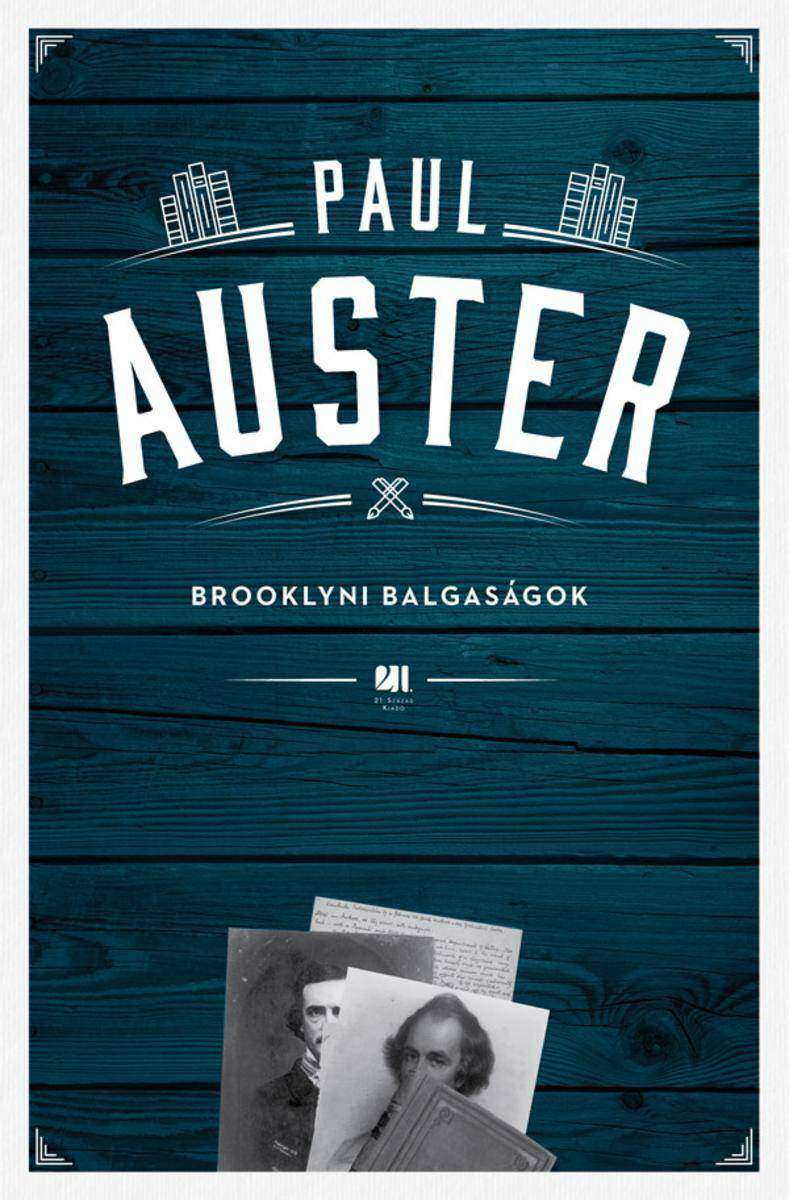
Brooklyni balgaságok
¥65.15
Ez volt ám az ember, ha kellett, a gáton, Nem terem ma párja hetedhét országon; Ha most feltámadna s elj?ne k?zétek, Minden dolgát szemfényvesztésnek hinnétek. Hárman sem birnátok súlyos buzogányát, Parittyak?veit, ?klel? kopjáját; Elhülnétek, látva rettenetes pajzsát, ‘?s, kit a csizmáján viselt, sarkantyúját.’ […] He was brave and fearless, always ready for fight, There’s nobody like him here and there and world-wide; If he would rise from dead and would come to your ranks, You’d believe all his things to be fancies and cranks. Neither three of yours could raise his ponderous mace And his sling-stones and pike and his iron sword-lace; You’d be well dumbfounded looking at his grand shield, ‘And at spurs he had on his boots in battle-field.’ ?