


 购物车
购物车 个人中心
个人中心
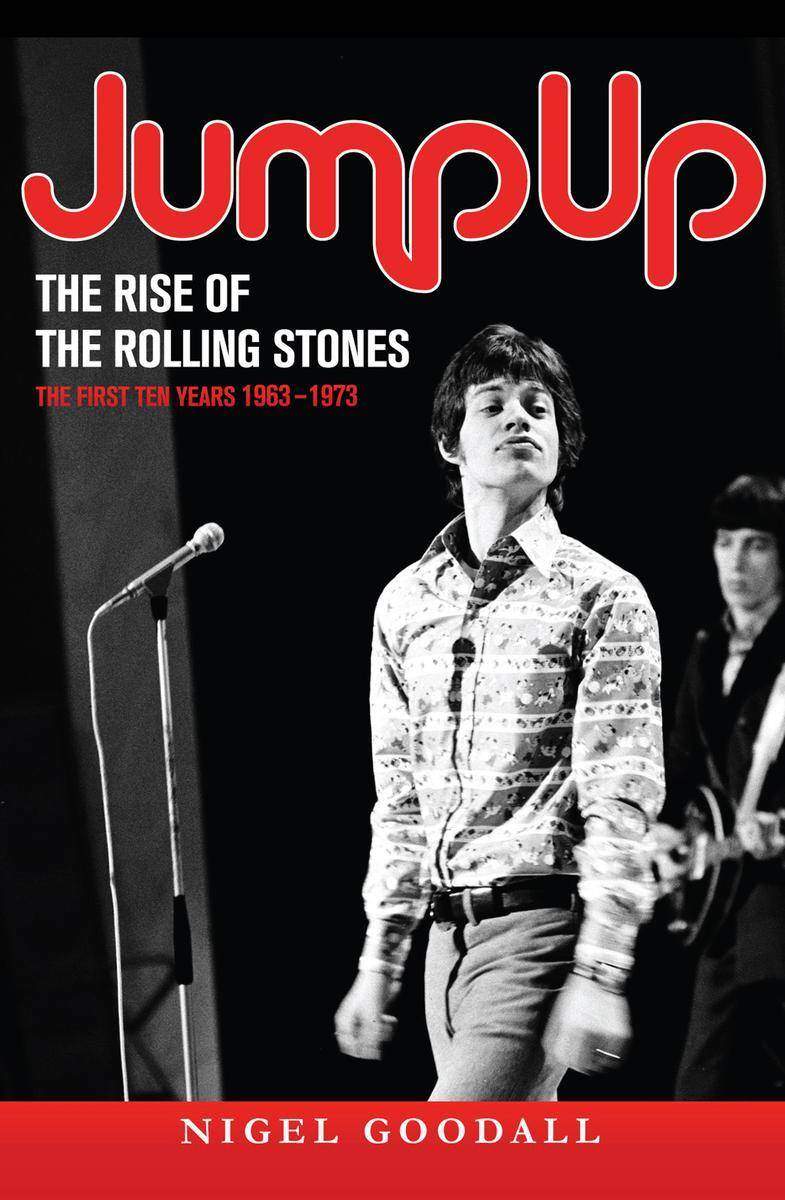
Jump Up - The Rise of the Rolling Stones
¥44.05
Jump Up - The Rise of the Rolling Stones was originally a coffee-table illustrated softback that traced the band's first ten years from 1963 onwards. Now available in digital format for the first time since it was published in 1995, the book, taken from author Nigel Goodall's original unedited manuscript, assembles an amazing picture of the first decade of the 'Greatest Rock 'n' Roll Band In the World' - and includes details of previously unheard interviews with the Stones and with all those that knew and worked with them during the period the book covers. Hailed as one of the first biographies to potray a vivid and dramatic telling of the early life and career of the band, the book covers everything from Jagger and Richards meeting on Dartford Railway Station to the early days of playing West London blues clubs, the package tours, the drug busts, the women, the death of Brian Jones, the beginning of the sticky 70s and the major stadium gigs.
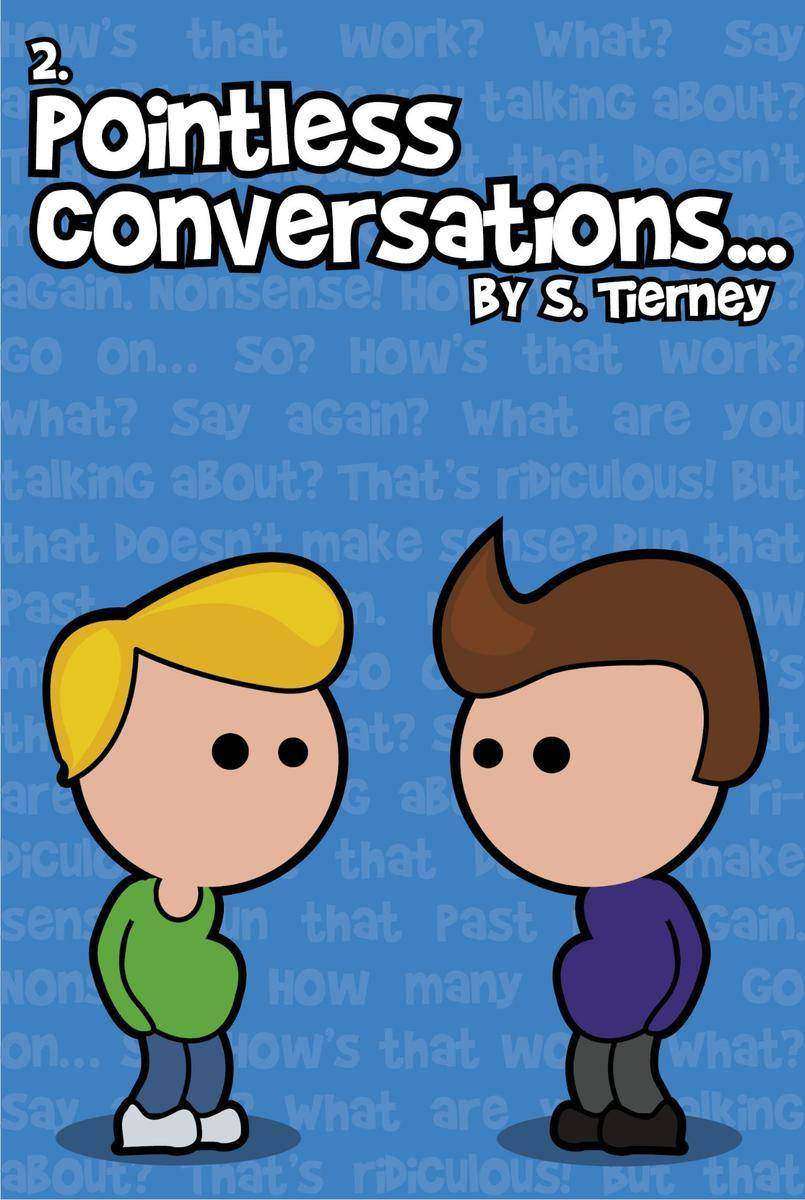
Pointless Conversations
¥19.52
Pointless conversations: a selection of daft, ridiculous and utterly pointless meanderings from the mind of Scott Tierney. If you've ever wanted to know the answers to why Superman is a coward; why Spiderman should technically be deformed; and if Superdog caused the death of Krypton, then these bite-sized comics will reveal all. The discussions may be insane, and most of what is said is rambling, but despite this, you may find yourself agreeing with most of what is said. It's a fair point: where does Spiderman store all that web?

Gettysburg: The Turning Point in the Struggle between North and South
¥65.32
In June 1863, General Robert E. Lee and the 75,000-strong Army of Northern Virginia launched a second invasion of the North, crossing into Maryland and Pennsylvania to try to win a decisive victory over Federal forces. On July 1, Lee’s army encountered Major General Meade’s 90,000 strong Army of the Potamac at the small town of Gettysburg. After some initial success in dispersing the Federal advance guard, Lee launched attack after attack against the main army, but everywhere the Union line held. On July 3, Lee ordered a final assault of 12,500 Confederates at the center of the Union line on Cemetery Ridge, known as Pickett’s Charge. The charge was repulsed with huge loss of life, bringing the battle to an end. Today, Gettysburg is recognized as the turning point in the Civil War and one of the iconic battles of the great struggle between North and South. Lee’s gamble didn’t pay off, leaving the Army of Northern Virginia fatally weakened and unable to continue its invasion of the North. Gettysburg is divided into five chapters, outlining the campaign, the fighting on July 1, July 2, and July 3, as well as a chapter dealing with the aftermath; an extended appendices provides biographical background of the main Federal and Confederate leaders who fought in the battle. Through letters, journal entries, and official reports, the book includes numerous first-hand accounts from those who survived. Color maps show the battle as it unfolded over three days of fighting in places that have a place in Civil War legend: Seminary Ridge, Little Round Top, Cemetery Hill, Devil’s Den, the Wheat Field, Culp’s Hill, the Peach Orchard. Including more than 200 archival photographs, illustrations, paintings, and maps, Gettysburg is a colorful, accessible guide to the great battle that marked the turning point in the Civil War.

POW Escape And Evasion: Essential Military Skills To Avoid Being Caught By the E
¥65.32
POW Escape and Evasion covers everything you need to know about making a successful return to friendly territory. Beginning from the point where a combatant finds himself or herself trapped in enemy territory, the book offers useful tips and solid advice on how to evade capture and, if that fails, how to escape. Key topics include the will to survive; handling stress in captivity; escape techniques; survival in a variety of environments, including urban, rural, jungle and desert; how to forage for food; tracking and how to cover your tracks; navigation, with or without a map; and seeking recovery by friendly forces. The book also includes a number of real life accounts of POW escape from World War II (including The Great Escape story and Colditz), the Vietnam War (Dieter Dengler, with others, escaping from Laos), the Balkans, Iraq (Thomas Hamill in 2004) and Afghanistan. With more than 120 black-&-white artworks and with easy-to-follow text, POW Escape and Evasion is for anyone who wants to know how to survive in the most stressful of circumstances and emerge a winner. Presented in a handy, pocket-size format, this is a book you could take with you into the field. And it could save your life.
Спогади
¥24.53
Dvadeset godina nakon epohalne promjene 1989., koja je na postjugoslavenski prostor djelovala na posve druk?iji na?in nego na druge prija?nje realsocijalisti?ke europske zemlje, ova studija predstavlja poku?aj analiti?kog osvrta na dva desetlje?a razvoja civilnog dru?tva na zapadnom Balkanu. Njen autor Sr?an Dvornik iz Hrvatske, u to je dobro upu?en. Nije slu?ajno ?to se kroz cijeli sadr?aj i u strukturi ove knjige ispreple?u teorija i praksa te odnosi unutar i izvan “civilnodru?tvenog” razvoja. (...) Ova je studija va?an doprinos, dosad nedostatnim, razmatranjima o mogu?nostima i ograni?enjima akter? civilnog dru?tva u (post)autoritarnim dru?tvima. Istovremeno ona donosi i pouku da instrumenti zapadne politike demokratizacije imaju pred sobom jo? dug put razvoja do to?ke na kojoj ?e posve iscrpsti svoje dosada?nje organizacijske i politi?ke potencijale, da bi potom na nove me?unarodne izazove, koje nam novi svjetski (ne)red postavlja posljednja dva desetlje?a, mogli primjerenije reagirati. dr. Azra D?aji?-Weber
Lumi paralele. O c?l?torie prin crea?ie, dimensiuni superioare ?i viitorul cosmo
¥90.84
Sir Peter Paul Rubens ( 28 June 1577 – 30 May 1640), was a Flemish Baroque painter, and a proponent of an extravagant Baroque style that emphasised movement, colour, and sensuality. He is well known for his Counter-Reformation altarpieces, portraits, landscapes, and history paintings of mythological and allegorical subjects.In addition to running a large studio in Antwerp that produced paintings popular with nobility and art collectors throughout Europe.. Early lifeRubens was born in the German city of Siegen, Westphalia to Jan Rubens and Maria Pypelincks. His father, a Calvinist, and mother fled Antwerp for Cologne in 1568, after increased religious turmoil and persecution of Protestants during the rule of the Spanish Netherlands by the Duke of Alba. Jan Rubens became the legal advisor (and lover) of Anna of Saxony, the second wife of William I of Orange, and settled at her court in Siegen in 1570; their daughter Christine was born in 1571. Following Jan Rubens's imprisonment for the affair, Peter Paul Rubens was born in 1577. The family returned to Cologne the next year. In 1589, two years after his father's death, Rubens moved with his mother Maria Pypelincks to Antwerp, where he was raised as a Catholic. Religion figured prominently in much of his work and Rubens later became one of the leading voices of the Catholic Counter-Reformation style of painting (he had said "My passion comes from the heavens, not from earthly musings").In Antwerp, Rubens received a humanist education, studying Latin and classical literature. By fourteen he began his artistic apprenticeship with Tobias Verhaeght. Subsequently, he studied under two of the city's leading painters of the time, the late Mannerist artists Adam van Noort and Otto van Veen. Much of his earliest training involved copying earlier artists' works, such as woodcuts by Hans Holbein the Younger and Marcantonio Raimondi's engravings after Raphael. Rubens completed his education in 1598, at which time he entered the Guild of St. Luke as an independent master. Italy (1600–1608)In 1600, Rubens travelled to Italy. He stopped first in Venice, where he saw paintings by Titian, Veronese, and Tintoretto, before settling in Mantua at the court of Duke Vincenzo I Gonzaga. The coloring and compositions of Veronese and Tintoretto had an immediate effect on Rubens's painting, and his later, mature style was profoundly influenced by Titian. With financial support from the Duke, Rubens travelled to Rome by way of Florence in 1601. Last decade (1630–1640)The Exchange of Princesses, from the Marie de' Medici Cycle. Louvre, ParisRubens's last decade was spent in and around Antwerp. Major works for foreign patrons still occupied him, such as the ceiling paintings for the Banqueting House at Inigo Jones's Palace of Whitehall, but he also explored more personal artistic directions.In 1630, four years after the death of his first wife, the 53-year-old painter married 16-year-old Hélène Fourment. Hélène inspired the voluptuous figures in many of his paintings from the 1630s, including The Feast of Venus (Kunsthistorisches Museum, Vienna), The Three Graces and The Judgment of Paris (both Prado, Madrid). In the latter painting, which was made for the Spanish court, the artist's young wife was recognized by viewers in the figure of Venus. In an intimate portrait of her, Hélène Fourment in a Fur Wrap, also known as Het Pelsken, Rubens's wife is even partially modelled after classical sculptures of the Venus Pudica, such as the Medici Venus. In 1635, Rubens bought an estate outside of Antwerp, the Steen, where he spent much of his time. Landscapes, such as his Ch?teau de Steen with Hunter (National Gallery, London) and Farmers Returning from the Fields (Pitti Gallery, Florence), reflect the more personal nature of many of his later works. He also drew upon the Netherlandish traditions of Pieter Bruegel the Elder for inspiration in later works like Flemish Kermis (c. 1630; Louvre, Paris).
Viharid?
¥63.85
1. The architect should be equipped with knowledge of many branches of study and varied kinds of learning, for it is by his judgement that all work done by the other arts is put to test. This knowledge is the child of practice and theory. Practice is the continuous and regular exercise of employment where manual work is done with any necessary material according to the design of a drawing. Theory, on the other hand, is the ability to demonstrate and explain the productions of dexterity on the principles of proportion. 2. It follows, therefore, that architects who have aimed at acquiring manual skill without scholarship have never been able to reach a position of authority to correspond to their pains, while those who relied only upon theories and scholarship were obviously hunting the shadow, not the substance. But those who have a thorough knowledge of both, like men armed at all points, have the sooner attained their object and carried authority with them. 3. In all matters, but particularly in architecture, there are these two points:—the thing signified, and that which gives it its significance. That which is signified is the subject of which we may be speaking; and that which gives significance is a demonstration on scientific principles. It appears, then, that one who professes himself an architect should be well versed in both directions. He ought, therefore, to be both naturally gifted and amenable to instruction. Neither natural ability without instruction nor instruction without natural ability can make the perfect artist. Let him be educated, skilful with the pencil, instructed in geometry, know much history, have followed the philosophers with attention, understand music, have some knowledge of medicine, know the opinions of the jurists, and be acquainted with astronomy and the theory of the heavens. 4. The reasons for all this are as follows. An architect ought to be an educated man so as to leave a more lasting remembrance in his treatises. Secondly, he must have a knowledge of drawing so that he can readily make sketches to show the appearance of the work which he proposes. Geometry, also, is of much assistance in architecture, and in particular it teaches us the use of the rule and compasses, by which especially we acquire readiness in making plans for buildings in their grounds, and rightly apply the square, the level, and the plummet. By means of optics, again, the light in buildings can be drawn from fixed quarters of the sky. It is true that it is by arithmetic that the total cost of buildings is calculated and measurements are computed, but difficult questions involving symmetry are solved by means of geometrical theories and methods. 5. A wide knowledge of history is requisite because, among the ornamental parts of an architect's design for a work, there are many the underlying idea of whose employment he should be able to explain toGree inquirers. For instance, suppose him to set up the marble statues of women in long robes, called Caryatides, to take the place of columns, with the mutules and coronas placed directly above their heads, he will give the following explanation to his questioners. Caryae, a state in Peloponnesus, sided with the Persian enemies against Greece; later the Greeks, having gloriously won their freedom by victory in the war, made common cause and declared war against the people of Caryae. They took the town, killed the men, abandoned the State to desolation, and carried off their wives into slavery, without permitting them, however, to lay aside the long robes and other marks of their rank as married women, so that they might be obliged not only to march in the triumph but to appear forever after as a type of slavery, burdened with the weight of their shame and so making atonement for their State. Hence, the architects of the time designed for public buildings statues of these women, placed so as to carry a load..
Myths & Dreams
¥18.74
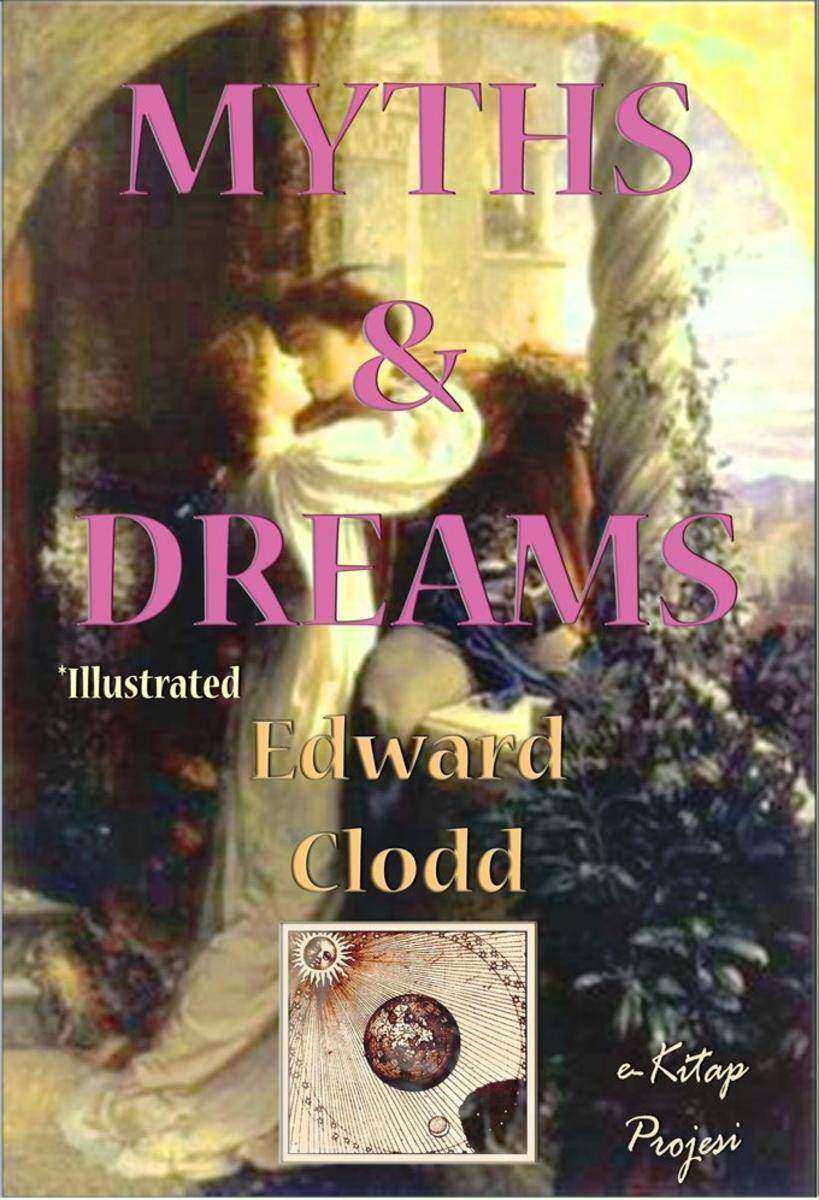
In writing upon any matter of experience, such as art, the possibilities of misunderstanding are enormous, and one shudders to think of the things that may be put down to one's credit, owing to such misunderstandings. It is like writing about the taste of sugar, you are only likely to be understood by those who have already experienced the flavour; by those who have not, the wildest interpretation will be put upon your words. The written word is necessarily confined to the things of the understanding because only the understanding has written language; whereas art deals with ideas of a different mental texture, which words can only vaguely suggest. However, there are a large number of people who, although they cannot viibe said to have experienced in a full sense any works of art, have undoubtedly the impelling desire which a little direction may lead on to a fuller appreciation. And it is to such that books on art are useful. So that although this book is primarily addressed to working students, it is hoped that it may be of interest to that increasing number of people who, tired with the rush and struggle of modern existence, seek refreshment in artistic things. To many such in this country modern art is still a closed book; its point of view is so different from that of the art they have been brought up with, that they refuse to have anything to do with it. Whereas, if they only took the trouble to find out something of the point of view of the modern artist, they would discover new beauties they little suspected. If anybody looks at a picture by Claude Monet from the point of view of a Raphael, he will see nothing but a meaningless jargon of wild paint-strokes. And if anybody looks at a Raphael from the point of view of a Claude Monet, he will, no doubt, only see hard, tinny figures in a setting devoid of any of the lovely atmosphere that always envelops form seen in nature. So wide apart are some of the points of view in painting. In the treatment of form these differences in point of view make for enormous variety in the work. Works showing much ingenuity and ability, but no artistic brains; pictures that are little more than school studies, exercises in the representation of carefully or carelessly arranged objects, but cold to any artistic intention. At this time particularly some principles, and a clear intellectual understanding of what it is you are trying to do, are needed. We have no set traditions to guide us. The times when the student accepted the style and traditions of his master and blindly followed them until he found himself, are gone. Such conditions belonged to an age when intercommunication was difficult, and when the artistic horizon was restricted to a single town or province. Science has altered all that, and we may regret the loss of local colour and singleness of aim this growth of art in separate compartments produced; but it is unlikely that such conditions will occur again. Quick means of transit and cheap methods of reproduction have brought the art of the whole world to our doors. Where formerly the artistic food at the disposal of the student was restricted to the few pictures in his vicinity and some prints of others, now there is scarcely a picture of note in the world that is not known to the average student, either from personal inspection at our museums and loan exhibitions, or from excellent photographic reproductions. Not only European art, but the art of the East, China and Japan, is part of the formative influence by which he is surrounded; not to mention the modern science of light and colour that has had such an influence on technique. It is no wonder that a period of artistic indigestion is upon us. Hence the student has need ixof sound principles and a clear understanding of the science of his art, if he would select from this mass of material those things which answer to his own inner need for artistic expression.

Sl?bim f?r? diete ?i suplimente alimentare
¥48.97
Conservatorismul pragmatic, conservatorismul lui David Hume, Edmund Burke i, n secolul XX, al lui Michael Oakeshott, se deosebete profund de reacionarism i de ultraconservatorismul virulent. Un conservator pragmatic este un om care gndete fr mituri caluzitoare i fr adevruri absolute, ce confisc i paralizeaz inteligena; este un adversar, i nu un adept, al utopiilor inverse, care aspir la restaurarea trecutului. El este un adept al moderaiei i al gradualismului – nu pentru ca ar avea oroare de schimbrile profunde, ci pentru ca tie c nimic important, nrdcinat ntr-o form de via omeneasc, nu poate fi schimbat brusc. Se comite adesea o confuzie ntre conservatorismul pragmatic i radicalismul de dreapta. Dar este vorba de o eroare de neiertat, cci cele doua forme ale Dreptei se opun diametral: Ostilitatea fa de radicalism, ostilitatea nencetat, implacabil, este definiia esenial a conservatorismului (Robert Cecil, Marchiz de Salisbury). Au existat i n Romania figuri celebre apropiate conservatorismului pragmatic, spre exemplu P. P. Carp. ns, din pcate, tradiia autohton este dominat de radicalismul de dreapta, ilustrat (virulent) de Eminescu i (seren) de Maiorescu, iar ulterior de generaia rtcit: Nae Ionescu, Mircea Eliade, Cioran i Noica.“ (Adrian-Paul Iliescu)
Tales Of Humour, Gallantry and Romance: New from the Italian Tales (Illustrated)
¥9.24
THE history, the features, and the most famous examples of European architecture, during a period extending from the rise of the Gothic, or pointed, style in the twelfth century to the general depression which overtook the Renaissance style at the close of the eighteenth, form the subject of this little volume. I have endeavoured to adopt as free and simple a mode of treatment as is compatible with the accurate statement of at least the outlines of so very technical a subject. Though it is to be hoped that many professional students of architecture will find this hand-book serviceable to them in their elementary studies, it has been my principal endeavour to adapt it to the requirements of those who are preparing for the professional pursuit of the sister arts, and of that large and happily increasing number of students who pursue the fine arts as a necessary part of a complete liberal education, and who know that a solid and comprehensive acquaintance with art, especially if joined to some skill in the use of the pencil, the brush, the modelling tool, or the etching needle, will open sources of pleasure and interest of the most refined description. The broad facts of all art history; the principles which underlie each of the fine arts; and the most precious or most noteworthy examples of each, ought to be familiar to every art student, whatever special branch he may follow. Beyond these limits I have not attempted to carry this account of Gothic and Renaissance architecture; within them I have endeavoured to make the work as complete as the space at my disposal permitted. THE architecture generally known as Gothic, but often described as Christian Pointed, prevailed throughout Europe to the exclusion of every rival for upwards of three centuries; and it is to be met with, more or less, during two others. Speaking broadly, it may be said that its origin took place in the twelfth century, that the thirteenth was the period of its development, the fourteenth that of its perfection, and the fifteenth that of its decline; while many examples of its employment occur in the sixteenth. In the following chapters the principal changes in the features of buildings which occurred during the progress of the style in England will be described. Subsequently, the manner in which the different stages of development were reached in different countries will be given; for architecture passed through very nearly the same phases in all European nations, though not quite simultaneously. It must be understood that through the whole Gothic period, growth or at least change was going on; the transitions from one stage to another were only periods of more rapid change than usual. The whole process may be illustrated by the progress of a language. If, for instance, we compare round-arched architecture in the eleventh century to the Anglo-Saxon form of speech of the time of Alfred the Great, and the architecture of the twelfth century to the English of Chaucer, that of the thirteenth will correspond to the richer language of Shakespeare, that of the fourteenth to the highly polished language of Addison and Pope, and that of the fifteenth to the English of our own day. We can thus obtain an apt parallel to the gradual change and growth which went on in architecture; and we shall find that the oneness of the language in the former case, and of the architecture in the latter, was maintained throughout. For an account of the Christian round-arched architecture which preceded Gothic, the reader is referred to the companion volume in this series. Here it will be only necessary briefly to review the circumstances which went before the appearance of the pointed styles.
The Aeneid: "Illustrated"
¥18.74
"Where ocean bathes earth's footstool these sea-bowersBedeck its solid wavelets: wise was heWho blended shore with deep, with seaweed flowers,And Naiads' rivulets with Nereids' sea." Strictly speaking the peninsula on which the city stands is of the form of a trapezium. It juts out into the sea, beating back as it were the fierce waves of the Bosphorus, and forcing them to turn aside from their straight course and widen into the Sea of Marmora, which the ancients called the Propontis, narrowing again as it forces its way between the near banks of the Hellespont, which rise abrupt and arid from the European side, and slope gently away in Asia to the foot of Mount Ida. Northwards there is the little bay of the Golden Horn, an arm as it were of the Bosphorus, into which run the streams which the Turks call the Sweet Waters of Europe. The mouth of the harbour is no more than five hundred yards across. The Greeks of the Empire spanned it by a chain, supported here and there on wooden piles, fragments of which still remain in the Armoury that was once the church of S. Irene. Within is safe anchorage in one of the finest harbours of the world. South of the Golden Horn, on the narrow tongue of land—narrow it seems as seen from the hills of the northern shore—is the city of Constantine and his successors in empire, seated, like the old Rome, on seven hills, and surrounded on three sides by sea, on the fourth by the still splendid, though shattered, medi?val walls. Northwards are the two towns, now linked together, of Pera and Galata, that look back only to the trading settlements of the Middle Ages.The single spot united, as Gibbon puts it, the prospects of beauty, of safety, and of wealth: and in a masterly description that great historian has collected the features which made the position, "formed by Nature for the centre and capital of a great monarchy," attractive to the first colonists, and evident to Constantine as the centre where he could best combine and command the power of the Eastern half of his mighty Empire. Byzantium Before Constantine.It is impossible to approach Constantinople without seeing the beauty and the wonder of its site. Whether you pass rapidly down the Bosphorus, between banks crowned with towers and houses and mosques, that stretch away hither and thither to distant hills, now bleak, now crowned with dark cypress groves; or up from the Sea of Marmora, watching the dome of S. Sophia that glitters above the closely packed houses, till you turn the point which brings you to the Golden Horn, crowded with shipping and bright with the flags of many nations; or even if you come overland by the sandy wastes along the shore, looking across the deep blue of the sea to the islands and the snow-crowned mountains of Asia, till you break through the crumbling wall within sight of the Golden Gate, and find yourself at a step deep in the relics of the middle ages; you cannot fail to wonder at the splendour of the view which meets your eyes. Sea, sunlight, the quaint houses that stand close upon the water's edge, the white palaces, the crowded quays, and the crowning glory of the Eastern domes and the medi?val walls—these are the elements that combine to impress, and the impression is never lost. Often as you may see again the approach to the imperial city, its splendour and dignity and the exquisite beauty of colour and light will exert their old charm, and as you put foot in the New Rome you will feel all the glamour of the days that are gone by.
Cercul s?lbatic
¥106.19
O carte pasionant i minuios documentat.“ – Le Figaro Littéraire Dac exist o dinastie care s ntrupeze Europa, aceea este Casa de Habsburg“, scrie Jean des Cars n debutul acestei cavalcade pasionante prin istoria zbuciumat a Europei. Destinul prodigios al Habsburgilor ncepe, n cheie minor, n secolul al XI-lea, ntr-o fortrea situat n cantonul elveian Aargau, prinde aripi n 1273, odat cu alegerea, cu totul neateptat, a contelui Rudolf de Habsburg ca mprat al Sfntului Imperiu German, i i ncheie epopeea monarhic la Schnbrunn, pe 11 noiembrie 1918, cnd Carol al IV-lea semneaz actul de renunare la coroana imperial a Austriei. Vreme de apte secole, Habsburgii au dominat o mare parte a Europei, a Orientului Apropiat i a Americii de Sud. Cuceritorul Carol Quintul, reformatoarea Maria Tereza, Franz Joseph i legendara sa soie Sisi, Zita, suverana datoriei, sunt doar cteva dintre figurile emblematice ale acestei familii excepionale, care a marcat istoria. Nendoielnic, dispariia lor semnaleaz prbuirea unei lumi, dar numele lor rmne venic sinonim cu nflorirea artelor, grandoarea politic i identitatea european. Pentru alctuirea acestui volum incitant, n care faptul istoric documentat se ntlnete fericit cu excursul jurnalistic profesionist i bine calibrat, dar i cu o anecdotic ncnttoare, Jean des Cars, talentat raconteur i recunoscut cronicar al marilor monarhii europene, a consultat arhive, a vizitat toate locurile-reper ale dinastiei, a realizat interviuri i a cules mrturiile inedite ale mprtesei Zita i ale arhiducelui Otto de Habsburg. Istoria este plin de maiesti individuale, ns Habsburgii ntruchipeaz maiestatea dinastic. [...] A ajunge s nu mai constitui doar o familie, s nu mai reprezini doar o ar, ci un agregat de naiuni, a stpni jumtate din Europa i o mare parte din America, a purta o coroan mai grea chiar dect coroana Imperiului Britanic, dar a te plimba, n acelai timp, prin Prater, cu o umbrel sub bra, iat un spectacol pe care omenirea nul va mai vedea vreodat.“ – Paul Morand n 1919, prbuirea imperiilor i, apoi, o redivizare geografic arbitrar elimin de la conducere familii vechi i puternice, cum ar fi Romanovii, Hohenzollernii i Habsburgii. Dup veacuri de prestigiu i influen, vechile case domnitoare sunt terse de pe hart, asasinate sau surghiunite. Dar, n timp ce familiile imperiale din Rusia i din Germania au fost nevoite, ulterior, s se mulumeasc, dup caz, cu nostalgii discrete, compromisuri regretabile sau reabilitri tardive, Habsburgii au luptat mpotriva anihilrii progresive la care erau supui, ripostnd chiar fa de ostracizarea care le era impus. Nu fr eforturi sau adversiti umilitoare, ei au reuit s triasc, s i refac imaginea, s existe din nou, s impun respect fa de numele lor nainte de anii ’40 i s redobndeasc un loc att n memoria vechii Europe, ct i n noua construcie european, ceea ce este un lucru excepional.“ – Jean des Cars
Tr?darea criticii
¥81.67
Habsburgi, Windsori, Romanovi, Hohenzollerni, familii regale ale Belgiei, Olandei, Italiei, Iugoslaviei, Bulgariei, Rom?niei sau Greciei – monarhiile europene s-au aflat ?n inima celor dou? R?zboaie Mondiale.?ntr-o incursiune istoric? fascinant?, punctat? de portrete, anecdote, momente-cheie, ?nt?lniri decisive, jocuri de alian?e, Jean des Cars ne introduce ?n culisele cur?ilor europene prinse ?n v?rtejul celor dou? conflagra?ii care au zguduit secolul al XX-lea.?Jean des Cars, eminent specialist al marilor dinastii europene, realizeaz? – ?ar? dup? ?ar?, deceniu dup? deceniu – un expozeu al faptelor istorice marcante, construind o lucrare plin? de vivacitate ?i bine documentata, o lectura cu at?t mai captivanta, cu c?t cele aproape 170 de subcapitole care o compun istorisesc, fiecare ?n parte, o adev?rat? poveste." - Le Figaro Magazine?Una dintre cele mai bune c?r?i ale autorului ?i un succes de libr?rie: urm?rim pe parcursul acestor conflicte comportamentele monarhilor, majoritatea ?nrudi?i ?ntre ei. Un secol de istorie a marilor familii, a destinelor europene, iar pentru Europa de Est, o memorie reg?sit?." - Valeurs Actuelles?n vara lui 1914, Europa este majoritar monarhic?: din dou?zeci ?i dou? de state, nou?sprezece sunt regate, imperii, principate sau mari ducate. Ast?zi, nu au mai r?mas dec?t zece. Primul R?zboi Mondial provoac? pr?bu?irea a patru imperii (Germania, Rusia, Austro-Ungaria, Imperiul Otoman), iar al Doilea spulber? patru regate (Italia, Iugoslavia, Rom?nia, Bulgaria).Cine erau ace?ti suverani? Dar femeile care le ?mp?rt??eau destinul?De la ambi?ie la orbire, de la curaj la sl?biciune, de la gelozie la abnega?ie, care au fost triumfurile ?i e?ecurile lor? Cum ?i-au tr?it gloria, dramele, cum s-au confruntat cu ascensiunea extremismelor interbelice, cu apari?ia totalitarismelor? Erau con?tien?i de consecin?ele gesturilor lor? Sau au fost incapabili s? stopeze avansul na?ionalismelor? Care au fost vie?ile lor personale, iubirile ?i pasiunile secrete? Ace?ti monarhi, care se vor alia, se vor ?nfrunta ?i uneori tr?da, sunt to?i ?nrudi?i, uni?i prin leg?turi de s?nge ?i matrimoniale. Astfel, ?r?zboiul regilor" va fi o incredibil? reglare de conturi familial? – la scar? continental?, apoi mondial?.

101 Amazing Facts about Austin Mahone
¥19.52
Are you the world's biggest Mahomie? Or do you want to find out everything there is to know about the heartthrob and singer-songwriter? If so, then this is the book for you! Contained within are over one hundred facts about Austin, from his childhood to his emergence as a megastar, his embarrassing secrets, relationships and much, much more. The book is easily organised into sections so you can find the information you want fast... and is an unmissable addition to any true fan's bookshelf!
Show Must Go On
¥29.33
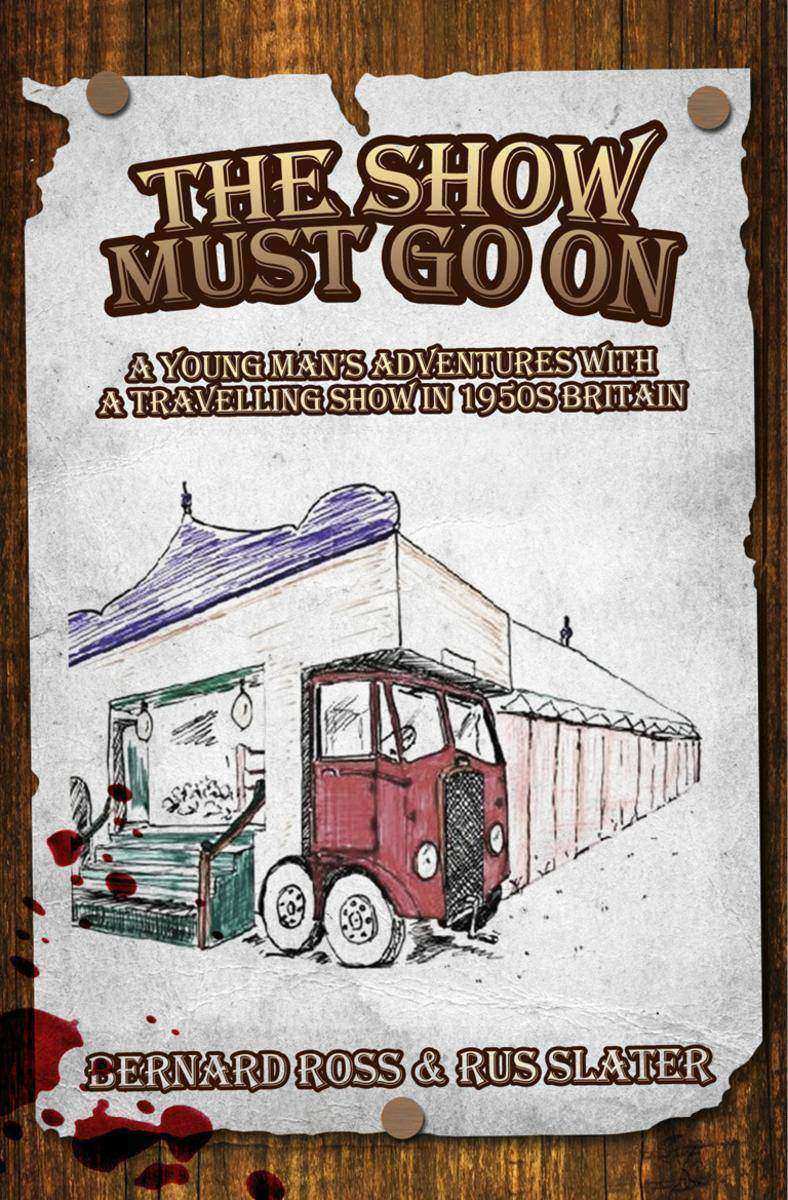
"e;running away from home"e; aged 15 Bernard Ross joined a travelling funfair, this book follows his adventures as one of the last live funfair wrestlers in the UK

101 Amazing Facts about Justin Bieber
¥19.52
Are you the world's most dedicated Belieber? Do you know everything there is to know about the world's best-loved singer/songwriter? Whether you've been there from the start or have recently grown to love Justin, this is the book for you. Organised into sections such as his career, controversies, need-to-know stats and of course his relationships, you can find the information you want, fast. From how his career started to his latest album, this is the perfect addition for any fan's bookshelf.
Beyond the Subjectivity Trap
¥107.81
Beyond the Subjectivity Trap challenges the paradigm of the hard problem of consciousness by contesting the relevance and primacy of human thought. By tracing the evolved egocentricity of the 'I' as an entrapping limitation on our thinking the book argues that once the Subjectivity Trap is understood and escaped we can appreciate the non-existence of the mind-body divide, the pure functionality of the brain, and the limitlessness of our potential.

101 Amazing Facts about Lionel Richie
¥19.52
Are you the world's biggest Lionel Richie fan? Or do you want to find out everything there is to know about the former Commodores lead vocalist and one of the world's best-loved singer-songwriters? If so, then this is the book for you! Contained within are 101 amazing facts about how Lionel got started in the music industry, the numerous awards he has won, his family and much, much more. The book is easily organised into sections so you can find the information you want fast and is the perfect addition to any fan's bookshelf.

50 Quick Facts about Alaska
¥9.71
This book is part of a series of 50 quick facts about each of the United States of America. This book covers the state of Alaska. Facts about the major cities, the history of the state, famous people linked to Alaska, the states intriguing climate and topography and many more subjects. This book contains all you will ever need to know about the last frontier state.

50 Quick Facts about Colorado
¥9.71
This book is part of a series of 50 quick facts about each of the United States of America. This book covers the state of Colorado. Facts about the major cities, the history of the state, famous people linked to Colorado and many more subjects. This book contains all you will ever need to know about the Centennial state.
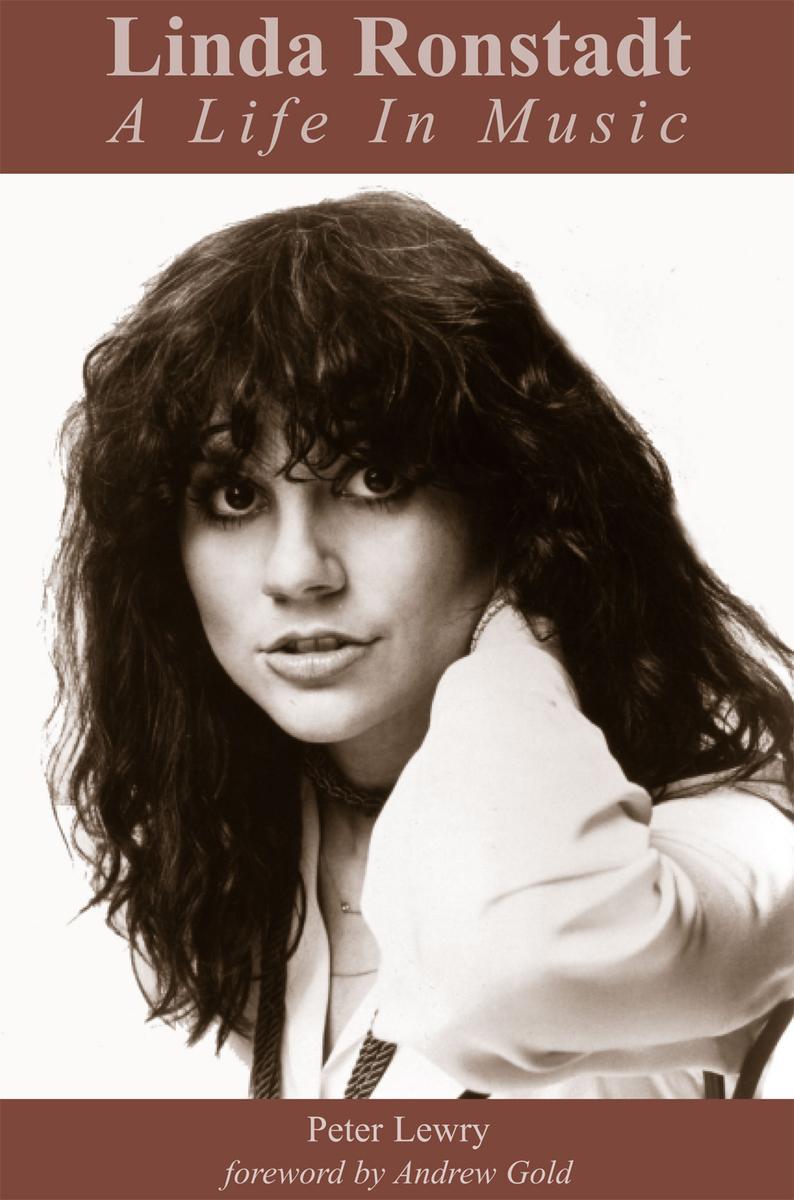
Linda Ronstadt
¥73.48
Often dismissed by rock historians as a product of the antiseptic Californian country-music scene, an artist who relied on watered-down covers of classic rock n' roll and pop standards, this description of Linda Ronstadt couldn't be further from the truth. Throughout a recording career that has covered more than forty years she has recorded in a remarkable variety of styles from pure country to pop, light opera to big band standards and new wave to mariachi, often taking risks beyond the reach of many critically acclaimed artists. It would be hard, if not impossible, to find another vocalist who has had a more diversified career. In their press release for the album Winterlight her record company managed to convey exactly what it was that made Linda Ronstadt such a special artist. - "e;Versatile doesn't begin to describe Linda Ronstadt's astounding career - a wildly eclectic, devoutly adventurous journey through a myriad of styles and genres. Who else has worked with Philip Glass and Dolly Parton? Aaron Neville and Nelson Riddle? Ronstadt's unforgettably gorgeous voice, at once technically dazzling and resonating with deep emotion, has woven a magical path from rock to mariachi, from country to opera, gathering critical and commercial success at every stop along the way."e; Linda Ronstadt - A Life In Music is an unauthorised biography that traces Linda Ronstadt's career from her days as a member of The Stone Poneys, her early solo albums, the critically acclaimed albums from the seventies, her work with Nelson Riddle , the foreign language recordings and her collaborations with Dolly Parton and Emmylou Harris. The book gives an in-depth analysis of every studio album and is supported by a background to her life and the influences, musical and social, that shaped her career. Appendices in the book include a comprehensive discography, chart statistics, details of Record Industry Association of America (RIAA) and British Phonographic Industry (BPI) awards along with a list of Grammy Award nominations and wins. The book includes a foreword written by Andrew Gold.


