


 购物车
购物车 个人中心
个人中心
Pointless Conversations
¥19.52
Pointless conversations: a selection of daft, ridiculous and utterly pointless meanderings from the mind of Scott Tierney. If you've ever wanted to know the answers to why Superman is a coward; why Spiderman should technically be deformed; and if Superdog caused the death of Krypton, then these bite-sized comics will reveal all. The discussions may be insane, and most of what is said is rambling, but despite this, you may find yourself agreeing with most of what is said. It's a fair point: where does Spiderman store all that web?

Seems Like a Nice Boy
¥48.95
The name Larry Grayson will be instantly recognisable to anyone who can remember the 1970s when his catchphrase 'Shut That Door' was on everybody's lips. However, Larry's rise to fame was slow in coming, born of years of perfecting his craft in clubs and theatres across the country. This biography details Larry's early life, how he was handed over as a baby to a miner's family in mysterious circumstances and brought up by his beloved foster sister, Flo, who was to become his lifelong companion. As a boy, encouraged by Flo, Larry would perform comedy routines for his school chums, standing on a tin bath in a wash-house yard, and he took his first steps into showbiz as a teenager with a local concert party. Seems Like a Nice Boy describes how, after a long career, Larry was eventually spotted by a top agent and set on the road to stardom, not only on stage but on television. Larry went on to host The Generation Game, attracting weekly audiences of around twenty million viewers and bringing Larry the kind of fame that he had always dreamed of. This fascinating book reveals how Larry Grayson's determination to succeed turned him into one of Britain's best-loved entertainers. This is a must-have read for Larry Grayson fans and anyone who enjoys classic comedy from a bygone age.
Queen of the Savannah: "A Story of the Mexican War"
¥28.04
Tiziano Vecelli or Tiziano Vecellio (1488/1490 – 27 August 1576) known in English as Titian was an Italian painter, the most important member of the 16th-century Venetian school. He was born in Pieve di Cadore, near Belluno (in Veneto), in the Republic of Venice. During his lifetime he was often called da Cadore, taken from the place of his birth. Recognized by his contemporaries as "The Sun Amidst Small Stars" (recalling the famous final line of Dante's Paradiso), Titian was one of the most versatile of Italian painters, equally adept with portraits, landscape backgrounds, and mythological and religious subjects. His painting methods, particularly in the application and use of color, would exercise a profound influence not only on painters of the Italian Renaissance, but on future generations of Western art. During the course of his long life, Titian's artistic manner changed drastically but he retained a lifelong interest in color. Although his mature works may not contain the vivid, luminous tints of his early pieces, their loose brushwork and subtlety of tone are without precedent in the history of Western art. Early years This early portrait (c. 1509), described by Giorgio Vasari in 1568, was long wrongly believed to be of Ludovico Ariosto; it is now thought to be a portrait of Gerolamo Barbarigo, and the composition was borrowed by Rembrandt for his own self-portraits. The exact date of Titian's birth is uncertain; when he was an old man he claimed in a letter to Philip II, King of Spain, to have been born in 1474, but this seems most unlikely. Other writers contemporary to his old age give figures which would equate to birthdates between 1473 to after 1482, but most modern scholars believe a date nearer 1490 is more likely; the Metropolitan Museum of Art's timeline supports c.1488, as does the Getty Research Institute.He was the son of Gregorio Vecelli and his wife Lucia. His father was superintendent of the castle of Pieve di Cadore and managed local mines for their owners. Gregorio was also a distinguished councilor and soldier. Many relatives, including Titian's grandfather, were notaries, and the family of four were well-established in the area, which was ruled by Venice. At the age of about ten to twelve he and his brother Francesco (who perhaps followed later) were sent to an uncle in Venice to find an apprenticeship with a painter. The minor painter Sebastian Zuccato, whose sons became well-known mosaicists, and who may have been a family friend, arranged for the brothers to enter the studio of the elderly Gentile Bellini, from which they later transferred to that of his brother Giovanni Bellini. At that time the Bellinis, especially Giovanni, were the leading artists in the city. There Titian found a group of young men about his own age, among them Giovanni Palma da Serinalta, Lorenzo Lotto, Sebastiano Luciani, and Giorgio da Castelfranco, nicknamed Giorgione. Francesco Vecellio, his older brother, later became a painter of some note in Venice.A fresco of Hercules on the Morosini Palace is said to have been one of Titian's earliest works; others were the Bellini-esque so-called Gypsy Madonna in Vienna, and the Visitation of Mary and Elizabeth (from the convent of S. Andrea), now in the Accademia, Venice.
Republic
¥27.39
THE earliest record we have of the employment of an infernal machine at all resembling the torpedo of the present day, was in 1585 at the siege of Antwerp. Here by means of certain small vessels, drifted down the stream, in each of which was placed a magazine of gunpowder, to be fired either by a trigger, or a combination of levers and clockwork, an Italian engineer, Lambelli, succeeded in demolishing a bridge that the enemy had formed over the Scheldt. So successful was this first attempt, and so tremendous was the effect produced on the spectators, by the explosion of one of these torpedoes, that further investigation of this new mode of Naval warfare was at once instituted.But it was not until some two hundred years after that any real progress was effected, though numerous attempts were made during this period, to destroy vessels by means of sub-marine infernal machines.It was owing to the fact, that the condition which is now considered as essential in torpedo warfare, viz., that the charge must be submerged, was then entirely ignored, that so long a standstill occurred in this new art of making war. Captain Bushnell, the Inventor of Torpedoes.—To Captain David Bushnell, of Connecticut, in 1775, is most certainly due the credit of inventing torpedoes, or as he termed them submarine magazines. For he first proved practically that a charge of gunpowder could be fired under water, which is incontestably the essence of submarine warfare. Submarine Boat.—To Captain Bushnell is also due the credit of first devizing a submarine boat for the purpose of conveying his magazines to the bottom of hostile ships and there exploding them.Drifting Torpedoes.—Another plan of his for destroying vessels, was that of connecting two of his infernal machines together by means of a line, and throwing them into the water, allowing the current to carry them across the bows of the attacked ship. Mode of Ignition.—The ignition of his magazines was generally effected by means of clockwork, which, when set in motion, would run for some time before exploding the machines, thus enabling the operators to get clear of the explosion.Captain Bushnell's few attempts to destroy our ships off the American coast in 1776 and 1777, with his submarine boat, and his drifting torpedoes were all attended with failure, a result generally experienced, where new inventions are for the first time subjected to the test of actual service. Robert Fulton.—Robert Fulton, an American, following in his footsteps, some twenty years after, revived the subject of submarine warfare, which during that interval seems to have been entirely forgotten. A resident in France, in 1797, he is found during that year making various experiments on the Seine with a machine which he had constructed, and by which he designed "to impart to carcasses of gunpowder a progressive motion under water, to a certain point, and there explode them."[A] Fulton's Failures.—Though these first essays of his resulted in failure, Fulton thoroughly believed in the efficacy of his schemes, and we find him, during that and succeeding years, vainly importunating the French and Dutch Governments, to grant him aid and support in carrying out experiments with his new inventions, whereby he might perfect them, and thus ensure to whichever government acceded to his views, the total destruction of their enemy's fleets. Bonaparte aids Fulton.—Though holding out such favourable terms, it was not until 1800, when Bonaparte became First Consul, that Fulton's solicitations were successful, and that money was granted him to carry out a series of experiments. In the following year (1801), under Bonaparte's immediate patronage, Fulton carried out various and numerous experiments in the harbour of Brest, principally with a submarine boat devised by him (named the Nautilus), subsequently to his invention of submarine carcasses as a means of approaching a ship and fixing one of his infernal machines beneath her..
Botticelli: "Masterpieces In Colour" Series BOOK-II
¥32.62
As in the case of "The Bases of Design," to which this is intended to form a companion volume, the substance of the following chapters on Line and Form originally formed a series of lectures delivered to the students of the Manchester Municipal School of Art. There is no pretension to an exhaustive treatment of a subject it would be difficult enough to exhaust, and it is dealt with in a way intended to bear rather upon the practical work of an art school, and to be suggestive and helpful to those face to face with the current problems of drawing and design. These have been approached from a personal point of view, as the results of conclusions arrived at in the course of a busy working life which has left but few intervals for the elaboration of theories apart from practice, and such as they are, these papers are now offered to the wider circle of students and workers in the arts of design as from one of themselves. They were illustrated largely by means of rough sketching in line before my student audience, as well as by photographs and drawings. The rough diagrams have been re-drawn, and the other illustrations reproduced, so that both line and tone blocks are used, uniformity being sacrificed to fidelity.? ? ? ? ? ? ? ? ? ? ? ? ? ? ? ? ?WALTER CRANE. Outline, one might say, is the Alpha and Omega of Art. It is the earliest mode of expression among primitive peoples, as it is with the individual child, and it has been cultivated for its power of characterization and expression, and as an ultimate test of draughtsmanship, by the most accomplished artists of all time. The old fanciful story of its origin in the work of a lover who traced in charcoal the boundary of the shadow of the head of his sweetheart as cast upon the wall by the sun, and thus obtained the first profile portrait, is probably more true in substance than in fact, but it certainly illustrates the function of outline as the definition of the boundaries of form.Silhouette As children we probably perceive forms in nature defined as flat shapes of colour relieved upon other colours, or flat fields of light on dark, as a white horse is defined upon the green grass of a field, or a black figure upon a background of snow.Definition of BoundariesTo define the boundaries of such forms becomes the main object in early attempts at artistic expression. The attention is caught by the edges—the shape of the silhouette which remains the paramount means of distinction of form when details and secondary characteristics are lost; as the outlines of mountains remain, or are even more clearly seen, when distance subdues the details of their structure, and evening mists throw them into flat planes one behind the other, and leave nothing but the delicate lines of their edges to tell their character. We feel the beauty and simplicity of such effects in nature. We feel that the mind, through the eye resting upon these quiet planes and delicate lines, receives a sense of repose and poetic suggestion which is lost in the bright noontide, with all its wealth of glittering detail, sharp cut in light and shade. There is no doubt that this typical power of outline and the value of simplicity of mass were perceived by the ancients, notably the Ancient Egyptians and the Greeks, who both, in their own ways, in their art show a wonderful power of characterization by means of line and mass, and a delicate sense of the ornamental value and quality of line. Formation of LettersRegarding line—the use of outline from the point of view of its value as a means of definition of form and fact—its power is really only limited by the power of draughtsmanship at the command of the artist. From the archaic potters' primitive figures or the rudimentary attempts of children at human or animal forms up to the most refined outlines of a Greek vase-painter, or say the artist of the Dream of Poliphilus, the difference is one of degree.

The House That Jack Built: "Illustrated"
¥9.24
Books of instruction in the practice of painting have rarely been successful. Chiefly because they have been too narrow in their point of view, and have dealt more with recipes than with principles. It is not possible to give any one manner of painting that shall be right for all men and all subjects. To say "do thus and so" will not teach any one to paint. But there are certain principles which underlie all painting, and all schools of painting; and to state clearly the most important of these will surely be helpful, and may accomplish something. It is the purpose of this book to deal practically with the problems which are the study of the painter, and to make clear, as far as may be, the principles which are involved in them. I believe that this is the only way in which written instruc-tion on painting can be of any use. It is impossible to understand principles without some statement of theory; and a book in order to be practical must therefore be to some extent theoretical. I have been as concise and brief in the theoretical parts as clearness would permit of, and I trust they are not out of proportion to the practical parts. Either to paint well, or to judge well of a painting, requires an understanding of the same things: namely, the theoretical standpoint of the painter; the technical problems of color, composition, etc.; and the practical means, processes, and materials through which and with which these are worked out. It is obvious that one cannot become a good painter without the ability to know what is good painting, and to prefer it to bad painting. Therefore, I have taken space to cover, in some sort, the whole ground, as the best way to help the student towards becoming a good painter. If, also, the student of pictures should find in this book what will help him to appreciate more truly and more critically, I shall be gratified. There is a false implication in the saying that "a poor workman blames his tools." It is not true that a good workman can do good work with bad tools. On the contrary, the good workman sees to it that he has good tools, and makes it a part of his good workmanship that they are in good condition. In painting there is nothing that will cause you more trouble than bad materi-als. You can get along with few materials, but you cannot get along with bad ones. That is not the place to economize. To do good work is difficult at best. Econo-mize where it will not be a hindrance to you. Your tools can make your work harder or easier according to your selection of them. The relative cost of good and bad materials is of slight importance compared with the relative effect on your work.The way to economize is not to get anything which you do not need. Save on the non-essentials, and get as good a quality as you can of the essentials. Save on the number of things you get, not on the quantity you use. You must feel free in your use of material. There is nothing which hampers you more than parsimony in the use of things needful to your painting. If it is worth your while to paint at all, it is worth your while to be generous enough with yourself to insure ordinary freedom of use of material.The essentials of painting are few, but these cannot be dispensed with. Put it out of your mind that any one of these five things can be got along without:—You must have something to paint on, canvas or panel. Have plenty of these.
Crayon Portraiture
¥37.36
Macbeth (full title The Tragedy of Macbeth) is a tragedy written by William Shakespeare, and is considered one of his darkest and most powerful works. Set in Scotland, the play dramatizes the corrosive psychological and political effects produced when evil is chosen as a way to fulfil the ambition for power. The play is believed to have been written between 1599 and 1606, and is most commonly dated 1606. The earliest account of a performance of what was probably Shakespeare's play is the Summer of 1606, when Simon Forman recorded seeing such a play at the Globe Theatre. Macbeth is Shakespeare's shortest tragedy, and tells the story of a brave Scottish general named Macbeth who receives a prophecy from a trio of witches that one day he will become King of Scotland. Consumed by ambition and spurred to action by his wife, Macbeth murders King Duncan and takes the throne for himself. He is then wracked with guilt and paranoia, and he soon becomes a tyrannical ruler as he is forced to commit more and more murders to protect himself from enmity and suspicion. The bloodbath and consequent civil war swiftly take Macbeth and Lady Macbeth into the realms of arrogance, madness, and death. The play opens amidst thunder and lightning, and the Three Witches decide that their next meeting shall be with Macbeth. In the following scene, a wounded sergeant reports to King Duncan of Scotland that his generals—Macbeth, who is the Thane of Glamis, and Banquo—have just defeated the allied forces of Norway and Ireland, who were led by the traitorous Macdonwald and the Thane of Cawdor. Macbeth, the King's kinsman, is praised for his bravery and fighting prowess.In the following scene, Macbeth and Banquo discuss the weather and their victory. As they wander onto a heath, the Three Witches enter and greet them with prophecies. Though Banquo challenges them first, they address Macbeth, hailing him as "Thane of Glamis," "Thane of Cawdor," and that he shall "be King hereafter." Macbeth appears to be stunned to silence. When Banquo asks of his own fortunes, the witches inform him that he will father a line of kings, though he himself will not be one. While the two men wonder at these pronouncements, the witches vanish, and another thane, Ross, arrives and informs Macbeth of his newly bestowed title: Thane of Cawdor, as the previous Thane of Cawdor shall be put to death for his traitorous activities. The first prophecy is thus fulfilled, and Macbeth immediately begins to harbour ambitions of becoming king.King Duncan welcomes and praises Macbeth and Banquo, and declares that he will spend the night at Macbeth's castle at Inverness; he also names his son Malcolm as his heir. Macbeth sends a message ahead to his wife, Lady Macbeth, telling her about the witches' prophecies. Lady Macbeth suffers none of her husband's uncertainty, and wishes him to murder Duncan in order to obtain kingship. When Macbeth arrives at Inverness, she overrides all of her husband's objections by challenging his manhood, and successfully persuades him to kill the king that very night. He and Lady Macbeth plan to get Duncan's two chamberlains drunk so that they will black out; the next morning they will blame the chamberlains for the murder. They will be defenseless, as they will remember nothing.While Duncan is asleep, Macbeth stabs him, despite his doubts and a number of supernatural portents, including a hallucination of a bloody dagger. He is so shaken that Lady Macbeth has to take charge. In accordance with her plan, she frames Duncan's sleeping servants for the murder by placing bloody daggers on them. Early the next morning, Lennox, a Scottish nobleman, and Macduff, the loyal Thane of Fife, arrive. A porter opens the gate and Macbeth leads them to the king's chamber, where Macduff discovers Duncan's body. ABOUT AUTHOR: William Shakespeare ( 1564 (baptised) – 1616) was an English poet, playwright and actor, widely regarded as the greatest writer in the English language and the world's pre-eminent dramatist. He is often called England's national poet and the "Bard of Avon". His extant works, including some collaborations, consist of about 38 plays, 154 sonnets, two long narrative poems, and a few other verses, the authorship of some of which is uncertain. His plays have been translated into every major living language and are performed more often than those of any other playwright. Shakespeare was born and brought up in Stratford-upon-Avon. At the age of 18, he married Anne Hathaway, with whom he had three children: Susanna, and twins Hamnet and Judith. Between 1585 and 1592, he began a successful career in London as an actor, writer, and part-owner of a playing company called the Lord Chamberlain's Men, later known as the King's Men. He appears to have retired to Stratford around 1613 at age 49, where he died three years later. Few records of Shakespeare's private life survive, and there has been considerable speculation about such matters as his physic

Nem akarlak meg?lni
¥57.96
Sorsdráma. Szrny, barbár mese. Véres és szexuális talányok. Elnyomott emlékek és gyermekkori borzalmak flkeverése. Hirtelen, képtelen, elre tudott és mégis elháríthatatlan katasztrófa. Babona, vallás és matematika külns fonadékú szvete. A sors irracionális gykereinek ízeit érezzük. Micsoda ellentét forma és tartalom kzt! Ilyen vad, si, nyers, babonás mélyeket éppen csak az emberi tudat és kultúra leglucidasabb mvészete tár fl: annál megrendítbb! A Szophoklész mvészete” – írja Babits Mihály Az európai irodalom trténeté-ben.

Ultimate Boy Band Quiz Book
¥39.14
Are you up to date with current boy bands? Can you tell One Direction from Union J or what makes Take That different from JLS and The Wanted? If you know all there is to know about the aforementioned groups, or would like to find out more, The Ultimate Boy Band Quiz Book is definitely for you. Which boy band's members were appointed ambassadors for Pokemon during 2011? Which boy band recorded a cover version of a 1977 Bee Gees song? Which group supported Britney Spears in concert in Manchester? Find out the answers to these questions and many more inside this quiz book. With so many facts about your favourite boy bands brought together in one exciting book, you can't help but learn something new. Featuring One Direction, Take That, The Wanted, Union J and JLS, this book will appeal to music lovers of all ages. Whether you are a long-time fan of Take That or secretly dance around the kitchen to the sounds of One Direction, this book has something for everyone. Download it to your eReader and enjoy at your leisure.
How To Sing
¥44.05
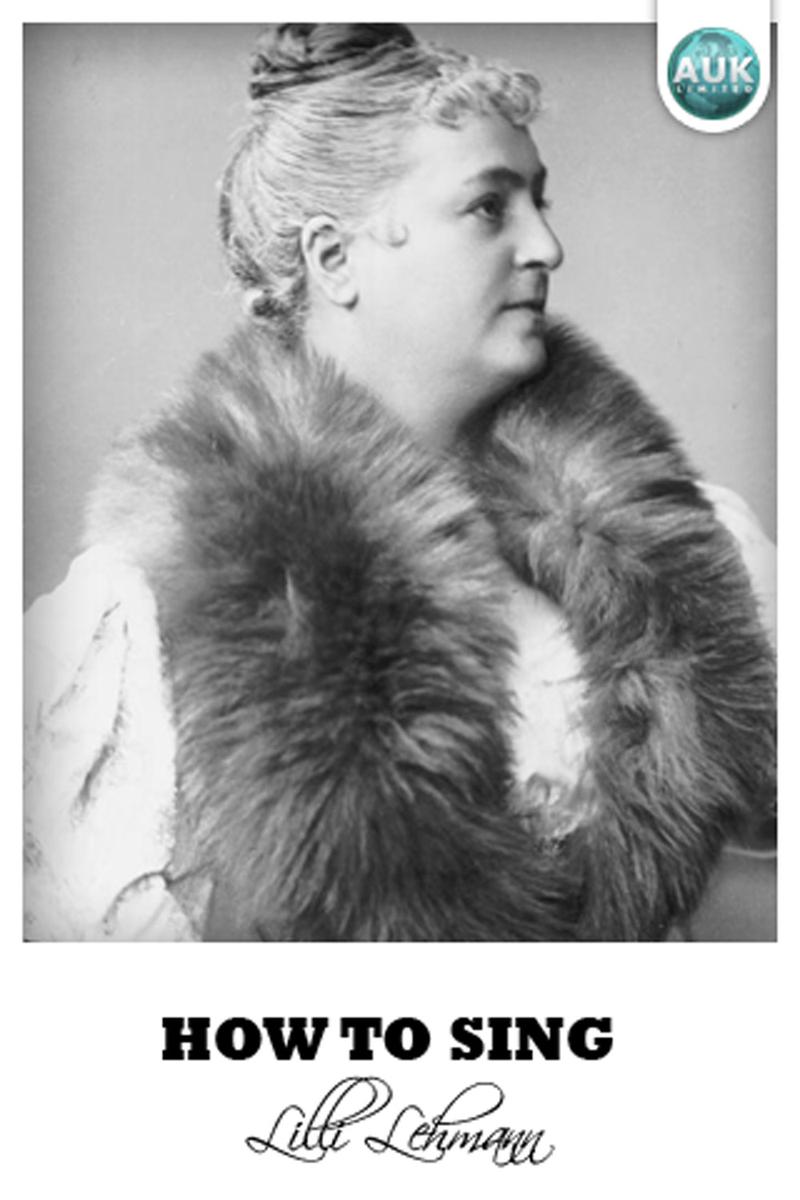
This classic guide teaching the reader the techniques of singing was written by a professional opera singer - Lilli Lehman - over 100 years ago. It has since become a must-read book for all those wishing to expand their vocal talents, and teaches a range of skills which the amateur singer often overlooks. Miss Lehmann was born in Germany in 1848 and went on to become a soprano of phenomenal versatility and in later years a voice teacher of much acclaim. Miss Lehmann sung her way around europe appearing in most of the leading opera houses - her voice was her passport. Looking at her presence on the cover it is no surprise that she was one of the greatest Wagnerian singers of her day. In 1916 Miss Lehmann hung up her breast plate and founded the International Summer Academy in Salzburg that focused on voice lessons and coached many up and coming opera stars.

101 Interesting Facts on Doctor Who
¥24.43
Are you a Doctor Who fan? Have you followed the series through the years? Can you remember the names of all the past 'Doctors' and their companions? Would you like to know more about the iconic TV programme and its characters? If you answered yes to any of these questions, you won't want to be without 101 Interesting Facts on Doctor Who. Do you know where Dr Who's tomb is located or how many times The Doctor has regenerated inside the TARDIS? Which Doctor Who extra-terrestrials come from the plant Raxacoricicofallapatorius and what was The Doctor's companion, Romana's full name? Find out the answers, along with much more Doctor Who-related trivia, inside this new book. Discover fascinating facts about The Doctors, companions, their allies and enemies and the actors who bring them all to life, as well as information about the different storylines from programme past and present. This is a must-have book for all Doctor Who enthusiasts, whether you are a lifelong fan or one of the series many new followers.
Sea Rovers
¥23.30
Diego Rodríguez de Silva y Velázquez (June 6, 1599 – August 6, 1660) was a Spanish painter who was the leading artist in the court of King Philip IV and one of the most important painters of the Spanish Golden Age. He was an individualistic artist of the contemporary Baroque period, important as a portrait artist. In addition to numerous renditions of scenes of historical and cultural significance, he painted scores of portraits of the Spanish royal family, other notable European figures, and commoners, culminating in the production of his masterpiece Las Meninas (1656). From the first quarter of the nineteenth century, Velázquez's artwork was a model for the realist and impressionist painters, in particular ?douard Manet. Since that time, famous modern artists, including Pablo Picasso, Salvador Dalí and Francis Bacon, have paid tribute to Velázquez by recreating several of his most famous works. Early lifeBorn in Seville, Andalusia, Spain, Diego, the first child of Jo?o Rodrigues da Silva and Jerónima Velázquez, was baptized at the church of St Peter in Seville on Sunday, June 6, 1599. This christening must have followed the baby's birth by no more than a few weeks, or perhaps only a few days. Velázquez's paternal grandparents, Diego da Silva and Maria Rodrigues, had moved to Seville from their native Porto, Portugal decades earlier. As for Jo?o Rodrigues da Silva and his wife, both were born in Seville, and were married, also at the church of St Peter, on December 28, 1597. They came from the lesser nobility and were accorded the privileges generally enjoyed by the gentry. Velázquez was educated by his parents to fear God and, intended for a learned profession, received good training in languages and philosophy. Influenced by many artists he showed an early gift for art; consequently, he began to study under Francisco de Herrera, a vigorous painter who disregarded the Italian influence of the early Seville school. Velázquez remained with him for one year. It was probably from Herrera that he learned to use brushes with long bristles. After leaving Herrera's studio when he was 12 years old, Velázquez began to serve as an apprentice under Francisco Pacheco, an artist and teacher in Seville. Though considered a generally dull, undistinguished painter, Pacheco sometimes expressed a simple, direct realism in contradiction to the style of Raphael that he was taught. Velázquez remained in Pacheco's school for five years, studying proportion and perspective and witnessing the trends in the literary and artistic circles of Seville.To Madrid (early period) By the early 1620s, his position and reputation were assured in Seville. On April 23, 1618, Velázquez married Juana Pacheco (June 1, 1602 – August 10, 1660), the daughter of his teacher. She bore him two daughters—his only known family. The elder, Francisca de Silva Velázquez y Pacheco (1619–1658), married painter Juan Bautista Martínez del Mazo at the Church of Santiago in Madrid on August 21, 1633; the younger, Ignacia de Silva Velázquez y Pacheco, born in 1621, died in infancy. Velázquez produced notable works during this time. Known for his compositions of amusing genre scenes (also called bodegones), such as Old Woman Frying Eggs, his sacred subjects include Adoración de los Reyes (1619, The Adoration of the Magi), and Jesús y los peregrinos de Emaús (1626, Christ and the Pilgrims of Emmaus), both of which begin to express his more pointed and careful realism.

The Home
¥18.74
What is the magic of pastoral Greece? What is it that gives to you a sensation of being gently released from the cares of life and the boredom of modern civilization, with its often unmeaning complications, its unnecessary luxuries, its noisy self-satisfactions? This is not the tremendous, the spectacular release of the desert, an almost savage tearing away of bonds. Nothing in the Greece I saw is savage; scarcely anything is spectacular. But, oh, the bright simplicity of the life and the country along the way to Marathon! It was like an early world. One looked, and longed to live in those happy woods like the Turkish Gipsies. Could life offer anything better? The pines are small, exquisitely shaped, with foliage that looks almost as if it had been deftly arranged by a consummate artist. They curl over the slopes with a lightness almost of foam cresting a wave. Their color is quite lovely. The ancient Egyptians had a love color: well, the little pine-trees of Greece are the color of happiness. You smile involuntarily when you see them. And when, descending among them, you are greeted by the shining of the brilliant-blue sea, which stretches along the edge of the plain of Marathon, you know radiance purged of fierceness.? The road winds down among the pines till, at right angles to it, appears another road, or rough track just wide enough for a carriage. This leads to a large mound which bars the way. Upon this mound a habitation was perched. It was raised high above the ground upon a sort of tripod of poles. It had yellow walls of wheat, and a roof and floor of brushwood and maize. A ladder gave access to it, and from it there was a wide outlook over the whole crescent-shaped plain of Marathon. This dwelling belonged to a guardian of the vineyards, and the mound is the tomb of those who died in the great battle. PICTURESQUE DALMATIA ? Chapter I: PICTURESQUE DALMATIA IN AND NEAR ATHENS ? Chapter II: IN AND NEAR ATHENS THE ENVIRONS OF ATHENS ? Chapter III: THE ENVIRONS OF ATHENS DELPHI AND OLYMPIA ? Chapter IV: DELPHI AND OLYMPIA IN CONSTANTINOPLE ? Chapter V: IN CONSTANTINOPLE STAMBOUL, THE CITY OF MOSQUES ? Chapter VI: STAMBOUL, THE CITY OF MOSQUE
Vikings: A History of the Norse People
¥81.67
“From the fury of the Northmen, good Lord deliver us.” – Anonymous monk, Noirmoutier, France, 9th century AD Beginning in 789AD, the Vikings raided monasteries, sacked cities and invaded western Europe. They looted and enslaved their enemies. But that is only part of their story. In long boats they discovered Iceland and America (both by accident) and also sailed up the Seine to Paris (which they sacked). They settled from Newfoundland to Russia, founded Dublin and fought battles as far afield as the Caspian Sea. A thousand years after their demise, traces of the Vikings remain all the way from North America to Istanbul. They traded walruses with Inuits, brought Russian furs to Western Europe and took European slaves to Constantinople. Their graves contain Arab silver, Byzantine silks and Frankish weapons. In this accessible book, the whole narrative of the Viking story is examined from the eighth to the eleventh centuries. Arranged thematically, Vikings: A History of the Norse People examines the Norsemen from exploration to religion to trade to settlement to weaponry to kingdoms to their demise and legacy. But today questions remain: what prompted the first Viking raids? What stopped their expansion? And how much of the tales of murder, rape and pillage is myth? Illustrated with more than 200 photographs, maps and artworks, Vikings: A History of the Norse People is an expertly written account of a people who have long captured the popular imagination.

Manhunt: The Art and Science of Tracking High Profile Enemy Targets
¥65.32
A manhunt can involve helicopters, hounds and hundreds of military or police personnel, but it can also turn on the evidence of one broken spider’s web. Manhunts today might involve the technology of infrared cameras and surveillance devices such as powerful satellite technology, but they may also rely on examining the width, depth, tread and intervals of footprints, or observing minute changes in the natural environment. From searching for high-value enemy targets such as Osama bin Laden and Saddam Hussein to finding soldiers caught behind enemy lines, from escaped prisoners and serial killers to a missing child, SAS and Elite Forces Guide: Manhunt explores just how the military and police forces track people down. Including many case studies of high-value targets, suspected criminals and fugitives from justice, and with extensive background on the different techniques in tracking used, from traditional Native American trackers’ skills to the latest high-tech methods, Manhunt brings together the history and science of tracking. Illustrated with 150 maps and photographs, SAS and Elite Forces Guide: Manhunt is an authoritative examination of tracking from footprints to forensics and a must for anyone interested in the latest military practices, true crime and survival skills.

The World's Greatest Small Arms: An Illustrated History
¥81.67
Small arms have developed hugely since the introduction of the machine gun in the 1870s. Magazine-fed rifles, submachine guns, automatic pistols and, later, assault rifles and personal defence weapons have changed the face of infantry warfare, offering a range of weaponry designed for both the specialist and novice. The World’s Greatest Small Arms features 52 weapons from the late 19th century to the present day. The book includes the best-known weapons from throughout the modern era, from the Gatling gun, SMLE rifle and Luger pistol, to the Uzi, FN MAG and the M110 sniper rifle. Great iconic weapons, such as the Colt M1911 pistol, Bren Gun, MP5 submachine gun, and Steyr AUG rifle are featured, as well as timeless classics still in use today: the M2 Browning 50 cal, AK-47 and M16 rifle. Each weapon is illustrated with a colour profile artwork and photographs, along with a description of the weapon’s development and history, key features and a full specifications box. Including more than 200 artworks and photographs, The World’s Greatest Small Arms is a colourful guide for the military historian.

A Christmas Carol
¥40.79
Charles Dickens’ timeless story is brought to life in this vibrant new version by the award-winning playwright Neil Duffield. Christmas, the most wonderful time of the year! Well, it is for everyone except the miserable Scrooge. He prefers to spend Christmas all alone in his large house, instead of celebrating with mistletoe and merriment. Bah, humbug! But one cold, dark Christmas Eve Scrooge is surprised by the ghost of Marley, his former business partner. Marley warns Scrooge that he will be called upon by three spirits – each will take him on a mysterious and magical journey to show him the error of his ways… Can Scrooge discover the true wonder and meaning of Christmas before it’s too late?

D-Day: Airborne Assault
¥40.79
In any military operation throughout history, few 24-hour periods have been as crucial as that of 6th June 1944. With the aid of specially commissioned maps, D-Day: The First 24 Hours series gives the dramatic history of the first 24 hours of the Normandy landings, and explains in detail the events that occurred in each landing zone. In this second volume of the series, the book describes the airborne landings by paratroopers and glider troops that secured the flanks of the Allied beachheads, including such famous encounters as Pegasus Bridge and Ste Mère Eglise, as well as the more secret operations carried out by the SAS, SOE and Maquis. With colour and black & white photographs and specially commissioned maps, the book is a guide to key events in the first 24 hours of the D-Day landings that saw the Allies successfully achieve a foothold in Northern Europe.

All Talk Monologues for Young People: 6 Solo Plays
¥40.79
A series of short, single voice plays by writers based in the North West of England. These powerful, contemporary monologues share the struggles, courage, conflicts and joys of different characters facing difficult decisions in their lives. Developed through consultation with young people, they offer a range of authentic, memorable voices to stimulate discussion and participatory drama work. ‘First Date’ by Anne-Marie O’Connor: Sometimes friendship comes with a heavy price tag. ‘Getting it Right’ by Peter Spafford: Luke can't choose between his shirts, let alone his parents. ‘Results Day’ by Aelish Michael: Karly’s mum thinks she’s an angel, but what if she flaps her wings? ‘Close to Home’ by Mary Cooper: Jay’s little sister is pregnant and he’s livid – who’s he going to punish? ‘Weighed Down’ by Carla Monvid-Jenkinson and Mary Cooper: When Claire’s dad left, she thought that he was all she would lose. ‘Giggsy’s Legs’ by Michael Harvey: Do you choose everything you are or does it choose you?

The Value of Nothing
¥24.44
Welcome! Come on in! Take part in the project launch of ArtWorks, the new back to work initiative created and run by your friend and ours, the one, the only, the most fantastic… Vince Fine! And so begins the project launch from hell… Exploring issues of how society views those living on benefits, the ‘creative industries’ and what we should value in life, this dark comedy (running in real time) charts the fall from grace of the central comedic hero, Vince Fine, as he watches everything he’s ever dreamed of slip from his fingers. Includes some audience participation and interaction.
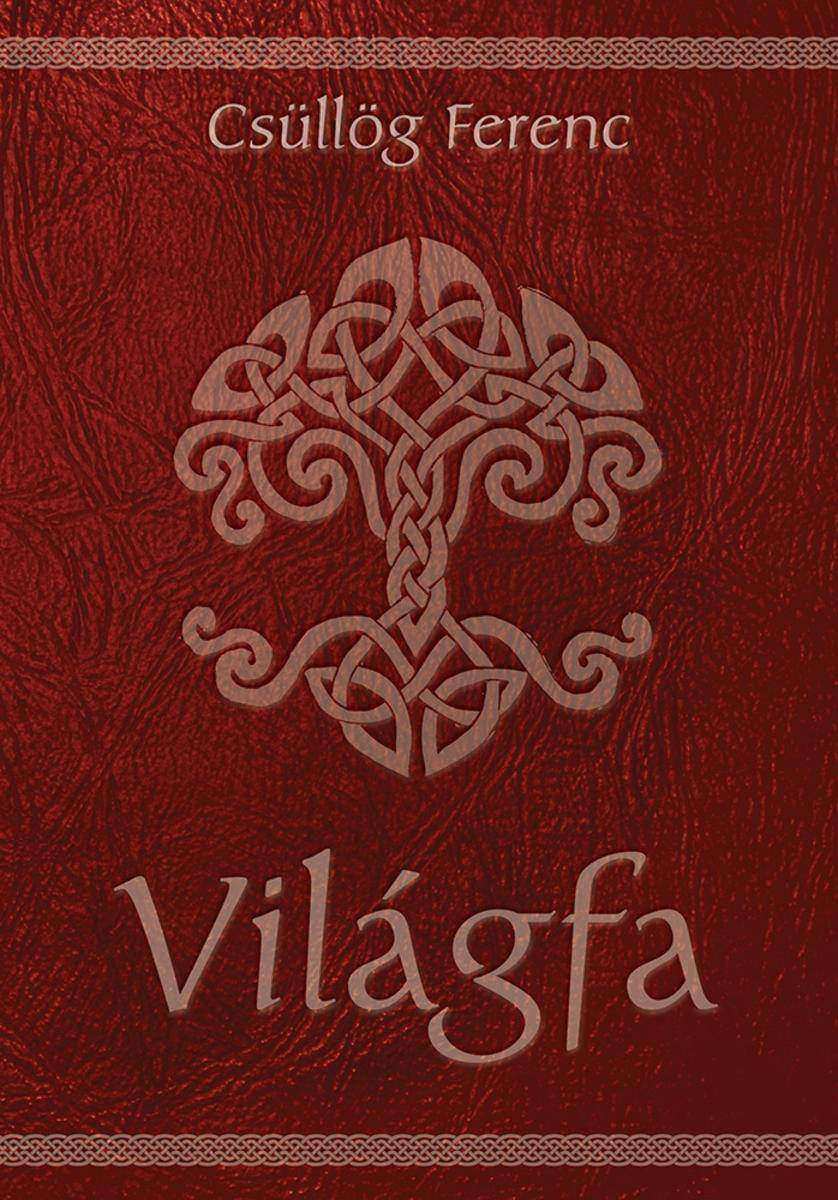
Világfa
¥28.53
A budapesti Lánchíd pesti hídf?jénél álló Gresham-palotát mindannyian jól ismerjük – legalábbis kívülr?l. De tudjuk-e, miféle titkokat rejtett egykor az impozáns épület? Szelke László izgalmas és olvasmányos nyomozása, A Gresham a nácik ellen a 19. századtól a második világháborúig kíséri nyomon a mai luxusszálloda fordulatos t?rténetét. A százarcú épület a kezdetekt?l a t?rténelem f?sodrában állt. El?dje, a Nákó-palota magánházként olyan hírességek lakhelye volt, mint a Lánchíd tervein dolgozó Clark ?dám vagy a Széchenyi István életnagyságú portréját fest? Barabás Miklós, a század végén pedig a Gresham életbiztosító társaság székhelyéül szolgált. Miután a 20. század elején szecessziós stílusban újjáépítették, a pezsg? kávéházi élet meghatározó színterévé, haladó értelmiségiek találkahelyévé avanzsált. Ahogy a Horthy-rendszer idején egyre fogyott a leveg?, úgy vált a Gresham-palota az ellenzéki politika, a szellemi ellenállás, a mind rendszerkritikusabb kabarék otthonává ? a második világháború idején pedig a titkos diplomácia és az embermentés megkerülhetetlen k?zpontjává. Náciellenes m?vészek, újságírók, tudósítók, attasék, hírszerz?k, kémelhárítók, kett?s, s?t hármas ügyn?k?k fordultak meg a falai k?zt, és itt m?k?d?tt t?bbek k?zt a liberális párt pesti klubja, illetve a szabadelv? Esti Kurir cím? napilap szerkeszt?sége. A k?nyv lapjain a kor olyan meghatározó figurái t?nnek fel, mint Szent-Gy?rgyi Albert és Herczeg Ferenc, Szekf? Gyula és Raoul Wallenberg, de megismerkedhetünk a budapesti k?nyvhét alapítójával, a bátor emberment? Supka Gézával, a zsidót?rvények kíméletlen kritikusával, Rassay Károllyal vagy a Pódium Kabarét vezet? Békeffi Lászlóval, aki az angol titkosszolgálattal is kapcsolatban állt. Tények és legendák, t?rvénytisztel?k és provokátorok, h?s?k és áldozatok – A Gresham a nácik ellen a t?rténelem legrejtettebb kulisszái m?gé kalauzolja olvasóját. Szelke László 1975-ben született. Egyetemi adjunktus, 2013-ban szerzett doktori fokozatot, jelenleg a piliscsabai M?vel?dési Információs K?zpont és K?nyvtár igazgatója. 19?20. századi magyar és egyetemes t?rténelmet tanít a Pázmány Péter Katolikus Egyetemen.


