


 购物车
购物车 个人中心
个人中心
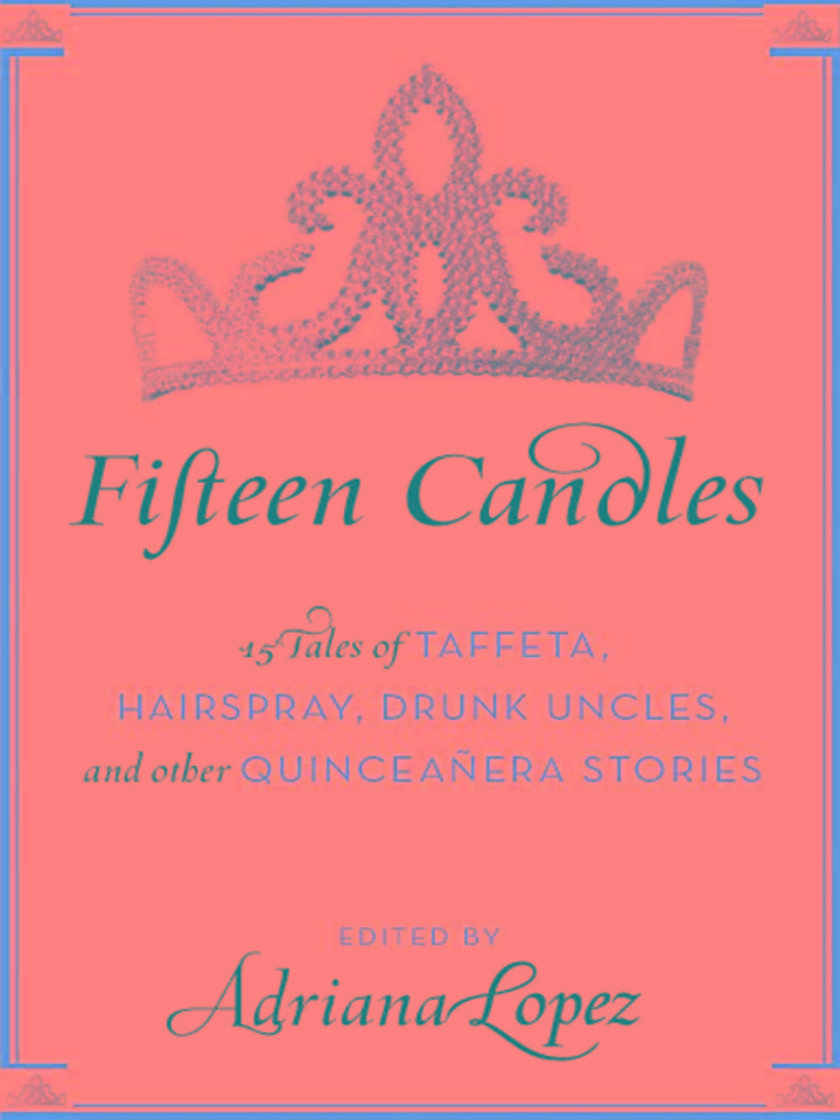
Fifteen Candles
¥84.05
For the uninitiated, the quincea era celebrates the passage of a fifteen-year-old girl into adulthood: It's a bit bat mitzvah with a dash of debutante ball, and loaded with the same potential for hilarity and adolescent angst. In this original anthology, fifteen of the brightest and funniest Latino writers, men and women alike, share their own memories of these moving and often absurd extravaganzas tales of that unique form of familial humiliation that is borne of the best intentions, fierce love, and the infectious joy of parents finally allowing their little girl to grow up.
A Field Guide to Evangelicals and Their Habitat
¥83.93
They're Going to Heaven . . . and They Know ItAt last, a complete, unsparing guide to evangelical Christians. This hilarious and highly useful manual, written by an insider, illuminates this rapidly growing and unique segment of America and offers a thoroughly entertaining, no-holds-barred, laugh-out-loud survey of evangelical culture. See inside for the scoop on: What Evangelicals Believe -- Plus a Master List of Who Is Going to Hell How to Party Like an Evangelical -- Ambrosia, Li'l Smokies, and Potluck Fever The Diversity of Evangelical Politics -- From Right-Wing to Wacko Evangelical Mating Habits -- The Shocking Truth
The Dictionary of Love
¥83.93
In its more than three hundred pages, The Dictionary of Love gets to the heart of the matter: To rusticate is to get out of town with one's lover.A ballabust is a controlling wife or girlfriend.Bob Hope had the longest Hollywood marriage.Kinkalicious is your girlfriend in a teddy.Tahiti is an island where lovers do the 'upa'upa. From "afterglow" to "zipper," "Ikea" to "Twister," The Dictionary of Love is chockablock with everything you ever wanted to know about love but couldn't find in your Funk Wagnalls. The book draws from all areas of life: love songs, poems, history, law books, sex manuals, medical and psychology texts, folklore, modern science, cookbooks, classical literature, Internet dating sites, TV shows, and today's slang. What famous people best define loveAccording to The Dictionary of Love, they include Johnny Depp, Angelina Jolie, Bill Clinton, Casanova, Lana Turner, Nefertiti, Zsa Zsa Gabor, Don Quixote, Ben & Jerry even Flipper and Lassie!Included, too, are charts, graphs, and illustrations, plus a G-spot directional map for women to give their boyfriend or lover. An indispensable tool for anyone who is composing a love sonnet, breaking up over e-mail, writing a romance novel, planning a romantic getaway, or just looking for something juicy to whisper in their lover's ear, The Dictionary of Love is a first-of-its-kind compendium of all things amorous.
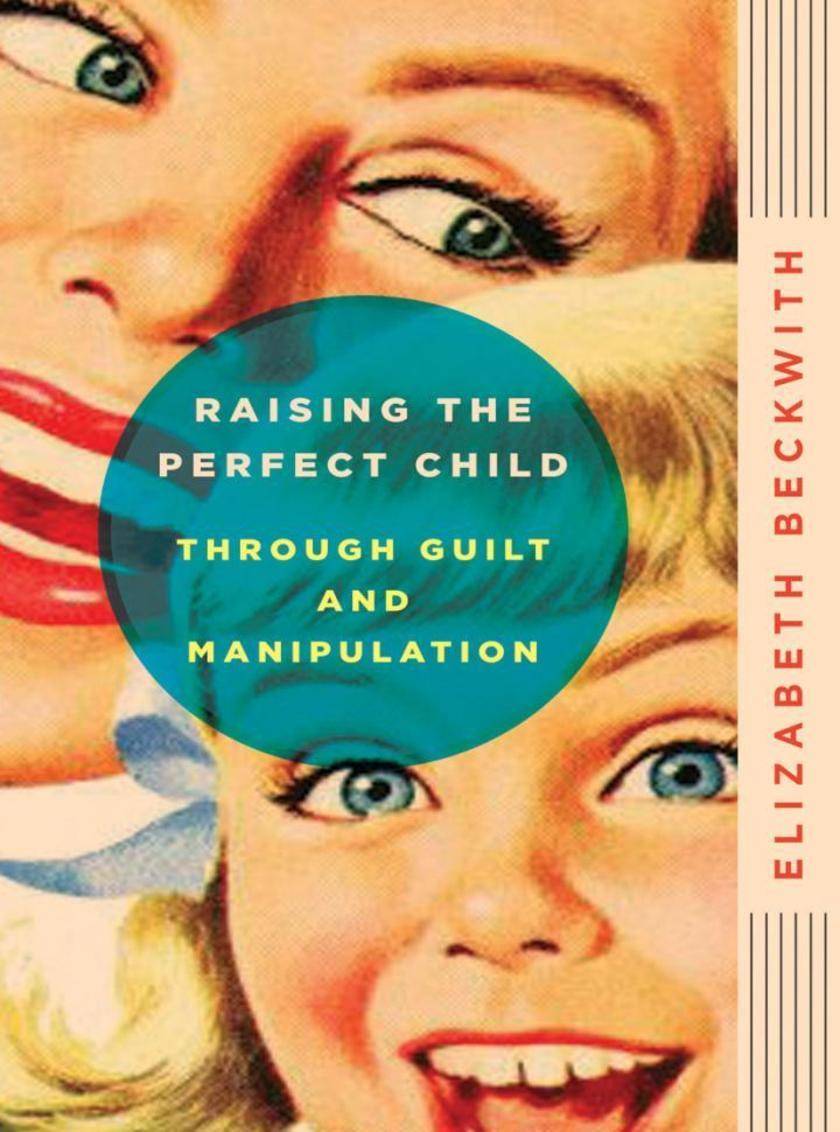
Raising the Perfect Child Through Guilt and Manipulation
¥83.03
Raising the Perfect Child Through Guilt and Manipulation is not one of those traditional, all-too-earnest parenting guides that, for generations, have sucked all the fun out of child rearing. The foundation of Elizabeth Beckwith's Guilt and Manipulation family philosophy is simple: We do things a certain way, and everyone else is an a**hole. Is that something you should put on a bumper sticker and slap on your minivanOf course not that would be trashy. But in the privacy of your own home, you can employ these essential components of Guilt and Manipulation to mold the little runts ruthlessly yet effectively into children you won't be embarrassed to admit are yours: Creating a Team: "Us" vs. "Them" How to Scare the Crap Out of Your Child (in a Positive Way) Don't Be Afraid to Raise a Nerd Mind Control: Why It's a Good Thing
My Drunk Kitchen
¥129.07
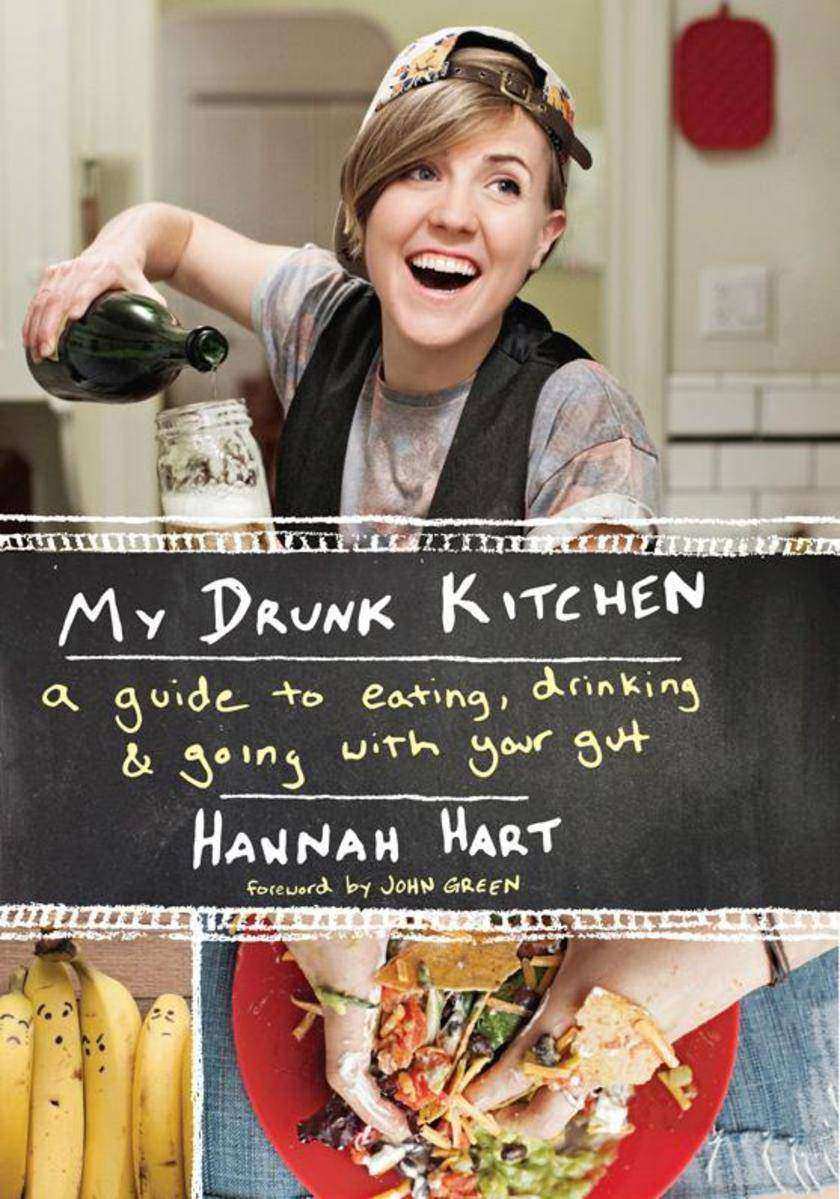
One day, sad cubicle dweller and otherwise bored New York transplant Hannah Hart decided, as a joke, to make a fake cooking show for her friend back in California. She turned on the camera, pulled out some bread and cheese, and then, as one does, started drinking. (Doesn't everyone cook with a spoon in one hand and a bottle of wine in the other?) The video went viral and an online sensation was born. My Drunk Kitchen includes recipes, stories, full color photos, and drawings to inspire your own culinary adventures in tipsy cooking. It is also a showcase for Hannah Hart's great comedic voice. Hannah offers key drink recommendations, cooking tips (like, remember to turn the oven off when you go to bed) and shares never-before-seen recipes such as: ?The Hartwich (Knowledge is ingenuity! Learn from the past!) ?Can Bake (Inventing things is hard! You don't have to start from scratch!) ?Latke Shotkas (Plan ahead to avoid a night of dread!) ?Tiny Sandwiches (Size doesn't matter! Aim to satisfy.) ?Saltine Nachos (It's not about resources! It's about being resourceful.) This is a book for anyone who believes they have what it takes to make a soufflé for the holiday party and show up the person who apparently has nothing better to do than bake things from scratch. It also recommends the drink you'll need to accompany any endeavor of this magnitude. In the end, My Drunk Kitchen may not be your go-to guide for your next dinner party . . . but it will make you laugh and drink . . . I mean think . . . about life.
The Best Thing About My Ass Is That It's Behind Me
¥145.49
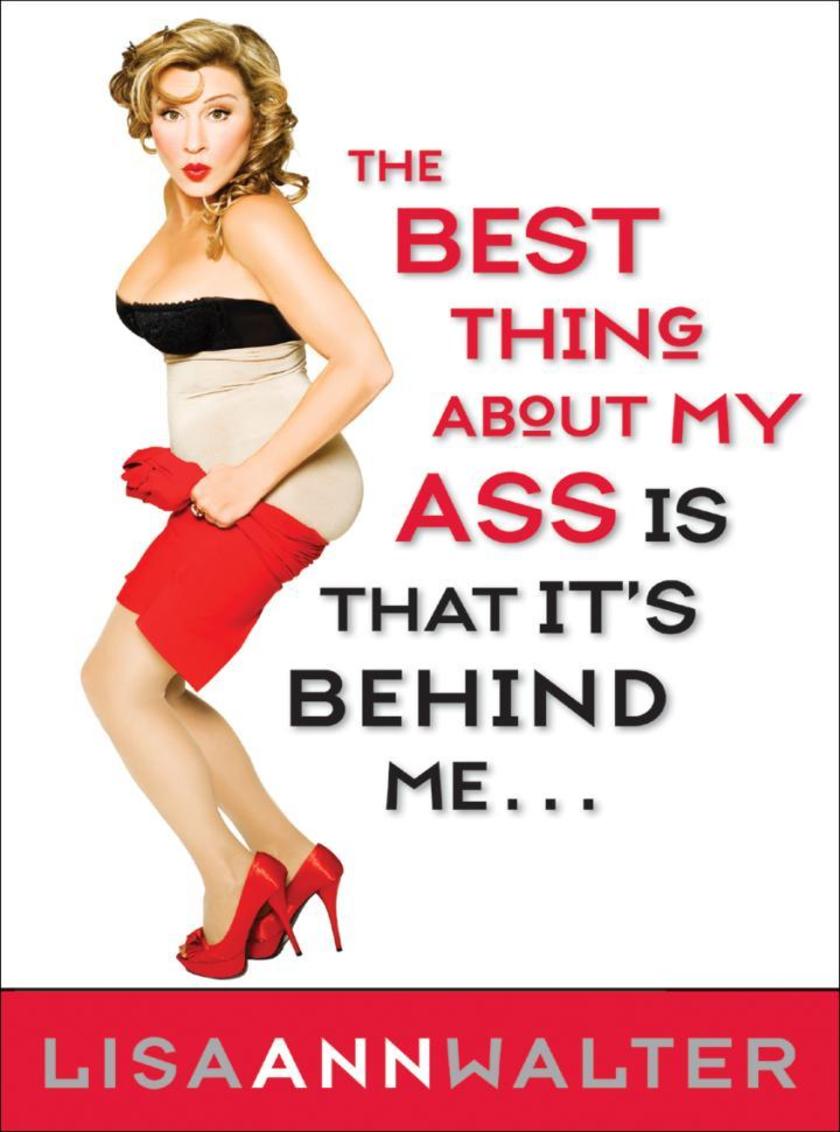
Follow one woman's bumpy, cellulite-riddled ride through size-0 Hollywood and learn how she went from body-dysmorphic to sassy-asstastic in only twenty-five short years of dieting, thousands of dollars in "procedures,". . . and one pair of industrial-strength Spanx.From the best girlfriend you didn't know you had comes this "I Can't Believe She Said That" guide to life in the real world. Actress and comic Lisa Ann Walter dishes about parenthood and the dangers of girl-on-girl snarking, explains why skinny actresses act crazy, and gives riotous advice on everything from the dating mistakes we all make to ten things you should subtract when you weigh yourself (self-tanner and dental work, for starters . . .).So what do you get when you drop a longtime self-loather into the glitz and glamour of HollywoodThis hysterical, and brutally honest, look at the impossible standard of perfection for which so many of us strive. Walter boldly shares her lifelong struggle with low self-esteem which, in her case, includes plenty of painful auditions, failed relationships, and awkward celebrity encounters, plus lots of impossible diets, questionable injectables, and dubious cosmetic procedures. Along the way, the "celebrity adjacent" Walter also tells her sometimes warm, often cringeworthy, and always funny Hollywood stories (including the reason she'd kill for Richard Gere). She also shares her sage advice by offering features such as ways to improve your self-esteem that won't cost you a dime:Four words:Push-up. Bra. Construction. Site. You don't even have to look good to get a response. Just wear sunglasses, square your shoulders, and toss your hair. Then count the whistles.Start frequenting your local gay bar. Both gays and lesbians are much more effusive about how fabulous you are! And you'll get free drinks! Always be seen with decrepit old men you'll look young and beautiful in comparison. Think how well this works for those Girls Next Door.

Daddy, Stop Talking!
¥94.10
Last Will & Testament of Adam CarollaI, Adam Carolla, being of beaten-down mind, declare this to be my Last Will and Testament. I revoke all wills and addendums previously made by me. (You guys never did listen, anyway.) Article II appoint the rest of the world's unappreciated dads as Personal Representatives to administer this Will. I bequeath to them the right to crack a couple cold ones in the garage after working their asses off all week and ask that they be permitted to watch all the porn they like and not have to change diapers and get dragged to every preschool "graduation" and PTA meeting. Article IITo my wife, I leave a safe-deposit box, the sole content of which is a note reading "Get a job. I'm dead," and my best wishes on trying to keep up with the unending demands of our houses, cars, dog, and kids.Article IIII devise, bequeath, and give my kids this book, Daddy, Stop Talking. Since you guys were the death of me, I leave you these pages of wisdom. But no cash, cars, or property. You've got to earn those. On that note, I further demand that the following message be placed on the marker of my grave: "You're All on Your Own Now. Enjoy."

Red, White & Liberal
¥83.93
As one of the foremost liberal voices in television and radio today, Alan Colmes has long been braving the wilds of controversial issues and conservative slander. The host of the talk-radio show Fox News Live with Alan Colmes and cohost of Fox News Channel's hit debate show Hannity Colmes, Colmes now offers this witty, passionate wake-up call to America.Colmes takes on the fundamental question: How can we protect our nation without diminishing our liberties, and regain our place in the world as an example of democracyColmes urges Americans to see past the government's manipulation of the War on Terror to silence critics; the lies we've been force-fed about the war in Iraq and Afghanistan; and the conservative smear campaign that has turned "liberal" into a four-letter word. From debunking the myth of the liberal media to exposing conservative hypocrisy, Colmes presents the issues with thoughtful, provocative arguments, hard facts and logic, and searing humor.Certain to spark debate and cause readers to reevaluate and reaffirm their beliefs, Red, White Liberal powerfully argues that despite our differences, we must extend our hands across party lines to find solutions, protect our shores, and preserve our freedoms.

President Me
¥88.56
My fellow Americans,President John F. Kennedy once famously said, "Hey, is that blond intern eighteen yet?" He also said, "Ask not what your country can do for you, but what you can do for your country."We've changed a lot since JFK asked us all to pitch in. We've become a nation of narcissistic, yoga-mat-toting, service-dog-having, absentee dads and gluten-free, hand-wringing, hypochondriac moms of overcaffeinated (yet somehow still lazy) twerking tweens. And our government is an inept bureaucracy incapable of doing anything except getting in our wallets and in our way. We've got to get it together, America.That is why I, Adam Carolla, hereby declare myself Candidate Carolla. The tome you hold in your hands is a statement of my intent to whip our country back into fighting shape, to eliminate the "what are you going to do for me?" mentality that has invaded our country.President Me is my manifesto, my vision for a better place . . . free of Big Government, barefoot fliers, lazy hipsters who'd rather "Occupy" than work, and the other things that are bringing our country down. With my cabinet appointees, my list of worthy and necessary presidential ManDates, and tons of great ideas for fixing our health care, education, energy, and even national parks systems . . . behold an America we can be proud of. The America I see in my head.You're welcome in advance.Your future leader,Adam
It's Not Easy Bein' Me
¥77.49
An American comic icon tells the story of his second act rise from obscurity to multimedia stardom. "When I was a kid," writes Rodney Dangerfield, "I worked tough places in show business places like Fonzo's Knuckle Room. Or Aldo's, formerly Vito's, formerly Nunzio's. That was a tough joint. I looked at the menu. They had broken leg of lamb." For once, one of America's most beloved comic icons isn't kidding. Dangerfield has seen every aspect of the entertainment industry: the rough and tumble nightclubs, the backstage gag writing sessions, the drugs, the hookers, the lousy day jobs and the red carpet star treatment. As he traces his route from a poor childhood on Long Island to his enshrinement as a comedy legend, he takes readers on a roller coaster ride through a life that has been alternately touching, sordid, funny, raunchy, and uplifting equal parts "Little Orphan Annie" and "Caligula." And unlike most celebrity autobiographers, he seems to have no qualms about delivering the unfiltered whole story, warts and all. Dangerfield's personal story is also a rollicking show business tale, full of marquee name droppings (Adam Sandler, Sam Kinison, Jim Carrey, Johnny Carson, Jerry Seinfeld) and good stories about same. Defying the old saws about the fleeting nature of fame and the dearth of second acts in American life, Dangerfield transformed himself from a debt ridden aluminium siding salesman named Jack Roy to a multimedia superstar and stayed an icon for decades. His catchphrase "I get no respect" has entered the lexicon, and he remains a visible cultural presence and perennial talk show guest. Dangerfield's hilarious and inspiring musings should thrill comedy fans and pop culture watchers, and his second act comeback will strike a chord with readers of all stripes. Maybe he'll even get some respect.

Last of the Summer Wine (The Best of British Comedy)
¥50.62
Compo: I thought you'd be open. Sid: Well that's a natural assumption if you ignore the drawn blinds and the forty foot sign that says closed. Set and filmed in and around Holmfirth, West Yorkshire, Last of the Summer Wine follows the adventures of three quirky pensioners and their equally unusual neighbours. A true British classic that appeals to all generations, it is our nation's longest running comedy programme. The line-up of the comedy trio has changed numerous times over the years, but the calibre of the family-friendly humour Roy Clarke creates has remained the same, and it's as funny and eccentric now as it was in the first episodes he wrote over 25 years ago. Including the pilot, broadcast ten months before the first series, 29 series, made up of 279 episodes, have been screened to date, with the 30th series set to air this autumn. The sitcom has consistently been a favourite in the ratings, with viewing figures peaking at 18.8 million in the mid-eighties. Famous fans include Prince Charles, the Queen Mother and the Queen, who said it was her favourite TV show. The Best of British Comedy - Last of the Summer Wine includes: ”? The History: an overview of how Last of the Summer Wine was born and developed ”? Gags and Catchphrases: a collection of classic quotes ”? Did You Know?: snippets of info about the show, cast, etc. ”? Favourite scenes: the most memorable scenes in full ”? A LOSW quiz 'If God's omnipotent, what could he possibly want with my old woman?' Clegg Compo: Your old lady's dog is crapping all over the pavement. Blamire: That's funny. He usually sews it up in little bags and sends it by post.
Life Moves Pretty Fast
¥66.22
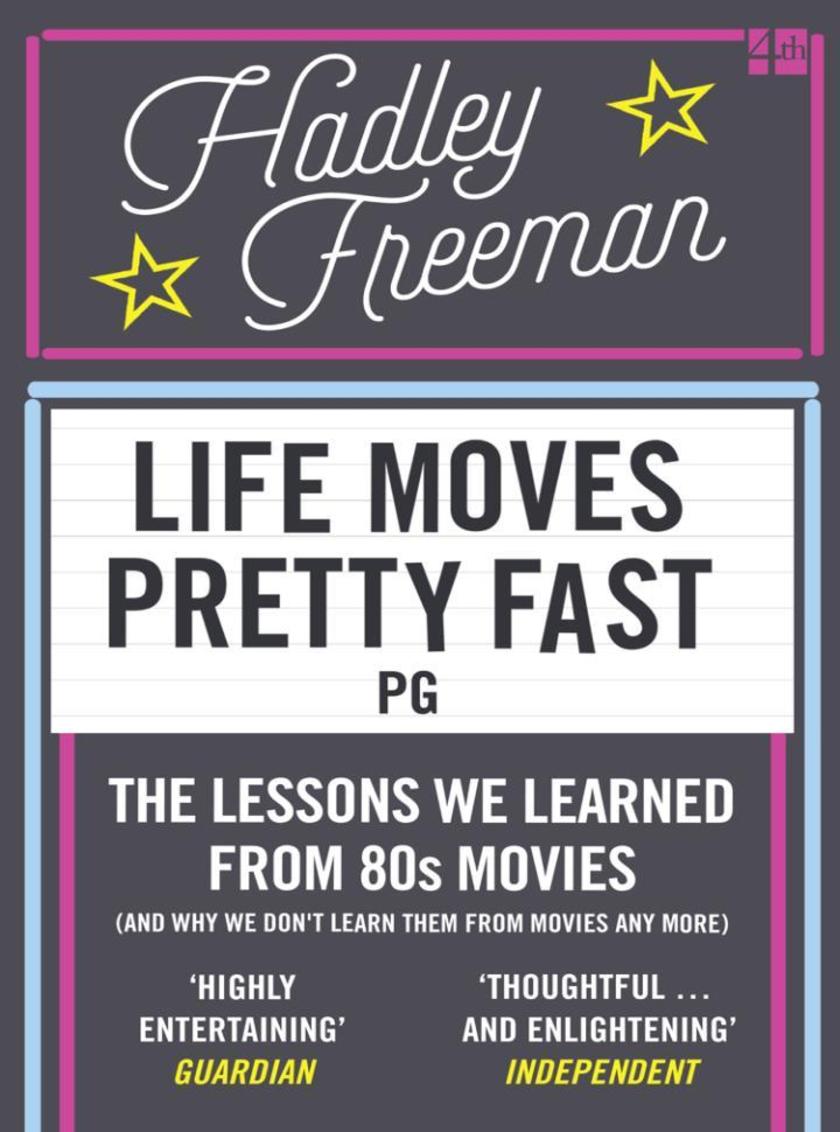
Hadley Freeman brings us her personalised guide to American movies from the 1980s – why they are brilliant, what they meant to her, and how they influenced movie-making forever. For Hadley Freeman, American moves of the 1980s have simply got it all. Comedy in Three Men and a Baby, Hannah and Her Sisters, Ghostbusters, Back to the Future and Trading Places; all a teenager needs to know – in Pretty in Pink, Ferris Bueller’s Day Off, Say Anything, The Breakfast Club and Mystic Pizza; the ultimate in action – Top Gun, Die Hard, Young Sherlock Holmes, Beverly Hills Cop and Indiana Jones and the Temple of Doom; love and sex – in 9 ? Weeks, Splash, About Last Night, The Big Chill, Bull Durham; and family fun – in The Little Mermaid, ET, Big, Parenthood and Lean On Me. Born in the late 1970s, Hadley grew up on a well-rounded diet of these movies, her entire view of the world, adult relations and expectations of what her life might hold was forged by these cult classics. In this personalised guide, she puts her obsessive movie geekery to good use, detailing the decades key players, genres and tropes, and how exactly the friendship between Dan Aykroyd and John Belushi influenced the evolution of comedy. She looks back to a cinematic world in which bankers are invariably evil, despite this being the decade of Wall Street, where children are always wiser than adults, and science is embraced with an intense enthusiasm, and the future viewed with excitement. She considers how the changes between movies then and movies today say so much about pop culture’s and society’s changing expectations of women, young people and art, and explains why Pretty in Pink and Sixteen Candles should be put on school syllabuses immediately.

The Little Book of Calorie Burning
¥31.59
A quirky guide to counting the calories as they come off, through ways you may never have considered possible Exactly how long would you have to kiss in order to burn off a bottle of beer? Or how long would you have to argue with someone to burn off a Mars bar? From playing ping-pong to having sex (at different levels of intensity!), this little guide contains over 100 activities and their calorie-burning powers. For instance, have you ever thought about the calories you burn simply by eating and digesting? Activities are arranged A-Z and show the calories burned for four different weights (yes, sadly the heavier you are, the more calories you’ll burn even when asleep). Each entry also gives an example food, telling you how long you must do that activity to burn it off.
Letters of Not Lite
¥22.66
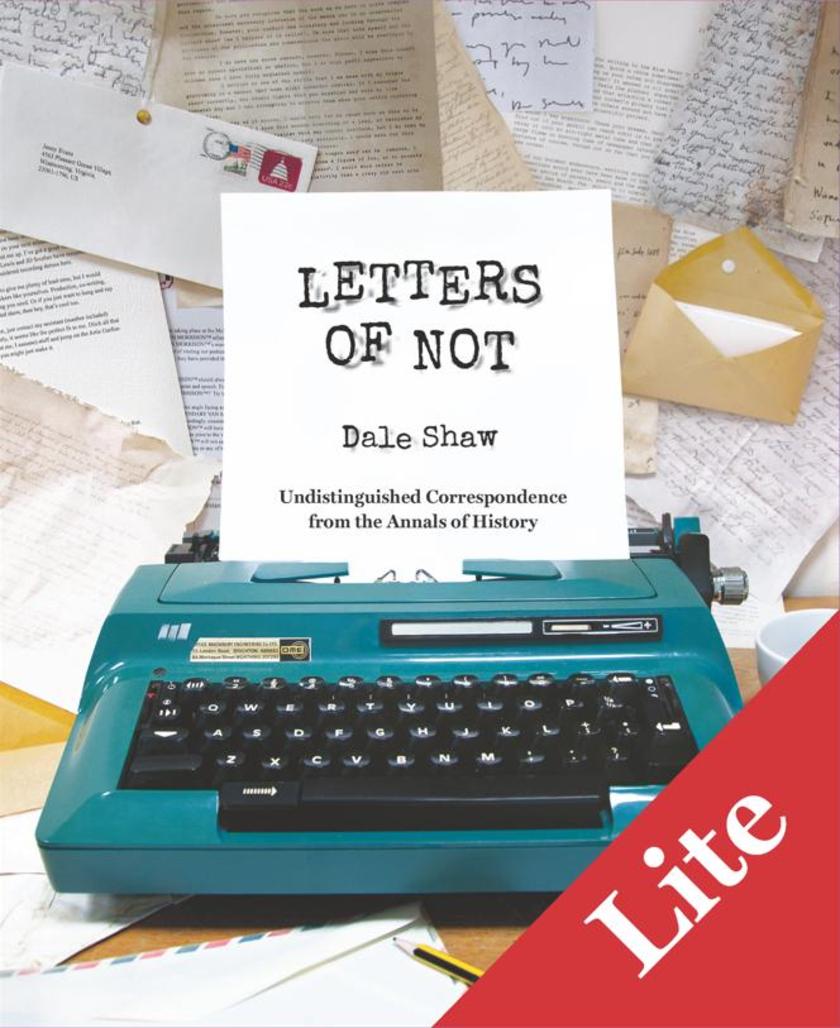
A text-only edition of the hilarious Letters of Not. A collection of remarkable and completely made-up correspondence from the great and the good across history. Many books have collated the exceptional letters and personal writing of the famous, offering a fascinating insight into well-known figures’ personal lives and hidden desires. But what of the undistinguished epistles of the renowned? Can their less auspicious musings divulge clues to their hopes and ambitions? Probably not. But they can be quite funny. ‘Letters of Not’ assembles the fictional jotted dross that was never before considered worthy of collection. The Post-it notes, the shopping lists, the failed limericks and the birthday card sentiments of history’s most celebrated sons and daughters. This ‘lite’ edition contains 6 never before seen letters. Inside you will find: Werner Herzog’s impassioned note to his cleaning lady Patti Smith’s gym application Captain Scott’s other last letter to his wife Salvador Dali’s to do list Mark E. Smith’s audio tour of Ripon Cathedral Harold Pinter greetings cards Pope Benedict’s handover notes James Joyce’s out of office Dr Heimlich’s other manoeuvre A letter from the table next to the Algonquin Round Table Tweets from the 1966 Newport Folk Festival Instructions on what to do when you meet Van Morrison And many more, beautifully rendered in their original, blatantly falsified glory and hilariously transcribed for your pleasure.

The Allotment Book
¥110.46
A wonderfully illustrated celebration of the blood, sweat and joy to be had ‘growing your own’ in an allotment – with the in-depth, practical gardening know-how for which Collins is renowned. No longer considered the preserve of old men in sheds, allotment gardening is currently enjoying a renaissance of interest. People of all ages and from all walks of life are digging their own plots in search of the ultimate in fresh, organic produce – and you cannot get more locally-sourced than your own allotment! This book testifies to the vibrancy of allotment culture, aiming both to inspire the next generation of plot-holders and to provide all the practical knowledge needed to turn a patch of soil into a lifelong adventure. Open to all the eco-gardening techniques, and the various weird and wonderful ways people make use of their plots, contents include: ? the history of allotments – from 19th century origins, through wartime ‘Dig for Victory’, to the cosmopolitan communities of today; features photos and interviews with current plot-holders ? planning your perfect allotment – finding it, assessing it, clearing the ground and working out what to grow ? the brown stuff – all you need to know about soil management, the key to growing success ? choosing a gardening method – organic, biodynamic, rotation beds, companion planting, greenhouse, multi-level, potager, cottage garden, and so on… ? the hard stuff – constructing sheds, compost bins, cold frames, fruit cages, ponds, seating and play areas ? selecting crops – what and how to grow, from parsnips and peas to chilli peppers and lemon grass ? cultivation techniques – digging, sowing, feeding, weeding and harvesting, plus troubleshooting pests and diseases ? the allotment calendar – extensive, month-by-month look at what’s in season, jobs for now and looking ahead
The Freedom Manifesto
¥90.77
The author of How to Be Idle, Tom Hodgkinson, now shares his delightfully irreverent musings on what true independence means and what it takes to be free. The Freedom Manifesto draws on French existentialists, British punks, beat poets, hippies and yippies, medieval thinkers, and anarchists to provide a new, simple, joyful blueprint for modern living. From growing your own vegetables to canceling your credit cards to reading Jean-Paul Sartre, here are excellent suggestions for nourishing mind, body, and spirit witty, provocative, sometimes outrageous, yet eminently sage advice for breaking with convention and living an uncluttered, unfettered, and therefore happier, life.
How Paul Robeson Saved My Life and Other Stories
¥56.15
Carl Reiner has been making people laugh since the days of The Dick Van Dyke Show. His showbiz bits with Mel Brooks about the 2000 Year Old Man have become the stuff of comedy legend. Jerry Seinfeld, Alan Alda, Neil Simon, Steve Allen, and Richard Lewis were all bowled over by the comic genius of The 2000 Year Old Man in the Year 2000: The Book. Now, in his wonderful new book, Carl Reiner shows off the talent and humor that have made him a comedic superstar.Filled with rich, multidimensional tales, this collection of short stories from one of America's truly great comedic minds is at once poignant, nostalgic, and laugh-out-loud funny. "How Paul Robeson Saved My Life." the story of Reiner's experiences in the army during World War II, is a darkly funny look at racism. "Lance and Gwendolyn" is a modern-day fairy tale with some surprising twists. "Dial 411 for Legal Smut" is a tongue-in-cheek look at phone sex. Whatever topic he tackles, Reiner always manages to capture the highs and lows, the follies and foibles of everyday life.
Imponderables
¥72.01
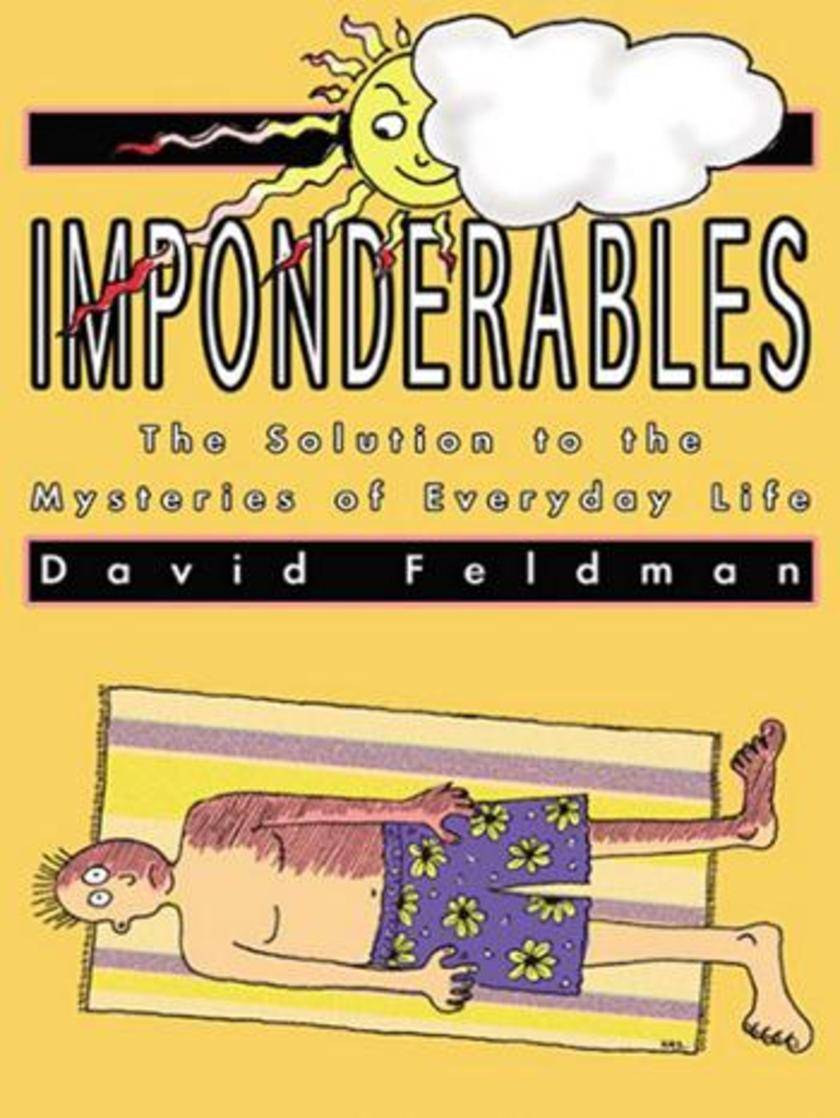
Why does an "X" stand for a kiss?Which fruits are in Juicy Fruit gumWhy do people cry at happy endings?Why do you never see baby pigeons?Pop-culture guru David Feldman demystifies these topics and so much more in Why Don't Cats Like to Swim-- the unchallenged source of answers to civilization's most perplexing questions. Part of the Imponderables series, Feldman's book arms readers with information about everyday life -- from science, history, and politics to sports, television, and radio -- that encyclopedias, dictionaries, and almanacs just don't have. Where else will you learn what makes women open their mouths when applying mascara?
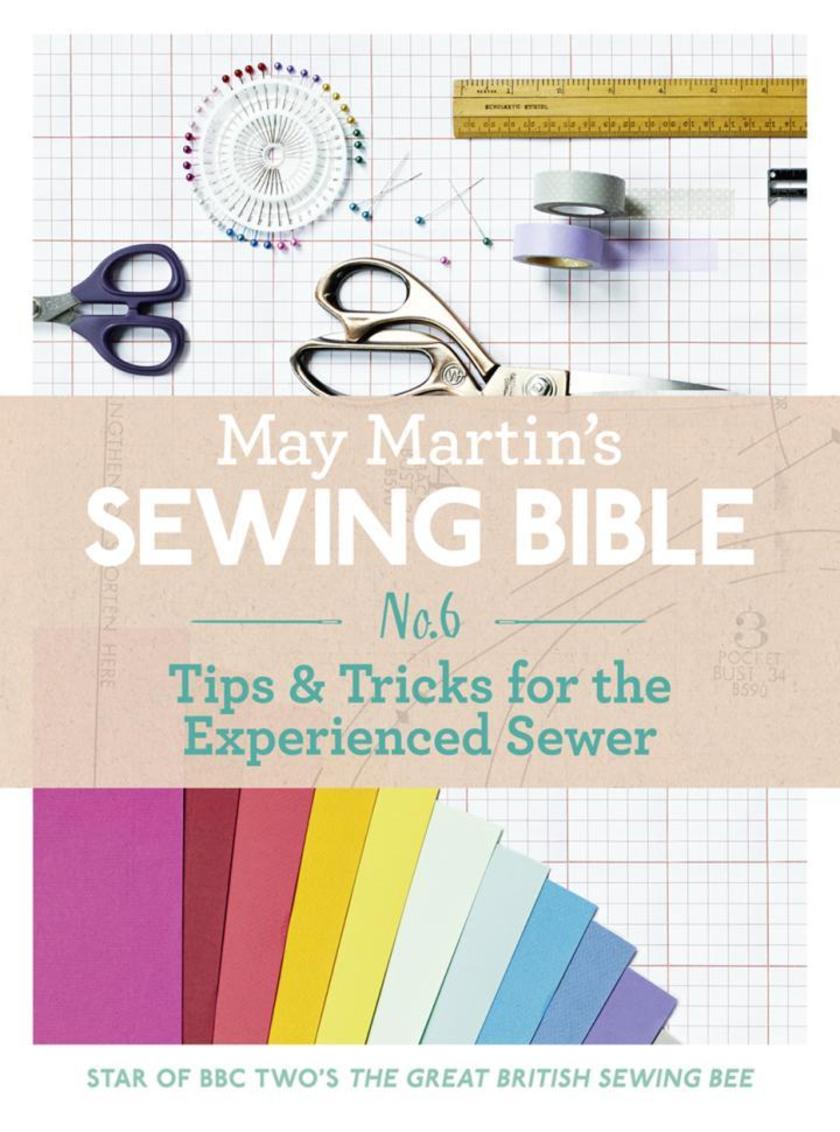
May Martin’s Sewing Bible e-short 6
¥15.60
The last of 6 eBook-only shorts from star of The Great British Sewing Bee and doyenne of the Women’s Institute, May Martin, including fabulous tips for making those difficult sewing techniques easy to master. May has been teaching sewing for over 40 years. From hems to facings May simplifies some of the trickiest methods in sewing for those already experienced and needing a little extra helping hand in the art of sewing. Beautifully styled and simple-to-follow, this authoritative sewing e-short, taken from May Martin’s Sewing Bible, offers three new approaches to some of the more complicated ways of sewing.
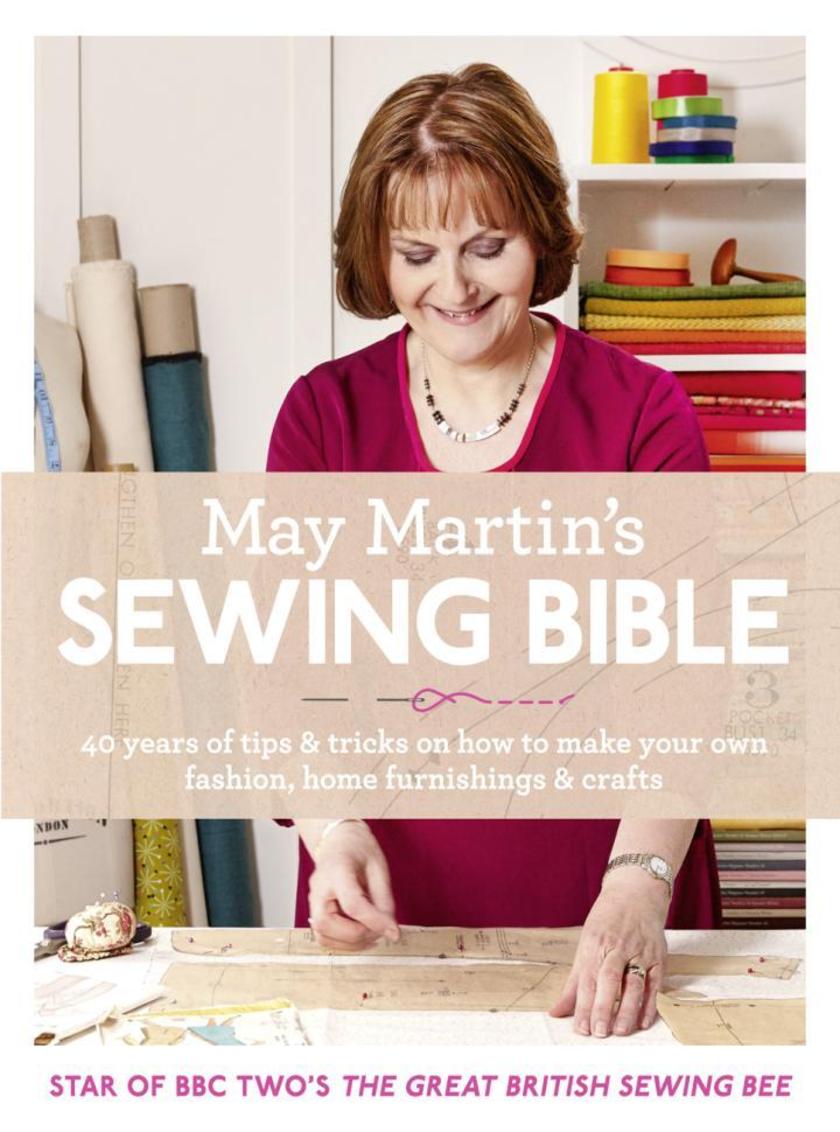
May Martin’s Sewing Bible: 40 years of tips and tricks
¥184.23
Star of the Great British Sewing Bee and doyenne of the Women’s Institute, May Martin has been teaching sewing for over 40 years. Now for the first time she shares her tips and tricks, offering the ultimate beginners’ guide to sewing. Beautifully styled and simple-to-follow, this authoritative sewing bible gives readers information on everything they need to know to get started with sewing. Providing all the essential background information on sewing, setting up your sewing space and detailed lists of all the equipment you’ll need; step-by-step instructions for over 40 projects; and a wealth of general sewing tips and techniques to help you finally master overlocking, seams, fastenings, hemming and much much more, with this book May will simplify all the skills and terms you need, demystify sewing and inspire you to unpack your sewing machine and have a go. It contains over 40 beautiful projects, including crafts, accessories, womenswear, kidswear, menswear and home furnishings. With a range of difficulties for each category – from super-easy but stylish ideas to get even the most nervous sewers started to more elaborate ideas for the aspiring sewer looking for a challenge.
Painting Expressive Watercolours
¥82.31
Mike Chaplin is one of the most popular art experts on the very successful Channel 4 series Watercolour Challenge. In this book he reveals how he works and puts forward his ideas and teaching methods, offering plenty of tips and practical advice for the amateur artist. This book is intended for artists with some painting experience who wish to develop their technique, style and outlook. It is a book to make them think and to push the technical and personal boundaries of what they believe they can achieve in paint. Mike’s teaching focuses not only on techniques but also on expanding the readers’ approach to their painting as a whole. Starting with a fascinating look at the development of watercolour as an expressive art, the book then covers selective techniques, both traditional and the more unusual, and topics such as observation, drawing, colour and composition. All kinds of painting subjects are included, from the natural landscape to urban scenes, and throughout the book Mike provides plenty of practical advice and useful tips about techniques. There are also a number of special features, focusing on particular aspects of painting, as well as several full step-by-step demonstration paintings.


