


 购物车
购物车 个人中心
个人中心
Hands-On Penetration Testing with Kali NetHunter
¥73.02
Convert Android to a powerful pentesting platform. Key Features * Get up and running with Kali Linux NetHunter * Connect your Android device and gain full control over Windows, OSX, or Linux devices * Crack Wi-Fi passwords and gain access to devices connected over the same network collecting intellectual data Book Description Kali NetHunter is a version of the popular and powerful Kali Linux pentesting platform, designed to be installed on mobile devices. Hands-On Penetration Testing with Kali NetHunter will teach you the components of NetHunter and how to install the software. You’ll also learn about the different tools included and how to optimize and use a package, obtain desired results, perform tests, and make your environment more secure. Starting with an introduction to Kali NetHunter, you will delve into different phases of the pentesting process. This book will show you how to build your penetration testing environment and set up your lab. You will gain insight into gathering intellectual data, exploiting vulnerable areas, and gaining control over target systems. As you progress through the book, you will explore the NetHunter tools available for exploiting wired and wireless devices. You will work through new ways to deploy existing tools designed to reduce the chances of detection. In the concluding chapters, you will discover tips and best practices for integrating security hardening into your Android ecosystem. By the end of this book, you will have learned to successfully use a mobile penetration testing device based on Kali NetHunter and Android to accomplish the same tasks you would traditionally, but in a smaller and more mobile form factor. What you will learn * Choose and configure a hardware device to use Kali NetHunter * Use various tools during pentests * Understand NetHunter suite components * Discover tips to effectively use a compact mobile platform * Create your own Kali NetHunter-enabled device and configure it for optimal results * Learn to scan and gather information from a target * Explore hardware adapters for testing and auditing wireless networks and Bluetooth devices Who this book is for Hands-On Penetration Testing with Kali NetHunter is for pentesters, ethical hackers, and security professionals who want to learn to use Kali NetHunter for complete mobile penetration testing and are interested in venturing into the mobile domain. Some prior understanding of networking assessment and Kali Linux will be helpful.
Docker on Windows
¥90.46
Learn how to run new and old applications in Docker containers on Windows - modernizing the architecture, improving security and maximizing efficiency. Key Features * Run .NET Framework and .NET Core apps in Docker containers for efficiency, security and portability * Design distributed containerized apps, using enterprise-grade open source software from Docker Hub * Build a CI/CD pipeline with Docker, going from source to a production Docker Swarm in the cloud Book Description Docker on Windows, Second Edition teaches you all you need to know about Docker on Windows, from the 101 to running highly-available workloads in production. You’ll be guided through a Docker journey, starting with the key concepts and simple examples of .NET Framework and .NET Core apps in Docker containers on Windows. Then you’ll learn how to use Docker to modernize the architecture and development of traditional ASP.NET and SQL Server apps. The examples show you how to break up legacy monolithic applications into distributed apps and deploy them to a clustered environment in the cloud, using the exact same artifacts you use to run them locally. You’ll see how to build a CI/CD pipeline which uses Docker to compile, package, test and deploy your applications. To help you move confidently to production, you’ll learn about Docker security, and the management and support options. The book finishes with guidance on getting started with Docker in your own projects. You’ll walk through some real-world case studies for Docker implementations, from small-scale on-premises apps to very large-scale apps running on Azure. What you will learn * Understand key Docker concepts: images, containers, registries and swarms * Run Docker on Windows 10, Windows Server 2019, and in the cloud * Deploy and monitor distributed solutions across multiple Docker containers * Run containers with high availability and failover with Docker Swarm * Master security in-depth with the Docker platform, making your apps more secure * Build a Continuous Deployment pipeline, running Jenkins and Git in Docker * Debug applications running in Docker containers using Visual Studio * Plan the adoption of Docker in your organization Who this book is for If you want to modernize an old monolithic application without rewriting it, smooth the deployment to production, or move to DevOps or the cloud, then Docker is the enabler for you. This book gives you a solid grounding in Docker so you can confidently approach all of these scenarios.
Windows Server 2019 Automation with PowerShell Cookbook
¥108.99
Automate Windows server tasks with the powerful features of the PowerShell Language Key Features * Leverage PowerShell to automate complex Windows server tasks * Master new features such as DevOps, and containers, and speed up their performance using PowerShell * Improve PowerShell's usability, and control and manage Windows-based environments by working through exciting recipes Book Description Windows Server 2019 represents the latest version of Microsoft’s flagship server operating system. It also comes with PowerShell Version 5.1 and has a number of additional features that IT pros find useful. The book helps the reader learn how to use PowerShell and manage core roles, features, and services of Windows Server 2019. You will begin with creating a PowerShell Administrative Environment that has updated versions of PowerShell and the Windows Management Framework, updated versions of the .NET Framework, and third-party modules. Next, you will learn to use PowerShell to set up and configure Windows Server 2019 networking and also managing objects in the AD environment. You will also learn to set up a host to utilize containers and how to deploy containers. You will also be implementing different mechanisms for achieving desired state configuration along with getting well versed with Azure infrastructure and how to setup Virtual Machines, web sites, and shared files on Azure. Finally, you will be using some powerful tools you can use to diagnose and resolve issues with Windows Server 2019. By the end of the book, you will learn a lot of trips and tricks to automate your windows environment with PowerShell What you will learn * Perform key admin tasks on Windows Server 2019 * Employing best practices for writing PowerShell scripts and configuring Windows Server 2019 * Use the .NET Framework to achieve administrative scripting * Set up VMs, websites, and shared files on Azure * Report system performance using built-in cmdlets and WMI to obtain single measurements * Know the tools you can use to diagnose and resolve issues with Windows Server Who this book is for If you are a systems administrator, engineer, or an architect working with Windows Server 2016 interested in upgrading to Windows Server 2019 and automating tasks with PowerShell, then this book is for you. A basic knowledge of PowerShell is expected.
Getting Started with Qt 5
¥54.49
Begin writing graphical user interface(GUI) applications for building human machine interfaces with a clear understanding of key concepts of the Qt framework Key Features * Learn how to write, assemble, and build Qt application from the command line * Understand key concepts like Signals and Slots in Qt * Best practices and effective techniques for designing graphical user interfaces using Qt 5 Book Description Qt is a cross-platform application framework and widget toolkit that is used to create GUI applications that can run on different hardware and operating systems. The main aim of this book is to introduce Qt to the reader. Through the use of simple examples, we will walk you through building blocks without focusing too much on theory. Qt is a popular tool that can be used for building a variety of applications, such as web browsers, media players such as VLC, and Adobe Photoshop. Following Qt installation and setup, the book dives straight into helping you create your first application. You will be introduced to Widgets, Qt's interface building block, and the many varieties that are available for creating GUIs. Next, Qt's core concept of signals and slots are well illustrated with sufficient examples. The book further teaches you how to create custom widgets, signals and slots, and how to communicate useful information via dialog boxes. To cap everything off, you will be taken through writing applications that can connect to databases in order to persist data. By the end of the book, you should be well equipped to start creating your own Qt applications and confident enough to pick up more advanced Qt techniques and materials to hone your skills. What you will learn * Set up and configure your machine to begin developing Qt applications * Discover different widgets and layouts for constructing UIs * Understand the key concept of signals and slots * Understand how signals and slots help animate a GUI * Explore how to create customized widgets along with signals and slots * Understand how to subclass and create a custom windows application * Understand how to write applications that can talk to databases. Who this book is for Anyone trying to start development of graphical user interface application will find this book useful. One does not need prior exposure to other toolkits to understand this book. In order to learn from this book you should have basic knowledge of C++ and a good grasp of Object Oriented Programming. Familiarity with GNU/Linux will be very useful though it's not a mandatory skill.
Advanced Serverless Architectures with Microsoft Azure
¥63.21
Build complex, observable, and fault-tolerant serverless systems easily on Microsoft Azure. Key Features * Use serverless systems to help you fulfill complex requirements * Develop your knowledge of Azure Microsoft Serverless * Understand concepts with a hands-on approach and helpful examples Book Description Advanced Serverless Architectures with Microsoft Azure redefines your experience of designing serverless systems. It shows you how to tackle challenges of varying levels, not just the straightforward ones. You'll be learning how to deliver features quickly by building systems, which retain the scalability and benefits of serverless. You'll begin your journey by learning how to build a simple, completely serverless application. Then, you'll build a highly scalable solution using a queue, load messages onto the queue, and read them asynchronously. To boost your knowledge further, the book also features durable functions and ways to use them to solve errors in a complex system. You'll then learn about security by building a security solution from serverless components. Next, you’ll gain an understanding of observability and ways to leverage application insights to bring you performance benefits. As you approach the concluding chapters, you’ll explore chaos engineering and the benefits of resilience, by actively switching off a few of the functions within a complex system, submitting a request, and observing the resulting behavior. By the end of this book, you will have developed the skills you need to build and maintain increasingly complex systems that match evolving platform requirements. What you will learn * Understand what true serverless architecture is * Study how to extend and scale architectures until they become ‘complex' * Implement durable functions in your design * Improve the observability of your serverless architecture * Implement security solutions using serverless services * Learn how to ‘practise' chaos engineering in production Who this book is for Advanced Serverless Architectures with Microsoft Azure is is ideal if you want to build serverless systems with fewer outages and high performance using Azure. Familiarity with the C# syntax and Azure Functions and ARM templates will help you to benefit more from this book. Prior knowledge of basic front-end development, HTML JS, and CSS is beneficial but not essential. Some DevOps knowledge is also beneficial but not essential.
Hands-On Data Structures and Algorithms with Kotlin
¥63.21
Understand and solve complex computational problems and write efficient code with Kotlin Key Features * Learn about important data structures such as lists, arrays, queues, and stacks * Design custom algorithms for real-life implementations * Identify suitable tools for different scenarios and deliver immediate results Book Description Data structures and algorithms are more than just theoretical concepts. They help you become familiar with computational methods for solving problems and writing logical code. Equipped with this knowledge, you can write efficient programs that run faster and use less memory. Hands-On Data Structures and Algorithms with Kotlin book starts with the basics of algorithms and data structures, helping you get to grips with the fundamentals and measure complexity. You'll then move on to exploring the basics of functional programming while getting used to thinking recursively. Packed with plenty of examples along the way, this book will help you grasp each concept easily. In addition to this, you'll get a clear understanding of how the data structures in Kotlin's collection framework work internally. By the end of this book, you will be able to apply the theory of data structures and algorithms to work out real-world problems. What you will learn * Understand the basic principles of algorithms and data structures * Explore general-purpose data structures with arrays and linked lists * Get to grips with the basics of stacks, queues, and double-ended queues * Understand functional programming and related data structures * Use performant searching and efficient sorting * Uncover how Kotlin's collection framework functions * Become adept at implementing different types of maps Who this book is for If you're a Kotlin developer who wants to learn the intricacies of implementing data structures and algorithms for scalable application development, this book is for you.
Installation, Storage, and Compute with Windows Server 2016: Microsoft 70-740 MC
¥73.02
A comprehensive guide for MCSA Exam 70-740, that will help you prepare from day one to earn the valuable Microsoft Certificate Key Features * Leverage practice questions and mock tests to pass this certification with confidence * Learn to Install Windows Servers,implement high availability, and monitor server environments * Gain necessary skills to implement and configure storage and compute features Book Description MCSA: Windows Server 2016 certification is one of the most sought-after certifications for IT professionals, which includes working with Windows Server and performing administrative tasks around it. This book is aimed at the 70-740 certification and is part of Packt's three-book series on MCSA Windows Server 2016 certification, which covers Exam 70-740, Exam 70-741, and Exam 70-742. This book will cover exam objectives for the 70-740 exam, and starting from installing and configuring Windows Server 2016, Windows Server imaging and deployment to configuring and managing disks and volumes, implementing and configuring server storage and implementing Hyper-V. At the end of each chapter you will be provided test questions to revise your learnings which will boost your confidence in preparing for the actual certifications. By the end of this book, you will learn everything needed to pass the, MCSA Exam 70-740: Installation, Storage, and Compute with Windows Server 2016, certification. What you will learn * Install Windows Server 2016 * Upgrade and Migrate servers and workloads * Implement and configure server storage * Install and configure Hyper-V * Configure the virtual machine (VM) settings * Configure Hyper-V storage * Configure Hyper-V networking Who this book is for This book is ideal for system administrators interested in installing and configuring storage and compute features with Windows Sever 2016 and aiming to pass the 70-740 certification. Some experience with Windows Server in an enterprise environment is assumed.
Hands-On Business Intelligence with Qlik Sense
¥73.02
Create dynamic dashboards to bring interactive data visualization to your enterprise using Qlik Sense Key Features * Implement various Qlik Sense features to create interactive dashboards * Analyze data easily and make business decisions faster using Qlik Sense * Perform self-service data analytics and geospatial analytics using an example-based approach Book Description Qlik Sense allows you to explore simple-to-complex data to reveal hidden insights and data relationships to make business-driven decisions. Hands-On Business Intelligence with Qlik Sense begins by helping you get to grips with underlying Qlik concepts and gives you an overview of all Qlik Sense’s features. You will learn advanced modeling techniques and learn how to analyze the data loaded using a variety of visualization objects. You’ll also be trained on how to share apps through Qlik Sense Enterprise and Qlik Sense Cloud and how to perform aggregation with AGGR. As you progress through the chapters, you’ll explore the stories feature to create data-driven presentations and update an existing story. This book will guide you through the GeoAnalytics feature with the geo-mapping object and GeoAnalytics connector. Furthermore, you’ll learn about the self-service analytics features and perform data forecasting using advanced analytics. Lastly, you’ll deploy Qlik Sense apps for mobile and tablet. By the end of this book, you will be well-equipped to run successful business intelligence applications using Qlik Sense's functionality, data modeling techniques, and visualization best practices. What you will learn * Discover how to load, reshape, and model data for analysis * Apply data visualization practices to create stunning dashboards * Make use of Python and R for advanced analytics * Perform geo-analysis to create visualizations using native objects * Learn how to work with AGGR and data stories Who this book is for If you’re a data analyst, BI developer, or interested in business intelligence and want to gain practical experience of working on Qlik Sense, this book is for you. You’ll also find it useful if you want to explore Qlik Sense’s next-generation applications for self-service business intelligence. No prior experience of working with Qlik Sense is required.
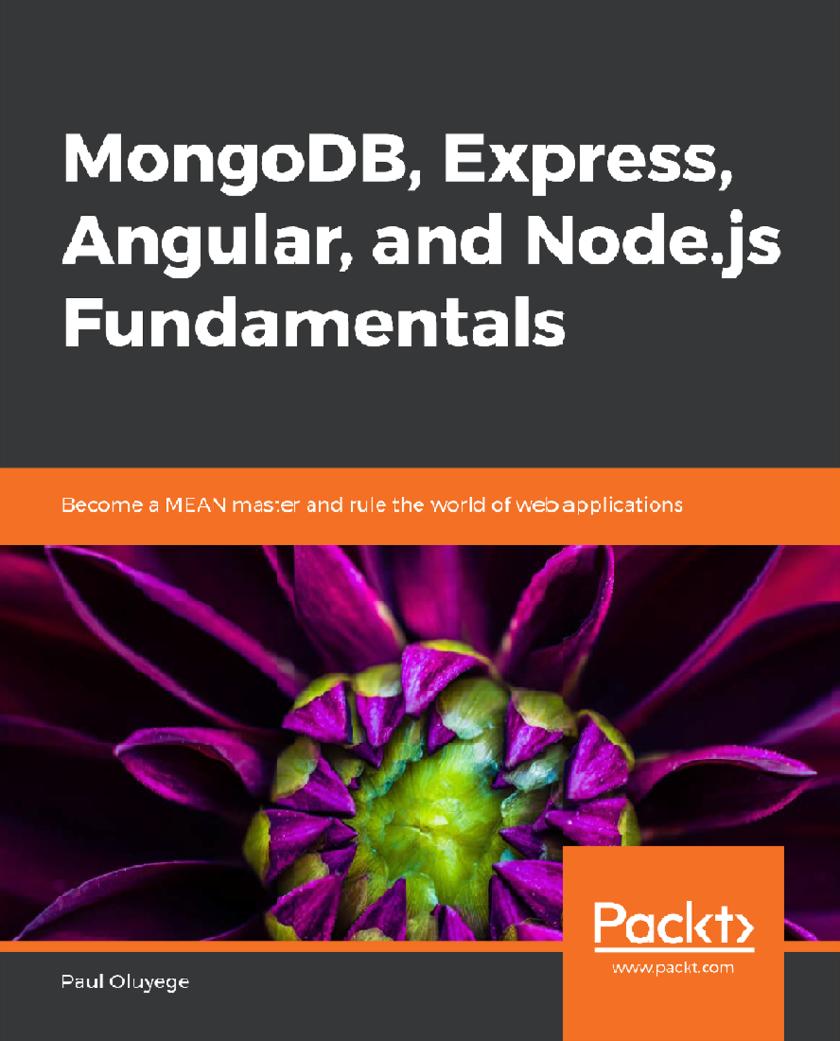
MongoDB, Express, Angular, and Node.js Fundamentals
¥63.21
Build fast, robust, and maintainable modern full-stack web applications using MongoDB, Express, Angular, and Node.js. Key Features * Build highly scalable, asynchronous, and event-driven APIs * Develop a user authentication system with MEAN * Build a full-fledged application using the MEAN stack Book Description MongoDB, Express, Angular and Node.js Fundamentals is a practical guide to the tried-and-true production-ready MEAN stack, with tips and best practices. The book begins by demystifying the MEAN architecture. You’ll take a look at the features of the JavaScript libraries, technologies, and frameworks that make up a MEAN stack. With this book, you'll not only learn how to develop highly scalable, asynchronous, and event-driven APIs quickly with Express and Node.js, but you'll also be able put your full-stack skills to use by building two full-fledged MEAN applications from scratch. You’ll understand how to build a blogging application using the MEAN stack and get to grips with user authentication using MEAN. As you progress through the chapters, you’ll explore some old and new features of Angular, such as pipes, reactive forms, modules and optimizing apps, animations and unit testing, and much more. By the end of the book, you’ll get ready to take control of the MEAN stack and transform into a full-stack JavaScript developer, developing efficient web applications using Javascript technologies. What you will learn * Understand the MEAN architecture * Create RESTful APIs to complete CRUD tasks * Build a blogging application with basic features * Describe best practices to secure node applications * Implement authentication and authorization * Creating simple animations using Angular * Perform unit testing on Angular applications Who this book is for If you are a beginner or intermediate frontend developer who wants to become full-stack JavaScript developer, this book is ideal for you. You'll need some prior exposure to MongoDB as we skim over its basics before getting straight to work.
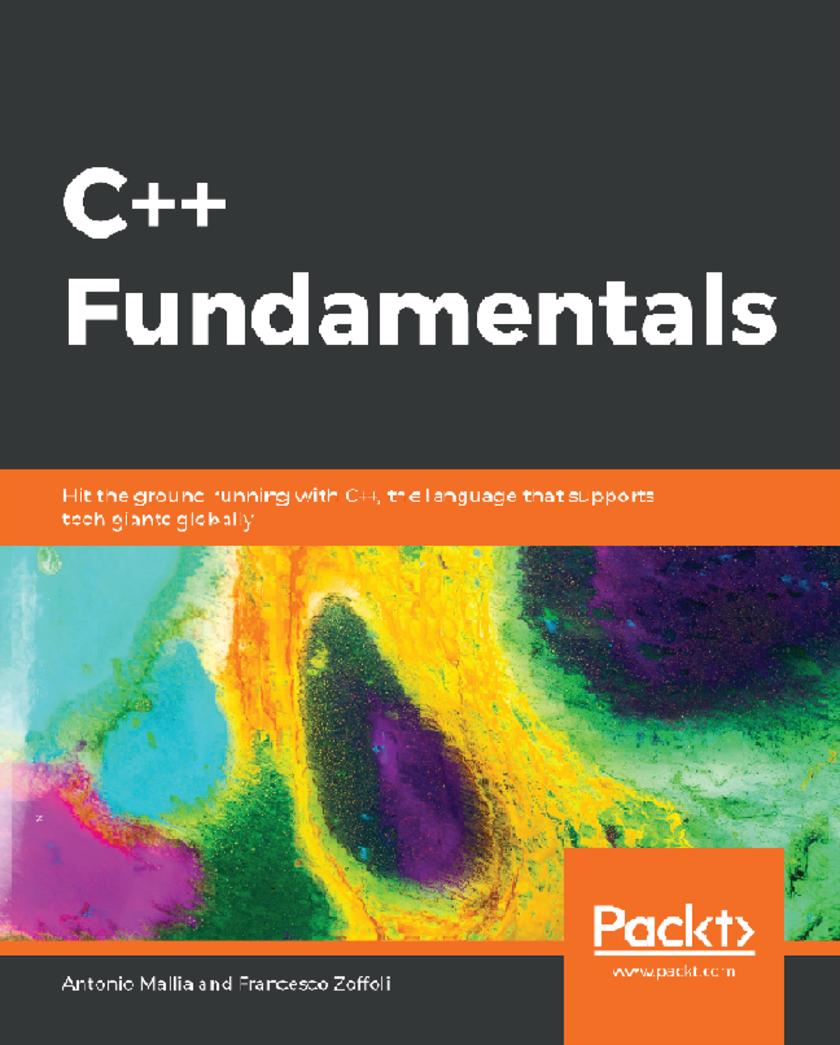
C++ Fundamentals
¥54.49
Write high-level abstractions while retaining full control of the hardware, performances, and maintainability. Key Features * Transform your ideas into modern C++ code, with both C++11 and C++17 * Explore best practices for creating high-performance solutions * Understand C++ basics and work with concrete real-world examples Book Description C++ Fundamentals begins by introducing you to the C++ syntax. You will study the semantics of variables along with their advantages and trade-offs, and see how they can be best used to write safe and efficient code. With the help of this book, you’ll be able to compile fully working C++ programs and understand how variables, references, and pointers can be used to manipulate the state of the program. Then you'll explore functions and classes — the features that C++ offers to organize a program — and use them to solve more complex problems such as functions and classes. You’ll also understand common pitfalls and modern best practices, especially the ones that diverge from the C++98 guideline. As you advance through the chapters, you’ll study the advantages of generic programming and write your own templates to make generic algorithms that work with any type. This C++ book will guide you in fully exploiting standard containers and understanding how to pick the appropriate container for each problem. You will even work with a variety of memory management tools in C++. By the end of this book, you will not only be able to write efficient code, but also be equipped to improve the readability, performance, and maintainability of your programs using standard algorithms. What you will learn * Work with the C++ compilation model and syntaxes * Apply best practices for writing functions and classes * Write safe, generic, and efficient code with templates * Explore the containers that C++ standard offers * Discover the new paradigms introduced with C++11, C++14, and C++17 * Get to grips with the core language features of C++ * Abstract complex problems using object-oriented programming in C++ Who this book is for If you’re a developer looking to learn a new powerful language or are familiar with C++ but want to update your knowledge with modern paradigms of C++11, C++14, and C++17, this book is for you. To easily understand the concepts in the book, you must be familiar with the basics of programming.
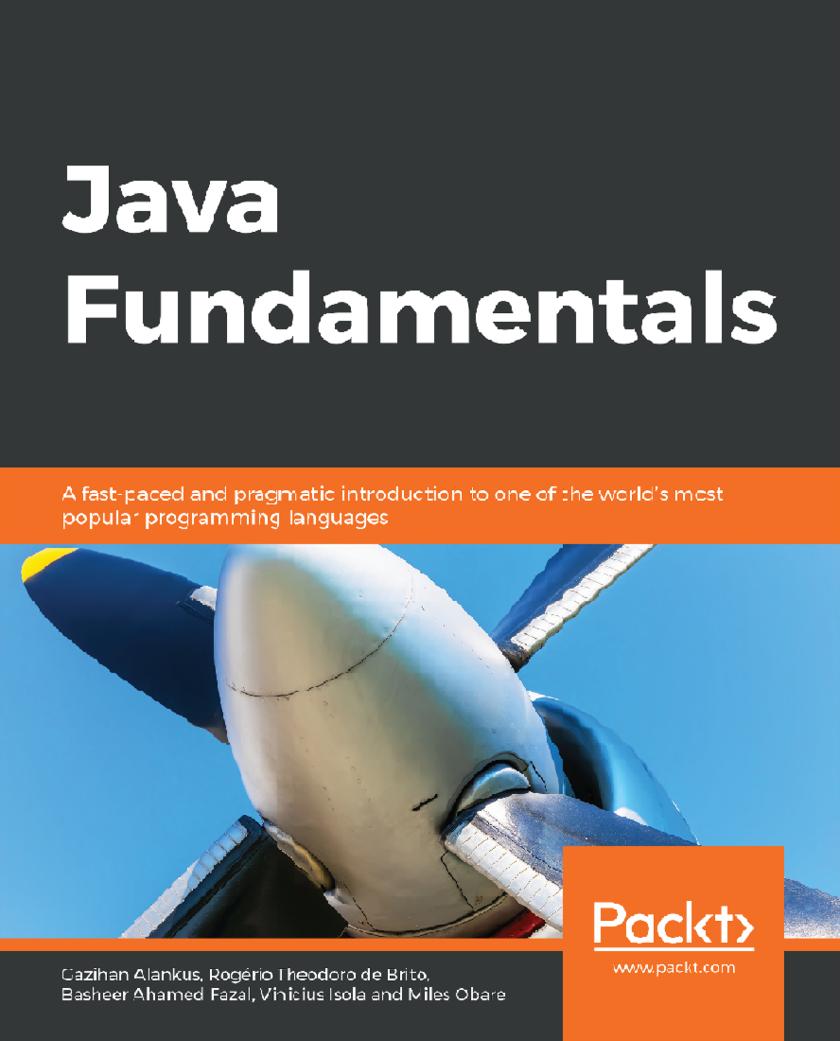
Java Fundamentals
¥54.49
Enhance your career options with this well-crafted object-oriented programming language that enjoys the support of an enormous ecosystem of tools and libraries Key Features * Get introduced to Java, its features, and its ecosystem * Understand how Java uses object-oriented programming * Become an expert Java exception handler Book Description Since its inception, Java has stormed the programming world. Its features and functionalities provide developers with the tools needed to write robust cross-platform applications. Java Fundamentals introduces you to these tools and functionalities that will enable you to create Java programs. The book begins with an introduction to the language, its philosophy, and evolution over time, until the latest release. You'll learn how the javac/java tools work and what Java packages are - the way a Java program is usually organized. Once you are comfortable with this, you'll be introduced to advanced concepts of the language, such as control flow keywords. You'll explore object-oriented programming and the part it plays in making Java what it is. In the concluding chapters, you'll get to grips with classes, typecasting, and interfaces, and understand the use of data structures, arrays, strings, handling exceptions, and creating generics. By the end of this book, you will have learned to write programs, automate tasks, and follow advanced courses on algorithms and data structures or explore more advanced Java courses. What you will learn * Create and run Java programs * Use data types, data structures, and control flow in your code * Implement best practices while creating objects * Work with constructors and inheritance * Understand advanced data structures to organize and store data * Employ generics for stronger check-types during compilation * Learn to handle exceptions in your code Who this book is for Java Fundamentals is designed for tech enthusiasts who are familiar with some programming languages and want a quick introduction to the most important principles of Java.
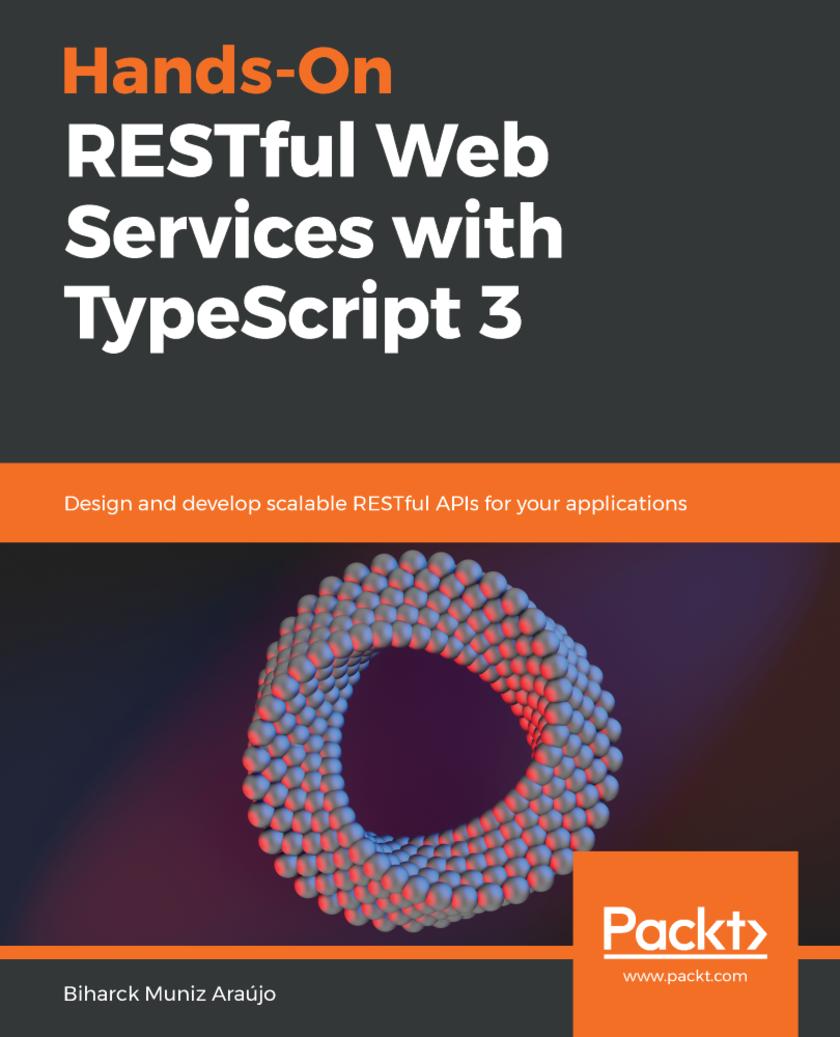
Hands-On RESTful Web Services with TypeScript 3
¥73.02
A step-by-step guide that will help you design, develop, scale, and deploy RESTful APIs with TypeScript 3 and Node.js Key Features * Gain in-depth knowledge of OpenAPI and Swagger to build scalable web services * Explore a variety of test frameworks and test runners such as Stryker, Mocha, and Chai * Create a pipeline by Dockerizing your environment using Travis CI, Google Cloud Platform, and GitHub Book Description In the world of web development, leveraging data is the key to developing comprehensive applications, and RESTful APIs help you to achieve this systematically. This book will guide you in designing and developing web services with the power of TypeScript 3 and Node.js. You'll design REST APIs using best practices for request handling, validation, authentication, and authorization. You'll also understand how to enhance the capabilities of your APIs with ODMs, databases, models and views, as well as asynchronous callbacks. This book will guide you in securing your environment by testing your services and initiating test automation with different testing approaches. Furthermore, you'll get to grips with developing secure, testable, and more efficient code, and be able to scale and deploy TypeScript 3 and Node.js-powered RESTful APIs on cloud platforms such as the Google Cloud Platform. Finally, the book will help you explore microservices and give you an overview of what GraphQL can allow you to do. By the end of this book, you will be able to use RESTful web services to create your APIs for mobile and web apps and other platforms. What you will learn * Explore various methods to plan your services in a scalable way * Understand how to handle different request types and the response status code * Get to grips with securing web services * Delve into error handling and logging your web services for improved debugging * Uncover the microservices architecture and GraphQL * Create automated CI/CD pipelines for release and deployment strategies Who this book is for If you’re a developer who has a basic understanding of REST concepts and want to learn how to design and develop RESTful APIs, this book is for you. Prior knowledge of TypeScript will help you make the most out of this book.
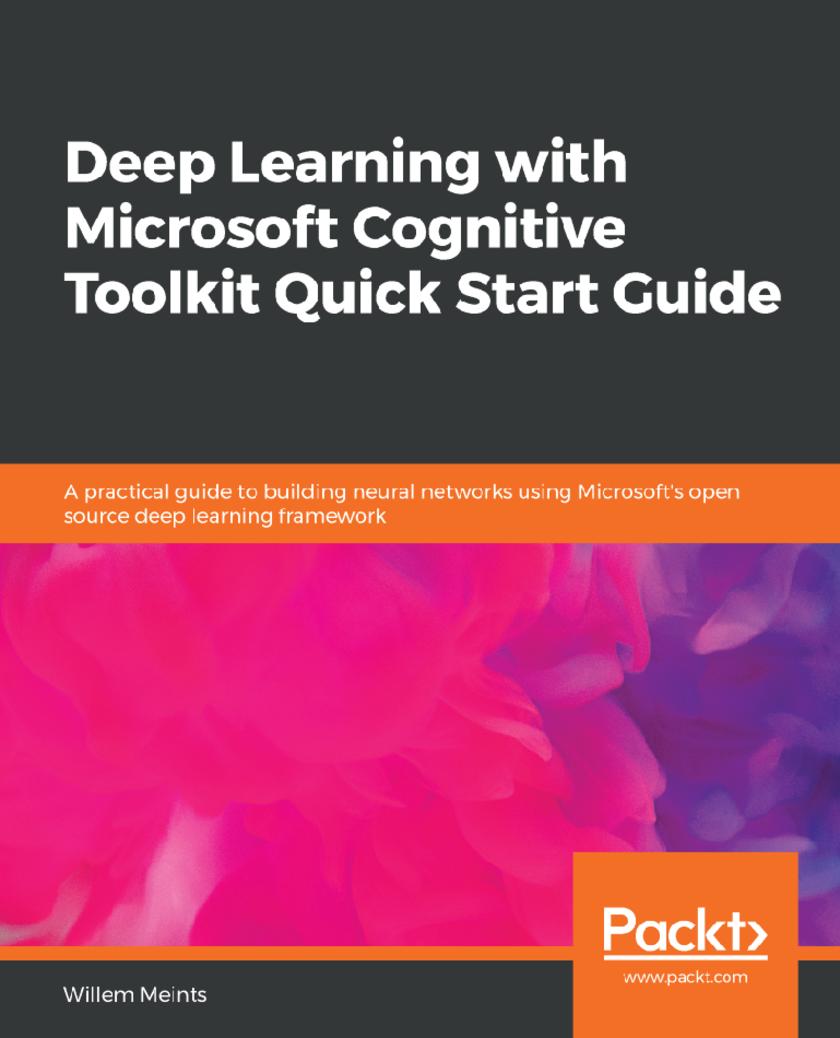
Deep Learning with Microsoft Cognitive Toolkit Quick Start Guide
¥54.49
Learn how to train popular deep learning architectures such as autoencoders, convolutional and recurrent neural networks while discovering how you can use deep learning models in your software applications with Microsoft Cognitive Toolkit Key Features * Understand the fundamentals of Microsoft Cognitive Toolkit and set up the development environment * Train different types of neural networks using Cognitive Toolkit and deploy it to production * Evaluate the performance of your models and improve your deep learning skills Book Description Cognitive Toolkit is a very popular and recently open sourced deep learning toolkit by Microsoft. Cognitive Toolkit is used to train fast and effective deep learning models. This book will be a quick introduction to using Cognitive Toolkit and will teach you how to train and validate different types of neural networks, such as convolutional and recurrent neural networks. This book will help you understand the basics of deep learning. You will learn how to use Microsoft Cognitive Toolkit to build deep learning models and discover what makes this framework unique so that you know when to use it. This book will be a quick, no-nonsense introduction to the library and will teach you how to train different types of neural networks, such as convolutional neural networks, recurrent neural networks, autoencoders, and more, using Cognitive Toolkit. Then we will look at two scenarios in which deep learning can be used to enhance human capabilities. The book will also demonstrate how to evaluate your models' performance to ensure it trains and runs smoothly and gives you the most accurate results. Finally, you will get a short overview of how Cognitive Toolkit fits in to a DevOps environment What you will learn * Set up your deep learning environment for the Cognitive Toolkit on Windows and Linux * Pre-process and feed your data into neural networks * Use neural networks to make effcient predictions and recommendations * Train and deploy effcient neural networks such as CNN and RNN * Detect problems in your neural network using TensorBoard * Integrate Cognitive Toolkit with Azure ML Services for effective deep learning Who this book is for Data Scientists, Machine learning developers, AI developers who wish to train and deploy effective deep learning models using Microsoft CNTK will find this book to be useful. Readers need to have experience in Python or similar object-oriented language like C# or Java.
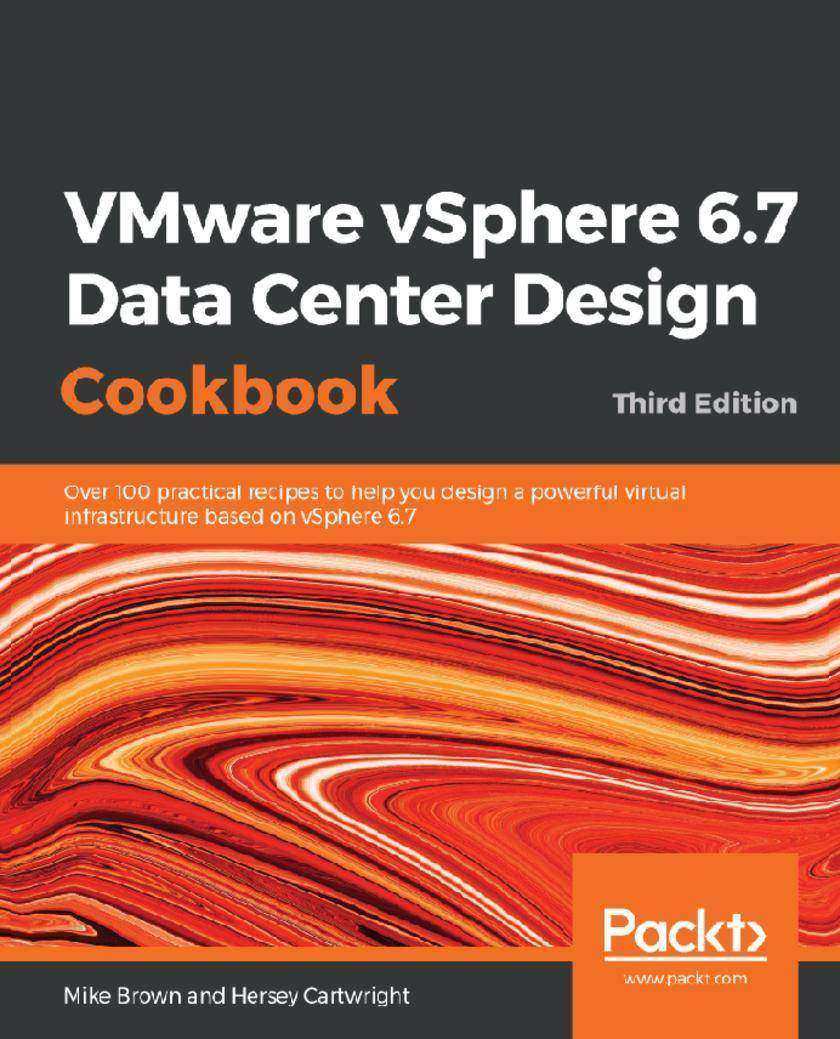
VMware vSphere 6.7 Data Center Design Cookbook
¥108.99
Design a virtualized data center with VMware vSphere 6.7 Key Features * Get the first book on the market that helps you design a virtualized data center with VMware vSphere 6.7 * Learn how to create professional vSphere design documentation to ensure a successful implementation * A practical guide that will help you apply infrastructure design principles to vSphere design Book Description VMware is the industry leader in data center virtualization. The vSphere 6.x suite of products provides a robust and resilient platform to virtualize server and application workloads. This book uses proven infrastructure design principles and applies them to VMware vSphere 6.7 virtual data center design through short and focused recipes on each design aspect. The second edition of this book focused on vSphere 6.0. vSphere features released since then necessitate an updated design guide, which includes recipes for upgrading to 6.7, vCenter HA; operational improvements; cutting-edge, high-performance storage access such as RDMA and Pmem; security features such as encrypted vMotion and VM-level encryption; Proactive HA; HA Orchestrated Restart; Predictive DRS; and more. By the end of the book, you will be able to achieve enhanced compute, storage, network, and management capabilities for your virtual data center. What you will learn * Identify key factors related to a vSphere design * Mitigate security risks and meet compliance requirements in a vSphere design * Create a vSphere conceptual design by identifying technical and business requirements * Design for performance, availability, recoverability, manageability, and security * Map the logical resource design into the physical vSphere design * Create professional vSphere design documentation Who this book is for If you are an administrator or consultant interested in designing virtualized data center environments using VMware vSphere 6.x (or previous versions of vSphere and the supporting components), this book is for you.
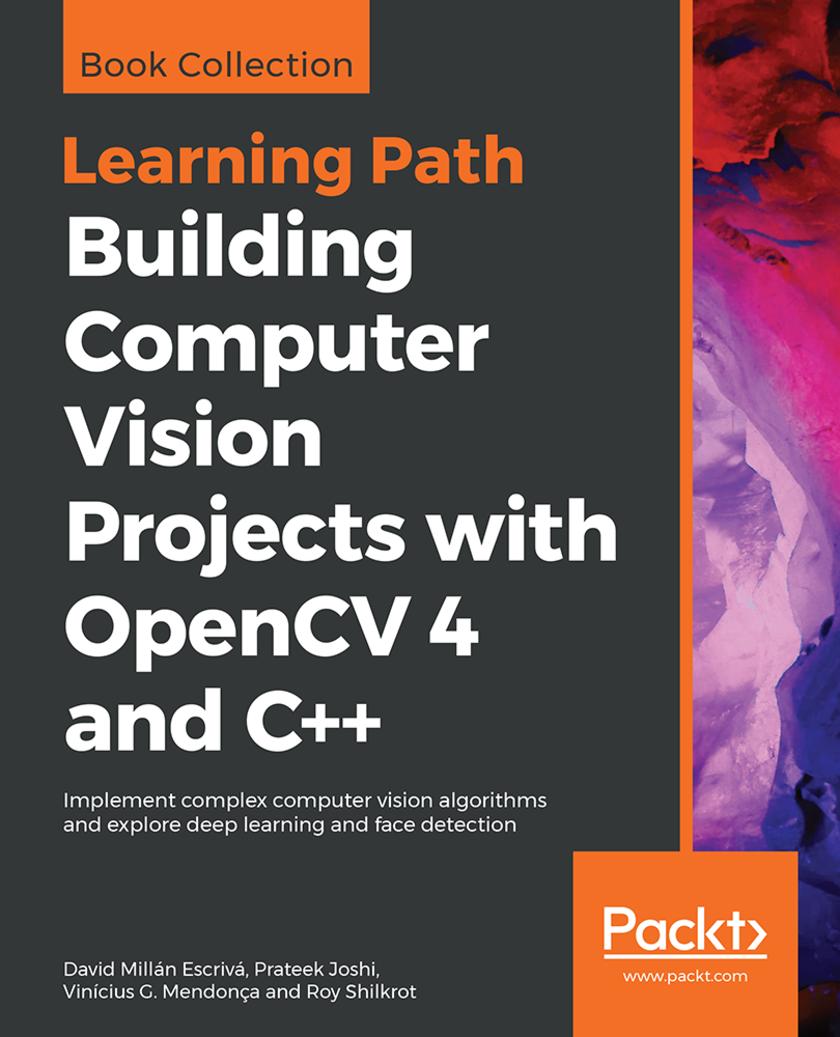
Building Computer Vision Projects with OpenCV 4 and C++
¥90.46
Delve into practical computer vision and image processing projects and get up to speed with advanced object detection techniques and machine learning algorithms Key Features * Discover best practices for engineering and maintaining OpenCV projects * Explore important deep learning tools for image classification * Understand basic image matrix formats and filters Book Description OpenCV is one of the best open source libraries available and can help you focus on constructing complete projects on image processing, motion detection, and image segmentation. This Learning Path is your guide to understanding OpenCV concepts and algorithms through real-world examples and activities. Through various projects, you'll also discover how to use complex computer vision and machine learning algorithms and face detection to extract the maximum amount of information from images and videos. In later chapters, you'll learn to enhance your videos and images with optical flow analysis and background subtraction. Sections in the Learning Path will help you get to grips with text segmentation and recognition, in addition to guiding you through the basics of the new and improved deep learning modules. By the end of this Learning Path, you will have mastered commonly used computer vision techniques to build OpenCV projects from scratch. This Learning Path includes content from the following Packt books: * Mastering OpenCV 4 - Third Edition by Roy Shilkrot and David Millán Escrivá * Learn OpenCV 4 By Building Projects - Second Edition by David Millán Escrivá, Vinícius G. Mendon?a, and Prateek Joshi What you will learn * Stay up-to-date with algorithmic design approaches for complex computer vision tasks * Work with OpenCV's most up-to-date API through various projects * Understand 3D scene reconstruction and Structure from Motion (SfM) * Study camera calibration and overlay augmented reality (AR) using the ArUco module * Create CMake scripts to compile your C++ application * Explore segmentation and feature extraction techniques * Remove backgrounds from static scenes to identify moving objects for surveillance * Work with new OpenCV functions to detect and recognize text with Tesseract Who this book is for If you are a software developer with a basic understanding of computer vision and image processing and want to develop interesting computer vision applications with OpenCV, this Learning Path is for you. Prior knowledge of C++ and familiarity with mathematical concepts will help you better understand the concepts in this Learning Path.
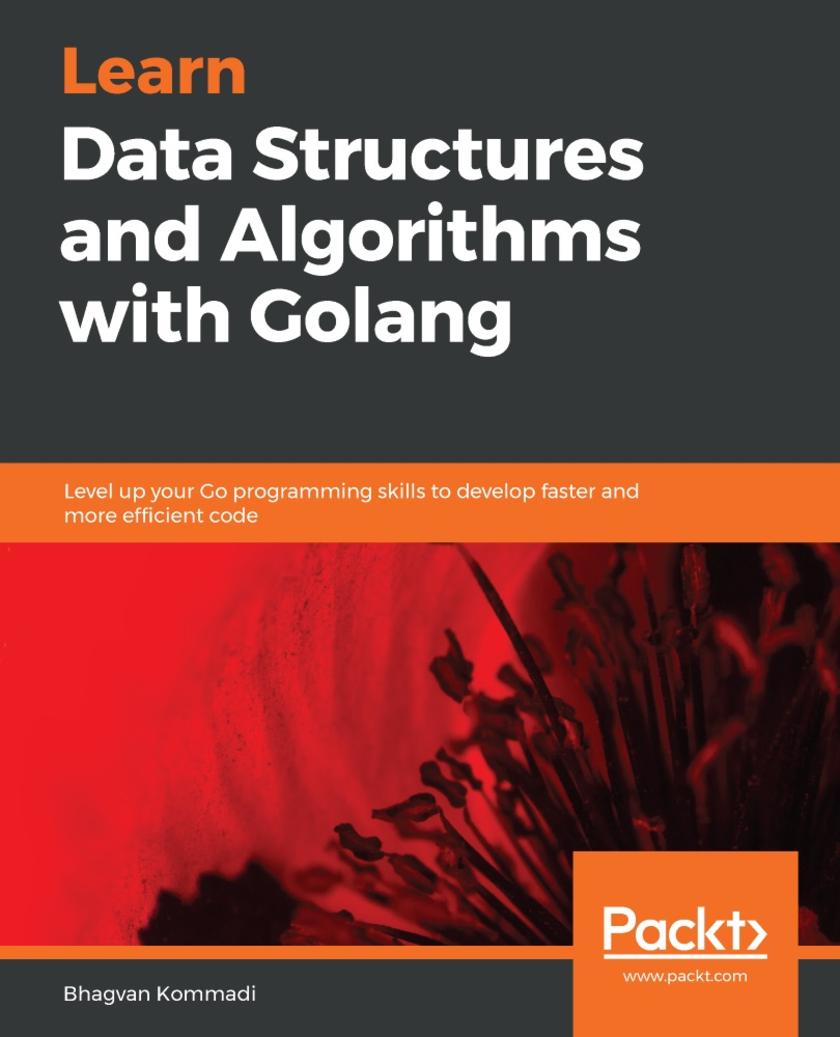
Learn Data Structures and Algorithms with Golang
¥73.02
Explore Golang's data structures and algorithms to design, implement, and analyze code in the professional setting Key Features * Learn the basics of data structures and algorithms and implement them efficiently * Use data structures such as arrays, stacks, trees, lists and graphs in real-world scenarios * Compare the complexity of different algorithms and data structures for improved code performance Book Description Golang is one of the fastest growing programming languages in the software industry. Its speed, simplicity, and reliability make it the perfect choice for building robust applications. This brings the need to have a solid foundation in data structures and algorithms with Go so as to build scalable applications. Complete with hands-on tutorials, this book will guide you in using the best data structures and algorithms for problem solving. The book begins with an introduction to Go data structures and algorithms. You'll learn how to store data using linked lists, arrays, stacks, and queues. Moving ahead, you'll discover how to implement sorting and searching algorithms, followed by binary search trees. This book will also help you improve the performance of your applications by stringing data types and implementing hash structures in algorithm design. Finally, you'll be able to apply traditional data structures to solve real-world problems. By the end of the book, you'll have become adept at implementing classic data structures and algorithms in Go, propelling you to become a confident Go programmer. What you will learn * Improve application performance using the most suitable data structure and algorithm * Explore the wide range of classic algorithms such as recursion and hashing algorithms * Work with algorithms such as garbage collection for efficient memory management * Analyze the cost and benefit trade-off to identify algorithms and data structures for problem solving * Explore techniques for writing pseudocode algorithm and ace whiteboard coding in interviews * Discover the pitfalls in selecting data structures and algorithms by predicting their speed and efficiency Who this book is for This book is for developers who want to understand how to select the best data structures and algorithms that will help solve coding problems. Basic Go programming experience will be an added advantage.
Hands-On Deep Learning for Games
¥73.02
Understand the core concepts of deep learning and deep reinforcement learning by applying them to develop games Key Features * Apply the power of deep learning to complex reasoning tasks by building a Game AI * Exploit the most recent developments in machine learning and AI for building smart games * Implement deep learning models and neural networks with Python Book Description The number of applications of deep learning and neural networks has multiplied in the last couple of years. Neural nets has enabled significant breakthroughs in everything from computer vision, voice generation, voice recognition and self-driving cars. Game development is also a key area where these techniques are being applied. This book will give an in depth view of the potential of deep learning and neural networks in game development. We will take a look at the foundations of multi-layer perceptron’s to using convolutional and recurrent networks. In applications from GANs that create music or textures to self-driving cars and chatbots. Then we introduce deep reinforcement learning through the multi-armed bandit problem and other OpenAI Gym environments. As we progress through the book we will gain insights about DRL techniques such as Motivated Reinforcement Learning with Curiosity and Curriculum Learning. We also take a closer look at deep reinforcement learning and in particular the Unity ML-Agents toolkit. By the end of the book, we will look at how to apply DRL and the ML-Agents toolkit to enhance, test and automate your games or simulations. Finally, we will cover your possible next steps and possible areas for future learning. What you will learn * Learn the foundations of neural networks and deep learning. * Use advanced neural network architectures in applications to create music, textures, self driving cars and chatbots. * Understand the basics of reinforcement and DRL and how to apply it to solve a variety of problems. * Working with Unity ML-Agents toolkit and how to install, setup and run the kit. * Understand core concepts of DRL and the differences between discrete and continuous action environments. * Use several advanced forms of learning in various scenarios from developing agents to testing games. Who this book is for This books is for game developers who wish to create highly interactive games by leveraging the power of machine and deep learning. No prior knowledge of machine learning, deep learning or neural networks is required this book will teach those concepts from scratch. A good understanding of Python is required.
Learning C# by Developing Games with Unity 2019
¥73.02
Understand the fundamentals of C# programming and get started with coding from ground up in an engaging and practical manner Key Features * Beginner's guide to getting started with software development concepts from a macro level * Leverage the power of the latest C# in solving the complex programming problems * Learn to script and customize your 3D games and implement animation techniques to make them engaging Book Description Learning to program in today’s technical landscape can be a daunting task, especially when faced with the sheer number of languages you have to choose from. Luckily, Learning C# with Unity 2019 removes the guesswork and starts you off on the path to becoming a confident, and competent, programmer using game development with Unity. You’ll start off small by learning the building blocks of programming, from variables, methods, and conditional statements to classes and object-oriented systems. After you have the basics under your belt you’ll explore the Unity interface, creating C# scripts, and translating your newfound knowledge into simple game mechanics. Throughout this journey, you’ll get hands-on experience with programming best practices and macro-level topics such as manager classes and flexible application architecture. By the end of the book, you’ll be familiar with intermediate C# topics like generics, delegates, and events, setting you up to take on projects of your own. What you will learn * Understand programming fundamentals with practice examples in C# * Explore the interface and features of Unity 2019 * Learn C# programming syntax from scratch * Create a game design document and prototype level * Explore intermediate programming topics and best practices * Implement game mechanics, interactions, and UI elements with C# Who this book is for The book caters to developers and programmers who want to get started with C# programming in a fun and engaging manner. Anyone who wants to build games and script in C# language and Unity can take this book up. No prior programming or Unity experience is required.
Hands-On G Suite for Administrators
¥73.02
Effectively implement and administer business solutions on any scale in a cost-effective way to have a competitive advantage using Gsuite Key Features * Enhance administration with Admin console and Google Apps Script * Prepare for the G suite certification using the concepts in the book * Learn how to use reports to monitor, troubleshoot and optimize G Suite Book Description Hands-On G Suite for Administrators is a comprehensive hands-on guide to G Suite Administration that will prepare you with all you need to know to become a certified G Suite Administrator, ready to handle all the business scales, from a small office to a large enterprise. You will start by learning the main features, tools, and services from G Suite for Business and then, you will explore all it has to offer and the best practices, so you can make the most out of it. We will explore G Suite tools in depth so you and your team get everything you need -combination of tools, settings and practices- to succeed in an intuitive, safe and collaborative way. While learning G Suite tools you will also learn how to use Google Sites and App Maker, to create from your corporate site to internal tools, live reports that seamlessly integrate with live documents, and advanced Google Services. Finally, you will learn how to set up, analyze and enforce Security, Privacy for your business and how to efficiently troubleshoot a wide variety of issues. What you will learn * Setting up G Suite for the business account * Work with the advanced setup of additional business domains and administrate users in multiple * Explore Guite's extensive set of features to cover your team’s creation and collaboration needs * Setup, manage and analyze your security to prevent, find or fix any security problem in G Suite * Manage Mobile devices and integrate with third-party apps * Create cloud documents, working alone or collaborating in real time Who this book is for System administrators, cloud administrators, business professionals, and aspirants of G Suite admin certificate wanting to master implementing G Suite tools for various admin tasks and effectively implement the G Suite administration for business
Machine Learning with R Quick Start Guide
¥54.49
Learn how to use R to apply powerful machine learning methods and gain insight into real-world applications using clustering, logistic regressions, random forests, support vector machine, and more. Key Features * Use R 3.5 to implement real-world examples in machine learning * Implement key machine learning algorithms to understand the working mechanism of smart models * Create end-to-end machine learning pipelines using modern libraries from the R ecosystem Book Description Machine Learning with R Quick Start Guide takes you on a data-driven journey that starts with the very basics of R and machine learning. It gradually builds upon core concepts so you can handle the varied complexities of data and understand each stage of the machine learning pipeline. From data collection to implementing Natural Language Processing (NLP), this book covers it all. You will implement key machine learning algorithms to understand how they are used to build smart models. You will cover tasks such as clustering, logistic regressions, random forests, support vector machines, and more. Furthermore, you will also look at more advanced aspects such as training neural networks and topic modeling. By the end of the book, you will be able to apply the concepts of machine learning, deal with data-related problems, and solve them using the powerful yet simple language that is R. What you will learn * Introduce yourself to the basics of machine learning with R 3.5 * Get to grips with R techniques for cleaning and preparing your data for analysis and visualize your results * Learn to build predictive models with the help of various machine learning techniques * Use R to visualize data spread across multiple dimensions and extract useful features * Use interactive data analysis with R to get insights into data * Implement supervised and unsupervised learning, and NLP using R libraries Who this book is for This book is for graduate students, aspiring data scientists, and data analysts who wish to enter the field of machine learning and are looking to implement machine learning techniques and methodologies from scratch using R 3.5. A working knowledge of the R programming language is expected.
Big Data Analysis with Python
¥53.40
Get to grips with processing large volumes of data and presenting it as engaging, interactive insights using Spark and Python. Key Features * Get a hands-on, fast-paced introduction to the Python data science stack * Explore ways to create useful metrics and statistics from large datasets * Create detailed analysis reports with real-world data Book Description Processing big data in real time is challenging due to scalability, information inconsistency, and fault tolerance. Big Data Analysis with Python teaches you how to use tools that can control this data avalanche for you. With this book, you'll learn practical techniques to aggregate data into useful dimensions for posterior analysis, extract statistical measurements, and transform datasets into features for other systems. The book begins with an introduction to data manipulation in Python using pandas. You'll then get familiar with statistical analysis and plotting techniques. With multiple hands-on activities in store, you'll be able to analyze data that is distributed on several computers by using Dask. As you progress, you'll study how to aggregate data for plots when the entire data cannot be accommodated in memory. You'll also explore Hadoop (HDFS and YARN), which will help you tackle larger datasets. The book also covers Spark and explains how it interacts with other tools. By the end of this book, you'll be able to bootstrap your own Python environment, process large files, and manipulate data to generate statistics, metrics, and graphs. What you will learn * Use Python to read and transform data into different formats * Generate basic statistics and metrics using data on disk * Work with computing tasks distributed over a cluster * Convert data from various sources into storage or querying formats * Prepare data for statistical analysis, visualization, and machine learning * Present data in the form of effective visuals Who this book is for Big Data Analysis with Python is designed for Python developers, data analysts, and data scientists who want to get hands-on with methods to control data and transform it into impactful insights. Basic knowledge of statistical measurements and relational databases will help you to understand various concepts explained in this book.


