


 购物车
购物车 个人中心
个人中心
RSpec Essentials
¥71.93
Develop testable, modular, and maintainable Ruby software for the real world using RSpec About This Book Explore the concept of testability and how to implement tests that deliver the most value Maximize the quality of your Ruby code through a wide variety of tests Master the real-world tradeoffs of testing through detailed examples supported by in-depth discussion Who This Book Is For This book is aimed at the software engineer who wants to make their code more reliable and their development process easier. It is also aimed at test engineers who need to automate the testing of complex systems. Knowledge of Ruby is helpful, but even someone new to the language should find it easy to follow the code and tests. What You Will Learn Identify a unit of software for the purposes of testing Manage test states with hooks, fixtures, and mocks Handle external web services in tests using various techniques Configure RSpec flexibly and cleanly using support code and environment variables Interact with rich web apps in tests using Capybara Build the right feature with behavior-driven development Customize matchers and failure messages Verify correct development and production environments In Detail This book will teach you how to use RSpec to write high-value tests for real-world code. We start with the key concepts of the unit and testability, followed by hands-on exploration of key features. From the beginning, we learn how to integrate tests into the overall development process to help create high-quality code, avoiding the dangers of testing for its own sake. We build up sample applications and their corresponding tests step by step, from simple beginnings to more sophisticated versions that include databases and external web services. We devote three chapters to web applications with rich JavaScript user interfaces, building one from the ground up using behavior-driven development (BDD) and test-driven development (TDD). The code examples are detailed enough to be realistic while simple enough to be easily understood. Testing concepts, development methodologies, and engineering tradeoffs are discussed in detail as they arise. This approach is designed to foster the reader’s ability to make well-informed decisions on their own. Style and approach This comprehensive tutorial is packed with real-world examples of testing with RSpec. The most important features of RSpec are introduced in the early chapters and are used in examples of growing complexity in the following chapters. Concepts and methodologies are discussed in detail.
App Inventor 2 Essentials
¥54.49
A step-by-step introductory guide to mobile app development with App Inventor 2 About This Book Get an introduction to the functionalities of App Inventor 2 and use it to unleash your creativity Learn to navigate the App Inventor platform, develop basic coding skills and become familiar with a blocks based programming language Build your very first mobile app and feel proud of your accomplishment Follow tutorials to expand your app development skills Who This Book Is For App Inventor 2 Essentials is for anyone who wants to learn to make mobile apps for Android devices – no prior coding experience is necessary. What You Will Learn Perform technical setup and navigate the App Inventor platform Utilize the interactive development environment by pairing a mobile device with a computer using Wi-Fi or USB Build three apps: a game, an event app and a raffle app Create the user interface of the app in the Designer and program the code in the Blocks Editor Integrate basic computer science principles along with more complex elements such fusion tables and lists Test and troubleshoot your applications Publish your apps on Google Play Store to reach a wide audience Unleash your creativity for further app development In Detail App Inventor 2 will take you on a journey of mobile app development. We begin by introducing you to the functionalities of App Inventor and giving you an idea about the types of apps you can develop using it. We walk you through the technical set up so you can take advantage of the interactive development environment (live testing). You will get hands-on, practical experience building three different apps using tutorials. Along the way, you will learn computer science principles as well as tips to help you prepare for the creative process of building an app from scratch. By the end of the journey, you will learn how to package an app and deploy it to app markets. App Inventor 2 Essentials prepares you to amass a resource of skills, knowledge and experience to become a mobile app developer Style and approach Every topic in this book is explained in step-by-step and easy-to-follow fashion, accompanied with screenshots of the interface that will make it easier for you to understand the processes.
Mastering Git
¥90.46
Attain expert-level proficiency with Git for enhanced productivity and efficient collaboration by mastering advanced distributed version control features About This Book Set up Git for solo and collaborative development Harness the full power of Git version control system to customize Git behavior, manipulate history, integrate external tools and explore platform shortcuts A detailed guide, which explains how to apply advanced Git techniques and workflows and ways to handle submodules Who This Book Is For If you are a Git user with reasonable knowledge of Git and familiarity with basic concepts such as branching, merging, staging, and workflows, this is the book for you. Basic knowledge of installing Git and software configuration management concepts is essential. What You Will Learn Explore project history, find revisions using different criteria, and filter and format how history looks Manage your working directory and staging area for commits and interactively create new revisions and amend them Set up repositories and branches for collaboration Submit your own contributions and integrate contributions from other developers via merging or rebasing Customize Git behavior system-wide, on a per-user, per-repository, and per-file basis Take up the administration and set up of Git repositories, configure access, find and recover from repository errors, and perform repository maintenance Chose a workflow and configure and set up support for the chosen workflow In Detail Git is one of the most popular types of Source Code Management (SCM) and Distributed Version Control System (DVCS). Despite the powerful and versatile nature of the tool enveloping strong support for nonlinear development and the ability to handle large projects efficiently, it is a complex tool and often regarded as “user-unfriendly”. Getting to know the ideas and concepts behind the architecture of Git will help you make full use of its power and understand its behavior. Learning the best practices and recommended workflows should help you to avoid problems and ensure trouble-free development. The book scope is meticulously designed to help you gain deeper insights into Git's architecture, its underlying concepts, behavior, and best practices. Mastering Git starts with a quick implementation example of using Git for a collaborative development of a sample project to establish the foundation knowledge of Git operational tasks and concepts. Furthermore, as you progress through the book, the tutorials provide detailed de*ions of various areas of usage: from archaeology, through managing your own work, to working with other developers. This book also helps augment your understanding to examine and explore project history, create and manage your contributions, set up repositories and branches for collaboration in centralized and distributed version control, integrate work from other developers, customize and extend Git, and recover from repository errors. By exploring advanced Git practices, you will attain a deeper understanding of Git’s behavior, allowing you to customize and extend existing recipes and write your own. Style and approach Step-by-step instructions and useful information make this book the ultimate guide to understanding and mastering Git. This book will show road to mastery example by example, while explaining mental model of Git. The Introduction section covers the 'Essentials' just for refreshing the basics. The main highlight is that the concepts are based on HOW the technology/framework works and not just practical 'WHAT to do'.
Multithreading with C# Cookbook - Second Edition
¥90.46
Over 70 recipes to get you writing powerful and efficient multithreaded, asynchronous, and parallel programs in C# 6.0 About This Book Rewritten and updated to take advantage of the latest C# 6 features Learn about multithreaded, asynchronous, and parallel programming through hands-on, code-first examples Use these recipes to build fast, scalable, and reliable applications in C# Who This Book Is For This book is aimed at those who are new to multithreaded programming, and who are looking for a quick and easy way to get started. It is assumed that you have some experience in C# and .NET already, and you should also be familiar with basic computer science terminology and basic algorithms and data structures. What You Will Learn Use C# 6.0 asynchronous language features Work with raw threads, synchronize threads, and coordinate their work Develop your own asynchronous API with Task Parallel Library Work effectively with a thread pool Scale up your server application with I/O threads Parallelize your LINQ queries with PLINQ Use common concurrent collections Apply different parallel programming patterns Use Reactive Extensions to run asynchronous operations and manage their options In Detail Multi-core processors are synonymous with computing speed and power in today’s world, which is why multithreading has become a key concern for C# developers. Multithreaded code helps you create effective, scalable, and responsive applications. This is an easy-to-follow guide that will show you difficult programming problems in context. You will learn how to solve them with practical, hands-on, recipes. With these recipes, you’ll be able to start creating your own scalable and reliable multithreaded applications. Starting from learning what a thread is, we guide you through the basics and then move on to more advanced concepts such as task parallel libraries, C# asynchronous functions, and much more. Rewritten to the latest C# specification, C# 6, and updated with new and modern recipes to help you make the most of the hardware you have available, this book will help you push the boundaries of what you thought possible in C#. Style and approach This is an easy-to-follow guide full of hands-on examples of real-world multithreading tasks. Each topic is explained and placed in context, and for the more inquisitive, there are also more in-depth details of the concepts used.
OpenStack Sahara Essentials
¥71.93
Integrate, deploy, rapidly configure, and successfully manage your own big data-intensive clusters in the cloud using OpenStack Sahara About This Book A fast paced guide to help you utilize the benefits of Sahara in OpenStack to meet the Big Data world of Hadoop. A step by step approach to simplify the complexity of Hadoop configuration, deployment and maintenance. Who This Book Is For This book targets data scientists, cloud developers and Devops Engineers who would like to become proficient with OpenStack Sahara. Ideally, this book is well suitable for readers who are familiars with databases, Hadoop and Spark solutions. Additionally, a basic prior knowledge of OpenStack is expected. The readers should also be familiar with different Linux boxes, distributions and virtualization technology. What You Will Learn Integrate and Install Sahara with OpenStack environment Learn Sahara architecture under the hood Rapidly configure and scale Hadoop clusters on top of OpenStack Explore the Sahara REST API to create, deploy and manage a Hadoop cluster Learn the Elastic Processing Data (EDP) facility to execute jobs in clusters from Sahara Cover other Hadoop stable plugins existing supported by Sahara Discover different features provided by Sahara for Hadoop provisioning and deployment Learn how to troubleshoot OpenStack Sahara issues In Detail The Sahara project is a module that aims to simplify the building of data processing capabilities on OpenStack. The goal of this book is to provide a focused, fast paced guide to installing, configuring, and getting started with integrating Hadoop with OpenStack, using Sahara. The book should explain to users how to deploy their data-intensive Hadoop and Spark clusters on top of OpenStack. It will also cover how to use the Sahara REST API, how to develop applications for Elastic Data Processing on Openstack, and setting up hadoop or spark clusters on Openstack. Style and approach This book takes a step by step approach teaching how to integrate, deploy and manage data using OpenStack Sahara. It will teach how the OpenStack Sahara is beneficial by simplifying the complexity of Hadoop configuration, deployment and maintenance.
Salesforce Platform App Builder Certification Handbook
¥80.65
A handy guide that covers the most essential topics for Salesforce Platform App Builder Certification in an easy-to-understand format About This Book Get to grips with the fundamentals of Force.com to pass the certification exam with flying colors Create Force.com applications, automate business processes, and manage data operations to be a successful Salesforce.com Certified Force.com app builder A step-by-step guide that covers the most essential topics for the Platform App Builder Certification in an easy-to-understand format Who This Book Is For Salesforce beginners who need to prepare for the Salesforce Platform App Builder Certification exam will benefit from this book. This book is ideal for developers and admins who are new to Salesforce CRM and the Force.com platform. It is recommended that users have some basic programming knowledge and are familiar with salesforce. By the end of the book, you will be ready to appear for the exam and develop various applications on the cloud platform. What You Will Learn Learn the basics of the force.com cloud platform Learn to build objects that align with your business Understand the process of building an application on force.com platform Kick-start your certification journey in basic- easy-to-follow guide Focus on important topics that help you accomplish your certification goals Learn to secure your application with the Salesforce security model Manipulate and process large amount of data using the data tools Prepare for the exam with sample mock questions In Detail The Salesforce Certified Platform App Builder exam is for individuals who want to demonstrate their skills and knowledge in designing, building, and implementing custom applications using the declarative customization capabilities of Force.com. This book will build a strong foundation in Force.com to prepare you for the platform app builder certification exam. It will guide you through designing the interface while introducing the Lightning Process Builder. Next, we will implement business logic using various point and click features of Force.com. We will learn to manage data and create reports and dashboards. We will then learn to administer the force.com application by configuring the object-level, field-level, and record-level security. By the end of this book, you will be completely equipped to take the Platform App Builder certification exam. Style and approach Simple and to-the-point examples that can be tried out in your developer org. A practical book for professionals who want to take the Salesforce Platform App Builder Certification exam. Sample questions for every topic in an exam pattern to help you prepare better, and tips to get things started. Full of screen-shots, diagrams, and clear step-by-step instructions that cover the entire syllabus for the exam.
Julia High Performance
¥63.21
Design and develop high performing programs with Julia About This Book Learn to code high reliability and high performance programs Stand out from the crowd by developing code that runs faster than your peers’ codes This book is intended for developers who are interested in high performance technical programming. Who This Book Is For This book is for beginner and intermediate Julia programmers who are interested in high performance technical computing. You will have a basic familiarity with Julia syntax, and have written some small programs in the language. What You Will Learn Discover the secrets behind Julia’s speed Get a sense of the possibilities and limitations of Julia’s performance Analyze the performance of Julia programs Measure the time and memory taken by Julia programs Create fast machine code using Julia’s type information Define and call functions without compromising Julia’s performance Understand number types in Julia Use Julia arrays to write high performance code Get an overview of Julia’s distributed computing capabilities In Detail Julia is a high performance, high-level dynamic language designed to address the requirements of high-level numerical and scientific computing. Julia brings solutions to the complexities faced by developers while developing elegant and high performing code. Julia High Performance will take you on a journey to understand the performance characteristics of your Julia programs, and enables you to utilize the promise of near C levels of performance in Julia. You will learn to analyze and measure the performance of Julia code, understand how to avoid bottlenecks, and design your program for the highest possible performance. In this book, you will also see how Julia uses type information to achieve its performance goals, and how to use multuple dispatch to help the compiler to emit high performance machine code. Numbers and their arrays are obviously the key structures in scientific computing – you will see how Julia’s design makes them fast. The last chapter will give you a taste of Julia’s distributed computing capabilities. Style and approach This is a hands-on manual that will give you good explanations about the important concepts related to Julia programming.
Practical Data Analysis Cookbook
¥90.46
Over 60 practical recipes on data exploration and analysis About This Book Clean dirty data, extract accurate information, and explore the relationships between variables Forecast the output of an electric plant and the water flow of American rivers using pandas, NumPy, Statsmodels, and scikit-learn Find and extract the most important features from your dataset using the most efficient Python libraries Who This Book Is For If you are a beginner or intermediate-level professional who is looking to solve your day-to-day, analytical problems with Python, this book is for you. Even with no prior programming and data analytics experience, you will be able to finish each recipe and learn while doing so. What You Will Learn Read, clean, transform, and store your data usng Pandas and OpenRefine Understand your data and explore the relationships between variables using Pandas and D3.js Explore a variety of techniques to classify and cluster outbound marketing campaign calls data of a bank using Pandas, mlpy, NumPy, and Statsmodels Reduce the dimensionality of your dataset and extract the most important features with pandas, NumPy, and mlpy Predict the output of a power plant with regression models and forecast water flow of American rivers with time series methods using pandas, NumPy, Statsmodels, and scikit-learn Explore social interactions and identify fraudulent activities with graph theory concepts using NetworkX and Gephi Scrape Internet web pages using urlib and BeautifulSoup and get to know natural language processing techniques to classify movies ratings using NLTK Study simulation techniques in an example of a gas station with agent-based modeling In Detail Data analysis is the process of systematically applying statistical and logical techniques to describe and illustrate, condense and recap, and evaluate data. Its importance has been most visible in the sector of information and communication technologies. It is an employee asset in almost all economy sectors. This book provides a rich set of independent recipes that dive into the world of data analytics and modeling using a variety of approaches, tools, and algorithms. You will learn the basics of data handling and modeling, and will build your skills gradually toward more advanced topics such as simulations, raw text processing, social interactions analysis, and more. First, you will learn some easy-to-follow practical techniques on how to read, write, clean, reformat, explore, and understand your data—arguably the most time-consuming (and the most important) tasks for any data scientist. In the second section, different independent recipes delve into intermediate topics such as classification, clustering, predicting, and more. With the help of these easy-to-follow recipes, you will also learn techniques that can easily be expanded to solve other real-life problems such as building recommendation engines or predictive models. In the third section, you will explore more advanced topics: from the field of graph theory through natural language processing, discrete choice modeling to simulations. You will also get to expand your knowledge on identifying fraud origin with the help of a graph, scrape Internet websites, and classify movies based on their reviews. By the end of this book, you will be able to efficiently use the vast array of tools that the Python environment has to offer. Style and approach This hands-on recipe guide is divided into three sections that tackle and overcome real-world data modeling problems faced by data analysts/scientist in their everyday work. Each independent recipe is written in an easy-to-follow and step-by-step fashion.
Getting Started with React
¥63.21
A light but powerful way to build dynamic real-time applications using ReactJS About This Book Learn how to develop powerful JavaScript applications using ReactJS Integrate a React-based app with an external API (Facebook login) while using React components, with the Facebook developer app Implement the Reactive paradigm to build stateless and asynchronous apps with React Who This Book Is For This book is for any front-end web or mobile-app developer who wants to learn ReactJS. Knowledge of basic JavaScript will give you a good head start with the book. What You Will Learn Understand the ReactJS basics through an overview Install and create your first React component Refactor the ReactJS component using JSX Integrate your React application with the Facebook login and Graph API, then fetch data from your liked pages in Facebook and display them in a browser Handle UI elements events with React, respond to users input, and create stateful components Use some core lifecycle events for integration and find out about ES6 syntaxes in the React world Understand the FLUX architecture and create an application using FLUX with React Make a component more reusable with mixins and validation helpers and structure your components properly Explore techniques to test your ReactJS code Deploy your code using webpack and Gulp In Detail ReactJS, popularly known as the V (view) of the MVC architecture, was developed by the Facebook and Instagram developers. It follows a unidirectional data flow, virtual DOM, and DOM difference that are generously leveraged in order to increase the performance of the UI. Getting Started with React will help you implement the Reactive paradigm to build stateless and asynchronous apps with React. We will begin with an overview of ReactJS and its evolution over the years, followed by building a simple React component. We will then build the same react component with JSX syntax to demystify its usage. You will see how to configure the Facebook Graph API, get your likes list, and render it using React. Following this, we will break the UI into components and you’ll learn how to establish communication between them and respond to users input/events in order to have the UI reflect their state. You’ll also get to grips with the ES6 syntaxes. Moving ahead, we will delve into the FLUX and its architecture, which is used to build client-side web applications and complements React’s composable view components by utilizing a unidirectional data flow. Towards the end, you’ll find out how to make your components reusable, and test and deploy them into a production environment. Finally, we’ll briefly touch on other topics such as React on the server side, Redux and some advanced concepts. Style and approach The book follows a step-by-step, practical, tutorial approach with examples that explain the key concepts of ReactJS. Each topic is sequentially explained and contextually placed to give sufficient details of ReactJS.
Alfresco for Administrators
¥54.49
A fast-paced administrator's guide to Alfresco from the administration, managing, and high-level design perspectives About This Book Understand system capabilities in order to make informed and appropriate decisions about its administration Manage users, groups, email, file systems, and transformer availability using Alfresco Use Alfresco to capture and efficiently manage information about repositories, servers, and statistics Who This Book Is For The target audience would be users with a basic knowledge of Content Management System, and also users who want to understand Alfresco from the administration and high-level design perspectives. What You Will Learn Understand Alfresco's architecture and important building blocks Learn to install Alfresco on various application servers such as Tomcat , JBoss, and WebLogic. Become familiar with various configurations in Alfresco such as databases, filesystems, email, and audits Administrate Alfresco using the Explorer Admin Console, Share Admin Console, and Workflow Admin Console Understand how to integrate LDAP and Active Directory with Alfresco for centralized user management Learn how Alfresco environments can be clustered for high availability Fully understand how Alfresco stores content and easily retrieve any information from Alfresco Monitor and manage Alfresco systems in production In Detail Alfresco is an open source Enterprise Content Management (ECM) system for Windows and Linux-like operating systems. The year-on-year growth of business connections, contacts, and communications is expanding enterprise boundaries more than ever before. Alfresco enables organizations to collaborate more effectively, improve business process efficiency, and ensure information governance. The basic purpose of Alfresco is to help users to capture and manage information in a better way. It helps you capture, organize, and share binary files. This book will cover the basic building blocks of an Alfresco system, how the components fit together, and the information required to build a system architecture. This book will also focus on security aspects of Alfresco. such as authentication, troubleshooting, managing permissions, and so on. It will also focus on managing content and storage, indexing and searches, setting up clustering for high availability, and so forth. Style and approach A step-by-step guide to understanding the Alfresco system and making informed and appropriate decisions about administration.
Odoo Development Cookbook
¥90.46
Build effective applications by applying Odoo development best practices About This Book Each recipe stands by itself as much as possible, so that you can jump straight into the topics you prefer The recipes included cover all the major development areas of Odoo and the most important techniques explained through real-life projects From seasoned authors, learn the tricks of becoming a productive developer with the Odoo framework Who This Book Is For If you are a Python developer who wants to learn or consolidate your Odoo development skills, then this book is for you! Some experience with the JavaScript programming language and web development is required to fully benefit from the front-end chapters. What You Will Learn Install and manage Odoo environments and instances Use Models to define your application's data structures Add business logic to your applications Implement automated tests and debug Odoo apps Use back-end views to create a user interface Get to know about the access security model and internationalization features Develop front-end website features Extend the web client with new widgets and features In Detail Odoo is a full-featured open source ERP with a focus on extensibility. The flexibility and sustainability of open source is also a key selling point of Odoo. It is built on a powerful framework for rapid application development, both for back-end applications and front-end websites. The book starts by covering Odoo installation and administration, and provides a gentle introduction to application development. It then dives deep into several of the areas that an experienced developer will need to use. You’ll learn implement business logic, adapt the UI, and extend existing features. Style and Approach These practical and easy-to-follow recipes are presented step-by-step, with dozens of hands-on recipes to boost your Odoo skills. This book can also be used as a reference guide for your daily work.
RStudio for R Statistical Computing Cookbook
¥80.65
Over 50 practical and useful recipes to help you perform data analysis with R by unleashing every native RStudio feature About This Book 54 useful and practical tasks to improve working systems Includes optimizing performance and reliability or uptime, reporting, system management tools, interfacing to standard data ports, and so on Offers 10-15 real-life, practical improvements for each user type Who This Book Is For This book is targeted at R statisticians, data scientists, and R programmers. Readers with R experience who are looking to take the plunge into statistical computing will find this Cookbook particularly indispensable. What You Will Learn Familiarize yourself with the latest advanced R console features Create advanced and interactive graphics Manage your R project and project files effectively Perform reproducible statistical analyses in your R projects Use RStudio to design predictive models for a specific domain-based application Use RStudio to effectively communicate your analyses results and even publish them to a blog Put yourself on the frontiers of data science and data monetization in R with all the tools that are needed to effectively communicate your results and even transform your work into a data product In Detail The requirement of handling complex datasets, performing unprecedented statistical analysis, and providing real-time visualizations to businesses has concerned statisticians and analysts across the globe. RStudio is a useful and powerful tool for statistical analysis that harnesses the power of R for computational statistics, visualization, and data science, in an integrated development environment. This book is a collection of recipes that will help you learn and understand RStudio features so that you can effectively perform statistical analysis and reporting, code editing, and R development. The first few chapters will teach you how to set up your own data analysis project in RStudio, acquire data from different data sources, and manipulate and clean data for analysis and visualization purposes. You'll get hands-on with various data visualization methods using ggplot2, and you will create interactive and multidimensional visualizations with D3.js. Additional recipes will help you optimize your code; implement various statistical models to manage large datasets; perform text analysis and predictive analysis; and master time series analysis, machine learning, forecasting; and so on. In the final few chapters, you'll learn how to create reports from your analytical application with the full range of static and dynamic reporting tools that are available in RStudio so that you can effectively communicate results and even transform them into interactive web applications. Style and approach RStudio is an open source Integrated Development Environment (IDE) for the R platform. The R programming language is used for statistical computing and graphics, which RStudio facilitates and enhances through its integrated environment. This Cookbook will help you learn to write better R code using the advanced features of the R programming language using RStudio. Readers will learn advanced R techniques to compute the language and control object evaluation within R functions. Some of the contents are: Accessing an API with R Substituting missing values by interpolation Performing data filtering activities R Statistical implementation for Geospatial data Developing shiny add-ins to expand RStudio functionalities Using GitHub with RStudio Modelling a recommendation engine with R Using R Markdown for static and dynamic reporting Curating a blog through RStudio Advanced statistical modelling with R and RStudio
Practical Linux Security Cookbook
¥80.65
Secure your Linux machines and keep them secured with the help of exciting recipes About This Book This book provides code-intensive discussions with detailed recipes that help you understand better and learn faster. More than 50 hands-on recipes to create and administer a secure Linux system locally as well as on a network Enhance file system security and local and remote user authentication by using various security tools and different versions of Linux for different tasks Who This Book Is For Practical Linux Security Cookbook is intended for all those Linux users who already have knowledge of Linux File systems and administration. You should be familiar with basic Linux commands. Understanding Information security and its risks to a Linux system is also helpful in understanding the recipes more easily. However, even if you are unfamiliar with Information security, you will be able to easily follow and understand the recipes discussed. Since Linux Security Cookbook follows a practical approach, following the steps is very easy. What You Will Learn Learn about various vulnerabilities and exploits in relation to Linux systems Configure and build a secure kernel and test it Learn about file permissions and security and how to securely modify files Explore various ways to authenticate local users while monitoring their activities. Authenticate users remotely and securely copy files on remote systems Review various network security methods including firewalls using iptables and TCP Wrapper Explore various security tools including Port Sentry, Squid Proxy, Shorewall, and many more Understand Bash vulnerability/security and patch management In Detail With the growing popularity of Linux, more and more administrators have started moving to the system to create networks or servers for any task. This also makes Linux the first choice for any attacker now. Due to the lack of information about security-related attacks, administrators now face issues in dealing with these attackers as quickly as possible. Learning about the different types of Linux security will help create a more secure Linux system. Whether you are new to Linux administration or experienced, this book will provide you with the skills to make systems more secure. With lots of step-by-step recipes, the book starts by introducing you to various threats to Linux systems. You then get to walk through customizing the Linux kernel and securing local files. Next you will move on to manage user authentication locally and remotely and also mitigate network attacks. Finally, you will learn to patch bash vulnerability and monitor system logs for security. With several screenshots in each example, the book will supply a great learning experience and help you create more secure Linux systems. Style and approach An easy-to-follow cookbook with step-by-step practical recipes covering the various Linux security administration tasks. Each recipe has screenshots, wherever needed, to make understanding more easy.
Mastering Office 365 Administration
¥73.02
Leverage Office 365 to increase your organization's efficiency About This Book ? Perform common to advanced-level management and administrative tasks for your organization with Office 365 ? Become an Office 365 generalist who can work with the entire stack—not just specific products ? An advanced-level guide that will teach you to implement enterprise-level services into your organization, no matter the size of the business Who This Book Is For This book targets architects, sys admins, engineers, and administrators who are working with Office 365 and are responsible for configuring, implementing, and managing Office 365 in their organization. A prior knowledge of Office 365 and Exchange servers is mandatory. What You Will Learn ? Get an understanding of the vast Office 365 feature set ? Learn how workloads and applications interact and integrate with each other ? Connect PowerShell to various Office 365 services and perform tasks ? Learn to manage Skype for Business Online ? Get support and monitor Office 365 service health ? Manage and administer identities and groups efficiently In Detail In today's world, every organization aims to migrate to the cloud to become more efficient by making full use of the latest technologies. Office 365 is your one-stop solution to making your organization reliable, scalable, and fast. The book will start with an overview of Office 365 components, and help you learn how to use the administration portal, and perform basic administration. Then this book covers common management tasks such as managing users, admin roles, groups, securing Office 365, and enforcing compliance. In the next set of chapters, you will learn topics such as managing Skype for Business Online, Yammer, OneDrive for Business, and Microsoft Teams. In the final section of the book, you will learn how to perform reporting and monitor Office 365 service health. By the end of this book, you will be able to implement enterprise-level services with Office 365 based on your organization's needs. Style and approach A practical guide that offers a simple way to easily understand and access common administration tasks, without getting lost in the plethora of online resources, support pages, blog posts, and videos.
Intelligent Mobile Projects with TensorFlow
¥90.46
Create Deep Learning and Reinforcement Learning apps for multiple platforms with TensorFlow About This Book ? Build TensorFlow-powered AI applications for mobile and embedded devices ? Learn modern AI topics such as computer vision, NLP, and deep reinforcement learning ? Get practical insights and exclusive working code not available in the TensorFlow documentation Who This Book Is For If you're an iOS/Android developer interested in building and retraining others' TensorFlow models and running them in your mobile apps, or if you're a TensorFlow developer and want to run your new and amazing TensorFlow models on mobile devices, this book is for you. You'll also benefit from this book if you're interested in TensorFlow Lite, Core ML, or TensorFlow on Raspberry Pi. What You Will Learn ? Classify images with transfer learning ? Detect objects and their locations ? Transform pictures with amazing art styles ? Understand simple speech commands ? Describe images in natural language ? Recognize drawing with Convolutional Neural Network and Long Short-Term Memory ? Predict stock price with Recurrent Neural Network in TensorFlow and Keras ? Generate and enhance images with generative adversarial networks ? Build AlphaZero-like mobile game app in TensorFlow and Keras ? Use TensorFlow Lite and Core ML on mobile ? Develop TensorFlow apps on Raspberry Pi that can move, see, listen, speak, and learn In Detail As a developer, you always need to keep an eye out and be ready for what will be trending soon, while also focusing on what's trending currently. So, what's better than learning about the integration of the best of both worlds, the present and the future? Artificial Intelligence (AI) is widely regarded as the next big thing after mobile, and Google's TensorFlow is the leading open source machine learning framework, the hottest branch of AI. This book covers more than 10 complete iOS, Android, and Raspberry Pi apps powered by TensorFlow and built from scratch, running all kinds of cool TensorFlow models offline on-device: from computer vision, speech and language processing to generative adversarial networks and AlphaZero-like deep reinforcement learning. You’ll learn how to use or retrain existing TensorFlow models, build your own models, and develop intelligent mobile apps running those TensorFlow models. You'll learn how to quickly build such apps with step-by-step tutorials and how to avoid many pitfalls in the process with lots of hard-earned troubleshooting tips. Style and approach This book takes a practical, project-based approach to teach specifics of mobile development with TensorFlow. Using a reader-friendly approach, this book will provide detailed instructions and also discuss the broader context covered within.
Practical Network Scanning
¥73.02
Get more from your network by securing its infrastructure and increasing its effectiveness About This Book ? Learn to choose the best network scanning toolset for your system ? Implement different concepts of network scanning such as port scanning and OS detection ? Adapt a practical approach to securing your network Who This Book Is For If you are a security professional who is responsible for securing an organization's infrastructure, then this book is for you. What You Will Learn ? Achieve an effective security posture to design security architectures ? Learn vital security aspects before moving to the Cloud ? Launch secure applications with Web Application Security and SQL Injection ? Explore the basics of threat detection/response/ mitigation with important use cases ? Learn all about integration principles for PKI and tips to secure it ? Design a WAN infrastructure and ensure security over a public WAN In Detail Network scanning is the process of assessing a network to identify an active host network; same methods can be used by an attacker or network administrator for security assessment. This procedure plays a vital role in risk assessment programs or while preparing a security plan for your organization. Practical Network Scanning starts with the concept of network scanning and how organizations can benefit from it. Then, going forward, we delve into the different scanning steps, such as service detection, firewall detection, TCP/IP port detection, and OS detection. We also implement these concepts using a few of the most prominent tools on the market, such as Nessus and Nmap. In the concluding chapters, we prepare a complete vulnerability assessment plan for your organization. By the end of this book, you will have hands-on experience in performing network scanning using different tools and in choosing the best tools for your system. Style and approach A practical guide that offers a simple way to easily understand network security concepts and apply them to strengthen your network.
Office 365 Essentials
¥54.49
Leverage Office 365 to increase your organization's efficiency by managing users, domains, licenses, and much more in your organization with most powerful subscription software. About This Book ? Get acquainted with the basics of Office 365 ? Configure and manage workloads efficiently using Office 365 ? A comprehensive guide covering every aspect of planning, and managing this multifaceted collaboration system. Who This Book Is For If you are working as a system administration or an IT professional and are keen to learn the fundamentals of Office 365, then this book is for you. No prior knowledge of office 365 is necessary. What You Will Learn ? Learn how to implement Office 365 from scratch and how to use best practices to be a successful Office 365 professional ? Understand Microsoft productivity services to take your organization or business to the next level by increasing productivity. ? Learn how workloads and applications interact and integrate with each other ? Learn to manage Skype for Business Online ? Get support and monitor service health with Office 365 ? Manage and administer identities and groups efficiently In Detail Office 365 is suite of advanced collaboration tools used by many well known organizations and their system administrators. This book starts with an introduction to Office 365 and its basic fundamentals. Then we move towards workload management and deployment. You will delve into identities, authentications, and managing office 365. We also cover concepts such as collaboration with Microsoft teams and tools such as Delve and Skype for collaboration. Towards the end of the book, you'll master monitoring and security concepts. By the end of this book, you will have hands-on experience working with Office 365 and its collaboration tools and services Style and approach A practical guide that offers a simple way to easily understand Office 365—a complete reference for planning, configuring, and maintaining Office 365.
Mastering Machine Learning Algorithms
¥81.74
Explore and master the most important algorithms for solving complex machine learning problems. About This Book ? Discover high-performing machine learning algorithms and understand how they work in depth. ? One-stop solution to mastering supervised, unsupervised, and semi-supervised machine learning algorithms and their implementation. ? Master concepts related to algorithm tuning, parameter optimization, and more Who This Book Is For This book is an ideal and relevant source of content for data science professionals who want to delve into complex machine learning algorithms, calibrate models, and improve the predictions of the trained model. A basic knowledge of machine learning is preferred to get the best out of this guide. What You Will Learn ? Explore how a ML model can be trained, optimized, and evaluated ? Understand how to create and learn static and dynamic probabilistic models ? Successfully cluster high-dimensional data and evaluate model accuracy ? Discover how artificial neural networks work and how to train, optimize, and validate them ? Work with Autoencoders and Generative Adversarial Networks ? Apply label spreading and propagation to large datasets ? Explore the most important Reinforcement Learning techniques In Detail Machine learning is a subset of AI that aims to make modern-day computer systems smarter and more intelligent. The real power of machine learning resides in its algorithms, which make even the most difficult things capable of being handled by machines. However, with the advancement in the technology and requirements of data, machines will have to be smarter than they are today to meet the overwhelming data needs; mastering these algorithms and using them optimally is the need of the hour. Mastering Machine Learning Algorithms is your complete guide to quickly getting to grips with popular machine learning algorithms. You will be introduced to the most widely used algorithms in supervised, unsupervised, and semi-supervised machine learning, and will learn how to use them in the best possible manner. Ranging from Bayesian models to the MCMC algorithm to Hidden Markov models, this book will teach you how to extract features from your dataset and perform dimensionality reduction by making use of Python-based libraries such as scikit-learn. You will also learn how to use Keras and TensorFlow to train effective neural networks. If you are looking for a single resource to study, implement, and solve end-to-end machine learning problems and use-cases, this is the book you need. Style and approach A hands-on guide filled with real-world examples of popular algorithms used for data science and machine learning
Full-Stack React Projects
¥81.74
Unleash the power of MERN stack by building diverse web applications using React, Node.js, Express, and MongoDB About This Book ? Create dynamic web applications with the MERN stack ? Leverage the power of React in building interactive and complex user interfaces ? Unlock the potential of Node, Express, and MongoDB to build modern full-stack applications Who This Book Is For Full-Stack React Web Development Projects is for JavaScript developers who have some experience with React, but no previous experience with full-stack development involving Node, Express, and MongoDB, and who want practical guidelines to start building different types of real-world web applications with this stack. What You Will Learn ? Set up your development environment and develop a MERN application ? Implement user authentication and authorization using JSON Web Tokens ? Build a social media application by extending the basic MERN application ? Create an online marketplace application with shopping cart and Stripe payments ? Develop a media streaming application using MongoDB GridFS ? Implement server-side rendering with data to improve SEO ? Set up and use React 360 to develop user interfaces with VR capabilities ? Learn industry best practices to make MERN stack applications reliable and scalable In Detail The benefits of using a full JavaScript stack for web development are undeniable, especially when robust and widely adopted technologies such as React, Node, and Express and are available. Combining the power of React with industry-tested, server-side technologies, such as Node, Express, and MongoDB, creates a diverse array of possibilities when developing real-world web applications. This book guides you through preparing the development environment for MERN stack-based web development, to creating a basic skeleton application and extending it to build four different web applications. These applications include a social media, an online marketplace, a media streaming, and a web-based game application with virtual reality features. While learning to set up the stack and developing a diverse range of applications with this book, you will grasp the inner workings of the MERN stack, extend its capabilities for complex features, and gain actionable knowledge of how to prepare MERN-based applications to meet the growing demands of real-world web applications. Style and approach This book provides practical guidelines on setting up and building MERN stack based applications, while providing further explanations on key concepts and implementations.
Mastering Ubuntu Server
¥81.74
Get up-to-date with the finer points of Ubuntu Server using this comprehensive guide About This Book ? A practical easy-to-understand book that will teach you how to deploy, maintain and troubleshoot Ubuntu Server ? Get well-versed with newly-added features in Ubuntu 18.04. ? Learn to manage cutting-edge technologies such as virtualization, containers, Nextcloud and more Who This Book Is For This book is intended for readers with intermediate or advanced-beginner skills with Linux, who would like to learn all about setting up servers with Ubuntu Server. This book assumes that the reader knows the basics of Linux, such as editing configuration files and running basic commands. What You Will Learn ? Manage users, groups, and permissions ? Encrypt and decrypt disks with Linux Unified Key Setup (LUKS) ? Set up SSH for remote access, and connect it to other nodes ? Add, remove, and search for packages ? Use NFS and Samba to share directories with other users ? Get to know techniques for managing Apache and MariaDB ? Explore best practices and troubleshooting techniques ? Get familiar with scripting ? Automate server deployments with Ansible In Detail Ubuntu Server has taken the data centers by storm. Whether you're deploying Ubuntu for a large-scale project or for a small office, it is a stable, customizable, and powerful Linux distribution that leads the way with innovative and cutting-edge features. For both simple and complex server deployments, Ubuntu's flexible nature can be easily adapted to meet to the needs of your organization. With this book as your guide, you will learn all about Ubuntu Server, from initial deployment to creating production-ready resources for your network. The book begins with the concept of user management, group management, and filesystem permissions. Continuing into managing storage volumes, you will learn how to format storage devices, utilize logical volume management, and monitor disk usage. Later, you will learn how to virtualize hosts and applications, which will cover setting up KVM/QEMU, as well as containerization with both Docker and LXD. As the book continues, you will learn how to automate configuration with Ansible, as well as take a look at writing scripts. Lastly, you will explore best practices and troubleshooting techniques when working with Ubuntu Server that are applicable to real-world scenarios. By the end of the book, you will be an expert Ubuntu Server administrator who is well-versed in its advanced concepts. Style and approach This book is an advanced guide that will show readers how to administer, manage, and deploy Ubuntu server and will also provide expert-level knowledge on advanced security and backup techniques.
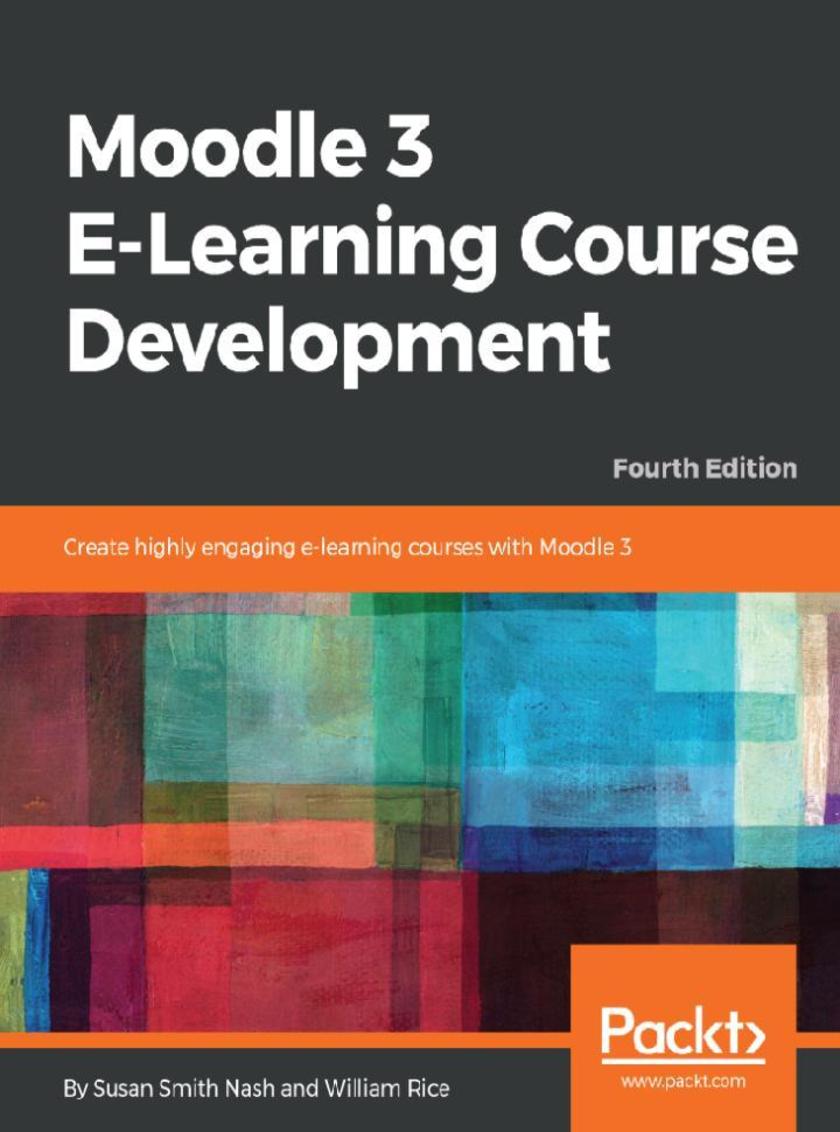
Moodle 3 E-Learning Course Development
¥90.46
A complete guide on course development and delivery using Moodle 3.x About This Book ? Get the best out of the latest Moodle 3 framework to ensure successful learning ? Gain experience in creating different kinds of courses ? Create your first Moodle VR app using the Moodle VR toolset Who This Book Is For This book is for anyone who wants to get the best out of Moodle. As a beginner, this is a thorough guide for you to understand how the software works, with great ideas for getting off to a good start with your first course. Some experience of working with e-learning systems will be beneficial. Experienced Moodle users will find powerful insights into developing successful and educational courses. What You Will Learn ? Know what Moodle does and how it supports your teaching strategies ? Install Moodle on your computer and navigate your way around it ? Understand all of Moodle's learning features ? Monitor how learners interact with your site using site statistics ? Add multimedia content to your site ? Allow students to enroll themselves or invite other students to join a course In Detail Moodle is a learning platform or Course Management System (CMS) that is easy to install and use, but the real challenge is in developing a learning process that leverages its power and maps the learning objectives to content and assessments for an integrated and effective course. Moodle 3 E-Learning Course Development guides you through meeting that challenge in a practical way. This latest edition will show you how to add static learning material, assessments, and social features such as forum-based instructional strategy, a chat module, and forums to your courses so that students reach their learning potential. Whether you want to support traditional class teaching or lecturing, or provide complete online and distance e-learning courses, this book will prove to be a powerful resource throughout your use of Moodle. You’ll learn how to create and integrate third-party plugins and widgets in your Moodle app, implement site permissions and user accounts, and ensure the security of content and test papers. Further on, you’ll implement PHP scripts that will help you create customized UIs for your app. You’ll also understand how to create your first Moodle VR e-learning app using the latest VR learning experience that Moodle 3 has to offer. By the end of this book, you will have explored the decisions, design considerations, and thought processes that go into developing a successful course. Style and approach Packed with clear step-by-step instructions, plenty of screenshots, and thorough explanations, this book guides you through the many features and options that you have to choose from when using Moodle 3.


