


 购物车
购物车 个人中心
个人中心
Mastering Qt 5
¥80.65
Master application development by writing succinct, robust, and reusable code with Qt 5 About This Book Unleash the power of Qt 5 with C++14 Integrate useful third-party libraries such as OpenCV Package and deploy your application on multiple platforms Who This Book Is For This book will appeal to developers and programmers who would like to build GUI-based applications. Knowledge of C++ is necessary and the basics of Qt would be helpful. What You Will Learn Create stunning UIs with Qt Widget and Qt Quick Develop powerful, cross-platform applications with the Qt framework Design GUIs with the Qt Designer and build a library in it for UI preview Handle user interaction with the Qt signal/slot mechanism in C++ Prepare a cross-platform project to host a third-party library Build a Qt application using the OpenCV API Use the Qt Animation framework to display stunning effects Deploy mobile apps with Qt and embedded platforms In Detail Qt 5.7 is an application development framework that provides a great user experience and develops full-capability applications with Qt Widgets, QML, and even Qt 3D. This book will address challenges in successfully developing cross-platform applications with the Qt framework. Cross-platform development needs a well-organized project. Using this book, you will have a better understanding of the Qt framework and the tools to resolve serious issues such as linking, debugging, and multithreading. Your journey will start with the new Qt 5 features. Then you will explore different platforms and learn to tame them. Every chapter along the way is a logical step that you must take to master Qt. The journey will end in an application that has been tested and is ready to be shipped. Style and approach This is an easy-to-follow yet comprehensive guide to building applications in Qt. Each chapter covers increasingly advanced topics, with subjects grouped according to their complexity as well as their usefulness. Packed with practical examples and explanations, Mastering Qt contains everything you need to take your applications to the next level.
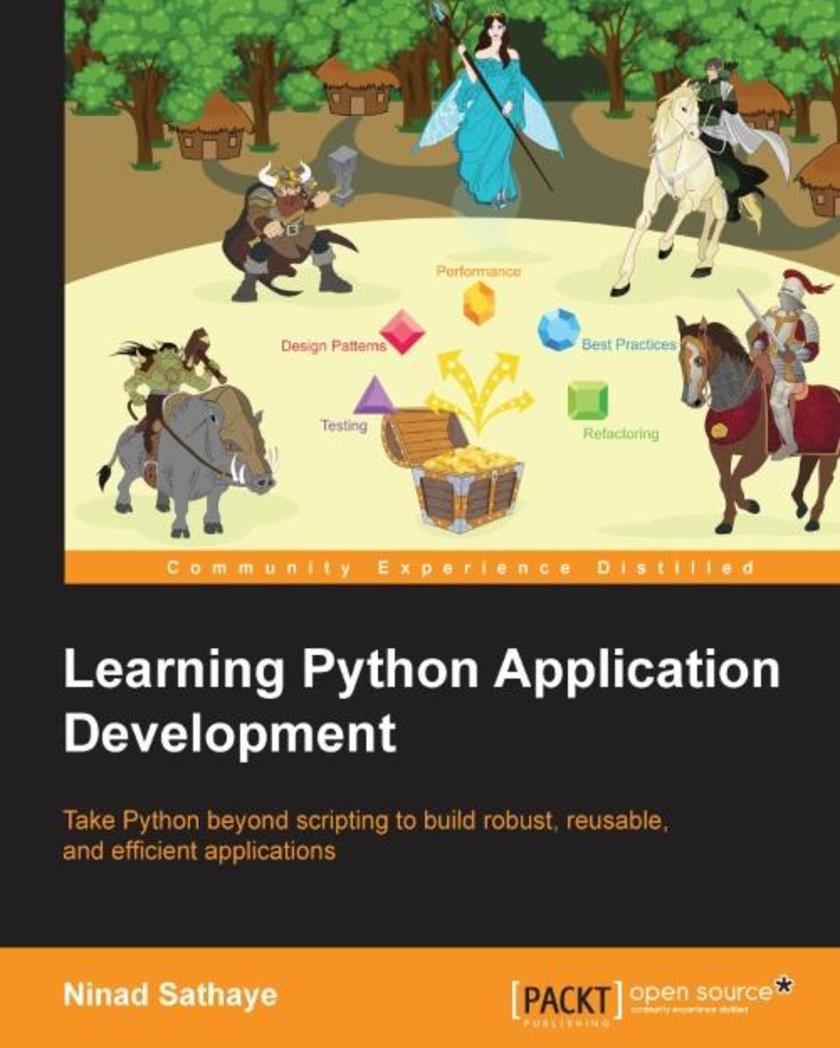
Learning Python Application Development
¥80.65
Take Python beyond *ing to build robust, reusable, and efficient applications About This Book Get to grips with Python techniques that address commonly encountered problems in general application development. Develop, package, and deploy efficient applications in a fun way. All-practical coverage of the major areas of application development, including best practices, exception handling, testing, refactoring, design patterns, performance, and GUI application development. Who This Book Is For Do you know the basics of Python and object oriented programmingDo you want to go an extra mile and learn techniques to make your Python application robust, extensible, and efficientThen this book is for you. What You Will Learn Build a robust application by handling exceptions. Modularize, package, and release the source distribution. Document the code and implement coding standards. Create automated tests to catch bugs in the early development stage. Identify and re-factor badly written code to improve application life. Detect recurring problems in the code and apply design patterns. Improve code efficiency by identifying performance bottlenecks and fixing them. Develop simple GUI applications using Python. In Detail Python is one of the most widely used dynamic programming languages, supported by a rich set of libraries and frameworks that enable rapid development. But fast paced development often comes with its own baggage that could bring down the quality, performance, and extensibility of an application. This book will show you ways to handle such problems and write better Python applications. From the basics of simple command-line applications, develop your skills all the way to designing efficient and advanced Python apps. Guided by a light-hearted fantasy learning theme, overcome the real-world problems of complex Python development with practical solutions. Beginning with a focus on robustness, packaging, and releasing application code, you’ll move on to focus on improving application lifetime by making code extensible, reusable, and readable. Get to grips with Python refactoring, design patterns and best practices. Techniques to identify the bottlenecks and improve performance are covered in a series of chapters devoted to performance, before closing with a look at developing Python GUIs. Style and approach The book uses a fantasy game theme as a medium to explain various topics. Specific aspects of application development are explained in different chapters. In each chapter the reader is presented with an interesting problem which is then tackled using hands-on examples with easy-to-follow instructions.
Mastering React Native
¥80.65
Leverage frontend development skills to build impressive iOS and Android applications with React Native About This Book Apply flexbox to get layout and build rich animations that bring your React Native application to life Integrate third-party libraries and develop customized components that run natively on iOS and Android platforms Combine React Native with Redux, Redux middleware, and a remote API to build scalable data-driven applications Who This Book Is For This book is for anyone who wants to build cross-platform native mobile applications using only JavaScript and the React Native framework. In particular, this book is especially useful for front-end developers who want to use their current skillset to build mobile applications. An existing working knowledge of JavaScript will help you get the most out of this book. What You Will Learn Implement native React Native components and APIs Explore React’s JSX syntax Manage data using Redux and Redux middleware Build applications with React Native on both iOS and Android platforms Perform animations in your applications using the animation APIs Understand routing and Navigator comparison Create your own Native module In Detail React Native has completely revolutionized mobile development by empowering JavaScript developers to build world-class mobile apps that run natively on mobile platforms. This book will show you how to apply JavaScript and other front-end skills to build cross-platform React Native applications for iOS and Android using a single codebase. This book will provide you with all the React Native building blocks necessary to become an expert. We’ll give you a brief explanation of the numerous native components and APIs that come bundled with React Native including Images, Views, ListViews, WebViews, and much more. You will learn to utilize form inputs in React Native. You’ll get an overview of Facebook’s Flux data architecture and then apply Redux to manage data with a remote API. You will also learn to animate different parts of your application, as well as routing using React Native’s navigation APIs. By the end of the book, you will be able to build cutting-edge applications using the React Native framework. Style and approach This comprehensive guide will take your React Native skills to the next level. It shows you how to develop a clear workflow to build scalable applications, and how to implement the architectural concepts covered to build applications that shine in the real world.
Object-Oriented JavaScript - Third Edition
¥80.65
Learn everything you need to know about object-oriented JavaScript with this comprehensive guide. Enter the world of cutting-edge development! About This Book This book has been updated to cover all the new object-oriented features introduced in ECMAScript 6 It makes object-oriented programming accessible and understandable to web developers Write better and more maintainable JavaScript code while exploring interactive examples that can be used in your own *s Who This Book Is For This book is ideal for new to intermediate JavaScript developers who want to prepare themselves for web development problems solved by object-oriented JavaScript! What You Will Learn Apply the basics of object-oriented programming in the JavaScript environment Use a JavaScript Console with complete mastery Make your programs cleaner, faster, and compatible with other programs and libraries Get familiar with Iterators and Generators, the new features added in ES6 Find out about ECMAScript 6’s Arrow functions, and make them your own Understand objects in Google Chrome developer tools and how to use them Use a mix of prototypal inheritance and copying properties in your workflow Apply reactive programming techniques while coding in JavaScript In Detail JavaScript is an object-oriented programming language that is used for website development. Web pages developed today currently follow a paradigm that has three clearly distinguishable parts: content (HTML), presentation (CSS), and behavior (JavaScript). JavaScript is one important pillar in this paradigm, and is responsible for the running of the web pages. This book will take your JavaScript skills to a new level of sophistication and get you prepared for your journey through professional web development. Updated for ES6, this book covers everything you will need to unleash the power of object-oriented programming in JavaScript while building professional web applications. The book begins with the basics of object-oriented programming in JavaScript and then gradually progresses to cover functions, objects, and prototypes, and how these concepts can be used to make your programs cleaner, more maintainable, faster, and compatible with other programs/libraries. By the end of the book, you will have learned how to incorporate object-oriented programming in your web development workflow to build professional JavaScript applications. Style and approach Filled with practical instructions, the book shows you how to implement object-oriented features of JavaScript in the real world. The to-the-point nature of the book will benefit developers who are looking for a fast-paced guide to learn object-oriented JavaScript.
React Design Patterns and Best Practices
¥80.65
Build modular applications that are easy to scale using the most powerful components and design patterns that React can offer you right now About This Book Dive into the core patterns and components of React.js in order to master your application's design Improve their debugging skills using the DevTools This book is packed with easy-to-follow examples that can be used to create reusable code and extensible designs Who This Book Is For If you want to increase your understanding of React and apply it to real-life application development, then this book is for you. What You Will Learn Write clean and maintainable code Create reusable components applying consolidated techniques Use React effectively in the browser and node Choose the right styling approach according to the needs of the applications Use server-side rendering to make applications load faster Build high-performing applications by optimizing components In Detail Taking a complete journey through the most valuable design patterns in React, this book demonstrates how to apply design patterns and best practices in real-life situations, whether that's for new or already existing projects. It will help you to make your applications more flexible, perform better, and easier to maintain – giving your workflow a huge boost when it comes to speed without reducing quality. We'll begin by understanding the internals of React before gradually moving on to writing clean and maintainable code. We'll build components that are reusable across the application, structure applications, and create forms that actually work. Then we'll style React components and optimize them to make applications faster and more responsive. Finally, we'll write tests effectively and you'll learn how to contribute to React and its ecosystem. By the end of the book, you'll be saved from a lot of trial and error and developmental headaches, and you will be on the road to becoming a React expert. Style and approach The design patterns in the book are explained using real-world, step-by-step examples. For each design pattern, there are hints about when to use it and when to look for something more suitable. This book can also be used as a practical guide, showing you how to leverage design patterns.
Modernizing Legacy Applications in PHP
¥80.65
Get your code under control in a series of small, specific steps About This Book Learn to extract and replace legacy artifacts, Improve your application from the ground up while keeping your codebase fully operational, Improve the quality of your legacy applications. Who This Book Is For PHP developers from all skill levels will be able to get value from this book and will be able to transform their spaghetti code applications to clean, modular applications. If you are in the midst of a legacy refactor or you find yourself in a state of despair caused by the code you have inherited, this is the book for you. All you need is to have PHP 5.0 installed, and you’re all set to change the way you maintain and deploy your code! What You Will Learn Replace global and new with dependency injection Extract SQL statements to gateways Convert action logic to controllers Remove repeated logic in page *s Create maintainable PHP code from crufty legacy PHP In Detail Have you noticed that your legacy PHP application is composed of page *s placed directly in the document root of the web serverOr, do your page *s, along with any other classes and functions, combine the concerns of model, view, and controller into the same scopeIs the majority of the logical flow incorporated as include files and global functions rather than class methodsWorking with such a legacy application feels like dragging your feet through mud, doesn’t it?This book will show you how to modernize your application in terms of practice and technique, rather than in terms of using tools like frameworks and libraries, by extracting and replacing its legacy artifacts. We will use a step-by-step approach, moving slowly and methodically, to improve your application from the ground up. We’ll show you how dependency injection can replace both the new and global dependencies. We’ll also show you how to change the presentation logic to view files and the action logic to a controller. Moreover, we’ll keep your application running the whole time. Each completed step in the process will keep your codebase fully operational with higher quality. When we are done, you will be able to breeze through your code like the wind. Your code will be autoloaded, dependency-injected, unit-tested, layer-separated, and front-controlled. Most of the very limited code we will add to your application is specific to this book. We will be improving ourselves as programmers, as well as improving the quality of our legacy application. Style and approach This book gives developers an easy-to-follow, practical and powerful process to bring their applications up to a modern baseline. Each step in the book is practical, self-contained and moves you closer to the end goal you seek: maintainable code. As you follow the exercises in the book, the author almost anticipates your questions and you will have the answers, ready to be implemented on your project.
F# 4.0 Design Patterns
¥80.65
Learn how to apply functional F# design patterns to a huge range of programming challenges, and discover a smart route to building better applications About This Book This book provides a path if you are coming from imperative and object-oriented paradigms It will take you to an intermediate level of functional programming in very practical manner to write enterprise-quality idiomatic F# code Tackle complex computing problems with simple code by fully embracing the functional-first F# paradigm Packed full of practical coding examples to help you master F# programming and author optimal code Who This Book Is For This book is for .NET developers, web programmers, C# developers, and F# developers. So, if you have basic experience in F# programming and developing performance-critical applications, then this book is for you. What You Will Learn Acquire the practical knowledge to use the main functional design patterns Realign some imperative and object-oriented principles under the functional approach Develop your confidence in building and combining first-order and higher-order functions Learn to use core language pattern matching effectively Make use of native F# algebraic data types in place of custom-built classes Recognize and measure the difference in resource consumption between sequences and materialized data collections Navigate and use F# Core libraries with ease by seeing patterns behind specific library functions Master writing generic polymorphic code In Detail Following design patterns is a well-known approach to writing better programs that captures and reuses high-level abstractions that are common in many applications. This book will encourage you to develop an idiomatic F# coding skillset by fully embracing the functional-first F# paradigm. It will also help you harness this powerful instrument to write succinct, bug-free, and cross-platform code. F# 4.0 Design Patterns will start off by helping you develop a functional way of thinking. We will show you how beneficial the functional-first paradigm is and how to use it to get the optimum results. The book will help you acquire the practical knowledge of the main functional design patterns, the relationship of which with the traditional Gang of Four set is not straightforward. We will take you through pattern matching, immutable data types, and sequences in F#. We will also uncover advanced functional patterns, look at polymorphic functions, typical data crunching techniques, adjusting code through augmentation, and generalization. Lastly, we will take a look at the advanced techniques to equip you with everything you need to write flawless code. Style and approach This book will teach you how to write F# code in an idiomatic functional-first manner, thereby improving the productivity of F# programmers. This book is ideal for an F# programmer who wants using F# in functional-first way.
Gamification with Unity 5.x
¥80.65
Build exhilarating gaming experiences using a wide range of game elements in Unity 5.x About This Book Achieve your goals in a fun-filled way by creating gamification projects from scratch Leverage the Unity 5.X toolkit to create stunning and appealing projects Make your transition towards a pro project manager/ developer by learning tricks and techniques Who This Book Is For If you are a project manager, game developer, or programmer who wants to create successful end-to-end gamification projects from scratch, then this is the book for you. You do not need any previous experience of working with Unity 5.X. All the details required to make the most of gamifying your projects are provided in the book. What You Will Learn Assess your learners’ abilities by setting up challenges and quests Implement the game elements that relate to the project into Unity Publish your own task management application to better engage readers Improve your design using methods of playtesting and iteration Issue OpenBadges to recognize achievements and set up an online database to store your users achievements. In Detail Are you looking at implementing gamification techniques for your business and wondering where to get a complete rundown of all the tricks and techniquesWell, you have come to the right place! This book will start right from the basics such as gameplay elements and their functionalities before gradually moving onto creating your first gamification project from scratch. You’ll be given the tools and shown how to perform various techniques for creating gamified applications in different contexts. Finally, you will implement various game elements into Unity, publish your own task management application, and get to know the best practices and approaches when designing gamified experiences. Style and approach This book takes a real-world case studies approach, moving ahead in a step-by-step tutorial manner. You will create your own project from scratch, and the practical examples will help you create a successful gamification project.
Odoo 10 Development Essentials
¥80.65
Fast-track your development skills to build powerful Odoo 10 business applications About This Book Get the most up-to-date guide on Odoo 10 and learn how to build excellent business applications with Odoo This example-rich, easy-to-follow guide enables you to build apps appropriate to your business needs Create solid business applications with the help of this precise, to-the-point guide Who This Book Is For This book caters to developers who are familiar with Python and MVC design and now want to build effective business applications using Odoo. What You Will Learn Install Odoo from source code and use all the basic techniques to setup and manage your Odoo server instances Create your first Odoo application Add Odoo's social and messaging features to your own modules Get to know the essentials of Models and Views Understand and use the server API to add business logic Use Qweb to create custom Reports Extend Odoo CMS features to create your own website controllers and pages Leverage Odoo Workflows on your applications Write module automated tests and debugging techniques Deploy your Odoo applications for production use In Detail Odoo is one of the fastest growing open source, business application development software products available. With announcement of Odoo 10, there are many new features added to Odoo and the face of business applications developed with Odoo has changed. This book will not only teach you how to build and customize business applications with Odoo, but it also covers all the new features that Odoo has to offer. This book is the latest resource on developing and customizing Odoo 10 applications. It comes packed with much more and refined content than its predecessor. It will start with building business applications from scratch and will cover topics such as module extensions, inheritance, working with data, user interfaces, and so on. The book also covers the latest features of Odoo 10, in addition to front end development, testing and debugging techniques. The book will also talk about Odoo Community and Odoo Enterprise. Style and approach This book follows a step-by-step practical approach where you will learn new concepts with every progressing chapter and create apps for business development.
Getting Started with Unity 5.x 2D Game Development
¥80.65
Build a tower defense game and earn delectable C# treats by baking cupcakes and fighting fearsome sweet-toothed pandas About This Book Build a complete and exciting 2D Tower Defense game from scratch. Understand and learn to perform each phase of the game development pipeline Homework and exercises to improve your skills and take them to the next level Who This Book Is For If you are looking forward to get started with 2D game development, either if you are a newcomer to this world, or you came from 3D games or other game engines, this book is for you. Although there are many references to other resources throughout the book, it is assumed that you have a general understanding of C# and its syntax and structure. What You Will Learn Import and set up assets for 2D game development Design and implement dynamic and responsive User Interfaces Create and handle complex animation systems Unlock all the potentiality of the physics engine Implement Artificial Intelligence algorithms to give intelligence to your NPCs Script gameplay and overall bring your ideas to life In Detail Want to get started in the world of 2D game development with UnityThis book will take your hand and guide you through this amazing journey to let you know exactly what you need to build the games you want to build, without sacrificing quality. You will build a solid understanding of Unity 5.x, by focusing with the embedded tools to develop 2D games. In learning about these, along with accurate explanations and practical examples, you will design, develop, learn how to market and publish a delectable Tower Defense game about cupcakes versus pandas. Each chapter in this book is structured to give you a full understanding on a specific aspect of the workflow pipeline. Each of these aspects are essential for developing games in Unity. In a step-by-step approach, you will learn about each of the following phases: Game Design, Asset Importing, Scripting, User Interfaces, Animations, Physics, Artificial Intelligence, Gameplay Programming, Polishing and Improving, Marketing, Publishing and much more. This book provides you with exercises and homework at the end of each chapter so that you can level up your skills as a Unity game developer. In addition, each of these parts are centered on a common point of discussion with other learners just like you. Therefore, by sharing your ideas with other people you will not only develop your skills but you will also build a network. Style and approach This is a fun step-by-step approach in the whole pipeline of 2D game development in Unity, which is explained in a conversational and easy-to-follow style. Each topic is explained sequentially, allowing you to experience both basics and advanced features of Unity. By doing this, the book is able to provide you with a solid grasp on each of the topics. In this way, by engaging with the book’s content, exploring the additional references to further readings and completing the homework sections, you are able to challenge yourself and apply what you know in a variety of ways. Once you have finished reading this book, you will be well on your way to developing games from start to finish!
AMP: Building Accelerated Mobile Pages
¥80.65
Engineer naturally lean web pages and leverage the latest web platform features to dramatically boost page speed About This Book ? The first book for web developers that shows how to put AMP to work ? Improve your website's mobile experience and get more traffic ? Practical methods to achieve a step change in performance quickly and easily Who This Book Is For This book is for experienced web developers who are aware of the impact of slow-loading web pages on conversion rates and user engagement, and who are seeking to serve content to their end users in a rich and enticing way using the Accelerated Mobile Pages framework. You should be familiar with HTML5, CSS3, JavaScript, and JSON. What You Will Learn ? Build, validate, and deploy AMP pages ? Create interactive user notifications, navigation menus, accordions, contact pages with forms and maps ? Monetize your traffic with a variety of ad styles and providers ? Analyze your traffic by integrating analytics providers and tracking user-behavior along several dimensions ? Embed social media with amp-youtube, amp-instagram, amp-twitter, and amp-facebook ? Build e-commerce functionality including product pages and shopping carts ? Deliver rich media experiences using AMP custom elements ? Use advanced deployment techniques to extend functionality ? Install ServiceWorkers and build Progressive Web Apps for offline use In Detail Google introduced the Accelerated Mobile Pages (AMP) project to give mobile users lightning-fast response times when accessing web pages on mobile devices. AMP delivers great user experiences by providing a framework for optimizing web pages that otherwise would take much longer to load on a mobile platform. This book shows how to solve page performance issues using the mobile web technologies available today. You will learn how to build instant-loading web pages, and have them featured more prominently on Google searches. If you want your website to succeed on mobile, if you care about SEO, and if you want to stay competitive, then this book is for you! You will go on a mobile web development journey that demonstrates with concrete examples how to build lightning-fast pages that will keep your visitors on-site and happy. This journey begins by showing how to build a simple blog article-style web page using AMP. As new concepts are introduced this page is gradually refined until you will have the skills and confidence to build a variety of rich and interactive mobile web pages. These will include e-commerce product pages, interactive forms and menus, maps and commenting systems, and even Progressive Web Apps. Style and approach Get step-by-step instructions to build web pages of different types, gain expert tricks to brand your pages without bloating them, and see methods to embed advertising.
Progressive Web Apps with React
¥80.65
Enhance the performance of your applications by using React and adding the Progressive web app capability to it About This Book ? Bring the best of mobile sites and native apps to your users with progressive web applications ? Create fast, reliable, and engaging PWAs with React and Firebase ? Create high-performance applications even with low connection speeds by leveraging modern web technologies Who This Book Is For This book is for Java* Developers who want to develop high performance Web User Interfaces. This book requires basic knowledge of HTML, CSS and JavaScript. What You Will Learn ? Set up Webpack configuration, as well as get the development server running ? Learn basic Firebase configuration and deployment ? Create routes, manage multiple components, and learn how to use React Router v4 to manage the flow of data ? Use React life cycle methods to load data ? Add a service worker to the app and learn how it works ? Use a service worker to send Push Notifications ? Configure Webpack to split up the JavaScript bundle and lazy load component files ? Learn how to use the web Cache API to use your app offline ? Audit PWAs with Google's Lighthouse tool In Detail For years, the speed and power of web apps has lagged behind native applications. Progressive Web Apps (PWAs) aim to solve this by bridging the gap between the web apps and native apps, delivering a host of exciting features. Simultaneously, React is fast becoming the go-to solution for building modern web UIs, combining ease of development with performance and capability. Using React alongside PWA technology will make it easy for you to build a fast, beautiful, and functional web app. After an introduction and brief overview of the goals of PWAs, the book moves on to setting up the application structure. From there, it covers the Webpack build process and the process of creating React components. You'll learn how to set up the backend database and authentication solution to communicate with Firebase and how to work with React Router. Next, you will create and configure your web app manifest, making your PWA installable on mobile devices. Then you'll get introduced to service workers and see how they work as we configure the app to send push notifications using Firebase Cloud Messaging. We'll also explore the App Shell pattern, a key concept in PWAs and look at its advantages regarding efficient performance. Finally, you'll learn how to add offline capabilities to the app with caching and confirm your progress by auditing your PWA with Lighthouse. Also, you'll discover helper libraries and shortcuts that will help you save time and understand the future of PWA development. Style and approach This is a step-by-step book, wherein, you will use the React framework to create a complete progressive web app.
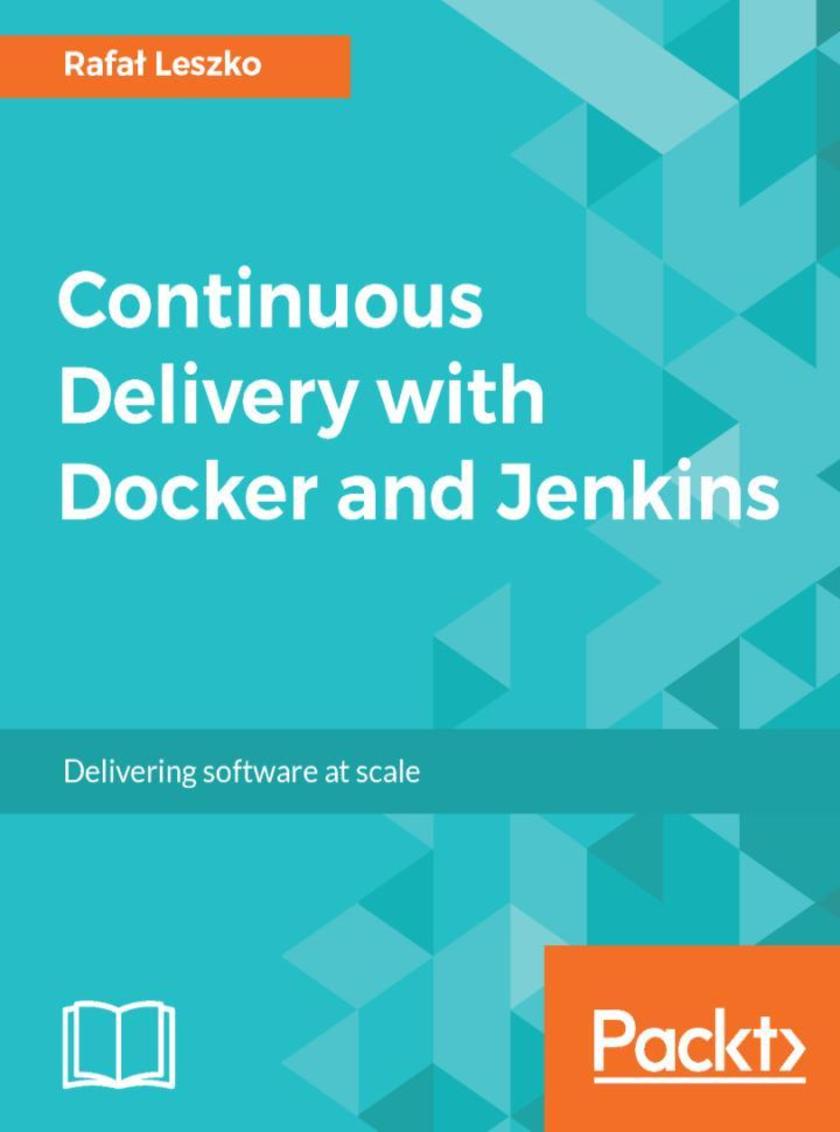
Continuous Delivery with Docker and Jenkins
¥80.65
Unleash the combination of Docker and Jenkins in order to enhance the DevOps workflow About This Book ? Build reliable and secure applications using Docker containers. ? Create a complete Continuous Delivery pipeline using Docker, Jenkins, and Ansible. ? Deliver your applications directly on the Docker Swarm cluster. ? Create more complex solutions using multi-containers and database migrations. Who This Book Is For This book is indented to provide a full overview of deep learning. From the beginner in deep learning and artificial intelligence to the data scientist who wants to become familiar with Theano and its supporting libraries, or have an extended understanding of deep neural nets. Some basic skills in Python programming and computer science will help, as well as skills in elementary algebra and calculus. What You Will Learn ? Get to grips with docker fundamentals and how to dockerize an application for the Continuous Delivery process ? Configure Jenkins and scale it using Docker-based agents ? Understand the principles and the technical aspects of a successful Continuous Delivery pipeline ? Create a complete Continuous Delivery process using modern tools: Docker, Jenkins, and Ansible ? Write acceptance tests using Cucumber and run them in the Docker ecosystem using Jenkins ? Create multi-container applications using Docker Compose ? Managing database changes inside the Continuous Delivery process and understand effective frameworks such as Cucumber and Flyweight ? Build clustering applications with Jenkins using Docker Swarm ? Publish a built Docker image to a Docker Registry and deploy cycles of Jenkins pipelines using community best practices In Detail The combination of Docker and Jenkins improves your Continuous Delivery pipeline using fewer resources. It also helps you scale up your builds, automate tasks and speed up Jenkins performance with the benefits of Docker containerization. This book will explain the advantages of combining Jenkins and Docker to improve the continuous integration and delivery process of app development. It will start with setting up a Docker server and configuring Jenkins on it. It will then provide steps to build applications on Docker files and integrate them with Jenkins using continuous delivery processes such as continuous integration, automated acceptance testing, and configuration management. Moving on you will learn how to ensure quick application deployment with Docker containers along with scaling Jenkins using Docker Swarm. Next, you will get to know how to deploy applications using Docker images and testing them with Jenkins. By the end of the book, you will be enhancing the DevOps workflow by integrating the functionalities of Docker and Jenkins. Style and approach The book is aimed at DevOps Engineers, developers and IT Operations who want to enhance the DevOps culture using Docker and Jenkins.
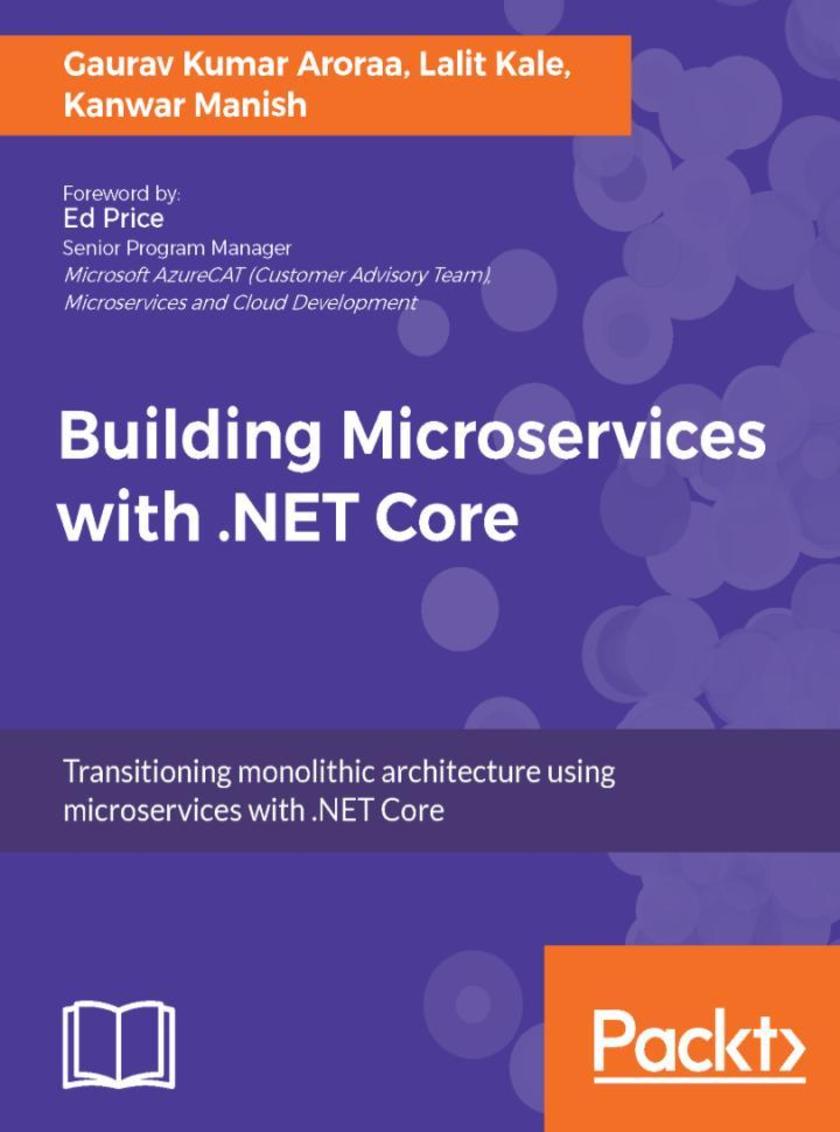
Building Microservices with .NET Core
¥80.65
Architect your .NET applications by breaking them into really small pieces—microservices—using this practical, example-based guide About This Book ? Start your microservices journey and understand a broader perspective of microservices development ? Build, deploy, and test microservices using ASP.Net MVC, Web API, and Microsoft Azure Cloud ? Get started with reactive microservices and understand the fundamentals behind it Who This Book Is For This book is for .NET Core developers who want to learn and understand microservices architecture and implement it in their .NET Core applications. It’s ideal for developers who are completely new to microservices or have just a theoretical understanding of this architectural approach and want to gain a practical perspective in order to better manage application complexity. What You Will Learn ? Compare microservices with monolithic applications and SOA ? Identify the appropriate service boundaries by mapping them to the relevant bounded contexts ? Define the service interface and implement the APIs using ASP.NET Web API ? Integrate the services via synchronous and asynchronous mechanisms ? Implement microservices security using Azure Active Directory, OpenID Connect, and OAuth 2.0 ? Understand the operations and scaling of microservices in .NET Core ? Understand the testing pyramid and implement consumer-driven contract using pact net core ? Understand what the key features of reactive microservices are and implement them using reactive extension In Detail Microservices is an architectural style that promotes the development of complex applications as a suite of small services based on business capabilities. This book will help you identify the appropriate service boundaries within the business. We'll start by looking at what microservices are, and what the main characteristics are. Moving forward, you will be introduced to real-life application scenarios, and after assessing the current issues, we will begin the journey of transforming this application by splitting it into a suite of microservices. You will identify the service boundaries, split the application into multiple microservices, and define the service contracts. You will find out how to configure, deploy, and monitor microservices, and configure scaling to allow the application to quickly adapt to increased demand in the future. With an introduction to the reactive microservices, you strategically gain further value to keep your code base simple, focusing on what is more important rather than the messy asynchronous calls. Style and approach This guide serves as a stepping stone that helps .NET Core developers in their microservices architecture. This book provides just enough theory to understand the concepts and apply the examples.
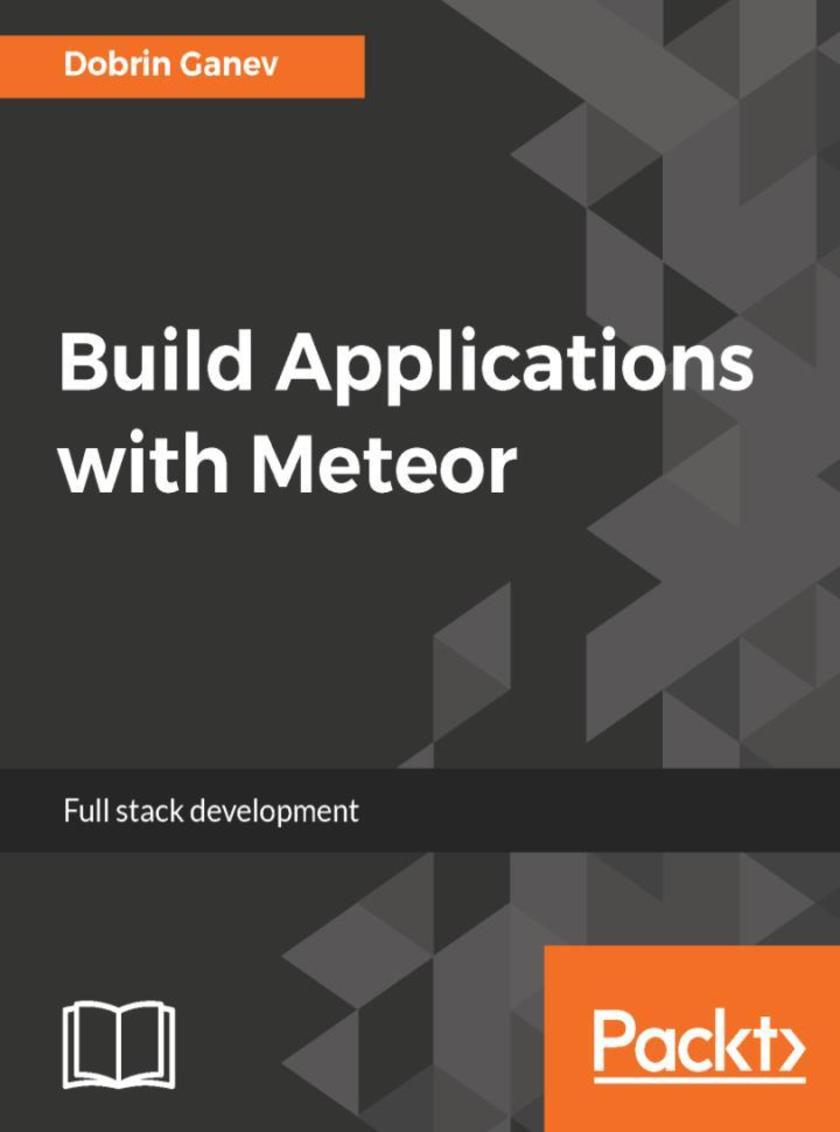
Build Applications with Meteor
¥80.65
Build a variety of cross-platform applications with the world’s most complete full-stack JavaScript framework— Meteor About This Book ? Develop a set of real-world applications each exploring different features of Meteor ? Make your app more appealing by adding reactivity and responsiveness to it ? Work with the most powerful feature of Meteor—the “full stack reactivity”—through building real-time applications with many third party libraries Who This Book Is For If you are a developer who is looking forward to taking your application development skills with Meteor to next level by getting your hands-on different projects, this book is for you. What You Will Learn ? See how Meteor fits in the modern web application development by using its reactive data system ? Make your front-end behave consistently across environments by implementing a predictable state container with Redux ? Get familiar with React and overview of Angular 2 ? Add a map to your application with a real-time geolocation ? Plugin into Meteor social media APIs like Twitter’s streaming and Facebook’s Messenger ? Add search functionality from scratch to your existing app and data ? Add responsiveness with Bootstrap 4 and Google’s Material Design using Less and Sass ? Distribute your data across machines and data centers by adding Apache Cassandra to your existing stack. ? Learn how to scale your microservices with the high performant language neutral framework gRPC. ? Learn how to query multiple data sources using GraphQL. In Detail This book starts with the basic installation and overview of the main components in Meteor. You’ll get hands-on multiple versatile applications covering a wide range of topics from adding a front-end views with the hottest rendering technology React to implementing a microservices oriented architecture.All the code is written with ES6/7 which is the latest significantly improved JavaScript language. We’ll also look at real-time data streaming, server to server data exchange, responsive styles on the front-end, full-text search functionality, and integration of many third-party libraries and APIs using npm. By the end of the book, you’ll have the skills to quickly prototype and even launch your next app idea in a matter of days. Style and Approach This book takes an easy-to-follow project-based approach. Each project starts with the goal of what you will learn and an overview the technologies used.
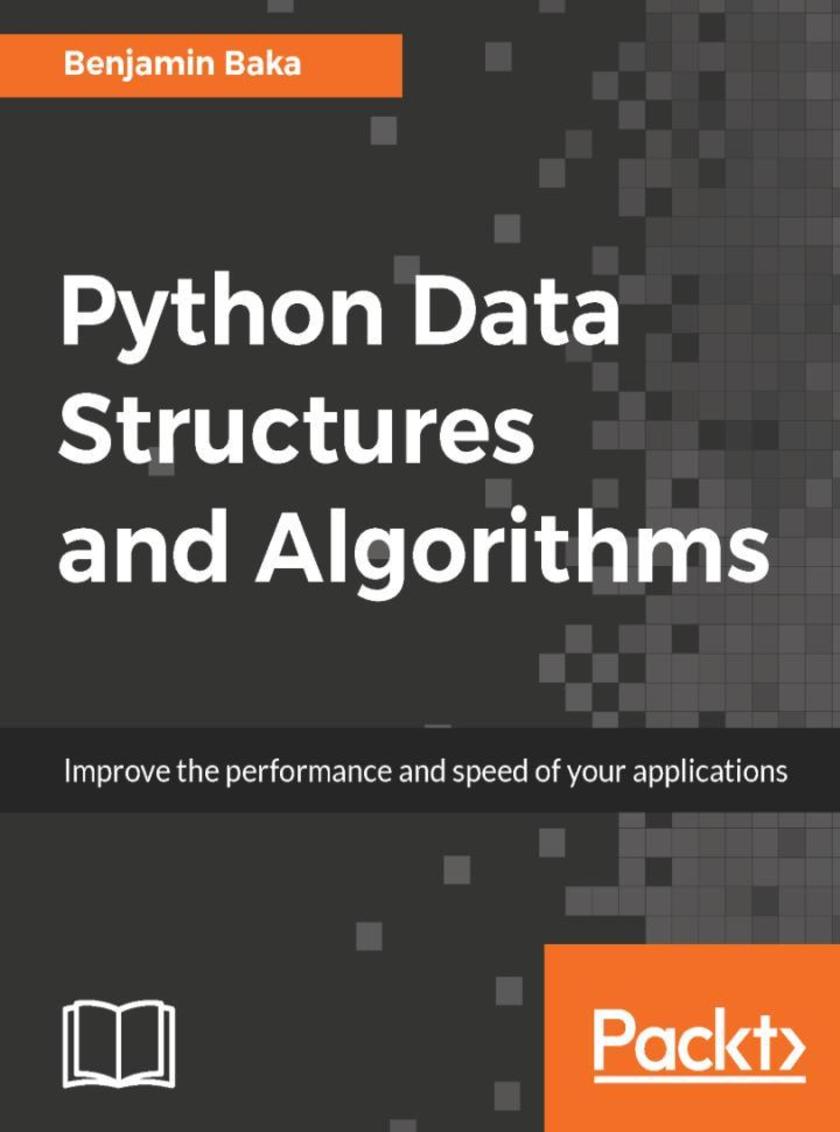
Python Data Structures and Algorithms
¥80.65
Implement classic and functional data structures and algorithms using Python About This Book ? A step by step guide, which will provide you with a thorough discussion on the analysis and design of fundamental Python data structures. ? Get a better understanding of advanced Python concepts such as big-o notation, dynamic programming, and functional data structures. ? Explore illustrations to present data structures and algorithms, as well as their analysis, in a clear, visual manner. Who This Book Is For The book will appeal to Python developers. A basic knowledge of Python is expected. What You Will Learn ? Gain a solid understanding of Python data structures. ? Build sophisticated data applications. ? Understand the common programming patterns and algorithms used in Python data science. ? Write efficient robust code. In Detail Data structures allow you to organize data in a particular way efficiently. They are critical to any problem, provide a complete solution, and act like reusable code. In this book, you will learn the essential Python data structures and the most common algorithms. With this easy-to-read book, you will be able to understand the power of linked lists, double linked lists, and circular linked lists. You will be able to create complex data structures such as graphs, stacks and queues. We will explore the application of binary searches and binary search trees. You will learn the common techniques and structures used in tasks such as preprocessing, modeling, and transforming data. We will also discuss how to organize your code in a manageable, consistent, and extendable way. The book will explore in detail sorting algorithms such as bubble sort, selection sort, insertion sort, and merge sort. By the end of the book, you will learn how to build components that are easy to understand, debug, and use in different applications. Style and approach The easy-to-read book with its fast-paced nature will improve the productivity of Python programmers and improve the performance of Python applications.
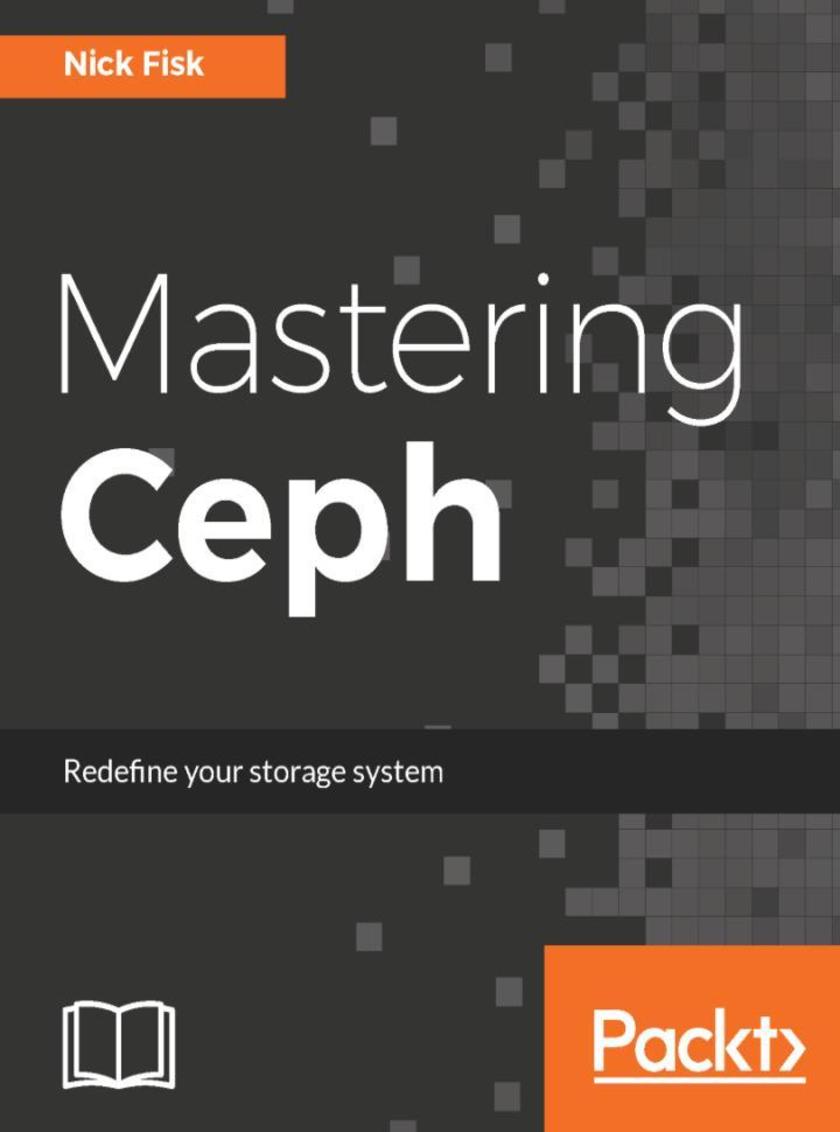
Mastering Ceph
¥80.65
Deep dive into the unified, distributed storage system in order to provide excellent performance About This Book ? Leverage Ceph's advanced features such as erasure coding, tiering, and Bluestore ? Solve large-scale problems with Ceph as a tool by understanding its strengths and weaknesses to develop the best solutions ? A practical guide that covers engaging use cases to help you use advanced features of Ceph effectively Who This Book Is For If you are a developer and an administrator who has deployed a Ceph cluster before and are curious about some of the most advanced features in order to improve performance then this book is for you What You Will Learn ?Know when and how to use some of Ceph's advanced new features ? Set up a test cluster with Ansible and some virtual machines using VirtualBox and Vagrant ?Develop novel solutions to massive problems with librados and shared object classes. ? Choose intelligent parameters for an erasure coded pool and set it up. ? Configure the Bluestore settings and see how they interact with different hardware configurations. ? Keep Ceph running through thick and thin with tuning, monitoring and disaster recovery advice. In Detail Mastering Ceph covers all that you need to know to use Ceph effectively. Starting with design goals and planning steps that should be undertaken to ensure successful deployments, you will be guided through to setting up and deploying the Ceph cluster, with the help of orchestration tools. Key areas of Ceph including Bluestore, Erasure coding and cache tiering will be covered with help of examples. Development of applications which use Librados and Distributed computations with shared object classes are also covered. A section on tuning will take you through the process of optimisizing both Ceph and its supporting infrastructure. Finally, you will learn to troubleshoot issues and handle various scenarios where Ceph is likely not to recover on its own. By the end of the book, you will be able to successfully deploy and operate a resilient high performance Ceph cluster. Style and approach A practical guide which has each chapter explaining the concept, sharing tips and tricks and a use case to implement the most powerful features of Ceph
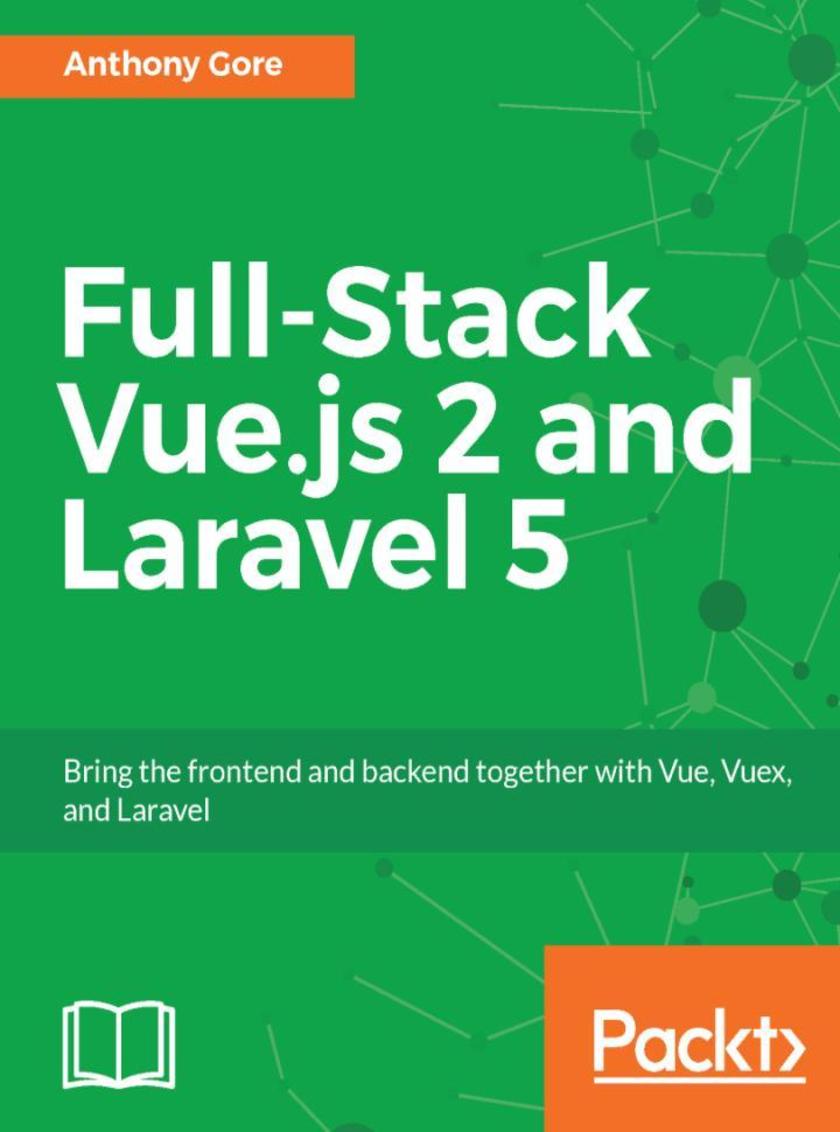
Full-Stack Vue.js 2 and Laravel 5
¥80.65
Learn to build professional full-stack web apps with Vue.js and Laravel About This Book ? End-to-end guide on full-stack development with Vue.js 2 and Laravel 5 ? Developing modern user interfaces with a reusable component-based architecture ? Use Webpack to improve applications performance and development workflow ? Explore the features of Vuex to build applications that are powerful, consistent, and maintainable Who This Book Is For This book targets developers who are new to Vue.js, Laravel, or both, and are seeking a practical, best-practice approach to development with these technologies. They must have some knowledge of HTML, CSS and Java*. What You Will Learn ? Core features of Vue.js to create sophisticated user interfaces ? Build a secure backend API with Laravel ? Learn a state-of-the-art web development workflow with Webpack ? Full-stack app design principles and best practices ? Learn to deploy a full-stack app to a cloud server and CDN ? Managing complex application state with Vuex ? Securing a web service with Laravel Passport In Detail Vue is a JavaScript framework that can be used for anything from simple data display to sophisticated front-end applications and Laravel is a PHP framework used for developing fast and secure web-sites. This book gives you practical knowledge of building modern full-stack web apps from scratch using Vue with a Laravel back end. In this book, you will build a room-booking website named "Vuebnb". This project will show you the core features of Vue, Laravel and other state-of-the-art web development tools and techniques. The book begins with a thorough introduction to Vue.js and its core concepts like data binding, directives and computed properties, with each concept being explained first, then put into practice in the case-study project. You will then use Laravel to set up a web service and integrate the front end into a full-stack app. You will be shown a best-practice development workflow using tools like Webpack and Laravel Mix. With the basics covered, you will learn how sophisticated UI features can be added using ES+ syntax and a component-based architecture. You will use Vue Router to make the app multi-page and Vuex to manage application state. Finally, you will learn how to use Laravel Passport for authenticated AJAX requests between Vue and the API, completing the full-stack architecture. Vuebnb will then be prepared for production and deployed to a free Heroku cloud server. Style and approach Learn front-end Vue techniques, back-end Laravel skills, and put them together to build a working application
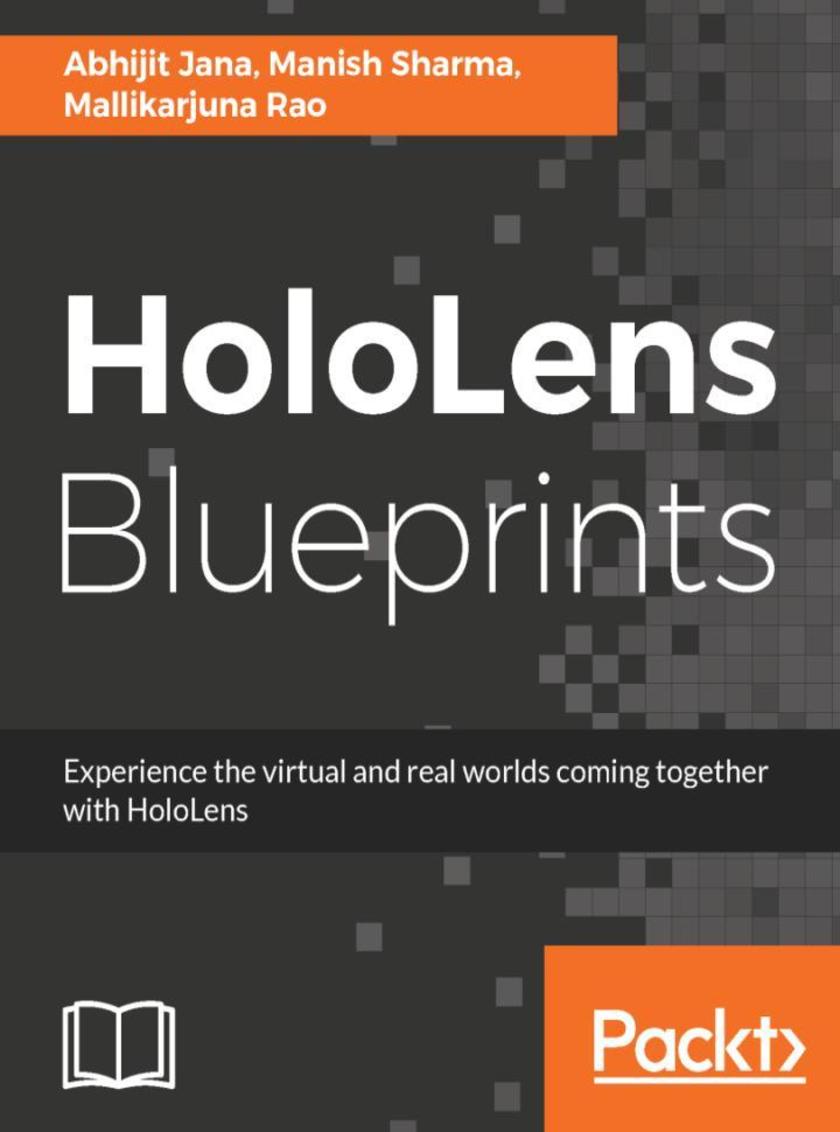
HoloLens Blueprints
¥80.65
Unveil the world of mixed reality with HoloLens About This Book ? Bring holographic insights to existing line-of-business applications, tools, and workflows ? Focus on developing end-to-end realistic holographic application. ? Build interactive model *s and test them in Unity3D and holographic emulators Who This Book Is For This book is targeted at developers and designers working on mixed-reality developments for complex integrated scenarios using HoloLens. What You Will Learn ? Interact with holograms using different interaction models ? Develop your first holographic app ? Integrate holographic applications with cloud systems ? Visualize data feeds coming from the cloud through holograms ? Manage the application distribution of enterprise-enabled HoloLens ? Integrate HoloLens applications with services deployed on Azure ? Identify and create 3D Assets and Scenes ? Use HoloLens to explore the Internet of Things In Detail Do you want to create stunning applications with HoloLens? Are you a developer who is fascinated with Microsoft HoloLens and its capabilities? If so, this is the book for you. This book introduces and demystifies the HoloLens platform and shows you different ways of interaction with computers (mixed-reality). You will start your mixed-reality journey by understanding different types of digital reality. You will learn to build your first holographic app. Also, you will understand holographic application integration possibilities within Line of Business Applications using Azure. Moving ahead, you will create Integrated Solutions using IoT with HoloLens. Gradually you'll learn how to create and deploy apps on a device. You will learn to publish application to the store; if you are an enterprise developer, you will also manage and distribute applications for enterprise-enabled or domain-joined HoloLens. Finally, you will develop an end-to-end realistic holographic app, ranging from scenario identification to sketching, development, deployment, and, finally, production. Style and approach The book is a project-based guide to help you to create some really astonishing mixed-reality applications. It will provide end-to-end solutions and enable you to build stunning applications for HoloLens.
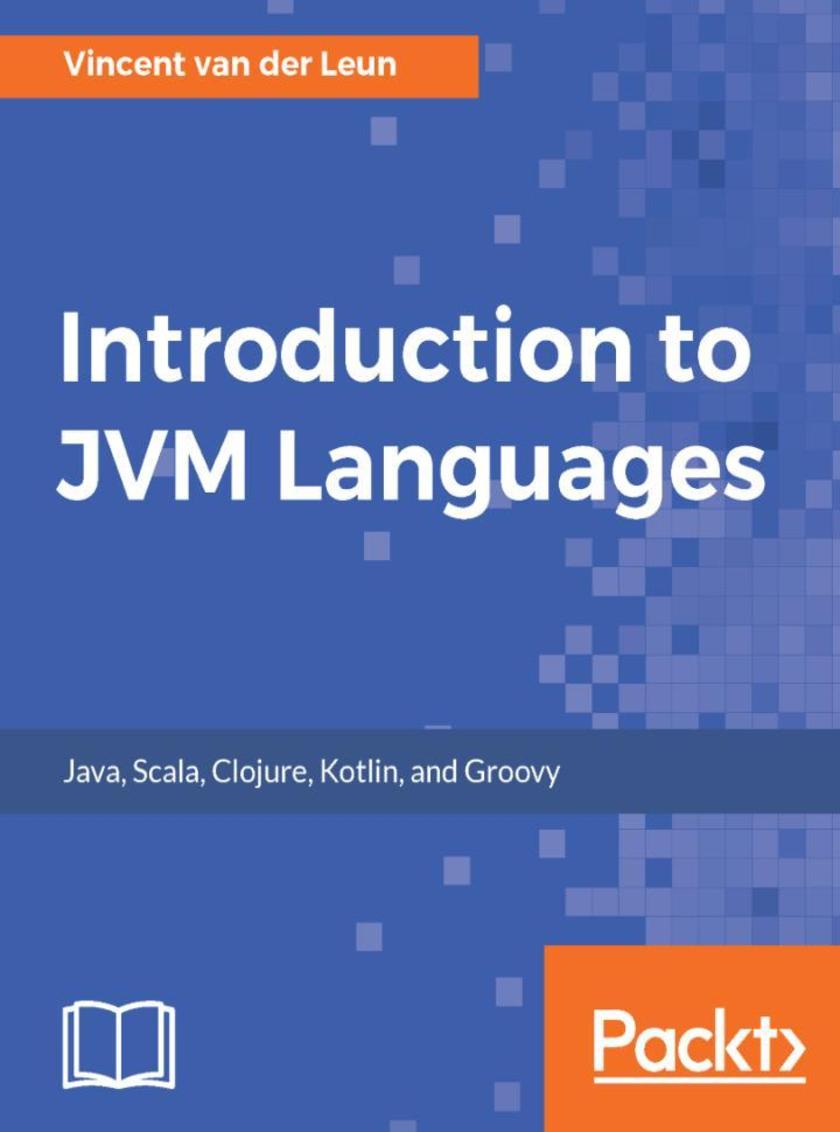
Introduction to JVM Languages
¥80.65
Explore the Java Virtual Machine with modern programming languages About This Book ? This guide provides in-depth coverage of the Java Virtual Machine and its features ? Filled with practical examples, this book will help you understand the core concepts of Java, Scala, Clojure, Kotlin, and Groovy ? Work with various programming paradigms and gain knowledge about imperative, object-oriented and functional programming Who This Book Is For This book is meant for programmers who are interested in the Java Virtual Machine (JVM) and want to learn more about the most popular programming languages that can be used for JVM development. Basic practical knowledge of a modern programming language that supports object-oriented programming (JavaScript, Python, C#, VB.NET, and C++) is assumed. What You Will Learn ? Gain practical information about the Java Virtual Machine ? Understand the popular JVM languages and the Java Class Library ? Get to know about various programming paradigms such as imperative, object-oriented, and functional ? Work with common JVM tools such as Eclipse IDE, Gradle, and Maven ? Explore frameworks such as SparkJava, Vert.x, Akka and JavaFX ? Boost your knowledge about dialects of other well-known programming languages that run on the JVM, including JavaScript, Python, and Ruby In Detail Anyone who knows software development knows about the Java Virtual Machine. The Java Virtual Machine is responsible for interpreting Java byte code and translating it into actions. In the beginning, Java was the only programming language used for the JVM. But increasing complexity of the language and the remarkable performance of the JVM created an opening for a new generation of programming languages. If you want to build a strong foundation with the Java Virtual Machine and get started with popular modern programming languages, then this book is for you. The book will begin with a general introduction of the JVM and its features, which are common to the JVM languages, helping you get abreast with its concepts. It will then dive into explaining languages such as Java, Scala, Clojure, Kotlin, and Groovy and will show how to work with each language, their features, use cases, and pros and cons. By writing example projects in those languages and focusing on each language’s strong points, it will help you find the programming language that is most appropriate for your particular needs. By the end of the book, you will have written multiple programs that run on the Java Virtual Machine and know about the differences between the various languages. Style and approach This practical, example-filled guide will help you get started with the JVM and some of its most popular languages.
Game Audio Development with Unity 5.X
¥80.65
Create ‘AAA’ quality game audio with new features and tools built for Unity About This Book ? Explore the basics of audio development in Unity to create spatial sound, mixing, effects, composition, adaptive audio and more. ? Leverage the Audio Mixer of Unity 5.x to create blockbuster sound and music for your game. ? Learn about developing professional audio for games with FMOD Studio and composing original music with Reaper. ? Build amazing audio synchronized graphic visualizations with Unity. ? Understand how real-time character lip syncing can be implemented. Who This Book Is For The ideal target audience for this book will be game developers, both Indie as well as semi pro. No prior knowledge of Unity and audio development is assumed, What You Will Learn ? Develop game audio and other audio effects with Unity ? Getting familiar with the new Audio Mixer introduced in Unity 5 ? Implement dynamic and adaptive audio using various tools and strategies ? Explore interesting ways to incorporate audio into a game with sound visualization ? Use 3rd party professional audio development tools like FMOD ? Compose original music and record vocals ? Understand and troubleshoot audio performance issues In Detail Game Audio is one of the key components in making a game successful and it is quite popular in the gaming industry. So if you are a game developer with an eye on capturing the gamer market then this book is the right solution for you. In this book, we will take you through a step by step journey which will teach you to implement original and engaging soundtracks and SFX with Unity 5.x. You will be firstly introduced to the basics of game audio and sound development in Unity. After going through the core topics of audio development: audio sources, spatial sound, mixing, effects, and more; you will then have the option of delving deeper into more advanced topics like dynamic and adaptive audio. You will also learn to develop dynamic and adaptive audio using the Unity Audio Mixer. Further, you will learn how professional third party tools like FMOD are used for audio development in Unity. You will then go through the creation of sound visualization techniques and creating your own original music using the simple yet powerful audio workstation Reaper. Lastly, you will go through tips, techniques and strategies to help you optimize game audio performance or troubleshoot issues. At the end of the book, you’ll have gained the skills to implement professional sound and music. Along with a good base knowledge audio and music principles you can apply across a range of other game development tools. Style and approach This book will have a step by step practical approach where downloadable free games will be given with the book and readers will be free to work with them.


