


 购物车
购物车 个人中心
个人中心
Forces of Nature
¥66.22
Professor Brian Cox, OBE is a particle physicist, a Royal Society research fellow, and a professor at the University of Manchester as well as researcher on one of the most ambitious experiments on Earth, the ATLAS experiment on the Large Hadron Collider in Switzerland. He is best known to the public as a science broadcaster and presenter of the popular BBC Wonders trilogy. Andrew Cohen is Head of the BBC Science Unit and the Executive Producer of the BBC series Human Universe. He has been responsible for a wide range of science documentaries including Horizon, the Wonders trilogy and Stargazing Live. He lives in London with his wife and three children.

World Religions: The esential reference guide to the world’s major faiths (Colli
¥69.26
As far back as we can discover, people have asked questions that still trouble us today, both practical questions about how to live, how to treat other people, how to avoid unhappiness, and transcendental questions such as What is the meaning of life? How did the universe come into being? Why does suffering exist? What happens after death?Religion in its many different forms sets out to answer these and other questions.As far back as we can discover, people have asked questions that still trouble us today, both practical questions about how to live, how to treat other people, how to avoid unhappiness, and transcendental questions such as What is the meaning of life? How did the universe come into being? Why does suffering exist? What happens after death?Religion in its many different forms sets out to answer these and other questions.
The Dawn Watch: Joseph Conrad in a Global World
¥73.58
Maya Jasanoff is Coolidge Professor of history at Harvard University. Her first book, Edge of Empire, was awarded the 2005 Duff Cooper Prize and was a book of the year selection in numerous publications including the Economist, Guardian and Sunday Times. Her second, Liberty’s Exiles was shortlisted for the 2011 Samuel Johnson Prize (now Baillie Gifford). A 2013 Guggenheim Fellow, Jasanoff won the prestigious 2017 Windham-Campbell Prize for Non-Fiction. Her essays and reviews appear frequently in publications including The Guardian, The New York Times, and The New York Review of Books.
Kindness: The Little Thing that Matters Most
¥73.58
‘Urgently needed – rugs.’ That was the message that started everything. I was searching online for second-hand furniture, when I came across the plea for help. It was a Wanted ad placed by a woman who sounded desperate. I emailed her and was heartbroken by what I learned. She needed the rugs to cover her broken floor so her young children wouldn’t cut their feet. She was a single mum who had fled a horrifying domestic situation and was starting all over again with nothing. I wanted to help her, and I was sure that if others knew about her, they would want to help, too. So I spread the word among my friends and family, and household goods soon started pouring in.I delivered everything to her one afternoon – piles of bedding, furniture, kitchenware, clothing, toys and some gift vouchers. I will never forget the look on her face when she opened the door. She was in complete shock that people she didn’t even know would be willing to help her. This was a woman very much in need of kindness, and strangers helped her feel loved when she needed it the most.
Down to the River and Up to the Trees: Discover the hidden nature on your doorst
¥66.22
Sue Belfrage lives in a cottage in rural Somerset with her husband and pet animals. A writer and artist, she draws inspiration from the land around her.

Japonisme: Ikigai, Forest Bathing, Wabi-sabi and more
¥73.58
Erin Niimi Longhurst has always treasured the Japanese traditions that shaped her upbringing. She spends time in Japan every year and currently lives in London. Her blog Island Bell focuses on food travel and lifestyle. She currently works freelance as a digital marketeer.
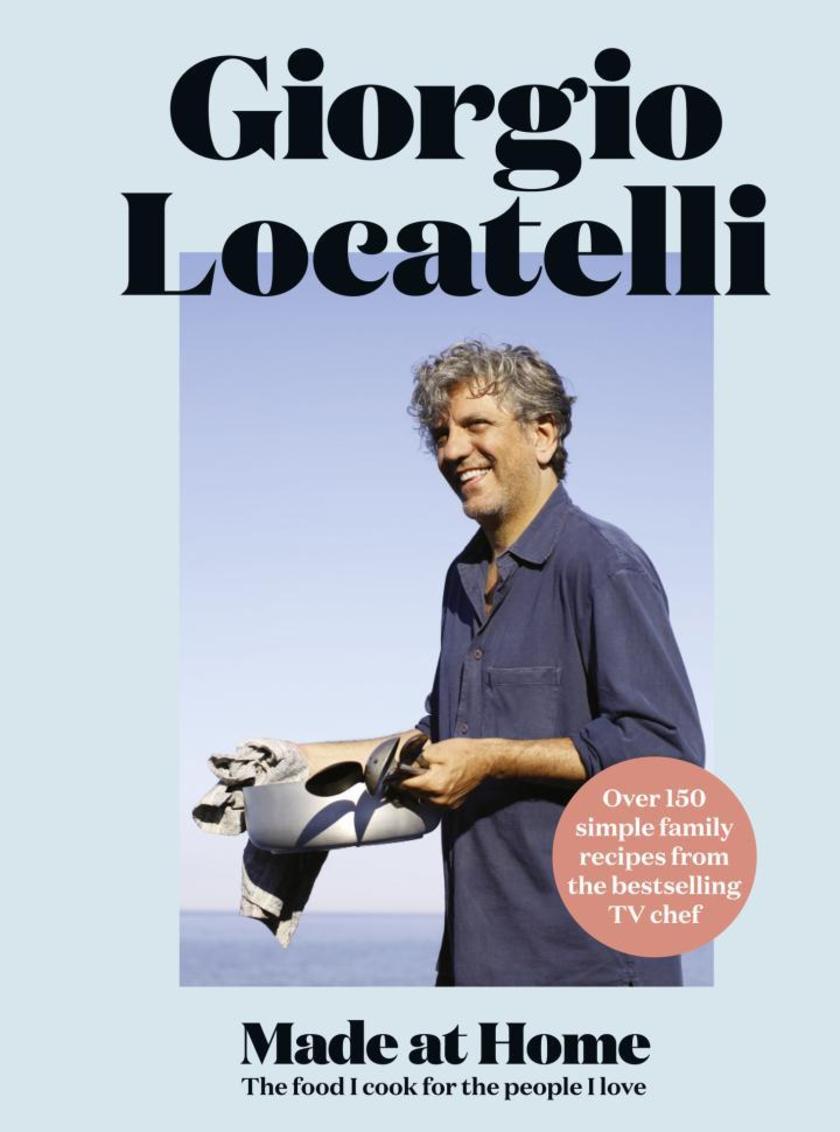
Made at Home: The food I cook for the people I love
¥191.59
Michelin-starred Giorgio Locatelli is one of Britain's best known Italian chefs. Giorgio began his career at his family's restaurant in Italy before coming to London. He was head chef at Zafferano in London from its opening to a storm of praise and press coverage in 1994, before moving in 2002 to open Locanda Locatelli, where he remains chef-patron.

Northumberland (Collins New Naturalist Library, Book 95)
¥476.96
A native of Northumberland, Angus Lunn is a geographer and ecologist who, until he took early retirement, was Head of Adult Education at the University of Newcastle. He now lectures there part-time. He served for several years on the Northumberland National Park Committee and is currently Chairman of the Council for National Parks and of the Conservation Committee of the Northumberland Wildlife Trust. He has contributed to several published works, including the Flora of Northumberland, Geology of North East England and the Red Data Book for Northumberland.
Insect Natural History (Collins New Naturalist Library, Book 8)
¥476.96
THE name insect is very commonly given to any small creeping animal with a ringed or segmented body and several pairs of legs. Not many people, excepting entomologists and trained biologists, could give a proper definition of an insect that would distinguish it from its near relatives. In the first place it needs to be borne in mind that insects belong to the great group of invertebrate animals known as the Arthropoda. These creatures have the body divided into more or less separate rings or segments, of which a variable number bear jointed limbs. Their whole body and the limbs are covered with a specially hardened cuticle forming an external skeleton. Between the segments, and at the joints of the limbs, there is flexible connecting membrane which allows of freedom of movement. An arthropod, in fact, is encased in a tubular outer skeleton, in striking contrast with a vertebrate animal whose skeleton lies within the body. The functions of the skeleton, whether it be an inner or an outer one, is to give attachment to the muscles and general support to the body. The word insect is derived from the Latin insectum, meaning “cut into,” and refers to the way in which its body is made up of a series of ring-like pieces.

The Wrong Kind of Shirts 1999 (TEXT ONLY)
¥25.21
Mark Reynolds is a freelance writer and designer. A lifelong Aston Villa fan, he still believes the current Stoke City manager is God.
Care for your Dog (The Official RSPCA Pet Guide)
¥25.21
The diversity of dogs is enormous. In height, they range from the gigantic Irish Wolfhound to the tiny Yorkshire Terrier. They include both the massive Newfoundland, weighing as much as a full-grown man, and the Chihuahua which, at 1 kg/2 lb in weight, is the smallest breed of dog in the world. Their coats vary too, from the smooth satin of the Boxer to the silky plumes of the Maltese and the long ‘cords’ of the Hungarian Komondor. At the other extreme, the warm, smooth-skinned Mexican Hairless Dog is almost completely bald.
Care for your Gerbil (The Official RSPCA Pet Guide)
¥25.21
Mongolian gerbils have been kept as pets in Britain only since 1964. The first breeding pairs arrived in that year, intended as laboratory animals, but their qualities as delightful pets soon became obvious. They rapidly became established as one of the most successful pets ever introduced into this country, especially for families living in homes which are not suitable for larger animals.
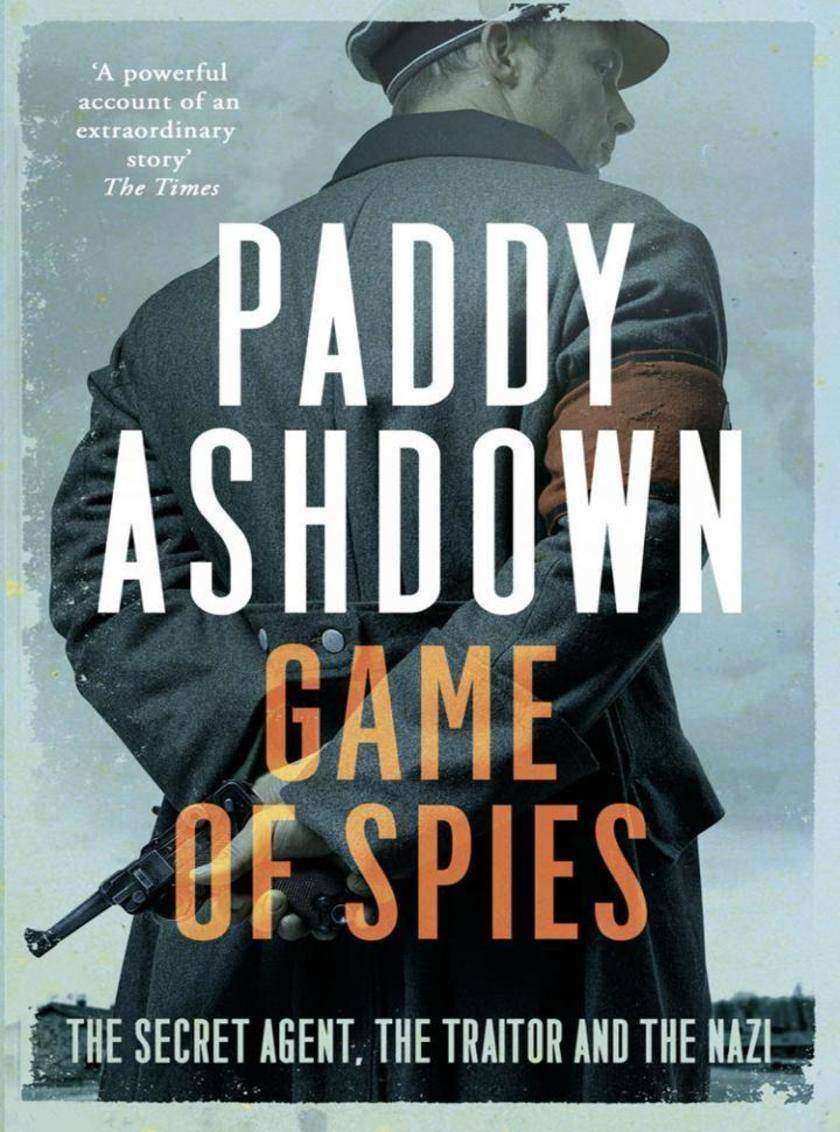
Game of Spies: The Secret Agent, the Traitor and the Nazi, Bordeaux 1942-1944
¥73.58
After service as a Royal Marine and as an intelligence officer for the UK security services, Paddy Ashdown was a Member of Parliament for Yeovil from 1983 to 2001, and leader of the Liberal Democrats from 1988 until 1999. Later he was the international High Representative for Bosnia and Herzegovina from 2002 to 2006. He was made a Knight Grand Cross of the Most Distinguished Order of Saint Michael and Saint George in 2006.
Arcadia: England and the Dream of Perfection (Text Only)
¥81.03
Adam Nicolson is the author of many books on history, travel and the environment. He is the winner of the Somerset Maugham Award, the British Topography Prize and the WH Heinemann Award. He lives on a farm in Sussex. This is his fith book for HarperCollins – his previous four being ‘Men of Honour’, ‘Sea Room’, ‘Power and Glory’ and ‘Seamanship’.
Irish birds (Collins Gem)
¥47.58
David Cabot is one of Ireland's foremost ornithologists and wildlife experts. A zoology graduate from Trinity College, Dublin, he completed his PhD at University College Galway, where he also taught and founded the Irish Wildfowl Conservancy. He worked for 20 years as head of Conservation and Amenity Reaseach in a State planning institute before becoming a special environmential advisor to the Irish Prime Minister. He is a well-known natural history film maker, broadcaster and writer.

The Doctor’s Kitchen: Supercharge your health with 100 delicious everyday recipe
¥115.56
Dr Rupy Aujla is a practising GP in London. Trained at Imperial College London, his aim is to be the leading voice in how nutrition can heal and improve health. He is one of twenty global ‘I Quit Sugar’ experts, regular Doctor on BBC Asian Network’s Noreen Khan show with half a million listeners, Men’s Health Recipe Creator and Doctor, TEDxNHS Speaker, Huffington Post, Shortlist, Stylist, Metro contributor as well as leading nutrition websites including Nutritionfacts.org. Dr Rupy is developing The Doctors Kitchen social presence on You Tube, Instagram and Twitter.

Serious Survival: How to Poo in the Arctic and Other essential tips for explorer
¥115.56
Marshall Corwin is producer of the BBC TV series and has been on every expedition, so has first-hand experience of organising expeditions and living in far-away places.
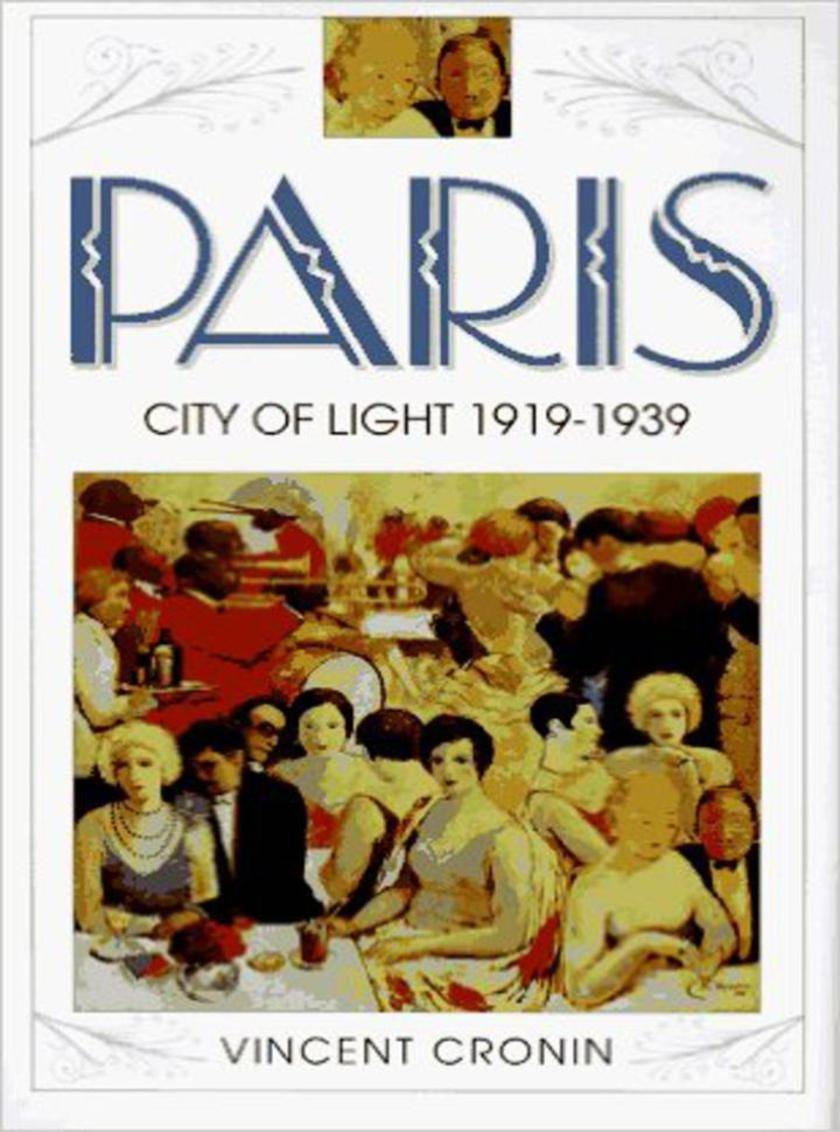
Paris, City of Light: 1919–1939 (Text Only)
¥154.12
In the early days of Cubism, when writers and painters led bohemian lives in Montmartre, a familiar figure in the studios and cafes was a young journalist named Roland Dorgelès. With high brow, long straight nose, lean face and steady blue eyes, smartly turned out, often in a long black coat with astrakhan collar, he was well liked for his cheerful manner, vein of poetry and adventurousness.Dorgelès came of petit bourgeois parents. The father, a travelling textile salesman, was often absent and did not get along with his wife, who transferred her affection to her only son without however becoming possessive. She gave him a Catholic upbringing and encouraged him to read good authors, his favourites being Molière and Courteline. After an unsuccessful spell at the Ecole des Arts décoratifs he decided on a literary career. He became a journalist of the Paris scene, had two short plays put on and indulged in light-hearted practical jokes: calling the fire brigade to extinguish a nonexistent fire in the flat of a rival in love and, on another occasion, to protest against the thick glass on certain paintings in the Louvre, installing himself in front of one such painting, producing razor, cream and brush, soaping his face and calmly shaving as though in front of a mirror.
Types of Naval Officers
¥8.09
Classic work of history. According to Wikipedia: "Alfred Thayer Mahan (September 27, 1840 - December 1, 1914) was a United States Navy officer, geostrategist, and educator. His ideas on the importance of sea power influenced navies around the world, and helped prompt naval buildups before World War I. Several ships were named USS Mahan, including the lead vessel of a class of destroyers. His research into naval History led to his most important work, The Influence of Seapower Upon History,1660-1783, published in 1890."
Till He Come
¥8.09
First published in 1896. Spurgeon was an English Baptist preacher, known as "the Prince of Preachers". The Preface begins: " For many years, whether at home or abroad, it was Mr. Spurgeon's constant custom to observe the ordinance of the Lord's supper every Sabbath-day, unless illness prevented. This he believed to be in accordance with apostolic precedent; and it was his oft-repeated testimony that the more frequently he obeyed his Lord's command, "This do in remembrance of Me," the more precious did his Saviour become to him, while the memorial celebration itself proved increasingly helpful and instructive as the years rolled by." According to Wikipedia: "Charles Haddon Spurgeon, commonly C.H. Spurgeon, ( 1834 – 1892) was a British Reformed Baptist preacher who remains highly influential among Christians of different denominations, among whom he is still known as the "Prince of Preachers." He also founded the charity organization now known as Spurgeon's, that works worldwide with families and children, as well as a famous theological college which after his death was called after him: Spurgeon's College. Spurgeon was a prolific author of many types of works including sermons, an autobiography, a commentary, books on prayer, a devotional, a magazine, and more. Many sermons were transcribed as he spoke and were translated into many languages during his lifetime. Arguably, no other author, Christian or otherwise, has more material in print than C.H. Spurgeon."

The Kingdom in History and Prophecy
¥8.09
According to Wikipedia: "Lewis Sperry Chafer (February 27, 1871 – August 22, 1952) was the founder and first president of Dallas Theological Seminary, and an influential founding member of modern Christian Dispensationalism.


