


 购物车
购物车 个人中心
个人中心
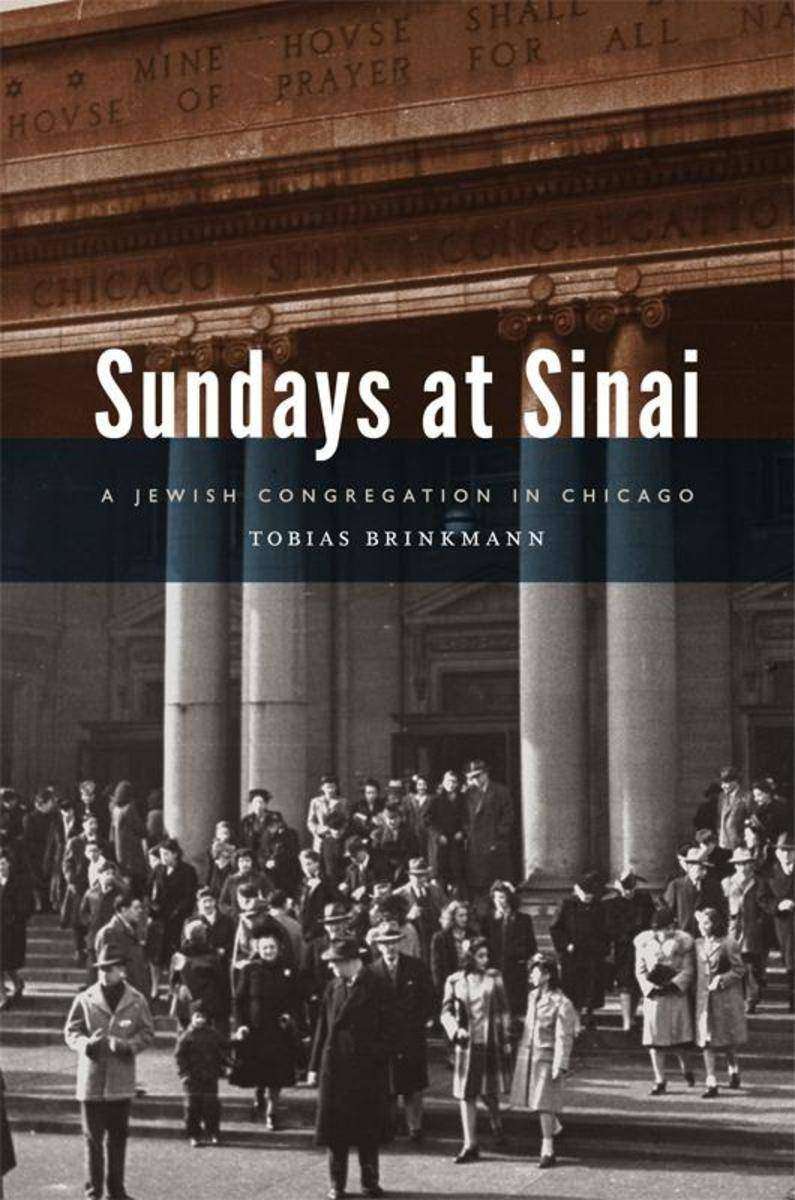
Sundays at Sinai
¥447.34
First established 150 years ago, Chicago Sinai is one of America's oldest Reform Jewish congregations. Its founders were upwardly mobile and civically committed men and women, founders and partners of banks and landmark businesses like Hart Schaffner & Marx, Sears & Roebuck, and the giant meatpacking firm Morris & Co. As explicitly modern Jews, Sinai's members supported and led civic institutions and participated actively in Chicago politics. Perhaps most radically, their Sunday services, introduced in 1874 and still celebrated today, became a hallmark of the congregation.In Sundays at Sinai, Tobias Brinkmann brings modern Jewish history, immigration, urban history, and religious history together to trace the roots of radical Reform Judaism from across the Atlantic to this rapidly growing American metropolis. ?Brinkmann shines a light on the development of an urban reform congregation, illuminating Chicago Sinai's practices and history, and its contribution to Christian-Jewish dialogue in the United States. Chronicling Chicago Sinai's radical beginnings in antebellum Chicago to the present, Sundays at Sinai is the extraordinary story of a leading Jewish Reform congregation in one of America's great cities.
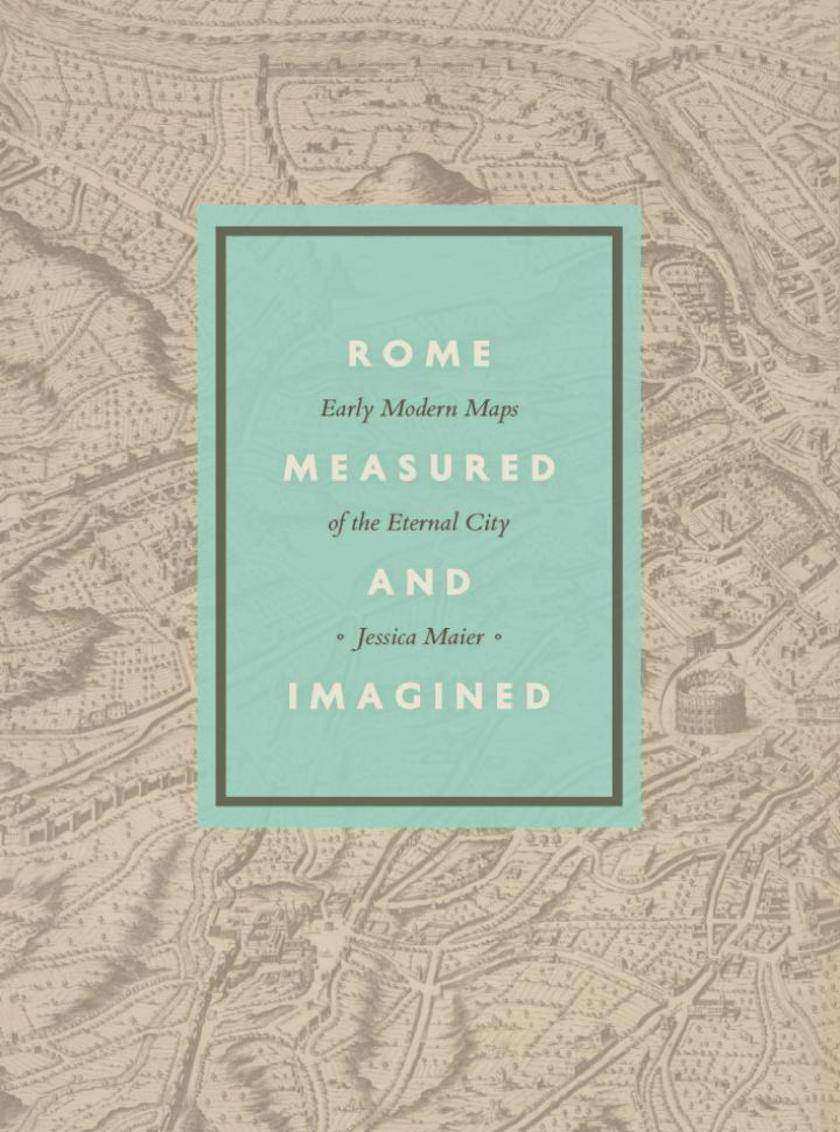
Rome Measured and Imagined
¥412.02
At the turn of the fifteenth century, Rome was in the midst of a dramatic transformation from what the fourteenth-century poet Petrarch had termed a "e;crumbling city"e; populated by "e;broken ruins"e; into a prosperous Christian capital. Scholars, artists, architects, and engineers fascinated by Rome were spurred to develop new graphic modes for depicting the city-and the genre known as the city portrait exploded.In Rome Measured and Imagined, Jessica Maier explores the history of this genre-which merged the accuracy of scientific endeavor with the imaginative aspects of art-during the rise of Renaissance print culture. Through an exploration of works dating from the fifteenth to the eighteenth centuries, her book interweaves the story of the city portrait with that of Rome itself.Highly interdisciplinary and beautifully illustrated with nearly one hundred city portraits, Rome Measured and Imagined advances the scholarship on Renaissance Rome and print culture in fascinating ways.
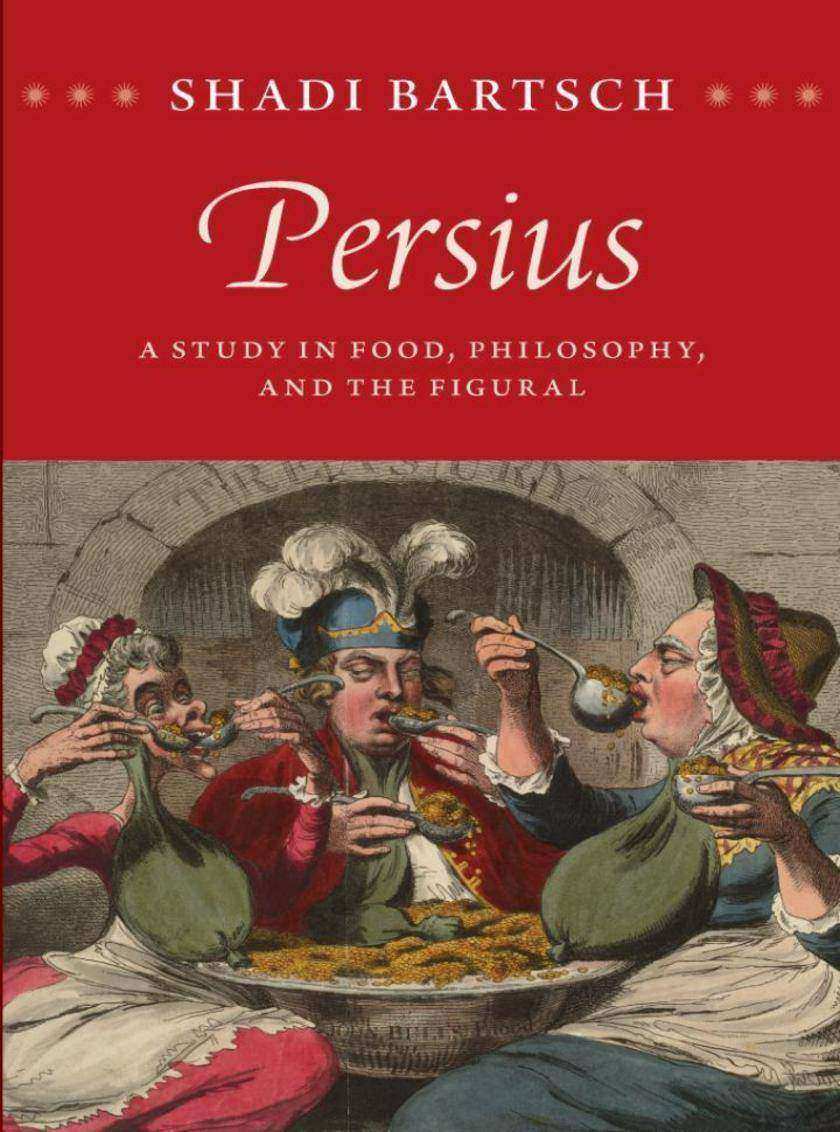
Persius
¥412.02
The Roman poet and satirist Persius (34-62 CE) was unique among his peers for lampooning literary and social conventions from a distinctly Stoic point of view. A curious amalgam of mocking wit and philosophy, his Satires are rife with violent metaphors and unpleasant imagery and show little concern for the reader's enjoyment or understanding.In Persius, Shadi Bartsch explores this Stoic framework and argues that Persius sets his own bizarre metaphors of food, digestion, and sexuality against more appealing imagery to show that the latter-and the poetry containing ?it-harms rather than helps its audience. Ultimately, he encourages us to abandon metaphor altogether in favor of the non-emotive abstract truths of Stoic philosophy, to live in a world where neither alluring poetry, nor rich food, nor sexual charm play a role in philosophical teaching.

Culture of Disaster
¥394.36
From antiquity through the Enlightenment, disasters were attributed to the obscure power of the stars or the vengeance of angry gods. As philosophers sought to reassess the origins of natural disasters, they also made it clear that humans shared responsibility for the damages caused by a violent universe. This far-ranging book explores the way writers, thinkers, and artists have responded to the increasingly political concept of disaster from the Enlightenment until today.?Marie-Hlne Huet argues that post-Enlightenment culture has been haunted by the sense of emergency that made natural catastrophes and human deeds both a collective crisis and a personal tragedy. From the plague of 1720 to the cholera of 1832, from shipwrecks to film dystopias, disasters raise questions about identity and memory, technology, control, and liability. In her analysis, Huet considers anew the mythical figures of Medusa and Apollo, theories of epidemics, earthquakes, political crises, and films such as Blow-Up and Blade Runner. With its scope and precision, The Culture of Disaster will appeal to a wide public interested in modern culture, philosophy, and intellectual history.

Man Who Thought He Was Napoleon
¥370.82
The Man Who Thought He Was Napoleon?is built around a bizarre historical event and an off-hand challenge. The eventIn December 1840, nearly twenty years after his death, the remains of Napoleon were returned to Paris for burial-and the next day, the director of a Paris hospital for the insane admitted fourteen men who claimed to be Napoleon. The challenge, meanwhile, is the claim by great French psychiatrist Jean-Etienne-Dominique Esquirol (1772-1840) that he could recount the history of France through asylum registries.From those two components, Laure Murat embarks on an exploration of the surprising relationship between history and madness. She uncovers countless stories of patients whose delusions seem to be rooted in the historical or political traumas of their time, like the watchmaker who believed he lived with a new head, his original having been removed at the guillotine. In the troubled wake of the Revolution, meanwhile, French physicians diagnosed a number of mental illnesses tied to current events, from "e;revolutionary neuroses"e; and "e;democratic disease"e; to the "e;ambitious monomania"e; of the Restoration. How, Murat asks, do history and psychiatry, the nation and the individual psyche, interface?A fascinating history of psychiatry-but of a wholly new sort-The Man Who Thought He Was Napoleon?offers the first sustained analysis of the intertwined discourses of madness, psychiatry, history, and political theory.

Islanded
¥370.82
How did the British come to conquer South Asia in the late eighteenth and early nineteenth centuriesAnswers to this question usually start in northern India, neglecting the dramatic events that marked Britain's contemporaneous subjugation of the island of Sri Lanka. In Islanded, Sujit Sivasundaram reconsiders the arrival of British rule in South Asia as a dynamic and unfinished process of territorialization and state building, revealing that the British colonial project was framed by the island's traditions and maritime placement and built in part on the model they provided.?Using palm-leaf manu*s from Sri Lanka to read the official colonial archive, Sivasundaram tells the story of two sets of islanders in combat and collaboration. He explores how the British organized the process of "e;islanding"e;: they aimed to create a separable unit of colonial governance and trade in keeping with conceptions of ethnology, culture, and geography. But rather than serving as a radical rupture, he reveals, islanding recycled traditions the British learned from Kandy, a kingdom in the Sri Lankan highlands whose customs-from strategies of war to views of nature-fascinated the British. Picking up a range of unusual themes, from migration, orientalism, and ethnography to botany, medicine, and education, Islanded is an engaging retelling of the advent of British rule.
Protocols of Liberty
¥370.82
The fledgling United States fought a war to achieve independence from Britain, but as John Adams said, the real revolution occurred "e;in the minds and hearts of the people"e; before the armed conflict ever began. Putting the practices of communication at the center of this intellectual revolution, Protocols of Liberty shows how American patriots-the Whigs-used new forms of communication to challenge British authority before any shots were fired at Lexington and Concord. ?To understand the triumph of the Whigs over the Brit-friendly Tories, William B. Warner argues that it is essential to understand the communication systems that shaped pre-Revolution events in the background. He explains the shift in power by tracing the invention of a new political agency, the Committee of Correspondence; the development of a new genre for political expression, the popular declaration; and the emergence of networks for collective political action, with the Continental Congress at its center. From the establishment of town meetings to the creation of a new postal system and, finally, the Declaration of Independence, Protocols of Liberty reveals that communication innovations contributed decisively to nation-building and continued to be key tools in later American political movements, like abolition and women's suffrage, to oppose local custom and state law.

After They Closed the Gates
¥370.82
In 1921 and 1924, the United States passed laws to sharply reduce the influx of immigrants into the country. By allocating only small quotas to the nations of southern and eastern Europe, and banning almost all immigration from Asia, the new laws were supposed to stem the tide of foreigners considered especially inferior and dangerous. However, immigrants continued to come, sailing into the port of New York with fake passports, or from Cuba to Florida, hidden in the holds of boats loaded with contraband liquor. Jews, one of the main targets of the quota laws, figured prominently in the new international underworld of illegal immigration. However, they ultimately managed to escape permanent association with the identity of the "e;illegal alien"e; in a way that other groups, such as Mexicans, thus far, have not.In?After They Closed the Gates,?Libby Garland tells the untold stories of the Jewish migrants and smugglers involved in that underworld, showing how such stories contributed to growing national anxieties about illegal immigration. Garland also helps us understand how Jews were linked to, and then unlinked from, the specter of illegal immigration. By tracing this complex history, Garland offers compelling insights into the contingent nature of citizenship, belonging, and Americanness.

World More Concrete
¥370.82
Many people characterize urban renewal projects and the power of eminent domain as two of the most widely despised and often racist tools for reshaping American cities in the postwar period. In?A World More Concrete, N. D. B. Connolly uses the history of South Florida to unearth an older and far more complex story.Connolly captures nearly eighty years of political and land transactions to reveal how real estate and redevelopment created and preserved metropolitan growth and racial peace under white supremacy.Using a materialist approach, he offers a long view of capitalism and the color line, following much of the money that made land taking and Jim Crow segregation profitable and preferred ?approaches to governing cities throughout the twentieth century.A World More Concrete?argues that black and white landlords, entrepreneurs, and even liberal community leaders used tenements and repeated land dispossession to take advantage of the poor and generate remarkable wealth.Through a political culture built on real estate, South Florida's landlords and homeowners advanced property rights and white property rights, especially, at the expense of more inclusive visions of equality. For black people and many of their white allies, uses of eminent domain helped to harden class and color lines.Yet, for many reformers, confiscating certain kinds of real estate through eminent domain also promised to help improve housing conditions, to undermine the neighborhood influence of powerful slumlords, and to open new opportunities for suburban life for black Floridians.Concerned more with winners and losers than with heroes and villains,?A World More Concrete?offers a sober assessment of money and power in Jim Crow America.It shows how negotiations between powerful real estate interests on both sides of the color line gave racial segregation a remarkable capacity to evolve, revealing property owners' power to reshape American cities in ways that can still be seen and felt today.

A bogarak háborúja
¥22.73
A bogarak háborúja

Régi ismer?s
¥19.87
Régi ismer?s

A kápolna
¥37.11
A kápolna

Sam Small csodálatos élete
¥28.53
Sam Small csodálatos élete

Csontváz kis hibával
¥28.53
Csontváz kis hibával
VII. Olivér
¥28.53
VII. Olivér

A Szahara rabszolgái
¥31.39
A Szahara rabszolgái

?zhívás
¥42.92
zhívás
A démon
¥22.73
A démon
?letb?lcsesség
¥42.92
letblcsesség

A hajózás t?rténete
¥34.25
A hajózás t?rténete

A Rendezvény-szervezés ABC-je
¥71.69
A Rendezvény-szervezés ABC-je


