


 购物车
 个人中心

Nice Valour - or, The Passionate Madman
¥23.45
Thomas Middleton was born in London in April 1580 and baptised on 18th April. Middleton was aged only five when his father died. His mother remarried but this unfortunately fell apart into a fifteen year legal dispute regarding the inheritance due Thomas and his younger sister. By the time he left Oxford, at the turn of the Century, Middleton had and published Microcynicon: Six Snarling Satirese which was denounced by the Archbishop of Canterbury and publicly burned. In the early years of the 17th century, Middleton wrote topical pamphlets. One - Penniless Parliament of Threadbare Poets was reprinted several times and the subject of a parliamentary inquiry. These early years writing plays continued to attract controversy. His writing partnership with Thomas Dekker brought him into conflict with Ben Jonson and George Chapman in the so-called War of the Theatres. His finest work with Dekker was undoubtedly The Roaring Girl, a biography of the notorious Mary Frith. In the 1610s, Middleton began another playwriting partnership, this time with the actor William Rowley, producing another slew of plays including Wit at Several Weapons and A Fair Quarrel. The ever adaptable Middleton seemed at ease working with others or by himself. His solo writing credits include the comic masterpiece, A Chaste Maid in Cheapside, in 1613. In 1620 he was officially appointed as chronologer of the City of London, a post he held until his death. The 1620s saw the production of his and Rowley's tragedy, and continual favourite, The Changeling, and of several other tragicomedies. However in 1624, he reached a peak of notoriety when his dramatic allegory A Game at Chess was staged by the King's Men. Though Middleton's approach was strongly patriotic, the Privy Council silenced the play after only nine performances at the Globe theatre, having received a complaint from the Spanish ambassador. What happened next is a mystery. It is the last play recorded as having being written by Middleton. Thomas Middleton died at his home at Newington Butts in Southwark in the summer of 1627, and was buried on July 4th, in St Mary's churchyard which today survives as a public park in Elephant and Castle.
Quidditch Through the Ages
¥20.00
A perennial bestseller in the wizarding world and one of the most popular books in the Hogwarts School library, Quidditch Through the Ages contains all you will ever need to know about the history, the rules - and the breaking of the rules - of the noble sport of Quidditch. Packed with fascinating facts, this definitive guide by the esteemed Quidditch writer Kennilworthy Whisp charts the game's history from its early origins in the medieval mists on Queerditch Marsh, through to the modern-day sport loved by so many wizard and Muggle families around the world. With comprehensive coverage of famous Quidditch teams, the commonest fouls, the development of racing brooms, and much more, this is a must-have sporting bible for all Harry Potter fans, Quidditch lovers and players, whether the weekend amateur or the seasoned Chudley Cannons season-ticket holder.At least 15% of the net retail price* of this eBook will be available to Comic Relief and Lumos Foundation for their work with children and young people to help them have a better life. 20% of these monies will be used by Comic Relief and 80% will be used by Lumos Foundation.Comic Relief is a registered charity in the UK with charity nos. 326568 (England/Wales) and SC039730 (Scotland). Lumos Foundation is a registered charity in the UK with no. 1112575.* The net retail price means the price paid by the consumer less applicable sales taxes

Beyond: The Stars
¥26.07
Three thrilling short stories of adventure among the stars: Node Of Thought A spaceship pilot on a solo mission between the stars begins to see visions of other people. Are they trace thoughts from others who’ve passed that way? It’s not just an academic question when the ship’s computer starts to obey commands that aren’t his. ? Marathon of the Devil In a death-defying marathon on a desert planet, Eli Marone has managed to get lost. It’s now a race for survival, especially when the barren world might not be so lifeless after all. ? The Rift Twenty-seven years after a reckless experiment created a vast rift across the galaxy, a survey ship’s crew encounters a being with strange abilities and an even stranger disability. What they learn will test every belief they’ve ever had. Praise for Scott Overton: “A storyteller of boundless skill…a writer to watch.” “A gifted wordsmith.”

Terrestrial Magic
¥34.79
Most sensible people avoid fire-breathing carnivores that prey on humans. But Jordan has built a career out of studying such legendary animals, creatures thought mythological until their reemergence in the world three decades ago. She and researchers like her believe that knowledge is the key to reclaiming the land they'd lost back then, when humanity retreated into designated safety zones.? But when the humans moved out, the legends moved in. They were the descendants of mythical heroes, inheriting the powers of their ancestors, and they weren't afraid of the monsters. Jordan never expected to run into a legend, but when a field expedition turns into a trap for her team, she realizes that one deliberately tried to kill her. It's a diplomatic nightmare the Roman authorities might happily sweep under the rug. But if Jordan doesn't figure out who attacked her and why, they could try again. Yet even if she does solve the mystery, what could one stubborn scientist possibly do to stop a powerful legend? Almost 7,000 words of bonus content included. Embark on this urban fantasy/post-apocalyptic adventure today!

Autism Questions Parents Ask: Autism Help Series - Book One
¥52.23
Your child has an autism diagnosis. Now what??First, do no harm. Well, that’s a no-brainer, right??When your child receives an autism diagnosis, the research begins. You want to learn all that you can and find the best ways to help him or her.You will receive advice from specialists that makes sense to you - that fits with your life philosophy and with what you know of your child. You will receive advice that does not sit so well with you, the needs of your family and what you believe are the needs of your child.?Trust your instincts. You know your child the best and no one has his well-being at heart as much as you.Whether or not you feel prepared right now, you as the parent will be your child's primary therapist. You spend the most time with him and have the biggest impact on his life.?This book is for you. It's written by a parent who is also a special ed teacher, counselor, school psychologist, district consultant and autism consultant. The language won't require that you sit with a dictionary in your other hand but when you do find something that makes you want to research further, links and provided to help you with your search.Helping your autistic child be the best he can be is doable. It's within your reach and this is the book to guide you.
Sheryl's Last Stand: Bitter Sweet Comedy
¥26.07
Thirty Shades of Red Sheryl has lost her mojo Sheryl has seen better days, and now, on the wrong side of thirty-five she has lost it all and must start again. Not alone; but under the watchful eye of her mother. A woman with as much sensitivity as a comedian at a hen do.? Where does she start? With a newly discovered passion for belly dancing, Sheryl sets out to chase her fantasies. But, with a teacher like Nefertiti, and mother like Beatrice chasing your fantasies is easier said than done… Sheryl’s Last Stand is a Bridget Jones type comedy with a heroine we can all relate to and a great read if you’re having one of those "stick your head in the sand-I don’t want to get out of bed" days. Sheryl makes you laugh, cry but most of all not give up. She is the first in the Belly Dancing and Beyond series- laugh out loud stories about a group of women who have at one time or another danced with the great Nefertiti.? Each book is a stand-alone tale jam packed with familiar characters you will grow to love, maybe hate but will definitely want to read about again.? ?
Secrets in the Land
¥34.79
Mark Hersch’s life changed for the better when he met Beth Azen. Except for those long drives from Richmond to Hartstown, Virginia, to see her. Mark jumps at a surprise trip for a routine investigation of a polluted stream, never expecting anything out of the ordinary. But a bizarre secret from before the town’s founding awaits. Can Mark, Beth, and their shared magic solve the deadly mystery before all of Hartstown runs out of time? An excerpt from Secrets in the Land: Sometimes, you need to leave the bad things in the past. Art smiled, but it didn’t get anywhere within a mile of his eyes. “I have to ask if this is something you’re willing to take on, Mark. I’m not fibbing or lying or anything else when I say I’d understand if you’re not. Whatever’s up there half scared the life out of me. You ever feel that way about a place?” This time Mark did shiver, and he didn’t try to hide it. Maybe it was time he admitted at least a bit of what he and Beth (and Clina) had actually gotten into back in December. “Just one time. When we were taking your lost miner’s bones out of that old house pit. I was sure then and I’m more sure now that he dropped the rock that hit Beth on purpose. Thing is, I know in my bones that the rock was really aimed at me.”

Theft - The function of man is to live, not to exist.
¥38.75
John Griffith "e;Jack"e; London was born John Griffith Chaney on January 12th, 1876 in San Francisco. His father, William Chaney, was living with his mother Flora Wellman when she became pregnant. Chaney insisted she have an abortion. Flora's response was to turn a gun on herself. Although her wounds were not severe the trauma made her temporarily deranged. In late 1876 his mother married John London and the young child was brought to live with them as they moved around the Bay area, eventually settling in Oakland where Jack completed grade school. Jack also worked hard at several jobs, sometimes 12-18 hours a day, but his dream was university. He was lent money for that and after intense studying enrolled in the summer of 1896 at the University of California in Berkeley. In 1897, at 21 , Jack searched out newspaper accounts of his mother's suicide attempt and the name of his biological father. He wrote to William Chaney, then living in Chicago. Chaney said he could not be London's father because he was impotent; and casually asserted that London's mother had relations with other men. Jack, devastated by the response, quit Berkeley and went to the Klondike. Though equally because of his continuing dire finances Jack might have taken that as the excuse he needed to leave. In the Klondike Jack began to gather material for his writing but also accumulated many health problems, including scurvy, hip and leg problems many of which he then carried for life. By the late 1890's Jack was regularly publishing short stories and by the turn of the century full blown novels. By 1904 Jack had married, fathered two children and was now in the process of divorcing. A stint as a reporter on the Russo-Japanese war of 1904 was equal amounts trouble and experience. But that experience was always put to good use in a remarkable output of work. Twelve years later Jack had amassed a wealth of writings many of which remain world classics. He had a reputation as a social activist and a tireless friend of the workers. And yet on November 22nd 1916 Jack London died in a cottage on his ranch at the age of only 40. Here we present Theft.

Othello - The robbed that smiles steals something from the thief
¥11.67
The life of William Shakespeare, arguably the most significant figure in the Western literary canon, is relatively unknown. Shakespeare was born in Stratford-upon-Avon in 1565, possibly on the 23rd April, St. George's Day, and baptised there on 26th April. Little is known of his education and the first firm facts to his life relate to his marriage, aged 18, to Anne Hathaway, who was 26 and from the nearby village of Shottery. Anne gave birth to their first son six months later. Shakespeare's first play, The Comedy of Errors began a procession of real heavyweights that were to emanate from his pen in a career of just over twenty years in which 37 plays were written and his reputation forever established. This early skill was recognised by many and by 1594 the Lord Chamberlain's Men were performing his works. With the advantage of Shakespeare's progressive writing they rapidly became London's leading company of players, affording him more exposure and, following the death of Queen Elizabeth in 1603, a royal patent by the new king, James I, at which point they changed their name to the King's Men. By 1598, and despite efforts to pirate his work, Shakespeare's name was well known and had become a selling point in its own right on title pages. No plays are attributed to Shakespeare after 1613, and the last few plays he wrote before this time were in collaboration with other writers, one of whom is likely to be John Fletcher who succeeded him as the house playwright for the King's Men. William Shakespeare died two months later on April 23rd, 1616, survived by his wife, two daughters and a legacy of writing that none have since yet eclipsed.
Persians - For know that no one is free, except Zeus
¥11.67
schylus is often regarded as the father of Greek tragedy; he moved play writing from the simple interaction of a single character and a chorus to one where many characters interact and thereby create more dynamic and dramatic situations. schylus, was the son of Euphorion, and a scion of a Eupatrid or noble family. He was born at Eleusis 525 B.C., or, as the Greeks calculated time, in the fourth year of the 63rd Olympiad. He first worked at a vineyard and whilst there claimed to have been visited by Dionysis in a dream and told to turn his attention to the tragic art. It was a dream that would deliver a rich and incredible legacy through his writing talents. His earliest tragedy, composed when he was twenty-six years of age, failed to win the fabled Dionysia, (a revered festival of theatre) and it was not until fifteen years later that he gained this victory in 484BC going on to win it again in 472 BC (for The Persians), 467 BC (for Seven Against Thebes) and 463 BC (for The Suppliants). schylus was also known for his military skills and was ready to fight in defence of Athens whenever the call was made. He and his brother, Cynegeirus, fought against Darius's invading Persian army at the Battle of Marathon in 490 BCE and, although the Greeks won against overwhelming odds, Cynegeirus died in the battle, which had a naturally had a profound effect on schylus. He made several visits to the important Greek city of Syracuse in Sicily at the invitation of the tyrant Hieron, and it is thought that he also travelled extensively in the region of Thrace. His writing continued to be the envy of others. With the series of plays of which Seven Against Thebes was a part, his supremacy was undisputed. He was the "e;father of tragedy."e; schylus made many changes to dramatic form. The importance of the chorus was demoted and a second added to give prominence to the dialogue and making that interchange the leading feature of the play. He removed all deeds of bloodshed from the public view, and in their place provided various spectacular elements, improving the costumes, making the masks more expressive and convenient, and probably adopting the cothurnus to increase the stature of the performers. Finally, he established the custom of contending for the prize with trilogies, an inter-connecting set of three independent dramas. The closing years of the life of schylus were mainly spent in Sicily, which he had first visited soon after his defeat at the Dionysia by Sophocles. schylus returned to Athens to produce his Orestean trilogy, probably the finest of his works, although the Eumenides, the last of the three plays, revealed so openly his aristocratic tendencies that he became extremely unpopular, and returned to Sicily for the last time in 458 BCE and it was there that he died, while visiting the city of Gela in 456 or 455 BCE.
Short Plays Vol 2 - Do not wait to strike till the iron is hot; but make it hot
¥35.22
William Butler Yeats (1865 - 1939) is best described as Ireland's national poet in addition to being one of the major twentieth-century literary figures of the English tongue. To many literary critics, Yeats represents the 'Romantic poet of modernism,' which is quite revealing about his extraordinary style that combines between the outward emphasis on the expression of emotions and the extensive use of symbolism, imagery and allusions. Yeats also wrote prose and drama and established himself as the spokesman of the Irish cause. His fame was greatly boosted mainly after he received the Nobel Prize in Literature in 1923. His life was marked by his many love stories, by his great interest in oriental mysticism and occultism as well as by political engagement since he served as an Irish senator for two terms. Today, although William Butler Yeats's contribution to literary modernism and to Irish nationalism remains incontestable. Here we publish a collection of his short plays that stand as testament to his talents. Including; On Baile's Strand, The Land Of Heart's Desire and The Hour Glass
What Every Woman Knows - Always be a little kinder than necessary
¥16.38
Sir James Matthew Barrie, 1st Baronet, OM, was born in Kirriemuir, Angus the ninth of ten children on May 9th, 1860. From early formative experiences, Barrie knew that he wished to follow a career as an author. His family wished otherwise and sought to persuade him to choose a profession, such as the ministry. The compromise was that he would attend university to study literature at the University of Edinburgh. He graduated with an M.A. on April 21st, 1882. His first job was as a staff journalist for the Nottingham Journal. The London editor of the St. James's Gazette "e;liked that Scotch thing"e; in Barrie's short stories about his mother's early life. They also served as the basis for his first novels. Barrie though was increasingly drawn to working in the theatre. His first play, a biography of Richard Savage, was only performed once and critically panned. Undaunted he immediately followed this with Ibsen's Ghost in 1891, a parody of Ibsen's plays Hedda Gabler and Ghosts. Barrie's third play, Walker, London, in 1892 led to an introduction to his future wife, a young actress by the name of Mary Ansell. The two became friends, and she helped his family to care for him when he fell very ill in 1893 and 1894. Barrie proposed and they were married, in Kirriemuir, on July 9th, 1894. By some accounts the relationship was unconsummated and indeed the couple had no children. The story of Peter Pan had begun to formulate when Barrie became acquainted with the Llewelyn Davis family in 1897, meeting George, Jack and baby Peter with their nanny in London's Kensington Gardens. In 1901 and 1902, Barrie had back-to-back theatre successes with Quality Street and The Admirable Crichton. The character of "e;Peter Pan"e; first appeared in The Little White Bird in 1902. This most famous and enduring of his works; Peter Pan, or The Boy Who Wouldn't Grow Up had its first stage performance on December 27th, 1904. Peter Pan would overshadow everything written during his career. He continued to write for the rest of his life contributing many other fine and important works. Sir James Matthew Barrie, 1st Baronet, OM, died of pneumonia on June 19th,1937 and was buried at Kirriemuir next to his parents and two of his siblings.
Forsythe Saga - Man Of Property - One's eyes are what one is, one's mouth is wha
¥46.99
John Galsworthy was born at Kingston Upon Thames in Surrey, England, on August 14th 1867 to a wealthy and well established family. His schooling was at Harrow and New College, Oxford before training as a barrister and being called to the bar in 1890. However, Law was not attractive to him and he travelled abroad becoming great friends with the novelist Joseph Conrad, then a first mate on a sailing ship. Galsworthy first published in 1897 with a collection of short stories entitled "e;The Four Winds"e;. For the next 7 years he published these and all works under his pen name John Sinjohn. It was only upon the death of his father and the publication of "e;The Island Pharisees"e; in 1904 that he published as John Galsworthy. His first play, The Silver Box in 1906 was a success and was followed by "e;The Man of Property"e; later that same year and was the first in the Forsyte trilogy. Whilst today he is far more well know as a Nobel Prize winning novelist then he was considered a playwright dealing with social issues and the class system. He is now far better known for his novels, particularly The Forsyte Saga, his trilogy about the eponymous family of the same name. These books, as with many of his other works, deal with social class, upper-middle class lives in particular. Although always sympathetic to his characters, he reveals their insular, snobbish, and somewhat greedy attitudes and suffocating moral codes. He is now viewed as one of the first from the Edwardian era to challenge some of the ideals of society depicted in the literature of Victorian England. He was appointed to the Order of Merit in 1929, after earlier turning down a knighthood, and awarded the Nobel Prize in 1932 though he was too ill to attend. John Galsworthy died from a brain tumour at his London home, Grove Lodge, Hampstead on January 31st 1933. In accordance with his will he was cremated at Woking with his ashes then being scattered over the South Downs from an aeroplane.
Eunuchus (The Eunuch)
¥14.03
Publius Terentius Afer is better known to us as the Roman playwright, Terence.Much of his life, especially the early part, is either unknown or has conflicting sources and accounts.His birth date is said to be either 185 BC or a decade earlier: 195 BC. His place of birth is variously listed as in, or, near Carthage, or, in Greek Italy to a woman taken to Carthage as a slave. It is suggested that he lived in the territory of the Libyan tribe that the Romans called Afri, near Carthage, before being brought to Rome as a slave. Probability suggests that it was there, in North Africa, several decades after the destruction of Carthage by the Romans in 146 BC, at the end of the Punic Wars, that Terence spent his early years.One reliable fact is that he was sold to P. Terentius Lucanus, a Roman senator, who had him educated and, impressed by his literary talents, freed him.These writing talents were to ensure his legacy as a playwright down through the millennia. His comedies, partially adapted from Greek plays of the late phases of Attic Comedy, were performed for the first time around 170-160 BC. All six of the plays he has known to have written have survived.Indeed, thanks to his simple conversational Latin, which was both entertaining and direct, Terence's works were heavily used by monasteries and convents during the Middle Ages and The Renaissance. Scribes often learned Latin through the copious copying of Terence's texts. Priests and nuns often learned to speak Latin through re-enactment of Terence's plays. Although his plays often dealt with pagan material, the quality and distinction of his language promoted the copying and preserving of his text by the church. This preservation enabled his work to influence a wide spectrum of later Western drama.When he was 25 (or 35 depending on which year of birth you ascribe too), Terence travelled to Greece but never returned. It has long been assumed that he died at some point during the journey.Of his own family nothing is known, except that he fathered a daughter and left a small but valuable estate just outside Rome.His most famous quotation reads: "e;Homo sum, humani nihil a me alienum puto"e;, or "e;I am human, and I think nothing human is alien to me."e;
Anna Christie - let us be friends then from this out
¥23.45
Eugene Gladstone O'Neill was born on October 16, 1888 in a hotel bedroom in what is now Times Square, New York. Much of his childhood was spent in the comfort of books at boarding schools whilst his actor father was on the road and his Mother contended with her own demons. He spent only a year at University - Princeton - and various reasons have been given for his departure. However whatever his background and education denied or added to his development it is agreed amongst all that he was a playwright of the first rank and possibly America's greatest. His introduction of realism into American drama was instrumental in its development and paved a path for many talents thereafter. Of course his winning of both the Pulitzer Prize (4 times) and the Nobel Prize are indicative of his status. His more famous and later works do side with the disillusionment and personal tragedy of those on the fringes of society but continue to build upon ideas and structures he incorporated in his early one act plays. Eugene O'Neill suffered from various health problems, mainly depression and alcoholism. In the last decade he also faced a Parkinson's like tremor in his hands which made writing increasingly difficult. But out of such difficulties came plays of the calibre of The Iceman Cometh, Long Day's Journey Into Night, and A Moon for the Misbegotten. Eugene O'Neill died in Room 401 of the Sheraton Hotel on Bay State Road in Boston, on November 27, 1953, at the age of 65. As he was dying, he whispered his last words: "e;I knew it. I knew it. Born in a hotel room and died in a hotel room."e;
Inconstant - Those who know the least obey the best.
¥21.09
George Farquhar was born in Derry, Ireland in 1677, one of seven children. Farquhar was educated at Foyle College and later, aged 17, he entered Trinity College, Dublin. He departed after only two years, accounts vary as to why, and he took to acting on the Dublin stage. As an actor he seems to have had no real talent. A terrible accident, when he failed to distinguish between a tipped foil and a deadly rapier, and seriously wounded a fellow actor, resolved Farquhar to give up acting for good. His first play, Love and a Bottle, was well received at London's Drury Lane Theatre in 1699 and was admired "e;for its sprightly Dialogue and busy Scenes."e; With the play a success Farquhar settled his talents on a career as a playwright. He had a second play open that same year; The Constant Couple. Again, it was warmly received on debuting at Drury Lane and proved a great success. However, another interest and opportunity now unfolded into his life. He received a commission in the regiment of the Earl of Orrery. His time now became divided between the duties of a successful new playwright and the vocations of soldier. In 1701 Farquhar wrote and debuted a sequel to the Constant Couple, called and based on its main character; Sir Harry Wildair. The following year was to be prolific for the young playwright. He penned both The Inconstant or, The Way To Win and The Twin-Rivals as well as publishing Love and Business, a collection that included letters, verse, and A Discourse Upon Comedy. His work for the army, recruiting soldiers to fight in the War of the Spanish Succession, occupied much of his time for the next three years, and he was to write little except The Stage Coach, in 1774. Farquhar was able, however, to draw upon these years of recruiting experience for his next comedy, The Recruiting Officer in 1706. Early in 1707, Farquhar wrote what was to be his masterpiece: The Beaux Stratagem. In these last two plays his real contribution to the English drama is all the more apparent. He introduced a verbal vigour and sparring, as well as a love of character that are more usually associated with Elizabethan dramatists and laid much of the foundations for Sheridan and Congreve to build upon. George Farquhar, aged only 40, died on April 29th, 1707, almost two months after the debut of his greatest work. He was buried in the Church of St. Martin in the Fields, London, on May 3rd, 1707.
Mourning Bride - Grief walks upon the heels of pleasure; married in haste, we re
¥21.09
William Congreve was born on January 24th, 1670 in Bardsey, West Yorkshire. Congreve's childhood was spent in Ireland (his father, a Lieutenant in the British Army had received a posting there). He was educated at Kilkenny College and then Trinity College in Dublin. After graduating he returned to London to study law at Middle Temple. However his interest in studying law soon lessened as the attraction of literature, drama, and the fashionable life began to exert its pull. This first play, The Old Bachelor, was written, to amuse himself during convalescence, and was produced at the Drury Lane Theatre in 1693. It was an enormous success. Although his playwrighting career was successful it was also very brief. Five plays authored from 1693 to 1700 would prove the entirety of his output. Although no further plays were to flow from his pen Congreve did write librettos for two operas and to begin translating the works of Moliere as well as Homer, Ovid and Horace and to write poetry. He also took an interest in politics and obtained various minor political posts, including being named Secretary of the Island of Jamaica by George I in 1714. Congreve suffered a carriage accident in late September 1728, from which he never recovered (having probably received an internal injury); William Congreve died in London on January 19th, 1729, and was buried in Poets' Corner in Westminster Abbey.
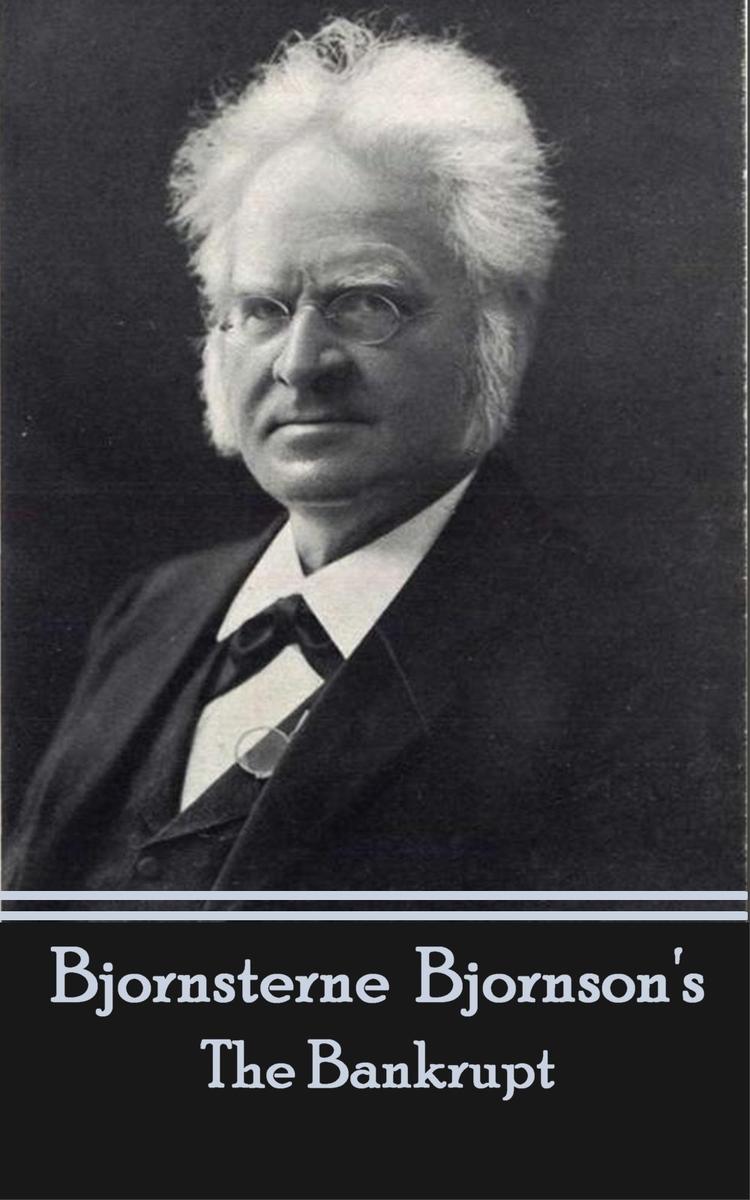
Bankrupt - Includes a rare poetry collection
¥35.22
Bjornstjerne Bjornson (1832 - 1910), the third man to ever win the Nobel Prize in Literature. However when considering the quality of his writing he is perhaps not as celebrated as he should be. Being also a Nobel Laureate in Literature, Bjornson has also been credited with many other impressive successes. These include writing the lyrics for the Norwegian national anthem, mastering all forms of literature; poetry, novels, short stories, essays and playwriting and being elevated to one of the Four Greats; the name for the classic Norwegian writers, others being Henrik Ibsen, Jonas Lie and Alexander Kielland. Here we look at one of his many plays. Much of his work was nearly as popular in his native Norway as Ibsen's and we now bring you these masterful works in English for you to compare. Our imprint Stage Door offers both Ibsen's and Bjornson's works in English.
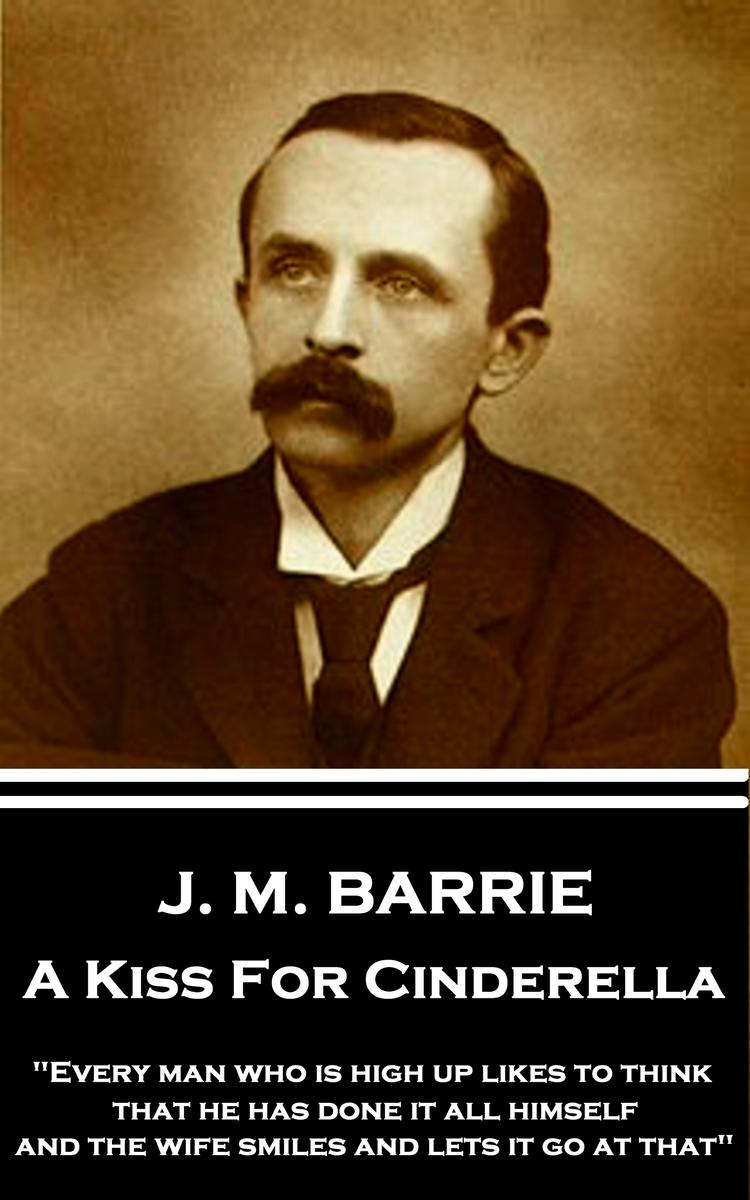
Kiss for Cinderella
¥16.38
Sir James Matthew Barrie, 1st Baronet, OM, was born in Kirriemuir, Angus the ninth of ten children on May 9th, 1860. From early formative experiences, Barrie knew that he wished to follow a career as an author. His family wished otherwise and sought to persuade him to choose a profession, such as the ministry. The compromise was that he would attend university to study literature at the University of Edinburgh. He graduated with an M.A. on April 21st, 1882. His first job was as a staff journalist for the Nottingham Journal. The London editor of the St. James's Gazette "e;liked that Scotch thing"e; in Barrie's short stories about his mother's early life. They also served as the basis for his first novels. Barrie though was increasingly drawn to working in the theatre. His first play, a biography of Richard Savage, was only performed once and critically panned. Undaunted he immediately followed this with Ibsen's Ghost in 1891, a parody of Ibsen's plays Hedda Gabler and Ghosts. Barrie's third play, Walker, London, in 1892 led to an introduction to his future wife, a young actress by the name of Mary Ansell. The two became friends, and she helped his family to care for him when he fell very ill in 1893 and 1894. Barrie proposed and they were married, in Kirriemuir, on July 9th, 1894. By some accounts the relationship was unconsummated and indeed the couple had no children. The story of Peter Pan had begun to formulate when Barrie became acquainted with the Llewelyn Davis family in 1897, meeting George, Jack and baby Peter with their nanny in London's Kensington Gardens. In 1901 and 1902, Barrie had back-to-back theatre successes with Quality Street and The Admirable Crichton. The character of "e;Peter Pan"e; first appeared in The Little White Bird in 1902. This most famous and enduring of his works; Peter Pan, or The Boy Who Wouldn't Grow Up had its first stage performance on December 27th, 1904. Peter Pan would overshadow everything written during his career. He continued to write for the rest of his life contributing many other fine and important works. Sir James Matthew Barrie, 1st Baronet, OM, died of pneumonia on June 19th,1937 and was buried at Kirriemuir next to his parents and two of his siblings.

Machine - Fascism is capitalism plus murder.
¥26.98
Upton Sinclair (1878-1968) was a prolific American novelist and a political activist. Apart from his bestselling novels, which told in black and white, illuminated the realities of the United States at the turn of the twentieth century, he is remembered today for championing socialist causes that were naturally unpopular in conservative America. In classics like 'The Jungle' his work had considerable effects on American politics and legislation. Sinclair's socialist ideals and dreams found their way to his fiction as he believed that no art can be practiced for art's sake as long as humanity still suffers from persistent dangers and evils. Such orientations have often subjected Sinclair to harsh criticism and even to demonization from numerous critics and politicians of his time, the most distinguished among which was probably President Theodore Roosevelt. However his legacy is that of a successful and established novelist and activist who if not always righting the balance was able to bring an incisive mind and mass exposure to many areas and industries.
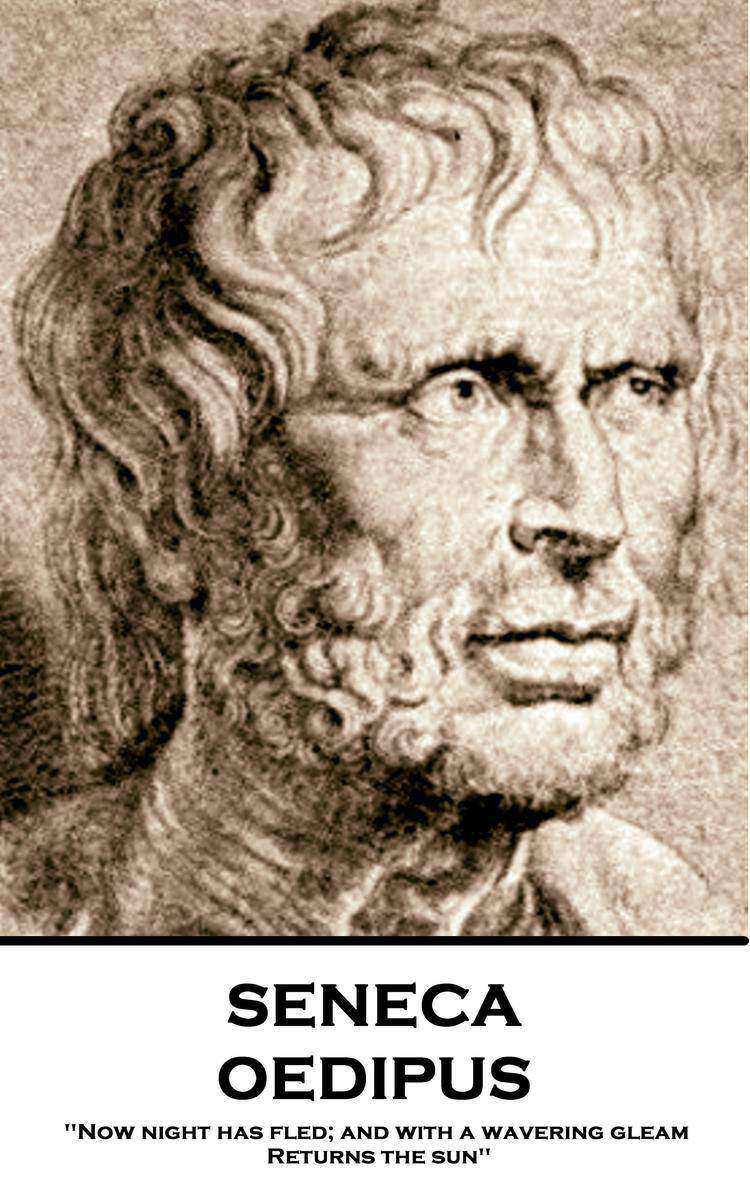
Oedipus - 'Now night has fled; and with a wavering gleam Returns the sun''
¥14.03
Lucius Annaeus Seneca, more readily known as Seneca the Younger, was born at Cordoba in the Roman province of Baetica in Hispania in approx 4 BC.Seneca attests that he was taken to Rome at a young age and educated in literature, grammar, and rhetoric; the standard education of high-born Romans. He also received philosophical training.Much of his life is not well documented but accounts do lean towards a pattern of ill-health at times. His breathing difficulties are thought to be the result of asthma and during his mid-twenties he contracted tuberculosis.He was sent to Egypt to live with his aunt, whose husband, Gaius Galerius, was Prefect of Egypt. In 31 AD he returned to Rome with her and, with her influence, was elected quaestor and with it the right to sit in the Roman Senate.Seneca's early career as a senator was successful and he was fulsomely praised for his oratory. A story related that emperor Caligula was so offended by Seneca's oratorical success that he ordered him to commit suicide. Seneca's ill-health prevented that.In 41 AD, Claudius became emperor, and Seneca was promptly cited by the new empress Messalina of adultery with Julia Livilla, the sister of Caligula and Agrippina.After trial the Senate pronounced a death sentence, which Claudius then commuted to exile. Seneca was to now spend the next eight years in Corsica. From this period of exile survive two of his earliest works-both consolations.In 49 AD Agrippina married her uncle Claudius, and through her Seneca was recalled to Rome. Agrippina appointed him, as tutor to her son, the future emperor Nero.Nero's early rule, during which he followed the advice of Seneca and Burrus, was competent. However, within a few years both Seneca and Burrus had lost their influence.In 58 AD the senator Publius Suillius Rufus made a series of public attacks on him saying that, Seneca had acquired a personal fortune of three hundred million sestertii. In response, Seneca brought a series of prosecutions for corruption against him. Suillius was dispatched into exile.After Burrus's death in 62 AD, Seneca's influence further declined. He adopted a quiet lifestyle at his country estates, concentrating on his studies and seldom visiting Rome. It was during these final few years that he composed two of his greatest works: 'Naturales Quaestiones'-an encyclopedia of the natural world; and his 'Letters to Lucilius'-which document his philosophical thoughts.In AD 65, Seneca was caught up in the aftermath of the Pisonian plot to kill Nero. Nero ordered him to kill himself. Seneca followed tradition by opening several veins in order to bleed to death. It was a sad conclusion for a man who has been called the first great Western thinker on the complex nature and role of gratitude in human relationships.


