61 de ore
¥81.67
Cartea este o culegere de eseuri pe teme de istorie literar?, istoria ideilor ?i probleme generale de estetica artelor, toate acestea fiind abordate dintr-un accentuat unghi filozofic ?i ?tiin?ific deopotriv?.
Demonii m?run?i
¥65.32
Avem o carte preponderent de sondare a mentalit??ii ruse, care este rezultatul unei radiografieri a societ??ii pe mai multe pali?ere, dintre care se deta?eaz? cel istoric ?i cel religios. (…) Rusia bolnav? este scris? ?n primii ani dup? evenimentele revolu?ionare din 1905?l907, ?n cursul c?rora autorul a avut o participare activ?, mai ales ?n ce prive?te punerea acestei revolu?ii sub semnul lui Hris?tos. Este o carte important? tocmai pentru c? oglinde?te deziluziile unei naturi pasiona?le, care, ?n centrul istoriei ?i al religiei, pune mereu fapta. Fire?te acum, dup? Arhipelagul lui Soljeni??n, pamfletele lui Merejkovski par simple exerci?ii de stil, ?nelibertatea” deza?vuat? ?n ele, Rusia ?arist? ca ??nchisoare a popoarelor” ap?r?nd chiar foarte apropiat? de ceea ce s?ar putea numi ?stat de drept”. ?n privin?a ?demasc?rii” ororilor contemporane?it??ii, putem spune c? – a?a cum au dovedit?o deceniile bol?evice – ?ntotdeauna este loc de mai r?u. (Emil Iordache)
A trubadúr
¥22.73
Egy kétségtelenül szellemes megjegyzés szerint a cím csak akkor fedheti le pontosan a k?nyv tartalmát, ha bet?r?l bet?re megegyezik vele. Valami hasonló mondható a fülsz?vegekr?l is (biztos Boegesnek is tetszene ez a gondolat), és ennek megfelel?en meg sem kísérlem néhány mondatban ?sszefoglalni, hogy mir?l lesz szó. Ehelyett inkább el?sz?r is azt emelem ki, hogy a címnek megfelel?en mir?l nem: például nem magáról Borgesr?l, a 20. század egyik legjelent?sebb argentin írójáról. Hanem inkább arról, hogy a novelláival kapcsolatban milyen, az irodalomtól olyakor látszólag meglehet?sen távol álló kérdések merülhetnek fel kezdve azon, hogy az általa leírt bábeli k?nyvtár valóban olyan teljes és mindenre kiterjed?-e, miként azt Borges sugallja; folytatva azon, hogy van-e egyáltalán értelme felvetni, hogy milyen lenne, ha valaki t?kéletes emlékezettel rendelkezne (nincs). Meg, hogy elképzelhet?-e, nem pedig, hogy létezik vagy legalább lehetséges-e egy olyan pont vagy térrész: egy olyan Alef, amelyen keresztül egyszerre láthatunk mindent. ?s így tovább egészen addig, hogy mit mondhatunk az irodalomkritikáról, az irodalmi zsánerek létrej?ttér?l meg elt?nésér?l vagy éppen az irodalmi halhatatlanságról – ismét csak mint elméleti problémáról. Azaz végs? soron persze mégiscsak egyfajta bolyongás ez a borgesi k?nyvtában, illetve bizonyos, legalább hipotetikusan lehetséges és az irodalomhoz így vagy úgy kapcsolódó kérdések fázisterében még akkor is, ha a fentebbiekben, miként a figyelmes olvasó már észre vehette, éppen azt tettem, amir?l korábban azt sejttettem, hogy nem fogom: néhány példa említésével próbáltam utalni rá, hogy mir?l szól az egész. De talán ez sincs igazi ellentmondásban azzal a megk?zelítéssel, amit ez a k?nyv sugall. Galántai Zoltán tudományt?rténész és író. Korábbi k?nyvei az eClassicnál: K?nyvkett?. A k?nyv, az írás és az irodalom j?v?jér?l (2013) http://eclassic.xyz/shop/bemutato/konyvketto-a-konyv-az-iras-es-az-irodalom-jovojerol/ Monoverzumok. Kozmosz, t?rvény, tudomány (2016) http://eclassic.xyz/shop/szabadpolc/monoverzumok/
Plato Complete Works – World’s Best Collection: 100+ Works
¥8.09
Plato Complete Works – World’s Best Collection This is the world’s best Plato collection, including the most complete set of Plato’s works available plus many free bonus materials. Plato Plato was a philosopher in Ancient Greece, a student of Socrates, writer of philosophical dialogues, and founder of the Academy in Athens, the first institution of higher learning in the Western world. Plato, with his teacher Socrates, and student, Aristotle, Plato helped to lay the foundations of Western philosophy and science The ‘Must-Have’ Complete Collection In this irresistible collection you get all of Plato’s work, including all his dialogues and other writings, with several comprehensive set of notes, interpretations and annotations of Plato’s writings . Plus Bonus Material. Works Included: Each Dialogue contains both the dialogue and an in depth introduction and analysis, including all Plato's works, such as: Republic Symposium Timaeus Meno Phaedo Gorgias Sophist Statesman Philebus Laws Your Free Special Bonuses Introduction To The Philosophy And Writings Of Plato -?Explanations Of Certain Platonic Terms Plato And Platonism – A biography of Plato’s life, and a commentary on Plato’s works. Essentials of Plato's Philosophy - Written specially for this collection. Get This Collection Right Now This is the best Plato collection you can get, so get it now and start enjoying and being inspired by his world like never before.
Drumul la zid
¥131.49
Volumul cuprinde dou? traduceri clasicizate, semnate de Victor Scorade?, Dincolo de bine ?i de r?u, ?i de Janina Iano?i ?i Horia Stanca, Genealogia moralei. Un mare vinovat f?r? vin?, sihastrul de la Sils-Maria a dinamitat g?ndirea secolului al XIX-lea, figur?nd – al?turi de Dostoievski – printre uria?ii profe?i ai omenirii, care au proorocit nenorocirile ce-au urmat, crimele ?n numele unei idei, rasismul, precum ?i devastatorul totalitarism ro?u. Dincolo de bine ?i de r?u e una dintre capodoperele g?nditorului german.
Zur Genealogie der Moral
¥8.82
Das Werk, das aus einer Vorrede und drei ?Abhandlungen“ besteht, geh?rt zu den einflussreichsten Schriften Nietzsches. Er legte hier keine Aphorismen vor wie in den meisten anderen seiner Werke, sondern l?ngere, systematische Texte mit durchaus wissenschaftlichem Anspruch: Er stellt darin soziologische, historische und psychologische Thesen auf. Nietzsche wollte anders als klassische Moralphilosophen keine Moral herleiten oder begründen, sondern die geschichtliche Entwicklung und die psychischen Voraussetzungen bestimmter moralischer Wertvorstellungen nachvollziehen. Er fragt also nicht, wie die Menschen handeln sollten, sondern warum Menschen (Einzelne oder Gruppen) glauben, sie sollten auf bestimmte Weise handeln, oder andere dazu bringen wollen, so oder so zu handeln.
The Doctrine of the Mean
¥40.79
The Doctrine of the Mean is a text rich with symbolism and guidance to perfecting oneself. The person who follows the mean is on a path of duty and must never leave it. A superior person is cautious, a gentle teacher and shows no contempt for his or her inferiors.
The Spanish Wars
¥40.79
On the defeat of Pharnaces and reduction of Africa, those who escaped from those battles fled to young Cn. Pompey, who had taken possession of Further Spain, while Caesar was detained in Italy in exhibiting games. Pompey began to throw himself on the protection of every state, in order the more readily to establish the means of defense against him. Accordingly, with a considerable force which had been collected, partly by entreaty, partly by force, he began to lay waste the province. Under these circumstances some states voluntarily sent him supplies, others shut the gates of their towns against him. If any of these chanced to fall into his hands by assault, although some citizen in it had deserved well of Cn. Pompey (his father), yet some cause was alleged against him on account of the greatness of his wealth, so that, he being dispatched, his fortune might become the reward of the soldiers.
Discovery of the Future: Illustrated
¥13.98
Such is the system which underlies the Meditations of Marcus Aurelius. Some knowledge of it is necessary to the right understanding of the book, but for us the chief interest lies elsewhere. We do not come to Marcus Aurelius for a treatise on Stoicism. He is no head of a school to lay down a body of doctrine for students; he does not even contemplate that others should read what he writes. His philosophy is not an eager intellectual inquiry, but more what we should call religious feeling. The uncompromising stiffness of Zeno or Chrysippus is softened and transformed by passing through a nature reverent and tolerant, gentle and free from guile; the grim resignation which made life possible to the Stoic sage becomes in him almost a mood of aspiration. His book records the innermost thoughts of his heart, set down to ease it, with such moral maxims and reflections as may help him to bear the burden of duty and the countless annoyances of a busy life. It is instructive to compare the Meditations with another famous book, the Imitation of Christ. There is the same ideal of self-control in both. It should be a man's task, says the Imitation, 'to overcome himself, and every day to be stronger than himself.' 'In withstanding of the passions standeth very peace of heart.' 'Let us set the axe to the root, that we being purged of our passions may have a peaceable mind.' To this end there must be continual self-examination. 'If thou may not continually gather thyself together, namely sometimes do it, at least once a day, the morning or the evening. In the morning purpose, in the evening discuss the manner, what thou hast been this day, in word, work, and thought.' But while the Roman's temper is a modest self-reliance, the Christian aims at a more passive mood, humbleness and meekness, and reliance on the presence and personal friendship of God. The Roman scrutinises his faults with severity, but without the self-contempt which makes the Christian 'vile in his own sight.' The Christian, like the Roman, bids 'study to withdraw thine heart from the love of things visible'; but it is not the busy life of duty he has in mind so much as the contempt of all worldly things, and the 'cutting away of all lower delectations.' Both rate men's praise or blame at their real worthlessness; 'Let not thy peace,' says the Christian, 'be in the mouths of men.' But it is to God's censure the Christian appeals, the Roman to his own soul. The petty annoyances of injustice or unkindness are looked on by each with the same magnanimity. 'Why doth a little thing said or done against thee make thee sorry? It is no new thing; it is not the first, nor shall it be the last, if thou live long. At best suffer patiently, if thou canst not suffer joyously.' The Christian should sorrow more for other men's malice than for our own wrongs; but the Roman is inclined to wash his hands of the offender. 'Study to be patient in suffering and bearing other men's defaults and all manner infirmities,' says the Christian; but the Roman would never have thought to add, 'If all men were perfect, what had we then to suffer of other men for God?' The virtue of suffering in itself is an idea which does not meet us in the Meditations. Both alike realise that man is one of a great community. 'No man is sufficient to himself,' says the Christian; 'we must bear together, help together, comfort together.' But while he sees a chief importance in zeal, in exalted emotion that is, and avoidance of lukewarmness, the Roman thought mainly of the duty to be done as well as might be, and less of the feeling which should go with the doing of it. To the saint as to the emperor, the world is a poor thing at best. 'Verily it is a misery to live upon the earth,' says the Christian; few and evil are the days of man's life, which passeth away suddenly as a shadow. ? ? ? ? ? ? ? ? ? ? ? ? ? ? ? ? ? ? ? ? ? ? ? ? ? ? ? ? ? ? ? ? ? ? ? ? ? ? ? ? ? ?*** ? "MARCUS AURELIUS ANTONINUS" was born on April 26, A.D. 121. His real name was M. Annius Verus, and he was sprung of a noble family which claimed descent from Numa, second King of Rome. Thus the most religious of emperors came of the blood of the most pious of early kings. His father, Annius Verus, had held high office in Rome, and his grandfather, of the same name, had been thrice Consul. Both his parents died young, but Marcus held them in loving remembrance. On his father's death Marcus was adopted by his grandfather, the consular Annius Verus, and there was deep love between these two. On the very first page of his book Marcus gratefully declares how of his grandfather he had learned to be gentle and meek, and to refrain from all anger and passion. The Emperor Hadrian divined the fine character of the lad, whom he used to call not Verus but Verissimus, more Truthful than his own name. He advanced Marcus to equestrian rank when six years of age, and at the age of eight made him a member of the ancient Salian priesthood. The boy's aunt, A
A, mint alibi
¥66.79
Magyarázatok a Srimad-Bhagavatam tizedik éneke harminckettedik fejezetének 16-22. versáhez, az el?z? acaryák írásai alapján. A Na pāraye ’ham három része ?rī K???a, ?rī Caitanya Mahāprabhu és ?rīmatī Rādhārā?ī szeretetét mutatja be. Szeretetük egy-egy hatalmas folyóként h?mp?ly?g a prema óceánja felé. ?cāryáink kegyéb?l a bhakták megérinthetik ennek az óceánnak a partját, s néhány cseppnyi nektárt megízlelhetnek bel?le.
胡适的北大哲学课·壹
¥11.99
1917年7月,胡适受蔡元培之邀就任国立北京大学文科教授,讲授中国古代哲学史、中国名学、英文高等修辞学。胡适一边教学,一边编写教材。顾颉刚曾对同窗傅斯年推荐:“胡先生讲的的确不差,他有眼光、有胆量、有断制,确是一个有能力的哲学史家。” 自1919年至1937年间。胡适多次在北京大学讲授中国哲学史,而且主要是讲中古哲学史和近世哲学史,其中1919年2月出版的《中国哲学史大纲》(卷上)就是在讲义的内容基础上修定而成。胡适是首位采用了西方近代哲学的体系和方法研究中国哲学的人,由于他的出现,中国的思想史才初具规模。他在中国哲学史,甚至在各种专史和通史的研究方面,都是创性的,他觉得是中国哲学思想史的山鼻祖。 《胡适的北大哲学课》以胡适在北京大学的所有哲学讲义为母本,再综合胡适关于中国哲学的其他著作整理而成,力求为读者构建一个*全的胡适哲学体系,让读者*直的感受哲学大师的风采。
周易(修订版)(上下)
¥44.00
周易(修订版)(上下)
尼采著作集九册(含《查拉图斯特拉如是说》《悲剧的诞生》《权力意志》《快乐的科学》《朝霞》《偶像的黄昏》《瓦格纳事件》《论道德的谱系》《不合时宜的沉思》)
¥69.99
本书是尼采的重要作品之一。《朝霞》1881年问世,1887年新版并附有一篇前言,它在著作史上位于《人性的,太人性的》第二部分(1880)与《快乐的科学》(1882)之间。《朝霞》分为五卷,每卷分为长短不同的节,少只有一两行,多则一两页,甚至偶尔长达三页以上。该书比较详细的部分,特别是前三卷,有像随笔式的短文,其思想素描与其说是巨细无遗的不如说是钩玄提要的。在下来的讨论中,特别是在第四卷中,每段要更短一些,带有圣经经文的思想风格。寥寥几个句子甚至单独一个句子构成浓缩的和凝练的格言,好像压缩甚至过度压缩的短文。
哲学问题
¥45.00
这本10万字的小书,是罗素的哲学导论性读本。罗素称它为"廉价本的惊险小说",这是因为其内容非常明确且引了崭新的观。书中对哲学的基础、范畴、和意义等问题,主要是哲学的领域,也就是认识论提出了自己的基本观,他认为这个世界存在超越物理和心灵世界的共相,它也是一种实体,是普遍意义上人们认识世界的基础。同时对笛卡尔、休谟、康德等哲学家的思想行了相关分析。
逻辑模型:思考、表达、写作逻辑精进图鉴
¥35.40
是否常被人质疑“你到底想说什么?” 是否总面对如山的工作感觉无处下手? 是否自觉勤恳认真却总被埋怨不够高效、抓不住重? 本书用生动的图解揭秘:问题的根本往往在于逻辑。 作者精选了思考逻辑、表达逻辑、写作逻辑等三个方面的提升方法,对比“有逻辑的人”和“无逻辑的人”在日常生活和工作中的巨大差别,帮助读者挖掘问题背后潜藏的“根本原因”。启发读者在有限的时间内优先选择更清晰、更全面、效果更突出的解决方案,提升问题解决力,更准确地表达自己的想法,提高话语说服力。
西方政治哲学史(第一卷)(国家出版基金项目;政治哲学史)
¥70.80
《西方政治哲学史》(*卷)由八位杰出学者撰写,内容涵盖了从古希腊到宗教改革的政治思想和政治哲学。*章提供了西方政治思想端处的宏大背景,讨论了希腊城邦与民主思想,以及诗人、剧作家、智者和史学家的政治洞见;第二章到第六章分别聚焦于柏拉图的统一城邦、亚里士多德的*政体、西塞罗的法权国家、奥古斯丁的上帝之城与尘世之城、阿奎那的自然法与政体理论;第七章既从宏观上考察了文艺复兴时期政治思想的巨大变革,又特别讨论了马基雅维利在其中的突出地位;第八章以路德和加尔文的政治思想为主体,同时考察了宗教改革时代的神学—政治问题。全书既关注政治思想的历史语境,又凸显重要思想家的特殊贡献,体现了汉语学界在西方政治哲学史领域的*研究成果。
西方政治哲学史(第三卷)(国家出版基金项目;政治哲学史)
¥76.80
《西方政治哲学史(第三卷)》集结了国内政治哲学界的*学者,摆脱传统的意识形态束缚,克服哲学史教材化的通病,用大论文的方式深剖析以赛亚?伯林、列奥?施特劳斯、卡尔?施米特、约翰?罗尔斯、尤尔根?哈贝马斯等20世纪著名政治哲学家或者思想流派的观念,在精神源头和哲学根基处重新审视和考察当代西方政治哲学的内在逻辑和动机资源,辨析西方现代性的动力与不足、优势及缺憾。
《论语》解释学与新仁学(上、下卷)
¥155.88
《论语》作为几千年来人类精神文明史上一部重要的现世人本主义方向的民族伦理信仰经典,因其内具的经验主义和理性主义精神,在全球化的今日显示出了一种与现代科学精神和人道主义充分一致的思想倾向。作者基于60余年来有关中西人文学术及理论研究的总结与体验,在历代学者相关研究的基础上,根据现代历史解释学和欧陆符号学等方法论,对《论语》的仁学思想的原始意义和现代意义做了全新的阐释,并特别指出《论语》仁学思想应成为中国与世界人文科学现代化发展的重要伦理认识论前提之一。 本书首先对相关研究的背景和原则提出了长篇的理论分析导论,而在其后的正文部分则以通俗易懂的方式逐章逐段地对《论语》大部分重要文句的原始义理及其当代意涵做了详细疏解。本书不仅揭示了《论语》具有的永恒民族性的伦理学价值,而且阐发了《论语》对未来世界精神文明发展方向极具启示性的价值观导向意义。
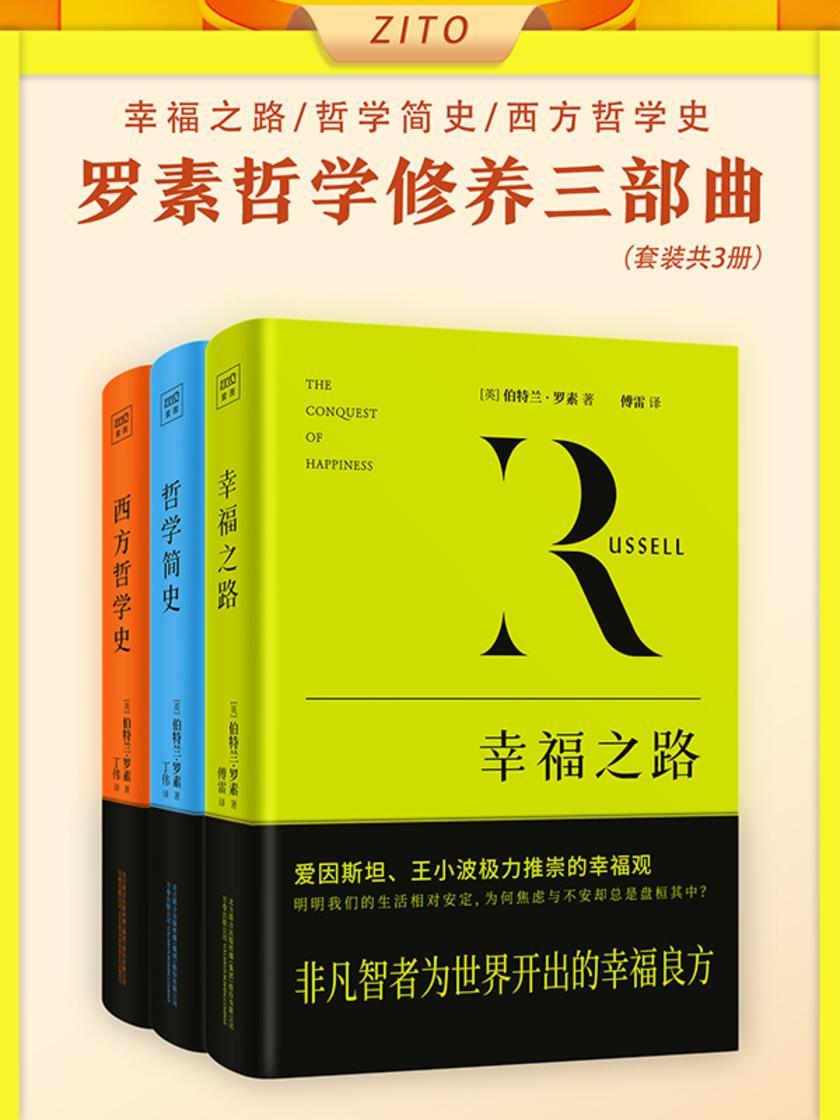
哲学简史(从苏格拉底到维特根斯坦,近百位哲学家的思想精华解读,一部读懂西方文化发展的智慧之书)
¥14.99
《哲学简史》是一部通俗哲学著作。作者在书中以各个哲学流派及其代表哲学家为中心记述西方哲学的发展历程,同时也对各个哲学流派产生的历史背景、哲学家的生活时代加以描述,内容涉及历史、科学、经济、政治等方面。本书一改以往哲学书的艰深晦涩,通俗易懂,可谓是了解西方文化的入门书。
中国的宗教:儒教与道教
¥51.00
《中国的宗教:儒教与道教》是韦伯在宗教社会学上的第二本主要著作,与《新教伦理与资本主义精神》同属于三大卷本的《宗教社会学论文集》首卷。在本书中,韦伯专注于探索中国社会里那些与西欧不同的地方,以此突显西方基督教文明的特色,并且提出了一个问题:为什么资本主义没有在中国发展呢?韦伯所着手探讨的对象,特别是中国与印度,都是既庞大复杂又源远流长的文化体。身为西欧近代文明之子的韦伯遂以“理性化”作为其研究世界各大文化的“利器”。他的着眼在于:宗教与社会其他层面、理念与利益在人类文明的整体发展上究竟有着什么样的互动关系,在种种互动关系下呈现出怎样的理性内涵。韦伯在本书中分析了中国的国家、法律、城市、行会、士人阶层、正统礼教、异端信仰等,无非是想借此构筑出:中国人想的是什么、做出来的又是什么,以及所想与所做之间的关系。而儒教官绅知识阶层,在韦伯所构筑的传统中国历史舞台上,展现出使中国整体文明与西方文明大相径庭的坚实活力。
胡适的北大哲学课·肆
¥11.99
1917年7月,胡适受蔡元培之邀就任国立北京大学文科教授,讲授中国古代哲学史、中国名学、英文高等修辞学。胡适一边教学,一边编写教材。顾颉刚曾对同窗傅斯年推荐:“胡先生讲的的确不差,他有眼光、有胆量、有断制,确是一个有能力的哲学史家。” 自1919年至1937年间。胡适多次在北京大学讲授中国哲学史,而且主要是讲中古哲学史和近世哲学史,其中1919年2月出版的《中国哲学史大纲》(卷上)就是在讲义的内容基础上修定而成。胡适是首位采用了西方近代哲学的体系和方法研究中国哲学的人,由于他的出现,中国的思想史才初具规模。他在中国哲学史,甚至在各种专史和通史的研究方面,都是创性的,他觉得是中国哲学思想史的山鼻祖。 《胡适的北大哲学课》以胡适在北京大学的所有哲学讲义为母本,再综合胡适关于中国哲学的其他著作整理而成,力求为读者构建一个*全的胡适哲学体系,让读者*直的感受哲学大师的风采。

购物车
个人中心