


 购物车
购物车 个人中心
个人中心
Smoke by Ivan Turgenev - Delphi Classics (Illustrated)
¥8.09
This eBook features the unabridged text of ‘Smoke by Ivan Turgenev - Delphi Classics (Illustrated)’ from the bestselling edition of ‘The Collected Works of Ivan Turgenev’. Having established their name as the leading publisher of classic literature and art, Delphi Classics produce publications that are individually crafted with superior formatting, while introducing many rare texts for the first time in digital print. The Delphi Classics edition of Turgenev includes original annotations and illustrations relating to the life and works of the author, as well as individual tables of contents, allowing you to navigate eBooks quickly and easily. eBook features: * The complete unabridged text of ‘Smoke by Ivan Turgenev - Delphi Classics (Illustrated)’ * Beautifully illustrated with images related to Turgenev’s works * Individual contents table, allowing easy navigation around the eBook * Excellent formatting of the text Please visit www.delphiclassics.com to learn more about our wide range of titles
The Tale of Mr. Jeremy Fisher by Beatrix Potter - Delphi Classics (Illustrated)
¥8.09
This eBook features the unabridged text of ‘The Tale of Mr. Jeremy Fisher by Beatrix Potter - Delphi Classics (Illustrated)’ from the bestselling edition of ‘The Complete Works of Beatrix Potter’. Having established their name as the leading publisher of classic literature and art, Delphi Classics produce publications that are individually crafted with superior formatting, while introducing many rare texts for the first time in digital print. The Delphi Classics edition of Potter includes original annotations and illustrations relating to the life and works of the author, as well as individual tables of contents, allowing you to navigate eBooks quickly and easily. eBook features: * The complete unabridged text of ‘The Tale of Mr. Jeremy Fisher by Beatrix Potter - Delphi Classics (Illustrated)’ * Beautifully illustrated with images related to Potter’s works * Individual contents table, allowing easy navigation around the eBook * Excellent formatting of the textPlease visit www.delphiclassics.com to learn more about our wide range of titles

Liberty Bazaar
¥40.79
Liverpool, 1863: Newly arrived in England, wealthy liberals enlist Trinity, an escaped slave girl, in their campaign to abolish slavery and support Abraham Lincoln's Union. Jubal, a high-ranking Confederate officer, has just arrived in Liverpool to find supporters and raise funds for the opposing side. When Trinity discovers a high-stakes conspiracy there to help win the war for the Southern States, she must risk everything to stop it – including her new-found freedom. But who will believe a runaway slave? And who can she really trust?
Colonel Quaritch, V.C. by H. Rider Haggard - Delphi Classics (Illustrated)
¥8.09
This eBook features the unabridged text of ‘Colonel Quaritch, V.C. by H. Rider Haggard - Delphi Classics (Illustrated)’ from the bestselling edition of ‘The Complete Works of H. Rider Haggard’. Having established their name as the leading publisher of classic literature and art, Delphi Classics produce publications that are individually crafted with superior formatting, while introducing many rare texts for the first time in digital print. The Delphi Classics edition of Haggard includes original annotations and illustrations relating to the life and works of the author, as well as individual tables of contents, allowing you to navigate eBooks quickly and easily. eBook features: * The complete unabridged text of ‘Colonel Quaritch, V.C. by H. Rider Haggard - Delphi Classics (Illustrated)’ * Beautifully illustrated with images related to Haggard’s works * Individual contents table, allowing easy navigation around the eBook * Excellent formatting of the text Please visit www.delphiclassics.com to learn more about our wide range of titles

The Alchemist
¥8.09
The Alchemist is a comedy by English playwright Ben Jonson. First performed in 1610 by the King's Men, it is generally considered Jonson's best and most characteristic comedy; Samuel Taylor Coleridge claimed that it had one of the three most perfect plots in literature. The play's clever fulfilment of the classical unities and vivid depiction of human folly have made it one of the few Renaissance plays (except the works of Shakespeare) with a continuing life on stage (except for a period of neglect during the Victorian era).
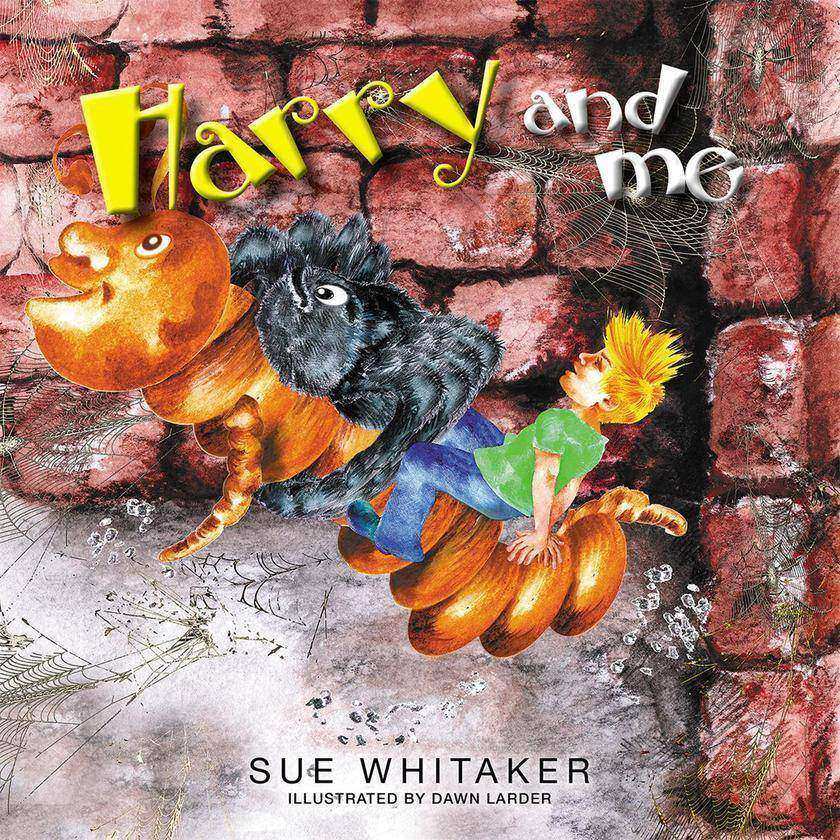
Harry and Me
¥31.07
A collection of stories featuring 7 year old Andy and his adventures with his best friend 'Harry the Spider'. This is an illustrated book educating children about the insect world in a way that entertains and removes phobias. ?

The Queen of Hearts
¥40.79
We were three quiet, lonely old men, and she was a lively, handsome young woman, and we were at our wits’ end what to do with her.

The Western Front 1917–1918: From Vimy Ridge to Amiens and the Armistice
¥81.67
The History of World War I series recounts the battles and campaigns that took place during the 'Great War'. From the Falkland Islands to the lakes of Africa, across the Eastern and Western Fronts, to the former German colonies in the Pacific, the World War I series provides a six-volume history of the battles and campaigns that raged on land, at sea and in the air. Following the climactic battles of Verdun and the Somme the previous year, the Allies sought to finish the war on the Western Front in 1917 through a major French offensive designed to rupture the German front and roll up their position. This attack was to be supported by a diversionary British offensive at Arras in the north, which would draw off both German attention and their reserves. In the event, the French offensive in Champagne failed to deliver the promised breakthrough, leaving the French Army in a state of open mutiny. While French discipline recovered, the British Expeditionary Force took on the burden of the bulk of the fighting for the rest of the year. The need for an Allied offensive to take the pressure off the French resulted in the Third Battle of Ypres, more commonly known as Passchendaele. The battle degenerated into a slaughter in the Flanders mud thanks to heavy rain, and the only rays of light for the Allies at the end of 1917 were the arrival of fresh American troops on the Western Front, and the potential for a decisive victory shown by the use of armour at the Battle of Cambrai. However the Russian Revolution brought the fighting on the Eastern Front to an end, releasing numerous battle-hardened divisions to reinforce the Germans in the west. The year 1918 saw Germany launch her Spring Offensives, desperate attempts to defeat the Allies before the Americans could arrive in force. Although these assaults came close to breaking the Allied line, they eventually petered out in the face of determined resistance and over-extended supply lines. Following the Battle of Amiens in August, the Allies pressed onwards: the British in Flanders, the French and the Americans in the Meuse-Argonne region. By September it was obvious that Germany was losing the war, and the decision was made to sue for peace before Allied troops reached German soil. The Armistice came into force at 11am on the morning of 11 November 1918, although the war did not officially end until the signing of the Treaty of Versailles in June 1919. With the aid of over 300 black and white and colour photographs, complemented by full-colour maps, The Western Front 1917–1918 provides a detailed guide to the background and conduct of the conflict on the Western Front in the final years of World War I.

Delphi Complete Poetical Works of John Donne (Illustrated)
¥16.27
The Delphi Poets Series offers readers the works of literature's finest poets, with superior formatting. This volume presents the complete poetical works of John Donne, with beautiful illustrations and the usual Delphi bonus material. Donne's sparkling wit and imaginative conceits have delighted readers over the centuries; now you can own his entire poetical genius on your eReader! (3MB Version 1) * Beautifully illustrated with images relating to Donne's life and works * Concise introductions to the poetry and other works * Images of how the poetry books were first printed, giving your eReader a taste of the original texts * Excellent formatting of the poems * Special chronological and alphabetical contents tables for the poetry * Easily locate the poems you want to read * Almost the complete prose, with rare texts like Donnes study of suicide BIATHANATOS, appearing for the first time in digital print * Includes Donne's letters - spend hours exploring the poet's personal correspondence * Features three biographies, including Izaak Waltons famous contemporary memoir - discover Donne's literary life in detail! * Scholarly ordering of texts into chronological order and literary genres Please visit www.delphiclassics.com to browse our range of exciting titles CONTENTS: The Poetry Collections SONGS AND SONNETS ELEGIES DIVINE POEMS HOLY SONNETS OTHER DIVINE POEMS SATIRES MARRIAGE SONGS VERSE LETTERS EPICEDES AND OBSEQUIES EPIGRAMS INFINITATI SACRUM THE ANNIVERSARIES LATIN POEMS DOUBTFUL VERSES The Poems LIST OF POEMS IN CHRONOLOGICAL ORDER LIST OF POEMS IN ALPHABETICAL ORDER The Prose BIATHANATOS PSEUDO-MARTYR IGNATIUS HIS CONCLAVE DEVOTIONS UPON EMERGENT OCCASIONS PARADOXES PROBLEMS The Letters LIST OF LETTERS The Biographies THE LIFE OF DR. JOHN DONNE by Izaak Walton JOHN DONNE by Arthur Symons JOHN DONNE by Robert Lynd Please click here to browse our other titles

Poems
¥8.09
This book includes selected poems from the following collections: Early Poems, Odes 1818-1828, Ballades 1813-1828, Les Orientales 1829, Les Feuilles D'Automne 1831, Les Chants du Crepuscule 1849, Les Voix Interieures 1840, Les Rayons et Les Ombres 1840, Les Chatiments 1853, Les Contemplations 1836-1856, La Legende des Siecles, La Voix de Guernesey, L'Annee Terrible, L'Art d'Etre Grandpere, Les Quatre Vents de l'Esprit, Various Pieces, and Dramatic Pieces. According to Wikipedia: "Victor-Marie Hugo (26 February 1802 – 22 May 1885) was a French poet, playwright, novelist, essayist, visual artist, statesman, human rights activist and exponent of the Romantic movement in France. In France, Hugo's literary fame comes first from his poetry but also rests upon his novels and his dramatic achievements. Among many volumes of poetry, Les Contemplations and La Légende des siècles stand particularly high in critical esteem, and Hugo is sometimes identified as the greatest French poet. Outside France, his best-known works are the novels Les Misérables and Notre-Dame de Paris (known in English also as The Hunchback of Notre Dame). Though a committed conservative royalist when he was young, Hugo grew more liberal as the decades passed; he became a passionate supporter of republicanism, and his work touches upon most of the political and social issues and artistic trends of his time. He is buried in the Panthéon." Links from the active table of contents take you directly to the main sections.

Goetz von Berlichingen mit der eisernen Hand, ein Schauspielf
¥8.09
Klassisches Spiel, im Original Deutsch. Laut Wikipedia: "Johann Wolfgang von Goethe (28. August 1749 - 22. M?rz 1832) war ein deutscher Schriftsteller. George Eliot nannte ihn" Deutschlands gr??ten Literaten ... und der letzte wahre Universalgelehrte auf der Erde. "Goethes Werke die Gebiete der Poesie, des Dramas, der Literatur, der Theologie, des Humanismus und der Wissenschaft, Goethes Hauptwerk, das als einer der H?hepunkte der Weltliteratur gepriesen wird, ist das zweiteilige Drama Faust. Goethes andere bekannte literarische Werke sind seine zahlreichen Gedichte, der Bildungsroman Wilhelm Meister und der Briefroman Die Leiden des jungen Werther. "

Lady Windermere's Fan
¥8.09
Classic play. According to Wikipedia: "Oscar Fingal O'Flahertie Wills Wilde (1854 - 1900) was an Irish playwright, novelist, poet, and author of short stories. Known for his barbed wit, he was one of the most successful playwrights of late Victorian London, and one of the greatest celebrities of his day. As the result of a famous trial, he suffered a dramatic downfall and was imprisoned for two years of hard labour after being convicted of the offence of 'gross indecency.'"

The Storm
¥8.09
Classic Russian play, the best-known work of Alexander Ostrovsky. According to the introduction, "ALEXANDER NIKOLAYEVICH Ostrovsky (1823-86) is the great Russian dramatist of the central decades of the nineteenth century, of the years when the realistic school was all-powerful in Russian literature, of the period when Turgenev, Dostoyevsky, and Tolstoy created a literature of prose fiction that has had no superior in the world's history. His work in the drama takes its place beside theirs in the novel. Obviously inferior as it is in certain ways, it yet sheds light on an important side of Russian life that they left practically untouched."

Wilhelm Tell
¥8.09
Classic Schiller drama, in English translation. . According to Wikipedia: "Johann Christoph Friedrich von Schiller (1759 – 1805) was a German poet, philosopher, historian, and dramatist. During the last few years of his life (1788–1805), Schiller struck up a productive, if complicated, friendship with already famous and influential Johann Wolfgang Goethe, with whom he greatly discussed issues concerning aesthetics, encouraging Goethe to finish works he left merely as sketches; this thereby gave way to a period now referred to as Weimar Classicism."

The Maid of Orleans
¥8.09
Classic Schiller play about Joan of Arc, in English translation. . According to Wikipedia: "Johann Christoph Friedrich von Schiller (1759 – 1805) was a German poet, philosopher, historian, and dramatist. During the last few years of his life (1788–1805), Schiller struck up a productive, if complicated, friendship with already famous and influential Johann Wolfgang Goethe, with whom he greatly discussed issues concerning aesthetics, encouraging Goethe to finish works he left merely as sketches; this thereby gave way to a period now referred to as Weimar Classicism."
Barrack Room Ballads
¥8.09
Dodo Collections brings you another classic from Rudyard Kipling, ‘Barrack Room Ballads.’ ? The Barrack-Room Ballads is a series of songs and poems by Rudyard Kipling, dealing with the late-Victorian British Army and mostly written in a vernacular dialect. ? The series contains some of Kipling's most well-known work, including the poems "Gunga Din", "Tommy" and "Danny Deever", and helped consolidate his early fame as a poet. ? Joseph Rudyard Kipling was an English short-story writer, poet, and novelist. He wrote tales and poems of British soldiers in India and stories for children. He was born in Bombay, in the Bombay Presidency of British India, and was taken by his family to England when he was five years old. ? Kipling's works of fiction include The Jungle Book (1894), Kim (1901), and many short stories, including "The Man Who Would Be King" (1888). His poems include "Mandalay" (1890), "Gunga Din" (1890), "The Gods of the Copybook Headings" (1919), "The White Man's Burden" (1899), and "If—" (1910). He is regarded as a major innovator in the art of the short story; his children's books are classics of children's literature; and one critic described his work as exhibiting "a versatile and luminous narrative gift". ? Kipling was one of the most popular writers in England, in both prose and verse, in the late 19th and early 20th centuries. Henry James said: "Kipling strikes me personally as the most complete man of genius (as distinct from fine intelligence) that I have ever known." In 1907, he was awarded the Nobel Prize in Literature, making him the first English-language writer to receive the prize, and its youngest recipient to date Among other honours, he was sounded out for the British Poet Laureateship and on several occasions for a knighthood, all of which he declined.

A to Z The Total Noob's Guide to Growing Orchids for Total Beginners
¥32.62
You Can Grow Your Own Orchids, Yes You Can! You're probably already thinking to yourself If I have to read a book to grow a flower in a pot, why should I bother?! Yeah, I know –but to be honest, there are a lot of excellent things that come with being able to master at least growing one successful pot of orchids. For one thing, they're gorgeous! Who wouldn't want to say, "Yeah, I grew those…"? Damn right you would! Being a badass indoor gardener is one thing, but tackling tropical plants like orchids is a feat unto itself. It's an artform. Think about it for a second. Most of us do not live in the climate conducive to these beauties just thriving on their own in the wild. Anyone who already actively grows and nurtures any species of orchid knows that you've got to climate control that environment like you wouldn't believe. It's not just about that, but you also must watch other factors too. It's an extremely rewarding yet very challenging experience. In addition, there are so many different species of orchid out there that you can safely assume that each plant you grow is going to be unique to itself. You can get some that you know will definitely be the same color, size or general shape, but we all know that there are so many things unique to each plant. How many flower spikes you end up with after the first blooms dissipate, how many leaves you have, how tall it grows and so many other things are all going to be different. The cool thing is that with the right know-how, you can nurture one potted orchid for years before you have to kiss it goodbye. In fact, you might keep them growing for almost a decade without even realizing it if you can take care them properly. It will also bolster your confidence when it comes to indoor gardening. You might have never planted anything outside, but you can throw these puppies in a pot and watch them go for forever if you follow a few key pointers and stay on top of their care. You just need to lovingly embrace the hobby and be patient with the process. Heck, you could have a whole atrium or sunroom full of tropical flowers by the time you're finished fooling around with different kinds –and there are a lot of them! Just imagine the possibilities… In this book, you're going to learn all about how to start off on the right foot with one of the cantankerous ones: orchids. So get out your gloves, grab a bag of potting mix, start jotting down supplies on a notepad, and get growing!
The Pretenders by Henrik Ibsen - Delphi Classics (Illustrated)
¥8.09
This eBook features the unabridged text of ‘The Pretenders by Henrik Ibsen - Delphi Classics (Illustrated)’ from the bestselling edition of ‘The Complete Works of Henrik Ibsen’. Having established their name as the leading publisher of classic literature and art, Delphi Classics produce publications that are individually crafted with superior formatting, while introducing many rare texts for the first time in digital print. The Delphi Classics edition of Ibsen includes original annotations and illustrations relating to the life and works of the author, as well as individual tables of contents, allowing you to navigate eBooks quickly and easily. eBook features: * The complete unabridged text of ‘The Pretenders by Henrik Ibsen - Delphi Classics (Illustrated)’ * Beautifully illustrated with images related to Ibsen’s works * Individual contents table, allowing easy navigation around the eBook * Excellent formatting of the text Please visit www.delphiclassics.com to learn more about our wide range of titles

Οδηγ?? Μηχανογραφικο? 2014
¥84.20
Στο βιβλ?ο αυτ? περιλαμβ?νονται χρηστικ?? πληροφορ?ε? για την συμπλ?ρωση μηχανογραφικο? δελτ?ου των πανελλην?ων εξετ?σεων. Πρακτικ?? οδηγ?ε? για γονε?? και μαθητ??, αν?λυση των πιο συνηθισμ?νων λαθ?ν που γ?νονται απ? του? μαθητ?? στην συμπλ?ρωση του μηχανογραφικο?, τη? σημασ?α? των β?σεων, στρατηγικ?? για την συμπλ?ρωση ?σο και πλ?θο? πληροφορι?ν για σχολ??, επαγγελματικ? δικαι?ματα και προτ?σει? σχολ?ν και επιλογ?ν με διευρυμ?νε? προοπτικ?? επαγγελματικ?? αποκατ?σταση?.
Intuitive Vision and Dreams
¥52.65
You have dreams all your life some of which you never forgot because you believe or feel that they have been somehow important in your life. You are right. The same is the case with all people, across this planet and throughout all of its history, regardless of whether they confess to it or not, and that is the reason dreams have always been the focus of scientific research. It is not surprising that as we speak top scientists are studying the function of dreams and try to decode their messages. Researcher Aggil Loupescou did just that. This book will guide you into an exploration of the non-conscious part of your being and help you to understand who you really are. You will have a double gain: psychological balance and concordant development of the conscious and unconscious parts of yourselves, as well as positive energy to improve your life on a daily basis. It is worth reading it carefully.

Jacob's Room
¥40.79
One of the best examples of Woolf's modernist innovation, the story starts in Jacob's childhood and follows him through college at Cambridge, and then into adulthood. The narrative is told mainly through the perspectives of the women in Jacob's life, including the repressed Clara Durrant and the uninhibited young art student Florinda, with whom he has an affair. His time in London forms a large part of the story, though towards the end of the novel he travels to Italy, then Greece.


