


 购物车
购物车 个人中心
个人中心

A hárem bábája
¥74.74
Válaszok a nap mint nap el?forduló gyakorlati iratkezelési kérdésekre! Hogyan feleljünk meg a jogszabályoknak? Mik azok a SZE?SZ-?k és milyen el?ny?kkel jár az alkalmazásuk? Mi a kül?nbség a digitális és az elektronikus aláírás k?z?tt? Mikor javasolt a vonalkódos digitalizálás használata? Mire kell figyelnem egy iratkezel? rendszer bevezetésénél? ?Az egységes iratkezelés k?zelmúltban bet?lt?tt 10. évfordulója az ágazat felel?s vezet?it és munkatársait is visszatekintésre, ?sszegzésre és a j?v?re irányuló útkeresésre ?szt?nzi. Remek segédeszk?z ehhez e kiadvány, ami professzionális módon foglalja ?ssze az iratkezelés napjainkban aktuális témáit, problémáit. Bízom benne, hogy mindennapi munkájuk során az iratkezel?i állomány, az iratkezelésért felel?s szervezeti egységek vezet?i gyakran kezükbe veszik majd és ?sorvezet?ként” alkalmazzák. Kovács Rezs? – Belügyminisztérium, Iratkezelési és Adatvédelmi F?osztály, f?osztályvezet? ?Lehet-e izgalmasabb annál, mint amikor kit?n? szakemberek vallanak munkájukról, annak jogi és természetes k?rnyezetér?l, a fejl?dés irányairól? A válogatott fejezetek az iratkezelés-, az elektronizálás- és az elektronikus iratkezelés ábécéjének foglalatát adják olyan szerz?k tollából, akik maguk is jártasak a témában és végigjárták annak útveszt?it.” Surányiné dr. Temesi Mária - K?zigazgatási és Elektronikus K?zszolgáltatások K?zponti Hivatala, Kormányzati K?zponti ?rkeztet? F?osztály, f?osztályvezet?
Apache Superset Quick Start Guide
¥54.49
Integrate open source data analytics and build business intelligence on SQL databases with Apache Superset. The quick, intuitive nature for data visualization in a web application makes it easy for creating interactive dashboards. Key Features *Work with Apache Superset's rich set of data visualizations *Create interactive dashboards and data storytelling *Easily explore data Book Description Apache Superset is a modern, open source, enterprise-ready business intelligence (BI) web application. With the help of this book, you will see how Superset integrates with popular databases like Postgres, Google BigQuery, Snowflake, and MySQL. You will learn to create real time data visualizations and dashboards on modern web browsers for your organization using Superset. First, we look at the fundamentals of Superset, and then get it up and running. You'll go through the requisite installation, configuration, and deployment. Then, we will discuss different columnar data types, analytics, and the visualizations available. You'll also see the security tools available to the administrator to keep your data safe. You will learn how to visualize relationships as graphs instead of coordinates on plain orthogonal axes. This will help you when you upload your own entity relationship dataset and analyze the dataset in new, different ways. You will also see how to analyze geographical regions by working with location data. Finally, we cover a set of tutorials on dashboard designs frequently used by analysts, business intelligence professionals, and developers. What you will learn *Get to grips with the fundamentals of data exploration using Superset *Set up a working instance of Superset on cloud services like Google Compute Engine *Integrate Superset with SQL databases *Build dashboards with Superset *Calculate statistics in Superset for numerical, categorical, or text data *Understand visualization techniques, filtering, and grouping by aggregation *Manage user roles and permissions in Superset *Work with SQL Lab Who this book is for This book is for data analysts, BI professionals, and developers who want to learn Apache Superset. If you want to create interactive dashboards from SQL databases, this book is what you need. Working knowledge of Python will be an advantage but not necessary to understand this book.
Learn Clip Studio Paint
¥71.93
Take your comics and illustrations to the next level with the powerful art tools in Clip Studio Paint 1.8 Key Features *Overcome “interface overwhelm” with a practical breakdown of the Clip Studio interface *Comprehensive guide on the Clip Studio Paint with detailed coverage of all the tools and concepts of designing comics *Streamline your workflow to create faster and easier using Clip Studio’s features Book Description Clip Studio Paint, the successor to Manga Studio, is used by over four million illustrators and comic creators around the world. This book will guide you through every step of learning this software, from system requirements and installation, all the way through to exporting your work for print or the web. Learn how to create new documents, customize tools to fit your working style, use ruler tools to create anything from straight lines to intricate backgrounds, add 3D elements, create comic panels using the specialized panel tools, utilize screentones and materials, add text and word balloons to your comics, create sound effects, easily flat and color your comics using reference layers, and bring your drawings to life using the animation features. By the end of this book, you will be able to navigate the Clip Studio Interface and program preferences, customize the various tools, and be able to create your own black-and-white and color illustrations and comics from start to finish. What you will learn *Understand the differences between Clip Studio Paint Pro and EX *Discover how to navigate and customize the user interface *Creating custom tools that fit your unique style of illustration *Using the ruler tools to create intricate perspective shots and complex symmetry *Discover how to use 3D elements in your work *Learn how to create lettering and word balloons to bring your comic stories to life *Understand the process of digital art creation from pencils to inks to color *Understand how to use the animation tools available in Clip Studio Paint Who this book is for If you are a beginning digital artist or are switching to Clip Studio from another graphics software, this book is for you. This book is excellent for those with no knowledge of digital art up to intermediate users looking to explore the unique features of Clip Studio Paint.
Learn Type-Driven Development
¥63.21
A fast paced guide for JavaScript developers for writing safe, fast, and reusable code by leveraging ResaonML's strong static type system Key Features *Reduce code errors with the power of type systems *Employ static typechecking and genericity to promote code reuse and consistency *Understand functional programming which is the foundation of type-driven development Book Description Type-driven development is an approach that uses a static type system to achieve results including safety and efficiency. Types are used to express relationships and other assumptions directly in the code, and these assumptions are enforced by the compiler before the code is run. Learn Type-Driven Development covers how to use these type systems to check the logical consistency of your code. This book begins with the basic idea behind type-driven development. You’ll learn about values (or terms) and how they contrast with types. As you progress through the chapters, you’ll cover how to combine types and values inside modules and build structured types out of simpler ones. You’ll then understand how to express choices or alternatives directly in the type system using variants, polymorphic variants, and generalized algebraic data types. You’ll also get to grips with sum types, build sophisticated data types from generics, and explore functions that express change in the types of values. In the concluding chapters, you’ll cover advanced techniques for code reuse, such as parametric polymorphism and subtyping. By end of this book, you will have learned how to iterate through a type-driven process of solving coding problems using static types, together with dynamic behavior, to obtain more safety and speed. What you will learn *Use static types to capture information, making programs safer and faster *Learn ReasonML from experienced type-driven developers *Enhance safety by simply using basic types *Understand the most important type-driven concepts with simple examples *Explore a design space using static typing and find the best way to express your system rules *Use static types and dynamic runtime in harmony to write even safer and faster code Who this book is for If you’re a programmer working with dynamically typed languages and are looking for ways to mitigate production runtime errors, Learn Type-Driven Development is for you. You’ll also find this book helpful if you’re a programmer working with statically typed languages looking for increased safety and improved performance.
Learn Microsoft Azure
¥81.74
Explore various Azure services to build solutions that leverage effective design patterns Key Features *Create, deploy, and host cloud applications on Azure *Understand various Azure services that help you host serverless applications *Explore practical examples to help you secure and troubleshoot your cloud environment Book Description Azure is one of the leading public cloud service providers. Thanks to a number of Azure service updates, it continues to make advances in the realm of cloud computing. Learn Microsoft Azure starts with the fundamentals of cloud computing. You will learn to configure and set up the Azure infrastructure. As you make your way through the book, you'll explore Azure services, along with working on virtual memory systems (VMS) and deployment models. You will understand various services in the Azure ecosystem, such as Azure IoT and Azure Analytics, among others. An easy-to-follow introduction to various cloud design patterns will also add to your efficiency in designing cloud solutions. In the concluding chapters, you'll secure your virtual networks using Network security groups and configure Azure Active Directory (Azure AD) to set a custom domain name and company profile. By the end of this book, you will have learned to secure and troubleshoot your Azure cloud environment and be fully aware of best practices for Azure cloud administration. What you will learn *Understand the cloud services offered by Azure *Design storage and networks in Azure for your Azure VM *Work with web apps and Azure SQL databases *Build your identity management solutions on Azure using Azure AD *Monitor, protect, and automate your Azure services using Operation Management Suite (OMS) *Implement OMS for Azure services Who this book is for Learn Microsoft Azure is for administrators, cloud engineers, and developers who want to get started with using Azure as their cloud platform and build cloud-based applications for their enterprises.
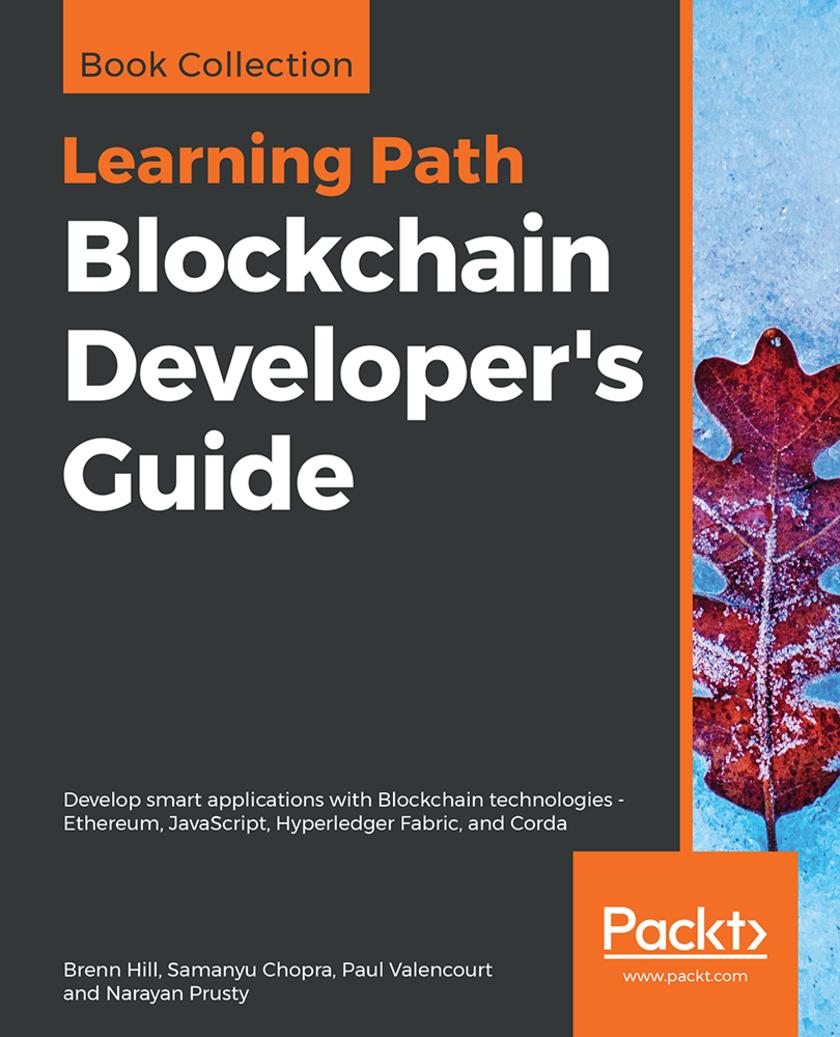
Blockchain Developer's Guide
¥90.46
Build real-world projects like a smart contract deployment platform, betting apps, wallet services, and much more using blockchain Key Features *Apply blockchain principles and features for making your life and business better *Understand Ethereum for smart contracts and DApp deployment *Tackle current and future challenges and problems relating to blockchain Book Description Blockchain applications provide a single-shared ledger to eliminate trust issues involving multiple stakeholders. It is the main technical innovation of Bitcoin, where it serves as the public ledger for Bitcoin transactions. Blockchain Developer's Guide takes you through the electrifying world of blockchain technology. It begins with the basic design of a blockchain and elaborates concepts, such as Initial Coin Offerings (ICOs), tokens, smart contracts, and other related terminologies. You will then explore the components of Ethereum, such as Ether tokens, transactions, and smart contracts that you need to build simple DApps. Blockchain Developer's Guide also explains why you must specifically use Solidity for Ethereum-based projects and lets you explore different blockchains with easy-to-follow examples. You will learn a wide range of concepts - beginning with cryptography in cryptocurrencies and including ether security, mining, and smart contracts. You will learn how to use web sockets and various API services for Ethereum. By the end of this Learning Path, you will be able to build efficient decentralized applications. This Learning Path includes content from the following Packt products: *Blockchain Quick Reference by Brenn Hill, Samanyu Chopra, Paul Valencourt *Building Blockchain Projects by Narayan Prusty What you will learn *Understand how various components of the blockchain architecture work *Get familiar with cryptography and the mechanics behind blockchain *Apply consensus protocol to determine the business sustainability *Understand what ICOs and crypto-mining are, and how they work Who this book is for Blockchain Developer's Guide is for you if you want to get to grips with the blockchain technology and develop your own distributed applications. It is also designed for those who want to polish their existing knowledge regarding the various pillars of the blockchain ecosystem. Prior exposure to an object-oriented programming language such as JavaScript is needed.
AI Blueprints
¥71.93
The essential blueprints and workflow you need to build successful AI business applications Key Features *Learn and master the essential blueprints to program AI for real-world business applications *Gain insights into how modern AI and machine learning solve core business challenges *Acquire practical techniques and a workflow that can build AI applications using state-of-the-art software libraries *Work with a practical, code-based strategy for creating successful AI solutions in your business Book Description AI Blueprints gives you a working framework and the techniques to build your own successful AI business applications. You’ll learn across six business scenarios how AI can solve critical challenges with state-of-the-art AI software libraries and a well thought out workflow. Along the way you’ll discover the practical techniques to build AI business applications from first design to full coding and deployment. The AI blueprints in this book solve key business scenarios. The first blueprint uses AI to find solutions for building plans for cloud computing that are on-time and under budget. The second blueprint involves an AI system that continuously monitors social media to gauge public feeling about a topic of interest - such as self-driving cars. You’ll learn how to approach AI business problems and apply blueprints that can ensure success. The next AI scenario shows you how to approach the problem of creating a recommendation engine and monitoring how those recommendations perform. The fourth blueprint shows you how to use deep learning to find your business logo in social media photos and assess how people interact with your products. Learn the practical techniques involved and how to apply these blueprints intelligently. The fifth blueprint is about how to best design a ‘trending now’ section on your website, much like the one we know from Twitter. The sixth blueprint shows how to create helpful chatbots so that an AI system can understand customers’ questions and answer them with relevant responses. This book continuously demonstrates a working framework and strategy for building AI business applications. Along the way, you’ll also learn how to prepare for future advances in AI. You’ll gain a workflow and a toolbox of patterns and techniques so that you can create your own smart code. What you will learn *An essential toolbox of blueprints and advanced techniques for building AI business applications *How to design and deploy AI applications that meet today’s business needs *A workflow from first design stages to practical code solutions in your next AI projects *Solutions for AI projects that involve social media analytics and recommendation engines *Practical projects and techniques for sentiment analysis and helpful chatbots *A blueprint for AI projects that recommend products based on customer purchasing habits *How to prepare yourself for the next decade of AI and machine learning advancements Who this book is for Programming AI Business Applications provides an introduction to AI with real-world examples. This book can be read and understood by programmers and students without requiring previous AI experience. The projects in this book make use of Java and Python and several popular and state-of-the-art opensource AI libraries.
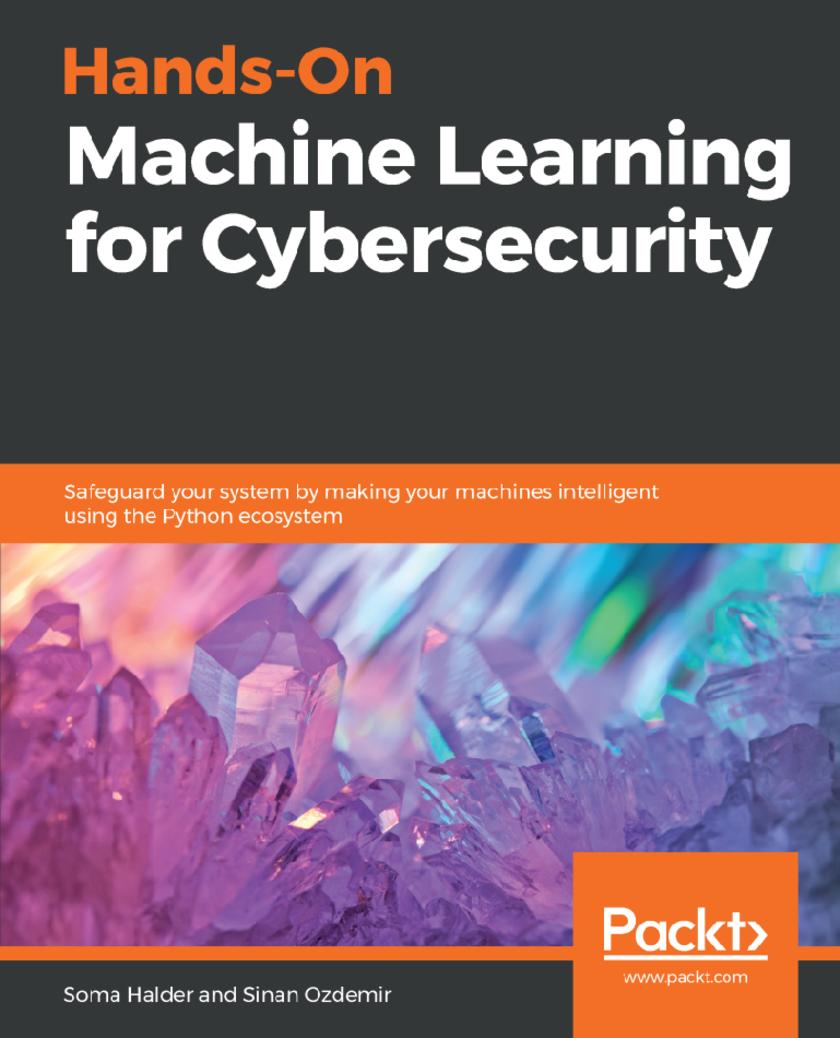
Hands-On Machine Learning for Cybersecurity
¥81.74
Get into the world of smart data security using machine learning algorithms and Python libraries Key Features *Learn machine learning algorithms and cybersecurity fundamentals *Automate your daily workflow by applying use cases to many facets of security *Implement smart machine learning solutions to detect various cybersecurity problems Book Description Cyber threats today are one of the costliest losses that an organization can face. In this book, we use the most efficient tool to solve the big problems that exist in the cybersecurity domain. The book begins by giving you the basics of ML in cybersecurity using Python and its libraries. You will explore various ML domains (such as time series analysis and ensemble modeling) to get your foundations right. You will implement various examples such as building system to identify malicious URLs, and building a program to detect fraudulent emails and spam. Later, you will learn how to make effective use of K-means algorithm to develop a solution to detect and alert you to any malicious activity in the network. Also learn how to implement biometrics and fingerprint to validate whether the user is a legitimate user or not. Finally, you will see how we change the game with TensorFlow and learn how deep learning is effective for creating models and training systems What you will learn *Use machine learning algorithms with complex datasets to implement cybersecurity concepts *Implement machine learning algorithms such as clustering, k-means, and Naive Bayes to solve real-world problems *Learn to speed up a system using Python libraries with NumPy, Scikit-learn, and CUDA *Understand how to combat malware, detect spam, and fight financial fraud to mitigate cyber crimes *Use TensorFlow in the cybersecurity domain and implement real-world examples *Learn how machine learning and Python can be used in complex cyber issues Who this book is for This book is for the data scientists, machine learning developers, security researchers, and anyone keen to apply machine learning to up-skill computer security. Having some working knowledge of Python and being familiar with the basics of machine learning and cybersecurity fundamentals will help to get the most out of the book
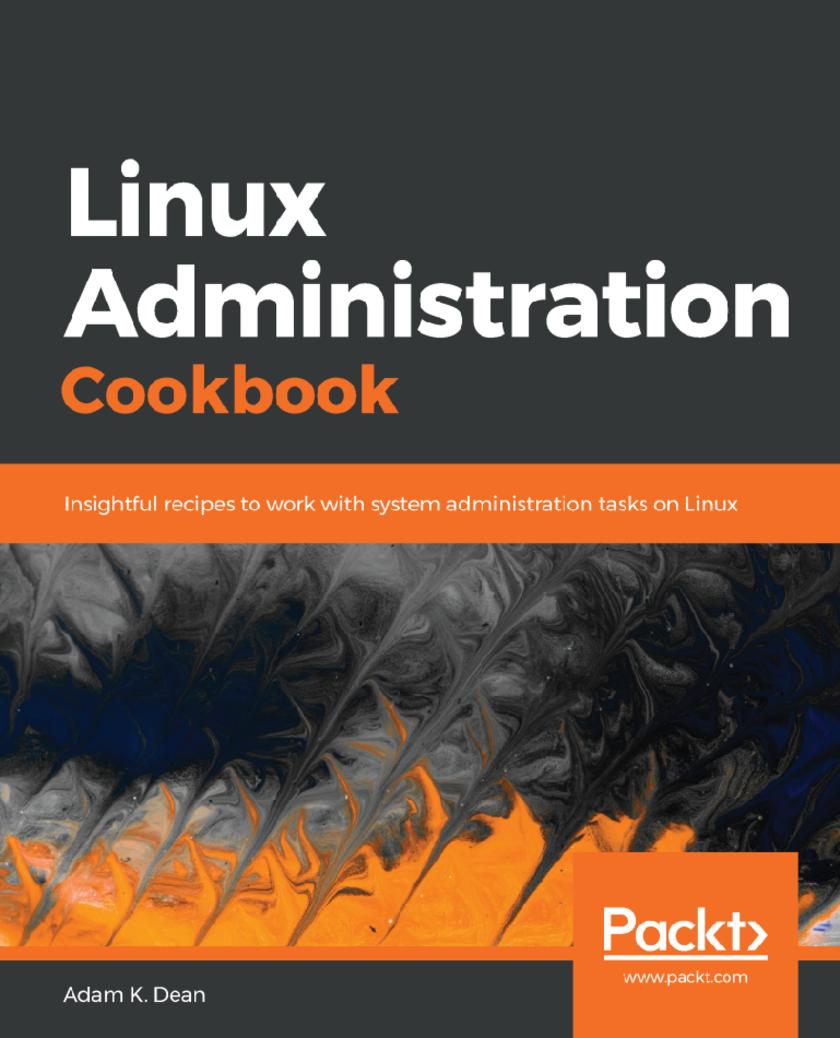
Linux Administration Cookbook
¥81.74
Over 100 recipes to get up and running with the modern Linux administration ecosystem Key Features *Understand and implement the core system administration tasks in Linux *Discover tools and techniques to troubleshoot your Linux system *Maintain a healthy system with good security and backup practices Book Description Linux is one of the most widely used operating systems among system administrators,and even modern application and server development is heavily reliant on the Linux platform. The Linux Administration Cookbook is your go-to guide to get started on your Linux journey. It will help you understand what that strange little server is doing in the corner of your office, what the mysterious virtual machine languishing in Azure is crunching through, what that circuit-board-like thing is doing under your office TV, and why the LEDs on it are blinking rapidly. This book will get you started with administering Linux, giving you the knowledge and tools you need to troubleshoot day-to-day problems, ranging from a Raspberry Pi to a server in Azure, while giving you a good understanding of the fundamentals of how GNU/Linux works. Through the course of the book, you’ll install and configure a system, while the author regales you with errors and anecdotes from his vast experience as a data center hardware engineer, systems administrator, and DevOps consultant. By the end of the book, you will have gained practical knowledge of Linux, which will serve as a bedrock for learning Linux administration and aid you in your Linux journey. What you will learn *Install and manage a Linux server, both locally and in the cloud *Understand how to perform administration across all Linux distros *Work through evolving concepts such as IaaS versus PaaS, containers, and automation *Explore security and configuration best practices *Troubleshoot your system if something goes wrong *Discover and mitigate hardware issues, such as faulty memory and failing drives Who this book is for If you are a system engineer or system administrator with basic experience of working with Linux, this book is for you.
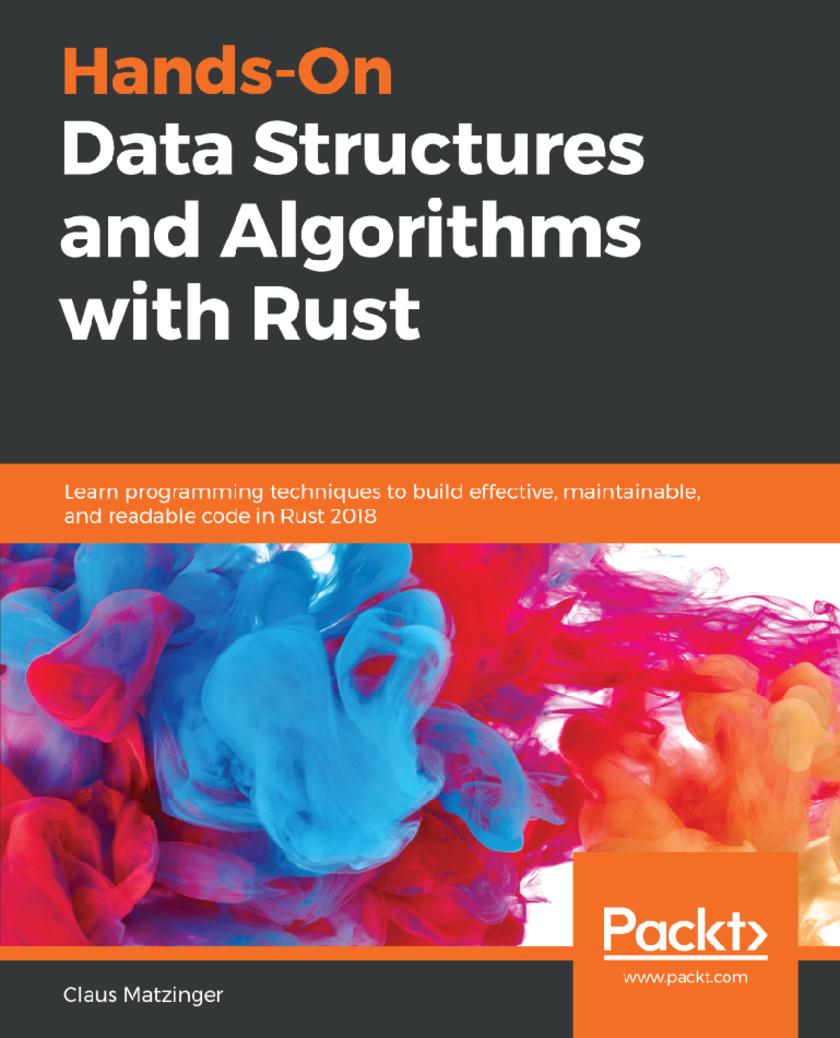
Hands-On Data Structures and Algorithms with Rust
¥73.02
Design and implement professional level programs by exploring modern data structures and algorithms in Rust. Key Features * Use data structures such as arrays, stacks, trees, lists and graphs with real-world examples * Learn the functional and reactive implementations of the traditional data structures * Explore illustrations to present data structures and algorithms, as well as their analysis, in a clear, visual manner. Book Description Rust has come a long way and is now utilized in several contexts. Its key strengths are its software infrastructure and resource-constrained applications, including desktop applications, servers, and performance-critical applications, not forgetting its importance in systems' programming. This book will be your guide as it takes you through implementing classic data structures and algorithms in Rust, helping you to get up and running as a confident Rust programmer. The book begins with an introduction to Rust data structures and algorithms, while also covering essential language constructs. You will learn how to store data using linked lists, arrays, stacks, and queues. You will also learn how to implement sorting and searching algorithms. You will learn how to attain high performance by implementing algorithms to string data types and implement hash structures in algorithm design. The book will examine algorithm analysis, including Brute Force algorithms, Greedy algorithms, Divide and Conquer algorithms, Dynamic Programming, and Backtracking. By the end of the book, you will have learned how to build components that are easy to understand, debug, and use in different applications. What you will learn * Design and implement complex data structures in Rust * Analyze, implement, and improve searching and sorting algorithms in Rust * Create and use well-tested and reusable components with Rust * Understand the basics of multithreaded programming and advanced algorithm design * Become familiar with application profiling based on benchmarking and testing * Explore the borrowing complexity of implementing algorithms Who this book is for This book is for developers seeking to use Rust solutions in a practical/professional setting; who wants to learn essential Data Structures and Algorithms in Rust. It is for developers with basic Rust language knowledge, some experience in other programming languages is required.
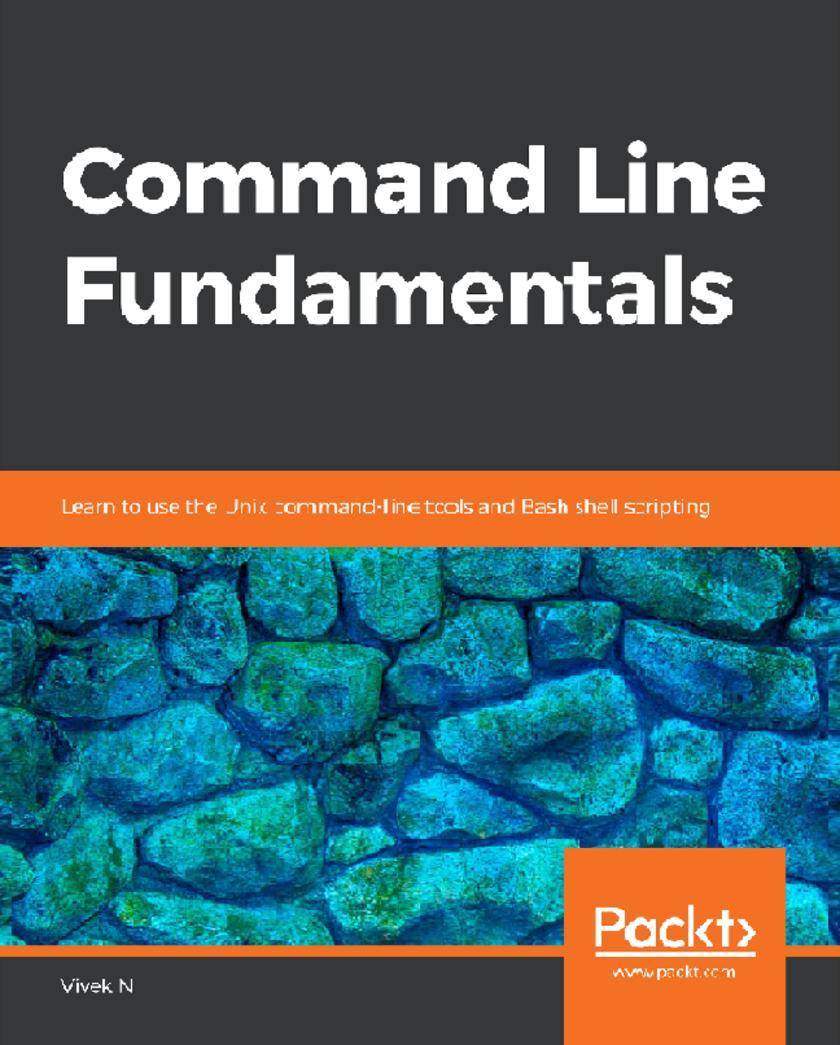
Command Line Fundamentals
¥63.21
Master shell basics and Unix tools and discover easy commands to perform complex tasks with speed Key Features *Learn why the Bash shell is widely used on Linux and iOS *Explore advanced shell concepts, such as pipes and redirection *Understand how to use Unix command-line tools as building blocks for different tasks Book Description The most basic interface to a computer—the command line—remains the most flexible and powerful way of processing data and performing and automating various day-to-day tasks. Command Line Fundamentals begins by exploring the basics, and then focuses on the most common tool, the Bash shell (which is standard on all Linux and iOS systems). As you make your way through the book, you'll explore the traditional Unix command-line programs as implemented by the GNU project. You'll also learn to use redirection and pipelines to assemble these programs to solve complex problems. By the end of this book, you'll have explored the basics of shell scripting, allowing you to easily and quickly automate tasks. What you will learn *Use the Bash shell to run commands *Utilize basic Unix utilities such as cat, tr, sort, and uniq *Explore shell wildcards to manage groups of files *Apply useful keyboard shortcuts in shell *Employ redirection and pipes to process data *Write both basic and advanced shell scripts to automate tasks Who this book is for Command Line Fundamentals is for programmers who use GUIs but want to understand how to use the command line to complete tasks faster.
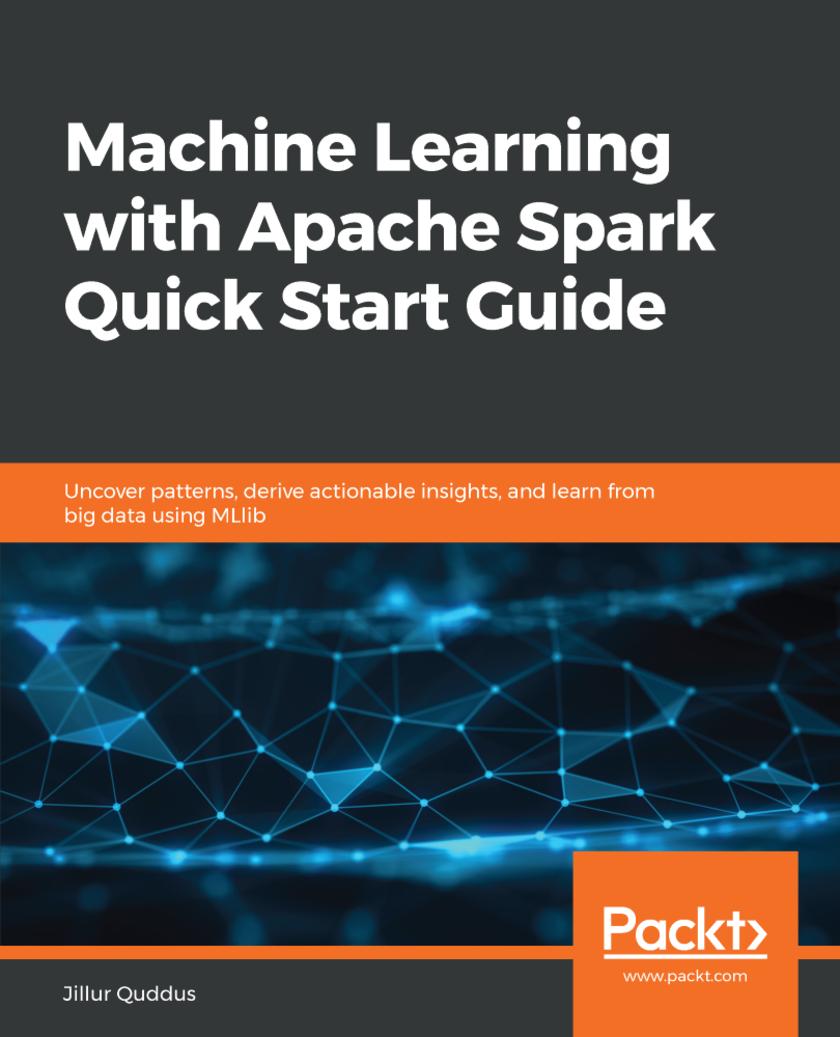
Machine Learning with Apache Spark Quick Start Guide
¥54.49
Combine advanced analytics including Machine Learning, Deep Learning Neural Networks and Natural Language Processing with modern scalable technologies including Apache Spark to derive actionable insights from Big Data in real-time Key Features *Make a hands-on start in the fields of Big Data, Distributed Technologies and Machine Learning *Learn how to design, develop and interpret the results of common Machine Learning algorithms *Uncover hidden patterns in your data in order to derive real actionable insights and business value Book Description Every person and every organization in the world manages data, whether they realize it or not. Data is used to describe the world around us and can be used for almost any purpose, from analyzing consumer habits to fighting disease and serious organized crime. Ultimately, we manage data in order to derive value from it, and many organizations around the world have traditionally invested in technology to help process their data faster and more efficiently. But we now live in an interconnected world driven by mass data creation and consumption where data is no longer rows and columns restricted to a spreadsheet, but an organic and evolving asset in its own right. With this realization comes major challenges for organizations: how do we manage the sheer size of data being created every second (think not only spreadsheets and databases, but also social media posts, images, videos, music, blogs and so on)? And once we can manage all of this data, how do we derive real value from it? The focus of Machine Learning with Apache Spark is to help us answer these questions in a hands-on manner. We introduce the latest scalable technologies to help us manage and process big data. We then introduce advanced analytical algorithms applied to real-world use cases in order to uncover patterns, derive actionable insights, and learn from this big data. What you will learn *Understand how Spark fits in the context of the big data ecosystem *Understand how to deploy and configure a local development environment using Apache Spark *Understand how to design supervised and unsupervised learning models *Build models to perform NLP, deep learning, and cognitive services using Spark ML libraries *Design real-time machine learning pipelines in Apache Spark *Become familiar with advanced techniques for processing a large volume of data by applying machine learning algorithms Who this book is for This book is aimed at Business Analysts, Data Analysts and Data Scientists who wish to make a hands-on start in order to take advantage of modern Big Data technologies combined with Advanced Analytics.
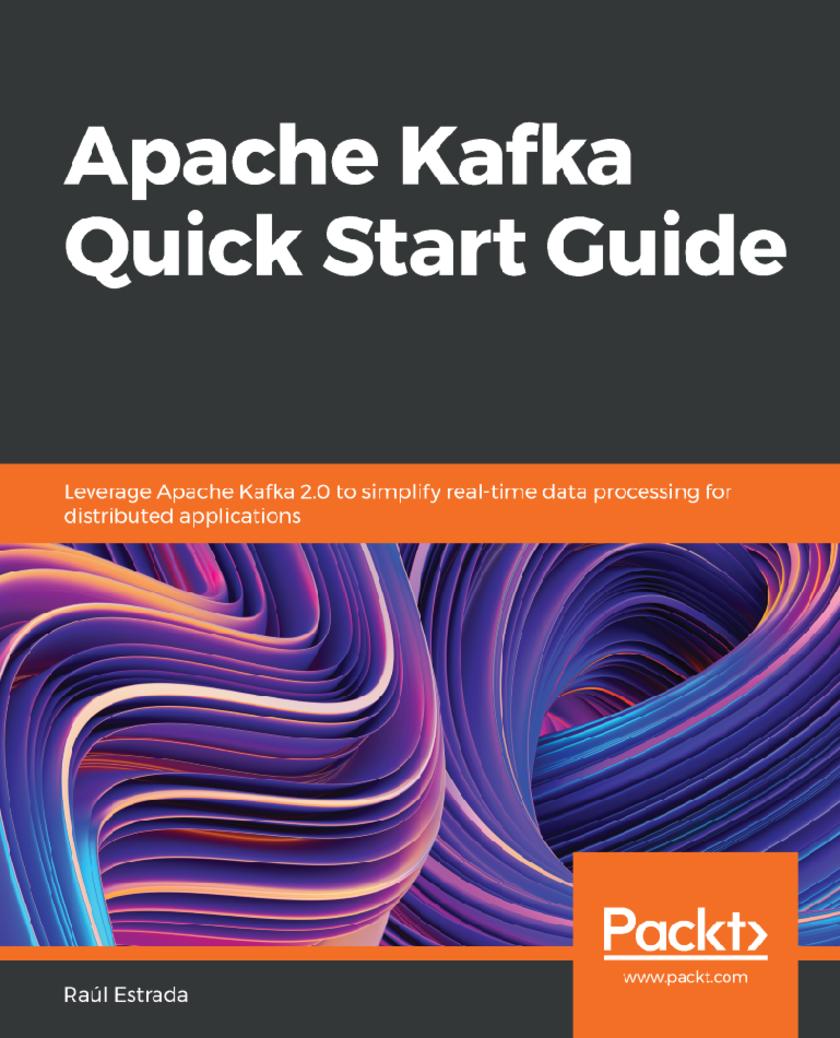
Apache Kafka Quick Start Guide
¥54.49
Process large volumes of data in real-time while building high performance and robust data stream processing pipeline using the latest Apache Kafka 2.0 Key Features *Solve practical large data and processing challenges with Kafka *Tackle data processing challenges like late events, windowing, and watermarking *Understand real-time streaming applications processing using Schema registry, Kafka connect, Kafka streams, and KSQL Book Description Apache Kafka is a great open source platform for handling your real-time data pipeline to ensure high-speed filtering and pattern matching on the ?y. In this book, you will learn how to use Apache Kafka for efficient processing of distributed applications and will get familiar with solving everyday problems in fast data and processing pipelines. This book focuses on programming rather than the configuration management of Kafka clusters or DevOps. It starts off with the installation and setting up the development environment, before quickly moving on to performing fundamental messaging operations such as validation and enrichment. Here you will learn about message composition with pure Kafka API and Kafka Streams. You will look into the transformation of messages in different formats, such asext, binary, XML, JSON, and AVRO. Next, you will learn how to expose the schemas contained in Kafka with the Schema Registry. You will then learn how to work with all relevant connectors with Kafka Connect. While working with Kafka Streams, you will perform various interesting operations on streams, such as windowing, joins, and aggregations. Finally, through KSQL, you will learn how to retrieve, insert, modify, and delete data streams, and how to manipulate watermarks and windows. What you will learn *How to validate data with Kafka *Add information to existing data ?ows *Generate new information through message composition *Perform data validation and versioning with the Schema Registry *How to perform message Serialization and Deserialization *How to perform message Serialization and Deserialization *Process data streams with Kafka Streams *Understand the duality between tables and streams with KSQL Who this book is for This book is for developers who want to quickly master the practical concepts behind Apache Kafka. The audience need not have come across Apache Kafka previously; however, a familiarity of Java or any JVM language will be helpful in understanding the code in this book.
Computer Vision Projects with OpenCV and Python 3
¥54.49
Gain a working knowledge of advanced machine learning and explore Python’s powerful tools for extracting data from images and videos Key Features *Implement image classification and object detection using machine learning and deep learning *Perform image classification, object detection, image segmentation, and other Computer Vision tasks *Crisp content with a practical approach to solving real-world problems in Computer Vision Book Description Python is the ideal programming language for rapidly prototyping and developing production-grade codes for image processing and Computer Vision with its robust syntax and wealth of powerful libraries. This book will help you design and develop production-grade Computer Vision projects tackling real-world problems. With the help of this book, you will learn how to set up Anaconda and Python for the major OSes with cutting-edge third-party libraries for Computer Vision. You'll learn state-of-the-art techniques for classifying images, finding and identifying human postures, and detecting faces within videos. You will use powerful machine learning tools such as OpenCV, Dlib, and TensorFlow to build exciting projects such as classifying handwritten digits, detecting facial features,and much more. The book also covers some advanced projects, such as reading text from license plates from real-world images using Google’s Tesseract software, and tracking human body poses using DeeperCut within TensorFlow. By the end of this book, you will have the expertise required to build your own Computer Vision projects using Python and its associated libraries. What you will learn *Install and run major Computer Vision packages within Python *Apply powerful support vector machines for simple digit classification *Understand deep learning with TensorFlow *Build a deep learning classifier for general images *Use LSTMs for automated image captioning *Read text from real-world images *Extract human pose data from images Who this book is for Python programmers and machine learning developers who wish to build exciting Computer Vision projects using the power of machine learning and OpenCV will find this book useful. The only prerequisite for this book is that you should have a sound knowledge of Python programming.
Generative Adversarial Networks Cookbook
¥81.74
Simplify next-generation deep learning by implementing powerful generative models using Python, TensorFlow and Keras Key Features *Understand the common architecture of different types of GANs *Train, optimize, and deploy GAN applications using TensorFlow and Keras *Build generative models with real-world data sets, including 2D and 3D data Book Description Developing Generative Adversarial Networks (GANs) is a complex task, and it is often hard to find code that is easy to understand. This book leads you through eight different examples of modern GAN implementations, including CycleGAN, simGAN, DCGAN, and 2D image to 3D model generation. Each chapter contains useful recipes to build on a common architecture in Python, TensorFlow and Keras to explore increasingly difficult GAN architectures in an easy-to-read format. The book starts by covering the different types of GAN architecture to help you understand how the model works. This book also contains intuitive recipes to help you work with use cases involving DCGAN, Pix2Pix, and so on. To understand these complex applications, you will take different real-world data sets and put them to use. By the end of this book, you will be equipped to deal with the challenges and issues that you may face while working with GAN models, thanks to easy-to-follow code solutions that you can implement right away. What you will learn *Structure a GAN architecture in pseudocode *Understand the common architecture for each of the GAN models you will build *Implement different GAN architectures in TensorFlow and Keras *Use different datasets to enable neural network functionality in GAN models *Combine different GAN models and learn how to fine-tune them *Produce a model that can take 2D images and produce 3D models *Develop a GAN to do style transfer with Pix2Pix Who this book is for This book is for data scientists, machine learning developers, and deep learning practitioners looking for a quick reference to tackle challenges and tasks in the GAN domain. Familiarity with machine learning concepts and working knowledge of Python programming language will help you get the most out of the book.
Mastering Kali Linux for Advanced Penetration Testing
¥90.46
A practical guide to testing your infrastructure security with Kali Linux, the preferred choice of pentesters and hackers Key Features * Employ advanced pentesting techniques with Kali Linux to build highly secured systems * Discover various stealth techniques to remain undetected and defeat modern infrastructures * Explore red teaming techniques to exploit secured environment Book Description This book takes you, as a tester or security practitioner, through the reconnaissance, vulnerability assessment, exploitation, privilege escalation, and post-exploitation activities used by pentesters. To start with, you'll use a laboratory environment to validate tools and techniques, along with an application that supports a collaborative approach for pentesting. You'll then progress to passive reconnaissance with open source intelligence and active reconnaissance of the external and internal infrastructure. You'll also focus on how to select, use, customize, and interpret the results from different vulnerability scanners, followed by examining specific routes to the target, which include bypassing physical security and the exfiltration of data using a variety of techniques. You'll discover concepts such as social engineering, attacking wireless networks, web services, and embedded devices. Once you are confident with these topics, you'll learn the practical aspects of attacking user client systems by backdooring with fileless techniques, followed by focusing on the most vulnerable part of the network – directly attacking the end user. By the end of this book, you'll have explored approaches for carrying out advanced pentesting in tightly secured environments, understood pentesting and hacking techniques employed on embedded peripheral devices. What you will learn * Configure the most effective Kali Linux tools to test infrastructure security * Employ stealth to avoid detection in the infrastructure being tested * Recognize when stealth attacks are being used against your infrastructure * Exploit networks and data systems using wired and wireless networks as well as web services * Identify and download valuable data from target systems * Maintain access to compromised systems * Use social engineering to compromise the weakest part of the network - the end users Who this book is for This third edition of Mastering Kali Linux for Advanced Penetration Testing is for you if you are a security analyst, pentester, ethical hacker, IT professional, or security consultant wanting to maximize the success of your infrastructure testing using some of the advanced features of Kali Linux. Prior exposure of penetration testing and ethical hacking basics will be helpful in making the most out of this book.
Becoming the Hacker
¥73.02
Web penetration testing by becoming an ethical hacker. Protect the web by learning the tools, and the tricks of the web application attacker. Key Features * Builds on books and courses on penetration testing for beginners * Covers both attack and defense perspectives * Examines which tool to deploy to suit different applications and situations Book Description Becoming the Hacker will teach you how to approach web penetration testing with an attacker's mindset. While testing web applications for performance is common, the ever-changing threat landscape makes security testing much more difficult for the defender. There are many web application tools that claim to provide a complete survey and defense against potential threats, but they must be analyzed in line with the security needs of each web application or service. We must understand how an attacker approaches a web application and the implications of breaching its defenses. Through the first part of the book, Adrian Pruteanu walks you through commonly encountered vulnerabilities and how to take advantage of them to achieve your goal. The latter part of the book shifts gears and puts the newly learned techniques into practice, going over scenarios where the target may be a popular content management system or a containerized application and its network. Becoming the Hacker is a clear guide to web application security from an attacker's point of view, from which both sides can benefit. What you will learn * Study the mindset of an attacker * Adopt defensive strategies * Classify and plan for standard web application security threats * Prepare to combat standard system security problems * Defend WordPress and mobile applications * Use security tools and plan for defense against remote execution Who this book is for The reader should have basic security experience, for example, through running a network or encountering security issues during application development. Formal education in security is useful, but not required. This title is suitable for people with at least two years of experience in development, network management, or DevOps, or with an established interest in security.
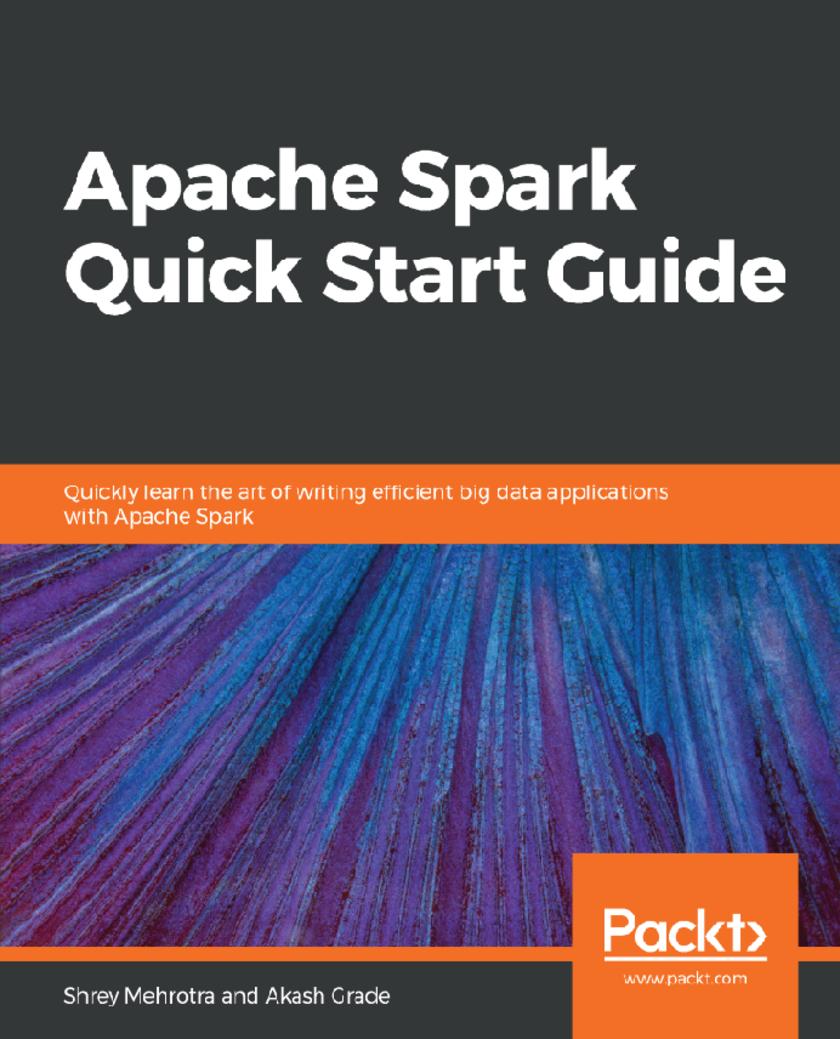
Apache Spark Quick Start Guide
¥54.49
A practical guide for solving complex data processing challenges by applying the best optimizations techniques in Apache Spark. Key Features * Learn about the core concepts and the latest developments in Apache Spark * Master writing efficient big data applications with Spark’s built-in modules for SQL, Streaming, Machine Learning and Graph analysis * Get introduced to a variety of optimizations based on the actual experience Book Description Apache Spark is a flexible framework that allows processing of batch and real-time data. Its unified engine has made it quite popular for big data use cases. This book will help you to get started with Apache Spark 2.0 and write big data applications for a variety of use cases. It will also introduce you to Apache Spark – one of the most popular Big Data processing frameworks. Although this book is intended to help you get started with Apache Spark, but it also focuses on explaining the core concepts. This practical guide provides a quick start to the Spark 2.0 architecture and its components. It teaches you how to set up Spark on your local machine. As we move ahead, you will be introduced to resilient distributed datasets (RDDs) and DataFrame APIs, and their corresponding transformations and actions. Then, we move on to the life cycle of a Spark application and learn about the techniques used to debug slow-running applications. You will also go through Spark’s built-in modules for SQL, streaming, machine learning, and graph analysis. Finally, the book will lay out the best practices and optimization techniques that are key for writing efficient Spark applications. By the end of this book, you will have a sound fundamental understanding of the Apache Spark framework and you will be able to write and optimize Spark applications. What you will learn * Learn core concepts such as RDDs, DataFrames, transformations, and more * Set up a Spark development environment * Choose the right APIs for your applications * Understand Spark’s architecture and the execution flow of a Spark application * Explore built-in modules for SQL, streaming, ML, and graph analysis * Optimize your Spark job for better performance Who this book is for If you are a big data enthusiast and love processing huge amount of data, this book is for you. If you are data engineer and looking for the best optimization techniques for your Spark applications, then you will find this book helpful. This book also helps data scientists who want to implement their machine learning algorithms in Spark. You need to have a basic understanding of any one of the programming languages such as Scala, Python or Java.
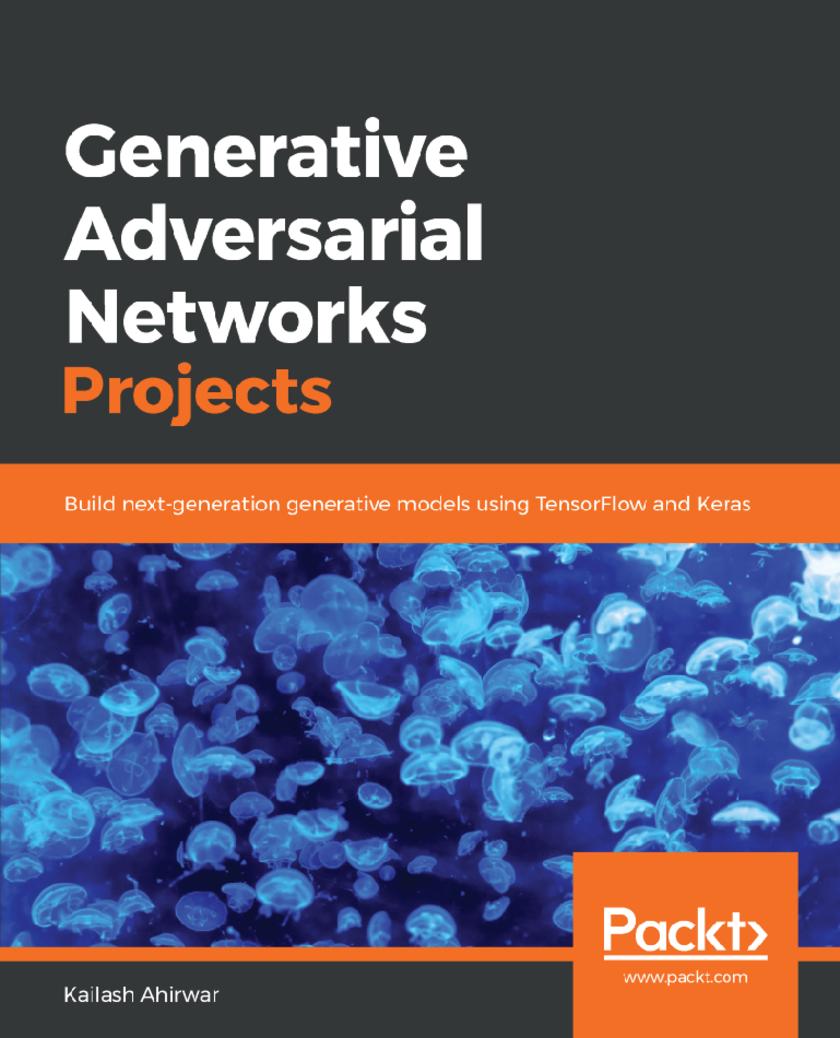
Generative Adversarial Networks Projects
¥81.74
Explore various Generative Adversarial Network architectures using the Python ecosystem Key Features * Use different datasets to build advanced projects in the Generative Adversarial Network domain * Implement projects ranging from generating 3D shapes to a face aging application * Explore the power of GANs to contribute in open source research and projects Book Description Generative Adversarial Networks (GANs) have the potential to build next-generation models, as they can mimic any distribution of data. Major research and development work is being undertaken in this field since it is one of the rapidly growing areas of machine learning. This book will test unsupervised techniques for training neural networks as you build seven end-to-end projects in the GAN domain. Generative Adversarial Network Projects begins by covering the concepts, tools, and libraries that you will use to build efficient projects. You will also use a variety of datasets for the different projects covered in the book. The level of complexity of the operations required increases with every chapter, helping you get to grips with using GANs. You will cover popular approaches such as 3D-GAN, DCGAN, StackGAN, and CycleGAN, and you’ll gain an understanding of the architecture and functioning of generative models through their practical implementation. By the end of this book, you will be ready to build, train, and optimize your own end-to-end GAN models at work or in your own projects. What you will learn * Train a network on the 3D ShapeNet dataset to generate realistic shapes * Generate anime characters using the Keras implementation of DCGAN * Implement an SRGAN network to generate high-resolution images * Train Age-cGAN on Wiki-Cropped images to improve face verification * Use Conditional GANs for image-to-image translation * Understand the generator and discriminator implementations of StackGAN in Keras Who this book is for If you’re a data scientist, machine learning developer, deep learning practitioner, or AI enthusiast looking for a project guide to test your knowledge and expertise in building real-world GANs models, this book is for you.
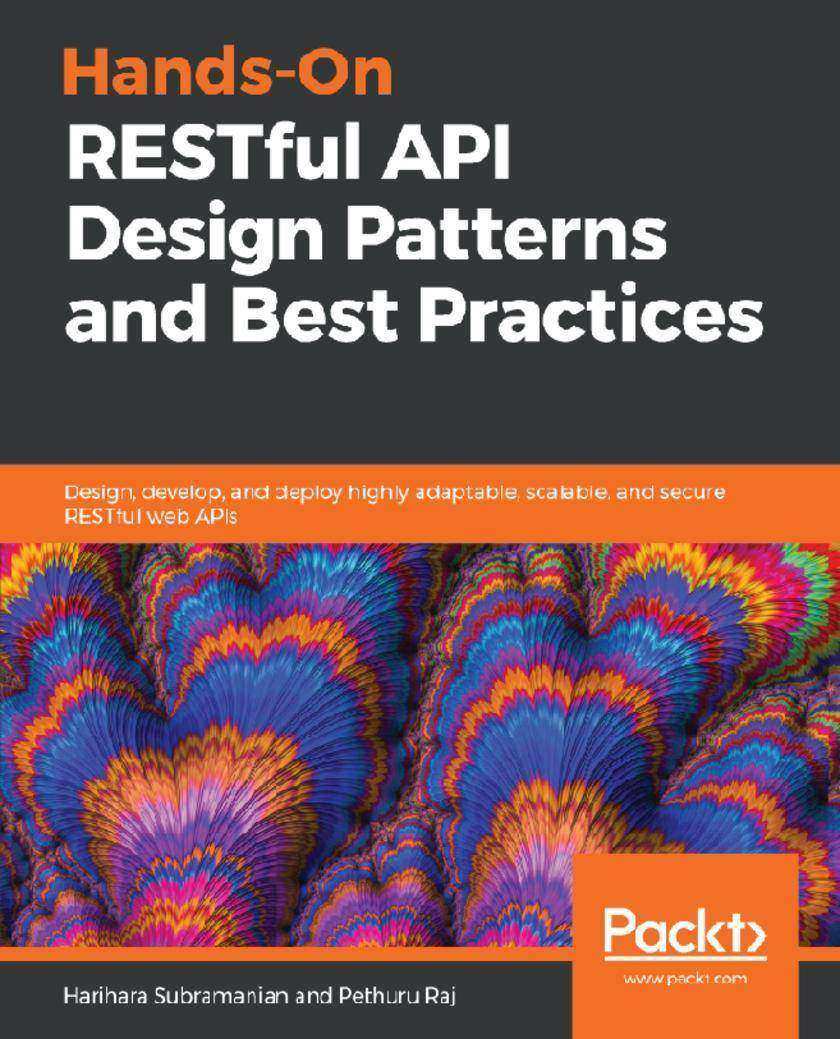
Hands-On RESTful API Design Patterns and Best Practices
¥73.02
Build effective RESTful APIs for enterprise with design patterns and REST framework’s out-of-the-box capabilities Key Features * Understand advanced topics such as API gateways, API securities, and cloud * Implement patterns programmatically with easy-to-follow examples * Modernize legacy codebase using API connectors, layers, and microservices Book Description This book deals with the Representational State Transfer (REST) paradigm, which is an architectural style that allows networked devices to communicate with each other over the internet. With the help of this book, you’ll explore the concepts of service-oriented architecture (SOA), event-driven architecture (EDA), and resource-oriented architecture (ROA). This book covers why there is an insistence for high-quality APIs toward enterprise integration. It also covers how to optimize and explore endpoints for microservices with API gateways and touches upon integrated platforms and Hubs for RESTful APIs. You’ll also understand how application delivery and deployments can be simplified and streamlined in the REST world. The book will help you dig deeper into the distinct contributions of RESTful services for IoT analytics and applications. Besides detailing the API design and development aspects, this book will assist you in designing and developing production-ready, testable, sustainable, and enterprise-grade APIs. By the end of the book, you’ll be empowered with all that you need to create highly flexible APIs for next-generation RESTful services and applications. What you will learn * Explore RESTful concepts, including URI, HATEOAS, and Code on Demand * Study core patterns like Statelessness, Pagination, and Discoverability * Optimize endpoints for linked microservices with API gateways * Delve into API authentication, authorization, and API security implementations * Work with Service Orchestration to craft composite and process-aware services * Expose RESTful protocol-based APIs for cloud computing Who this book is for This book is primarily for web, mobile, and cloud services developers, architects, and consultants who want to build well-designed APIs for creating and sustaining enterprise-class applications. You’ll also benefit from this book if you want to understand the finer details of RESTful APIs and their design techniques along with some tricks and tips.
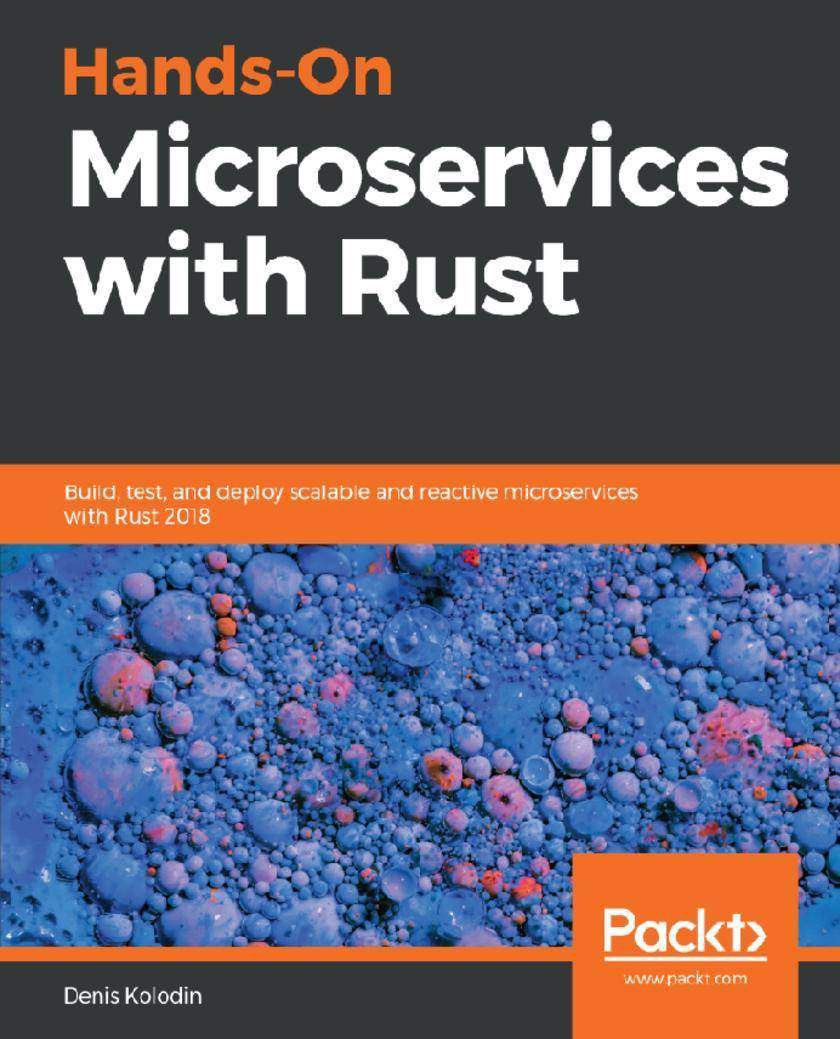
Hands-On Microservices with Rust
¥81.74
A comprehensive guide in developing and deploying high performance microservices with Rust Key Features * Start your microservices journey and get a broader perspective on microservices development using RUST 2018, * Build, deploy, and test microservices using AWS * Explore advanced techniques for developing microservices such as actor model, Requests Routing, and threads Book Description Microservice architecture is sweeping the world as the de facto pattern for building web-based applications. Rust is a language particularly well-suited for building microservices. It is a new system programming language that offers a practical and safe alternative to C. This book describes web development using the Rust programming language and will get you up and running with modern web frameworks and crates with examples of RESTful microservices creation. You will deep dive into Reactive programming, and asynchronous programming, and split your web application into a set of concurrent actors. The book provides several HTTP-handling examples with manageable memory allocations. You will walk through stateless high-performance microservices, which are ideally suitable for computation or caching tasks, and look at stateful microservices, which are filled with persistent data and database interactions. As we move along, you will learn how to use Rust macros to describe business or protocol entities of our application and compile them into native structs, which will be performed at full speed with the help of the server's CPU. Finally, you will be taken through examples of how to test and debug microservices and pack them into a tiny monolithic binary or put them into a container and deploy them to modern cloud platforms such as AWS. What you will learn * Get acquainted with leveraging Rust web programming * Get to grips with various Rust crates, such as hyper, Tokio, and Actix * Explore RESTful microservices with Rust * Understand how to pack Rust code to a container using Docker * Familiarize yourself with Reactive microservices * Deploy your microservices to modern cloud platforms such as AWS Who this book is for This book is for developers who have basic knowledge of RUST, and want to learn how to build, test, scale, and manage RUST microservices. No prior experience of writing microservices in RUST is assumed.


