


 购物车
 个人中心

AWS: Security Best Practices on AWS
¥73.02
Delve deep into various security aspects of AWS to build and maintain a secured environment About This Book ? Learn to secure your network, infrastructure, data, and applications in AWS cloud ? Use AWS managed security services to automate security ? Dive deep into various aspects such as the security model, compliance, access management and much more to build and maintain a secured environment ? Explore Cloud Adoption Framework (CAF) and its components ? Embedded with assessments that will help you revise the concepts you have learned in this book Who This Book Is For This book is for all IT professionals, system administrators, security analysts, solution architects, and chief information security officers who are responsible for securing workloads in AWS for their organizations. What You Will Learn ? Get familiar with VPC components, features, and benefits ? Learn to create and secure your private network in AWS ? Explore encryption and decryption fundamentals ? Understand monitoring, logging, and auditing in AWS ? Ensure data security in AWS ? Secure your web and mobile applications in AWS ? Learn security best practices for IAM, VPC, shared security responsibility model, and so on In Detail With organizations moving their workloads, applications, and infrastructure to the cloud at an unprecedented pace, security of all these resources has been a paradigm shift for all those who are responsible for security; experts, novices, and apprentices alike. This book focuses on using native AWS security features and managed AWS services to help you achieve continuous security. Starting with an introduction to Virtual Private Cloud (VPC) to secure your AWS VPC, you will quickly explore various components that make up VPC such as subnets, security groups, various gateways, and many more. You will also learn to protect data in the AWS platform for various AWS services by encrypting and decrypting data in AWS. You will also learn to secure web and mobile applications in AWS cloud. This book is ideal for all IT professionals, system administrators, security analysts, solution architects, and chief information security officers who are responsible for securing workloads in AWS for their organizations. This book is embedded with useful assessments that will help you revise the concepts you have learned in this book. Style and approach This book follows a practical approach delving into different aspects of AWS security. It focuses on using native AWS security features and managed AWS services to help you achieve continuous security. Note: This book is a blend of text and quizzes, all packaged up keeping your journey in mind. It includes content from the following Packt product: ? Mastering AWS Security by Albert Anthony
Spring: Microservices with Spring Boot
¥73.02
Unlock the power of Spring Boot to build and deploy production-ready microservices About This Book ? Get to know the advanced features of Spring Boot in order to develop and monitor applications ? Use Spring cloud to deploy and manage microservices on the cloud ? Look at embedded servers and deploy a test application to a PaaS Cloud platform ? Embedded with assessments that will help you revise the concepts you have learned in this book Who This Book Is For This book is aimed at Java developers who knows the basics of Spring programming and want to build microservices with Spring Boot. What You Will Learn ? Use Spring Initializr to create a basic spring project ? Build a basic microservice with Spring Boot ? Implement caching and exception handling ? Secure your microservice with Spring security and OAuth2 ? Deploy microservices using self-contained HTTP server ? Monitor your microservices with Spring Boot actuator ? Learn to develop more effectively with developer tools In Detail Microservices helps in decomposing applications into small services and move away from a single monolithic artifact. It helps in building systems that are scalable, flexible, and high resilient. Spring Boot helps in building REST-oriented, production-grade microservices. This book is a quick learning guide on how to build, monitor, and deploy microservices with Spring Boot. You'll be first familiarized with Spring Boot before delving into building microservices. You will learn how to document your microservice with the help of Spring REST docs and Swagger documentation. You will then learn how to secure your microservice with Spring Security and OAuth2. You will deploy your app using a self-contained HTTP server and also learn to monitor a microservice with the help of Spring Boot actuator. This book is ideal for Java developers who knows the basics of Spring programming and want to build microservices with Spring Boot. This book is embedded with useful assessments that will help you revise the concepts you have learned in this book. Style and approach This book follows a practical approach to teach you how to build, monitor, and deploy microservices with Spring Boot. Note: This book is a blend of text and quizzes, all packaged up keeping your journey in mind. It includes content from the following Packt product: ? Mastering Spring 5.0 by Ranga Rao Karanam
SQL Server 2017 Developer’s Guide
¥99.18
Build smarter and efficient database application systems for your organization with SQL Server 2017 About This Book ? Build database applications by using the development features of SQL Server 2017 ? Work with temporal tables to get information stored in a table at any time ? Use adaptive querying to enhance the performance of your queries Who This Book Is For Database developers and solution architects looking to design efficient database applications using SQL Server 2017 will find this book very useful. In addition, this book will be valuable to advanced analysis practitioners and business intelligence developers. Database consultants dealing with performance tuning will get a lot of useful information from this book as well. Some basic understanding of database concepts and T-SQL is required to get the best out of this book. What You Will Learn ? Explore the new development features introduced in SQL Server 2017 ? Identify opportunities for In-Memory OLTP technology ? Use columnstore indexes to get storage and performance improvements ? Exchange JSON data between applications and SQL Server ? Use the new security features to encrypt or mask the data ? Control the access to the data on the row levels ? Discover the potential of R and Python integration ? Model complex relationships with the graph databases in SQL Server 2017 In Detail Microsoft SQL Server 2017 is the next big step in the data platform history of Microsoft as it brings in the power of R and Python for machine learning and containerization-based deployment on Windows and Linux. Compared to its predecessor, SQL Server 2017 has evolved into Machine Learning with R services for statistical analysis and Python packages for analytical processing. This book prepares you for more advanced topics by starting with a quick introduction to SQL Server 2017’s new features and a recapitulation of the possibilities you may have already explored with previous versions of SQL Server. The next part introduces you to enhancements in the Transact-SQL language and new database engine capabilities and then switches to a completely new technology inside SQL Server: JSON support. We also take a look at the Stretch database, security enhancements, and temporal tables. Furthermore, the book focuses on implementing advanced topics, including Query Store, columnstore indexes, and In-Memory OLTP. Towards the end of the book, you’ll be introduced to R and how to use the R language with Transact-SQL for data exploration and analysis. You’ll also learn to integrate Python code in SQL Server and graph database implementations along with deployment options on Linux and SQL Server in containers for development and testing. By the end of this book, you will have the required information to design efficient, high-performance database applications without any hassle. Style and approach This book is a detailed guide to mastering the development features offered by SQL Server 2017, with a unique learn-as-you-do approach. All the concepts are explained in a very easy-to-understand manner and are supplemented with examples to ensure that you—the developer—are able to take that next step in building more powerful, robust applications for your organization with ease.
.NET Core 2.0 By Example
¥90.46
Build cross-platform solutions with .NET Core 2.0 through real-life scenarios About This Book ? Bridges the gap between learning and doing and improves your software development skills ? Covers the best practices of .NET development to improve your productivity ? Example-based approach to get you started quickly with software programming Who This Book Is For If you are a developer or architect and want to learn how to build cross-platform solutions using Microsoft .NET Core, this book is for you. It is assumed that you have some knowledge of the .NET Framework, OOP, and C# (or a similar programming language). What You Will Learn ? Build cross-platform applications with ASP.NET Core 2.0 and its tools ? Integrate, host, and deploy web apps with the cloud (Microsoft Azure) ? Leverage the ncurses native library to extend console capabilities in .NET Core on Linux and interop with native coden .NET Core on Linux and learn how to interop with existing native code ? Reuse existing .NET Framework and Mono assemblies from .NET Core 2.0 applications ? Develop real-time web applications using ASP.NET Core ? Learn the differences between SOA and microservices and get started with microservice development using ASP.NET Core 2.0 ? Walk through functional programming with F# and .NET Core from scratch In Detail With the rise in the number of tools and technologies available today, developers and architects are always exploring ways to create better and smarter solutions. Before, the differences between target platforms was a major roadblock, but that's not the case now. .NET Core 2.0 By Example will take you on an exciting journey to building better software. This book provides fresh and relevant content to .NET Core 2.0 in a succinct format that’s enjoyable to read. It also delivers concepts, along with the implications, design decisions, and potential pitfalls you might face when targeting Linux and Windows systems, in a logical and simple way. With the .NET framework at its center, the book comprises of five varied projects: a multiplayer Tic-tac-toe game; a real-time chat application, Let'sChat; a chatbot; a microservice-based buying-selling application; and a movie booking application. You will start each chapter with a high-level overview of the content, followed by the above example applications described in detail. By the end of each chapter, you will not only be proficient with the concepts, but you’ll also have created a tangible component in the application. By the end of the book, you will have built five solid projects using all the tools and support provided by the .NET Core 2.0 framework. Style and approach This book takes a concise yet comprehensive project-based approach to teaching the tricks and tools of .NET Core 2.0.
AWS Administration - The Definitive Guide - Second Edition
¥81.74
Leverage this step-by-step guide to build a highly secure, fault-tolerant, and scalable Cloud environment About This Book ? Learn how to leverage various Amazon Web Services (AWS) components and services to build a secure, reliable, and robust environment to host your applications on. ? Delve into core AWS service offerings with hands-on tutorials, real-world use case scenarios, and best practices. ? A self-paced, systematic, and step-by-step guide to learning and implementing AWS in your own environment. Who This Book Is For This book is for those who want to learn and leverage the rich plethora of services provided by AWS. Although no prior experience with AWS is required, it is recommended that you have some hands-on experience of Linux, Web Services, and basic networking. What You Will Learn ? Take an in-depth look at what's new with AWS, along with how to effectively manage and automate your EC2 infrastructure with AWS Systems Manager ? Deploy and scale your applications with ease using AWS Elastic Beanstalk and Amazon Elastic File System ? Secure and govern your environments using AWS CloudTrail, AWS Config, and AWS Shield ? Learn the DevOps way using a combination of AWS CodeCommit, AWS CodeDeploy, and AWS CodePipeline ? Run big data analytics and workloads using Amazon EMR and Amazon Redshift ? Learn to back up and safeguard your data using AWS Data Pipeline ? Get started with the Internet of Things using AWS IoT and AWS Greengrass In Detail Many businesses are moving from traditional data centers to AWS because of its reliability, vast service offerings, lower costs, and high rate of innovation. AWS can be used to accomplish a variety of both simple and tedious tasks. Whether you are a seasoned system admin or a rookie, this book will help you to learn all the skills you need to work with the AWS cloud. This book guides you through some of the most popular AWS services, such as EC2, Elastic Beanstalk, EFS, CloudTrail, Redshift, EMR, Data Pipeline, and IoT using a simple, real-world, application-hosting example. This book will also enhance your application delivery skills with the latest AWS services, such as CodeCommit, CodeDeploy, and CodePipeline, to provide continuous delivery and deployment, while also securing and monitoring your environment's workflow. Each chapter is designed to provide you with maximal information about each AWS service, coupled with easy to follow, hands-on steps, best practices, tips, and recommendations. By the end of the book, you will be able to create a highly secure, fault-tolerant, and scalable environment for your applications to run on. Style and approach This in-depth and insightful guide is filled with easy-to-follow examples, real-world use cases, best practices, and recommendations that will help you design and leverage some of the most commonly used AWS services.
Test-Driven Java Development - Second Edition
¥90.46
This book will teach the concepts of test driven development in Java so you can build clean, maintainable and robust code About This Book ? Explore the most popular TDD tools and frameworks and become more proficient in building applications ? Create applications with better code design, fewer bugs, and higher test coverage, enabling you to get them to market quickly ? Implement test-driven programming methods into your development workflows Who This Book Is For If you're an experienced Java developer and want to implement more effective methods of programming systems and applications, then this book is for you. What You Will Learn ? Explore the tools and frameworks required for effective TDD development ? Perform the Red-Green-Refactor process efficiently, the pillar around which all other TDD procedures are based ? Master effective unit testing in isolation from the rest of your code ? Design simple and easily maintainable code by implementing different techniques ? Use mocking frameworks and techniques to easily write and quickly execute tests ? Develop an application to implement behavior-driven development in conjunction with unit testing ? Enable and disable features using feature toggles In Detail Test-driven development (TDD) is a development approach that relies on a test-first procedure that emphasizes writing a test before writing the necessary code, and then refactoring the code to optimize it.The value of performing TDD with Java, one of the longest established programming languages, is to improve the productivity of programmers and the maintainability and performance of code, and develop a deeper understanding of the language and how to employ it effectively. Starting with the basics of TDD and understanding why its adoption is beneficial, this book will take you from the first steps of TDD with Java until you are confident enough to embrace the practice in your day-to-day routine.You'll be guided through setting up tools, frameworks, and the environment you need, and we will dive right into hands-on exercises with the goal of mastering one practice, tool, or framework at a time. You'll learn about the Red-Green-Refactor procedure, how to write unit tests, and how to use them as executable documentation.With this book, you'll also discover how to design simple and easily maintainable code, work with mocks, utilize behavior-driven development, refactor old legacy code, and release a half-finished feature to production with feature toggles.You will finish this book with a deep understanding of the test-driven development methodology and the confidence to apply it to application programming with Java. Style and approach An easy-to-follow, hands-on guide to building applications through effective coding practices. This book covers practical examples by introducing different problems, each one designed as a learning exercise to help you understand each aspect of TDD.
Architecting Angular Applications with Redux, RxJS, and NgRx
¥81.74
Manage state in Angular to write high performing web apps by combining the power of Flux, RxJS, and NgRx About This Book ? Learn what makes an excellent Angular application architecture ? Use Redux to write performant, consistent Angular applications ? Incorporate Reactive Programming principles and RxJS to make it easier to develop, test, and debug your Angular applications Who This Book Is For If you have been developing Angular applications and want to dive deeper into the Angular architecture with Redux, RxJS, and NgRx to write robust web apps, then this book is for you. What You Will Learn ? Understand the one-way data flow and Flux pattern ? Work with functional programming and asynchronous data streams ? Figure out how RxJS can help us address the flaws in promises ? Set up different versions of cascading calls ? Explore advanced operators ? Get familiar with the Redux pattern and its principles ? Test and debug different features of your application ? Build your own lightweight app using Flux, Redux, and NgRx In Detail Managing the state of large-scale web applications is a highly challenging task with the need to align different components, backends, and web workers harmoniously. When it comes to Angular, you can use NgRx, which combines the simplicity of Redux with the reactive programming power of RxJS to build your application architecture, making your code elegant and easy to reason about, debug, and test. In this book, we start by looking at the different ways of architecting Angular applications and some of the patterns that are involved in it. This will be followed by a discussion on one-way data flow, the Flux pattern, and the origin of Redux. The book introduces you to declarative programming or, more precisely, functional programming and talks about its advantages. We then move on to the reactive programming paradigm. Reactive programming is a concept heavily used in Angular and is at the core of NgRx. Later, we look at RxJS, as a library and master it. We thoroughly describe how Redux works and how to implement it from scratch. The two last chapters of the book cover everything NgRx has to offer in terms of core functionality and supporting libraries, including how to build a micro implementation of NgRx. This book will empower you to not only use Redux and NgRx to the fullest, but also feel confident in building your own version, should you need it. Style and approach This book covers everything there is to know to get well-acquainted with Angular without bogging you down. Everything is neatly laid out under clear headings for quick consultation, giving you the information required to understand a concept immediately.
Hands-On Cloud Development with WildFly
¥81.74
Create microservices using Java EE technologies using WildFly Swarm,deploy them in the OpenShift cloud, make them resilient to network failures using Hystrix, configure continuous integration using Jenkins, and security using Keycloak. About This Book ? Create functional microservices with WildFly Swarm ? Use OpenShift to deploy your microservices in the cloud ? Make your application production-ready using Jenkins, Hystrix, and Keycloak Who This Book Is For If you're an experienced developer familiar with Java EE technologies and would like to learn how you can use those technologies in the cloud with WildFly and OpenShift, then this book is for you. What You Will Learn ? Utilize Java EE technology to develop modern cloud-enabled applications ? Easily create microservices with WildFly Swarm using proven Java EE technologies ? See the benefits of OpenShift – easy deployment of your services, out of the box scalability and healing, and integration with Continuous Integration tools ? Integrate the sample application with Jenkins’ Continuous Integration server ? Utilize Netflix OSS to connect your services and provide resilience to your application ? Provide security to your application using Keycloak In Detail The book starts by introducing you to WildFly Swarm—a tool that allows you to create runnable microservices from Java EE components. You’ll learn the basics of Swarm operation—creating a microservice containing only the parts of enterprise runtime needed in a specific case. Later, you’ll learn how to configure and test those services. In order to deploy our services in the cloud, we’ll use OpenShift. You’ll get to know basic information on its architecture, features, and relationship to Docker and Kubernetes. Later, you’ll learn how to deploy and configure your services to run in the OpenShift cloud. In the last part of the book, you’ll see how to make your application production-ready. You’ll find out how to configure continuous integration for your services using Jenkins, make your application resistant to network failures using Hystrix, and how to secure them using Keycloak. By the end of the book, you’ll have a fully functional example application and will have practical knowledge of Java EE cloud development that can be used as a reference in your other projects. Style and approach This example-based tutorial guides you step by step through creating an application based on well-known Java EE technologies (JAX-RS, CDI, JPA, and JSF) and modern architectural patterns.
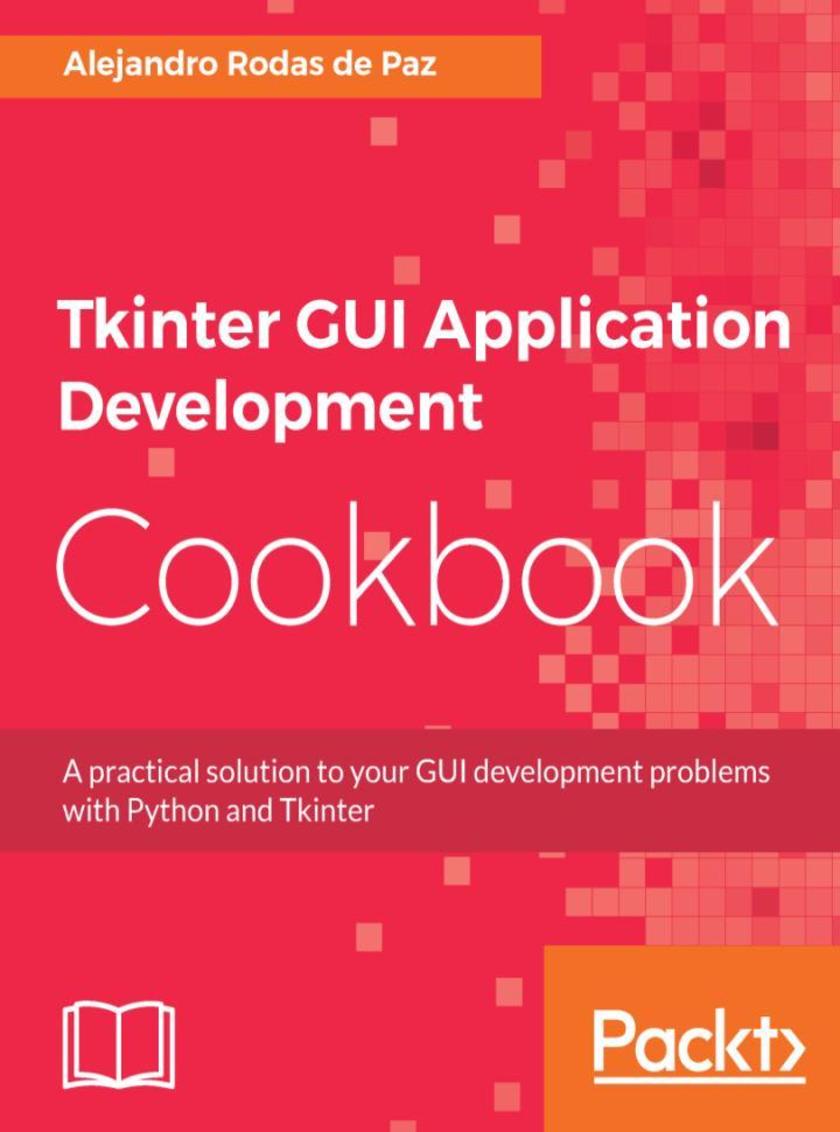
Tkinter GUI Application Development Cookbook
¥73.02
Discover solutions to all your Tkinter and Python GUI development problems About This Book ? Integrate efficient Python GUI programming techniques with Tkinter ? Efficiently implement advanced MVC architectures in your Python GUI apps ? Solve all your problems related to Tkinter and Python GUI development Who This Book Is For This book is for Python developers who are familiar with the basics of the language syntax, data structures, and OOP. You do not need previous experience with Tkinter or other GUI development libraries. What You Will Learn ? Add widgets and handle user events ? Lay out widgets within windows using frames and the different geometry managers ? Configure widgets so that they have a customized appearance and behavior ? Improve the navigation of your apps with menus and dialogs ? Apply object-oriented programming techniques in Tkinter applications ? Use threads to achieve responsiveness and update the GUI ? Explore the capabilities of the canvas widget and the types of items that can be added to it ? Extend Tkinter applications with the TTK (themed Tkinter) module In Detail As one of the more versatile programming languages, Python is well-known for its batteries-included philosophy, which includes a rich set of modules in its standard library; Tkinter is the library included for building desktop applications. Due to this, Tkinter is a common choice for rapid GUI development, and more complex applications can benefit from the full capabilities of this library. This book covers all of your Tkinter and Python GUI development problems and solutions. Tkinter GUI Application Development Cookbook starts with an overview of Tkinter classes and at the same time provides recipes for basic topics, such as layout patterns and event handling. Next, we cover how to develop common GUI patterns, such as entering and saving data, navigating through menus and dialogs, and performing long-running actions in the background. You will then make your apps leverage network resources effectively, perform 2D and 3D animation-related tasks, create 3D objects, and perform advanced graphical operations. Finally, this book covers using the canvas and themed widgets. By the end of the book, you will have an in-depth knowledge of Tkinter classes, and will know how to use them to build efficient and rich GUI applications. Style and approach A practical recipe-based guide that will help you find solutions to all your Tkinter and Python GUI development-related problems.
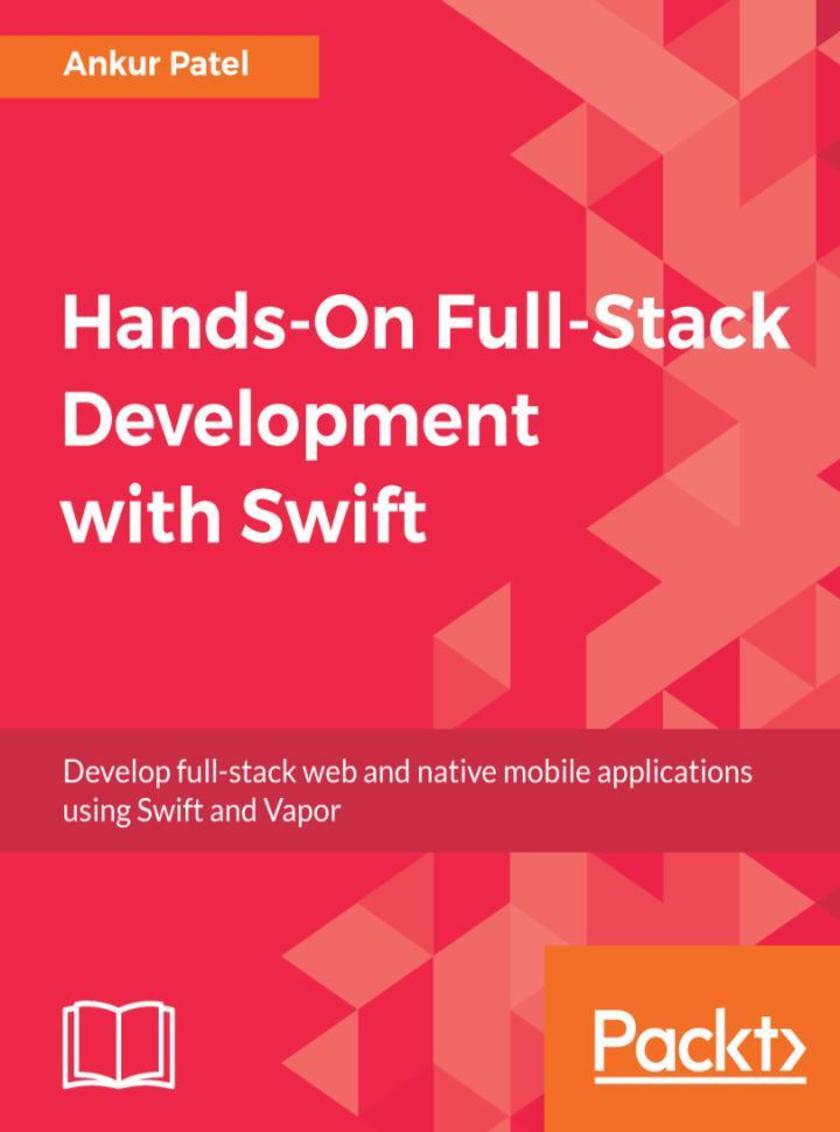
Hands-On Full-Stack Development with Swift
¥81.74
Build full-stack shopping list applications from scratch for web and mobile platforms using Xcode, Vapor, and Swift About This Book ? Build, package, and deploy an end-to-end app solution for mobile and web with Swift 4 ? Increase developer productivity by creating reusable client and server components ? Develop backend services for your apps and websites using Vapor framework Who This Book Is For This book is for developers who are looking to build full-stack web and native mobile applications using Swift. An understanding of HTML, CSS, and JavaScript would be beneficial when building server-rendered pages with Vapor. What You Will Learn ? Get accustomed to server-side programming as well as the Vapor framework ? Learn how to build a RESTful API ? Make network requests from your app and handle error states when a network request fails ? Deploy your app to Heroku using the CLI command ? Write a test for the Vapor backend ? Create a tvOS version of your shopping list app and explore code-sharing with an iOS platform ? Add registration and authentication so that users can have their own shopping lists In Detail Making Swift an open-source language enabled it to share code between a native app and a server. Building a scalable and secure server backend opens up new possibilities, such as building an entire application written in one language—Swift. This book gives you a detailed walk-through of tasks such as developing a native shopping list app with Swift and creating a full-stack backend using Vapor (which serves as an API server for the mobile app). You'll also discover how to build a web server to support dynamic web pages in browsers, thereby creating a rich application experience. You’ll begin by planning and then building a native iOS app using Swift. Then, you'll get to grips with building web pages and creating web views of your native app using Vapor. To put things into perspective, you'll learn how to build an entire full-stack web application and an API server for your native mobile app, followed by learning how to deploy the app to the cloud, and add registration and authentication to it. Once you get acquainted with creating applications, you'll build a tvOS version of the shopping list app and explore how easy is it to create an app for a different platform with maximum code shareability. Towards the end, you’ll also learn how to create an entire app for different platforms in Swift, thus enhancing your productivity. Style and approach A step-by-step tutorial-based approach that teaches you full-stack Swift through the development of a single application on several platforms.
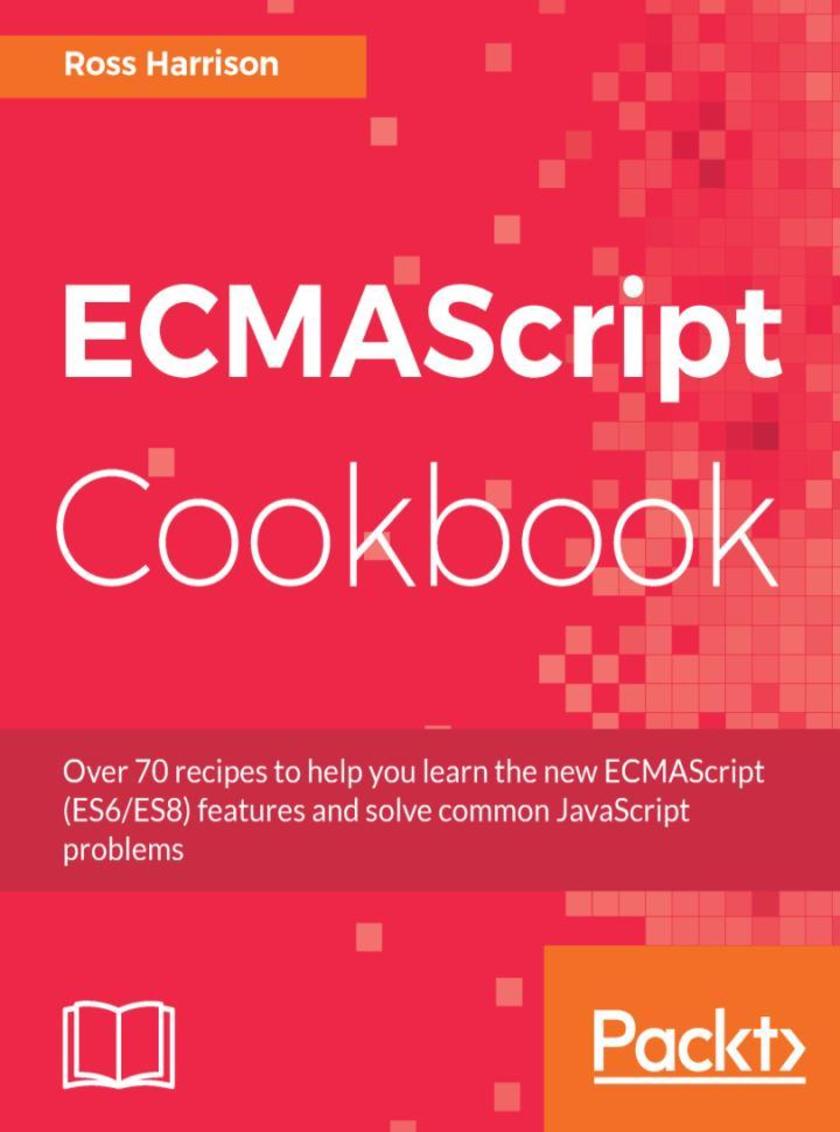
ECMAScript Cookbook
¥73.02
Become a better web programmer by writing efficient and modular code using ES6 and ES8 About This Book ? Learn to write asynchronous code and improve the readability of your web applications ? Explore advanced concepts such as closures, Proxy, generators, Promise, async functions, and Atomics ? Use different design patterns to create structures to solve common organizational and processing issues Who This Book Is For If you’re a web developer with a basic understanding of JavaScript and wish to learn the latest features of ECMAScript for developing efficient web applications, this book is for you. What You Will Learn ? Organize JavaScript programs across multiple files, using ES modules ? Create and work with promises using the Promise object and methods ? Compose async functions to propagate and handle errors ? Solve organizational and processing issues with structures using design patterns ? Use classes to encapsulate and share behavior ? Orchestrate parallel programs using WebWorkers, SharedMemory, and Atomics ? Use and extend Map, Set, and Symbol to work with user-defined classes and simulate data types ? Explore new array methods to avoid looping with arrays and other collections In Detail ECMAScript Cookbook follows a modular approach with independent recipes covering different feature sets and specifications of ECMAScript to help you become an efficient programmer. This book starts off with organizing your JavaScript applications as well as delivering those applications to modem and legacy systems. You will get acquainted with features of ECMAScript 8 such as async, SharedArrayBuffers, and Atomic operations that enhance asynchronous and parallel operations. In addition to this, this book will introduce you to SharedArrayBuffers, which allow web workers to share data directly, and Atomic operations, which help coordinate behavior across the threads. You will also work with OOP and Collections, followed by new functions and methods on the built-in Object and Array types that make common operations more manageable and less error-prone. You will then see how to easily build more sophisticated and expressive program structures with classes and inheritance. In the end, we will cover Sets, Maps, and Symbols, which are the new types introduced in ECMAScript 6 to add new behaviors and allow you to create simple and powerful modules. By the end of the book, you will be able to produce more efficient, expressive, and simpler programs using the new features of ECMAScript. Style and approach This book will follow a modular approach covering independent recipes on different features of ECMAScript throughout the book.
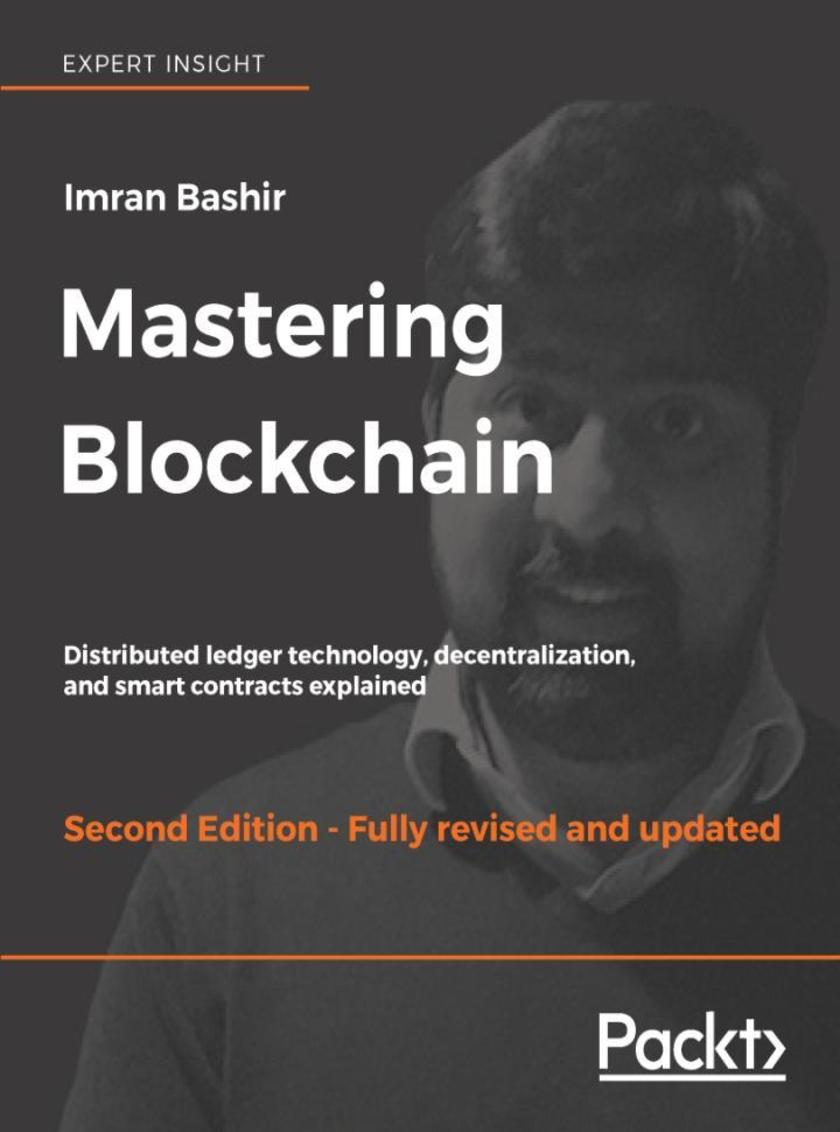
Mastering Blockchain - Second Edition
¥81.74
Learn about cryptography and cryptocurrencies, so you can build highly secure, decentralized applications and conduct trusted in-app transactions. About This Book ? Get to grips with the underlying technical principles and implementations of blockchain ? Build powerful applications using Ethereum to secure transactions and create smart contracts ? Explore cryptography, mine cryptocurrencies, and solve scalability issues with this comprehensive guide Who This Book Is For This book will appeal to those who wish to build fast, highly secure, transactional applications. It targets people who are familiar with the concept of blockchain and are comfortable with a programming language. What You Will Learn ? Master the theoretical and technical foundations of the blockchain technology ? Understand the concept of decentralization, its impact, and its relationship with blockchain technology ? Master how cryptography is used to secure data - with practical examples ? Grasp the inner workings of blockchain and the mechanisms behind bitcoin and alternative cryptocurrencies ? Understand the theoretical foundations of smart contracts ? Learn how Ethereum blockchain works and how to develop decentralized applications using Solidity and relevant development frameworks ? Identify and examine applications of the blockchain technology - beyond currencies ? Investigate alternative blockchain solutions including Hyperledger, Corda, and many more ? Explore research topics and the future scope of blockchain technology In Detail A blockchain is a distributed ledger that is replicated across multiple nodes and enables immutable, transparent and cryptographically secure record-keeping of transactions. The blockchain technology is the backbone of cryptocurrencies, and it has applications in finance, government, media and almost all other industries. Mastering Blockchain, Second Edition has been thoroughly updated and revised to provide a detailed description of this leading technology and its implementation in the real world. This book begins with the technical foundations of blockchain technology, teaching you the fundamentals of distributed systems, cryptography and how it keeps data secure. You will learn about the mechanisms behind cryptocurrencies and how to develop applications using Ethereum, a decentralized virtual machine. You will also explore different other blockchain solutions and get an introduction to business blockchain frameworks under Hyperledger, a collaborative effort for the advancement of blockchain technologies hosted by the Linux Foundation. You will also be shown how to implement blockchain solutions beyond currencies, Internet of Things with blockchain, blockchain scalability, and the future scope of this fascinating and powerful technology. Style and approach This comprehensive guide allows you to build smart blockchain applications and explore the power of this database. The book will let you quickly brush up on the basics of the blockchain database, followed by advanced implementations of blockchain in currency, smart contracts, decentralization, and so on.
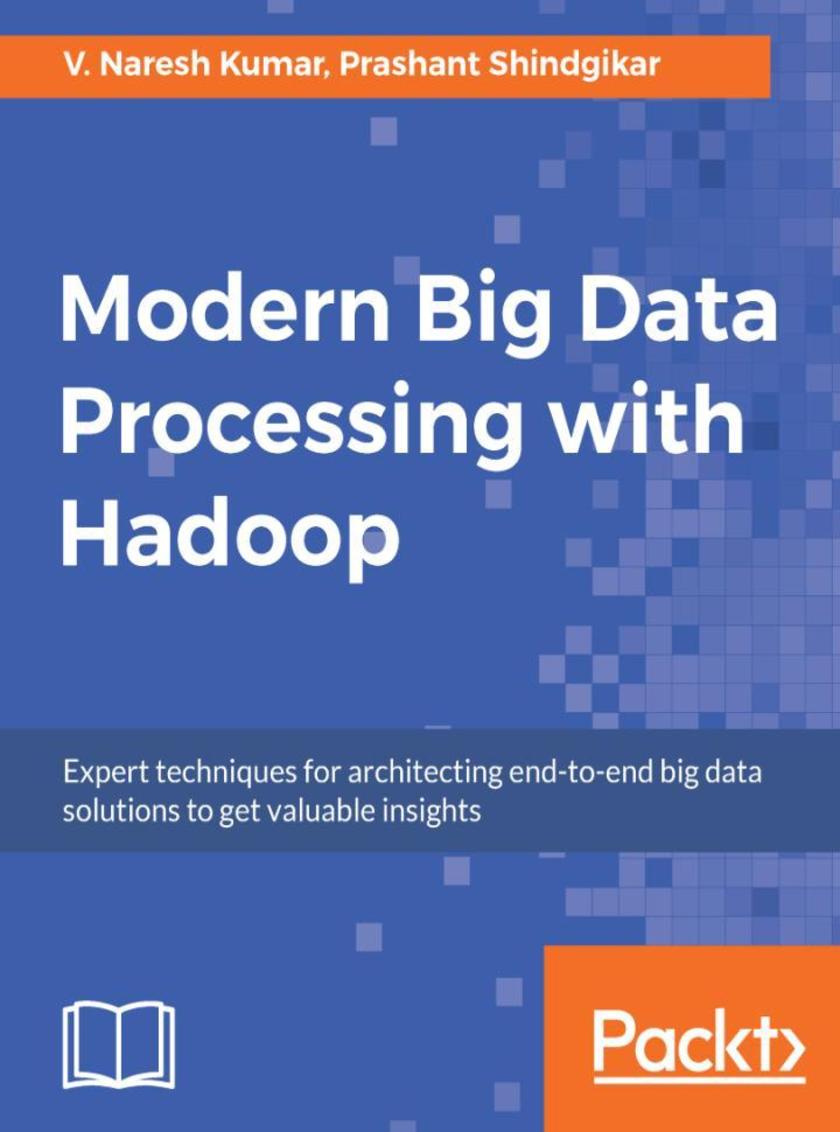
Modern Big Data Processing with Hadoop
¥73.02
A comprehensive guide to design, build and execute effective Big Data strategies using Hadoop About This Book ? Get an in-depth view of the Apache Hadoop ecosystem and an overview of the architectural patterns pertaining to the popular Big Data platform ? Conquer different data processing and analytics challenges using a multitude of tools such as Apache Spark, Elasticsearch, Tableau and more ? A comprehensive, step-by-step guide that will teach you everything you need to know, to be an expert Hadoop Architect Who This Book Is For This book is for Big Data professionals who want to fast-track their career in the Hadoop industry and become an expert Big Data architect. Project managers and mainframe professionals looking forward to build a career in Big Data Hadoop will also find this book to be useful. Some understanding of Hadoop is required to get the best out of this book. What You Will Learn ? Build an efficient enterprise Big Data strategy centered around Apache Hadoop ? Gain a thorough understanding of using Hadoop with various Big Data frameworks such as Apache Spark, Elasticsearch and more ? Set up and deploy your Big Data environment on premises or on the cloud with Apache Ambari ? Design effective streaming data pipelines and build your own enterprise search solutions ? Utilize the historical data to build your analytics solutions and visualize them using popular tools such as Apache Superset ? Plan, set up and administer your Hadoop cluster efficiently In Detail The complex structure of data these days requires sophisticated solutions for data transformation, to make the information more accessible to the users.This book empowers you to build such solutions with relative ease with the help of Apache Hadoop, along with a host of other Big Data tools. This book will give you a complete understanding of the data lifecycle management with Hadoop, followed by modeling of structured and unstructured data in Hadoop. It will also show you how to design real-time streaming pipelines by leveraging tools such as Apache Spark, and build efficient enterprise search solutions using Elasticsearch. You will learn to build enterprise-grade analytics solutions on Hadoop, and how to visualize your data using tools such as Apache Superset. This book also covers techniques for deploying your Big Data solutions on the cloud Apache Ambari, as well as expert techniques for managing and administering your Hadoop cluster. By the end of this book, you will have all the knowledge you need to build expert Big Data systems. Style and approach Comprehensive guide with a perfect blend of theory, examples and implementation of real-world use-cases
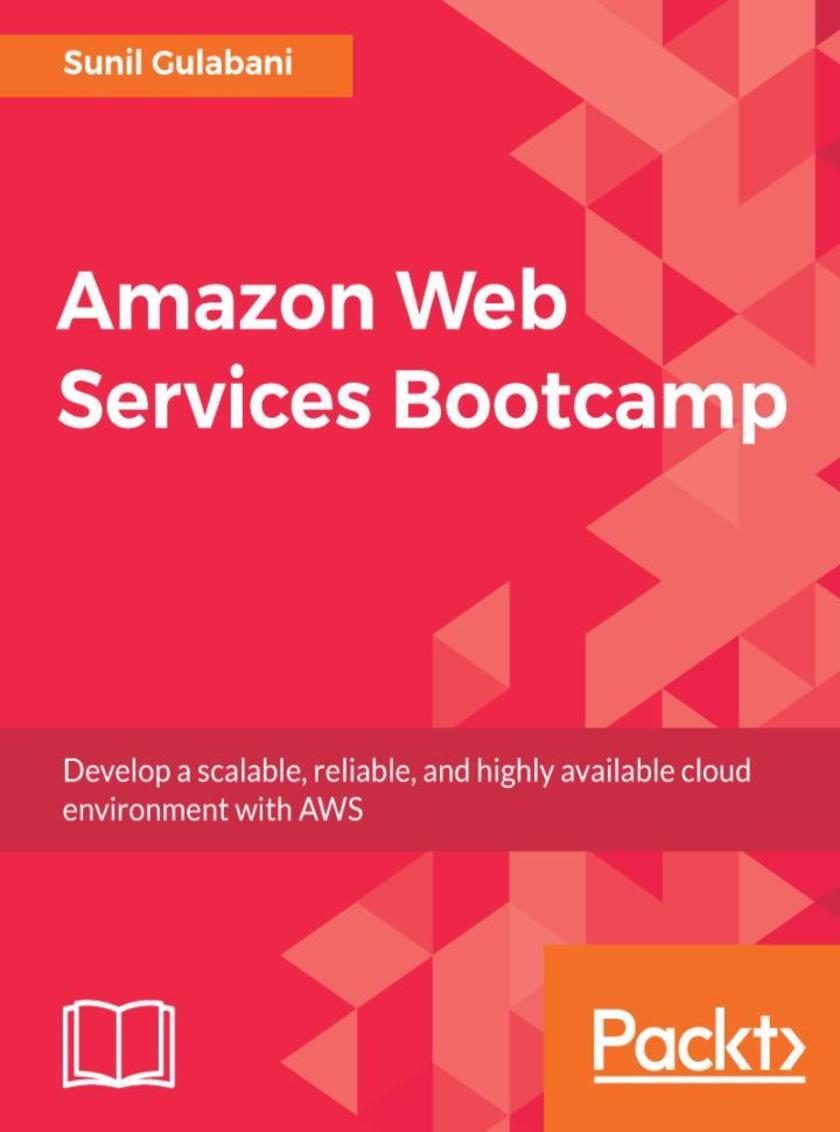
Amazon Web Services Bootcamp
¥73.02
This fast-paced guide will quickly enhance your skills to develop a highly scalable Cloud environment About This Book ? Efficiently build a highly scalable and reliable cloud environment for your applications with AWS ? Leverage the various AWS components and services to build a secure, reliable, and robust environment to host your applications on ? This quick-start guide will quickly enhance your skills to develop highly scalable services Who This Book Is For This book is for IT professionals and system administrators looking to design, deploy, and manage your applications and services on the AWS cloud platform. It’s also ideal for developers looking to build highly scalable cloud-based services. A basic understanding of AWS would be beneficial. What You Will Learn ? Find out about IAM to access AWS services securely ? Explore EC2 (virtual server) and scale up/down your application based on heavy traffic ? Learn about unlimited data storage service S3 and host a static website within minutes ? Get to grips with Relational Databases and NoSQL databases under the AWS ecosystem ? Understand the caching mechanism ? Get to know about notifications service and monitor AWS services ? Secure and troubleshoot your AWS architecture In Detail AWS is at the forefront of Cloud Computing today. Businesses are adopting AWS Cloud because of its reliability, versatility, and flexible design. The main focus of this book is teaching you how to build and manage highly reliable and scalable applications and services on AWS. It will provide you with all the necessary skills to design, deploy, and manage your applications and services on the AWS cloud platform. We’ll start by exploring Amazon S3, EC2, and so on to get you well-versed with core Amazon services. Moving on, we’ll teach you how to design and deploy highly scalable and optimized workloads. You’ll also discover easy-to-follow, hands-on steps, tips, and recommendations throughout the book and get to know essential security and troubleshooting concepts. By the end of the book, you’ll be able to create a highly secure, fault tolerant, and scalable environment for your applications to run on. Style and approach This book is all about fast and intensive learning. That means we don’t waste time helping you get started. The new features provided by AWS resources are being covered with highly-effective examples to develop new things, demonstrating different ways to create and use the AWS resources efficiently.
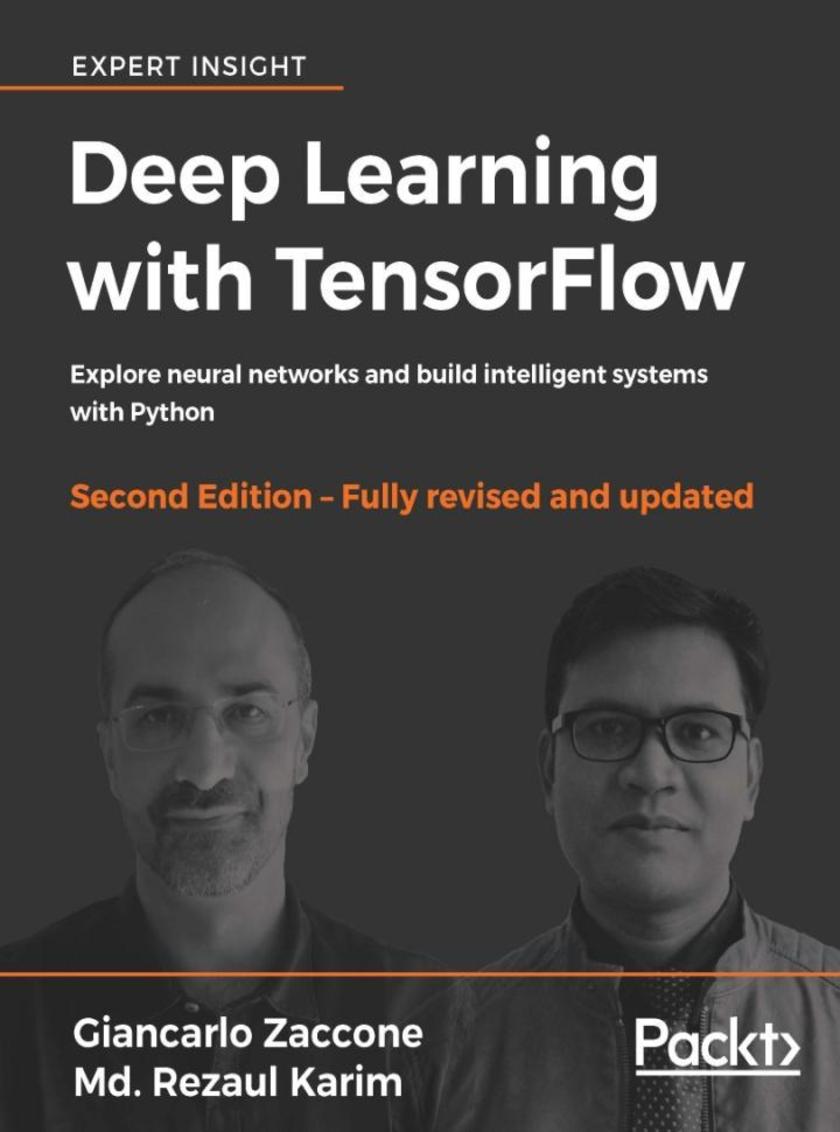
Deep Learning with TensorFlow - Second Edition
¥73.02
Delve into neural networks, implement deep learning algorithms, and explore layers of data abstraction with the help of TensorFlow v1.7. About This Book ? Learn how to implement advanced techniques in deep learning with Google's brainchild, TensorFlow v1.7 ? Explore deep neural networks and layers of data abstraction with the help of this comprehensive guide ? Gain real-world contextualization through some deep learning problems concerning research and application Who This Book Is For The book is for people interested in machine learning and machine intelligence. A rudimentary level of programming in one language is assumed, as is a basic familiarity with computer science techniques and technologies, including a basic awareness of computer hardware and algorithms. Some competence in mathematics is needed to the level of elementary linear algebra and calculus. What You Will Learn ? Apply deep machine intelligence and GPU computing with TensorFlow v1.7 ? Access public datasets and use TensorFlow to load, process, and transform the data ? Discover how to use the high-level TensorFlow API to build more powerful applications ? Use deep learning for scalable object detection and mobile computing ? Train machines quickly to learn from data by exploring reinforcement learning techniques ? Explore active areas of deep learning research and applications In Detail Deep learning is a branch of machine learning algorithms based on learning multiple levels of abstraction. Neural networks, which are at the core of deep learning, are being used in predictive analytics, computer vision, natural language processing, time series forecasting, and to perform a myriad of other complex tasks. This book is conceived for developers, data analysts, machine learning practitioners and deep learning enthusiasts who want to build powerful, robust, and accurate predictive models with the power of TensorFlow v1.7, combined with other open source Python libraries. Throughout the book, you’ll learn how to develop deep learning applications for machine learning systems using Feedforward Neural Networks, Convolutional Neural Networks, Recurrent Neural Networks, Autoencoders, and Factorization Machines. Discover how to attain deep learning programming on GPU in a distributed way. You'll come away with an in-depth knowledge of machine learning techniques and the skills to apply them to real-world projects. Style and approach This step-by-step guide explores common, and not so common, deep neural networks, and shows how they can be exploited in the real world with complex raw data. Benefit from practical examples, and learn how to implement different types of neural nets to build smart applications related to text, speech, and image data processing.
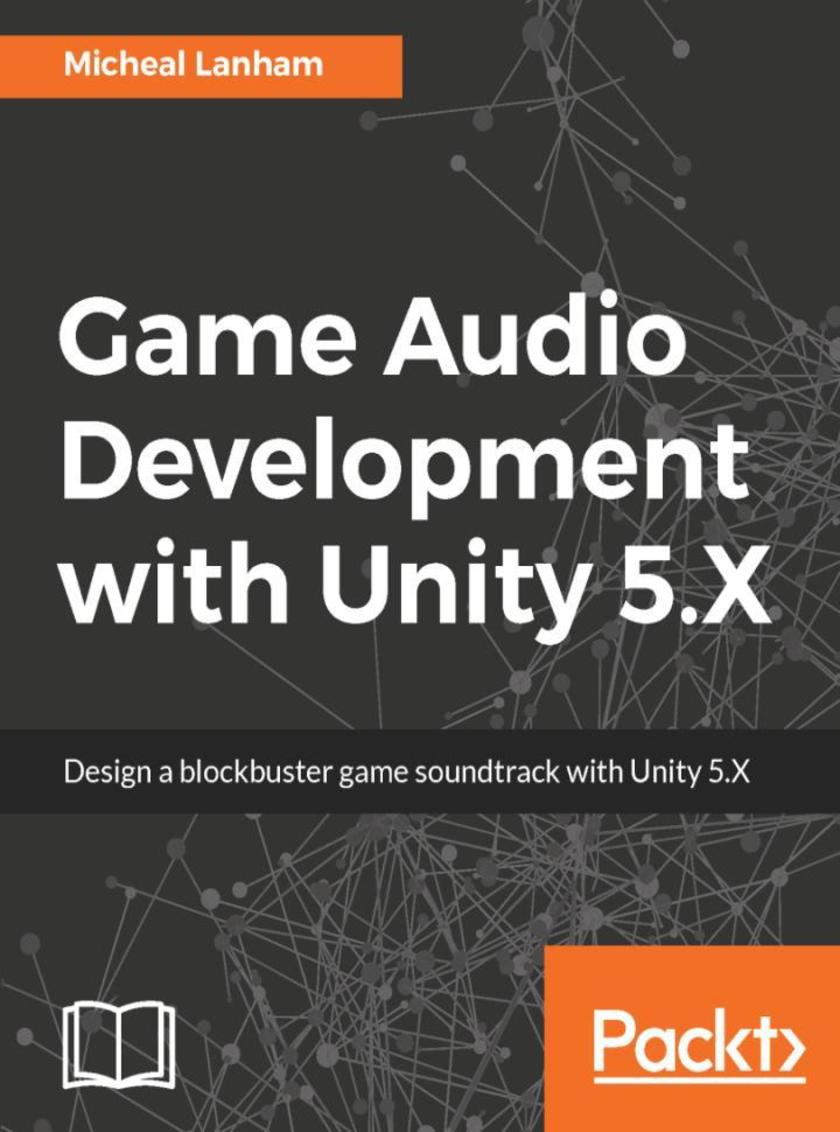
Game Audio Development with Unity 5.X
¥80.65
Create ‘AAA’ quality game audio with new features and tools built for Unity About This Book ? Explore the basics of audio development in Unity to create spatial sound, mixing, effects, composition, adaptive audio and more. ? Leverage the Audio Mixer of Unity 5.x to create blockbuster sound and music for your game. ? Learn about developing professional audio for games with FMOD Studio and composing original music with Reaper. ? Build amazing audio synchronized graphic visualizations with Unity. ? Understand how real-time character lip syncing can be implemented. Who This Book Is For The ideal target audience for this book will be game developers, both Indie as well as semi pro. No prior knowledge of Unity and audio development is assumed, What You Will Learn ? Develop game audio and other audio effects with Unity ? Getting familiar with the new Audio Mixer introduced in Unity 5 ? Implement dynamic and adaptive audio using various tools and strategies ? Explore interesting ways to incorporate audio into a game with sound visualization ? Use 3rd party professional audio development tools like FMOD ? Compose original music and record vocals ? Understand and troubleshoot audio performance issues In Detail Game Audio is one of the key components in making a game successful and it is quite popular in the gaming industry. So if you are a game developer with an eye on capturing the gamer market then this book is the right solution for you. In this book, we will take you through a step by step journey which will teach you to implement original and engaging soundtracks and SFX with Unity 5.x. You will be firstly introduced to the basics of game audio and sound development in Unity. After going through the core topics of audio development: audio sources, spatial sound, mixing, effects, and more; you will then have the option of delving deeper into more advanced topics like dynamic and adaptive audio. You will also learn to develop dynamic and adaptive audio using the Unity Audio Mixer. Further, you will learn how professional third party tools like FMOD are used for audio development in Unity. You will then go through the creation of sound visualization techniques and creating your own original music using the simple yet powerful audio workstation Reaper. Lastly, you will go through tips, techniques and strategies to help you optimize game audio performance or troubleshoot issues. At the end of the book, you’ll have gained the skills to implement professional sound and music. Along with a good base knowledge audio and music principles you can apply across a range of other game development tools. Style and approach This book will have a step by step practical approach where downloadable free games will be given with the book and readers will be free to work with them.
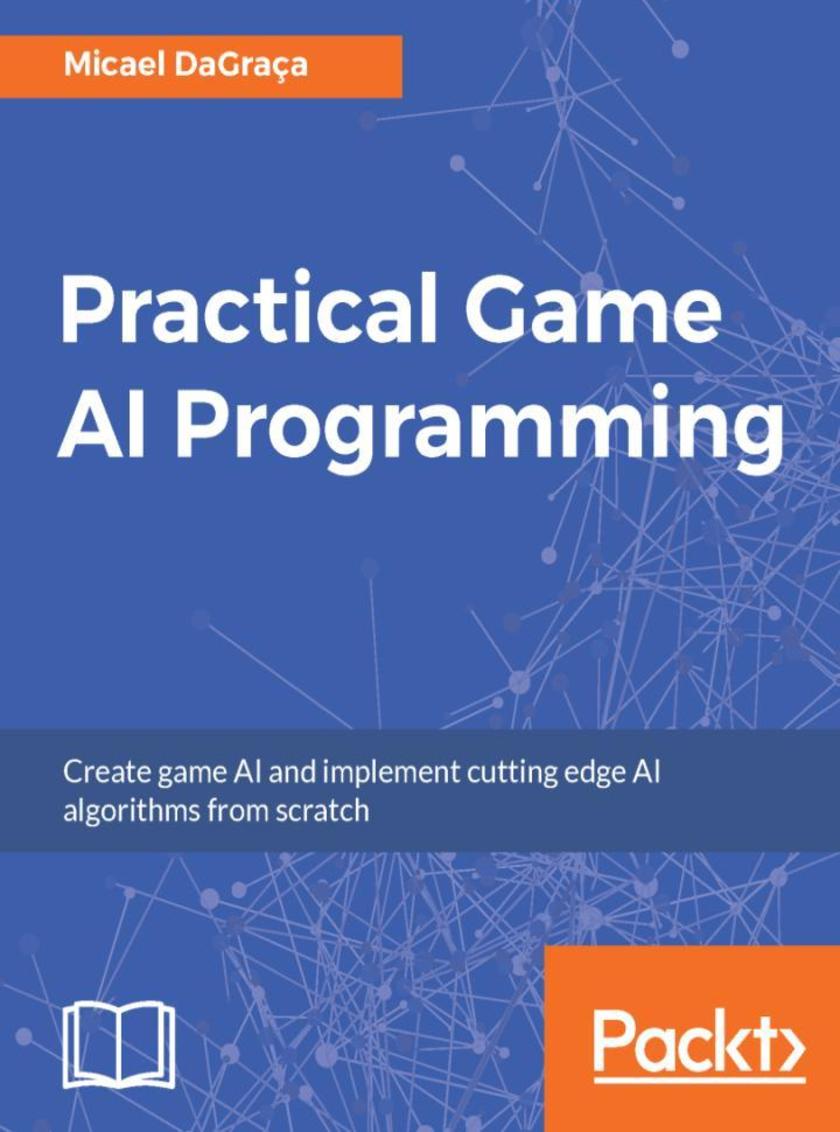
Practical Game AI Programming
¥90.46
Jump into the world of Game AI development About This Book ? Move beyond using libraries to create smart game AI, and create your own AI projects from scratch ? Implement the latest algorithms for AI development and in-game interaction ? Customize your existing game AI and make it better and more efficient to improve your overall game performance Who This Book Is For This book is for game developers with a basic knowledge of game development techniques and some basic programming techniques in C# or C++. What You Will Learn ? Get to know the basics of how to create different AI for different type of games ? Know what to do when something interferes with the AI choices and how the AI should behave if that happens ? Plan the interaction between the AI character and the environment using Smart Zones or Triggering Events ? Use animations correctly, blending one animation into another and rather than stopping one animation and starting another ? Calculate the best options for the AI to move using Pruning Strategies, Wall Distances, Map Preprocess Implementation, and Forced Neighbours ? Create Theta algorithms to the AI to find short and realistic looking paths ? Add many characters into the same scene and make them behave like a realistic crowd In Detail The book starts with the basics examples of AI for different game genres and directly jumps into defining the probabilities and possibilities of the AI character to determine character movement. Next, you’ll learn how AI characters should behave within the environment created. Moving on, you’ll explore how to work with animations. You’ll also plan and create pruning strategies, and create Theta algorithms to find short and realistic looking game paths. Next, you’ll learn how the AI should behave when there is a lot of characters in the same scene. You'll explore which methods and algorithms, such as possibility maps, Forward Chaining Plan, Rete Algorithm, Pruning Strategies, Wall Distances, and Map Preprocess Implementation should be used on different occasions. You’ll discover how to overcome some limitations, and how to deliver a better experience to the player. By the end of the book, you think differently about AI. Style and approach The book has a step-by-step tutorial style approach. The algorithms are explained by implementing them in #.
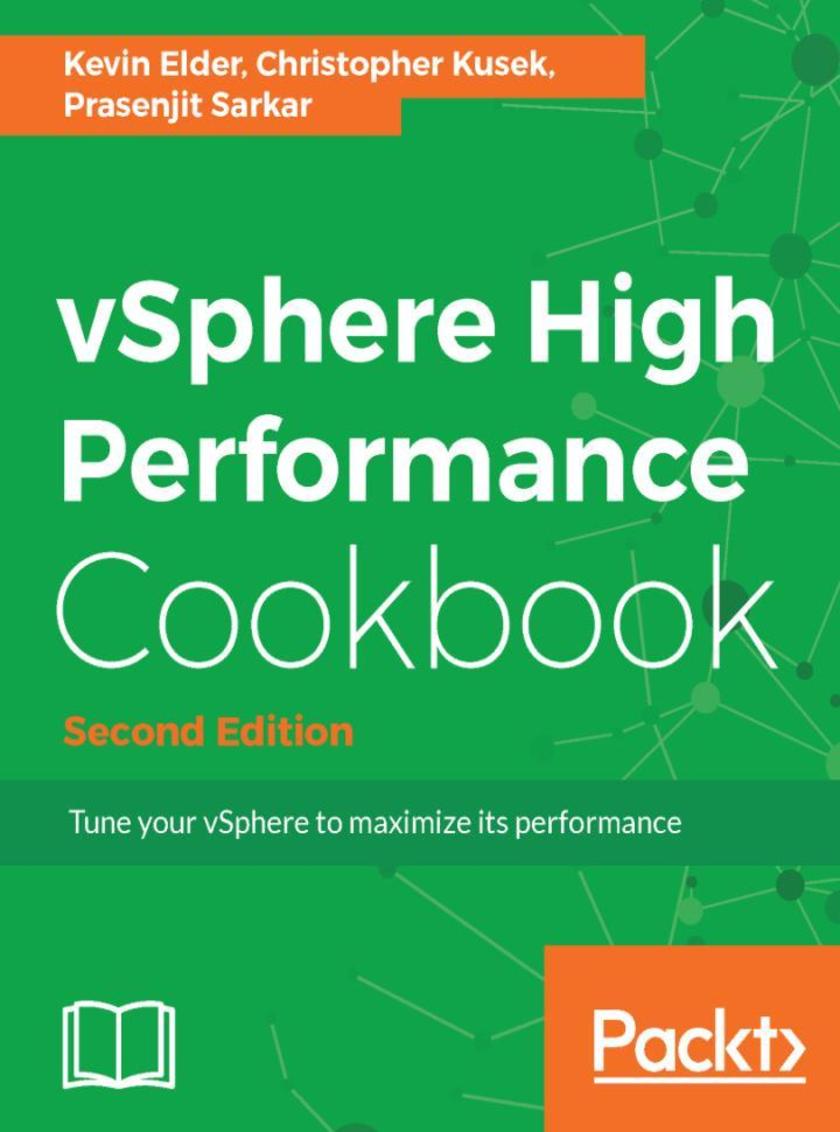
vSphere High Performance Cookbook - Second Edition
¥90.46
Over 80 recipes to help you improve vSphere 6.5's performance and solve problems before they arise About This Book ? The practical recipes provide cost-effective and high performance for any application running in a virtual machine ? Contains best practices and troubleshooting techniques to resolve vSphere 6.5 performance issues ? Get a comprehensive coverage of performance issues and solutions including vCenter Server design and virtual machine and application tuning Who This Book Is For If you are a system administrator and are planning to deploy vSphere 6.5 in your organization and want to maximize its performance, then this book is for you. Prior knowledge of the vSphere 6.5 concepts is essential. What You Will Learn ? Understand the VMM Scheduler, cache aware CPU Scheduler, NUMA aware CPU Scheduler, and more during the CPU Performance Design phase ? Get to know the virtual memory reclamation technique, host ballooning monitoring, and swapping activity ? Choose the right platform while designing your vCenter Server, redundant vCenter design, and vCenter SSO and its deployment ? Learn how to use various performance simulation tools ? Design VCSA Server Certificates to minimize security threats ? Use health check tools for storage and boost vSphere 6.5's performance with VAAI and VASA In Detail vSphere is a mission-critical piece of software for many businesses. It is a complex tool, and incorrect design and deployment can create performance related issues that can negatively affect the business. This book is focused on solving these problems as well as providing best practices and performance-enhancing techniques. This edition is fully updated to include all the new features in version 6.5 as well as the latest tools and techniques to keep vSphere performing at its best. This book starts with interesting recipes, such as the interaction of vSphere 6.5 components with physical layers such as CPU, memory, and networking. Then we focus on DRS, resource control design, and vSphere cluster design. Next, you'll learn about storage performance design and how it works with VMware vSphere 6.5. Moving on, you will learn about the two types of vCenter installation and the benefits of each. Lastly, the book covers performance tools that help you get the most out of your vSphere installation. By the end of this book, you will be able to identify, diagnose, and troubleshoot operational faults and critical performance issues in vSphere 6.5. Style and approach This cookbook is written in a practical, helpful style with numerous recipes focusing on answering and providing solutions to common and not-so-common performance issues and problems.
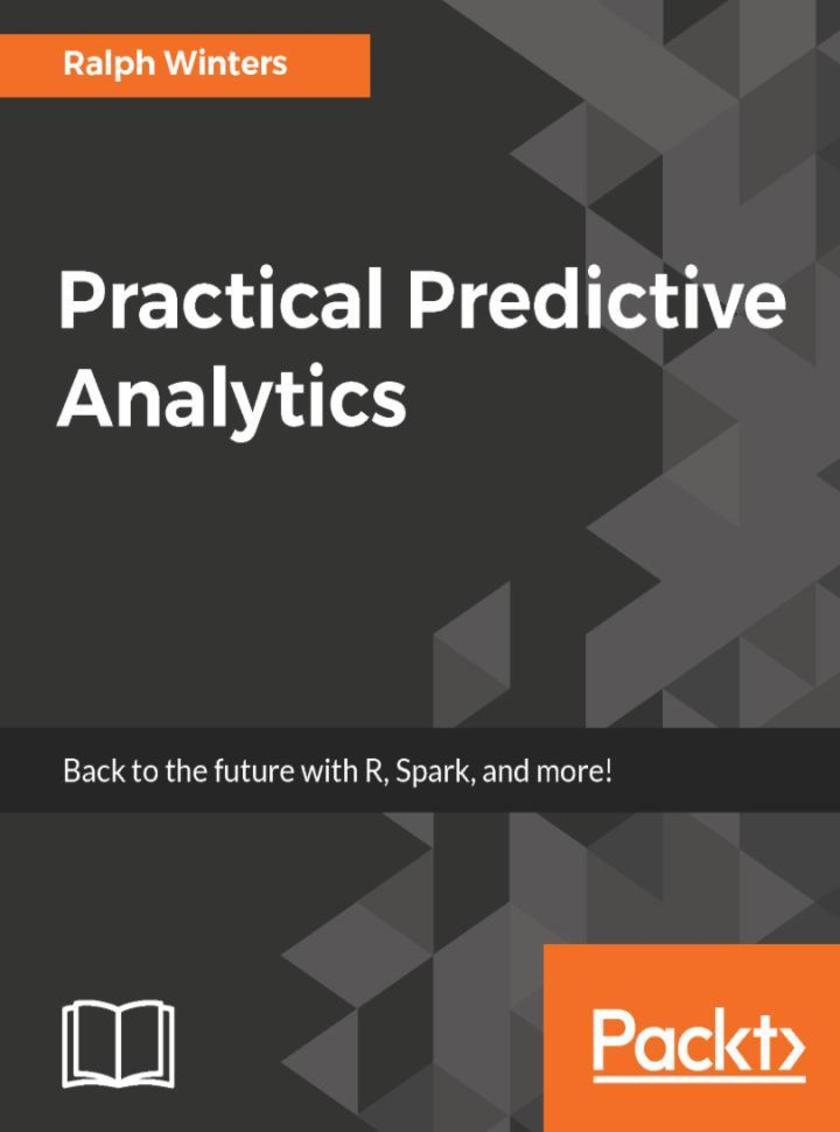
Practical Predictive Analytics
¥90.46
Make sense of your data and predict the unpredictable About This Book ? A unique book that centers around develop six key practical skills needed to develop and implement predictive analytics ? Apply the principles and techniques of predictive analytics to effectively interpret big data ? Solve real-world analytical problems with the help of practical case studies and real-world scenarios taken from the world of healthcare, marketing, and other business domains Who This Book Is For This book is for those with a mathematical/statistics background who wish to understand the concepts, techniques, and implementation of predictive analytics to resolve complex analytical issues. Basic familiarity with a programming language of R is expected. What You Will Learn ? Master the core predictive analytics algorithm which are used today in business ? Learn to implement the six steps for a successful analytics project ? Classify the right algorithm for your requirements ? Use and apply predictive analytics to research problems in healthcare ? Implement predictive analytics to retain and acquire your customers ? Use text mining to understand unstructured data ? Develop models on your own PC or in Spark/Hadoop environments ? Implement predictive analytics products for customers In Detail This is the go-to book for anyone interested in the steps needed to develop predictive analytics solutions with examples from the world of marketing, healthcare, and retail. We'll get started with a brief history of predictive analytics and learn about different roles and functions people play within a predictive analytics project. Then, we will learn about various ways of installing R along with their pros and cons, combined with a step-by-step installation of RStudio, and a de*ion of the best practices for organizing your projects. On completing the installation, we will begin to acquire the skills necessary to input, clean, and prepare your data for modeling. We will learn the six specific steps needed to implement and successfully deploy a predictive model starting from asking the right questions through model development and ending with deploying your predictive model into production. We will learn why collaboration is important and how agile iterative modeling cycles can increase your chances of developing and deploying the best successful model. We will continue your journey in the cloud by extending your skill set by learning about Databricks and SparkR, which allow you to develop predictive models on vast gigabytes of data. Style and Approach This book takes a practical hands-on approach wherein the algorithms will be explained with the help of real-world use cases. It is written in a well-researched academic style which is a great mix of theoretical and practical information. Code examples are supplied for both theoretical concepts as well as for the case studies. Key references and summaries will be provided at the end of each chapter so that you can explore those topics on their own.
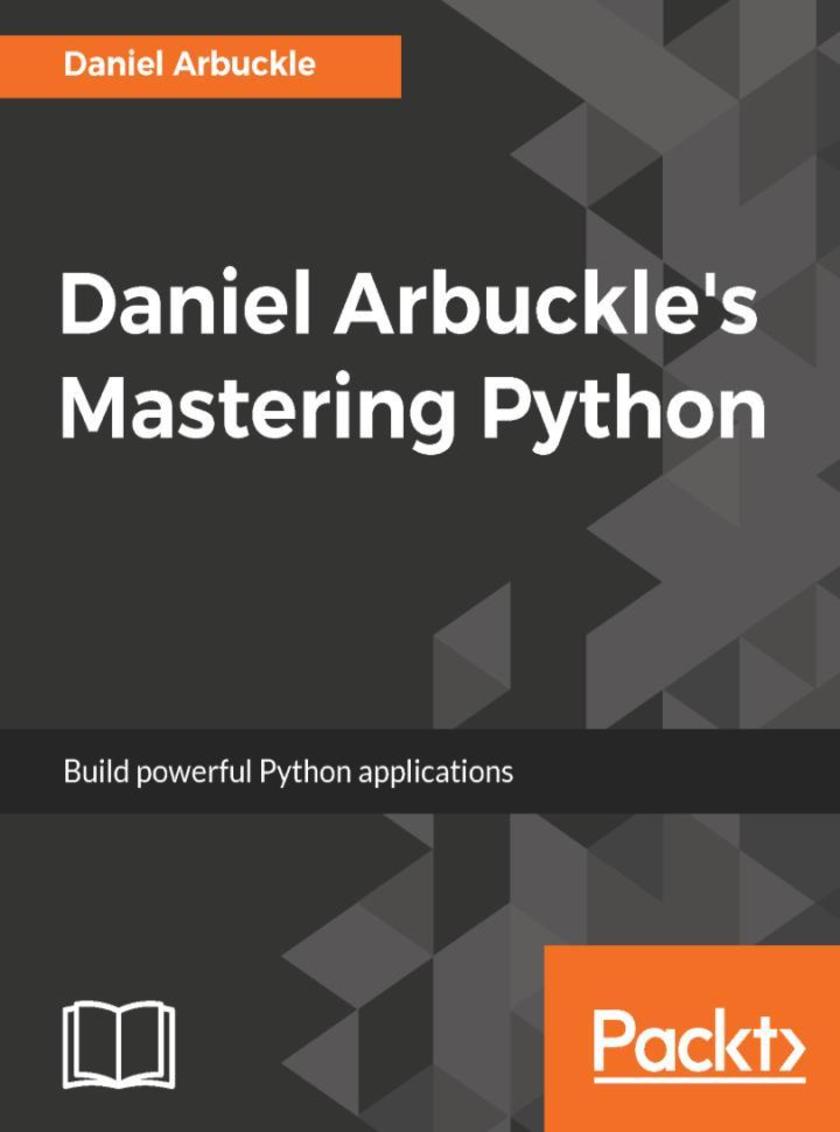
Daniel Arbuckle’s Mastering Python
¥71.93
Gain a thorough understanding of operating in a Python development environment, and some of the most important advanced topics with Daniel Arbuckle. This dynamic, concise book is full of real-world solutions for Python 3.6 problems, and advanced-level concepts such as reactive programming, microservices, ctypes and Cython. About This Book ? Covers the latest and advanced concepts of Python such as parallel processing with Python 3.6 ? Explore the Python language from its basic installation and setup to concepts such as reactive programming and microservices ? Get introduced to the mechanism for rewriting code in a compiled language along with ctypes and Cython tools Who This Book Is For If you are a programmer and are familiar with the basics of Python, and you want to broaden your knowledge base to develop projects better and faster, this book is for you. Even if you are not familiar with Python, Daniel Arbuckle's Mastering Python starts with the basics and takes you on a journey to become an expert in the technology. What You Will Learn ? Get to grips with the basics of operating in a Python development environment ? Build Python packages to efficiently create reusable code ? Become proficient at creating tools and utility programs in Python ? Use the Git version control system to protect your development environment from unwanted changes ? Harness the power of Python to automate other software ? Distribute computational tasks across multiple processors ? Handle high I/O loads with asynchronous I/O to get a smoother performance ? Take advantage of Python's metaprogramming and programmable syntax features ? Get acquainted with the concepts behind reactive programming and RxPy In Detail Daniel Arbuckle's Mastering Python covers the basics of operating in a Python development environment, before moving on to more advanced topics. Daniel presents you with real-world solutions to Python 3.6 and advanced-level concepts, such as reactive programming, microservices, ctypes, and Cython tools. You don't need to be familiar with the Python language to use this book, as Daniel starts with a Python primer. Throughout, Daniel highlights the major aspects of managing your Python development environment, shows you how to handle parallel computation, and helps you to master asynchronous I/O with Python 3.6 to improve performance. Finally, Daniel will teach you the secrets of metaprogramming and unit testing in Python, helping you acquire the perfect skillset to be a Python expert. Daniel will get you up to speed on everything from basic programming practices to high-end tools and techniques, things that will help set you apart as a successful Python programmer. Style and Approach Daniel Arbuckle's Mastering Python covers basic to advanced-level concepts in computer science. If you are a beginner, then Daniel will help you get started. If you are experienced, he will expand your knowledge base.
Learning Elasticsearch
¥90.46
Store, search, and analyze your data with ease using Elasticsearch 5.x About This Book ? Get to grips with the basics of Elasticsearch concepts and its APIs, and use them to create efficient applications ? Create large-scale Elasticsearch clusters and perform analytics using aggregation ? This comprehensive guide will get you up and running with Elasticsearch 5.x in no time Who This Book Is For If you want to build efficient search and analytics applications using Elasticsearch, this book is for you. It will also benefit developers who have worked with Lucene or Solr before and now want to work with Elasticsearch. No previous knowledge of Elasticsearch is expected. What You Will Learn ? See how to set up and configure Elasticsearch and Kibana ? Know how to ingest structured and unstructured data using Elasticsearch ? Understand how a search engine works and the concepts of relevance and scoring ? Find out how to query Elasticsearch with a high degree of performance and scalability ? Improve the user experience by using autocomplete, geolocation queries, and much more ? See how to slice and dice your data using Elasticsearch aggregations. ? Grasp how to use Kibana to explore and visualize your data ? Know how to host on Elastic Cloud and how to use the latest X-Pack features such as Graph and Alerting In Detail Elasticsearch is a modern, fast, distributed, scalable, fault tolerant, and open source search and analytics engine. You can use Elasticsearch for small or large applications with billions of documents. It is built to scale horizontally and can handle both structured and unstructured data. Packed with easy-to- follow examples, this book will ensure you will have a firm understanding of the basics of Elasticsearch and know how to utilize its capabilities efficiently. You will install and set up Elasticsearch and Kibana, and handle documents using the Distributed Document Store. You will see how to query, search, and index your data, and perform aggregation-based analytics with ease. You will see how to use Kibana to explore and visualize your data. Further on, you will learn to handle document relationships, work with geospatial data, and much more, with this easy-to-follow guide. Finally, you will see how you can set up and scale your Elasticsearch clusters in production environments. Style and approach This comprehensive guide will get you started with Elasticsearch 5.x, so you build a solid understanding of the basics. Every topic is explained in depth and is supplemented with practical examples to enhance your understanding.


