万本电子书0元读

万本电子书0元读

Building a Pentesting Lab for Wireless Networks
Vyacheslav Fadyushin
¥80.65
Build your own secure enterprise or home penetration testing lab to dig into the various hacking techniques About This Book Design and build an extendable penetration testing lab with wireless access suitable for home and enterprise use Fill the lab with various components and customize them according to your own needs and skill level Secure your lab from unauthorized access and external attacks Who This Book Is For If you are a beginner or a security professional who wishes to learn to build a home or enterprise lab environment where you can safely practice penetration testing techniques and improve your hacking skills, then this book is for you. No prior penetration testing experience is required, as the lab environment is suitable for various skill levels and is used for a wide range of techniques from basic to advance. Whether you are brand new to online learning or you are a seasoned expert, you will be able to set up your own hacking playground depending on your tasks. What You Will Learn Determine your needs and choose the appropriate lab components for them Build a virtual or hardware lab network Imitate an enterprise network and prepare intentionally vulnerable software and services Secure wired and wireless access to your lab Choose a penetration testing framework according to your needs Arm your own wireless hacking platform Get to know the methods to create a strong defense mechanism for your system In Detail Starting with the basics of wireless networking and its associated risks, we will guide you through the stages of creating a penetration testing lab with wireless access and preparing your wireless penetration testing machine. This book will guide you through configuring hardware and virtual network devices, filling the lab network with applications and security solutions, and making it look and work like a real enterprise network. The resulting lab protected with WPA-Enterprise will let you practice most of the attack techniques used in penetration testing projects. Along with a review of penetration testing frameworks, this book is also a detailed manual on preparing a platform for wireless penetration testing. By the end of this book, you will be at the point when you can practice, and research without worrying about your lab environment for every task. Style and approach This is an easy-to-follow guide full of hands-on examples and recipes. Each topic is explained thoroughly and supplies you with the necessary configuration settings. You can pick the recipes you want to follow depending on the task you need to perform.
Learning Grunt
Learning Grunt
Douglas Reynolds
¥54.49
Monitor and automate complex JavaScript tasks and processes by obtaining a practical understanding of Grunt About This Book Gain a solid knowledge of Grunt to achieve better process management by improving consistency, productivity, reliability, and quality of code Install, configure, and use plugins into your project with this hands-on guide This step-by-step tutorial will walk you through practical examples of workflow automation Who This Book Is For If you are a JavaScript developer and want to learn project monitoring and automation using Grunt, then this book is for you. Basic knowledge of Node.js and Angular.js is assumed. However, no previous experience using Grunt.js is required. What You Will Learn Install and configure Grunt and its dependencies such as Node.js and Node Package Manager (NPM) Create a sample application using Angular.JS Configure plugins to perform various tasks that will benefit your project Explore the task-specific methods available through the Grunt API such as configuration, externals, events, and logging Set up tasks to automate the build process of the simple contact application Build, test, and refine a sample project Get general tips, tricks, and troubleshooting strategies to identify and solve common issues in Grunt Advance your knowledge of Grunt with concepts such as configuration variables and test automation In Detail With the increasing focus on task automation, the Grunt task runner is a vast platform that allows you to incorporate automation into your workflows. At the outset, you will learn how to use Node.js and NMP through an example. You will then find out how to build a sample app and the development environment for it. You will further delve into the implementation of Grunt plugins and the configuration of Grunt tasks. Furthermore, you will explore the various methods and packages for workflow automation. The final chapter will cover some advanced concepts, such as configuration variables and how to create a Grunt plugin. By the end of the book, you will have gained the fundamentals of Grunt and progressed through advanced concepts, including building a Grunt plugin. Style and approach This book is an easy-to-follow, step-by-step tutorial that provides explanations and examples of deploying Grunt from scratch.
Hadoop Real-World Solutions Cookbook - Second Edition
Tanmay Deshpande
¥99.18
Over 90 hands-on recipes to help you learn and master the intricacies of Apache Hadoop 2.X, YARN, Hive, Pig, Oozie, Flume, Sqoop, Apache Spark, and Mahout About This Book Implement outstanding Machine Learning use cases on your own analytics models and processes. Solutions to common problems when working with the Hadoop ecosystem. Step-by-step implementation of end-to-end big data use cases. Who This Book Is For Readers who have a basic knowledge of big data systems and want to advance their knowledge with hands-on recipes. What You Will Learn Installing and maintaining Hadoop 2.X cluster and its ecosystem. Write advanced Map Reduce programs and understand design patterns. Advanced Data Analysis using the Hive, Pig, and Map Reduce programs. Import and export data from various sources using Sqoop and Flume. Data storage in various file formats such as Text, Sequential, Parquet, ORC, and RC Files. Machine learning principles with libraries such as Mahout Batch and Stream data processing using Apache Spark In Detail Big data is the current requirement. Most organizations produce huge amount of data every day. With the arrival of Hadoop-like tools, it has become easier for everyone to solve big data problems with great efficiency and at minimal cost. Grasping Machine Learning techniques will help you greatly in building predictive models and using this data to make the right decisions for your organization. Hadoop Real World Solutions Cookbook gives readers insights into learning and mastering big data via recipes. The book not only clarifies most big data tools in the market but also provides best practices for using them. The book provides recipes that are based on the latest versions of Apache Hadoop 2.X, YARN, Hive, Pig, Sqoop, Flume, Apache Spark, Mahout and many more such ecosystem tools. This real-world-solution cookbook is packed with handy recipes you can apply to your own everyday issues. Each chapter provides in-depth recipes that can be referenced easily. This book provides detailed practices on the latest technologies such as YARN and Apache Spark. Readers will be able to consider themselves as big data experts on completion of this book. This guide is an invaluable tutorial if you are planning to implement a big data warehouse for your business. Style and approach An easy-to-follow guide that walks you through world of big data. Each tool in the Hadoop ecosystem is explained in detail and the recipes are placed in such a manner that readers can implement them sequentially. Plenty of reference links are provided for advanced reading.
Learning VMware App Volumes
Peter von Oven
¥107.90
Deliver applications to virtual desktop environments in seconds and at scale with the click of a button About This Book Learn how can you deliver a great user experience and drive down storage and management costs Discover hidden gems to deliver applications to virtual desktop environments in seconds This book will help you fully utilize the true potential of VMware App Volumes and design and build a complete production environment Who This Book Is For This book is for administrators and IT teams who would like to take full advantage of App Volumes to deal with application workloads. It will also be useful for virtualization professionals and teams who are working on VDI deployments and VMware end user computing solutions. What You Will Learn Find out how the VMware App Volumes solution can enhance the management and delivery of applications in your desktop environment Design a real-life App Volumes solution using best practices and following the recommended sizing guides Install, configure, and deploy App Volumes so it is ready to start delivering applications Create and prepare applications ready to be delivered to end users Discover how App Volumes can enhance other desktop solutions by looking at how it integrates with VMware Horizon View, VMware ThinApp, RDSH, and Citrix XenDesktop/XenApp Understand how to configure the advanced options within App Volumes In Detail App Volumes provides a virtualized, real-time application delivery engine for virtual desktop infrastructure and is designed to enable VDI deployments to ensure greater flexibility, agility, and cost reduction. This book starts with an in-depth overview of the architecture and components used to design an optimized solution. We then show you how to install and configure App Volumes for different use cases such as VMware View integration, using VMware ThinApp, Citrix XenApp, and more. Throughout the chapters, we provide hints, tips, and tricks as well as best practices. By the end of the book, you will have built a working App Volumes environment and acquired the skills to build and run a production environment. Style and approach This book comprises of the theoretical explanations that will help you perform a complete App Volumes deployment through step-by-step instructions
Android Application Development Cookbook - Second Edition
Rick Boyer
¥80.65
Over 100 recipes to help you solve the most common problems faced by Android Developers today About This Book Find the answers to your common Android programming problems, from set up to security, to help you deliver better applications, faster Uncover the latest features of Android Marshmallow to make your applications stand out Get up to speed with Android Studio 1.4 - the first Android Studio based on the IntelliJ IDE from JetBrains Who This Book Is For If you are new to Android development and want to take a hands-on approach to learning the framework, or if you are an experienced developer in need of clear working code to solve the many challenges in Android development, you can benefit from this book. Either way, this is a resource you’ll want to keep at your desk for a quick reference to solve new problems as you tackle more challenging projects. What You Will Learn Along with Marshmallow, get hands-on working with Google’s new Android Studio IDE Develop applications using the latest Android framework while maintaining backward-compatibility with the support library Master Android programming best practices from the recipes Create exciting and engaging applications using knowledge gained from recipes on graphics, animations, and multimedia Work through succinct steps on specifics that will help you complete your project faster Keep your app responsive (and prevent ANRs) with examples on the AsynchTask class Utilize Google Speech Recognition APIs for your app. Make use of Google Cloud Messaging (GCM) to create Push Notifications for your users Get a better understanding of the Android framework through detailed explanations In Detail The Android OS has the largest installation base of any operating system in the world; there has never been a better time to learn Android development to write your own applications, or to make your own contributions to the open source community! This “cookbook” will make it easy for you to jump to a topic of interest and get what you need to implement the feature in your own application. If you are new to Android and learn best by “doing,” then this book will provide many topics of interest. Starting with the basics of Android development, we move on to more advanced concepts, and we’ll guide you through common tasks developers struggle to solve. The first few chapters cover the basics including Activities, Layouts, Widgets, and the Menu. From there, we cover fragments and data storage (including SQLite), device sensors, the camera, and GPS. Then we move on more advanced topics such as graphics and animation (including OpenGL), multi-threading with AsyncTask, and Internet functionality with Volley. We’ll also demonstrate Google Maps and Google Cloud Messaging (also known as Push Notifications) using the Google API Library. Finally, we’ll take a look at several online services designed especially for Android development. Take your application big-time with full Internet web services without having to become a server admin by leveraging the power of Backend as a Service (BaaS) providers. Style and approach This book progresses from the fundamentals of Android Development to more advanced concepts, with recipes to solve the most common problems faced by developers. This cookbook makes it easy to jump to specific topics of interest, where you’ll find simple steps to implement the solution and get a clear explanation of how it works.
Unity 5.x Game AI Programming Cookbook
Jorge Palacios
¥80.65
Build and customize a wide range of powerful Unity AI systems with over 70 hands-on recipes and techniques About This Book Empower your agent with decision making capabilities using advanced minimaxing and Negamaxing techniques Discover how AI can be applied to a wide range of games to make them more interactive. Instigate vision and hearing abilities in your agent through collider based and graph based systems Who This Book Is For This book is intended for those who already have a basic knowledge of Unity and are eager to get more tools under their belt to solve AI and gameplay-related problems. What You Will Learn Use techniques such as A*and A*mbush to empower your agents with path finding capabilities. Create a representation of the world and make agents navigate it Construct decision-making systems to make the agents take different actions Make different agents coordinate actions and create the illusion of technical behavior Simulate senses and apply them in an awareness system Design and implement AI in board games such as Tic-Tac-Toe and Checkers Implement efficient prediction mechanism in your agents with algorithms such as N-Gram predictor and na?ve Bayes classifier Understand and analyze how the influence maps work. In Detail Unity 5 comes fully packaged with a toolbox of powerful features to help game and app developers create and implement powerful game AI. Leveraging these tools via Unity’s API or built-in features allows limitless possibilities when it comes to creating your game’s worlds and characters. This practical Cookbook covers both essential and niche techniques to help you be able to do that and more. This Cookbook is engineered as your one-stop reference to take your game AI programming to the next level. Get to grips with the essential building blocks of working with an agent, programming movement and navigation in a game environment, and improving your agent's decision making and coordination mechanisms - all through hands-on examples using easily customizable techniques. Discover how to emulate vision and hearing capabilities for your agent, for natural and humanlike AI behaviour, and improve them with the help of graphs. Empower your AI with decision-making functions through programming simple board games such as Tic-Tac-Toe and Checkers, and orchestrate agent coordination to get your AIs working together as one. Style and approach This recipe-based guide will take you through implementing various AI algorithms. Each topic is explained and placed among other related techniques, sometimes building on the knowledge from previous chapters. There are also references to more technical books and papers, so you can dig deeper if you want to.
Mastering .NET Machine Learning
Jamie Dixon
¥99.18
Master the art of machine learning with .NET and gain insight into real-world applications About This Book Based on .NET framework 4.6.1, includes examples on ASP.NET Core 1.0 Set up your business application to start using machine learning techniques Familiarize the user with some of the more common .NET libraries for machine learning Implement several common machine learning techniques Evaluate, optimize and adjust machine learning models Who This Book Is For This book is targeted at .Net developers who want to build complex machine learning systems. Some basic understanding of data science is required. What You Will Learn Write your own machine learning applications and experiments using the latest .NET framework, including .NET Core 1.0 Set up your business application to start using machine learning. Accurately predict the future using regressions. Discover hidden patterns using decision trees. Acquire, prepare, and combine datasets to drive insights. Optimize business throughput using Bayes Classifier. Discover (more) hidden patterns using KNN and Na?ve Bayes. Discover (even more) hidden patterns using K-Means and PCA. Use Neural Networks to improve business decision making while using the latest ASP.NET technologies. Explore “Big Data”, distributed computing, and how to deploy machine learning models to IoT devices – making machines self-learning and adapting Along the way, learn about Open Data, Bing maps, and MBrace In Detail .Net is one of the widely used platforms for developing applications. With the meteoric rise of Machine learning, developers are now keen on finding out how can they make their .Net applications smarter. Also, .NET developers are interested into moving into the world of devices and how to apply machine learning techniques to, well, machines. This book is packed with real-world examples to easily use machine learning techniques in your business applications. You will begin with introduction to F# and prepare yourselves for machine learning using .NET framework. You will be writing a simple linear regression model using an example which predicts sales of a product. Forming a base with the regression model, you will start using machine learning libraries available in .NET framework such as Math.NET, Numl.NET and Accord.NET with the help of a sample application. You will then move on to writing multiple linear regressions and logistic regressions. You will learn what is open data and the awesomeness of type providers. Next, you are going to address some of the issues that we have been glossing over so far and take a deep dive into obtaining, cleaning, and organizing our data. You will compare the utility of building a KNN and Naive Bayes model to achieve best possible results. Implementation of Kmeans and PCA using Accord.NET and Numl.NET libraries is covered with the help of an example application. We will then look at many of issues confronting creating real-world machine learning models like overfitting and how to combat them using confusion matrixes, scaling, normalization, and feature selection. You will now enter into the world of Neural Networks and move your line of business application to a hybrid scientific application. After you have covered all the above machine learning models, you will see how to deal with very large datasets using MBrace and how to deploy machine learning models to Internet of Thing (IoT) devices so that the machine can learn and adapt on the fly. Style and approach This book will guide you in learning everything about how to tackle the flood of data being encountered these days in your .NET applications with the help of popular machine learning libraries offered by the .NET framework.
VMware Performance and Capacity Management - Second Edition
Iwan 'e1' Rahabok
¥107.90
Master SDDC Operations with proven best practices About This Book Understand the drawbacks of the traditional paradigm and management that make operations difficult in SDDC Master performance and capacity management in Software-Defined Data Center Operationalize performance and capacity monitoring with proven dashboards Who This Book Is For This book is primarily for any system administrator or cloud infrastructure specialist who is interested in performance management and capacity management using VMware technologies. This book will also help IT professionals whose area of responsibility is not VMware, but who work with the VMware team. You can be Windows, Linux, Storage, or Network team; or application architects. Note that prior exposure to the VMware platform of data-center and cloud-based solutions is expected. What You Will Learn Simplify the task of performance and capacity management Master the counters in vCenter and vRealize Operations and understand their dependency on one another Educate your peers and management on SDDC Operations Complete your SDDC monitoring to include non-VMware components Perform SDDC performance troubleshooting Explore real-life examples of how super metric and advanced dashboards Introduce and implement a Performance SLA Accomplish your Capacity Management by taking into service tiering and performance SLA In Detail Performance management and capacity management are the two top-most issues faced by enterprise IT when doing virtualization. Until the first edition of the book, there was no in-depth coverage on the topic to tackle the issues systematically. The second edition expands the first edition, with added information and reorganizing the book into three logical parts. The first part provides the technical foundation of SDDC Management. It explains the difference between a software-defined data center and a classic physical data center, and how it impacts both architecture and operations. From this strategic view, it zooms into the most common challenges—performance management and capacity management. It introduces a new concept called Performance SLA and also a new way of doing capacity management. The next part provides the actual solution that you can implement in your environment. It puts the theories together and provides real-life examples created together with customers. It provides the reasons behind each dashboard, so that you get the understanding on why it is required and what problem it solves. The last part acts as a reference section. It provides a complete reference to vSphere and vRealize Operations counters, explaining their dependencies and providing practical guidance on the values you should expect in a healthy environment. Style and approach This book covers the complex topic of managing performance and capacity in an easy-to-follow style. It relates real-world scenarios to topics in order to help you implement the book’s teachings on the go.
Mastering RabbitMQ
Mastering RabbitMQ
Emrah Ayanoglu
¥99.18
Master the art of developing message-based applications with RabbitMQAbout This BookLearn how to administer, manage, and extend your own message broker, RabbitMQDevelop clients to make a message bridge between your software systems using RabbitMQDiscover how to achieve proficiency with RabbitMQ with the well-defined de*ions of the topicsWho This Book Is ForIf you are an intermediate-level RabbitMQ developer, who wants to achieve professional-level expertise in the subject, this book is for you. You’ll also need to have a decent understanding of message queuing.What You Will LearnAdminister RabbitMQ using different toolsUnderstand the roots and details of messaging, message brokers, and AMQP protocolScale the RabbitMQ server using the clusters and high availability techniquesExtend RabbitMQ by developing the Erlang OTP-based applications that use the RabbitMQ APIManage the RabbitMQ server using its powerful toolsMonitor the RabbitMQ Server using different open source tools such as Nagios, Munin, and ZabbixEnsure your RabbitMQ’s security using SSL, SASL, and access controlDevelop RabbitMQ clients using Java, Python, and C# with an industry exampleIn DetailRabbitMQ is one of the most powerful Open Source message broker software, which is widely used in tech companies such as Mozilla, VMware, Google, AT&T, and so on. RabbitMQ gives you lots of fantastic and easy-to-manage functionalities to control and manage the messaging facility with lots of community support. As scalability is one of our major modern problems, messaging with RabbitMQ is the main part of the solution to this problem.This book explains and demonstrates the RabbitMQ server in a detailed way. It provides you with lots of real-world examples and advanced solutions to tackle the scalability issues.You’ll begin your journey with the installation and configuration of the RabbitMQ server, while also being given specific details pertaining to the subject. Next, you’ll study the major problems that our server faces, including scalability and high availability, and try to get the solutions for both of these issues by using the RabbitMQ mechanisms. Following on from this, you’ll get to design and develop your own plugins using the Erlang language and RabbitMQ’s internal API. This knowledge will help you to start with the management and monitoring of the messages, tools, and applications. You’ll also gain an understanding of the security and integrity of the messaging facilities that RabbitMQ provides. In the last few chapters, you will build and keep track of your clients (senders and receivers) using Java, Python, and C#.Style and approach An easy-to-follow guide, full of hands-on examples based around managing, monitoring, extending, and securing RabbitMQ and its internal tools. You will learn how to develop your own clients using Java, Python, and C#.
Learning Elixir
Learning Elixir
Kenny Ballou
¥63.21
Unveil many hidden gems of programming functionally by taking the foundational steps with ElixirAbout This BookExplore the functional paradigms of programming with Elixir through use of helpful examplesConcise step-by-step instructions to teach you difficult technical conceptsBridge the gap between functional programming and ElixirWho This Book Is ForThis book targets developers new to Elixir, as well as Erlang, in order to make them feel comfortable in functional programming with Elixir, thus enabling them to develop more scalable and fault-tolerant applications.Although no knowledge of Elixir is assumed, some programming experience with mainstream Object-Oriented programming languages such a Ruby, Python, Java, C# would be beneficial.What You Will LearnExplore Elixir to create resilient, scalable applicationsCreate fault-tolerant applicationsBecome better acquainted with Elixir code and see how it is structured to build and develop functional programsLearn the basics of functional programmingGain an understanding of effective OTP principlesDesign program-distributed applications and systemsWrite and create branching statements in ElixirLearn to do more with less using Elixir's metaprogrammingBe familiar with the facilities Elixir provides for metaprogramming, macros, and extending the Elixir languageIn DetailElixir, based on Erlang’s virtual machine and ecosystem, makes it easier to achieve scalability, concurrency, fault tolerance, and high availability goals that are pursued by developers using any programming language or programming paradigm. Elixir is a modern programming language that utilizes the benefits offered by Erlang VM without really incorporating the complex syntaxes of Erlang.Learning to program using Elixir will teach many things that are very beneficial to programming as a craft, even if at the end of the day, the programmer isn't using Elixir. This book will teach you concepts and principles important to any complex, scalable, and resilient application. Mostly, applications are historically difficult to reason about, but using the concepts in this book, they will become easy and enjoyable. It will teach you the functional programing ropes, to enable them to create better and more scalable applications, and you will explore how Elixir can help you achieve new programming heights. You will also glean a firm understanding of basics of OTP and the available generic, provided functionality for creating resilient complex systems. Furthermore, you will learn the basics of metaprogramming: modifying and extending Elixir to suite your needs.Style and approach An exploration of functional programming and Elixir with easy to follow examples using Elixir and the functional style. All the topics, concepts, and principles covered are clearly and concisely explained with either code examples or in depth discussions, or both!
R Data Science Essentials
Raja B. Koushik
¥63.21
Learn the essence of data science and visualization using R in no time at allAbout This BookBecome a pro at making stunning visualizations and dashboards quickly and without hassleFor better decision making in business, apply the R programming language with the help of useful statistical techniques.From seasoned authors comes a book that offers you a plethora of fast-paced techniques to detect and analyze data patternsWho This Book Is ForIf you are an aspiring data scientist or analyst who has a basic understanding of data science and has basic hands-on experience in R or any other analytics tool, then R Data Science Essentials is the book for you.What You Will LearnPerform data preprocessing and basic operations on dataImplement visual and non-visual implementation data exploration techniquesMine patterns from data using affinity and sequential analysisUse different clustering algorithms and visualize themImplement logistic and linear regression and find out how to evaluate and improve the performance of an algorithmExtract patterns through visualization and build a forecasting algorithmBuild a recommendation engine using different collaborative filtering algorithmsMake a stunning visualization and dashboard using ggplot and R shinyIn DetailWith organizations increasingly embedding data science across their enterprise and with management becoming more data-driven it is an urgent requirement for analysts and managers to understand the key concept of data science. The data science concepts discussed in this book will help you make key decisions and solve the complex problems you will inevitably face in this new world.R Data Science Essentials will introduce you to various important concepts in the field of data science using R. We start by reading data from multiple sources, then move on to processing the data, extracting hidden patterns, building predictive and forecasting models, building a recommendation engine, and communicating to the user through stunning visualizations and dashboards.By the end of this book, you will have an understanding of some very important techniques in data science, be able to implement them using R, understand and interpret the outcomes, and know how they helps businesses make a decision.Style and approachThis easy-to-follow guide contains hands-on examples of the concepts of data science using R.
Getting Started with Ionic
Rahat Khanna
¥54.49
Get up and running with developing effective Hybrid Mobile Apps with IonicAbout This BookDevelop engaging mobile experiences with a native-looking UI in Ionic and AngularJSBuild mobile applications with a native UI and interactions with device APIs using popular web technologies such as HTML, CSS, and JavaScriptCreate an e-commerce mobile app using tutorials and code samplesWho This Book Is ForThis book is ideal for any web developer who wants to enter into the world of mobile app development but has no clue where to start. Ionic is an ideal starting point and provides a smooth learning curve to help you build hybrid apps using web technologies and to develop native apps for iOS and Android, you do not need to know multiple languages. This book will also be useful for Hybrid App developers who have not found the perfect framework to ensure users get a rich experience from your apps.What You Will LearnGet to know about Hybrid Apps and AngularJSSet up a development environment to build Hybrid AppsNavigate around the components and routing in IonicUse different Ionic directives for a mobile-specific experienceIntegrate an Ionic App with backend web servicesWork with plugins to include native functionality in your hybrid appsTest your apps on real devicesBuild an e-commerce app for iOS and Android from scratchIn DetailHybrid Apps are a promising choice in mobile app development to achieve cost effectiveness and rapid development. However, they were not preferred over native apps until few years back due to a poor performance and bad user experience, but everything has changed with the release of Ionic. It has evolved as the most popular choice for Hybrid Mobile App development as it tends to match the native experience and provides robust components/tools to build apps.Getting Started with Ionic equips any web developer with the basic knowledge needed to use modern web technologies to build amazing hybrid mobile apps using Ionic.This fast-paced, practical book explains all the important concepts of AngularJS and Cordova Framework required to develop apps, then gives you a brief introduction to hybrid mobile applications. It will guide you through setting up the environment to develop mobile apps, and through the multiple options and features available in Ionic so you can use them in your mobile apps. Features such as the Side Menu, Tabs, Touch Interactions, and native features such as Bar Code, Camera, and Geolocations are all covered.. Finally, we’ll show you how to use Cordova plugins and publish your apps.Style and approachGetting started with Ionic is a compact, easy-to-follow guide to developing hybrid mobile apps using Ionic with real world examples of building an e-commerce app.
Ionic Framework By Example
Sani Yusuf
¥54.49
Build amazing cross-platform mobile apps with Ionic, the HTML5 framework that makes modern mobile application development simpleAbout This BookLearn how to use one of the most exciting mobile development frameworks around to build even better appsFollow the featured sample projects to experience Ionic’s impressive capabilitiesExtend your developer skillset to build, test, and launch mobile apps with confidenceWho This Book Is ForThis book is for anyone who wants to see Ionic in action - and find out how it could transform the way they build mobile apps. If you’re a JavaScript web developer, you’ll be building great projects in no time.What You Will LearnLearn Ionic by creating three complete mobile applicationsGet to know the Ionic CLIAdd basic and advanced features to the Ionic frameworkConnect an Ionic app with a Firebase back endIntegrate PhoneGap plugins with NG-CordovaTest your apps to improve and optimize performanceIn DetailChange doesn’t have to be challenging. Sometimes it can be simple – sometimes it just makes sense. With Ionic, mobile development has never been so simple, so elegant and obvious. By helping developers to harness AngularJS and HTML5 for mobile development, it’s the perfect framework for anyone obsessed with performance, and anyone that understands just how important a great user experience really is.This book shows you how to get started with Ionic framework immediately. But it doesn’t just give you instructions and then expect you to follow them. Instead it demonstrates what Ionic is capable of through three practical projects you can follow and build yourself.From a basic to-do list app, a London tourist app, to a complete social media app, all three projects have been designed to help you learn Ionic at its very best. From setting up your project to developing on both the server side and front end, and best practices for testing and debugging your projects, you’ll quickly become a better mobile developer, delivering high performance mobile apps that look awesome.Ionic Framework by Example is for people who don’t want to learn now, build later – it’s for people who want to learn and build at the same time – so they can meet today’s mobile development challenges head on and deliver better products than anyone else.Style and approachThis book isn’t just an instruction manual. It doesn’t just tell you what to do – it shows you. Featuring three sample projects, it’s been created so you can get started with Ionic immediately.
Scala for Data Science
Pascal Bugnion
¥99.18
Leverage the power of Scala with different tools to build scalable, robust data science applicationsAbout This BookA complete guide for scalable data science solutions, from data ingestion to data visualizationDeploy horizontally scalable data processing pipelines and take advantage of web frameworks to build engaging visualizationsBuild functional, type-safe routines to interact with relational and NoSQL databases with the help of tutorials and examples providedWho This Book Is ForIf you are a Scala developer or data scientist, or if you want to enter the field of data science, then this book will give you all the tools you need to implement data science solutions.What You Will LearnTransform and filter tabular data to extract features for machine learningImplement your own algorithms or take advantage of MLLib’s extensive suite of models to build distributed machine learning pipelinesRead, transform, and write data to both SQL and NoSQL databases in a functional mannerWrite robust routines to query web APIsRead data from web APIs such as the GitHub or Twitter APIUse Scala to interact with MongoDB, which offers high performance and helps to store large data sets with uncertain query requirementsCreate Scala web applications that couple with JavaScript libraries such as D3 to create compelling interactive visualizationsDeploy scalable parallel applications using Apache Spark, loading data from HDFS or HiveIn DetailScala is a multi-paradigm programming language (it supports both object-oriented and functional programming) and *ing language used to build applications for the JVM. Languages such as R, Python, Java, and so on are mostly used for data science. It is particularly good at analyzing large sets of data without any significant impact on performance and thus Scala is being adopted by many developers and data scientists. Data scientists might be aware that building applications that are truly scalable is hard. Scala, with its powerful functional libraries for interacting with databases and building scalable frameworks will give you the tools to construct robust data pipelines.This book will introduce you to the libraries for ingesting, storing, manipulating, processing, and visualizing data in Scala.Packed with real-world examples and interesting data sets, this book will teach you to ingest data from flat files and web APIs and store it in a SQL or NoSQL database. It will show you how to design scalable architectures to process and modelling your data, starting from simple concurrency constructs such as parallel collections and futures, through to actor systems and Apache Spark. As well as Scala’s emphasis on functional structures and immutability, you will learn how to use the right parallel construct for the job at hand, minimizing development time without compromising scalability. Finally, you will learn how to build beautiful interactive visualizations using web frameworks.This book gives tutorials on some of the most common Scala libraries for data science, allowing you to quickly get up to speed with building data science and data engineering solutions.Style and approachA tutorial with complete examples, this book will give you the tools to start building useful data engineering and data science solutions straightaway
Elasticsearch Essentials
Bharvi Dixit
¥71.93
Harness the power of ElasticSearch to build and manage scalable search and analytics solutions with this fast-paced guideAbout This BookNew to ElasticSearchHere’s what you need—a highly practical guide that gives you a quick start with ElasticSearch using easy-to-follow examples; get up and running with ElasticSearch APIs in no timeGet the latest guide on ElasticSearch 2.0.0, which contains concise and adequate information on handling all the issues a developer needs to know while handling data in bulk with search relevancyLearn to create large-scale ElasticSearch clusters using best practicesLearn from our experts—written by Bharvi Dixit who has extensive experience in working with search servers (especially ElasticSearch)Who This Book Is ForAnyone who wants to build efficient search and analytics applications can choose this book. This book is also beneficial for skilled developers, especially ones experienced with Lucene or Solr, who now want to learn Elasticsearch quickly.What You Will LearnGet to know about advanced Elasticsearch concepts and its REST APIsWrite CRUD operations and other search functionalities using the ElasticSearch Python and Java clientsDig into wide range of queries and find out how to use them correctlyDesign schema and mappings with built-in and custom analyzersExcel in data modeling concepts and query optimizationMaster document relationships and geospatial dataBuild analytics using aggregationsSetup and scale Elasticsearch clusters using best practicesLearn to take data backups and secure Elasticsearch clustersIn DetailWith constantly evolving and growing datasets, organizations have the need to find actionable insights for their business. ElasticSearch, which is the world's most advanced search and analytics engine, brings the ability to make massive amounts of data usable in a matter of milliseconds. It not only gives you the power to build blazing fast search solutions over a massive amount of data, but can also serve as a NoSQL data store.This guide will take you on a tour to become a competent developer quickly with a solid knowledge level and understanding of the ElasticSearch core concepts. Starting from the beginning, this book will cover these core concepts, setting up ElasticSearch and various plugins, working with analyzers, and creating mappings. This book provides complete coverage of working with ElasticSearch using Python and performing CRUD operations and aggregation-based analytics, handling document relationships in the NoSQL world, working with geospatial data, and taking data backups. Finally, we’ll show you how to set up and scale ElasticSearch clusters in production environments as well as providing some best practices.Style and approachThis is an easy-to-follow guide with practical examples and clear explanations of the concepts. This fast-paced book believes in providing very rich content focusing majorly on practical implementation. This book will provide you with step-by-step practical examples, letting you know about the common errors and solutions along with ample screenshots and code to ensure your success.
Bitcoin Essentials
Bitcoin Essentials
Albert Szmigielski
¥54.49
Gain insights into Bitcoin, a cryptocurrency and a powerful technology, to optimize your Bitcoin mining techniquesAbout This BookLearn how to use the advanced features of Bitcoin walletsSet up your Bitcoin mining operations to mine with efficiencyExplore what the future holds for mining and blockchains in this pragmatic guideWho This Book Is ForIf you have never mined before, this book will ensure that you know what mining is all about. If you are familiar with Bitcoin mining, then it will help you to optimize your mining operations at a deeper level. A basic understanding of computers and operating systems is assumed, and some familiarity with cryptocurrency basics would be an added advantage.What You Will LearnGet introduced to Bitcoin mining from the ground upFind out about mining software and the different types of mining hardwareMaster setup techniques to enable efficient miningExamine the pros and cons of the different types of mining hardwareDeduce the differences between solo and pool miningTake a peek into professional mining farmsExplore the future of mining and blockchain-based applicationsIn DetailBlockchain is being billed as the technology of the future. Bitcoin is the first application of that technology. Mining is what makes it all possible. Exploring mining from a practical perspective will help you make informed decisions about your mining setup. Understanding what the future may hold for blockchains, and therefore for mining, will help you position yourself to take advantage of the impending changes.This practical guide starts with an introduction to Bitcoin wallets, as well as mining hardware and software. You will move on to learn about different mining techniques using the CPU, GPU, FPGA, and ultimately the ASIC as an example. After this, you will gain an insight into solo mining and pool mining, and see the differences between the two. The book will then walk you through large-scale mining and the challenges faced during such operations. Finally, you will take a look into the future to see a world where blockchain-based applications are commonplace and mining is ubiquitous.Style and approachThis is a practical guide that includes detailed step-by-step instructions and examples on each essential concept of Bitcoin mining.
Clojure for Java Developers
Eduardo Díaz
¥63.21
Transition smoothly from Java to the most widely used functional JVM-based language – ClojureAbout This BookWrite apps for the multithreaded world with Clojure’s flavor of functional programmingDiscover Clojure’s features and advantages and use them in your existing projectsThe book is designed so that you’ll be able put to use your existing skills and software knowledge to become a more effective Clojure developerWho This Book Is ForThis book is intended for Java developers, who are looking for a way to expand their skills and understand new paradigms of programming. Whether you know a little bit about functional languages, or you are just getting started, this book will get you up and running with how to use your existing skills in Clojure and functional programming.What You Will LearnUnderstand the tools for the Clojure world and how they relate to Java tools and standards (like Maven)Learn about immutable data structures, and what makes them feasible for everyday programmingWrite simple multi-core programs using Clojure’s core concepts, like atoms, agents and refsUnderstand that in Clojure, code is data, and how to take advantage of that fact by generating and manipulating code with macrosLearn how Clojure interacts with Java, how the class loaders work and how to use Clojure from Java or the other way aroundDiscover a new, more flexible meaning of polymorphism and understand that OOP is not the only way to get itIn DetailWe have reached a point where machines are not getting much faster, software projects need to be delivered quickly, and high quality in software is more demanding as ever.We need to explore new ways of writing software that helps achieve those goals. Clojure offers a new possibility of writing high quality, multi-core software faster than ever, without having to leave your current platform.Clojure for Java developers aims at unleashing the true potential of the Clojure language to use it in your projects. The book begins with the installation and setup of the Clojure environment before moving on to explore the language in-depth. Get acquainted with its various features such as functional programming, concurrency, etc. with the help of example projects. Additionally, you will also, learn how the tooling works, and how it interacts with the Java environment.By the end of this book, you will have a firm grip on Clojure and its features, and use them effectively to write more robust programs.Style and approachAn easy to follow, step-by-step, guide on how to start writing Clojure programs making use of all of its varied features and advantages. As this is a new language, certain new concepts are supported with theoretical section followed by simple projects to help you gain a better understanding and practice of how Clojure works.
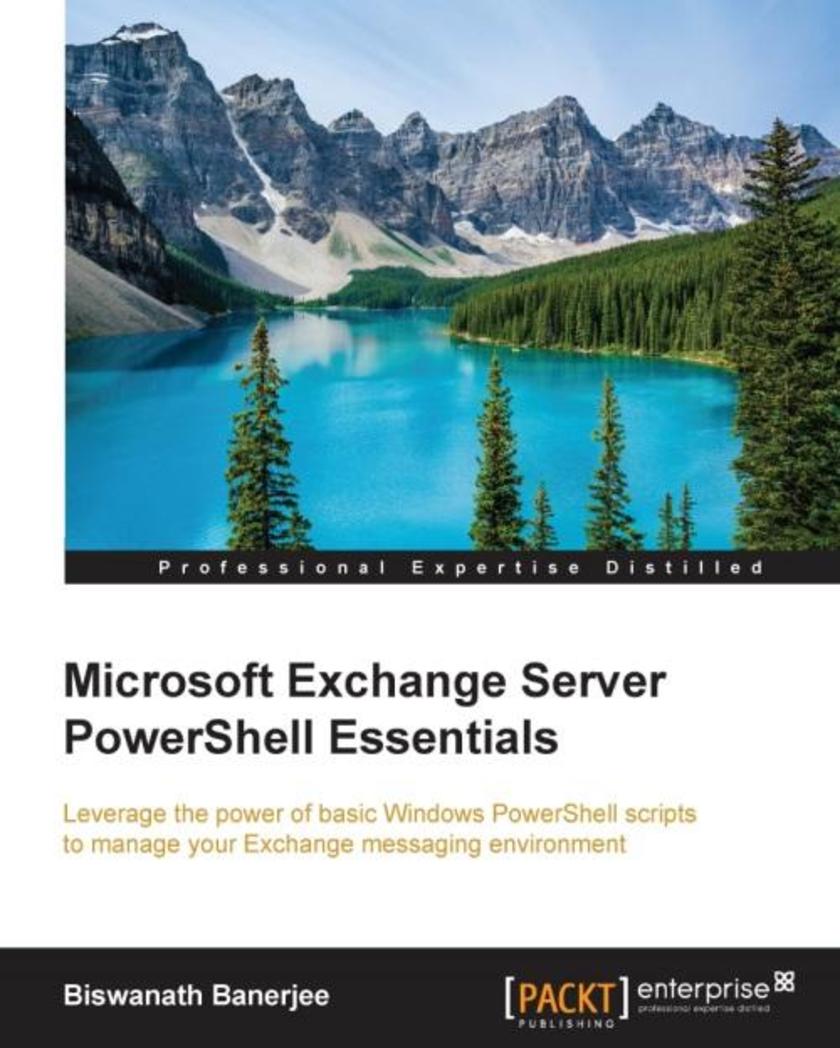
Microsoft Exchange Server PowerShell Essentials
Biswanath Banerjee
¥63.21
Leverage the power of basic Windows PowerShell *s to manage your Exchange messaging environmentAbout This BookGet to grips with Windows PowerShell and how it can be used to manage various aspects of the operating system and applicationsBecome proficient in PowerShell and apply it to manage Exchange infrastructure on-premise or via Exchange Online as part of Office 365Learn to create Windows PowerShell *s to do administrative tasks with this step-by-step, easy-to-follow guideWho This Book Is ForThis book is for administrators with a basic or limited understanding of Windows PowerShell and who want to increase their skill set in managing both the Exchange On Premise and Online environments.What You Will LearnDeep dive into the Windows PowerShell basicsCreate and manage Recipients and permissionsManage Distribution Group members, permissions, and group typesUnderstand Certificates and Role-Based Access Control using real-world examplesReview the usage of email address, address book, and retention policies with examplesLearn to manage Exchange Client Access and Mailbox Server rolesUse PowerShell for auditing and risk management in your Exchange organizationManage a highly available Exchange environment using PowerShellInteract with Exchange through the use of the Exchange Web Services-managed APIIn DetailPowerShell has become one of the most important skills in an Exchange administrator's armory. PowerShell has proved its mettle so widely that, if you're not already starting to learn PowerShell, then you're falling behind the industry. It isn't difficult to learn PowerShell at all. In fact, if you've ever run commands from a CMD prompt, then you'll be able to start using PowerShell straightaway.This book will walk you through the essentials of PowerShell in Microsoft Exchange Server and make sure you understand its nitty gritty effectively.You will first walk through the core concepts of PowerShell and their applications. This book discusses ways to automate tasks and activities that are performed by Exchange administrators and that otherwise take a lot of manual effort.Microsoft Exchange PowerShell Essentials will provide all the required details for Active Directory, System, and Exchange administrators to help them understand Windows PowerShell and build the required *s to manage the Exchange Infrastructure.Style and approachThis book is written with its target audience in mind; concepts are explained and followed by real-life examples. A comprehensive * is provided in each chapter to give you hands-on practice with all the major commands used in it.
Apple Pay Essentials
Ernest Bruce
¥54.49
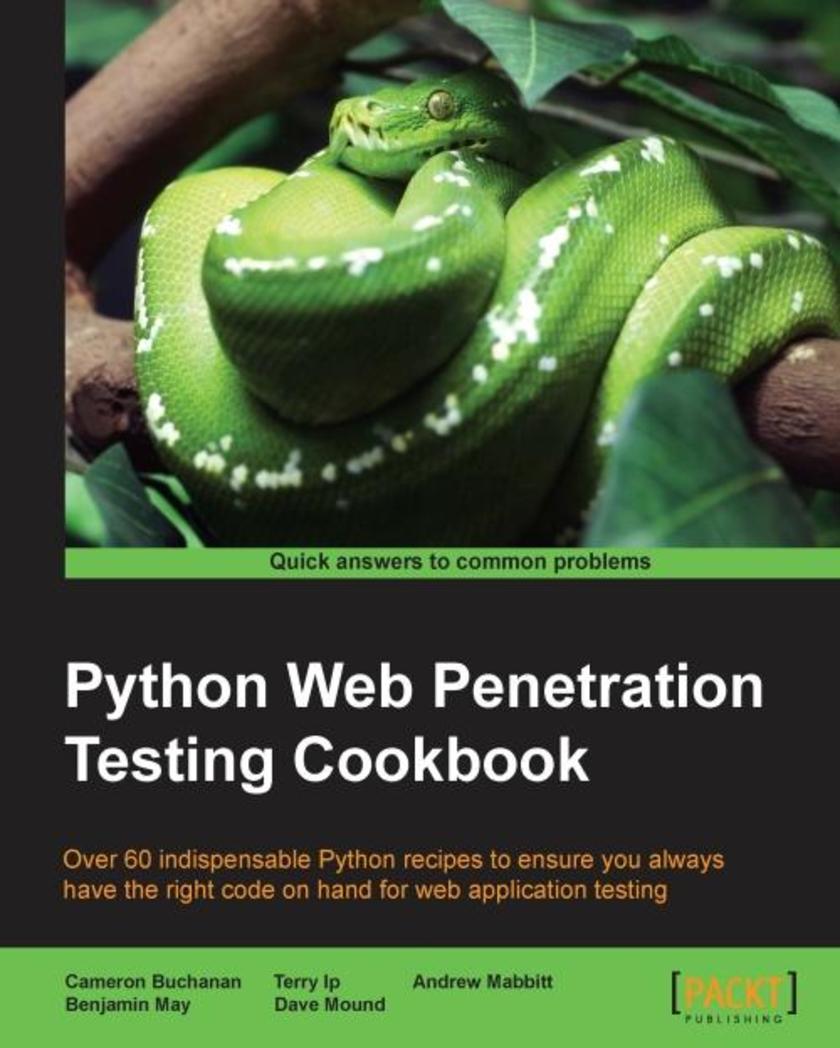
Harness the power of Apple Pay in your iOS apps and integrate it with global payment gatewaysAbout This BookBe it adding an Apple Pay button to your app or calculating sales tax with Apple Pay- this book gives you all the information you need to build a fully-functional Apply Pay applicationPaying within iOS Apps made easier and secure with this no nonsense and powerful guideEscape tedious payment options by creating compelling product card screens that present the Pay button, which your customers can tap to quickly order your productsWho This Book Is ForThis book is for anyone who wants to integrate Apple Pay in their applications. Basic familiarity with programming and the Xcode developer tools is expected.What You Will LearnDesign a product card that includes the Apple Pay buttonImplement the Apple Pay workflow in an efficient wayUse NSDecimalNumber objects to perform financial calculations accuratelyManage custom order information in the Apple Pay workflow and your custom order management systemExtract payment information from a payment tokenImplement a secure, server-side payment-processor programFind out everything you wanted to know about Apple Pay in iOS 9In DetailApple Pay, one of the most talked about offerings of the latest iOS 9 release, is a digital wallet and electronic payment system developed by Apple Inc. Paying in stores or within apps has never been easier or safer. Gone are the days of searching for your wallet, and the wasted moments finding the right card! Now you can use your credit cards and rewards cards with just a touch.It allows payment to merchants, using Near field Communication (NFC), and within iOS apps. Implementing Apple Pay within apps for payment is a bit tricky, but our book solves this problem for you.Whether you are a brand new iOS app developer or a seasoned expert, this book arms you with necessary skills to successfully implement Apple Pay in your online-payment workflow.Whether you are a brand new iOS app developer or a seasoned expert, this book arms you with the necessary skills to successfully implement Apple Pay. We start off by teaching you how to obtain the certificates necessary to encrypt customers’ payment information. We will use Xcode and Objective C for the interface and Node.js for server side code. You will then learn how to determine whether the customer can use Apple Pay, and how to create payment requests. You will come to grips with designing a payment-processor program to interact with the payment gateway. Finally, we take a look at a business-focused view of Apple Pay protocols and classes.By the end of this book, you will be able to build a fully functional Apple Pay-integrated iOS appStyle and approachThis is an easy-to-follow guide on integrating Apple Pay in your iOS Application. With step by step instructions along with excellent screen shots you will be able to learn everything that you wanted to know about Passbook and Apple Pay in iOS 8.
Ember.js Cookbook
Ember.js Cookbook
Erik Hanchett
¥90.46
Arm yourself with over 65 hands-on recipes to master the skills of building scalable web applications with Ember.jsAbout This BookThis book is your one-stop solution to the key features of Ember.js. Become skilled in the art of building web-apps in a fraction of the code you'd write in other frameworks.Build JavaScript apps that don't break the web! Our 100 recipes will make this a cakewalk for you!This books makes learning Ember.js easy by breaking down each topic into simple-to-understand recipesWho This Book Is ForAnyone who wants to explore Ember.js and wishes to get hands on making sophisticated web apps with less coding will find this book handy. Prior experience in Coding and familiarity with JavaScript is recommended. If you’ve heard of Ember.js or are just curious on how a single-page application framework works, then this book is for you.What You Will LearnSkip the boilerplate code with Ember CLI generatorsCreate a component with actions and eventsSet up a model with Ember Data using fixture dataCreate several different types of test cases and run themManage and set up user authentication using Ember Simple AuthAdd animated transitions to your app with Liquid FireSet up a service and initializer with dependency injectionCreate a working chat applicationSet up an Ember Service and initializer with dependency injectionCreate a working chat applicationIn DetailEmber.js is an open source JavaScript framework that will make you more productive. It uses common idioms and practices, making it simple to create amazing single-page applications. It also lets you create code in a modular way using the latest JavaScript features. Not only that, it has a great set of APIs to get any task done. The Ember.js community is welcoming newcomers and is ready to help you when needed.This book provides in-depth explanations on how to use the Ember.js framework to take you from beginner to expert. You’ll start with some basic topics and by the end of the book, you’ll know everything you need to know to build a fully operational Ember application.We’ll begin by explaining key points on how to use the Ember.js framework and the associated tools. You’ll learn how to effectively use Ember CLI and how to create and deploy your application. We’ll take a close look at the Ember object model and templates by examining bindings and observers. We’ll then move onto Ember components, models, and Ember Data. We’ll show you examples on how to connect to RESTful databases. Next we’ll get to grips with testing with integration and acceptance tests using QUnit. We will conclude by covering authentication, services, and Ember add-ons. We’ll explore advanced topics such as services and initializers, and how to use them together to build real-time applications.Style and approachEach recipe in this book will make it that much easier to understand Ember.js. Recipe after recipe, you will learn the concepts of Ember.js by following the simple step-by-step processes
Learning Network Forensics
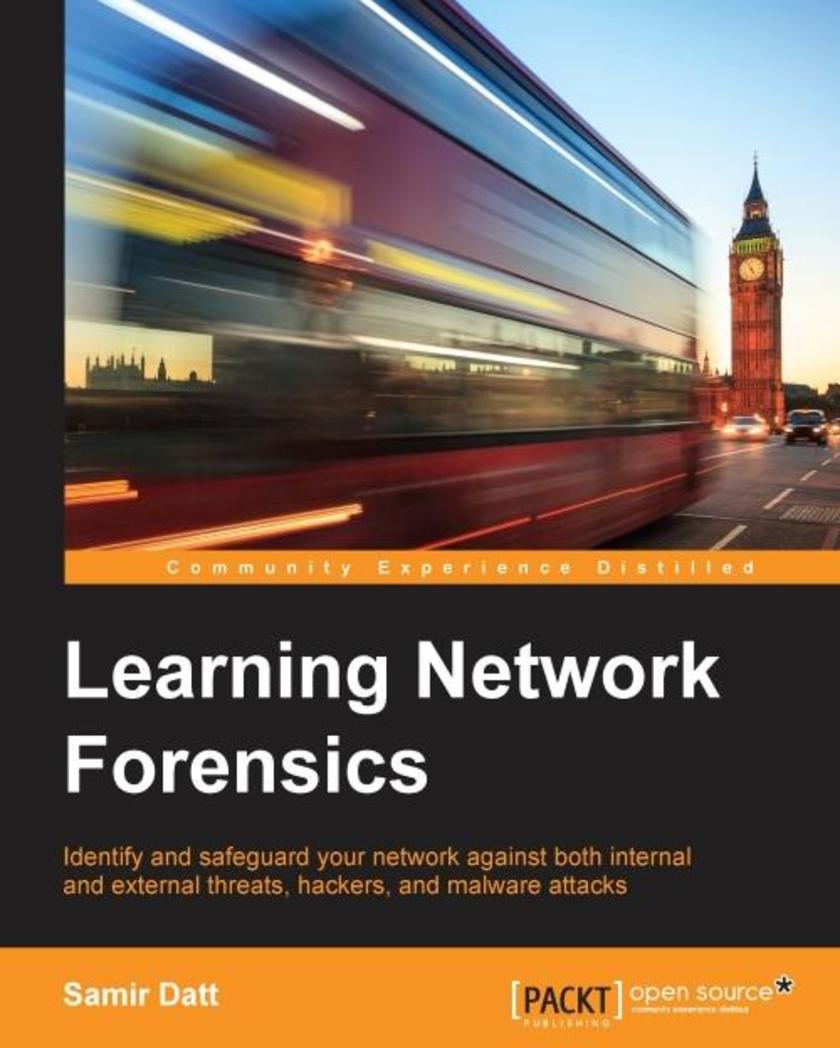
Samir Datt
¥90.46
Identify and safeguard your network against both internal and external threats, hackers, and malware attacksAbout This BookLay your hands on physical and virtual evidence to understand the sort of crime committed by capturing and analyzing network trafficConnect the dots by understanding web proxies, firewalls, and routers to close in on your suspectA hands-on guide to help you solve your case with malware forensic methods and network behaviorsWho This Book Is ForIf you are a network administrator, system administrator, information security, or forensics professional and wish to learn network forensic to track the intrusions through network-based evidence, then this book is for you. Basic knowledge of Linux and networking concepts is expected.What You Will LearnUnderstand Internetworking, sources of network-based evidence and other basic technical fundamentals, including the tools that will be used throughout the bookAcquire evidence using traffic acquisition software and know how to manage and handle the evidencePerform packet analysis by capturing and collecting data, along with content analysisLocate wireless devices, as well as capturing and analyzing wireless traffic data packetsImplement protocol analysis and content matching; acquire evidence from NIDS/NIPSAct upon the data and evidence gathered by being able to connect the dots and draw links between various eventsApply logging and interfaces, along with analyzing web proxies and understanding encrypted web trafficUse IOCs (Indicators of Compromise) and build real-world forensic solutions, dealing with malwareIn DetailWe live in a highly networked world. Every digital device—phone, tablet, or computer is connected to each other, in one way or another. In this new age of connected networks, there is network crime. Network forensics is the brave new frontier of digital investigation and information security professionals to extend their abilities to catch miscreants on the network.The book starts with an introduction to the world of network forensics and investigations. You will begin by getting an understanding of how to gather both physical and virtual evidence, intercepting and analyzing network data, wireless data packets, investigating intrusions, and so on. You will further explore the technology, tools, and investigating methods using malware forensics, network tunneling, and behaviors. By the end of the book, you will gain a complete understanding of how to successfully close a case.Style and approachAn easy-to-follow book filled with real-world case studies and applications. Each topic is explained along with all the practical tools and software needed, allowing the reader to use a completely hands-on approach.