


 购物车
购物车 个人中心
个人中心
Hybrid Mobile Development with Ionic
¥71.93
Key Features ?Develop high-grade and performance-optimized hybrid applications using Ionic ?Discover all the latest and upcoming features of Ionic 2 ?A practical guide that will help you fully utilize all the features and components of Ionic 2 efficiently Book De*ion Ionic is an open source, front-end framework that allows you to develop hybrid mobile apps without any native-language hassle for each platform. It offers a library of mobile-optimized HTML, CSS, and JS components for building highly interactive mobile apps. This book will help readers develop a complete, professional-quality mobile application with Ionic Framework. You will start the journey by learning to configure and customize Ionic Framework. Then, you will move on to Ionic 2 components and see how you can customize them according to your applications. Also, you will implement various native plugins and integrate them with Ionic 2 along with Ionic Platform services to use them optimally in your application. You will also master authorization, authentication, and security techniques to ensure that your application and data are secure. Further, you will integrate backend services such as Firebase and the Cordova iBeacon plugin in your application. Lastly, you will test and troubleshoot your application. By the end of the book, you will not only have built a professional, hybrid mobile application but will also have ensured that your app is secure and performance-driven. What you will learn ?Use every Ionic component and customize it according to the application. ?Implement offline functionality in your application with various storage options such as localstorage and SQLite. ?Integrate the various Ionic backend services and features such as Ionic push and Ionic playground to send push notification and track events in your application. ?Explore white-listing, CORS, and various other platform security aspects to secure your application. ?Sync your data to the cloud server and fetch it in real time. ?Integrate the Cordova iBeacon plugin and fetch contextual data on the basis of location and iBeacon's UUID
Linux: Powerful Server Administration
¥179.84
Get hands-on recipes to make the most of Ubuntu Server, CentOS 7 Linux Server and RHEL 7 Server About This Book * Get Linux servers up and running in seconds, * In-depth guide to explore new features and solutions in server administration * Maintain performance and security of your server solution by deploying expert configuration advice Who This Book Is For This Learning Path is intended for system administrators with a basic understanding of Linux operating systems and written with the novice-to-intermediate Linux user in mind. To get the most of this Learning Path, you should have a working knowledge of basic system administration and management tools. What You Will Learn * Set up high performance, scalable, and fault-tolerant back ends with web and database servers * Facilitate team communication with a real-time chat service and collaboration tools * Monitor, manage and develop your server's file system to maintain a stable performance * Gain best practice methods on sharing files and resources through a network * Install and configure common standard services such as web, mail, FTP, database and domain name server technologies * Create kickstart *s to automatically deploy RHEL 7 systems * Use Orchestration and configuration management tools to manage your environment In Detail Linux servers are frequently selected over other server operating systems for their stability, security and flexibility advantages.This Learning Path will teach you how to get up and running with three of the most popular Linux server distros: Ubuntu Server, CentOS 7 Server, and RHEL 7 Server. We will begin with the Ubuntu Server and show you how to make the most of Ubuntu's advanced functionalities. Moving on, we will provide you with all the knowledge that will give you access to the inner workings of the latest CentOS version 7. Finally, touching RHEL 7, we will provide you with solutions to common RHEL 7 Server challenges.This Learning Path combines some of the best that Packt has to offer in one complete, curated package. It includes content from the following Packt products: 1)Ubuntu Server Cookbook 2)CentOS 7 Linux Server Cookbook, Second Edition 3)Red Hat Enterprise Linux Server Cookbook Style and approach This easy-to-follow practical guide contains hands on examples and solutions to real word administration problems and problems faced when building your RHEL 7 system from scratch using orchestration tools.
D3.js 4.x Data Visualization - Third Edition
¥71.93
Create and publish your own interactive and compelling data visualizations with D3.js 4.x About This Book ?Build interactive and rich graphics and visualization using JavaScript`s powerful library D3.js ?Learn D3 from the ground up, using the all-new version 4 of the library ?Gain insight into producing high-quality, extensible charts and visualizations using best practices such as writing testable, extensible code and strong typing Who This Book Is For This book is for web developers, interactive news developers, data scientists, and anyone interested in representing data through interactive visualizations on the Web with D3. Some basic knowledge of JavaScript is expected, but no prior experience with data visualization or D3 is required to follow this book. What You Will Learn ?Map data to visual elements using D3's scales ?Draw SVG elements using D3's shape generators ?Transform data using D3's collection methods ?Use D3's various layout patterns to quickly generate various common types of chart ?Write modern JavaScript using ES2017 and Babel ?Explore the basics of unit testing D3 visualizations using Mocha and Chai ?Write and deploy a simple Node.js web service to render charts via HTML Canvas ?Understand what makes a good data visualization and how to use the tools at your disposal to create accurate charts In Detail Want to get started with impressive interactive visualizations and implement them in your daily tasks? This book offers the perfect solution-D3.js. It has emerged as the most popular tool for data visualization.
The Node Craftsman Book
¥71.93
The Node Craftsman Book helps JavaScript programmers with basic Node.js knowledge to now thoroughly master Node.js and JavaScript. This book dives you deeper into the craft of software development with Node.js and JavaScript, incuding object-orientation, test-driven development, database handling, web frameworks, and much more. The Node Craftsman Book shows you how to work with Node.js and how to think deeply about how you build your Node projects. You'll master how to build a complete Node.js application across six crafting milestones, and you'll learn many specific skills to achieve that mastery. These skills include how to work with the Node Package Manager in depth, how to connect your Node applications to databases, and how to write unit tests and end-to-end tests for your code. You'll experience the full Node.js development picture, and learn how to craft and control your Node.js applications - right through to fully-fledged web applications using REST, and integration with Angular applications. What you will learn ?How to connect to databases like MongoDB and MySQL from your Node.js application ?How to unit tests and end-to-end tests for your code ?When and how to leverage migrations for setting up a continuous deployment workflow ?Detailed insight into how the Node Package Manager, NPM works ?How object-orientation actually works
Applied Network Security
¥80.65
Master the art of detecting and averting advanced network security attacks and techniques About This Book ?Deep dive into the advanced network security attacks and techniques by leveraging tools such as Kali Linux 2, MetaSploit, Nmap, and Wireshark ?Become an expert in cracking WiFi passwords, penetrating anti-virus networks, sniffing the network, and USB hacks ?This step-by-step guide shows you how to confidently and quickly detect vulnerabilities for your network before the hacker does Who This Book Is For This book is for network security professionals, cyber security professionals, and Pentesters who are well versed with fundamentals of network security and now want to master it. So whether you're a cyber security professional, hobbyist, business manager, or student aspiring to becoming an ethical hacker or just want to learn more about the cyber security aspect of the IT industry, then this book is definitely for you. What You Will Learn ?Use SET to clone webpages including the login page ?Understand the concept of Wi-Fi cracking and use PCAP file to obtain passwords ?Attack using a USB as payload injector ?Familiarize yourself with the process of trojan attacks ?Use Shodan to identify honeypots, rogue access points, vulnerable webcams, and other exploits found in the database ?Explore various tools for wireless penetration testing and auditing ?Create an evil twin to intercept network traffic ?Identify human patterns in networks attacks In Detail Computer networks are increasing at an exponential rate and the most
Python Programming with Raspberry Pi
¥63.21
Become a master of Python programming using the small yet powerful Raspberry Pi Zero About This Book ?This is the first book on the market that teaches Python programming with Raspberry Pi Zero ?Develop exciting applications such as a mobile robot and home automation controller using Python ?This step-by-step guide helps you make the most out of Raspberry Pi Zero using Python programming Who This Book Is For This book is aimed at hobbyists and programmers who want to learn Python programming and develop applications using the Pi Zero. They should have basic familiarity with electronics. What You Will Learn ?Configure Raspberry Pi using Python ?Control loops to blink an LED using simple arithmetic operations ?Understand how interface sensors, actuators, and LED displays work ?Get to grips with every aspect of Python programming using practical examples ?Explore machine vision, data visualization, and scientific computations ?Build a mobile robot using the Raspberry Pi as the controller ?Build a voice-activated home automation controller In Detail Raspberry Pi Zero is a super-small and super-affordable product from Raspberry Pi that is packed with a plethora of features and has grabbed the notice of programmers, especially those who use Python. This step-by-step guide will get you developing practical applications in Python using a Raspberry Pi Zero. It will become a valuable resource as you learn the essential details of interfacing sensors and actuators to a Raspberry Pi, as well as acquiring and displaying data. You will get started by writing a Python program that blinks an LED at 1-second intervals. Then you will learn to write simple logic to execute tasks based upon sensor data (for example, to control a motor) and retrieve data from the web (such as to check e-mails to provide a visual alert). Finally, you will learn to build a home automation system with Python where different appliances are controlled using the Raspberry Pi. The examples discussed in each chapter of this book culminate in a project that help improve the quality of people's lives. Style and approach This will be a learning, step-by-step guide to teach Python programming using the famous Raspberry Pi Zero. The book is packed with practical examples at every step along with tips and tricks for the Raspberry Pi fans
Vulkan Cookbook
¥90.46
Work through recipes to unlock the full potential of the next generation graphics API―Vulkan About This Book ?This book explores a wide range of modern graphics programming techniques and GPU compute methods to make the best use of the Vulkan API ?Learn techniques that can be applied to a wide range of platforms desktop, smartphones, and embedded devices Who This Book Is For This book is ideal for developers who know C/C++ languages, have some basic familiarity with graphics programming, and now want to take advantage of the new Vulkan API in the process of building next generation computer graphics. Some basic familiarity of Vulkan would be useful to follow the recipes. OpenGL developers who want to take advantage of the Vulkan API will also find this book useful. What You Will Learn?Work with Swapchain to present images on screen ?Create, submit, and synchronize operations processed by the hardware ?Create buffers and images, manage their memory, and upload data to them from CPU ?Explore de*or sets and set up an interface between application and shaders ?Organize drawing operations into a set of render passes and subpasses ?Prepare graphics pipelines to draw 3D scenes and compute pipelines to perform mathematical calculations ?Implement geometry projection and tessellation, texturing, lighting, and post-processing techniques ?Write shaders in GLSL and convert them into SPIR-V assemblies ?Find out about and
Python Deep Learning
¥99.18
"Take your machine learning skills to the next level by mastering Deep Learning concepts and algorithms using Python. About This Book ?Explore and create intelligent systems using cutting-edge deep learning techniques ?Implement deep learning algorithms and work with revolutionary libraries in Python ?Get real-world examples and easy-to-follow tutorials on Theano, TensorFlow, H2O and more Who This Book Is For This book is for Data Science practitioners as well as aspirants who have a basic foundational understanding of Machine Learning concepts and some programming experience with Python. A mathematical background with a conceptual understanding of calculus and statistics is also desired. What You Will Learn ?Get a practical deep dive into deep learning algorithms ?Explore deep learning further with Theano, Caffe, Keras, and TensorFlow ?Learn about two of the most powerful techniques at the core of many practical deep learning implementations: Auto-Encoders and Restricted Boltzmann Machines ?Dive into Deep Belief Nets and Deep Neural Networks ?Discover more deep learning algorithms with Dropout and Convolutional Neural Networks ?Get to know device strategies so you can use deep learning algorithms and libraries in the real world In Detail With an increasing interest in AI around the world, deep learning has attracted a great deal of public attention. Every day, deep learning algorithms are used broadly across different industries. The book will give you all the practical information available on the subject, including the best practices, using real-world use cases. You will learn to recognize and extract information to increase predictive accuracy and optimize results. Starting with a quick recap of important machine learning concepts, the book will delve straight into deep learning principles using Sci-kit learn. Moving ahead, you will learn to use the latest open source libraries such as Theano, Keras, Google's TensorFlow, and H20. Use this guide to uncover the difficulties of pattern recognition, scaling data with greater accuracy and discussing deep learning algorithms and techniques. Whether you want to dive deeper into Deep Learning, or want to investigate how to get more out of this powerful technology, you'll find everything inside. Style and approach Python Machine Learning by example follows practical hands on approach. It walks you through the key elements of Python and its powerful machine learning libraries with the help of real world projects. "
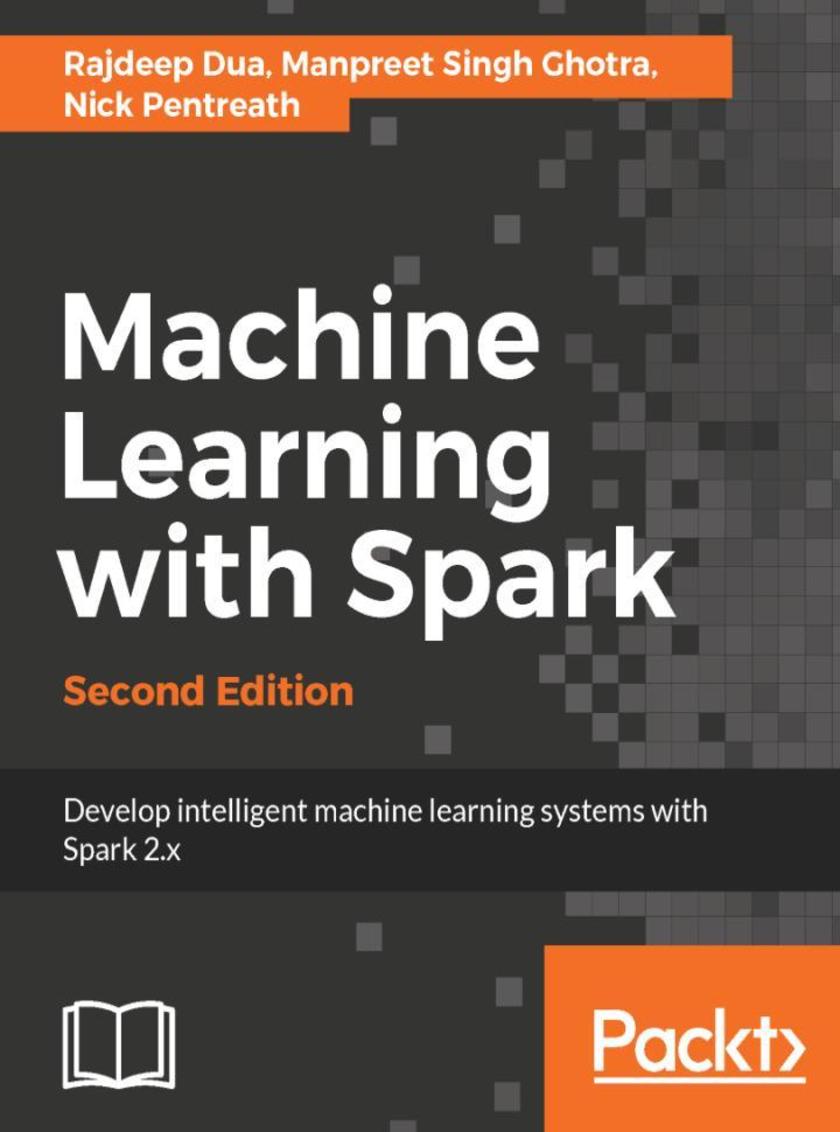
Machine Learning with Spark - Second Edition
¥90.46
"Key Features ?Get to the grips with the latest version of Apache Spark ?Utilize Spark's machine learning library to implement predictive analytics ?Leverage Spark's powerful tools to load, analyze, clean, and transform your data Book De*ion Spark ML is the machine learning module of Spark. It uses in-memory RDDs to process machine learning models faster for clustering, classification, and regression. This book will teach you about popular machine learning algorithms and their implementation. You will learn how various machine learning concepts are implemented in the context of Spark ML. You will start by installing Spark in a single and multinode cluster. Next you'll see how to execute Scala and Python based programs for Spark ML. Then we will take a few datasets and go deeper into clustering, classification, and regression. Toward the end, we will also cover text processing using Spark ML. Once you have learned the concepts, they can be applied to implement algorithms in either green-field implementations or to migrate existing systems to this new platform. You can migrate from Mahout or Scikit to use Spark ML. What you will learn ?Get hands-on with the latest version of Spark ML ?Create your first Spark program with Scala and Python ?Set up and configure a development environment for Spark on your own computer, as well as on Amazon EC2 ?Access public machine learning datasets and use Spark to load, process, clean, and transform data ?Use Spark's machine learning library to implement programs by utilizing well-known machine learning models ?Deal with large-scale text data, including feature extraction and using text data as input to your machine learning models ?Write Spark functions to evaluate the performance of your machine learning models "
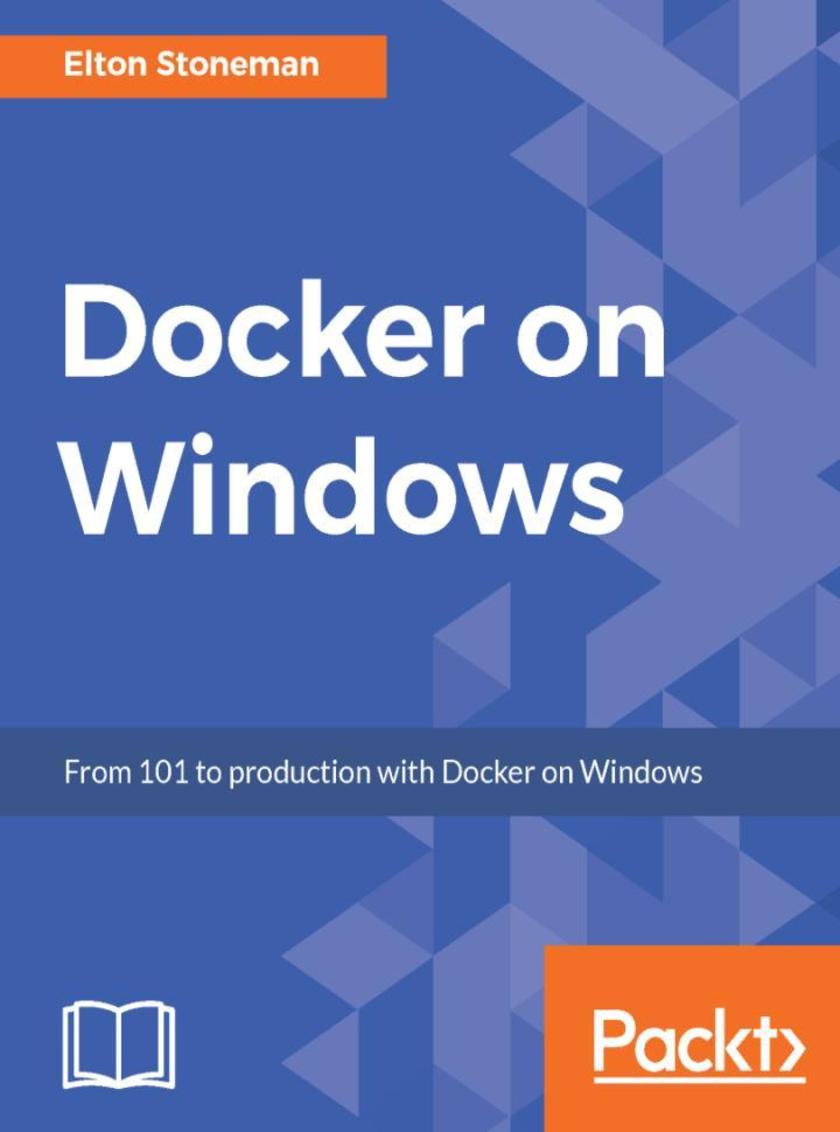
Docker on Windows
¥90.46
Learn how to run new and old Windows applications in Docker containers. About This Book ? Package traditional .NET Frameworks apps and new .NET Core apps as Docker images, and run them in containers for increased efficiency, portability, and security ? Design and implement distributed applications that run across connected containers, using enterprise-grade open source software from public Docker images ? Build a full Continuous Deployment pipeline for a .NET Framework application, and deploy it to a highly-available Docker swarm running in the cloud Who This Book Is For If you want to modernize an old monolithic application without rewriting it, smooth the deployment to production, or move to DevOps or the cloud, then Docker is the enabler for you. This book gives you a solid grounding in Docker so you can confidently approach all of these scenarios. What You Will Learn ? Comprehend key Docker concepts: images, containers, registries, and swarms ? Run Docker on Windows 10, Windows Server 2016, and in the cloud ? Deploy and monitor distributed solutions across multiple Docker containers ? Run containers with high availability and fail-over with Docker Swarm ? Master security in-depth with the Docker platform, making your apps more secure ? Build a Continuous Deployment pipeline by running Jenkins in Docker ? Debug applications running in Docker containers using Visual Studio ? Plan the adoption of Docker in your own organization In Detail Docker is a platform for running server applications in lightweight units called containers. You can run Docker on Windows Server 2016 and Windows 10, and run your existing apps in containers to get significant improvements in efficiency, security, and portability. This book teaches you all you need to know about Docker on Windows, from 101 to deploying highly-available workloads in production. This book takes you on a Docker journey, starting with the key concepts and simple examples of how to run .NET Framework and .NET Core apps in Windows Docker containers. Then it moves on to more complex examples—using Docker to modernize the architecture and development of traditional ASP.NET and SQL Server apps. The examples show you how to break up monoliths into distributed apps and deploy them to a clustered environment in the cloud, using the exact same artifacts you use to run them locally. To help you move confidently to production, it then explains Docker security, and the management and support options. The book finishes with guidance on getting started with Docker in your own projects, together with some real-world case studies for Docker implementations, from small-scale on-premises apps to very large-scale apps running on Azure. Style and approach Using a step-by-step approach, this book shows you how to use Docker on Windows. It includes practical examples and real-world technical and business scenarios that will help you effectively implement Docker in your environment.There are over 50 examples of Dockerized applications, using C# .NET projects as the source and packaging them into Docker images.
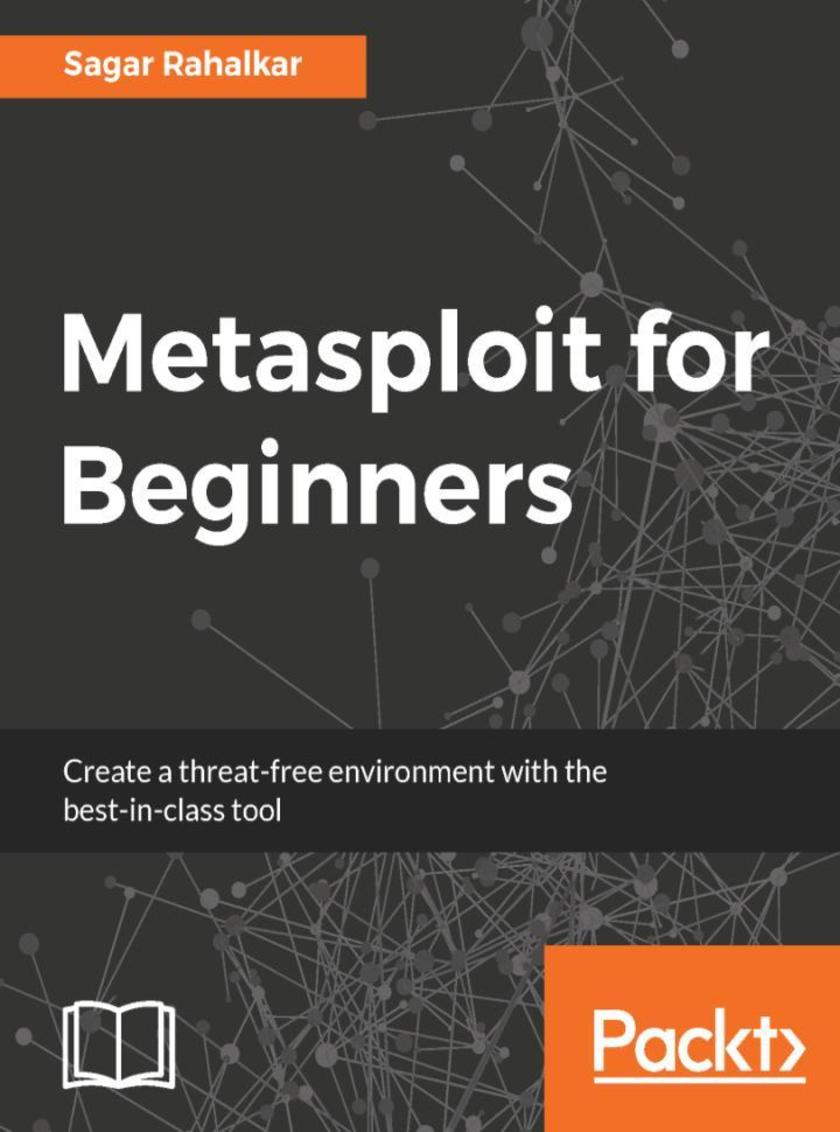
Metasploit for Beginners
¥63.21
An easy to digest practical guide to Metasploit covering all aspects of the framework from installation, configuration, and vulnerability hunting to advanced client side attacks and anti-forensics. About This Book ? Carry out penetration testing in highly-secured environments with Metasploit ? Learn to bypass different defenses to gain access into different systems. ? A step-by-step guide that will quickly enhance your penetration testing skills. Who This Book Is For If you are a penetration tester, ethical hacker, or security consultant who wants to quickly learn the Metasploit framework to carry out elementary penetration testing in highly secured environments then, this book is for you. What You Will Learn ? Get to know the absolute basics of the Metasploit framework so you have a strong foundation for advanced attacks ? Integrate and use various supporting tools to make Metasploit even more powerful and precise ? Set up the Metasploit environment along with your own virtual testing lab ? Use Metasploit for information gathering and enumeration before planning the blueprint for the attack on the target system ? Get your hands dirty by firing up Metasploit in your own virtual lab and hunt down real vulnerabilities ? Discover the clever features of the Metasploit framework for launching sophisticated and deceptive client-side attacks that bypass the perimeter security ? Leverage Metasploit capabilities to perform Web application security scanning In Detail This book will begin by introducing you to Metasploit and its functionality. Next, you will learn how to set up and configure Metasploit on various platforms to create a virtual test environment. You will also get your hands on various tools and components used by Metasploit. Further on in the book, you will learn how to find weaknesses in the target system and hunt for vulnerabilities using Metasploit and its supporting tools. Next, you'll get hands-on experience carrying out client-side attacks. Moving on, you'll learn about web application security scanning and bypassing anti-virus and clearing traces on the target system post compromise. This book will also keep you updated with the latest security techniques and methods that can be directly applied to scan, test, hack, and secure networks and systems with Metasploit. By the end of this book, you'll get the hang of bypassing different defenses, after which you'll learn how hackers use the network to gain access into different systems. Style and approach This tutorial is packed with step-by-step instructions that are useful for those getting started with Metasploit. This is an easy-to-read guide to learning Metasploit from scratch that explains simply and clearly all you need to know to use this essential IT power tool.
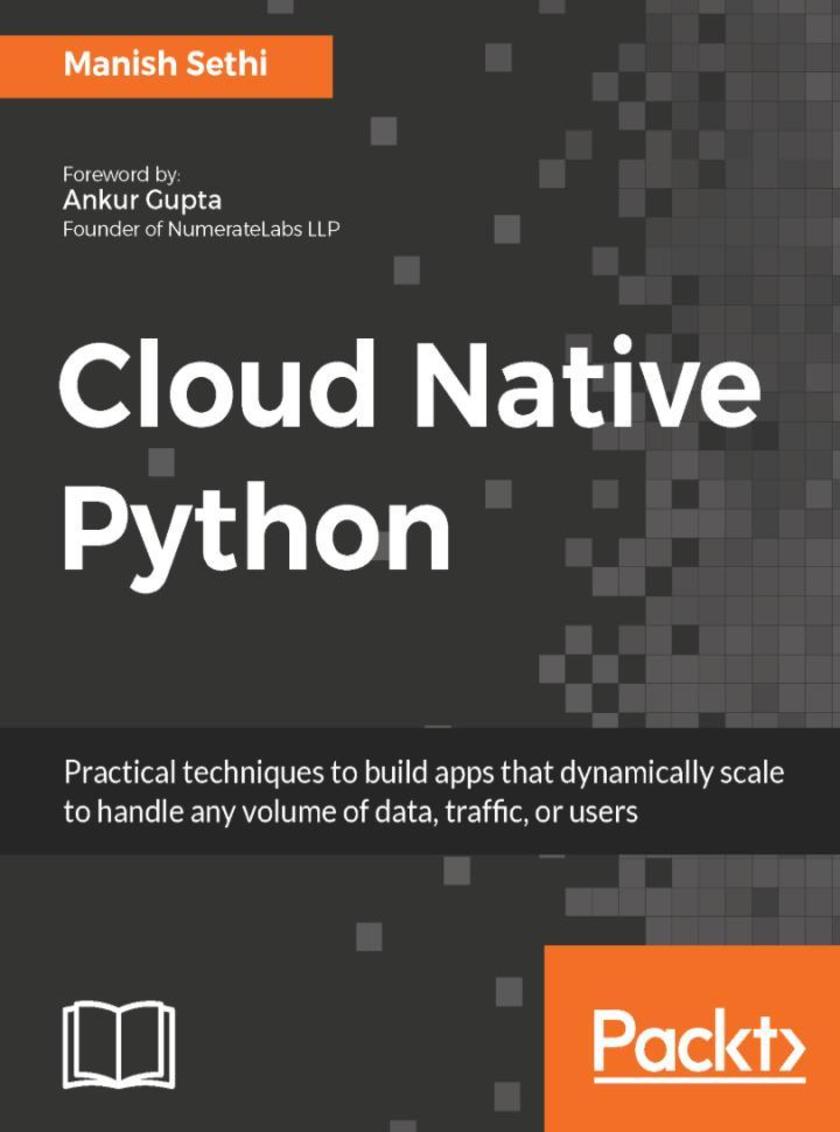
Cloud Native Python
¥90.46
Build cloud native applications in Python About This Book ? This is the only reliable resource that showcases the tools and techniques you need build robust and resilient cloud native applications in Python ? Learn how to architect your application on both, the AWS and Azure clouds for high availability ? Assess, monitor, and troubleshoot your applications in the cloud Who This Book Is For This book is ideal for developers with a basic knowledge of Python who want to learn to build, test, and scale their Python-based applications. No prior experience of writing microservices in Python is required. What You Will Learn ? Get to know “the way of the cloud”, including why developing good cloud software is fundamentally about mindset and discipline ? Know what microservices are and how to design them ? Create reactive applications in the cloud with third-party messaging providers ? Build massive-scale, user-friendly GUIs with React and Flux ? Secure cloud-based web applications: the do’s, don’ts, and options ? Plan cloud apps that support continuous delivery and deployment In Detail Businesses today are evolving so rapidly that having their own infrastructure to support their expansion is not feasible. As a result, they have been resorting to the elasticity of the cloud to provide a platform to build and deploy their highly scalable applications. This book will be the one stop for you to learn all about building cloud-native architectures in Python. It will begin by introducing you to cloud-native architecture and will help break it down for you. Then you’ll learn how to build microservices in Python using REST APIs in an event driven approach and you will build the web layer. Next, you’ll learn about Interacting data services and building Web views with React, after which we will take a detailed look at application security and performance. Then, you’ll also learn how to Dockerize your services. And finally, you’ll learn how to deploy the application on the AWS and Azure platforms. We will end the book by discussing some concepts and techniques around troubleshooting problems that might occur with your applications after you’ve deployed them. This book will teach you how to craft applications that are built as small standard units, using all the proven best practices and avoiding the usual traps. It's a practical book: we're going to build everything using Python 3 and its amazing tooling ecosystem. The book will take you on a journey, the destination of which, is the creation of a complete Python application based on microservices over the cloud platform Style and approach Filled with examples, this book takes a step-by-step approach to teach you each and every configuration you need to make your application highly available and fault tolerant.
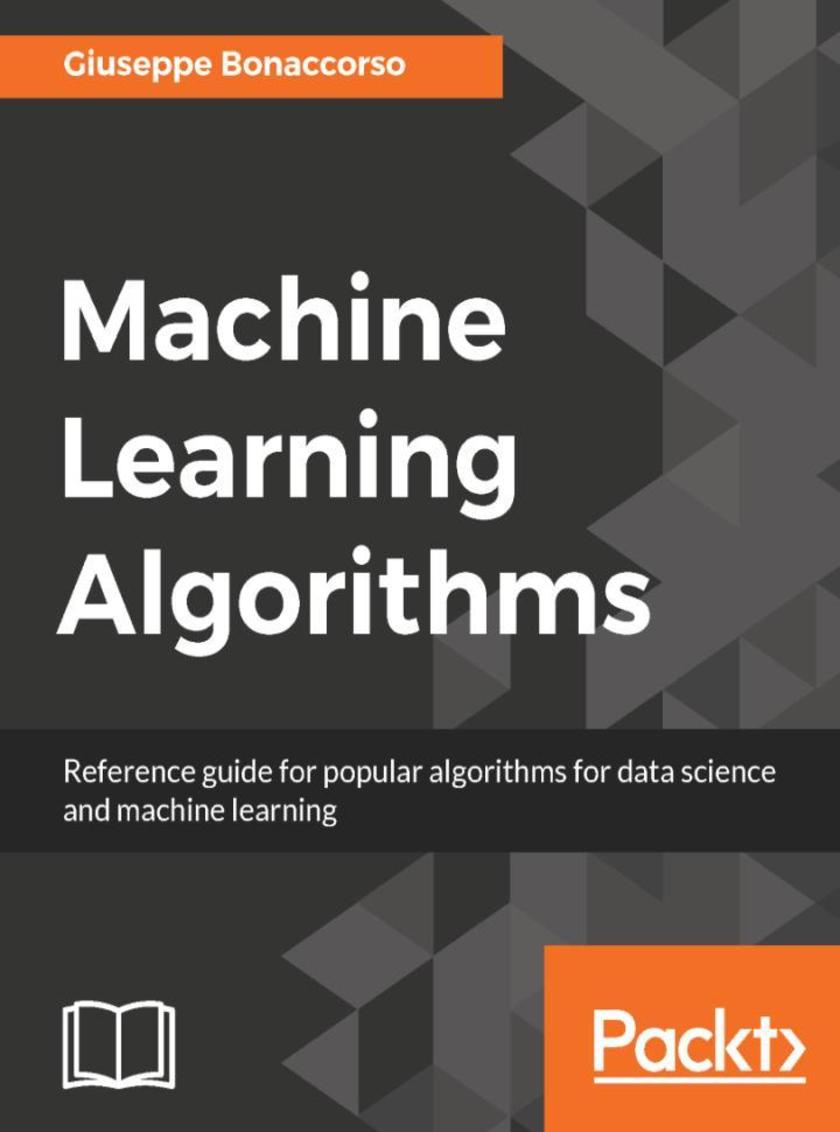
Machine Learning Algorithms
¥90.46
Build strong foundation for entering the world of Machine Learning and data science with the help of this comprehensive guide About This Book ? Get started in the field of Machine Learning with the help of this solid, concept-rich, yet highly practical guide. ? Your one-stop solution for everything that matters in mastering the whats and whys of Machine Learning algorithms and their implementation. ? Get a solid foundation for your entry into Machine Learning by strengthening your roots (algorithms) with this comprehensive guide. Who This Book Is For This book is for IT professionals who want to enter the field of data science and are very new to Machine Learning. Familiarity with languages such as R and Python will be invaluable here. What You Will Learn ? Acquaint yourself with important elements of Machine Learning ? Understand the feature selection and feature engineering process ? Assess performance and error trade-offs for Linear Regression ? Build a data model and understand how it works by using different types of algorithm ? Learn to tune the parameters of Support Vector machines ? Implement clusters to a dataset ? Explore the concept of Natural Processing Language and Recommendation Systems ? Create a ML architecture from scratch. In Detail As the amount of data continues to grow at an almost incomprehensible rate, being able to understand and process data is becoming a key differentiator for competitive organizations. Machine learning applications are everywhere, from self-driving cars, spam detection, document search, and trading strategies, to speech recognition. This makes machine learning well-suited to the present-day era of Big Data and Data Science. The main challenge is how to transform data into actionable knowledge. In this book you will learn all the important Machine Learning algorithms that are commonly used in the field of data science. These algorithms can be used for supervised as well as unsupervised learning, reinforcement learning, and semi-supervised learning. A few famous algorithms that are covered in this book are Linear regression, Logistic Regression, SVM, Naive Bayes, K-Means, Random Forest, TensorFlow, and Feature engineering. In this book you will also learn how these algorithms work and their practical implementation to resolve your problems. This book will also introduce you to the Natural Processing Language and Recommendation systems, which help you run multiple algorithms simultaneously. On completion of the book you will have mastered selecting Machine Learning algorithms for clustering, classification, or regression based on for your problem. Style and approach An easy-to-follow, step-by-step guide that will help you get to grips with real -world applications of Algorithms for Machine Learning.
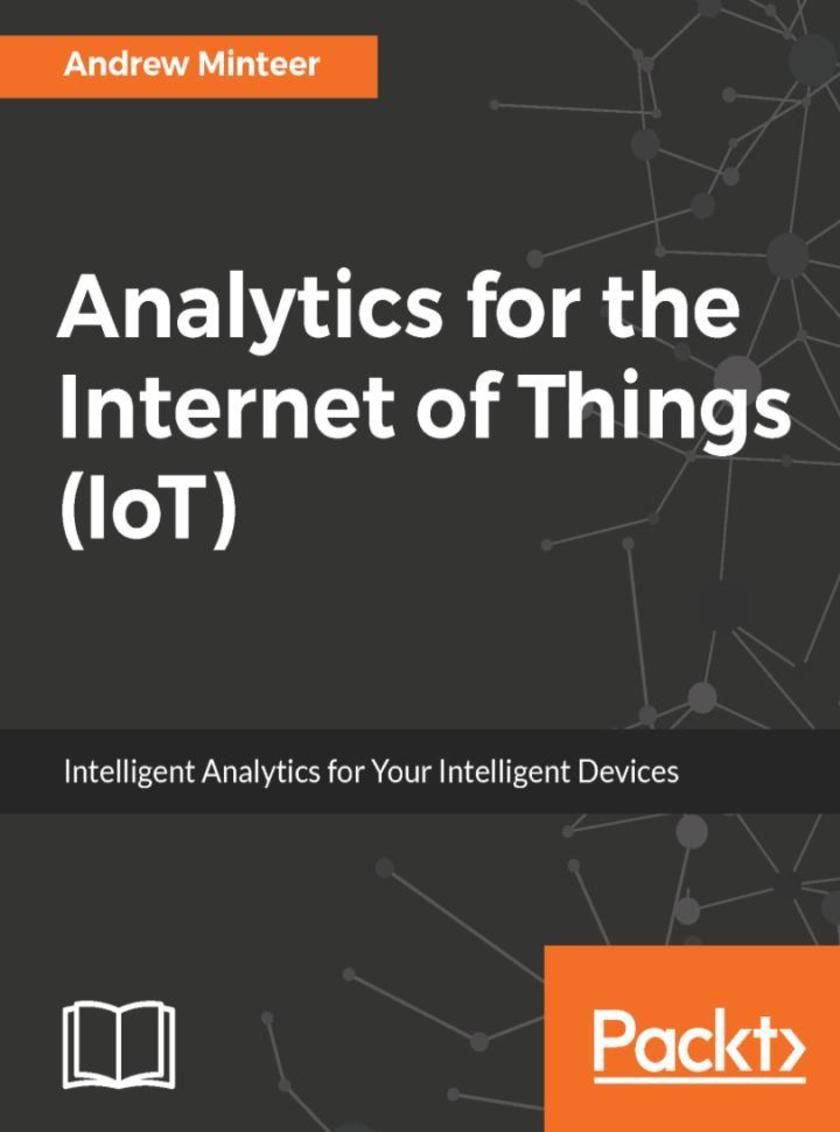
Analytics for the Internet of Things (IoT)
¥80.65
Break through the hype and learn how to extract actionable intelligence from the flood of IoT data About This Book ? Make better business decisions and acquire greater control of your IoT infrastructure ? Learn techniques to solve unique problems associated with IoT and examine and analyze data from your IoT devices ? Uncover the business potential generated by data from IoT devices and bring down business costs Who This Book Is For This book targets developers, IoT professionals, and those in the field of data science who are trying to solve business problems through IoT devices and would like to analyze IoT data. IoT enthusiasts, managers, and entrepreneurs who would like to make the most of IoT will find this equally useful. A prior knowledge of IoT would be helpful but is not necessary. Some prior programming experience would be useful What You Will Learn ? Overcome the challenges IoT data brings to analytics ? Understand the variety of transmission protocols for IoT along with their strengths and weaknesses ? Learn how data flows from the IoT device to the final data set ? Develop techniques to wring value from IoT data ? Apply geospatial analytics to IoT data ? Use machine learning as a predictive method on IoT data ? Implement best strategies to get the most from IoT analytics ? Master the economics of IoT analytics in order to optimize business value In Detail We start with the perplexing task of extracting value from huge amounts of barely intelligible data. The data takes a convoluted route just to be on the servers for analysis, but insights can emerge through visualization and statistical modeling techniques. You will learn to extract value from IoT big data using multiple analytic techniques. Next we review how IoT devices generate data and how the information travels over networks. You’ll get to know strategies to collect and store the data to optimize the potential for analytics, and strategies to handle data quality concerns. Cloud resources are a great match for IoT analytics, so Amazon Web Services, Microsoft Azure, and PTC ThingWorx are reviewed in detail next. Geospatial analytics is then introduced as a way to leverage location information. Combining IoT data with environmental data is also discussed as a way to enhance predictive capability. We’ll also review the economics of IoT analytics and you’ll discover ways to optimize business value. By the end of the book, you’ll know how to handle scale for both data storage and analytics, how Apache Spark can be leveraged to handle scalability, and how R and Python can be used for analytic modeling. Style and approach This book follows a step-by-step, practical approach to combine the power of analytics and IoT and help you get results quickly
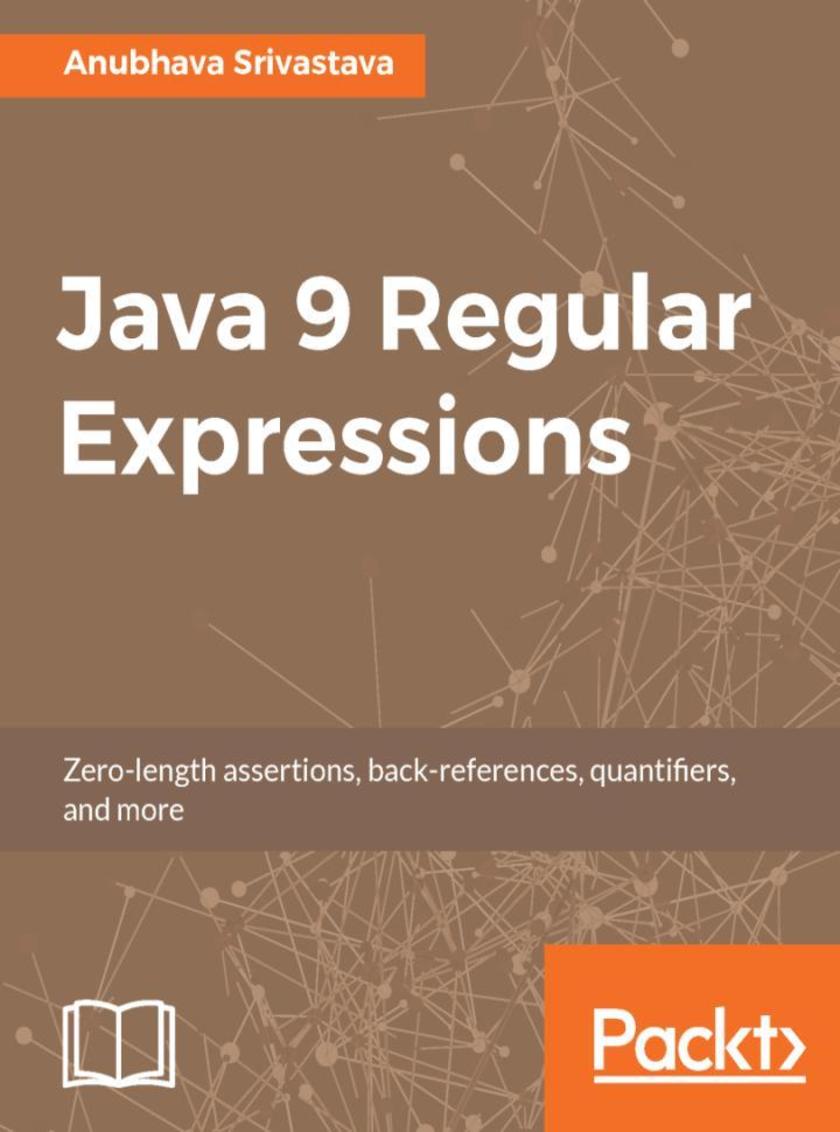
Java 9 Regular Expressions
¥63.21
Solve real world problems using Regex in Java. About This Book ? Discover regular expressions and how they work ? Implement regular expressions with Java to your code base ? Learn to use regular expressions in emails, URLs, paths, and IP addresses Who This Book Is For This book is for Java developers who would like to understand and use regular expressions. A basic knowledge of Java is assumed. What You Will Learn ? Understand the semantics, rules, and core concepts of writing Java code involving regular expressions ? Learn about the java.util.Regex package using the Pattern class, Matcher class, code snippets, and more ? Match and capture text in regex and use back-references to the captured groups ? Explore Regex using Java String methods and regex capabilities in the Java Scanner API ? Use zero-width assertions and lookarounds in regex ? Test and optimize a poorly performing regex and various other performance tips In Detail Regular expressions are a powerful tool in the programmer's toolbox and allow pattern matching. They are also used for manipulating text and data. This book will provide you with the know-how (and practical examples) to solve real-world problems using regex in Java. You will begin by discovering what regular expressions are and how they work with Java. This easy-to-follow guide is a great place from which to familiarize yourself with the core concepts of regular expressions and to master its implementation with the features of Java 9. You will learn how to match, extract, and transform text by matching specific words, characters, and patterns. You will learn when and where to apply the methods for finding patterns in digits, letters, Unicode characters, and string literals. Going forward, you will learn to use zero-length assertions and lookarounds, parsing the source code, and processing the log files. Finally, you will master tips, tricks, and best practices in regex with Java. Style and approach This book will take readers through this learning journey using simple, easy-to-understand, step-by-step instructions and hands-on examples at every stage.
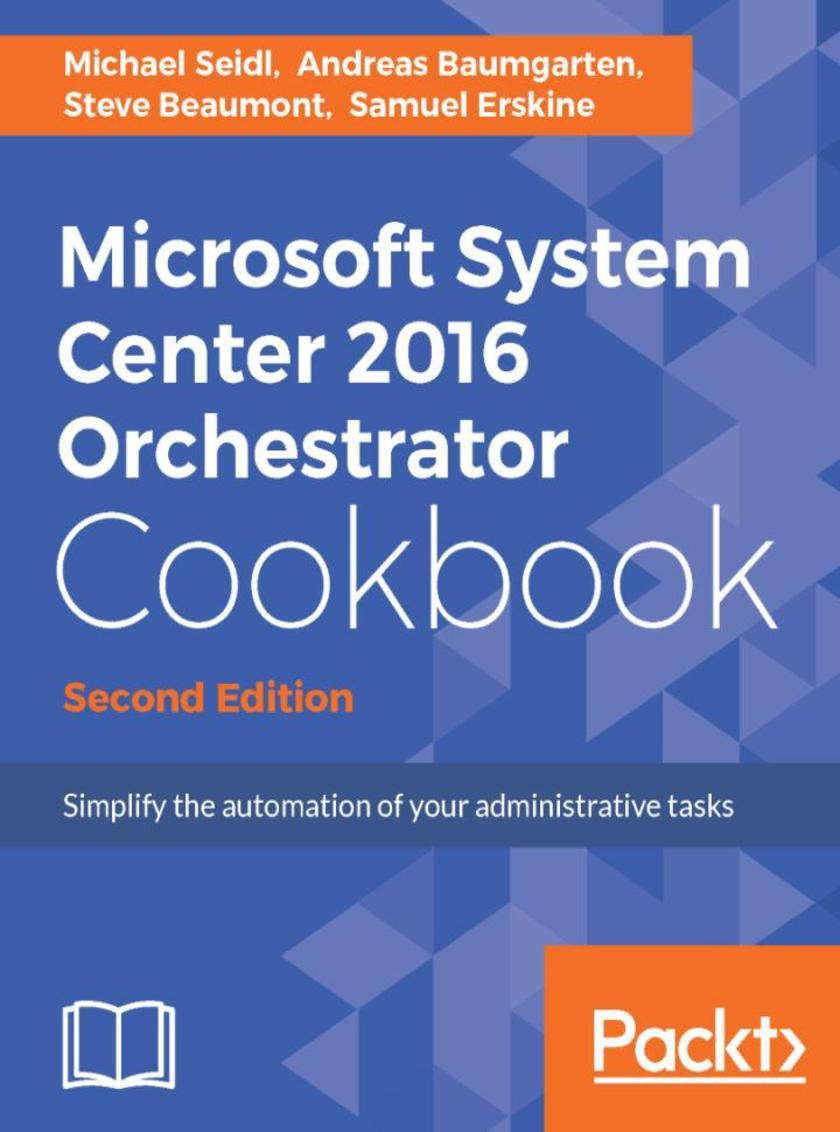
Microsoft System Center 2016 Orchestrator Cookbook - Second Edition
¥107.90
Over 30 recipes to automate your mission-critical tasks using the new and powerful Microsoft System Center 2016 Orchestrator About This Book ? Create powerful runbooks for the entire System Center 2016 product line ? Explore System Center 2016 Orchestrator to manage and automate your datacenter ? A recipe-based guide to using SCO efficiently Who This Book Is For If you are a system administrator and want to simplify the process of automating system administration tasks using System Center Orchestrator 2016 then this book is for you. A basic knowledge of SCO is expected What You Will Learn ? Create Runbooks for IT Service Management processes ? Design and create Runbooks for System Center Confguration Manager and Virtual Machine Manager ? Set up System Center Orchestrator, making it highly available ? Create branching, looping, and child Runbooks to completely master System Center 2016 Orchestrator ? Implement a security model for your System Center Orchestrator deployment and to execute Runbooks ? Manage and automate your Datacenter with powerful Runbooks ? Automate your System Center environment In Detail With Microsoft System Center 2016 Orchestrator Cookbook, you will start by learning how to efficiently install and secure System Center Orchestrator. You will then learn how you can create configuration files for SCO 2016. After initial installation and configuration, you will soon be planning and creating functional and fault-tolerant System Center runbooks to automate daily tasks and routine operations. Next you will delve into runbooks; you will learn how to create powerful and advanced runbooks such as Building your Runbook without a Dead End. You will also learn to create simple and advanced runbooks for your daily tasks. Towards the end of the book, you will learn to use SCO for other interesting tasks and also learn to maintain and perform SCO health checks. By the end of the book, you will be able to automate your administrative tasks successfully with SCO. Style and approach This book is written in a practical, cookbook style with numerous chapters and recipes focusing on creating runbooks to automate mission-critical and everyday administration tasks.
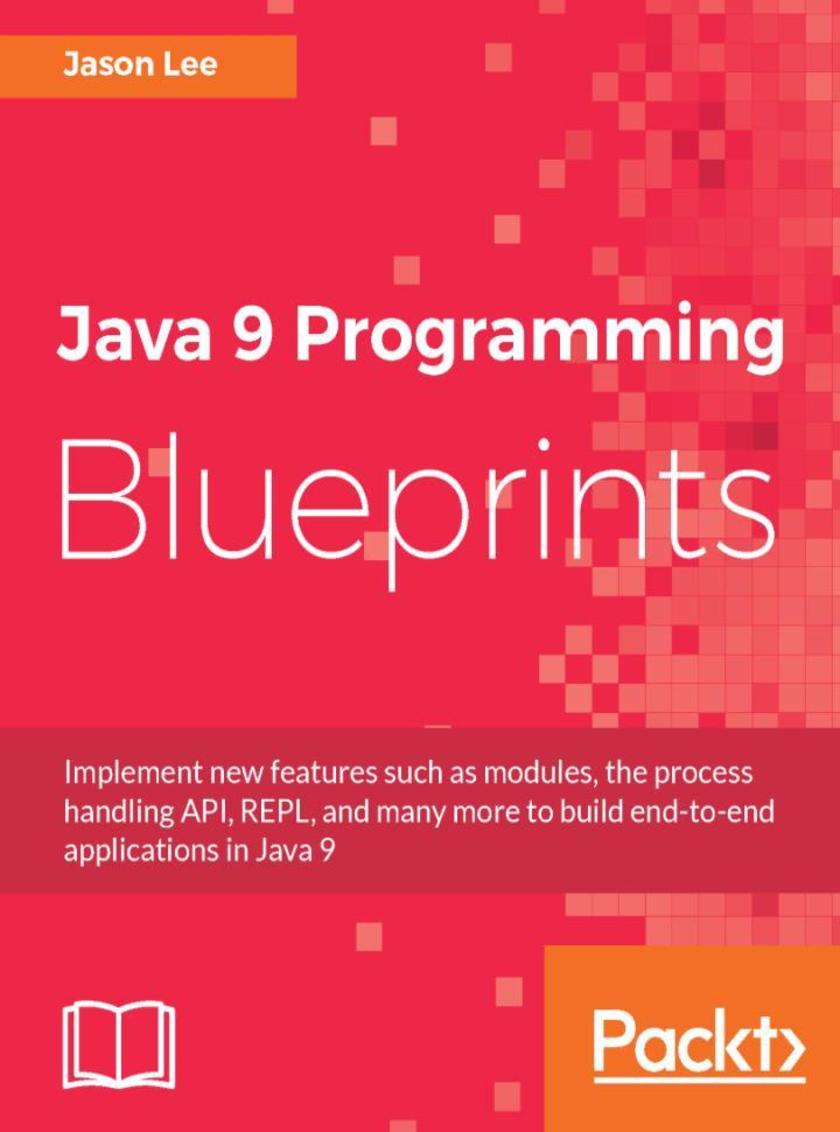
Java 9 Programming Blueprints
¥90.46
Build a variety of real-world applications by taking advantage of the newest features of Java 9 About This Book ? See some of the new features of Java 9 and be introduced to parts of the Java SDK ? This book provides a set of diverse, interesting projects that range in complexity from fairly simple to advanced and cover HTTP 2.0 ? Take advantage of Java's new modularity features to write real-world applications that solve a variety of problems Who This Book Is For This book is for Java developers who are already familiar with the language. Familiarity with more advanced topics, such as network programming and threads, would be helpful, but is not assumed. What You Will Learn ? Learn how to package Java applications as modules by using the Java Platform Module System ? Implement process management in Java by using the all-new process handling API ? Integrate your applications with third-party services in the cloud ? Interact with mail servers using JavaMail to build an application that filters spam messages ? Learn to use JavaFX to build rich GUI based applications, which are an essential element of application development ? Write microservices in Java using platform libraries and third-party frameworks ? Integrate a Java application with MongoDB to build a cloud-based note taking application In Detail Java is a powerful language that has applications in a wide variety of fields. From playing games on your computer to performing banking transactions, Java is at the heart of everything. The book starts by unveiling the new features of Java 9 and quickly walks you through the building blocks that form the basis of writing applications. There are 10 comprehensive projects in the book that will showcase the various features of Java 9. You will learn to build an email filter that separates spam messages from all your inboxes, a social media aggregator app that will help you efficiently track various feeds, and a microservice for a client/server note application, to name a few. The book covers various libraries and frameworks in these projects, and also introduces a few more frameworks that complement and extend the Java SDK. Through the course of building applications, this book will not only help you get to grips with the various features of Java 9, but will also teach you how to design and prototype professional-grade applications with performance and security considerations. Style and approach This is a learn-as-you-build practical guide to building full-fledged applications using Java 9. With a project-based approach, we’ll improve your Java skills. You will experience a variety of solutions to problems with Java.
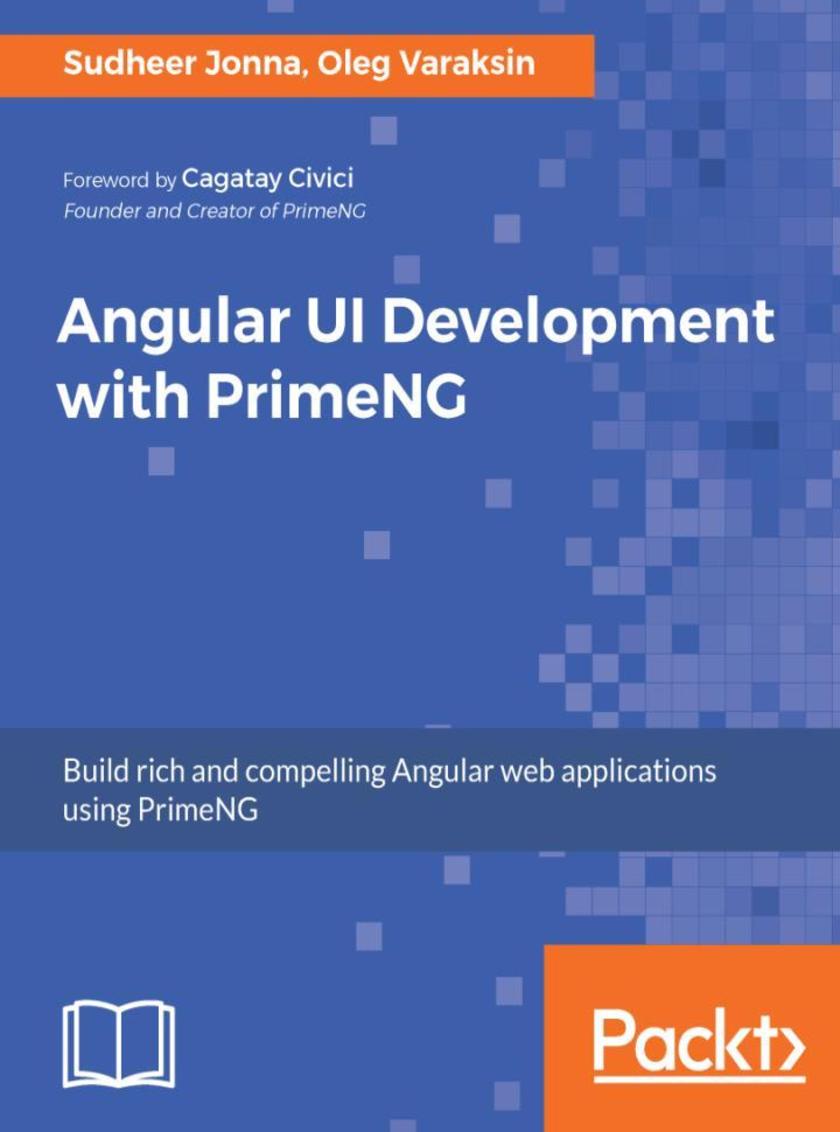
Angular UI Development with PrimeNG
¥80.65
Unleash the power of PrimeNG components to design compelling user interface for your Angular applications About This Book ? Detailed insights into PrimeNG concepts, components and features with examples to help you make excellent User Interfaces for Angular web apps. ? Get familiar with themes, layouts and customization in real world applications. ? Develop Angular applications rapidly using advance tools and standards with best practices. Who This Book Is For This book is for everybody who would like to learn or create modern Angular based single page applications using PrimeNG component library. This book is a good choice for beginners to advanced users who are serious to learn modern Angular applications. The prerequisites for this book are some basic knowledge on the Angular 2+ version with TypeScript and CSS skills. What You Will Learn ? Setup PrimeNG projects with SystemJS, Webpack, and Angular CLI. ? Use theming concepts and layouts with grid systems and Bootstrap. ? Work with enhanced input, select, button and panel components. ? Apply countless DataTable features: sorting, filtering, grouping, and templating. ? Meet data iteration components: DataList, DataGrid, Tree, and so on. ? Build endless menu variations: SlideMenu, TieredMenu, MegaMenu, and so on. ? Visualize your data representations with PrimeNG charts and GMap components. ? Adopt best practices such as state management with @ngrx/store. ? Write unit and end-to-end tests with Jasmine, Karma, and Protractor. In Detail PrimeNG is a leading UI component library for Angular applications with 80+ rich UI components. PrimeNG was a huge success in the Angular world and very quickly. It is a rapidly evolving library that is aligned with the last Angular release. In comparison with competitors, PrimeNG was created with enterprise applications in mind. This book provides a head-start to help readers develop real–world, single-page applications using the popular development stack. This book consists of 10 chapters and starts with a short introduction to single-page applications. TypeScript and Angular fundamentals are important first steps for subsequent PrimeNG topics. Later we discuss how to set up and configure a PrimeNG application in different ways as a kick-start. Once the environment is ready then it is time to learn PrimeNG development, starting from theming concepts and responsive layouts. Readers will learn enhanced input, select, button components followed by the various panels, data iteration, overlays, messages and menu components. The validation of form elements will be covered too. An extra chapter demonstrates how to create map and chart components for real-world applications. Apart from built-in UI components and their features, the readers will learn how to customize components to meet their requirements. Miscellaneous use cases are discussed in a separate chapter, including: file uploading, drag and drop, blocking page pieces during AJAX calls, CRUD sample implementations, and more. This chapter goes beyond common topics, implements a custom component, and discusses a popular state management with @ngrx/store. The final chapter describes unit and end-to-end testing. To make sure Angular and PrimeNG development are flawless, we explain full-fledged testing frameworks with systematic examples. Tips for speeding up unit testing and debugging Angular applications end this book. The book is also focused on how to avoid some common pitfalls, and shows best practices with tips and tricks for efficient Angular and PrimeNG development. At the end of this book, the readers will know the ins and outs of how to use PrimeNG in Angular applications and will be ready to create real- world Angular applications using rich PrimeNG components. Style and approach Step-by-step practical approach
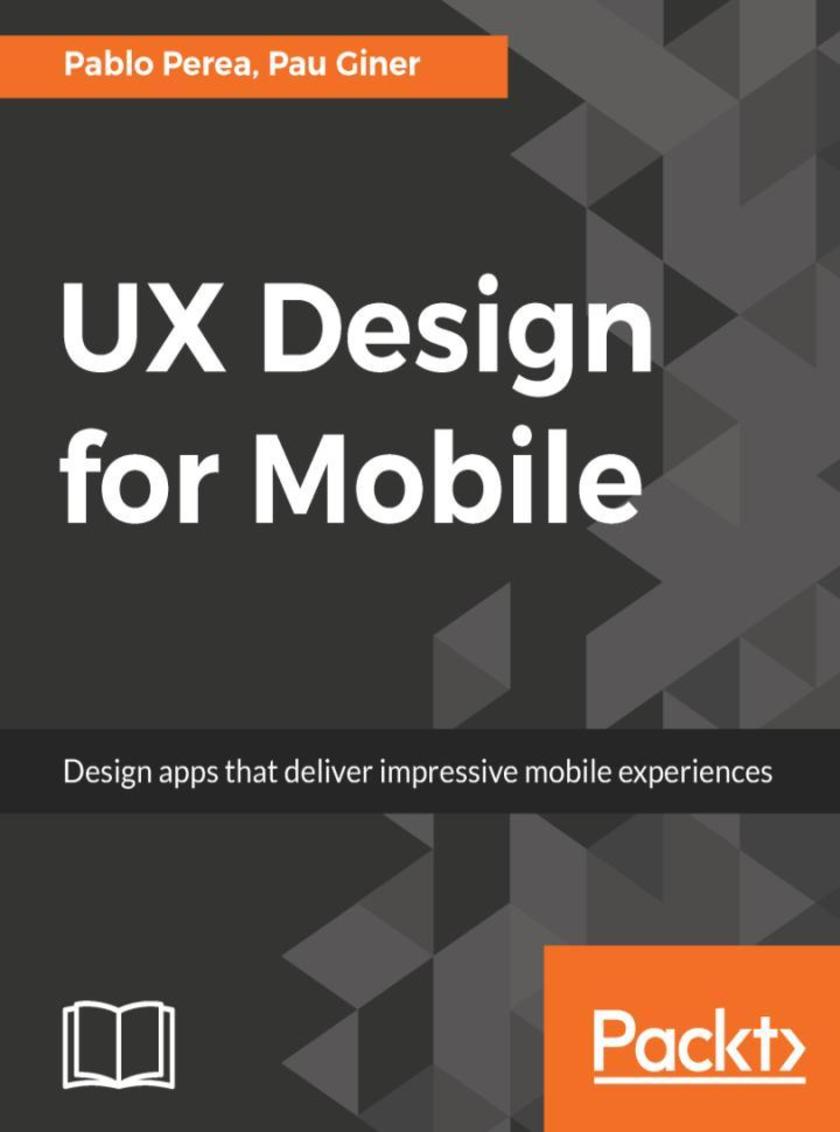
UX Design for Mobile
¥71.93
Get proficient in building beautiful and appealing mobile interfaces (UI) with this complete mobile user experience (UX) design guide. About This Book ? Quickly explore innovative design solutions based on the real needs of your users. ? Create low and high fidelity prototypes using some of the best tools. ? Master a pragmatic design process to create successful products. ? Plan an app design from scratch to final test, with real users. Who This Book Is For This book is for designers, developers and product managers interested in creating successful apps. Readers will be provided with a process to produce, test and improve designs based on best practices. What You Will Learn ? Plan an app design from scratch to final test, with real users. ? Learn from leading companies and find working patterns. ? Apply best UX design practices to your design process. ? Create low and high fidelity prototypes using some of the best tools. ? Follow a step by step examples for Tumult Hype and Framer Studio. ? Test your designs with real users, early in the process. ? Integrate the UX Designer profile into a working team. In Detail User experience (UX) design provides techniques to analyze the real needs of your users and respond to them with products that are delightful to use. This requires you to think differently compared to traditional development processes, but also to act differently. In this book, you will be introduced to a pragmatic approach to exploring and creating mobile app solutions, reducing risks and saving time during their construction. This book will show you a working process to quickly iterate product ideas with low and high fidelity prototypes, based on professional tools from different software brands. You will be able to quickly test your ideas early in the process with the most adequate prototyping approach. You will understand the pros and cons of each approach, when you should use each of them, and what you can learn in each step of the testing process. You will also explore basic testing approaches and some more advanced techniques to connect and learn from your users. Each chapter will focus on one of the general steps needed to design a successful product according to the organization goals and the user needs. To achieve this, the book will provide detailed hands-on pragmatic techniques to design innovative and easy to use products. You will learn how to test your ideas in the early steps of the design process, picking up the best ideas that truly work with your users, rethinking those that need further refinement, and discarding those that don’t work properly in tests made with real users. By the end of the book, you will learn how to start exploring and testing your design ideas, regardless the size of the design budget. Style and approach A quick and simple guide to design and test a mobile application from the UX design point of view
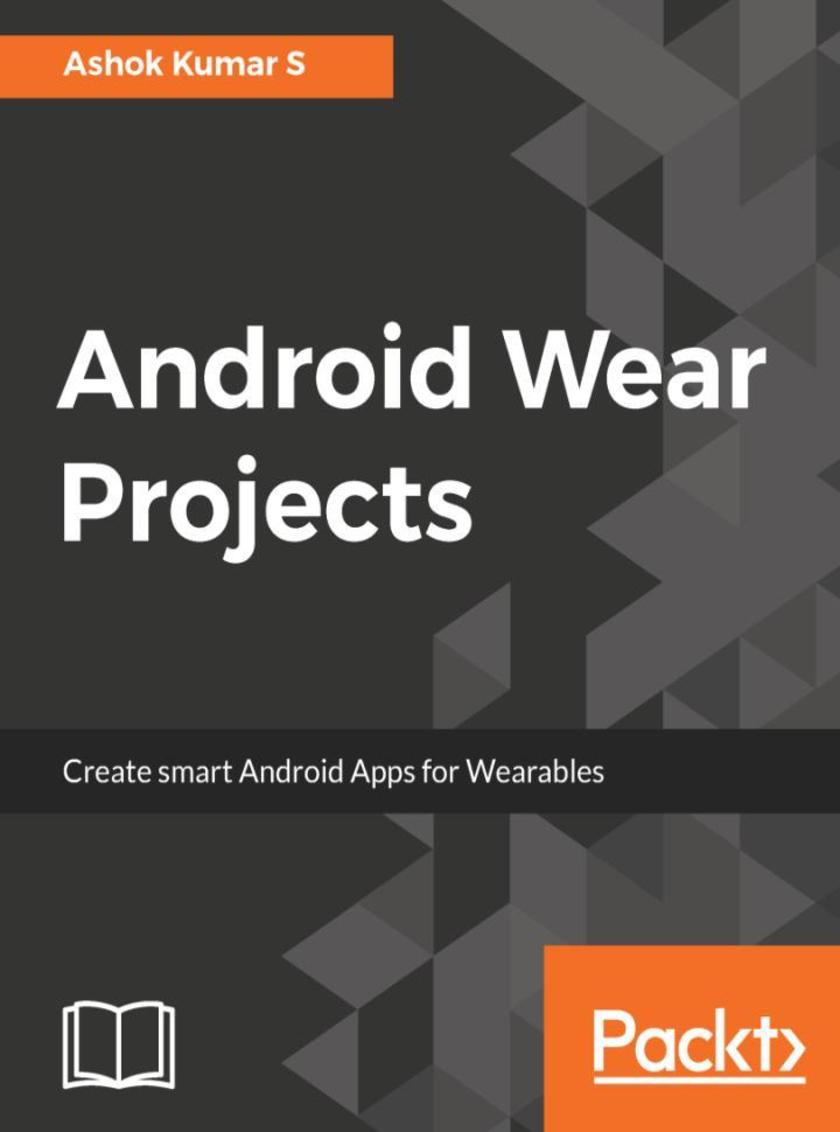
Android Wear Projects
¥80.65
A fun way to create interesting and cool apps for your Wearable device using Android programming. About This Book ? Create real-time Android Wear apps from scratch and become a pro Android Wear Developer ? Learn to create apps specially dedicated to the Android Wear platform ? Design custom Wear UIs and create interactive Watch faces Who This Book Is For The book is for Android developers with a good understanding of programming and developing applications on Android, but they need not have any experience of creating Wear apps. What You Will Learn ? Design and build Wear apps. ? Learn how to use offline storage in Wear apps. ? Understand sensors and how to work with them ? Work with standalone applications of the wear 2.0 API. ? Create a map application for Android Wear devices ? Write a watch face and understand more about Wear 2.0 ? Work with firebase realtime database and firebase functions ? Create a chatting application that has wear companion app In Detail Android Wear Projects is your opportunity to step into the exciting new world of Android Wear app development. This book will help you to master the skills in Android Wear programming and give you a complete insight on wear app development. You will create five different Android Wear apps just like the most popular Android Wear apps. You will create a To-do list, a city maps app, a Wear messenger, Wear fitness tracker and Watch face. While you create these apps you will learn to create custom notifications, receive voice inputs in notifications, add pages to notifications and stack notifications. You will see how to create custom wear app layouts, the custom UIs specially designed for Wear. You will learn to handle and manage data and syncing data with other devices, create interactive Watch faces and also ensure the safety and security of your Wear apps by testing and securing your apps before you deploy them on the app store. Style and approach This book will take a project based tutorial style approach where every chapter will create a separate android Wear app and highlight different features of android Wear apps.
Effective DevOps with AWS
¥80.65
Scale gracefully and maintain outstanding performance with your AWS-based infrastructure using DevOps principles About This Book ? Implement DevOps principles to take full advantage of the AWS stack and services ? Take expert look at solving problems faced by real developers and operation teams and learn to overcome them ? Learn from expert insights of the author who has worked with Silicon Valley’s most high-profile companies Who This Book Is For This book is for developers, DevOps engineers and teams who want to build and use AWS for their software infrastructure. Basic computer science knowledge is required for this book. What You Will Learn ? Find out what it means to practice DevOps and what its principles are ? Build repeatable infrastructures using templates and configuration management ? Deploy multiple times a day by implementing continuous integration and continuous deployment pipelines ? Use the latest technologies, including containers and serverless computing, to scale your infrastructure ? Collect metrics and logs and implement an alerting strategy ? Make your system robust and secure In Detail The DevOps movement has transformed the way modern tech companies work. AWS which has been on the forefront of the Cloud computing revolution has also been a key contributor of this DevOps movement creating a huge range of managed services that help you implement the DevOps principles. In this book, you’ll see how the most successful tech start-ups launch and scale their services on AWS and how you can too. Written by a lead member of Mediums DevOps team, this book explains how to treat infrastructure as code, meaning you can bring resources online and offline as necessary with the code as easily as you control your software. You will also build a continuous integration and continuous deployment pipeline to keep your app up to date. You’ll find out how to scale your applications to offer maximum performance to users anywhere in the world, even when traffic spikes with the latest technologies, such as containers and serverless computing. You will also take a deep dive into monitoring and alerting to make sure your users have the best experience when using your service. Finally, you’ll get to grips with ensuring the security of your platform and data. Style and approach This is a practical, hands-on, comprehensive guide to AWS, helping readers understand AWS in a step by step manner.


