


 购物车
购物车 个人中心
个人中心
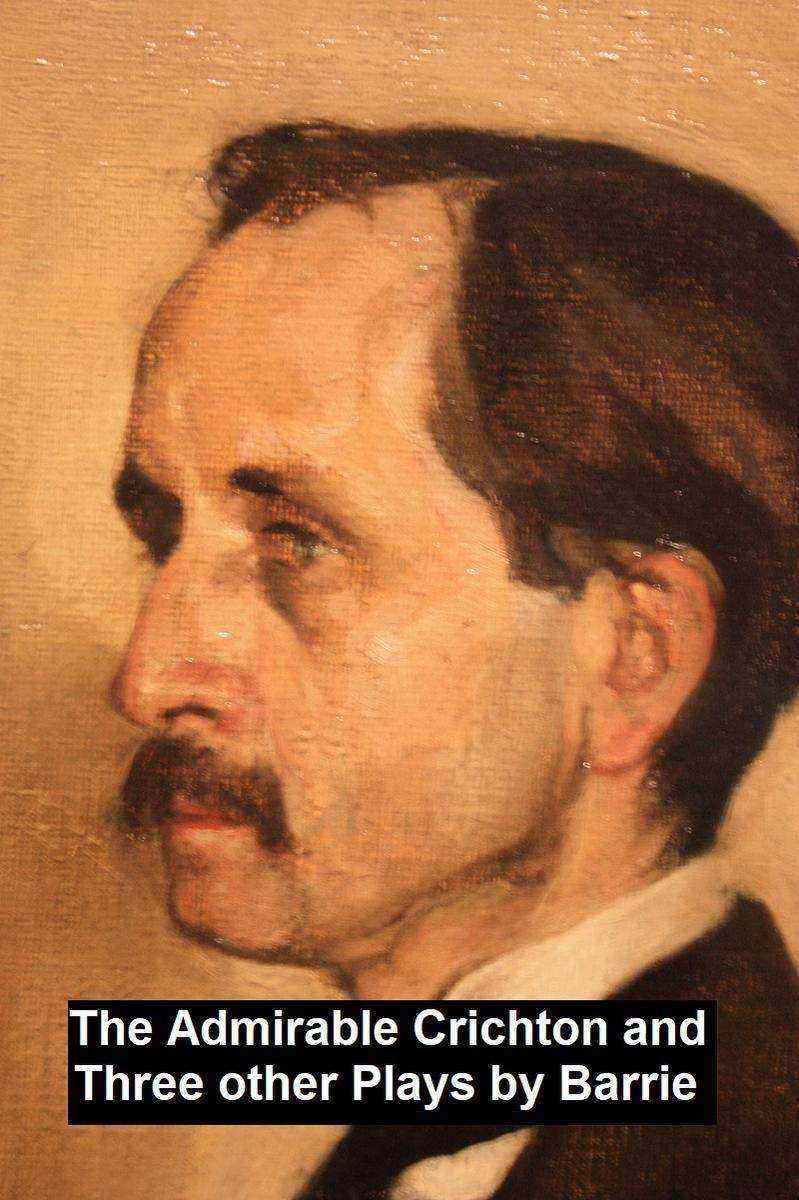
The Admirable Crichton and Three Other Plays
¥8.09
This collection includes: The Admirable Crichton, Alice Sit-By-the-Fire, Dear Brutus, and What Every Woman Knows. According to Wikipedia: "Sir James Matthew Barrie, 1st Baronet, OM (9 May 1860 – 19 June 1937) was a Scottish author and dramatist, best remembered today as the creator of Peter Pan. The child of a family of small-town weavers, he was educated in Scotland. He moved to London, where he developed a career as a novelist and playwright. There he met the Llewelyn Davies boys who inspired him in writing about a baby boy who has magical adventures in Kensington Gardens (included in The Little White Bird), then to write Peter Pan, or The Boy Who Wouldn't Grow Up, a "fairy play" about this ageless boy and an ordinary girl named Wendy who have adventures in the fantasy setting of Neverland. This play quickly overshadowed his previous work and although he continued to write successfully, it became his best-known work, credited with popularising the name Wendy, which was very uncommon previously. Barrie unofficially adopted the Davies boys following the deaths of their parents. Before his death, he gave the rights to the Peter Pan works to Great Ormond Street Hospital, which continues to benefit from them."
All's One or a Yorkshire Tragedy, Shakespeare Apocrypha
¥8.09
Elizabethan play, sometimes attributed in part to Shakespeare. According to Wikipedia: "William Shakespeare (baptised 26 April 1564 – died 23 April 1616) was an English poet and playwright, widely regarded as the greatest writer in the English language and the world's pre-eminent dramatist. He is often called England's national poet and the "Bard of Avon" (or simply "The Bard"). His surviving works consist of 38 plays, 154 sonnets, two long narrative poems, and several other poems. His plays have been translated into every major living language, and are performed more often than those of any other playwright."
The Last Stetson
¥8.09
Classic western. According to Wikipedia: "Born in Stony Point, Kentucky to John William Fox, Sr., and Minerva Worth Carr, Fox studied English at Harvard University. He graduated in 1883 before becoming a reporter in New York City. After working for both New York Times and the New York Sun, he published a successful serialization of his first novel, A Mountain Europa, in Century magazine in 1892. Two moderately successful short story collections followed, as well as his first conventional novel, The Kentuckians in 1898. Fox gained a following as a war correspondent, working for Harper's Weekly in Cuba during the Spanish-American War of 1898, where he served with the "Rough Riders." Six years later he traveled to Asia to report on the Russo-Japanese War for Scribner's magazine. Though he occasionally wrote for periodicals, after 1904, Fox dedicated much of his attention to fiction. The Little Shepherd of Kingdom Come (published in 1903) and The Trail of the Lonesome Pine (published in 1908) are arguably his most well known and successful works, entering the New York Times top ten list of bestselling novels for 1903, 1904, 1908, and 1909 respectively. Many of his works reflected the naturalist style, his childhood in Kentucky's Bluegrass region, and his life among the coal miners of Big Stone Gap, Virginia. Many of his novels were historical romances or period dramas set in that region."
The Exploration of the World
¥8.09
First part of Jules Verne's three-part history of the exploration of the world. This volume covers from Hanno and Herodotus to Champlain and LaSale. According to Wikipedia: "Jules Gabriel Verne (February 8, 1828 – March 24, 1905) was a French author who pioneered the science-fiction genre. He is best known for his novels Journey to the Center of the Earth (written in 1864), From the Earth to the Moon (1865), Twenty Thousand Leagues Under the Sea (1869–1870), and Around the World in Eighty Days (1873). Verne wrote about space, air, and underwater travel before navigable aircraft and practical submarines were invented, and before any means of space travel had been devised. Consequently he is often referred to as the "Father of science fiction", along with H. G. Wells. Verne is the second most translated author of all time, only behind Agatha Christie with 4162 translations..."
Guy Mannering
¥8.09
First published in 1815. Set in Galloway, Scotland, 1760-1765 and 1781-1782. According to Wikipedia: "Sir Walter Scott, 1st Baronet (1771 – 1832) was a prolific Scottish historical novelist and poet popular throughout Europe during his time. In some ways Scott was the first English-language author to have a truly international career in his lifetime, with many contemporary readers all over Europe, Australia, and North America. His novels and poetry are still read, and many of his works remain classics of both English-language literature and of Scottish literature. Famous titles include Ivanhoe, Rob Roy, The Lady of The Lake, Waverley, The Heart of Midlothian and The Bride of Lammermoor."
The Moon Endureth: Tales and Fancies
¥8.09
The Moon Endureth by John Buchan is a collection of tales and fancies, in prose and verse, which were originally published in Blackwood's Magazine. It includes From the Pentlands looking North and South, The Company of the Marjolaine, Avignon 1759, Lucid Interval, The Shorter Catechism (revised version), The Lemnian, Atta's song, Space, Stocks and Stones, Streams of Water in the South, The Gipsy's song to the lady Cassilis, The Grove of Ashtaroth, Wood magic, The riding of Ninemileburn, Plain Folk, The Kings of Orion, Babylon, The Green Glen, The Wise Years, Updater's note: Chapter 9 missing from etext], and The Rime of True Thomas. According to Wikipedia, "John Buchan, 1st Baron Tweedsmuir (26 August 1875 – 11 February 1940) was a Scottish novelist and Unionist politician who served as Governor General of Canada. Buchan's 100 works include nearly thirty novels, seven collections of short stories and biographies of Sir Walter Scott, Caesar Augustus, and Oliver Cromwell. Buchan's most famous of his books were the spy thrillers (including) The 39 Steps (which was converted to a play as well as an Alfred Hitchcock movie starring Robert Donat as Richard Hannay, though with Buchan's story much altered.) The "last Buchan" (as Graham Greene entitled his appreciative review) was the 1941 novel Sick Heart River (American title: Mountain Meadow), in which a dying protagonist confronts in the Canadian wilderness the questions of the meaning of life. The insightful quotation "It's a great life, if you don't weaken" is famously attributed to Buchan, as is "No great cause is ever lost or won, The battle must always be renewed, And the creed must always be restated."
Can You Forgive Her?
¥8.09
First published serially in 1864-1865 and in book form in 1864 (Volume I) and 1865. The Palliser series consists of: Can You Forgive Her? Phineas Finn, The Eustace Diamonds, Phineas Redux, The Prime Minister, and The Duke's Children. According to Wikipedia: "Anthony Trollope ( 1815 – 1882 ) became one of the most successful, prolific and respected English novelists of the Victorian era. Some of Trollope's best-loved works, known as the Chronicles of Barsetshire, revolve around the imaginary county of Barsetshire; he also wrote penetrating novels on political, social, and gender issues and conflicts of his day. Trollope has always been a popular novelist. Noted fans have included Sir Alec Guinness (who never travelled without a Trollope novel), former British Prime Ministers Harold Macmillan and Sir John Major, economist John Kenneth Galbraith, American novelists Sue Grafton and Dominick Dunne and soap opera writer Harding Lemay. Trollope's literary reputation dipped somewhat during the last years of his life, but he regained the esteem of critics by the mid-twentieth century. "Of all novelists in any country, Trollope best understands the role of money. Compared with him even Balzac is a romantic." — W. H. Auden"
The Itinerary of Benjamin of Tudela
¥8.09
First-hand account of a pilgrimage to the Holy Land in the twelfth century. The introduction begins: "The Itinerary of Benjamin of Tudela throws a flashlight upon one of the most interesting stages in the development of nations. The history of the civilized world from the downfall of the Roman Empire to the present day may be summarized as the struggle between Cross and Crescent. This struggle is characterized by a persistent ebb and flow. Mohammed in 622 A.D. transformed, as if by magic, a cluster of Bedouin tribes into a warlike people. An Arabian Empire was formed, which reached from the Ebro to the Indus. Its further advance was stemmed in the year 732, just a hundred years after Mohammed's death, by Charles Martel, in the seven days' battle of Tours. The progress of the culture of the Arabs was as rapid as had been that of their arms. Great cities such as Cairo and Bagdad were built. Commerce and manufactures flourished. The Jews, who enjoyed protection under the benign rule of the Caliphs..."
Nathaniel Hawthorne
¥8.09
According to Wikipedia: "George Edward Woodberry, Litt. D., LL. D. (May 12, 1855–January 2, 1930) was an American literary critic and poet… For twelve years, Woodberry was an almost constant writer to the literary portion of The Nation. He also, during Aldrich's editorship, was anonymously, and for this reason able, the more forcibly, to asser his critical strength in the Atlantic Monthly. He contributed one paper to the Fortnightly Review in 1882, and during 1888 wrote regularly, mostly upon literary topics, for the Boston Post. In 1891–1904 he was professor of comparative literature at Columbia University. He was elected to the American Academy of Arts and Letters. In 1930 he was posthumously awarded one of the first three Frost Medals for lifetime achievement in poetry by the Poetry Society of America. He wrote a number of books as well."
A Series Of Lessons In Raja Yoga
¥8.09
An absolute must for anyone interested in practicing Raja Yoga. ? Listen to what readers are saying: ? “It is over thirty years since I studied the entire works and teachings of Ramacharaka and even now his knowledge of yoga has proved invaluable in my own life as a Psychologist,Nuro-pathological re-mapping,without his teachings my own self knowledge would be lacking from my own understanding.Jai Sat Guru Dev.” ? “I read this book the first time in 1968. It was instrumental in my life long study of Yoga. Because of the priceless knowlegde contained within this text I went to India where I met a Fully Awakened Yoga Master. In a sense I owe it all to "Ramacharaka" and this book. 10 Star Rating!!!” ? “The reading of this book aided me beond words in finding the truths of this exsistance. I recomend it to everyone, those who are in need of its information will get more than they have ever desired. Peace unto you”
The Louisa May Alcott Reader
¥8.09
Fourth grade reading text, consisting of excerpts from the works of Louisa May Alcott -- I. A CHRISTMAS DREAM, II. THE CANDY COUNTRY, III. NAUGHTY JOCKO, IV. THE SKIPPING SHOES, V. COCKYLOO, VI. ROSY'S JOURNEY, VII. HOW THEY RAN AWAY, VIII. THE FAIRY BOX, IX. A HOLE IN THE WALL, and X. THE PIGGY GIRL. According to Wikipedia: "Louisa May Alcott (1832 – 1888) was an American novelist. She is best known for the novel Little Women, published in 1868. This novel is loosely based on her childhood experiences with her three sisters."
Young Folks' History of Rome
¥8.09
From Aeneas to Charlemagne. According to Wikipedia: "Charlotte Mary Yonge ( 1823 - 1901), was an English novelist, known for her huge output, now mostly out of print. ... She began writing in 1848, and published during her long life about 100 works, chiefly novels. ... Among the best known of her works are The Heir of Redclyffe, Heartsease, and The Daisy Chain. A Book of Golden Deeds is a collection of true stories of courage and self-sacrifice. She also wrote Cameos from English History, Life of John Coleridge Patteson: Missionary Bishop of the Melanesian Islands and Hannah More.... Although Yonge's work is largely out of print today, during her lifetime she was admired and respected by such notable literary figures as Alfred Tennyson and Henry James, and strongly influenced the Pre-Raphaelite Brotherhood, especially William Morris and D. G. Rossetti."
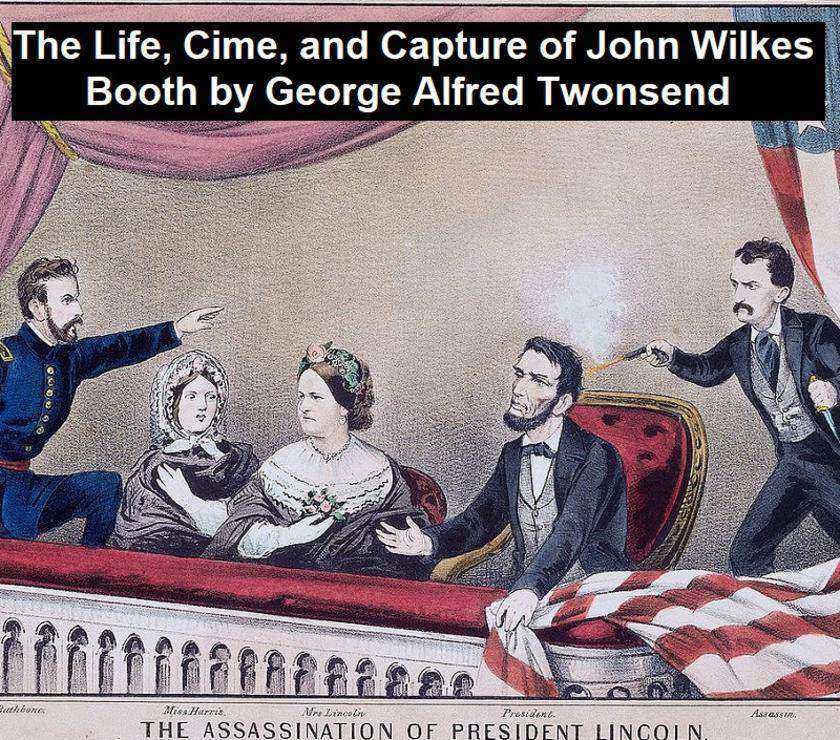
The Life, Crimes, and Capture of John Wilkes Booth
¥8.09
Account of the assassination of Abraham Lincoln, first published in 1865. According to Wikipedia: "George Alfred Townsend (January 30, 1841 – April 15, 1914), was a noted war correspondent during the American Civil War, and a later novelist. Townsend wrote under the pen name "Gath", which was derived by adding an "H" to his initials, and inspired by the biblical passage II Samuel 1:20, "Tell it not in Gath, publish it not in the streets of Askalon"... He is considered to have been the youngest correspondent of the war. In 1865, Townsend was Washington correspondent for the New York World, covering the assassination of Abraham Lincoln and its aftermath. His daily reports filed between April 17 – May 17 were published later in 1865 as a book, The Life, Crime, and Capture of John Wilkes Booth."
Essays and Counsels, Civil and Moral
¥8.09
From the essay "Of Study": "Some books are to be tasted, others to be swallowed, and some few to be chewed and digested; that is, some books are to be read only in parts; others to be read, but not curiously; and some few to be read wholly, and with diligence and attention." According to Wikipedia: "Francis Bacon, 1st Viscount St Alban KC QC (22 January 1561 — 9 April 1626) was an English philosopher, statesman, and author. He served both as Attorney General and Lord Chancellor of England. He is also known as a catalyst of the scientific revolution. His most celebrated works include The New Atlantis. Bacon was knighted in 1603, created Baron Verulam in 1618, and Viscount St Alban in 1621..."
The Awakening and Selected Short Stories
¥8.09
From the Introduction: "In the early Christian centuries thousands turned to the Bible, as drowning men to a life buoy, because it offered them the only way of escape from the intolerable social and moral ills that attended the death pangs of the old heathenism. Then came the Dark Ages, with their resurgent heathenism and barbarism, when the Bible was taken from the hands of the people. In the hour of a nation's deepest humiliation and moral depravity, John Wycliffe, with the aid of a devoted army of lay priests, gave back the Bible to the people, and in so doing laid the foundations for England's intellectual, political and moral greatness. The joy and inspiration of the Protestant Reformers was the rediscovery and popular interpretation of the Bible. In all the great forward movements of the modern centuries the Bible has played a central role. The ultimate basis of our magnificent modern scientific and material progress is the inspiration given to the human race by the Protestant Reformation."
Beautiful Stories from Shakespeare
¥8.09
From the Preface: "Shakespeare instructed by delighting. His plays alone (leaving mere science out of the question), contain more actual wisdom than the whole body of English learning. He is the teacher of all good-- pity, generosity, true courage, love. His bright wit is cut out "into little stars." His solid masses of knowledge are meted out in morsels and proverbs, and thus distributed, there is scarcely a corner of the English-speaking world to-day which he does not illuminate, or a cottage which he does not enrich. His bounty is like the sea, which, though often unacknowledged, is everywhere felt. As his friend, Ben Jonson, wrote of him, "He was not of an age but for all time."
Nero
¥8.09
According to Wikipedia: "Jacob Abbott (November 14, 1803 – October 31, 1879) was an American writer of children's books. Abbott was born at Hallowell, Maine to Jacob and Betsey Abbott. He graduated from Bowdoin College in 1820; studied at Andover Theological Seminary in 1821, 1822, and 1824; was tutor in 1824-1825, and from 1825 to 1829 was professor of mathematics and natural philosophy at Amherst College; was licensed to preach by the Hampshire Association in 1826; founded the Mount Vernon School for Young Ladies in Boston in 1829, and was principal of it in 1829-1833; was pastor of Eliot Congregational Church (which he founded), at Roxbury, Massachusetts in 1834-1835; and was, with his brothers, a founder, and in 1843-1851 a principal of Abbott's Institute, and in 1845-1848 of the Mount Vernon School for Boys, in New York City. He was a prolific author, writing juvenile fiction, brief histories, biographies, religious books for the general reader, and a few works in popular science. He died in Farmington, Maine, where he had spent part of his time after 1839, and where his brother, Samuel Phillips Abbott, founded the Abbott School."
Siddhartha, Eine Indische Dichtung
¥8.09
Klassischer Roman, erstmals im Original 1922 ver?ffentlicht. Nach Wikipedia: "Siddhartha ist ein Roman von Hermann Hesse, der sich mit der spirituellen Reise eines Jungen namens Siddhartha vom indischen Subkontinent zur Zeit des Buddha besch?ftigt. Das Buch , Hesses neunter Roman, wurde auf eine einfache, aber dennoch kraftvolle und lyrische Art geschrieben, die 1951 in den USA ver?ffentlicht wurde und in den 1960er Jahren einflussreich wurde: Hesse widmete Siddhartha Ninon Hesse, seiner Frau, das Wort Siddhartha von zwei W?rtern in der Sanskrit-Sprache, siddha (erreicht) + artha (Bedeutung oder Reichtum). Die beiden W?rter zusammen bedeuten "derjenige, der Bedeutung (der Existenz) gefunden hat" oder "Er, der seine Ziele erreicht hat". Der Name des Buddha, vor seiner Entsagung war Prinz Siddhartha Gautama. In diesem Buch wird der Buddha als "Gotama" bezeichnet. "Hermann Hesse (2. Juli 1877 - 9. August 1962) war ein in Deutschland geborener Schweizer Dichter, Romancier und Maler. Im Jahr 1946 erhielt er den Nobelpreis für Literatur. Zu seinen bekanntesten Werken z?hlen Steppenwolf, Siddhartha und The Glass Bead Game (auch bekannt als Magister Ludi), die alle die Suche nach Authentizit?t, Selbsterkenntnis und Spiritualit?t untersuchen. "
Cranford
¥8.09
Gaskell's best-known novel, the subject of a recent movie starring Dame Judi Dench and Simon Woods. According to Wikipedia: "Elizabeth Cleghorn Gaskell ( 1810 – 1865), often referred to simply as Mrs. Gaskell, was an English novelist and short story writer during the Victorian era. She is perhaps best known for her biography of Charlotte Bront?. Her novels offer a detailed portrait of the lives of many strata of society, including the very poor, and as such are of interest to social historians as well as lovers of literature."
Tanglewood Tales
¥8.09
Greek myths retold as stories for children. According to Wikipedia: "Nathaniel Hawthorne (1804 –1864) was an American novelist and short story writer... Much of Hawthorne's writing centers around New England and many feature moral allegories with a Puritan inspiration. His fiction works are considered part of the Romantic movement and, more specifically, dark romanticism. His themes often center on the inherent evil and sin of humanity and his works often have moral messages and deep psychological complexity. His published works include novels, short stories, and a biography of his friend Franklin Pierce."
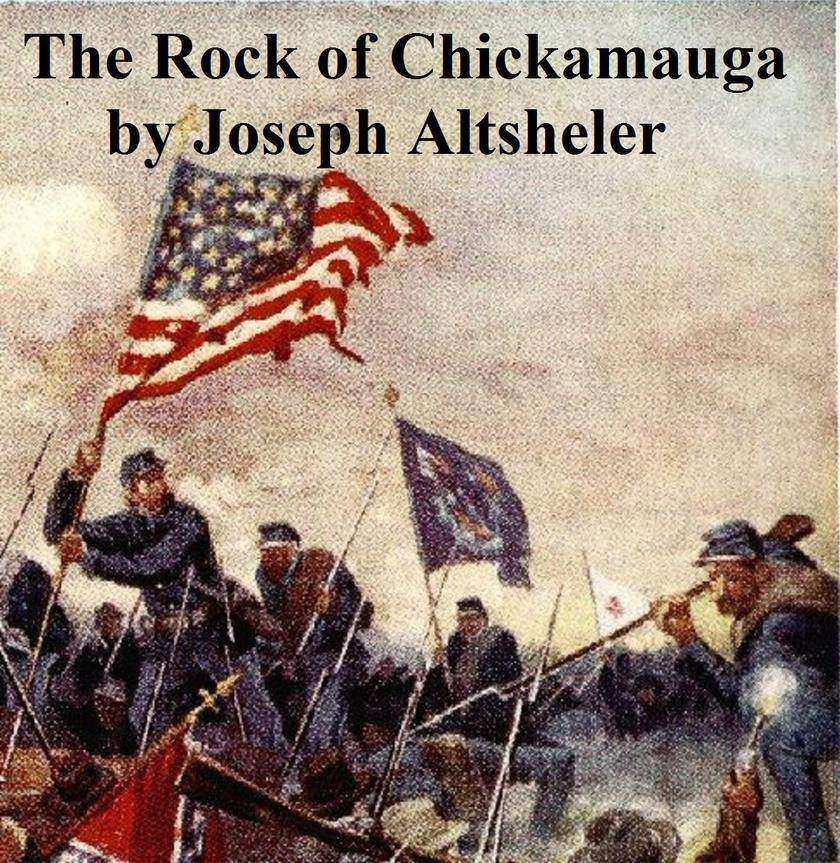
The Rock of Chickamagua
¥8.09
Historical novel from the Civil War series. "The Rock of Chickamauga," presenting a critical phase of the great struggle in the west, is the sixth volume in the series, dealing with the Civil War, of which its predecessors have been "The Guns of Bull Run," "The Guns of Shiloh," "The Scouts of Stonewall," "The Sword of Antietam" and "The Star of Gettysburg." Dick Mason who fights on the Northern side, is the hero of this romance, and his friends reappear also. According to Wikipedia: "Joseph Alexander Altsheler (1862 - 1919), was an American author of popular juvenile historical fiction. Altsheler was born in Three Springs, Kentucky to Joseph and Louise Altsheler. In 1885, he took a job at the Louisville Courier-Journal as a reporter and later, an editor. He started working for the New York World in 1892, first as the paper's Hawaiian correspondent and then as the editor of the World's tri-weekly magazine. Due to a lack of suitable stories, he began writing children's stories for the magazine."


