


 购物车
购物车 个人中心
个人中心
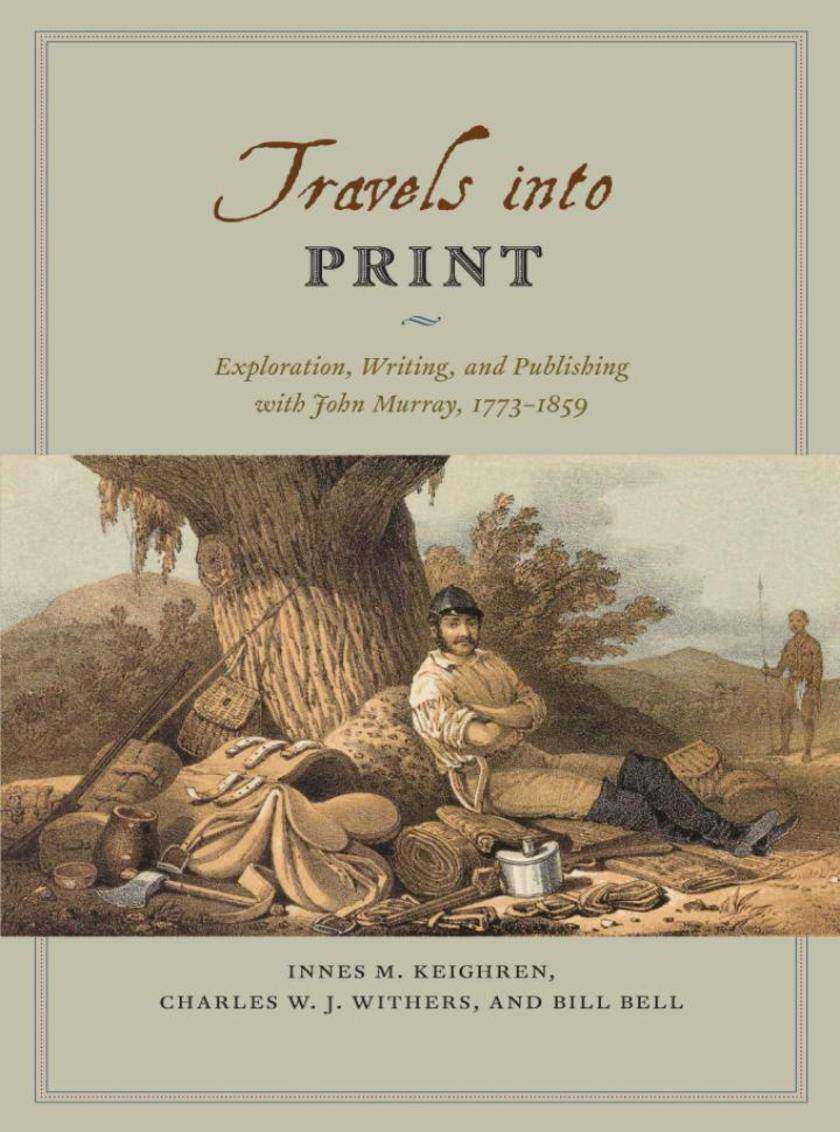
Travels into Print
¥370.82
In eighteenth- and nineteenth-century Britain, books of travel and exploration were much more than simply the printed experiences of intrepid authors. They were works of both artistry and industry-products of the complex, and often contested, relationships between authors and editors, publishers and printers. These books captivated the reading public and played a vital role in creating new geographical truths. In an age of global wonder and of expanding empires, there was no publisher more renowned for its travel books than the House of John Murray.Drawing on detailed examination of the John Murray Archive of manu*s, images, and the firm's correspondence with its many authors-a list that included such illustrious explorers and scientists as Charles Darwin and Charles Lyell, and literary giants like Jane Austen, Lord Byron, and Sir Walter Scott-Travels into Print considers how journeys of exploration became published accounts and how travelers sought to demonstrate the faithfulness of their written testimony and to secure their personal credibility. This fascinating study in historical geography and book history takes modern readers on a journey into the nature of exploration, the production of authority in published travel narratives, and the creation of geographical authorship-a journey bound together by the unifying force of a world-leading publisher.
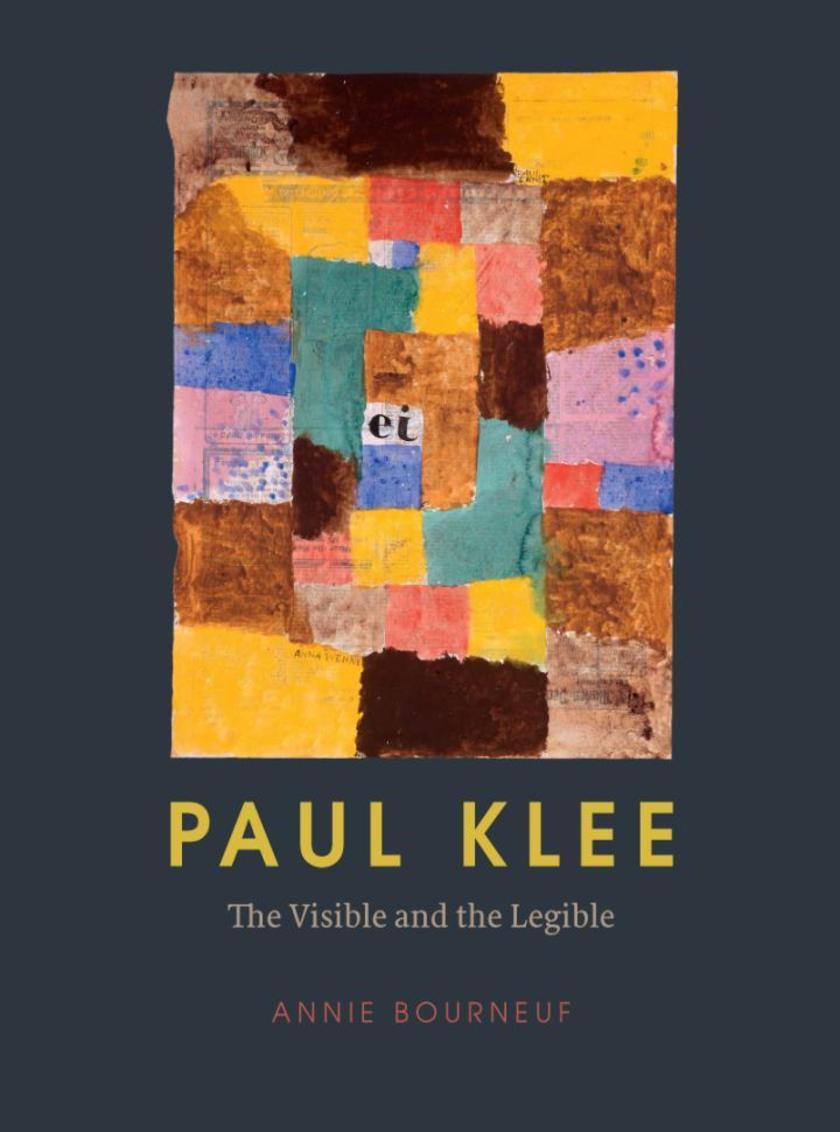
Paul Klee
¥370.82
The fact that Paul Klee (1879-1940) consistently intertwined the visual and the verbal in his art has long fascinated commentators from Walter Benjamin to Michel Foucault. However, the questions it prompts have never been satisfactorily answered-until now. In?Paul Klee, Annie Bourneuf offers the first full account of the interplay between the visible and the legible in Klee's works from the 1910s and 1920s.Bourneuf argues that Klee joined these elements to invite a manner of viewing that would unfold in time, a process analogous to reading. From his elaborate titles to the small scale he favored to his metaphoric play with materials, Klee created forms that hover between the pictorial and the written. Through his unique approach, he subverted forms of modernist painting that were generally seen to threaten slow, contemplative viewing. Tracing the fraught relations among seeing, reading, and imagining in the early twentieth century, Bourneuf shows how Klee reconceptualized abstraction at a key moment in its development.
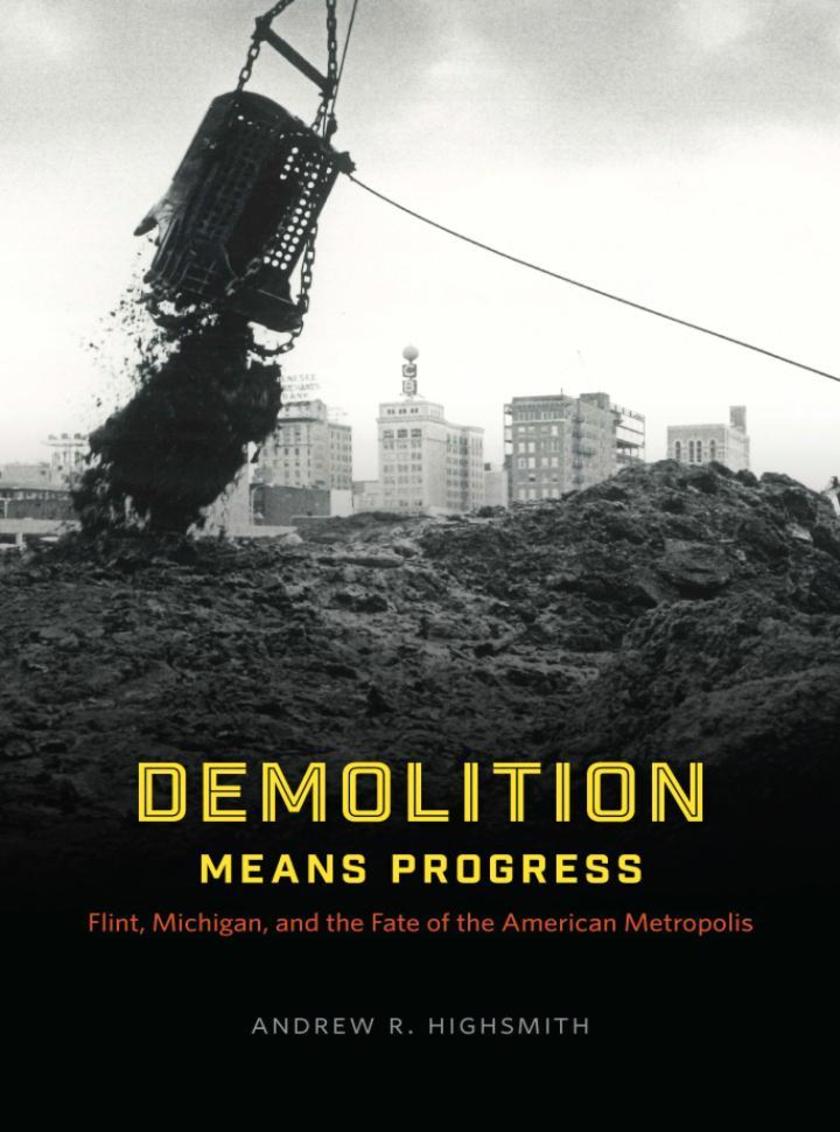
Demolition Means Progress
¥370.82
In 1997, after General Motors shuttered a massive complex of factories in the gritty industrial city of Flint, Michigan, signs were placed around the empty facility reading, "e;Demolition Means Progress,"e; suggesting that the struggling metropolis could not move forward to greatness until the old plants met the wrecking ball. Much more than a trite corporate slogan, the phrase encapsulates the operating ethos of the nation's metropolitan leadership from at least the 1930s to the present. Throughout, the leaders of Flint and other municipalities repeatedly tried to revitalize their communities by demolishing outdated and inefficient structures and institutions and overseeing numerous urban renewal campaigns-many of which yielded only more impoverished and more divided metropolises. After decades of these efforts, the dawn of the twenty-first century found Flint one of the most racially segregated and economically polarized metropolitan areas in the nation.In one of the most comprehensive works yet written on the history of inequality and metropolitan development in modern America, Andrew R. Highsmith uses the case of Flint to explain how the perennial quest for urban renewal-even more than white flight, corporate abandonment, and other forces-contributed to mass suburbanization, racial and economic division, deindustrialization, and political fragmentation. Challenging much of the conventional wisdom about structural inequality and the roots of the nation's "e;urban crisis,"e; Demolition Means Progress shows in vivid detail how public policies and programs designed to revitalize the Flint area ultimately led to the hardening of social divisions.
Vital Minimum
¥370.82
What constitutes a needWho gets to decide what people do or do not needIn modern France, scientists, both amateur and professional, were engaged in defining and measuring human needs. These scientists did not trust in a providential economy to distribute the fruits of labor and uphold the social order. Rather, they believed that social organization should be actively directed according to scientific principles. They grounded their study of human needs on quantifiable foundations: agricultural and physiological experiments, demographic studies, and statistics.The result was the concept of the "e;vital minimum"e;--the living wage, a measure of physical and social needs. In this book, Dana Simmons traces the history of this concept, revealing the intersections between technologies of measurement, such as calorimeters and social surveys, and technologies of wages and welfare, such as minimum wages, poor aid, and welfare programs. In looking at how we define and measure need, Vital Minimum raises profound questions about the authority of nature and the nature of inequality.
Enigma of the Aerofoil
¥353.16
Why do aircraft flyHow do their wings support themIn the early years of aviation, there was an intense dispute between British and German experts over the question of why and how an aircraft wing provides lift. The British, under the leadership of the great Cambridge mathematical physicist Lord Rayleigh, produced highly elaborate investigations of the nature of discontinuous flow, while the Germans, following Ludwig Prandtl in Gottingen, relied on the tradition called "e;technical mechanics"e; to explain the flow of air around a wing. Much of the basis of modern aerodynamics emerged from this remarkable episode, yet it has never been subject to a detailed historical and sociological analysis.?In The Enigma of the Aerofoil, David Bloor probes a neglected aspect of this important period in the history of aviation. Bloor draws upon papers by the participants-their restricted technical reports, meeting minutes, and personal correspondence, much of which has never before been published-and reveals the impact that the divergent mathematical traditions of Cambridge and Gttingen had on this great debate. Bloor also addresses why the British, even after discovering the failings of their own theory, remained resistant to the German circulation theory for more than a decade. The result is essential reading for anyone studying the history, philosophy, or sociology of science or technology-and for all those intrigued by flight.
Gravity's Ghost
¥353.16
In theory, at least, gravitational waves do exist. We are constantly bathed in gravitational radiation, which is generated when stars explode or collide and a portion of their mass becomes energy that ripples out like a disturbance on the surface of a serene pond. But unfortunately no gravitational wave has ever been directly detected even though the search has lasted more than forty years.As the leading chronicler of the search for gravitational waves, Harry Collins has been right there with the scientists since the start. The result of his unprecedented access to the front lines of physical science is Gravity's Ghost, a thrilling chronicle of high-stakes research and cutting-edge discovery. Here, Collins reveals that scientific discovery and nondiscovery can turn on scientific traditions and rivalries, that ideal statistical analysis rests on impossible procedures and unattainable knowledge, and that fact in one place is baseless assumption in another.?He also argues that sciences like gravitational wave detection, in exemplifying how the intractable is to be handled, can offer scientific leadership a moral beacon for the twenty-first century. In the end, Gravity's Ghost shows that discoveries are the denouements of dramatic scientific mysteries.
Uncivil Unions
¥353.16
"e;What a strange invention marriage is!"e; wrote Kierkegaard. "e;Is it the expression of that inexplicable erotic sentiment, that concordant elective affinity of souls, or is it a duty or a partnership . . . or is it a little of all that?"e;Like Kierkegaard a few decades later, many of Germany's most influential thinkers at the turn of the eighteenth century wondered about the nature of marriage but rejected the easy answers provided by biology and theology. In Uncivil Unions, Adrian Daub presents a truly interdisciplinary look at the story of a generation of philosophers, poets, and intellectuals who turned away from theology, reason, common sense, and empirical observation to provide a purely metaphysical justification of marriage.Through close readings of philosophers like Fichte and Schlegel, and novelists like Sophie Mereau and Jean Paul, Daub charts the development of this new concept of marriage with an insightful blend of philosophy, cultural studies, and theory. The author delves deeply into the lives and work of the romantic and idealist poets and thinkers whose beliefs about marriage continue to shape ideas about gender, marriage, and sex to the present day.
Contemporary Athletics and Ancient Greek Ideals
¥353.16
Despite their influence in our culture, sports inspire dramatically less philosophical consideration than such ostensibly weightier topics as religion, politics, or science. Arguing that athletic playfulness coexists with serious underpinnings, and that both demand more substantive attention, Daniel Dombrowski harnesses the insights of ancient Greek thinkers to illuminate contemporary athletics.Dombrowski contends that the ideas of Plato, Aristotle, and Plotinus shed important light on issues-such as the pursuit of excellence, the concept of play, and the power of accepting physical limitations while also improving one's body-that remain just as relevant in our sports-obsessed age as they were in ancient Greece. Bringing these concepts to bear on contemporary concerns, Dombrowski considers such questions as whether athletic competition can be a moral substitute for war, whether it necessarily constitutes war by other means, and whether it encourages fascist tendencies or ethical virtue. The first volume to philosophically explore twenty-first-century sport in the context of its ancient predecessor, Contemporary Athletics and Ancient Greek Ideals reveals that their relationship has great and previously untapped potential to inform our understanding of human nature.
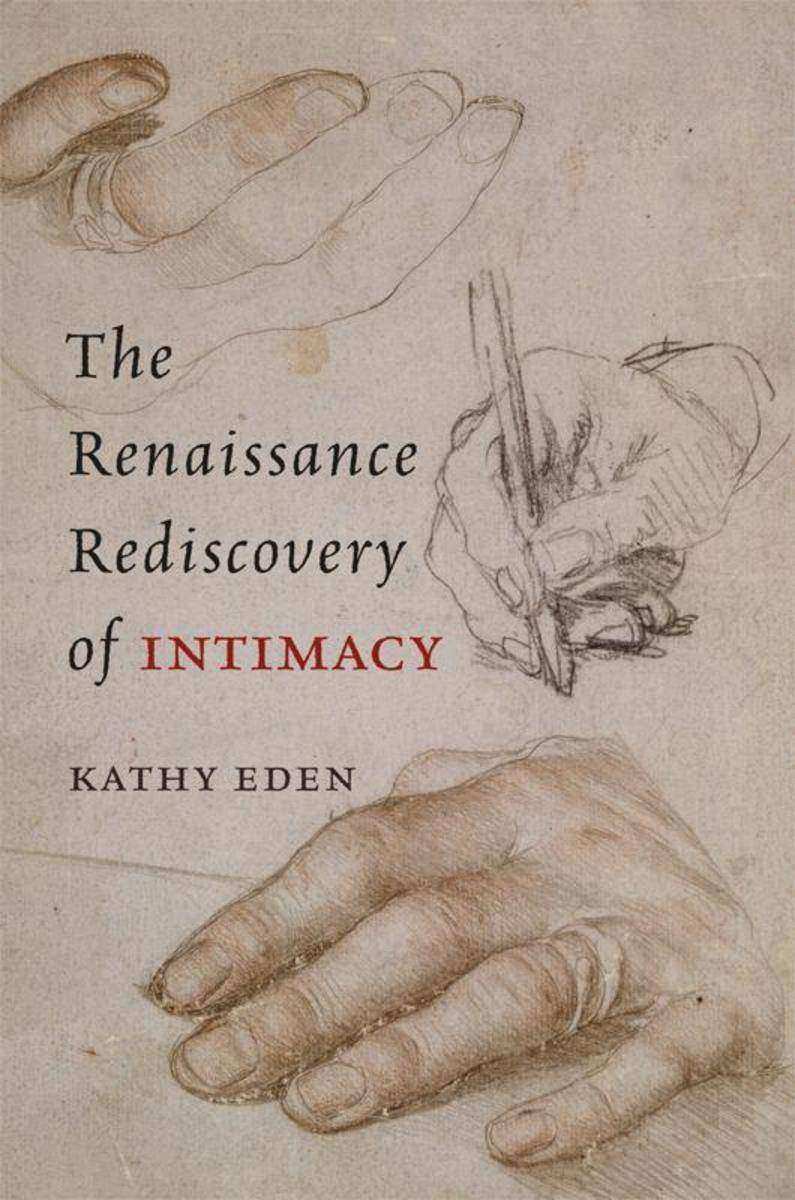
Renaissance Rediscovery of Intimacy
¥353.16
In 1345, when Petrarch recovered a lost collection of letters from Cicero to his best friend Atticus, he discovered an intimate Cicero, a man very different from either the well-known orator of the Roman forum or the measured spokesman for the ancient schools of philosophy. It was Petrarch's encounter with this previously unknown Cicero and his letters that Kathy Eden argues fundamentally changed the way Europeans from the fourteenth through the sixteenth centuries were expected to read and write.The Renaissance Rediscovery of Intimacy explores the way ancient epistolary theory and practice were understood and imitated in the European Renaissance.Eden draws chiefly upon Aristotle, Cicero, and Seneca-but also upon Plato, Demetrius, Quintilian, and many others-to show how the classical genre of the "e;familiar"e; letter emerged centuries later in the intimate styles of Petrarch, Erasmus, and Montaigne. Along the way, she reveals how the complex concept of intimacy in the Renaissance-leveraging the legal, affective, and stylistic dimensions of its prehistory in antiquity-pervades the literary production and reception of the period and sets the course for much that is modern in the literature of subsequent centuries. Eden's important study will interest students and scholars in a number of areas, including classical, Renaissance, and early modern studies; comparative literature; and the history of reading, rhetoric, and writing.
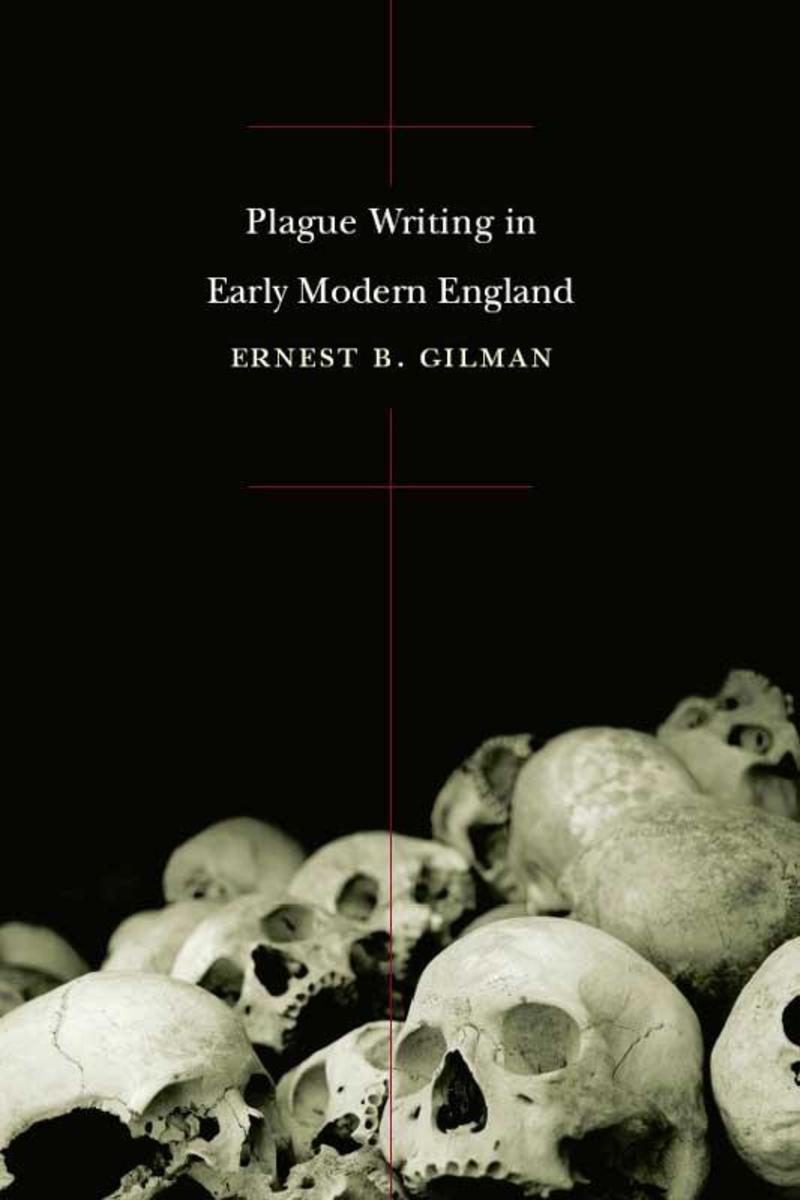
Plague Writing in Early Modern England
¥353.16
During the seventeenth century, England was beset by three epidemics of the bubonic plague, each outbreak claiming between a quarter and a third of the population of London and other urban centers. Surveying a wide range of responses to these epidemics-sermons, medical tracts, pious exhortations, satirical pamphlets, and political commentary-Plague Writing in Early Modern England brings to life the many and complex ways Londoners made sense of such unspeakable devastation.Ernest B. Gilman argues that the plague writing of the period attempted unsuccessfully to rationalize the catastrophic and that its failure to account for the plague as an instrument of divine justice fundamentally threatened the core of Christian belief. Gilman also trains his critical eye on the works of Jonson, Donne, Pepys, and Defoe, which, he posits, can be more fully understood when put into the context of this century-long project to "e;write out"e; the plague. Ultimately, Plague Writing in Early Modern England is more than a compendium of artifacts of a bygone era; it holds up a distant mirror to reflect our own condition in the age of AIDS, super viruses, multidrug resistant tuberculosis, and the hovering threat of a global flu pandemic.
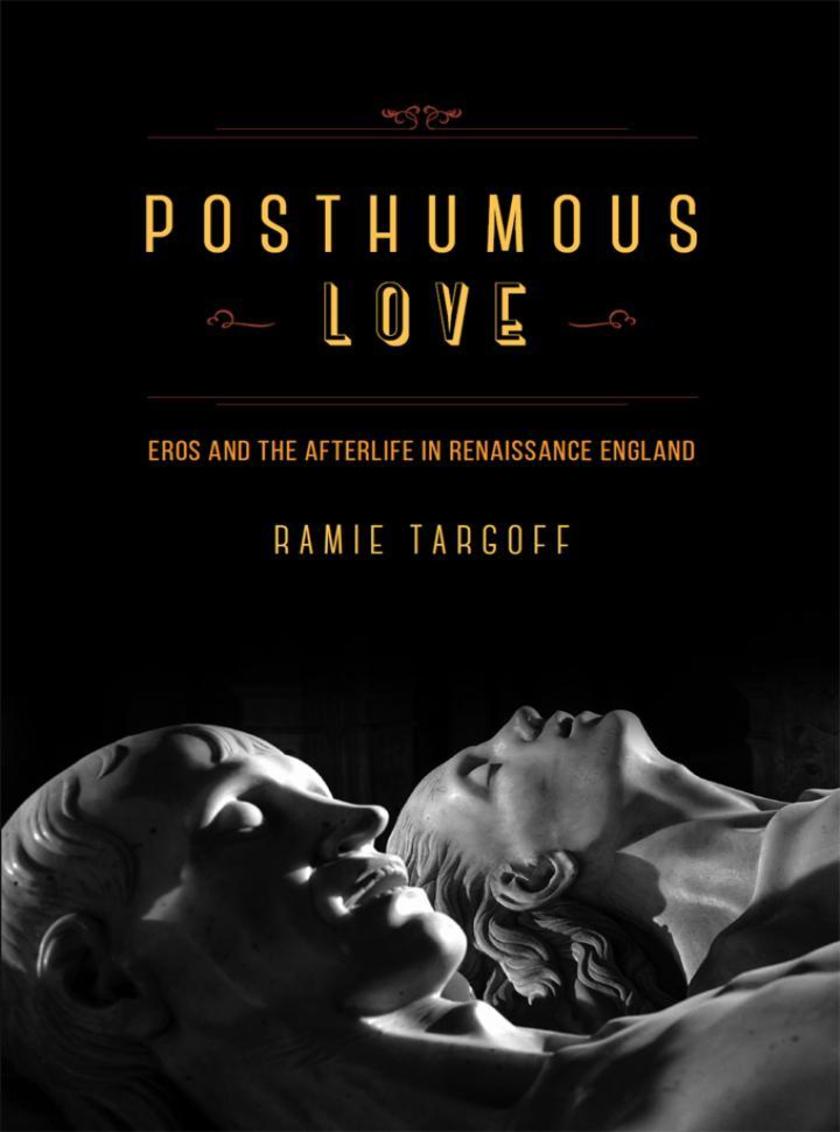
Posthumous Love
¥329.62
For Dante and Petrarch, posthumous love was a powerful conviction. Like many of their contemporaries, both poets envisioned their encounters with their beloved in heaven-Dante with Beatrice, Petrarch with Laura. But as Ramie Targoff reveals in this elegant study, English love poetry of the Renaissance brought a startling reversal of this tradition: human love became definitively mortal. Exploring the boundaries that Renaissance English poets drew between earthly and heavenly existence, Targoff seeks to understand this shift and its consequences for English poetry.?Targoff shows that medieval notions of the somewhat flexible boundaries between love in this world and in the next were hardened by Protestant reformers, who envisioned a total break between the two. Tracing the narrative of this rupture, she focuses on central episodes in poetic history in which poets developed rich and compelling compensations for the lack of posthumous love-from Thomas Wyatt's translations of Petrarch's love sonnets and the Elizabethan sonnet series of Shakespeare and Spencer to the?carpe diem?poems of the seventeenth century. Targoff's centerpiece is?Romeo and Juliet, where she considers how Shakespeare's reworking of the Italian story stripped away any expectation that the doomed teenagers would reunite in heaven. Casting new light on these familiar works of poetry and drama, this book ultimately demonstrates that the negation of posthumous love brought forth a new mode of poetics that derived its emotional and aesthetic power from its insistence upon love's mortal limits.
All Edge
¥329.62
Work is changing. Speed and flexibility are more in demand than ever before thanks to an accelerating knowledge economy and sophisticated communication networks. These changes have forced a mass rethinking of the way we coordinate, collaborate, and communicate. Instead of projects coming to established teams, teams are increasingly converging around projects. These "e;all-edge adhocracies"e; are highly collaborative and mostly temporary, their edge coming from the ability to form links both inside and outside an organization. These nimble groups come together around a specific task, recruiting personnel, assigning roles, and establishing objectives. When the work is done they disband their members and take their skills to the next project.Spinuzzi offers for the first time a comprehensive framework for understanding how these new groups function and thrive. His rigorous analysis tackles both the pros and cons of this evolving workflow and is based in case studies of real all-edge adhocracies at work. His provocative results will challenge our long-held assumptions about how we should be doing work.

Socrates and the Jews
¥247.21
"e;What has Athens to do with Jerusalem?"e; Asked by the early Christian Tertullian, the question was vigorously debated in the nineteenth century. While classics dominated the intellectual life of Europe, Christianity still prevailed and conflicts raged between the religious and the secular. Taking on the question of how the glories of the classical world could be reconciled with the Bible, Socrates and the Jews explains how Judaism played a vital role in defining modern philhellenism.Exploring the tension between Hebraism and Hellenism, Miriam Leonard gracefully probes the philosophical tradition behind the development of classical philology and considers how the conflict became a preoccupation for the leading thinkers of modernity, including Matthew Arnold, Moses Mendelssohn, Kant, Marx, Nietzsche, and Freud. For each, she shows how the contrast between classical and biblical traditions is central to writings about rationalism, political subjectivity, and progress. Illustrating how the encounter between Athens and Jerusalem became a lightning rod for intellectual concerns, this book is a sophisticated addition to the history of ideas.

Honest Courtesan
¥241.33
The Venetian courtesan has long captured the imagination as a female symbol of sexual license, elegance, beauty, and unruliness. What then to make of the cortigiana onesta-the honest courtesan who recast virtue as intellectual integrity and offered wit and refinement in return for patronage and a place in public lifeVeronica Franco (1546-1591) was such a woman, a writer and citizen of Venice, whose published poems and familiar letters offer rich testimony to the complexity of the honest courtesan's position.Margaret F. Rosenthal draws a compelling portrait of Veronica Franco in her cultural social, and economic world. Rosenthal reveals in Franco's writing a passionate support of defenseless women, strong convictions about inequality, and, in the eroticized language of her epistolary verses, the seductive political nature of all poetic contests. It is Veronica Franco's insight into the power conflicts between men and women-and her awareness of the threat she posed to her male contemporaries-that makes her literary works and her dealings with Venetian intellectuals so pertinent today.Combining the resources of biography, history, literary theory, and cultural criticism, this sophisticated interdisciplinary work presents an eloquent and often moving account of one woman's life as an act of self-creation and as a complex response to social forces and cultural conditions."e;A book . . . pleasurably redolent of Venice in the 16th-century. Rosenthal gives a vivid sense of a world of salons and coteries, of intricate networks of family and patronage, and of literary exchanges both intellectual and erotic."e;-Helen Hackett, Times Higher Education SupplementThe Honest Courtesan is the basis for the film Dangerous Beauty (1998) directed by Marshall Herskovitz. (The film was re-titled The Honest Courtesan for release in the UK and Europe in 1999.)

Fiela's Child
¥241.33
Set in nineteenth-century rural Africa, Fiela's Child tells the gripping story of Fiela Komoetie and a white, three-year old child, Benjamin, whom she finds crying on her doorstep. For nine years Fiela raises Benjamin as one of her own children. But when census takers discover Benjamin, they send him to an illiterate white family of woodcutters who claim him as their son. What follows is Benjamin's search for his identity and the fundamental changes affecting the white and black families who claim him."e;Everything a novel can be: convincing, thought-provoking, upsetting, unforgettable, and timeless."e;-Grace Ingoldby, New Statesman"e;Fiela's Child is a parade that broadens and humanizes our understanding of the conflicts still affecting South Africa today."e;-Francis Levy, New York Times Book Review"e;A powerful creation of time and place with dark threads of destiny and oppression and its roots in the almost Biblical soil of a storyteller's art."e;-Christopher Wordsworth, The Guardian"e;The characters in the novel live and breathe; and the landscape is so brightly painted that the trees, birds, elephants, and rivers of old South Africa are characters themselves. A book not to miss."e;-Kirkus Reviews

Making Gray Gold
¥241.33
This first hand report on the work of nurses and other caregivers in a nursing home is set powerfully in the context of wider political, economic, and cultural forces that shape and constrain the quality of care for America's elderly. Diamond demonstrates in a compelling way the price that business-as-usual policies extract from the elderly as well as those whose work it is to care for them.In a society in which some two million people live in 16,000 nursing homes, with their numbers escalating daily, this thought-provoking work demands immediate and widespread attention."e;[An] unnerving portrait of what it's like to work and live in a nursing home. . . . By giving voice to so many unheard residents and workers Diamond has performed an important service for us all."e;-Diane Cole, New York Newsday"e;With Making Gray Gold, Timothy Diamond describes the commodification of long-term care in the most vivid representation in a decade of round-the-clock institutional life. . . . A personal addition to the troublingly impersonal national debate over healthcare reform."e;-Madonna Harrington Meyer, Contemporary Sociology
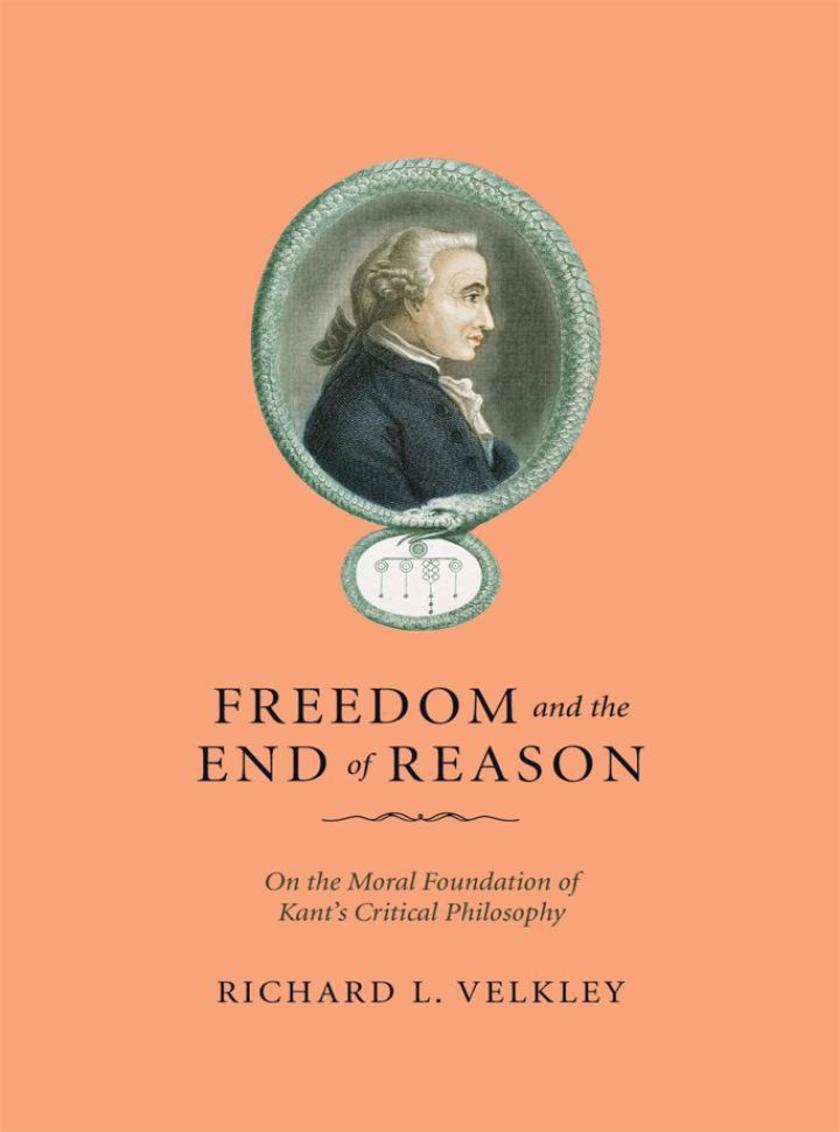
Freedom and the End of Reason
¥229.55
In Freedom and the End of Reason, Richard L. Velkley offers an influential interpretation of the central issue of Kant's philosophy and an evaluation of its position within modern philosophy's larger history. He persuasively argues that the whole of Kantianism-not merely the Second Critique-focuses on a "e;critique of practical reason"e; and is a response to a problem that Kant saw as intrinsic to reason itself: the teleological problem of its goodness. Reconstructing the influence of Rousseau on Kant's thought, Velkley demonstrates that the relationship between speculative philosophy and practical philosophy in Kant is far more intimate than generally has been perceived. By stressing a Rousseau-inspired notion of reason as a provider of practical ends, he is able to offer an unusually complete account of Kant's idea of moral culture.
Little Magazine in Contemporary America
¥229.55
Little magazines have often showcased the best new writing in America. Historically, these idiosyncratic, small-circulation outlets have served the dual functions of representing the avant-garde of literary expression while also helping many emerging writers become established authors. Although changing technology and the increasingly harsh financial realities of publishing over the past three decades would seem to have pushed little magazines to the brink of extinction, their story is far more complicated.In this collection, Ian Morris and Joanne Diaz gather the reflections of twenty-three prominent editors whose little magazines have flourished over the past thirty-five years. Highlighting the creativity and innovation driving this diverse and still vital medium, contributors offer insights into how their publications sometimes succeeded, sometimes reluctantly folded, but mostly how they evolved and persevered. Other topics discussed include the role of little magazines in promoting the work and concerns of minority and women writers, the place of universities in supporting and shaping little magazines, and the online and offline future of these publications.Selected contributorsBetsy Sussler, BOMB; Lee Gutkind, Creative Nonfiction; Bruce Andrews, L=A=N=G=U=A=G=E; Dave Eggers, McSweeney's; Keith Gessen, n+1; Don Share, Poetry; Jane Friedman, VQR; Amy Hoffman, Women's Review of Books; and more.?

What Did the Romans Know?
¥229.55
What did the Romans know about their worldQuite a lot, as Daryn Lehoux makes clear in this fascinating and much-needed contribution to the history and philosophy of ancient science. Lehoux contends that even though many of the Romans' views about the natural world have no place in modern science-the umbrella-footed monsters and dog-headed people that roamed the earth and the stars that foretold human destinies-their claims turn out not to be so radically different from our own.?Lehoux draws upon a wide range of sources from what is unquestionably the most prolific period of ancient science, from the first century BC to the second century AD. He begins with Cicero's theologico-philosophical trilogy On the Nature of the Gods, On Divination, and On Fate, illustrating how Cicero's engagement with nature is closely related to his concerns in politics, religion, and law. Lehoux then guides readers through highly technical works by Galen and Ptolemy, as well as the more philosophically oriented physics and cosmologies of Lucretius, Plutarch, and Seneca, all the while exploring the complex interrelationships between the objects of scientific inquiry and the norms, processes, and structures of that inquiry. This includes not only the tools and methods the Romans used to investigate nature, but also the Romans' cultural, intellectual, political, and religious perspectives. Lehoux concludes by sketching a methodology that uses the historical material he has carefully explained to directly engage the philosophical questions of incommensurability, realism, and relativism.?By situating Roman arguments about the natural world in their larger philosophical, political, and rhetorical contexts, What Did the Romans Knowdemonstrates that the Romans had sophisticated and novel approaches to nature, approaches that were empirically rigorous, philosophically rich, and epistemologically complex.
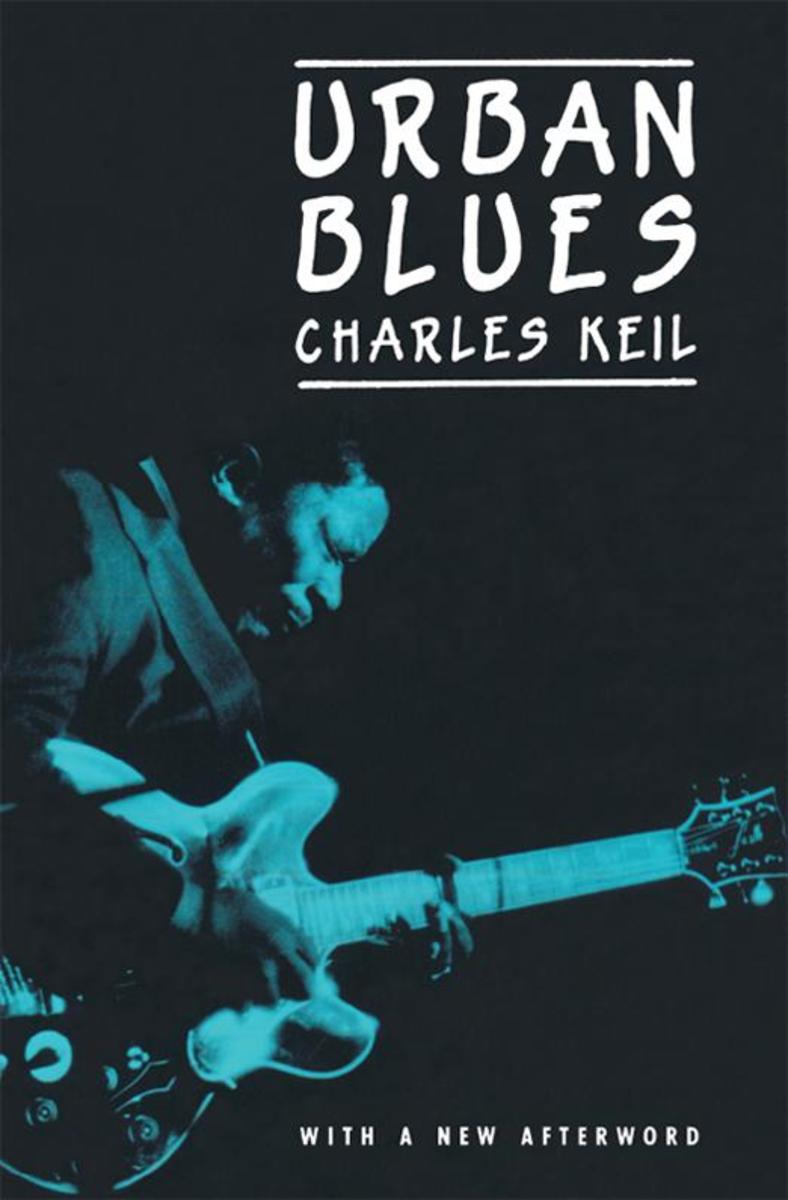
Urban Blues
¥211.90
Charles Keil examines the expressive role of blues bands and performers and stresses the intense interaction between performer and audience. Profiling bluesmen Bobby Bland and B. B. King, Keil argues that they are symbols for the black community, embodying important attitudes and roles-success, strong egos, and close ties to the community. While writing Urban Blues in the mid-1960s, Keil optimistically saw this cultural expression as contributing to the rising tide of raised political consciousness in Afro-America. His new Afterword examines black music in the context of capitalism and black culture in the context of worldwide trends toward diversification."e;Enlightening. . . . [Keil] has given a provocative indication of the role of the blues singer as a focal point of ghetto community expression."e;-John S. Wilson, New York Times Book Review"e;A terribly valuable book and a powerful one. . . . Keil is an original thinker and . . . has offered us a major breakthrough."e;-Studs Terkel, Chicago Tribune"e;[Urban Blues] expresses authentic concern for people who are coming to realize that their past was . . . the source of meaningful cultural values."e;-Atlantic"e;An achievement of the first magnitude. . . . He opens our eyes and introduces a world of amazingly complex musical happening."e;-Robert Farris Thompson, Ethnomusicology?"e;[Keil's] vigorous, aggressive scholarship, lucid style and sparkling analysis stimulate the challenge. Valuable insights come from treating urban blues as artistic communication."e;-James A. Bonar, Boston Herald?
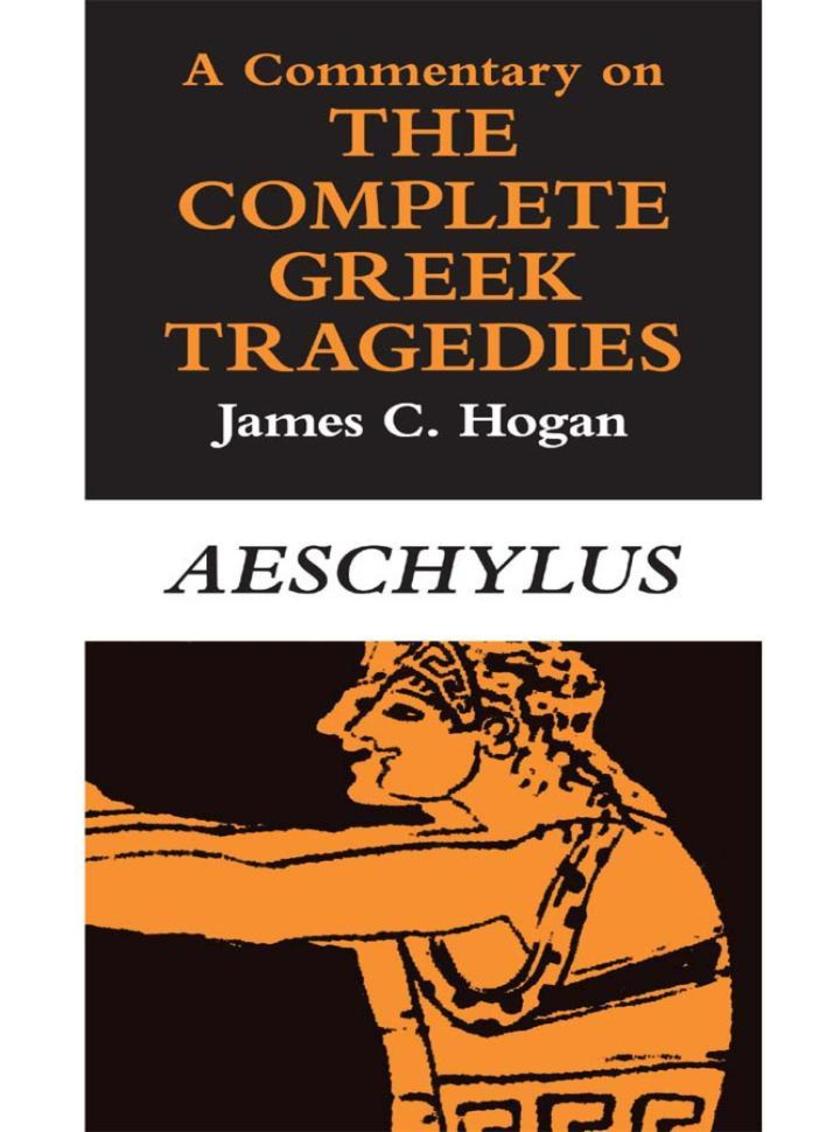
Commentary on The Complete Greek Tragedies. Aeschylus
¥211.90
This commentary offers a rich introduction and useful guide to the seven surviving plays attributed to Aeschylus. Though it may profitably be used with any translation of Aeschylus, the commentary is based on the acclaimed Chicago translations, The Complete Greek Tragedies, edited by David Grene and Richmond Lattimore.James C. Hogan provides a general introduction to Aeschylean theater and drama, followed by a line-by-line commentary on each of the seven plays. He places Aeschylus in the historical, cultural, and religious context of fifth-century Athens, showing how the action and metaphor of Aeschylean theater can be illuminated by information on Athenian law athletic contests, relations with neighboring states, beliefs about the underworld, and countless other details of Hellenic life. Hogan clarifies terms that might puzzle modern readers, such as place names and mythological references, and gives special attention to textual and linguistic issues: controversial questions of interpretation; difficult or significant Greek words; use of style, rhetoric, and commonplaces in Greek poetry; and Aeschylus's place in the poetic tradition of Homer, Hesiod, and the elegiac poets. Practical information on staging and production is also included, as are maps and illustrations, a bibliography, indexes, and extensive cross-references between the seven plays. Forthcoming volumes will cover the works of Sophocles and Euripides.


