


 购物车
 个人中心

Leo Strauss and the Problem of Political Philosophy
¥370.82
Leo Strauss and his alleged political influence regarding the Iraq War have in recent years been the subject of significant media attention, including stories in the Wall Street Journal and New York Times.Time magazine even called him "e;one of the most influential men in American politics."e; With The Truth about Leo Strauss, Michael and Catherine Zuckert challenged the many claims and speculations about this notoriously complex thinker. Now, with Leo Strauss and the Problem of Political Philosophy, they turn their attention to a searching and more comprehensive interpretation of Strauss's thought as a whole, using the many manifestations of the "e;problem of political philosophy"e; as their touchstone.?For Strauss, political philosophy presented a "e;problem"e; to which there have been a variety of solutions proposed over the course of Western history. Strauss's work, they show, revolved around recovering-and restoring-political philosophy to its original Socratic form. Since positivism and historicism represented two intellectual currents that undermined the possibility of a Socratic political philosophy, the first part of the book is devoted to Strauss's critique of these two positions. Then, the authors explore Strauss's interpretation of the history of philosophy and both ancient and modern canonical political philosophers, including Plato, Aristotle, Machiavelli, and Locke. Strauss's often-unconventional readings of these philosophers, they argue, pointed to solutions to the problem of political philosophy. Finally, the authors examine Strauss's thought in the context of the twentieth century, when his chief interlocutors were Schmitt, Husserl, Heidegger, and Nietzsche.?The most penetrating and capacious treatment of the political philosophy of this complex and often misunderstood thinker, from his early years to his last works, Leo Strauss and the Problem of Political Philosophy reveals Strauss's writings as an attempt to show that the distinctive characteristics of ancient and modern thought derive from different modes of solving the problem of political philosophy and reveal why he considered the ancient solution both philosophically and politically superior.
Autonomy After Auschwitz
¥370.82
Ever since Kant and Hegel, the notion of autonomy-the idea that we are beholden to no law except one we impose upon ourselves-has been considered the truest philosophical expression of human freedom. But could our commitment to autonomy, as Theodor Adorno asked, be related to the extreme evils that we have witnessed in modernityIn Autonomy after Auschwitz, Martin Shuster explores this difficult question with astonishing theoretical acumen, examining the precise ways autonomy can lead us down a path of evil and how it might be prevented from doing so.Shuster uncovers dangers in the notion of autonomy as it was originally conceived by Kant. Putting Adorno into dialogue with a range of European philosophers, notably Kant, Hegel, Horkheimer, and Habermas-as well as with a variety of contemporary Anglo-American thinkers such as Richard Rorty, Stanley Cavell, John McDowell, and Robert Pippin-he illuminates Adorno's important revisions to this fraught concept and how his different understanding of autonomous agency, fully articulated, might open up new and positive social and political possibilities. Altogether, Autonomy after Auschwitz is a meditation on modern evil and human agency, one that demonstrates the tremendous ethical stakes at the heart of philosophy.?
To Flourish or Destruct
¥370.82
In his 2010 book What Is a Person?, Christian Smith argued that sociology had for too long neglected this fundamental question. Prevailing social theories, he wrote, do not adequately "e;capture our deep subjective experience as persons, crucial dimensions of the richness of our own lived lives, what thinkers in previous ages might have called our 'souls' or 'hearts.'"e; Building on Smith's previous work, To Flourish or Destruct examines the motivations intrinsic to this subjective experience: Why do people do what they doHow can we explain the activity that gives rise to all human social life and social structuresSmith argues that our actions stem from a motivation to realize what he calls natural human goods: ends that are, by nature, constitutionally good for all human beings. He goes on to explore the ways we can and do fail to realize these ends-a failure that can result in varying gradations of evil. Rooted in critical realism and informed by work in philosophy, psychology, and other fields, Smith's ambitious book situates the idea of personhood at the center of our attempts to understand how we might shape good human lives and societies.
Wasting a Crisis
¥370.82
The recent financial crisis led to sweeping reforms that inspired countless references to the financial reforms of the New Deal. Comparable to the reforms of the New Deal in both scope and scale, the 2,300-page Dodd-Frank Act of 2010-the main regulatory reform package introduced in the United States-also shared with New Deal reforms the assumption that the underlying cause of the crisis was misbehavior by securities market participants, exacerbated by lax regulatory oversight.With Wasting a Crisis, Paul G. Mahoney offers persuasive research to show that this now almost universally accepted narrative of market failure-broadly similar across financial crises-is formulated by political actors hoping to deflect blame from prior policy errors. Drawing on a cache of data, from congressional investigations, litigation, regulatory reports, and filings to stock quotes from the 1920s and '30s, Mahoney moves beyond the received wisdom about the financial reforms of the New Deal, showing that lax regulation was not a substantial cause of the financial problems of the Great Depression. As new regulations were formed around this narrative of market failure, not only were the majority largely ineffective, they were also often counterproductive, consolidating market share in the hands of leading financial firms. An overview of twenty-first-century securities reforms from the same analytic perspective, including Dodd-Frank and the Sarbanes-Oxley Act of 2002, shows a similar pattern and suggests that they too may offer little benefit to investors and some measurable harm.
Making "e;Nature"e;
¥370.82
Making "e;Nature"e; is the first book to chronicle the foundation and development of Nature, one of the world's most influential scientific institutions. Now nearing its hundred and fiftieth year of publication, Nature is the international benchmark for scientific publication. Its contributors include Charles Darwin, Ernest Rutherford, and Stephen Hawking, and it has published many of the most important discoveries in the history of science, including articles on the structure of DNA, the discovery of the neutron, the first cloning of a mammal, and the human genome.But how did Nature become such an essential institutionIn Making "e;Nature,"e; Melinda Baldwin charts the rich history of this extraordinary publication from its foundation in 1869 to current debates about online publishing and open access. This pioneering study not only tells Nature's story but also sheds light on much larger questions about the history of science publishing, changes in scientific communication, and shifting notions of "e;scientific community."e; Nature, as Baldwin demonstrates, helped define what science is and what it means to be a scientist.
Secular Powers
¥329.62
Secularism is usually thought to contain the project of self-deification, in which humans attack God's authority in order to take his place, freed from all constraints. Julie E. Cooper overturns this conception through an incisive analysis of the early modern justifications for secular politics. While she agrees that secularism is a means of empowerment, she argues that we have misunderstood the sources of secular empowerment and the kinds of strength to which it aspires.Contemporary understandings of secularism, Cooper contends, have been shaped by a limited understanding of it as a shift from vulnerability to power. But the works of the foundational thinkers of secularism tell a different story. Analyzing the writings of Hobbes, Spinoza, and Rousseau at the moment of secularity's inception, she shows that all three understood that acknowledging one's limitations was a condition of successful self-rule. And while all three invited humans to collectively build and sustain a political world, their invitations did not amount to self-deification. Cooper establishes that secular politics as originally conceived does not require a choice between power and vulnerability. Rather, it challenges us-today as then-to reconcile them both as essential components of our humanity.
Rhetoric of Pregnancy
¥288.41
It is a truth widely acknowledged that if you're pregnant and can afford one, you're going to pick up a pregnancy manual. From What to Expect When You're Expecting to Pregnancy for Dummies, these guides act as portable mentors for women who want advice on how to navigate each stage of pregnancy. Yet few women consider the effect of these manuals-how they propel their readers into a particular system of care or whether the manual they choose reflects or contradicts current medical thinking.Using a sophisticated rhetorical analysis, Marika Seigel works to deconstruct pregnancy manuals while also identifying ways to improve communication about pregnancy and healthcare. She traces the manuals' evolution from early twentieth-century tomes that instructed readers to unquestioningly turn their pregnancy management over to doctors, to those of the women's health movement that encouraged readers to engage more critically with their care, to modern online sources that sometimes serve commercial interests as much as the mother's.The first book-length study of its kind, The Rhetoric of Pregnancy is a must-read for both users and designers of our prenatal systems-doctors and doulas, scholars and activists, and anyone interested in encouraging active, effective engagement.
Foundations of Natural Morality
¥288.41
Recent years have seen a renaissance of interest in the relationship between natural law and natural rights. During this time, the concept of natural rights has served as a conceptual lightning rod, either strengthening or severing the bond between traditional natural law and contemporary human rights. Does the concept of natural rights have the natural law as its foundation or are the two ideas, as Leo Strauss argued, profoundly incompatible?With The Foundations of Natural Morality, S. Adam Seagrave addresses this controversy, offering an entirely new account of natural morality that compellingly unites the concepts of natural law and natural rights. Seagrave agrees with Strauss that the idea of natural rights is distinctly modern and does not derive from traditional natural law. Despite their historical distinctness, however, he argues that the two ideas are profoundly compatible and that the thought of John Locke and Thomas Aquinas provides the key to reconciling the two sides of this long-standing debate. In doing so, he lays out a coherent concept of natural morality that brings together thinkers from Plato and Aristotle to Hobbes and Locke, revealing the insights contained within these disparate accounts as well as their incompleteness when considered in isolation. Finally, he turns to an examination of contemporary issues, including health care, same-sex marriage, and the death penalty, showing how this new account of morality can open up a more fruitful debate.
Tunguska, or the End of Nature
¥288.41
On June 30, 1908, a mysterious explosion erupted in the skies over a vast woodland area of Siberia. Known as the Tunguska Event, it has been a source of wild conjecture over the past century, attributed to causes ranging from meteors to a small black hole to antimatter. In this imaginative book, Michael Hampe sets four fictional men based on real-life scholars-a physicist (Gunter Hasinger and Steven Weinberg), a philosopher (Paul Feyerabend), a biologist (Adolf Portmann), and a mathematician (Alfred North Whitehead)-adrift on the open ocean, in a dense fog, to discuss what they think happened. The result is a playful and highly illuminating exploration of the definition of nature, mankind's role within it, and what its end might be.?Tunguska, Or the End of Nature uses its four-man setup to tackle some of today's burning issues-such as climate change, environmental destruction, and resource management-from a diverse range of perspectives. With a kind of foreboding, it asks what the world was like, and will be like, without us, whether we are negligible and the universe random, whether nature can truly be explained, whether it is good or evil, or whether nature is simply a thought we think. This is a profoundly unique work, a thrillingly interdisciplinary piece of scholarly literature that probes the mysteries of nature and humans alike.?
Marriage and Cohabitation
¥270.76
In an era when half of marriages end in divorce, cohabitation has become more commonplace and those who do get married are doing so at an older age. So why do people marry when they doAnd why do?some couples choose to cohabitA team of expert family sociologists examines these timely questions in Marriage and Cohabitation, the result of their research over the last decade on the issue of union formation.Situating their argument in the context of the Western world's 500-year history of marriage, the authors reveal what factors encourage marriage and cohabitation in a contemporary society where the end of adolescence is no longer signaled by entry into the marital home. While some people still choose to marry young, others elect to cohabit with varying degrees of commitment or intentions of eventual marriage. The authors' controversial findings suggest that family history, religious affiliation, values, projected education, lifetime earnings, and career aspirations all tip the scales in favor of either cohabitation or marriage. This book lends new insight into young adult relationship patterns and will be of interest to sociologists, historians, and demographers alike.
Richard Rorty
¥158.92
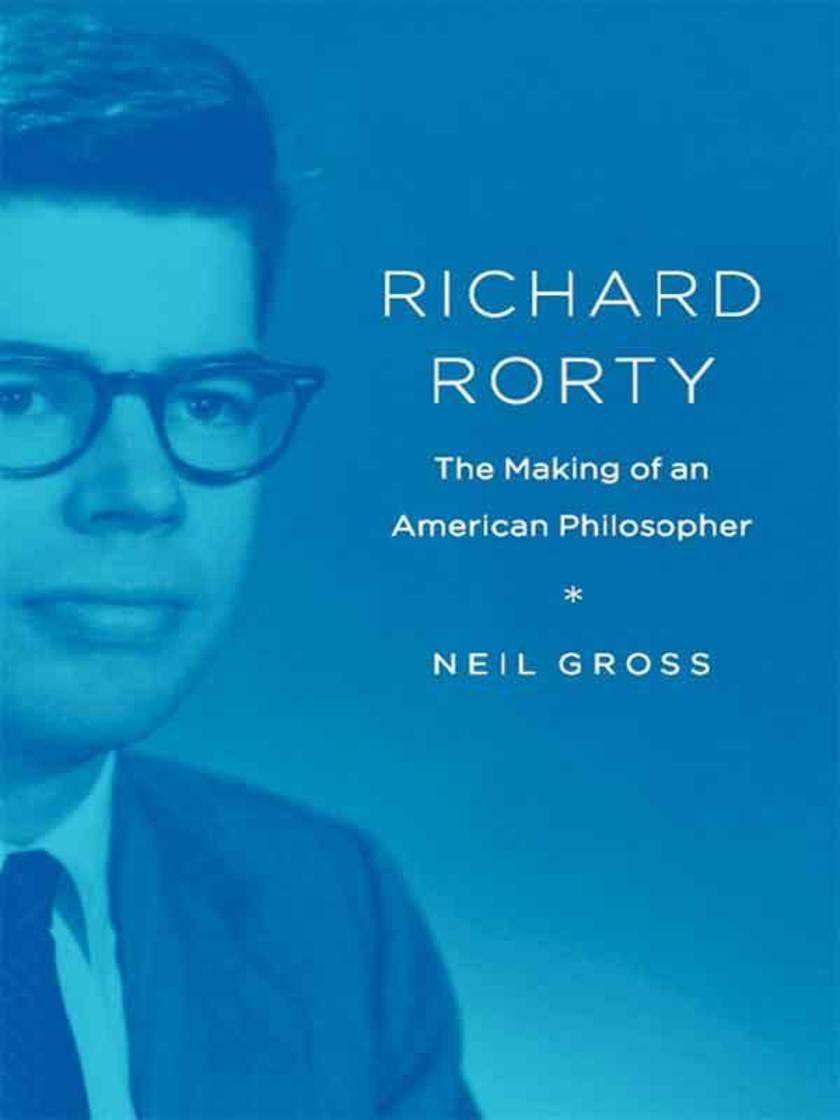
On his death in 2007, Richard Rorty was heralded by the New York Times as "e;one of the world's most influential contemporary thinkers."e; Controversial on the left and the right for his critiques of objectivity and political radicalism, Rorty experienced a renown denied to all but a handful of living philosophers. In this masterly biography, Neil Gross explores the path of Rorty's thought over the decades in order to trace the intellectual and professional journey that led him to that prominence.The child of a pair of leftist writers who worried that their precocious son "e;wasn't rebellious enough,"e; Rorty enrolled at the University of Chicago at the age of fifteen. There he came under the tutelage of polymath Richard McKeon, whose catholic approach to philosophical systems would profoundly influence Rorty's own thought. Doctoral work at Yale led to Rorty's landing a job at Princeton, where his colleagues were primarily analytic philosophers. With a series of publications in the 1960s, Rorty quickly established himself as a strong thinker in that tradition-but by the late 1970s Rorty had eschewed the idea of objective truth altogether, urging philosophers to take a "e;relaxed attitude"e; toward the question of logical rigor. Drawing on the pragmatism of John Dewey, he argued that philosophers should instead open themselves up to multiple methods of thought and sources of knowledge-an approach that would culminate in the publication of Philosophy and the Mirror of Nature, one of the most seminal and controversial philosophical works of our time.In clear and compelling fashion, Gross sets that surprising shift in Rorty's thought in the context of his life and social experiences, revealing the many disparate influences that contribute to the making of knowledge. As much a book about the growth of ideas as it is a biography of a philosopher, Richard Rorty will provide readers with a fresh understanding of both the man and the course of twentieth-century thought.
Digging for History at Old Washington
¥261.73
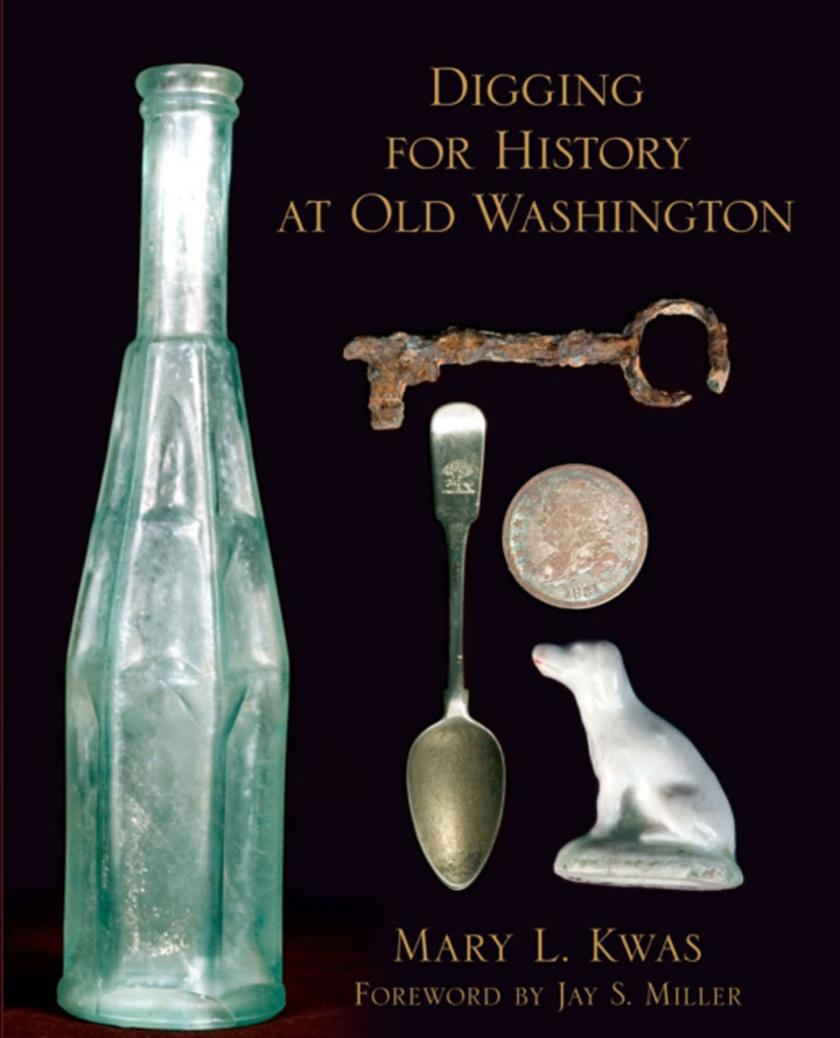
Positioned along the legendary Southwest Trail, the town of Washington in Hempstead County in southwest Arkansas was a thriving center of commerce, business, and county government in the nineteenth century. Historical figures such as Davy Crockett and Sam Houston passed through, and during the Civil War, when the Federal troops occupied Little Rock, the Hempstead County Courthouse in Washington served as the seat of state government. A prosperous town fully involved in the events and society of the territorial, antebellum, Civil War, and Reconstruction eras, Washington became in a way frozen in time by a series of events including two fires, a tornado, and being bypassed by the railroad in 1874. Now an Arkansas State Park and National Historic Landmark, Washington has been studied by the Arkansas Archeological Survey over the past twenty-five years. Digging for History at Old Washington joins the historical record with archaeological findings such as uncovered construction details, evidence of lost buildings, and remnants of everyday objects. Of particular interest are the homes of Abraham Block, a Jewish merchant originally from New Orleans, and Simon Sanders from North Carolina, who became the town's county clerk. The public and private lives of the Block and Sanders families provide a fascinating look at an antebellum town at the height of its prosperity.
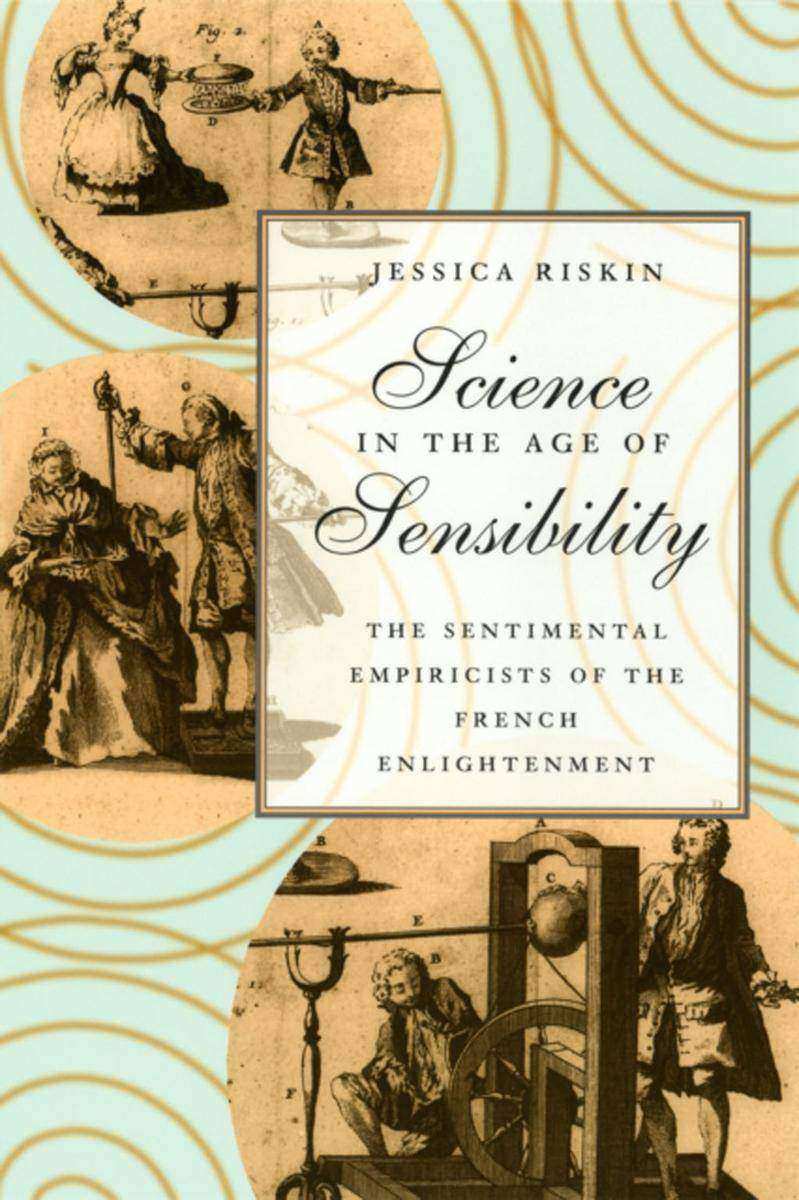
Science in the Age of Sensibility
¥282.53
Empiricism today implies the dispassionate scrutiny of facts. But Jessica Riskin finds that in the French Enlightenment, empiricism was intimately bound up with sensibility. In what she calls a "sentimental empiricism," natural knowledge was taken to rest on a blend of experience and emotion.Riskin argues that sentimental empiricism brought together ideas and institutions, practices and politics. She shows, for instance, how the study of blindness, led by ideas about the mental and moral role of vision and by cataract surgeries, shaped the first school for the blind; how Benjamin Franklin's electrical physics, ascribing desires to nature, engaged French economic reformers; and how the question of the role of language in science and social life linked disputes over Antoine Lavoisier's new chemical names to the founding of France's modern system of civic education.Recasting the Age of Reason by stressing its conjunction with the Age of Sensibility, Riskin offers an entirely new perspective on the development of modern science and the history of the Enlightenment.

Egocracy
¥288.41
Sonia Arribas would like to thank her colleagues from the CSIC and UPF seminars ?Mínima Políticaand ?Movimientos Sociales?, especially Paco Fernández Buey, Antonio Gimeno and José Antonio Zamora; and also, for the invaluable support that they have provided at the CSIC, José María González, Reyes Mate and Concha Roldán.
Global Pigeon
¥247.21
The pigeon is the quintessential city bird. Domesticated thousands of years ago as a messenger and a source of food, its presence on our sidewalks is so common that people consider the bird a nuisance-if they notice it at all. Yet pigeons are also kept for pleasure, sport, and profit by people all over the world, from the "e;pigeon wars"e; waged by breeding enthusiasts in the skies over Brooklyn to the Million Dollar Pigeon Race held every year in South Africa.Drawing on more than three years of fieldwork across three continents, Colin Jerolmack traces our complex and often contradictory relationship with these versatile animals in public spaces such as Venice's Piazza San Marco and London's Trafalgar Square and in working-class and immigrant communities of pigeon breeders in New York and Berlin. By exploring what he calls "e;the social experience of animals,"e; Jerolmack shows how our interactions with pigeons offer surprising insights into city life, community, culture, and politics. Theoretically understated and accessible to interested readers of all stripes, The Global Pigeon is one of the best and most original ethnographies to be published in decades.
Live Like a Hot Chick
¥94.10
You are a hot chick; Now start living like one!Jodi Lipper and Cerina Vincent are back to give you the savvy self-assurance you need to find the perfect balance between work and play. You are a Hot Chick (an empowered, confident woman) who deserves every juicy bit of goodness that life has to offer. Lipper and Vincent help you conquer insecurities and replace them with a positive body image, balanced diet, and smart exercise plan; teach you how to be powerful and feminine (at work) no matter what you do for a living; inspire you to let your hair down and kick up your four-inch heels by creating a heyday that is daring, bold, and unforgettable; and, finally, how to balance it all. Live Like a Hot Chick will motivate you to go out there and get the absolute best that life has to offer, which is exactly what a Hot Chick like you deserves.
Organizing the Disorganized Child
¥77.49
Organizing the Disorganized Child explains: How to solve the messy-backpack problem (page 28). Step-by-step tips to help your child improve study skills (page 96). Which school supplies work best for different types of children (page 26). Methods for note taking (page 99). Techniques for time management (page 72). Strategies to refine morning and nighttime routines that will help the entire family (page 128).
Second Acts
¥84.16
Second Acts is a guide to reinventing your life. Whether you wish to change careers, move to a more desirable part of the country, start a business, write a novel, or drop everything to pursue a life dream, Stephen Pollan offers a powerful message ofhope and guidance that has benefited his own clients.Through a series of exercises, you will develop a comprehensive "*" for your second act a step-by-step action plan that will lead you to the life you've always wanted.
What Mama Couldn't Tell Us About Love
¥84.16
"Mama," writes Brenda Richardson, "you taught me how a black woman could survive and prevail in this world...but because you never learned yourself, you couldn't tell me how to make love work...I don't mean any disrespect, Mama, but...now I have children of my own. And in a loud revolutionary voice, I declare to the universe: the pain stops here." Clinical psychologist Dr. Brenda Wade and coauthor Brenda Richardson ask their African American sisters to consider this question: "What lessons about love and intimacy were passed down from your foremothers to you?" In this provocative rethinking of the African American woman's experience, the authors suggest that African American women share an emotional legacy that began when their ancestors were dragged in chains to the "New" World and continued as their descendants suffered through the violence and humiliation of the Jim Crow period and later racism. Indeed, they argue, the long shadow cast by these historical events impacts romantic practice, lives can be transformed once there is a true understanding of the power of inherited beliefs. What Mama Couldn't Tell Us About Love shows how important it is to grieve and make peace with this brutal history. As you will see in this remarkable uplifting book, it is possible to use the positive messages inherent in the African American experience to create a better life. Learn from the "Sisters Spirits"--well-known African Americans whose stories enliven these pages--as you move toward emotional freedom. Listen to the words of the spirituals interspersed in the text, enhance the coping skills and strengths your forebears harnessed to help them survive and prevail, and believe that emotional emancipation is your birthright. Mama may not have told you all this in so many words--but there is no doubt that she would want to see you take these last steps toward freedom and abundant love.
Willpower Is Not Enough
¥83.03
Many people think that what the addict needs is willpower, but nothing could be further from the truth: When a person has already lost control over a drug or activity, attempts to control its use almost never work. Because the source of addiction isn't the drug or activity itself but a desire for a mood changer, successful recovery means ultimately changing the way we live, giving up the addictive life-style. Willpower's Not Enough will show you how to change your life-style and to recover from your addiction.

The Teen Whisperer
¥95.39
Mike Linderman is a teen therapist unlike any other. A real-life cowboy, he wakes up at the crack of dawn, works the cattle on his ranch, and then counsels some of the country's most troubled teens, approaching them with a unique blend of down-home honesty, straight-talk discipline, and pure intention that is rarely found in a therapist's office. Most of the teens Mike treats are angry, abused, violent, and dangerous, yet despite their difficult pasts, he has achieved extraordinary success with them, helping to turn their lives around and earning him the nickname the "Teen Whisperer." In this book, he shares the secrets behind his success with parents everywhere, demonstrating how his regimen of hard work, integrity, and effective communication has turned seriously at-risk kids into loving, well-balanced, and productive teens. More than just a plan to rein in bad behavior, The Teen Whisperer deconstructs the emotional barriers that adolescence has placed between you and your child, helping you work with teens on their level instead of simply treating them as subordinates. With this straightforward and open perspective, both you and your teen will learn to offer each other mutual respect and kindness, as you work together to heal the troubled hearts of your family.


